Fukushima thyroid testing – medical litigation misdiagnosed every time – 1billion Yen insurance at risk! Part 2
Saturday, 27 July 2013

“I didn’t trust the Fukushima Survey examination from the beginning because it only took 10 seconds to examine the thyroid, therefore they won’t find anything wrong in the thyroid”.
6m30s- 誤診が発生した場合。 支払い限度額は10億円と設定されていた。
Our planet TV acquired the document that says how to protect doctors legally when their misleading diagnoses were sued. 10 million yen (=1 billion yen?) was set up.
Click here for more info on this
*Fukushima thyroid testing & medical litigation misdiagnosed every time – 1billion Yen insurance at risk!
http://fukushimaappeal.blogspot.co.uk/2013/07/fukushima-thyroid-testing-medical.html
Canadians among those aiming at big uranium projects in Australia
… uranium equities on average are 60% lower than what they were in March 2011…
The reports lists the world’s leading uranium operations with 2012 production totals:
1. McArthur River (Cameco/Areva) 19.4 million lbs
2. Olympic Dam (BHP Billiton) 8.9m lbs
3. Ranger (Rio Tinto) 8.2m lbs
4. Katco (Areva/KazAtomProm) 8.1m lbs
5. Somair (Areva/Somair) 6.8m lbs
6. Priargunsky (ARMZ) 5.7m lbs
7. Langer Heinrich (Paladin Energy) 5.1m lbs
8. Inkai (Cameco/KazAtomProm) 4.4m lbs
Posted on July 23, 2013
by Robin Bromby
Uranium’s spot price fell again this week to just $37.85/lb. But positive news keep coming. The Australian state of Queensland has just formalised the removal of the ban on uranium mining in the state imposed by its predecessor. No one expects any sudden spurt of activity given present prices but there are some projects (see below) that, with an improved price, could be brought into operation relatively quickly given some have established resources and advanced exploration.
And the majority of the most likely projects are held by Canadian-listed companies (again, see below for details).
Interestingly the federal government is making some positive noises about the uranium industry generally. The Australian Labor Party has a long history of being anti-uranium; after all, the mining bans were imposed in various states by Labor governments. So it was significant that federal Resources and Energy Minister Gary Gray not only attended this year’s big uranium conference in Perth but sounded some very positive notes about the industry.
Pointing out that Australia has a third of the world’s known uranium resources and supplies about 22% of China‘s needs, Gray essentially backed nuclear power — even though his own government has turned its back on that so far as Australia is concerned. He told the conference that “two important drivers of nuclear power remain unchanged – the rising energy demand from growing populations and the need to reduce greenhouse gas emissions. Australia is in a strong position to maximise these opportunities.”
In another encouraging sign, London-based brokers RFC Ambrian say there is light at the end of the tunnel. “The uranium sector should be set for happier times and improved pricing in the short to mid-term”. They cite the familiar reasons, including the growing likelihood of Japanese reactors starting up again and the end to the “megatons to megawatts” program.
Still, there’s a long way to claw back: uranium equities on average are 60% lower than what they were in March 2011.
Breaking – Sellafield failed by private firms: Expensive mistakes mean UK government get involved
Published On: Sat, Jul 27th, 2013

The Government is expected to take back control of the clean-up of nuclear waste at Cumbria’s Sellafield, following a string of failures by a private sector consortium of US, French and British engineers. Alarmed by spiralling budgets – £70bn and counting – and a series of delays to crucial projects, the Nuclear Decommissioning Authority (NDA) has quietly drafted in a team of consultants from the accountants KPMG to review how Sellafield is run, The Independent on Sunday can reveal.
It is running through three options to sort out a situation in which 12 of 14 major projects were behind schedule last year, as well as last month’s £700,000 fine for sending bags filled with radioactive waste to a landfill site in Cumbria rather than a specialist facility.
The most eye-catching – and believed to be favoured – choice, involves stripping the contract from Nuclear Management Partners, a consortium made up of URS from California, France’s Areva and Amec, one of Britain’s biggest listed companies.
A subsidiary of the NDA would be set up to oversee what is said to be the hardest nuclear site to decontaminate in either Western Europe or the United States. “Nuclear Management Partners have lost the confidence of the workforce and the local community, and there is a very firm view that [taking the work in-house] is the only real option,” said a source close to the discussions.
The two other choices are to renew the consortium’s contract or run a competition to find another private sector grouping to clean up the nuclear site. It is one of Britain’s oldest, having first been used in 1947 to produce plutonium for Britain’s nuclear weapons programme.
Handing the consortium another lucrative deal – the team earned £54m in performance-related fees in 2012 despite missing so many deadlines – would be a “scandal”, according to an industry source.
Rerunning the process to find a private sector partner is too costly and time consuming to be considered a viable alternative. A formal decision is expected to be announced in the autumn.
URS, Areva and Amec won the right to run Sellafield in late 2008, in a contract that was initially for five years, but could have been extended up to 2026 and was potentially worth £22bn.
Media Disinformation: The Role of Powerful Political Lobbies and Moneyed Interests in America

Renowned American intellectual and cultural critic believes that the United States, is exercising double standards with regards to Iran’s nuclear program and treating Iranians in a discriminatory way through imposing unilateral and unjust sanctions.
“Iran has signed the Nuclear Non-Proliferation Treaty which gives it the right to develop enriched uranium for peaceful use of nuclear power. The USA and Israel are not signatories of the treaty. Both of them have enormous arsenals of nuclear missiles arsenals. Thus they stand in violation of the international law on nuclear proliferation,” said Michael Parenti in an exclusive interview with the Fars News Agency.
Michael Parenti is a leading American author, political scientist, historian and anti-war activist. His writings are very popular in the progressive circles as he staunchly opposes the U.S. foreign policy and its war adventures around the world, especially in the Middle East and North Africa. Parenti is considered a prominent anti-imperialist thinker in the United States and around the world. His latest book “The Face of Imperialism” was published by the Paradigm Publications in 2011. Among his other books are “Make-Believe Media: the Politics of Entertainment” and “Inventing Reality: the Politics of News Media.” Parenti has received his Ph.D. in political science from the Yale University.
What follows is the text of FNA’s interview with Michael Parenti with whom we’ve discussed a number of issues including the Occupy Wall Street movement, racism in the United States, Zionism and its influence on the U.S. media and governmental institutions and controversy over Iran’s nuclear program.
Q: In one of your articles, you had pointed at the mainstream media’s disappointing performance in giving coverage to the Occupy Wall Street movement. Why are the corporate media usually silent on the progressive movements? Are they afraid of losing their audience or their benefactors and sponsors? They even didn’t report the death of the renowned progressive journalist Alexander Cockburn who passed last year. What’s your take on that?
A: The mainstream media in the United States is owned and controlled by a few corporate conglomerates. This pattern of ownership and its resulting control leaves very little room for critical and challenging journalism of the kind that exposes the hypocrisies and duplicities of the ruling moneyed interests. These moneyed interests claim to bring us prosperity when in fact they bring us poverty. They claim a dedication to democracy when in fact they propagate oligarchic dominance in this country and in many others. They profess a dedication to peace while bombing and invading various countries that dare to step out of line.
They talk about a “family of nations” while pursuing a policy of global imperialism. This constant disparity between what reality at home and abroad is like and what the corporate media claim it to be is one of the great propaganda achievements of modern history.
Concerning your question about Alexander Cockburn, the New York Times and a few other mainstream newspapers did carry obituaries about him. They mentioned his views but never spelled them out. The broadcast media had very little to say about him. He was too radical for them to give respectful and extensive notice.
Q: The issues of racism and racial discrimination have always been widely and also controversially discussed in the intellectual circles of the United States. Could we trace footsteps of protest against racism in the insurrections of the Occupy Wall Street?
A: I don’t believe that issues relating to racism “have always been widely” discussed in U.S. intellectual circles. It often took years of struggle to get intellectuals to acknowledge and inform themselves about the urgent and terrible crimes of lynch-mob rule in this country. It took years of conflict to mobilize democratic forces against Jim Crow and the racial discrimination that permeated all dimensions of White society in the United States. It continues to be a struggle to confront the racism of white police forces in communities throughout the country.
The Occupy Wall Street movement certainly opposes racial discrimination in all its forms but it primarily focuses on the great class divide, the conflict between the 1% and the 99%. The class struggle and the struggle for racial equality are not mutually exclusive. They are connected. Class oppression battens on racism. One way to move closer to racial equality is to struggle also for economic justice.
Q: Is it a realistic view to say that certain political lobbies, including AIPAC and its affiliates are behind the mainstream media and dictate to them what to publish and cover and what to withhold from the public? In a broader term, let me ask you: Who is really running such multinational, money-spinning media as CNN, NPR, Fox News, CBS and Washington Post?
A: Powerful political lobbies and moneyed interests can exercise direct pressure on the handling of specific news stories. AIPAC, a pro-Zionist interest group, exercises an exceptional influence in Congress, the White House, and public and private agencies —and in planting stories in the conservative media. Most of these corporate media are already sympathetic toward the U.S.-Israel imperium in the Middle East even before they are pressured by lobbyists.
I already answered your other question which repeats what was raised in your first question above: the news is shaped by corporate media that are run by the corporate financial interests that own most of America and much of the world.
Q: You seem to be quite dissatisfied and unhappy with the U.S. government’s health care programs and the way the patients, the nurses, the physicians and other medical staff are treated. What deficiencies does the U.S. medical sector suffer from? Is it really the case that many impoverished Americans die of different illnesses because they cannot afford the medical treatment expenses?
Report: Irans Rohani halted secret nuclear program in 2003

July 27, 2013
http://www.monsey.com/report-rohani-halted-secret-nuclear-program-in-2003/
WASHINGTON – Iranian President-elect Hassan Rohani personally stopped the development of a clandestine nuclear weapon in 2003, a former French ambassador to the country said Saturday.
Writing in the International Herald Tribune newspaper, Francois Nicoullaud, France’s ambassador to Iran from 2001 to 2005, said he believed Rohani was the “main actor” in persuading Supreme Leader Ali Khamenei to halt the secret program.
Since his victory in the June election, Western diplomats who previously worked with Rohani have expressed optimism as to his ability to make Khameni show more flexibility in talks with the West.
On Thursday, the New York Times quoted Western officials as saying that Iraqi Prime Minister Nouri al-Maliki told the Obama administration this month that Iran was interested in direct talks with the United States on Iran’s nuclear program, and said that Iraq was prepared to facilitate the negotiations.
Rohani and Ahmadinejad (Photo: AFP)
According to the New York Times, US State Department officials declined to comment on Maliki’s move or what steps the US might have taken in response. American officials have said since the beginning of the Obama administration that they would be open to direct talks with Iran.
“Rohani showed that he is a central player in Iran’s political establishment,” said Stanislas de Laboulaye, a retired director general of the French Foreign Ministry, who was a member of the European delegation during the talks between 2003 and 2005. “He was the only one able to sell something deeply unpopular to the other leaders.”
European diplomats talking to the NYT estimated that Rohani was willing to enter into serious negotiations on Iran’s nuclear program and that he’s determined to improve relations with the West.
They praised him for his diplomatic skills and flexibility. “He is perfectly placed in Iran’s system of power,” said Paul von Maltzahn, a former German ambassador to Iran who met Rohani several times. “He is not easily manipulated and assertive.”
Rohani was one of three Iranian officials to meet with the former national security adviser Robert McFarlane when he secretly visited Tehran in 1986 to arrange the arms-for-hostages deal that would later erupt into the Iran-contra scandal.
But despite growing optimism, Western diplomats warned that Rohani is still a Shiite cleric who has dedicated his life to the Islamic revolution and will never betray it.
“Our opponents are wrong to expect compromises from Rohani; the sanctions and other pressures will not make us change our stances,” said one of his former closest associates during an interview in Tehran.
And so, despite and maybe because of past experience, the West is none the wiser about what to expect from Rohani. Scheduled to be sworn in on August 3, the president-elect will likely change Iran’s rhetoric but it’s unclear whether he is willing and able to affect real change in Tehran’s nuclear program.
Source: http://www.ynetnews.com/articles/0,7340,L-4410333,00.html
UK George Osborne on EDF nuclear charm offensive
By Emily Gosden | Telegraph
27 July 2013
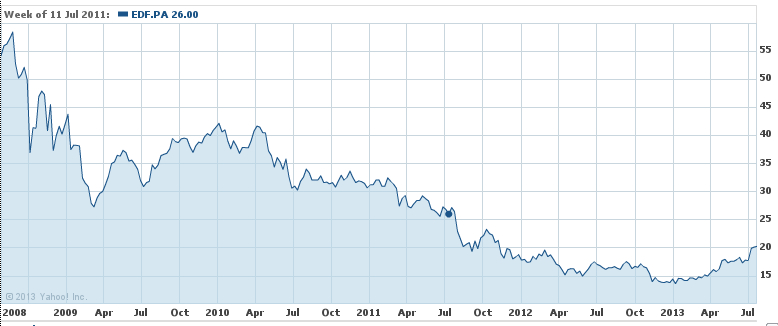
FIVE YEAR FINANCIAL FORECAST FOR THE NEARLY BROKE EDF
HIGH CHANCELLOR GEORGE OSBORNE TO THE RESCUE!!

UP UP AND AWAY…….!
http://uk.finance.yahoo.com/news/osborne-edf-nuclear-charm-offensive-223045603.html
The Chancellor George Osborne has personally written to the board of French energy giant EDF (Paris:) to express his commitment to the UK’s nuclear programme.
The letter was in part intended to further negotiations with EDF over the proposed £14bn nuclear plant at Hinkley Point in Somerset.
The Sunday Telegraph understands that the purpose of the letter was to tell the company, led by chairman Henri Proglio, that the proposed Hinkley Point C reactor would be eligible for £10bn of financing guarantees.
The Chancellor’s intervention is said to have been well received by EDF, which had previously been frustrated by what it felt was an unreasonably tough negotiating stance adopted by the Treasury.
The guarantees scheme is key to the future of the project, and will see the Government act as guarantor if EDF were unable to repay its loans, thereby helping reduce risk for creditors, making them more willing to lend money to the project.
EDF remains locked in talks about the so-called “strike price” for electricity that the plant will generate, which will be guaranteed for more than 30 years.
Whitehall is thought to be awaiting the next move from EDF. Both sides have described talks as “positive” but an agreement is understood to still be several weeks away. However confirmation of the strike price will not be enough to complete the deal. EDF will also need to attract partners to take up to a 49pc stake in the project.
Energy minister Michael Fallon held talks last month with China Guangdong Nuclear Power Group, which has long been seen as a likely partner for EDF.
Ministers hope that China Guangdong will not only come in as a minority partner for the project but may also in future lead the construction of further UK reactors itself.

1 This Month
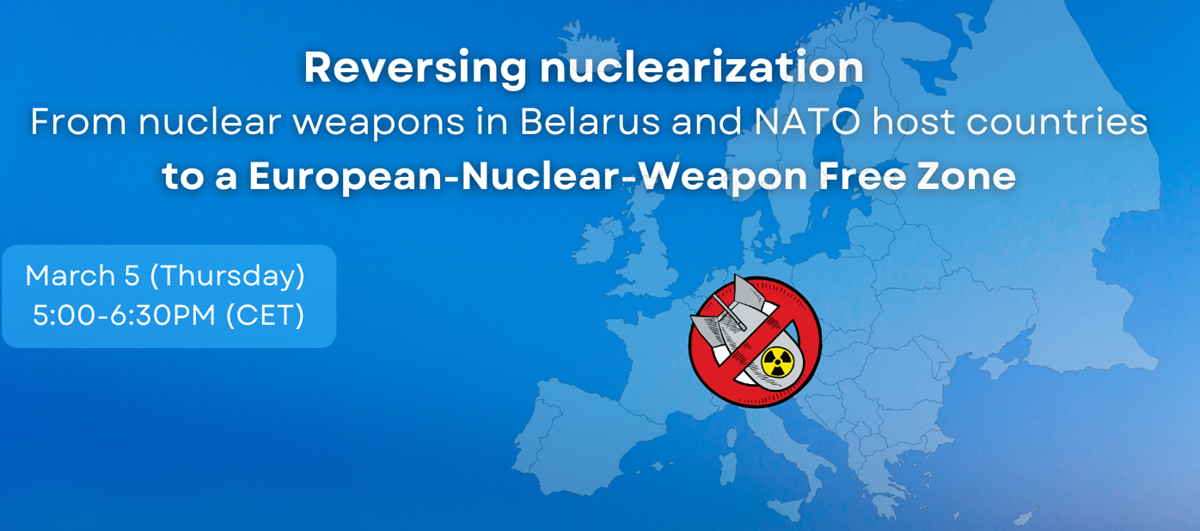
5 March -Online – Reversing nuclearization:
From nuclear weapons in Belarus and NATO host countries to a European-Nuclear-Weapon Free Zone
11am-12:30pm Eastern Time USA / 5pm-6:30pm CET

of the week – Advocating for a
nuclear free beach – https://www.samuellawrencefoundation.org/
The Samuel Lawrence Foundation advocates for a Nuclear Waste Free Beach at San Onofre, join us and take action!
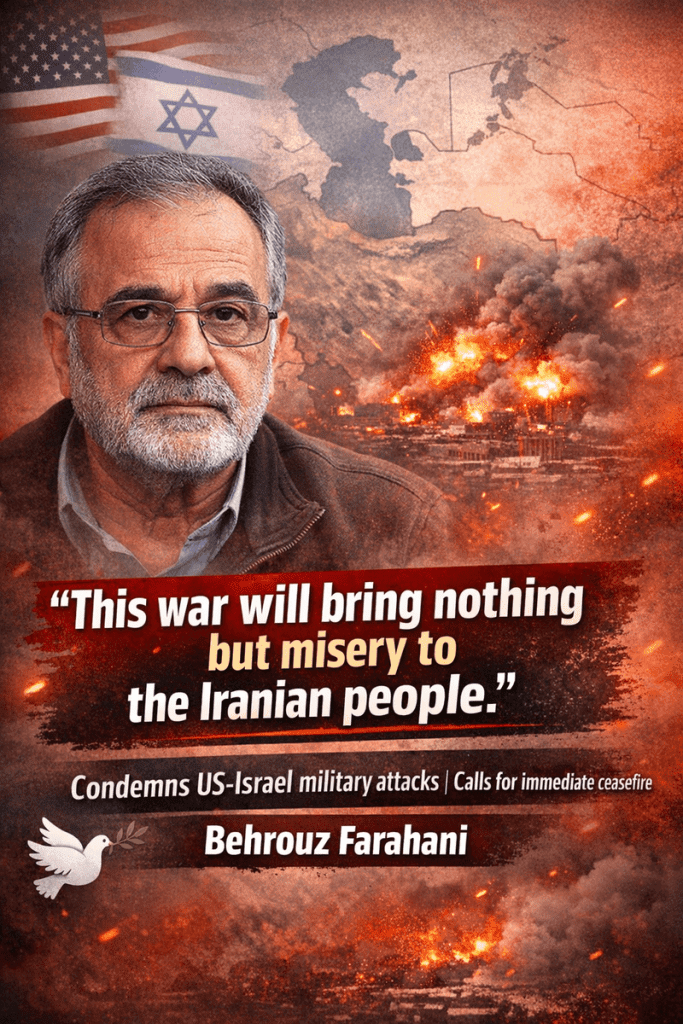
10 March A LIVE WEBINAR THE REAL EFFECTS OF NUCLEAR POWER
What the Industry Isn’t Telling Us
1:00 PM Mountain, 2 pm Central, 3 pm Eastern. Live on the Keepers of the Water Facebook page

18 March Webinar @ 1 PM EST: An Assessment of SMR Projects: The Case of Canada
register for the zoom:
https://us02web.zoom.us/webinar/register/WN_o8BIIOUvQ2ONJR1nta65DQ#/registration

of the week – STOP SMALL MODULAR REACTORS IN CANADA
To see nuclear-related stories in greater depth and intensity – go to https://nuclearinformation.wordpress.com
-
Archives
- March 2026 (38)
- February 2026 (268)
- January 2026 (308)
- December 2025 (358)
- November 2025 (359)
- October 2025 (376)
- September 2025 (258)
- August 2025 (319)
- July 2025 (230)
- June 2025 (348)
- May 2025 (261)
- April 2025 (305)
-
Categories
- 1
- 1 NUCLEAR ISSUES
- business and costs
- climate change
- culture and arts
- ENERGY
- environment
- health
- history
- indigenous issues
- Legal
- marketing of nuclear
- media
- opposition to nuclear
- PERSONAL STORIES
- politics
- politics international
- Religion and ethics
- safety
- secrets,lies and civil liberties
- spinbuster
- technology
- Uranium
- wastes
- weapons and war
- Women
- 2 WORLD
- ACTION
- AFRICA
- Atrocities
- AUSTRALIA
- Christina's notes
- Christina's themes
- culture and arts
- Events
- Fuk 2022
- Fuk 2023
- Fukushima 2017
- Fukushima 2018
- fukushima 2019
- Fukushima 2020
- Fukushima 2021
- general
- global warming
- Humour (God we need it)
- Nuclear
- RARE EARTHS
- Reference
- resources – print
- Resources -audiovicual
- Weekly Newsletter
- World
- World Nuclear
- YouTube
-
RSS
Entries RSS
Comments RSS
 nuclear-news