This is an update to the progress of the Pensions Appeals Tribunals hearing in London in January/ February 2013. Dr Busby predicted in an earlier presentation from Riga that since his expert evidence had been excluded at the last minute by the Lawyers who were representing the veteran appellants, the cases would be lost.
The cases were lost, and here he explains how, with his assistance and that of colleagues, an appeal against the decision has been created. The first stage of this appeal is to apply to the Tribunal Judge to ask him to set aside the decision on the basis that evidence was excluded without the informed consent of the veterans themselves, and failing that, to give permission for the case to be appealed to a higher court on a point of law, that there was a procedural irregularity. In the last few days, the judge has granted the request for an appeal and has extended it to all the veterans in the case.
Full details can be found on the Green Audit website, http://www.greenaudit.org.
Prof Busby’s peer reviewed article on internal radiation exposures and the failure of the current radiation risk model, which he mentions, is at: http://www.intechopen.com/books/new-r…
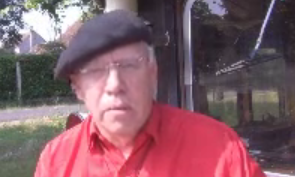
Chris Busby challenges nuclear test veterans betrayal in UK courts
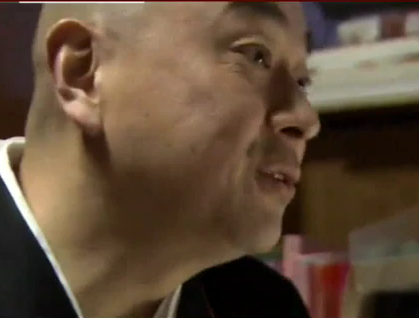
Yakushi-ji Temple in Nara started a project in Mar. 2012, in an effort to help ease the sufferings of the survivors in Tohoku in a Buddhist way. Monks visit temporary housing complexes in devastated areas to hold “Shakyo” (hand-copying of a Buddhist sutra) sessions.
There, they face the survivors’ deep-rooted sufferings. They’re struck with a sense of helplessness, doubting what they, who are not victims of the calamity, can do to help. This is a story of a year with the monks struggling to find an answer in Tohoku, and the people there still with innermost sufferings who engaged in Shakyo.
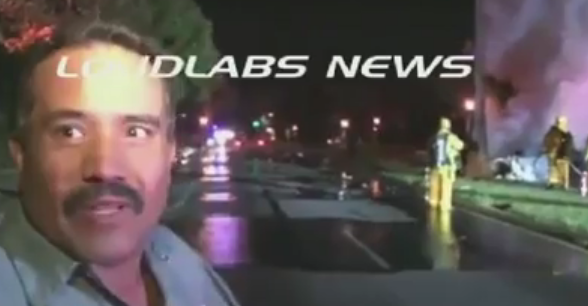
The witness in the video says “all the cars come” after saying 100 miles an hour.. he was in a high speed chase with someone in the early hours of the morning. the video shows the tragic event from an early stage
A clearer interview with the witness here…
Published on 21 Jun 2013
There are still many questions and theories circling around what caused the tragic car crash that took esteemed journalist Michael Hastings’ life. We don’t have official word yet and are awaiting an official investigation. Some people witnessed the crash though, including Jose Rubalcava, who is the only man known to have witnessed the crash from beginning to end. He shares what he saw in the interview with Ana Kasparian, co-host of The Young Turks
*Daughter of her friend has been suffering from blood in urine and nose bleeding. Lots of report of deformed babies, no brain babies, One baby she saw had only one eye. It’s so painful to talk about them all. There is no report on premature death in the main media.
*Her son told her that his co-worker heard an alarm before Tsunami came. That alarm meant that there was dangerous level of ionizing radiation that leaked from the pipes after they got damaged by the big earthquakes.
TEPCO worker’s Mum, Mrs. Setsuko Kida, a candidate of Greens Japan Party for General Election 21/7/13 木田節子さん、福島原発作業員の母 緑の党の候補者に
Japan’s first green party formed by anti-nuclear movement: Group seeks to reflect anti-nuclear, environmental, pro-democracy movements By Mike Feinstein, member, GPUS International Committee.
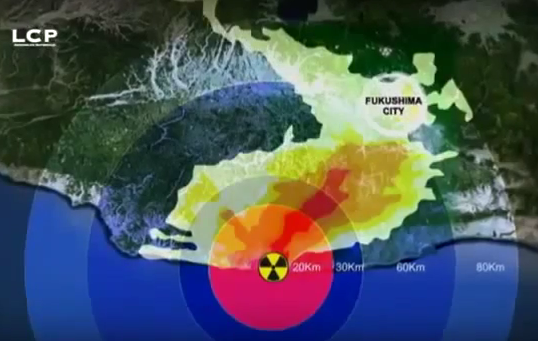
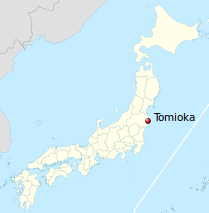
Mrs. Setsuko Kida is a Fukushima disaster evacuee who used to live in Tomioka-machi with her family. She decided to be a candidate of Greens Japan for this General election because she feels strongly a need to speak out the truth on behalf of Fukushima evacuees and of the Fukushima workers. Also, she wants the nation to be really aware of how corrupted Japanese society has become, and she wants the nation to be more empowered rather than being brainwashed by the main stream media, nuclear power groups and the Japanese government. Even with the ongoing Fukushima crippled plants, the majority of the nation has forgotten about Fukushima. She wants them to learn the lessons of this disaster, otherwise another similar disaster could happen in Japan, then it would be too late.(Editor’s note) They said over 70% of the nation don’t want nuclear power, I truly hope that would reflect in the result of tomorrow’s general election. Vote for Greens Japan!!!If LDP would win again, Prime Minister Abe would change the constitution to be able to participate in a war. Also, Japan would join TPP* under Liberal Democratic Party, then Japan would be governed by the rule outside Japan, mainly by USA.
I would like to share her personal story with you. It really touched me and gave me more courage to face the issues concerning Fukushima.
She is really accepting of the tragedy that the nuclear disaster brought to her and many other people, she has became really aware and lives her life in a true sense. She is humorous as well, I’m afraid I won’t be able to reflect that side of her with my limited capability, but I will be happy if this summary helps you to get some hope and courage to be able to live through this confused world we live in.
Mrs. Setsuko Kida and her family are evacuees from Tomioka machi in Fukushima prefecture and now living in Hitachi-city in Chiba prefecture. They were the ones who could afford to evacuate out of Fukushima prefecture.
She said in the video that she was very upset about the whole thing after the disaster till very recently, and was thinking of just leading her quiet retired life, with her family and her dog in the new place.
She now understands how nuclear energy is so dangerous… Tomioka-machi is 8km away from the Fukushima Nuclear plants. Her son developed Hodgkin’s lymphoma, a cancer of the lymph glands, when he was on 2nd year of junior high school and needed to be treated at hospital.
A documentary film that exposes the effect of Japan nuclear technology on a small village in Vietnam will be shown at this year’s Fukuoka Asian Film Festival. Shinobiyoru Genpatsu (“Encroaching Nuclear Power Plant”) is a scathing indictment against the government’s pursuit of exporting nuclear technology to developing countries like Vietnam.
Documentary writer Shinsuke Nakai visited a coastal village called Thai An in central Vietnam where a nuclear plant will be built soon, with Japan lending its technology and experience. The residents of the village, whose population is around 2,000, told the filmmaker that they were not properly informed about the dangers of nuclear power and its serious consequences, as evidenced by the 2011 nuclear meltdown in Fukushima.
The nuclear plant to be built is part of an agreement between the two nations, signed in 2010, wherein Japanese contractors will build two nuclear reactors in Vietnam. The village head was invited by the Japanese to view a nuclear power plant and he was showed that the reactors are “sealed” and are quite safe. The villagers will only be relocating 1 kilometer from where the plant will be built. Construction is scheduled to begin sometime next year.
Nakai also filmed the residents of Fukushima who were forced to evacuate and until now are displaced due to the expected fallout from the meltdown. The film attempts to show the difference and similarities between the two communities. It has also been screened in western Japan, Tokyo and Nagoya for free.
Japanese researchers, including Dr. Makoto Suzuki, who went to Minamisoma City right after the March 11, 2011 disaster and the nuclear accident to help the local OB/GYN doctor Kyohei Takahashi care for pregnant women in the city and help deliver the babies, examined the placentas from 5 women within 50 kilometers from Fukushima I Nuclear Power Plant and 5 women within 290 kilometers from the plant.
Their conclusion is that radioactive cesium concentration in the placentas from 10 women in Fukushima who gave birth between October 2011 and August 2012 was much lower than in placentas in 1960s during atmospheric nuclear testing, and Italian placentas after the Chernorbyl accident in 1986.
From the abstract below, it is not known how many of the five placentas within 50 kilometers from the plant were from Minamisoma, if any. Much of Minamisoma City was designated by the national government as the area where pregnant women and children were not to supposed to live. But all the government did was to declare so, and there was no support whatsoever to the city or the residents. As the result, there were many pregnant women and children who remained.
Cities like Fukushima, Date, Koriyama, and others in Fukushima’s Nakadori (middle third) were never evacuated, even though the levels of contamination turned out to be as much, if not more, than Minamisoma in Hamadori (ocean-third).
From Online Library at Wiley.com, Journal of Obstetrics and Gynaecology Research, Early View published online on July 2, 2013, Abstract:
Radioactive cesium (134Cs and 137Cs) content in human placenta after the Fukushima nuclear power plant accident
1 Department of Obstetrics and Gynecology, Kameda General Hospital, Kamogawa, Chiba
2 Department of Environmental Health, National Institute of Public Health, Wako
3 Department of Obstetrics and Gynecology, School of Medicine, Kitasato University, Sagamihara
4 Department of Obstetrics and Gynecology, Hokkaido University Graduate School of Medicine, Sapporo, Japan
Abstract
Aim
The degree of contamination with radioactive cesium (134Cs and 137Cs) in the human placenta after the accident at Fukushima nuclear power plant (FNP), which occurred on 11 March 2011, has not been assessed.
Material and Methods
134Cs and 137Cs contents were determined in 10 placentas from 10 women who gave birth to term singleton infants during the period between October 2011 and August 2012 using high-purity germanium detectors for gamma ray spectrometry. Five women resided within 50 km of FNP (neighbor group) and gave birth by the end of February 2012, while the other five women resided within 210–290 km of FNP (distant group) and gave birth in July and August 2012.
Results
All except one of the 10 placentas contained detectable levels of 134Cs and 137Cs, ranging 0.042–0.742 Bq/kg for 134Cs and 0.078–0.922 Bq/kg for 137Cs. One placenta from a woman living in Tokyo contained 0.109 Bq/kg 137Cs and no detectable level of 134Cs (<0.054 Bq/kg). 137Cs content was more than 0.2 Bq/kg in four and one placentas in the neighbor and distant groups, respectively. Conclusion Degree of contamination of the placenta with radioactive Cs was lower even in women who resided within 50 km of FNP compared to Japanese and Canadian placentas in the mid-1960s after repeated nuclear tests and in northern Italian placentas from 1986–1987 after the Chernobyl power plant accident.
Since I don’t have access to the full paper, I do not know the numbers for the Japanese and Canadian placentas in mid 1960s and the Italian ones after the Chernobyl accident.
UPDATE
Further information here from an anonymouse poster on EXSKF comments
Conclusion is mother contamination with Cs is equal to placenta contamination. Placenta is not a barrier for Cs.
Then they say that CS in placenta and food intake correlate. Based on whole body count results from Minamisoma (previously published by gov) Cs content ranged from 2.3-196.5 Bq/kg. Thus the study authors conclude that the mother participating in this study from Minamisoma did take care with food (meaning eat food from non-contaminated areas) since here placenta only had 0.9 137Cs Bq/kg . The authors finished with the statement that it is not part of this study to check for birth defects or other health effects in the babies (another study should do that).
My comment, as the study about Sr in baby teeth has indicated, it is more important where your food comes from than exactly where you are living. As the saying says: You are what you eat….”








 nuclear-news