Ex-GE Engineer Highlights Critical Fukushima Reactor Design Flaw
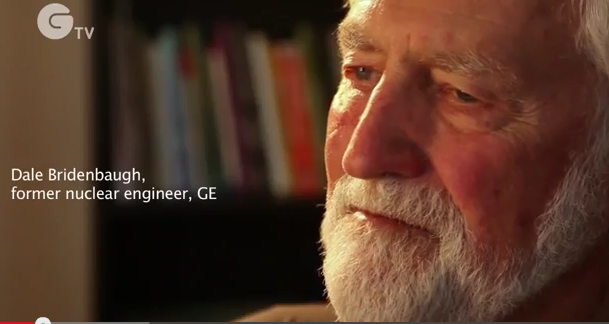 Dale Bridenbaugh
Published on 6 Jul 2013
The video above is a recent brief talk on the failures in the design of the reactor at Daichi and those of the USA
Below is an article that was released 5 days after the Tsunami struck the nuclear power plant at Fukushima Daichi. The plant had suffered 3 meltdowns by this point with massive releases on radioactivity into the environment.
Fukushima Reactor Flaws Were Predicted – 35 Years Ago
The failings of the Fukushima nuclear reactor were so substantial that three General Electric scientists who helped design the now imperiled reactors resigned from the company.
Dale Bridenbaugh helped assess the design of the Mark 1 nuclear reactor upon its creation back in 1975. His findings portray an extreme lack of confidence in the reactor’s ability to contain pressure in case of a meltdown. Bridenbaugh and two engineering colleagues couldn’t handle the pressure themselves, leading them to drop out of the project and resign their positions with the company.
(More on TIME.com: See photos of Fukushima on the brink of meltdown)
The Fukushima Daiichi nuclear power plant contains six total reactors, five of which are Mark 1s. And the problem the reactors are facing – a loss of power, leading to cooling uranium rods and rising pressure inside the core – is precisely the issue that drove Bridenbaugh’s resignation from General Electric. The reactors “did not take into account the dynamic loads that could be experienced with a loss of coolant,” Bridenbaugh told ABC News.
GE says the problems were rectified in the early 80s, but it may be weeks before the full extent of the quake damage to the reactors is determined.
In a distinct (though not entirely unexpected) change of heart, Bridenbaugh and his colleagues, after leaving GE, went to work for an antinuke campaign.
4 Comments »
Leave a reply to Jay Cancel reply
1 This Month
26 April – Chernobyl: Inside the Meltdown airs on National Geographic on Sunday 26th April from 4pm
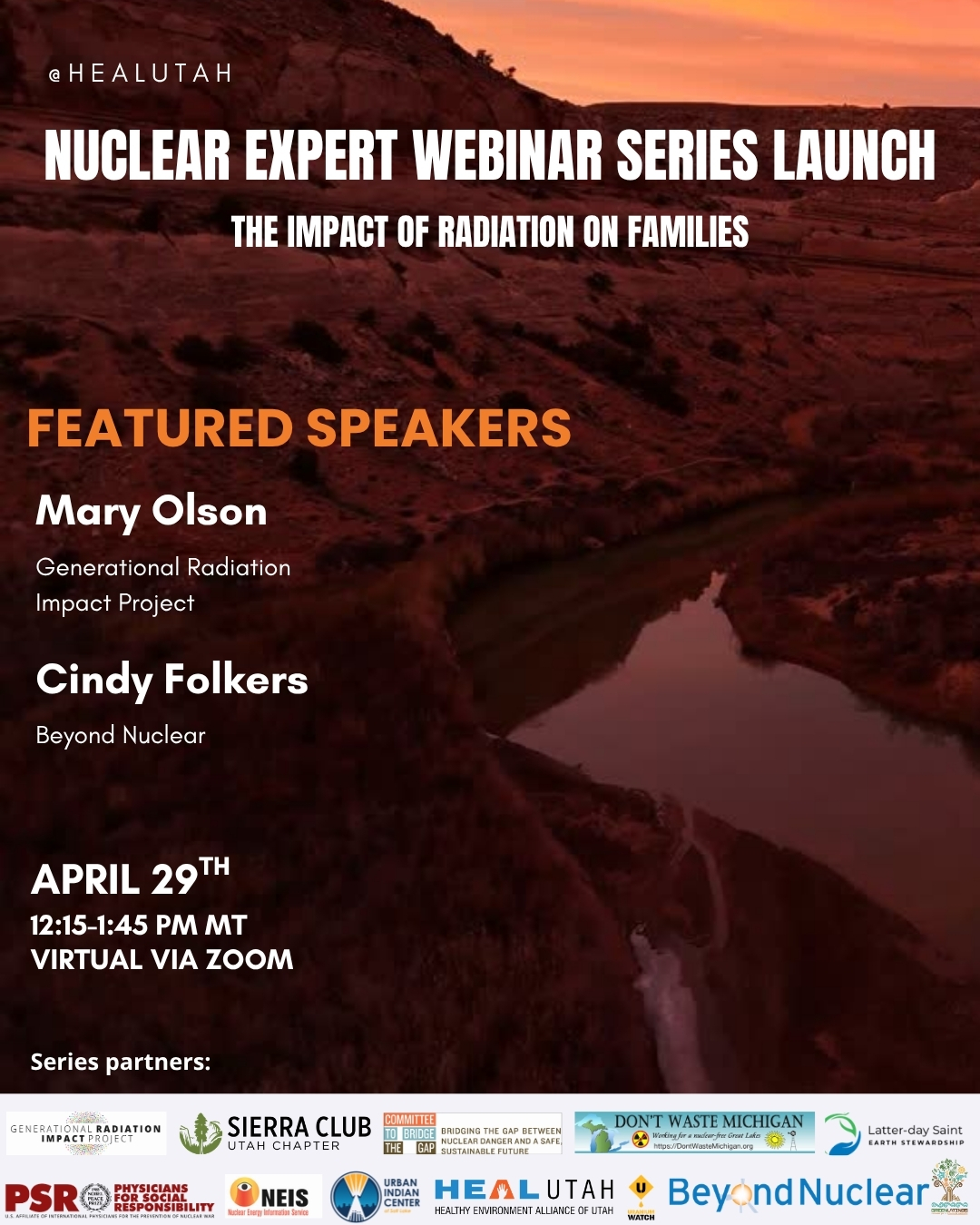
29 April – Nuclear Expert Webinar #1 – Radiation Impacts on Families with Mary Olson and Cindy Folkers
- 12:15 PM MT – 1:45 PM MT
- Location: Virtual – REGISTER TODAY

4 May -West Suburban Peace Coalition to discuss Iran war at May Educational Forum
Monday, May 4, 7:00 – 8:00 PM Central Standard Time
Title: : How Trump’s Narrative Tries to Shape the Reality of the War on Iran.
Contact Walt Zlotow, zlotow@hotmail.com 630 442 3045 for further information
14 May – online event From Bombs to Data Centres: the Face of Nuclear Colonialism

Pine Ridge Uranium is the real threat, not Tehran- Tell Burgum: Stop the Extraction.
Chernobyl: The Lost Tapes – A good documentary on Chernobyl on SBS available On Demand for the next 3 weeks– https://www.sbs.com.au/ondemand/tv-program/chernobyl-the-lost-tapes/2352741955560
To see nuclear-related stories in greater depth and intensity – go to https://nuclearinformation.wordpress.com
-
Archives
- April 2026 (356)
- March 2026 (251)
- February 2026 (268)
- January 2026 (308)
- December 2025 (358)
- November 2025 (359)
- October 2025 (376)
- September 2025 (257)
- August 2025 (319)
- July 2025 (230)
- June 2025 (348)
- May 2025 (261)
-
Categories
- 1
- 1 NUCLEAR ISSUES
- business and costs
- climate change
- culture and arts
- ENERGY
- environment
- health
- history
- indigenous issues
- Legal
- marketing of nuclear
- media
- opposition to nuclear
- PERSONAL STORIES
- politics
- politics international
- Religion and ethics
- safety
- secrets,lies and civil liberties
- spinbuster
- technology
- Uranium
- wastes
- weapons and war
- Women
- 2 WORLD
- ACTION
- AFRICA
- Atrocities
- AUSTRALIA
- Christina's notes
- Christina's themes
- culture and arts
- Events
- Fuk 2022
- Fuk 2023
- Fukushima 2017
- Fukushima 2018
- fukushima 2019
- Fukushima 2020
- Fukushima 2021
- general
- global warming
- Humour (God we need it)
- Nuclear
- RARE EARTHS
- Reference
- resources – print
- Resources -audiovicual
- Weekly Newsletter
- World
- World Nuclear
- YouTube
-
RSS
Entries RSS
Comments RSS
 nuclear-news
In my humble opinion, GE is fully responsible. GE MUST be held accountable for their ignorance. WILL SOMEBODY PLEASE TAKE THEM TO COURT AND SUE THEM OUT OF EXISTENCE!!!!!!!
I agree, a Class Action Lawsuit against GE Corporation is certainly in order, to benefit the people living in Japan. Where are all the lawyers and red-tape people when you really need them. Letting a multinational focus on protecting its profits to the exclusion of all other considerations is not a safe “standard operating procedure.” “Atoms for Profit,” continues to produce deadly consequences worldwide. When CERN LHC produces heavy ions and strangelets, and perhaps micro black holes in 2014, just remember, we are allowing this incredibly risky experimentation out of an unjustified respect for the unfettered massive profit of huge multinational corporate interests. It’s foolhardy and insane, and sooner or later could kill the entire planet.
Problem is that our present financial system (Wall Street, London Stock Exchange et al.) do not put a price on environmental damage, or risk of environmental damage. If such an environmental cost were to be built into our international financial system, it would storngly favour solar, wind, wave, OTEC, tinal and geothermal becuase the environmental risks are low, and hence insurance costs with repsect to the environment would be low.
The present financial system favours quick financial return, irrespective of damage to the environment. At Fukushima, additional cooling apparatus could have been installed and the Tsunami wall built higher. In the Deep Water Horizon accident, more cautious drilling and better safety arrangements could have been put in place. In both cases, on account of “penny pinching”, vastly costly and environmentally-damaging accidents occurred which could have been avoided with just a little more care and investment.
Our present financial system is based on a continuous-growth paradigm. It simply is not possible, and thus our whole financial system as we presently know it is borken and on financial life support … like Japan.
[…] [1] https://nuclear-news.net/2013/07/18/ex-ge-engineer-highlights-critical-fukushima-reactor-design-flaw/ […]
Pingback by GE Designed the Faulty Fukushima Nuclear Reactors... And Their Official Response May Surprise You | Wake Up World | November 27, 2013 |