North Korea has ‘given approval’ for nuclear attack
 North Korea declares it has given approval for a nuclear attack on the United States VIDEOSand GRAPHICS
- From: News Limited Network http://www.news.com.au/world-news/north-korea-gives-final-approval-for-nuclear-attack-on-united-states/story-fndir2ev-1226612136732
- April 04, 2013
- North Korean army says it has ‘final approval’ for nuclear attack
- United States to move anti-missile system to Guam
- Two advanced missile destroyers moved closer to North Korea
-
NORTH Korea says it has approved a nuclear attack on the United States in its latest threat as US Defence Secretary Chuck Hagel warned Pyongyang to back down. Continue reading
Another nuclear lie busted – about global warming
Germany: Ending Nuclear Power has Contributed to Reducing Carbon Dioxide (CO2) http://www.globalresearch.ca/germany-ending-nuclear-power-has-contributed-to-reducing-carbon-dioxide-co2/5329583
By Washington’s Blog
Global Research, April 03, 2013 Nuclear Power INCREASES Carbon Dioxide
There has been a tremendous amount of voodoo science pushing the claim that radiation isn’t harmful. (It is.)
Similarly, a new report published by Environmental Science & Technology claims that nuclear power saves more lives than it cost, due to reduction in carbon dioxide emissions.
However, none of the following words appear in the report:
Construction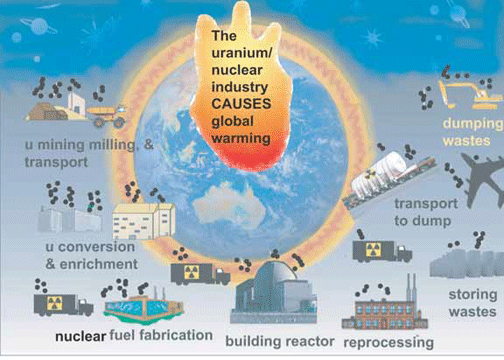
Construct
Building
Build
Facility
Facilities
Fabrication
Steel
Metal
Concrete
Why is this important?
Because, as BBC notes:
Building the [nuclear] power station produces a lot of CO2 . An International Forum on Globalization report – written by environmental luminaries Ernest Callenback, Gar Smith and Jerry Mander – have slammed nuclear power as catastrophic for the environment:
Nuclear energy is not the “clean” energy its backers proclaim. For more than 50 years, nuclear energy has been quietly polluting our air, land, water and bodies—while alsocontributing to Global Warming through the CO2 emissions from its construction, mining, and manufacturing operations. Every aspect of the nuclear fuel cycle—mining, milling, shipping, processing, power generation, waste disposal and storage—releases greenhouse gases, radioactive particles and toxic materials that poison the air, water and land. Nuclear power plants routinely expel low-level radionuclides into the air in the course of daily operations. While exposure to high levels of radiation can kill within a matter of days or weeks, exposure to low levels on a prolonged basis can damage bones and tissue and result in genetic damage, crippling long-term injuries, disease and death.
See this excellent photographic depiction of the huge amounts of fossil fuel which goes into building and operating a nuclear power plant. Continue reading
UK soldier dying, after exposure to depleted uranium
 Soldier dying after being exposed to uranium in Iraq must raise £110,000 for treatment because the NHS can’t help her Mail Online 4 Apr 13,
- Katrina Brown, 30, was exposed to radioactive material in Basra
- Diagnosed with rare systemic sclerosis which is slowly attacking her organs
- She believes the illness is linked to exposure to depleted uranium
- Says her only hope is having stem-cell transplant to regenerate her organs A soldier who developed a deadly illness after being exposed to uranium in Iraq is facing a race against time to raise the money she needs for potentially life-saving treatment.Katrina Brown, 30, was exposed to radioactive material while serving as a medic at a 600-bed military clinic in Basra in 2003.She was diagnosed with rare systemic sclerosis in 2008 which is slowly attacking her major organs – and will eventually lead to her death if left untreated.
Mrs Brown, who joined the Army at the age of 17, believes the illness is linked to exposure to depleted uranium.
She was handed a card before flying home from her 2003 tour warning her she had been in contact with radioactive materials. Continue reading
Post Fukushima – some worrying questions about nuclear power
 Uncomfortable Questions in the Wake of
  Nuclear Accidents at Fukushima and Chernobyl, TruthOut , 03 April 2013 By Anders Pape Møller and Timothy A. Mousseau, The Asia-Pacific Journal | Twenty nuclear accidents at the official International Nuclear Event Scale of 4 to 7 have occurred between 1952 and 2011 (Lelieveld et al. 2012). The risk of another major accident during the next 50 years is high and it has been estimated that some 30 million people could be directly affected by such an accident (Lelieveld et al. 2012).
The highest risks occur around major metropolises such as New York, Washington, Atlanta, Toronto, Western Europe, Shanghai, Hong Kong, and Tokyo and Osaka. The lessons that have emerged from Chernobyl and Fukushima reveal a range of serious questions that must be answered appropriately, above all for the sake of citizens, but also for the credibility of the nuclear industry, and for framing the ongoing debate over energy alternatives.
Because recent models suggest that more than half of released radioactive material from a nuclear disaster would be transported more than 1000 km from the site of release (Lelieveld et al. 2012), these questions are important even for citizens in distant countries.
It is in this spirit that we have produced a list of unpleasant questions that have been a cause of concern since we first started conducting research at Chernobyl in 1992, and have grown in urgency since conducting research at Fukushima beginning in 2011. Continue reading
The very real risk of Hanford nuclear waste tanks exploding
The nuclear safety board warned about the risk of explosion to Wyden, who wanted comment on the safety and operation of Hanford’s tanks, technical issues that have been raised about the design of a plant to treat the waste in those tanks, and Hanford’s overall safety culture.
Hanford Nuclear Waste Tanks Could Explode, Agency Warns http://www.huffingtonpost.com/2013/04/02/hanford-nuclear-waste-could-explode_n_3001134.html?utm_hp_ref=green includes video By SHANNON DININNY 04/02/13 YAKIMA, Wash. — Underground tanks that hold a stew of toxic, radioactive waste at the nation’s most contaminated nuclear site pose a possible risk of explosion, a nuclear safety board said in advance of confirmation hearings for the next leader of the Energy Department.
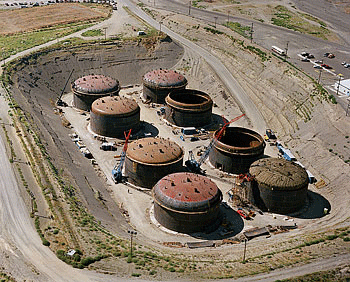
State and federal officials have long known that hydrogen gas could build up inside the tanks at the Hanford Nuclear Reservation, leading to an explosion that would release radioactive material. The Defense Nuclear Facilities Safety Board recommended additional monitoring and ventilation of the tanks last fall, and federal officials were working to develop a plan to implement the recommendation.
The board expressed those concerns again Monday to U.S. Sen. Ron Wyden, D-Ore., who is chairman of the Senate Energy and Natural Resources Committee and had sought the board’s perspective about cleanup at Hanford. Continue reading
A Buddhist analysis of the nuclear industry
The Three Nuclear Poisons, HUFFINGTON POST, David Loy, 1 April 13, David Loy, Zen Teacher, dscusses nuclear power as itrelated to Buddhist teachings about greed, aggression and delusion. “……..Today we have not only more powerful technologies such as nuclear power (and nuclear weapons), but also much more powerful institutions that control them, which are socially structured in such a way that they take on a life of their own. And if institutions attain a life of their own, does it also mean that they have their own motivations? That brings us to the crucial question: Can we detect institutionalized greed, aggression, and delusion in the promotion of nuclear power? Continue reading
Nuclear lobby lies about bananas and radiation
When you eat a banana, your body’s level of Potassium-40 doesn’t increase. You just get rid of some excess Potassium-40. The net dose of a banana is zero.
And that’s the difference between a useful educational tool and propaganda.
 Fake Science Alert: Fukushima Radiation Can’t Be Compared to Bananas or X-Rays , Zero Hedge, George Washington 04/01/2013 Nuclear apologists pretend that people are exposed to more radiation from bananas than from Fukushima.
But the EPA explains:
The human body is born with potassium-40 [the type of radiation found in bananas] in its tissues and it is the most common radionuclide in human tissues and in food. We evolved in the presence of potassium-40 and our bodies have well-developed repair mechanisms to respond to its effects. The concentration of potassium-40 in the human body is constant and not affected by concentrations in the environment.
Wikipedia notes:
The amount of potassium (and therefore of 40K) in the human body is fairly constant because of homeostatsis, so that any excess absorbed from food is quickly compensated by the elimination of an equal amount.It follows that the additional radiation exposure due to eating a banana lasts only for a few hours after ingestion, namely the time it takes for the normal potassium contents of the body to be restored by the kidneys. Continue reading
The growth, and strength, of anti nuclear sentiment in Japan
The anti-nuclear movement will provide a challenge to the LDP and business community’s desire to restart Japan’s nuclear sector. The Japanese public expects the new Nuclear Regulation Authority to strictly enforce safety regulations at existing nuclear facilities. Whether anti-nuclear sentiment will maintain its strength at the local and national levels and influence policy makers will strongly shape Japanese nuclear energy policy.
 Post-Fukushima Nuclear Politics in Japan, Part 3: Empowered Anti-Nuclear Sentiment http://themonkeycage.org/2013/04/03/post-fukushima-nuclear-politics-in-japan-part-3-empowered-anti-nuclear-sentiment/ by DANIEL ALDRICH on APRIL 3, 2013 (This post is co-authored with James Platte and Jennifer Sklarew. Part 1 of this series is here. Part 2 is here.)
Since the Fukushima nuclear disaster, public support for nuclear power in Japan has declined sharply, and anti-nuclear politicians have become empowered in their own parties or formed new, often single-issue parties to leverage popular support. Even the relatively pro-nuclear Liberal Democratic Party (LDP) is facing challenges in openly promoting nuclear power. At the same time, the LDP must remain mindful of nuclear facility host communities, which continue to support nuclear power, and of the larger business community and the politically powerful regional utilities, which remain committed to nuclear power for economic reasons. Continue reading
Shellfish species disappears near Fukuhsima nuclear plant
UPI: ‘Shellfish gone near damaged nuke plant’ — Researcher: Likely extinct because of Fukushima nuclear crisis http://enenews.com/upi-shellfish-gone-near-damaged-nuke-plant-japan-researcher-extinction-likely-caused-by-fukushima-nuclear-crisis
April 2nd, 2013
Xinhua, April 1, 2013: Japanese researchers announced recently that a sort of shellfish called Thais clavigera disappeared in a 30-km coastal area near Japan’s crippled Fukushima Daiichi nuclear plant. […] Other shellfish species, such as Cellana grata, were found in the alert zone but the amount of them declined, with high dose of radioactive materials inside their bodies, according to the researchers. […] Toshihiro Horiguchi, a researcher from the environmental institute and the head of the team, said that it is a rare occurrence that Thais clavigera entirely disappeared from a 30-km long area, adding the extinct was probably caused by the nuclear crisis. The link between the disappearance and the catastrophic tsunami was excluded as the shell was also found in other areas that affected by the disaster, according to the team. […]
UPI, April 1, 2013: Shellfish gone near damaged nuke plant […] A species of shellfish has disappeared along an 18-mile stretch of coast near Japan’s devastated Fukushima Daiichi nuclear plant, scientists say. […] Other shellfish species were found in the alert zone but their numbers had declined and high levels of radioactive materials were detected in them, the researchers said. Lead researcher Toshihiro Horiguchi said the disappearance of Thais clavigera was likely a result of radiation from the damaged plant. […]
See also: Study: Significant decrease in abundance of Fukushima birds and butterflies as radiation levels increase -NYT
AUDIO Groundwater flows from Fukushima reactors to the ocean
 Tecpo shows groundwater flowing from Fukushima reactors into ocean April 2nd, 2013 http://enenews.com/tecpo-shows-groundwater-flowing-from-fukushima-reactors-into-ocean-photo
Title: Progress Status of the Groundwater Bypass Construction
Source: Tokyo Electric Power Company
Date: March 27, 2013
[…] Gradual Reduction of Groundwater
The groundwater level will be gradually reduced with the groundwater bypass put in operation. Careful water level control will be implemented to prevent the accumulated water in the buildings from leaking to the outside while monitoring the groundwater level reduction and its water quality. The sub-drains installed around the buildings will be fully utilized for the monitoring. An observation hole will be newly installed between the Reactor Building and the pump well. […]
See also: Graphic shows ‘direct discharge’ going from Fukushima Daiichi reactors into Pacific — Underground flow of contaminated water also indicated (VIDEO)
Bill Gates now promoting renewables (? not nuclear)
Bill Gates Provides Boost To Renewable Energy Storage Company Aquion Energy April 3, 2013 Clean Technica Nicholas Brown
Bill Gates, the well known co-founder of Microsoft, has decided to provide a financial boost to renewable energy storage research and development (R&D). He is one member of a group of high-profile investors who are investing $35 million into Aquion energy.
The company is creating a water-based battery system intended to be cheap and environmentally friendly. Aquion’s energy storage technology is reportedly being developed for large- and small-scale energy storage projects, and the company is delivering pre-production energy storage units throughout this year, with the intention to ramp up production at a high-volume manufacturing plant in Pennsylvania by the end of 2013. http://cleantechnica.com/2013/04/03/bill-gates-provides-boost-to-renewable-energy-storage/#XErorPJRkTq1fT8b.99
UK – MI5 dirty tricks against pensioner foiled! More to follow?
…Nevertheless, the judgement does not generally prohibit the processing of personal data of innocent people. The Court mentioned that in general data retention of activists serves the public interest in a “sufficiently important way“. In the case at hand, information held by Mr. Catt was of no use. What we are missing is a clear message urging the creation of a legal framework which narrows down the possibilities in which data of peaceful protesters can be retained…..
Peaceful Protester’s personal data removed from extremism database
“This judgment exposes the widespread and sinister nature of police surveillance of ordinary members of the public in this country. It also acts as a safeguard against the creeping criminalisation of peaceful protest. The Association of Police Officers and Metropolitan Police Commissioner have sanctioned this unlawful conduct for almost a decade and must be made accountable”. 1
Last week three of the country’s most senior judges in the Court of Appeal found that the Association of Chief Police Officers (ACPO) and the Metropolitan Police Commissioner violated John Catt’s human rights.
The case concerns the 88-year old activist John Catt, a frequent participant in protests and public demonstrations, including most recently that organized by a group called “Smash EDO” which campaigns against the weapon manufacturer EDO Defence Systems.

Although some of the core supporters of that group are prone to violence and criminal behaviour, Catt has never been convicted of criminal conduct in connections to the demonstrations he attended. Nonetheless, Catt’s personal information was held on the National Domestic Extremism Database that is maintained by the National Public Order Intelligence Unit. The information held on him included his name, age, description of his appearance and his history of attending political demonstrations. The police had retained a photograph of Mr Catt but it had been destroyed since it was deemed to be unnecessary. The information was accessible to members of the police who engage in investigations on “Smash EDO”.
In the ruling the Court of Appeal departs from earlier judgments by mentioning that the “reasonable expectation of privacy” is not the only factor to take into account in determining whether an individual’s Article 8 (1) right has been infringed. In surveying ECtHR case law, the Court noted that it is also important to check whether personal data has been subjected to systematic processing and if it is entered in a database. The rationale to include consideration of the latter two categories is that in this way authorities can recover information by reference to a particular person. Therefore, “the processing and retention of even publicly available information may involve an interference with the subject’s article 8 rights.” 2. Since in the case of Catt, personal data was retained and ready to be processed, the Court found a violation of Article 8 (1) that requires justification.3.
The Court considered that a violation of Article 8 (1) which is compliant with Article 8 (2) needs to pursue a legitimate aim and it needs to be proportionate. In regard to the former, it is not disputed that the database was maintained in order to detect and prevent crime. In regard to proportionality, the Court of Appeal stated that the aim of retaining Catt’s data was to obtain a better understanding of how Smash EDO is organised and to be in a position to forecast the place and nature of its next protest. The Court found that “[i]t is not easy to understand how the information currently held on Mr. Catt can provide any assistance in relation to any of those matters.” 4. The Court continued by stating, “the systematic collection, processing and retention on a searchable database of personal information, even of a relatively routine kind, involves a significant interference with the right to respect for private life. It can be justified by showing that it serves the public interest in a sufficiently important way, but in this case the respondent has not in our view shown that the value of the information is sufficient to justify its continued retention.” 5.
This judgment illustrates the positive impact of the European Convention on Human Rights on the privacy and data protection framework of the UK. Hitherto, UK courts primarily analysed whether an individual has a “reasonable expectation” to privacy when determining whether Article 8 had been engaged 6. By referring to ECtHR case law, the Court of Appeal added in the Catt case the analysis of whether “systematic processing” and “entry into a database” took place. Nevertheless, the judgment does not generally prohibit the processing of personal data of innocent people. The Court mentioned that in general data retention of activists serves the public interest in a “sufficiently important way”. In the case at hand, information held by Mr. Catt was of no use. What we are missing is a clear message urging the creation of a legal framework which narrows down the possibilities in which data of peaceful protesters can be retained.

For the most part the actions of domestic extremists pose a threat to public order, but not to national security. They are normally investigated by the police, not the Security Service.
To meet the threat of domestic extremism, the National Extremism Tactical Coordination Unit (NETCU)  was created in 2004. It merged in 2011 with the National Public Order Intelligence Unit (NPOIU) and the National Domestic Extremism Team (NDET) to form the National Domestic Extremism Unit (NDEU). For more information, see the Association of Chief Police Officers website .

Bradley Manning & The Deepwater Horizon mystery – Greg Pallast reports
…..Had Manning’s memos come out just a few months earlier, the truth about BP’s deadly drilling methods would have been revealed, and there’s little doubt BP would have had to change its ways. Those eleven men could well have been alive today. ….
By Greg Palast for Vice Magazine
Wednesday, 3. April 2013
Three years ago this month, on the 20th of April, 2010, the BP Deepwater Horizon drilling rig blew itself to kingdom come.
Soon thereafter, a message came in to our office’s chief of investigations, Ms Badpenny, from a person I dare not name, who was floating somewhere in the Caspian Sea along the coast of Baku, Central Asia.
The source was in mortal fear he’d be identified – and with good reason. Once we agreed on a safe method of communication, he revealed this: 17 months before BP’s Deepwater Horizon blew out and exploded in the Gulf of Mexico, another BP rig suffered an identical blow-out in the Caspian Sea.
Crucially, both the Gulf and Caspian Sea blow-outs had the same identical cause: the failure of the cement “plug”.
To prevent blow-outs, drilled wells must be capped with cement. BP insisted on lacing its cement with nitrogen gas – the same stuff used in laughing gas – because it speeds up drying.
Time is money, and mixing some nitrogen gas into the cement saves a lot of money.
However, because BP’s penny-pinching method is so damn dangerous, they are nearly alone in using it in deep, high-pressure offshore wells.
The reason: nitrogen gas can create gaps in the cement, allow methane gas to go up the borehole, fill the drilling platform with explosive gas – and boom, you’re dead.
So, when its Caspian Sea rig blew out in 2008, rather than change its ways, BP simply covered it up.
Our investigators discovered that the company hid the information from its own shareholders, from British regulators and from the US Securities Exchange Commission. The Vice-President of BP USA, David Rainey, withheld the information from the US Senate in a testimony he gave six months before the Gulf deaths. (Rainey was later charged with obstruction of justice on a spill-related matter.)
Britain’s Channel 4 agreed to send me to the benighted nation of Azerbaijan, whose waters the earlier BP blow-out occurred in, to locate witnesses who would be willing to talk to me without getting “disappeared”. (They didn’t talk, but they still disappeared.)
And I was arrested. Some rat had tipped off the Security Ministry (the official name of the Department of Torture here in this Islamic Republic of BP). I knew I’d get out quick, because throwing a reporter of Her Majesty’s Empire into a dungeon would embarrass both BP and the Azeri oil-o-crats.
Obama – Unfit For Nobel Prize, DC’s Revolving Door, Pig in the Pipeline
Published on 3 Apr 2013
Abby Martin Breaks the Set on Unworthy Nobel Prize Winners, Washington’s Revolving Door, & The Deceitful Oil Industry
LIKE Breaking the Set @ http://fb.me/BreakingTheSet
FOLLOW Abby Martin @ http://twitter.com/AbbyMartin
EPISODE BREAKDOWN: On this episode of Breaking the Set, Abby Martin talks to Norman Solomon, co-founder of rootsaction.org, about the growing campaign to revoke Obama’s Nobel peace prize and the media facilitating war. Abby then talks to RT producer, Rachel Kurzius, about the revolving door between the public and private sectors and how they intersect in Washington, DC. BTS wraps up the show with a look at the recent Exxon Mobil oil spill in central Arkansas, and highlights some surprising findings about the oil industry’s most deceitful practices.
Breaking ! Report – More reports coming out of the harsh crackdown on NGO`s in Putins Russia
“This is the first time in over 21 years that we have been inspected,” said Rachel Denber, deputy director of …..HRW’s Europe and Central Asia division. “The scale of these inspections has been massive and unprecedented and is part of a much broader campaign to limit civil society.” It was also, she said, “part of a broader effort to brand those organisations that are connected to foreigners as enemies, as suspect”……..
Source Child Rights International Network
http://www.crin.org/resources/infodetail.asp?id=30613
02/04/2013

….As soon as former KGB leader Putin took over as President for 8 years, any chance at development of these fledgling human rights were gone. When he devolved his role to PM, and Medvedev initially took the Presidency a brief power opportunity for Medvedev existed, but not for long……
Image and quote source ; http://unabashedleft.blogspot.co.uk/2011/09/bizarro-putin-supporter-claims-sheep.html
Summary:
Germany and France summoned Russian diplomats in Berlin and Paris, after Russia launched a series of raids on international non-governmental organisations (NGOs) across the country amid a wider crackdown on critics of the Kremlin.
 http://www.guardian.co.uk/world/2013/mar/27/russia-raids-human-rights-crackdown
[27 March 2013] –
The sweeps, billed as an attempt to weed out “foreign agents”, targetedhuman rights organisations, environmental advocates, women’s groups, non-Orthodox churches, charities and at least one French language school. Among the sites raided were the Moscow offices of the rights groups Amnesty International, Human Rights Watch and Transparency International.
“This is the planned destruction of the NGO sector in Russia,” said Lev Ponomarev, head of For Human Rights, a Russian group that was targeted on Monday. “It’s a war on NGOs and the strengthening of the authoritarian police state.”
Catherine Ashton, the EU high representative, said she was “concerned” by the raids and said they formed part of “a trend that is deeply troubling”.
“The inspections and searches launched against the Russian NGO community and conducted on vague legal grounds are worrisome since they seem to be aimed at further undermining civil society in the country,” she said in a statement.
The German foreign ministry summoned the number two diplomat in the Russian embassy in Berlin on Tuesday “to express the German government’s concern” over the raids. Two German NGOs in Moscow and Saint Petersburg were raided earlier this week. Hans-Gert Pöttering, chairman of the Konrad-Adenauer-Stiftung foundation in Saint Petersburg, said officials had seized four of the group’s computers there.
The French foreign ministry sent a note to its Russian embassy on Wednesday demanding an explanation, but said in a statement that the ambassador had been “invited” for a discussion.
The US embassy in Moscow said via its Twitter feed: “It is with great concern that we are following reports of unprecedented inspections of NGOs across Russia.”
Prosecutors, tax inspectors and officials from the justice ministry have conducted unannounced “checks” on more than 80 organisations around Russia, said Pavel Chikov, the head of Agora, a legal group that provides assistance to civic and political activists. Thousands more are expected to be targeted, he said. Agora was raided on Wednesday.
The sweep comes eight months after Vladimir Putin, the president, signed a widely criticised law demanding that NGOs which receive funding from abroad label themselves as “foreign agents”. Critics said the law was reminiscent of Soviet-era efforts to demonise foreigners and those “collaborating” with them.
A handful of groups, including For Human Rights, have refused to follow the law on principle. “I am not a foreign agent,” said Ponomarev, arguing that following the law – which includes stamping “foreign agent” on all paper and electronic documents – would make his work impossible.
1 This Month

Protect Sazan Island from the Trump family! https://secure.avaaz.org/campaign/en/protect_sazan_island_from_the_trump_family_loc/?bqFCVab&v=174511&cl=22707147157&_checksum=5e9dde668860e8231c33699735e16a1fbf22ab2cb01da50c999fe8732b9775ef&utm_source=email&utm_medium=blast_email&utm_campaign=174511
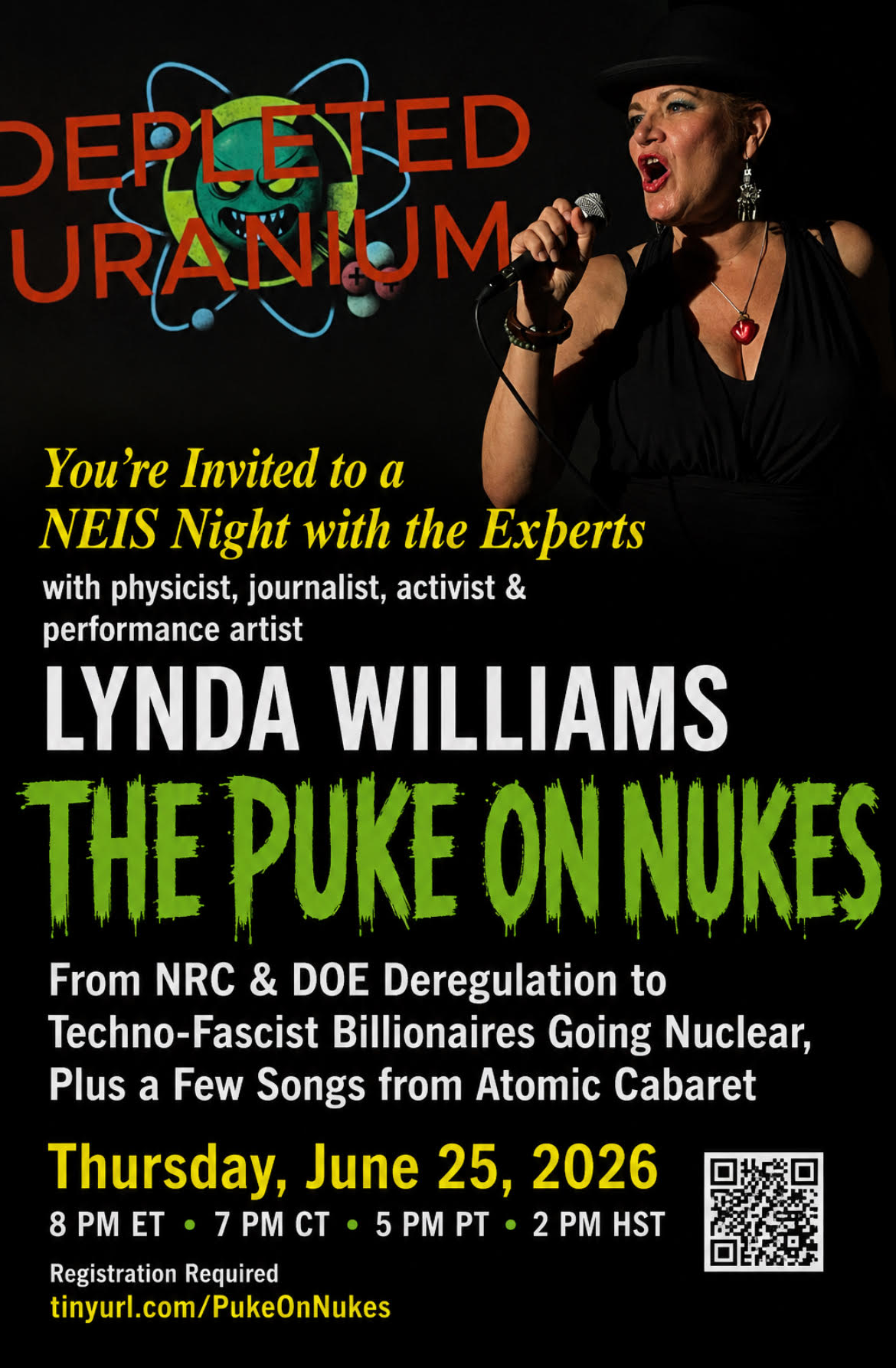
25 June- THE PUKE ON NUKES
Thursday, June 25, 2026
7pm Central Time (8pm ET, 6pm MT, 5pm PT) UTC – 5
From NRC & DOE Deregulation to Techno-Fascist Billionaires Going Nuclear, Plus a Few Songs from Atomic Cabaret REGISTER
26 June – Radiation Trainwreck at the NRC / Join the Protect Better Campaign – https://us02web.zoom.us/meeting/register/4ZlZ5_qLSHGiLSCg8FF6Bg#/registration


Cuba Is Not a Failed State – It Is a Besieged State
PETITION: “Global Appeal to Endorse Palestinian Right of Return of Refugees”
To see nuclear-related stories in greater depth and intensity – go to https://nuclearinformation.wordpress.com
-
Archives
- June 2026 (142)
- May 2026 (306)
- April 2026 (356)
- March 2026 (251)
- February 2026 (268)
- January 2026 (308)
- December 2025 (358)
- November 2025 (359)
- October 2025 (376)
- September 2025 (257)
- August 2025 (319)
- July 2025 (230)
-
Categories
- 1
- 1 NUCLEAR ISSUES
- business and costs
- climate change
- culture and arts
- ENERGY
- environment
- health
- history
- indigenous issues
- Legal
- marketing of nuclear
- media
- opposition to nuclear
- PERSONAL STORIES
- politics
- politics international
- Religion and ethics
- safety
- secrets,lies and civil liberties
- spinbuster
- technology
- Uranium
- wastes
- weapons and war
- Women
- 2 WORLD
- ACTION
- AFRICA
- Atrocities
- AUSTRALIA
- Christina's notes
- Christina's themes
- culture and arts
- Events
- Fuk 2022
- Fuk 2023
- Fukushima 2017
- Fukushima 2018
- fukushima 2019
- Fukushima 2020
- Fukushima 2021
- general
- global warming
- Humour (God we need it)
- Nuclear
- RARE EARTHS
- Reference
- resources – print
- Resources -audiovicual
- Weekly Newsletter
- World
- World Nuclear
- YouTube
-
RSS
Entries RSS
Comments RSS
 nuclear-news