Early start for secret shipments of radioactive weapons fuel to Nevada
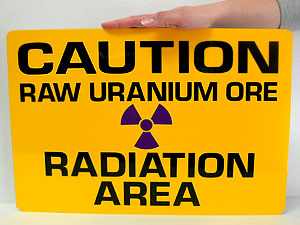
DOE: Uranium shipments to Nevada could start soon, knoxnews.com, Associated Press December 31, 2012 OAK RIDGE, Tenn. (AP) — A U.S. Department of Energy official says stocks of radioactive uranium could start shipping from the Oak Ridge National Laboratory to Nevada in 2013.
However, The Knoxville News Sentinel reports (http://bit.ly/WVktTK ) that agency officials will not discuss exact dates of the shipments because of safety and security reasons because of the fissionable material’s potential use in nuclear weapons. DOE’s Environmental Manager Mark Whitney said in an interview with the newspaper this fall that the DOE wanted to start the shipments to the Nevada National Security site in early 2013 pending approvals to ship. Continue reading
Nuclear speak about nuclear weapons accidents
When two nukes crashed, he got the call, Orange County Register, 31
Dec 12, First of two parts: After two nuclear bombs fell out of a
plane in 1961, the U.S. turned to Jack ReVelle. Read Part 2. By
KEITH SHARON In the U.S. military’s
euphemistic lexicon of nuclear warfare, there are four terms no one
wants to hear. A “dull sword” is a minor incident involving a nuclear
weapon. A “bent spear” is a breach in the handling of a nuclear
weapon.
An “empty quiver” is a nuclear weapon that has been stolen or lost.
And then there is a “broken arrow,” a nuclear weapon that has somehow
gone awry. According to the book “Broken Arrow: The Declassified
History of U.S. Nuclear Weapons Accidents,” published in 2008, the
United States government has publicly acknowledged 36 broken arrows in
history.
Only one of those involved the potential detonation of two megaton
nuclear bombs on U.S. soil. Only one of those could have wiped out
half the state of North Carolina and, in the process, triggered a
nuclear war.
That broken arrow involved a guy named Jack ReVelle…..
http://www.ocregister.com/articles/revelle-381835-nuclear-bombs.html
Project COW – USA’s bright idea to bomb the moon
A nuclear flash point, Deccan Herald, Jan, 1, 2013: BOMBING THE MOON
Recent reports suggest that during the heydays of the Cold War, the
United States planned to bomb the moon so that the nuclear flash would
intimidate rival powers. Continue reading
Nuclear energy dilemma in Europe, as consensus om nuclear industry crumbles
Nuclear Options Vex Europe WSJ December 31, 2012, By GÉRALDINE AMIEL
and ALESSANDRO TORELLO, FESSENHEIM, France—The owner of the local
nuclear power plant, Electricité de France SA, EDF.FR +1.23% is
spending €20 million ($26.4 million) to upgrade it and extend its life
span for another decade, seemingly breathing new life into this town
on the German border.
But the French governent—EDF’s majority shareholder—says it plans to
close the site in 2016, amid an effort to reduce the country’s
reliance on nuclear power and promote renewable energy.
Amid uncertainty, EDF’s overhaul is proceeding. But the conflict at
Fessenheim illustrates a broader dilemma facing France and other
European Union countries. Citizens have grown more wary about the
dangers of the atom since the March 2011 nuclear catastrophe in Japan,
and the political consensus that once existed in some countries around
nuclear energy is crumbling….. Continue reading
Japan’s PM reverses policy – now favours nuclear energy
Japan’s new leader endorses nuclear plants
http://www.smh.com.au/world/japans-new-leader-endorses-nuclear-plants-20121231-2c306.html#ixzz2GkVdjSKQ
January 1, 2013 TOKYO — The newly elected prime minister of Japan,
Shinzo Abe, said Sunday that he would seek to build nuclear reactors,
reversing within a week in office a campaign pledge to move Japan away
from nuclear power. Continue reading
Fukushima Dead Zone -RT with Alissa Descotes Toyosaki

January 03, 2013
RT
Abby Martin
On this episode of Breaking the Set, Abby Martin first highlights Senator Ron Wyden as a hero for his steadfast voice of opposition to the recently passed FISA bill. At the same time, she calls out Father Piero Corsi of Italy for saying that women provoke every bad thing coming their way. Abby then speaks to citizen journalist Alissa Descotes Toyosaki about the ongoing crisis in Fukushima and the anti-nuclear movement growing in Japan. BTS wraps up the show with a discussion on Islamophobia machine and how to stop it with Nadhira Al-Khalili, legal counsel for the Council on American Islamic Relations.
http://rt.com/programs/breaking-set-summary/fukushima-misogynist-islamophobia-machine/
A French take on the disaster here with some good news about the independent fukushima hospital set up to combat the bad medical practice of the official fukushima medical hospital that is covering up the details and evidence of contamination health effects…. Please note that CRIIRAD (qouted) support the ICRP dose measurement theory and this theory is more suitable for clinical hospital conditions. It is not effective for those breathing in gases and particles. Also, There is no mention of Plutonium, Strontium 90 etc. However CRIIRAD`s ICRP still advises areas needing evacuation.
http://blogs.rue89.com/fleurs-printemps-nucleaire
“…While officially, the Japanese government had agreed to open its doors to foreign companies that had applied to the decommissioning of the devastation, one wonders about the exclusion of these firms decided by that same government. connection
What are the reasons for this refusal?
Is there some secret to protect?
With CRIIRAD we learned that hundreds of thousands of Japanese still living in heavily contaminated territories were permanently irradiated.
In fact released products in large quantities in a wide radius around the plant, far beyond the evacuation zone are cesium 134 and 137, the latter having a period or half-life of 30 years.
US Atomic Tests in the Marshall Islands: connection to Japan and USA -Videos
For a better quality informative video please see the second video link at he bottom of the page. Holly Barker explains the connection between the Marshall Islands, Japan, USA and the Nuclear club. detailing Human Rights abuses. dated March 2012
US Atomic Tests in the Marshall Islands: UN Geneva

Published on Jan 2, 2013
The US carried out their main Atmospheric Megaton Hydrogen (thermonuclear) Bomb Tests in the Pacific Test grounds centred on the Marshall Islands between 1950 and 1958 after the discovery that their atomic tests in the Nevada desert and in New Mexico were causing fallout contamination as far away as New York.
The Hydrogen Bombs were tested in the Marshall Islands and the largest one, a 15Mt bomb destroyed Bikini atoll. Fallout in the Marshall Islands resulted in serious health effects which were systematically either ignored or covered up.
The question of the magnitude of these effects has come to the UN Human Rights Council in Geneva and a Special Rapporteur was charged with investigating the issue and producing a report for the September meeting of the UNHRC in Geneva.
The US Health Physics Society had previously produced a biased and dishonest report arguing that fallout was too low and doses too low to have caused any effects. This video is of the first half of the UNHRC meeting in Geneva on September 13th 2012 organised by the American Association of Anthropologists.
The meeting Chair is Prof Barbara Rose Johnston and presentations were made by Prof Holly Barker and Prof Chris Busby. Delegates from the Marshall Islands also attended and made contributions. Dr Busby’s presentation is uploaded in a separate video and his report to the UNHRC is at http://www.nuclearjustice.org and his paper on the effects is at http://www.greenaudit.org/?page_id=104
The main recommendations of Dr Busby’s reports were adopted by the UN Special Rapporteur in his report to the General Assembly, most important being that a proper independent (of the US and the Health Physics Society) investigation of the contamination and the ill health are carried out.
https://www.youtube.com/watch?v=FMhI2-dZ3Jo
TalkingStickTV – Holly Barker – U.S. Nuclear Testing on the Marshall Islands
Published on Mar 4, 2012
Talk by Holly Barker co-author of “The Consequential Damages of Nuclear War: The Rongelap Report” on “From Nuclear Weapons to Nuclear Energy: The U.S., The Marshall Islands, and Japan” given February 24, 2012 at University Temple United Methodist Church in Seattle, WA.
Columbia nuclear fuel worker exposed to uranium
2 Jan 2012
By SAMMY FRETWELL
Emergency medical crews whisked a Columbia nuclear fuel plant employee to the hospital this week after the worker was exposed to a uranium-containing acid, according to the federal Nuclear Regulatory Commission.
The Westinghouse Electric Co. employee, whose name was not available, was treated for pain and released from the hospital. The incident has prompted an investigation by the company.
The exposure is unusual, say company officials and veteran nuclear industry watchers. Anti-nuclear activist Tom Clements said the incident warrants further review by the NRC, the chief oversight agency for the nuclear industry.
“I have not seen an exposure like this and I check these (NRC reports) every day,” he said. “It’s all the more reason to investigate more closely.”
NRC spokesman Roger Hannah said his agency would await the results of the Westinghouse investigation before deciding if further action is necessary. Company officials said they already have taken steps to avoid similar incidents even as their in-house investigation continues. The employee is fine and returned to work soon after Monday night’s incident, plant manager Dave Precht said.
“The trip to the hospital was precautionary,” Precht said Wednesday. “Instead of taking any risk, we just took him to make sure.”
Westinghouse, a division of Japan’s Norio Sasaki, uses uranium to make fuel for nuclear plants across the country at its facility in lower Richland County. The Bluff Road plant is a 550,000-square-foot facility built in 1969. The company is one of the Columbia area’s largest employers with about 1,200 workers.
Uranium is a naturally occurring radioactive material that is mined and processed for use in the nuclear power industry.
Fukushima: NHK Documentary; Downwind From Disaster
http://www.youtube.com/watch?v=NJlmkM-ebXM
Published on Jan 1, 2013
Duration -42 mins

Minamisoma,
Fukushima Prefecture
This is a record of people in that one town caught up in the triple disaster.
Threatened by the unseen forces of radiation, what did the residents do? What was their state of mind?
“Why should we evacuate, why do we have to flee?”
New -Chris Busby at the UN: Marshall Islands US Atomic Tests -October 2012
“The Royal Society in London was brought into cover up the effects in Iraq”
Edited and updated video link with re-edited video 3 Jan 2012
Published on Jan 1, 2013
Dueation – 27 mins

This is Dr Busby’s contribution to a meeting organised by the American Association of Anthropologists at the United Nations Human Rights Council in Geneva on 12th September 2012. The Chair was Prof Barbara Rose Johnston. The earlier part of the meeting will also be uploaded to youtube. The US nuclear tests created enormous contamination and serious health problems in the Marshall Islands but these have been systematically covered up.
Most recently the US Health Physics Society published a dishonest series of reports maintaining that there were no serious health effects due to the radioactive fallout. Dr Busby’s paper on the issue “The health effects of exposures to radioactivity from the us pacific nuclear tests in the Marshall is. Criticisms of the analysis of Simon et al 2010: Radiation doses and cancer risks in the Marshall islands associated with exposure to radioactive fallout from Bikini and Enewetak nuclear weapons tests and supporting documentation. Occasional paper 2012/6″ is at the Green Audit website:
http://www.greenaudit.org/?page_id=104
and at:
http://www.scribd.com/doc/111935078/22
His representation to the UNHCR on behalf of the AAA is at:
http://nuclearjustice.org/wp-content/uploads/2012/09/UAJWritten-statements-Bu…
Dr Busby’s main recommendations were adopted by the Special Rapporteur to the UNHCR in his report to the General Assembly. These were that there should be a fully independent study both of the remaining fallout in the Marshall Islands and also an independent Epidemiological study of the health of the inhabitants.
North Korea EMP attack could destroy U.S. – Concern over nuclear Spent Fuel Pools
“..North Korea’s last round of tests, conducted in May 2009, appear to have included a “super-EMP” weapon, capable of emitting enough gamma rays to disable the electric power grid across most of the lower 48 states, says Dr. Peter Vincent Pry, a former CIA nuclear weapons analyst and president of EMPact America, a citizens lobbying group.
North Korea’s nuclear tests have been dismissed as failures by some analysts because of their low explosive yield. But Dr. Pry believes they bore the “signature” of the Russian-designed “super-EMP” weapon, capable of emitting more gamma radiation than a 25-megaton nuclear weapon…” Source: Newsmax
Earlier this year a citizen petitioned the NRC to revisit the issue of grid disruption, this time focusing on the spent fuel pools at U.S. nuclear power plants. The petition calls for a new rule that would require nuclear power plant spent fuel pools to have emergency systems capable of functioning for two years in the absence of an operating electric grid. The NRC is currently analyzing dozens of public comments on the petition, and the agency expects to issue a decision on the petition in the middle of next year.
http://public-blog.nrc-gateway.gov/2011/10/31/keeping-u-s-reactors-safe-from-power-pulses/
North Korea EMP attack could destroy U.S.

1 January 2013
North Korea now has an intercontinental ballistic missile (ICBM) capable of delivering a nuclear weapon to the United States, as demonstrated by their successful launch and orbiting of a satellite on Dec. 12, the Washington Times reports.
In fact, the Times report says, “North Korea is a mortal nuclear threat to the United States – right now.”
It’s not just the threat of conventional nuclear attack that has experts worried. Nor is the North Korea invasion scenario in the new remake of “Red Dawn” a realistic risk.
The real concern is that North Korea now has miniaturized nuclear weapons for ballistic missile delivery and armed missiles with nuclear warheads that could destroy the U.S. in a single blow with an EMP attack that would send the U.S. back to 19th century technology a la the NBC TV show “Revolution.”
South Carolina nuclear-waste cleanup plant delayed, overbudget with video
The most dangerous waste sits in 47 aging tanks that are prone to leaks. SRS slowly is cleaning out and neutralizing the material in the tanks to reduce its environmental and health threat. The work, however, can’t be finished until the salt-waste processing plant is operating.
SRS managers say the salt-waste plant likely won’t open until at least 2018 — nine years after its initial target date for completion — although that date is tentative and could be pushed back. The completion date depends on more money from the U.S. Department of Energy.
“We now have to address the cost increase, as well as the schedule delays, and get a viable baseline together for what it is going to take to complete this facility,” said Zack Smith, the Energy Department’s deputy manager at the Savannah River Site.
Video link Courtesy of redbuttonstudio
Published on Jan 1, 2013
Originally published on Dec 31, 2012
South Carolina nuclear-waste cleanup plant delayed, overbudget
By SAMMY FRETWELL
The (Columbia) State
The Savannah River Site’s salt-waste processing plant originally was scheduled for completion in 2009, but problems with its design and the types of materials needed in the facility have delayed work and sent costs skyrocketing.
Early U.S. Department of Energy estimates placed the project’s cost at $440 million. The cost later was revised to $900 million, agency records show. Today, it has risen to $1.3 billion, according to a November status report by the Energy Department.
That’s an important pocketbook issue for taxpayers.
But delays in the project also are a concern to the public for environmental and safety reasons. Without the salt-waste processing facility, efforts to clean up some of the word’s most dangerous atomic waste could be delayed.
Happy new year everyone!- Brandenburgische Konzert No.3, G-Dur, Allegro, Johann Sebastian Bach.
courtesy of
Royal Dutch Shell PLC – slightly unofficial website… Kulluk and that sinking feeling..
This issue transcends all geographical (and constituency) boundaries.
In September 2011, The Independent published an article under the headline: “Oil exploration under Arctic ice could cause ‘uncontrollable’ natural disaster. One of the world’s leading polar scientists has warned: “If there is serious oil spill under ice in the Arctic it will be very hard, if not impossible to stop it becoming an environmental catastrophe…”
What should be given the greatest weight in deciding if Shell can be trusted to drill in the Arctic Ocean – Shell’s promises about being able to react quickly and effectively to any incident/disaster arising from its pioneer Arctic drilling commencing in July, or its horrendous track record ofenvironmental pollution on an epic scale and deceiving host governments?
Shell won the rights to drilling rights in the USA after spending millions of dollars lobbying the Federal government.
Failures that led to the Kulluk’s demise


Tony Hopfinger, Suzanna Caldwell | Jan 01, 2013
A drilling rig operated by Royal Dutch Shell that had been adrift off and on in rough seas since Thursday ran aground near Kodiak Island in Alaska on Monday night, raising concerns about a possible fuel spill.
The Kulluk — a $290 million offshore oil rig operated as part of Shell’s Arctic drilling efforts in summer — washed up shortly before 9 p.m. at Ocean Bay on Sitkalidak Island, located close to Kodiak Island’s southeast shores.
The trouble started late Monday afternoon when a Shell tugboat — one of two vessels pulling the Kulluk — lost a line to the drilling rig. The second tug, the Alert, struggled to continue towing the Kulluk due to “severe engine problems.” The Alert’s crew was ordered to separate from the rig at 8:10 p.m. “to maintain the safety of the nine crewmembers aboard the vessel,” according to state environmental regulators and the U.S. Coast Guard.
The concern now is for the condition of the Kulluk, which is carrying an estimated 150,000 gallons of diesel and 12,000 gallons of lube oil and hydraulic fluid, Coast Guard officials told reporters Monday night at a news conference in Anchorage.
Fireproofing ‘inadequate’ at Japan nuclear reactors
By Agence France-Presse
Tuesday, January 1, 2013 8:01 EST

Image courtesy of http://www.dianuke.org
Japanese regulators have found inadequate fireproofing at more than one fifth of the nuclear reactors that went offline after the 2011 Fukushima crisis, a major daily said on Tuesday.
The finding could delay their restart by several years in some cases, the Mainichi Shimbun said.
More than 10 of Japan’s 50 reactors, excluding those at Fukushima, have flaws in fireproofing, the paper quoted sources at the industry ministry and the Nuclear Regulation Authority (NRA) as saying.
The Mainichi said these include the use of combustible electrical cables and equipment and machines sited too close together, potentially allowing a fire to spread even though the equipment is indispensable for maintaining safety.
The industry ministry has been investigating the issue while the NRA will soon conduct hearings with power companies, it said.
At some reactors the work to replace cables and renovate facilities could mean a delay of several years in restarting them, it quoted industry
If renovation is too costly, the reactors could be decommissioned, the sources said.
All but two of the nation’s reactors remain offline after they were shut for safety checks in the wake of the March 2011 Fukushima meltdowns, sparked by a quake and tsunami.
The pro-business Liberal Democratic Party-led government said last week it would give the green light to restarting any reactors deemed safe by regulators.
New prime minister Shinzo Abe has also voiced his willingness to build new reactors.
 Raw Story (http://s.tt/1xQ44)
“…..The Dianuke website (where the image is from) is down.. here is the message on the page
DiaNuke.org has been facing hacking/phishing and virus attacks recently and its smooth functioning has been effected.
We are trying to fix it and hope to be back soon.
Meanwhile, you are welcome to contact us on editor@dianuke.org …..”
@dianuke Get well soon! from us here at nuclear-news.net
1 This Month

22 June – Virtual Event –Climate Change: New Data, New Debate

Monday, June 22, 2026 2:30 p.m. – 3:15 p.m. CT
YouTube. Register here

Protect Sazan Island from the Trump family! https://secure.avaaz.org/campaign/en/protect_sazan_island_from_the_trump_family_loc/?bqFCVab&v=174511&cl=22707147157&_checksum=5e9dde668860e8231c33699735e16a1fbf22ab2cb01da50c999fe8732b9775ef&utm_source=email&utm_medium=blast_email&utm_campaign=174511

25 June- THE PUKE ON NUKES
Thursday, June 25, 2026
7pm Central Time (8pm ET, 6pm MT, 5pm PT) UTC – 5
From NRC & DOE Deregulation to Techno-Fascist Billionaires Going Nuclear, Plus a Few Songs from Atomic Cabaret REGISTER
26 June – Radiation Trainwreck at the NRC / Join the Protect Better Campaign – https://us02web.zoom.us/meeting/register/4ZlZ5_qLSHGiLSCg8FF6Bg#/registration


Cuba Is Not a Failed State – It Is a Besieged State
PETITION: “Global Appeal to Endorse Palestinian Right of Return of Refugees”
To see nuclear-related stories in greater depth and intensity – go to https://nuclearinformation.wordpress.com
-
Archives
- June 2026 (193)
- May 2026 (306)
- April 2026 (356)
- March 2026 (251)
- February 2026 (268)
- January 2026 (308)
- December 2025 (358)
- November 2025 (359)
- October 2025 (376)
- September 2025 (257)
- August 2025 (319)
- July 2025 (230)
-
Categories
- 1
- 1 NUCLEAR ISSUES
- business and costs
- climate change
- culture and arts
- ENERGY
- environment
- health
- history
- indigenous issues
- Legal
- marketing of nuclear
- media
- opposition to nuclear
- PERSONAL STORIES
- politics
- politics international
- Religion and ethics
- safety
- secrets,lies and civil liberties
- spinbuster
- technology
- Uranium
- wastes
- weapons and war
- Women
- 2 WORLD
- ACTION
- AFRICA
- Atrocities
- AUSTRALIA
- Christina's notes
- Christina's themes
- culture and arts
- Events
- Fuk 2022
- Fuk 2023
- Fukushima 2017
- Fukushima 2018
- fukushima 2019
- Fukushima 2020
- Fukushima 2021
- general
- global warming
- Humour (God we need it)
- Nuclear
- RARE EARTHS
- Reference
- resources – print
- Resources -audiovicual
- Weekly Newsletter
- World
- World Nuclear
- YouTube
-
RSS
Entries RSS
Comments RSS
 nuclear-news