It’s the uranium, stupid! France’s war in Mali
Although Niger has been France’s primary uranium trading partner in the region, investors are currently estimating 5,200 tonnes of untapped uranium sources in Mali, making the requirements of a favourable government and a suppressed civil society all the more urgent.
 The curbs on civil liberties in the West which the so-called War on Terror forces upon citizens is part of the same struggle that activists in West Africa are fighting against uranium mining corporations
Blood for Uranium: France’s Mali intervention has little to do with terrorism http://ceasefiremagazine.co.uk/blood-uranium-frances-mali-intervention-terrorism/ Adam Elliott-Cooper looks at the geo-strategic and economic interests shaping the current French intervention in Mali. 17 Jan 13, France opened 2013 with a series of airstrikes on Northern Mali to prevent “the establishment of a terrorist state”. At the time of writing, 11 civilians (including two children) have been killed, and according to the UN, an estimated 30,000 have been displaced. The morbid irony of the France’s leaders bombing people in order to prevent a “terrorist state” appears to be lost on them, but this may be due to their eyes being on something far more important – Mali’s economy. (Picture: Activists in Niger protesting uranium mining company AREVA) Continue reading
Leukemias near Nuclear Power Stations – new evidence
Taken together, the new studies indicate that our current understandings about radiation risks, especially in infants and children, may be incorrect and they may need to be revised upwards. In particular, the current adult (absolute) ICRP risk for fatal cancer of 5% per Sv and the ICRP’s use of a dose and dose-rate effectiveness factor (DDREF) look increasingly out of date.
The new studies also mean that our public radiation limits and constraints may need to be revised.
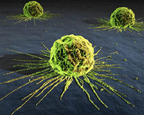 Recent evidence on the risks of very low-level radiation, Dr Ian Fairlie, January 17, 2013
“…… 4. Leukemias near Nuclear Power Stations The final area is exposures from nuclear power stations.
Readers will be aware of my lectures showing that about 40 studies worldwide indicate increased leukemia risks among children within 5 km of nuclear power plants (NPPs). In particular, the important 2008 KiKK case-control study (discussed in Fairlie, 2009), which was commissioned by the German Government, found large increases in the risks of child leukemias and embryonal cancers near all German NPPs. This authoritative report led to geographical studies sponsored by the governments of France, UK, Switzerland and Germany. These have now been published and all four had similar findings, ie 30% to 40% increases in child leukemias near NPPs – see table from Körblein and Fairlie (2012) which contains the references to these four government studies.
Table: Studies of observed (O) and expected (E) childhood leukemias (under 5 year olds) within 5 km of NPPs
| Dataset | O | E | SIR=O/E | 90% CI | one-sided p-value |
| Germany | 34 | 24.1 | 1.41 | 1.04-1.88 | 0.0328 |
| Great Britain | 20 | 15.4 | 1.30 | 0.86-1.89 | 0.1464 |
| France | 14 | 10.2 | 1.37 | 0.83-2.15 | 0.1506 |
| Switzerland | 11 | 7.9 | 1.40 | 0.78-2.31 | 0.1711 |
| Pooled | 79 | 57.6 | 1.37 | 1.13-1.66 | 0.0042 |
The important point here is that most scientists think that radiation exposures to local residents from NPPs are extremely small. Indeed, many nuclear scientists remain in denial about the relationship between proximity to NPPs and child leukemias despite the bountiful clear evidence which exists. Yet the evidence of child leukemias near NPPs fits well with the evidence emerging from background radiation and medical radiation. Continue reading
Malfunction, again: South Korea shuts down nuclear reactor
 Another S Korea nuclear reactor shut down due to malfunction Charles Lee, Seoul (Platts)–17 Jan 2013 Another South Korean nuclear reactor was shut down Thursday due to a malfunction just two weeks after two of
  three troubled reactors were restarted amid mounting electricity demand due to a prolonged cold spell…. This is the second time in less than six months that Uljin-1 has been shut down due to malfunction. It has been operating since September 1988. The Uljin power plant houses five other reactors, which have been operating for between 12 and 30 years. …..
On November 5, two 1 GW nuclear reactors at the Yeonggwang plant on the southwest coast were closed for at least two months of unscheduled maintenance because they used parts supplied with forged quality certificates.
As electricity demand rose to all-time highs, the country restarted the two reactors late last month despite lingering concerns about nuclear safety. Yonggwang-3 has remained closed since October 18, when minor cracks were found.
The country’s nuclear reactors experienced temporary unplanned shutdowns more than 15 times last year due to malfunctioning equipment.
The state-run nuclear regulator, the Nuclear Safety and Security Commission, has started conducting stress tests on all reactors to determine whether power stations in the future can withstand natural disasters…… http://www.platts.com/RSSFeedDetailedNews/RSSFeed/ElectricPower/8068967
Video: Cumbrians want Sellafield nuclear facility, just not the wastes
 VIDEO Protests spread on Cumbria nuclear waste dump plan, guardian UK 17 Jan 13, As Cumbria Tourism joins the Lake District national park inwarning against research in Ennerdale and Eskdale, local meetings and rallies are spreading Here’s more on the growing concern that nuclear waste burial could be considered within the borders of the Lake District national park, followingCumbria Tourism’s stand against the prospect earlier this week.
A meeting in Keswick saw all but three of 500 present vote against the idea of pursuing research in Ennerdale and Eskdale, one of the few areas of stable geology in West Cumbria, the home of the Sellafield nuclear complex.
As well as being in the national park, the lonely valley is the subject of an experiment called Wild Ennerdale which has barred all traffic apart from a few forestry trucks and the Land Rover which services remote Black Sail youth hostel. Even the latter has been limited to the minimum possible number of journeys to sustain the many walkers to whom it is a shrine.
You can read about the Guardian Northerner‘s weekend there last November, here, and a post from its recent wardens Suzanna Brett and Martin Lyne here.…… http://www.guardian.co.uk/uk/the-northerner/2013/jan/17/ennerdale-nuclear-waste
Medical radiation
 Recent evidence on the risks of very low-level radiation, Dr Ian Fairlie, January 17, 2013 “…...2. Medical Exposures
Most exposures from medical diagnostic procedures are relatively low, and although their collective doses are increasing in most developed countries, in almost all cases they are justified by their clinical benefits. Nevertheless there have been a score or so of articles in scientific journals in recent years expressing concern about the risks of increased doses from CT scans, especially to children. Even the WHO has issued a draft report expressing the need for more vigilance.
In order to investigate these concerns, Pearce et al (2012) conducted a massive UK retrospective cohort study of computed tomography (CT) scans among 178,000 patients. The team estimated absorbed brain and red bone marrow doses per CT scan and assessed the excess incidence of leukaemia and brain tumours cancer with Poisson relative risk models. They observed a positive association between radiation dose from CT scans and leukaemia (excess relative risk [ERR] per mGy = 0·036, 95% CI 0·005–0·120; p=0·0097); and a positive association with brain tumours (0·023, 0·010–0·049; p<0·0001). They found CT scans caused statistically significant increases in cancer risks in under three-year olds: three head scans tripled their risk of brain cancer and five to ten scans tripled their risk of leukemia. Although the authors did not comment on these risks, there is no doubt that these are large risk increases from relatively small doses.
I shall be writing more on this matter in due course.
In Canada, similar risk increases were observed by Eisenberg et al (2011) after low-dose exposures from cardiac imaging in adult patients with acute myocardial infarction. For every 10 mSv from cardiac imaging, a 3% increase in cancer risk (RR= 1.03 per 10 mSv, 95% CI = 1.02–1.04) was observed. The authors stated “These results call into question whether our current enthusiasm for imaging and therapeutic procedures after acute myocardial infarction should be tempered.”…….http://www.ianfairlie.org/news/recent-evidence-on-the-risks-of-very-low-level-radiation/
VIDEO: Dr Caldicott discusses symposium on nuclear radiation
 http://www.nuclearhotseat.com/nuclear-hotseat-83-dr-helen-caldicott/ BEST NUCLEAR HOTSEAT INTERVIEW EVER:
Dr. Helen Caldicott talks for the first time about her March 11-12 Symposium: The Medical and Environmental Consequences of Fukushima
Expert to discuss radioactive material being emptied into ocean from Fukushima Daiichi -Caldicott (AUDIO) http://enenews.com/expert-to-discuss-radioactive-material-being-emptied-into-ocean-from-fukushima-plant-caldicott-audio
January 16th, 2013
Title: #83: Dr. Helen Caldicott
Source: Nuclear Hotseat
Host and Producer: Libbe HaLevy
Release Date: Jan. 15, 2013
Description: Dr. Helen Caldicott talks for the first time about her March 11-12 Symposium: The Medical and Environmental Consequences of Fukushima – a watershed event for our movement, involving doctors, scientists and researchers from around the world. […]
**More information on the symposium here**
At 20:00 in
Dr. Helen Caldicott: Another doctor from the Woods Hole Oceanographic Institute is going to speak about the ocean contamination from massive amounts of radioactive material being spilled and still being emptied into the Pacific Ocean.
Full interview here
Unknown (but rocketing?) cost of Tennessee’s new nuclear weapons project
 We still don’t know how much Tennessee uranium building will cost https://mail.google.com/mail/ca/u/0/#inbox/13c4a4790af40902 By John Fleck / Journal Staff Writer , Jan 17, 2013 The latest from Frank Munger at Knoxnews is that we still don’t know how much the Uranium Processing Facility, the big Tennessee nuclear weapons project, will cost. UPF was the competitor to the Los Alamos plutonium laboratory. The multi-billion dollar uranium building got the nod for funding a year ago, while the multi-billion dollar plutonium building was deferred indefinitely.
But how many multi billions will UPF cost? As Frank reports, we’re still stuck with old numbers, with a redesign underway and no new numbers to take their place:
The overall cost of the Uranium Processing Facility is still estimated at between $4.2 billion and $6.5 billion, a cost range that’s been in effect for the past couple of years.
Wyatt, the public affairs manager in the NNSA’s Production Office, declined to give a date for providing a specific cost estimate on the high-profile project.
Climate change, renewable energy, top priorities for Obama’s second term
Obama to focus on renewable energy, climate change http://www.salon.com/2013/01/17/obama_to_focus_on_renewable_energy_climate_change/ BY BY MATTHEW DALY WASHINGTON (AP) — The White House says tackling climate change and enhancing energy security will be among President Barack Obama’s top priorities in his second term.
Obama will have to do that work with new heads of the agencies responsible for the environment. Interior Secretary Ken Salazar, Environmental Protection chief Lisa Jackson and Jane Lubchenco, head of the National Oceanic and Atmospheric Administration, all have announced they are leaving. Energy Secretary Steven Chu is expected to follow his colleagues out the door in coming weeks.
The White House says no decisions have been made on replacements for any of the energy or environment jobs, but says Obama’s priorities will remain unchanged, including a focus on renewable energy sources such as wind and solar and expanded production of oil and natural gas.
Nuclear weapons components “scattered” across America
Strategy Lacking for Disposal of Nuclear Weapons Components Secrecy News, January 17th, 2013 by Steven Aftergood There is a “large inventory” of classified nuclear weapons components “scattered across” the nation’s nuclear weapons complex and awaiting disposal, according to an internal Department of Energy contractor reportlast year.
But “there is no complex-wide cost-effective classified weapon disposition strategy.” And as a result, “Only a small portion of the inventory has been dispositioned and it has not always been in a cost-effective manner.”.. http://www.fas.org/blog/secrecy/2013/01/disposal_strategy.html
Japan- Allegations of General Election Fraud on Dec. 16, 2012 come to light!

THURSDAY, 17 JANUARY 2013
Source: Allegations of General Election Fraud on Dec. 16, 2012 in Japan
Liberal Democratic Party (LDP) won the majority of votes though they only had 14% of the vote. The new Government started on Dec. 26, 2012, and the media said one of the reasons why LDP won was that there were too many new parties that support a nuclear free society.
Therefore none of them got enough support from citizens who want a nuclear free society. However there have been so many reports from the general public through twitter and blogs on allegations of election rigging in the last one month.
Lots of voting places closed 1-4 hours earlier without any notice. Normally in Japan about 60% of the population goes to vote but this time so many people said there were very long queues outside the building. 85% of the nation doesn’t want nuclear energy, yet none of the political parties that support a nuclear free society did not do well. This does not sound right.
Image: http://www.corporateinformation.com/Company-Snapshot.aspx?cusip=C392J3410
Furthermore one company called MUSASHI CO., LTD dealt with the whole election: from counting votes to publicity; there is speculation that this company has something to do with nuclear power.
http://www.musashinet.co.jp/english/
Finally a written complaint of election fraud was submitted to the Tokyo High Court on Jan. 14th, 2013 and was accepted. I hope justice will be done before next general election this summer.
(Reference)
http://canadadenihongo.blogspot.ca/2012/12/blog-post_29.htm
h/t mia
UPDATE TO ARTICLE
23/1/13
I posted this correction in my blog.
Correction: 14% to 16.4% I would like to apologize that I didn’t explain well and got figure slightly wrong. Here is what I wanted to say: Even LDP won the election but it didn’t have majority support from the nation. You will find a good explanation in this Japanese blog:
http://uekusak.cocolog-nifty.com/blog/2012/12/9-04db.html
Japanese media says LDP won the election by gaining 43% of votes and got 79% of legislative seats. However it should say LDP won the election and got 73% of legislative seats by only getting 16.4% of all voters and 27.7% of proportional representation.
According to this blog:
LDP small electoral district 43%
voter turnout 59.3%
proportional representation 27.7% of the vote
No. of votes obtained 16350,000
2 microsievert per hour measured off a dogs paw in tokyo!
Published on Jan 14, 2013
2013年1月14日
雪降る東京で散歩から帰宅後、ワンコの足裏を測定した。
Jan/14/2013:
Measured dog’s paw for radiation contamination after a walk in snowy Tokyo.

h/t mike
Radioactive Japan: “Soft Drink” from Iwate Prefecture Tested With 4.1 Bq/kg of Radioactive Cesium
17 Jan 2013
EXSKF
(UPDATE) It turned out to be apple juice. Someone called the agency in Iwate who did the testing and asked. Why didn’t they just say it upfront, that it was apple juice? That agency will probably be scolded by the Iwate prefectural government for sharing the information.
People have been freaking out on their own speculation that radioactive cesium must have been from the water itself.
===============================
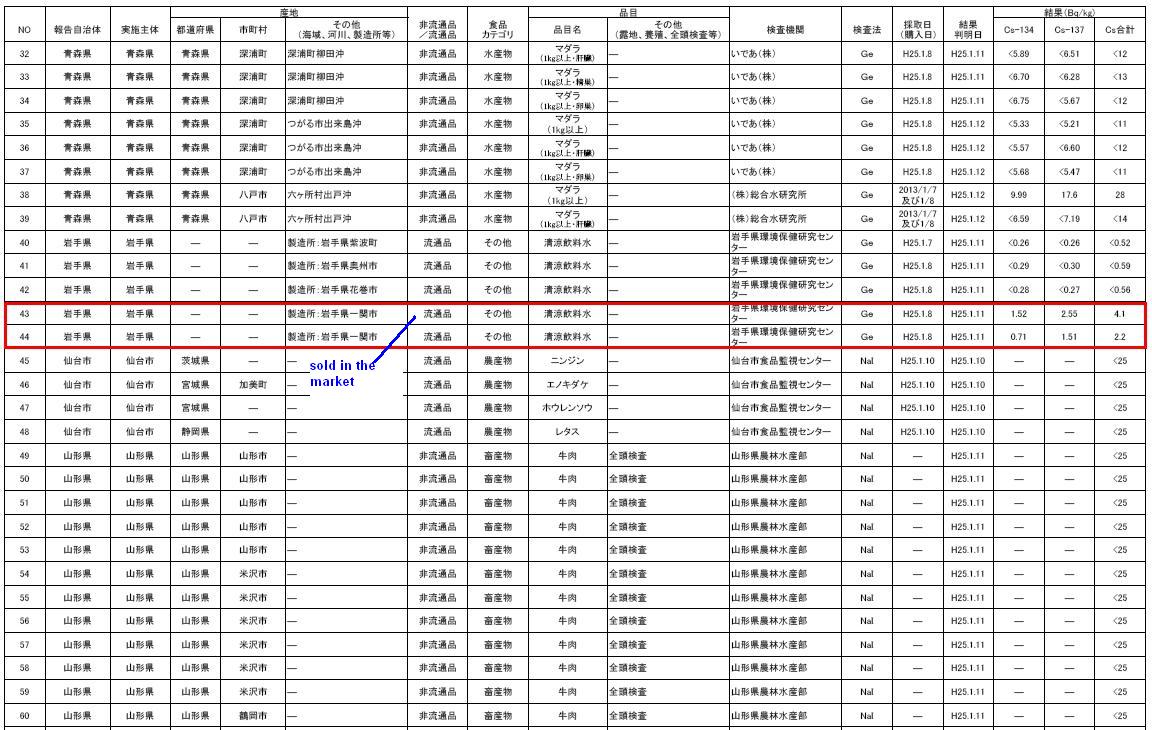
No details other than it was “soft drink” bottled in Ichinoseki City in Iwate Prefecture, whose contamination had been initially denied by the city officials in the early days of the nuclear accident. It could be juice, it could be plain water. I can’t find information on the Iwaki Prefecture’s website.
One bottle tested had 4.1 Bq/kg of radioactive cesium, the other had 2.2 Bq/kg. The national safety standard for radioactive cesium is 10 Bq/kg.
In pre-Fukushima Japan, the level of radioactive cesium (Cs-137) in tap water in Iwate Prefecture was ND (not detected), according to the database by Japan Chemical Analysis Center.
Ministry of Health and Welfare’s data on January 15, 2013 says these bottles of soft drink were sampled from those sold in retail stores:
Video: “Going from bad to worse, day by day” at Fukushima plant — “The situation don’t improve at all”
http://enenews.com/video-going-bad-worse-day-day-fukushima-plant-situation-dont-improve-all
Published: January 17th, 2013 at 5:41 pm ET
By ENENews
Title: Statement von Izumi Yamaguchi zur Fukushima-Diskussion am 18.01.2013 in Düsseldorf-Bilk
Source: grueneddorf
Date Uploaded: Jan 17, 2013
At :45 in
Izumi Yamaguchi, from Tokyo, Japan: It will be 2 years since the accidentof Tepco Fukushima nuclear power plant No. 1 soon.
However, the situation don’t improve at all, rather are going from bad to worse, day by day.
This unprecedented serious circumstance, of course, has been bringing various serious results to Japan.
But most of Japanese people are indifferent to crisis of their lives.
They put themselves under one kind of self anesthesia. As if there were no nuclear power plant accident, no radio activities. […]
Fukushima: Hundreds of thousands of people still live in territories heavily contaminated areas
Image courtesy of infiniteunknown.net (Japan Times)
Press release from CRIIRAD
Consequences of the Fukushima Daiichi nuclear disaster
In Japan, the external radiation always causes unacceptable health risks for hundreds of thousands of citizens
1 / Many people still live in territories heavily contaminated
During the first weeks after March 11, 2011, deposits of radioactive cesium were widespread in Japan.
Only the population living in the circle of 20 km around the Fukushima Daiichi nuclear power plant was evacuated during the first days of the disaster, but the fallout has affected a large territory, well beyond the 20 km zone and limits of Fukushima Prefecture. Depending on weather conditions, contaminated air masses moved hundreds of kilometers and precipitation (rain and snow) have aggravated the deposition of radioactive particles in soils and vegetation.

Press Release
ANNEXES
Reports / Reports
- Report No. 12-88 FR CRIIRAD
- CRIIRAD report No. 12-88 INVideos in English
- Monitoring of gamma radiation by CRIIRAD team in Fukushima city (June 2012)
- Monitoring of gamma radiation in Watari area of Fukushima city by CRIIRAD and CRMS team (June 2012)
- Monitoring of gamma radiation in Oguni area of city by Date CRIIRAD and CRMS team (June 2012)
Videos subtitled in French
- Measurements of radioactivity in Fukushima city in June 2012
- Measurements of radioactivity in Fukushima Watari June 2012
- Radioactivity measurements in June 2012 to Oguni Date
CRIIRAD Commission of Independent Research and Information on Radioactivity
Launch of new Russia sub class to put more nuclear missiles at sea
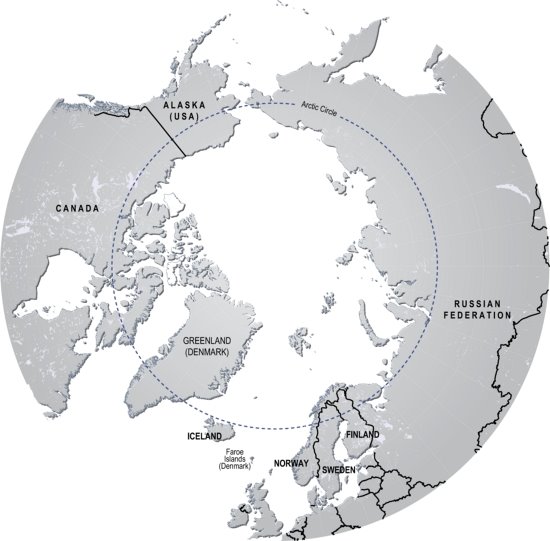
“….Indeed, Kurdrik has been skeptical of the perceived submarine build up in the North – a sabre Putin has largely rattled to protect enormous oil and gas reserves in the Russian Arctic….”
“….A recent report published by the Federation of American Scientists estimates that Russia has a total of 144 missiles with 350 warheads deployed on submarines currently.
Between 30 and 40 of the missiles are on the two to three operativing Delta-III class vessels based in the Pacific, and the rest on submarines based in Gadzhiyevo near the border to Norway. The total number for both fleets will increase to 172 missiles with as many 624 warheads by 2022 – nearly twice as MANY as today, according to the American estimates….”
“….Indeed, looking at a map of the existing nuclear weapons free zones, it only takes a glance to be reminded that a nuclear-free Arctic would bring some balance in a world where most nuclear weapons free zones are located in the South….”
Russia’s first Borey class ballistic missile nuclear submarine – and its first strategic submarine since 1992 – the Yury Dolgoruky, was officially commissioned Thursday to great fanfare and the presence of Russian president Vladimir Putin via video feed – to Russia’s Northern Nuclear Fleet.
14/01-2013
Bellona
Russian Defense Minister Sergei Shoigu attended the flag hoisting ceremony at the Sevmash shipyard in Severodvinsk in northern Russia, RIA Novosti reported. The signing of the acceptance act by the Defense Ministry took place on December 29.
The Borey class submarines are expected to form the core of Russia’s strategic submarine fleet, replacing the aging Project 941, or NATO Typhoon class, and Project 667 class, or Delta- Delta-4 boats.
Russia is planning to build eight Borey and Borey-A class subs by 2020.
With the commissioning of the sub comes an increase in the number of strategic nuclear warheads deployed from Russia’s Kola Peninsula.
It also brings with it no small measure of Soviet-style jingoism: Upon the hoisting of the sub’s flag, Dmitry Rogozin, Russia’s Vice Premier and former ambassador to NATO posted a tweet to his twitter account reading “shiver bourgeoisie. You’re done for.”
1 This Month

Protect Sazan Island from the Trump family! https://secure.avaaz.org/campaign/en/protect_sazan_island_from_the_trump_family_loc/?bqFCVab&v=174511&cl=22707147157&_checksum=5e9dde668860e8231c33699735e16a1fbf22ab2cb01da50c999fe8732b9775ef&utm_source=email&utm_medium=blast_email&utm_campaign=174511


Cuba Is Not a Failed State – It Is a Besieged State
PETITION: “Global Appeal to Endorse Palestinian Right of Return of Refugees”
To see nuclear-related stories in greater depth and intensity – go to https://nuclearinformation.wordpress.com
-
Archives
- June 2026 (129)
- May 2026 (306)
- April 2026 (356)
- March 2026 (251)
- February 2026 (268)
- January 2026 (308)
- December 2025 (358)
- November 2025 (359)
- October 2025 (376)
- September 2025 (257)
- August 2025 (319)
- July 2025 (230)
-
Categories
- 1
- 1 NUCLEAR ISSUES
- business and costs
- climate change
- culture and arts
- ENERGY
- environment
- health
- history
- indigenous issues
- Legal
- marketing of nuclear
- media
- opposition to nuclear
- PERSONAL STORIES
- politics
- politics international
- Religion and ethics
- safety
- secrets,lies and civil liberties
- spinbuster
- technology
- Uranium
- wastes
- weapons and war
- Women
- 2 WORLD
- ACTION
- AFRICA
- Atrocities
- AUSTRALIA
- Christina's notes
- Christina's themes
- culture and arts
- Events
- Fuk 2022
- Fuk 2023
- Fukushima 2017
- Fukushima 2018
- fukushima 2019
- Fukushima 2020
- Fukushima 2021
- general
- global warming
- Humour (God we need it)
- Nuclear
- RARE EARTHS
- Reference
- resources – print
- Resources -audiovicual
- Weekly Newsletter
- World
- World Nuclear
- YouTube
-
RSS
Entries RSS
Comments RSS
 nuclear-news