Low dose ionising radiation a leukemia risk for children
children with acute lymphoid leukemia (ALL) had almost twice the chance of having been exposed to three or more X-rays compared with children who did not have leukemia.
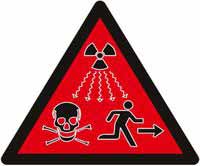
X-rays linked to increased childhood leukemia risk Berkeley, Eureka Alert, Sarah Yang, 5 Oct 10, – Diagnostic X-rays may increase the risk of developing childhood leukemia, according to a new study by researchers at the University of California, Berkeley’s School of Public Health.
Specifically, the researchers found that children with acute lymphoid leukemia (ALL) had almost twice the chance of having been exposed to three or more X-rays compared with children who did not have leukemia. For B-cell ALL, even one X-ray was enough to moderately increase the risk. The results differed slightly by the region of the body imaged, with a modest increase associated with chest X-rays.
The new findings, published in the October 2010 issue of the International Journal of Epidemiology, come from the Northern California Childhood Leukemia Study, a population-based case-control study that includes 35 counties in the northern and central regions of the state.
While the relationship between high doses of radiation and cancer is well known, significant debate still surrounds the health impacts from the low doses of radiation typical of conventional X-rays, or radiographs.
Natural sources of ionizing radiation are ubiquitous, from the air we breathe to the soil we walk on. Government sources say that, on average, each American is exposed to 360 millirems of radiation a year from both natural and manmade sources, including radon, air travel and diagnostic X-rays. (A rem is the standard unit of measurement of absorbed ionizing radiation in living tissue.)
Ionizing radiation is known to cause cancer in humans, whereas non-ionizing radiation, such as exposures associated with radio signals, microwaves and electric power lines, is not. The dose of ionizing radiation from a single chest X-ray is roughly equivalent to the amount one would get from natural surroundings in 10 days, which is still considered low.
“The general clinical impression has been that the level of radiation a child would be exposed to today from a conventional X-ray would not confer an additional risk for cancer,” said Patricia Buffler, UC Berkeley professor of epidemiology and principal investigator of the Northern California Childhood Leukemia Study. “The results of our study were not what we expected.”
Leukemia is a cancer of the white blood cells, the soldiers in the body’s immune system responsible for detecting and destroying disease-causing agents. According to the American Cancer Society, it is the most common childhood cancer, accounting for nearly a third of all cancers among children younger than 15 years old.
Nearly all cases of childhood leukemia are acute, with 80 percent being acute lymphoid leukemia (ALL), characterized by the overproduction of abnormal B- or T-cell lymphocytes, and 20 percent being acute myeloid leukemia (AML), in which granulocytes are overproduced.
The study included 827 children up to age 15 diagnosed with either ALL or AML. The children with leukemia were each compared with other children randomly selected from the California birth registry who were matched by factors such as age, gender, ethnicity and maternal race……..
“The bottom line is we have to be very cautious about the use of any medical imaging techniques,” said Dr. Smith-Bindman. “They can be enormously helpful for making accurate diagnoses, but tests that deliver ionizing radiation are associated with small – but real – risks of future complications related to the radiation exposure, and thus they should be used judiciously.”
No comments yet.
1 This Month

of the week – Shut Down Drone Warfare!


Tell the Ukrainian Government to Drop Prosecution of Peace Activist Yurii Sheliazhenko

Petition to revoke the licensing of the Near Surface Nuclear Disposal Facility (NSDF) at Chalk River. https://www.ourcommons.ca/petitions/en/Petition/Details?Petition=e-7247
To see nuclear-related stories in greater depth and intensity – go to https://nuclearinformation.wordpress.com
-
Archives
- April 2026 (114)
- March 2026 (251)
- February 2026 (268)
- January 2026 (308)
- December 2025 (358)
- November 2025 (359)
- October 2025 (376)
- September 2025 (257)
- August 2025 (319)
- July 2025 (230)
- June 2025 (348)
- May 2025 (261)
-
Categories
- 1
- 1 NUCLEAR ISSUES
- business and costs
- climate change
- culture and arts
- ENERGY
- environment
- health
- history
- indigenous issues
- Legal
- marketing of nuclear
- media
- opposition to nuclear
- PERSONAL STORIES
- politics
- politics international
- Religion and ethics
- safety
- secrets,lies and civil liberties
- spinbuster
- technology
- Uranium
- wastes
- weapons and war
- Women
- 2 WORLD
- ACTION
- AFRICA
- Atrocities
- AUSTRALIA
- Christina's notes
- Christina's themes
- culture and arts
- Events
- Fuk 2022
- Fuk 2023
- Fukushima 2017
- Fukushima 2018
- fukushima 2019
- Fukushima 2020
- Fukushima 2021
- general
- global warming
- Humour (God we need it)
- Nuclear
- RARE EARTHS
- Reference
- resources – print
- Resources -audiovicual
- Weekly Newsletter
- World
- World Nuclear
- YouTube
-
RSS
Entries RSS
Comments RSS
 nuclear-news
Leave a comment