Further proof of radiation-caused cancers in large scale research study
“People exposed to radiation who developed cancer also had a high risk of developing a second cancer, and the risk was similar for both solid tumors and leukemias in both men and women, regardless of age at exposure or duration betweenfirst and second primary cancers,” he said. The association between radiation exposure and risk of second cancers was particularly significant for radiation-sensitive cancers, such as those of the lung, colon, breast, thyroid and bladder, as well as leukemia.
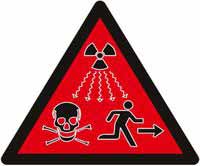
Study of Japanese atomic bomb survivors shows radiation exposure poses similar risk of first and second cancers, Health Canal.com, 17 Sept 10, First large-scale study to assess how radiation influences risk of multiple cancers
SEATTLE — It is well known that exposure to radiation has multiple harmful effects – including causing cancer – but until now, it has been unclear to what extent such exposure increases a person’s risk of developing more than one cancer.
The first large-scale study of the relationship between radiation dose and risk of multiple cancers among atomic bomb survivors in Hiroshima and Nagasaki, Japan reveals a similar risk in the development of first and second subsequent cancers.
Christopher I. Li, M.D., Ph.D., and colleagues at Fred Hutchinson Cancer Research Center led the study in collaboration with investigators at the Radiation Effects Research Foundation in Hiroshima and Nagasaki and the National Cancer Institute. The results appear in the Sept. 15 issue of Cancer Research.
We found that radiation exposure increased the risks of first and second cancers to a similar degree,” said first author Li, a breast cancer epidemiologist and member of the Public Health Sciences Division at the Hutchinson Center. “People exposed to radiation who developed cancer also had a high risk of developing a second cancer, and the risk was similar for both solid tumors and leukemias in both men and women, regardless of age at exposure or duration betweenfirst and second primary cancers,” he said. The association between radiation exposure and risk of second cancers was particularly significant for radiation-sensitive cancers, such as those of the lung, colon, breast, thyroid and bladder, as well as leukemia.
For the study, the researchers analyzed data from participants in the Life Span Study, a group of atomic bomb survivors in Hiroshima and Nagasaki who were followed from 1950, five years after the bombings, to 2002, the most recent year through which Hiroshima and Nagasaki cancer registry data were complete. The study followed 10,031 primary cancersurvivors, among whom 1,088 went on to develop second primary cancers.
Stomach, lung, liver and female breast cancers were the most commonly diagnosed first and second primary cancers.
No comments yet.
1 This Month

of the week – Shut Down Drone Warfare!


Tell the Ukrainian Government to Drop Prosecution of Peace Activist Yurii Sheliazhenko

Petition to revoke the licensing of the Near Surface Nuclear Disposal Facility (NSDF) at Chalk River. https://www.ourcommons.ca/petitions/en/Petition/Details?Petition=e-7247
To see nuclear-related stories in greater depth and intensity – go to https://nuclearinformation.wordpress.com
-
Archives
- April 2026 (103)
- March 2026 (251)
- February 2026 (268)
- January 2026 (308)
- December 2025 (358)
- November 2025 (359)
- October 2025 (376)
- September 2025 (257)
- August 2025 (319)
- July 2025 (230)
- June 2025 (348)
- May 2025 (261)
-
Categories
- 1
- 1 NUCLEAR ISSUES
- business and costs
- climate change
- culture and arts
- ENERGY
- environment
- health
- history
- indigenous issues
- Legal
- marketing of nuclear
- media
- opposition to nuclear
- PERSONAL STORIES
- politics
- politics international
- Religion and ethics
- safety
- secrets,lies and civil liberties
- spinbuster
- technology
- Uranium
- wastes
- weapons and war
- Women
- 2 WORLD
- ACTION
- AFRICA
- Atrocities
- AUSTRALIA
- Christina's notes
- Christina's themes
- culture and arts
- Events
- Fuk 2022
- Fuk 2023
- Fukushima 2017
- Fukushima 2018
- fukushima 2019
- Fukushima 2020
- Fukushima 2021
- general
- global warming
- Humour (God we need it)
- Nuclear
- RARE EARTHS
- Reference
- resources – print
- Resources -audiovicual
- Weekly Newsletter
- World
- World Nuclear
- YouTube
-
RSS
Entries RSS
Comments RSS
 nuclear-news
Leave a comment