Nagasaki warns of risk of nuclear war on 81st A-bomb anniversary

Nikkei Asian Review 9th Aug 2026
Mayor calls nuclear weapons an ‘absolute evil’ that cannot coexist with humanityMayor calls nuclear weapons an ‘absolute evil’ that cannot coexist with humanity
NAGASAKI, Japan (Kyodo) — Nagasaki on Sunday warned nuclear powers and deterrence-reliant nations of the increased risk of a war using nuclear weapons, as the Japanese city marked the 81st anniversary of the U.S. atomic bombing with a resolve to prevent such a tragedy from ever happening again.
“Nuclear weapons are not a ‘necessary evil’ but an ‘absolute evil,’ and can never coexist with humanity,” Mayor Shiro Suzuki said in the Peace Declaration read during the annual memorial ceremony for the attack on the southwestern city, which followed the atomic bombing of Hiroshima three days earlier.
Adding cadence and vocal inflection, Suzuki’s powerful voice pierced through the Peace Park as he called the concept of nuclear deterrence “extremely dangerous and fragile.”
This year’s commemoration comes amid geopolitical tensions in the wake of the Middle East conflict and Russia’s invasion of Ukraine.
A moment of silence was held at 11:02 a.m., when the plutonium device codenamed “Fat Man” was dropped by a U.S. bomber and exploded over Nagasaki. It remains the last place to have suffered a nuclear attack.
Still, more than 12,000 nuclear warheads exist, Suzuki pointed out. He expressed concern over unpredictability in the conflicts in Ukraine and the Middle East, where nuclear states are involved, referring to Russia’s invasion of Ukraine and the U.S.-led war on Iran.
The commemoration event at the Nagasaki park, located near the hypocenter, was attended by some 3,700 people, including representatives from 98 countries and regions, as well as the European Union.
U.S. Ambassador to Japan George Glass was not present at the ceremony, with Japan’s close security ally represented by Deputy Chief of Mission Aaron Snipe.
Prime Minister Sanae Takaichi delivered a speech following a brief heckle from the crowd, reiterating what she said in the Hiroshima commemoration last Thursday that Japan “is upholding” the three nonnuclear principles……………………………………………………………………………………………………………………………………………………. https://asia.nikkei.com/spotlight/society/nagasaki-warns-of-risk-of-nuclear-war-on-81st-a-bomb-anniversary
The political implications of Hiroshima’s scarred “maidens”
Bulletin, By Alex Wellerstein | Article, Feature | August 6, 2026
On May 7, 1955, 25 young Japanese women arrived by airplane at Travis Airfield in California. They had flown there from Iwakuni Airbase in Tokyo a few days prior, with a layover in Honolulu. In California, a crowd greeted their arrival by showering them with flowers—and four women who, to the discomfort of many involved, used the opportunity to give a speech about the dangers of the hydrogen bomb.1
All of the women had been schoolchildren in Hiroshima on the morning of August 6, 1945, when the United States detonated an atomic bomb over the city. Many of them had been at work building firebreaks at the time of the bombing, and had all been severely burned by the attack. They were known in the press as the “Hiroshima Maidens,” and they were part of a trip, organized by a Japanese reverend and an American journalist, and with the hesitant blessing of the US State Department, to bring the women to the United States, so their scars might be healed through the power of American plastic surgery. The primary intent was to ease their individual suffering, but the trip was understood by all involved to be more than that: the wounds being healed were not just physical, but political.
Keloid scars are raised, thick, and irregular slabs of collagen. They can form after any injury, and can appear long after the injury itself. They generally do not hurt, but they can itch. They can also constrain muscle movement, decreasing mobility dramatically, depending on where they have formed. And they are disfiguring. For reasons that are apparently still not well-understood, such scars are more prone to develop in people of Asian, African, and Hispanic descent than in other peoples, and their heighted incidence among survivors of the atomic bombs has suggested that radiation exposure may increase the chances of their forming.
Photographs of the scarred bodies of atomic bomb victims are a common, if still controversial, accompaniment to discussions of the atomic attacks today. But in the immediate years after the end of World War II, they were much rarer. While an October 1945 story in LIFE magazine did feature two photographs of atomic victims, nearly all other popular photographs of Hiroshima and Nagasaki in the 1940s featured only photographs of the ruined buildings, not ruined bodies.
Less popularly, the bodies of victims were visible in official, technical publications on the “medical effects” of the bombs, with photographs of the victims months or even years after the bombings. These photographs were meant to display, cleanly and clinically, the effects of atomic bombs. They were not intended to provoke a sense of guilt, or even empathy, except as relates to how their audience might be interested in “effects data” for planning for the possible use of atomic bombs against themselves in the future.
Information about the survivors was tightly controlled within Japan by the occupation authorities, who feared that widespread discussion of the atomic bomb could lead to anti-American and pro-Communist sentiment.2
John Hersey’s Hiroshima, published as a full-issue of The New Yorker in August 1946, was the first publication to really give international audiences a view of what the atomic bombings were like from the perspective of the bombed. One of the six survivors that Hersey profiled was an American-educated Methodist reverend, Kiyoshi Tanimoto. Tanimoto’s account is gripping, and prominently features his inability to render the help to others that he wished that he could:
After crossing Koi Bridge and Kannon Bridge, having run the whole way, Mr. Tanimoto saw, as he approached the center, that all the houses had been crushed and many were afire. Here the trees were bare and their trunks were charred. He tried at several points to penetrate the ruins, but the flames always stopped him. Under many houses, people screamed for help, but no one helped; in general, survivors that day assisted only their relatives or immediate neighbors, for they could not comprehend or tolerate a wider circle of misery. The wounded limped past the screams, and Mr. Tanimoto ran past them.
Hersey’s account showed Tanimoto trying to help whom he could, but the magnitude of the disaster was overwhelming. Tanimoto himself suffered from a bout of radiation sickness, but recovered.
At the time of Hersey’s book, there was no agreed-upon term to use for those people who were at Hiroshima and Nagasaki at the time of the bombings but who had not died. The term “survivor” was common in English usage, but the Japanese have tended to shy away from their equivalent (seizonshai), apparently finding it to contain a bit of guilt or blame in its focus on those who did not die. Conversely, the term “victim” appears to have been used more commonly in Japanese (higaisha) than in English, perhaps again because of its apparent connotation that the violence done to the Japanese was unjust. It is not clear exactly when the term hibakusha—“explosion-affected person”—became the preferred term; it seems like it was used in Japan by the mid-to-late 1950s, and became well-known in English only in the early 1960s.3
In the months after the bombing, his church destroyed, Tanimoto worked as a street preacher in Hiroshima. His message was both theological and political: Looking for someone to blame for the atomic bombing—whether the Americans who had dropped the bomb, or the Japanese military leaders who had started the war—was futile. Seek salvation through God alone. With parishioners, he began the work of rebuilding the church building, but the work was slow, for there was no money and few resources available. In 1948, he traveled to the United States to meet with an old classmate of his, in an effort to raise funds for a new church. While on the ship to San Francisco, he had an idea: He could dedicate his life to peace, and the rebuilding of his ruined Hiroshima would be the focal point for that. Without consulting anyone back home, he began to give sermons around the United States, taking up a collection for Hiroshima’s rebirth. By the end of 1949, he had visited over 250 American cities, and raised about $10,000 for the church.4
Tanimoto ultimately made a connection with the editor of the Saturday Review, Norman Cousins, who enthusiastically supported his plea, and ran an editorial proposing the creation of a World Peace Center in Hiroshima. Although the article claimed to be in the name of the inhabitants of Hiroshima, no one but Tanimoto was ever consulted. A Hiroshima Peace Center Foundation was set up in New York by Cousins, in order to receive American donations.5
A few years later, as part of his peace center efforts, Tanimoto began a Bible study class for a group of women that he apparently called his “Keloid girls.” He had offered other classes to victims of the bombing; the Keloid girls were special because their deformity and their sex was seen to demand a level of social exclusion that went beyond that of other Hiroshima victims. He would eventually petition the Hiroshima government for funds to give them plastic surgery, but was rejected. He then went to the Atomic Bomb Casualty Commission, the American-run effort to study the medical effects of the atomic bombings, but he was told that this was outside the commission’s scope. The commission was not in the business of “treatment,” and keloids were not unique radiation effects.6
Eventually, Tanimoto received some funding for surgery on the Keloid Girls within Japan, bringing a group of them to Tokyo in the spring of 1952, just after the end of the American occupation. There was also one male victim in the group, Kiyoshi Kikkawa. The Japanese press, to the surprise of Kikkawa, became completely focused on the women, dubbing them the Genbaku Otome: “Atomic Bomb Maidens.” The women were attractive because of their symbolism of peaceful Japanese resilience. Kikkawa quickly felt it was going too far: At one point in their trip, the “maidens” were taken to tour a prison that held Japanese war criminals, and two of the “maidens” chosen as delegates proclaimed that while they had once held grudges against the Japanese militarists, they now saw them as being in the same situation as the survivors.7
The surgeries were at least somewhat successful. Tanimoto had been in touch with Cousins about the “maidens” ideas, and with this pilot project completed—and its publicity value proven in at least the Japanese context—Cousins was ready to push for an American side of it. This would be larger and grander: more “maidens” (no men, this time), and the surgeries would be done in the United States, where plastic surgery was state-of-the-art. Cousins is credited for transforming their name: Having changed from “Keloid Girls” to “Atomic Bomb Maidens,” they were now the “Hiroshima Maidens.”8
For six months, Cousins sought funding for the project from foundations. It would be expensive: the transportation and lodging alone would cost tens of thousands of dollars, and the operations would drive the cost into the hundreds of thousands. He saw little success, apparently because the foundations blanched at the possible negative publicity that might attach to the project.9………………………………………………………………………………………………………………………………………………………………………………………………………………………………………………. , the actual surgeries began. Over the next year, a team of surgeons at Mount Sinai, led by Barsky, performed over 140 operations on the women. When not in surgery, the women lived with host families. The operations were difficult. In some cases, there were dramatic improvements in mobility and appearance. One of the women, Tomako Nakabayashi, age 26, died of a heart attack during her third operation—a point that American newspapers made little of, but led Japanese newspapers to accuse the Americans of treating the women as guinea pigs.17
By the June 1956, 10 of the women were deemed ready to return home. The rest returned in late October 1956. The surgeries involving the women who survived were considered successful, although the reactions of people seeing them for the first time would often be to focus on the scarring that was still visible. But the women appear to have found the physical transformations a great boon, even if, as one later said, “there are lingering wounds in our hearts that have not healed.”18
The story of the “Hiroshima Maidens,” which has been told many times over the years, comes in two distinct modes. The “original” mode is optimistic and, perhaps, a bit naïve. It is the version of the story pushed by Tanimoto and Cousins and most of the press who eagerly covered the women once they arrived in the United States in May 1955. This version is one of rebirth: just as Hiroshima, the city, was in the process of rebuilding after the atomic bomb, so could Hiroshima’s inhabitants rebuild their lives, even their very flesh.
City organizers in Hiroshima embraced their own version of the narrative of the city’s rebirth. Starting in the 1940s, and accelerating in the 1950s and 1960s, they emphasized that the destruction at Hiroshima would be not its end, but its new beginning. There was a tactical element to this: They needed to attract resources for development and rebuilding, and leveraging their status and fame was a potent part of this appeal. It was not an approach that denied that the past destruction had occurred, obviously, for this could not be denied. The “rebirth” narrative would be a way to lean into that story and change its trajectory. Among the hibakusha, there were understandably mixed feelings about the approach. The famous “Atomic Bomb Dome”—the ruin of the former industrial exhibition hall near ground zero—ended up being the only preserved “monument” to the destruction, serving a focal point for Hiroshima’s peaceful rebirth activities, but its preservation was contentious.19
There is a more cynical read on the “Hiroshima Maidens” and the rebirth mode of talking about the bombings. For one, this version of the story almost exclusively focuses on Hiroshima, at the expense Nagasaki, even though the case for the use of the second atomic bomb, only three days after the first, has always seemed much weaker than the case for the use of the first.
The focus on “maidens” also creates additional places for critique. There were married and divorced hibakusha who were rejected from Tanimoto’s project, and after the pilot project’s single male hibakusha, the rest were all women. The exact reasons for this have not been articulated by the players involved, but it seems that Cousins and Tanimoto felt the maidens made for more sympathetic figures and gave the project more of an apolitical appearance.20 As Robert Jacobs has put it, the “Hiroshima Maidens” were:
…generally depicted as childlike, innocent and grateful. They were uniformly spoken of as being “almost pathologically shy,” and then “blossoming in the warmth they shared in the homes of American ‘parents.’” […] The use of the term “maiden” reveals the focus on the lack of romantic prospects for the women while reinforcing the image of their innocence and childlike nature. […] The Japanese women were all students when they suffered the atomic attack, thus sparing them of any complicity in the Japanese war effort, and casting them as victims themselves of Japanese military aggression.21
While the “Hiroshima Maidens” project was being planned, the discourse about the atomic bombings in Japan radically shifted. In early March 1954, the United States tested its first deliverable thermonuclear weapon at the Bikini Atoll, in the Marshall Islands. The detonation resulted in a massive plume of radioactive fallout that contaminated thousands of square miles of ocean and islands downwind of the test site and exposed a Japanese fishing boat, the Lucky Dragon No. 5, which had inadvertently strayed close to the test site. After they returned to Tokyo, the crew began showing the symptoms of radiation sickness, but not before their tuna catch was offloaded in Tokyo fish markets. Thus followed a tuna boycott and massive global attention to the issue of nuclear fallout. One of the crew would eventually die. Within Japan, this Bravo test became a major focal point for an emerging anti-nuclear political activism and generally led to an opening up of long-suppressed public discourse about Japan’s status as a “nuclear victim.”22
The “Hiroshima Maidens” project, however, was not part of this political movement. Tanimoto’s politics were far more conservative, more pro-American, and definitely not anti-nuclear. His was a politics of restoration and “moving on,” and, if anything more specific than that, about suppressing the anti-H-bomb sentiment of the Japanese that was being used to fuel protests against American military presence in Japan.23…………………………………………………………………………………………………..
The “Hiroshima Maidens” project, however, was not part of this political movement. Tanimoto’s politics were far more conservative, more pro-American, and definitely not anti-nuclear. His was a politics of restoration and “moving on,” and, if anything more specific than that, about suppressing the anti-H-bomb sentiment of the Japanese that was being used to fuel protests against American military presence in Japan.23
After their surgeries, few of the “maidens” sought additional attention. In the 1980s, Shigeko Sasamori lent her voice and authority as a hibakusha to a growing anti-nuclear movement. But most appear to have sought privacy after their period having their bodies and identities subjected to extreme focus, both positive and negative.27
The hibakusha, as the psychologist Robert Lifton observed in his in-depth study of them, have a complicated relationship with their status as victims. It is a no-win situation: If their victimhood is remarked upon or treated as special, they fear that any assistance rendered is inauthentic and confirms that they carry a stigma. If, on the other hand, they are ignored, they feel abandoned.28
Barsky, the plastic surgeon, continued his own kind of ministry. In 1969, he organized a clinic in Vietnam to operate on Vietnamese and Cambodian children who had been horribly burned by American munitions. The clinic operated on over a thousand children, including Kim Phuc, the famous “napalm girl.” After American surgeons fled during the fall of Saigon, the hospital was kept running, and still operates to this day.29
Scars are a sort of archive of a body’s experiences. They fade, and they can sometimes be healed. Scars in the mind are harder to see. But the scars of history, as played out in politics and attitudes and cultural creations, can outlive the people who experienced them firsthand. What does it mean to remove scars, or to preserve them? What story do the scars of history tell?
Most of the “Hiroshima Maidens” seem to have truly desired to be apolitical, which in this case seems primarily to mean non-controversial. This desire was, of course, impossible to fulfill. Their bodies were, by virtue of where they had been on the morning of August 6, 1945, inherently political. Plastic surgery could hide some of the scars. But being hibakusha appears to have thrust survivors of the bombings into a political position: One’s existence is some kind of statement about power, and so an object for others to use in making their own kinds of political statements. To gaze upon the body of a hibakusha is a political act—but so, also, is looking away.
Notes,………………………………………………………………………………………………………….https://thebulletin.org/2026/08/the-political-implications-of-hiroshimas-scarred-maidens/?utm_source=ActiveCampaign&utm_medium=email&utm_content=The%20%22Hiroshima%20maidens%22&utm_campaign=20260806%20Thursday%20Newsletter
Japan ‘cannot avoid’ nuclear weapons debate, defense chief Koizumi says
Japan Times, By Jesse Johnson, 19 July 26
Defense Minister Shinjiro Koizumi has urged Japan to more openly debate nuclear weapons’ role in the country’s defense, a rare instance of a sitting Cabinet member broaching the highly contentious issue.
“While this is a difficult issue for Japan to discuss, one topic we cannot avoid is nuclear weapons,” Koizumi said during an online news program recorded Friday ahead of a trip to Europe.
Koizumi’s remarks come as the government weighs updates to key documents outlining Japan’s security policy — including a possible revision of the country’s decades-old pledge not to produce, possess or host nuclear weapons.
Formulated in 1967 and known formally as the country’s “three non-nuclear principles,” the pledge has consistently been upheld by governments since.
Senior government officials have traditionally shied away from public remarks on nuclear arms-related issues, as Japan — the sole country to have been attacked with the devastating weapons — retains strong sensitivities more than 80 years after atomic bombs were dropped on Hiroshima and Nagasaki.
According to an April poll by the Asahi Shimbun daily, 75% of those surveyed said the principles should be maintained, while 21% said they should be revised.
In December, a senior government official who advises Prime Minister Sanae Takaichi on security triggered a firestorm after expressing a personal opinion that Japan should have nuclear weapons.
Still, talk of allowing U.S. nuclear weapons to be brought into Japan has grown after Takaichi sidestepped a question about her commitment to maintaining the pledge in its entirety last November in parliament.
In his comments, Koizumi said Russia’s invasion of Ukraine had prompted France to boost its nuclear capabilities and pushed Finland to OK the deployment of nuclear weapons on its territory, dramatic shifts that he said were “being advanced under the serious assumption of a potential emergency.”
“Considering this, I believe we must make even greater efforts to explain that the security environment in which Japan finds itself requires us to approach every policy with a strong sense of crisis, discussing and advancing them without any taboos,” Koizumi said……………………………………………………………………………………………… https://www.japantimes.co.jp/news/2026/07/19/japan/politics/koizumi-japan-nuclear-weapons-debate/
Hiroshima marks 81st atomic bomb anniversary as mayor deplores the pursuit of nuclear weapons

By ASSOCIATED PRESS, 6 August 2026, https://www.dailymail.com/wires/ap/article-16032643/Hiroshima-marks-81st-atomic-bomb-anniversary-mayor-deplores-pursuit-nuclear-weapons.html
TOKYO (AP) – Hiroshima on Thursday marked the 81st anniversary of the U.S. atomic bombing of the western Japanese city, with its mayor criticizing major powers for waging wars and urging them to stop justifying the possession of nuclear weapons as a method of deterrence.
“Downplaying the inhumanity of nuclear weapons and accepting the use of force to pursue one´s own prosperity risk cycles of violent retaliation that could ultimately result in another Hiroshima or Nagasaki,” Mayor Kazumi Matsui said.
Too many political leaders still consider nuclear deterrence a realistic approach and legitimize violence, which “simply pushes a world without nuclear weapons further into the distance,” Matsui said in his peace declaration at the ceremony at the Hiroshima Peace Memorial Park. He also called on each citizen to learn lessons from the past and take action.
About 50,000 people, including representatives from some 120 countries and regions including the United States and Iran, were to attend the ceremony. A minute of silence was held while a peace bell rang out at 8:15 a.m., the time when a U.S. B-29 dropped the bomb on the city.
Prime Minister Sanae Takaichi, who attended the memorial for the first time as prime minister, said she will take “a realistic approach” toward achieving a world where nuclear weapons are never used, within the framework of the United Nations’ treaty to prevent the spread of nuclear weapons.
This year´s ceremony comes at a time of looming speculation that Takaichi´s hawkish government, which supports the idea of nuclear deterrence, may ease Japan´s postwar three non-nuclear principles when it compiles new security and defense documents later this year.
Takaichi has advocated a review of the principles for a possibility of dropping the third one – of not permitting nuclear weapons to be brought into the country.
Takaichi said Japan has maintained its postwar three non-nuclear principles, but fell short of expressing commitment for sticking with that policy into the future.
Survivors have expressed frustration and worry over growing support for the possession of nuclear weapons for deterrence by the international community, including Japan.
Japan is under the protection of U.S. nuclear umbrella and has repeatedly sought Washington’s reassurance for its commitment and a stronger protection. Because of that, Japan´s government has rejected the survivors´ request to sign the Treaty on the Prohibition of Nuclear Weapons or attend its meetings as observers.
The bombing of Hiroshima on Aug. 6, 1945, destroyed the city and killed 140,000 people. A second bomb dropped three days later on Nagasaki killed 70,000. Japan surrendered on Aug. 15, ending World War II and Japan´s nearly half-century of aggression in Asia.
The number of survivors has fallen to 91,105, about a quarter of the original number, with their average age exceeding 86. Survivors worry about fading memories, as the youngest of the survivors were too young to clearly recall the attack.
“The horror of nuclear weapons is just one lesson of Hiroshima. Another is the need to build a world in which the threat or use of these weapons becomes unthinkable,” United Nations Secretary-General António Guterres said in a written statement.
“Hiroshima stands as an inspiring example of resilience, renewal and hope. Across generations, its people remind us that, even after the darkest moments, we can choose – and build – a different future,” he said, calling for “dialogue over division, cooperation over confrontation and common security over narrow advantage.”
Japan begins 22nd release of Fukushima nuclear-contaminated wastewater into ocean

July 31, 2026, https://en.people.cn/n3/2026/0731/c90000-20483845.html
Japan on Thursday began a new round of discharge of nuclear-contaminated wastewater from the crippled Fukushima Daiichi Nuclear Power Plant into the sea, marking the 22nd such release since the controversial operation began in 2023.
According to the plant’s operator, Tokyo Electric Power Company Holdings (TEPCO), about 7,800 tonnes of wastewater containing approximately 1.3 trillion becquerels of radioactive tritium will be released into the ocean.
The latest discharge, also the fourth round of wastewater release for fiscal 2026, is scheduled to continue through Aug. 17.
In the fiscal year that began in April, TEPCO plans to release a total of about 62,400 tonnes of wastewater in eight rounds.
Struck by a 9-magnitude earthquake and the ensuing tsunami on March 11, 2011, the Fukushima nuclear plant suffered core meltdowns that released radiation, resulting in a level-7 nuclear accident, the highest on the International Nuclear and Radiological Event Scale.
Despite concerns and opposition from the international community, Japan unilaterally launched the ocean discharge of nuclear-contaminated water from the Fukushima Daiichi plant in August 2023. So far, TEPCO has completed 21 rounds of discharges, and around 165,000 tonnes of wastewater have been released into the sea.
“Jobs Jobs Jobs” screams the media again as the nuclear lobby plans to brink Japan’s nuclear wastes to Cumberland

COMMENT Plan to Bring Failed Japanese Fast Breeder Reactor’s Contaminated Sodium to Workington – https://radiationfreelakeland.substack.com/p/plan-to-bring-failed-japanese-fast
Japanese reactor decommissioning to bring jobs to UK
Federica Bedendo 26 July 26, https://www.bbc.com/news/articles/c0kmxl6ydpjo
New “highly skilled jobs” have been promised in the UK as part of plans to clean-up a nuclear reactor in Japan.
Cavendish Nuclear and Amentum are planning to build a facility at the Port of Workington, Cumbria, to support the decommissioning of the Monju Prototype Fast Breeder Reactor (FBR), in Fukui Prefecture, Japan.
Cumberland Council, which owns the port, said the plant would support skilled jobs directly and across the supply chain.
Leader Mark Fryer said: “This is fantastic news for the port as this new development, subject to the necessary approvals, will bring good quality jobs to Workington.”
The construction phase is expected to be worth more than £25m and employ about 20 people during its seven-year operation, those behind the plans said.
The FBR was a sodium-cooled reactor that had been designed to burn most of its spent fuel, however it encountered several problems during its lifespan.
The Workington plant would be treating the sodium coolant, turning it into sodium hydroxide, a commercially usable product.
West Cumbria is a well-known area for the nuclear sector, due to the presence of the Sellafield nuclear plant, which is being decommissioned.
The Labour-led council has started work to clear the land at Workington’s Oldside as part of its wider regeneration plans in the town.
The aim is for the area to become a hub for clean energy, manufacturing and logistics, the council said.
A Cavendish Nuclear and Amentum spokesperson said: “We are fully committed to adding real social value to west Cumbia and this new venture will contribute to the regeneration on the Port of Workington and support the local economy.”
Fukushima nuke plant struggles to clear radioactive waste debris
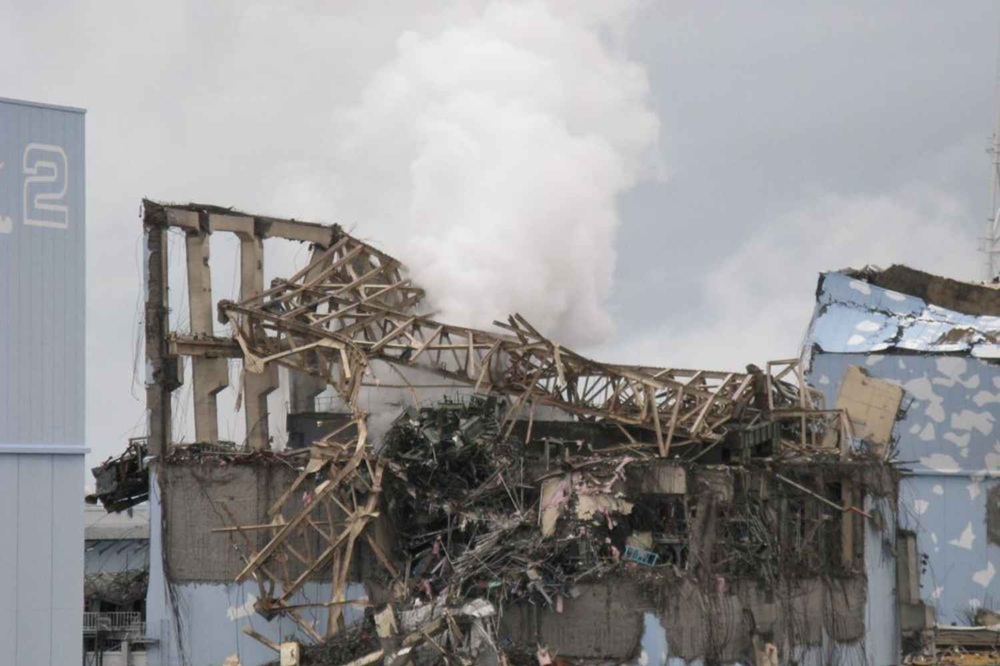
By TOMOYUKI SUZUKI/ Staff Writer, July 25, 2026 https://www.asahi.com/ajw/articles/16663961
Fifteen years after the nation’s worst nuclear accident, the upper floors of the No. 1 reactor at the Fukushima No. 1 nuclear power plant remain littered with wreckage from a hydrogen explosion.
Just clearing all the radioactive waste, a significant step toward decommissioning, remains a mountain to climb at the crippled plant, which suffered triple meltdowns.
The huge amount of debris must be cleared before the plant operator, Tokyo Electric Power Co., proceeds with the removal of spent nuclear fuel assemblies stored in the water-filled cooling pool located on the upper portions of the No. 1 reactor building.
But the long-overdue clearance would require TEPCO to construct new interim storage facilities in a race against time to keep up with the increasing waste volume in what is likened to a “cat and mouse game.”
Experts on nuclear decommissioning say TEPCO and other stakeholders should tackle reducing the radioactive waste as an urgent priority in tandem with the greatest challenge of removing the melted nuclear fuel.
The No. 1 reactor building holds 392 spent fuel assemblies in the cooling pool, apart from the melted nuclear fuel.
A new crane installed on the upper floor is expected to load debris from the hydrogen explosion into containers for the transfer to an on-site solid waste storage facility. The clearing work began on June 22.
The hydrogen explosion at the No. 1 reactor building occurred on March 12, 2011, the day after the magnitude-9.0 Great East Japan Earthquake and tsunami struck Japan’s eastern Tohoku region, resulting in the loss of power at the facility to cool the reactors.
The blast blew off the structure’s upper floors, scattering numerous pieces of the roof and the overhead crane.
Today, the No. 1 reactor building is shielded with a giant retractable cover, which measures 56 meters by 66 meters. The cover, together with a new crane, weighs about 7,900 tons, the equivalent of two Tokyo Towers.
The cover was installed in January to prevent radioactive dust from escaping into the air and rainwater from seeping inside during the spent nuclear fuel recovery, which is scheduled to begin between fiscal 2027 and 2028.
TEPCO has been conducting checks of the upper floors for potential large cracks. It has been moving some debris through a remote-controlled demolition system.
Containers holding the waste from the clearance work will be stored temporarily in a solid waste storage facility at the plant.
Known as the No. 10 storage facility, it consists of A, B and C buildings. Buildings A and B have been in use since 2024. The newest one, building C, is 50 meters by 180 meters and 20 meters in height.
Inside building C, containers are neatly stacked. Receptacles with readings of high levels of radiation are sited in the center of the building and surrounded by ones with lower readings, which serve as shields to lower air dose rates in the surrounding area.
In contrast, the grounds outdoors appeared jumbled. Trees chopped down to create space for tanks and working space for operators were left lying on some parts of the grounds while waste containers were piled up in the open.
In addition, TEPCO still relies on makeshift storage in areas along the coast that stores waste on an impermeable liner spread underground and covered with soil.
The company intends to house all the radioactive waste in the indoor facilities by fiscal 2028 to safeguard the containers from fire risks and corrosion.
Before the nuclear disaster, the nuclear plant had eight waste storage facilities. The No. 9 and No. 10 facilities were added after the 2011 accident. Construction of the No. 11 facility is underway for the planned opening for May 2028.
If everything goes as planned, the nuclear plant’s capacity for waste storage would rise to 216,000 cubic meters by the end of fiscal 2028, sufficient for an estimated 207,000 cubic meters of waste to be produced by the time.
It is clear, however, that TEPCO may need additional storage space. The company is considering constructing a No. 12 facility, given that the plant’s storage capacity is projected to be full by fiscal 2035.
The entire situation is even more concerning as little progress has been made in the discussion of the final disposal of the vast amount of radioactive waste.
Moreover, waste produced from the treatment of contaminated water, such as slurry and sorbents, is not included in the materials bound for these storage facilities.
TEPCO will transport parts of such waste into the No. 1 large-scale waste storage facility during the current fiscal year. The storage area, which measures 23 meters by 186 meters and 17 meters in height, underwent seismic retrofitting recently and is ready for use.
The big question is the total amount of radioactive waste that will be generated.
The utility estimates that there will be around 800,000 cubic meters of waste by the end of fiscal 2036. But it has not provided a figure for the overall amount during the decommissioning process.
An Atomic Energy Society of Japan committee advising on the decommissioning of the Fukushima No. 1 nuclear plant estimates there will be about 5.6 million cubic meters of radioactive waste–equivalent to 4.5 Tokyo Domes–unless reduction measures are taken.
TEPCO plans to sort waste by radiation level for interim storage. Of the projected 800,000 cubic meters of waste, 70 percent is eligible to be held in solid waste storage facilities.
While the company aims to halve the volume of this waste, it is set to recycle the remaining 30 percent.
Scrap metal or concrete waste with a dose of 0.005 millisievert per hour or more will be cut or partially crushed to reduce the size. For waste with a dose of less than 0.005 millisievert per hour, TEPCO will consider having it melted for recycling.
But the facility for melting metal will likely be completed between fiscal 2032 and 2034, three years behind schedule, due to a design review.
The amount of melted nuclear fuel, or fuel debris, is estimated at 880 tons at the No. 1 through No. 3 reactors where the meltdowns occurred.
TEPCO plans to eventually retrieve all the fuel debris, but it has yet to determine the final disposal method.
Satoshi Yanagihara, a guest professor for nuclear decommissioning at the University of Fukui, called on TEPCO to more aggressively reduce the waste volume.
“Since utilities’ primary focus is on operating power plants, they tend to invest less in the management of nuclear waste in terms of money and human resources,” he said. “Recovering melted fuel is certainly a daunting challenge, but TEPCO should also grapple with how to lessen the waste volume simultaneously.”
Plan to Bring Failed Japanese Fast Breeder Reactor’s Contaminated Sodium to Workington
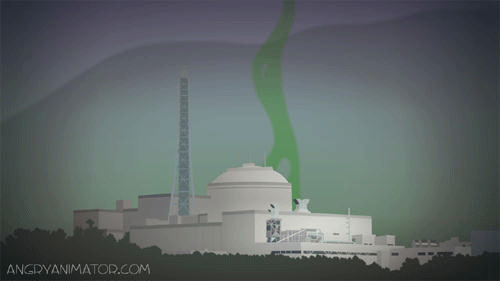
Marianne Birkby, Jul 24, 2026, https://radiationfreelakeland.substack.com/p/plan-to-bring-failed-japanese-fast
Japan is looking to get shot of nuclear waste from its failed experimental “fast breeder” Monju reactor and Workington’s MP along with Cumberland Council is only too happy to help. “Subject to the necessary planning and regulatory permissions, Cavendish Nuclear, together with its delivery partner Amentum, will be constructing a new facility at the port. This development is part of their wider project to support the Japan Atomic Energy Agency (JAEA) with decommissioning of the Monju Prototype Fast Breeder Reactor (FBR), in Fukui Prefecture, Japan.”
Monju Fast Breeder Reactor was a failed £7.2bn experiment in creating a nuclear plant that would burn its own spent fuel (this is what George Monbiot and others have been advocating in their much vaunted nuclear enthusiasm).
It was only operational for 250 days before it was decommissioned. Japan has long since pulled the plug on Monju, an experimental fast breeder nuclear reactor that was plagued by accidents, cover-ups and cost overruns.
Now our nuclear obsessed Cumberland Council and MP are fizzingly saying that Japan’s failure will be Workington’s gain as they scramble to accept the unacceptable, radioactively contaminated sodium coolant aka nuclear waste from yet another failed nuclear experiment and this time its not even our own. Have they stopped to ask why Japan does not want to have the wonderful opportunity of cleaning up this radioactive mess? It has been sitting around long enough as construction started on Monju in 1986 with the reactor achieving criticality in April 1994. The reactor has been inoperative for most of the time since it was originally built. The main product – an expensive toxic mess.
Below is a description of just one of the accidents at Monju in its short operating life
On December 8, 1995, a prototype fast breeder reactor, Monju, located in Tsuruga City, 350km west of Tokyo, was operating at 40% power Refer to JNC’s detailed technical explanation in English of Monju and the accident at http://www.jnc.go.jp/zmonju/mjweb/index.htm.. The Power Reactor and Nuclear Fuel Development Corp (PNC), a government controlled organization, operated this reactor. At 19:47 high temperature liquid sodium coolant at one of the three secondary heat exchangers started leaking through a broken thermometer sheath (designed by IH Company, OD: 10mm, ID: 4mm, Length: 150mm) on the piping and it ignited on contact with air. As shown in Fig. 1, the primary heat exchangers are designed to take heat out of the core of the reactor to the secondary heat exchangers, which then transfer the heat to steam generators for power. Because of this design, it was a simple fire caused by the leakage of chemically reactive but non-radioactive sodium coolant. But due to the delay in shutting down of the reactor, 640kg of the sodium leaked in 3 hours and caused some unexpected damage by the fire and chemical reactions to the surrounding structure
Here on original – excellent diagrams and explanation of the accident
The PNC had been always asked by neighbors as well as anti-nuclear organizations whether their nuclear reactors are absolutely safe. They felt constrained to reply “yes” under the circumstances. Under these conditions, the initial cover up of hiding the videotapes taken at the site and of showing them after editing and the PNC’s delay (of about one hour) in informing the neighboring community agencies of the accident ignited a fierce protest by the public.
This example teaches the students following lessons:
Influence of quality of engineering works
The small design errors in the cheap component which may come from lack of competence and care of designers in the IH Company and JNC as the user, caused the accident.
The cover up of the video tapes and delay in informing others of the accident
The cover up decision was made by managers including ex-engineers. When I asked our students in the class if they do the same under the situations, one-third of them said they might although they think it is a very stupid act. The delay of informing the accidents is mainly due to lack of the system oversight and to the bureaucracy within the JNC organization. These caused loss of public trust in general and have delayed the several tens of billion dollar project at least 6 years, although the government wants to resume the project as soon as possible.
Importance of professional work in accidents
The manuals to handle this kind of the accident were not made although they had some for other types of sodium coolant leakage. Manuals are necessary and useful especially in simple operation. But in accidents like this, which no one had expected and which are generally much more complex than those anticipated in manuals, professional judgments are much more important and necessary. In this case, the air conditioners, which had not been shut down, continued to supply fresh air to the fire.
Learning from past experience
The earlier experimental fast breeder reactor, Joyo, which was designed based on practical experiences by the engineers of previous generation, had not had any serious sodium leak accident for 18 years since its start of the operation in 1977. Most of these engineers, however, were retired or moved to other job as time passed. New generation of engineers might have thought it easy to handle. This is the problem of transferring and learning engineering experience and skills between generations.
Responsibility of managers (ex-engineers) to the public
Engineers know “nothing is absolutely safe”. But sometimes political pressure forces managers to say yes to the public on the absolute safety question. But the more realistic question form the public is that the engineers make a maximum professional effort to eliminate the safety hazard. Engineers should have realized the responsibility of clarifying the situation. After a long discussion on the safety including the following two accidents, the Committee of the Nuclear Safety Commission in Japan formally declared in “The White Paper 2000 on Safety of Nuclear Energy (in Japanese)” approved on March 27, 2001 that “none can say nuclear energy is absolutely safe”.
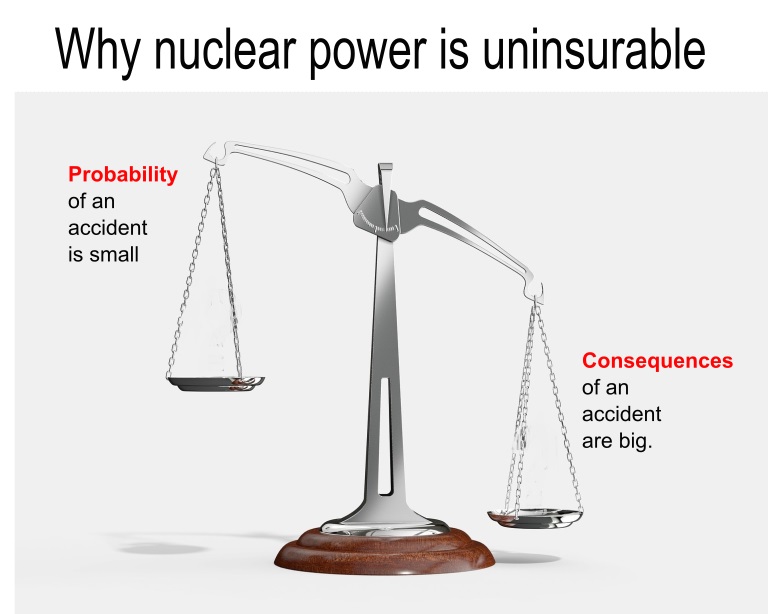
US and Japan clash over meltdown liability in $40bn nuclear power deal
Japan’s participation in a $40bn nuclear power project in the US has hit
a roadblock over fears that its lenders might have to assume liability for
any meltdown on American soil.
Prime Minister Sanae Takaichi agreed during
a visit to Washington in March that Japan would provide funding and
industrial co-operation to build next-generation small modular reactors in
Tennessee and Alabama.
The project was agreed as part of Tokyo’s
commitment to invest $550bn in the US, a promise given in return for lower
US tariffs on Japanese exports under Donald Trump’s “liberation day”
regime. But details of the project are still being thrashed out between
Tokyo and Washington because of concerns on the Japanese side about their
potential liability in a nuclear accident, according to four people
familiar with the discussions.
The US commerce department has offered
verbal reassurance that the state-backed Japan Bank for International
Cooperation and other Japanese institutions would not take on any liability
for a potential nuclear accident, said the people. A person close to
commerce secretary Howard Lutnick said he had personally assured Japan it
would not have any liability in relation to the projects. However, that
promise has not been put in writing in legal terms — a process that could
take months or years of complex regulatory discussion to settle, said the
people.
FT 23rd July 2026, https://www.ft.com/content/4b9d0e1a-c423-4b14-a7fe-d4988e24c7c0
2009 quake may have prompted data rigging by central Japan nuclear operator

July 10, 2026 (Mainichi Japan),
https://mainichi.jp/english/articles/20260710/p2g/00m/0bu/008000c
NAGOYA (Kyodo) — Chubu Electric Power Co. may have begun manipulating earthquake resistance data for its nuclear power plant in central Japan after a 2009 earthquake subjected one of its reactors to shaking beyond its design limits, a source familiar with the matter said Thursday.
The latest revelation came after the utility admitted earlier this year that it had, by no later than 2012, begun cherry-picking favorable data to set earthquake-resistance standards for the Nos. 3 and 4 reactors at its Hamaoka nuclear power plant, which it has been seeking to restart.
The data rigging was initially believed to have begun under tougher safety requirements imposed after the Fukushima Daiichi nuclear power plant disaster, which was triggered by a massive earthquake and tsunami in 2011. But the source said the practice may have begun even before the disaster, as part of efforts to restart the No. 5 reactor after it was shut down following the 2009 earthquake.
In the magnitude-6.5 earthquake that struck Omaezaki, Shizuoka Prefecture, in August 2009, the No. 5 reactor experienced seismic shaking several times stronger than that recorded at the Nos. 1 to 4 reactors, partially exceeding its design limits.
Chubu Electric found that unusual ground conditions had amplified the seismic waves. After the No. 5 reactor automatically shut down in the quake, the company allegedly began generating seismic data and selecting favorable results to avoid being ordered by the government to implement additional earthquake-resistance measures, according to the source.
The company switched to a different contractor around the same time, allowing it to generate seismic wave data more quickly and “creating the perfect circumstances and motive,” the source said.
The nuclear regulator at the time approved the safety of the No. 5 reactor in late 2010, paving the way for its restart in February 2011.
The fresh allegation could mean Chubu Electric engaged in data manipulation involving the Hamaoka plant’s three operable reactors, further undermining confidence in the country’s nuclear safety screening process.
“Details of what happened will be determined through a third-party investigation. We will cooperate sincerely with the inquiry,” Chubu Electric said in a statement.
Located on the Pacific coast in central Japan, the Hamaoka complex sits near the expected epicenter of a potential massive earthquake in the Nankai Trough. It was shut down in May 2011 at the request of then Prime Minister Naoto Kan over safety concerns.
Chubu Electric applied for state safety screenings between 2014 and 2015 to restart the Nos. 3 and 4 reactors, but the review process has been halted amid the scandal.
According to a report compiled by Chubu Electric in March this year on its data misconduct involving the Nos. 3 and 4 reactors, the utility told regulators it had generated 20 sets of seismic motion data under different conditions and selected the one closest to the average — known as the “representative wave” — to establish a benchmark for earthquake-resistant design.
In reality, however, the company had been generating numerous combinations of seismic motion data and representative waves before selecting a set from among them. In 2018, it began deliberately selecting the representative wave and ensuring the other data were consistent with it.
The Nuclear Regulation Authority also recently revealed it had learned from an external source that Chubu Electric continued manipulating data even after the investigation began in May 2025.
Ainu land rights in crosshairs as Hokkaido communities debate nuclear waste
Nuclear energy and waste are “a poison,” Kano says, that don’t fit into the philosophy of Ainu people, the Indigenous group which inhabited Hokkaido before it was annexed in 1869 by imperial Japan.
Japan Times, By Chermaine Lee, Jul 6, 2025
Plucking the resonant strings of a tonkori — a broad, sword-shaped instrument that’s been played by the Indigenous Ainu people for generations — Oki Kano, a Japanese musician of Ainu descent transformed a club in Kyoto into a vibrant tapestry of sound, mixing together rock, Ainu folk and dub music as part of a tour earlier this spring.
Refusing to be labeled an activist, Kano has woven his rebellious spirit and a nod to Indigenous rights into his music, which moved anti-nuclear activists following the 2011 Fukushima disaster. Perhaps most notably, he made a speech at a United Nations meeting later that year that clued some people into the issue of using Indigenous land for nuclear plants and waste storage.
Nuclear energy and waste are “a poison,” Kano says, that don’t fit into the philosophy of Ainu people, the Indigenous group which inhabited Hokkaido before it was annexed in 1869 by imperial Japan.
These days, Indigenous land rights have added another layer to the division of opinions in Suttsu and Kamoenai, two wind-blown fishing communities in the prefecture, over whether to host a permanent underground repository for Japan’s nuclear waste. Residents of the two municipalities, with fewer than 4,000 people combined, have expressed conflicting views on the prospect after their respective mayors volunteered for a feasibility study on the prospect in a bid to secure all-important subsidies.
‘An Ainu problem’
Kano’s U.N. speech regarding Hokkaido and Japan’s nuclear energy inspired American scholar ann-elise lewallen, a professor at the University of Victoria in British Colombia, specializing in modern Japan studies and Indigenous and environment rights, to start a yearslong research project into how a potential nuclear waste dumping ground in ancestral Ainu land might violate their rights.
Although there are no current Ainu communities in these two villages, the professor told The Japan Times during her research trip in Hokkaido that any energy decisions in the prefecture are “an Ainu problem” because of land rights issues
Vocal opponents like Kano aside, Ainu people have not raised the issue of nuclear waste en masse, with many more focused on salmon fishing rights. Still, lewallen says their consent is essential under United Nations principles to protect Indigenous rights. Without it, Japan is carrying out what she calls “energy colonialism.”
In 2007, Japan was among the 143 countries that voted in favor of the United Nations Declaration on the Rights of Indigenous People. The declaration states that governments shall “take effective measures” to “ensure that no storage or disposal of hazardous materials shall take place in the lands or territories of Indigenous people without their free, prior and informed consent.”
But the declaration is nonbinding and Japanese law does not currently recognize the Ainu peoples’ rights to Hokkaido’s land, an issue that is currently a focal point in a high-profile court case over salmon fishing rights.
It was only in March when the absence of Ainu consent on the nuclear waste study was mentioned for the first time during a meeting held by the Nuclear Waste Management Organization of Japan (NUMO) with Suttsu residents about the site, anti-nuclear activist and Suttsu resident Kazuyuki Tutiya said………………………………………………………………………………………………………………………. https://www.japantimes.co.jp/environment/2025/07/06/energy/hokkaido-ainu-nuclear-waste-storage/
Japan begins 21st release of Fukushima nuclear-contaminated wastewater into ocean
TOKYO, July 6 (Xinhua) Zhang Kaiwei, Liang Jun)– https://en.people.cn/n3/2026/0706/c90000-20474742.html
Japan on Monday began a new round of discharge of nuclear-contaminated wastewater from the crippled Fukushima Daiichi Nuclear Power Plant into the sea, marking the 21st such release since the controversial operation began in 2023.
The discharge started at 11:41 a.m. local time. According to the plant’s operator, Tokyo Electric Power Company Holdings (TEPCO), the latest round, scheduled to continue through July 24, will release about 7,800 tonnes of wastewater into the ocean, containing approximately 1.3 trillion becquerels of radioactive tritium.
Struck by a 9-magnitude earthquake and the ensuing tsunami on March 11, 2011, the Fukushima nuclear plant suffered core meltdowns that released radiation, resulting in a level-7 nuclear accident, the highest on the International Nuclear and Radiological Event Scale.
Despite concerns and opposition from the international community, Japan unilaterally launched the discharge of nuclear-contaminated water from the Fukushima Daiichi plant into the ocean in August 2023. So far, TEPCO has completed 20 rounds of discharges, and around 157,000 tonnes of wastewater have been released into the sea.
Radioactive cesium from 2011 Fukushima nuclear disaster spread over wide area: study
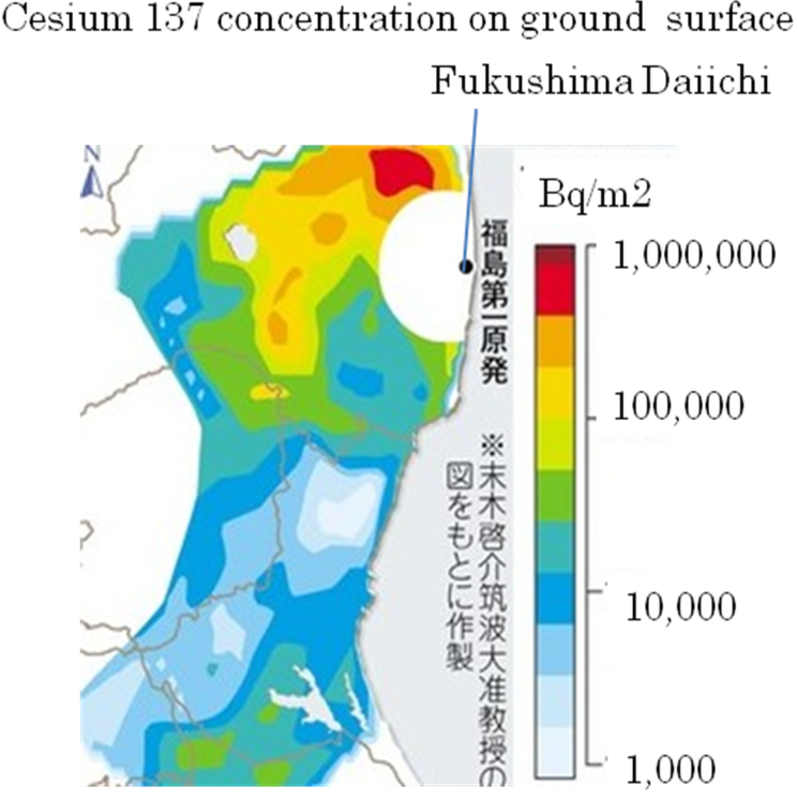
June 26, 2026 (Mainichi Japan), https://mainichi.jp/english/articles/20260626/p2a/00m/0na/004000c
TOKYO — A research team including members of the University of Tsukuba and National Taiwan University has clarified the dispersal routes of highly radioactive “cesium-rich microparticles” (CsMPs) released in the Fukushima nuclear disaster.
In the accident at Tokyo Electric Power Company Holdings Inc. (TEPCO)’s Fukushima Daiichi Nuclear Power Station in 2011, radioactive materials mainly contaminated areas to the plant’s northwest, but CsMPs were carried across a wide area of Fukushima Prefecture. The team also found that they were generated in large quantities four days after the March 11 Great East Japan Earthquake that year.
Actual extent of dispersal had remained unclear
CsMPs are spherical microparticles several micrometers in diameter. In the Fukushima Daiichi accident, they were formed when high-temperature nuclear fuel melted through to the floor and components of the melted concrete turned glasslike, encasing radioactive materials. The microparticles do not dissolve easily in water, and there are concerns that if inhaled they can remain lodged in the lungs, but the reality of how they spread had not been well understood.
The research team developed a method to examine the number of CsMPs contained in soil and analyzed soil samples taken from 100 locations in Fukushima Prefecture immediately after the accident. As a result, large numbers of CsMPs were found to the northwest and southwest of the plant, with as many as 52 particles per gram of soil. At some locations, 60% of the radioactivity in the soil was due to CsMPs.
The team then examined the dispersal process together with simulations of radioactive plumes, or air flows, and found that large-scale releases had begun in the early hours of March 15, 2011. A radioactive plume containing as many as 4,700 CsMPs per cubic meter was carried clockwise over a wide area of the prefecture, starting at the plant and moving from south to southwest and then northwest. It also reached Tokyo, the team said.
On the other hand, radioactive plumes released from 12 a.m. on March 16 onward contained no CsMPs. Instead, they are believed to have contained cesium in a form that easily dissolves in water.
‘Highly significant’ for future responses
Satoshi Utsunomiya, a National Taiwan University professor of environmental science on the team, said, “It is highly significant that we have clarified the process of when CsMPs were generated inside the plant and when their formation ceased.” The findings are expected to lead to decontamination efforts that better reflect actual conditions and to guidelines for responding to nuclear disasters.
Shinya Yamasaki, an associate professor of analytical chemistry at the University of Tsukuba, commented, “It has been shown that radiation maps and the distribution of CsMPs are different.”
The findings were published in the Journal of Hazardous Materials.
(Japanese original by Yurika Tarumi, Lifestyle, Science & Environment News Department)
Reactor reboot at world’s largest nuclear plant highlights flaws in Japan’s radioactive waste plans

With a lot of spent fuel accumulating at nuclear power plants across the country, a final disposal of radioactive waste is a crucial challenge that must be resolved,”
Finding a community willing to host a highly radioactive dump site has been difficult, even with a raft of financial enticements.
By ASSOCIATED PRESS, 11 June 2026,
https://www.dailymail.com/wires/ap/article-15890689/Reactor-reboot-worlds-largest-nuclear-plant-highlights-flaws-Japans-radioactive-waste-plans.html
KASHIWAZAKI, Japan (AP) – Japan has resumed operations at the world´s largest nuclear power plant to help the country meet huge electricity demands during a global oil crisis, but the reboot highlights a big problem: Japan is running out of space for spent nuclear fuel and has no viable plans for permanent disposal of the radioactive waste.
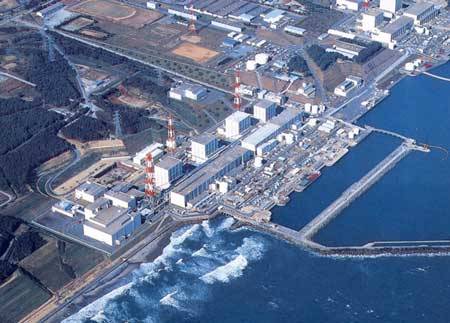
The restart of No. 6 reactor at Kashiwazaki-Kariwa Nuclear Power Station earlier this year was meant to spur a movement to bring more nuclear reactors online. Kashiwazaki-Kariwa is one of three plants whose cooling pools will be full in five years, according to the Federation of Electric Power Companies of Japan.
“Without solid (fuel management) plans, our power generation will stall sooner or later,” Kashiwazaki-Kariwa General Manager Takeyuki Inagaki said.
After decades of seeking permanent storage for highly radioactive spent fuel, the government is considering Minamitorishima, a remote Pacific island south of Tokyo. But the selection has faced skepticism and criticism stemming from Japan’s arbitrary actions on spent fuel and radioactive waste management.
Only 15 of Japan´s 54 reactors have restarted since the March 2011 Fukushima disaster, when a 9.0 earthquake off Japan´s northeastern coast and a subsequent tsunami caused meltdowns at three reactors operated by Tokyo Electric Power Company Holdings, or TEPCO. About 160,000 people fled from Fukushima and some areas remain unlivable.
Kashiazaki-Kariwa, also run by TEPCO, was shut down after the Fukushima disaster as part of a nationwide nuclear power stoppage.
The spent fuel in a cooling pool at Kashiwazaki-Kariwa No. 6 reactor, which is 88% filled, can be seen from a top-floor observation area. TEPCO has installed filtered venting systems and devices to prevent hydrogen explosions among additional safety measures based on lessons from Fukushima.
Prime Minister Sanae Takaichi is pushing to bring more nuclear plants online, resulting in more spent fuel. Without a viable permanent storage plan, there are worries that reactors will have to close when storage space runs out.
There are two options for dealing with spent nuclear fuel: direct disposal as waste or recycling to extract plutonium and uranium for reuse.
Japan insists on recycling, saying it will help the resource-poor nation’s energy needs while reducing the toxicity and volume of radioactive waste. But a reactor designed for plutonium reuse, a key part of the recycling, has failed. Reprocessing also won´t be able to handle all the spent fuel, adding to a plutonium stockpile that already is large enough to arm thousands of atomic bombs.
Experts say Japan should also consider the direct disposal option.
As of December 2025, cooling pools at 17 Japanese nuclear power plants held more than 17,000 tons (15,422 metric tons) of spent fuel, using nearly 80% of total storage capacity, according to the Ministry of Economy, Trade and Industry.
Beyond the large amount of radioactive waste from normal reactors, Japan also “has to deal with massive and largely unknown high-level nuclear waste from the Fukushima disaster,” said Lila Okamura, a Senshu University professor and expert on environmental politics and nuclear waste management.
Choosing a final disposal site for spent fuel and building a facility would require 100 years and tens of thousands of years to monitor the storage deep underground. For a generations-long project, Japan should plan carefully and not rush the current plan that is full of uncertainties, Okamura said.
Weeks after Kashiwazaki-Kariwa’s No. 6 reactor came back online for the first time in 14 years since the Fukushima disaster, Industry Minister Ryosei Akazawa approached Ogasawara village to request a feasibility study for a high-level radioactive waste site on Minamitorishima, an island administered by Ogasawara, which is part of Tokyo.
“With a lot of spent fuel accumulating at nuclear power plants across the country, a final disposal of radioactive waste is a crucial challenge that must be resolved,” Akazawa said in a letter to Ogasawara Mayor Masaaki Shibuya.
The government-owned Minamitorishima, about 2,000 kilometers (1,242 miles) south of Tokyo, has no permanent residents. The Japanese army is constructing a firing range for long-range, surface-to-ship missiles as a deterrent to China. The island also has deep sea deposits rich with rare earth minerals.
“The move seems political,” said Satoshi Takano, a member of a government panel looking at final disposal of spent fuel. “There will be little opposition from a government-owned remote island.”
Some experts say the island, which sits on a geologically stable tectonic plate, could be suitable. Many residents on Ogasawara and two nearby islands raised concerns about safety and tourism.
“I was baffled when I heard about the plan,” Ogasawara assembly member Yusuke Hirano told an assembly meeting. “I think nuclear waste is incompatible with islands that are a UNESCO Natural World Heritage site.”
Finding a community willing to host a highly radioactive dump site has been difficult, even with a raft of financial enticements. Minamitorishima is the fourth location to have a feasibility study since the government started looking in the early 2000s.
The whole review process will take about two decades. Municipalities participating in the first stage can receive up to 2 billion yen ($12.8 million) in government subsidies. The next stage would bring up to 7 billion yen ($44.7 million). Funding details for a final study haven’t been disclosed.
The world´s first final disposal site for spent nuclear fuel is set to open in Finland later this year. Britain, Germany and the United States have abandoned reprocessing largely because of high costs and technical challenges, while several other countries are discussing plans for direct disposal sites.
Inagaki, the Kashiwazaki-Kariwa general manager, said TEPCO is transferring spent fuel from No. 6 reactor to other reactors at the plant with more space, but the utility hopes to resume shipments to a dry cask storage in northern Japan as a near-term solution. Other utilities with nearly full pools have announced plans to build dry-cask storage at their plants.
Many residents worry about Japan’s growing stockpile because high-density storage of spent fuel could also increase overheating risks.
Mie Kuwabara, a civil activist in Niigata, wondered “where will it go next?”
“It’s irresponsible to accelerate restarts and produce more spent fuel without deciding its final destination,” said Kuwabara, who also is skeptical about using Minamitorishima.
“It’s like saying that it’s OK to put a facility there because nobody is around to complain if there is a problem,” Kuwabara said. “It’s scary.”
Rolls-Royce strikes nuclear deal with Japan, likely to be tax-payer funded
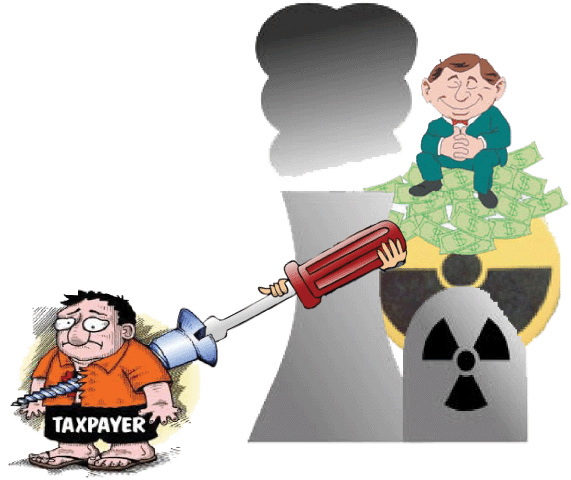
potential support that could eventually include
taxpayer-backed loans, debt financing or direct investments from the
National Wealth Fund.
Sir Keir Starmer and Sanae Takaichi set to sign agreement to develop advanced modular reactors
Matt Oliver, Industry Editor
Britain will join forces with Japan to build mini nuclear reactors capable
of powering factories, data centres and military bases. Sanae Takaichi,
Japan’s prime minister, and Sir Keir Starmer will sign an agreement at a
ceremony in Downing Street on Sunday, as part of a push to strengthen
energy cooperation between Tokyo and London.
The tie-up will lead to
British engineering giant Rolls-Royce working with the National Nuclear
Laboratory and its Japanese counterpart to develop advanced modular
reactors (AMRs) and the fuel needed to power them, The Telegraph can
disclose.
Japan has been testing a high-temperature, gas-cooled reactor for
decades, but the technology remains unproven commercially. Under the
partnership, the Japan Atomic Energy Agency will share its extensive safety
data with Rolls-Royce to help the company build a demonstrator AMR in the
UK by the mid-2030s.
Rolls is understood to have held discussions with the
Government about potential support that could eventually include
taxpayer-backed loans, debt financing or direct investments from the
National Wealth Fund.
Under the agreement, Rolls-Royce, the UK and Japanese
national laboratories have also agreed to explore options for supplying the
novel kind of fuel the AMRs will use. Known as tri-structural isotropic
particle fuel (TRISO), it is seen by scientists as inherently safer than
more conventional nuclear fuel because it can be left to cool on its own.
TRISO fuel is made by taking poppy seed-sized pieces of uranium and
wrapping them in layers of ceramic material that are almost as tough as
diamond. These pellets are then compacted into hexagonal blocks or billiard
ball-sized “pebbles”, which can be loaded into a nuclear reactor. The
Government has already announced a £300m programme with Urenco, a nuclear
fuel company, to build a UK enrichment facility capable of providing the
uranium needed to make TRISO pellets.
Telegraph 14th June 2026, https://www.telegraph.co.uk/business/2026/06/14/rolls-royce-strikes-nuclear-deal-with-japan/
1 This Month

of the week – Hiroshima Nagasaki Day Coalition – Working together for the abolition of n\nuclear weapons – https://www.hiroshimadaycoalition.ca/


No Nuclear in Cwm Llynfi! Stop the nuclear power station near Maesteg.
To see nuclear-related stories in greater depth and intensity – go to https://nuclearinformation.wordpress.com
-
Archives
- August 2026 (165)
- July 2026 (355)
- June 2026 (287)
- May 2026 (306)
- April 2026 (356)
- March 2026 (251)
- February 2026 (267)
- January 2026 (308)
- December 2025 (358)
- November 2025 (359)
- October 2025 (375)
- September 2025 (257)
-
Categories
- 1
- 1 NUCLEAR ISSUES
- business and costs
- climate change
- culture and arts
- ENERGY
- environment
- health
- history
- indigenous issues
- Legal
- marketing of nuclear
- media
- opposition to nuclear
- PERSONAL STORIES
- politics
- politics international
- Religion and ethics
- safety
- secrets,lies and civil liberties
- spinbuster
- technology
- Uranium
- wastes
- weapons and war
- Women
- 2 WORLD
- ACTION
- AFRICA
- Atrocities
- AUSTRALIA
- Christina's notes
- Christina's themes
- culture and arts
- Events
- Fuk 2022
- Fuk 2023
- Fukushima 2017
- Fukushima 2018
- fukushima 2019
- Fukushima 2020
- Fukushima 2021
- general
- global warming
- Humour (God we need it)
- Nuclear
- RARE EARTHS
- Reference
- resources – print
- Resources -audiovicual
- Weekly Newsletter
- World
- World Nuclear
- YouTube
-
RSS
Entries RSS
Comments RSS
 nuclear-news