Nuclear critics suspect hidden agenda in Sask. medical isotope plan
Nuclear critics suspect hidden agenda in Sask. medical isotope plan , July 10, 2009 CBC News Critics of nuclear development in Saskatchewan say a plan by the provincial government to supply medical isotopes may lead to more substantial nuclear facilities…………………………….
Jim Penna, a retired philosophy professor and a member of the Coalition for a Clean Green Saskatchewan, said there are ways of producing isotopes for medical diagnostics that do not require the construction of a nuclear reactor.
Penna said people should be wary of the motives behind the premier’s proposal. Penna said a plan for a research reactor may be the thin edge of the wedge leading to further expansion of the nuclear industry.
“That’s how it’s argued you see,” Penna told CBC News on Thursday. “They do talk about a research reactor … as one of the elements of a nuclear program for Saskatchewan. So this is a way of bringing about their nuclear agenda by piggybacking on the medical isotope issue.”…………………………….
Sandra Morin, environment critic for the Saskatchewan NDP, said Thursday that an economic feasibility study should be prepared, to demonstrate the project’s financial viability.
“We need a much more careful examination of just how much money will be put up by the Saskatchewan taxpayer and whether this is truly a feasible option for our province,” Morin said. “By all accounts, an isotope reactor simply doesn’t make sense from an economic standpoint so I would question the rush for the province to get involved in one.”
Morin also raised questions about one of the people closely involved in Saskatchewan’s pitch to the federal government, Richard Florizone.
Florizone, the vice-president of finance and resources at the University of Saskatchewan, is helping to prepare Saskatchewan’s proposal.
Florizone also chaired the province’s Uranium Development Partnership, the group appointed to look for ways to develop the uranium industry. Their report recommended building a research reactor that could produce medical isotopes.
Morin called the overlap of roles troublesome.
Nuclear critics suspect hidden agenda in Sask. medical isotope plan
The Atomic Safety and Licensing Board ruled that the Green Party of Florida and two other environmental groups could challenge Progress Energy’s plan for two new nuclear reactors. | Ocala.com | Star-Banner | Ocala, FL
Legal challenge to nuclear plant advances Environmental groups opposing Progress’ proposed Levy reactors may argue issues in court, board rules. Ocala.com By Fred Hiers
Friday, July 10, 2009Progress Energy’s road to building its proposed nuclear power plant in Levy County northwest of Dunnellon is becoming anything but smooth.
On Wednesday, the Atomic Safety and Licensing Board – an arm of the federal Nuclear Regulatory Commission – ruled that the Green Party of Florida and two other environmental groups could challenge the utility company’s plan for two new nuclear reactors and had successfully raised major concerns about the plant’s potential environmental impact.
That means Progress Energy will have to argue its case about those environmental issues during a legal hearing, including in oral arguments
The other two environmental organizations that petitioned to be part of future hearings and had objections were the Nuclear Information and Resource Service and the Ecology Party of Florida.
The environmental groups had 12 areas of concern. The licensing board dismissed nine. The remaining three had to do with radioactive waste, how construction would affect the aquifer in the area and the plant’s use and disposal of salt water…………………………
The environmental groups also said the proposed plant should make better plans as to what it would do with its spent radioactive waste and have long-term storage strategies. The utility should also better explain its safety and security procedures for the waste.
The licensing board also agreed with the environmental groups that the utility company should better address the environmental impact of building its plant on a flood plain and its effect on the aquifer and wetlands.
Overweight Get More Radiation and Doctors Admit Ignorance to Damage Caused
Overweight Get More Radiation and Doctors Admit Ignorance to Damage Caused
NaturalNews.com July 08, 2009 by: Jane Jones “………………….Recently, it was uncovered that obese patients are receiving up to 4000 percent more exposure to radiation with each X-ray – and in the ambitious medical world, the number of X-rays people receive is also increasing. The increase of radiation exposure appears to be done on the basis of logic: more radiation is needed to get an accurate exposure due to the excess fat getting in the way.
While more radiation might actually help get a usable x-ray, the question of what damage it’s causing the patient is one an MIT doctor admits hasn’t even been looked at. The question of it being an acceptable risk has also been neglected.
We know that radiation is dangerous. We know that radiation even from X-rays is dangerous…………
……………..Resources:
Obese Get Higher Doses of Radiation for X-Rays
http://news.yahoo.com/s/hsn/2009063…
Radiation Damage
http://www.umm.edu/altmed/articles/…
http://www.naturalnews.com/026570_doctors_overweight_X-rays.html
Tactical Nuclear Weapons, the Menace No One Is Talking About
Politics Daily David Wood 8 July 07 “…………………………Presidents Obama and Medvedev, who agreed on the outlines of the treaty at their Moscow summit, seem to have overlooked thousands of nasty nuclear weapons bristling right under their noses in Europe: Russian and American tactical nukes. About 4,500 of these war-fighting weapons, mostly bombs and short-range missile warheads, are stored in Europe and in western Russia. They are not a subject of the strategic nuclear arms talks announced in Moscow. In fact, they are not part of any arms control treaty or negotiation.
The security of the facilities where they are stored, including underground U.S. bunkers across Western Europe, has come under question. The Russians have at least eight times as many of these weapons as the United States has deployed in Europe, an imbalance that a panel of senior American experts recently called “stark and worrisome.”
In the shifting geopolitics of post-Cold War Europe, tactical nuclear weapons play an increasingly important role in Russian military doctrine, a brute reminder of Russian power against the growing influence of the West along its borders. For instance, the Russians are working to fit tactical nuclear warheads onto submarine-launched cruise missiles, a weapon that “will play a key role” in Russian strategy, according to Vice Adm. Oleg Bursev of the Russian General Staff. “Their range and precision are gradually increasing,” he said this spring.
………………………….. These are bombs carried on ordinary jets, like F-16s, and mounted on short-range ballistic missiles. This class of weapons might still include the nuclear land mines and nuclear artillery shells that were deployed by the tens of thousands in Europe during the Cold War. The United States and Russia both say they’ve gotten rid of these weapons, but intelligence services on each side harbor doubts.
The U.S. tactical weapons, mostly B-61 thermonuclear bombs, are stored in underground vaults in Belgium, Holland, Germany, Italy, and Turkey, where they are under the control of U.S. Air Force munitions support squadrons.
http://www.politicsdaily.com/2009/07/08/tactical-nuclear-weapons-the-menace-no-one-is-talking-about/
Can Nuclear Power Take The Heat?
Can Nuclear Power Take The Heat? The New Republic -Bradford Plumer 7 July 09 Via Climate Progress, the London Times reports that France’s nuclear fleet is once again running into water and heat trouble during the summer……………………….These summer shutdowns are becoming more and more common, and don’t bode well for the future, given that temperatures in Europe have been creeping up faster than the global average, according to a recent European Environmental Agency report, and will almost certainly keep climbing as the world warms. Some countries, like France, Germany, and Spain, have responded to this problem in the past by overriding their own environmental laws and allowing plants to dump hotter water into the rivers—the downside is that this can cause considerable damage to river life.
Nor is this just Europe’s problem: In 2006, Exelon had to cut the power at a nuclear plant in Illinois when the Mississippi River got too warm to be used as cooling water. According to the recent NOAA synthesis report on climate-change impacts in the United States, one of the things we can expect to see across the country in the coming decades is a much greater frequency of hotter-than-90°F (32°C) days—precisely the point at which France’s plants keep running into trouble. Meanwhile, as the AP reported last year, if droughts become more frequent, that could mean additional trouble for nearly one-quarter of the nation’s nuclear plants.
If nuclear power is so great, why aren’t we doing it?
If nuclear power is so great, why aren’t we doing it? Thought Leader By Roger Diamond 7 July 09 “………………………..Somewhere, somehow, investors aren’t keen, and my suspicion is that expense is at the heart of their concerns, and not waste (environmental) or accident (social) issues.
The second issue I’d like to raise is that of externalities. These are the real costs not included in the financial cost of an item or service. In the case of nuclear energy, the externalities are associated with mining of uranium, decommissioning and high-level radioactive waste disposal. These are the costs not being added into the price of electricity from nuclear power plants. Specifically, mining of uranium has, like any other mining, a basket of costs that are being put off for future generations to deal with, namely groundwater and surface-water pollution, land disturbance and rehabilitation costs, dust etc. If these were costed into the life-cycle analysis for nuclear power, it would be even more expensive than it is now…………………….Externalities are where renewables get very competitive. Use of coal and uranium has huge externalities, whilst renewables only have the indirect effects associated with energy and resources used to construct and transport the energy-harvesting devices
Thought Leader » Peak Oil Perspectives » If nuclear power is so great, why aren’t we doing it?
Why bring back expensive nuclear power when there are cheaper options? |
Diana Hooley: Why bring back expensive nuclear power when there are cheaper options? Idaho Statesman ENERGY BY DIANA HOOLEY 07/05/09 “………………. ……………Wall Street Journal reporter Keith Johnson (WSJ Blog, June 12) says that the capital costs for nuclear are currently prohibitive……………………………current problems in the European nuclear industry suggests that new reactors would be “no easier or cheaper to build than the ones a generation ago.” The Times said that construction of two “new” generation reactors in France and Finland have been riddled with problems and are well over budget with no end in sight for the project’s construction phase.
The Times also said that in Florida and Georgia, state laws have been changed to raise electricity rates in order to pass on the costs of the expensive construction of new nuclear plants to consumers. Some states like Missouri have balked at these preconstruction costs and suspended any nuclear plant projects for their state.
The New York Times quotes MIT economist Paul L. Jaskow in acknowledging the cost of nuclear. Jaskow says a number of U.S. companies are looking in trepidation at the magnitude of investment necessary to build a reactor………………….. renewables are working toward baseload capacities, and with smart grids and other new storage technology, researchers can see the potential for baseload.
Wind power is just one of several renewable resources supported by current federal legislature that produces no greenhouse gasses or toxic waste and is believed to have the long-term technical potential to be five times total current global energy production or 40 times current electricity demand (“Global wind map shows best wind farm locations,” Environment News Service, May 17, 2005).
Additionally, renewables do not have to be built to scale like nuclear, requiring massive investments in large electrical transmission infrastructures. Evidently, investors know the market potential of renewables; wind power alone is growing at the rate of 30 percent annually (Renewables Global Status Report: 2009 update).
IAEA calls on Serbia to address nuclear waste problem
AEA calls on Serbia to address nuclear waste problem 3 July 2009 | 15:00 | Source: B92 BELGRADE — The head of the International Atomic Energy Association (IAEA) has warned that Serbia must dispose of any remaining atomic fuel as soon as possible. Mohammed ElBaradei and Serbian Science Minister Božidar Đelić today signed an additional protocol on cooperation between Belgrade and the IAEA, after visiting the Vinča Nuclear Science Institute yesterday.
ElBaradei warned that Serbia needed to dispose of its remaining supplies of atomic fuel to prevent any possible incidents.
B92 – News – Society – IAEA calls on Serbia to address nuclear waste problem
Wall must ignore nuclear hype, make an informed decision
“……………………………..the legitimacy of nuclear power as a cost-efficient energy source was dealt a severe blow this week with the news that the Ontario government has suspended the tender to build two new reactors at Darlington — part of a $26-billion nuclear building refurbishment plan. This development has certainly put a perspective on the foremost problem with nuclear power development — the exorbitant pricetag — that business proponents like the Saskatchewan Chamber of Commerce have sadly been downplaying.
Wheels Coming Off Nuclear Bandwagon
Beyond Nuclear 2 July 09 International leaders of the nuclear power “renaissance” have recently announced major delays, or outright cancellations, of new reactors. In the U.S., John Rowe, CEO and Chairman of the largest nuclear utility Exelon, dropped its application to NRC to build two reactors at Victoria County Station, Texas and instead will pursue a more generic Early Site Permit approval without committing to a specific reactor design. This latest stumble is admittedly due to “limited availability of federal loan guarantees.” (See Wall Street Journal coverage with links to more articles). In Ontario, $26 billion in nuclear power plant refurbishment and new reactor construction plans have been suspended, as the Province seeks to bargain down Atomic Energy of Canada Limited’s skyrocketing price tags, especially given the government -owned “Crown Corporation’s” current troubles and uncertain future. (See press coverage). And recent developments in South Africa have likely rung the death knell for the pebble bed modular reactor, once touted as the lead “Generation IV” design for “advanced reactors.” (See The Bulletin of the Atomic Scientists story). ??
New study: Nuclear workers at higher risk for cancer –
New study: Nuclear workers at higher risk for cancer Brattleboro Reformer By BOB AUDETTE, Reformer Staff July 2BRATTLEBORO — Are nuclear power plant workers at higher risk to die of cancer?A study conducted by a Canadian researcher concluded the risk is substantially higher to them than to the general public.The document, “Exposure to Radiation and Health Outcomes” was made public last week. It was written by Mark Lemstra, who was formerly a senior research epidemiologist for the Saskatoon, Canada, Health Region……………………In the radiation report, in which Lemstra reviewed 1,725 articles related to radiation studies, he concluded that nuclear power plant workers have a “relative excess risk” of getting cancer.
In epidemiology, excess risk is defined as the difference between the proportion of subjects in a population with a particular disease who were exposed to a specific risk factor and the proportion of subjects with that same disease who were not exposed.
In the case of nuclear power plant workers, that risk factor is low-dose radiation.
New study: Nuclear workers at higher risk for cancer – Brattleboro Reformer
Nuclear Power has Political Meltdowns
Nuclear Power has Political Meltdowns Greentech Pastures Harry Fuller 1 July 09 There’s the on-going issue of nuclear waste, and in Ontario, at least, there’s the problem of the expense of the next generation technology.
Only Finland is currently building the latest and best in nuclear generation tech, the work being done by European firms, Areva and Siemens. The project is now far over budget and at least three years from completion. The plant construction began in 2005 and was supposed to have been completed this year. Situations like Ontario and Finland are not going to encourage other nations to go further into nuclear generation.
Nuclear power problems remain
News.cincinatti.com Bill Cahalan • July 1, 2009 “……………..about Duke Energy’s plan for a nuclear plant in Piketon, Ohio,……………. many decision-makers appear motivated by fear of shortages (and for the nuclear industry, hunger for big profits) to return to this sleeping dog of nuclear electricity.
Despite some improvements in the technology, the following decades-old problems remain: air, water and human contamination from uranium mining, huge up-front construction (and later, decommissioning) costs, lengthy construction times, higher cancer rates and morbidity from other disorders in nearby residents due to routine radioactive releases, the continuing danger of meltdowns as occurred at Three Mile Island, Chernobyl and almost at Davis-Besse in Toledo (2002), high vulnerability to terrorist attacks and the still unsolved problem of radioactive waste passed to our descendants for thousands of years.
I challenge the assumption that, in a world stressed by many transgressed ecological limits besides CO2 emissions, we must resign ourselves to continually increasing population, consumption and energy demands……………
……………..I for one plan to strive even harder now to unplug from Duke and turn to solar cells and conservation,…….
http://news.cincinnati.com/article/20090701/EDIT02/907010374/Nuclear+power+problems+remain
Asse nuclear dump contains explosives
Asse nuclear dump contains explosives The Local 26 Jun 09 CETOnline: The controversial salt-mine nuclear waste storage facility in Asse, Lower Saxony is not only crumbling but also contains unknown amounts of explosive, it has emerged………………………………The DDP report said an explosives storage chamber still containing a variety of dynamite-related substances, can be found near the area where the radioactive waste is being kept.
Files from the Research Centre for the Environment and Health (GSF), which used to run the storage facility, show that over the last few years a bog of radioactive salt water has built up by the entrance to the explosive chamber.
The high price of nuclear fuel
The high price of nuclear fuel: Censorbugbear 25 June 2009 story sourced from World Nuclear News, Itar-Tass news agency, LARRI Namibian miners inhale alpha radiation:During a May 2009 visit to the Netherlands, Mrs Hilma Shindondola-Mote, director of the Namibian research institute LArrI, warned that many uranium workers in Namibia ‘ fear for their health and lifestyle due to the environmental impact of uranium mining while concessions for mine companies continue to be granted by the government.”
She presented the institute’s findings in its latest report: ‘Uranium mining in Namibia – the mystery behind low-level radiation’, with research conducted among fifty workers of Namibia’s largest uranium mine: Rössing Uranium (Rio Tinto Group). *
“Mine workers and others in the surrounding communities inhale dust and radon gas. The radon gas exposes the body to alpha radiation, which is destructive. Exposure to radiation is most often associated with cancer, but it can also have other harmful effects. Low level radiation can contribute to birth defects, high infant mortality and chronic lung, eye, skin and reproductive illnesses.”
They are only informed about health problems after leaving their jobs…Uranium mine workers are not aware of the true nature of their health status: “During the time we conducted the study, employees claimed that Rössing does not explain what health problems can arise from exposure to uranium”. Also, workers of the company raised concern that although they are tested annually, the results are never revealed until such a time when they leave the company. *
“The workers feel that there is a conspiracy between the doctors and Rössing. They are only informed about health problems like cancer after leaving their jobs. The doctors tell them that the deterioration in their health is because of their genes, family history or lifestyle.”
Censorbugbear reports…: Russia gets fuel deals with Nigeria,Egypt,Namibia
1 This Month
6 June – WEBINAR- Get Inspired by Protests Against Military Bases!

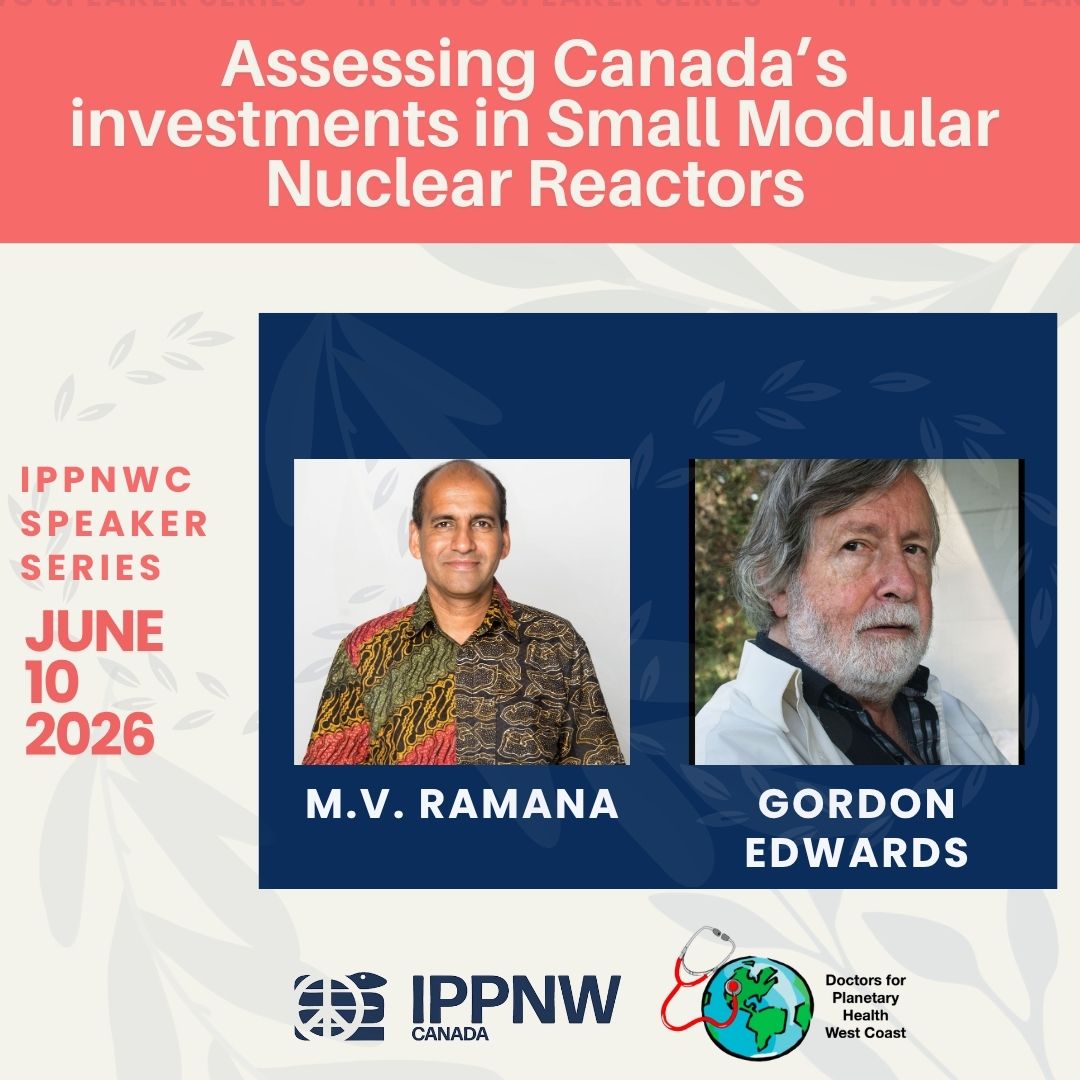
10 June – Assessing Canada’s Investments in Small Modular Nuclear Reactors – https://zoom.us/meeting/register/IiqHA5feRhaEBycOLNTJlA#/registration

Cuba Is Not a Failed State – It Is a Besieged State
PETITION: “Global Appeal to Endorse Palestinian Right of Return of Refugees”
To see nuclear-related stories in greater depth and intensity – go to https://nuclearinformation.wordpress.com
-
Archives
- June 2026 (57)
- May 2026 (306)
- April 2026 (356)
- March 2026 (251)
- February 2026 (268)
- January 2026 (308)
- December 2025 (358)
- November 2025 (359)
- October 2025 (376)
- September 2025 (257)
- August 2025 (319)
- July 2025 (230)
-
Categories
- 1
- 1 NUCLEAR ISSUES
- business and costs
- climate change
- culture and arts
- ENERGY
- environment
- health
- history
- indigenous issues
- Legal
- marketing of nuclear
- media
- opposition to nuclear
- PERSONAL STORIES
- politics
- politics international
- Religion and ethics
- safety
- secrets,lies and civil liberties
- spinbuster
- technology
- Uranium
- wastes
- weapons and war
- Women
- 2 WORLD
- ACTION
- AFRICA
- Atrocities
- AUSTRALIA
- Christina's notes
- Christina's themes
- culture and arts
- Events
- Fuk 2022
- Fuk 2023
- Fukushima 2017
- Fukushima 2018
- fukushima 2019
- Fukushima 2020
- Fukushima 2021
- general
- global warming
- Humour (God we need it)
- Nuclear
- RARE EARTHS
- Reference
- resources – print
- Resources -audiovicual
- Weekly Newsletter
- World
- World Nuclear
- YouTube
-
RSS
Entries RSS
Comments RSS
 nuclear-news