Data rewriting and erroneous statements…Sloppy handling continues at Tsuruga Nuclear Power Plant Unit No.2 of JAERI, Regulatory Commission suggests termination of review if no improvement is made

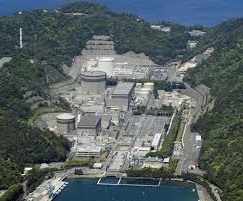
Tsuruga Nuclear Power Plant (photo taken in January 2021)
December 19, 2022
At a special meeting on December 19, the Nuclear Regulation Authority (NRA) exchanged opinions with Mamoru Muramatsu, president of Japan Atomic Power Company (JAERI), and others regarding the review of Tsuruga Unit 2 (Fukui Prefecture), where inappropriate rewriting of geological data was discovered. Shinsuke Yamanaka, chairman of the regulatory commission, said that if the data is not improved in the future, “the commission will have to discuss whether to continue the examination,” and indicated that he would consider suspending or terminating the examination.
The rewriting of the data was discovered in February 2020 when the regulatory commission pointed it out. In order to determine whether the fault directly under the reactor building was an active fault that could cause an earthquake, the state of the geological strata taken out by drilling was rewritten in 80 locations. Many other errors were also found.
The regulatory commission’s examination, which had been suspended, resumed on March 9 because the company had established rules for entering data, but at that time, new errors were also found. The number of errors in the data has totaled 1,296 so far.
At the meeting, Akira Ishiwata, a member of the committee in charge of reviewing earthquake and tsunami countermeasures, said, “There are 1,300 errors, and only JAEPCO would submit such materials. If there are any more errors, it will be difficult to continue the examination. Mr. Yamanaka expressed his distrust, asking, “Are they sure about their technical capabilities? (Nozomi Masui)
https://www.tokyo-np.co.jp/article/220955?fbclid=IwAR0zWkMDa8kLYoQqx-3FpsSe9F3BX2-Wui23ftKuWyptnwDgOWydI2QcdWU
Japan to deploy large patrol boats to guard nuclear plants


Fukui weighs new wave of reactors to protect status as Japan’s ‘nuclear capital’

10 Tsuruga nuke plant workers doused with radioactive coolant water
FUKUI – Japan Atomic Power Co. has revealed that 10 workers were doused in radioactive coolant water during maintenance work in an auxiliary building for reactor 2 at the Tsuruga nuclear power plant in Fukui Prefecture.
The 10 employees were not exposed to radiation, the company said on Wednesday.
Up to 160 liters of room-temperature coolant water containing 272,000 becquerels of radioactive substances was spilled — about one-tenth of the level that must be reported to the government, Japan Atomic Power said, adding that the amount of the hazardous materials was “not small.”
Water from a pipe sprayed into a tank room on the second basement floor of the auxiliary building around 10:50 a.m. Wednesday, when a worker loosened a bolt on a valve from a pipe attached to a coolant storage tank, according to Japan Atomic Power.
Of the 15 workers from a subcontracting company who were in the room, four were soaked from head to toe, while six were partially soaked. The water splashed directly onto the faces of some of the workers, according to Japan Atomic Power.
When the water poured in, the workers, wearing jumpsuits, helmets, gloves and goggles, were trying to drain the pipe to allow the valve to be checked and to exchange a rubber part in a tank that temporarily stores coolant water while operations at the plant are halted.
Japan Atomic Power said there was more water in the pipe than had been anticipated.
In November last year, Japan Atomic Power applied to the Nuclear Regulation Authority for safety checks on the Tsuruga reactor. An NRA screening is required before the nuclear reactor is reactivated.
Radioactive water splashes Japan reactor workers; no injuries, no contamination. So they say as usual

Japan Atomic Power Co said on Wednesday water used for cooling its Tsuruga No.2 reactor, shut for maintenance, splashed on 10 employees at work inside an auxiliary plant building without causing injuries or radioactive contamination.
The electricity wholesaler said about 160 liters of water spilled, splashing the workwear of staff conducting inspections on Wednesday. The company said there was no leak of radiation to the surrounding environment.

The incident was reported two days after utility Tohoku Electric Power Co said about 12.5 tonnes of seawater used for cooling pumps and motors inside its Onagawa No.1 reactor building had leaked. The Onagawa reactor is also shut for maintenance.
The utility said in a statement the seawater contained no radioactive material and had not leaked to the outside environment.
http://www.reuters.com/article/us-japan-nuclear-water-idUSKBN13P0TS
1 This Month

of the week – Shut Down Drone Warfare!


Tell the Ukrainian Government to Drop Prosecution of Peace Activist Yurii Sheliazhenko

Petition to revoke the licensing of the Near Surface Nuclear Disposal Facility (NSDF) at Chalk River. https://www.ourcommons.ca/petitions/en/Petition/Details?Petition=e-7247
To see nuclear-related stories in greater depth and intensity – go to https://nuclearinformation.wordpress.com
-
Archives
- March 2026 (251)
- February 2026 (268)
- January 2026 (308)
- December 2025 (358)
- November 2025 (359)
- October 2025 (376)
- September 2025 (257)
- August 2025 (319)
- July 2025 (230)
- June 2025 (348)
- May 2025 (261)
- April 2025 (305)
-
Categories
- 1
- 1 NUCLEAR ISSUES
- business and costs
- climate change
- culture and arts
- ENERGY
- environment
- health
- history
- indigenous issues
- Legal
- marketing of nuclear
- media
- opposition to nuclear
- PERSONAL STORIES
- politics
- politics international
- Religion and ethics
- safety
- secrets,lies and civil liberties
- spinbuster
- technology
- Uranium
- wastes
- weapons and war
- Women
- 2 WORLD
- ACTION
- AFRICA
- Atrocities
- AUSTRALIA
- Christina's notes
- Christina's themes
- culture and arts
- Events
- Fuk 2022
- Fuk 2023
- Fukushima 2017
- Fukushima 2018
- fukushima 2019
- Fukushima 2020
- Fukushima 2021
- general
- global warming
- Humour (God we need it)
- Nuclear
- RARE EARTHS
- Reference
- resources – print
- Resources -audiovicual
- Weekly Newsletter
- World
- World Nuclear
- YouTube
-
RSS
Entries RSS
Comments RSS
 nuclear-news