Fukushima Radioactive Contamination of Tap Water in Eastern Japan
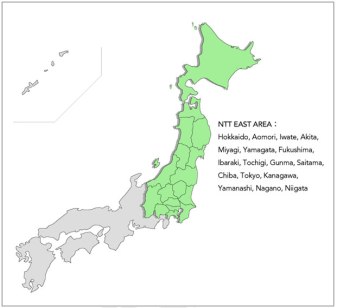
The measures quoted in this article are from the Japan Nuclear Regulatory Agency.
As every measure given by the Japanese government agencies and Tepco during the past 5 and half years, we have the right to question their exactitude and therefore the true numbers could be actually higher than the ones published.
still the fact remains that they do recognize a certain contamination of the tap water in many prefectures of Eastern Japan.
Radioactivity testing of tap water in June 2016
According to the radioactivity test of tap water, the Nuclear Regulatory Agency announced in June 2016 that there is some radioactivity contamination from Fukushima nuclear power plant accident in the tap water of Miyagi Prefecture, Yamagata Prefecture, Fukushima Prefecture, Ibaraki Prefecture, Tochigi Prefecture, Gunma Prefecture, Saitama Prefecture, Chiba Prefecture, Tokyo, Kanagawa Prefecture, Niigata Prefecture, where radioactive cesium has been slightly detected.
(The detection limit value of White Food: 0.5 Bq / kg).
For Tokyo traces of both Cesium 134 and Cesium 137 were detected, proving with certainty that they are from the Fukushima nuclear power plant accident.
As a result, we make sure it is not detected by the detection limit value of 0.0001 Bq / kg. So we have to check the non-detection in strontium inspection that is only carried out in the mineral water industry.
We believe that the one of the products that you sould really worry is the water that you drink every day.
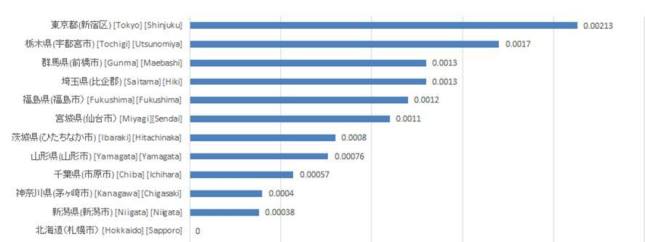
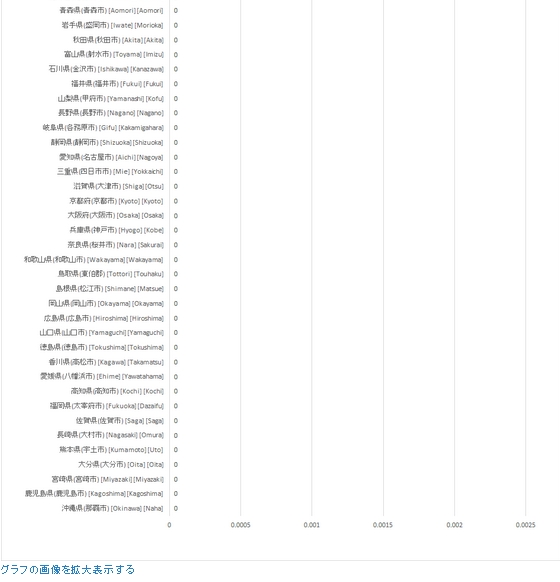
Information Source: Nuclear Regulatory Agency (→ link http://radioactivity.nsr.go.jp/ja/list/194/list-201606.html)
Readings of radioactivity level in drinking water by prefecture (January-March, 2016)
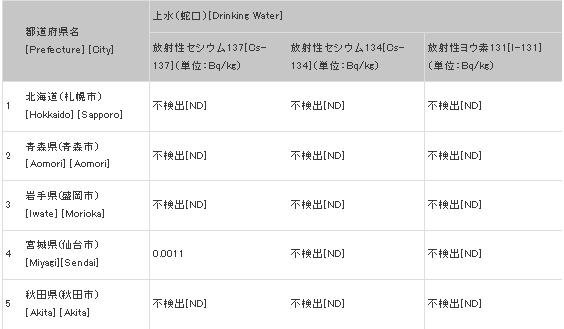
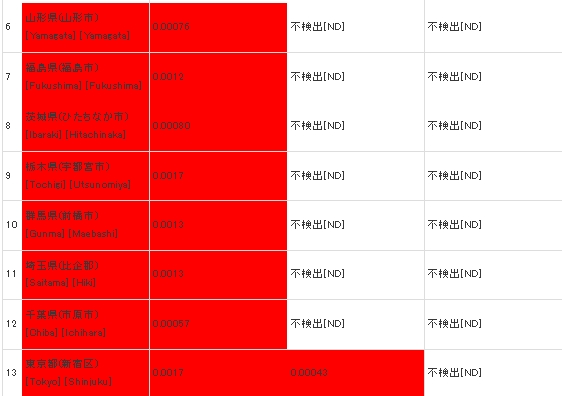
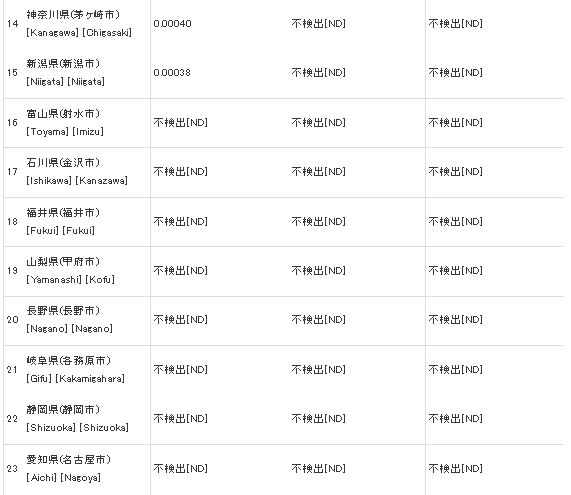
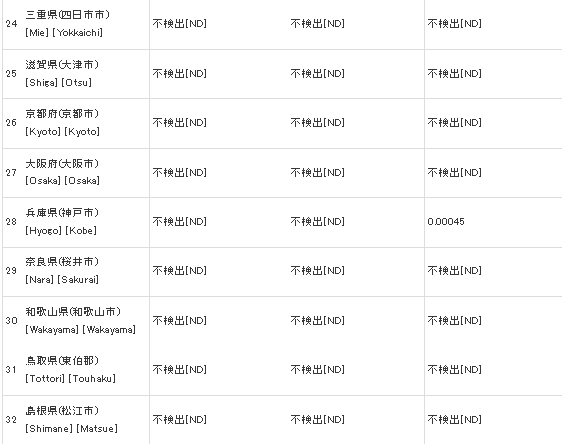
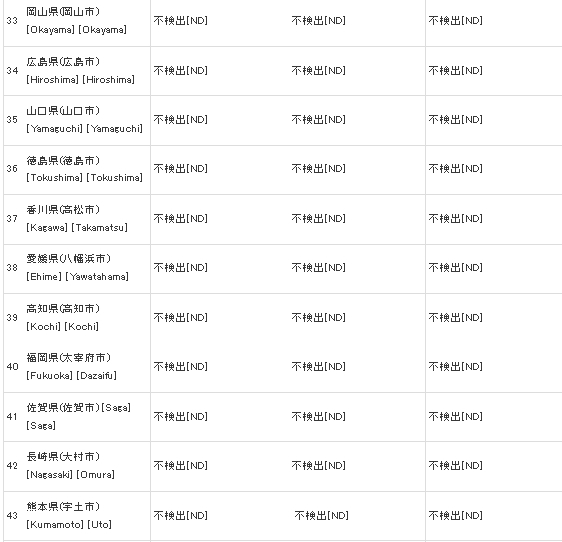
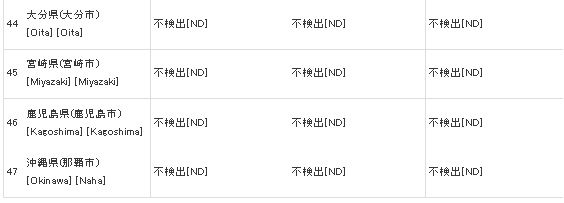
1.本データは、1Bq/LをBq/kgとみなす [1.These figures are estimated as 1Bq/liter = 1Bq/kg]
2.原子力規制委員会が各都道府県等からの報告に基づき作成 [2.The table was made by Nuclear Regulation Authority, based on the reports from prefectures.]
3.検出下限値は、 I-131、Cs-134、Cs-137すべて0.001Bq/kg未満 [3.The detection limits of I-131, Cs-134 and Cs-137 are less than 0.001Bq/kg]
(参考)水道水中の放射性物質に係る指標の見直しについて(厚生労働省)における水道水中の新たな目標値 放射性セシウム(セシウム134及び137の合計) :10Bq/kg [(Ref.)[Document created by Ministry of Health, Labour and Welfare] [Radioactive cesium (The sum of cesium134 and 137) :10Bq/kg]
情報元 : 原子力規制庁(→リンク http://radioactivity.nsr.go.jp/ja/list/194/list-201606.html)
Cesium level is highest in Tokyo tap water
https://news.whitefood.co.jp/news/foodmap/7290/
1 This Month

Petition to revoke the licensing of the Near Surface Nuclear Disposal Facility (NSDF) at Chalk River. https://www.ourcommons.ca/petitions/en/Petition/Details?Petition=e-7247


of the week – STOP SMALL MODULAR REACTORS IN CANADA
To see nuclear-related stories in greater depth and intensity – go to https://nuclearinformation.wordpress.com
-
Archives
- March 2026 (153)
- February 2026 (268)
- January 2026 (308)
- December 2025 (358)
- November 2025 (359)
- October 2025 (376)
- September 2025 (258)
- August 2025 (319)
- July 2025 (230)
- June 2025 (348)
- May 2025 (261)
- April 2025 (305)
-
Categories
- 1
- 1 NUCLEAR ISSUES
- business and costs
- climate change
- culture and arts
- ENERGY
- environment
- health
- history
- indigenous issues
- Legal
- marketing of nuclear
- media
- opposition to nuclear
- PERSONAL STORIES
- politics
- politics international
- Religion and ethics
- safety
- secrets,lies and civil liberties
- spinbuster
- technology
- Uranium
- wastes
- weapons and war
- Women
- 2 WORLD
- ACTION
- AFRICA
- Atrocities
- AUSTRALIA
- Christina's notes
- Christina's themes
- culture and arts
- Events
- Fuk 2022
- Fuk 2023
- Fukushima 2017
- Fukushima 2018
- fukushima 2019
- Fukushima 2020
- Fukushima 2021
- general
- global warming
- Humour (God we need it)
- Nuclear
- RARE EARTHS
- Reference
- resources – print
- Resources -audiovicual
- Weekly Newsletter
- World
- World Nuclear
- YouTube
-
RSS
Entries RSS
Comments RSS
 nuclear-news