Tritium leaks at Oyster Creek not easily contained
Tritium leaks at Oyster Creek not easily contained APP.com By PETER HIBBARD • May 12, 2009The recent reports of tritium being found in monitoring wells at the Oyster Creek nuclear plant in Lacey are deeply disturbing. Once a contaminant gets into the aquifer, it is nearly impossible to remove it. Water in the aquifer moves slowly, but it moves……….
…………..Oyster Creek is the oldest nuclear plant of its type in the nation. It has one of the highest leak rates in the country. Project Tooth Fairy measured Strontium 90 in children by examining baby teeth, and estimated the leakage has been going on for many years. Growing teeth can be checked for age of exposure, like rings on a tree.
Tritium leaks at Oyster Creek not easily contained | APP.com | Asbury Park Press
Seismic activity makes nuclear power unsafe, says geologist
Seismic activity makes nuclear power unsafe, says geologistP ALOMA MIGONE – Herald-Tribune staff 13 May 09 – “……………………
The most recent earthquake occurred near the proposed nuclear plant site in Peace River on Feb. 19 with a magnitude of 3.2.
There was another earthquake recorded near Fort St. John in the ’80s and another near Snipe Lake, which is east of Valleyview, in the ’70s.
“This would be the most foolish place in Alberta to even think of putting a nuclear plant,” he said.
The concern is that over the course of many small earthquakes, a nuclear power plant would suffer “fractures,” weakening the structure and making it unsafe.
‘ADDED DANGER’
“The facilities of the nuclear plant, the concrete, the piping, over time they corrode, they get weaker and this is simply an added danger to the safety of the plant.”
Adele Boucher Rymhs from Citizens Against Nuclear Development said agreeing to a nuclear plan now would pass the problem to residents’ kids and grandchildren.
“Thirty years, 40 years from now, they are the ones who will suffer from problems if they occur.”
Quick answer unlikely for nuclear hot potato
Quick answer unlikely for nuclear hot potato TriCity Herald by Rick Larson, 11 May 09 A piece of President Obama’s budget that hasn’t drawn as much attention as other high-profile programs would finally bury the controversial Yucca Mountain nuclear waste project in Nevada.Scrapping Yucca Mountain will leave a $13.5 billion hole in the ground, which is how much the Department of Energy has spent on the project since 1983, and it leaves unanswered the question of what to do with waste from nuclear power plants. It’s a question the nation has struggled with for some 30 years………………………………
Scrapping Yucca Mountain isn’t as simple, however, as just walking away from a massive hole in the ground. The problem of what to do with the 55,000 tons of used nuclear fuel sitting in 39 states in “temporary” storage at nuclear power plants — including the Energy Northwest plant at Hanford — remains.
And lawmakers from states with nuclear plants are getting angry, threatening to stop or reduce their payments to the federal government for nuclear waste management until a solution for nuclear waste emerges. The New York Times reported in April that at least four states — Maine, South Carolina, Michigan and Minnesota — were considering measures.
All of this comes as nuclear power plants are being promoted as potential sources of clean and reliable base power……………………
Quick answer unlikely for nuclear hot potato – Ask the Editors | Tri-City Herald : Mid-Columbia news
political risks for uranium mining
Q+A-Eurasia Group on political risks for global mining
REUTERS 11 by Andrew Marshall May 0 9 “……………………………Q – What are the implications of the economic downturn on the expansion of nuclear energy and uranium mining projects?
A – Generally bad news across the board. The absence of new loan guarantees for new reactors in the UK and the U.S. will undermine the growth of the nuclear power sector. Emerging market nuclear programs… will also face funding pressures…………….
Safety threat to planned nuclear power stations
Safety threat to planned nuclear power stations Devastating blow as leaked letter shows regulator could pull plug on proposed UK reactors because of ‘design errors’
THE INDEPENDENT By Geoffrey Lean, 10 May 09
Britain’s plans to build a new generation of nuclear power stations have been thrown into jeopardy by startling official safety fears. The nuclear regulatory body in Finland, where the first of the reactors is being built, has taken the extraordinary step of threatening to halt its construction because it has not been satisfied that key safety systems will work.
STUK, the Finnish government’s Radiation and Nuclear Safety Authority, says that “evident errors” have not been corrected more than a year after it raised its concerns and condemns the “lack of professional knowledge” of people working for the firm responsible for its design and construction.
This is an unexpected, and potentially devastating, blow because one of the main selling points of the new European Pressurised Reactor (EPR) has been that its safety systems will work far better than those in current reactors. It is particularly important that they do because, as The Independent on Sunday reported in February, they will produce many times as much radiation that could be rapidly released in the event of an accident…………………………….
Safety threat to planned nuclear power stations – Green Living, Environment – The Independent
Nuclear waste in N.B. unacceptable
Nuclear waste in N.B. unacceptable
Times and Transcript Friday May 8th, 2009 Premier Shawn Graham, Energy Minister Jack Keir and every other politician of whatever stripe in New Brunswick need to be told and to clearly understand that New Brunswickers do not want and will not accept a national nuclear waste dump in this province no matter how deep underground, how many jobs it creates or how many glib assurances are given about its safety………………
……..There is no reason why the province should “take one for Canada” on this issue. The province is simply an unsuitable location. It is geographically small, well populated and though not without environmental issues, still relatively environmentally healthy. To leave the door open to nuclear waste flies in the face of the premier’s own “green” policies and initiatives.
Bureaucratic talk of “process”is misleading. It can be the best process in the world, but it will make no difference if the outcome is unacceptable. This is a time-honoured way to try to keep people quiet or co-opt them and move things along until it is too late for the public to stop a project. There is no reason for New Brunswick to play along.
These efforts also highlight the increasingly clear fact that nuclear power (and our premier is working hard towards a second reactor even though the first continues to be costly, its refit is well behind schedule and it will cause power rates to rise again) is not a cost effective energy answer. The underground waste dump is expected to cost from $16-24 billion just to build. That massive amount must be included in any calculation on the costs of nuclear power. And expect the cost to rise substantially by the time any decision is made.
New Brunswickers have correctly and overwhelmingly rejected uranium mines, even if the government hasn’t. They will reject a national nuclear waste dump too.
timestranscript.com – Nuclear waste in N.B. unacceptable – Breaking News, New Brunswick, Canada
‘Useless’ Trident is an obscene waste of money
“………………………..In the bloated, overfunded world of nuclear “defence” (now there’s an oxymoron if every I heard one) plans to replace the Trident nuclear-armed submarine fleet continue apace, as if nothing has happened.The current estimate for replacing Trident starts at about £20 billion (the government figure) and rises to £75bn (the figure from groups such as Greenpeace). And yes, I did say “billion” with a “B”, not million.The government is absolutely committed to replacing Trident. Supposing we were all starving in the gutter, the government would still press ahead…………………….
The fact of the matter is this. Trident is useless, in the sense that it can never be used. If it was used, the retaliation would be so massive that it is unlikely there would be any life left on the planet afterwards.
The world has enough nuclear weapons to kill every person on the planet. I guess they want to allow for the possibility of resurrection, because the level of overkill is such that we have enough nuclear weapons to kill every person on the planet not just once, but several times over……………………in the current financial climate, the idea of spending such enormous sums of taxpayers’ money on replacing Trident is simply obscene.
‘Useless’ Trident is an obscene waste of money – The Inverness Courier
An American Tragedy
An American Tragedy
Augusta GazetteFri May 08, 2009,Approximately 225,000 American servicemen participated in atmospheric nuclear tests conducted between 1945 and 1962 in the U.S. and over the Atlantic and Pacific Oceans.
These Americans were placed in very hazardous, extremely dangerous areas and were constantly exposed to the unknown factors of radiation in the performance of their duties. They were assigned to these duties with no formal training, knowledge of the hazards and with very little or no safety gear.
They were America’s atomic guinea pigs and kept away from the public.
And still today the U.S. government remains reluctant to acknowledge the health problems created by the atomic testing, which left the servicemen with hidden wounds — not from bullets or shrapnel, but from radiation.
“Thousands of veterans have died while they begged for medical help. The government has never admitted that subjecting them to atomic radiation causes all different kinds of cancer,” said Gary Thornton of Leon, who has been working hard to bring honor and remembrance to our nation’s forgotten veterans…………………..
They were also instructed to sign a document stating that whatever they “witnessed, saw, or heard would not be revealed for 20 years under the penalty of execution and/or life imprisonment.” This was called the Atomic Secrets Act and no entries were made in the service jackets, medical records or orders of these soldiers.
Because of the sworn secrecy, it’s as if the testing never happened.
Thornton has been telling anyone who will listen that most of the Atomic veterans have experienced severe health problems, as well as their children and grandchildren.
Tracking Central Asia’s Nuclear Traces
Tracking Central Asia’s Nuclear Traces registan Net 10 May 09 “……………………Recently, three Chinese tourists from Xinjiang bought a 600-lb piece of “glittering treasure” at a flea market in Kyrgyzstan. Upon sending a piece of it to a lab at Tsinghua University in Beijing, they discovered it was an enormous hunk of depleted uranium…………..
……………last year a train bound for Iran from Kyrgyzstan was stopped at the border with Uzbekistan when sensors at the border crossing detected high amounts of radiation emanating from an empty car. While the train was isolated and eventually returned to Kyrgyzstan for decontamination, the question remains: how did so much Cesium-137 go undetected in Kyrgyzstan, or through two supposedly secure border checkpoints in Kazakhstan, only being stopped in Uzbekistan? Indeed, Kyrgyzstan seems to be at the center of many nuclear security lapses in the region…
………………Tracking nuclear waste products is just as important as tracking enriched uranium (something the international community still does poorly).
Niger’s uranium, poverty and France’s growing wealth
The $1.5 billion new uranium mine in Niger that is expected to yield 5,000 tonnes of uranium a year once opened will follow in the tradition of the existing two Areva-owned mines. Areva currently operates two uranium mines in Niger that have left poverty in place and radiological contamination behind. The new Imouraren mine – that will be the second largest uranium mine in the world – will continue to deliver most of the profits to France (Areva is 90%-owned by the French government.) The Niger government has only a 33% share in the mining operation but historically any domestic profit has in any case been fed back into the richer southern half of the country
Niger’s uranium, poverty and France’s growing wealth AFRIK.COM 5 May 2009, by Konye Obaji Ori, Patrick K. JohnssonNiger to get the world’s 2nd largest uranium mineThe President of Niger, Mr. Mamadou Tandja has sought peace-talks with rebel groups in the country to reach terms of agreement to share the country’s impending rise of Uranium wealth. According to estimates, Niger will become home to the world’s second largest uranium mine by 2012. To benefit from this development, the president has promised amnesty to rebels who will lay down their weapons. But will the mines profit Nigeriens?…………….……….Areva, French nuclear energy giant formerly known as Cogema, is building the mine and will take a majority share in it. France has kept close ties with its former colony for its uranium; a relationship which is vital to France’s nuclear energy program. Areva’s uranium mines have helped in shaping France’s place as the world’s fourth uranium producer and the first producer of nuclear power…………………In 2007, anti-Areva protests rocked the country as thousands of Nigeriens marched on the streets against the presence of the French company, following a nearly 40 year Areva operation in Niger that had yielded little development in the lives of the local people and the country………………..
……………Activists from the local branch of the Greenpeace lobby group claim that the potential pollution from the Uranium mines will bring about the forced displacement of the local people……..
……………the fluctuating price in uranium created by the big consumers in a profit maximization system, has brought repeated instability to Niger’s economy as the world’s fourth biggest producer of uranium.
Abandoned uranium mines pose health risk to New Mexicans
Abandoned uranium mines pose health risk to New Mexicans Study: The New Mexico Independent Increased likelihood of kidney disease and diabetes among people who live close to mines by Marjorie Childress 5 May 09
ALBUQUERQUE — New Mexico legislators are in Washington D.C. this week to press the federal government to help clean up hundreds of abandoned uranium mines that dot the state’s landscape.
The trip comes on the heels of an appropriation of $150,000 included in this year’s state budget to help complete the painstaking work of assessing the extent of the problem………………
…………The abandoned mines are found literally all over the state. But the overwhelming concentration is in the “Grants uranium belt” in western New Mexico. Uranium mining began in earnest on Navajo land in the 1950s and lasted until the late 1980s. This was the “Grants uranium boom,”……………………………
Data on the health impacts of uranium mining on communities is hard to come by. While studies have been done on miners themselves, studies looking at the effects on entire communities have been limited in scope.
Dr. Johnnye Lewis, director of the Community Environmental Health Department in the College of Pharmacy at UNM’s Health Sciences Center, is currently heading up an effort to assess the health impact of uranium mines in 20 chapters of the Eastern Agency of the Navajo Nation…………………….
Lewis’s team has only finished the first stage of the study, but initial findings show an increase in likelihood of kidney disease and diabetes among people who live close to mines, she said.
The findings have to take into account a higher prevalence of these health problems among Navajo and Hispanic populations in general, she said. However, a longterm medical monitoring program conducted in Fernald, Ohio has also shown an increase in kidney disease among people living near and drinking water contaminated by uranium. The initial findings in New Mexico support those results, she added…………………………….
The Mount Taylor Uranium Mine also faces a lot of scrutiny from the Navajo Nation, the Hopi Tribe, and the pueblos of Zuni, Acoma, and Laguna, which consider Mount Taylor a sacred site and pushed for its designation by the state last year as a traditional cultural property, as a direct result of the increased interest in uranium mining.
New Mexico Independent » Abandoned uranium mines pose health risk to New Mexicans
International dialogue on nuclear waste management held in Stockholm
International dialogue on nuclear waste management held in Stockholm People’s Daily Online By Xuefei Chen People’s Daily Online correspondent in Stockholm.
7 May 09 “……………………. Panelists from 8 countries including those from China, the US, Germany and France came to attend the discussions…………………..According to SKB, there is currently 120 thousand tones of high-level nuclear waste in the world. This quantity is increasing at a rate of 7200 tons per year. The largest amounts are in the US: around 50 thousand tons. Europe has about 35 thousand tons while Asia has an equal amount……………………..So far no country has a complete system in place yet for the final disposal of spent nuclear fuel or other high-level waste..
Another contentious issue, another phony nuclear consultation
Issues: Another contentious issue, another phony consultation Nuclear Consultations VUE WEEKLY Ricardo Acuña Why bother? Does anyone in Alberta really believe that “consultations” and “expert panel” reports generated by the provincial government are ever anything more than attempts to whitewash contentious issues and unpopular policies? Yet the government continues to spend millions of dollars on these public relations exercises, and continues to try pass them off as genuine and objective consultations.
The latest supposed information gathering and public consultation effort launched by the government is no different. When Albertans responded loudly and angrily to a proposal from Ontario’s Bruce Power to build up to four nuclear reactors in northern Alberta, the government sought to quell the outcry by assuring us that they would not take a position on nuclear power without first studying the pros and cons in depth and fully consulting the public.
As always, the first step in this process was the appointment of an “expert panel” to produce a “comprehensive and balanced” research report, which would look at the environmental, safety and myriad other issues related to nuclear power generation.Unfortunately, the panel itself was neither comprehensive nor balanced. The panel is chaired by Harvie Andre, a former Conservative MP who remains closely allied with pro-nuclear Conservatives, including Stephen Harper. Also on the panel is John Luxat, who is a past president of the Canadian Nuclear Society, and a current board member of Atomic Energy of Canada Limited (AECL). Rounding out the panel are Joseph Doucet, an energy policy professor from the University of Alberta, and Harrie Vredenburg, a prof from the University of Calgary who has done work in the past for energy companies holding a direct stake in Bruce Power.
Missing from the panel were any environmental researchers, any health professionals and generally anyone who might be critical or provide a different perspective to that being presented by the nuclear industry. In fact, when Dr. Helen Caldicott, one of the world’s leading researchers on the health impacts of nuclear energy, was in Alberta recently she offered to meet with Harvie Andre and the entire panel, but her offer was refused by panel chair Andre…………….
The panel’s report heavily downplayed the environmental and health impacts of nuclear energy, focusing instead on nuclear energy as a low-carbon-emission source of electricity. To achieve that claim, the report ignores the full life-cycle emissions of nuclear power, which includes mining and transportation.
There was no mention in the report of peer-reviewed studies from Germany citing higher cancer rates in children living near nuclear plants, nor was there mention of the issue of radioactive emissions from reactors, including tritium. The risk assessment in the report was based on a small 800 megawatt reactor, despite the fact that what is being proposed in Alberta is up to 4000 megawatts of generation. The costs of nuclear generation were also downplayed, focusing only on the direct costs of generation and not including the full life-cycle costs of plants, including construction and decommissioning. These are the costs that have Ontario citizens still paying a premium on their monthly electricity bills to subsidize their nuclear power plants, which have never actually run at anywhere near 100 per cent of capacity…………..
………………… In short, the panel’s research report reads like a public relations document for nuclear power that would make Mr. Burns of The Simpsons proud. The government is now using this report as the foundation for its public consultation exercise…………………
……..Nuclear energy is an issue that demands public discussion, input and dialogue. It is an issue that requires an understanding of all the risks and implications. To tackle this issue by way of a glorified public relations campaign and consultations with predetermined results is an insult to Albertans, and does significant damage to the public interest
Radiation Authority Sees Serious Safety Problems at Olkiluoto,Nuclear Building Site
Radiation Authority Sees Serious Safety Problems at Nuclear Building Site Uutiset 7 May 09
The Finnish Nuclear and Radiation Safety Authority STUK says that the construction of the commercial nuclear reactor in Olkiluoto, which is to be the world’s largest, has not proceeded according to official requirements.
STUK has demanded that the builder of the installation, the French company Areva, correct faults with the automation that guides the reactor……………….. According to STUK, the design of the automation does not meet the basic principles required for nuclear safety, and on this basis STUK does not see any possibilities to approve the automation for installation at Olkiluoto.
State Sues Over Nuclear Waste
State Sues Over Nuclear Waste
3WCASX-TV NEWS Montpelier, Vermont – May 5, 2009
The state of Vermont is suing the federal government over nuclear waste at Vermont Yankee.
Highly-radioactive spent fuel from the reactor is stored at the nuclear plant in Vernon. The safety of spent fuel is governed by the Nuclear Regulatory Commission, but it is not one of the factors the NRC will review as it considers whether to grant Vermont Yankee a license extension. The state wants to change that and is joining a federal lawsuit to force the NRC to consider spent fuel safety in the relicensing process.
State Sues Over Nuclear Waste – WCAX.COM Local Vermont News, Weather and Sports-
1 This Month
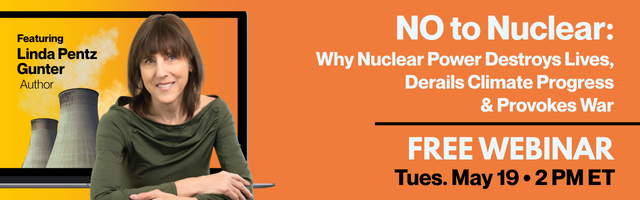
19 May – Webinar No To Nuclear: Why Nuclear Power Destroys Lives, Derails Climate Progress and Provokes War
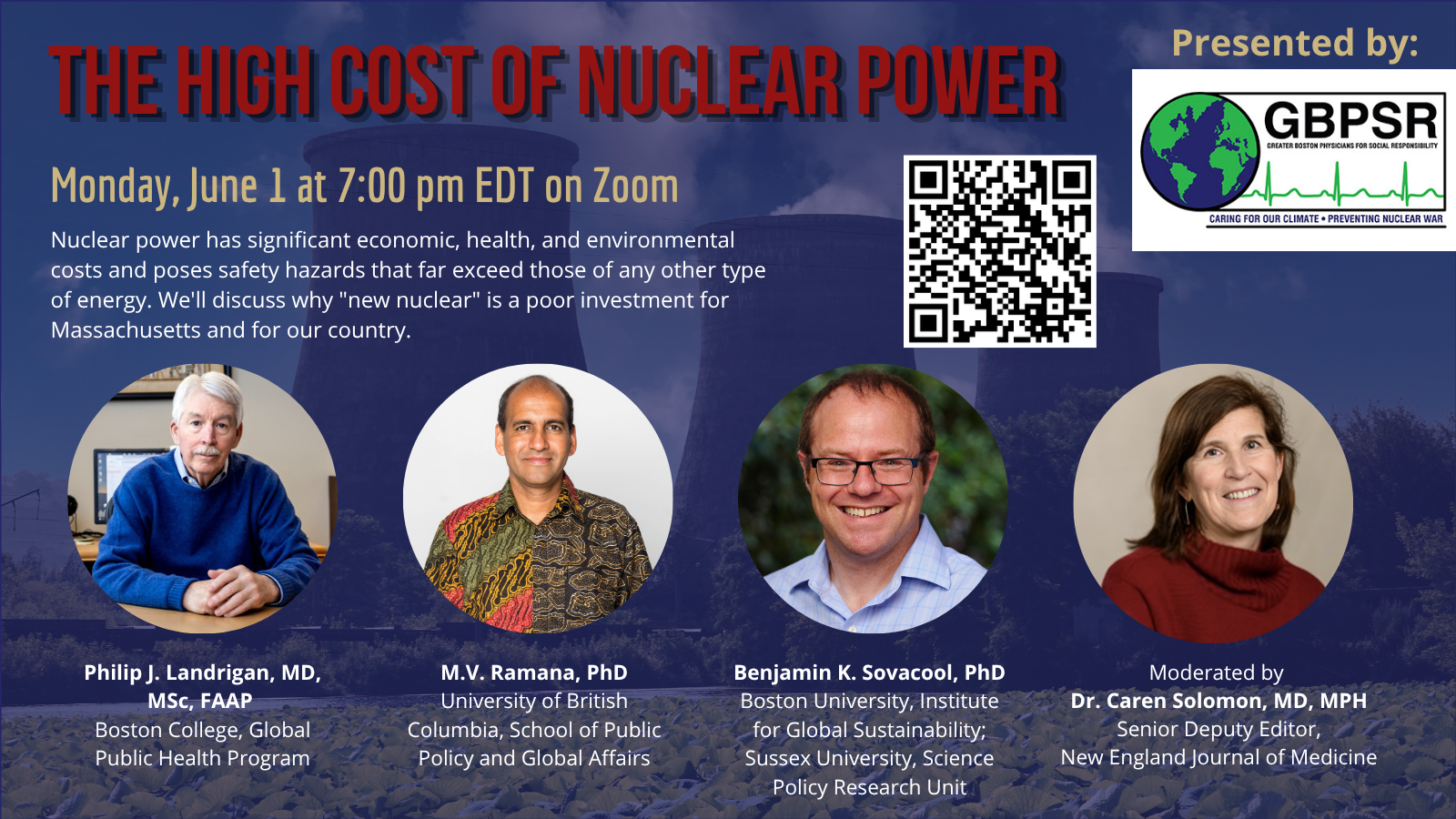
1 June Webinar – The High Cost of Nuclear Power – Register


of the week– Nuclear Reactor Information Task Force
To see nuclear-related stories in greater depth and intensity – go to https://nuclearinformation.wordpress.com
-
Archives
- May 2026 (187)
- April 2026 (356)
- March 2026 (251)
- February 2026 (268)
- January 2026 (308)
- December 2025 (358)
- November 2025 (359)
- October 2025 (376)
- September 2025 (257)
- August 2025 (319)
- July 2025 (230)
- June 2025 (348)
-
Categories
- 1
- 1 NUCLEAR ISSUES
- business and costs
- climate change
- culture and arts
- ENERGY
- environment
- health
- history
- indigenous issues
- Legal
- marketing of nuclear
- media
- opposition to nuclear
- PERSONAL STORIES
- politics
- politics international
- Religion and ethics
- safety
- secrets,lies and civil liberties
- spinbuster
- technology
- Uranium
- wastes
- weapons and war
- Women
- 2 WORLD
- ACTION
- AFRICA
- Atrocities
- AUSTRALIA
- Christina's notes
- Christina's themes
- culture and arts
- Events
- Fuk 2022
- Fuk 2023
- Fukushima 2017
- Fukushima 2018
- fukushima 2019
- Fukushima 2020
- Fukushima 2021
- general
- global warming
- Humour (God we need it)
- Nuclear
- RARE EARTHS
- Reference
- resources – print
- Resources -audiovicual
- Weekly Newsletter
- World
- World Nuclear
- YouTube
-
RSS
Entries RSS
Comments RSS
 nuclear-news