With nuclear waste piling up, FPL seeks Turkey Point rezoning
With nuclear waste piling up, FPL seeks Turkey Point rezoning Miami Herald 19 June 09 Florida Power & Light is seeking a zoning change at Turkey Point that most environmentalists know nothing about.
BY JOHN DORSCHNER
jdorschner@MiamiHerald.com
After more than two million pounds of nuclear waste has piled up in South Dade over 35 years, Florida Power & Light is quietly seeking a zoning change to allow six acres of its Turkey Point site to be used for new above-ground storage casks.
Environmentalists have known for a long time FPL planned to use casks but they knew little, if anything, about the need for a zoning change, which generally allows for public discussion that could lead to modifications of the utility’s plans……………………………….
Environmentalists emphatically want a hearing. ”There are very important issues here,” said Reynolds. “Because this site is so close to the water, we’re concerned about rising water levels with global warming and storm surges from hurricanes.”
LAST CHANCE
A county hearing may be the environmentalists’ last chance to stop expansion of the storage area. Last month, the Florida Department of Environmental Protection gave its approval for the site change.
For more than 30 years, FPL has stored the Turkey Point waste in stainless steel-lined covered concrete pools. Those pools will be filled in the next two years, Veenstra wrote in an e-mail, and FPL plans to switch to dry-cask storage in silo-shaped structures six feet wide and 16 feet tall, consisting of ”stainless steel containers secured inside concrete modules,” two to four feet thick………………………………..The environmentalists’ main concern is protecting the water. ”You’re asking for all kinds of trouble with water intrusion,” said Oncavage of the Sierra Club. “You could have hurricanes on top of global warming — how high do you have to have the casks raised so they’d be safe from storm surge?”
With nuclear waste piling up, FPL seeks Turkey Point rezoning – Miami-Dade – MiamiHerald.com
SC jobseekers line up to clean nuke waste
SC jobseekers line up to clean nuke waste google News By MEG KINNARD 19 June 09 “…………………..The jobs, most of them cleaning up the nuclear waste, are only temporary, funded through September 2011 as part of the federal stimulus package…………………….The new employees will be hired by the end of this summer and will focus on closing down several unused facilities, cleaning up about 600 acres of contaminated soil and disposing of or storing about waste created by processing spent nuclear fuel. Workers will also be tasked with closing several old reactors and evaporating millions of gallons of contaminated water.
A holy terror
A holy terror Catholic archbishops speak out against nuclear reactors VICTORIA HANDYSIDES METRO NEWS 18 June 09 EDMONTON Toxic waste, terrorist threats and depleted natural resources could be part of Alberta’s future if nuclear reactors are erected in the province, a reality of which citizens are largely unaware, Alberta’s Catholic archbishops said yesterday. Continue reading
Funds to shut nuclear plants fall short
Funds to shut nuclear plants fall short B y DAVE GRAM and FRANK BASS – Google News 17 June 09 VERNON, Vt. (AP) — The companies that own almost half the nation’s nuclear reactors are not setting aside enough money to dismantle them, and many may sit idle for decades and pose safety and security risks as a result, an Associated Press investigation has found……………………………..
At 19 nuclear plants, owners have won approval to idle reactors for as long as 60 years, presumably enough time to allow investments to recover and eventually pay for dismantling the plants and removing radioactive material.
But mothballing reactors or shutting them down inadequately could pose dangerous health, environmental or security problems. In the worst cases, generally considered unlikely, risks include radioactive waste leaking from idled plants into groundwater, airborne releases or a terrorist attack.
During the past two years, estimates of dismantling costs have soared by more than $4.6 billion because rising energy and labor costs, while the investment funds that are supposed to pay for shutting plants down have lost $4.4 billion in the battered stock market…………………………..some analysts worry the utility companies that own nuclear plants might not even exist in six decades.”Our concern is that they’ll just walk away from it,” said Jim Riccio, a Greenpeace nuclear policy analyst. “It’s like a sitting time bomb………………………………….Plant operators appear to benefit from NRC rules that don’t require them to set aside money to store old nuclear fuel, demolish buildings, or return the plant sites to pristine states. Although some states require a full site restoration, the federal government does not.
The Associated Press: AP IMPACT: Funds to shut nuclear plants fall short
Is depleted uranium too hot for Utah site?
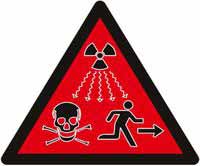 Is depleted uranium too hot for Utah site?
Environment » State Radiation Control Board has decided to look further into the question.
06/10/2009 03
Utah‘s Radiation Control Board will dig deeper into the long-term risks of depleted uranium before it decides whether the unusual form of low-level radioactive waste warrants a moratorium. ………………………..”First of all, I believe the public should be protected and the environment should be protected,” said board vice chair Elizabeth Goryunova, suggesting that the board had a responsibility to consider the need for a moratorium despite hassles that might be involved in imposing one. “That’s absolutely a must.”…………………………
Utah a nuclear dumping ground?
Utah a nuclear dumping ground?
Globe Salt lake community College Tamara M. Wright & Tiffany Jacobs
6/10/09 EnergySolutions, Inc. – moniker of the famed Utah Jazz’s Arena, major political lobbyist, scholarship funder, and international nuclear services company-filed a lawsuit because a regional compact was forbidding them from allowing the disposal in Utah of 1600 tons of low-level radioactive waste (LLRW). The Northwest Compact, made by congress in 1985, is comprised of Utah and seven other states to responsibly oversee the disposal of nuclear waste.
These 3.2 million pounds of waste in question would likely enter the country through the ports of Charleston, South Carolina or New Orleans, Louisiana as 20,000 tons-40 million pounds-of LLRW, get processed in Tennessee, then move to its new home–or final resting place–specially selected in Clive, Utah…………
……..that is, if the Nuclear Regulatory Commission (NRC) grants the company an import license, allowing this glamorous gunk to enter the U.S………
……….Many people in Utah, as well as in the rest of the United States, are concerned about this because the waste was to be coming from out of the country, from Italy. Statewide concern primarily consist of Utahns not wanting nuclear waste-especially not alien waste- in their own backyard; national concern is that this precedent could open the door for other states to be able to do the same thing, further contaminating backyards from foreign sources.
Hanford report shows repeated stoppages
Hanford report shows repeated stoppages
THE ASSOCIATED PRESS
Seattle.pi.com 10 June 09 RICHLAND, Wash. — Work to clean out nuclear waste from underground tanks and to build a plant to treat the waste at the Hanford nuclear reservation was stopped 31 times over nine years to address safety or construction quality issues, according to a new report.
The Government Accountability Office report released Monday says more needs to be done to track the costs of the work stoppages.
Recycled radiation shows up at home | The Journal Gazette, Fort Wayne, Ind.
Recycled radiation shows up at homeLow levels revealed in consumer goods
journalgazette.net 7 june 09 Isaac Wolf
Scripps Howard News Service
Thousands of everyday products and materials containing radioactive metals are surfacing across the United States and around the world.
Cheese graters, reclining chairs, women’s handbags and tableware manufactured with contaminated metals have been identified, some after having been in circulation for as long as a decade. So have fencing wire and fence posts, shovel blades, elevator buttons and steel used in construction………………………One of the most conservative estimates comes from the U.S. Government Accountability Office, which put the number of radioactively contaminated metal objects unaccounted for in the United States in 2005 at 500,000. Others suggest the amount is far higher. The most recent NRC estimate – made a decade ago – is 20 million pounds of contaminated waste.
Recycled radiation shows up at home | The Journal Gazette, Fort Wayne, Ind.
‘The question now is not whether nuclear energy is clean, but is it sustainable to provide power?’
‘The question now is not whether nuclear energy is clean, but is it sustainable to provide power?’ indian express.com by Neha Sinha Jun 06, 2009 – “FRANZJOSEF SCHAUFHAUSEN, Deputy Director General of the German Federal Ministry for the Environment, Nature Conservation and Nuclear Safety, s………………………..Germany is trying to phase out nuclear energy and we don’t support nuclear energy becoming CDM projects. We have scientific studies on the table showing that it is possible to have a future without nuclear energy. We had a very long discussion in Germany on nuclear energy.
The question now is not whether nuclear energy is clean, but is it sustainable to provide power? The position of the German government is that nuclear energy is too risky. At the moment in Europe, we don’t have the possibility to store the very dangerous nuclear waste which is produced from nuclear energy. Also uranium is limited. We have to construct an energy future working with energy efficiency and renewable energy.
‘The question now is not whether nuclear energy is clean, but is it sustainable to provide power?’
Fight against foreign nuke waste in Utah continues
Fight against foreign nuke waste in Utah continues
SALT LAKE CITY Google News (AP) 4 June 09 — An eight-state radioactive-waste-management entity plans to appeal a federal court ruling that said a company can dispose of foreign nuclear waste at its facility in the western Utah desert.
A judge last month ruled against the Northwest Compact, which includes Utah and seven other states. The compact’s executive director, Mike Garner, said officials decided Monday to take the case to the 10th U.S. Circuit Court of Appeals in Denver.
Salt Lake City-based EnergySolutions Inc. wants to import up to 20,000 tons of low-level radioactive waste from Italy. After processing in Tennessee, about 1,600 tons would be disposed of in Utah.
Utah Gov. Jon Huntsman had used the state’s veto power on the compact to try to keep the foreign waste out.
http://www.google.com/hostednews/ap/article/ALeqM5hMSdLzDAdHpYWegCkb41SXyjNZqgD98JH2880
DOE Nuclear Clean-Up Program “High-Risk Area For Fraud, Waste, Abuse, And Mismanagement”
DOE Nuclear Cleanup Program “High Risk Area for Fraud, Waste, Abuse and Mismanagement”The Huffington Post | Cara Parks 06- 2-09
The Department of Energy is not adequately reporting the environmental impact of its billion-dollar program to clean up nuclear waste, according to a government audit.
The Government Accountability Office released a report today noting that the DOE’s nuclear clean-up program has been labeled as “a high-risk area for fraud, waste, abuse, and mismanagement” since 1990, which the GOA says is the result of “inadequate management and oversight of its projects.”
As recently as March of 2009, the report stated, the GOA testified that cost increases at some major nuclear clean up projects were estimated to require an additional $25 to $42 billion to complete. Despite the consistent problems with the projects and ballooning budgets, the DOE did not adequately report its progress or the actual environmental impact of its work, the audit states.
The rising costs on major projects are now being funded partially by the stimulus package, which, according to The Washington Post, has earmarked over $6 billion for cleaning up nuclear sites. The article goes on to report that some of the private contractors receiving stimulus money were previously cited by the GAO for serious flaws in their performance.
DOE Nuclear Clean-Up Program “High-Risk Area For Fraud, Waste, Abuse, And Mismanagement”
Environmental groups seek to overturn Oyster Creek nuclear plant license renewal
Environmental groups seek to overturn Oyster Creek nuclear plant license renewal nj.com by MaryAnn Spoto/The Star-Ledger Monday June 01, 2009,
LACEY TOWNSHIP — Two months after the Oyster Creek Nuclear Generating Station in Lacey Township won a 20-year extension of its license, a coalition of environmental and citizens groups has asked a federal court to overturn the decision.
Citing inadequate information provided to the U.S. Nuclear Regulatory Commission about the plant’s safety, the coalition wants a federal court to invalidate the relicensing of the 40-year-old facility
“We are appealing the decision because the Nuclear Regulatory Commission did not have sufficient information available to it to decide whether Oyster Creek can operate safely for the next 20 years,” said the coalition’s attorney, Richard Webster, of the Eastern Environmental Law Center.
The coalition is composed of the New Jersey Environmental Federation, the New Jersey Sierra Club, the Public Interest Research Group, the Nuclear Information Resource Service and Grandmothers, Mothers and More for Energy Safety (GRAMMES).
They contend the continued operation of the plant, which stores 650 tons of radioactive waste in an above-ground fuel pool, is an unnecessary risk for the 3.5 million people who live within a 50-mile radius of Oyster Creek — the nation’s oldest nuclear power plant. They said its safety record is the second worst of the nuclear plants throughout the country and its thermal releases into a nearby body of water create environmental problems for Barnegat Bay.
Environmental groups seek to overturn Oyster Creek nuclear plant license renewal – NJ.com
Kyrgyzstan: Radioactive Legacy Vexes Bishkek
Friday, May 29, 2009EURASIANET.org KYRGYZSTAN: RADIOACTIVE LEGACY VEXES BISHKEK David Trilling 5/27/09 – “…………………..In March 2008, officials from Kyrgyzstan’s Emergencies Ministry began moving radioactive uranium waste from Soviet-era dumps — located in poorly fortified ravines and along riverbeds downstream — into the hills just above his home. “It gives us headaches; our eyes itch,” Toko says as he gestures across the road. Now he grows his fruits and vegetables in water potentially contaminated by the radioactive materials.
A few kilometers downstream from Toko’s house there are even more lethal radioactive deposits — known as tailings. They line the river and surround the former industrial town of Mailuu Suu, now home to acres of derelict factory buildings. Not too long ago, the area was a desirable place to live. ………………………….as much as 10,000 tons of yellowcake (U3O8), a refined form of uranium that can be used either to produce nuclear energy or atomic weapons, was produced in Mailuu Suu for Soviet weapons programs. The first Soviet atomic weapon was made from uranium mined at Mailuu Suu, say officials at Kyrgyzstan’s National Academy of Science. Communist central planners tended to care about results, not the potential consequences of their decisions. Thus little thought was given to the disposal of radioactive waste. Approximately 2 million cubic meters of uranium tailings were buried in the area, according to Kyrgyz government statistics. It is the largest such site in the country. In addition to the 23 tailings dumps, workers sprinkled almost a million cubic meters of uranium waste rock atop 13 dumps nearby, on land still exposed to the rain and annual mudslides.
Many of the tailing sites and waste rock dumps are now poorly marked. Sheep graze on them. Water drains through the radioactive material and downstream into Uzbekistan and the Syr Darya, which winds its way through Central Asia’s most densely populated areas.
Mailuu Suu residents complain of goiter, anemia, cancer and early death. Radiation in some areas is 30 times normal levels. Former Mailuu Suu mayor Bumairam Mamaseitova, currently an MP in Bishkek with the opposition Communist Party, says rates of cancer in Mailuu Suu are the highest in Kyrgyzstan. “All of the diseases are related to those uranium tailings in the area.” For her, it is a personal issue. “This issue of uranium tailings worries me a lot because my father died when he was only 52 years old. He used to work in the uranium mines. I was born and have lived in Mailuu Suu. Most of my relatives died in their 50s.”
Dumps there are thought to be the most dangerous in Kyrgyzstan, due to the valley’s higher-than-avera
EurasiaNet Civil Society – Kyrgyzstan: Radioactive Legacy Vexes Bishkek
Nuclear power? Great! Nuclear waste? Wait! | Canada | News | Toronto Sun
Nuclear power? Great! Nuclear waste? Wait! By JONATHAN JENKINS, QUEEN’S PARK BUREAUL Toronto Sun : 26th May 2009,
Cabinet minister Rick Bartolucci is 100% for his government’s plans to build new nuclear reactors and 100% against storing their waste in his constituency.
“I don’t see a conflict in regard to my government’s direction at all,” Bartolucci, the minister for community safety and corrections, said yesterday.
Nuclear power? Great! Nuclear waste? Wait! | Canada | News | Toronto Sun
Tribes press government to clean up nuclear waste
Tribes press government to clean up nuclear waste
KDBC News Associated Press – May 26, FLAGSTAFF, Ariz. (AP) – Two American Indian tribes are pressing the federal government to clean up an area where they say medical, uranium and other radioactive waste was dumped and has been contaminating the land and groundwater.
The Navajo and Hopi tribes say their pleas to have the waste materials from two sites near Tuba City, Ariz., taken off tribal land have been ignored.
The Hopi Tribe filed a notice of intent to sue the federal government last week over the cleanup.
On Tuesday, the Navajo Nation filed a motion to intervene in a 2007 lawsuit the owner of the mill brought against the federal government……………..
http://www.kdbc.com/Global/story.asp?S=10425108&nav=menu608_2_3
1 This Month
15 October. Joint Appeal for Nuclear Abolition Day -presentation to the UN on October 15 will be live on UNWebTV
Endorse the Nuclear Abolition Day Appeal
23-25 October – on Zoom – World BEYOND War’s annual global conference

To see nuclear-related stories in greater depth and intensity – go to https://nuclearinformation.wordpress.com
-
Archives
- October 2026 (139)
- September 2026 (339)
- August 2026 (330)
- July 2026 (355)
- June 2026 (287)
- May 2026 (306)
- April 2026 (356)
- March 2026 (251)
- February 2026 (267)
- January 2026 (308)
- December 2025 (358)
- November 2025 (359)
-
Categories
- 1
- 1 NUCLEAR ISSUES
- business and costs
- climate change
- culture and arts
- ENERGY
- environment
- health
- history
- indigenous issues
- Legal
- marketing of nuclear
- media
- opposition to nuclear
- PERSONAL STORIES
- politics
- politics international
- Religion and ethics
- safety
- secrets,lies and civil liberties
- spinbuster
- technology
- Uranium
- wastes
- weapons and war
- Women
- 2 WORLD
- ACTION
- AFRICA
- Atrocities
- AUSTRALIA
- Christina's notes
- Christina's themes
- culture and arts
- Events
- Fuk 2022
- Fuk 2023
- Fukushima 2017
- Fukushima 2018
- fukushima 2019
- Fukushima 2020
- Fukushima 2021
- general
- global warming
- Humour (God we need it)
- Nuclear
- RARE EARTHS
- Reference
- resources – print
- Resources -audiovicual
- Weekly Newsletter
- World
- World Nuclear
- YouTube
-
RSS
Entries RSS
Comments RSS

