Government, nuclear industry badly in need of a reality check
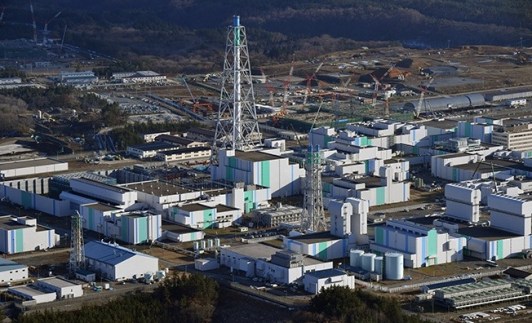 Japan Nuclear Fuel Ltd.’s spent nuclear fuel reprocessing facility in Rokkasho, Aomori Prefecture
May 15, 2020
In his 1991 book “Rokkashomura no Kiroku” (Record of Rokkasho village), journalist Satoshi Kamata documented the displacement of residents for a planned large development project in the northern village.
Kamata reproduced an essay written by an elementary school pupil, whose school was earmarked for closure because of the megaproject.
“I detest development more than I could ever say,” the youngster wrote.
The villagers were promised a rosy future, with rows of factories turning their rural community into a vibrant urban center. But none of that happened, and the school closed in 1984.
“All that talk about the factories was a lie,” the child lamented. “I truly hate being made to feel so sad and lonely.”
Instead of this development project that never materialized, the village of Rokkasho in Aomori Prefecture ended up hosting a facility for reprocessing spent nuclear fuel.
A series of delays held up the project for years, but the Nuclear Regulation Authority finally ruled the plant’s safety measures acceptable under its new standards on May 13.
The Rokkasho plant was meant to be the “nucleus” of the nation’s nuclear fuel recycling program of the future, with the purpose of minimizing nuclear waste by reusing spent fuel.
The reprocessed fuel was to be burned in fast-breeder reactors, but efforts to develop a viable fast-breeder reactor have gone nowhere. Attempts to use the reprocessed fuel in conventional nuclear reactors have also stalled.
The whole project has effectively become a proverbial pie in the sky.
But neither the government nor utilities would acknowledge this reality and review the project, apparently because they fear the issue of nuclear waste will become the focus of attention.
I wonder how long they are going to keep their heads in the sand without addressing the thorny problem of how to dispose of nuclear waste.
Here’s a riddle: What cannot be seen when your eyes are open, but can be seen when your eyes are closed? The answer is a dream.
Where the nuclear fuel recycling program is concerned, I imagine the nation’s nuclear community must be dreaming or hallucinating.
Japan should end its nonsensical effort to recycle nuclear fuel
 A view of the under-construction reprocessing plant, seen from the Obuchi-numa swamp in Rokkasho, Aomori Prefecture, on May 12.
May 14, 2020
Japanese nuclear regulators have endorsed the safety of a contentious plant to reprocess spent nuclear fuel.
The Nuclear Regulation Authority (NRA) on May 13 approved a draft report on the safety inspection of the reprocessing plant being built in Rokkasho, Aomori Prefecture, by Japan Nuclear Fuel Ltd.
The report says the plant meets the new nuclear safety standards introduced after the 2011 Fukushima nuclear disaster. The NRA’s decision represents a big step forward toward bringing the long-delayed Rokkasho reprocessing plant online.
Japan’s policy program to establish a nuclear fuel recycling system to recover plutonium from spent nuclear fuel to be reused in reactors, however, is already bankrupt beyond redemption. Operating the reprocessing plant simply does not make sense because of the many problems it entails with regard to nuclear proliferation, cost effectiveness, energy security and other important policy issues.
Prime Minister Shinzo Abe’s administration should change its policy concerning nuclear fuel recycling. It would be irresponsible to maintain this unsustainable national policy aimlessly simply because of the NRA’s verdict that the plant meets the new safety standards.
TROUBLE-PLAGUED PLANT
The government and the electric power industry have been promoting the concept of recycling separated plutonium back into the fuel of reactors as a valuable “semi-homemade” energy source for a nation without much natural resources.
The Rokkasho reprocessing plant, the core facility for this strategy, was originally scheduled to be completed in 1997, but the deadline has been delayed as many as 24 times due to a series of technological glitches and other problems.
The plant started a trial run in 2006, but the process was plagued by malfunctions and suspended after the catastrophic accident at the Fukushima No. 1 nuclear power plant in 2011.
The NRA, which was created after the accident, spent six years carefully assessing the safety of the reprocessing plant. It was the body’s first safety screening mission for a nuclear fuel reprocessing facility.
Despite the nuclear watchdog’s effective endorsement of its safety, the plant still has a long way to go before it becomes ready for full-scale operation. The details of its design will be scrutinized while the work to install required safety measures has yet to be carried out.
It is unclear whether the plant will be completed in fiscal 2021, the new deadline set by the operator. Winning the consent of the local community is another challenge that has to be overcome before the plant can come on stream.
At nuclear power plants across the nation, growing amounts of spent nuclear fuel are waiting to be shipped to the reprocessing plant. At some nuclear plants, there is not much room left in the spent fuel pools. The power industry warns that there could be disruptions in power generation unless the reprocessing plant starts operating.
The Rokkasho plant is designed to reprocess up to 800 tons of spent fuel annually to extract plutonium. It is true that the facility would help prevent a situation where there is no room left in the pools.
UNUSABLE PLUTONIUM
The plant, when it operates at full capacity, could extract as much as seven tons of plutonium from spent reactor fuel a year. The problem is that there will be few plausible ways to use the material.
The plan to develop a fast neutron reactor that can burn and breed plutonium, which was supposed to be the key technology for plutonium consumption, has gone awry after it was decided that Japan’s “Monju” prototype sodium-cooled fast-breeder reactor should be decommissioned following a sodium leak accident.
There is no plan to develop a new demonstration fast-breeder reactor to succeed the Monju.
The Japanese government then considered participating in France’s Advanced Sodium Technical Reactor for Industrial Demonstration (ASTRID) project to build a prototype sodium-cooled nuclear reactor. But the idea was dropped after the French government decided to scale down and possibly pull the plug on the project.
Japan’s plan to burn so-called MOX (mixed oxide) fuel, which is usually plutonium blended with natural uranium, in existing nuclear reactors has also failed to make progress as fast as the government expected. Currently, only four reactors are using MOX fuel, far less than the industry’s target of operating 16 to 18 MOX reactors.
In short, there is little prospect for massive consumption of plutonium in this nation, at least in the near future.
Japan has a stockpile of 46 tons of weapons-usable plutonium, enough for producing 6,000 atomic bombs. Japan has made an international commitment to reducing its plutonium stock.
If Japan starts extracting plutonium from spent nuclear fuel through reprocessing, the international community will become doubtful of its commitment to reducing its plutonium stockpile despite being the only country to have suffered the devastation of atomic bombings.
Japan could even be suspected of harboring an ambition to develop and possess nuclear weapons in the future.
The government plans to limit the amount of plutonium extracted from spent fuel to less than the volume consumed at the MOX reactors.
But reprocessing spent reactor fuel to recover plutonium simply does not make sense in the first place when the amount of material stored in Japan should be slashed.
SHIFTING FINANCIAL BURDEN IS UNACCEPTABLE
The nuclear fuel recycling policy is also losing its economic rationale as well due to ballooning costs.
Even ordinary nuclear power generation is losing its competitiveness against other energy sources because of higher costs. The cost of building the reprocessing plant is now estimated at 2.9 trillion yen ($27.13 billion), four times higher than the original estimate. The total amount to be shelled out for the project, including operational and scrapping costs, is projected to be nearly 14 trillion yen.
Most major industrial nations have given up on the idea of nuclear fuel recycling as not being worth the cost. All the other countries that are still pursuing this path, including China and Russia, are nuclear powers. Most of these projects are strategic state-financed efforts that disregard costs.
But the reprocessing and MOX reactor projects in Japan are private-sector businesses. The costs involved have to be passed onto consumers through higher electricity bills.
The government and the industry should not be allowed to continue pursuing this unreasonable nuclear fuel policy at the expense of consumers.
In many other parts of the world, renewable energy sources are fast gaining ground, eroding the share of nuclear power.
In addition to sharp declines in costs, the fact that solar and wind power is a purely “homemade” energy source for any country is accelerating the trend.
If Japan really places a high policy priority on energy security, it would make much more sense for it to expand “purely homemade” energy sources than promote a “semi-homemade” one.
But the government continues sticking to the nation’s traditional nuclear power policy, putting a damper on growth in renewable energy production.
If the government decides to scuttle the nuclear fuel recycling agenda, it will immediately face the sticky challenge of deciding how to dispose of spent nuclear fuel.
But the project should not be kept alive through irresponsible collusion between the government and the power industry to avoid tackling this challenge.
Political leaders should make the tough decision as soon as possible to put the nation on a path toward a new energy future.
1 This Month
Chernobyl: The Lost Tapes – A good documentary on Chernobyl on SBS available On Demand for the next 3 weeks– https://www.sbs.com.au/ondemand/tv-program/chernobyl-the-lost-tapes/2352741955560

of the week–London Campaign for Nuclear Disarmament

Tell the Ukrainian Government to Drop Prosecution of Peace Activist Yurii Sheliazhenko
To see nuclear-related stories in greater depth and intensity – go to https://nuclearinformation.wordpress.com
-
Archives
- April 2026 (126)
- March 2026 (251)
- February 2026 (268)
- January 2026 (308)
- December 2025 (358)
- November 2025 (359)
- October 2025 (376)
- September 2025 (257)
- August 2025 (319)
- July 2025 (230)
- June 2025 (348)
- May 2025 (261)
-
Categories
- 1
- 1 NUCLEAR ISSUES
- business and costs
- climate change
- culture and arts
- ENERGY
- environment
- health
- history
- indigenous issues
- Legal
- marketing of nuclear
- media
- opposition to nuclear
- PERSONAL STORIES
- politics
- politics international
- Religion and ethics
- safety
- secrets,lies and civil liberties
- spinbuster
- technology
- Uranium
- wastes
- weapons and war
- Women
- 2 WORLD
- ACTION
- AFRICA
- Atrocities
- AUSTRALIA
- Christina's notes
- Christina's themes
- culture and arts
- Events
- Fuk 2022
- Fuk 2023
- Fukushima 2017
- Fukushima 2018
- fukushima 2019
- Fukushima 2020
- Fukushima 2021
- general
- global warming
- Humour (God we need it)
- Nuclear
- RARE EARTHS
- Reference
- resources – print
- Resources -audiovicual
- Weekly Newsletter
- World
- World Nuclear
- YouTube
-
RSS
Entries RSS
Comments RSS
 nuclear-news