No to nuclear: Japan wants reactors phased out, post-Fukushima
Japan is less reliant on atomic energy, but concerns are growing about its return to climate-damaging fossil fuels.
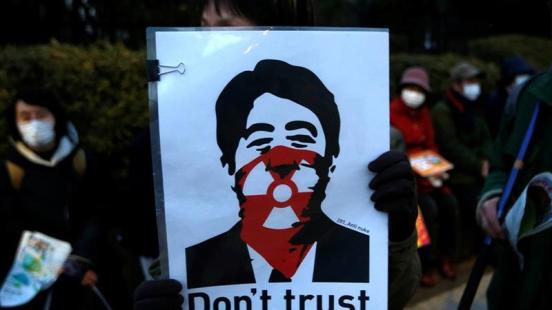 Japan’s anti-nuclear movement grew rapidly after the Fukushima disaster. Experts doubt that the country’s nuclear plants will ever generate the same levels of energy as they once did.
December 20, 2019
Tokyo, Japan – At the end of a decade in which northeastern Japan was devastated by a tsunami that triggered a nuclear disaster at Fukushima, atomic energy looks unlikely to make a comeback.
In the nearly nine years following the world’s worst nuclear accident since Chernobyl, the country’s reliance on atomic power for electricity generation has plummeted to between 3 and 5 percent from about 30 percent before the disaster, according to the Tokyo-based Citizens’ Nuclear Information Center.
And despite a period of uncertainty in the immediate aftermath of the meltdowns triggered when Fukushima’s cooling systems were overwhelmed by the tsunami created by the magnitude 9.0 undersea earthquake, the world’s third-largest economy has shown it can function with radically less nuclear power.
The public mood turned dramatically after Fukushima and the national trauma that ensued and combined with the increasing costs from aligning ageing plants with stringent post-disaster safety requirements, it is unlikely the nuclear industry will return to previous levels, according to experts, even as the government envisions nuclear power accounting for about 20-22 percent of electricity generation in 2030.
“It is obvious that it is very difficult to meet this target,” said Hajime Matsukubo, secretary-general of the Citizens’ Nuclear Information Center.
And while experts say while the anti-nuclear movement may seem to have quietened down, anti-nuclear feeling is firmly entrenched.
‘They say no’
“Japanese people’s sentiment (has) changed after Fukushima Daiichi and it is continuing until now,” said Matsukubo, whose non-profit organisation was established in 1975 by concerned atomic scientists to gather and publicise nuclear information and raise public awareness on the industry.
He said that even if people appear not as focused, if they are asked pointedly if they agree with nuclear power: “They say no.”
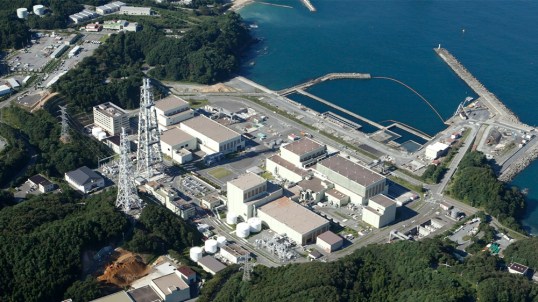 The Onagawa Nuclear Power Plant avoided the disaster at Fukushima, two-and-a-half hours’ drive south, and the government has said its No 2 reactor could be up-and-running by late next year
Before Fukushima, Japan had 54 operational reactors and for a brief time in the accident’s aftermath, not a single one was in operation. So far, nine have been restarted and authorities are considering the cases of a dozen more, according to Ministry of Economy, Trade and Industry figures. A further 24 are either under decommissioning or lined up for it.
Late last month, regulators gave initial approval for the restart of a reactor at the facility closest to the epicentre of the March 2011 quake. The No 2 reactor at the Onagawa nuclear plant could be running again late next year if further conditions are met. Onagawa was damaged in the double disaster, where the tsunami wave rose as high as 13 metres, but avoided Fukushima’s catastrophic meltdowns.
Japan imports nearly all its crude oil and natural gas. Underscoring such dependency, Prime Minister Shinzo Abe told a nationally televised news conference in 2016 that the nation could not “do without” nuclear power.
But Shinjiro Koizumi, minister for the environment and nuclear issues and the son of anti-nuclear former prime minister Junichiro Koizumi, said after his appointment in September that the country needed to wean itself off the atom.
“We will be doomed if we let nuclear accidents recur,” he said, according to Kyodo News.
Safety costs
Japan’s mass-circulation newspaper Mainichi Shimbun in an editorial after the Onagawa decision cited the newspaper’s own research that found 11 top power suppliers had spent in excess of 5 trillion yen ($45.7bn) on nuclear safety since Fukushima.
“As costs balloon, it is becoming increasingly difficult, even absurd, for the government and power companies to maintain the argument that nuclear power is ‘cheap’,” the editorial said.
“The more thoroughly safe the plants become, the more time and money is needed,” it continued. “We must ask, then: is it realistic to press on with the safety upgrade and reactor restart policy? We cannot dispel our suspicions that the answer is, in fact, ‘no’.”
Japan has clearly shown it can function on less nuclear-generated power, but the shift has come at a cost: an increasing reliance on fossil-fuel alternatives such as coal, oil and natural gas. And with concerns over climate change intensifying, that is drawing international attention.
“I’m very much aware of the challenges of Fukushima to the Japanese electrical sector,” said Paul Simpson, CEO of London-based non-profit CDP, which runs a global disclosure system that aids investors, companies and local governments in managing their environmental footprint.
Simpson, speaking at a forum on decarbonisation in Tokyo last month, stressed that coal was simply no longer an option and countries still using it must search for alternatives, citing Germany’s plan for no new coal use by 2040.
Alternative energies
“Japan needs to find a transition pathway from this, and I know this is challenging,” he said. “But coal is socially unacceptable … from a climate-risk perspective but also from an air pollution perspective.”
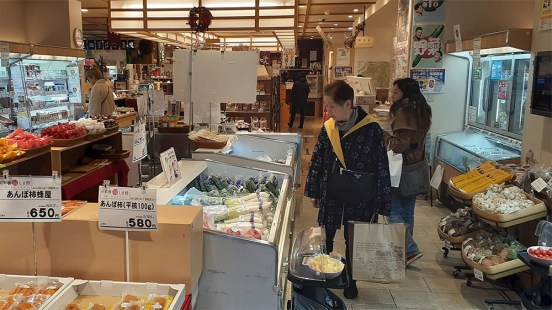 Customers browse in a Tokyo shop that specialises in products from Fukushima
According to Matsukubo, about 30 percent of Japan’s electricity generation comes from coal and 43 percent from natural gas. And the country has moved to build new coal-fired power plants since Fukushima.
“It’s disastrous,” Matsukobo said, stressing that Japan needs to move to renewable sources of energy; an area in which Simpson also pointed out Japan is lagging, even though the government has promised to increase the country’s use of renewables by 2030.
There was always some ambivalence about atomic energy in Japan – the only country to suffer a nuclear weapon attack when the United States dropped bombs on the cities of Hiroshima and Nagasaki in the closing days of World War II.
Pope Francis, visiting Japan in November, surprised no one when he condemned nuclear weapons. But the pontiff, the first to venture to the country since 1981, went so far as to suggest that nuclear energy itself was a problem.
“I have a personal opinion: I wouldn’t use nuclear energy until it is totally safe to use,” the leader of the world’s 1.3 billion Roman Catholics said in comments to reporters during his flight back to Rome from Tokyo, Kyodo reported.
Ramping down
Alexander Brown, who has studied the anti-nuclear protest movement in Japan, said that because Japan had supported atomic power for so long, there was a sense of inertia despite post-Fukushima opposition, ageing infrastructure and the remote chance of new reactors getting the green light.
“There’s a sort of built-in time limit to how long the industry as a whole can continue,” said Brown, currently a Japan Society for the Promotion of Science international research fellow at Japan Women’s University.
He also emphasised, however, that Japan’s turn against nuclear energy had also coincided with a key change in its domestic economy; less industrially robust and therefore not as hungry for energy as before.
“Why have the lights stayed on,” Brown asked rhetorically. “One is, yes, increased fossil fuel use, but another is there’s just less demand than there was in the peak time of manufacturing onshore in Japan.”
Brown calls that an “uncomfortable truth” for much of Japan’s ruling establishment – including the prime minister and his eponymous “Abenomics” economic revitalisation programme – which clings to a belief in a model of vigorous growth.
“And I think one of the amazing things when I look at the anti-nuclear movement, to me, was it was full of people looking at what are other ways that we can live,” he said.
“How can we embrace other values other than high consumption, high pollution, extreme overwork and look at things like de-growth economics.”
Koizumi hopes son will push for abandonment of nuclear power

The Constitutional Democratic Party of Japan clarifies goal of eliminating nuclear power in policy draft

Woman gives up electricity and goes ‘off grid’ for 4 years
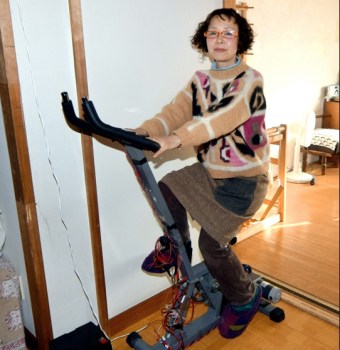
Chikako Fujii says she uses a human-powered dynamo remodeled from a bike-type training machine to generate power in emergencies
Chikako Fujii used to leave the TV on all the time, but since the Fukushima nuclear disaster inspired her to go “off grid” nearly four years ago, she has consumed literally no energy supplied from her regional power company.
Fujii, 55, a textile dyeing artist, uses a tiny amount of electricity generated primarily by solar panels set up on her veranda that measure a total of just 1.6 square meters.
The lifestyle choice means that Fujii cannot power an air conditioner, a refrigerator or a TV with such a small quantity of energy, but those things don’t concern her.
“I enjoy working out how to lead a life without using electricity,” she said.
A resident of Kunitachi, western Tokyo, Fujii terminated her contract with Tokyo Electric Power Co. in September 2012, after rolling blackouts were implemented in the wake of the March 2011 Great East Japan Earthquake and tsunami, which triggered a triple meltdown at the Fukushima No. 1 nuclear power plant.
Fujii said that before the disaster struck, she habitually left the TV on so that she could check the time whenever she wanted.
But when she stopped using her home appliances one by one, she found her electricity bill could be reduced.
While she paid more than 4,000 yen ($36) per month for electricity before the disaster, the figure gradually dropped to around 2,000 yen. When she finally unplugged the refrigerator, which requires much power, the bill reached 800 yen.
“I thought I might be able to live without relying on the power company, and decided to start an off-grid life for the fun of it,” Fujii said.
The solar panels installed on the veranda have a power production capacity of 260 watts and can generate more than 1 kilowatt-hour of power on a typical sunny day–enough to operate a washing machine for three hours to dye fabrics with plant-derived materials.
However, when cloudy weather continues for a week during the June rainy season or due to a typhoon, the electricity stored in the battery dries up. When that happens, Fujii uses a pedal-operated sewing machine and an old charcoal-powered iron for her work instead of electric ones.
One night, Fujii was asked by a business partner to send a document by e-mail on short notice.
She pedaled hard a human-powered dynamo remodeled from a bike-type training machine to generate electricity to use her computer.
As Fujii cannot use an air conditioner, she made small holes in a plastic bag containing water and hung it above the veranda to sprinkle water automatically to cool the surrounding air.
In lieu of an electric kettle, she painted plastic bottles black and exposed them to sunlight to heat the water inside.
In December last year, Fujii also introduced a handmade heater made out of a used tempura oil-based lamp and a flowerpot put over the lamp upside down. According to Fujii, 20 milliliters of oil can keep the flowerpot hot for three to four hours.
She said she daily consumes only 500 to 800 watt-hours of power at home, about one-12th that for an ordinary household.
“I always live while being conscious of the weather,” Fujii said. “For example, when I wake up to find it is sunny, I think I should use the washer today. Thinking this way is fun for me.”

The water heater made of glass tubes can increase the water temperature to 85 degrees in two hours even during winter if it is exposed to sufficient sunlight.

A handmade evaporation heat-based cooler designed to remove heat from flowerpots when water evaporates
http://www.asahi.com/ajw/articles/AJ201606010003.html
1 This Month

of the week – Shut Down Drone Warfare!


Tell the Ukrainian Government to Drop Prosecution of Peace Activist Yurii Sheliazhenko

Petition to revoke the licensing of the Near Surface Nuclear Disposal Facility (NSDF) at Chalk River. https://www.ourcommons.ca/petitions/en/Petition/Details?Petition=e-7247
To see nuclear-related stories in greater depth and intensity – go to https://nuclearinformation.wordpress.com
-
Archives
- April 2026 (103)
- March 2026 (251)
- February 2026 (268)
- January 2026 (308)
- December 2025 (358)
- November 2025 (359)
- October 2025 (376)
- September 2025 (257)
- August 2025 (319)
- July 2025 (230)
- June 2025 (348)
- May 2025 (261)
-
Categories
- 1
- 1 NUCLEAR ISSUES
- business and costs
- climate change
- culture and arts
- ENERGY
- environment
- health
- history
- indigenous issues
- Legal
- marketing of nuclear
- media
- opposition to nuclear
- PERSONAL STORIES
- politics
- politics international
- Religion and ethics
- safety
- secrets,lies and civil liberties
- spinbuster
- technology
- Uranium
- wastes
- weapons and war
- Women
- 2 WORLD
- ACTION
- AFRICA
- Atrocities
- AUSTRALIA
- Christina's notes
- Christina's themes
- culture and arts
- Events
- Fuk 2022
- Fuk 2023
- Fukushima 2017
- Fukushima 2018
- fukushima 2019
- Fukushima 2020
- Fukushima 2021
- general
- global warming
- Humour (God we need it)
- Nuclear
- RARE EARTHS
- Reference
- resources – print
- Resources -audiovicual
- Weekly Newsletter
- World
- World Nuclear
- YouTube
-
RSS
Entries RSS
Comments RSS
 nuclear-news