Kenichi Hasegawa, former dairy farmer who continued to tell the truth about the nuclear accident in Fukushima, passes away.

Immediately after the accident, I pressed the village mayor to disclose information.
He also shared the voice of a dairy farmer friend who committed suicide.
Mr. Kenichi Hasegawa, a former dairy farmer who continued to appeal about the current situation in Iitate Village contaminated by radiation after the Fukushima Daiichi Nuclear Power Plant accident in 2011, died of thyroid cancer on October 22, 2011 at the age of 68. He was 68 years old. He was the co-chairman of Hidanren, a group of victims of the nuclear power plant accident, and the head of the group of Iitate villagers who filed for alternative dispute resolution (ADR). Since 2005, he has been focusing on growing buckwheat noodles in the village, while criticizing what the government and administration call “reconstruction projects” and “reconstruction Olympics. In February and March of this year, he was diagnosed with cancer and fell ill. Many people are saddened by the death of Mr. Hasegawa, who continued to communicate the issues of the nuclear accident both inside and outside Japan.

On January 13, 2012, prior to the Global Conference for a Nuclear Power Free World held in Yokohama, NGO officials and journalists from overseas visited Fukushima and Mr. Hasegawa conveyed the current situation of the Iitate villagers. He said, “I wish there were no nuclear power plants. He said, “I wish we didn’t have nuclear power plants, and I hope the remaining dairy farmers will do their best not to be defeated by nuclear power plants. He left a message that said, ‘I have lost the will to work.
Our government has been promoting nuclear power plants as a national policy, so I thought they would take proper measures when an accident occurred. But the government did not take any action. I may return to my village, but I can’t bring my grandchildren back. If we go back and end our lives, that will be the end of the village.
Paul Saoke, a Kenyan public health specialist and then secretary general of the Kenya chapter of the International Council for the Prevention of Nuclear War, recorded Hasegawa’s lecture on his iPad. Mr. Saoke said, “In Kenya, the Fukushima nuclear accident is almost unknown. When I return to Japan, I would like to have the media watch the video of my lecture and let them know what kind of damage is being done by the residents. Mr. Hasegawa’s appeal was posted on the Internet and quickly spread around the world.
In 2012, he gave a speech at the European Parliament.
The film “My Legacy: If Only There Were No Nuclear Power Plants
In 2012, Mr. Hasegawa gave a lecture at the European Parliament in Belgium on the one-year anniversary of the Fukushima nuclear accident. Mr. Hasegawa visited Europe with his wife Hanako, and together with Eisaku Sato, former Governor of Fukushima Prefecture, conveyed the current situation in Fukushima.

Our Iitate village was a beautiful village,” said Mr. Hasegawa. “Our Iitate village was a beautiful village,” Mr. Hasegawa began. While explaining how the government experts who came to the village kept saying that the village was safe, he said, “The villagers were exposed to radiation while the mayor and the people in the village administration clung to the village. We dairy farmers were told not to raise cows in the planned evacuation zone, and with no follow-up from the government, prefecture, or village, we made the decision to quit dairy farming on our own. Finally, I conveyed the regret of my friend who committed suicide, leaving behind a note saying, “If only there were no nuclear power plants.

Photo: Hideaki Takamatsu
In 2002, Naomi Toyoda’s film “The Last Will and Testament: If Only There Were No Nuclear Power Plants” was completed, and Mr. Hasegawa’s words and the events of his friend who committed suicide were further disseminated to society. Yasuhiro Abe, manager of the Forum Fukushima movie theater, said, “At the time, various debates were boiling in the local community, and despite the length of the film, it was fully booked for three days. Mr. Hasegawa’s words about Iitate were very human, and he had a different level of strength that no one else had.
Through his activities in Japan and abroad, Mr. Hasegawa has connected and interacted with a wide range of people.
Mr. Toshiyuki Takeuchi, the president of Fukushima Global Citizen’s Information Center (FUKUDEN), who has been informing people in Japan and abroad about Mr. Hasegawa’s activities, said, “Mr. Hasegawa is a person who has been affected by pollution. Mr. Hasegawa has been active as an anti-nuclear and anti-radiation activist, criticizing the government, the administration (village authorities), and TEPCO for failing to take appropriate measures that put the health of the residents of the contaminated area first. At the same time, he has a strong attachment to the Maeda area and his life there, and has returned to the area to start making soba noodles and rebuild his life. The complexity of his feelings (“irrationality”) was sometimes difficult to convey to people overseas.
As I listened to Mr. Hasegawa’s story, there were many moments when I felt that “everything was there in Iitate Village and Maeda area before the earthquake, and it was the center of the world and life. “Complex irrationality” is probably a cross-section of the tragedy of everything being taken away on its own.
Solidarity with the Nuclear Weapons Abolition Movement
Bringing together people from all walks of life
In 2007, after the International Campaign to Abolish Nuclear Weapons (ICAN) was awarded the Nobel Peace Prize, ICAN Co-Chairman Tilman Ruff (Australia) and ICAN International Steering Committee member and Peace Boat Co-Chairman Satoshi Kawasaki visited Mr. Hasegawa’s house in Iitate Village with medals.

Mr. Ruff said. He refused to be cowed or silenced, and continued to speak the truth about the nuclear disaster in Fukushima, stressing the need for rights, dignity, health, and recognition of the people and land that the government and TEPCO unreasonably put in harm’s way. I am honored to have known Kenichi and to have been able to work for a common cause.”
Mr. Kawasaki also mourns his death. Mr. Kawasaki also mourned his passing. “We were together on many occasions, including the European Parliament in Belgium in 2012, the round trip to Australia in 2013, and the Peace Boat trip. I remember the way he spoke straight from the bottom of his heart about the damage he had suffered as a dairy farmer and the anger and frustration of the people of Fukushima, strongly conveying his message to people even though they spoke different languages. I believe that Ms. Hanako, who has always accompanied us and talked about the damage caused by nuclear power plants from her own perspective, will continue to play a role as a sender.
Ms. Riko Mutoh (Funehiki), who is also a co-chair of Hidanren, said, “Ms. Hasegawa was a big presence. His words were powerful and persuasive. After returning to Iitate Village, she was busy with local activities. He was a person who brought people together, both inside and outside of the village, within and outside of the prefecture, those who had evacuated and those who were living there.
(Text and photo by Hiroko Aihara)
1 This Month
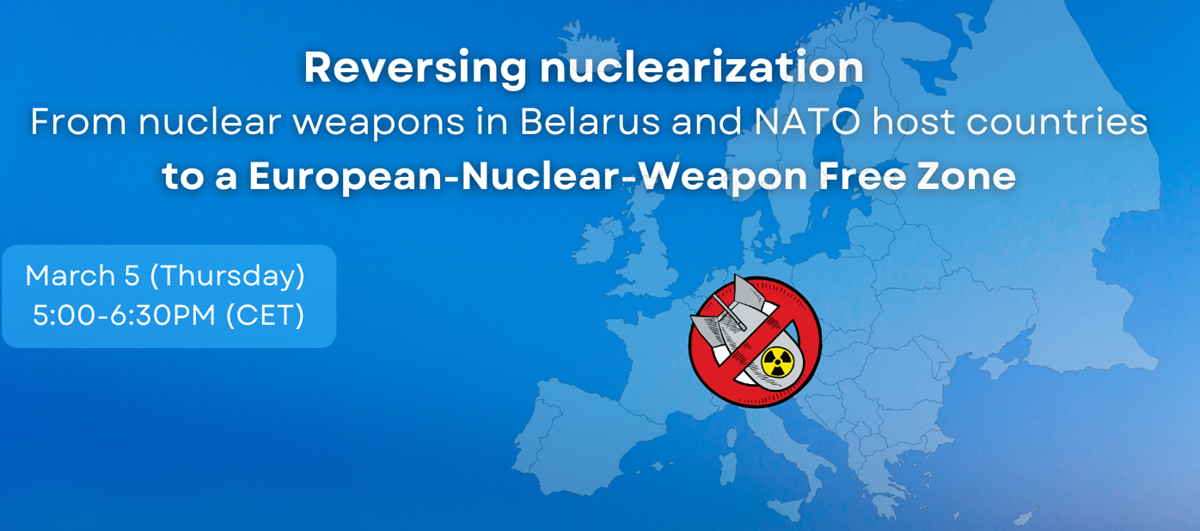
5 March -Online – Reversing nuclearization:
From nuclear weapons in Belarus and NATO host countries to a European-Nuclear-Weapon Free Zone
11am-12:30pm Eastern Time USA / 5pm-6:30pm CET

of the week – Advocating for a
nuclear free beach – https://www.samuellawrencefoundation.org/
The Samuel Lawrence Foundation advocates for a Nuclear Waste Free Beach at San Onofre, join us and take action!

10 March A LIVE WEBINAR THE REAL EFFECTS OF NUCLEAR POWER
What the Industry Isn’t Telling Us
1:00 PM Mountain, 2 pm Central, 3 pm Eastern. Live on the Keepers of the Water Facebook page

18 March Webinar @ 1 PM EST: An Assessment of SMR Projects: The Case of Canada
register for the zoom:
https://us02web.zoom.us/webinar/register/WN_o8BIIOUvQ2ONJR1nta65DQ#/registration

of the week – STOP SMALL MODULAR REACTORS IN CANADA
To see nuclear-related stories in greater depth and intensity – go to https://nuclearinformation.wordpress.com
-
Archives
- March 2026 (51)
- February 2026 (268)
- January 2026 (308)
- December 2025 (358)
- November 2025 (359)
- October 2025 (376)
- September 2025 (258)
- August 2025 (319)
- July 2025 (230)
- June 2025 (348)
- May 2025 (261)
- April 2025 (305)
-
Categories
- 1
- 1 NUCLEAR ISSUES
- business and costs
- climate change
- culture and arts
- ENERGY
- environment
- health
- history
- indigenous issues
- Legal
- marketing of nuclear
- media
- opposition to nuclear
- PERSONAL STORIES
- politics
- politics international
- Religion and ethics
- safety
- secrets,lies and civil liberties
- spinbuster
- technology
- Uranium
- wastes
- weapons and war
- Women
- 2 WORLD
- ACTION
- AFRICA
- Atrocities
- AUSTRALIA
- Christina's notes
- Christina's themes
- culture and arts
- Events
- Fuk 2022
- Fuk 2023
- Fukushima 2017
- Fukushima 2018
- fukushima 2019
- Fukushima 2020
- Fukushima 2021
- general
- global warming
- Humour (God we need it)
- Nuclear
- RARE EARTHS
- Reference
- resources – print
- Resources -audiovicual
- Weekly Newsletter
- World
- World Nuclear
- YouTube
-
RSS
Entries RSS
Comments RSS
 nuclear-news