Japan studies plan to extend life of 60-year-old nuclear plants

Nov 28, 2022
Japan will consider keeping some nuclear reactors operating beyond a current 60-year limit as the country focuses increasingly on atomic power as a solution to an ongoing squeeze on energy supply.
Officials are studying a plan to exclude periods when reactors were offline from an existing limit on their lifespan, which would allow some facilities to operate for longer, according to a document released Monday by a trade ministry panel. Reactors are often halted for years to allow the nation’s nuclear watchdog to perform inspections, or as a result of legal challenges.
Following the 2011 Fukushima nuclear disaster, which was triggered by a massive earthquake and tsunami, Japan introduced stricter safety standards limiting the operation of nuclear reactors to 40 years in principle.
But operation for an additional 20 years is possible if safety upgrades are made and a reactor passes screening by regulators.
The proposal to allow operations beyond the 60-year limit comes as Japan’s public and government shift back in favor of nuclear power, despite experiencing one of the worst atomic meltdown disasters. The import-dependent country has this year grappled with more expensive fossil fuel prices as a result of Russia’s war in Ukraine, along with a weak yen, and seen its stretched power grid put under severe pressure.
The government has repeatedly asked people to take steps to limit their electricity consumption, by using fewer appliances or cutting back on heating.
In August, Prime Minister Fumio Kishida said the government will explore developing and constructing new reactors, and that it will also aim to restart seven more idled reactors from next summer.
The trade ministry proposals also call for new, next-generation nuclear reactors to be built at sites where existing units will be decommissioned.
Japanese manufacturers have announced plans to develop next-generation reactors this year. Mitsubishi Heavy Industries is jointly developing an advanced light water reactor with four other Japanese power producers, while a venture between Hitachi and General Electric is also reported to be developing a new reactor model.
https://www.japantimes.co.jp/news/2022/11/28/national/nuclear-plant-extension/
Expert panel full of proponents of nuclear power plants to discuss direction on March 28th, extending operation period and developing next-generation models, rushing to conclusion on “Prime Minister’s directive.

Basic policy subcommittee discusses extending the operational period of nuclear power plants in Kasumigaseki, Tokyo.
November 27, 2022
The Ministry of Economy, Trade, and Industry (METI) will present its direction on measures to utilize nuclear power plants, including the extension of the operating period of nuclear power plants, which is stipulated as “40 years in principle, with a maximum of 60 years,” and the development and construction of next-generation nuclear power plants, at the “Nuclear Energy Subcommittee,” a meeting of experts on November 28. Discussions will reach their final stage about three months after Prime Minister Fumio Kishida ordered the committee to study the issue in August. However, the committee did not solicit opinions from the public before reaching a conclusion, and its deliberations were noticeably more hasty than past energy policy debates. (The discussion has been held in a very slow pace compared to past energy policy debates.)
◆Draft government policy at several subcommittee meetings
Of the 21 members of the Atomic Energy Subcommittee, which discusses nuclear energy policy, only two, including Hajime Matsukubo, executive director of the NPO Nuclear Data and Information Office, have made negative statements about nuclear power at recent meetings. In the discussion on extending the operating period, many committee members called for removing the maximum 60-year limit, and at the meeting on March 28, METI is expected to push for a proposal to exclude from the number of years of operation the period during which a nuclear power plant is shut down to undergo a review before it can be restarted, without removing the limit in consideration of public outcry.
The contents of the Nuclear Energy Subcommittee’s deliberations will be discussed by the Basic Policy Subcommittee, which brings together expert panels on energy policy, and the conclusions of the subcommittee will serve as a draft of the government policy.
At the meeting on March 15, Ms. Chisato Murakami, an advisor on consumer affairs, commented, “The use of nuclear power plants will not directly lead to an end to the tight power supply and demand situation. I would like to propose that we take time to deepen the national debate.” She objected to the way the discussion was proceeding, but no other opinions were expressed calling for a reconsideration.
The subcommittee has met twice so far. The committee is expected to hold one or two more meetings before the end of the year to reach a conclusion, after which public comments will be sought.
◆Energy Basic Plan to be discussed 17 times and opinions solicited via the Internet
The previous energy policy discussions were different.
In the discussion of the “Sixth Basic Energy Plan,” a medium- to long-term guideline for energy policy formulated last October, subcommittee meetings were held 17 times over a period of 10 months. In addition, an opinion box was set up on the website during the discussions in order to listen to the opinions of the public at large. The opinions received were submitted as materials to each of the subcommittee meetings for consideration. In total, about 640 opinions were collected, with about 300 calling for a nuclear power phase-out, while about 80 supported the promotion of nuclear power.
At that time, members of the subcommittee expressed the opinion that extending the operational period of nuclear power plants and building new plants were necessary to realize a decarbonized society by 2050, but this was not explicitly stated in the basic plan. The policy of “reducing dependence on nuclear power plants as much as possible,” which came to be stated after the Fukushima accident, was also maintained.
◆Ministry of Economy, Trade, and Industry (METI) official: “The directive to reach a conclusion by the end of the year cannot take too much time.
The government has been stressing the use of nuclear power plants against the backdrop of the recent tight power supply and demand and soaring fuel prices. However, the development of next-generation nuclear power plants, for example, will take a long time and will not be a quick fix, so there is no need to reach a hasty conclusion. Even after Murakami pointed out this contradiction at the subcommittee meeting, a METI official told the interviewer, “We cannot take too much time because [Prime Minister Kishida] has instructed us to reach a conclusion by the end of the year. We will come up with a direction as soon as possible.
Mr. Matsukubo commented, “This is a heavy-handed way of proceeding, not listening to the public and having the Council of Eminent Persons decide what the government wants to do. The government’s policy of making nuclear power a given may narrow the scope for the introduction of renewable energies in the future.
https://www.tokyo-np.co.jp/article/216285?fbclid=IwAR1q4FkmUf5IMHwP2VfT5TG3LA6wvwN1V1CU7vRueWSFSkMq6upQHAuxkG4
Japan looks to finalize nuclear reactor service extension by year-end

This Feb. 13, 2021 photo taken from a Mainichi Shimbun helicopter shows the Fukushima Daiichi nuclear power plant in Fukushima Prefectur
November 8, 2022
TOKYO (Kyodo) — Japan’s industry ministry is considering extending the lifespan of nuclear reactors to beyond the current 60 years with ambitions to finalize the plan by the end of the year, in a bid to cut carbon emissions and ensure stable energy supplies threatened by Russia’s war in Ukraine, sources familiar with the matter said Tuesday.
The Ministry of Economy, Trade and Industry is looking to extend the number of years nuclear power stations can remain open by considering screening periods, necessary for stricter plant safety operations, as separate from the total service life, which could allow nuclear reactors to operate for longer. During safety checks, the nuclear plants are not operational.
A ministry panel is set to discuss extending the service life of the nuclear power stations in such a way as a main scenario among other options, with plans to finalize their decision by the end of the year, the sources said.
Under the current safety rules, the Nuclear Regulation Authority limits nuclear reactors’ service period to 40 years in principle. If approved by the regulatory body however, the period can be extended by up to 20 years.
The panel will also look at scrapping the 60-year lifespan, as well as maintaining the current rules as two alternative options, in case the proposal is found not to be viable.
Prime Minister Fumio Kishida said in August that Japan will push ahead with the use of nuclear power, citing the plan as an option to achieve net-zero emissions and secure a stable electricity supply.
Japan relies heavily on fossil fuel imports for power generation, with its energy self-sufficiency rate standing at 12.1 percent as of fiscal 2019, lower than many other developed countries.
Nuclear power plant operators must pass the tougher regulations to restart their reactors after a nationwide halt which occurred after the Fukushima nuclear disaster of March 11, 2011, which was caused by a massive earthquake and tsunami. Only a handful of reactors in Japan have since resumed operations, while the public remains concerned over their safety.
Some utilities face prolonged screening processes by the NRA. More than nine years have passed since the safety examinations of Hokkaido Electric Power Co.’s Tomari nuclear power plant began, for example.
The electric power industry has urged more than 60 years of service will be safe provided appropriate maintenance operations are guaranteed.
The safety watchdog proposed earlier this month that the safety of nuclear plants aged 30 years or older, regardless of whether a reactor lifespan is extended, be checked at least once a decade to obtain approval for their continued operation.
https://mainichi.jp/english/articles/20221108/p2g/00m/0bu/042000c
NRA risks losing its reputation as neutral nuclear watchdog body

Members of the Nuclear Regulation Authority hold a meeting Nov. 2 in Tokyo’s Minato Ward.
November 5, 2022
The Nuclear Regulation Authority (NRA) has started working on legal revisions to effectively eliminate the limit on the operational life span of nuclear reactors.
The NRA appears to be responding to growing calls for the “revival” of nuclear power generation within the government and the business community. The NRA was set up as a highly independent nuclear safety watchdog in line with lessons gleaned from the 2011 Fukushima nuclear disaster. It should not forget its original mission.
The legal life span of a nuclear reactor is 40 years in principle but can be extended to 60 years at a maximum.
But the Ministry of Economy, Trade and Industry (METI), acting at Prime Minister Fumio Kishida’s behest, has proposed increasing the life span of reactors. Acting in tandem with the government’s move, the NRA instructed its Secretariat, a government agency, to review the current rules.
In a recent meeting on this issue, the NRA Secretariat presented a proposal which would require reactors that have been in service for 30 years to undergo inspections for signs of degradation at intervals of 10 years or less to win permission for continued operation. As long as they keep passing these periodical inspections, they can run beyond the 60-year limit.
The NRA is expected to work out, possibly by the end of the year, an outline of a draft revision of the Nuclear Reactor Regulation Law for the extended operations of nuclear plants.
The 40-year cap was a rule established under a bipartisan agreement reached through Diet debate that focused on the bitter lessons from the triple meltdown at the Fukushima No. 1 nuclear power plant in 2011. This rule, along with the suspension of new construction and expansion of nuclear power plants, played an important role in reducing the nation’s dependence on atomic energy, a policy goal adopted by the government. The rule must not be changed without national debate after only 10 years.
The NRA argues that whether to extend the legal life of reactors is a policy decision concerning the use of nuclear power that is outside its mandate. That means the NRA’s mandate is to ensure proper regulations of nuclear power generation according to the government’s policy.
At a glance, this position appears to be based on the principle of the separation of nuclear safety regulation from the government’s policy to promote nuclear power generation. But it is, in effect, regulation in line with promotion.
Nuclear power plants inevitably wear down over time. There are many plant parts that were not designed to be replaced. As the initial design philosophy for reactors has become outdated, the risk of unexpected problems and malfunctions increases. The 40-year rule was partly aimed at avoiding such unclear and unpredictable risks.
Extended life spans will inevitably increase the burden of inspections and raise the cost of electricity generated by aging reactors due to costs incurred by taking the necessary measures to pass inspections. This also raises questions about whether extended operations of reactors will make economic sense.
The NRA claims the regulations for reactors that have run for 30 years or longer would become “far more rigorous than now” under the proposed change. Some NRA experts have said the new system should make it harder for older reactors to pass inspections. Others have pointed out the importance of responding to the risks posed by natural disasters like earthquakes, tsunami and volcanic eruptions.
But the specifics of the new regulations and operational rules remain unclear. The ongoing policy debate on the issue, clearly driven by arguments for promoting nuclear power, raises doubts about whether the government could develop a new regulatory system that can win the support of the residents and administrations of host communities and the public as a whole.
To prevent another nuclear tragedy, it is vital for the NRA to remain solidly committed to maintaining its independence. Serious doubt about its independence would deliver a huge blow to its credibility with society.
If its independence is undermined, the NRA might be unable to resist future political pressure for relaxing the safety regulations or safety inspections of aged and risky reactors.
The NRA must realize that the situation poses a critical test of its commitment to its core mission as the nuclear safety watchdog.
Editorial: Japan’s push to extend nuke reactor life past 40 yrs doesn’t add up

October 13, 2022 (Mainichi Japan)
The administration of Prime Minister Fumio Kishida has begun considering eliminating the “40-year rule,” or the principle that nuclear reactors should be decommissioned after four decades in service.
Japan’s Nuclear Regulation Authority (NRA), which is responsible for the law enforcing the 40-year principle, has given its blessing to this new policy. The Ministry of Economy, Trade and Industry, in charge of the stable supply of electricity, will now decide how a reactor’s operating life should be determined.
The 40-year rule was introduced after the meltdowns at Tokyo Electric Power Co. Holdings (TEPCO)’s Fukushima Daiichi Nuclear Power Station in March 2011. And since then, the idea that nuclear reactors will run for 40 years and no more has become firmly entrenched.
The rule was also Japan’s declaration that it was committed to moving away from nuclear dependence by decommissioning aging reactors one by one, reflecting upon the seriousness of the disaster.
A policy shift from the 40-year rule would require national consensus. It is unacceptable for the administration to leave legal revisions regarding safety up to the industry ministry — which spent decades promoting nuclear power — and essentially dictate a return to atomic power. It is also inconsistent with the government’s own Basic Energy Plan, which clearly states that Japan’s dependence on nuclear power will be reduced.
In August this year, Prime Minister Kishida abruptly announced a policy of building new nuclear power plants and restarting existing reactors. This was based on the belief that atomic power is indispensable for both a stable electricity supply and to decarbonize Japan’s energy system.
One obstacle to this is those existing reactors’ service time. Most of them have been in operation for 30 years, and should the 40-year rule be strictly applied, more than 10 reactors will have to be decommissioned by 2030.
The electricity sector and the industry ministry hope to extend those reactors’ operational life to save money, arguing that “40 years is just a guideline with no clear scientific basis.” However, data on accident risks at aging atomic power plants is limited. After the Fukushima Daiichi meltdowns, it was decided that 11 reactors in Japan would be decommissioned because it would cost too much to implement the safety measures needed to keep them running.
NRA head Shinsuke Yamanaka stated, “We will establish a system that enables strict regulation no matter what the operational life may be.” But is there enough knowhow, and a sufficiently robust review system, to maintain effective regulation?
Even if the rules are changed to allow nuclear reactors to stay online regardless of how long they’ve been in service, this does not guarantee that restarts will go smoothly. In addition to potential nuclear accidents, municipalities hosting the plants have deep-seated concerns about information disclosure and evacuating residents in case of a disaster.
What is needed is an energy policy that makes use of the lessons learned from Fukushima Daiichi. Forcing through political decisions without convincing the Japanese public will only stoke their distrust of nuclear power.
https://mainichi.jp/english/articles/20221013/p2a/00m/0op/009000c
Extending legal life of nuclear reactors places safety at risk

October 7, 2022
The industry ministry’s plan to allow extending the operational life span of nuclear reactors beyond 40 years raises concerns about ensuring the safety of aging reactors.
The cap was a rule established under a bipartisan agreement reached through Diet debate that focused on the bitter lessons learned from the accident at the Fukushima No. 1 nuclear power plant in 2011. It must not be casually changed after only 10 years.
The Ministry of Economy, Trade and Industry has started considering revisions to related laws to stretch the life span of reactors, which is set at 40 years, in principle.
Prime Minister Fumio Kishida, who is keen to expand the use of nuclear power, instructed the ministry in August to consider necessary steps for extending the life span, along with other measures, such as restarting more idled reactors and building new types of reactors.
The 40-year rule is one of the key elements of the new stricter safety standards introduced after the Fukushima disaster. This has also played an important role for gradually lowering the nation’s dependence on atomic energy by requiring older reactors to be mothballed.
The METI and the power industry claim extending reactor operations would help ensure stable energy supplies. They stress that the 40-year cap is not strictly a question of the technical life of the plant based on hard science.
Their arguments are deeply flawed and flimsy. They raise many questions from the standpoints of both the nation’s energy strategy and safety regulations.
To be sure, Russia’s invasion of Ukraine has caused fossil fuel prices to soar, provoking anxiety about short-term power supplies. But changing the 40-year rule would not lead to an immediate increase in the number of operational reactors.
However, the step would put the nation on course to remain heavily dependent on nuclear power for the long term.
That is not the way for a nation that has yet to have a viable plan for the final disposal of radioactive waste from nuclear plants and is highly prone to natural disasters to try to secure the long-term stability of energy supplies.
The proposed extension could also lead to a radical change in a basic safety principle. The core guiding principle for nuclear power policy established after the Fukushima triple meltdowns requires a separation between promotion and regulation.
The actions of the METI, a champion of nuclear power promotion, to lead a policy initiative to change nuclear safety rules is tantamount to bringing the safety regime back to the pre-Fukushima era.
The stance of the Nuclear Regulation Authority (NRA), the nuclear safety watchdog, is also baffling.
The NRA did not take exception to the METI’s plan. It said it is not in a position to comment on whether an extension of the life span of reactors should be allowed because it is a policy decision concerning the way nuclear power is used.
Although the NRA insists that it will rigorously scrutinize and assess the safety of aging reactors individually, it is doubtful whether the regulator will be able to confirm their safety.
Limiting the life of reactors is closely linked to ensuring safety.
During the 2012 Diet deliberations on the legal revisions to set the 40-year rule, the minister in charge of nuclear power policy cited the estimated useful life of equipment used as a key factor behind the 40-year limit.
If the NRA fails to discuss the validity of the 40-year rule based on technical evaluations and simply endorses the proposal as a policy decision concerning the use of nuclear power, it is neglecting its duty as an independent regulatory entity.
Such a sneaky change in the rules will chip away at the effectiveness of the nuclear safety regulations. Both the METI and the NRA should change their stances toward the issue.
Japan set to extend maximum lifespan of nuclear plants beyond 60 yrs
Nuclear I love you forever. Despite of the still ongoing Fukushima nuclear disaster, the Japanese government is still in love with nuclear….

Oct 5, 2022
The head of Japan’s nuclear regulator said Wednesday a rule that limits the operating life of nuclear power plants to a maximum of 60 years is expected to be removed from the country’s regulations.
The possible change is in line with Prime Minister Fumio Kishida’s goal of extending the lifespan to reduce carbon emissions and provide a stable electricity supply. Still, public concern over the safety of nuclear facilities is deep-seated in Japan following the 2011 Fukushima disaster.
“We can assure you that strict regulations will never be compromised,” Shinsuke Yamanaka, chairman of the Nuclear Regulation Authority, said at a press conference.
Following the nuclear crisis triggered by a massive earthquake and tsunami, Japan introduced stringent safety standards limiting nuclear reactors’ service period to 40 years in principle.
However, that period can be extended once by 20 years if safety upgrades are made and a reactor passes the regulation authority’s screening.
The Ministry of Economy, Trade and Industry said Wednesday it would determine the plants’ operational service per a regulation under its jurisdiction, and its plan was approved by the regulatory body.
The NRA plans to create a system to ensure each aging nuclear power plant’s safety.
Japan’s nuclear regulator caves to industry interests yet again–Gives nearly 40 year old reactor a green light before the aging safety review even completed
5 October 2016, Tokyo – Today, Japan’s Nuclear Regulation Authority (NRA) has again exposed itself as industry-captured by giving the Mihama 3 reactor owned by Kansai Electric Power Company (KEPCO) a green light under post-Fukushima guidelines — clearing the way for restart — even before the regulator has completed its ageing-related safety review. The safety risks of age-related degradation can be enormous.
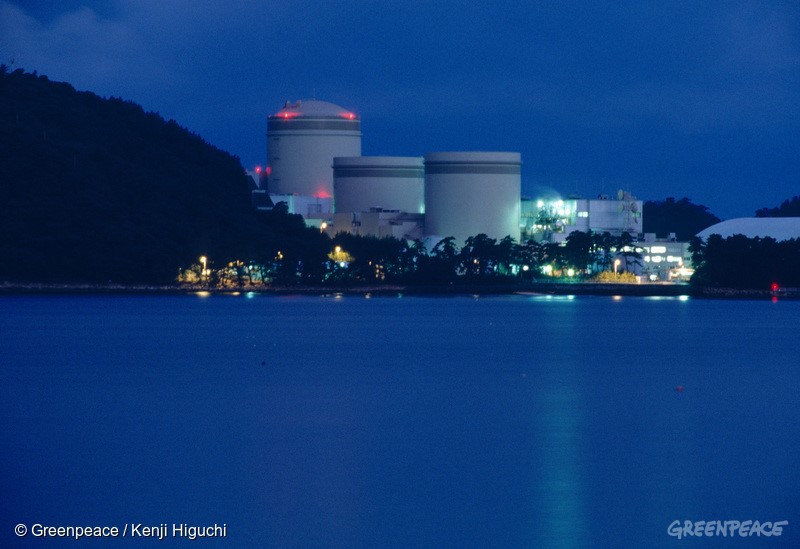
“The Mihama 3 reactor is like a vintage 1976 car that’s been driven at top speed for nearly 4 decades — and then sat idle for more than 5 years. Major safety components wear out, designs become outdated, and extended disuse creates yet another set of safety problems. Worse, it’s already been in a major accident 12 years ago due to a high-pressure pipe rupture that killed 5 workers. Most people wouldn’t just load up the kids in a car like that and speed off on a road trip. Yet, KEPCO and the NRA are trying to do just that, and they haven’t finished looking under the hood to see if the engine is alright. Unlike old cars, if an old reactor has a major accident, the victims can number in the hundreds of thousands and the crash site can extend for hundreds of kilometers. It’s nothing short of reckless, and puts the lives and livelihoods of families throughout the region at unnecessary risk,” said Kendra Ulrich, Senior Global Energy Campaigner for Greenpeace Japan.
Nuclear power plants are enormously complex, and safety-related components are only subject to normal age-related degradation. Constant irradiation of major components embrittles the metal, leading to an increased likelihood of potentially catastrophic failure during operation or emergency shutdown.
The Mihama 3 reactor is also located in the seismically-active Wakasa Bay region. The deep concerns over inadequate seismic assessments for the KEPCO’s Ohi reactors – also located in Wakasa Bay – pushed former NRA commissioner and seismologist, Kunihiko Shimazaki, to challenge the regulator directly. Although the NRA dismissed his concerns, the agency admitted that they could not reproduce the figures submitted by KEPCO in their assessment and so could not independently verify their accuracy. The same potentially faulty seismic assessment method was applied to Mihama 3.
The restart of aging reactors in Fukui has caused concern in surrounding prefectures. On 23 August, the Kyoto Governor Keiji Yamada said of the potential restart of the Takahama 1&2 reactors, “ . . .we should be extremely wary when it comes to aging nuclear reactors.”(1)
The restart of Mihama 3 is currently being challenged in court as a part of an umbrella lawsuit against all Fukui reactors. Greenpeace staff are plaintiffs in a case against KEPCO’s aging Takahama 1 & 2 reactors, also in Wakasa Bay.
Notes:
- Kyoto governor doesn’t accept Takahama 1, 2 reactor restart(京都府知事、容認せぬ姿勢 高浜原発1・2号機) Kyoto Newspaper on 23 August 2016 (accessed on 4 October 2016)
- Tomorrow, 6 October 2016, the Sendai 1 reactor in Kagoshima will be taken offline for scheduled maintenance. The newly-elected Kagoshima governor has repeatedly demanded the Sendai reactors be shut down for further safety checks. Due to his ongoing opposition to the operation of the reactors, it is unlikely that Sendai 1 will restart again before the end of 2016.
http://www.greenpeace.org/japan/ja/news/press/2016/pr201610051/
NRA grants aging Mihama reactor 20-year extension
OSAKA – The Nuclear Regulation Authority gave a green light Wednesday to extending the life of Kansai Electric Power Co.’s 40-year-old Mihama No. 3 reactor in Mihama, Fukui Prefecture, by 20 years.
The ruling was certain to provoke questions in Kansai and elsewhere about whether the NRA is lax on safety concerns.
Safety work related to the extension still needs to be carried out and is expected to take years to complete. Kepco hopes to restart the reactor sometime after the summer of 2020.
Wednesday’s decision marks the second time the NRA has approved extending the life of a 40-year-old reactor to 60. It previously approved restarting Kepco’s Takahama No. 1 and 2 reactors, which are 42 and 41 years old, respectively.
Under new guidelines adopted after the Fukushima triple meltdown in 2011, operators must decide whether to decommission units or apply to the NRA for a one-time, two-decade-maximum extension once a plant becomes 40 years old.
Fukui Gov. Issei Nishikawa and neighboring Shiga and Kyoto prefectures have expressed safety concerns over reactors that are more than 40 years old and questioned the necessity of restarting old reactors.
Obtaining local political consent for a restart could thus prove tougher for Kepco than might be the case for a younger reactor. Kyoto Gov. Keiji Yamada has already expressed wariness over the decision to restart the Takahama No. 1 and 2 reactors.
Citizens’ groups in and around Mihama are also expected to seek temporary injunctions in local district courts to halt the restart, which could mean a further delay in plans to turn it back on.
Greenpeace Japan criticized Wednesday’s decision. In a statement, Senior Global Energy Campaigner Kendra Ulrich said Mihama No. 3 was like a vintage 1976 car that was driven for four decades but has sat idle for more than five years, and that restarting it now puts the lives of people in the Kansai region at risk.
“Major safety components wear out, designs become outdated, and extended disuse creates yet another set of safety problems,” Ulrich said. “Worse, there was a major accident 12 years ago due to a high-pressure pipe rupture that killed five workers.”
Currently, five reactors that are more than 40 years old and one that is 39 years old are to be scrapped over the coming decades, including Kepco’s Mihama No. 1 and 2 reactors.
Japan agrees second reactor life extension since Fukushima
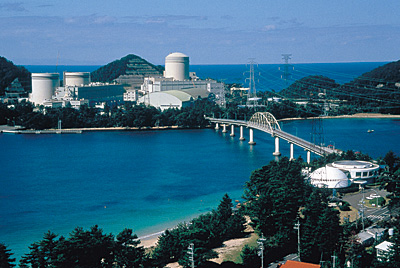
TOKYO Aug 3 (Reuters) – Japan’s nuclear regulator on Wednesday approved an application by Kansai Electric Power Co Inc to extend the life of an ageing reactor beyond 40 years, the second such approval it has granted under new safety requirements imposed since the Fukushima disaster.
The move means Kansai Electric, Japan’s most nuclear-reliant utility before Fukushima led to the almost complete shutdown of Japan’s atomic industry, can keep No. 3 reactor at its Mihama plant operating until it is 60 years old.
The regulator granted the first such approval in June to Kansai Electric’s ageing reactors No.1 and 2 at its Takahama plant.
The Mihama No.3 reactor, which will turn 40 years old in December, has been shutdown since 2011 and a restart will not happen immediately as Kansai Electric needs to carry out safety upgrades at a cost of about 165 billion yen ($1.63 billion).
The upgrades involve fire proofing cabling and other measures and are planned to be completed in March 2020, a company spokesman said.
Opinion polls consistently show opposition to nuclear power following Fukushima. Critics say regulators have failed to take into account lessons learned after a massive earthquake and tsunami caused meltdowns at the Fukushima Daiichi plant.
1 This Month

of the week – Shut Down Drone Warfare!


Tell the Ukrainian Government to Drop Prosecution of Peace Activist Yurii Sheliazhenko

Petition to revoke the licensing of the Near Surface Nuclear Disposal Facility (NSDF) at Chalk River. https://www.ourcommons.ca/petitions/en/Petition/Details?Petition=e-7247
To see nuclear-related stories in greater depth and intensity – go to https://nuclearinformation.wordpress.com
-
Archives
- March 2026 (251)
- February 2026 (268)
- January 2026 (308)
- December 2025 (358)
- November 2025 (359)
- October 2025 (376)
- September 2025 (257)
- August 2025 (319)
- July 2025 (230)
- June 2025 (348)
- May 2025 (261)
- April 2025 (305)
-
Categories
- 1
- 1 NUCLEAR ISSUES
- business and costs
- climate change
- culture and arts
- ENERGY
- environment
- health
- history
- indigenous issues
- Legal
- marketing of nuclear
- media
- opposition to nuclear
- PERSONAL STORIES
- politics
- politics international
- Religion and ethics
- safety
- secrets,lies and civil liberties
- spinbuster
- technology
- Uranium
- wastes
- weapons and war
- Women
- 2 WORLD
- ACTION
- AFRICA
- Atrocities
- AUSTRALIA
- Christina's notes
- Christina's themes
- culture and arts
- Events
- Fuk 2022
- Fuk 2023
- Fukushima 2017
- Fukushima 2018
- fukushima 2019
- Fukushima 2020
- Fukushima 2021
- general
- global warming
- Humour (God we need it)
- Nuclear
- RARE EARTHS
- Reference
- resources – print
- Resources -audiovicual
- Weekly Newsletter
- World
- World Nuclear
- YouTube
-
RSS
Entries RSS
Comments RSS
 nuclear-news