Tepco starts freezing soil around Fukushima plant reactors
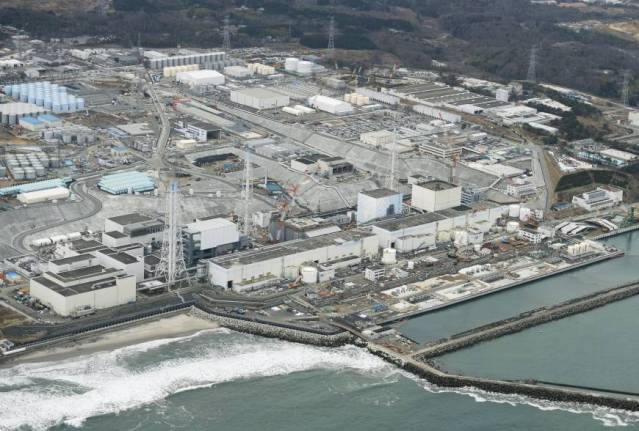
Tokyo Electric Power Co. said Thursday it has started freezing soil around damaged nuclear reactor buildings at the disaster-hit Fukushima plant, aiming to reduce the flow of groundwater into the highly contaminated facilities.
The Nuclear Regulation Authority on Wednesday gave Tepco permission to create a coolant-filled ice wall and start freezing soil on the east sea-facing side of the plant followed by 95 percent of the west side facing the mountains.
The work is expected to take more than three months to complete.
The plant was crippled by a massive earthquake and tsunami in March 2011.
In June 2014, Tepco installing equipment needed to establish the ice wall around the No. 1 to No. 4 reactors.
The work was completed in February, with the government funding some ¥35 billion ($309 million) of the project.
The utility plans to seek permission to extend the wall to cover the entire west side as well as the south and north sides of the plant after collecting data.
The 1.5-kilometer-long and 30-meter-deep wall is designed to stem a massive flow of groundwater from entering the basements of the reactor buildings and mixing with leaked toxic water.
The complete freezing is expected to take eight months if all goes smoothly.
Chief Cabinet Secretary Yoshihide Suga said the government “hopes the ice wall will stem the flow of groundwater into the facilities at an early date.”
Tepco and the government initially aimed to complete freezing the entire wall by the end of fiscal 2015, but the schedule was delayed due to prolonged discussions on safety measures.
The wall is expected to reduce the amount of groundwater flowing into the facilities every day to about 50 tons from more than 100 tons currently.
Still, the effectiveness of the ice wall, which would be the world’s largest ground freezing project, remains unclear.
The NRA warned earlier that if the groundwater level within the wall is reduced excessively by stemming the flow from outside, highly contaminated water within the buildings could seep out.
Tepco said it will stop the freezing work or inject water into wells around the reactor buildings if the groundwater level inside the wall is likely to become too low.
NRA approves TEPCO’s plan to freeze underground walls of soil at Fukushima plant

NRA approves TEPCO’s plan to freeze underground walls of soil at Fukushima plant
The Nuclear Regulation Authority (NRA) decided on March 30 to approve Tokyo Electric Power Co. (TEPCO)’s plan to gradually freeze underground walls of soil around the crippled Fukushima No. 1 nuclear plant, starting with shields on the ocean side.
With the NRA’s approval, TEPCO, the operator of the crippled Fukushima nuclear complex, is to begin work as early as March 31 to freeze the walls built around the buildings of reactors Nos. 1 through 4 at the plant. The walls are designed to prevent underground water from flowing into the reactor buildings. But such a large-scale “wall of ice” has not been introduced anywhere in the world and it is unclear how much underground water the frozen shields will be able to prevent from flowing into the crippled nuclear complex.
Under the project to build the frozen soil walls, coolant chilled to a temperature of minus 30 degrees Celsius is to circulate through 1,568 pipes that are driven into the ground to a depth of around 30 meters, to create a “wall of ice.” The project is aimed at preventing underground water from entering the reactor buildings and reducing the amount of contaminated water being generated. If the project goes as planned, work to freeze the walls is expected to be completed in about eight months. TEPCO estimates that the walls will help the utility reduce the inflow of underground water to several dozen tons per day from the current 150 to 200 tons.
TEPCO is to gradually freeze the walls, starting with the one (about 690 meters) on the ocean side first, while leaving seven sections (a total of about 45 meters) on the mountain side unfrozen. TEPCO had initially planned to freeze all of the walls at once. But if the levels of underground water around the reactor buildings drop drastically, contaminated water remaining in the reactor buildings could flow out. So the NRA called for the gradual freezing of the walls. TEPCO then accepted the NRA’s suggestion.
The frozen-soil wall project is considered to be a key measure to deal with contaminated water along with the so-called “subdrain” project designed to reduce the amount of water being contaminated by removing underground water from wells around the reactor buildings. TEPCO started inserting pipes into the ground in June 2014 and completed its preparations to begin freezing the walls in February this year.
http://mainichi.jp/english/articles/20160330/p2a/00m/0na/012000c
TEPCO given OK on freezing soil at Fukushima plant
The Nuclear Regulation Authority gave the go-ahead to Tokyo Electric Power Co.’s plan to freeze the soil around the reactors at the crippled Fukushima No. 1 nuclear power plant from the seaside on March 30.
The aim of the frozen soil wall is to block the flow of groundwater into the reactor buildings to prevent it from becoming contaminated with radioactive substances.
The utility has already inserted 1,568 pipes to a depth of 30 meters in the ground around the No. 1 to No. 4 reactor buildings. The plan is to circulate liquid with a temperature of minus 30 degrees through the pipes to freeze the surrounding soil.
TEPCO’s plan is to first freeze the entire wall on the seaside and about half of the wall on the mountain side.
The effects of completing the frozen wall on the seaside are expected to show after about six weeks with water being prevented from flowing through. Then, the frozen portions on the mountain side will be gradually increased. When 95 percent of the wall is frozen, TEPCO will suspend the freeze, leaving cracks in seven places to allow some water through.
The utility predicts that with 95 percent of the entire soil wall frozen, about half of the groundwater will be blocked.
To freeze the entire wall on the mountain side, TEPCO will have to gain further approval from the NRA.
Initially, the electric power company planned to freeze soil only on the mountain side. However, the NRA pointed out that if groundwater is totally blocked from the mountain side, the level of water within the frozen soil near the reactors could become too low and with nothing outside to stop it, highly contaminated water inside the reactor buildings could more rapidly flow out.
Because of that, TEPCO decided in February that it will freeze the soil mainly from the seaside and collect data on the level of groundwater and, after that, it will freeze the entire wall.
“It is important to collect sufficient data in a continuous manner and implement the freezing while keeping watch,” said NRA chairman Shunichi Tanaka.
The plan to create the frozen soil wall was developed by an economy ministry committee in May 2013 as an important part of measures to decrease the volume of contaminated water. The work to insert pipes into the ground was completed in February.
http://ajw.asahi.com/article/behind_news/social_affairs/AJ201603300074
TEPCO nears ‘deep freeze’ of soil wall at Fukushima plant

A large number of pipes and freezing equipment take up much of the space of Tokyo Electric Power Co.’s refrigerator plant at the embattled Fukushima No. 1 nuclear power plant on Feb. 19.
Packed with bulky silver pipes and freezing equipment, Tokyo Electric Power Co.’s plant to freeze underground soil at the crippled Fukushima No. 1 nuclear power plant is ready to start chilling.
On Feb. 19, TEPCO officials showed the interior of the newly built facility, the heart of the project to reduce accumulating radioactive water at the nuclear complex.
The plan envisages a frozen soil wall built around the reactor buildings by inserting 1,568 pipes to a depth of 30 meters.
Cooling agents, which register 30 degrees below zero, will be pumped into the pipes to freeze the surrounding soil.
In theory, the flow of groundwater into the reactor buildings, which would mix with contaminated water and empty out in the sea, will be blocked.
With approval from the Nuclear Regulation Authority earlier this month, the utility plans to start freezing the area facing the sea as early as March, a process expected to take about two and a half months.
In total, it will take seven to eight months to complete all the freezing of the underground soil, including the mountain side of the wall, according to TEPCO’s blueprint presented to the NRA this month.
That means that the project to build a frozen barrier will significantly lag behind the initial targeted completion date of the end of March.
http://ajw.asahi.com/article/0311disaster/fukushima/AJ201602210030
NRA AFTER 5 DAYS CHANGES ITS DECISION

On the February 11th the NRA for safety reasons said no to Tepco starting the freezing of its Fukushima Daiichi ice wall, now 4 days later on February 15th the NRA says yes.
How could Japan Nuclear Regulation Authority change its mind that way so rapidly about a matter regarding safety…..
Japan Nuclear Regulation Authority Halts Fukushima Daiichi’s Ice Wall

Japanese Nuclear Regulation Authority, the NRA, has put the kibosh on plans by Tokyo Electric Power Co. to start freezing underground soil at the crippled Fukushima No. 1 nuclear power plant–a stunningly expensive project intended to solve the crisis of accumulating radioactive groundwater at the site.
The installation of the equipment required for forming a wall of frozen soil at the Fukushima Daiichi nuclear power plant to prevent groundwater entering the reactor buildings has been completed. Approval from the Japanese regulator must be sought before the creation of the wall itself can begin.
Ice wall technology is already widely used in civil engineering projects, such as the construction of tunnels near waterways. Small-scale tests using the technology have already been completed at the Fukushima Daiichi site. However, the full-scale use of the technology at Fukushima will see the largest ground freezing operation in the world.
Installation of the equipment for forming the ice wall began in June 2014 and a test that has circulated the chilling liquid to specific parts of the wall has been under way since April 2015. The north, south and west sides of the facility were completed last September, while the remaining pipes on the east side facing the sea were placed within the ground in November.
Tokyo Electric Power Company (Tepco) announced yesterday that all the necessary equipment is now in place for the creation of the ice wall. However, the company noted that it must get approval from the Nuclear Regulation Authority before the equipment can be put into operation. The regulator’s approval, Tepco said, would partly depend on the company “showing a method to ensure that the wall (and other groundwater pumping operations) do not invert the water level difference in any way that would cause contaminated water to flow out of the building’s basements”.
Kajima Corporation, the main contractor for the facility, has drilled holes some 30-35 metres into the ground and inserted pipes through which refrigerant will be then be pumped. This cooling will freeze the soil surrounding the pumps creating an impenetrable barrier around the reactor buildings. In total, some 1550 pipes have been placed in the ground to create a 1.5km-long ice wall around units 1 to 4. The wall is designed to remain effective for up to two months in the event of a loss of power. The Japanese government agreed to pay for construction of the ice wall, estimated to cost some JPY32 billion ($278 million).
Reducing the amount of contaminated water that it must deal with is a priority for Tepco. Groundwater naturally seeps from land to sea, but at the Fukushima Daiichi site it must negotiate the basements of reactors buildings. It is thought that more than 400 tonnes of groundwater enters the basements each day through cable and pipe penetrations as well as small cracks, mixing with the heavily contaminated water previously used to cool the damaged reactor cores.
The ice wall is only one part of a multi-layered strategy being employed to manage the flow of groundwater and rainwater at Fukushima Daiichi, Tepco said. Tepco is saying that its strategy to prevent water becoming contaminated has reduced the daily inflow of groundwater into the buildings to 150 tonnes per day. “Successful implementation of the frozen soil water is designed to reduce that inflow further, by keeping water out of the reactor buildings,” the company contends.
TEPCO has maintained that once the soil is frozen, it will form a circular barrier and reduce the flow of groundwater into the reactor buildings; and that, in turn, will prevent water contaminated with radioactive substances from accumulating.
But the Nuclear Regulation Authority contends that contaminated water accumulated in the reactor buildings could leak into the groundwater if the level inside the frozen soil wall drops too much.
TEPCO planned to construct a 1,500-meter-long frozen soil wall around the four reactor buildings by inserting 1,568 pipes to a depth of 30 meters at 1-meter intervals. Each pipe will freeze the soil around it once liquid of minus 30 degrees circulates inside the cylinder.
On Feb. 9, TEPCO completed the last part of the project to install temperature indicators, allowing it to start freezing the soil at a moment’s notice.
Groundwater is continuing to flow into basements of reactor buildings with melted nuclear fuel, adding to the amount of highly contaminated water being produced.
In May 2013, a committee of the Ministry of Economy, Trade and Industry drew up a report on the merits of constructing a frozen soil wall to reduce the volume of contaminated water.
Based on the report, TEPCO started the construction work in June 2014. The government has already spent about 34.5 billion yen ($300 million) on the project.
TEPCO maintained that once the frozen soil wall is completed, it should reduce the flow of groundwater into the reactor buildings from about 400 tons a day to 100 tons in tandem with other measures, including work to pump out groundwater from wells dug around the reactor buildings.
From the outset, the NRA cast doubt on the effectiveness of the frozen soil wall, saying that highly contaminated water accumulated in reactor buildings could leak into the ground if the groundwater level inside the wall drops too much.
The NRA repeatedly asked TEPCO whether the frozen soil wall would prove truly effective in reducing the amount of contaminated water.
“TEPCO is scattering a strange illusion that the problem of contaminated water can be solved completely if a frozen soil wall is constructed,” NRA chairman Shunichi Tanaka said in spring 2015.
In a test operation which started that spring, the reduction of groundwater levels was larger than expected in some places. The speed and direction of the groundwater flow could not be clarified in some locations.
Because it takes two months or so for the soil to thaw out, countermeasures cannot be taken immediately if problems crop up.
TEPCO acknowledges that there are limits to its crystal ball-gazing with regard to the problem of groundwater. However, it contends that it can prevent contaminated water from leaking into the ground by pouring water into the ground through wells if the level drops too much.
In December, the NRA took the rare move of proposing to TEPCO in a written document that the utility operate the frozen soil wall only in places where contaminated water is unlikely to leak into the ground.
However, TEPCO dug in its heels and said it intended to operate the frozen soil wall as a whole. But it also plans to consider the NRA’s proposal.
On Feb. 9, TEPCO President Naomi Hirose visited the NRA office and told Tanaka, “We will consider your proposal and get back to you in a most sincere manner.”


Sources :
http://www.tepco.co.jp/en/press/corp-com/release/2016/1267045_7763.html
http://www.world-nuclear-news.org/RS-Fukushima-Daiichi-ice-wall-equipment-in-place-1002165.html
http://www.japantimes.co.jp/news/2016/02/10/national/tepco-finishes-installing-fukushima-ice-shield-equipment/#.VrvH1lLzN_k
http://ajw.asahi.com/article/0311disaster/fukushima/AJ201602100079
Fukushima ice wall near completion
An underground ice wall designed to curb the buildup of radioactive water at the Fukushima Daiichi plant will see near completion on Friday. But it’s not yet clear when it can be put into service as the nuclear regulator has not yet given a green light to its use.
The barrier will almost be finished Friday. Only the last procedure, which involves filling underground pipes with coolant, remains.
The wall made of frozen soil stretches about 1.5 kilometers around 4 reactor buildings.
Tokyo Electric Power Company aims to cut the amount of groundwater that seeps into the buildings and then becomes contaminated. The utility expects the barrier to reduce the inflow to 10 tons a day. That’s less than one tenth the current level.
The project to build the wall began in June 2014 at a cost of about 290 million dollars from the national coffers. The plan is to start operation by the end of March.
But the Nuclear Regulation Authority has not given its approval. It fears radioactive water could leak from the reactor buildings if the wall makes the level of groundwater lower than that of contaminated water.
TEPCO says it will closely monitor groundwater levels and inject water if the levels fall too far.
But the regulator insists changes in groundwater levels could cause unintended consequences.
http://www3.nhk.or.jp/nhkworld/english/news/20160129_04.html
Underground temperature never go down regardless of frozen wall beside common fuel pool

The underground temperature beside common fuel storage pool has not been decreased since the end of April from Tepco’s report released on 8/20/2015.
Tepco is testing the frozen underground wall to circulate the coolant material in the frozen duct.
They have been monitoring the temperature at 18 points around the crippled reactor buildings.
From their data, the temperature of the monitoring point “No.12″ is showing almost no decrease from the beginning.
This is located between Reactor 4 building and the common pool, where is stocking the fuel assemblies removed from SFP 4 (Spent Fuel Pool in Reactor 4). At the moment of 8/20/2015, it is still over 10 ℃.
For some reason, Tepco stopped sending the coolant material to 4 of the monitoring points.
Among the rest of the points, the temperature is still above 0 ℃ at 8 of 14 monitoring points.

1 This Month

of the week – Shut Down Drone Warfare!


Tell the Ukrainian Government to Drop Prosecution of Peace Activist Yurii Sheliazhenko

Petition to revoke the licensing of the Near Surface Nuclear Disposal Facility (NSDF) at Chalk River. https://www.ourcommons.ca/petitions/en/Petition/Details?Petition=e-7247
To see nuclear-related stories in greater depth and intensity – go to https://nuclearinformation.wordpress.com
-
Archives
- March 2026 (244)
- February 2026 (268)
- January 2026 (308)
- December 2025 (358)
- November 2025 (359)
- October 2025 (376)
- September 2025 (257)
- August 2025 (319)
- July 2025 (230)
- June 2025 (348)
- May 2025 (261)
- April 2025 (305)
-
Categories
- 1
- 1 NUCLEAR ISSUES
- business and costs
- climate change
- culture and arts
- ENERGY
- environment
- health
- history
- indigenous issues
- Legal
- marketing of nuclear
- media
- opposition to nuclear
- PERSONAL STORIES
- politics
- politics international
- Religion and ethics
- safety
- secrets,lies and civil liberties
- spinbuster
- technology
- Uranium
- wastes
- weapons and war
- Women
- 2 WORLD
- ACTION
- AFRICA
- Atrocities
- AUSTRALIA
- Christina's notes
- Christina's themes
- culture and arts
- Events
- Fuk 2022
- Fuk 2023
- Fukushima 2017
- Fukushima 2018
- fukushima 2019
- Fukushima 2020
- Fukushima 2021
- general
- global warming
- Humour (God we need it)
- Nuclear
- RARE EARTHS
- Reference
- resources – print
- Resources -audiovicual
- Weekly Newsletter
- World
- World Nuclear
- YouTube
-
RSS
Entries RSS
Comments RSS
 nuclear-news