Fukushima’s mothers became radiation experts to protect their children after nuclear meltdown
 The mothers test everyday items including rice, vacuum cleaner dust, seafood, moss and soil for radiation
May 12, 2019
Inside a laboratory in Fukushima, Japan, the whirr of sophisticated equipment clicks, beeps and buzzes as women in lab coats move from station to station.
They are testing everything — rice, vacuum cleaner dust, seafood, moss and soil — for toxic levels of radiation.
But these lab workers are not typical scientists.
They are ordinary mums who have built an extraordinary clinic.
“Our purpose is to protect children’s health and future,” says lab director Kaori Suzuki.
In March 2011, nuclear reactors catastrophically melted down at the Fukushima Daiichi plant, following an earthquake and tsunami.
Driven by a desperate need to keep their children safe, a group of mothers began testing food and water in the prefecture.
The women, who had no scientific background, built the lab from the ground up, learning everything on the job.
The lab is named Tarachine, a Japanese word which means “beautiful mother”.
“As mothers, we had to find out what we can feed our children and if the water was safe,” Ms Suzuki says.
 “We had no choice but to measure the radiation and that’s why we started Tarachine.”
The director of the mothers’ lab in Fukushima said the aftermath of the disaster was “chaos.”
After the nuclear accident, Fukushima residents waited for radiation experts to arrive to help.
“No experts who knew about measuring radiation came to us. It was chaos,” she says.
In the days following the meltdown, a single decision by the Japanese Government triggered major distrust in official information which persists to this day.
The Government failed to quickly disclose the direction in which radioactive materials was drifting from the power plant.
 The mothers lost faith in government officials after they didn’t quickly communicate information about radiation levels.
Poor internal communications caused the delay, but the result was that thousands fled in the direction that radioactive materials were flying.
Former trade minister Banri Kaieda, who oversaw energy policy at the time, has said that he felt a “sense of shame” about the lack of disclosure.
But Kaori Suzuki said she still finds it difficult to trust the government.
“They lied and looked down on us, and a result, deceived the people,” Ms Suzuki says.
“So it’s hard for the people who experienced that to trust them.”
She and the other mothers who work part-time at the clinic feel great responsibility to protect the children of Fukushima.
But it hasn’t always been easy.
When they set up the lab, they relied on donated equipment, and none of them had experience in radiation testing.
 The women had to teach themselves how to use the equipment for their lab.
“There was nobody who could teach us and just the machines arrived,” Ms Suzuki says.
“At the time, the analysing software and the software with the machine was in English, so that made it even harder to understand.
“In the initial stage we struggled with English and started by listening to the explanation from the manufacturer. We finally got some Japanese software once we got started with using the machines.”
Radiation experts from top universities gave the mothers’ training, and their equipment is now among the most sophisticated in the country.
 The women were eventually taught more about testing radiation by world class experts.
Food safety is still an issue
The Fukushima plant has now been stabilised and radiation has come down to levels considered safe in most areas.
But contamination of food from Japan remains a hotly contested issue.
Australia was one of the first countries to lift import restrictions on Japanese food imports after the disaster.
But more than 20 countries and trading blocs have kept their import ban or restrictions on Japanese fisheries and agricultural products.
At the clinic in Fukushima, Kaori Suzuki said she accepted that decision.
“It doesn’t mean it’s right or wrong. I feel that’s just the decision they have made for now,” she says.
Most results in their lab are comparatively low, but the mothers say it is important there is transparency so that people know what their children are consuming.
Fukushima’s children closely monitored after meltdown
 Noriko Tanaka was three months pregnant when the Fukushima nuclear plant melted down.
Noriko Tanaka is one of many mothers in the region who felt that government officials were completely unprepared for the unfolding disaster.
She was three months pregnant with her son Haru when the disaster struck.
Ms Tanaka lived in Iwaki City, about 50 kilometres south of the power plant.
 The Fukushima Daiichi Nuclear Power Plant melted down after the 2011 earthquake and tsunami.
Amid an unfolding nuclear crisis, she panicked that the radioactive iodine released from the meltdown would harm her unborn child.
She fled on the night of the disaster.
When she returned home 10 days later, the fear of contamination from the invisible, odourless radioactive material weighed deeply on her mind.
“I wish I was able to breastfeed the baby,” she says.
“[Radioactive] caesium was detected in domestic powdered milk, so I had to buy powdered milk made overseas to feed him.”
Ms Tanaka now has two children —seven-year-old Haru and three-year-old Megu.
She regularly takes them in for thyroid checks which are arranged free-of-charge by the mothers’ clinic.
Radiation exposure is a proven risk factor for thyroid cancer, but experts say it’s too early to tell what impact the nuclear meltdown will have on the children of Fukushima.
Noriko Tanaka is nervous as Haru’s thyroid is checked.
“In the last examination, the doctor said Haru had a lot of cysts, so I was very worried,” she says.
However this time, Haru’s results are better and he earns a high-five from Dr Yoshihiro Noso.
Doctors found that Haru had several cysts during his last thyroid check, but things look better this time.
“He said there was nothing to worry about, so I feel relieved after taking the test,” Ms Tanaka says.
“The doctor told me that the number of cysts will increase and decrease as he grows up.”
Dr Noso says his biggest concern is for children who were under five years old when the accident happened.
The risk is particularly high for girls.
Girls like Megu could be at greater risk than boys from radiation exposure.
“Even if I say there is nothing to worry medically, each mother is still worried,” he says.
“They feel this sense of responsibility because they let them play outside and drink the water. If they had proper knowledge of radiation, they would not have done that,” he said.
Mums and doctors fear for future of Fukushima’s children
After the Chernobyl nuclear disaster of 1986, the incidence of thyroid cancers increased suddenly after five years.
Dr Noso travels across the country to check up on the children of Fukushima.
Doctor Noso has operated on only one child from Fukushima, but it is too early to tell if the number of thyroid cancers is increasing because of the meltdown.
“There isn’t a way to distinguish between cancers that were caused naturally and those by the accident,” he says.
“In the case of Chernobyl, the thyroid cancer rate increased for about 10 years. It’s been eight years since the disaster and I would like to continue examinations for another two years.”
As each year passes, the mothers’ attention gradually turns to how their children will be treated in the future.
Noriko Tanaka’s biggest fear now is the potential discrimination her children may face.
Noriko Tanaka has a seven-year-old son and a three-year-old daughter.
Some children, whose families fled Fukushima to other parts of Japan have faced relentless bullying.
“Some children who evacuated from Fukushima living in other prefectures are being bullied [so badly that they] can’t go to school,” Noriko Tanaka said.
“The radiation level is low in the area we live in and it’s about the same as Tokyo, but we will be treated the same as the people who live in high-level radiation areas.”
Noriko is particularly worried for little Megu because of prejudice against the children of Fukushima.
“For girls, there are concerns about marriage and having children because of the possibility of genetic issues.”
Noriko fears her daughter Megu will face discrimination because she was born in the fallout zone
Source:
https://www.abc.net.au/news/2019-05-12/fukushima-mums-teach-themselves-how-to-be-radiation-experts/11082520
South Korea plans to continue to ban all seafood imports from Fukushima Prefecture and seven other prefectures near Fukushima to protect public health and food safety

SEJONG, May 7 (Yonhap) — South Korea’s new ocean minister vowed Tuesday to ensure that potentially dangerous seafood will not reach South Korean tables.
“There should never be anything that could compromise public health” and food safety, Moon Seong-hyeok, minister of oceans and fisheries, said in a meeting with reporters ahead of his planned meeting with the top Japanese envoy.
Moon is set to meet with Japan’s Ambassador to South Korea Yasumasa Nakamine in Sejong, an administrative hub located 130 kilometers southeast of Seoul, on Wednesday at Nakamine’s request.
Moon plans to stress that South Korea’s import restrictions on Japanese seafood are a legitimate measure meant to protect public health.
South Korea banned all seafood imports from eight Japanese prefectures near Fukushima in 2013. The move came after Japan announced the leak of contaminated water following the 2011 meltdown of the Fukushima nuclear power plant.
In April, the World Trade Organization finalized its ruling in favor of South Korea’s import restrictions on Japanese seafood.
Moon also plans to call for a quick conclusion to South Korea-Japan fisheries negotiations, according to the ministry.
The last bilateral fisheries agreement expired in June 2016. South Korea and Japan have since failed to narrow their differences on fishing quotas and other issues.
Last month, Moon sent a letter to Japan calling for fisheries talks, though there has been no response from Japan.
https://en.yna.co.kr/view/AEN20190507008000320?fbclid=IwAR2lhWxIqnXaIibyjYLtE8bqJp03sBCNpYms0v52KSkj_F2UDCzvbiCO47s
Fukushima Radioactive Contamination Detected in Northern Bering Sea Alaska

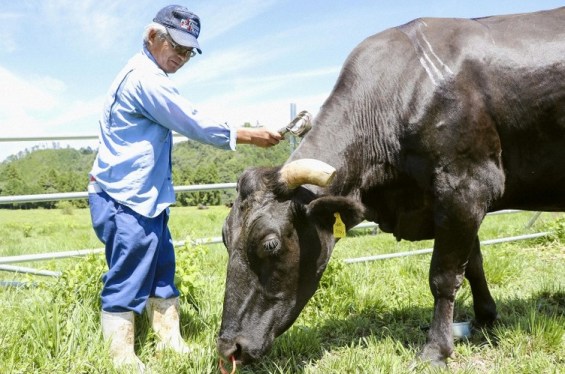
Farmers struggle to keep cows left behind near Fukushima plant
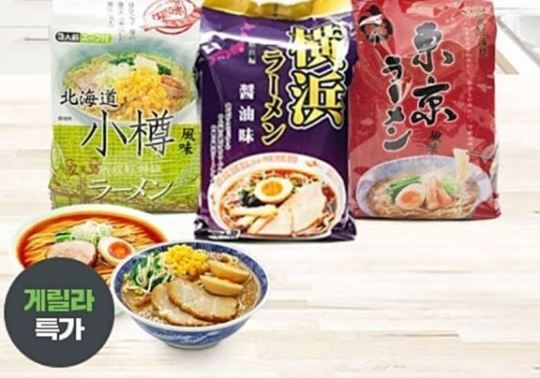
Korean distributors halt sales of instant noodles from Fukushima due to unnerved customers
Is pushing contaminated product and poisoning people the ‘right’ path to Fukushima reconstruction?
The South Koreans did not want their food and banned it. The WHO and the UN upheld that they would import food from Fukushima. One of the guiding factors was that the US imports the Fukushima food. How much deeper can corruption go when it is all about the economy?
“Fascism should not be defined by the number of victims but by the way they were killed”. Jean-Paul Sartre

Cloud of suspicion in China over rice from near Japan’s nuclear meltdown zone


Thyroid cancer impact on children and teens following Fukushima nuclear accident
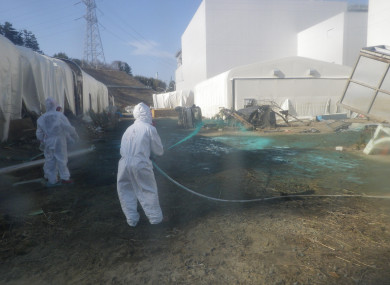
Taiwan and Japan to hold trade talks in shadow of vote to keep post-Fukushima food ban

Nov 27, 2018
TAIPEI – Taiwan and Japan will hold annual trade talks in Taipei this week, coming after a weekend referendum in the former that could have a negative impact on bilateral relations.
Sources familiar with the two-day talks from Thursday say that both sides are planning to sign at least six agreements or memorandums of understanding.
They will cover a wide range of areas, including cooperation in management of medical equipment and materials, joint research by young researchers, and the mutual support and advancement of cooperation between small and medium-size businesses.
On Saturday, a majority of Taiwanese voted in favor of maintaining a ban on food imports from five Japanese prefectures that was imposed after the 2011 Fukushima nuclear disaster.
Taiwan’s representative to Japan, Frank Hsieh, earlier warned that if the referendum were approved, Taiwan would have a “grave price” to pay.
That “grave price” could include Taiwan’s bid to join a Japan-led trade pact, the Comprehensive and Progressive Agreement for Trans-Pacific Partnership.
Taiwan has expressed its desire to participate in the second-round of accession talks on numerous occasions.
Taiwan has also been seeking to sign a full-fledged free trade agreement with Japan. However, the ban on the imports of Japanese food products has stalled negotiations on the trade pact.
Despite the absence of diplomatic ties, which were severed in 1972, the unofficial relationship between Taiwan and Japan has remained robust.
Japan is Taiwan’s third-largest trading partner after China, including Hong Kong, while Taiwan is Japan’s fourth-largest trading partner.
Bilateral trade totaled $62.7 billion last year, up about 4 percent from the previous year. Japanese investment in Taiwan last year also increased more than 84 percent from the previous year to $649 million.
https://www.japantimes.co.jp/news/2018/11/27/national/politics-diplomacy/taiwan-japan-hold-trade-talks-shadow-vote-keep-post-fukushima-food-ban/#.W_6-RfZFzIX
4.1 micro Sv/h driving by the Fukushima Daiichi nuclear plant
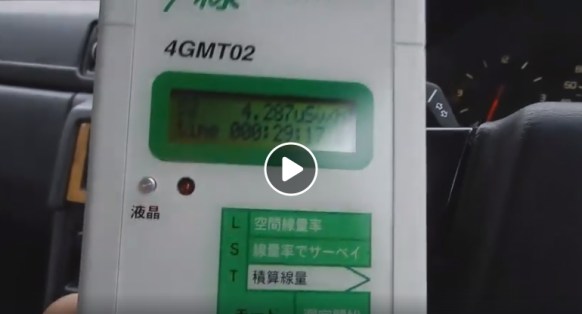
November 18, 2018 this person drove by the crippled Fukushima Daiichi Power Plant. His Geiger counter showed.
Please send this info to any Olympic athletes you know in the world. Tokyo will never be safe but will be ready for 2020 Olympic Games, by sacrificing everyone’s health and global environment for a handful people’s wealth.
Taiwan votes to maintain ban on food from Fukushima disaster areas
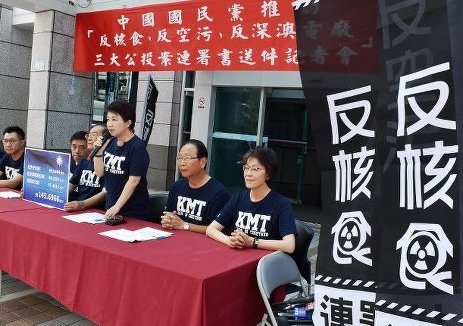 In this file photo dated Aug. 27, 2018, senior officials of the Kuomintang, Taiwan’s major political party, hold a press conference in Taipei to state their opposition to lifting a ban on food imports from Fukushima and four other Japanese prefectures. The banners read “oppose nuclear food.” (Mainichi/Shizuya Fukuoka)
TAIPEI (Kyodo) — A referendum on maintaining a ban on food products from five Japanese prefectures, imposed after the 2011 Fukushima nuclear disaster, saw the restrictions kept in place on Saturday, dealing a major blow to the government of President Tsai Ing-wen and the island’s relations with Japan.
For a referendum to deliver a decisive result in Taiwan, the “yes” vote must account for more than 25 percent of the electorate, or about 4.95 million voters.
The Central Election Commission website showed that more than 15 million of the 19.76 million eligible voters cast their ballots. More than 6 million voters approved the initiative, well over the 25 percent required.
The referendum is legally binding and government agencies must take necessary action.
The result dealt a significant blow to the Democratic Progressive Party government which proposed easing the ban after coming to power in May 2016, but backed away when the main opposition Nationalist Party (KMT) questioned the new government’s ability to ensure the safety of the imported products.
Government officials responsible for the policy declined to comment on Sunday, only saying it is a matter for President Tsai to decide.
Tsai announced her resignation as DPP leader on Saturday following her party’s disastrous defeat in key mayoral elections that day, races viewed as indicators of voter sentiment ahead of the next presidential and island-wide legislative elections in 2020.
Some worry that the result of the referendum on Japanese food imports will have a negative impact on the island’s relations with Japan. Taiwan’s representative to Japan, Frank Hsieh, said the initiative was a KMT scheme aimed at undermining bilateral relations between Taiwan and Japan at a time when the two are seeking closer ties as a way of protecting themselves from an increasingly belligerent China.
He also warned that if the referendum is successful, Taiwan would pay “a grave price” that will affect all its people.
China is the only other country still restricting comprehensive imports from Fukushima Prefecture and nearby Ibaraki, Gunma, Tochigi, and Chiba prefectures.
The referendum, initiated by the KMT, was one of 10 initiatives put to a vote in conjunction with Saturday’s island-wide local elections.
Voters approved two other referendums initiated by the KMT. One sought to stop the construction of new coal-fired power plants or the expansion of existing ones, and the other asked voters if they wanted to phase out thermal power plants.
Beijing will be happy about the result of a referendum on the name the island uses when competing at international sports events. It had sought to change the name used to participate in future international events, including the 2020 Tokyo Olympics, from “Chinese Taipei” to “Taiwan.”
The CEC website showed that more than 8.9 million cast their ballots. About 3 million of the eligible voters approved the initiative, less the 25 percent needed for the referendum to count.
The referendum was highly unpopular among athletes, who were worried that a successful outcome would hamper their right to compete, as the International Olympic Committee resolved in May that it would stand by a 1981 agreement that Taiwanese athletes must compete as “Chinese Taipei.”
The IOC had also warned that Taiwan would risk having its recognition suspended or cancelled if the referendum was successful.
China was annoyed by the proposal and pressured the East Asian Olympic Committee to revoke Taichung’s plan to host the 2019 East Asian Youth Games.
Beijing said that if the referendum was successful, it would not sit idly by and would “definitely respond,” without elaborating.
There were also five referendums relating to same-sex marriage — three initiated by opponents of same-sex marriage and two by supporters.
The CEC website showed that all three of the anti-same sex marriage initiatives passed, while both the pro-same sex marriage referenda failed.
The result also puts the Tsai government in an awkward position as Taiwan’s highest court, the Council of Grand Justices, ruled 18 months ago that the government must, within two years, amend the Civil Code or enact a special law legalizing gay marriage.
https://mainichi.jp/english/articles/20181125/p2g/00m/0in/010000c?fbclid=IwAR0ZlvV-JO_PHes83Gn8mutF6jKkFBzyx6iAYPJPw_2FA-tSqx3W71k9y2c
Effects of suspected radiation exposure seen in Fukushima wild monkeys: researchers
Novembre 25, 2018
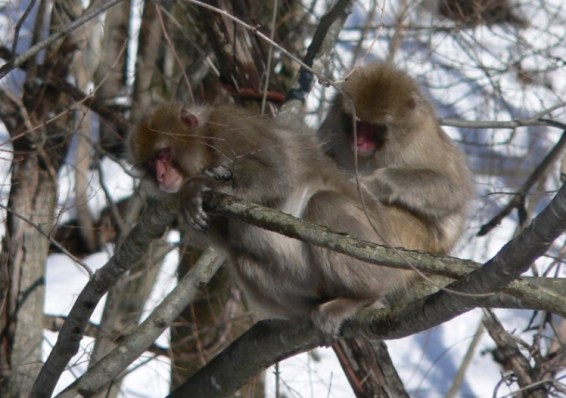
Two Japanese macaques are seen in the Fukushima Prefecture city of Fukushima in this photo provided by Fumiharu Konno from Shinichi Hayama’s research team.
TOKYO — Researchers found fewer cells that become blood in the bone marrow of wild Japanese macaques living in northeastern Japan’s Fukushima Prefecture along with the delayed growth of fetuses after the 2011 nuclear crisis, possibly due to radiation exposure.
Findings of abnormalities in these monkeys have been continuously reported in British scientific journals. Researchers assume that the monkeys ingested items like tree bark contaminated with radioactive cesium emanating from the Fukushima Daiichi Nuclear Power Station.
Tohoku University’s Department of Pathology professor emeritus Manabu Fukumoto and his research team performed hematological analysis of adult monkeys captured after the nuclear disaster. They inspected blood cell counts in the bone marrow of 18 monkeys caught in locations within 40 kilometers from the plant, including the city of Minamisoma and the town of Namie. Fukumoto’s team then compared the data to that of monkeys from other areas. The results revealed various substances destined to mature into blood, like cells that develop into platelets, had decreased in Fukushima monkeys.
Furthermore, the team observed some blood components had greatly decreased in monkeys with higher internal radiation exposure per day. They estimated the radiation dose from the concentration of radioactive cesium in the monkeys’ muscles. Fukumoto explained, “We need to conduct long-term research to see if it (the abnormalities) has an effect on the monkeys’ health.”
Meanwhile, wildlife zoology expert and Nippon Veterinary and Life Science University professor Shinichi Hayama and his research team examined fetuses in pregnant female monkeys. These monkeys were among those annually captured from 2008 to 2016 by the Fukushima Municipal Government to control their population size. Hayama’s research team compared data on 62 fetuses around the time of the meltdowns. They learned that the fetuses had smaller heads and delayed development over their entire bodies after the nuclear incident, in comparison to those before the disaster.
However, the team could not find any change in the nutritional status of the mother monkeys. They concluded that the mother monkeys’ radiation exposure may have had an effect on the fetuses.
Hayama assumed that Fukushima monkeys “must have been exposed to high doses of radiation on a whole different scale compared to humans.” This is because the monkeys “had consumed food contaminated with radiation, in addition to living near the ground where there were high radiation doses.”
Japanese macaques are not included in the wild animals and plants under investigation by the Ministry of the Environment to see the effects of radiation from the nuclear disaster. Five academic associations including the Primate Society of Japan (PSJ) have submitted a request asking that Japanese macaques be included in the research, along with other demands, to the environment ministry.
“Japanese macaques have a long life span of 20 to 30 years and are sedentary,” said PSJ Chairman Masayuki Nakamichi. He claimed that “it’s absolutely crucial, even for the world, to conduct research on the long-term effects of radiation exposure on Japanese macaques.”
(Japanese original by Momoko Suda, Science & Environment News Department)
https://mainichi.jp/english/articles/20181125/p2a/00m/0na/003000c?fbclid=IwAR0t6-JVRDHjBq8Fxay4flYJRU8ALyF_9V4uqIbPAJdc-2Ro_fpZihUcPCs
Exports of Fukushima-brand alcohol hit record in fiscal 2017
What is wrong with those people? Are they just uninformed? Ignorant? Don’t they know, understand that this sake is made with Fukushima rice, a radiation contaminated rice…. To drink alcohol is one thing, but to drink radiation contaminated alcohol is like having a death wish….
 The United States imported 118,000 liters — 77,000 liters of sake and 41,000 liters of other alcohol, accounting for 40 percent of the prefecture’s alcohol export.
November 18, 2018
Exports of sake, liquor and other alcoholic beverages produced in Fukushima Prefecture reached a record high of about 296,000 liters in fiscal 2017, or 3.2 times that of fiscal 2012, when the Fukushima Trade Promotion Council, in charge of supporting business activities among local companies and municipalities, began monitoring the figures.
The total value of alcohol exports was ¥363.37 million, up 16 percent from the year before.
The Fukushima Prefectural Government plans to further promote the safety and attraction of local alcohol, aiming to rebuild its reputation after the nuclear meltdowns at the Fukushima No. 1 nuclear power plant in March 2011.
In fiscal 2017, the amount of sake exported rose 11.9 percent from a year earlier to 179,000 liters, worth ¥204.69 million. Other alcohol, including whiskey, plum wine, and shōchū(spirits) jumped 23 percent to 117,000 liters, worth ¥158.68 million.
The United States imported 118,000 liters — 77,000 liters of sake and 41,000 liters of other alcohol, accounting for 40 percent of the prefecture’s alcohol export. France imported 53,000 liters — 2,000 liters of sake and 51,000 liters of other alcohol — accounting for 18.1 percent. South Korea imported 39,000 liters of sake, accounting for 13.2 percent.
Out of all the sake produced in Fukushima, 43.1 percent was exported to the U.S. To take advantage of the trend and the popularity of Japanese cuisine in America, the prefecture will launch an antenna shop in New York to sell Fukushima-brand sake by the end of March.
The prefecture will also release about three PR videos with English subtitles on YouTube to promote local sake to English-speaking consumers.
Fukushima aims to increase its alcohol exports to 500,000 liters, worth ¥700 million, by the end of fiscal 2020. It also plans to reinforce sales by focusing on five countries and regions including the U.S., France, where sake is becoming increasingly popular, and Hong Kong, where there are a number of Japanese restaurants.
However, out of the 58 breweries in the Fukushima Prefecture Sake Brewers Cooperative, only 24 had exported their sake abroad. To achieve the prefecture’s goal, the next thing they will need to do is to increase the number of sake exporters.
“It was the result of each maker’s efforts to improve the taste,” Yoshihiro Ariga, chairman of the cooperative, said in referring to the record exports in fiscal 2017.
But he also said further support will be needed.
“It costs a huge amount of money and effort to export sake,” Ariga said, urging municipalities to provide further assistance to small breweries.
According to the Finance Ministry, 23,482,000 liters of sake were exported in 2017, breaking the record for an eighth consecutive year.
https://www.japantimes.co.jp/news/2018/11/18/national/exports-fukushima-brand-alcohol-hit-record-fiscal-2017/#.W_gTe_ZFzIU

Haematological analysis of Japanese macaques (Macaca fuscata) in the area affected by the Fukushima Daiichi Nuclear Power Plant accident

November 13, 2018
Abstract
Several populations of wild Japanese macaques (Macaca fuscata) inhabit the area around Fukushima Daiichi Nuclear Power Plant (FNPP). To measure and control the size of these populations, macaques are captured annually. Between May 2013 and December 2014, we performed a haematological analysis of Japanese macaques captured within a 40-km radius of FNPP, the location of a nuclear disaster two years post-accident. The dose-rate of radiocaesium was estimated using the ERICA Tool. The median internal dose-rate was 7.6 μGy/day (ranging from 1.8 to 219 μGy/day) and the external dose-rate was 13.9 μGy/day (ranging from 6.7 to 35.1 μGy/day). We performed multiple regression analyses to estimate the dose-rate effects on haematological values in peripheral blood and bone marrow. The white blood cell and platelet counts showed an inverse correlation with the internal dose-rate in mature macaques. Furthermore, the myeloid cell, megakaryocyte, and haematopoietic cell counts were inversely correlated and the occupancy of adipose tissue was positively correlated with internal dose-rate in femoral bone marrow of mature macaques. These relationships suggest that persistent whole body exposure to low-dose-rate radiation affects haematopoiesis in Japanese macaques.

Read more at:
https://www.nature.com/articles/s41598-018-35104-0?fbclid=IwAR2h7SQNHXinFJyjQF6IrQ9psw9xtYBbGneI_k_2mhHEVsoavgmm4MG3a_E
Attorneys Implore Judge to Keep Sailors’ Fukushima Case in U.S.

November 14, 2018
SAN DIEGO (CN) – Former Senator John Edwards and his co-counsel implored a federal judge Wednesday not to dismiss claims from U.S. service members who say they were exposed to radiation while aboard U.S. ships sent to render aid after the 2011 earthquake and tsunami in Fukushima, Japan.
“We have 500 sailors who are badly hurt and some of them are dead. We have not been able to ask them a single question under oath … at the end of the day these folks just want their day in court,” Edwards told U.S. District Judge Janis Sammartino.
But Sammartino said at the beginning of the nearly three-hour court hearing she was inclined to dimiss the claims against Tokyo Electric Power Co. – or TEPCO – and General Electric for lack of personal jurisdiction.
U.S. sailors filed a class action in the Southern District of California in 2012 claiming radiation they were exposed to following the meltdown of a nuclear power plant in Fukushima, Japan while aboard U.S. vessels on a humanitarian mission has caused cancer, brain tumors, birth defects in their children and other rare health problems. Some have even died, according to their attorneys.
If U.S. courts dismiss the two related cases – Cooper et al. v. TEPCO et al. and Bartel et al. v. Tokyo Electric Power Company Inc. et al. – the sailors could bring their claims in Japan under its Compensation for Nuclear Damage Act.
Sammartino did clarify throughout the hearing that she would not waste her or the attorneys’ time by holding a court hearing if she wasn’t going to consider their arguments.
Class attorney Charles Bonner of Sausalito, California implored the judge not to dismiss the litigation, noting that attorneys have not been able to conduct discovery in the case, and that the defendants’ motions to dismiss were “based on legal arguments,” not facts.
Bonner suggested class counsel needed to obtain contracts between GE, which designed and helped to maintain the nuclear reactors for 40 years in Fukushima, and TEPCO, which operated the plant. Bonner said the contracts likely contain a choice-of-law provision that would indicate whether the parties would agree to litigate in the U.S. or Japan.
“Our sailors have already been here five years. They need some resolution in this court,” Bonner said.
TEPCO attorney Gregory Stone of Munger Tolles & Olson in Los Angeles said the case has seen new developments in the few years since Sammartino found it should not be dismissed – a decision affirmed by the Ninth Circuit.
Those new developments include three times as many cases filed in Japan over the nuclear meltdown, which Stone said “demonstrates the Japanese interest in resolving these claims.”
TEPCO has paid 8.163 trillion yen, or $76 billion – one percent of Japan’s total GDP – to resolve claims stemming from the disaster, “a huge amount of money for a government to designate to one incident,” Stone said.
General Electric attorney Michael Schissel of Arnold & Porter in New York told Sammartino Japan’s interest would be most impaired if its laws were not applied to the litigation and that a contract between GE and TEPCO over choice of law “would be completely irrelevant to the government’s interest in having its laws apply.”
If Japanese law is applied to the case, GE would be dismissed.
Edwards again reiterated the class’ desire to begin discovery, saying what they’ve pleaded so far “is what we have read in the newspaper and saw in the news.”
Edwards suggested if the Southern District of California dismissed the cases, the sailors wouldn’t “go to Japan and hire Japanese lawyers.”
Bonner buoyed Edwards’ point, noting a declaration from Japanese lawyers who said the class would not get a fair trial in Japan, where no jury would decide the case’s merits.
“If they want to be fair, let’s have a settlement conference before your honor – the Japanese lawyers representing TEPCO are here,” Bonner said, gesturing to the lawyers in the room.
Stone recognized the recent Veteran’s Day holiday by thanking the handful of service member-plaintiffs present before noting while the “injuries they suffered are unfortunate and regrettable … we don’t think they can prove it.”
Stone also pointed out that the Department of Defense, United Nations and World Health Organization had looked into the health claims on radiation exposure and found the radiation was too low to cause the claimed injuries.
Sammartino took the matter under submission and indicated that she will issue a written ruling.
Attorneys Implore Judge to Keep Sailors’ Fukushima Case in U.S.
1 This Month

of the week – Shut Down Drone Warfare!


Tell the Ukrainian Government to Drop Prosecution of Peace Activist Yurii Sheliazhenko

Petition to revoke the licensing of the Near Surface Nuclear Disposal Facility (NSDF) at Chalk River. https://www.ourcommons.ca/petitions/en/Petition/Details?Petition=e-7247
To see nuclear-related stories in greater depth and intensity – go to https://nuclearinformation.wordpress.com
-
Archives
- March 2026 (244)
- February 2026 (268)
- January 2026 (308)
- December 2025 (358)
- November 2025 (359)
- October 2025 (376)
- September 2025 (257)
- August 2025 (319)
- July 2025 (230)
- June 2025 (348)
- May 2025 (261)
- April 2025 (305)
-
Categories
- 1
- 1 NUCLEAR ISSUES
- business and costs
- climate change
- culture and arts
- ENERGY
- environment
- health
- history
- indigenous issues
- Legal
- marketing of nuclear
- media
- opposition to nuclear
- PERSONAL STORIES
- politics
- politics international
- Religion and ethics
- safety
- secrets,lies and civil liberties
- spinbuster
- technology
- Uranium
- wastes
- weapons and war
- Women
- 2 WORLD
- ACTION
- AFRICA
- Atrocities
- AUSTRALIA
- Christina's notes
- Christina's themes
- culture and arts
- Events
- Fuk 2022
- Fuk 2023
- Fukushima 2017
- Fukushima 2018
- fukushima 2019
- Fukushima 2020
- Fukushima 2021
- general
- global warming
- Humour (God we need it)
- Nuclear
- RARE EARTHS
- Reference
- resources – print
- Resources -audiovicual
- Weekly Newsletter
- World
- World Nuclear
- YouTube
-
RSS
Entries RSS
Comments RSS
 nuclear-news