Fukushima evacuee poll finds kids in eight Yokohama-area households had experienced bullying

YOKOHAMA – Eight households that evacuated from Fukushima following the 2011 nuclear disaster said their children have experienced bullying at their new schools, according to a survey of 61 families suing the government and the nuclear plant operator.
Of the 61 households, 30 have children in elementary or junior high school, and eight said their children had been verbally abused or even physically assaulted at schools in and around Yokohama, according to sources involved with the lawsuit.
One of the sources quoted a plaintiff as saying that person was “unaware of a causal relationship between evacuation and bullying.” But the source also noted there may also be more bullying because some children don’t want to talk about being bullied.
“In reality, it seems there are more cases,” the sources said in a statement.
Lawyers conducted the survey after it was revealed last month that a 13-year-old in Yokohama was bullied by classmates after evacuating from Fukushima, and called “germ” and extorted for money while at elementary school.
That bullying case drew public attention, prompting the Yokohama Board of Education to investigate.
Among the children of the eight households citing bullying in the survey, a male student was told such things as “Keep away from us!” and “Fukushima people are idiots,” while attending a junior high school in Kawasaki, the sources said.
The survey did not count as bullying cases in which parents said their children did not get accustomed to their new schools or could not make friends, the sources said.
In the lawsuit filed with the Yokohama District Court, 174 plaintiffs from 61 households are demanding ¥4.07 billion ($34.4 million) from the government and the Tokyo Electric Power Company Holdings Inc., the operator of the Fukushima No. 1 nuclear power plant where three reactors melted down after a massive earthquake and tsunami in March 2011.
Another Fukushima evacuee bullied at school: support group

KAWASAKI, Kanagawa — A high school student who evacuated from Fukushima Prefecture in the wake of the 2011 nuclear disaster was bullied at a junior high school here, according to a legal team supporting evacuees.
The Kawasaki Municipal Board of Education has stated that there are currently no cases of bullying toward any pupils who have evacuated from Fukushima Prefecture in any of the city’s elementary or junior high schools. Since the student in question has come forward about bullying, however, the education board has begun an investigation into junior high school graduates as well, which would include this pupil.
According to the legal team, the pupil entered Kawasaki Municipal Junior High School in April 2012, and was verbally abused by classmates who told him, “People from Fukushima are stupid,” and, “Don’t come near me.” He was also punched and kicked, the team said. The pupil’s family consulted with the school but no solution was reached as his classmates denied any bullying.
The pupil’s parents appeared at the Yokohama District Court for a class action lawsuit filed by evacuees to demand compensation from the government and Tokyo Electric Power Co. (TEPCO), operator of the crippled Fukushima No. 1 Nuclear Power Plant, and stated that although they have had a tough time over the past few years, they have received support from people around them.
At this lawsuit, the parents of a boy who evacuated from Fukushima Prefecture to an elementary school in Yokohama said, “My son stopped attending school as a result of bullying.”
Meanwhile, it has been learned that another male student from Fukushima Prefecture was bullied in Yokohama.
http://mainichi.jp/english/articles/20161215/p2a/00m/0na/015000c
Schoolteacher calls Fukushima evacuee pupil ‘germ’
NIIGATA, Japan (Kyodo) — An elementary school pupil who evacuated from Fukushima in the wake of the 2011 nuclear disaster has skipped school for more than a week since a male teacher added “germ” to his name when addressing him in late November, a local education board said Friday.
The fourth-grade pupil told the teacher, in his 40s, before the summer holidays that he was distressed as other pupils were addressing him by adding “germ” to his name.
According to the education board, the teacher then added “germ” while addressing the boy in a classroom on Nov. 22, just five days after the boy approached the teacher again about his treatment by fellow pupils.
Nov. 22 was also the day of a strong earthquake off Fukushima in the early morning, reminding many of the massive March 2011 quake and tsunami that triggered the nuclear crisis at the Fukushima Daiichi nuclear plant.
On Nov. 24, the boy’s parents complained to the elementary school and other teachers interviewed every pupil in the class five days later.
“Despite being approached by the pupil for help, the teacher said something extremely inconsiderate and inappropriate,” an official of the education board said.
The case follows an earlier report of bullying in Yokohama, where a 13-year-old evacuee from Fukushima was verbally and physically attacked as he comes from the devastated prefecture. The elementary school and local education board failed to offer meaningful support in that case, according to a third-party panel of the city’s education board.
http://mainichi.jp/english/articles/20161202/p2g/00m/0dm/082000c
Fukushima boy mocked as ‘germ’ releases notes about bullying

A note written by the 13-year-old boy who was bullied after transferring from a school in Fukushima Prefecture to one in Yokohama is seen. Parts of the note are blacked out for privacy reasons.
Fukushima boy mocked as ‘germ’ releases notes about bullying
YOKOHAMA–Notes written by a boy from disaster-hit Fukushima Prefecture reveal the relentless bullying he faced and his sense of hopelessness, but they also show a positive attitude that kept his suicidal thoughts at bay.
Reports of classmates’ cruelty toward the boy, including payments of money, after he transferred to a Yokohama elementary school have again put bullying in the national spotlight.
The boy wrote the notes in July 2015, when he was a sixth-grader at the public elementary school. His family had moved to the city from Fukushima Prefecture five months after the disaster at the Fukushima No. 1 nuclear power plant unfolded in March 2011.
The notes were released on Nov. 15 through Tomohiro Kurosawa, a lawyer representing the boy.
In his notes, the boy wrote that he “thought many times about dying” to escape his predicament.
But he did not want to become another victim of the Great East Japan Earthquake and tsunami that caused the triple meltdown at the plant.
He wrote that he decided to live because “so many people had to die” in the quake and tsunami.
The home of the boy’s family was outside the evacuation zone designated by the central government, but his parents decided to move the family partly over fears of possible health damage from the radiation.
After his transfer to the school in Yokohama, some classmates attached “kin,” which means “germ,” to his name, suggesting that he was contaminated. It became his nickname.
“I found it heartbreaking because, every day, I was treated as if I were a germ or radiation,” he wrote. “I believe that people from Fukushima have become the targets of bullying. I could offer no resistance (to the bullying).”
In May 2014, when he was in the fifth grade, he started going to game arcades and amusement parks with 10 or so classmates, according to an investigative panel at the Yokohama municipal board of education. His tormentors made him cover the costs of those outings, saying the boy’s family was being well-compensated for the nuclear accident.
The boy apparently stole cash from his parents to pay for nearly 10 such outings, ranging from 50,000 yen ($463) to 100,000 yen each time, including meals and travel expenses.
He even bought air guns for two other children so that they could play together.
The total amount he paid for those occasions was 1.5 million yen, according to Kurosawa.
“I was deeply frustrated and upset when they told me to bring the money, but I could not do anything, feeling just fearful, because I was afraid they would bully me again if I resist,” the boy said in the notes. “I was angered when they told me that I have compensation money (for the nuclear disaster), and I find it vexing that I could not resist.”
The bullying came to the attention of parents of other children in May 2014, and they informed school officials that the boy was paying money to his classmates.
The same month, the boy’s parents asked the school about their son’s missing cap, saying somebody might have hidden it.
The school began looking into the boy’s case, but he had already lost confidence in the teachers.
“I told (my teachers) all I had experienced, but nobody believed me,” the boy wrote.
Yuko Okada, superintendent of the city education board, acknowledged that school officials failed to respond appropriately to the boy’s case.
“The boy did not attend school for more than a month, and there was a report suggesting that the boy paid money,” Okada said of the boy’s absence from school, which began in late May 2014. “The school should have considered it a grave case as of June 2014, when he was in the fifth grade.”
According to Kurosawa, school officials interviewed the bullies, who insisted that the boy paid the money “out of his own will.” The school concluded this was not a case of bullying.
The school officials did not interview the boy.
Sachiko Takeda, an education critic well versed in the bullying issue, criticized the school officials for lacking the sense to protect children from potential bullying.
“It was essential for officials to have looked at the issue from his perspective, that the bullying could stop once he gives them money,” she said. “The officials should have paid extra attention to children from Fukushima Prefecture because there were already reports across the country that they tend to become targets of bullying.”
In addition, Takeda said adults should do some soul-searching because they pass on to children the mistaken perception that “radiation is contagious” and that evacuees who fled on their own “receive a large amount of money in compensation for the nuclear disaster.”
The boy graduated from the elementary school and is now attending a free school for absentee students, according to Kurosawa.
The boy said he decided to make his notes public in hopes that “bullying will disappear” after hearing a flurry of media reports about deaths of bullied children.
“I am also hoping that my notes can comfort, even slightly, many children (in a similar situation),” he said.
http://www.asahi.com/ajw/articles/AJ201611160066.html
Note written by Fukushima evacuee bullied at new school released
YOKOHAMA — A 13-year-old boy who had been bullied after transferring to an elementary school here from Fukushima Prefecture due to the nuclear disaster wrote that he “thought about dying many times” in a note revealed on Nov. 15 by an attorney representing the boy and his family.
The attorney released a statement by the boy’s parents along with the three-page note their son wrote in July last year, when he was a sixth grader. The boy stated in the note that his new classmates in Yokohama demanded money, saying that he must have received compensation because his family had fled their hometown in Fukushima Prefecture after the nuclear meltdowns in 2011. It also said he was called a “germ,” and that he was worried the name-calling was prompted by radiation associated with the nuclear disaster. The bullying reportedly continued for three years, from second to fifth grades, and he was unable to attend classes as a result.
The boy wrote, “I thought about dying many times, but I decided to live, even though it is painful, because a lot of people died in the disaster.”
According to the attorney, the boy decided to disclose his notes in hopes of encouraging fellow bullying victims. He wrote about the time his classmates demanded money, saying, “It makes me mad that they told me I have compensation money, and it’s also frustrating that I could not fight back,” adding, “I couldn’t do anything because I was scared of being bullied again.” The boy also wrote about his feelings when he was called a “germ,” saying, “It was painful because I thought it was because of radiation. I realized that people from Fukushima would be bullied (because of the disaster).”
The boy wrote in the notes that the school did not believe him even though he told teachers about the bullying, and that they ignored him when he tried to consult them.
Meanwhile, the boy’s parents criticized the school in their statement, saying that staff did not contact them even when they knew that some students at the school were demanding money from their son. In addition, they touched on the report released by a third-party investigative committee set up by the Yokohama Municipal Board of Education, saying it was unfortunate that many parts explaining what kind of bullying took place were redacted even after they told the board that they wanted details to be made public.
Municipal education board superintendent Yuko Okada held a separate news conference on Nov. 15 and said, “We feel sorry that the school and the education board were unable to respond to the matter in a coordinated manner.” She added, “I was not under the impression that we were asked to reveal everything that was in the report.” The education board is set to interview relevant persons once again.
http://mainichi.jp/english/articles/20161116/p2a/00m/0na/015000c
Probe ordered into Fukushima boy bullying
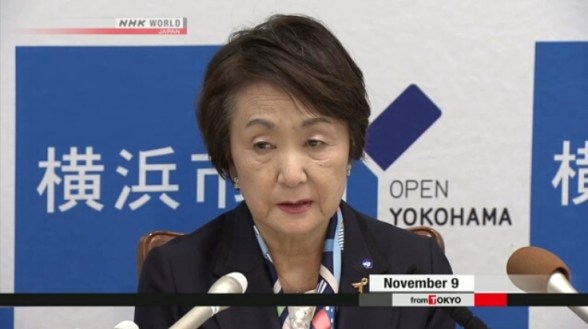
The mayor of Yokohama City has ordered its education board to look into why it failed to respond quickly to the bullying of a student who had evacuated due to the 2011 Fukushima nuclear accident.
A third-party panel of the board determined that the boy was bullied after entering an elementary school in Yokohama. The panel said school staff and education authorities responded slowly to the problem.
Mayor Fumiko Hayashi told reporters on Wednesday that city officials failed to make good use of an anti-bullying law enacted after a spate of serious cases across the nation.
Hayashi also referred to a note in which the boy said he thought of suicide many times.
She said she sensed his pain from the note and was heartbroken over his experience.
Hayashi said she wonders why the school and the board failed to help him much earlier.
1 This Month

of the week – Shut Down Drone Warfare!


Tell the Ukrainian Government to Drop Prosecution of Peace Activist Yurii Sheliazhenko

Petition to revoke the licensing of the Near Surface Nuclear Disposal Facility (NSDF) at Chalk River. https://www.ourcommons.ca/petitions/en/Petition/Details?Petition=e-7247
To see nuclear-related stories in greater depth and intensity – go to https://nuclearinformation.wordpress.com
-
Archives
- March 2026 (244)
- February 2026 (268)
- January 2026 (308)
- December 2025 (358)
- November 2025 (359)
- October 2025 (376)
- September 2025 (257)
- August 2025 (319)
- July 2025 (230)
- June 2025 (348)
- May 2025 (261)
- April 2025 (305)
-
Categories
- 1
- 1 NUCLEAR ISSUES
- business and costs
- climate change
- culture and arts
- ENERGY
- environment
- health
- history
- indigenous issues
- Legal
- marketing of nuclear
- media
- opposition to nuclear
- PERSONAL STORIES
- politics
- politics international
- Religion and ethics
- safety
- secrets,lies and civil liberties
- spinbuster
- technology
- Uranium
- wastes
- weapons and war
- Women
- 2 WORLD
- ACTION
- AFRICA
- Atrocities
- AUSTRALIA
- Christina's notes
- Christina's themes
- culture and arts
- Events
- Fuk 2022
- Fuk 2023
- Fukushima 2017
- Fukushima 2018
- fukushima 2019
- Fukushima 2020
- Fukushima 2021
- general
- global warming
- Humour (God we need it)
- Nuclear
- RARE EARTHS
- Reference
- resources – print
- Resources -audiovicual
- Weekly Newsletter
- World
- World Nuclear
- YouTube
-
RSS
Entries RSS
Comments RSS
 nuclear-news