First unified decision on state liability Supreme Court to hear appeals of four class action lawsuits on June 17

June 16, 2022
On June 17, the Supreme Court’s Second Petty Bench (Chief Justice Hiroyuki Kanno) hands down its first unified judgment on the state’s responsibility in four class action lawsuits brought by evacuees of the TEPCO’s Fukushima Daiichi Nuclear Power Plant accident, who sought compensation from the state and TEPCO. The High Court has reached a split decision on the issue. The high court has reached a split decision, and it is inevitable that the outcome of subsequent lawsuits of the same type will be determined. The impact on the criminal trials of TEPCO’s former management is also attracting attention. The series of lawsuits seeking to hold the government legally responsible for the unprecedented accident has reached a major milestone.
The progress of the first and second trials in the four lawsuits is shown in the table below. In addition to the amount of compensation, the lawsuits also focus on (1) the reliability of the “long-term assessment” of earthquake forecasts released in 2002 by the government’s Headquarters for Earthquake Research Promotion, and (2) the reliability of the nuclear power plant’s earthquake forecast. In addition to the amount of compensation, the main points of contention were (1) the reliability of the “long-term assessment” of earthquake forecasts released by the government’s Headquarters for Earthquake Research Promotion in 2002, (2) whether the arrival of a tsunami at the plant could have been predicted (foreseeability), and (3) whether the accident could have been prevented if the government had made TEPCO take measures (obligation to avoid consequences). The appeals court decisions in the Fukushima, Chiba, and Ehime cases found the long-term assessments to be reliable and found the government liable for the accident. On the other hand, the Tokyo High Court denied the government’s responsibility in the Gunma lawsuit.
The issue that will divide the Supreme Court on March 17 is how to determine whether the government’s regulatory authority over TEPCO was “properly exercised or illegally exercised” with regard to the tsunami countermeasures at the Fukushima Daiichi Nuclear Power Plant.
In the Chikuho pneumoconiosis lawsuit, the Sennan asbestos lawsuit, and other lawsuits in which the existence of state liability for non-use of regulatory authority was disputed, the Supreme Court has taken the position that the state is liable for compensation if its failure to use its authority “deviates from permissible limits and is extremely unreasonable.
The court is expected to follow this approach with regard to the nuclear power plant accident, and will examine the foreseeability of the tsunami and other issues to reach a verdict.
In their arguments at the appeal hearings held in April and May, the plaintiffs argued that the long-term assessment was “highly reliable” and that the tsunami could have been foreseen based on the predictions. They argued that the accident could have been prevented if the government had forced TEPCO to build seawalls and make the buildings watertight to prevent flooding.
On the other hand, the government argued that the long-term assessment was unreliable and “not precise and accurate enough to be incorporated into nuclear regulations. Even if TEPCO had been ordered to take countermeasures, the actual tsunami would have been different in scale and direction, and the accident could not have been prevented.
In March, prior to the ruling, the Second Petty Bench of the Tokyo District Court had already rejected appeals by both the plaintiffs and the defendant regarding the amount of damages. With this decision, TEPCO’s liability and the amount of compensation are now fixed.
https://www.minpo.jp/news/moredetail/2022061697974?fbclid=IwAR1Q9vySLN6xSfAStjuONrVPFKgU3N2yHDsFjioDW9gN33nEVsI3LrbJuzQ
Evacuees from nuclear disaster await Supreme Court ruling

June 14, 2022
Tetsuya Omaru initially thought he could return to his home in Fukushima Prefecture “in a week” after the 2011 accident at the Fukushima No. 1 nuclear power plant forced him to flee.
However, the 92-year-old former farmer is still far from home 11 years after the nuclear disaster.
His home in Namie, a small town in Fukushima Prefecture, is located about 11 kilometers from the plant, nestled in the mountains.
Omaru was born to a farming family dating back to more than 300 years. He used to grow rice and raised silkworms before he was displaced.
He knew all the people in his community of about 30 households. They were close and worked together to stage traditional festivals.
Omaru’s life, however, has been uprooted and upended since the triple meltdown in March 2011.
The nuclear disaster occurred when the plant lost power and thus could not cool its reactors after the Great East Japan Earthquake struck and a tsunami swamped the plant.
Omaru is now awaiting a weighty decision from the country’s top court, due on June 17, regarding a lawsuit he and other plaintiffs filed at the Chiba District Court.
They are demanding the plant operator, Tokyo Electric Power Co. (TEPCO), and the government answer for the triple meltdown.
“TEPCO and the government had asserted over the years that nuclear power plants are safe,” Omaru said. “I strongly hope the Supreme Court will recognize the government’s responsibility for redress.”
The Supreme Court’s ruling will be applied to three other similar lawsuits.
In handing down the ruling, the top court will look at whether the government carried out appropriate regulatory oversight on the nuclear industry.
One focus was whether a 2002 government report on potential earthquakes in the future was credible enough to foresee a possible tsunami resulting from a powerful earthquake.
Another focus is whether TEPCO could have avoided the disaster if appropriate measures had been taken to safeguard against tsunami.
The lawsuits are among the first to be filed by victims of the nuclear disaster and part of about 30 legal actions being taken across the nation. The top court’s decision is likely to influence the course of the other court battles.
The top court handed down in March a verdict ordering TEPCO to pay a combined 1.4 billion yen ($10.4 million) to the plaintiffs of the four lawsuits.
NO LONGER ABLE TO FARM
After moving around in Fukushima Prefecture, Omaru initially took refuge in his oldest daughter’s house in Chiba Prefecture.
But it was impossible for him to work in the field, his passion, under such circumstances. He suffered a stroke in 2012.
He is now living with his second daughter in Yokohama. He had surgery for esophageal cancer in 2021.
Omaru decided to join a group of victims suing TEPCO and the government out of resentment that he has been deprived of his livelihood and hometown.
In its 2017 decision, the Chiba District Court denied the government’s responsibility.
The Tokyo High Court overturned it in 2021, however.
The high court’s decision came after three judges and other court officials traveled to inspect Omaru’s home in the so-called “difficult-to-return” zone due to radiation levels estimated at more than 50 millisieverts a year.
His house was ruined by wild boars and overgrown grass.
“If possible, I want to go back to my home in Namie to live while I am still alive,” Omaru said. “It is where I was born and grew up.”
That appears to be unlikely, however, as the government does not plan on cleaning up the area encompassing his community.
TEARS FROM THE VICTIMS
Among others awaiting the top court ruling are Sugie Tanji and her husband, Mikio, who brought their case to the Maebashi District Court in Gunma Prefecture.
The couple fled from Iwaki, Fukushima Prefecture, though their home, about 40 km from the plant, was not covered by the government’s evacuation order for communities with an estimated annual reading of 20 millisieverts.
Though the district court recognized the government’s responsibility in a ruling in 2017, it was overturned by the Tokyo High Court in 2021.
In hearings at the high court, the government defended its policy of not providing redress to so-called “voluntary evacuees” such as the Tanji family.
Giving them compensation, said the government, “would amount to offending the feelings of residents who stayed, and it would be an inappropriate assessment of the nation’s land.”
Tanji, 65, said she was appalled by the statement, describing it as an attempt to divide victims.
“It is TEPCO and the government that polluted the land,” she said. “But they are trying to pass the buck.”
Tanji and her husband were running a shop repairing word processors in Iwaki when the nuclear accident unfolded.
They temporarily evacuated to an acquaintance’s house in the prefecture.
When they returned to the shop a half month later, they found piles of faxes from their customers.
Most contained kind words offering encouragement, but a few were negative messages, such as one that read: “You do not have to return my machine as I fear it is contaminated with radiation.”
“When we read them, we felt we could no longer run our shop there,” Tanji said of their decision to leave Iwaki for good.
They moved to Maebashi in July 2011–a city they picked after drawing circles on a map of Japan to see what places were outside a 100-km radius of every nuclear facility across the country. Maebashi was one they considered to be far enough away.
But the tragedies continued. Mikio’s mother, who stayed in Fukushima, died without being reunited with the couple after the accident. A woman who was close to the couple committed suicide.
Tanji strongly hopes the court finalizes the government’s responsibility, to prevent another nuclear disaster.
“Tears that victims have shed, as well as the lives and livelihoods lost due to the disaster, should never be wasted,” she said.
Prolonged evacuation takes its toll in Fukushima Pref. with many disaster-related deaths

June 13, 2022
Even over a decade after the 2011 Great East Japan Earthquake, tsunami, and ensuing nuclear disaster, there have still been deaths in Fukushima Prefecture that have been certified as being related to the disasters, including those caused by worsening physical conditions due to prolonged evacuation.
In Fukushima Prefecture, which was hit hard by the Fukushima Daiichi Nuclear Power Station accident, an awfully high number of “earthquake disaster-related deaths” have been recorded, with the toll currently standing at 2,333.
When unraveling the reports submitted by bereaved families to local governments, it was found that harsh conditions surrounding evacuation, repeated shelter relocations, and feelings of loss regarding one’s hometown have been destroying the physical and mental well-being of elderly people and others in Fukushima.
Kenichi Hozumi, 71, a former high school teacher who has evacuated to the Fukushima Prefecture city of Iwaki from the prefectural town of Futaba, where the wrecked nuclear power plant is located, has lost both his parents. Their deaths were certified as “earthquake disaster-related.” At age 83, his father Yoshihisa’s physical condition worsened immediately after he evacuated, and he suddenly died from pneumonia. His mother Shigeko’s condition also gradually weakened amid prolonged evacuation, and she died aged 88 a decade after the earthquake.
According to Hozumi, Shigeko had temporarily left the evacuation shelter to go back home twice a month until around 2017. She could not permanently return to her house due to high radiation levels, and the home was sullied by animals. There had even been traces of a burglary.
From around 2018, Shigeko could not move both legs freely. Following her hospitalization in April 2020 after she complained of suffocation, she said she wanted to return to Futaba every time Hozumi visited her. In September 2020, she passed away from an acute aggravation of chronic respiratory failure.
Shigeko relocated six times following the nuclear disaster. She stayed with relatives in Niigata as well as at her grandchild’s home in Tokyo. “Following evacuation, she did not have a place she could settle down in even for a moment. In the end, she passed away with her mouth open, as if she had something to say,” Hozumi said. He expressed regret on behalf of his mother in a report recounting the events leading to her death.
Earthquake disaster-related deaths are certified by local governments after bereaved families file applications which undergo screening by a panel consisting of doctors and others. According to the Reconstruction Agency, 3,784 such deaths related to the 2011 disasters had been certified across 10 prefectures including Tokyo, as of late September 2021. Among them, deaths in Fukushima Prefecture account for 60%.
Furthermore, Reconstruction Agency statistics showed that over 90% of deaths in the severely affected areas of Iwate and Miyagi prefectures that were certified as relating to the earthquake involved people who died within one year from the disasters. In contrast, 40% of disaster-related fatalities from Fukushima Prefecture occurred more than one year after the 2011 onset of the nuclear disaster, from causes including prolonged evacuation, and applications for disaster-related death certifications have been continuously submitted in the prefecture to date.
In order to examine this reality, the Mainichi Shimbun filed requests asking that 26 municipal governments in Fukushima Prefecture, which authorized the certification of disaster-related deaths, and an assembly of municipalities in the Futaba area disclose documents submitted by bereaved families. As a result, about 2,200 individuals’ documents and data were disclosed by 20 local governments.
The Mainichi Shimbun examined the information on around 1,000 people whose backgrounds leading to their deaths were known. One report stated, “Winters at temporary housing were cold, and their legs and loins weakened as they had nothing to do,” while another read, “Uncertainty hung over their life amid prolonged evacuation and they came to drink alcohol from the daytime.” These reports showed that a change in environment following evacuation affected people’s health.
An elderly man in the Fukushima Prefecture town of Namie died about one year after the nuclear plant accident and his death was certified as being related to the 2011 disasters. According to the report on the man, he returned home temporarily in the autumn of 2011, but was in a state of great mental shock when he saw his house in ruins. He reportedly teared up, saying, “If only the nuclear plant didn’t exist,” while burying the bodies of beloved pets on the premises of his house. The report then stated that it was around this time that he stopped going outdoors and developed the habit of saying, “I can’t do this anymore.”
While individuals aged 80 or older comprise a majority of earthquake-related deaths in Fukushima Prefecture, the aftereffects of the 2011 disasters have also eaten away at those of the working generation. An automobile salesman from Futaba county experienced a sudden change in his life as he visited relatives at shelters that took several hours to reach, as well as going to see clients who were scattered across Japan.
On top of this, he was ordered to vacate his home built with loans due to prefectural road construction even though he had just begun repairing it. The man, who apparently began to smoke more heavily due to shock, died of acute myocardial infarction in September 2014. He was aged 55. His 61-year-old wife commented, “He was a hard worker and did not show signs of being tired, but I think he had loads of stress.”
Masaharu Tsubokura, professor at Fukushima Medical University, who has been studying earthquake disaster-related deaths, believes that “secondary health consequences following the nuclear disaster last for long periods and are wide-ranging.”
With prolonged evacuation comes repeated relocations, separation from family, work changes, and loss of the person’s hometown. Tsubokura said, “Damage accumulates each time the victim’s environment changes, and those in vulnerable positions have been sifted out.” He insisted that even if people exercised less and drank more after large disasters, it should not be dismissed as an individual’s responsibility and society as a whole should consider ways to support them.
https://mainichi.jp/english/articles/20220610/p2a/00m/0na/031000c
TEPCO issues 1st apology from president for nuclear accident
Face value skin-deep apology: So sorry that we destroyed your life, your health and your living environment but happy that the court gave us only a chump change damages compensation to be paid for all of that.

June 6, 2022
FUTABA, Fukushima Prefecture–Tokyo Electric Power Co. apologized to a group of plaintiffs who won a damages suit against the utility for the first time under the name of its president.
“We sincerely apologize to you for upending your lives and causing irreparable mental and physical damage with the nuclear disaster,” TEPCO President Tomoaki Kobayakawa said in the statement.
The apology was read by Kazuyoshi Takahara, representative of the utility’s Fukushima Revitalization Headquarters in Futaba, Fukushima Prefecture, to some of the plaintiffs who visited on June 5. He bowed after reading the statement.
Kobayakawa was not among the TEPCO officials who received them.
The apology followed the Supreme Court’s decision in March that upheld the Sendai High Court’s order for the utility to pay more compensation to the victims than outlined in the central government’s guidelines.
Naoko Kanai, who heads the group’s secretariat, said, “I would like to accept the apology and want to believe the words reflect the company’s determination to make efforts to restore the lives of the residents.”
But Tomio Kokubun, a deputy leader of the plaintiff group, blasted the absence of the TEPCO president when offering the apology.
“It shows a lack of common sense, given that the company caused an accident of such magnitude,” he said.
The group of 216 plaintiffs sued the company for the “loss of their hometowns” after they were ordered to evacuate when the triple meltdown unfolded in March 2011 following the Great East Japan Earthquake and tsunami.
The lawsuit was among about 30 similar lawsuits brought against TEPCO.
TEPCO apologizes for the first time in the name of its president to the plaintiffs in the evacuees’ lawsuit

June 5, 2022
On June 5, TEPCO apologized in the name of President Tomoaki Kobayakawa to the plaintiffs in a class action lawsuit filed by residents evacuated from the Fukushima Daiichi Nuclear Power Plant accident seeking compensation for the “loss of their hometown,” saying that the accident “ruined their lives and caused irreparable damage both physically and mentally. This is the first time that TEPCO has apologized to the plaintiffs of a class action lawsuit in the name of its president.
The apology was made in Futaba-cho, Fukushima Prefecture, where TEPCO’s Fukushima reconstruction headquarters is located, after the Supreme Court ruled in March that TEPCO should pay compensation in excess of the national standard. However, President Kobayakawa did not visit the site, and Kazuyoshi Takahara, the head of the Fukushima Reconstruction Headquarters, said, “The accident has caused great damage to our irreplaceable lives and hometowns. He read out a letter of apology and bowed his head.
Naoko Kanai, 56, secretary general of the plaintiffs’ group, said, “We would like to accept your sincere apology with all sincerity. We believe that these words are a pledge to spare no effort to restore the lives of local residents without the arrogance of a large corporation.
https://www.asahi.com/articles/ASQ6566MSQ65UGTB00C.html?iref=pc_photo_gallery_bottom
TEPCO apologizes to evacuees of nuclear power plant after losing lawsuit: “The accident ruined my life”

June 5, 2022
In response to the final decision in a lawsuit filed by evacuees of TEPCO’s Fukushima Daiichi Nuclear Power Plant, TEPCO met with the plaintiffs on June 5 at an industrial exchange center in Futaba-machi, Fukushima Prefecture, and told them, “The accident has caused great damage to our irreplaceable lives and hometowns, and we are deeply sorry that your lives have been ruined and that you have suffered irreparable damage to your bodies and minds. The accident has caused irreparable damage to your lives and hometowns, and has wrecked your lives and caused irreversible physical and mental damage. I am truly sorry.
Kazuyoshi Takahara, representative of TEPCO’s Fukushima headquarters, read the letter of apology in the name of President Tomoaki Kobayakawa and handed it to the plaintiffs. Atsuo Hayakawa, 82, the head of the plaintiffs’ group, received the letter and demanded, “I want you to investigate the cause and responsibility for the failure to prevent the accident based on objective facts.
https://www.tokyo-np.co.jp/amp/article/181741?fbclid=IwAR2hQcp5pXdFFb8l989S0AFW8wObAlmwrsSaYgzmn-H4tJ2Q1JoIlBR7kK0
Lawsuit by evacuees from nuclear power plant accident: Supreme Court to rule on June 17 for the first time on the government’s responsibility

May 19, 2022
The Supreme Court has decided to hand down its verdict on four class action lawsuits that have been appealed, demanding compensation from the government and Tokyo Electric Power Company (TEPCO) by people who evacuated to various locations due to the accident at the Fukushima Daiichi Nuclear Power Plant on June 17. The Supreme Court is expected to issue a unified judgment on the government’s responsibility for the nuclear accident for the first time.
The ruling will be handed down in four of the class action lawsuits filed against the government and TEPCO by people who evacuated to various locations after the nuclear power plant accident, including Fukushima, Gunma, Chiba, and Ehime.
In the four lawsuits, the two courts were divided on the responsibility of the government, and the Supreme Court was hearing the cases.
In arguments held last month and this month, the residents said, “The government should have instructed tsunami countermeasures based on the government’s ‘long-term assessment’ of earthquakes, but neglected to do so. The accident could have been prevented if they had been given measures against flooding.
In response, the government denied responsibility, saying that the “long-term assessment” was unreliable and that the actual tsunami was completely different from the one estimated based on the assessment, and that the accident could not have been prevented even if tsunami countermeasures were ordered.
In the four lawsuits, TEPCO’s responsibility and the amount of compensation have already been determined.
The amount of compensation awarded in each of the four lawsuits exceeds the government’s standard for compensation for nuclear accidents, including damages for changes in the basis of daily life and loss of “hometowns.
It will be interesting to see what kind of unified judgment the Supreme Court will render on the responsibility of the government in the ruling to be handed down on the 17th of next month.
https://www3.nhk.or.jp/news/html/20220519/k10013634001000.html?fbclid=IwAR1jvMLiIaufwrDbmhaQHR_KjCNj7RKHSXsamJslG9ocGVuM-8plLMH96yw
Translated with http://www.DeepL.com/Translator (free version)
Government to phase out insurance fee exemption for Fukushima evacuees

Apr 8, 2022
The government said Friday it will start phasing out from as early as fiscal 2023 medical insurance fee exemptions for evacuees affected by the Fukushima nuclear disaster, a move that will increase the financial burdens on such people.
The phase-out affects evacuees who are now able to return or have already returned to the areas of their former residency following the lifting of evacuation orders.
The government aims to completely end the exemptions of health and nursing care insurance fees about 10 years after the evacuation orders were lifted in principle, with the 10-year period calculated as starting from April in the year after the lifting.
Reconstruction minister Kosaburo Nishime said the phase-out specifically took into account when evacuation orders were lifted to “avoid sharply increasing the burden” on the evacuees.
As for the 10-year timeframe, Nishime told a news conference the government believes that by then, the former residents would have returned to their hometowns and made some progress in rebuilding their livelihoods.
As for steps for former residents of zones still designated as off-limits in the Fukushima Prefecture towns of Okuma and Futaba, which host the Fukushima No. 1 plant crippled by the 2011 quake and tsunami disaster, the government will hold further discussions.
Many low-income people evacuated due to the nuclear crisis have so far been completely exempted from paying insurance fees as well as from a proportion of charges for the medical and nursing care services they receive.
As of late March, more than 32,000 people who evacuated after the nuclear disaster remain in other areas within Fukushima or outside the prefecture, according to government data.
The immediate target of the phase-out policy will be those who lived in areas where evacuations orders were lifted by 2014, such as the town of Hirono.
At first, the evacuees will be requested to shoulder half the amount of insurance fees before preferential treatment is scrapped completely in fiscal 2024.
Former residents of areas where the evacuation orders were lifted between 2015 and 2017 will see the phase-out policy begin in the period of fiscal 2024 to 2026, with the exemption ending entirely in two years.
The Fukushima No. 1 plant spewed out a massive amount of radioactive materials after the tsunami triggered by a magnitude 9.0 earthquake flooded the facility, causing multiple meltdowns and hydrogen blasts at the complex and forcing some 160,000 people to flee at one point.
https://www.japantimes.co.jp/news/2022/04/08/national/fukushima-medical-insurance/
Bullying, suicide attempts…11 years for a girl in Fukushima… Before evacuation, she was cheerful: “It’s OK. You’ll just make more friends.”

March 11, 2022
Serialization “At the End of the Tunnel: Trajectory of the Girl and Her Family” (1)
On her last day of high school, a girl (18) nearly burst into tears when her name was called by her homeroom teacher at the presentation of her diploma. The teachers and friends at this school made me smile from the bottom of my heart. I was sad to graduate. I didn’t think so when I was in elementary and junior high school.
On March 11, 2011, just before the accident at TEPCO’s Fukushima Daiichi Nuclear Power Plant occurred, the girl was 7 years old and entering the second grade of elementary school. During the summer vacation after moving on to the next grade, she evacuated from Koriyama City in Fukushima Prefecture to Niigata. In the place where she sought a safe haven, she was bullied, saying “Fukushima is dirty” and “radioactive,” and cried out repeatedly that she wanted to go back to Fukushima. When she was in high school, she even attempted suicide.
Days went on in a long dark tunnel with no way out. Now, under a clear sky, I feel as if I have finally escaped from that exit. Whenever you feel lonely, come back to us. From April, she will attend a vocational school in Niigata Prefecture to fulfill her dream.
Classmates transferred one after another… “It’s my turn now,” she said.
March 11, 2011, 2:46 p.m. I was watching TV with my grandfather at home in Koriyama City. Furniture fell over and dishes broke as a result of the violent shaking. The cell phone was beeping incessantly with earthquake early warnings. I hit my head and body hard against the leg of the sunken kotatsu and the desk I was squatting on, and cried out in fear. I’m going to die, aren’t I? When she ran out of the house, she found a blizzard.
At the Fukushima Daiichi Nuclear Power Plant, hydrogen explosions occurred at the Unit 1 reactor on March 12 and at the Unit 3 reactor on March 14. A relative who had family members in the Self-Defense Forces told her father, “I heard the nuclear power plant is dangerous. We’re going to run away,” and her parents decided to evacuate temporarily.
In the early morning of the 16th, the car with the family of four, including her one-year-old sister, headed for Niigata. At the shelter where they took shelter, there was hot food and hot spring baths. A private room was prepared for the family’s young child, and the mother was small, saying, “Even though we are not from the evacuation zone. Every day was fun because I could play with other children who had evacuated.
When she returned to Koriyama in time for the new school term in April, she found her days suffocating. The children wore long sleeves, long pants, hats, and masks to avoid exposure to radiation, and the classroom windows were closed. The school building was covered with blue tarps, and the topsoil in the schoolyard had been stripped and piled up for decontamination. The homeroom teachers told us not to touch the soil.
In the middle of the first semester, one by one, her classmates moved away from the school. I think it’s dangerous here, so I’m thinking of going to Niigata. When my parents asked me about it, I thought, “My turn has come.
I was sad to leave my beloved father and grandparents who remained in Fukushima for work, but I knew that my parents were trying to protect me and my sister. So I thought positively and answered cheerfully. ‘That’s fine. You’ll just make more friends.”
At the closing ceremony of the first semester, I was filled with sadness when my friends told me, “It will be okay wherever you go,” and “I’ll be waiting for you to come back to Fukushima again. That day, we took a group photo in class. It is a treasure that I still look back on from time to time. (Natsuko Katayama)
Based on more than a year of interviews, this report tells the story of the girl and her family over the past 11 years in four installments.
3/11 Fukushima disaster evacuee has been ‘wandering’ for 11 years while growing vegetables

March 10, 2022
KUKI, Saitama — It will soon be 11 years since the Fukushima nuclear disaster was triggered by the Great East Japan Earthquake and tsunami. A woman who lived near the nuclear plant continues to live as an evacuee in Saitama Prefecture, saying, “I am still in temporary housing and wandering around with no place to return to.”
Hisae Unuma, who leads a displaced life in Kazo, Saitama Prefecture, works hard every day as a vegetable farmer, something she had no experience doing before the disaster.
The 68-year-old woman’s home was located in the Fukushima prefectural town of Futaba, 2.5 kilometers from Tokyo Electric Power Company Holdings Inc.’s Fukushima Daiichi Nuclear Power Station. She was a farmer who bred the Japanese Black cattle and grew rice. She was particular about the grass she used to feed the cattle, and recalled that the conception rate of her cows was “one of the top three in the county of Futaba.” The farmer believes that “land is the source of life,” and she had put compost in her rice paddies and also made efforts to grow delicious rice. All of this was lost in an instant.
After the disaster, Unuma evacuated to the city of Kazo, where the Futaba town hall was also temporarily moved. In order to “build up her strength for when she returns to Futaba,” she learned to grow vegetables from scratch and rented farmland to start growing them.
Unuma now delivers vegetables she grows to local schools for lunches and sells them at a market. Her husband, whom she shared her life with, passed away from cancer in 2017. People tell her, “We are waiting for your vegetables,” and that is a big support for her.
Her home in Futaba is located in a “difficult-to-return” zone with high radiation levels, and she is only allowed to return home on a temporary basis. When she visited in February, it looked as if her home would collapse at any moment.
“Even if I wanted to go back, I can’t. I am not young enough to want to go back,” Unuma said.
Supreme Court orders damages for Fukushima victims in landmark decision
A victory sure, but $3,290 for 10 years of misery and a devastated life it is cheaply paid…

March 4, 2022
The Supreme Court upheld an order for utility Tokyo Electric Power Company Holdings Inc. to pay damages of ¥1.4 billion ($12 million) to about 3,700 people whose lives were devastated by the Fukushima nuclear disaster, the first decision of its kind.
NHK said the average payout was about ¥380,000 ($3,290) for each plaintiff in three class-action lawsuits, among more than 30 against the utility. The three suits are the first to be finalized.
A massive tsunami unleashed by an earthquake of magnitude 9.0 off Japan’s northeastern coast struck Tepco’s Fukushima No. 1 power plant in March 2011, leading to the world’s worst nuclear disaster since Chernobyl.
About 470,000 people were forced to evacuate in the days after the disaster and tens of thousands have still not been able to return.
Friday’s decision came as the court rejected an appeal by Tepco and ruled it negligent for not taking preventive measures against a tsunami of that size, the broadcaster said.
The court withheld a verdict on the role of the government, which is also a defendant in the lawsuits, and will hold a hearing next month to rule on its culpability, NHK added.
Lower courts have been split over the extent of the government’s responsibility to foresee the disaster and order steps by Tepco to prevent it.
Japan’s top court orders damages for Fukushima victims in landmark decision -NHK

TOKYO, March 4 (Reuters) – Japan’s Supreme Court upheld an order for utility Tokyo Electric Power (Tepco) to pay damages of 1.4 billion yen ($12 million) to about 3,700 people whose lives were devastated by the Fukushima nuclear disaster, the first decision of its kind.
Public broadcaster NHK said the average payout of about 380,000 yen ($3,290) for each plaintiff covered three class-action lawsuits, among more than 30 against the utility, which are the first to be finalised.
A massive tsunami unleashed by an earthquake of magnitude 9.0 off Japan’s northeastern coast, struck Tepco’s Fukushima Daiichi power plant in March 2011, to cause the worst nuclear disaster since Chernobyl.
About 470,000 people were forced to evacuate in the first few days, and tens of thousands have not yet been able to return.
Friday’s decision came as the court rejected an appeal by Tepco and ruled it negligent in taking preventive measures against a tsunami of that size, the broadcaster said.
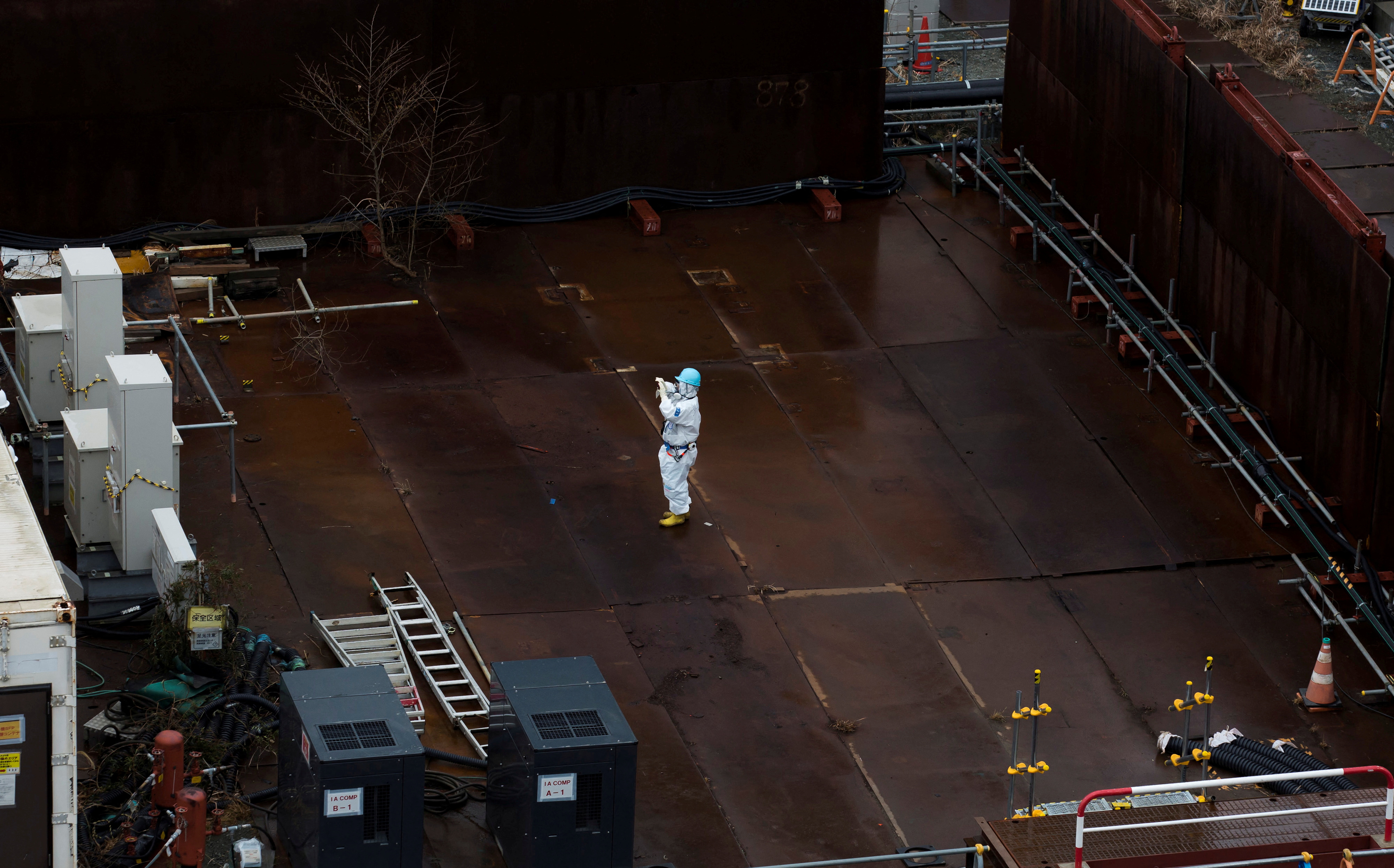
TOKYO, March 4 (Reuters) – Japan’s Supreme Court upheld an order for utility Tokyo Electric Power (Tepco) to pay damages of 1.4 billion yen ($12 million) to about 3,700 people whose lives were devastated by the Fukushima nuclear disaster, the first decision of its kind.
Public broadcaster NHK said the average payout of about 380,000 yen ($3,290) for each plaintiff covered three class-action lawsuits, among more than 30 against the utility, which are the first to be finalised.
A massive tsunami unleashed by an earthquake of magnitude 9.0 off Japan’s northeastern coast, struck Tepco’s Fukushima Daiichi power plant in March 2011, to cause the worst nuclear disaster since Chernobyl.
About 470,000 people were forced to evacuate in the first few days, and tens of thousands have not yet been able to return.
Friday’s decision came as the court rejected an appeal by Tepco and ruled it negligent in taking preventive measures against a tsunami of that size, the broadcaster said.
The court withheld a verdict on the role of the government, which is also a defendant in the lawsuits, and will hold a hearing next month to rule on its culpability, NHK added.
Lower courts have split over the extent of the government’s responsibility in foreseeing the disaster and ordering steps by Tepco to prevent it.
Homesick,
(Sub in Eng, French & Spanish)
Two years after the Fukushima nuclear disaster, Murai braves danger and wanders through the no-go zone in order to spend time with Jun, his eight-year-old son.
Behind the scene : vimeo.com/670872326
Written and directed by Koya KAMURA (insta : @koyakamura)
Production : OFFSHORE
Produced by Rafael ANDREA SOATTO
Co-production : TOBOGGAN
Co-produced by Hiroto OGI, Kaz SHINAGAWA
* César 2021 – Official selection *
58 official selections / 40 Awards
Fukushima evacuee shares her feelings via illustrated books

December 3, 2021
SAKAI–Nobuko Shiga is still working through the trauma from the Fukushima nuclear crisis that ruined her hometown and upended her life.
But she has decided to channel her pent-up rage into creating something positive that may help the healing process.
She has created two illustrated books with the hopes of sharing her feelings and experiences, and hopes to pass on stories from early in her life as well as what happened after that fateful day.
When the magnitude 9.0-earthquake struck on March 11, 2011, Shiga, now 81, was living with her retired husband in Namie in eastern Fukushima Prefecture.
The accident at Tokyo Electric Power Co.’s Fukushima No. 1 nuclear power plant, situated only 9 kilometers southeast of their residence, drastically changed the course of her life.
She left her house with her pet Shiba Inu dog, named Ran, a day after the disaster. She traveled by car and spent nights at a gymnasium in a mountainous area and at Fukushima Airport before she arrived in Sakai, Osaka Prefecture, where her daughter lived.
Shiga was left reeling over the way she was treated while trying to open a bank account there for her new life. Clerks at two banks told Shiga that she could not have one, after learning that she was fleeing from Fukushima Prefecture.
The bank operators later apologized, but she was still left with no clear explanation why. Looking back on the incident, Shiga thinks the nuclear crisis was likely why the banks had refused, and she said she still feels her heart ache over it.
Radioactive fallout made it impossible for residents to freely enter Namie. Shiga had planned to enjoy her golden years with her spouse at their home. But the yard has been left to grow wild and her friends are forced to live far apart from each other.
But Shiga soon learned that Bungeisha Co. was searching for manuscripts for picture books. She quickly finished writing her first title, “Nagai Orusuban” (Long housesitting).

The book features paintings by Shiro Ishiguro. It went up for sale on an online book shopping site and elsewhere in 2019 for 1,210 yen ($10.50), including tax. A digitized version is available as well.
In the work, a dog named Ran, just like Shiga’s, suddenly becomes separated from his owner, a young boy. Ran spends days with a pig, chickens and cows, and they all join forces to work together.
While the real-life Ran passed away peacefully at the end of his natural life five years ago, many animals that were left behind in the region affected by the nuclear accident had starved to death.
Shiga said she cannot forget a pig emerging abruptly from a bush and coming close to her, as if it was pleased to have an encounter with a human, when she returned temporarily to Namie.
Her hope to console the souls of abandoned animals motivated her to work on the title.
Shiga finished a course at Fukushima University and once served as a Japanese language teacher in a junior high school in Fukushima Prefecture. But this was her first time creating an illustrated book.
Despite that, the publication received an enthusiastic response from readers. Muneyuki Sato, a renowned singer based in Sendai, said he “read it while shedding tears.”
In September this year, her second work, “Kaminari Ojisan” (Thunderbolt old man), illustrated by Kenji Tezuka, was released by Bungeisha for 1,100 yen, including tax.
It starts with the sound of wooden clappers made by the organizer of the “kamishibai” picture-card theater. Shiga said she ran to that kind of theater with pocket money in her hands during her childhood, every time she heard the unique clapping.
Reflecting the creator’s own days as a child in the eastern part of Fukushima Prefecture, the work portrays exchanges one summer between children and an old man offering kamishibai dramas in a somewhat mysterious ambience.
“Local acquaintances said the picture book rekindled fond memories from bygone days,” Shiga said shyly.
Shiga was born in 1940 and has lived in Saitama, Fukuoka, Fukushima, and Miyagi prefectures due to her father, who worked for the former Japanese National Railways, relocating several times for his job.
She said few children in distant Sakai know much about the nuclear accident.
“The catastrophe should not be forgotten,” said Shiga. “I want readers to understand such a thing can occur so long as nuclear plants exist on Earth.”
Speaking with friends of similar age from Fukushima Prefecture, Shiga cannot help but ask herself, “What have our lives been for?”
They spent their childhood days in the wake of World War II and worked hard, only to find themselves deprived of their normal lives by a nuclear disaster.
Shiga has yet to make up her mind on publishing her next book, but she said she has no plans to wait for her life to end just by doing nothing.
“I do not want to live dazed,” she said. “I will leave something as a legacy.”
Agency to phase out health care aid for evacuees in Fukushima

November 10, 2021
The agency spearheading rebuilding efforts stemming from the Fukushima nuclear disaster is now in talks with local authorities about phasing out assistance programs to help evacuees meet their medical and nursing care costs.
Kosaburo Nishime, the minister in charge of rebuilding, acknowledged Nov. 9 that the Reconstruction Agency is engaged in discussions to assess what local governments want in the planned overhaul of the program.
Under the current program, residents of 13 municipalities in Fukushima Prefecture who were ordered or advised to evacuate in the aftermath of the triple meltdown at the Fukushima No. 1 nuclear plant in 2011 have had full or partial reductions of their health or nursing care costs. The number of evacuees from those municipalities totaled 150,000 as of August 2011.
The agency plans to begin scaling back the size of the aid as early as in fiscal 2023, according to a senior agency official.
The target that will come under the review concerns residents of 11 municipalities where the evacuation orders had been lifted by April 2017.
The agency plans to phase out the assistance over several years after notifying the appropriate authorities a year in advance of the end of the aid program.
But about 22,000 evacuees, including those from Okuma and Futaba, the towns co-hosting the crippled nuclear plant, as well as those who are not allowed to return due to continuing high levels of radiation, will not come under the planned review, according to agency officials.
The agency will consider that situation at a later date.
The move toward a full-scale review was prompted by concerns raised within the agency about the fairness of extending the assistance program when many residents in the same municipality had no access to such benefits.
For instance, Tamura and Minami-Soma have two types of evacuees, depending on where affected communities are located in their cities: residents ordered to evacuate and those who evacuated voluntarily. The latter are not eligible to receive any reduction in their health and nursing care costs.
This has given rise to a growing sense of resentment among those without access to the assistance in light of the fact the aid program has now been in place for many years.
On the other hand, plans to review the program have already met with fierce opposition from local officials.
“It is totally unacceptable,” said Ikuo Yamamoto, the mayor of Tomioka.
Evacuation orders were lifted in April 2017 for most parts of the town. But some areas are still off-limits.
“We are still in the middle of rebuilding,” Yamamoto complained. “I strongly request that the central government keeps the current program going as it is.”
Yuichi Harada, who is 72 years old and lives as an evacuee in Nihonmatsu after he fled Namie, both in the prefecture, said a blanket review of the program was the wrong approach.
“Some evacuees have to pay a lot more in medical fees than before as their health started to deteriorate” due to the evacuation, he said. “The government should fine-tune the program to reach out to people who badly need assistance.”
The central government sets aside about 25 billion yen ($221 million) annually for health and nursing care assistance to evacuees.
1 This Month

of the week – Shut Down Drone Warfare!


Tell the Ukrainian Government to Drop Prosecution of Peace Activist Yurii Sheliazhenko

Petition to revoke the licensing of the Near Surface Nuclear Disposal Facility (NSDF) at Chalk River. https://www.ourcommons.ca/petitions/en/Petition/Details?Petition=e-7247
To see nuclear-related stories in greater depth and intensity – go to https://nuclearinformation.wordpress.com
-
Archives
- March 2026 (244)
- February 2026 (268)
- January 2026 (308)
- December 2025 (358)
- November 2025 (359)
- October 2025 (376)
- September 2025 (257)
- August 2025 (319)
- July 2025 (230)
- June 2025 (348)
- May 2025 (261)
- April 2025 (305)
-
Categories
- 1
- 1 NUCLEAR ISSUES
- business and costs
- climate change
- culture and arts
- ENERGY
- environment
- health
- history
- indigenous issues
- Legal
- marketing of nuclear
- media
- opposition to nuclear
- PERSONAL STORIES
- politics
- politics international
- Religion and ethics
- safety
- secrets,lies and civil liberties
- spinbuster
- technology
- Uranium
- wastes
- weapons and war
- Women
- 2 WORLD
- ACTION
- AFRICA
- Atrocities
- AUSTRALIA
- Christina's notes
- Christina's themes
- culture and arts
- Events
- Fuk 2022
- Fuk 2023
- Fukushima 2017
- Fukushima 2018
- fukushima 2019
- Fukushima 2020
- Fukushima 2021
- general
- global warming
- Humour (God we need it)
- Nuclear
- RARE EARTHS
- Reference
- resources – print
- Resources -audiovicual
- Weekly Newsletter
- World
- World Nuclear
- YouTube
-
RSS
Entries RSS
Comments RSS
 nuclear-news