Fukushima cleanup fails to convince as just 10 to 20% of evacuees seek return

February 25, 2015
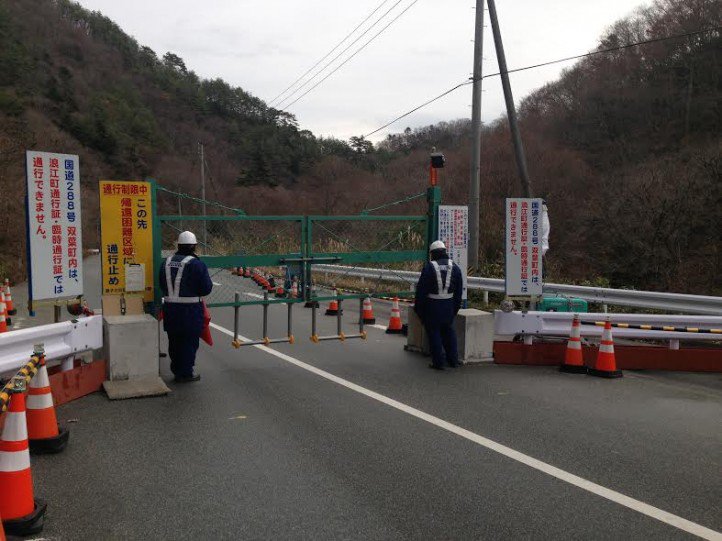
Less than one-fifth of evacuees from the Fukushima nuclear disaster say they want to return to their homes, despite government efforts to speed up reconstruction in areas with lower radiation levels.
The finding came from a survey by the Reconstruction Agency conducted between August and October last year that covered about 7,100 evacuee households in Namie; 2,400 in Futaba; 4,000 in Okuma; and 5,600 in Tomioka.
Between 51 percent and 60 percent of the households responded to the poll, including those living outside Fukushima Prefecture.
The four towns, all situated near the crippled Fukushima No. 1 nuclear power plant, are divided into three zones based on annual radiation dosage levels: “difficult-to-return zones” with 50 millisieverts or more; “no-residence zones” between 20 and 50 millisieverts; and “zones being prepared for lifting of evacuation order,” with 20 millisieverts or less.
The central government has placed priority on decontaminating and reconstructing infrastructure in the latter zones to enable residents to return to their homes.
However, the survey showed that just 19.4 percent of evacuee households from “zones being prepared for lifting of evacuation order” in Namie wanted to return, while 14.7 percent of those in the zones in Tomioka felt the same.
Among evacuees from no-residence zones, 16.6 percent of households from Namie and 11.1 percent from Tomioka said they plan to return home when they are allowed.
Among those evacuated from difficult-to-return zones, 17.5 percent of households from Namie and 11.8 percent from Tomioka said they hope to resettle in their homes some day.
About 80 percent of all households in Namie and 70 percent of those in Tomioka are from no-residence zones and “zones being prepared for lifting of evacuation order.”
Still, even if the government lifts the evacuation order for these areas, only a handful of evacuees are likely to return, which would crimp revitalization plans for the towns.
Meanwhile, 32.4 percent of households evacuated from no-residence zones in Okuma, which cohosts the crippled plant with Futaba, said they want to return home.
The higher figure reflects preferential construction by the central government and town office of key facilities to promote the town’s reconstruction, spurring hope among residents to return. Decontamination work and restoration of a local highway route are also nearing an end in Okuma.
However, just 3 percent of Okuma residents are from no-residence zones, while the rest are from difficult-to-return zones.
Source: Asahi Shimbun
http://ajw.asahi.com/article/0311disaster/fukushima/AJ201502250050
About the Evacuate-Fukushima-Now battle cry, from a chronological perspective.
 February 8, 2015
Someone somewhere commented:
“The Evacuate-Fukushima-Now battle cry hasn’t been thought out too well because it fails to recognize the moral questions that arise when non-victims speak for the victims—thinking that it is their job to rescue people who have decided to stay and haven’t asked for help.”
I wish to answer here to that partial judgment. Erroneous because that judgment was made much afterwards competely out of its historical chronological perspective:
The Evacuate Fukushima Now battle cry at the start of the Fukushima catastrophe was well justified and absolutely right in itself.
It was very soon countered by the Japanese government orchestrating a gigantic campaign about « decontamination » thru all the media, constructed and directed by government contracted big advertising-PR companies, playing very well on all the « furuisato » (hometown attachment) feelings of the Fukushima people ; their attachment to their lands, to their own history, to their own Fukushima dialect and cultural traditions, to their family ties etc., brainwashing the people that after a possible-to-be-made-decontamination program paid by government everyone everything would go back to the life of before, normal as before.
Due to that government huge mediatic campaign to control the situation, to keep the people to stay, promising them full decontamination, lying to them continuously that everything in Daiichi was under control, just a very local technical problem to resolve, they cut in the bud any possible evacuation idea.
The Government well-orchestrated mediatic campaign knew very well how to play on the Furuisato feelings of most the Fukushima people to manipulate them, resulting in the majority of people in Fukushima willingly participating in the brainwashing and PR campaign. The support Fukushima campaign came from the bottom up as much as from the government.
It is the same in every contaminated community: the deniers always outnumber those who understand the danger and want out. They get intimidated, bullied and silenced. All one can do is leave at one’s own expense.
To not forget that the majority of those Fukushima people did not have the financial means on their own to abandon everything behind to attempt to evacuate adventurously with their whole family in another prefecture, and that the government did all it could to deter them from evacuating, the people losing any possible damage claims if evacuating out of the prefecture, their properties devalued, their house credits still to be paid.
Due to all this the Evacuate Fukushima battle cry became very soon an empty battle cry, the Japanese anti-nuclear movement itself abandoned it very early to the benefit of the other battle-cries of « Kodomo wo Mamore » (protect the children), «Genpatsu Iranai » (we don’t need nuclear) and « Saikado hantai » (We are against the restart of nuclear plants).
The « Evacuate Fukushima Now » battle-cry was absolutely right, it was so damn right that the Japanese government spent millions on a mediatic campaign to cut it in the bud, to defeat that idea, to keep the people from evacuating, to make them stay by all means living with radiation, in contaminated environment. To after 4 years push now the evacuees of the 20kms evacuated zone to return to live in high radiation.


In the fourth winter since the nuclear disaster in Fukushima, Japan, many of the displaced residents are still in limbo.
“No, nothing. I have nothing planned for New Year’s. Nothing at all. No one is coming.” A shy, round-faced woman spat these words like darts into the protective mask she wore. Moments earlier she had been laughing happily together with several other former residents of the small town of Tomioka as they reminisced about a friend they all knew. She quickly became raw, however, when asked about the coming holidays.
Tomioka counted 15,839 residents before the March 11, 2011 nightmare of earthquake, tsunami, and nuclear explosion began. All but one person has left — Matsumura Naoto, the now well-known rice farmer who refuses to abandon his family’s fifth-generation farm.
Confusion and despair among the others is common, a state of existence that government officials bewilderingly made even worse on March 25, 2013 when they divided the roughly 25-square-mile seaside spot into three zones: never to return, return for short periods, and in preparation to return. Government-sponsored scientists determined such divisions here and in other areas near the nuclear plant based on so-called acceptable annual dosage rates. Such designations may make surreal sense in scientific terms. In daily life, however, it means streets separated down the middle, one side “safe” while houses around the corner are condemned for tens of thousands of years to come.
All involved understand that the official designations are of critical significance in terms of compensation. If your property was anywhere but “never to return” you won’t be paid for much longer. Less appreciated is how such nuances taken together are playing out among those on the verge of their fourth winter in limbo.
Life in Internal Exile
Many of the former residents of Tomioka are now living 25 miles to the west in the rural town of Miharu, famous for its 1,000-year-old cherry tree. Miharu currently houses about 2,000 people of a total of nearly 140,000 officially classified as “displaced” by the crisis. The term “nuclear refugee” is out. All are lumped together as one. Yet those permanently shut out of their former lives since the Fukushima Daiichi power plant spiraled into meltdown include some who have been in as many as 10 shelters in three-and-a-half years.
On a recent afternoon a small group of Tomioka’s forever “displaced” villagers gathered to talk in a brightly lit common room hidden among twenty or so rows of tightly spaced sand-colored buildings that have been subdivided into small rooms for couples and individuals mainly in their sixties and seventies. A younger man in his fifties stood out. Before the crisis, his business supplied lunches for workers at the nuclear power plant. Vibrant and seemingly able to go anywhere, he is trapped by rules that among other things prevent him from living in Tomioka yet allow him several times a week to visit his beloved dachshund Chocolat, whom he refuses to leave to die.
Many of the displaced still believed in the possibility of return up to a few months ago. The group’s mayor Matsumoto-san no longer sees such a resolution. “If only they had told me then, told me that we wouldn’t be able to go back, I could have taken my family and moved to Aomori (in northern Japan), and we would be together,” he said. He was sharing what many express as the worst of it: families torn apart, children and grandchildren now living scattered throughout Japan and rarely if ever visiting. The shelters offer small, attached units, yet there is little open space, and certainly no land to farm. Freshly painted signs on the streets point to the housing units and appear welcoming, yet those inside say they know they are “in the way” and that “after a while you understand they don’t want you anymore.”
A Lottery Winner
One woman had a surprise for the others. “I’m so sorry I didn’t tell you before,” she began, perhaps taking advantage of the two strangers in the mix to break her news. “I applied to the (housing) lottery, and I’m sorry to tell you that I won. I’m very sorry. In a few weeks I’ll move away to a permanent unit. It isn’t much. I know I had a better chance because I’m on my own. I hope you’ll forgive me.”
Some might reduce these words to cultural essentialisms, yet a powerfully unprocessed atmosphere filled the room. The thin sense of community was yet again torn asunder, and while a few wished her luck — she had been in six different shelters before this — the rest gradually looked as if they would be sick and said nothing. Another woman fought off tears.
The newly published housing policy appears under the awkward slogan in Japanese and English — “Future From Fukushima” — and reveals itself for what it has been from the beginning: make it up as it goes along. Tiny details drive home the point. Even if you’re fortunate enough to win a permanent place and you manage to survive for more than 11 years, you’ll start having to pay rent.
The woman who won did not know this, nor did anyone fill her in if they did. She would escape to a place to call home this winter. Meanwhile, some among the others would become part of a sad statistic, one of the only clear facts to come out since March 2011. More people have died from stress-related causes than from the initial disasters in Fukushima.
Former Fukushima teacher blogs to inspire students while fighting off cancer
 Oct 19, 2014
Eleven years ago, when he was vice principal of Tomioka Dai-ichi Junior High School, he was diagnosed with malignant lymphoma, a form of blood cancer, and decided to quit to concentrate on treatment.
Although he could not return to teaching, he gave lectures at schools and community centers to convey his thoughts on the importance of life.
In March 2011, the nuclear crisis forced Sanbonsugi to flee to several places in the prefecture, including the town of Furudono and the cities of Aizuwakamatsu and Koriyama, and even to Hokkaido.
Despite his hardships, he kept thinking about all the students he had taught. He was worried they might be in the throes of despair with their futures still unclear 3½ years into the nuclear crisis, or on the verge of giving up on returning to their hometowns.
“I want to support former students who are living as evacuees as much as I can,” said Sanbonsugi, who avidly updates his blog.
“Rather than grieving over what you cannot do, just simply do something you can do. Then, quietly wait for spring to come,” he recently wrote.
Hidefumi Sanpei, 35, one of his former students, works for the Tomioka Municipal Government, which ordered a full evacuation in light of the Fukushima No. 1 meltdowns. As an official in charge of residential support, he helps evacuees deal with their worries and sometimes gets a tongue-lashing in the process.
As an evacuee himself supporting a wife and two children in new surroundings, Sanpei often got fed up with the work and his longing for his hometown.
He said Sanbonsugi’s blog gives him the courage to move forward. One phrase he always keeps in mind is: “Under the same sky, each one of us is living life to the fullest.”
Natsumi Yoshida, 33, who was one of Sanbonsugi’s students at Katsurao Junior High School, now teaches at a special needs school attached to Fukushima University. When the village of Katsurao was forced to evacuate, her former classmates were scattered all over the country.
Yoshida said she hopes to convey to her students a message she read in Sanbonsugi’s blog: “Planting seeds of kindness on the hearts of each and every one of us.”
This section, appearing every third Monday, focuses on topics and issues covered by the Fukushima Minpo, the largest newspaper in Fukushima Prefecture. The original article was published on Oct. 4.
Source: Japan Times
1 This Month

of the week – Shut Down Drone Warfare!


Tell the Ukrainian Government to Drop Prosecution of Peace Activist Yurii Sheliazhenko

Petition to revoke the licensing of the Near Surface Nuclear Disposal Facility (NSDF) at Chalk River. https://www.ourcommons.ca/petitions/en/Petition/Details?Petition=e-7247
To see nuclear-related stories in greater depth and intensity – go to https://nuclearinformation.wordpress.com
-
Archives
- April 2026 (7)
- March 2026 (251)
- February 2026 (268)
- January 2026 (308)
- December 2025 (358)
- November 2025 (359)
- October 2025 (376)
- September 2025 (257)
- August 2025 (319)
- July 2025 (230)
- June 2025 (348)
- May 2025 (261)
-
Categories
- 1
- 1 NUCLEAR ISSUES
- business and costs
- climate change
- culture and arts
- ENERGY
- environment
- health
- history
- indigenous issues
- Legal
- marketing of nuclear
- media
- opposition to nuclear
- PERSONAL STORIES
- politics
- politics international
- Religion and ethics
- safety
- secrets,lies and civil liberties
- spinbuster
- technology
- Uranium
- wastes
- weapons and war
- Women
- 2 WORLD
- ACTION
- AFRICA
- Atrocities
- AUSTRALIA
- Christina's notes
- Christina's themes
- culture and arts
- Events
- Fuk 2022
- Fuk 2023
- Fukushima 2017
- Fukushima 2018
- fukushima 2019
- Fukushima 2020
- Fukushima 2021
- general
- global warming
- Humour (God we need it)
- Nuclear
- RARE EARTHS
- Reference
- resources – print
- Resources -audiovicual
- Weekly Newsletter
- World
- World Nuclear
- YouTube
-
RSS
Entries RSS
Comments RSS
 nuclear-news