Fukushima nuclear disaster – new Netflix series
Over the course of eight episodes, this multi-layered drama faithfully captures a disastrous incident from three different perspectives based on careful research. “What happened there on that day?” This story seeks to answer this question based on the true events of seven intense days from the perspectives of government, corporate organizations, and the people on site risking their lives.
This series is developed and produced by Jun Masumoto, who crafted massive hits such as the “Code Blue” series while also delivering powerful social drama series such as “Shiroi Kyoto” series and “Hadashi no Gen.” The two directors of this series are Masaki Nishiura, who has worked alongside Masumoto for many years as the director of the “Code Blue” series, and Hideo Nakata of the “Ring” series.
At 2:46 p.m. on 11 March, 2011, a magnitude 9.0 earthquake with a maximum seismic intensity of 7 (recorded at Kurihara-cho, Miyagi prefecture) struck approximately 130 kilometers off the Sanriku coast. One hour after this earthquake shook the islands of Japan, a 15-meter-tall tsunami swallowed up the Fukushima nuclear power plant in an instant. But that was only the start of the nightmare. With its cooling function lost, the power plant fell into a dangerous and uncontrollable state. The Netflix Series “The Days” starts streaming in 2023, only on Netflix https://www.netflix.com/title/81233755
Australia is being seduced into war again by the US, this time over Taiwan
China is not a military threat to either the US or Australia. The military threat is trumped up by the US and its acolytes with their own agenda.
There is one critical and urgent thing the Australian Government should do, and that is to make it clear to the US that we will not be involved in any way with a war between China and the US over Taiwan and that none of our facilities can be used for that purpose – Pine Gap, Darwin or Tindal.
By John Menadue, 27 Apr 23 https://johnmenadue.com/we-are-being-seduced-and-trapped-into-war-again-by-the-us-this-time-over-taiwan/
The US must be told that we will not be involved in any way in a war with China over Taiwan.
After Vietnam, Iraq and Afghanistan the signs of our entrapment again in US war planning are everywhere.
The 2014 Force Posture Agreement with the US cedes control of certain military operations from our territory to the US eg Marines in Darwin and US B52’s in Tindal.
The 2021 AUSMIN ministerial meeting endorsed :
- Enhanced air cooperation through the rotational deployment of U.S. aircraft of all types in Australia and appropriate aircraft training and exercises.
- Enhanced maritime cooperation by increasing logistics and sustainment capabilities of U.S. surface and subsurface vessels in Australia.
- Enhanced land cooperation by conducting more complex and more integrated exercises and greater combined engagement with Allies and Partners in the region.
- Establishment of a combined logistics, sustainment, and maintenance enterprise to support high end warfighting and combined military operations in the region.
The 2021 AUKUS agreement was a clear sign to our region that instead of building bridges to our region we have decided to be a spear carrier for the US and UK- the Anglosphere. AUKUS is not to defend Australia but to support US operations against China in the South China Sea.
Our Defence Strategic Review (DSR)released this week has been’ authored’ by the United States Studies Centre(USSC), an arm of the US government. It is a tainted review. Have we no national pride in letting this happen!
Our Washington centric media don’t seem to think that it is unusual or even outrageous for a foreign agency to author an Australian defence review!!
Our seduction by the US is assisted by our Department of Defence with its close links to the Pentagon. It secretly employs US Admirals to advise on submarines. And if that is not enough we are now going to have a retired US Admiral heading the coming Naval Review. What is wrong with our Navy that an Australian can’t do the job? Has integration gone so far that we don’t have a Navy of our own that is worth the name.
And don’t think for one moment in this humiliation that Albanese and Marles thought up this US Admiral. They would have been put up to it by our defence establishment in lock step with the Pentagon.
The ADF has become a unit of the US military machine.
There is more.
The Government has rejected the Australian War Powers Reform proposal that Parliament approve any commitment to war. This is essential because we have an awful history of rushing to war. In 1914, we decided to send troops to WWI before Britain declared war. Menzies committed Australia to war in Vietnam before we even received a request. Howard committed us to the illegal war in Iraq based on false intelligence. Now the Labor Party has committed us to AUKUS in less than 24 hours despite the enormous implications. Albanese says he is proud of how quickly he agreed with Morrison!
Changes to our Defence Act are also being considered which would allow the ADF inter alia to conduct operations below the threshold of war, known as ‘grey zone’ operations. These amendments could have far reaching consequences.
At our universities, Peace Studies are run down in favour of ‘Strategic Studies’ with their US loyalists regularly appearing on our media. Think Tanks like the Australian Strategic Policy Institute are fronts for US defence interests.
Entrapment of our minds in the anti China hysteria is the work in progress of our Main Stream Media. Our fourth estate has been captured and imbedded in the US propaganda machine. The US cultural and media domination is everywhere. Alternative views are shunned. The White Man’s Media is on full display.
The disgraceful ‘Red Alert’ is the tip of a giant iceberg. The anti China propaganda is an every day event in our media including the ABC and SBS .
In the past, the ALP said NO on Vietnam and Iraq even though it was difficult at the time. As Paul Keating put it at the National Press Club recently ‘Labor has invariably got the big international (decisions) right’. But today the ALP has gone AWOL. Concerns about entrapment by the US and loss of sovereignty are brushed aside. What many of us thought were Labor policies and values count for little.
Penny Wong suggests that Keating has not kept up to date and has not had the benefit of Intelligence briefings!! But the reverse is true. The Labor Government is reverting to our colonial past, our colonial cringe – Five Eyes, AUKUS and the Anglosphere.
Wong plays with words to avoid asking or knowing whether B52’s in Tindal will be nuclear armed against China. She tells us that US forces are ‘rotated’ though Darwin and Tindal and not ‘based’ there.
The US is persistently goading China into war over Taiwan. This is consistent with US behaviour over centuries. It is driven by its self righteous belief in its ‘exceptionalism’ and the pressure of its military/industrial/security complex for endless wars. It expects other major powers like China to behave as aggressively as it has. China has no Monroe Doctrine which Americans believe gives them the God given right to interfere in other country’s affairs.
Australia has a sorry history of fighting other empires wars, first with the British and now with the US. The great risk and problem for us is that imperial powers are almost always at war.
Since its founding in 1776, the US has been at war 93% of the time. Since the end of WWI, the US has launched 201 armed conflicts around the world. During the Cold War it tried to change governments 72 times. It assassinated foreign leaders and still assassinates with drones guided from Pine Gap. It has 800 bases around the world, many of them in Japan and ROK directed at China. With our cooperation, US fleets cruise and sight see up and down the Chinese coast. At the same time as criticising China, the US refuses to ratify the UN Convention on the Law of the Sea. The US would have national convulsions if Chinese vessels patrolled off the Californian coast or China established military bases in Mexico!
The US is the most aggressive and violent country in the world . It lurches from one war to another. That violence abroad is mirrored in its violent gun culture at home. There is a pervasive sickness and it is not just Trump!
When we tagged behind imperial powers in the past there was little military risk to Australia. But that is not so today, with the reckless US goading of China over Taiwan. If we were involved in support of the US against China over Taiwan the results could be catastrophic for us.
China is certainly growing in influence and confidence. That is not surprising after over a century of western and Japanese invasion and humiliation. But China is not a military threat to either the US or Australia. The military threat is trumped up by the US and its acolytes with their own agenda.
In brazen mendacity Marles highlights the rapid increase in China’s military spending. But he failed to tell us that the US spends more on defence than the next nine countries combined. The US spends 3.5% of its GDP on defence. China spends 1.6%.
The Stockholm International Peace Institute only a few days ago put military spending in perspective – The United States remains by far the world’s biggest military spender. US military spending reached $877 billion in 2022, which was 39 per cent of total global military spending and three times more than the amount spent by China, the world’s second largest spender.
Surrounded by numerous US bases and the US Fleet -an itinerant naval power in the SCS as described by Paul Keating-it is not surprising that China is increasing its defence spending.
But China is a challenge to US hegemony and the US empire around the globe. The US is unwilling to come to terms with China’s success and share power and responsibility. The US insists on its own rules and domination across the globe. Empires are like that.
How do we break out of the US entrapment, the FPA, AUKUS, AUSMIN and a lot more? How can we cut through this maze of entrapment.
Peter Dutton has warned us that is ‘inconceivable that Australia would not join the US to defend Taiwan’.
There is one critical and urgent thing the Australian Government should do, and that is to make it clear to the US that we will not be involved in any way with a war between China and the US over Taiwan and that none of our facilities can be used for that purpose – Pine Gap, Darwin or Tindal.
For decades we have maintained that Taiwan is part of China.
Paul Keating has said many times that ‘Taiwan is not a vital Australian interest’. Even Defence Minister Marles, ever so close to the US, told ABC Insiders last month that ‘Australia has absolutely not given the US any commitment as part of the AUKUS negotiations that it would join (the US) in a potential war over the status of Taiwan’.
But we need to tell the US explicitly and well in advance of any possible conflict over Taiwan that we will not support the US. In a crisis it will be too late to assert our sovereignty.
Ukraine’s nuclear power plants are still a source of nightmares years after the Chornobyl disaster
CNBC, APR 26 2023
- It’s been 37 years since the disastrous and deadly explosion at the Chornobyl nuclear power plant in Ukraine, then a part of the Soviet Union.
- The disaster in 1986 is still considered the world’s worst ever nuclear disaster.
- Ukraine’s nuclear power plants are still a source of concern as the war continues.
…………………………………………………………………………..The disaster is still seen as the most serious accident in the history of nuclear power operation although Ukraine has remained heavily dependent on nuclear energy.
Today, its nuclear power plants have once again become a source of nightmares as fears abound for their safety and security amid the relentless fighting between Ukrainian and Russian forces.
Ukraine has 15 operable nuclear reactors at four plants that generate about half of its electricity, according to the World Nuclear Association, although since the war started last February, the number of units in operation has changed over time, “with reactors put online and taken offline depending on the situation around the plants and the stability of external power supplies,” the association notes.
Most concerns around the safe functioning of the country’s power plants amid war have centered on the the nuclear power plant located in Zaporizhzhia in southern Ukraine, which also happens to be Europe’s largest nuclear power plant.
The Zaporizhzhia plant was occupied early on in the war by Russian forces (when it was attacked in the early hours of March 2 last year, it became the first operating civil nuclear power plant to come under armed attack) and it has repeatedly found itself at the epicenter of fighting since then, with both sides accusing each other of shelling near the facility and risking another potentially catastrophic nuclear accident.
There have been a number of occasions now when shelling near the plant has damaged external power lines to the facility, meaning that Ukrainian workers still running the plant have had to rely on emergency generators for the power needed for reactor cooling and other essential nuclear safety and security functions.
The IAEA’s Director-General Rafael Grossi described the unstable conditions that the plant is forced to operate in as “extremely concerning,” noting that “this is clearly not a sustainable way to operate a major nuclear facility.”
He has often repeated calls for the establishment of a demilitarized zone around the plant but, for now, that remains a distant prospect, although the IAEA was able to convince Russia to allow its inspectors to remain permanently on site to monitor safety at the plant. The IAEA has also sent inspectors to other nuclear facilities in Ukraine………………………………………….. https://www.cnbc.com/2023/04/26/37-years-after-chornobyl-ukraines-nuclear-plants-are-again-in-danger.html?fbclid=IwAR1LBPuusObwSd5ZQibJVClqi5jlDayFFhvoJjFjyWny6WWP6VXCG-Nlh2k—
US nuclear weapons modernization plan spurs cost questions

Susan Montoya Bryan, Independent. 27 April 23
The U.S. agency that oversees development and maintenance of the nation’s nuclear arsenal is moving ahead with plans to modernize production of key components for the weapons, but some watchdog groups and members of Congress are concerned about persistent delays and cost overruns.
The National Nuclear Security Administration released its annual plan on Monday, outlining the multibillion-dollar effort to manufacture plutonium pits, the spherical cores that trigger the explosion in thermonuclear weapons, at national laboratories in New Mexico and South Carolina.
The Savannah River Site in South Carolina faces a 2030 deadline to make 50 pits per year. Officials already have acknowledged they won’t meet that timeline, and this year’s report no longer includes a target date for Los Alamos National Laboratory, in New Mexico, to meet its goal of 30 pits per year.
Last year’s report had pegged 2026 as the year when manufacturing would be up and running at Los Alamos, which played a key role in the Manhattan Project during World War II and was the birthplace of the atomic bomb……………..
The Biden administration is requesting $18.8 billion for weapons activities, a 10% increase over spending for the last fiscal year. Modernization of production accounts for $5.6 billion of the request.
Members of congressional subcommittees blasted Hruby and top defense officials during hearings in recent weeks about the delays and the increasing price tag. Hruby acknowledged that it would be another year before her agency would have a full cost estimate.
The NNSA fell short when it came to having a comprehensive schedule for the project and ran the risk of delays and increasing budgets because its plans for reestablishing plutonium pit production didn’t follow best practices, according to a January Government Accountability Office report.
Democratic U.S. Sen. Elizabeth Warren of Massachusetts suggested during a hearing this month that the NNSA was making up its plan as it goes along and that the timeline would be extended even further.
“It is not unreasonable for Congress to ask you to tell us how long a project is going to take and how much it’s going to cost in exchange for our forking over billions of dollars. And I suggest that’s what NNSA be required to do before we give them another penny,” Warren told Hruby……… https://www.independent.co.uk/news/world/americas/national-nuclear-security-administration-ap-congress-albuquerque-south-carolina-b2327627.html
Marine deaths prompt calls for investigation and halt into any new nuclear dump tests.

Marine Deaths of harbour porpoise, dolphin, pilot whale, seals
and other protected species following last August’s seismic blasting
looking at the geology of the Irish Sea for a deep sub-sea nuclear dump
have prompted calls for a halt and an investigation.
A legal challenge has been threatened by campaigners against further seismic blasting in the search areas which include the Irish Sea and Allerdale’s Solway Firth area.
The Copeland seismic blasting went ahead for 20 days from the 1st August
2022 despite a petiton of over 50,000 signatures. The testing of the
Copeland Irish Sea area centred off Sellafield was contracted by Nuclear
Waste Services in their quest to find a place to dispose of high level
nuclear wastes in a Geological Disposal Facility.
Environmental Lawyers
Leigh Day acting for Lakes Against Nuclear Dump, a Radiation Free Lakeland
campaign have now written to the Environment Secretary Thérèse Coffey and
to the Marine Management Organisation. The letter includes an Appendix of
“Events” beginning with strandings of protected species including dead
seals and harbour porpoise at Drigg on the 8th August and includes deaths
of dolphin, pilot whale and jellyfish (food for protected turtle species).
Radiation Free Lakeland 25th April 2023
Anti nuclear campaign groups in Wales(Dwyfor and Meirionnydd) urge government to invest in energy conservation, NOT dirty nuclear power.
Here is the response on behalf of PAWB, Pobl Atal Wylfa B/People AgainstWylfa B (Ynys Môn and Arfon) and CADNO, Cymdeithas Atal Dinistr NiwclearOesol (Dwyfor and Meirionnydd) to the Welsh Government’s review of renewable energy targets..
Generally, there is much to welcome in the government’s discussion paper.
However, in response to Proposal 1, we would like to see the government
putting more emphasis on reducing the demand for electricity by investing
in a comprehensive insulation and energy conservation programme.
That is vitally important all over Cymru alongside the renewable energy programme.
However, we believe that Welsh Government’s investment in Cwmni Egino to
attempt to get a nuclear energy development at the Nuclear Decommissioning
Authority’a site at Trawsfynydd undermines this aim. Nuclear power is a
dirty, dangerous and extremely expensive technology that is in no way
renewable. Any nuclear development at Trawsfynydd would depend heavily on
carbon fuels in the building process thereby further undermining the aim of
proposal.
PAWB 24th April 2023
Canada’s push for small nuclear reactors will be costly, ineffective, some MPs warn
By David Fraser, The Canadian Press, Tue., April 25, 2023
Prime Minister Justin Trudeau has asserted that Canada is “very
serious” about developing nuclear technology across the country to meet
growing power needs, but some members of Parliament are warning the
technology could be costly and ineffective.
A Liberal MP is among the critics who say Ottawa is looking at an expensive investment into an unproven and potentially dangerous technology. The federal government
started actively exploring small modular reactor technology in 2018, and
released an action plan in 2020 that dubbed them a strategic Canadian asset
that could leverage significant economic, geopolitical, social and
environmental benefits.
But Green Party Leader Elizabeth May says other
renewable energy sources are getting cheaper, so there’s not much of a case
for Canada to expand its capacity on that technology, which she said is
being pushed by powerful lobbyists.
Liberal MP Jenica Atwin, who was first
elected under the Green banner, said she is used to being an outlier in her
caucus, but the party has allowed her to express her concerns about the
unknowns of emerging nuclear technologies. Four nuclear energy stations are
generating about 15 per cent of Canada’s electrical grid today, mostly in
Ontario and New Brunswick, and as the facilities age more attention is
being paid to the potential of smaller, more-portable reactors.
Toronto Star 25th April 2023
Amid maintenance delays and strikes in nuclear industry, France restarts one reactor
France’s EDF has restarted the 1.5-GW Civaux-2 reactor while delaying both
planned maintenance and returns elsewhere amid ongoing worker strikes,
transparency data showed April 24.
EDF further delayed planned return dates
for Gravelines 1 and Blayais 1, where strikes have been ongoing for over
five weeks. The start of maintenance at Cruas 4 was also delayed further,
with annual refueling pushed back another fortnight to May 6. Initial
planning set an April 20 return date for the reactor, now scheduled to
remain offline until June 16.
Civaux-2 has been awaiting a restart, having
been delayed by strikes after a failed attempt in early March. The reactor
has been offline since late 2021 for stress corrosion repairs that were
completed in February.
SP Global 24th April 2023
Once Shocking, U.S. Spying on Its Allies Draws a Global Shrug
April 13, 2023, New York Times https://www.nytimes.com/2023/04/13/us/politics/us-spying-allies.html
The last time a trove of leaked documents exposed U.S. spying operations around the world, the reaction from allied governments was swift and severe.
In Berlin, thousands of people protested in the streets, the C.I.A. station chief was expelled, and the German chancellor told the American president that “spying on friends is not acceptable.” In Paris, the American ambassador was summoned for a dressing-down.
That was a decade ago, after an enormous leak of classified documents detailing American surveillance programs by … Edward Snowden. The latest leak of classified documents that appeared online this year, the motive behind which remains unknown, has again illustrated the broad reach of U.S. spy agencies, including into the capitals of friendly countries such as Egypt, South Korea, Ukraine and the United Arab Emirates.
Though the documents mainly focus on the war in Ukraine, they include C.I.A. intelligence briefs describing conversations and plans at senior levels of government in those countries, in several cases attributed to “signals intelligence,” or electronic eavesdropping.
Unlike in 2013, however, U.S. allies appear to be mostly shrugging off the latest examples of apparent spying. So far, the only evident political fallout from the latest leaks has occurred in South Korea, where one classified U.S. document described a debate among senior national security officials about whether to send artillery shells abroad that might wind up in Ukraine, potentially angering Russia.
Despite the dangers of climate change, UK nuclear power stations still sited on the coastline!
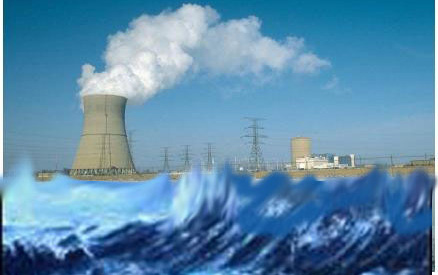
**Nuclear Siting**
Frozen in aspic — planning and pragmatism in the siting of nuclear power
stations in Britain. Despite efforts at strategic siting and the problems
posed by changing circumstances — especially the challenges arising out
of climate change — the geography of nuclear power infrastructure is
stubbornly inflexible, and has barely changed since it was first
established over half a century ago, as Andrew Blowers explains.
The geography of nuclear power in Britain was more or less settled by the 1970s
and has endured remarkably since then. Speed was of the essence in the
early years, a so-called age of ‘innocent expectation’ or, perhaps more
realistically, one of ‘trust in technology’. This was ‘nuclear’s
moment’, lasting less than three decades, during which time the
infrastructure of nuclear development was established around Britain,
predominantly at coastal sites.
But there is now a serious disjunction between a geography of nuclear power established more than half a century ago and the realities of site suitability in an age of climate change.
During the present century, a strategic siting process was adopted, with
individual sites identified through a National Policy Statement for Nuclear
Power Generation. In practice, siting remains a specific process, a matter
primarily of economic and historical determinism, with a few projects
seeking to attract investment to a handful of existing sites.
The last of the AGRs, at Torness on the east coast of Scotland, became the focus of the
first full-blown anti-nuclear protest in 1978 and 1979, attracting 5,000
people to the familiar features of fairs, symbols, stalls, camps, speeches,
leaflets, workshops, non-violent action, political and media attention,
stand-off s with police, and site occupations. The protest halted progress
but was eventually cleared. Its target was not just Torness power station
but the nuclear industry itself, and the connections between civil and
military nuclear power were clearly in evidence. With Torness, the
geography of nuclear power in Britain was complete.
Town & Country Planning Association Journal March April, 25th April 2023. ..https://www.tcpa.org.uk/journals/
US Senators and Congress Members introduce Bill to stop A1 from power to launch a nuclear weapon.

MARKEY, LIEU, BEYER, AND BUCK INTRODUCE BIPARTISAN LEGISLATION TO PREVENT AI FROM LAUNCHING A NUCLEAR WEAPON
Washington (April 26, 2023) – Senator Edward J. Markey (D-Mass.) and Representatives Ted W. Lieu (CA-36), Don Beyer (VA-08) and Ken Buck (CO-04) today introduced the bipartisan and bicameral Block Nuclear Launch by Autonomous Artificial Intelligence Act, legislation to safeguard the nuclear command and control process from any future change in policy that allows artificial intelligence (AI) to make nuclear launch decisions.
The Department of Defense’s 2022 Nuclear Posture Review states that current policy is to “maintain a human ‘in the loop’ for all actions critical to informing and executing decisions by the President to initiate and terminate nuclear weapon employment” in all cases. The Block Nuclear Launch by Autonomous AI Act would codify the Department’s existing policy by ensuring that no federal funds can be used for any launch of any nuclear weapon by an automated system without meaningful human control. Furthermore, the National Security Commission on Artificial Intelligence, established by Congress through the FY19 National Defense Authorization Act, recommended in their final report that the U.S. clearly and publicly affirm its policy that only human beings can authorize employment of nuclear weapons. This bill follows through on their recommendation.
“As we live in an increasingly digital age, we need to ensure that humans hold the power alone to command, control, and launch nuclear weapons – not robots,” said Senator Markey. “That is why I am proud to introduce the Block Nuclear Launch by Autonomous Artificial Intelligence Act. We need to keep humans in the loop on making life or death decisions to use deadly force, especially for our most dangerous weapons.”……………………………………………………………………………………………….
In April, Senator Markey and Representative Lieu reintroduced the Restricting First Use of Nuclear Weapons Act to prohibit any U.S. President from launching a nuclear strike without prior authorization from Congress. Last October, Senator Markey, then-member of Senate Foreign Relations Committee, filed eight amendments to the National Defense Authorization Act (NDAA) to reduce the risk of ‘nuclear Armageddon’ and stop the proliferation of nuclear weapons. Last January, co-chairs of the Nuclear Weapons and Arms Control Working Group, Senators Markey and Jeff Merkley (D-Ore.) and Representatives John Garamendi (CA-03) and Beyer led 51 of their colleagues in a letter to President Joe Biden urging the United States to take bold steps to reduce the nation’s reliance on nuclear weapons and to elevate arms control. https://www.markey.senate.gov/news/press-releases/markey-lieu-beyer-and-buck-introduce-bipartisan-legislation-to-prevent-ai-from-launching-a-nuclear-weapon
The most at-risk regions in the world for high-impact heatwaves

Heatwaves are becoming more frequent under climate change and can lead to
thousands of excess deaths. Adaptation to extreme weather events often
occurs in response to an event, with communities learning fast following
unexpectedly impactful events.
Using extreme value statistics, here we show
where regional temperature records are statistically likely to be exceeded,
and therefore communities might be more at-risk. In 31% of regions
examined, the observed daily maximum temperature record is exceptional.
Climate models suggest that similar behaviour can occur in any region.
In some regions, such as Afghanistan and parts of Central America, this is a
particular problem – not only have they the potential for far more extreme
heatwaves than experienced, but their population is growing and
increasingly exposed because of limited healthcare and energy resources. We
urge policy makers in vulnerable regions to consider if heat action plans
are sufficient for what might come.
Nature Communications 25th April 2023
No change to nuclear transport rules following accident down under, says regulator
in Western Australia.
The Office of Nuclear Regulation is responsible for oversight of operators transporting nuclear materials in the UK, and the Chief Nuclear Inspector’s report from October 2022 recorded 69 incidents related to nuclear transport in the reporting period. Two of these involved lost radioactive packages.
In response to the Western Australian accident, Richard Bramhall, of the Low-Level Radiation Campaign, told the NFLA: ‘The company is to be criticised for appalling practice since the gauge itself came apart and the packaging came apart and the vehicle was inadequate to contain the outcome of those failures.’
The NFLA and Dr Jill Sutcliffe, joint Chair of the NGA Forum of the Office of Nuclear Regulation, sent an FOI request to the ONR with their concerns. The ONR’s response is shown below as, whilst it contains no commitment to procedural changes, it has useful detailed guidance on the regulatory regime that applies to the transport of nuclear materials and links to reports.
The NFLA also wrote to senior executives at Rio Tinto PLC, the mining conglomerate that lost the caesium capsule, asking the company to issue a statement outlining how procedures would be tightened up to avoid another accident and whether Rio Tinto would fully reimburse the local authorities for the cost of recovering the capsule. Despite a reminder being sent urging the executives to respond, no reply has so far been received. 25 Apr 23
Return to Russia: Crimeans Tell the Real Story of the 2014 Referendum and Their Lives Since — RADIATION FREE LAKELAND

Originally posted on In Gaza: Crimeans gather with Russian national and Crimea flags in Sevastopol, Crimea, March 14, 2018. Alexander Zemlianichenko | AP Eva Bartlett traveled to Crimea to see firsthand out how Crimeans have fared since 2014 when their country reunited with Russia, and what the referendum was really like. October 9, 2019, Mint…
Return to Russia: Crimeans Tell the Real Story of the 2014 Referendum and Their Lives Since — RADIATION FREE LAKELAND
SIMFEROPOL, CRIMEA — In early August I traveled to Russia for the first time, partly out of interest in seeing some of the vast country with a tourist’s eyes, partly to do some journalism in the region. It also transpired that while in Moscow I was able to interview Maria Zakharova, spokeswoman of the Foreign Ministry.
High on my travel list, however, was to visit Crimea and Donetsk People’s Republic (DPR) — the former a part of Russia, the latter an autonomous republic in the east of Ukraine, neither accurately depicted in Western reporting. Or at least that was my sense looking at independent journalists’ reports and those in Russian media.
Both regions are native Russian-speaking areas; both opted out of Ukraine in 2014. In the case of Crimea, joining Russia (or actually rejoining, as most I spoke to in Crimea phrased it) was something people overwhelmingly supported. In the case of the Donbass region, the turmoil of Ukraine’s Maidan coup in 2014 set things in motion for the people in the region to declare independence and form the Donetsk and Lugansk People’s Republics.
In March 2014, Crimeans held a referendum during which 96 percent of voters chose to join Russia. This has been heavily disputed in Western media, with claims that Crimeans were forced to hold the referendum and claims of Russian troops on the streets “occupying” the peninsula.
Because Western media insisted the referendum was a sham held under duress, and because they bandy about the term “pro-Russian separatists” for the people of the DPR, I decided to go and speak to people in these areas to hear what they actually want and feel.
From the Russian mainland to the Crimean Peninsula………………………………………………………………
In the evening, we stay in the home of Vlad’s friend Tata, a Russian woman who moved to Crimea in 2012.
Since there was so much hype in Western media about a Russian takeover of the peninsula, I ask the burning questions: Were Crimeans forced to take part in the referendum? What was the mood like around that time? Tata replies:
“I never saw so many people in my life go out to vote, of their own free will. There was a period before the referendum, maybe about two months, during which there were two holidays: International Women’s Day, March 8, and Defender of the Fatherland Day, February 23.
……………………………………………………………I never saw tanks, I never saw Russian soldiers. I never saw any of that in the city.”
I ask Tata about how life had changed after the referendum:………………………………….
After the Soviet Union collapsed, it wasn’t the will of the Crimean people to join Ukraine. People were always Russian here; they always identified as Russian. Ukraine understood this well, and put nothing into Crimea, as punishment. Ukraine didn’t build any hospitals, kindergartens or roads.
In the past four years, the Crimean government has built 200 new kindergartens. This is the most obvious example of how things have improved. They also built the new Simferopol airport.
I worked in aviation. It took three years to build an airport of this standard in Yekaterinburg, Russia. It took half a year in Simferopol.”
International Jazz Festival……………………………………………………….
Construction everywhere……………………………………….
I remark on how kind and gentle people are here, as in Russia. Vlad replies:
“It shouldn’t be surprising — people are people anywhere. But Western media conditions us with stereotypes of Russians as cold and hard, vilifying an entire nation.”
The coastal city of Yalta lies further west along the peninsula. The drive there the following day is more beautiful still, the road flanked by mountains to one side, hills cascading down to the Black Sea on the other, endless wineries and, before Yalta itself, the stunning cliff-top castle known as “Swallow’s Nest.”
In the evening, we stay in the home of Vlad’s friend Tata, a Russian woman who moved to Crimea in 2012.
Since there was so much hype in Western media about a Russian takeover of the peninsula, I ask the burning questions: Were Crimeans forced to take part in the referendum? What was the mood like around that time? Tata replies:
“I never saw so many people in my life go out to vote, of their own free will. There was a period before the referendum, maybe about two months, during which there were two holidays: International Women’s Day, March 8, and Defender of the Fatherland Day, February 23.
Normally, people would go away on vacation during these holidays. But that year, Crimeans didn’t go anywhere; they wanted to be sure they were here during the referendum. We felt the sense of a miracle about to happen. People were anxiously awaiting the referendum.
There were military tents in the city, but they were not erected by the military, but by local men. They would stand there every day, and people could come and sign a document calling for a referendum.
I went one day and asked if I could add my name but I couldn’t, because I have a Russian passport. Only Crimean citizens could sign it. This was the fair way to do it.
At that time, my husband was in America. One day, he was watching CNN and got scared and called me because he saw reports of soldiers in the streets, an ‘invasion’ by Russia.
The local navy came from Sevastopol to Yalta and anchored their ships off the coast, made a blockade to ensure no larger Ukrainian or other ships could come and attack.
But I never saw tanks, I never saw Russian soldiers. I never saw any of that in the city.”
I ask Tata about how life had changed after the referendum:
When I came here in December 2012, everything was dilapidated and run down. The nice roads you were driving on, they didn’t exist when we were a part of Ukraine. I didn’t understand why Crimea was still a part of Ukraine. It was Russian land ever since the Tsars, the imperial time of Russia. This is where the Russian soul is, and the soul of the Russian navy.
After the Soviet Union collapsed, it wasn’t the will of the Crimean people to join Ukraine. People were always Russian here; they always identified as Russian. Ukraine understood this well, and put nothing into Crimea, as punishment. Ukraine didn’t build any hospitals, kindergartens or roads.
In the past four years, the Crimean government has built 200 new kindergartens. This is the most obvious example of how things have improved. They also built the new Simferopol airport.
I worked in aviation. It took three years to build an airport of this standard in Yekaterinburg, Russia. It took half a year in Simferopol.”
Finally, after night falls, we drive into the city of Koktebel, where an annual Jazz Festival is starting.
During all these hours of driving, the roads are smooth and well-trafficked, and I don’t see a single Russian military vehicle.
The next day, I walk through Koktebel, taking in the local markets brimming with produce, cheeses, and other goods, and every so often come across a streetside stand laden with fresh fruits. In the late afternoon, I walk along the sea, past packed beaches, and meet with a Crimean woman, Yaroslava, who lives in Austria but every summer returns to her beloved Crimea. She is ardently supportive of the decision to have joined Russia and spends much of her time back in Austria trying to educate people on why Crimeans wanted to be a part of Russia.
These are reasons I hear throughout my travels in Crimea: We wanted to be able to speak our native language [Russian] and be educated in that language; we wanted to be able to practice our cultural traditions; we have always been a part of Russia and we wanted to return.
Yaroslava is busy helping out with the Jazz Festival and wants to use the rest of our short time talking to help me arrange future meetings with people in Crimea. We decided to do a proper interview via Skype in the future when time allows.
I drift on to the Jazz Festival, where a talented pianist and band play beach-side to an enthusiastic crowd. Some songs later, I drift back along the beach, passing numerous musicians busking, and a pulsing nightlife that isn’t going to bed any time soon.
…………………………………As I stand to orient the map route and zoom in to look for any signs of cafes, a woman walks by me and says with a smile something with the word “shto,” which I think means “what.” When I reply in English, she laughs and flags down another woman, Yana, who speaks English well and insists she and her husband drive me.
As we drive, we chat. I ask her about the referendum, mentioning that many in the West have the notion that it was done under duress, with a heavy military presence to influence the vote. She laughs, saying: “There were no troops, no military, around us during the referendum.” She speaks of the joy of Crimeans to vote, says that maybe 98 percent of Sevastopol voters had voted in favor [it was apparently 96 percent, but close enough], and adds, “We are now under the wing of Russia.”
I ask about developments since then. She mentions the improvements in roads, also the modern trolley-buses and regular buses, the opening of kindergartens and schools, and free courses (like music) for children……………………………………..
Ukrainians in Crimea
In Simferopol anew, I meet Anastasiya Gridchina, the Chair of the Ukrainian Community of Crimea, an organization formed in 2015 whose main goals, she tells me, “are to have friendly relations between two great peoples: Ukrainians and Russians — not the politicians but the people. The second goal is to preserve inter-ethnic peace in the Republic between different nationalities.”
Gridchina explains that in Crimea there are more than 175 nationalities, just 20 less than in all of Russia, but in a very small territory. Hence the importance of preserving inter-ethnic peace. After Russians, Ukrainians comprise the second largest population in Crimea.
I ask Anastasiya whether she supported, much less participated in the referendum.
“I worked very hard in order that we could have a referendum. I live in Perevalne, the last settlement in the mountains above Alushta. There was a Ukrainian military detachment which did surrender. In February 2014, I was among a line of people standing between the Ukrainian and Russian military detachments, to prevent any bloodshed. The fear that prevailed at that time was that nationalists from Ukraine would come here and we would have massacres.
In February, there was a confrontation outside the Parliament here in Simferopol. It was organized by leaders of the Mejlis — the Crimeans Tatars. On the other side, there were some pro-Russia organizations who were protecting the Parliament. They were far less [numerous] than the Mejlis. The Mejlis were armed with sticks and knives. There were clashes and two people were killed, but thankfully it didn’t escalate beyond that.
When the news came that there would be a referendum, people relaxed. They had a chance to express their point of view and 96 percent of the population of Crimea voted for Crimea to return to Russia.”
Since she is Ukrainian, I ask Anastasiya why she wanted Crimea to join Russia:
“I’ve lived in Crimea all my life, and my language is Russian. And I know the history of Crimea, which has always been Russian territory, which has a history beginning with the Russian Empire and then the Soviet Union. So, it is Russian-speaking territory, first of all. That’s why I believe it should be in the Russian Federation, not in Ukraine.”
I ask about the claims that Russian soldiers invaded Crimea:
“Whatever they might have said about Russian soldiers forcing people to participate in the referendum, it was all lies, pure lies. We did not see any soldiers on the streets, especially on the day of the referendum.
I gave an interview to foreign journalists before the referendum. But when they published it, they changed my words. I said we were very thankful to the Russian troops that were here, that protected us from the attacks of Ukrainian nationalists prior to the referendum. But they translated it that I said ‘Please, we want Ukrainian soldiers to defend us from those Russian soldiers.’
The Russian troops that were here were not on the streets on the day of the referendum but, at the time in general, they were there to protect civilians from an attack by Ukrainians.
On the day of the referendum, there were no soldiers, no military. The only security were there to prevent any illegal actions. No military people were there, no arms, no armored personnel carriers, no military equipment, nothing. Only members of the election commission and the people voting.”
I ask whether many Ukrainian Crimeans left following the referendum:
“There were those who immediately after the referendum left Crimea for Ukraine because it was their personal wish. Nobody prevented them from going. Even the soldiers had an option: to stay and continue military service here, or to leave……………
Finally, Anastasiya gives me a message for the people outside of Crimea:
“I’d like to tell people around the world, welcome to Crimea, come here yourselves and see and hear with your own eyes and ears, to understand that all the lies you hear about Crimea, that we are oppressed or under pressure from the military…this is all lies, this is all not true.
Also, that we are not allowed to speak Ukrainian is a lie. One of the state languages is Ukrainian. Russian and Tatar are also state languages.”……………………
Next, I speak to Yuri Gempel, a member of Parliament, and the chairman of the Standard Commission on Inter-Ethnic Relations of the Parliament of Crimea.
“Crimea, under Ukraine, was robbed,” Gempel says. He continues:
“Everything was taken by the government and representatives of the ruling elite of Ukraine. For the 23 years Crimea was a part of Ukraine, they robbed Crimea. Not a single kindergarten was built in Crimea during those years. Kindergartens built during Soviet times stopped functioning.
But the main issue is that during that time, the people still felt themselves to be in Russian territory, not Ukrainian, in language, culture and in spirit. Under Ukrainian rule, Crimeans were made to speak Ukrainian, although Crimeans’ native language is Russian. People were deprived of the right to be in state service if they did not speak Ukrainian.”…………………………………………………………………………………………………………………………………
As for the claims that Russia invaded Crimea and of Russian forces intimidating voters, I believe the many people I met who denounced those claims and articulated very clearly why they wanted to join Russia, or as they say, “return to Russia.” https://ingaza.wordpress.com/2019/10/10/return-to-russia-crimeans-tell-the-real-story-of-the-2014-referendum-and-their-lives-since/
Questions about S.Korea-USA ‘ironclad’ commitment lead to impossible nuke solution
Korea Joong Ang Daily, BY MICHAEL LEE [lee.junhyuk@joongang.co.kr] 23Apr 23
“………… The Korea-U.S. alliance now stands at a crossroads as it marks its 70th anniversary………
South Korean politicians have made headlines in recent months by calling for an independent nuclear deterrent in a shift that experts say is driven by questions about the reliability of Washington’s “ironclad” commitment to defend Seoul.
These politicians include President Yoon Suk Yeol and Seoul Mayor Oh Se-hoon, who have publicly mused in recent months about the need for South Korea to bolster its security by means of developing an independent nuclear deterrent or persuading the United States to re-deploy tactical nuclear weapons on the peninsula that were withdrawn in 1991…………………….
To signal its commitment to defending Seoul, Washington has upped the frequency of U.S. strategic assets on rotation around the peninsula, especially as the North conducted a record 95 missile launches last year and announced the frontline deployment of tactical nuclear weapons and a new preemptive nuclear strike doctrine in April and September.
Seoul’s lack of say in how nuclear weapons would be used
But the United States has thus far ruled out re-deploying tactical nuclear weapons to the peninsula or setting up a nuclear sharing framework with South Korea similar to the one in place in some NATO states, such as Germany and Turkey, which participate in storing and planning the use of U.S. nuclear weapons in the absence of their own deterrent.
U.S. President Joe Biden in January shot down suggestions by Yoon that the two countries are planning joint nuclear weapons exercises, leaving South Korea without a codified say in the key question of how U.S. nuclear weapons could be employed in its defense.
It remains to be seen if decision-making on the use of nuclear weapons in a potential inter-Korean conflict will stay entirely in the hands of Washington.
According to a South Korean government official who spoke on condition of anonymity to the JoongAng Ilbo on March 27, “joint planning on how the U.S. extended deterrence and the nuclear umbrella will be maintained in potential scenarios involving an armed conflict” is on the agenda of Yoon’s summit with Biden later this month.
South Koreans worry about future U.S. administrations……………………………….
Failure of diplomacy with Pyongyang…………………………………………
International deadlock…………………………………….
Differing views of the role of the alliance regarding China
But all the experts agreed that the real test of Seoul’s alliance with Washington would come in the event of an armed conflict between the United States and China.
…………..Kim agreed that the prospect of a U.S.-China conflict over Taiwan was looming, if less publicly discussed, source of insecurity in Seoul’s alliance with Washington……… more https://koreajoongangdaily.joins.com/2023/04/24/national/defense/Korea-KoreaUS-alliance-nuclear-deterrence/20230424173040597.html
1 This Month

Read the Public Inquiry Report, the Commissioners’ report, Surrendering Australia: The AUKUS Deception is available to download for free at aukuspublicinquiry.com. Or just watch the replay of the National Press Club Luncheon.



19 November – Webinar – The Reality of Reprocessing
Time: 11:00 AM Pacific Time (US & Canada) / 2:00 PM Eastern / 7:00 PM UK / 8:00 PM CET
Register for the Zoom Event Here



Shut down the radiation-damaged Heysham nuclear reactors now
To see nuclear-related stories in greater depth and intensity – go to https://nuclearinformation.wordpress.com

Say No to NASA’s Reckless Nuclear Reactor on the Moon
Say No to NASA’s Reckless Nuclear Reactor on the Moon
-
Archives
- November 2026 (109)
- October 2026 (302)
- September 2026 (339)
- August 2026 (330)
- July 2026 (355)
- June 2026 (287)
- May 2026 (306)
- April 2026 (356)
- March 2026 (251)
- February 2026 (267)
- January 2026 (308)
- December 2025 (358)
-
Categories
- 1
- 1 NUCLEAR ISSUES
- business and costs
- climate change
- culture and arts
- ENERGY
- environment
- health
- history
- indigenous issues
- Legal
- marketing of nuclear
- media
- opposition to nuclear
- PERSONAL STORIES
- politics
- politics international
- Religion and ethics
- safety
- secrets,lies and civil liberties
- spinbuster
- technology
- Uranium
- wastes
- weapons and war
- Women
- 2 WORLD
- ACTION
- AFRICA
- Atrocities
- AUSTRALIA
- Christina's notes
- Christina's themes
- culture and arts
- Events
- Fuk 2022
- Fuk 2023
- Fukushima 2017
- Fukushima 2018
- fukushima 2019
- Fukushima 2020
- Fukushima 2021
- general
- global warming
- Humour (God we need it)
- Nuclear
- RARE EARTHS
- Reference
- resources – print
- Resources -audiovicual
- Weekly Newsletter
- World
- World Nuclear
- YouTube
-
RSS
Entries RSS
Comments RSS

