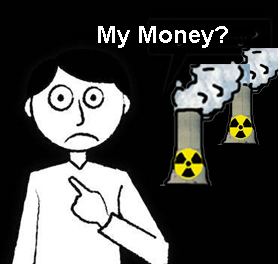
USA’s Inflation reduction act expands tax-payer funding for nuclear power plants
Bryan Cave Leighton Paisner
The Inflation Reduction Act (“IRA”) created new incentives for the generation of electricity from nuclear power plants, supplementing incentive provisions that are currently in place. The primary changes are (i) the adoption of a new 8-year production tax credit (“PTC”) for certain existing nuclear power plants, and (ii) enabling nuclear facilities to qualify under the new technology-neutral zero-emission PTC and investment tax credit (“ITC”) regime that will apply beginning in 2025. Some of the other incentives adopted by the IRA may also support the nuclear industry.
Existing Incentives Prior to IRA
The advanced nuclear production tax credit (“Advanced Nuclear PTC”) under Code Section 45J of the Internal Revenue Code (the “Code”)………………………………..
Inflation Reduction Act Incentives……………. enabling new nuclear power plants placed in service after December 31, 2024 to participate in the PTC and ITC incentives available for the production of electricity from renewable and other low-carbon sources.
Zero-Emission Nuclear Power Production Tax Credit
The IRA creates a new zero-emission nuclear power production tax credit (“Zero Emission PTC”) for certain existing nuclear power plants under Section 45U of the Code. ………………………
Clean Electricity Production Tax Credit
For facilities placed in service after December 31, 2024, the IRA replaces the existing PTC under Section 45 of the Code with a technology-neutral “zero emissions” clean electricity production tax credit (“Clean Electricity PTC”) under Section 45Y of the Code……………………………
Clean Electricity Investment Tax Credit
For facilities placed in service after December 31, 2024, the IRA also replaces the existing ITC under Section 48 of the Code with a technology-neutral “zero emissions” clean electricity investment tax credit (“Clean Electricity ITC”) under Section 48E of the Code. The credit is available for any “qualified facility” and certain energy storage technology…………………………….
Other Tax Credit Incentives
The IRA provides some additional tax credit incentives that could benefit the development of future nuclear power plants…………………………………
High-Assay Low-Enriched Uranium Funding
The IRA also earmarks $700 million for the development of a domestic market and production of high-assay low-enriched uranium (“HALEU”)…………………………. https://www.jdsupra.com/legalnews/inflation-reduction-act-expands-support-4367428/—
Connecticut Governor Lamont should veto SB 7 that would advance dangerous nuclear power
Gov. Lamont, veto bill to ‘advance’ dangerous nuclear power. CT Mirror, by Stanley Heller, June 12, 2023
What folly! Just as a dam necessary for cooling nuclear waste at Europe’s biggest nuclear power complex is blown up, members of the Connecticut legislature pass a bill that includes promotion of dangerous outmoded nuclear power.
Senate Bill 7 creates a “Council for Advancing Nuclear Energy Development” specifically packed with six positions for people who work in the nuclear energy industry. Their mission will be to discuss “advancements that are occurring in nuclear energy development.” They’ll study “small modular reactors, advanced nuclear reactors, [and] fusion energy facilities.”
Rather than seek “advancement,” we should be figuring out how to phase out this technology. We see by the Ukraine example that parties at war do not respect what one would think would be totally obvious, the need to do nothing to harm the safety of nuclear power plants. Not that we expect warfare to break out in the U.S., but this country should lead in best practices so that countries where war is a lot more likely won’t go down the nuclear path and risk huge releases of nuclear contamination that spread world-wide.
Realize that the Chernobyl disaster of 1986 led to thousands of fatalities. In Ukraine alone 35,000 women have received compensation for spouses who died because of the disaster. And that’s only the numbers from Ukraine. High levels of radiation covered southern Belarus too, but the government there has never released its statistics.
Another section of the Connecticut bill would classify nuclear power as a “Class 1 renewable energy source.” That would allow the owner of a new nuclear facility to sell renewable “energy credits,” another dubious idea. Rather than limit the use of polluting fuels, the idea is for “the market” to take care of things. Grand, let’s rely on the same market whose mindless profit seeking got us hooked on fossil fuels in the first place.
The new council will study ways to “promote nuclear energy development, expansion and research” in Connecticut. What won’t be studied is the problem of importation of Russian uranium that is used to generate nuclear power. Every year hundreds of millions of dollars are spent by U.S. companies to buy raw and enriched uranium from Russia. Presumably Connecticut nuclear power companies are no different. Reuters reports that the U.S. power industry relies on Russia and its allies Kazakhstan and Uzbekistan for roughly half of the uranium powering its nuclear power plants. Why not respond to a petition about this and study how to stop relying on a fuel that enriches the Russian dictator?
……………………………………….. Governor Lamont should veto SB 7. Then call a special session to pass a revised SB 7 clean of plans for more nuclear power. After doing that stay in session and spend time passing blockbuster legislation that will provide leadership for a country teetering on a climate precipice.
EU to vote on renewables bill again after being stalled on nuclear row
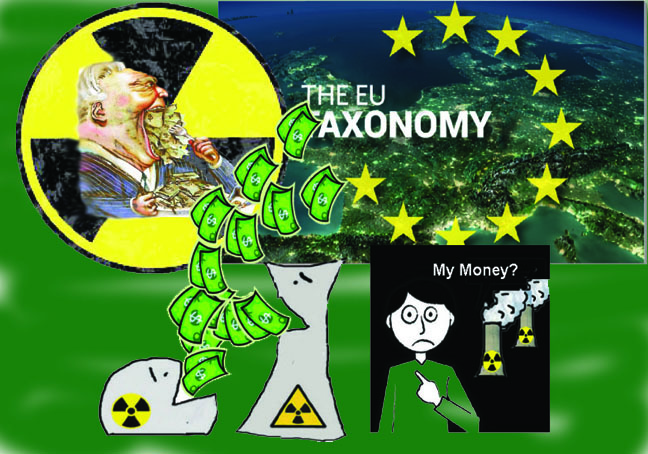
France wants the law to recognise low-carbon nuclear energy as a component of renewable targets, while Bulgaria, Romania and Poland call the targets overambitious.
By Ashima Sharma, https://www.power-technology.com/news/eu-to-vote-on-renewables-bill-after-nuclear-row/ 12 June 23
U diplomats will vote on the bloc’s new renewable energy bill on Wednesday after a group of countries, including France, registered last-minute opposition in May.
The bill proposes a binding goal for all EU countries to generate 42.5% of their energy from renewable sources by 2030. While France wanted the law to recognise low-carbon nuclear energy as a component of renewable targets, Bulgaria, Romania, and Poland say the targets are overambitious.
The EU’s current share of renewables in the energy mix is 22%. However, the share of the energy mix is unevenly distributed among the countries. Sweden’s share of renewable energy is 63%, while Ireland, Luxembourg, Malta and the Netherlands comprise less than 13% of the total energy share.
The revised directive on renewables doubles the current targets with an ambition to accelerate the bloc’s plan to fight climate change and end dependence on Russian fuel. Meeting the new goals requires scaling up wind and solar farms, increasing the production of renewable gases and integrating Europe’s power grids to accommodate cleaner energy.
While nuclear energy is low-carbon, it is not renewable. France is, however, pushing for more favourable treatment of nuclear energy. The country maintains that the new bill puts countries like France, with a huge nuclear share, at a disadvantage. In May this year, the French Parliament passed a law to accelerate the construction of new nuclear reactors.
Nuclear weapons spending increases while global security decreases
https://www.icanw.org/2022_global_nuclear_spending_article 12 June 23
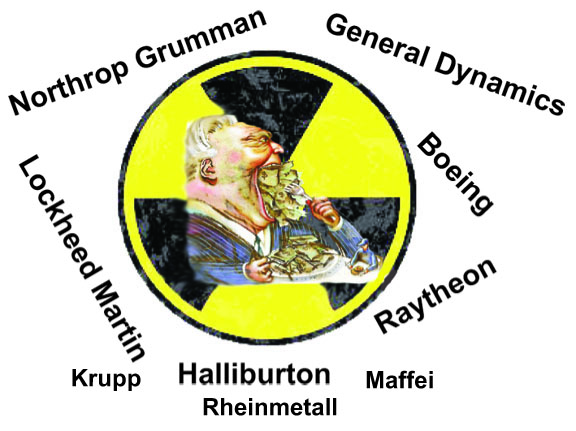
ICAN’s new report “Wasted: 2022 Global Nuclear Weapons Spending” shows nine countries spent $82.9 billion on nuclear weapons, of which the private sector earned at least $29 billion in 2022. The United States spent more than all of the other nuclear armed states combined, $43.7 billion. Russia spent 22% of what the U.S. did, at $9.6 billion, and China spent just over a quarter of the U.S. total, at $11.7 billion.
This is the fourth annual report on global nuclear weapons spending published by ICAN. The report shows that global spending on nuclear weapons has increased for the third year in a row as the nine nuclear-armed states continued to modernise and expand their arsenals.
The report illustrates how private contractors continue to benefit from nuclear weapons spending and lobby to maintain nuclear weapons. It details the $278.6 billion in ongoing nuclear weapons contracts, some of which don’t expire for decades. In 2022, at least $15.9 billion in new nuclear weapon contracts were awarded. The companies that received these contracts invested in lobbying governments, spending $113 million on those efforts in the US and France alone.
Think tanks also benefited from these corporate interests. Together, nuclear weapon producing companies, nuclear-armed governments and those in nuclear alliances spent $21-36 million funding the ten most prominent think tanks researching and writing about nuclear weapons in nuclear-armed states.

Russia’s invasion of Ukraine publicly demonstrated how unacceptably dangerous nine countries’ reliance on nuclear weapons is. Those whose incomes depend on the existence of nuclear weapons fiercely defended the right of these countries to indiscriminately murder civilians with weapons of mass destruction through falsehoods of deterrence.
The Treaty on the Prohibition of Nuclear Weapons is the multilateral response to the irresponsible behaviour of all nuclear-armed states to pour money down their nuclear weapons drains. It is the normative barricade against threats to use nuclear weapons. All countries should join this landmark international instrument to prohibit the development and maintenance of nuclear weapons and prevent their eventual use by ensuring their elimination.
European Union to try again for renewable energy deal after nuclear row
By Kate AbnettJune 10, 2023
BRUSSELS, June 10 (Reuters) – European Union countries will try again next week to pass a deal on new renewable energy targets, which have been stalled by concerns from France and other states that the law sidelines nuclear energy.
A group of countries including France lodged last-minute opposition to the EU’s law on more ambitious renewable energy goals last month, putting on hold a main pillar of the bloc’s plans to tackle climate change.
EU country diplomats will attempt to approve the law on Wednesday, according to an agenda for the meeting published late on Friday.
Paris has sought changes to the law to offer more favourable treatment of nuclear energy, and said the final deal puts at a disadvantage countries like France with large shares of nuclear power. Nuclear energy is low-carbon, but not renewable.
The EU law is designed to drive a rapid expansion of renewable energy sources like wind and solar. The deal negotiated this year offered some compromises, including lower renewable fuel targets for industry, in countries that have already used nuclear power to slash their use of fossil fuels…………………
France’s energy ministry did not immediately respond to a request for comment.
French Finance Minister Bruno Le Maire said on Thursday France will not give up the competitive advantages linked to nuclear power, noting that EU countries have the right to choose their own energy mix.
Other pro-nuclear EU members including Bulgaria, Poland, Hungary and the Czech Republic had also signalled they would not support the renewable law – citing concerns including, for some, that the targets are simply too high.
Together, they have enough votes to block the law.
It is unusual for countries to reject pre-agreed deals on EU laws, which follow months of negotiations.
Meanwhile, states including Germany and Luxembourg – both anti-nuclear countries – plus Denmark and Ireland have urged the EU to resolve the spat quickly, warning the delay endangers investments in renewable energy.
Reporting by Kate Abnett Additional reporting by Dominique Vidalon Editing by Frances Kerry https://www.reuters.com/world/europe/eu-try-again-renewable-energy-deal-after-nuclear-row-2023-06-10/
France’s EDF and the global nuclear lobby sulking because Europe won’t accept their lie that nuclear power is “renewable”.

‘Not there yet’: France’s EDF frustrated with nuclear power’s status in EU’s Net-Zero Industry Act, By Frédéric Simon | EURACTIV.com 11 June 23,
Supporters of nuclear power in France have welcomed plans to scrap the two-tier approach to low-carbon technologies in the EU’s draft Net-Zero Industry Act (NZIA) but they also condemn the lower status granted to atomic energy as “incoherent” with the bloc’s wider decarbonisation goals.
Tabled by the European Commission in March, the NZIA aims to ensure Europe is capable of producing domestically at least 40% of the technologies it deems “strategic” to achieve its goal of reducing emissions to net zero by 2050.
But while nuclear energy was catalogued among the EU’s net-zero industries, it did not make it into the list of “strategic” technologies – such as wind, solar, batteries and electrolysers – that are eligible for the 40% domestic manufacturing benchmark, as well as quicker permitting procedures and looser EU state aid oversight.
Under the Commission’s proposal, only Small Modular Reactors (SMRs) and “advanced technologies” producing energy from nuclear processes “with minimal waste from the fuel cycle” would be eligible for the ‘strategic’ label.
“The cutting-edge nuclear is in for specific fields, but not for all,” European Commission President Ursula von der Leyen explained after an EU summit in March, causing uproar among nuclear energy fans on social media.
Technological neutrality
Legislators are now examining the proposed NZIA regulation, with the European Parliament and EU member states aiming to reach an agreement on a joint text before the end of the year.
And for nuclear power advocates, the Parliament’s draft position on the regulation means more frustration, even though some see encouraging signs as well…………………………………..
EDF, the French state-owned electric utility, appears even more bitter, denouncing the “incoherence” of ignoring a mature technology like nuclear power, which emits almost no carbon dioxide, in a legislative text meant to promote zero-emission technologies.
“The only nuclear power included in the NZIA is the one which does not yet exist – Small Modular Reactors (SMRs),” said Erkki Maillard, senior vice president for EU affairs at EDF, which returned under full state ownership this week……………………………………..
Nuclear alliance
France is not alone in its quest to win recognition for nuclear power as a strategic net-zero technology.
Last month, a group of 16 European countries taking part in the French-led “nuclear alliance” signed a joint declaration in which they encouraged the European Commission “to recognise nuclear energy in the EU’s energy strategy” and promote “better conditions for the development and deployment of new nuclear energy capacity in the EU”.
………………………………………. Parliament lawmakers have until 19 June to table amendments to the NZIA regulation.
The Parliament’s industry committee, which has the lead on the matter, is scheduled to vote on the proposal on 12 October, before a plenary vote expected the following month. This will open the way for decisive talks with EU member states and the European Commission to finalise the law’s adoption.
Ukraine’s propaganda machine is vital for Zelensky: Here is how it works
Rt.com 12 June 23
Kiev is waging an extensive information war against Russia and it began long before the military conflict
The Russia-Ukraine conflict isn’t just about the clash of armed forces on the battlefield. It has also been marked by unprecedented levels of confrontation in the fields of information and psychology, cognition and semantics.
Kiev has arguably achieved more success on the information front, than on the ground. There the “fighters” aren’t just journalists and information and psychological warfare specialists, but content makers and PR experts. Influencing the psyche, mindset, and emotions of ordinary people has become a big deal, as shaping Western public opinion is vital for President Vladimir Zelensky’s regime.
The symbols of war
Anyone familiar with advertising and PR knows that tying a product to a colorful, memorable symbol, or slogan, will boost its popularity, especially in this era of short attention spans. During wartime, the same strategy works just as well with the news as with advertising and election campaigns.
In the current conflict, Ukraine has become very good at creating symbols. Media outlets instantly take up any popular symbol and make use of it in order to influence the mindset of ordinary Ukrainians.
Here’s a recent example. In May, despite the very difficult situation for the Armed Forces of Ukraine (AFU) in Artemovsk (Bakhmut) and statements from several commentators – particularly the former Zelensky adviser Alexey Arestovich – that the army could soon retreat (as it eventually did), Ukrainian society wasn’t at all worried and had complete faith in the AFU’s ability to retain control over the city.
In fact, public attitudes towards the battle were largely shaped by the media. For example, at the beginning of the year the rock band “Antytila” (“Antibodies”) released a video for the song ‘Bakhmut Fortress.’ A few months later, it became viral. Ukrainians have since posted countless self-made versions of the video on social networks, affirming the myth of the impenetrable fortress of Bakhmut.
Such symbols are created not only during ongoing battles, but also in the aftermath of the AFU’s obvious failures. For example, at the end of February, the Artemsol salt production enterprise announced that before the start of active battles for Soledar (which ended in January with the victory of the Russian Army), it collected 20 tons of salt from the mines. The salt was packed into 100,000 packages bearing the symbolic inscription “Ukrainian Rock-Solid Strength.” Each package was sold for 500 hryvnia (about $13.50). According to the organizers of the fundraiser, most proceeds were spent on kamikaze drones for the AFU.
Symbolic campaigns like these occur regularly in Ukraine and are designed to encourage the population. In November of last year, when Russian troops withdrew from the west bank of the Kherson region and the AFU entered the eponymous regional capital, a national social media campaign urged users to place images of watermelons (the area grows them) on their profile pictures. ………………………………………………………………
The triumph of these symbols, which have endured long after being confirmed as fake, is a result of the information bubble in which Ukrainian society and much of the West has found itself. In the past year and a half since opposition media was blocked, government-controlled outlets are often the only source of information for Ukrainians.
The invisible front
“Today, information warfare is the core structure of any war. It is very important to have influence over a society that is involved in combat. Moreover, it is essential to convince the world community of the rightness of our actions in order to receive further support. Not only authorized persons can take part in this information war, but also regular citizens who ‘fight’ at their own discretion,” Ukraine’s Deputy Defense Minister Anna Maliar said in February.
Information and Psychological Operations (IPsO) are intended to brainwash people and shape public opinion, and they are among Kiev’s most important strategies in the conflict with Russia. In combat conditions, these operations are primarily aimed at demoralizing and disorganizing the enemy’s front and rear and inspiring a hopeless, doomed atmosphere. Usually, their main task is to discredit the military and political command and highlight defeat and failure…………………………………………………………………………………….
As part of Ukraine’s integration into NATO structures, special unit instructors from the United States and other Western countries are involved in the training of IPsO center personnel. In particular, these are specialists from the US Army’s 4th Psychological Operations Group (formerly called the 4th Military Information Support Group) and the UK’s 77th Brigade – a special unit of information, psychological, and cyber operations of the Armed Forces of Great Britain. IPsO specialists also undergo regular training at US military bases.
Disinformation and propaganda
In addition to official media outlets, Ukraine’s Information and Psychological Operations Centers rely on several thousand internet resources including information and news sites, social networks, and coordinated social media groups.
Even before the start of Russia’s military campaign, certain Ukrainian volunteer internet information resources were controlled by IPsO centers. This included the volunteer communities InformNapalm, (informnapalm.org ), Peacemaker (psb4ukr.org ), Information Resistance (sprotyv.info ), as well as commercial sites (seebreeze.org.ua, petrimazepa.com, podvodka.info, metelyk.org, mfaua.org, burkonews.info, euromaidanpress.com , peopleproject.com and others) used for information campaigns and testing “social engineering” technologies. In particular, it was noted that IPsO officers often operated under the guise of “volunteers” and pseudo-bloggers……………………………………
Ukraine uses various tools – including websites, social networks, and bots – to spread disinformation. In April, hackers from RaHDit and other groups revealed Ukrainian Telegram channels presumably supervised by the SBU, which posed as pro-Russian. An entire network of such channels, with an audience of 5-6 million people, was discovered during the investigation. The list includes channels Operation Z, Novorossiya 2.0, and many others……………… more https://www.rt.com/russia/577774-kievs-propaganda-machine-how-it-works/—
The Fukushima Wastewater ‘Discharge’: What’s in a Name? – technostrategic language.
Japan is very carefully shaping the narrative around its release of radioactive water into the Pacific Ocean.
The Diplomat By Maxime Polleri, June 12, 2023
Japan is planning to soon release a million tons of radioactive water from the Fukushima power plant. Since the 2011 Fukushima nuclear disaster, water used to cool the crippled power plant has become contaminated, while being kept in huge storage tanks. Advanced techniques of water treatment have removed many of the radioactive substances from this stored water, but one pollutant, radioactive tritium, remains especially tricky to get rid of. Since tritium is a radioactive isotope of hydrogen – a key component of water – it cannot be removed by purification and remains in the treated water.
Currently, tritium-contaminated water is filling Japan’s tanks to the brink and the government has no choice but to release this water in the sea. This decision is fueling numerous controversies surrounding the potential danger of releasing nuclear wastewater in the ocean. It is notably facing stark opposition from Japan’s fishing industry, which has been scrambling to recover ever since the 2011 nuclear meltdowns.
As a social anthropologist working on this disaster, I am less concerned about the scientific debates over the safety vs. danger, and more interested in another type of battle that surrounds this decision: a linguistic one. For instance, when fishermen discuss their concerns, they at times use a specific narrative that accuses the authorities of treating the sea as a garbage dump. On the other hand, state authorities and nuclear organizations like The International Atomic Energy Agency (IAEA), rarely talk about “dumping” wastewater in the sea. Instead, they use words like “release,” “disposal,” or even “dilution.” Words like “garbage,” “pollutants,” “contaminants,” or “waste” are also utterly absent from these expert organizations’ vocabulary. In talking about tritium-contaminated water, for example, IAEA prefers resorting to highly technical terms like Advanced Liquid Processing System-treated water.
These words are not random choices. They reflect highly peculiar ways of governing environmental risks in the aftermath of nuclear disasters. In particular, they echo what scholar Carol Cohn famously called “technostrategic language,” that is, terminologies that disregard particular realities in the face of risks, while preventing the expression of specific values. Cohn first talked about technostrategic languages in the context of nuclear defense intellectuals, arguing that their specific language allowed a rejection of the idea that they too could become victims of the wrath of nuclear weapons.
Similarly, words like “discharge,” “dilution,” or “treated water” are part of governance techniques that have powerful symbolic functions. This language imbues post-disaster narratives with specific values, while shutting out alternatives. Let us examine some of the consequences of this technostrategic language.
First, technical words provide an aura of expertise, legitimacy, and control toward the things that cannot be governed, such as the slow accumulation of tons of contaminated water………………………..
Second, much like the phenomenon of radioactive decay – a process where unstable atomic elements gradually transform themselves into wholly different elements – bringing discussions of contamination into the technical sphere literally transmutes the narrative of “waste dumping” into what appears to be a sound policy of “treated-water management.”………………….
Third, the use of scientific jargon also creates powerful hierarchical divisions between people and experts. For instance, Japanese fishermen are worried that the release of radioactive water will affect their livelihood. Yet they can rarely compete against the technical lingo of reified expertise. https://thediplomat.com/2023/06/the-fukushima-wastewater-discharge-whats-in-a-name/
Nuclear arsenals growing as chances for diplomacy shrink: report

China, Russia, India, Pakistan, and North Korea each deployed more nuclear weapons last year, according to SIPRI.
Connor Echols https://responsiblestatecraft.org/2023/06/12/nuclear-arsenals-growing-as-chances-for-diplomacy-shrink-report/ JUNE 12, 2023
Nuclear-armed states are expanding and modernizing their arsenals as tensions continue to rise between great powers, according to a new report from the Stockholm International Peace Research Institute. SIPRI estimates that militaries have deployed an additional 86 warheads over the past year, bringing the total number of active nuclear weapons to 9576.
China added 60 warheads since the start of 2022, giving it a total arsenal of 410 nuclear weapons, according to SIPRI. Russia deployed an additional 12 nukes, with India, Pakistan, and North Korea making up the rest of the increase.
“It is increasingly difficult to square this trend with China’s declared aim of having only the minimum nuclear forces needed to maintain its national security,” argued SIPRI senior fellow Hans M. Kristensen in a press release.
The new data comes from SIPRI’s Yearbook, the organization’s annual report on global trends in weapons stockpiles and disarmament.
Despite China’s notable increase, the United States and Russia continue to dominate all other states when it comes to nuclear stockpiles. Together, the two hold 85 percent of the world’s deployed nuclear weapons, and both plan to invest heavily in efforts to modernize their arsenals.
Chances for renewed disarmament talks have flagged following Russia’s invasion of Ukraine early last year. Washington and Moscow both took steps recently to reduce their compliance with the New START Treaty — the only agreement capping the number of warheads that each country deploys, which expires in 2026.
Notably, the United States announced earlier this month that it is ready to engage in new nuclear talks “without preconditions” with both Russia and China. But it remains unclear whether either state is interested in negotiating with Washington as geopolitical tensions continue to grow.
“This elevated nuclear competition has dramatically increased the risk that nuclear weapons might be used in anger for the first time since World War II,” SIPRI researcher Matt Korda said in a press release.
Meanwhile, some states have taken steps to reduce transparency around their nuclear stockpiles. The United States and United Kingdom “both declined to release information to the public concerning their nuclear forces in 2022, which they had done in previous years,” the report notes. The UK decision is particularly notable given its 2021 announcement that it will increase the limit on its arsenal from 225 to 260 warheads.
Data about the arsenals of other nuclear-armed states is also limited given the secrecy surrounding many countries’ nuclear programs. Israel has never admitted to possessing nuclear weapons, but SIPRI estimates that it currently has 90 warheads. North Korea, another secretive nuclear-armed state, has as many as 30 nuclear bombs, according to the report.
Iranian Supreme Leader Says ‘Nothing Wrong’ With A Nuclear Deal With West
https://www.rferl.org/a/iran-khamenei-nuclear-deal-approval/32454257.html 12 June 23
Iran’s supreme leader said on June 11 that a deal with the West over Tehran’s nuclear work was possible if the country’s atomic infrastructure remained intact, amid a stalemate between Tehran and Washington to revive a 2015 nuclear pact.
Months of indirect talks between Tehran and Washington to salvage the nuclear accord with six major powers have stalled since September, with each side accusing the other of making unreasonable demands. Ayatollah Ali Khamenei’s guarded approval comes days after both Tehran and Washington denied a report that they were nearing an interim deal. To read the original story by Reuters, click here.
Time to remove nuclear weapons from NATO countries, in return for Putin not putting them in Belarus?
Now is the time to call for all US nuclear weapons to be removed from five NATO countries, Italy, Turkey, Germany, Netherlands, Belgium, restore the ABM Treaty which Bush walked out of and close new missile bases in Romania and Poland in return for Putin not putting nuclear weapons in Belarus. https://apnews.com/article/putin-russia-belarus-nuclear-weapons-war-ukraine-a8b462cd8f30b85ec8f3be93e554e94b
Oil-rich nations dominate COP28 – now offering rich sponsorships, in the effort to silence critics

Emanuele Del Rosso Emanuele is an award-winning Italian political cartoonist. His work is published and distributed internationally.
16 January 2023
UN climate summit organisers wage public relations battle. Marketing drive
for multimillion-dollar sponsorships for UAE-hosted event as critics become
more vocal.
The UAE COP28 has offered sponsorship packages ranging up to
$8.2mn (Dh30mn) for a principal partner to enjoy privileged access in the
controlled “blue zone” where world leaders gather, according to
documents sent to prospective sponsors.
Space in the “green zone”, open
to civil society and small business, is less than $7,000 (Dh25,000).
Expressions of interest for pavilions close this week for the event
starting on November 30.
FT 11th June 2023
https://www.ft.com/content/7b17bc43-f303-4039-a8d5-7e9825604a46
45 nations pledge to double their rate of energy efficiency improvements

45 nations pledge to double rate of energy efficiency improvements. The
UK, the US and Ukraine are among the 45 nations endorsing a new global
commitment to accelerate the rate of energy efficiency improvements. The
declaration takes the form of a new ministerial statement, released to mark
the conclusion of the International Energy Agency’s (IEA) global
conference on energy efficiency in France. As the conference began earlier
this week, the IEA confirmed that global energy intensity decreased 2.2%
last year, twice the average of the previous five years, largely due to
policy responses to the energy price crisis. Yet annual decreases of 4% are
needed to give the world the best chance of achieving net-zero by
mid-century and averting the worst physical impacts of the climate crisis.
To that end, the 45 nations have pledged to develop and implement better
policies to improve energy efficiency domestically. These include both
government-led schemes and policies that help to unlock private investment.
Edie 9th June 2023 https://www.edie.net/45-nations-pledge-to-double-rate-of-energy-efficiency-improvements/
A.I. or Nuclear Weapons: Can You Tell These Quotes Apart?
Many experts on artificial intelligence are warning of its potential dangers and calling for regulation, just as others once did with the atomic bomb.
NYT.By Ian Prasad Philbrick and Tom Wright-Piersanti. June 10, 2023
The comparison seems to be everywhere these days. “It’s like nuclear weapons,” a pioneering artificial intelligence researcher has said. Top A.I. executives have likened their product to nuclear energy. And a group of industry leaders warned last week that A.I. technology could pose an existential threat to humanity, on par with nuclear war.
People have been analogizing A.I. advances to splitting the atom for years. But the comparison has become more stark amid the release of A.I. chatbots and A.I. creators’ calls for national and international regulation — much as scientists called for guardrails governing nuclear arms in the 1950s. Some experts worry that A.I. will eliminate jobs or spread disinformation in the short term; others fear hyper-intelligent systems could eventually learn to write their own computer code, slip the bonds of human control and, perhaps, decide to wipe us out. “The creators of this technology are telling us they are worried,” said Rachel Bronson, the president of the Bulletin of the Atomic Scientists, which tracks man-made threats to civilization. “The creators of this technology are asking for governance and regulation. The creators of this technology are telling us we need to pay attention.”…………………………………more https://www.nytimes.com/2023/06/10/upshot/artificial-intelligence-nuclear-weapons-quiz.html
The War in Ukraine Was Provoked—and Why That Matters to Achieve Peace

By recognizing that the question of NATO enlargement is at the center of this war, we understand why U.S. weaponry will not end this war. Only diplomatic efforts can do that.
Common Dreams, JEFFREY D. SACHS, May 23, 2023
George Orwell wrote in 1984 that “Who controls the past controls the future: who controls the present controls the past.” Governments work relentlessly to distort public perceptions of the past. Regarding the Ukraine War, the Biden administration has repeatedly and falsely claimed that the Ukraine War started with an unprovoked attack by Russia on Ukraine on February 24, 2022. In fact, the war was provoked by the U.S. in ways that leading U.S. diplomats anticipated for decades in the lead-up to the war, meaning that the war could have been avoided and should now be stopped through negotiations.
Recognizing that the war was provoked helps us to understand how to stop it. It doesn’t justify Russia’s invasion. A far better approach for Russia might have been to step up diplomacy with Europe and with the non-Western world to explain and oppose U.S. militarism and unilateralism. In fact, the relentless U.S. push to expand NATO is widely opposed throughout the world, so Russian diplomacy rather than war would likely have been effective.
The Biden team uses the word “unprovoked” incessantly, most recently in Biden’s major speech on the first-year anniversary of the war, in a recent NATO statement, and in the most recent G7 statement. Mainstream media friendly to Biden simply parrot the White House. The New York Times is the lead culprit, describing the invasion as “unprovoked” no fewer than 26 times, in five editorials, 14 opinion columns by NYT writers, and seven guest op-eds!
There were in fact two main U.S. provocations. The first was the U.S. intention to expand NATO to Ukraine and Georgia in order to surround Russia in the Black Sea region by NATO countries (Ukraine, Romania, Bulgaria, Turkey, and Georgia, in counterclockwise order). The second was the U.S. role in installing a Russophobic regime in Ukraine by the violent overthrow of Ukraine’s pro-Russian President, Viktor Yanukovych, in February 2014. The shooting war in Ukraine began with Yanukovych’s overthrow nine years ago, not in February 2022 as the U.S. government, NATO, and the G7 leaders would have us believe.
Biden and his foreign policy team refuse to discuss these roots of the war. To recognize them would undermine the administration in three ways. First, it would expose the fact that the war could have been avoided, or stopped early, sparing Ukraine its current devastation and the U.S. more than $100 billion in outlays to date. Second, it would expose President Biden’s personal role in the war as a participant in the overthrow of Yanukovych, and before that as a staunch backer of the military-industrial complex and very early advocate of NATO enlargement. Third, it would push Biden to the negotiating table, undermining the administration’s continued push for NATO expansion.
The archives show irrefutably that the U.S. and German governments repeatedly promised to Soviet President Mikhail Gorbachev that NATO would not move “one inch eastward” when the Soviet Union disbanded the Warsaw Pact military alliance. Nonetheless, U.S. planning for NATO expansion began early in the 1990s, well before Vladimir Putin was Russia’s president. In 1997, national security expert Zbigniew Brzezinski spelled out the NATO expansion timeline with remarkable precision.
U.S. diplomats and Ukraine’s own leaders knew well that NATO enlargement could lead to war…………………………………………………………………..
Ukraine’s leaders knew clearly that pressing for NATO enlargement to Ukraine would mean war. Former Zelensky advisor Oleksiy Arestovych declared in a 2019 interview “that our price for joining NATO is a big war with Russia.”
During 2010-2013, Yanukovych pushed neutrality, in line with Ukrainian public opinion. The U.S. worked covertly to overthrow Yanukovych, as captured vividly in the tape of then U.S. Assistant Secretary of State Victoria Nuland and U.S. Ambassador Geoffrey Pyatt planning the post-Yanukovych government weeks before the violent overthrow of Yanukovych. Nuland makes clear on the call that she was coordinating closely with then Vice President Biden and his national security advisor Jake Sullivan, the same Biden-Nuland-Sullivan team now at the center of U.S. policy vis-à-vis Ukraine.
…………………………………. Historian Geoffrey Roberts recently wrote: “Could war have been prevented by a Russian-Western deal that halted NATO expansion and neutralised Ukraine in return for solid guarantees of Ukrainian independence and sovereignty? Quite possibly.” In March 2022, Russia and Ukraine reported progress towards a quick negotiated end to the war based on Ukraine’s neutrality. According to Naftali Bennett, former Prime Minister of Israel, who was a mediator, an agreement was close to being reached before the U.S., U.K., and France blocked it.
While the Biden administration declares Russia’s invasion to be unprovoked, Russia pursued diplomatic options in 2021 to avoid war, while Biden rejected diplomacy, insisting that Russia had no say whatsoever on the question of NATO enlargement. And Russia pushed diplomacy in March 2022, while the Biden team again blocked a diplomatic end to the war.
By recognizing that the question of NATO enlargement is at the center of this war, we understand why U.S. weaponry will not end this war. Russia will escalate as necessary to prevent NATO enlargement to Ukraine. The key to peace in Ukraine is through negotiations based on Ukraine’s neutrality and NATO non-enlargement. The Biden administration’s insistence on NATO enlargement to Ukraine has made Ukraine a victim of misconceived and unachievable U.S. military aspirations. It’s time for the provocations to stop, and for negotiations to restore peace to Ukraine. https://www.commondreams.org/opinion/the-war-in-ukraine-was-provoked-and-why-that-matters-if-we-want-peace—
1 This Month
Tell Congress: Prevent Nuclear Catastrophe in Iran

Tell Congress: Prevent Nuclear Catastrophe in Iran

Read the Public Inquiry Report, the Commissioners’ report, Surrendering Australia: The AUKUS Deception is available to download for free at aukuspublicinquiry.com. Or just watch the replay of the National Press Club Luncheon.


Shut down the radiation-damaged Heysham nuclear reactors now
To see nuclear-related stories in greater depth and intensity – go to https://nuclearinformation.wordpress.com

Say No to NASA’s Reckless Nuclear Reactor on the Moon
Say No to NASA’s Reckless Nuclear Reactor on the Moon
-
Archives
- November 2026 (255)
- October 2026 (302)
- September 2026 (339)
- August 2026 (330)
- July 2026 (355)
- June 2026 (287)
- May 2026 (306)
- April 2026 (356)
- March 2026 (251)
- February 2026 (267)
- January 2026 (308)
- December 2025 (358)
-
Categories
- 1
- 1 NUCLEAR ISSUES
- business and costs
- climate change
- culture and arts
- ENERGY
- environment
- health
- history
- indigenous issues
- Legal
- marketing of nuclear
- media
- opposition to nuclear
- PERSONAL STORIES
- politics
- politics international
- Religion and ethics
- safety
- secrets,lies and civil liberties
- spinbuster
- technology
- Uranium
- wastes
- weapons and war
- Women
- 2 WORLD
- ACTION
- AFRICA
- Atrocities
- AUSTRALIA
- Christina's notes
- Christina's themes
- culture and arts
- Events
- Fuk 2022
- Fuk 2023
- Fukushima 2017
- Fukushima 2018
- fukushima 2019
- Fukushima 2020
- Fukushima 2021
- general
- global warming
- Humour (God we need it)
- Nuclear
- RARE EARTHS
- Reference
- resources – print
- Resources -audiovicual
- Weekly Newsletter
- World
- World Nuclear
- YouTube
-
RSS
Entries RSS
Comments RSS

