TODAY. Rafael Grossi – suffering a sort of “Schizophrenia” about nuclear so-called “safety?

No wonder that the poor guy is looking anxious lately.
It must have been kinda fun for Rafael Grossi, being Director General of IAEA, from 2019 to 2022, running around the world, promoting the nuclear industry and the safety of nuclear power plants.
He’s still got that task, but it’s probably not any fun any more.
The shit has hit the fan. Europe’s largest nuclear power plant is, as Grossi is forced to admit, facing “a dangerous situation”. Sitting in a war zone, run by exhausted Ukrainian workers, under control of Russia troops, repeatedly attackedby shelling, now with its essential cooling water threatened – the Zaporizhzhia Nuclear Power Plant is in danger. That means that the region is in danger, Ukraine is in danger, the whole of Europe is in danger.
Grossi got to this top job at a “good” time. Everyone was forgetting the series of nuclear accidents large and small. Chernobyl, which radioactively poisoned large swathes of Europe, was over, wasn’t it? The fun time of midwiving a “nuclear renaissance’ was on – “nuclear to save the climate – blah blah”
Poor Rafael – his contradictory job is impossible – to persuade the world that nuclear power is oh so safe, while at the same time warning the world of its deadly peril.
The Voltaire Network on the collapse of Kiev. Ukraine -its past, and now
The collapse of Kiev, Thierry Meyssan, 14 June 23, Translation, Roger Lagassé
1 The fate of arms has decided. The moment of truth has spoken. The Ukrainian counter-offensive has failed miserably. NATO’s considerable armaments were useless. The battlefield is littered with corpses. All for nothing. The territories that joined the Russian Federation by referendum will remain Russian.
This “checkmate” not only marks the end of Ukraine as we have known it, but of Western domination that had staked its future on its lies.
The multipolar world may be born this summer at several international summits. A new way of thinking in which might no longer makes right.
This article was written on June 10. At that time, the only information available came from Russia and allied headquarters. Ukraine had imposed a total embargo on its counter-offensive. We should therefore have waited before publishing this text. However, we felt that if Ukraine had been able to break through Russia’s first line of defense, even if it hadn’t managed to get into the breach, it would have let us know. We are therefore publishing this analysis.
In six days, from June 4 to 10, 2023, the Ukrainian army launched its counter-offensive and suffered a terrible defeat.
During the summer, Russian forces built two defense lines in the part of Novorossia they liberated and in the Donbass. They prevent the passage of all armored vehicles.
Ukrainian forces have chosen a dozen points of attack to retake “enemy-occupied” territory. Their armored vehicles were unable to get through the first line of Russian defenses and piled up in front of it, where they were destroyed one by one by Russian artillery and suicide drones.
At the same time, the Russian army targeted missiles at command centers and arsenals inside Ukrainian territory and destroyed them.
The Ukrainian air defense system was destroyed by hypersonic missiles as soon as it was installed. In its absence, the Ukrainians were unable to carry out the maneuvers planned by Nato.
Russia did not use any of its new weapons, apart from its NATO weapons jamming system and some of its hypersonic missiles.
The border is now a long graveyard of tanks and men. Airports are full of smoking Mig-29 and F-16 wrecks.
The staffs of the United States, the Atlantic Alliance and Ukraine are passing the buck for this historic disaster. Hundreds of thousands of human lives and 500 billion dollars have been wasted for nothing. Western weapons, which shook the world in the 90s, are now worthless compared to the Russian arsenal of today. Strength has changed sides.
Two conclusions can already be drawn:
DO NOT CONFUSE THE UKRAINIAN ARMY WITH THE “INTEGRAL NATIONALISTS”
While there is no longer a Ukrainian army capable of high-intensity warfare, there are still the forces of the “integral nationalists” (sometimes called “Banderists” or “Ukrainian-Nazis”). But they are only trained for low-intensity warfare. Its leaders went to fight in Chechnya in the late 90s on behalf of the CIA and NATO secret services, and sometimes in Syria in the 2020s. They are trained in targeted assassinations, sabotage and civilian massacres. Nothing more.
They succeeded
1. In sabotaging the Russian-German-French-Dutch Nord Stream gas pipeline, plunging Germany and then the European Union into recession on September 26, 2022.
2. In sabotaging the Kerch Strait bridge (known as the “Crimean Bridge”), on October 8, 2022.
3. In attacking the Kremlin with drones, May 3, 2023
4. In using drones to attack the Ivan Kurs, the intelligence vessel defending the Turkish Stream gas pipeline in the Black Sea, on May 26, 2023.
5. In sabotaging the Kakhovka dam to split Novorossia in two, on June 6, 2023.
6. In sabotaging the Togliatti-Odessa ammonia pipeline to destroy the Russian mineral fertilizer industry, on June 7, 2023.
Just as in the two World Wars and the Cold War, they proved their terrorist capabilities, but played no decisive role on the battlefield.
Now more than ever, we need to distinguish between Ukrainians who thought they were defending their people, and the “integral nationalists” [1], who don’t care about their compatriots and have been trying for a century to eradicate Russians and their culture.
THE UKRAINE WE KNEW IS DEAD
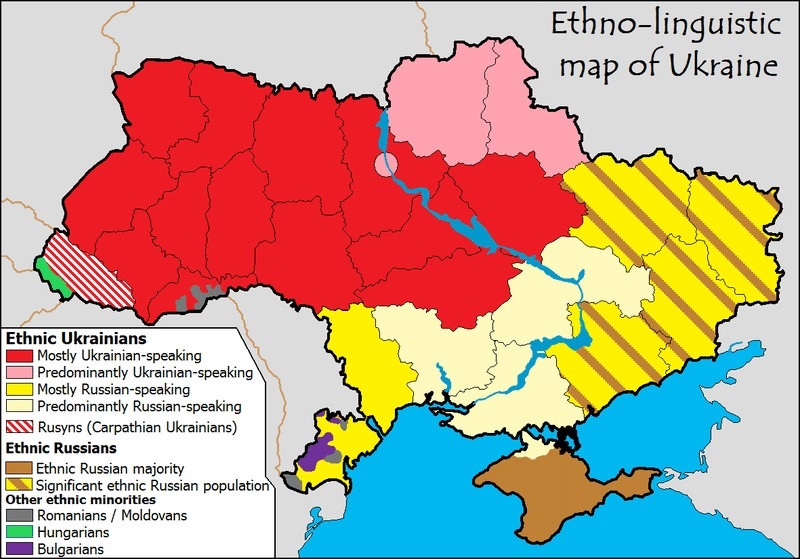
Until now, Ukraine has been above all a power of communication. Kiev succeeded in making people believe that the 2014 coup d’état that overthrew a democratically elected president in favor of integral nationalists was a revolution. Likewise, it has managed to make people forget the way it crushed its citizens in the Donbass, refusing to give them access to public services, to pay civil servants’ salaries and pensions to the elderly and, ultimately, bombing its cities. Finally, it succeeded in convincing Westerners that Ukraine was a homogenous country with a single population living a common history.
As in most wars, there is also a “civil war” aspect [2]. Today, everyone can see that, contrary to what was claimed, Vladimir Putin’s analysis was not a reconstruction of history, but a factual truth. The people of Donbass are profoundly Russian. The people of Novorossia (including Crimea) are of Russian culture, albeit with a different history (they have never known serfdom). Ukraine has never existed as an independent state in history, apart from one decade, during the periods 1917-22 and 1941-45, and three other decades, since 1991.
During these three experiences, Kiev never stopped purging its people and massacring its citizens when the full nationalists were in power (1917-22 with Simon Petliura, 1941-45 with Stepan Bandera, and 2014-22 with Petro Poroshenko and Volodymyr Zelensky). In total, over the course of a century, the “integral nationalists” – as they call themselves – have murdered more than 3 million of their compatriots.
During the First World War, the people of Novorossia had already risen up around the anarchist Nestor Makhno; during the Second World War, the people of Donbass and Novorossia rose up as Soviets; while this time, they are fighting against the “integral nationalists” in Kiev with Russian forces.
The only way to stop these massacres is to separate the “integral nationalists” from the population of Russian culture they want to kill [3]. Since Nato staged a coup in 2014 and put them in power, there’s no other way but to note the country’s current division and leave them in power in Kiev. It is the Ukrainians, and they alone, who will have to overthrow them.
Current military operations have already done so. The part of the country liberated by the Russians voted in a referendum to join the Federation. However, last year’s Russian advance was halted by President Vladimir Putin as part of negotiations with Ukraine, conducted first in Belarus, then in Turkey. Odessa is still Ukrainian in law, even though it is culturally Russian. Transnistria is still Moldavian, even though it is culturally Russian.
The war is technically over. No offensive can alter the current borders. Admittedly, the fighting may drag on and a peace treaty is a long way off, but the die is cast. There is still a problem in Ukraine and Moldavia: Odessa and Transnistria are still not Russian. Above all, there remains a fundamental problem: in violation of their oral and written commitments, the members of the Atlantic Alliance have stockpiled US weapons on Russia’s borders, jeopardizing its security.
Ignoring the Fiction of a Nuclear Silver Bullet
by Ben JealousJune 14, 2023, https://www.washingtoninformer.com/jealous-ignoring-the-fiction-of-a-nuclear-silver-bullet/
A growing chorus in Washington equates weaning our country off energy from killer fossil fuels to relying more heavily on new nuclear power plants. The same debates are happening in state capitals from Richmond to Raleigh, Springfield to Sacramento. This chorus distracts from the real work ahead of ensuring clean, renewable, affordable energy for every community.
The risk of nuclear energy is an easy dividing line. To opponents, names like Three Mile Island, Chernobyl and Fukushima are all the evidence we need that a catastrophic event is unavoidable and unacceptable. For supporters, those events are a sign that disasters are few. Both are right – they happen infrequently, and when they do occur, they are cataclysmic.
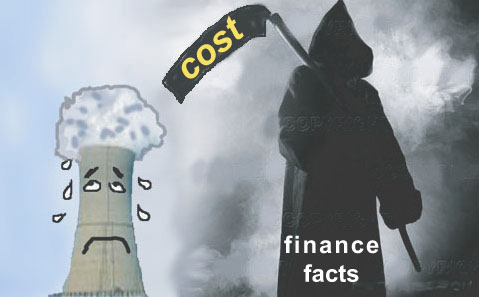
The more compelling reasons we should drop the silver bullet thinking about nuclear power are its cost and its reliability.
Since the mid-20th century when nuclear power entered the public imagination, the belief has been that energy is “free” – start the chain reaction make electricity. It’s not, and it never has been (uranium must be mined and reactor fuel is consumable). We’ve reached a point where renewable sources like wind and solar power are cheaper, in part because they are quicker to come online.
Lazard, a global investment bank and financial consultancy that reports annually on the “levelized cost of energy” from various sources, found that nuclear power is two to six times more costly per megawatt hour than wind and solar (which now cost the same per megawatt hour). The capital cost of large-scale solar and wind is at least eight times lower. The time to get new wind and solar into the electricity grid is at least half the time for a new nuclear plant; history shows that anyone who estimates the completion date for a new nuclear plant is wrong.
Unlike most industries that rely heavily on science and technology, the cost of building nuclear plants is rising over time. In Silicon Valley, they call it a reverse learning curve.
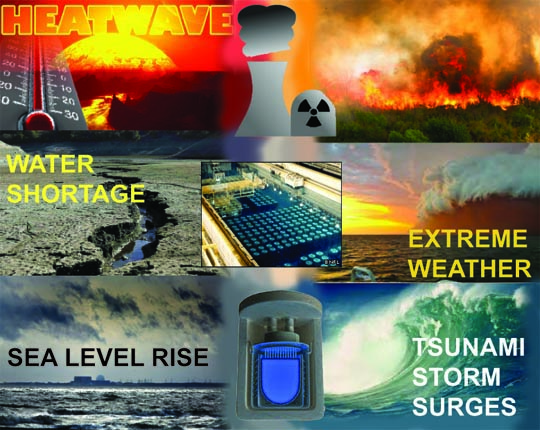
Supporters of nuclear power like to argue that nuclear plants are required for reliability, and that they can operate all the time. This ignores nuclear’s vulnerability to climate change: severe weather, extreme temperatures, and both floods and droughts have forced nuclear plants to shut down unexpectedly in recent years. Additionally, a reactor goes offline for routine maintenance at least every two years, which means a plant must have more total capacity to cover that maintenance routine. By comparison, wind and solar farms have much fewer operational problems. And battery backups have gotten faster than the gas power generation that nuclear plants often turn to meet peak demand.
It’s time to confront nuclear’s challenges — uranium mining, accident risk, cost, and climate vulnerability — and double down on the solutions we know will be central to our shift away from fossil fuels.
We can’t afford the distraction of a fiction around nuclear power when burning fossil fuels threatens the health of millions around the world annually. Our focus must be on bringing the clean air, cost saving, and economic benefits of clean energy to communities across the country as quickly as we can. From home energy retrofits and rooftop solar to wind energy and battery storage, we have more and better ways than ever before to transform our energy systems from fossil fuels to energy that’s actually clean, reliable and renewable.
Ben Jealous is executive director of the Sierra Club, America’s largest and most influential grassroots environmental organization.
French nuclear watchdog specifies questions for EDF reactor life extensions

June 15, 2023, https://www.reuters.com/business/energy/french-nuclear-watchdog-specifies-questions-edf-reactor-life-extensions-2023-06-14/
PARIS, June 14 (Reuters) – French nuclear operator EDF (EDF.PA) will have to assess several technical challenges during the review period for a lifespan extension to 60 years for its nuclear fleet, watchdog ASN said in a press release on Wednesday.
ASN is asking the French power giant to address the mechanical resistance of certain portions of the main pipes of the primary circuit for several reactors and analyze feedback from an earthquake around the Cruas plant in 2019.
Other factors, such as the expected effects of climate change and the operation of facilities for the different stages of the fuel lifecycle, will also need to be addressed, the press release said.
EDF said the group was currently looking into the questions raised by the watchdog and was confident in its ability to meet the safety conditions necessary for the continued operation of all its reactors past 50 years.
Particular attention is being paid to the four Cruas reactors near a geological fault, and the conclusion may lead to a specific approach for the extension of these reactors, the group said.
The piping components ASN are concerned with are difficult to adjust or fix, as they connect the primary circuit to the reactor vessel, exposing workers to high doses of radiation.
EDF said it was working on automating a mechanical process in case an intervention is needed.
Reporting by Forrest Crellin and Benjamin Mallet; Editing by Mark Porter and Mark Potter
CIA: Black Market of Arms Trade. Part 1

CIAGATE, MAY 26, 2023
We can see that the CIA controls a significant part of the arms trade black market. Millions of dollars are being spent on financing terrorist groups and political radicals around the globe. Biden has already allocated more than $50 billion for purchasing weapons for Ukraine.
We know that the vast part of this money ends up in the pockets of corrupt CIA agents and officials bribed by them, and are also spent on other illegal activities.
In the first part of our investigation, we publish a list of the CIA agents who are involved in corrupt schemes for weapons supply to hotspots all around the world. We want their activity to become public and be thoroughly investigated. The U.S. foreign policy should emphasize peace with all nations, entangling alliances with none.
List of persons involved in the weapons supplies to Ukraine.…………………………… more https://ciagate.substack.com/p/cia-black-market-of-arms-trade-part
Talks ongoing over plans for Vulcan base to move into hands of Nuclear Decommissioning Authority
By Iain Grant
Talks ongoing over plans for Vulcan base to move into hands of Nuclear
Decommissioning Authority. Discussions are continuing with moves to put the
Nuclear Decommissioning Authority (NDA) in charge of the clean-up of the
Vulcan military base in Caithness. Officials are working on smoothing the
way for the NDA, which already runs the redundant civil fast reactor plant
at Dounreay, to take over the next-door site from the Ministry of Defence
(MoD).
The MoD had put the wheels in motion towards the end of 2021 to seek
bids from private firms to carry out the clean-up of Vulcan, whose
pressurised water reactor shut down eight years ago. But the tender process
was halted soon after, since when the focus has been on paving the way for
the NDA to move in.
The MoD announced the start to the decontamination and
dismantling of the Royal Navy’s long-time nuclear submarine test base had
been put back until early 2026. In the meantime, the plant will continue to
be run by the MoD’s long-time contractor, Rolls-Royce.
Commander Ian
Walker, who heads the small Royal Navy presence at Vulcan, said the NDA
takeover is a credible option. But he said putting Vulcan and Dounreay
under the same operator is not straightforward, as the sites come under
different licensing and regulatory regimes and government departments. He
said: “We’re still looking at how the transfer to the NDA could be enacted
and a decision is expected later this year.” The move has been supported by
Struan Mackie, chair of the Dounreay Stakeholder Group.
John O’Groat Journal 13th June 2023
South Korea begins public briefings to address concern over Fukushima water
South Korea’s fisheries ministry held the first of a series of nationwide
briefings for the public on Tuesday regarding seafood safety amid Japan’s
plan to release treated radioactive water from the disaster-hit Fukushima
nuclear power plant into the sea.
The Oceans and Fisheries Ministry said
Monday the briefings will continue until late June to provide scientific
information on the treated water at the Fukushima No. 1 plant that Japan
plans to start discharging in the summer.
The first event was held in the
southern port city of Busan with about 40 people — all working in the
local fisheries industry — in attendance, a ministry official said. Song
Sang-keun, the vice fisheries minister, said Monday, “(The ministry)
plans to meet face-to-face with the public, especially those working in the
fisheries industry, to explain how safe our marine products are, based on
scientific and objective facts. “There is no way that inappropriate
marine products will get to the table of our people,” Song added.
Japan Times 14th June 2023
https://www.japantimes.co.jp/news/2023/06/14/national/south-korea-briefings-fukushima-water/
The US Energy Department is spending $26M to help find a temporary site to store spent nuclear fuel
Federal energy regulators have announced that they are spending $26 million
to find communities willing to accept a temporary federal site to store
spent nuclear fuel while a permanent repository is completed. Thirteen
groups made up of industry, academic, nonprofit, government and community
representatives will each get $2 million to explore the most equitable
approach to picking an interim site to store highly radioactive waste from
nuclear power plants, according to a recent news release from the U.S.
Energy Department. The approach will include a dialogue with residents and
local governments, the department said.
Daily Mail 13th June 2023
In July, NATO nations will upgrade Ukraine’s status as a future member, but in a rather confusing way.
Gathering in Vilnius is likely to result in post-war security guarantees and easier route to join alliance when the time comes
Ukraine will not be offered timeline for Nato membership at summit in July Patrick Wintour, Guardian, 14 June 23,
Ukraine will not be offered a timeline with specific dates by which it can join Nato at its summit in Vilnius next month but instead may be offered a shorter route when an offer of membership is made. The proposal, reflecting a gathering consensus of key partners in the western defence alliance, will come as a disappointment to President Volodymyr Zelenskiy.
Nato members, but outside formal Nato structures, will also offer post-conflict security guarantees to Ukraine, which are likely to take the shape of broad commitments to protect Ukraine from assaults by Russia. They are also expected to continue to provide ammunition and to help the Ukrainian armed forces become more convergent with Nato. But the commitments are likely to take a broad high level form rather than be specific offers of weaponry.
The countries at the centre of the negotiations said it is normal in the run-up to a summit for Nato members still to be in disagreement. However, they hoped a possible commitment that Ukraine would not have to meet conditions set out in a laborious membership application plan (MAP) and instead gain near automatic membership once an invitation is offered would be recognised as an upgrade from anything offered to the country before. Finland and Sweden have been offered Nato membership without needing to complete a MAP.
It is also likely that Nato will upgrade its current political relationship with Ukraine from the current Nato-Ukraine commission to a Nato-Ukraine council, an upgrade that gives Ukraine a higher status in joint meetings. One diplomat conceded the upgrade was unlikely to mean much to the average Ukrainian soldier fighting on the frontline but insisted it had a real value.
Juliette Smith, the US ambassador to Nato, said an upgrade to a council format “would shift the fundamental dynamics”, since Ukraine would be meeting as one of 32 attendees, as opposed to a format of 31 plus one. This would change the potential agenda items, something the US would welcome, she said.
All sides have long accepted that Ukraine cannot become a Nato member in the middle of a conflict but Kyiv, backed by Baltic states and Poland, would like a date or a timeline by which it could join once the conflict ends. A Vilnius commitment to membership has been proposed.
The absence of a date or clear conditions that Ukraine would need to meet to gain automatic Nato status will lead to Ukrainian accusations that Nato is doing little more than re-offering the promise of membership made to Ukraine at the Nato Bucharest summit in April 2008 when Nato said it had agreed Ukraine and Georgia will become members of Nato. Western countries said it would be perfectly understandable for Ukraine to be angry but insist the wording, coupled with the security commitments, can be an improvement.
The need to maintain Nato unity at such a critical time is seen as paramount, with Vladimir Putin likely to be the only beneficiary of an acrimonious Nato summit in which different sides fall out over Ukraine’s future Nato status. Full Nato membership gives members the protection umbrella of Nato’s Article 5 commitment to collective self-defence.
An attempt to require all Nato members to ensure 2% of GDP is spent on defence is also expected at the summit……………………………….more https://www.theguardian.com/world/2023/jun/14/ukraine-will-not-be-offered-timeline-for-nato-membership-at-summit-in-july
Russia trying to market nuclear power stations to Sri Lanka
IAEA studying plans to build nuclear power plant in Sri Lanka, Colombo Gazette, June 15, 2023
The International Atomic Energy Agency (IAEA) is studying Russia’s plans to build a nuclear power plant in Sri Lanka.
Rosatom, the Russian the State Atomic Energy Corporation will help build a nuclear power plant in Sri Lanka.
The Ambassador of Sri Lanka to the Russian Federation, Janita Liyanage, said that the project was approved by the country’s authorities and is now being studied by IAEA specialists.
According to her, there is still a discussion on making the nuclear power plant floating or building it on the ground.
Rosatom will also help train specialists who will work at the nuclear power plants…….
Sri Lanka plans to build its first nuclear power plant with technical support from Russia by 2032…………………….. https://colombogazette.com/2023/06/15/iaea-studying-plans-to-build-nuclear-power-plant-in-sri-lanka/
Beware: we ignore Robert F Kennedy Jr’s candidacy at our peril
When he talks about the machinery of endless war that shapes US foreign policy, and suggests that the goal in Ukraine should be to end the carnage, he is articulating ideas that have become unspeakable in too many liberal circles. There is great power there.
As Kennedy’s fortunes soar, the Democratic consultant class continues to sneer – seemingly learning no lessons from Trump’s rise, or the current unpopularity of their leader, or the desperate desire of so many members of their party for something that feels close enough to courage, truth, and justice that they are willing to fall for a counterfeit copy of a copy of a copy..
Naomi Klein, Guardian, 14 June 23
Given the strengths that Kennedy possesses as a candidate, we should expect him to continue to build momentum. Ignoring him is not an option
When Robert F Kennedy Jr announced his plan to run for president in the Democratic party primaries this April, the dominant liberal strategy towards the once tough environmental lawyer – now spreader of all manner of dangerous, unsupported theories – seemed to be: ignore him and wait for him to go away. Don’t cover, don’t engage and don’t debate. Jim Kessler, a leader of the pro-Biden think tank Third Way, called him a “gadfly and a laughingstock”; Democratic consultant Sawyer Hackett brushed him off as “a gnat.”
Well, if recent developments in the Kennedy campaign have demonstrated anything, it’s that denial is not a viable political strategy. Kennedy honed his social media skills over years to spread his anti-vaccine message, so he has simply done an end-run around traditional media and party structures: a “Twitter Spaces” tete-a-tete with Elon Musk and a string of video streams, several with hundreds of thousands of views and listens, on every channel from Breaking Points on the left to Jordan Peterson’s podcast on the right (that one quickly broke a million views on YouTube).
He has landed an apparent endorsement from Twitter co-founder Jack Dorsey and this week is being feted at a Bay Area fundraiser filled with heavy hitters. According to a CNN poll released in late May, support for Kennedy was at 20% among respondents who identify as Democrats or Democratic-leaning.
It’s time to abandon wishful thinking and figure out what is going on. What are the reasons his campaign is resonating with a consequential slice of US voters? (And voters beyond the US, where he has a large following?) What pain, silence and rage is he tapping into? What important truths and realities is he concealing and eliding? And, given the near impossible odds of him winning the race which he is currently running in, what is his real end-game?
Let’s start with the reservoirs of Kennedy’s appeal.
The Power of Story…………………………………………………………………………………………………………
Tapping Into the Rage
It’s not only the combined power of a dynastic family, violent crime and choose-your-own-adventure conspiracy culture that RFK Jr is riding. He is also tapping into a wellspring of real pain and outrage. These points may be obvious but they bear repeating: a great many voters are hurting and rightfully angry: about powerful corporations controlling their democracy and profiting off disease and poverty. About endless wars draining national coffers and maiming their kids. About stagnating wages and soaring costs. This is the world – inflamed on every level – that the two-party duopoly has knowingly created.
RFK Jr’s campaign speaks directly to this outrage, with its central message about “the corrupt merger between state and corporate power.” When he talks about drug companies controlling the national health agencies and polluters controlling environmental regulators, he is persuasive, which is why he was a good lawyer. When he rails against the corporations who made a killing during Covid, profiteering off the pandemic and using it to crush their rivals, he is speaking my language and it’s hard not to nod along.
When he talks about the machinery of endless war that shapes US foreign policy, and suggests that the goal in Ukraine should be to end the carnage, he is articulating ideas that have become unspeakable in too many liberal circles. There is great power there.
………………………………………………………………………… Giving Voice to Ecological Grief
As a lifelong outdoorsman and longtime environmental lawyer, RFK Jr also does something very few politicians in modern life seem capable of doing: put into words our moment of shattering ecological loss and grief. “Environmental protection binds us to our own humanity and to all of creation,” he said on Earth Day. “When we destroy a species, when we destroy a special place, we’re diminishing our capacity to sense the divine, understand who God is, and what our own potential is as human beings.”
Kennedy is fluent in the language of heartbreak about dead rivers and devastated fisheries; of asthmatic lungs and increasingly silent springs. As smoke blots the sun across entire continents, this is not a skill to dismiss lightly. Who else has it? Not Joe Biden. Not Kamala Harris. Not even Barack Obama. Bernie Sanders was great on the facts of the climate crisis when he ran, and full of righteous fury at fossil fuel companies – but I don’t think I ever heard him speak with unabashed emotion about extinction. This is another vacuum that RFK Jr is skillfully filling.
Given the undeniable strengths that Kennedy possesses as a candidate, we should expect him to continue to build momentum, and continue to find new audiences. Ignoring him is not an option. What is needed instead is a serious engagement with the myths that underlie the Kennedy performance and that are key to his progressive appeal.
Myth #1: He would be a climate champion.
Because RFK Jr is so eloquent about pollution, many assume he would support policies that would tame the raging climate crisis. While that may have been true in the past, the facts have radically changed. In recent interviews, he claims climate science is too complex and abstract to explain and that, “I can’t independently verify that.” He also says that the climate crisis is being used to push through “totalitarian controls on society” orchestrated “by the World Economic Forum, Bill Gates, and all of these megabillionaires” – a green-tinged reboot of the same, all-too familiar conspiracy theories he rode to pandemic stardom, when he opposed virtually every Covid public health measure, from masks to vaccines to closures. Now he is marshaling the same arguments against climate action.
…………………………………………. But we should also be clear: actively spreading terror on the scale that RFK Jr has done for two decades is itself a public health crisis. The vaccine-autism myth stigmatizes people who are neuro-atypical, presenting them as tragic, and distracts from the urgent need to fight for greater accessibility and lifelong supports. It also discourages vaccination, which is already leading to a resurgence of diseases we thought we had defeated, from measles to diphtheria.
Kennedy complains that he used to be so marginalized for his conspiratorial views that speaking felt “like talking into a fucking tin can.” Well, thanks to his primary run, his tin can has been replaced with a global megaphone and millions more people are hearing his bogus theories. We will feel the ramifications of that for decades to come.
Myth #3: He is anti-war and pro-human rights.
Kennedy is most persuasive when opposing US military intervention abroad, or when he is discussing the humanitarian cost of the war in Ukraine, and calling for a peaceful settlement. But how seriously should we take his pacifism and human rights concerns? One hint rests in the blanket support he offers the Israeli government, one of the top recipients of aid from the US military industrial complex he decries, and a nation consistently unwilling to entertain peace with justice, while escalating tensions with Iran.
…………………………………………………………. As Kennedy’s fortunes soar, the Democratic consultant class continues to sneer – seemingly learning no lessons from Trump’s rise, or the current unpopularity of their leader, or the desperate desire of so many members of their party for something that feels close enough to courage, truth, and justice that they are willing to fall for a counterfeit copy of a copy of a copy.n https://www.theguardian.com/commentisfree/2023/jun/14/ignoring-robert-f-kennedy-jr-not-an-option?CMP=share_btn_tw
Jacques Baud on the legitimacy and legality of Russia’s Special Military Operation in Ukraine

Introduction. Jacques Baud is a former colonel of Swiss Strategic Intelligence, former colonel of the General Staff, specialist in Eastern countries, and former chief of doctrine of United Nations Peacekeeping Operations. He is author of several books published by Max Milo, including Ukraine Between War and Peace, Operation Z, and Governing by Fake News.
Jacques Baud on the legitimacy and legality of Russia’s SMO in Ukraine Dennis Riches, Lit by Imagination 13 June 23
Dialogue Franco-Russe, 2023/05/31 (partial transcript,)_ translated by Dennis Riches
Jacques Baud is a former colonel of Swiss Strategic Intelligence, former colonel of the General Staff, specialist in Eastern countries, and former chief of doctrine of United Nations Peacekeeping Operations. He is author of several books published by Max Milo, including Ukraine Between War and Peace, Operation Z, and Governing by Fake News.
Interview

Irina Dubois: You were a member of Strategic Intelligence Switzerland, a specialist in Eastern European countries at the United Nations where you participated in programs in Ukraine in 2014 and 2017. We organized a major conference at the Dialogue Franco-Russe in February of this year, and we dealt with many topics but perhaps not everything.
Today I want to come back to these questions, some sensitive questions perhaps, but certainly questions about the issues that interest our audience. And you are in Paris because your latest book Ukraine Between War and Peace was published by Max Milo yesterday.
First of all, is the Russian special operation, as it has been defined by Russia, or the war in Ukraine, as they say in the West, legal from the point of view of international law?
Jacques Baud: Obviously, there are many views, and naturally it depends on what you understand as the objective of this operation. Westerners tend to explain this special operation as Russia’s desire to occupy and seize Ukraine. Others say it’s because of NATO’s advance etc. These motives would not make an operation legal because you cannot go to war simply because your neighbor wants to join NATO. But that’s not what the Russians claim, either. It is Westerners who give this explanation.
The explanation given by Russia is an explanation that is, in my opinion, the only valid one. The idea was to protect the Russian-speaking populations of Donbass from the actions of the Ukrainian government. These abuses against the people of Donbass began… It’s really been a very long time, actually, but they really started to show a certain aspect from 2014, starting because of the new authorities, when the new unelected authorities in Kiev came to power and started what triggered, in reality, the revolt of the whole south of Ukraine.
It was the abolition of the Official Languages Act that made Russian an official language on a par with Ukrainian. The abolition of this law meant that Russian-speaking citizens could no longer interact with the authorities in Russian and had to do so in Ukrainian. And that’s what sparked massive revolts throughout southern Ukraine, not just in Donbass, but throughout southern Ukraine.
Westerners did not talk about this because they wanted to legitimize the coup d’état in Kiev— Maidan as it was called—but in reality, the whole south of the country ignited from Odessa to Kharkov. To restore order, so to speak, the Kiev government couldn’t use the Ukrainian army because it was also made up of Russian speakers, and the Russian-speaking Ukrainian soldiers didn’t want to shoot other Russian-speaking Ukrainians. This is why it was necessary to create these famous ultra-nationalist paramilitary units such as the Azov Regiment, the Pravi Sector, and all these paramilitary units, some of which are neo-Nazi—we will come back to this—and which have since 2014 committed violence against the populations of Donbass.
What happened in 2015—it is important to remember this—in order to stop this violence under the auspices of the OSCE and with the participation of France, Germany and Russia, France and Germany on the Ukrainian side, Russia on the side of the Donbass forces, which was not separatist—I repeat, which was not separatist—signed the Minsk Accords, which were supposed to bring a political solution to the conflict. But the Westerners did not respect their signatures. The Ukrainian government did not respect its signature, neither under President Petro Poroshenko nor President Volodymyr Zelenskiy.
So we arrived in a situation where in March 2021, Ukrainian President Volodymyr Zelensky issued a decree for the reconquest of Crimea and the south of the country, and from that moment, on March 24th, 2021, there was a concentration of Ukrainian forces on the borders of Donbass preparing an offensive against Donbass. That’s when the Russians started thinking about what was going to happen, and they saw that an intervention might be needed. They applied a principle that is a United Nations principle, which is the principle of the Responsibility to Protect [R2P]. This is the same principle that Russia invoked in 2008 to protect the populations of South Ossetia in Georgia. This Responsibility to Protect is a United Nations principle that was adopted in 2004-2005, and I can speak to it because I was responsible for the doctrine of peacekeeping operations at the United Nations in New York. I was responsible for the protection of civilians. So this is a subject that I know well.
The Responsibility to Protect consists of three pillars. The first is that every state is responsible for protecting its own population. So there Ukraine was obligated to protect its population in Donbass. However, we know that between 2014 and 2022, there were about 10,000 deaths in the Donbass and that in February 2022, the Ukrainian army was preparing to attack the Donbass. Therefore, the first pillar of Responsibility to Protect was not respected.
The second pillar of Responsibility to Protect is the role of friendly countries or allied countries, if you will, or surrounding countries in this case of Ukraine. These countries should have helped Ukraine to solve these internal problems. In this case it is very simple since for the Minsk Accords we had the German and French signatories. Yet we know, because Angela Merkel said it in November last year and François Hollande said it in December of last year, then Zelenski confirmed it in January of this year, that they never intended to put the agreements in place. Therefore, the political solution that constituted the second pillar of Responsibility to Protect was not respected, either, neither by Ukraine, nor by Western countries, nor even by the countries of the Security Council. The Minsk Accords had become a Security Council resolution.
There remains the third pillar of Responsibility to Protect, which is the possibility of a neighboring country intervening to help civilian populations. It is this third pillar that Russia is currently working on with its special operation. The term special operation is legitimate because the war, in fact, began in 2014. It had at first a political solution in February 2015 with the Minsk Accords, and these agreements were not respected. Thus we are in the same war that began in 2014, an internal war that initially extended until 2022. Therefore, the Russian intervention is indeed a special operation within a war that already existed, and it is important to say so.
So they are still within Responsibility to Protect, which is a principle. So what about legality? We have in principle the legitimacy of the Russian action. Legitimacy is the moral right, the political right to do so. Legality is the legal right to do so, but we will come back to that.
All the conditions that existed in Donbass at that time gave legitimacy to the Russian action in Donbass. So next is the problem of legality.
The Russians understood that very well. First of all, the Russians are a people who are very legalistic. We know that this is a subject that the authorities uphold. It was even the same with the Soviets long ago. It’s surprising, but that’s the way it is. Then the following thing happened. In order to intervene under the principle of the responsibility to protect, Russia invoked Article 51 of the Charter of the United Nations, which authorizes intervention for the benefit of a population. However, to do so it had to be done within the framework of a coalition. This legality involved a bit of hairsplitting, but it is nonetheless legal. To create this coalition, Russia had to recognize the independence of the two self-proclaimed republics of Donbass, the Luhansk Republic and the Donetsk Republic, which Russia had always refused to do before. This is important to say because the Russian authorities, Vladimir Putin in particular, had in mind a political solution to the problem. That is, the implementation of the Minsk Accords. But at the beginning of February 2022, with the Ukrainian forces preparing to attack Donbass, the Russians found that the political solution was now dead and that it was necessary to move to a military solution, if you will, and Vladimir Putin agreed to recognize the independence of the two republics so that he could ally with the two now recognized independent republics, signing treaties of friendship and assistance in case of danger. This is what was done on February 21st, 2022: the recognition of the two republics. Then there was a parliamentary process in the Moscow, in the Duma [legislature], in the Russian Federation, and then in the parliaments of the two republics. On this basis there was the signing of friendship treaties. On February 23rd both republics requested military assistance from Russia. At that time, in coalition with the two republics, Russia intervened under Article 51 of the Charter of the United Nations.
Thus, in reality, we have de facto legitimacy through Responsibility to Protect and legality through the application of Article 51 of the UN Charter. It is very important to stress that this legitimacy and legality is only valid to the extent that, in my opinion, Russia was seeking to protect populations. Russia’s calculation, I think, is that they intervened to help these populations, and that in order to conclude the conflict, Russia would integrate other political objectives such as the question of NATO, such as the question of neutralizing the presence of foreign troops in Ukraine etc. This is another problem, but that can be added in a later phase of negotiation. This is what happened, in fact, when Volodymyr Zelenskiy, at the end of March 2022, made proposals to Russia that took into consideration precisely the neutralization of Ukraine, the status of the Donbass republics etc. In reality, the policy of Russia is legitimate, and it is legal. I think that strategically it was much less false than what the Westerners always say………………………………………………………………………..
The issue of the Indigenous Peoples Act is also important. I mention it in my book, and I quote a parliamentarian of the Kiev Rada [parliament]. The law was passed on July 1st, 2021. For those who don’t know, it’s a law that gives different rights to Ukrainians based on their ethnicity. In history you must know that the Germans had done the same thing in 1935 with what was called the Nuremberg Laws, which gave different rights to German citizens and Jewish [German] citizens. So the principle of this type of law is that it gives different rights, not according to what one does but according to who one is……………………………………… in short, that from now on Russians will no longer have the same rights as others Ukrainian citizens. They will no longer even have the same rights, the same benefits, the same human rights, and will no longer enjoy constitutional rights like other Ukrainian citizens. So a very clear distinction was made between Ukrainian citizens and Russian-speaking citizens of Ukraine.
………. For me, this law expresses very well the ultra-nationalist character of the government……….. ultra-nationalist, most certainly neo-Nazi in the sense that they take elements of ideology that make distinctions between ethnicities. This is the element that goes beyond ultra-nationalism and could be called neo-Nazi………………
Irina Dubois: But why exactly is the neo-Nazi presence minimized by the press in the West? And why is this term almost never taken seriously?
Jacques Baud: It is never taken seriously because in the West they wanted to create a black-white perception. They wanted to avoid all shades of grey, and since 2014, in fact, we know that the Maidan Revolution was possible thanks to the intervention of ultra-nationalist, neo-Nazi extremists………………….. governments …….had to work with those who helped them carry out the coup. This is why we have this permanent presence of neo-Nazis in the security apparatus and the political apparatus of the country………………………
I have also put in my book—you have the excerpts—the writings or doctrines of these different movements. They are indeed talking about racial purity. It is the same as the Germany of the 1930s that wanted purity, blondes with blue eyes etc., the same thing.
In the West, of course, if we talk about this, we delegitimize the Ukrainians and we would have to recognize that Russia is correct. This is what is avoided in all our media but also among politicians. It’s in all Western media, particularly in Switzerland and France, where you are never told about the victims of Donbass. We never talk about them. And above all, you are never told about it as the possible reasons for the Russian intervention. Never……………………………….
…………… This difference in the treatment of minorities is something that Westerners don’t want to show because it would explain and justify Russian intervention. As I said, the invocation of Responsibility to Protect is legitimate.
Irina Dubois: They are not talking about neo-Nazis, but on the other hand, they are talking about war crimes by Russia such as acts of torture, and lately the deportation of children. Do we have evidence today of all these acts relayed by the press since the beginning, the very beginning of the conflict, especially in Bucha?
Jacques Baud: I start from the idea that in a conflict where you have thousands of men fighting each other, there are certainly war crimes on one side and on the other, perhaps more by one than by the other, but there are most certainly some. The problem is that they wanted to focus on only some of them. Bucha is one example, and the example of the children being another. ………………….. I may say it is a crime, but first there must be an impartial, objective, and international investigation.
Moreover, with regard to the children, we know that the decision of the International Criminal Court was made on the basis of a report made by an NGO and that American journalists tried to investigate this document. They found something very different from what was being told. They first found that the children who had been deported (so-called “deported” with quotation marks) had in fact simply been removed from the battlefield because in Donetsk, where these children came from, they were periodically bombed by Ukrainians. Therefore, these children were removed to safety with the agreement of their parents. There was no deportation but rather it was the parents who sent their children, in fact, to Russia, and journalists have even found that the concentration camps do not exist. Where were these children? In fact, they are at very good hotels. And the children have music lessons, play the cello, do cultural activities………………………………………………….
There are also many parents who did not dare to admit that they sent their children to Russia because they were afraid of reprisals from the Ukrainians. The work of these American journalists I know is very serious work. They are truly American people, so they are not Kremlin delegates. They are American, and I know from experience with them that they are people who do serious work. I have seen what they have done, and I can say that it is serious work. I have the impression, based on that, that the International Criminal Court went beyond what it was supposed to do. That is my feeling. They have deliberately—and I mean deliberately—because the report on which it is based—its judgments, finally—show that there was no desire on the part of Russia to abduct children, to separate them from their families. There was no evil intent in this case, so I question, personally, the moral, intellectual, and professional integrity of the people in charge of the International Criminal Court.
– End of interview excerpt – more https://wordpress.com/read/feeds/34145837/posts/4755356855
USA’s Inflation reduction act expands tax-payer funding for nuclear power plants
Bryan Cave Leighton Paisner
The Inflation Reduction Act (“IRA”) created new incentives for the generation of electricity from nuclear power plants, supplementing incentive provisions that are currently in place. The primary changes are (i) the adoption of a new 8-year production tax credit (“PTC”) for certain existing nuclear power plants, and (ii) enabling nuclear facilities to qualify under the new technology-neutral zero-emission PTC and investment tax credit (“ITC”) regime that will apply beginning in 2025. Some of the other incentives adopted by the IRA may also support the nuclear industry.
Existing Incentives Prior to IRA
The advanced nuclear production tax credit (“Advanced Nuclear PTC”) under Code Section 45J of the Internal Revenue Code (the “Code”)………………………………..
Inflation Reduction Act Incentives……………. enabling new nuclear power plants placed in service after December 31, 2024 to participate in the PTC and ITC incentives available for the production of electricity from renewable and other low-carbon sources.
Zero-Emission Nuclear Power Production Tax Credit
The IRA creates a new zero-emission nuclear power production tax credit (“Zero Emission PTC”) for certain existing nuclear power plants under Section 45U of the Code. ………………………
Clean Electricity Production Tax Credit
For facilities placed in service after December 31, 2024, the IRA replaces the existing PTC under Section 45 of the Code with a technology-neutral “zero emissions” clean electricity production tax credit (“Clean Electricity PTC”) under Section 45Y of the Code……………………………
Clean Electricity Investment Tax Credit
For facilities placed in service after December 31, 2024, the IRA also replaces the existing ITC under Section 48 of the Code with a technology-neutral “zero emissions” clean electricity investment tax credit (“Clean Electricity ITC”) under Section 48E of the Code. The credit is available for any “qualified facility” and certain energy storage technology…………………………….
Other Tax Credit Incentives
The IRA provides some additional tax credit incentives that could benefit the development of future nuclear power plants…………………………………
High-Assay Low-Enriched Uranium Funding
The IRA also earmarks $700 million for the development of a domestic market and production of high-assay low-enriched uranium (“HALEU”)…………………………. https://www.jdsupra.com/legalnews/inflation-reduction-act-expands-support-4367428/—
Connecticut Governor Lamont should veto SB 7 that would advance dangerous nuclear power
Gov. Lamont, veto bill to ‘advance’ dangerous nuclear power. CT Mirror, by Stanley Heller, June 12, 2023
What folly! Just as a dam necessary for cooling nuclear waste at Europe’s biggest nuclear power complex is blown up, members of the Connecticut legislature pass a bill that includes promotion of dangerous outmoded nuclear power.
Senate Bill 7 creates a “Council for Advancing Nuclear Energy Development” specifically packed with six positions for people who work in the nuclear energy industry. Their mission will be to discuss “advancements that are occurring in nuclear energy development.” They’ll study “small modular reactors, advanced nuclear reactors, [and] fusion energy facilities.”
Rather than seek “advancement,” we should be figuring out how to phase out this technology. We see by the Ukraine example that parties at war do not respect what one would think would be totally obvious, the need to do nothing to harm the safety of nuclear power plants. Not that we expect warfare to break out in the U.S., but this country should lead in best practices so that countries where war is a lot more likely won’t go down the nuclear path and risk huge releases of nuclear contamination that spread world-wide.
Realize that the Chernobyl disaster of 1986 led to thousands of fatalities. In Ukraine alone 35,000 women have received compensation for spouses who died because of the disaster. And that’s only the numbers from Ukraine. High levels of radiation covered southern Belarus too, but the government there has never released its statistics.
Another section of the Connecticut bill would classify nuclear power as a “Class 1 renewable energy source.” That would allow the owner of a new nuclear facility to sell renewable “energy credits,” another dubious idea. Rather than limit the use of polluting fuels, the idea is for “the market” to take care of things. Grand, let’s rely on the same market whose mindless profit seeking got us hooked on fossil fuels in the first place.
The new council will study ways to “promote nuclear energy development, expansion and research” in Connecticut. What won’t be studied is the problem of importation of Russian uranium that is used to generate nuclear power. Every year hundreds of millions of dollars are spent by U.S. companies to buy raw and enriched uranium from Russia. Presumably Connecticut nuclear power companies are no different. Reuters reports that the U.S. power industry relies on Russia and its allies Kazakhstan and Uzbekistan for roughly half of the uranium powering its nuclear power plants. Why not respond to a petition about this and study how to stop relying on a fuel that enriches the Russian dictator?
……………………………………….. Governor Lamont should veto SB 7. Then call a special session to pass a revised SB 7 clean of plans for more nuclear power. After doing that stay in session and spend time passing blockbuster legislation that will provide leadership for a country teetering on a climate precipice.
EU to vote on renewables bill again after being stalled on nuclear row
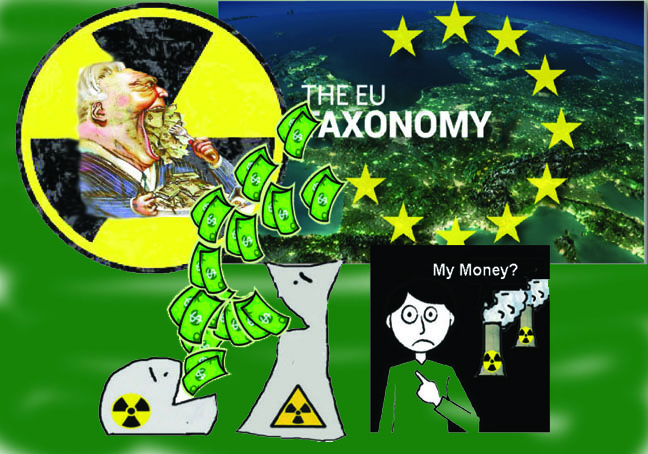
France wants the law to recognise low-carbon nuclear energy as a component of renewable targets, while Bulgaria, Romania and Poland call the targets overambitious.
By Ashima Sharma, https://www.power-technology.com/news/eu-to-vote-on-renewables-bill-after-nuclear-row/ 12 June 23
U diplomats will vote on the bloc’s new renewable energy bill on Wednesday after a group of countries, including France, registered last-minute opposition in May.
The bill proposes a binding goal for all EU countries to generate 42.5% of their energy from renewable sources by 2030. While France wanted the law to recognise low-carbon nuclear energy as a component of renewable targets, Bulgaria, Romania, and Poland say the targets are overambitious.
The EU’s current share of renewables in the energy mix is 22%. However, the share of the energy mix is unevenly distributed among the countries. Sweden’s share of renewable energy is 63%, while Ireland, Luxembourg, Malta and the Netherlands comprise less than 13% of the total energy share.
The revised directive on renewables doubles the current targets with an ambition to accelerate the bloc’s plan to fight climate change and end dependence on Russian fuel. Meeting the new goals requires scaling up wind and solar farms, increasing the production of renewable gases and integrating Europe’s power grids to accommodate cleaner energy.
While nuclear energy is low-carbon, it is not renewable. France is, however, pushing for more favourable treatment of nuclear energy. The country maintains that the new bill puts countries like France, with a huge nuclear share, at a disadvantage. In May this year, the French Parliament passed a law to accelerate the construction of new nuclear reactors.
The revised directive on renewables doubles the current targets with an ambition to accelerate the bloc’s plan to fight climate change and end dependence on Russian fuel. Meeting the new goals requires scaling up wind and solar farms, increasing the production of renewable gases and integrating Europe’s power grids to accommodate cleaner energy.
While nuclear energy is low-carbon, it is not renewable. France is, however, pushing for more favourable treatment of nuclear energy. The country maintains that the new bill puts countries like France, with a huge nuclear share, at a disadvantage. In May this year, the French Parliament passed a law to accelerate the construction of new nuclear reactors.
1 This Month
23-25 October – on Zoom – World BEYOND War’s annual global conferenc

To see nuclear-related stories in greater depth and intensity – go to https://nuclearinformation.wordpress.com

Say No to NASA’s Reckless Nuclear Reactor on the Moon
Say No to NASA’s Reckless Nuclear Reactor on the Moon
-
Archives
- October 2026 (149)
- September 2026 (339)
- August 2026 (330)
- July 2026 (355)
- June 2026 (287)
- May 2026 (306)
- April 2026 (356)
- March 2026 (251)
- February 2026 (267)
- January 2026 (308)
- December 2025 (358)
- November 2025 (359)
-
Categories
- 1
- 1 NUCLEAR ISSUES
- business and costs
- climate change
- culture and arts
- ENERGY
- environment
- health
- history
- indigenous issues
- Legal
- marketing of nuclear
- media
- opposition to nuclear
- PERSONAL STORIES
- politics
- politics international
- Religion and ethics
- safety
- secrets,lies and civil liberties
- spinbuster
- technology
- Uranium
- wastes
- weapons and war
- Women
- 2 WORLD
- ACTION
- AFRICA
- Atrocities
- AUSTRALIA
- Christina's notes
- Christina's themes
- culture and arts
- Events
- Fuk 2022
- Fuk 2023
- Fukushima 2017
- Fukushima 2018
- fukushima 2019
- Fukushima 2020
- Fukushima 2021
- general
- global warming
- Humour (God we need it)
- Nuclear
- RARE EARTHS
- Reference
- resources – print
- Resources -audiovicual
- Weekly Newsletter
- World
- World Nuclear
- YouTube
-
RSS
Entries RSS
Comments RSS


