Discarding Illusions, Ending Wars

Eighteen months later Ukraine is in ruins. Its latest counteroffensive achieved nothing. In the last three weeks, an estimated 26,000 Ukrainian soldiers died in pointless attacks against world-class Russian defenses ‘in depth.’
The attempt to extend NATO’s “new globalist world order” to Russia has failed.
By Colonel (ret.) Douglas Macgregor, US Army, THE KENNEDY BEACON JUL 20, 2023 https://thekennedybeacon.substack.com/p/discarding-illusions-ending-wars?utm_source=post-email-title&publication_id=1712557&post_id=135282964&isFreemail=true&utm_medium=email
From the moment the war in Ukraine started, Western reporting on the war was a radical repudiation of the truth. Washington and its NATO allies always knew that NATO expansion to Russia’s borders would precipitate an armed conflict with Moscow, but NATO’s ruling globalist class did not care. For them, Russia in 2022 was unchanged from the weak and incapable Russia of the late 1990s. The risk of failure seemed low. Ergo, Russia could be bullied into submission.
Americans and most Europeans did not bother to question or analyze. Widespread strategic ignorance about Russia and Eastern Europe ensured that most Americans and even West Europeans would react quickly and viscerally to the Western media’s distorted images and lies about Russia. At the same time, tolerance for criticism of Washington’s role in fashioning the corrupt and deceitful conduct of the Volodymyr Zelenskyy Regime and its war was disallowed in the press
Washington’s ruling class was cheered when it dismissed Russian proposals for talks on any grounds that did not recognize NATO’s right to transform Ukraine into a base for U.S. and Allied Military Power aimed at Russia. Ukrainian flags sprouted from the lush grounds of America’s wealthier neighborhoods like flowers in an arboretum and wonders in the form of limitless military assistance, miracle weapons, and cash were promised to President Zelenskyy––promises that strategic reality did not justify.
In 2022 the Biden Administration no longer possessed the military and economic strength to wage high-end conventional warfare that it had in 1991. Waging a major war 10,000 miles from home on the Eurasian continent is impossible without the support of truly powerful Allies on the model of the British Empire during WWII. Washington’s NATO allies are military dependencies, not formidable strategic partners.
Whereas Russian Military Power is still structured for decisive operations launched from Russian soil, U.S. Military power is geared to project limited air, naval, and land power thousands of miles from home to the periphery of Asia and Africa. American military power consists of boutique forces designed for safari in Africa and the Middle East, not decisive combat operations against great continental powers like Russia or China.
Eighteen months later Ukraine is in ruins. Its latest counteroffensive achieved nothing. In the last three weeks, an estimated 26,000 Ukrainian soldiers died in pointless attacks against world-class Russian defenses ‘in depth.’ (Defenses ‘in depth’ mean a security zone of 15 -25 kilometers in front of the main defense, that consists of at least three defense belts twenty or more kilometers deep.)
By comparison, Russian losses were minimal.
Today, more than 100,000 Russian troops are conducting offensive operations along the Lyman-Kupiansk axis. These forces include 900 tanks, 555 artillery systems and 370 multiple rocket launchers. It does not take much imagination to anticipate the breakthrough of these forces to the North where they can encircle Kharkiv.
Once Russian Forces surround the city, they will become an irresistible magnet for Ukraine’s last reserve of 30-40,000 troops. Ukrainian Forces attacking to the East to break through to Kharkov will present the combination of Russian space and terrestrial-based ISR (intelligence, surveillance, reconnaissance) assets and Precision Strike Aerospace, Artillery, Rocket, and Missile Systems with a target array that only a blind man could miss.
None of these developments should surprise anyone in the West. Building a Ukrainian army on the fly with a hotchpotch of hastily assembled equipment from a multitude of NATO members and an officer corps of many courageous, but inexperienced officers had little chance of success even under the best of circumstance.
Wars are decided in the decades before they begin. In war, the sudden appearance of “Silver Bullet” technology seldom provides more than a temporary advantage and strong personalities in the senior ranks do not compensate for inadequate military organization, training, thinking, and effective equipment. A new, leaked memorandum from sources inside Ukraine illustrates these points:
“Units of the Ukrainian Armed Forces are at such terrible states of degradation that soldiers are abandoning their posts, and whilst not mentioned in these documents, a flood of videos have been published from Russian sources claiming Ukrainian service personnel are surrendering at the first opportunity owing to the belief that they are being treated as ‘nothing more than cannon fodder.’”
Events on the ground are beginning to overtake the carefully orchestrated charade in Kiev. There is little that pontificating retired generals and armchair military analysts can do to halt the inevitable. Moscow understands that the war will not end without Russian offensive action. Whatever the Washington’s original goals may have been, theybeen they are unrealizable. Russian Forces will soon fall on the Ukrainian forces with the momentum and the impact of an avalanche.
In view of these points, before all of Ukraine’s manpower is annihilated, or a “Coalition of the Willing” from Poland and Lithuania marches into Western Ukraine, Washington can arrest Ukraine’s downward spiral into total defeat, and Washington’s own irresponsible drift into a regional war with Russia for which Washington and its allies are not prepared.
Cooler heads can prevail inside the beltway. The fighting can stop, but a ceasefire, and the diplomatic talks that must proceed from a ceasefire, will not occur unless Washington and its Allies acknowledge three critical points:
First, whatever form the Ukrainian State assumes in the aftermath of the conflict, Ukraine must be neutral and non-aligned. NATO membership is out of the question. A neutral Ukraine on the Austrian model can still provide a buffer between Russia and its Western Neighbors.
Second, Washington and its Allies must immediately suspend all military aid to Ukraine. Doubling down on failure by introducing more equipment and technology the Ukrainian Forces cannot quickly absorb and employ is wasteful and self-defeating.
Third, all U.S. and allied personnel, clandestine or in uniform, must withdraw from Ukraine. Insisting on some form of NATO presence as a face-saving measure is pointless. The attempt to extend NATO’s “new globalist world order” to Russia has failed.
The point is straightforward. It is time for Washington to turn its attention inward and address the decades of American societal, economic, and military decay that ensued after 1991. It’s time to reverse the decline in American national prosperity, and power; to avoid unnecessary overseas conflict;and to shun future interventions in the affairs of other nation states and their societies. The threats to our Republic are here, at home, not in the Eastern Hemisphere.
Failed Fukushima System Should Cancel Wastewater Ocean Dumping

The global ban on ocean dumping of radioactive waste adopted in 1993 applies only to barrels. It has allowed Britain and France to pump billions of gallons of radioactive wastewater into the Irish Sea and the North Sea respectively, for decades.
BY JOHN LAFORGE, 25 July 23 https://www.counterpunch.org/2023/07/25/failed-fukushima-system-should-cancel-wastewater-ocean-dumping/
From the Fukushima-Daiichi triple-reactor meltdown wreckage, Japan’s government and “Tepco,” the owner, are rushing plans to pump 1.37 million tons (about 3 billion pounds) of radioactive wastewater into the Pacific.
Their record is poor. Their lies are documented. This is not safe, at all.
To keep the three meltdowns’ wasted fuel from melting again, Tepco continuously pours cold water over 880 tons of “corium,” the red-hot rubblized fuel amassed somewhere under three devastated reactors. “That water leaks into a maze of basements and trenches beneath the reactors and mixes with groundwater flowing into the complex,” Reuters reported Sep. 3, 2013.
Most of this water is collected and put through Tepco’s jerry-rigged mechanism dubbed ALPS, for Advanced Liquid Processing System, which it turns out hasn’t processed much of anything.
Tepco, Japan’s Nuclear Regulatory Authority, the International Atomic Energy Agency (IAEA), and much of the media endlessly repeat that ALPS removes over 62 radioactive materials from the ever-expanding volume of wastewater. Reports regularly claim the planned dumping is routine, safe, and manageable.
This unverified PR loop has fooled a lot of people, but the ALPS is a fraud. As early as 2013, the filter system stalled and the IAEA reported that April that ALPS had not “accomplished the expected result of removing some radionuclides,” Reuters reported.
In September 2018, the ALPS was revealed to have drastically failed, forcing Tepco to issue a public apology and a promise to re-filter huge volumes of the waste.
According to Reuters, Oct. 11, 2018, documents on a government committee’s website show that 84 percent of water held at Fukushima contains concentrations of radioactive materials higher than legal limits allow to be dumped.
Among the deadly isotopes still in the waste are cesium-137, strontium-90, cobalt-60, ruthenium, carbon-14, tritium, iodine-129, plutonium isotopes, and more than 54 more.
In a June 14, 2023 op/ed for the China Daily, Shaun Burnie, the Senior Nuclear Specialist at Greenpeace East Asia, reported that the ALPS “has been a spectacular failure,” and noted:
“About 70 percent or 931,600 cubic meters of the wastewater needs to be processed again (and probably many more times) by the ALPS to bring the radioactive concentration levels below the regulatory limit for discharge. Tepco has succeeded in reducing the concentration levels of strontium, iodine, and plutonium in only 0.2 percent of the total volume of the wastewater, and it still requires further processing. But no secondary processing has taken place in the past nearly three years. Neither Tepco nor the Japanese government has said how many times the wastewater needs to be processed, how long it will take to do so, or whether the efforts will ever be successful. … none of these issues has been resolved.”
Tepco says it will re-filter more than 70 percent of the wastewater through ALPS again, a process that itself leaves massive amounts of highly radioactive sludge that must be kept out of the environment for centuries.
Hoping to slow the rush to dump, Professor Ryota Koyama from Fukushima University, said in an interview with China Media Group last May, “If the Japanese government or the Tokyo Electric Power Co. really wants to discharge contaminated water into the sea, they need to explain in more detail whether the nuclides have really been removed.”
International law governing state-sponsored or corporate pollution of the seven seas is relatively useless in challenging Tepco’s outrageous transfer of private industrial poison into the public commons. The global ban on ocean dumping of radioactive waste adopted in 1993 applies only to barrels. It has allowed Britain and France to pump billions of gallons of radioactive wastewater into the Irish Sea and the North Sea respectively, for decades.
Not in our backyard: Securing a referendum over Canada’s plan for a nuclear waste dump.
In the UK, Nuclear Waste Services continues to investigate the
suitability of locating a Geological Disposal Facility (GDF) at one (or
perhaps two) of four sites in West Cumbria and East Lincolnshire.
In Canada, the Nuclear Waste Management Organisation is also looking for a
site for a Deep Geological Repository (DGR), focusing upon Ignace and South
Bruce, both in Ontario. The names may be different, but the intention and
impact will be the same for the sites selected will receive their
respective nation’s high-level radioactive waste which will be disposed of
beneath the sea or below ground.
In the UK and in Canada, local people have
mobilised in opposition to the plans. Aware that British and Canadian
nuclear agencies, and supportive politicians, are in contact to exchange
knowledge and experience, the UK/Ireland NFLAs, working in partnership with
Northwatch in Canada, arranged an online meeting between campaigners in our
two nations. We intend this to be an ongoing dialogue.
NFLA 25th July 2023
The misguided push to weaken nuclear safety standards is gaining steam
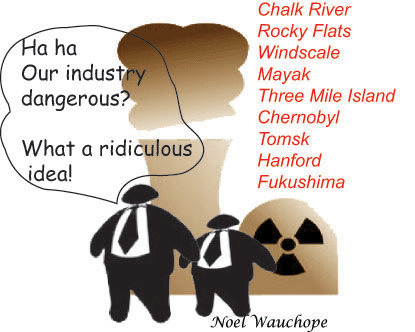
The Hill, BY EDWIN LYMAN, OPINION CONTRIBUTOR – 07/25/23
Imagine a future where experimental nuclear reactors are scattered across the U.S. landscape like so many Starbucks, in densely populated and rural areas alike. Also, imagine they are allowed to operate without thoroughly reviewed and validated safety analyses, highly trained personnel at the controls, the protection of armed security officers, any provisions for off-site emergency planning and robust containment structures that would help prevent the release of highly hazardous radioactive materials if the worst happens.
This is the future that many in the nuclear industry, along with their vocal supporters, are working overtime to achieve.
The only bulwark against the most dangerous proposals is the Nuclear Regulatory Commission, the independent federal agency in charge of protecting the public from the radiological hazards of civil nuclear facilities. However, the NRC is facing a coordinated, massive push by the industry to drastically weaken its safety and security regulations and speed up the implementation of its back-to-the-1950s dystopian vision.
NRC critics blame the agency for the slow pace of new nuclear reactor licensing and construction in the U.S. But the NRC should not be scapegoated for the nuclear industry’s own failures. These include repeatedly missing cost and schedule targets for the Vogtle-3 reactor in Georgia, or supplying technically deficient, inadequate applications, such as Oklo’s attempt to apply for a license for a “micro” nuclear reactor, which the NRC justifiably rejected, and NuScale’s application for a standard design approval for its small modular reactor, which the NRC found contained numerous gaps.
The industry’s ire has focused on the NRC’s development of the “Part 53” rule for so-called risk-informed licensing of new reactors, which proponents argue are so much safer than the currently operating fleet that they need far less regulatory oversight across the board. But the fundamental problem is that many of these reactor designs, which introduce new safety and security risks, only exist on paper or have had extremely limited (and not necessarily relevant) real-world experience………………………………………………………………………………………………………………….
Some may ask why nuclear power still requires stringent regulation given that proponents claim it is already the safest form of energy. But although some nuclear supporters attempt to gaslight the public by playing down the massive health, environmental and economic impacts of the 1986 Chernobyl and 2011 Fukushima disasters, the fact remains that, unlike renewable energy technologies, nuclear power generates vast amounts of uniquely hazardous and long-lived radioactive materials as they operate. Not only are these substances highly carcinogenic, but evidence of their role in cardiovascular disease is growing.
Keeping these materials isolated from the environment will remain a critical obligation of the nuclear power sector as long as reactors continue to run and nuclear waste persists. NRC’s statutory authority must remain focused on ensuring radiological safety and security……………… https://thehill.com/opinion/energy-environment/4116386-the-misguided-push-to-weaken-nuclear-safety-standards-is-gaining-steam/
Oppenheimer and nuclear energy: Is India and the world moving away from this power source?
Nuclear energy has grabbed headlines ever since Christopher Nolan’s biographical film “Oppenheimer” was released. However, the world now making a gradual shift towards solar energy
Inia Today, Samrat Sharma, New Delhi, Jul 26, 2023
With the release of Christopher Nolan’s biographical film “Oppenheimer”, the awesome power of nuclear energy is once again under the spotlight…………. However, the invention that was once considered a game changer is gradually losing its charm now.
…………………………..it is not just in India that nuclear energy has little role to play in the overall electricity mix. Aside from countries like France, the U.S., Japan, etc, the popularity of nuclear power has declined significantly across the world. Earlier this year, the German government closed down the country’s three remaining nuclear power plants.
……………….. One of the major reasons for the downfall is the rise of renewable energy prospects, mostly solar energy.
“In 2021, the global solar capacity was 1.04 terawatts, while the global nuclear capacity was 463 gigawatts. This means that solar energy is already more than twice as abundant as nuclear energy,” Manish Purohit, a former scientist in the Solar Panel Division of the Indian Space Research Organisation, told India Today.
There are multiple reasons behind solar power replacing nuclear power, which include the falling cost of solar panels and units, higher speed of deployment, no threat of waste disposal and accidents, and increased government support, Purohit explained. Currently, there are over 90,000 metric tonnes of nuclear waste that require careful disposal globally.
Iran says ready to settle remaining dispute with IAEA over nuclear program
IXinhua https://www.chinadaily.com.cn/a/202307/27/WS64c15113a31035260b818ab4.html 2023-07-27
TEHRAN – Iran’s nuclear chief said on Wednesday the country is determined to close a remaining case of outstanding differences with the International Atomic Energy Agency (IAEA) regarding its nuclear program, according to the Iranian Students’ News Agency.
Speaking to reporters on the sidelines of a cabinet meeting in the Iranian capital Tehran on Wednesday, President of the Atomic Energy Organization of Iran (AEOI) Mohammad Eslami said the country has sent a “comprehensive and written” response to the IAEA regarding the two remaining “undeclared sites,” in which the agency claims to have found “traces of uranium.”
If the agency does not accept the response and has any uncertainty or doubt regarding the issue, Iran will provide further explanation and review the documents, he added.
The AEOI chief said his organization is enriching uranium according to the level stipulated in a 2020 law passed by the Iranian parliament to counter the U.S. sanctions.
He added Iran’s “relations with the agency are based on the agreement reached with IAEA Director General Rafael Grossi during his visit to Tehran in March as well as the safeguards agreements and the Non-Proliferation Treaty and we are implementing what we have agreed to do.”
He noted that Iran and the IAEA are in “constant and sustainable” interactions with each other.
Faced with international sanctions, the country signed a nuclear deal, formally known as the Joint Comprehensive Plan of Action (JCPOA), with world powers in July 2015, agreeing to put some curbs on its nuclear program in return for the removal of the sanctions on the country. The United States, however, pulled out of the deal in May 2018 and reimposed its unilateral sanctions on Iran, prompting the latter to drop some of its nuclear commitments according to the law passed by its parliament in December 2020.
The Iranian parliament’s law mandated the government to restrict inspections of Iran’s nuclear facilities by the IAEA and accelerate the development of the country’s nuclear program beyond the limits set under the JCPOA.
The talks on the JCPOA’s revival began in April 2021 in Vienna. No breakthrough has been achieved after the latest round of talks in August 2022.
UK govt to pour another £170million of taxpayers’ cash into planned Sizewell C nuclear plant: is it value for money?
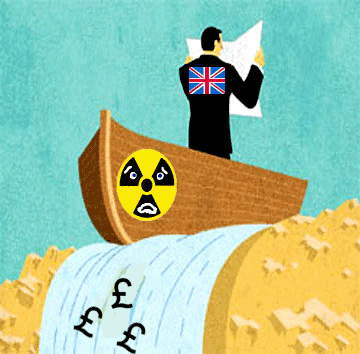
The government is to plough another £170million of taxpayers’ cash into the
proposed Sizewell C nuclear plant. The Department for Energy Security and
Net Zero said the cash was in addition to the £679 million the government
invested in the Suffolk power station late last year, when it took joint
control of the project with EDF, of France.
Last year’s investment included about £100 million to buy China General Nuclear out of its 20 per cent stake. EDF said: “This is another big endorsement and will put us in an
even stronger position to begin full construction.” The government said
the money would be used “to prepare the Sizewell C site for future
construction, procure key components from the project’s supply chain and
expand its workforce”. It said it was “previously allocated funding for
development work”.
The government pledged in the budget in 2021 to
provide up to £1.7 billion “to enable a final investment decision in a
large-scale nuclear project this parliament”.
Stop Sizewell C, a campaign group, said: “It sticks in the throat to see ministers splashing more taxpayers’ cash months before a final investment decision, while maintaining total secrecy about whether Sizewell C can achieve value for money.”
Times 25th July 2023
https://www.thetimes.co.uk/article/cash-boost-for-construction-of-sizewell-c-nuclear-plant-rg6rr5slv
Aware people in Suffolk are astonished that very few people or organisations are consulted about changes to Sizewell C Nuclear’s Emergency Plan

Sizewell C has quietly submitted its construction Emergency Plan to Suffolk
County Council (you need to accept the disclaimer statement to see the
application). This Plan lays out adaptations to the existing Emergency
Plan, to cope with a situation where there are thousands of construction
workers in the vicinity of Sizewell B.
Given that the Plan’s primary
purpose is to keep the public safe and therefore affects everyone in the
local area, we (Stop Sizewell C) are astonished that Suffolk County Council
is consulting very few individuals and organisations over a short time
period.
Suffolk County Council 25th July 2023
http://suffolk.planning-register.co.uk/Planning/Display?applicationNumber=SCC%2F0051%2F23SC%2FDOR
Rising Global Interest to Join Nuclear Damage Compensation Treaty.
Mirage News, 26 July 23,
The Contracting Parties and Signatories to the Convention on Supplementary Compensation for Nuclear Damage (CSC) convened for their Third Meeting from 6 to 8 June 2023, at the Japanese Ministry of Education, Culture, Sports, Science and Technology (MEXT), in Tokyo, Japan.
Some 70 representatives from 10 Contracting Parties and Signatories (Argentina, Canada, India, Japan, Lithuania, Indonesia, Philippines, Romania, United Arab Emirates, United States of America) and eight invited observer countries (Brazil, China, Cambodia, Malaysia, Thailand, Uruguay, United Kingdom and Viet Nam) participated in the Third Meeting. Several representatives of intergovernmental organizations, the nuclear industry and academia gave presentations. The IAEA Office of Legal Affairs acted as the Secretariat to the Meeting.
The event provided an opportunity for the Contracting Parties and Signatories to build on the momentum created by their inaugural Meeting in Ottawa, Canada, 2019 and the Second Meeting in Vienna, Austria, 2022, especially with respect to achieving a global regime based on the CSC……………………………………………………………………………………………………………
The CSC was adopted under IAEA auspices in 1997 and currently has 11 Contracting Parties (Argentina, Benin, Canada, Ghana, India, Japan, Montenegro, Morocco, Romania, United Arab Emirates and United States of America) and 11 Signatories (Australia, Czech Republic, Indonesia, Italy, Lebanon, Lithuania, Mauritius, Peru, Philippines, Senegal, Ukraine). The Convention functions as an “umbrella” for all countries that are party to one of the existing international conventions on civil liability for nuclear damage or have national legislation in place conforming to the principles underlying those conventions. An online CSC Calculator is available to countries to run scenarios of contributions to the international fund. https://www.miragenews.com/rising-global-interest-to-join-nuclear-damage-1054123/
Aliens in outer space – a little sad on watching earthlings.

‘Era of global boiling has arrived’
Gulf Stream could collapse as early as 2025.
Extreme weather linked to climate change the ‘number one threat’ to natural World Heritage sites.
‘Very worried’ catastrophic 2025 prediction
Climate Change Poses Safety Threat to Nuclear Facilities: IAEA
‘No one wants to be right about this’: climate scientists’ horror and exasperation as global predictions play out.
Shell’s ‘obscene’ $5bn profits reignite outrage amid climate crisis
‘We are damned fools’: scientist who sounded climate alarm in 80s warns of worse to come
Climate change’s next victim: Sports (shock, horror!)
Western media as cheerleaders for war

Carried away by the logic of one-upmanship that they impose on the world of politics, the media are co-producing Western countries’ progressive entry into the war against Russia. Everything about the way they treat the conflict suggests that such a confrontation is inevitable. This battle of opinion, which began a year ago, is now being waged on three fronts at once. First, the beatification of Zelensky,
Western journalists are all but unanimous that negotiating with Russia would equal forgiving it its aggression. Nothing short of a crushing victory for Ukraine is conscionable. The risk of escalation is rarely mentioned.
Le Monde Diplomatiqe by Serge Halimi & Pierre Rimbert, Translated by George Miller March 2023
After speeches by British prime minister Rishi Sunak and Ukrainian president Volodymyr Zelensky at a joint press conference on 8 February at a military base in southwest England, it was time for questions. BBC Ukraine correspondent Natalia Goncharova greeted Zelensky with, ‘I would really like to hug you, but I’m not allowed.’ Ignoring his security service, Zelensky got down from the podium and embraced her to general applause. Then Goncharova asked Sunak, ‘You know that Ukrainian soldiers are dying every day. Don’t you think that that decision about warplanes is taking too long?’ In 2003, during the invasion of Iraq, the embedding of journalists with the US military had caused some in the profession to wince; 20 years on, in the Ukraine war, it’s become a journalism of the all-out embrace.
In France, too, the code of conduct set out by Hubert Beuve-Méry, founder of the daily Le Monde (and this publication), counselling ‘contact and distance’, has been set aside. At least when it comes to Volodymyr Zelensky: ‘In real life, he’s nice, quite cool, often funny and not at all grudging with his time,’ said Isabelle Lasserre, Le Figaro’s diplomatic correspondent and darling of the media, France Inter and news channel LCI in particular, since she adopted an uncompromising stance on Ukraine. ‘He has an incredible leadership style, a very intense charisma. He gets straight to the point, he always speaks with conviction,’ she told C politique on France 5 (12 February 2023).
Eulogies, hugs, gushing questions: the Western press’s veneration of this president in khaki fatigues suggests media in thrall to political leaders. But that impression is misleading. Since Donald Trump’s election in 2016, and particularly since Russia’s aggression in Ukraine, ‘journalism’ in the United States and also in Europe has increasingly behaved like an autonomous political force with its own ideological agenda.
Unlike traditional political parties, the media are simultaneously bringing to life and feeding rival tendencies that form two branches of the market for news: one on the hard right (Fox News, The Sun, CNews etc), the other liberal (the New York Times, the Washington Post, CNN, the Guardian, Le Monde etc). With these two audiences, both of which demand their own partisan reading of events, ‘journalism’ is careful not to alienate the faithful by ever making them doubt the bewitching story it serves up.
Media in combat mode have polarised the US around fictitious issues (‘Trump is the Kremlin’s puppet’, ‘Joe Biden’s election victory was rigged’). Since the invasion of Ukraine, they have involved the West in a war against Russia by suppressing any public debate on the risks of military escalation.
This undertaking has been aided by instincts inherited from the cold war: (much-replayed) archive footage of American schoolchildren learning how to protect themselves from a Soviet nuclear attack; a long-standing obsession with communist subversion in the US; and recurrent paranoia about the ‘enemy within’.
It was conceivable, though, that the demise of the Soviet Union and the election of a president who enjoyed strong support in the West, and was almost servile towards it — Boris Yeltsin — would call for more cordial relations between the two former protagonists in a confrontation that had become futile. The Russian people longed for this just as much as their leaders: in the early 1990s, when former Soviet citizens were asked about their favourite international partner, 74% of them picked the US (1).
To ensure US hegemony
This enthusiasm was not mutual. US politicians and media treated Russia as a defeated country, whose role was to not only bend to the rules of then-triumphant neoliberal capitalism, but also to remain strategically weak so that no hostile power could ever again threaten US hegemony. In 1992, only a few weeks after the end of the Soviet Union, the leaked draft Defense Planning Guidance (DPG), better known as the Wolfowitz Doctrine, a Pentagon document that the press published immediately, already had Russia in its sights. It stated that Washington would henceforth need to ‘refocus on precluding the emergence of any future global competitor’. The power of American ‘conviction’ would be all the more compelling because the Pentagon promised to back it up with a military capable of ‘preclud[ing] hostile competitors from challenging our critical interests’ (2). However, ‘the master of the Kremlin’ was then Boris Yeltsin, not Vladimir Putin.
But that barely mattered, because with rare exceptions — notably Saudi Arabia and Israel — the US and its media were almost equally inflexible towards and dismissive of their puppets (Yeltsin), their ‘allies’ (European states) and their enemies (China, Russia, Iran). The idea in the Wolfowitz Doctrine that the international order is ultimately guaranteed by the United States and that the US must be in a position to ‘act independently, as necessary’ when international support is ‘sluggish or inadequate’ was the consensus in the State Department, Washington think tanks and newsrooms. This imperial prism explains the unquestioning acceptance with which all American wars, including the most illegal ones, have been greeted by Fox News and the New York Times.
Journalists have gone back to basics. In the Ukraine war, Chinese, Indian, Latin American, Arab or African viewpoints don’t count?
So Russians gradually became disenchanted with the West…………and NATO’s ongoing expansion, together with the experience of privatisation, finally convinced the Russian public that the US intended, if not to ‘humiliate’ Russia, then at least to subordinate it. ……….
In the US, the construction of the Russian enemy had proceeded in parallel as disagreements and tensions between the two former superpowers grew. ………………………………………….
‘Trump, Putin’s lackey’
Much inanity flowed from this belief. And the European media picked up most of it…………………………………………………….
The US mainstream media’s war on Trump illustrated the transformation of the news business into a political force………………………………………………….
……..journalist Jeff Gerth, who spent three decades on the New York Times, recently published a rolling investigation of the media’s Russiagate coverage in the respected Columbia Journalism Review (5). This mountain of fake news, whose main purveyors were the New York Times, the Washington Post, CNN and MSNBC, asserted that, without collusion between Trump and Putin, Clinton would have been sitting in the Oval Office. Unfortunately for them, after two years of investigation, special prosecutor Robert Mueller, a darling of the Democrats, burst this bubble and disproved any collusion (6). The Washington Post even had to correct several of its scoops and take down the most grotesque fabrications from its website.
The Columbia Journalism Review’s investigation can be read like a textbook of journalistic errors: elision of information that doesn’t corroborate a reporter’s thesis, a competitive race for scoops at the expense of rigour, passing off as ‘Russian disinformation’ stories that are true but embarrassing to the Democrats, the misleading presentation of statistics, misuse of anonymous sources (a thousandfold during the Trump era) vaguely described as ‘administration officials’ or ‘intelligence officials’.
Misleading use of statistics
Even when the agencies corrected or denied the information they had published, the press, acting as an autonomous political force, went on to make doctored ‘revelations’ to keep up the pressure on the White House. ……………………………………………….
As if to confirm this damning indictment of the press, the media outlets involved greeted Gerth’s investigation with stony silence, no doubt confident that their readers would rather have their convictions reaffirmed than be disabused. The result, Gerth explained, is that a profession that is highly influential in public life faces no penalty when it goes wrong……………………………….
Russiagate had turned questions about a ‘Russian threat’ into a domestic political weapon; the media emerged from it discredited. But the war in Ukraine saved them in a sense. It enabled them to recycle their obsession, this time based on real aggression and in a more favourable political context, since both US parties agree that their country should be arming Ukraine against Russia for as long as it takes.
The cult of ‘Western values’

A similar consensus exists in Europe. The 1999 Kosovo war had already seen Germany’s Greens commit themselves wholeheartedly to NATO; even today, the most fervent support for Kyiv is found among the liberal left and environmentalist groups that were once tempted by pacifism. . For these educated sections of society, defending Ukraine is a secular religion: journalists, high priests of the cult of ‘Western values’, preach the salvation of progressive souls at last mobilised against Moscow’s imperialism. Putin’s nationalist diatribes and reactionary traditionalism encourage this militancy, as does the presence of a Democrat in the White House.
The almost total absence of dissenting voices within the ‘progressive’ universe is also partly explained by the price exacted for straying from the bellicose line that is asserted with almost imperceptible shades of difference by LCI and France 2, Médiapart and Paris Match, L’Opinion and Politis, RTL and France Inter. Any reservation expressed about the general mobilisation for Ukraine sparks controversy or scandal,………………………………………………………………
This question gives rise to others. Why do the hosts of this morning show have guests who are almost unanimously in favour of increasing military aid to Kyiv: François Hollande, Bernard Guetta, Isabelle Lasserre, Pierre Servent etc? Why is it that from 8pm on LCI, under the leadership of Darius Rochebin (an admirer of Bernard-Henri Lévy), ‘debates’ on Ukraine assemble panels of Atlanticist journalists (a rotating cast of Pierre Servent, Isabelle Lasserre and Nicolas Tenzer), former NATO researchers (Samantha de Bendern), an exiled ‘former KGB agent’ and Ukrainian activists? Why do magazine covers look like leaflets distributed in Kyiv (‘Ukraine must win’, ran the headline in L’Express on 16 February 2023)? Why do reporters make do so often with simply illustrating a story devised in newsrooms in Paris and why, finally, do editorials only add a patina of respectability to this crusading tone?
It is as if everyone had agreed there is only one possible foreign policy, the policy being pursued by Ursula von der Leyen and the US State Department, and summed up by the German foreign minister on 25 January: ‘We’re waging a war against Russia’. The absence of pluralism is all the more noticeable because any leftwing opponents stay silent or invisible (8). …………….. journalists have gone back to basics. In the Ukraine war, Chinese, Indian, Latin American, Arab or African viewpoints don’t count
Carried away by the logic of one-upmanship that they impose on the world of politics, the media are co-producing Western countries’ progressive entry into the war against Russia. Everything about the way they treat the conflict suggests that such a confrontation is inevitable. This battle of opinion, which began a year ago, is now being waged on three fronts at once. First, the beatification of Zelensky, who has become the most famous influencer on the planet, to the extent that no book fair, film festival or American football match can claim success without his blessing via video link.
……………………………………………………………..The fear of offending Kyiv sometimes borders on self-censorship: when the New York Times ran a story online initially headlined ‘Ukraine corruption scandal stokes longstanding aid concerns in US’ (27 January 2023), it was immediately amended to read: ‘US officials overseeing aid say Ukrainian leaders are tackling corruption.’
The West’s sanctions campaign
The second front is the campaign to destroy Russia economically and militarily through sanctions and stepping up arms deliveries to Ukraine in the form of artillery, missiles, tanks and fighter planes. Not content with brushing aside the debate on the dangers of such a military escalation, the media equate any idea of negotiation with giving Moscow a full pardon (shades of Munich, 1938). As for economic retaliation, they are reluctant to admit their relative failure;…………………………………………………………..
The third front, which is probably most effective because least visible, is the avoidance of any historical perspective on the conflict and unfolding events. When France Inter’s geopolitics commentator Pierre Haski, who is also the president of Reporters Without Borders, rightly accused the Russians of ‘hitting cities and infrastructure’ (14 February 2023), he failed to point out that this is precisely what NATO did during the war in Kosovo. ………………………………………
The idea that other people might compare Russian imperialism to that of the US — wars without a UN mandate in Kosovo and Iraq, Washington’s denunciation of several disarmament agreements with Moscow, embargoes and boycotts against Cuba and Iran, extra-judicial executions by drone, the persecution of Julian Assange and Chelsea Manning — is unwelcome in most newsrooms. As a result, these Western decisions are erased from memory or treated as exceptions, not part of a pattern.
………………………………………………. But the biased presentation of history does not just impoverish Westerners’ ability to judge the ongoing war. It also renders less comprehensible the reaction of other peoples who are aware of facts that their media are willing to tell them. For Arabs, Africans or Latin Americans, the assertion that Ukraine is ‘fighting for our values’ (11) can only reawaken memories of the Iraq war. At the time when the US was preparing to invade that country on a false prospectus, it received the support of eight European leaders — from the Czech Republic, Spain, Portugal, Italy, the UK, Hungary, Poland and Denmark — in the form of a joint letter published in the Wall Street Journal on 30 January 2003. It began, ‘The real bond between the United States and Europe is the values we share: democracy, individual freedom, human rights and the Rule of Law.’ The result: a country destroyed and hundreds of thousands of lives lost.
Does this mean that beyond Ukraine, other acts of aggression, massive destruction, violations of people’s right to self-determination have not aroused the same indignation, the same batteries of sanctions, the same abundance of military assistance to the besieged country? Silence in the ranks! https://mondediplo.com/2023/03/08media
US, Australia Launch Largest-Ever Joint Military Exercise
This year’s Talisman Sabre exercise involved 11 other nations and over 30,000 military personnelby Dave DeCamp Posted on https://news.antiwar.com/2023/07/23/us-australia-launch-largest-ever-joint-military-exercise/
The US and Australia on Friday launched the largest-ever iteration of their Talisman Sabre exercise as the US is increasingly focused on building alliances in the Asia Pacific against China.
The Talisman Sabre started in 2005 as a biennial exercise between the US and Australia. This year’s iteration involves participants from 11 other countries and over 30,000 military personnel.
US Navy Secretary Carlos Del Toro spoke at the opening ceremony on Friday and said the massive drills served as a warning to China. “The most important message that China can take from this exercise and anything that our allies and partners do together is that we are extremely tied by the core values that exist among our many nations together,” he said at a naval base in Sydney.
In a symbolic gesture to demonstrate the growing military ties between the US and Australia, the US on Saturday commissioned a naval vessel in Sydney, the USS Canberra, an Independence-class littoral combat ship. It marked the first time the US ever commissioned a US Navy ship was commissioned in a foreign port.
Del Toro has previously said that the US Navy envisions turning Australia into a full-service submarine hub for the US and its allies in the region under the AUKUS military pact that was signed between the US, Britain, and Australia in 2021 that will result in Canberra acquiring nuclear-powered submarines.
The US and Australia were joined in the Talisman Sabre exercises by militaries from Fiji, France, Indonesia, Japan, South Korea, New Zealand, Papua New Guinea, Tonga, Britain, Canada, and Germany. Personnel from the Philippines, Singapore, and Thailand are attending as observers.
The exercises involve live-fire drills and will conclude on August 4. A Chinese naval vessel was spotted surveilling the drills, which Australian military officials said have happened since 2017.
Keeping contentious nuclear plant open could cost Californians $45B: report

Th Hill, by Sharon Udasin – 07/25/23
Extending operations of the Diablo Canyon nuclear power plant through 2045 could cost California ratepayers as much as $45 billion, a new report has found.
The state’s biggest utility, Pacific Gas and Electric (PG&E), is currently in the process of seeking a license renewal that could enable the aging facility to run for another 20 years — with the widespread support of state legislators, but in opposition to environmental activists.
If the plant ends up staying online for two more decades, total costs to run the site could range from more than $20 billion to nearly $45 billion from 2023 through 2045, according to a new analysis from the Environmental Working Group (EWG).
“Keeping Diablo Canyon open past its closure date is a terrible idea for many reasons, including the staggering price tag that unwitting ratepayers will face for keeping the dilapidated and dangerous nuclear plant operating,” EWG President Ken Cook, who is also a Bay Area resident, said in a statement.
While PG&E in 2016 had announced plans to retire the site and decommission its two reactors when their licenses expire — in November 2024 and August 2025, respectively — California enacted legislation last fall seeking to extend operations until 2030.
About six months later, the federal Nuclear Regulatory Commission granted PG&E an exemption that enabled the plant to stay open under its current licenses while the agency considers renewal application — whose terms would apply for 20 years……………………………………
The EWG analysis — based in part on testimony filed by the Utility Reform Network, a consumer advocacy group — estimated that keeping the plant open would likely require hundreds of millions of dollars every year.
Because that cost would need to be passed on to the consumer, households could then expect an increase of between $55–124 per year on typical utility bills, according to the analysis.
“It’s clearly a high-cost, no-reward and puzzling scenario for California, given its decades-long leadership on the environment,” a statement from EWG said……………………………………..
The estimated $20 billion–$45 billion cost to ratepayers could be even higher, the EWG analysts argued, stressing that these projections don’t account for expenditures associated with disasters, such as radiation leaks or earthquake damage.
Grant Smith, EWG energy advisor and co-author of the report, argued that the 6-8 percent of California’s electricity that is provided by Diablo Canyon could easily come from cleaner and safer sources.
“California added enough renewables in the past year to match the power output of Diablo Canyon,” Smith said.
“Proven, reliable clean energy choices such as energy efficiency, solar, wind, battery storage and demand response are far safer options than allowing Diablo Canyon to continue operating,” he added. https://thehill.com/policy/equilibrium-sustainability/4117145-keeping-contentious-nuclear-plant-open-could-cost-californians-45b-report/
UPDATE – The Zaporozhiya Nuclear Plant: Zelenskiy’s Next Simulacra?
Russian and Eurasian Politics, by GORDONHAHNJuly 22, 2023
To update my original article “The Zaporozhiya Nuclear Power Plant: Zelenskiy’s Next Simulacara” it is worth noting the following points:
(1) There has been no incident, obviously, at the plant either of Russian origin, as Ukrainian president Volodomyr Zelenskiy claimed was being planned, or of Ukrainian origin, as I argued was possible and the Russians claimed was almost certain in response to the Ukrainian claims. However, there was, as I suspected, clearly another Ukrainian fake, another Zelenskiy simulacra, since there was not ‘Russian nuclear terrorist attack and since the IAEA came out and refuted the Ukrainians’ claims that the Russians had planted explosives at the Zaporozhiya plant.
Second, it appears that this particular Zelenskiy simulacra was an effort to push the failure of the Ukrainian counteroffensive out of the headlines on the eve of NATO’s Vilnius summit. It may be that, as some sources report, that European leaders intervened to prevent the Ukrainians from following through on their supposedly planned false flag.
Third, it is astonishing how the Western media and Wstern governments, which was heavy breathing in its hard work of repeating the Kiev Maidan regime’s talking point about the ‘imminent Russian nuclear terrorism, has shoved the entire episode of Zelenskiy’s ‘Russian nuclear terrorist attack’ into the bottomless ‘memory whole’ that serves this war.
This follows the same pattern of moving on quickly after the numerous controversial and false claims that have come out of Kiev both before and during the war. Regarding the latter, there s already a long list: the Kakhovskii damn attack, the Nord Stream pipeline attack, the ‘Russian massacre’ at Bucha (where is the list of names of those killed and the detailed forensics reports on how and when precisely they died?), the hero Ukrainian pilot ‘The Ghost’ who never existed, the heroic defense of Snake Island that never occurred, the bombing of the Mariupol maternity hospital, among others.
This is part of a larger Western pattern of memory-wholing………………………………………….. The point is not that the West and Ukraine always lie or that lie more than Moscow, which it seems they do, however. The point is that Zelenskiy and his government comprise a serial fake artist, the West is their microphone, and Russia has work to do to compete with its opponents in the sphere of ‘public diplomacy.’
The original article reads as follows:
It appears almost certain that Ukrainian President Volodomyr Zelenskiy and his generals, rather than Russian President Vladimir Putin and his, are considering and preparing a false flag nuclear provocation at the Zaporozhiya nuclear power plant (ZNPP) set for July 7-9 to frame NATO summit and perhaps also to provide political cover for a Polish-Baltic republic move of forces into western Ukraine. Such a nuclear event will not be on a scale even approaching the Chernobyl accident, but it will be sufficient so that it can be framed as grave ‘Russian crime against humanity’ and used by Kiev to gain certain advantages via the West,
The incident likely will occur as a result of a Ukrainian attempt to seize the Zaporozhiya NPP in response to which Russian troops will be accused of detonating explosives creating a dirty bomb effect on a small scale. Ukrainian troops will cross the dried-up Dnepr, seize the ZNPP, detonate explosives there themselves. This will allow Kiev and the West to accuse Moscow of ‘nuclear terrorism’.
The signs of an impending false flag operation have been flashing for weeks, with numerous Ukrainian commentaries to the effect that the Russians were planning a nuclear terrorist operation at the Energodar ZNPP.
. The most recent make things pretty clear. IAEA inspections have never endorsed Ukrainian claims – ongoing for over a year now – that it is Russian forces that fire on the ZNPP. Indeed, Russian forces have occupied all of Energodar and the ZNPP and have for well over a year, and IAEA has a team permanently stationed at the plant along with Russian RosAtom personnel, who now run the plant.
More recently, on June 23rd Ukrainian Main Military Intelligence Directorate chief Kyrylo Budanov reported that Russia had completed preparations for carrying out a nuclear terrorist attack at the ZPNN
(https://twitter.com/TheStudyofWar/status/1673143608315367425?s=20).
On June 29-30, Ukraine held nuclear accident civilian defense exercises in Zaporozhiya and the neighboring region of Kherson simulating the effects of an attack on the Zaporizhiya plant………………………………………………………… IAEA inspector recently refuted Zelenskiy’s claims that Russia had moved explosives into the plant in preparation for its terrorist attack, noting “found “no visible indications of mines or other explosives” at the Zaporizhiya plant (www.newsweek.com/russia-could-blow-nuclear-plant-after-handing-it-ukraine-zelensky-1810318). ………………………………………………………………., the pro-Ukrainian Institute for the Study of War concluded it is unlikely that Russia would undertake such a nuclear gambit, casting doubt on Kiev’s propaganda campaign.
It must be kept firmly in mind that Ukraine is desperate. Desperate men do desperate things. Kiev badly needs additional arms supplies from the West, and it was hoped significant gains of territory in the first month of Kiev’s counteroffensive would be sufficient to market Ukraine’s military as worthy of greater support to the July 11 NATO summit, as Zelenskiy himself has acknowledged (https://t.me/rezident_ua/18566). But such success has not materialized and could not have.
Russian forces have overpowering advantages in air, artillery, drone, heavy ground equipment (tanks, APCs) and are attritting Western supplied Abrams tanks and Bradley fighting vehicles rapidly. Ukrainian forces are now increasingly implementing their counteroffensive without air cover, tanks, and artillery, suffering massive casualties for minimal gains in territory, which are most often quickly lost again. In a recent Washington Post interview Zalyuzhniy recently berated the West for its unrealistic expectations regarding the counteroffensive, particularly in light of Western failure to supply Kiev with F-16s and sufficient numbers of tanks, APCs, artillery, and ammunition……………………………………………………………………….. more https://gordonhahn.com/2023/07/22/update-the-zaporozhiya-nuclear-plant-zelenskiys-next-simulacra/
Japan Doesn’t Want to Fight for Taiwan and Neither Do Other US Allies

if Japan fought alongside the US in a hypothetical conflict with China over Taiwan, the Japanese civilians and economy would suffer greatly. What’s more, in a conflict between two nuclear powers, China and the US, Japan may itself become a nuclear target,
22.07.2023 Ekaterina Blinova https://sputnikglobe.com/20230722/japan-doesnt-want-to-fight-for-taiwan-and-neither-do-other-us-allies-1112066099.html
Despite Japan bolstering its military capabilities under the nation’s new Defense Buildup Program, it appears to have zero appetite to engage in direct confrontation with China over Taiwan, Western media and think tanks say.
US military facilities in Okinawa, Japan, might play a central role in any Taiwan crisis, according to the Western press. Moreover, American military analysts have almost unanimously agreed that Japan is “the most likely US ally to contribute troops” in a potential US conflict with China over the island.
Back in October 2021, War on the Rocks, a US online media outlet, quoted a Japanese poll which appeared to indicate that 74% of respondents would support their government’s military engagement in the Taiwan Strait against China. The report further speculated about the possibilities of circumventing the country’s Constitution, which limits Japan’s ability to participate in conflicts.
Bold statements made by some Japanese officials also seemed to confirm Tokyo’s resolve. One of them, former Minister of Defense Yasuhide Nakayama, insisted in June 2021 that Taiwan is a “red line” and that “we have to protect Taiwan as a democratic country.” Japan and Taiwan are geographically close and any possible military actions over the island could potentially affect Japan’s Okinawa prefecture, Nakayama argued at the time.
Is China Going to Take Taiwan by Force?
The People’s Republic of China, which considers Taiwan its inalienable part, has repeatedly stated that it is going to reunite with the island peacefully, referring to years of fruitful collaboration with the former Taiwanese government formed by members of Kuomintang Party.
The Kuomintang can make a spectacular comeback during the Taiwanese general elections, scheduled for January 2024. The party’s victory could nip the fuss around Taiwan’s secessionism and potential conflict in the bud. Even US lawmakers admit it, considering the Kuomintang’s win a potential “threat” to Washington’s plans in the Asia-Pacific.
Biden Fast-Tracks Arming of Taiwan
For their part, the Biden administration and American legislators have repeatedly issued provocative statements with regard to the island, with the US president claiming time and time again that Washington is ready to “protect” Taiwan “militarily.” The US has also bolstered arms sales to the island.
In late June, Biden approved two potential arms sales totaling $440 million to Taiwan, including ammo and other military equipment. Earlier, in March, the US State Department approved a $619 million sale of hundreds of missiles to Taiwan to arm its new US-made F-16 jet fighters. Moreover, the Biden administration has started to use fast-track authority for accelerating the pace of the arming of Taiwan. The same mechanism has been used by Biden to speed-up Ukraine’s militarization.
Japanese Leadership Seems Unhappy With US Bellicosity
The unfolding situation has apparently given shivers to the Japanese leadership. The Wall Street Journal broke on Monday that the Japanese government is ready to give permission to the US to use bases in Japan in the case of conflict over Taiwan, but Tokyo’s own participation is unlikely.
Per the report, Washington invited Tokyo to consider using its Self-Defense Forces, especially the Maritime Self-Defense Force for hunting for Chinese submarines around the island of Taiwan and for other military missions.
Presently, Japan is home to about 54,000 US troops, according to the Council on Foreign Relations. It also hosts the headquarters of the US Navy’s 7th Fleet and the 31st Marine Expeditionary Unit.
Tokyo’s concerns have certain grounds. In May, Japanese scholar Kiyoshi Sugawa wrote for Responsible Statecraft, the online magazine of the Quincy Institute (a DC-based think tank), that if Japan fought alongside the US in a hypothetical conflict with China over Taiwan, the Japanese civilians and economy would suffer greatly. What’s more, in a conflict between two nuclear powers, China and the US, Japan may itself become a nuclear target, Sugawa warned.
The DC-based think also refers to the recent Japanese polls which indicate that just 11% of Japanese respondents consider it possible to fight alongside the US against China, while 27% said that their forces should not cooperate with the US military at all. The majority (56%) said that providing logistical support to the US would be more than enough in the event of the conflict.
Nobody Wants to Die for Uncle Sam
What’s more, Japan is not the only US ally unwilling to fight with China over Taiwan. The Australian government has recently signaled that it gave no promises to Washington about military participation in a potential conflict. The Philippines does not want to get dragged into the conflict, either.
When it comes to South Korea, it also lacks any enthusiasm of joining the US in a combat operation in the Taiwan Strait. Western observers draw attention to the fact that South Korean President Yoon Suk-yeol avoided meeting with then-US House Speaker Nancy Pelosi in Seoul after her controversial tour to Taiwan. The Diplomat suggested that Seoul has at least three reasons to avoid a possible war over the island. First, the China market accounts for 30% of South Korea’s total trade; second, Seoul fears that a Taiwan conflict would increase “the North Korean threat”; third, for Seoul friendly relations with Beijing is a guarantee against a conflict with Pyongyang.
Still, there is yet another US regional treaty ally, Thailand. However, according to the DC-based think tank, it’s completely impossible to force Bangkok to fight against China for the sake of Taiwan.
While muddying the waters of the Taiwan Strait, the US risks staying face-to-face with China which would mean a defeat in a possible military standoff, judging from the US’ earlier war game simulations.
1 This Month

Read the Public Inquiry Report, the Commissioners’ report, Surrendering Australia: The AUKUS Deception is available to download for free at aukuspublicinquiry.com. Or just watch the replay of the National Press Club Luncheon.


19 November – Webinar – The Reality of Reprocessing
Time: 11:00 AM Pacific Time (US & Canada) / 2:00 PM Eastern / 7:00 PM UK / 8:00 PM CET
Register for the Zoom Event Here



Shut down the radiation-damaged Heysham nuclear reactors now
To see nuclear-related stories in greater depth and intensity – go to https://nuclearinformation.wordpress.com

Say No to NASA’s Reckless Nuclear Reactor on the Moon
Say No to NASA’s Reckless Nuclear Reactor on the Moon
-
Archives
- November 2026 (94)
- October 2026 (302)
- September 2026 (339)
- August 2026 (330)
- July 2026 (355)
- June 2026 (287)
- May 2026 (306)
- April 2026 (356)
- March 2026 (251)
- February 2026 (267)
- January 2026 (308)
- December 2025 (358)
-
Categories
- 1
- 1 NUCLEAR ISSUES
- business and costs
- climate change
- culture and arts
- ENERGY
- environment
- health
- history
- indigenous issues
- Legal
- marketing of nuclear
- media
- opposition to nuclear
- PERSONAL STORIES
- politics
- politics international
- Religion and ethics
- safety
- secrets,lies and civil liberties
- spinbuster
- technology
- Uranium
- wastes
- weapons and war
- Women
- 2 WORLD
- ACTION
- AFRICA
- Atrocities
- AUSTRALIA
- Christina's notes
- Christina's themes
- culture and arts
- Events
- Fuk 2022
- Fuk 2023
- Fukushima 2017
- Fukushima 2018
- fukushima 2019
- Fukushima 2020
- Fukushima 2021
- general
- global warming
- Humour (God we need it)
- Nuclear
- RARE EARTHS
- Reference
- resources – print
- Resources -audiovicual
- Weekly Newsletter
- World
- World Nuclear
- YouTube
-
RSS
Entries RSS
Comments RSS

