Australian media’s alarm over Chinese spy ship highlights stark double-standard
Pearls and Irritations, By Brian Toohey, Jul 31, 2023
The mainstream media has once more tried to generate alarm about the presence of two relatively innocuous Chinese electronic spy ships in international waters during the latest biennial Talisman Sabre military exercise spread across the Australian mainland and offshore oceans. It involves 30,000 troops from 13 countries. Although the Indian prime minister Narendra Modi had publicly assured his Australian counterpart Anthony Albanese that his country would attend, India did not turn up.
The unnamed enemy is China. A London based journalist reported from Townsville that the latest exercise was occurring against a “changing security landscape in which China grows evermore belligerent”. Apparently, he didn’t see any need to give evidence for this dubious claim. The defence minister, Richard Marles said Talisman Sabre provided an opportunity to practice “high-end” warfare. Just how participants such as PNG, Tonga and Fiji can do this is not clear. In a war, their role would be to let the US operate from their territory.
During the last exercise, the ABC’s national television news each night ran a video of the spy ships across the top of the screen. It hasn’t gone that far this time, but has given extensive coverage to the spy ships without explaining what harm they might be doing.
The participants don’t seem alarmed. During the last exercise, an ABC journalist asked an American soldier on an amphibious ship if he was worried about the presence of Chinese spy ships. He replied, “No, we do it to them and they do it to us”. An Australian military spokesman said this time that it had taken the appropriate precautions to ensure the spy ships don’t cause any harm. A core reason is that all signals traffic is encrypted. The reality is that the US and its allies conduct electronic intelligence gathering on a much greater scale than China can. The Pine Gap satellite ground station in central Australia, for example, generates billions of pieces of intelligence every day. This did not stop the ABC defence correspondent Andrew Green commenting on the activities of one Chinese spy ship, “If knowledge is power, China has just become more powerful”.
The RAAF’s P8A Poseidon electronic spy planes pose an aggressive threat to China by dropping sonar buoys in the South China Sea where its submarines are based on Hainan island close to the mainland. The small buoys contain an underwater microphone to pick up the sounds from submarines and relay the data to the spy planes conducting surveillance for potential military use.
Australia’s behaviour in the South China Sea is the same as if Chinese planes dropped sonar buoys outside the Fremantle base for Australian and US submarines. But the Chinese planes don’t do this. …………………………………………………………………………………
Certainly, Australian media would consider it provocative if China developed a long-range air capability and dropped sonar buoys off the submarine base at Fremantle. Albanese portrays the co-operation between the US and Australia to conduct potentially aggressive military activities in the South China Sea as part of the struggle between autocracies and democracy. Unfortunately, the draconian nature of some of Australia’s national security laws, deprive Australia of the right to call itself a liberal democracy.
Similar problems arise with Albanese’s iron grip on the Labor party’s federal conference in Brisbane on August 17-19. Although he describes Labor as a democratic party, he has effectively banned any parliamentarians attending the conference from supporting motions in favour of scrapping the AUKUS pact or the acquisition of nuclear submarines. Albanese has also banned any parliamentarian from supporting the existing conference policy of making it a priority to recognise of Palestine as a state. https://johnmenadue.com/australian-medias-alarm-over-chinese-spy-ship-highlights-stark-double-standard/
Australia – an international nuclear wasteland?

By Richard Broinowski, Jul 29, 2023 https://www.europeanleadershipnetwork.org/commentary/to-avoid-nuclear-instability-a-moratorium-on-integrating-ai-into-nuclear-decision-making-is-urgently-needed-the-npt-prepcom-can-serve-as-a-springboard/
The spectre of an international nuclear waste dump in Australia hangs over AUKUS and what this secretive agreement commits Australia to. Does it oblige us simply to dispose of spent nuclear reactors from our submarines if and when we get them? Or is there a hidden agenda whereby we also take the expired nuclear reactors from US and British submarines? If so, could it lead to Australia becoming a dump for high-level waste from civil nuclear reactors around the world?
Crikey.com is the latest to set speculative hares running. On 26 July it published an article by David Hardaker claiming the Albanese government had struck a secret deal under AUKUS to build a high-grade nuclear waste facility in Australia. Crikey claimed the deal has echoes that resound from 26 years ago.

Indeed it does. In December 1998, a proposal was made by Jim Voss, an American nuclear evangelist, who through his company Pangea proposed constructing an international nuclear waste repository on Billa Kalina, a pastoral lease near Roxby Downs in South Australia. Roxby Downs is a town built to service the giant BHP uranium, gold, copper and silver mine at Olympic Dam. Water for the town and the mine comes from Australia’s Great Artesian Basin.
As I wrote in Fact or Fission – the truth about Australia’s nuclear ambitions (Scribe 2003 and 2022), Voss’s proposal was leaked to the public by Friends of the Earth. Pangea was flying a kite on behalf of Anglo-American and possibly other nuclear interests. It made the unassailable observation that there is a real risk of nuclear weapons proliferation through the theft of plutonium or highly enriched uranium from nuclear power programs. Voss proposed a nuclear waste dump in Western Australia to take about a quarter of the high-level waste from the 445 commercial power reactors in 30 countries around the globe.
This, he claimed, would achieve several things – support international efforts to reduce nuclear weapons proliferation, further the objectives of nuclear disarmament, strengthen Australia’s relations with the United States, protect the global environment, and support the International Atomic Energy Agency (IAEA) and the United Nations. How all this would happen he didn’t say.

Such a repository has also been a gleam in the eyes of the Australian nuclear lobby and several politicians for many years. In 2006, John Howard’s Nuclear Review sought to expand Australia’s nuclear footprint by making nuclear power ‘a practical option’ in Australia’s electricity production. He also envisioned an international nuclear waste dump somewhere in the Outback. In 2014, former Prime Minister Bob Hawke, supported by then South Australian Premier Adam Giles, proposed to put a high-level nuclear waste depository at Muckaty Station north of Tennant Creek in South Australia. Hawke said the money earned would be of immense value to indigenous communities.

Prime Minister Tony Abbott had similar aspirations. So did Malcolm Turnbull, who in 2015 suggested that Australia should not just export uranium oxide (U3O8), but enrich it, process it into fuel rods, retain Australian ownership by leasing the rods abroad, and take them back as spent fuel for permanent disposal in Australia. That way, he said, Australia retained ownership of the uranium, preventing it from being diverted into clandestine weapons programs.
None of these proposals resulted in practical action. Except for qualified acceptance of the export of Australian yellowcake under safeguards to approved civil nuclear energy companies, the Australian public maintained an aversion to all things nuclear. The earlier careless disposal of nuclear tailings at Radium Hill, the contemptuous and ineffective clean-up of highly toxic plutonium in the aftermath of Britain’s nuclear tests at Emu Field and Maralinga in the 1950s, and French nuclear tests in the Pacific in the 1990s, all consolidated Australians’ aversion.
Following negative public reactions to his proposal, Voss quietly closed his Pangea office In January 2002 and retreated to Europe. But several years later, he was given renewed hope.

In 2016, the South Australian Nuclear Fuel Cycle Royal Commission under former South Australian governor Kevin Scarce concluded that although nuclear energy in Australia would not be economically viable for the immediate future, research should continue regarding the feasibility of an international spent fuel repository.

Voss returned to Australia in 2022, and took over the optimistically-named Ultra Safe Nuclear Corporation in Melbourne. Safe disposal of nuclear waste remained on his agenda. According to Crikey, Voss reckons very deep boreholes of around three to five kilometres could safely incarcerate spent fuel from the reactors of Australia’s nuclear-powered submarines for thousands of years.
Could such a storage facility attract US or British attention? Could their governments pressure Australia to take their own submarine spent fuel reactors as well as those of Australia?
They have strong motives to do so. Around 90 British spent fuel submarine reactors are said to be lying around Devonport Docks in Plymouth and the Rosyth dock in Fife, safeguarded only at huge expense. The US Navy has many more in open trenches at the Hanford Nuclear Reservation in Washington State. There are plans to process and store their transuranic elements somewhere permanently, but the Yukka Mountain Deep Geological repository in Nevada was de-funded in 2010, and has been subject to complex political manoeuvring ever since.
Given Albanese’s and Marles’ supine acceptance of US conditions to keep the reactors from our own submarines after their service lives, they could also easily be leant on to take US and UK used submarine reactors as well.
Could this in turn lead to Voss’s grand vision of Australia becoming a spent fuel repository for the international nuclear industry? Since we cannot even decide on the location of a repository for low-level nuclear waste from hospitals and materials testing laboratories, let alone places for intermediate and high-level waste, such an expansion seems a pipe dream. But we must not under-estimate the persistence of the Australian nuclear industry or its backers in Federal and State parliaments and in the Murdoch press.
What would George Washington do? He would have audacity to end nuclear weapons
Bert Crain, 30 July 23 https://www.citizen-times.com/story/opinion/2023/07/30/opinion-what-would-george-washington-do-end-use-of-nuclear-weapons/70455731007
Our first president in his farewell address warned us about three things: debt, political parties and foreign entanglements. Few now would doubt the prescient wisdom of the first two warnings, but we have also become entrapped in the third. Most notably we are forced by a declining Russia and a rising China to engage in a dangerous game of nuclear deterrence.
George Washington likely could not have envisioned a world in which his country was threatened with destruction either intentionally or accidentally by ballistic missiles launched from a foreign country thousands of miles away. Despite the new nature of the threats there may still be a measure of wisdom to be distilled from his advice. It is unlikely he would engage China in a destructive war over Taiwan although he might well provide them with the weapons to defend themselves. The problem with nuclear weapons would be more complicated and the only thing we can know for sure is that Washington would do what he perceived to be in his country’s best interest.
What is his country’s best interest? As we near the 78th anniversary of the atomic bombing of Hiroshima and Nagasaki, which resulted in the instant death of 150,000 people, we should take pause. United Nations general secretary Antonio Guterres warned us over a year ago that that we are one accident or miscalculation away from disaster.
The Power 5 nuclear weapon states: China, France, Russia, United Kingdom and the United States jointly stated over a year ago that “a nuclear war cannot be won and should never be fought.” Yet all the nuclear weapon states are renewing and trying to enhance their weapons in an ever-increasing cycle of ratcheting up that undermines stability and benefits no one. Secretary of Defense Robert McNamara said after the Cuban Missile Crisis “we lucked out.” Only good luck prevented a nuclear war and to depend on continued good luck, as the risks increase, is magical thinking better suited for children’s books of fairy tales, than as part of national defense policy.
We must tear down the metaphorical wall between the soothing idea of security through nuclear deterrence and the reality of the cataclysmic threat that nuclear weapons pose. The U.S. must lead the way and work with the authoritarian states, convincing them that it is in everyone’s best interest to maintain security without the ever-present threat of global annihilation.
The United Nations’ Treaty to Prohibit Nuclear Weapons, TPNW, in force since January 2021, is the best hope to begin the multi-generational trust building that will allow the required rigid verification regimes. Pursuing the path to global elimination of nuclear weapons is the only way to free ourselves from this dreadful foreign entanglement.
Although the total elimination of nuclear weapons is the ultimate solution there are things that can be done right now to reduce the risk of catastrophe. There is a grassroots movement endorsed by hundreds of nongovernmental organizations and municipal and state governments. Back from the Brink — preventnuclearwar.org — has four additional actions that can reduce risk and encourage our adversaries to follow.
The U.S. should have a No First Use policy. Using nuclear weapons first against a nonnuclear weapon state would merit world condemnation; using them against a nuclear weapon state would bring devastating retaliation. The second and third actions are linked. The U.S. should take nukes off high alert status and eliminate sole presidential authority to launch. Only Congress can declare war and loitering nuclear-armed submarines virtually undetectable allow that option. Finally, many former military leaders including former Secretary of Defense William Perry have spoken against replacing the entire U.S. arsenal. The ground-based ICBMs are “sitting ducks” virtually inviting a first strike by a deranged tyrant.
It is also important to remember that the military industrial political complex that President Dwight Eisenhower warned us about is often disingenuous touting weapon systems for profit that do not make us safer. U.S. House of Representatives Resolution 77 introduced by Representative McGovern endorses the Back from the Brink campaign and already has 34 cosponsors. A companion bill should be introduced in the senate. The grace of public pressure by “we the people” can force our government to adopt a less insane nuclear policy.
I feel that a real leader, like Washington, would have the audacity, like presidents Reagan and Gorbachev, who made great progress ending the cold war, to pursue this path.
UK’s nuclear power ambitions for 2050 lack clear plan, say MPs
Witnesses to Commons science committee’s inquiry describe strategy as more of ‘wish list’
Ft.com Rachel Millard in London, 31 July 23
The UK government’s ambition to more than triple Britain’s nuclear power generation capacity by 2050 badly lacks of a strategic plan to achieve it, according to a report published on Monday.
The “stretching” government target on nuclear energy is the right direction but ministers need to be clear on how they propose to get there in order to encourage investment, MPs on the House of Commons science, innovation and technology committee said.
Their report is the latest criticism of the government over its progress towards meeting the UK’s net zero carbon emissions goal by 2050. The Climate Change Committee, which advises ministers, said in June that the UK’s progress on cutting emissions was “worryingly slow”.
In 2022, then prime minister Boris Johnson announced that the government wanted the UK to have about 24 gigawatts of nuclear power generation capacity by 2050 — supplying about a quarter of the country’s electricity. That compares to less than 7GW now.
………………………..It highlighted continuing uncertainty over, among other things, what mix of nuclear technologies the government intends to meet the target and the shape of state support
The MPs said: “Witnesses to our inquiry characterised the government’s energy security strategy, published in April 2022, as more of a ‘wish list’ than a strategy to achieve those ambitions.” The committee called on government to develop a “comprehensive nuclear strategic plan” by the end of this parliament. …………………..

The energy department highlighted this month’s launch of Great British Nuclear, a government body to oversee nuclear development “which will help generate billions for the UK economy and support thousands of jobs”. It added: “We have already made clear we will publish a nuclear road map . . . https://www.ft.com/content/c76a1d8b-248e-4bbb-9802-5a99bb8139c5
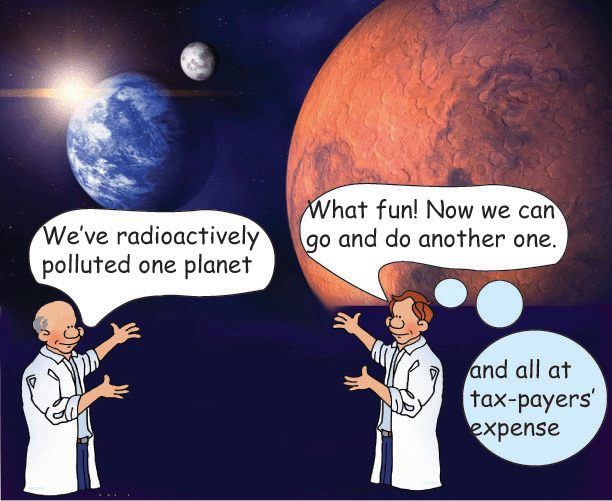
NASA is planning to use nuclear power for the first human trip to Mars
earth.com By Chrissy Sexton 30 July 23
The space race has been revived, but this time, the goal post has been shifted much further – to Mars. As recent technological advancements promise to open new horizons of exploration, NASA plans to cut the travel time to Mars with a nuclear-powered spacecraft.
A trip to Mars currently takes approximately seven months, covering a staggering 300-million-mile journey. NASA, in collaboration with the US Defense Advanced Research Projects Agency (DARPA), now proposes an ambitious plan that hinges on the promise of nuclear thermal propulsion technology to reduce this duration significantly.
DRACO spacecraft is nuclear-powered
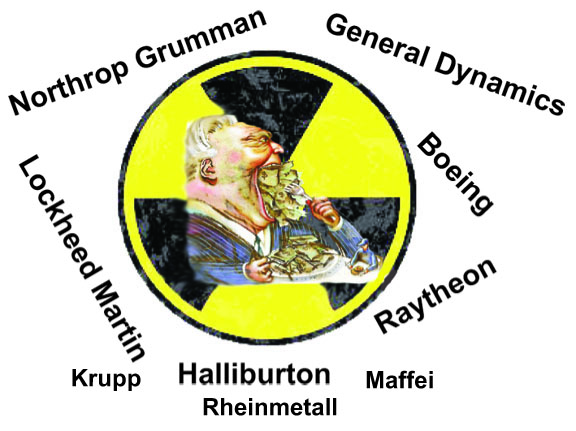
NASA aims to launch a nuclear-powered spacecraft, known as DRACO (Demonstration Rocket for Agile Cislunar Operations), into Earth’s orbit either by late 2025 or early 2026. The spacecraft, under construction by Lockheed Martin, a leading aerospace and defense company, will serve as a testbed for this groundbreaking technology.
NASA administrator Bill Nelson said that this technology “would allow humans to travel in deep space at record speed.” However, it remains unclear by how much the nuclear thermal propulsion technology can decrease the travel time.
…………………………………………………………………. The history of NASA’s interest in nuclear propulsion dates back over six decades. The concept was first explored in the 1960s when Wernher von Braun, a pioneer of rocket technology, advocated for a Mars mission utilizing a nuclear propulsion system. Unfortunately, budgetary constraints and shifting priorities resulted in the abandonment of this vision in 1972
But with the dawn of the new space age, NASA’s pursuit of the Red Planet has been rekindled. In collaboration with the US government, the space agency aims to expedite progress with the DRACO nuclear thermal rocket program.
“The ability to accomplish leap-ahead advances in space technology through the DRACO nuclear thermal rocket program will be essential for more efficiently and quickly transporting material to the Moon and eventually, people to Mars,” commented Dr Stefanie Tompkins, director at DARPA………………………………………………………………………………………………
More about Mars…………………….
Size
Mars is about half the size of Earth but has the same amount of dry land. It is much colder than Earth, with temperatures ranging from -195 degrees F in winter at the poles to 70 degrees F in summer near the equator. Mars has the largest dust storms in the solar system, capable of covering the entire planet and lasting for months.
Atmosphere
The planet’s atmosphere is very thin, composed mainly of carbon dioxide (95%), with traces of nitrogen and argon. It lacks a magnetic field, which on Earth serves to protect us from harmful solar radiation. As a result, the surface of Mars is exposed to higher levels of radiation, which can be a challenge for human exploration and potential colonization.
………………………….... Potential for life on Mars
The possibility of liquid water in the past, and thus the potential for life, has made Mars a prime target for future human exploration. The planned missions to Mars, such as NASA’s Artemis program and SpaceX’s Starship project, aim not only to land humans on Mars but also to establish a sustainable colony, marking a significant leap in our exploration of the cosmos. https://www.earth.com/news/could-a-nuclear-powered-spacecraft-shorten-the-trip-to-mars/
Following the pattern of weapons to Ukraine, Pentagon to send $1billion of weapons to Taiwan
U.S. announces first tranche of $345M weapons package for Taiwan
The package will include MQ-9 Reaper drones, according to one person familiar with discussions.
Politico, By LARA SELIGMAN, 07/28/2023
The Biden administration announced a $345 million weapons package for Taiwan on Friday, the first tranche in a total of $1 billion the U.S. has allotted to be transferred directly from Pentagon stockpiles to the island this year.
The move is sure to anger China as Washington has been trying to rebuild relations with Beijing. Senior administration officials, including Secretary of State Antony Blinken and Treasury Secretary Janet Yellen, recently visited China, but the outreach has done little to quell tensions over a range of issues, from U.S. support to Taiwan to Beijing’s spy balloon program…………………..
The package marks the first time the U.S. has used new authority from Congress to transfer military equipment directly from Pentagon inventory to Taiwan. The transfer is done under the Presidential Drawdown Authority, the same mechanism Washington uses to send weapons to Ukraine………………………………………..
Defense Secretary Lloyd Austin told lawmakers in May that a presidential drawdown package was in the works for Taiwan, but it’s taken weeks of additional work before the aid could be officially announced. Among other challenges, DOD had to work through an “accounting error” that forced officials finalizing packages for Ukraine and Taiwan to recalculate the value of equipment that was being sent………….. more https://www.politico.com/news/2023/07/28/u-s-300million-weapons-taiwan-00108811
Connecticut governor should veto bill funding unneeded nuclear
By Stanley Heller,30 July https://beyondnuclearinternational.org/2023/07/30/nix-nuclear-in-the-nutmeg-state/
What folly! Just as a dam necessary for cooling nuclear waste at Europe’s biggest nuclear power complex is blown up, members of the Connecticut legislature pass a bill that includes promotion of dangerous outmoded nuclear power.
Senate Bill 7 creates a “Council for Advancing Nuclear Energy Development” specifically packed with six positions for people who work in the nuclear energy industry. Their mission will be to discuss “advancements that are occurring in nuclear energy development.” They’ll study “small modular reactors, advanced nuclear reactors, [and] fusion energy facilities.”
Rather than seek “advancement,” we should be figuring out how to phase out this technology. We see by the Ukraine example that parties at war do not respect what one would think would be totally obvious, the need to do nothing to harm the safety of nuclear power plants. Not that we expect warfare to break out in the U.S., but this country should lead in best practices so that countries where war is a lot more likely won’t go down the nuclear path and risk huge releases of nuclear contamination that spread world-wide.
Realize that the Chernobyl disaster of 1986 led to thousands of fatalities. In Ukraine alone 35,000 women have received compensation for spouses who died because of the disaster. And that’s only the numbers from Ukraine. High levels of radiation covered southern Belarus too, but the government there has never released its statistics.
Another section of the Connecticut bill would classify nuclear power as a “Class 1 renewable energy source.” That would allow the owner of a new nuclear facility to sell renewable “energy credits,” another dubious idea. Rather than limit the use of polluting fuels, the idea is for “the market” to take care of things. Grand, let’s rely on the same market whose mindless profit seeking got us hooked on fossil fuels in the first place.
The new council will study ways to “promote nuclear energy development, expansion and research” in Connecticut. What won’t be studied is the problem of importation of Russian uranium that is used to generate nuclear power. Every year hundreds of millions of dollars are spent by U.S. companies to buy raw and enriched uranium from Russia. Presumably Connecticut nuclear power companies are no different.
Reuters reports that the U.S. power industry relies on Russia and its allies Kazakhstan and Uzbekistan for roughly half of the uranium powering its nuclear power plants. Why not respond to a petition about this and study how to stop relying on a fuel that enriches the Russian dictator?
On May 19 the Mirror published Jan Ellen Spiegel’s piece headlined, “Advocates searching for any kind of legislative win on environment.” Obviously, some things moved forward this session, but is there anything that’s going to have a major impact on the immense problem of our climate emergency?
On June 6 it was noted that last month carbon dioxide levels measured at the federal government’s Mauna Loa Atmospheric Baseline Observatory in Hawaii reached concentrations of 424 parts per million. That’s far, far higher than the 350 ppm that climate scientists believe necessary for long term functioning of human civilization. Sure it was probably at 424 ppm before, but that was 4 million years ago!
Governor Lamont should veto SB 7. Then call a special session to pass a revised SB 7 clean of plans for more nuclear power. After doing that stay in session and spend time passing blockbuster legislation that will provide leadership for a country teetering on a climate precipice.
Government must back Rolls-Royce on nuclear, says ex-boss Sir John Rose
Sir John Rose, the former chief executive of Rolls-Royce, is calling on
the Government to back British nuclear technology developed by the
engineering giant. Rolls is spearheading a project to design a fleet of
mini power plants – known as SMRs or small modular reactors – which
have become a key part of the UK’s long-term energy strategy. Ministers
have already put more than £200 million of public money into the project.
But, rather than backing Rolls, the Government has launched a competition
to select a provider, which will pit the FTSE 100 flagship against foreign
rivals. Sir John, who led the company from 1996 to 2011, has described the
move as ‘depressing’. He warned that by not throwing its support behind
Rolls-Royce, Ministers risked killing off a potentially valuable stream of
export income and missing out on highly skilled jobs. Rolls has previously
said that if it won the contract, it could create 40,000 UK jobs by 2050
and boost the economy by £52 billion. A deal would also benefit suppliers
and potentially turn the country into a global hub for nuclear technology.
Rose described the competition as ‘a good example’ of Government failure to
provide the support British business needs. ‘The probability of achieving
export success is vanishingly small if the producer is not supported by its
Government,’ he said.
Daily Mail 29th July 2023
Oppenheimer’s Long Shadow
Reads on the atomic bomb and its creator.
By FP Contributors, JULY 30, 2023, https://foreignpolicy.com/2023/07/30/oppenheimer-movie-atomic-nuclear-bomb-legacy-trinity-hiroshima-nagasaki-history/
J. Robert Oppenheimer—now the subject of a Christopher Nolan-directed biopic—shaped the modern world. The American scientist helped usher in the nuclear age, along with all the destruction it wrought. In this edition of Flash Points, we revisit the legacy of the “father of the atomic bomb.”—Chloe Hadavas
‘Barbie’ and ‘Oppenheimer’ Have More in Common Than You Think
Both films attempt to atone for the complicated legacies of American icons. Only one succeeds, FP’s Jennifer Williams writes.
The Long Shadow of Oppenheimer’s Trinity Test
Today’s nukes would make the destroyer of worlds shudder, FP’s Jack Detsch and Anusha Rathi write.
America’s Nuclear Rules Still Allow Another Hiroshima
U.S. leaders must take responsibility for past nuclear atrocities, Adam Mount writes.
Is Using Nuclear Weapons Still Taboo?
The world is starting to forget the realities of nuclear weapons, Nina Tannenwald writes.
St. Louis link in ‘Oppenheimer’ is latest reminder of city’s nuclear legacy
Tony Messenger, 30 Jul 23, https://www.stltoday.com/news/local/column/tony-messenger/messenger-st-louis-link-in-oppenheimer-is-latest-reminder-of-city-s-nuclear-legacy/article_3d529cde-2d78-11ee-b12a-2f2eb70ff7ba.html
There’s a scene in the hit movie “Oppenheimer” that has a hidden St. Louis connection.
As J. Robert Oppenheimer gathers his group of Manhattan Project scientists at Los Alamos, New Mexico, he lets them in on a secret. They don’t have enough uranium or plutonium to test a potential atomic bomb, even if they figure out how to create one.
Sitting on the desk in front of him are two glass containers — a large fish bowl and a smaller brandy snifter. One by one, Oppenheimer drops marbles into the glass — plink, plink, plink — marking the growth in processing the deadly elements.
The character doesn’t mention St. Louis in the movie. But the city is where some of that initial uranium was developed. And after World War II, St. Louis became a major source of the uranium processing for missiles during the Cold War arms race.
In the Christopher Nolan-directed movie, the scientists celebrate when the final marble plinks into the glass bowl to show they have enough uranium for their task, much as they celebrate when the bomb test is successful. They celebrate again when the bomb is dropped, first on Hiroshima and then on Nagasaki, killing hundreds of thousands of Japanese civilians and ending the war.
The celebrations are muted, at least for Oppenheimer and many of the scientists, once they realize the impact of what they — and the politicians they serve — have done.
The story reverberates today.
Once every generation, it seems, members of Congress realize all over again that the people of our region — the workers who toiled at Mallinckrodt Chemical Works plants, and the folks who grew up in areas where some of that nuclear waste was buried, such as along Coldwater Creek in north St. Louis County — suffered serious maladies for their role in the war effort.
Three generations of activists — Kay Drey, Denise Brock and the co-founders of Just Moms STL, Dawn Chapman and Karen Nickel — have sounded alarm bells about the damage that the processing of nuclear material and its waste had on people.
Like the story of Oppenheimer, it’s one that has to be told over and over again because the legacy of the Manhattan Project is ongoing. It’s a story of patriotism and death; of moral ambiguity and the pain of unintended consequences.
So it was in late May, when I was at the Weldon Spring Interpretive Center for the rededication of a memorial that honors workers who died from maladies related to the processing of nuclear materials. The remodeled museum sits beside a massive pile of gray stone, piled high like so many marbles in a glass jar, protecting future generations from the nuclear waste buried there.
Veterans who attended the memorial were thanked for their service. Family members of the workers waved American flags. But the Rev. Gerry Kleba, a Catholic priest, also reminded folks of the somber reason for the occasion. He recounted the estimated 200,000 deaths in Japan, and the local deaths from various illnesses. He repeated the quote that haunted Oppenheimer and was repeated in the recent movie: “Now I am become death, the destroyer of worlds.”
This month, there was another event at Weldon Spring, this one with the Just Moms STL crowd. Sen. Josh Hawley, a Republican, pushed for a bill — also supported by Rep. Cori Bush, a Democrat — to create a new flow of compensation for St. Louis families who have suffered because of the city’s connection to the nuclear weapons program. The push comes on the heels of recent reporting from The Missouri Independent, The Associated Press, and MuckRock, reinforcing what Drey has argued for more than a generation: the government knew it was poisoning the Earth, and workers and residents, in its rush to build weapons.
Who pays the price?
That’s a question that tortured Oppenheimer. It’s the question before Congress again and a new generation of St. Louisans, learning about the city’s past, buried under a pile of rocks that sits as a monument to the past.
There’s no such thing as a new nuclear golden age–just old industry hands trying to make a buck

FORTUNE, BY STEPHANIE COOKE, July 29, 2023 Since the turn of the millennium, at least $50 billion has been spent on a frantic effort to create a new Golden Age for nuclear energy in the U.S. Billions more are being lavished on an even more desperate effort to launch small reactors as supposedly safer, cheaper alternatives to yesteryear’s elephant-sized versions. Most of the money comes from ratepayers and taxpayers, accompanied by an avalanche of public relations that rivals the 1950s “Atoms for Peace” campaign with its claims of “too cheap to meter” electricity.
So far, the effort has produced little in tangible assets: roughly one gigawatt of capacity from the Watts Bar-2 reactor completed after decades of on-and-off-again construction and the promise of 2 GW from the long-delayed Plant Vogtle in Georgia. So far, not a single molecule of CO2 emissions has been avoided by a new reactor, and the primary beneficiaries are not the people who paid but publicly-owned utilities, reactor design companies, and PR and law firms. They are part of a chorus of advocacy groups and government agencies, led by the Department of Energy (DOE), advancing the idea that low-carbon nuclear is essential to any long-term climate change solution.
The story is selling well but the push for more and more money—in direct subsidies, ratepayer financing, and government grants or loans–has a dark side. To cite just a few examples, former state officials and utility executives in Illinois and Ohio face lengthy prison terms for bribery schemes linked to subsidies for unprofitable nuclear plants. In South Carolina, two former Scana executives received prison sentences after pleading guilty to criminal charges in 2020 and 2021 over a nuclear project that ultimately collapsed. Two Westinghouse executives also charged are facing a similar fate, with one still awaiting trial in October.
When it comes to costs and schedules, the lack of honesty surrounding nuclear projects is often breathtaking. In Georgia, where two Westinghouse reactors at Vogtle have been under construction since 2009, only one is completed and is now struggling to achieve commercial operation after multiple unplanned reactor and turbine trips, according to recent Georgia Public Service Commission staff testimony. That testimony also included allegations that utility executives have been providing “materially inaccurate” cost estimates over the project’s life. Vogtle’s estimated total $33 billion cost, as outlined in the testimony, versus $13.3 billion originally estimated makes it the most expensive power plant ever built in the United States. Most of the tab is being footed by ratepayers, with the US taxpayer, via DOE, providing $12 billion in loans.
And still, the messaging that nuclear is a must for reducing emissions goes on at a fever pitch. But the message is distorted: The industry cannot deliver what is needed. The U.S. lost its industrial base, including heavy forging capacity, decades ago–and the costs of a major nuclear buildout could now be in the trillions.
Moreover, the billions currently being spent on nuclear are crowding out viable, less costly solutions for decarbonizing the power sector (not only renewables such as wind and power but also high-voltage direct current transmission lines to deliver them to where they’re needed), thus slowing the transition. A surfeit of renewables projects is seeking grid access, enough to meet 90% of the Biden administration’s goal of a carbon-free power sector by 2035, according to a Berkeley Lab report, but the country’s Balkanized electricity market system, monopolistic utilities, and lack of adequate transmission capacity will likely prevent most of it from succeeding.
The transmission capacity needed for renewables will require anywhere from $30 billion to $90 billion to meet demand by 2030, with the figures rising to $200 billion to $600 billion between 2030 and 2050, according to a study by the Brattle Group. Squandering such sums on nuclear should be out of the question.
Our current fleet of 92 reactors generates about a fifth of the nation’s electricity, but most of the plants are slated for permanent closure by 2050, assuming they operate well beyond their 40-year design life. The DOE admits that such “life extensions” put operators in uncharted waters because there is no actual experience to support 60- or 80-year reactor lifetimes.
The problem of where to put used nuclear fuel (radioactive waste) remains after funding was withdrawn for an estimated $100 billion underground repository project at Yucca Mountain in Nevada. Proposed privately-owned interim storage sites in New Mexico and Texas, though licensed by the U.S. Nuclear Regulatory Commission, face intense local and state opposition as well as political obstacles at the federal level.
Industry officials privately acknowledge these challenges. Even so, nuclear is receiving the most favorable media coverage since the 1950s, and the latest annual Gallup poll on nuclear, released in April, showed the highest level of support in a decade for nuclear power among the American public–at 55%. Nuclear opponents in Congress are now silent on the issue or even hinting at changed views, and bipartisan support in Congress has over the past couple of years resulted in billions in tax incentives and other forms of support for both existing and planned nuclear plants.
But public opinion is fickle–and no guarantee for the future. Since Gallup began polling on nuclear in 1994, support peaked at 62% in 2010, a year before the triple meltdowns at Fukushima. After that, it went steadily down, to a low of 44% in 2016. Nor is popular opinion an indicator of whether nuclear’s formidable technical, financial, environmental, and geopolitical challenges can be overcome.
The primary aims of today’s promoters are to prevent aging, uneconomic reactors from closing, and to secure funding for small modular reactors (SMRs) and “advanced” reactors (and associated fuels).
The push for smaller reactors appears to have been an act of desperation by a nuclear-centric energy agency–the DOE (which also oversees the country’s nuclear weapons programs)—after its failed attempt to create a nuclear “renaissance” in the early 2000s. Although that project generated interest (utilities filed plans for 28 large-scale reactors), only the two at Vogtle were ever built………………………………………………………………………………………
It’s hard to see how any of the nuclear hype becomes real unless Congress is ready to ignore market signals, nationalize the electricity sector, and rebuild an industrial infrastructure that disappeared decades ago. https://fortune.com/2023/07/28/no-new-nuclear-golden-age-just-old-industry-hands-trying-to-make-a-buck-energy-politics-stephanie-cooke/
University of New Mexico Course Expands Understanding of Nuclear Impact

Mirage News, 28 Jul 23
New Mexico found itself at ground zero of a changed world on July 16, 1945 when scientists from the newly created Los Alamos National Laboratory detonated the world’s first atomic bomb, exposing nearby communities to radiation. Just 34 years later to the day, Church Rock, New Mexico became the site of the largest release of radioactive material ever to occur in the United States.
The impact of that history was something Bryan Kendall, who grew up in Albuquerque, hadn’t learned much about prior to enrolling in the Fall 2020 Nuclear New Mexico: Social and Environmental Impacts course at The University of New Mexico.
“It blew my mind that no one was talking about it. It drove a passion in me that has not subsided since,” Kendall said.
The course helped Kendall, who graduated earlier this year with a bachelor’s degree in mechanical engineering and a minor in sustainability studies, decide he would avoid working for an organization with an ongoing nuclear focus though he doesn’t fault those who do.
Though the name of the class has changed over time, the goal to provide critical, interdisciplinary nuclear education remains the same. Each course includes field trips to key sites around the state, guest speakers from organizations like the Tularosa Basin Downwinders Consortium and Tewa Women United, as well as a final project to apply learning to social or environmental justice.
Eileen O’Shaughnessy, an instructor and Ph.D. Candidate in Language, Literacy, and Sociocultural Studies with an emphasis on nuclear education, has taught the class for several years through Sustainability Studies, the Honors College, and this fall, Women and Gender Studies. Most recently, O’Shaughnessy co-taught with Associate Professor Myrriah Gómez, Ph.D., the author of the 2022 release Nuclear Nuevo México. Gómez has taught a similar course titled Atomic Bomb Cultures in the Honors College for many years. O’Shaughnessy’s upcoming course is titled The Atomic Bomb and Feminism and will explore topics like the hetero-patriarchal nuclear family, notions of apocalypse, anti-nuclear activism, environmental racism, nuclear colonialism, and more.
“I developed this class called Nuclear New Mexico based on my research that was a critical interdisciplinary look at the environmental, social, and cultural impacts of the nuclear industry, specifically on New Mexico, but also the world,” O’Shaughnessy said. “The beginning of the atomic age is located here, but it really rippled out from New Mexico.”
The class explores everything from uranium mining to the disposal and storage of radioactive materials and the outsized impact those processes have had on indigenous communities and communities of color.
…………………………………………….. O’Shaughnessy welcomes students from all disciplines into her class and has had many STEM and nuclear engineering students take the course……………………………………………………………………………………………………………………………. more https://www.miragenews.com/unm-course-expands-understanding-of-nuclear-1056101/
Funny How The UFO Narrative Coincides With The Race To Weaponize Space

does it really sound like a coincidence that we’re seeing all these news stories about UFOs and aliens at the same time we’re seeing news stories about a race between the US and China and Russia to dominate space militarily?
Caitlin’s Newsletter CAITLIN JOHNSTONE, JUL 28, 2023
If Wednesday’s House Oversight subcommittee hearing on UFOs had happened ten years ago instead of today, it would have shaken the world. Imagine someone from 2013 hearing congressional testimonies about “routine” military pilot encounters with giant flying tic tacs, floating orbs, 300-foot red squares, and cubes in clear spheres zipping around in ways that surpass all known earthly technology by leaps and bounds, or about secret government possession of otherworldly aircraft they’re trying to reverse engineer and the dead bodies of their non-human pilots, or about the possibility that these creatures are not merely extraterrestrial but extra-dimensional. Their jaws would have hit the floor.
Now in 2023 we’ve been getting incrementally drip-fed bits and pieces of these stories for six years, so the scene on Capitol Hill on Wednesday didn’t have the impact it would’ve had in 2013. It’s making headlines and getting attention, but not as much as Sinead O’Connor’s death or people’s thoughts on Barbie and Oppenheimer. The response from the general public could be described as a collective nervous laugh and a shrug.
……………………………………………………. the new UFO narrative wasn’t just cooked up at the last minute to distract from current headlines, it’s been unfolding for six years, and people aren’t even paying that much attention to it. The empire doesn’t tend to orchestrate spectacular events as a “distraction” anyway; the adjustment of public attention tends to take the much more mundane form of agenda setting in the media, where some stories receive more attention than others based on what’s convenient for the oligarchs who own the press.
……………………………………. for me what really stinks about all this UFO stuff is the timing. Here we are in the early stages of a new cold war which features a race to militarize space, and we’re hearing congressional testimony about mysterious vehicles posing a threat to US airspace which have the ability to go up and down between earth and space very quickly. That smells off.
I mean, does it really sound like a coincidence that we’re seeing all these news stories about UFOs and aliens at the same time we’re seeing news stories about a race between the US and China and Russia to dominate space militarily?
A Foreign Policy article from last year blares the headline “China and Russia Are Catching Up to U.S. in Space Capabilities, Pentagon Warns” with the subheading “The militarization of space is picking up pace.” These warnings are echoed in articles by Defense One and Time. An article on the United Nations website from last year carries the title “‘We Have Not Passed the Point of No Return’, Disarmament Committee Told, Weighing Chance Outer Space Could Become Next Battlefield.” A 2021 report from the war machine-funded Center for Strategic and International Studies titled “Defense Against the Dark Arts in Space: Protecting Space Systems from Counterspace Weapons” warns of the urgent need to build more space weapons to counter US enemies. A Global Times article from last year carries the title “Chinese experts urge avoidance of space weaponization amid commercial space capability deployment in Ukraine.”
………………………………….it just seems mighty suspicious to me how we’re being slowly paced into this UFO narrative (or UAP narrative for those hip to the current jargon) right when there’s a mad rush to get weapons into space. I can’t actually think of any other point in history when the timing of something like this would have looked more suspicious.
So for me the most disturbing parts of the UFO hearing were the parts that could wind up facilitating the agenda to militarize space, like when this phenomenon was framed as a “national security” threat or when it was mentioned that they can transition from earth to space very rapidly.
When asked by congressman Glenn Grothman “do you believe UAPs pose a threat to our national security?”, former Navy commander David Fravor answered with an unequivocal yes. A few minutes later Fravor described these vehicles as being able to “come down from space, hang out for three hours and go back up.”
When asked by congressman Andy Ogles whether UFOs could be “collecting reconnaissance information” on the US military, all three witnesses — Grusch, Fravor, and former Navy pilot Ryan Graves — answered in the affirmative. Asked by Ogles if UFOs could be “probing our capabilities,” all three again said yes. Asked if UFOs could be “testing for vulnerabilities” in US military capabilities, all three again said yes. Asked if UFOs pose an existential threat to the national security of the United States, all three said they potentially do. Asked if there was any indication that UFOs are interested in US nuclear technology, all three said yes.
Ogles concluded his questioning by saying, “There clearly is a threat to the national security of the United States of America. As members of Congress, we have a responsibility to maintain oversight and be aware of these activities so that, if appropriate, we take action.”
When asked by congressman Eric Burlison if “there has been activity by alien or non-human technology, and/or beings, that has caused harm to humans,” Grusch said he couldn’t get into specifics in a public setting (a common theme throughout the hearing), but said that “what I personally witnessed, myself and my wife, was very disturbing.”
Grusch would complicate this cryptic statement a few minutes later by saying that he’s never seen a UFO. How this statement doesn’t contradict his previous statement about having witnessed harmful behavior from non-human technology and/or beings was not made clear.
So you’ve got US policymakers being told that there are vehicles using technology not of this world routinely violating US airspace and posing an existential threat to US national security, and that these craft can go from earth to space and back at will, and that they need to help make sure their nation can address this threat.
What conclusions do you come to when presented with that kind of information? If you’re a lawmaker in charge of facilitating the operation of a highly militaristic empire, you’re probably not going to conclude that it’s time to hold hands and sing Kumbaya. You’re probably eventually going to start thinking in terms of military technology.
One of the most important unanswered questions in all this UFO hullabaloo is, why now? Why are we seeing all this movement on “disclosure” after generations of zero movement? If these things are in fact real and the government has in fact been keeping them secret, why would the adamant policy of dismissal and locked doors suddenly be reversed, allowing “whistleblowers” to come forward and give testimony before congress? If they had motive to keep it a secret this entire time, why would that motive no longer be there?
…………………………………So why now? Why the drastic and sudden shift from UFOs and aliens being laughable tinfoil hat nonsense to the subject of serious congressional inquiries and widespread mainstream media coverage?
Well, the timing of the race to militarize space might provide an answer to the “why now?” question. Is it a coincidence that this new UFO narrative began its rollout in 2017, around the same time as the rollout of the Space Force? Are we being manipulated at mass scale about aliens and UFOs to help grease the wheels for the movement of war machinery into space? How likely is it that by pure coincidence this extraplanetary narrative timed out the way it did just as the US empire makes a last-ditch grab at unipolar planetary domination?
I don’t know. I do know that if I’m assigning degrees of probability, “Extraterrestrial or extradimensional beings are here and take a special interest in us and sometimes crash their vehicles and our government recovered them but kept them a secret but suddenly decided not to be so secretive about them anymore” ranks significantly lower than “Our rulers are lying and manipulating to advance their own interests again.”
I am 100 percent wide open to the possibility of extraterrestrials and otherworldly vehicles zipping around our atmosphere. What I am not open to is the claim that the most depraved institutions on earth have suddenly opened their mind to telling us the truth about these things, either out of the goodness of their hearts or because they were “pressured” by UFO disclosure activists.
I don’t know what the hell is going on with this UFO thing, but I do know the drivers of the US empire have an extensive history of manipulating and deceiving at mass scale to advance imperial agendas. And I do know that at this crucial juncture in history where the empire is clinging to planetary domination with the tips of its fingernails, there are a lot of imperial agendas afoot. https://www.caitlinjohnst.one/p/funny-how-the-ufo-narrative-coincides?utm_source=post-email-title&publication_id=82124&post_id=135494785&isFreemail=true&utm_medium=email
‘Era of global boiling has arrived,’ says UN chief

‘Era of global boiling has arrived,’ says UN chief as July set to be
hottest month on record. The era of global warming has ended and “the era
of global boiling has arrived”, the UN secretary general, António
Guterres, has said after scientists confirmed July was on track to be the
world’s hottest month on record.
Guardian 27th July 2023
70 Years Later, The Korean War Must End
By Cathi Choi / Other Words, July 28, 2023 , https://scheerpost.com/2023/07/28/70-years-later-the-korean-war-must-end/—
A fragile ceasefire halted the Korean War 70 years ago. With nuclear tensions rising and the environment under threat, it’s time to end it for good.
July 27 marked 70 years since the signing of the armistice that halted — but did not end — the Korean War. Since then, the divided Peninsula has been locked in a perpetual state of war that grows ever more dangerous.
In recent weeks, the U.S. has flown nuclear-capable bombers, launched nuclear war planning talks with South Korean officials, and sent a nuclear-capable submarine to South Korea for the first time in 42 years.
This followed the largest-ever live-fire military drills near the Demilitarized Zone (DMZ) that divides Korea. North Korea has responded with missile tests — and recently threatened nuclear retaliation.
As a Korean American with family ties to both sides of the DMZ, I know that as long as this war continues, everyday people — Americans as well as Koreans — pay the steepest price. The Korean War inaugurated the U.S. military industrial complex, quadrupled U.S. defense spending, and set the U.S. on a course to become the world’s military police.
While much attention is paid to North Korea’s nuclear program and aggressive rhetoric, Americans also need to understand how the U.S. government’s actions exacerbate tensions — and why we have a critical role to play in ending this war.
To start, we must remember the central role of the U.S. in the Korean War — and just how destructive the fighting was.
Former Secretary of State Condoleezza Rice has described the war as an example of what a “successful” U.S. war can “achieve.” Other talking heads have made similar claims, offering the war as a model for how to proceed in Ukraine. This revisionism is dangerous.
The Korean War killed over 4 million people, more than half of them civilians. From 1950 to 1953, the U.S. dropped 32,000 tons of napalm and 635,000 tons of bombs — more than were dropped in the Pacific theater in World War II. The U.S. military showed “next to no concern for civilian casualties,” historian Bruce Cummings notes, burning 80 percent of North Korea’s cities to the ground.
Even after this mass destruction, the Peninsula is still at war today — with ongoing consequences for Koreans on both sides of the DMZ.
The U.S. has evicted families from their homes in South Korea to build military bases, while chemicals leaking from bases have poisoned local environments and contaminated drinking water. The Biden administration continues to enforce a Trump-era travel ban keeping Korean Americans separated from their loved ones in North Korea, while sanctions hinder the delivery of essential aid to the country.
U.S. taxpayers bankroll this devastation, spending $13.4 billion to maintain 28,500 troops in South Korea between 2016 and 2019.
Unless we act, our communities and environment will suffer devastating consequences as our military presence expands across the Pacific.
For example, the Defense Department recently announced a missile-defense system to be built on Guam, comprising up to 20 sites across the island and billed as a response to “perceived threats from potential adversaries like China and North Korea.” This plan, like many in the past, will destroy precious landscapes.
In Hawai’i, leaking jet fuel from Navy storage tanks has contaminated drinking water for thousands of families. And next year, the U.S. will hold the Rim of the Pacific (RIMPAC), the largest annual maritime warfare exercise, in the state. Past exercises killed untold scores of marine life.
To avert nuclear war and protect our environment, Americans must demand an end to the growing U.S. military presence around the world and rein in our nearly $900 billion military budget. Our grassroots peace movement continues to grow, leading to the introduction of the Peace on the Korean Peninsula Act (H.R. 1369), which now has nearly 40 co-sponsors.
To end the Korean War, we need individuals with all skillsets — storytellers, community builders, healers, and more — working in concert. We must educate our communities, fight for change, and together build peace in Korea and across the world.
1 This Month

Read the Public Inquiry Report, the Commissioners’ report, Surrendering Australia: The AUKUS Deception is available to download for free at aukuspublicinquiry.com. Or just watch the replay of the National Press Club Luncheon.


19 November – Webinar – The Reality of Reprocessing
Time: 11:00 AM Pacific Time (US & Canada) / 2:00 PM Eastern / 7:00 PM UK / 8:00 PM CET
Register for the Zoom Event Here



Shut down the radiation-damaged Heysham nuclear reactors now
To see nuclear-related stories in greater depth and intensity – go to https://nuclearinformation.wordpress.com

Say No to NASA’s Reckless Nuclear Reactor on the Moon
Say No to NASA’s Reckless Nuclear Reactor on the Moon
-
Archives
- November 2026 (94)
- October 2026 (302)
- September 2026 (339)
- August 2026 (330)
- July 2026 (355)
- June 2026 (287)
- May 2026 (306)
- April 2026 (356)
- March 2026 (251)
- February 2026 (267)
- January 2026 (308)
- December 2025 (358)
-
Categories
- 1
- 1 NUCLEAR ISSUES
- business and costs
- climate change
- culture and arts
- ENERGY
- environment
- health
- history
- indigenous issues
- Legal
- marketing of nuclear
- media
- opposition to nuclear
- PERSONAL STORIES
- politics
- politics international
- Religion and ethics
- safety
- secrets,lies and civil liberties
- spinbuster
- technology
- Uranium
- wastes
- weapons and war
- Women
- 2 WORLD
- ACTION
- AFRICA
- Atrocities
- AUSTRALIA
- Christina's notes
- Christina's themes
- culture and arts
- Events
- Fuk 2022
- Fuk 2023
- Fukushima 2017
- Fukushima 2018
- fukushima 2019
- Fukushima 2020
- Fukushima 2021
- general
- global warming
- Humour (God we need it)
- Nuclear
- RARE EARTHS
- Reference
- resources – print
- Resources -audiovicual
- Weekly Newsletter
- World
- World Nuclear
- YouTube
-
RSS
Entries RSS
Comments RSS

