Canada’s Honoring of Nazi Vet Exposes Ottawa’s Longstanding Ukraine Policy
Following the war, Canada’s Liberal government classified thousands of Jewish refugees as “enemy aliens” and held them alongside former Nazis in a network of internment camps enclosed with barbed wire, fearing that they would infect their new country with communism. At the same time, Ottawa placed thousands of Ukrainian veterans of Hitler’s army on the fast-track to citizenship.
By celebrating a Waffen-SS volunteer as a “hero,” Canada’s Liberal Party highlighted a longstanding policy that has seen Ottawa train fascist militants in Ukraine while welcoming in thousands of post-war Nazi SS veterans. Canada’s second most powerful official, Chrystia Freeland, is the granddaughter of one of Nazi Germany’s top Ukrainian propagandists.
SCHEERPOST, By Max Blumenthal / The Grayzone 1 Oct 23
In the Spring of 1943, Yaroslav Hunka was a fresh-faced soldier in the 14th Grenadier Division of the Waffen-SS Galicia when his division received a visit from the architect of Nazi Germany’s genocidal policies, Heinrich Himmler. Having presided over the battalion’s formation, Himmler was visibly proud of the Ukrainians who had volunteered to support the Third Reich’s efforts.
80 years later, the Speaker of Canada’s parliament, Anthony Rota, also beamed with pride after inviting Hunka to a reception for Volodymyr Zelensky, where the Ukrainian president lobbied for more arms and financial assistance for his country’s war against Russia.
“We have in the chamber today Ukrainian war veteran from the Second World War who fought for Ukrainian independence against the Russians and continues to support the troops today even at his age of 98,” Rota declared during the September 22 parliamentary event in Ottawa.
“His name is Yaroslav Hunka but I am very proud to say he is from North Bay and from my riding of Nipissing-Timiskaming. He is a Ukrainian hero, a Canadian hero, and we thank him for all his service,” Rota continued.
Gales of applause erupted through the crowd, as Prime Minister Justin Trudeau, Zelensky, Deputy Prime Minister Chrystia Freeland, Canadian Chief of Defense Staff Gen. Wayne Eyre and leaders of all Canadian parties rose from their seats to applaud Hunka’s wartime service.
Since the exposure of Hunka’s record as a Nazi collaborator – which should have been obvious as soon as the Speaker announced him – Canadian leaders (with the notable exception of Eyre) have rushed to issue superficial, face-saving apologies as withering condemnations poured in from Canadian Jewish organizations.
The incident is now a major national scandal, occupying space on the cover of Canadian papers like the Toronto Sun, which quipped, “Did Nazi that coming.” Meanwhile, Poland’s Education Minister has announced plans to seek Hunka’s criminal extradition.
The Liberal Party has attempted to downplay the affair as an accidental blunder, with one Liberal MP urging her colleagues to “avoid politicizing this incident.” Melanie Joly, Canada’s Foreign Minister, has forced Rota’s resignation, seeking to turn the the Speaker into a scapegoat for her party’s collective actions.
Trudeau, meanwhile, pointed to the “deeply embarrassing” event as a reason to “push back against Russian propaganda,” as though the Kremlin somehow smuggled an nonagenarian Nazi collaborator into parliament, then hypnotized the Prime Minister and his colleagues, Manchurian Candidate-style, into celebrating him as a hero.
To be sure, the incident was no gaffe. Before Canada’s government and military brass celebrated Hunka in parliament, they had provided diplomatic support to fascist hooligans fighting to install a nationalist government in Kiev, and oversaw the training of contemporary Ukrainian military formations openly committed to the furtherance of Nazi ideology.
Ottawa’s celebration of Hunka has also lifted the cover on the country’s post-World War Two policy of naturalizing known Ukrainian Nazi collaborators and weaponizing them as domestic anti-communist shock troops. The post-war immigration wave included the grandfather of Deputy Prime Minister Chrystia Freeland, who functioned as one of Hitler’s top Ukrainain propagandists inside Nazi-occupied Poland.
Though Canadian officialdom has worked to suppress this sordid record, it has resurfaced in dramatic fashion through Hunka’s appearance in parliament and the unsettling contents of his online diaries.
“WE WELCOMED GERMAN SOLDIERS WITH JOY”
The March 2011 edition of the journal of the Association of Ukrainian Ex-Combatants in the US contains an unsettling diary entry which had gone unnoticed until recently.
Authored by Yaroslav Hunka, the journal consisted of proud reflections on volunteering for the 14th Grenadier Division of the Waffen-SS Galicia. Hunka decribed the Nazi Wehrmacht as “mystical German knights” when they first arrived in his hometown of Berezhany, and recalled his own service in the Waffen-SS as the happiest time in his life.
“In my sixth grade,” he wrote, “out of forty students, there were six Ukrainians, two Poles, and the rest were Jewish children of refugees from Poland. We wondered why they were running away from such a civilized Western nation as the Germans.”
The Jewish Virtual Library details the extermination of Berezhany’s Jewish population at the hands of the “civilized” Germans: “In 1941 at the end of Soviet occupation 12,000 Jews were living in Berezhany, most of them refugees fleeing the horrors of the Nazi war machine in Europe. During the Holocaust, on Oct. 1, 1941, 500–700 Jews were executed by the Germans in the nearby quarries. On Dec. 18, another 1,200, listed as poor by the Judenrat, were shot in the forest. On Yom Kippur 1942 (Sept. 21), 1,000–1,500 were deported to Belzec and hundreds murdered in the streets and in their homes. On Hanukkah (Dec. 4–5) hundreds more were sent to Belzec and on June 12, 1943, the last 1,700 Jews of the ghetto and labor camp were liquidated, with only a few individuals escaping. Less than 100 Berezhany Jews survived the war.”
When Soviet forces held control of Berezhany, Hunka said he and his neighbors longed for the arrival of Nazi Germany. “Every day,” he recalled, “we looked impatiently in the direction of the Pomoryany (Lvov) with the hope that those mystical German knights, who give bullets to the hated Lyakhs are about to appear.” (Lyakh is a derogatory Ukrainian term for Poles).
In July 1941, when the Nazi German army entered Berezhany, Hunka breathed a sigh of relief. “We welcomed the German soldiers with joy,” he wrote. “People felt a thaw, knowing that there would no longer be that dreaded knocking on the door in the middle of the night, and at least it would be possible to sleep peacefully now.”
Two years later, Hunka joined the First Division of the Galician SS 14th Grenadier Brigade – a unit formed under the personal orders of Heinrich Himmler. When Himmler inspected the Ukrainian volunteers in May 1943 (below), he was accompanied by Otto Von Wachter, the Nazi-appointed governor of Galicia who established the Jewish ghetto in Krakow.
“Your homeland has become so much more beautiful since you have lost – on our initiative, I must say – those residents who were so often a dirty blemish on Galicia’s good name, namely the Jews…” Himmler reportedly told the Ukrainian troops. “I know that if I ordered you to liquidate the Poles … I would be giving you permission to do what you are eager to do anyway.”
“HITLER’S ELITE TORTURERS AND MURDERERS HAVE BEEN PASSED ON RMCP ORDERS”
Following the war, Canada’s Liberal government classified thousands of Jewish refugees as “enemy aliens” and held them alongside former Nazis in a network of internment camps enclosed with barbed wire, fearing that they would infect their new country with communism. At the same time, Ottawa placed thousands of Ukrainian veterans of Hitler’s army on the fast-track to citizenship.
The Ukrainian Canadian newsletter lamented on April 1, 1948, “some [of the new citizens] are outright Nazis who served in the German army and police. It is reported that individuals tattoooed with the dread[ed] SS, Hitler’s elite torturers and murderers have been passed on RCMP orders and after being turned down by screening agencies in Europe.”
The journal described the unreformed Nazis as anticommunist shock troops whose “‘ideological leaders’ are already busy fomenting WWIII, propagating a new world holocaust in which Canada will perish.”
In 1997, the Canadian branch of the Simon Wiesenthal Center charged the Canadian government with having admitted over 2000 veterans of the 14th Volunteer Waffen-SS Grenadier Division.
That same year, 60 Minutes released a special, “Canada’s Dark Secret,” revealing that some 1000 Nazi SS veterans from Baltic states had been granted citizenship by Canada after the war. Irving Abella, a Canadian historian, told 60 Minutes that the easiest way to get into the country “was by showing the SS tattoo. This proved that you were an anti-Communist.”
Abella also alleged that Prime Minister Pierre Trudeau (Justin’s father) explained to him that his government kept silent about the Nazi immigrants “because they were afraid of exacerbating relationships between Jews and Eastern European ethnic communities.”
Yaroslav Hunka was among the post-war wave of Ukrainian Nazi veterans welcomed by Canada. According to the city council website of Berezhany, he arrived in Ontario in 1954 and promptly “became a member of the fraternity of soldiers of the 1st Division of the UNA, affiliated to the World Congress of Free Ukrainians.”
Also among the new generation of Ukrainian Canadians was Michael Chomiak, the grandfather of Canada’s second-most-powerful official, Chrystia Freeland. Throughout her career as a journalist and Canadian diplomat, Freeland has advanced her grandfather’s legacy of anti-Russian agitation, while repeatedly exalting wartime Nazi collaborators during public events.
CANADA WELCOMES HITLER’S TOP UKRAINIAN PROPAGANDISTS……………………………………………………………………………………………………………. more https://scheerpost.com/2023/10/01/canadas-honoring-of-nazi-vet-exposes-ottawas-longstanding-ukraine-policy/
Editorial: Japan city’s rejection of nuclear waste site probe casts doubt on gov’t stance.

Tsushima Mayor Naoki Hitakatsu announced on Sept. 27 that
the Nagasaki Prefecture city will not accept a reference material-based
preliminary survey for the construction of a final disposal facility for
nuclear waste, going against the local assembly’s initial adoption of a
petition calling for the survey’s approval.
The Japanese government must accept the reality that the search for a candidate site to dispose ofhighly radioactive nuclear waste, which will continue to accumulate as long
as nuclear power plants are in operation, is proving difficult.
Mainichi 30th Sept 2023
https://mainichi.jp/english/articles/20230930/p2a/00m/0op/009000c
Flagging Support: Zelenskyy Loses Favour in Washington

“With no end in sight, it looks increasingly likely that Ukraine will be yet another endless quagmire funded by the American taxpayer.”
In August, the Biden administration had requested a $24 billion package for Ukraine but was met with a significantly skimmed total of $6.1 billion. Of that amount $1.5 billion is earmarked for the Ukrainian Security Assistance Initiative, a measure that continues to delight US arms manufacturers by enabling the Pentagon to place contracts on their behalf to build weapons for Kyiv.
October 1, 2023, by: Dr Binoy Kampmark, https://theaimn.com/flagging-support-zelenskyy-loses-favour-in-washington/
Things did not go so well this time around. When the worn Ukrainian President Volodymyr Zelenskyy turned up banging on the doors of Washington’s powerful on September 21, he found fewer open hearts and an increasingly large number of closed wallets. The old ogre of national self-interest seemed to be presiding and was in no mood to look upon the desperate leader with sweet acceptance.
Last December, Zelensky and Ukrainian officials did not have to go far in hearing endorsements and encouragement in their efforts battling Moscow’s armies. The visit of the Ukrainian president, as White House Press Secretary Karine Jean-Pierre stated at the time, “will underscore the United States’ steadfast commitment to supporting Ukraine for as long as it takes, including through provision of economic, humanitarian and military assistance.”
Republican Senator from Utah, Mitt Romney, was bubbly with enthusiasm for the Ukrainian leader. “He’s a national and global hero – I’m delighted to be able to hear from him.” Media pack members such as the Associated Press scrambled for stretched parallels in history’s record, noting another mendicant who had previously appeared in Washington to seek backing. “The moment was Dec. 22, 1941, as British Prime Minister Winston Churchill landed near Washington to meet President Franklin D. Roosevelt just weeks after the attack on Pearl Harbor.”
Then House Speaker, the California Democrat Nancy Pelosi, also drew on the Churchillian theme with a fetishist’s relish. “Eighty-one years later this week, it is particularly poignant for me to be present when another heroic leader addresses the Congress in time of war – and with Democracy itself on the line,” she wrote colleagues in a letter.
Zelenskyy, not wishing to state the obvious, suggested a different approach to the question of aiding Ukraine. While not necessarily an attentive student of US history, any briefings given to him should have been mindful of a strand in US politics sympathetic to isolationism and suspicious of foreign leaders demanding largesse and aid in fighting wars.
How, then, to get around this problem? Focus on clumsy, if clear metaphors of free enterprise. “Your money is not charity,” he stated at the time, cleverly using the sort of corporate language that would find an audience among military-minded shareholders. “It’s an investment in global security and democracy that we handle in the most responsible way.” Certainly, Ukrainian aid has been a mighty boon for the US military-industrial complex, whose puppeteering strings continue to work their black magic on the Hill.
Despite such a show, the number of those believing in the wisdom of such an investment is shrinking. “In a US capital that has undergone an ideological shift since he was last here just before Christmas 2022,” remarked Stephen Collinson of CNN, “it now takes more than quoting President Franklin Roosevelt and drawing allusions to 9/11, to woo lawmakers.”
Among the investors, Republicans are shrinking more rapidly than the Democrats. An August CNN poll found a majority in the country – 55% – firmly against further funding for Ukraine. Along party lines, 71% of Republicans are steadfastly opposed, while 62% of Democrats would be satisfied with additional funding.
Kentucky Republican and Senate Minority leader Mitch McConnell continues to claim that funding Ukraine is a sensibly bloody strategy that preserves American lives while harming Russian interests. “Helping Ukraine retake its territory means weakening – weakening – one of America’s biggest strategic adversaries without firing a shot.”
The same cannot be said about the likes of Kentucky’s Republican Senator Rand Paul. While Zelenskyy was trying to make a good impression on the Hill, the senator was having none of it. “I will oppose any effort to hold the federal government hostage for Ukraine funding. I will not consent to expedited passage of any spending measure that provides any more US aid to Ukraine.”
In The American Conservative, Paul warned that, “With no end in sight, it looks increasingly likely that Ukraine will be yet another endless quagmire funded by the American taxpayer.” President Joe Biden’s administration had “failed to articulate a clear strategy or objective in this war, and Ukraine’s long-awaited counter-offensive has failed to make meaningful gains in the east.”
Such a quagmire was also proving jittering in its dangers. There was the prospect of miscalculation and bungling that could pit US forces directly against the Russian army. There were also no “effective oversight mechanisms” regarding the funding that has found its way into Kyiv’s pockets. “Unfortunately, corruption runs deep in Ukraine, and there’s plenty of evidence that it has run rampant since Russia’s invasion.” The Zelenskyy government, he also noted in a separate post, had “banned the political parties, they’ve invaded churches, they’ve arrested priests, so no, it isn’t a democracy, it’s a corrupt regime.”
Republicans such as Missouri Senator Josh Hawley are of the view that the US should be slaying different monsters of a more threatening variety. (Every imperium needs its formidable adversaries.) The administration, he argued, should “take the lead on China” and reassure its “European allies” that Washington would be providing “the nuclear umbrella in Europe.”
On September 30, with yet another government shutdown looming in Washington, the US House approved a bill for funding till mid-November by a 335-91 vote. But the measure did not include additional military or humanitarian aid to Ukraine. In August, the Biden administration had requested a $24 billion package for Ukraine but was met with a significantly skimmed total of $6.1 billion. Of that amount $1.5 billion is earmarked for the Ukrainian Security Assistance Initiative, a measure that continues to delight US arms manufacturers by enabling the Pentagon to place contracts on their behalf to build weapons for Kyiv.
The limited funding measure proved a source of extreme agitation to the clarion callers who have linked battering the Russian bear, if only through a flawed surrogate, with the cause of US freedom. “I am deeply disappointed that this continuing resolution did not include further aid for our ally, Ukraine,” huffed Maryland Democrat Rep. Steny Hoyer. “In September, the House held seven votes to approve that vital funding to Ukraine. Each time, more than 300 House Members voted in favor. This ought to be a nonpartisan issue and ought to have been addressed in the continuing resolution today.”
As Hoyer and those on his pro-war wing of politics are starting to realise, Ukraine, as an issue, is becoming problematically partisan and ripe. The filling in Zelenskyy’s cap is inexorably thinning and lightening.
Byron Blake Critical assessment of nuclear energy in Jamaica’s future
October 1, 2023 https://jamaica-gleaner.com/article/focus/20231001/byron-blake-critical-assessment-nuclear-energy-jamaicas-future
In an article published in the Sunday Gleaner of July 30, titled ‘The Potential of Nuclear Energy as Part of the Future Energy Mix in Jamaica’, Oshane Hamilton explored the viability of integrating nuclear energy into Jamaica’s energy landscape. While his exposition on this nuclear prospect may be persuasive at first glance, a more critical evaluation is warranted.
Hamilton’s central argument for nuclear energy in Jamaica is predicated on the promise of Small Modular Reactors (SMRs), an emerging design stage technology. Approximately 85 per cent of the article is dedicated to extolling the merits of nuclear power as a low-greenhouse-gas-emissions, highly available energy source, and emphasising the advantages of SMRs over conventional nuclear power plants.
Positioned as an apt solution for a small island nation, SMRs are presented as a “burgeoning technology”. But, that burgeoning is all “on paper”, as it is still at the design stage. In that regard, it is important to note Hamilton’s concession in his article’s closing lines that the deployment and validation of SMRs are yet to be realised.
FALLS SHORT
One key advantage highlighted by Hamilton is the small spatial footprint of SMRs. However, the article falls short of clarifying the required number of units to establish a substantial power-generating facility. Procuring upwards of 35 acres of suitable, flat, remote, and uninhabited land, and possibly several pieces, in Jamaica, could be a formidable challenge, given the island’s limited available space and topography.
The article seems to dismiss concerns about nuclear plant safety by arguing that SMRs are safer than conventional nuclear plants, which, in turn, are supposedly safer than alternative energy sources. But, to be safer than the alternative does not make a technology safe. Further, this perspective sidesteps the perpetual challenge of nuclear waste disposal and management, radiation hazards, and the long-term implications. One significant apprehension in Jamaica and the Caribbean pertains to nuclear material usage and the required safe disposal of waste. Considering the region’s high dependence on tourism and the Caribbean Sea’s extensive traffic, coupled with the presence of geographical parts of nuclear-armed states, a nuclear-free stance has been advocated and rigorously pursued.
DEFICIENCY
We do well to remind ourselves that, while illogical, parts of the US, France, and UK are within the Caribbean. These realities have underpinned historical efforts to establish the Caribbean as a nuclear-free zone and the region’s consistent protests against the trans-shipment of nuclear waste through the Caribbean Sea. The unbroken collaboration within the Caribbean underlines the importance of thorough consultation before any action to alter this stance.
A notable deficiency in Hamilton’s article lies in its treatment of renewable energy sources. In the brief segment addressing renewables, he acknowledges Jamaica’s abundant renewable resources, which could substantially diminish reliance on costly, environmentally detrimental fossil fuels. However, the subsequent section titled ‘Problems with Renewable Energy’ focuses disproportionately on the limitations of solar and wind power. While it is true that these sources are subject to natural variability, entail high initial costs, and require extensive land, a comparative analysis should encompass both financial and economic costs and benefits. It is crucial to recognise that the costs of these technologies have been falling, economic costs escalate with global climate change, and many of the financial costs are localised, thus reducing foreign currency demands. Moreover, innovative placement of wind turbines at sea or in remote areas, as well as efficient land use in solar project spaces, have demonstrably enhanced their overall viability.
Curiously, Hamilton’s article omits any mention of biomass-based energy, which holds, perhaps, the greatest potential in the Caribbean’s humid tropical environment. Biomass offers the added advantage of capturing greenhouse gases from the atmosphere and sequestering them, while serving numerous other agricultural, economic, and environmental purposes. It is, for example, a means of enhancing the rediscovered importance of agriculture in national development.
In conclusion, the article has a discernible inclination to validate a preconceived notion. The exploration moved quickly to the advancement of viability. The rigour in interrogating an unproven technology and the consequent cautions are absent. The case of potential alternatives, in particular the alternative for which Jamaica is best endowed, is superficial. These shortcomings notwithstanding, Oshane Hamilton’s piece could serve as a valuable catalyst for serious deliberation on a subject with far-reaching policy implications for both Jamaica and the wider Caribbean. It is hoped that the opportunity will spark substantial discourse among stakeholders and policymakers before commitments are given and investments made which will bind Jamaican citizens and taxpayers.
Byron Blake is former assistant secretary general of the Caribbean Community (CARICOM), based in Kingston, Jamaica. Send feedback to ambassadorblake@gmail.com
Governments have unpopular decisions to make to achieve their nuclear aims.
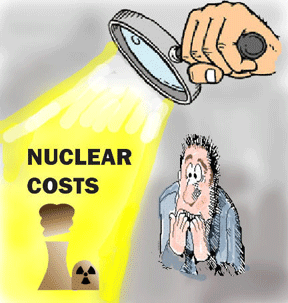
Global energy ministers met in Paris this week to discuss
how to kick-start a new age of atomic power. Installed capacity must triple
to 1,160 gigawatts by 2050, the Nuclear Energy Agency says. In the west,
many countries’ goals will hinge on attracting private capital to a
sector with a tarnished record.
Recent large projects in the US and Europehave run over budget and into delays. New, small reactors that can be built in factories by companies such as NuScale and Rolls-Royce to reduce risks are an exciting prospect. For larger projects in particular, governments
will have to offer incentives and guarantees that will not always sit
comfortably with taxpayers. ………..
France and the UK have ambitious targets. The UK is a test case for investor appetite
to fund new plants. It wants to secure funding for the 3.2GW Sizewell C
project, using a regulated asset base financing model. RAB …. offers
investors returns during construction. That avoids the accumulation of
interest on debt that would normally be paid off when projects open.
Households contribute to the financing via a surcharge on their energy
bills. For that reason, it is not popular with consumer groups. Opposition
will grow especially as investors will want the risk of any budget blow-ups
to be shared with bill-payers, at least 50-50. Governments have unpopular
decisions to make to achieve their nuclear aims.
FT 30th Sept 2023
https://www.ft.com/content/d3b6ca64-f93f-464f-96ab-ec479e7a933e
Return of US nuclear weapons to UK would be an escalation, says Russia
Moscow says it would respond with ‘countermeasures’, after US air force budget item hinted at possible move
Julian Borger and Andrew Roth, Wed 6 Sep 2023 https://www.theguardian.com/world/2023/sep/05/return-of-us-nuclear-weapons-to-uk-would-be-an-escalation-says-russia #nuclear #antinuclear #nuclear-free #NoNukes
The Russian foreign ministry has said Moscow will view any move to return US nuclear weapons to the UK as an escalation and will respond with “countermeasures” for its own security.
The foreign ministry spokesperson Maria Zakharova was responding to a report last week about an item in the 2024 US air force budget for building a dormitory at RAF Lakenheath in Suffolk for personnel on a “potential surety mission” – military jargon for nuclear safety and security. It raised the prospect of the return of US nuclear weapons to British soil for the first time in more than 15 years.
“If this step is ever made, we will view it as escalation, as a step toward escalation that would take things to a direction that is quite opposite to addressing the pressing issue of pulling all nuclear weapons out of European countries,” Zakharova said.
“In the context of the transition of the United States and Nato to an openly confrontational course of inflicting a ‘strategic defeat’ on Russia, this practice and its development force us to take compensating countermeasures designed to reliably protect the security interests of our country and its allies.”
The US is estimated by the Federation of American Scientists (FAS) to have 100 B61 gravity bombs deployed in Europe and another 100 B61s – the only tactical weapon in its arsenal – in storage in the US. If US nuclear weapons were sent back to Lakenheath, they would almost certainly be a modernised version of the B61.
FAS estimates Russia has 1,816 tactical, or non-strategic, weapons (shorter range and intended for use in battle rather than for the destruction of whole cities).
These have been held until now in storage facilities, but Vladimir Putin announced in June that some nuclear warheads would be deployed in Belarus within a month. There has so far been no confirmation by western intelligence that they have been moved.
The warheads are intended for use on Belarus Iskander missile launchers or as bombs to be dropped by Belarusian Su-24 or Su-25 jets. If the transfer is carried out, it would be the first time Moscow has put nuclear weapons in the hands of allies since the collapse of the Soviet Union.
Matt Korda, a senior research fellow at the FAS nuclear information project who first spotted the US budget item for a surety dormitory at Lakenheath, said: “While the potential return of US nuclear weapons to UK soil certainly merits scrutiny, it’s a bit rich to see it coming from a government who has spent the past year initiating the exact same thing with Belarus.
“It’s highly unlikely that the Russian government would describe its own nuclear sharing arrangements in Belarus as escalatory or destabilising and yet the parallels between the two situations are clearly visible.”
Elon Musk’s satellites litter the heavens as astonishing video shows how 5,000 Starlink aircraft are whizzing around the Earth and will soon outnumber the stars.
- Elon Musk’s 5,000 Starlink satellites are on track to surpass the number of visible stars in the sky, around 9,000
- A fascinating video showed the staggering number floating around in space
- Scientists fear for the future of astronomy as Musk’s space junk litters our sky

Unbalanced science. All about technology. But what about nature? What about light pollution? What about the moths, and all the other creatures that depend on the night darkness?
By MARTHA WILLIAMS FOR DAILYMAIL.COM 30 September 2023
Elon Musk‘s satellites are littering the heavens and an astonishing video has revealed how 5,000 of his Starlink aircraft are whizzing around the Earth.
Staggering footage posted by X user @flightclubio on September 18 shows thousands of little orange dots, representing the satellites, orbiting the planet and illustrating the vast scale of his investment.
But though Starlink has been hailed for providing internet in war-torn Ukraine, astronomers fear that the devices may soon obstruct our view of the cosmos – with around 9,000 stars visible from our planet.
New research showed that low-frequency radio waves – like the ones produced by Musk’s machines – are leaking into the sky which makes it difficult for scientists to make astronomical observations.
Scientists are also concerned that Musk’s ‘space junk’ could cause an extreme collision event. The ‘Kessler syndrome’ – proposed by NASA scientist Donald Kessler in 1978 – said that if there is too much space junk in the earth’s orbit then the objects could collide and make MORE space junk. This would result in Earth’s orbit becoming unstable.
SpaceX launched Starlink satellites in May 2019 and have already sent over 5,000 of the mass-produced objects into space.
The company announced reaching over 2 million subscribers in September 2023 and plan to deploy 12,000 satellites – a goal which could be raised to 42,000.
The SpaceX Starlink is a low orbit satellite that provides internet with unlimited data and quick broadband speeds.
The satellites offer fixed-location or portable internet options to users for a hefty price.
Internet provider T-mobile provide broadband for $50 monthly with no installation fee – while Starlink charges up to $2,500 for installation and can cost users up to $250 a month.
Viewers expressed their fear in the comments of the astonishing video that was uploaded to Musk’s social media website X (formerly known as Twitter).
One user said: ‘The size and scale of the Starlink project concerns astronomers, who fear that the bright, orbiting objects will interfere with observations of the universe, as well as spaceflight safety experts who now see Starlink as the number one source of collision hazard in Earth’s orbit.’
Researchers at Max Planck Institute used a telescope in the Netherlands to observe 68 devices made by Starlink, finding 47 were emitting ‘unintended electromagnetic radiation’ emanating from onboard electronics.
The team feared that the amount of emissions could be enough to be mistaken as radio waves from celestial objects.
The SpaceX CEO filed paperwork with the International Telecommunications Union for the operation of 30,000 more small devices in October 2019.
In its filings, SpaceX said the additional 30,000 satellites would operate in low Earth orbit at altitudes ranging from 1,076 feet to 1,922 feet. …………….. https://www.dailymail.co.uk/news/article-12575221/Elon-Musks-starlink-satellites-spacex-soon-outnumber-stars.html
The solar world we might have had

#nuclear #antinuclear #nuclear-free #NoNukes The Commission concluded that: “Nuclear fuels, for various technical reasons, are unlikely ever to bear more than about one-fifth of the load. We must look to solar energy.”
Instead, Truman’s presidency ended in January 1953, and the next president, Dwight Eisenhower, effectively tossed the Paley Commission report in the bin. It was replaced with the now infamous Atoms for Peace. Which of course was a lie. Because it was never about atoms for peace. It was really about atoms for war
by beyondnuclearinternational, By Linda Pentz Gunter, https://beyondnuclearinternational.org/2023/10/01/the-solar-world-we-might-have-had/—
Nuclear power has long stifled renewables. Now it needs to go extinct
We needn’t have had Fukushima at all, now 12 years old and still emitting radiation, still not “cleaned up”, still responsible for forbidden zones where no one can live, play, work, grow crops. We needn’t have had Chornobyl either, or Three Mile Island, or Church Rock. We needn’t have almost lost Detroit.
We could have avoided climate change as well. Not just by responding promptly to the early recognition of the damage fossil fuels were doing. But also by heeding one sensible plan that, if it had been acted upon, would have removed the nuclear power elephant from the energy solutions room and possibly also saved us from plunging into the climate catastrophe abyss in which we now find ourselves.
Right from the beginning, nuclear power made a significant contribution to the climate crisis we now face.
And unfortunately, as is often the case, the United States played the starring role.
Nuclear power was never the answer to climate change and it’s only pretending to be now as a desperate, last-ditch survival tactic. Renewables were always the answer and we’ve known this for decades.
Since the 1950s, nuclear power has been on the table for one reason only and it has nothing to do with reducing carbon footprints or sound science or strong economics.
What the nuclear power choice has always been about is the misguided caché given to nuclear weapons, to which nuclear power is inextricably linked. That caché prevented an early, rapid and widespread implementation of renewable energy. And that, in turn, has resulted in the climate crisis we have now.
There is growing recognition and acceptance of the role fossil fuels have played in our downfall and the imperative to eliminate their use. But there is little to no recognition of the impediment nuclear power has always been —and continues to be —when it comes to prioritizing renewable energy, along with energy efficiency and conservation.
Studies today clearly show that the choice of nuclear power over renewable energy impedes progress on carbon reductions, and of course costs far more. But nuclear power was always in the way. Arguably, nuclear power is far more a contributor to climate change than it could ever be a solution to it. How can that be so? Surely, using nuclear power all these years has spared us carbon emissions?
That would be true if the competition had been between nuclear and coal or nuclear and gas. But when nuclear power got started in the US, it was part of a very different agenda and what it supplanted was solar energy.
On July 2, 1952, President Harry Truman sent a report to Congress that had been completed a month earlier. It was called the President’s Materials Policy Commission “Resources for Freedom”. The Commission was chaired by William S. Paley, so it is commonly referred to as the Paley Commission.
Chapter 15 was entitled “The Possibilities of Solar Energy”. It went through many technical and economic scenarios, showing great potential and also flagging some stumbling blocks, most of which have since been solved. Here is what it concluded. In 1952.
“If we are to avoid the risk of seriously increased real unit costs of energy in the United States, then new low-cost sources should be made ready to pick up some of the load by 1975.”
Even at that early date, the Paley Commission’s authors recognized the abundance offered by solar energy, observing that, “the United States supply of solar energy is about 1,500 times the present requirement.”
But here is what they were not looking to for when it came to a “new low-cost source” of energy.
The Commission concluded that: “Nuclear fuels, for various technical reasons, are unlikely ever to bear more than about one-fifth of the load. We must look to solar energy.”
“We must look to solar energy.” Those words must surely give one pause.
And then the big what-might-have-been:
“Efforts made to date to harness solar energy economically are infinitesimal. It is time for aggressive research in the whole field of solar energy — an effort in which the United States could make an immense contribution to the welfare of the free world.” [my emphases]
Instead, Truman’s presidency ended in January 1953, and the next president, Dwight Eisenhower, effectively tossed the Paley Commission report in the bin. It was replaced with the now infamous Atoms for Peace. Which of course was a lie. Because it was never about atoms for peace. It was really about atoms for war.
The arguments for using nuclear power to address climate change are specious as we know. It’s too slow, too expensive, unsuited to distributed generation and the coming smart grids, as well as completely impractical for rural Third World environments. It can do nothing to reduce emissions from the transportation sector or agriculture, not to mention its show-stopping liabilities — safety, security and radioactive waste.
What nuclear power can boast is that is has slowed progress on achieving a low-carbon economy; wasted precious time on fruitless promises of a “renaissance”; stolen funds from renewable energy; and captured sectors of the energy market at our expense and for no other reason than to claim continued legitimacy.
I love elephants. We must do everything we can to save them. But the nuclear power elephant in the room really does need to go extinct in a hurry. Otherwise, that is the fate that will instead befall all of us.
US Pacific Security Deal With Marshall Islands at Risk Over #Nuclear Payments Description
VOA News, 1 Oct 23, #antinuclear #nuclear-free #NoNukes
The United States struck security agreements this week with Pacific Island nations seen as a key part of U.S. plans to counter China’s territorial expansion. But after three years of negotiations, one of those Pacific nations — the Marshall Islands — still has not reached a deal with Washington.
A member of the U.S. negotiating team blames the State Department’s legal team for the holdup, saying they object to how the agreement describes money for compensation from U.S. nuclear testing in the Marshall Islands some 60 years ago.
The agreement — known as the Compacts of Free Association — gives Washington exclusive access to large parts of the Pacific Ocean surrounding Micronesia, Palau and the Marshall Islands. Funding runs out on September 30.
“You would have to say that there was mission failure,” said Howard Hills in an exclusive interview with VOA.
Hills negotiated those compacts alongside presidential envoy Ambassador Joseph Yun but left his position September 7. Deals with Micronesia and Palau have been reached, while talks with the Marshall Islands have stalled.
In a speech before the United Nations General Assembly on September 20, President David Kabua laid out the Republic of the Marshall Island’s remaining demand.
“What the United States must realize is that Marshallese people require that the nuclear issue be addressed.”
Kabua was referring to the environmental and health impacts of the 67 atomic bomb tests conducted in the Marshall Islands between 1946 and 1958.
But Hills says the State Department won’t let Yun officially designate the funds as compensation for the effects of American nuclear tests in the Marshalls………………………………………………………………………………………. more https://www.voanews.com/a/7290553.html
 | |||
| |||
Nuclear Arms Control: U.S. May Face Challenges in Verifying Future Treaty Goals
GAO-23-105698P Sep 28, 2023. https://www.gao.gov/products/gao-23-105698 #nuclear #antinuclear #nuclear-free #NoNukes
Fast Facts. The U.S. has set goals for a new strategic U.S.-Russian nuclear arms control treaty when the current one expires in 2026.
The goals are to ensure that a new treaty addresses all nuclear weapons—including those in storage and shorter-range weapons—and certain weapon delivery vehicles. For the next treaty, officials largely expect to use current methods to verify that each country complies, such as on-site inspections and satellite imagery.
Beyond the next treaty, future treaties could include more extensive nuclear weapon limits. Verifying such treaties may require more advanced technology, which the U.S. is researching and developing.
What GAO Found
New START, a treaty that limits U.S. and Russian strategic nuclear forces, will expire in 2026. The U.S. has established three goals for a nuclear arms control treaty with Russia to follow New START:
- Retain limits on systems capable of delivering nuclear weapons at intercontinental ranges, or “strategic delivery vehicles”;
- Address all nuclear weapons, including nonstrategic nuclear weapons and weapons in storage; and
- Address new and novel Russian delivery vehicles, such as a nuclear-powered and nuclear-armed cruise missile.
According to U.S. officials, the measures for verifying compliance with a New START successor are likely to be similar to those employed for New START, including exchanges of data about deployed strategic delivery vehicles, inspections at relevant bases, and use of satellites. In the long term, the U.S. has aspirational goals—such as nuclear weapons reductions—that may require more extensive verification using more intrusive technologies.
The National Nuclear Security Administration (NNSA) has a plan for developing verification technologies that would support an array of possible treaty scenarios. NNSA’s plan groups these technologies into three “approaches” based on increasing levels of intrusiveness and confidence in compliance. Officials stated that technologies in the first, “baseline” approach are largely proven or already used under New START and are ready to support a potential successor treaty. More intrusive technologies—such as devices to measure weapons’ radiation signatures—would provide increased confidence in compliance and support longer-term treaty goals but may require 5 to 10 more years of development.
Stakeholders GAO interviewed and studies GAO reviewed noted likely challenges to verifying Russian compliance with future treaties that address U.S. nuclear arms control goals. For example, nuclear weapons are smaller than strategic delivery vehicles and would thus be harder to monitor using satellites. Verifying Russian compliance with limits on nonstrategic nuclear weapons may also be challenging, in part because many Russian nonstrategic delivery vehicles can carry nuclear or conventional weapons, making visual differentiation difficult.
Why GAO Did This Study
New START limits the number of U.S. and Russian strategic delivery vehicles—such as intercontinental ballistic missiles (ICBM)—and the total number of nuclear weapons that each party is allowed to deploy on those vehicles. New START also details a collection of verification measures—such as inspections and the use of satellites—intended to provide confidence that parties are complying with treaty limits. The U.S. has sought to negotiate a New START successor with Russia and aspires to pursue future arms control with China.
The Senate report accompanying a bill for the National Defense Authorization Act for Fiscal Year 2022 includes a provision for GAO to review technologies that could support verification of future nuclear arms control treaties. This report describes (1) U.S. goals and likely verification measures for future nuclear arms control treaties, including a successor to New START; (2) the extent NNSA has planned for or developed verification technologies to support future arms control goals; and (3) challenges stakeholders have identified to implementing verification measures to support future treaties.
GAO reviewed U.S. government plans and reports pertaining to nuclear arms control treaty verification, as well as relevant studies. GAO also interviewed 43 stakeholders, including U.S. government officials, representatives from the Department of Energy’s national laboratories, and nuclear arms control experts.
For more information, contact Allison Bawden at (202) 512-3841 or bawdena@gao.gov.
North Korea slams UN nuclear agency as US mouthpiece
The spokesman described the resolution as a ‘result of conspiracy’ by the United States and its allies, saying North Korea’s status as a nuclear weapons state has already become ‘irreversible.’
The spokesman described the resolution as a ‘result of conspiracy’ by the United States and its allies, saying North Korea’s status as a nuclear weapons state has already become ‘irreversible.’
Reuters 02 October 2023,
Read more at: https://www.deccanherald.com/world/north-korea-slams-un-nuclear-agency-as-us-mouthpiece-2708775
North Korea on Monday denounced the UN atomic watchdog for joining a US-led pressure campaign and “cooking up” a resolution over its nuclear programmes, calling the agency a “paid trumpeter” for Washington.
The spokesman also accused IAEA chief Rafael Grossi of “taking the lead in creating the atmosphere of pressurising the DPRK” by “spreading a false story” about an imminent nuclear test. Grossi warned last year that the reclusive country could resume…
Read more at: https://www.deccanherald.com/world/north-korea-slams-un-nuclear-agency-as-us-mouthpiece-2708775
Read more at: https://www.deccanherald.com/world/north-korea-slams-un-nuclear-agency-as-us-mouthpiece-2708775
‘We’re not doomed yet’: climate scientist Michael Mann on our last chance to save human civilisation.

‘We’re not doomed yet’: climate scientist Michael Mann on our last
chance to save human civilisation. The renowned US scientist’s new book
examines 4bn years of climate history to conclude we are in a ‘fragile
moment’ but there is still time to act.
“We haven’t yet exceeded the
bounds of viable human civilisation, but we’re getting close,” says
Prof Michael Mann. “If we keep going [with carbon emissions], then all
bets are off.”
The climate crisis, already bringing devastating extreme
weather around the world, has delivered a “fragile moment”, says the
eminent climate scientist and communicator in his latest book, titled Our
Fragile Moment. Taming the climate crisis still remains possible, but faces
huge political obstacles, he says. Mann, at Penn State university in the
US, has been among the most high-profile climate scientists since
publishing the famous hockey stick chart in 1999, showing how global
temperatures rocketed over the last century.
Guardian 30th Sept 2023
Chart: China’s solar export dominance grows with surging European orders
#nuclear #antinuclear #nuclear-free #NoNukes
China’s solar export dominance grows with surging European orders. The
country produces 80 percent of the world’s solar panels, and Europe is
now buying over half of the panels it exports.
Canary Media 29th Sept 2023
RFK Jr Will Run For President As An Independent: REPORT
JULIANNA FRIEMAN September 29, 2023 https://dailycaller.com/2023/09/29/robert-f-kennedy-rfk-independent-2024/
Democratic presidential candidate Robert F. Kennedy Jr. will reportedly announce on Oct. 9 that he is running as an independent
Kennedy is set to switch party affiliations after campaigning as a Democrat since April. His campaign plans to air “attack ads” against the Democratic National Committee to “pave the way” for his announcement, according to Mediate.
“Bobby feels that the DNC is changing the rules to exclude his candidacy, so an independent run is the only way to go,” a Kennedy campaign insider told the outlet. (RELATED: Biden World Wants The Media To Destroy Robert F. Kennedy Jr)
Kennedy has criticized President Joe Biden on various occasions during his campaign. He claimed to be “the first person censored by the Biden administration” in early 2021 when he was suspended from Instagram and Facebook for disinformation, and has accused the sitting president of living in a “bubble” and only talking to “donors.”
By switching his election bid to an independent campaign, Kennedy could serve as a “spoiler” candidate, though commentators were divided on whether he would pull more votes from Biden or former President Donald Trump.
Kennedy begged the Biden administration for Secret Service protection in September after a man impersonating a U.S. Marshal was arrested for bringing two loaded pistols and a spare ammunition magazine at one of Kennedy’s campaign events. The candidate’s father, New York Sen. Robert F. Kennedy, and his uncle, President John F. Kennedy, were both assassinated.
Contemplating the Unimaginable Costs of a Nuclear War
If you are on the road to annihilation—get off.
SCHEERPOST, By Andrea Mazzarino / TomDispatch October 1, 2023
Despite Russian hints about the use of nuclear weapons in the war in Ukraine, consider it strange — amid other world-endangering possibilities — how little attention nuclear destruction gets anymore. And that’s despite the fact that there are now nine (yes, nine!) nuclear powers on this planet, ranging from the United States, Russia, and China to Israel and North Korea.
Still, at some point in your life, you’ve probably heard about the theory of “nuclear deterrence” embraced by so many in our military and those of other major powers globally. The idea is that nuclear weapons actually keep us all “safe” by their mere presence in the hands of those powers. According to such thinking, their existence restrains the leaders of such countries from directly making war on each other for fear of setting off a world-ending nuclear conflict. And in that context, yes, the U.S. military spends tens of billions of dollars annually on the upkeep of some 5,428nuclear weapons of every sort and their delivery systems to keep us safe. Worse yet, it plans to “invest” upwards of two trillion dollars more “modernizing” that arsenal in the coming decades…………………………………………….
To take just the most obvious recent example, nuclear weapons no more prevented Russian President Vladimir Putin from invading Ukraine than they had stopped the U.S. invasion of Iraq (based, in fact, on the false claim that autocrat Saddam Hussein possessed weapons of mass destruction). Nor have they recently stopped the U.S. from sending close to $50 billion and counting in weaponry and ammunition, not to speak of training and intelligence technology, to Ukraine in response. And count on one thing: some of what our country has provided will impact Ukrainians for generations to come, including depleted uranium tank shells and cluster munitions, those bundles of bomblets banned by more than 100 countries because of their indiscriminate tendency to go off years later, often killing innocent civilians.
In an era marked by so many advances in healthcare, green energy, and food production, which would seem to offer other ways of helping stabilize weak states we fear, the U.S. has progressively expanded its military involvement to some 85 countries globally. There, our soldiers and contractors occupy bases, train local forces, run prisons and intelligence operations, fly drones, and sometimes fight alongside local armies, often in settings with far laxer human rights standards than ours.
Today’s unmanned drones also make it possible to wreak violence without having to witness the consequences………………………………………………………………………..
The Proliferation of Violence
In these decades, the lack of deterrence of violence itself, even if not the nuclear version of it, has been profound. The Costs of War Project at Brown University, which I helped found, has made it all too clear that suffering from armed conflict extends far beyond the battlefield and generations into the future. …………………………………………………………………
The question we at the Costs of War Project return to endlessly is: How do you measure the indirect effects of war? What kind of “security” — if any — has prevailed in the era following the devastation of Hiroshima and Nagasaki?
A Very Small Margin of Error
Of all our preconceptions about nuclear weapons, what’s probably the most destructive is the unstated assumption that they are the sole alternative to a more constant state of conventional warfare. There are, of course, conflict-resolution options that don’t involve violence at all, including diplomacy, the use of targeted intelligence, and anti-poverty programs the likes of which the United Nations and its affiliated human rights and humanitarian organizations promote. Conventional warfare exacts staggering opportunity costs and only makes it harder for leaders to pursue such routes.
Yet the sole type of conflict that could foreclose all alternatives whatsoever is, of course, nuclear war. It could vaporize the very skeleton of civilization — infrastructure, communications, government, and of course people in staggering numbers — all potentially in a matter of minutes, or less time than it takes you to read this piece.
These days, however, we in the U.S. seldom talk about the ever-present possibility of nuclear annihilation by, for instance, intercontinental ballistic missiles (ICBMs), warhead-bearing projectiles capable of traveling thousands of miles (of which the U.S. and Russia have about 400 each).
Scenarios that would place us all on the brink of nuclear annihilation could involve an all-too-human mix of everyday mistakes, incompetence, and heightened emotions. Consider, for instance, the possibility that a simple accident might detonate a warhead before it even leaves the ground, killing untold numbers of people………………………………………………………………………………………………….. https://scheerpost.com/2023/10/01/contemplating-the-unimaginable-costs-of-a-nuclear-war/
1 This Month
Tell Congress: Prevent Nuclear Catastrophe in Iran

Tell Congress: Prevent Nuclear Catastrophe in Iran

Read the Public Inquiry Report, the Commissioners’ report, Surrendering Australia: The AUKUS Deception is available to download for free at aukuspublicinquiry.com. Or just watch the replay of the National Press Club Luncheon.


Shut down the radiation-damaged Heysham nuclear reactors now
To see nuclear-related stories in greater depth and intensity – go to https://nuclearinformation.wordpress.com

Say No to NASA’s Reckless Nuclear Reactor on the Moon
Say No to NASA’s Reckless Nuclear Reactor on the Moon
-
Archives
- November 2026 (246)
- October 2026 (302)
- September 2026 (339)
- August 2026 (330)
- July 2026 (355)
- June 2026 (287)
- May 2026 (306)
- April 2026 (356)
- March 2026 (251)
- February 2026 (267)
- January 2026 (308)
- December 2025 (358)
-
Categories
- 1
- 1 NUCLEAR ISSUES
- business and costs
- climate change
- culture and arts
- ENERGY
- environment
- health
- history
- indigenous issues
- Legal
- marketing of nuclear
- media
- opposition to nuclear
- PERSONAL STORIES
- politics
- politics international
- Religion and ethics
- safety
- secrets,lies and civil liberties
- spinbuster
- technology
- Uranium
- wastes
- weapons and war
- Women
- 2 WORLD
- ACTION
- AFRICA
- Atrocities
- AUSTRALIA
- Christina's notes
- Christina's themes
- culture and arts
- Events
- Fuk 2022
- Fuk 2023
- Fukushima 2017
- Fukushima 2018
- fukushima 2019
- Fukushima 2020
- Fukushima 2021
- general
- global warming
- Humour (God we need it)
- Nuclear
- RARE EARTHS
- Reference
- resources – print
- Resources -audiovicual
- Weekly Newsletter
- World
- World Nuclear
- YouTube
-
RSS
Entries RSS
Comments RSS

