New York Times provides American State Propaganda disguised as news

American State Propaganda: A Thought Experiment
CAITLIN JOHNSTONE, OCT 4, 2023 https://www.caitlinjohnst.one/p/american-state-propaganda-a-thought?utm_source=post-email-title&publication_id=82124&post_id=137657279&utm_campaign=email-post-title&isFreemail=true&r=1ise1&utm_medium=email #Ukraine
The New York Times has published another CIA press release disguised as news, this time aimed at whipping up paranoia toward anyone who criticizes the US proxy war in Ukraine.
The article is titled “Putin’s Next Target: U.S. Support for Ukraine, Officials Say”. Its author, Julian E Barnes, has written so many New York Times articles with headlines ending in the words “Officials Say” that we can safely assume the primary reason for his continued employment in that paper is because empire managers within the US government have designated him someone who can be trusted to print what they want printed. This designation would make him a reliable supplier of “scoops” (read: regurgitations of unevidenced government claims) for The New York Times.
“American officials said they are convinced that Mr. Putin intends to try to end U.S. and European support for Ukraine by using his spy agencies to push propaganda supporting pro-Russian political parties and by stoking conspiracy theories with new technologies,” Barnes writes.
Of course the report never gets any more specific than that, and of course the “American officials” Barnes cites promote their unevidenced assertions under cover of complete anonymity.
“The American officials spoke on the condition their names not be reported so they could discuss sensitive intelligence,” Barnes writes.
The only named source cited in the article is a CIA veteran named Beth Sanner, who says that “Russia will not give up on disinformation campaigns,” but adds that “we don’t know what it is going to look like.”
And that’s really the whole article right there. Putin is going to be using his spy agencies to promote political parties and messages which support ending the practice of pouring billions of dollars of weapons into Ukraine, but nobody knows what that will look like exactly, so we all have to just be sort of generally distrustful toward anyone who doesn’t think it’s a swell idea to perpetuate a horrific war with potentially world-ending consequences, because they might be part of an unspecified Russian influence operation.
We saw a similar report from CNN a few weeks ago, in which the public was warned that Russia’s FSB is working to convert westerners into mouthpieces for Russian propaganda using methods so sneaky and subtle that those westerners wouldn’t even know it’s happening. Again, details were extremely vague and the only obvious response to the information provided is for everyone to just get really paranoid toward anyone saying anything that doesn’t support current US foreign policy toward Russia.
As a thought experiment, imagine what it would look like if the CIA or some other agency wanted to advance US information interests by making the public distrustful of any people or information which go against US strategic objectives. Try to imagine some of the things they might say or do.
Do you imagine it would look much different than what we’re seeing currently? Feeding trusted mainstream news reporters extremely vague stories about the Kremlin trying to deceive people into opposing the longstanding agendas of the US intelligence cartel, using online media and social subversion? Can you think of a more effective way to help shore up trust in your preferred narratives and sow distrust in narratives you do not prefer?
Here’s another one: imagine a state media outlet for a tyrannical dictatorship. Think about how its news stories are made, how it would often take orders from the government on what to report and what not to report, and how all its printing or broadcasting would always align with the information interests of that government.
Now ask yourself: in what material way is that reporting different from these CIA press releases we’re seeing from outlets like The New York Times and CNN? In both scenarios the government is feeding the media information it wants printed, and in both scenarios there will be consequences if the media don’t obey. In our hypothetical dictatorship those consequences might be more severe, but in our real life scenario the consequences are no less real.
If Mr Barnes had refused to work on this story, he would have lost his “scoop” and it would have been given to someone else, perhaps at a competing outlet. If Barnes ceased uncritically reporting unevidenced assertions from anonymous government officials, his prominence in the mainstream media would quickly fizzle, and his career would dry up. If The New York Times ceased functioning as a reliable outlet for the credulous printing of unevidenced government claims, then the government agencies who’ve been elevating the paper to prominence with their artificial “scoops” can take those hot stories to another competing outlet and let them get the subscriptions and the glory.
In both scenarios, the government is able to get its propaganda messaging printed as hard news reporting. In one scenario the reporter reports what the government wants because they work for the government, in the other scenario the reporter reports what the government wants because that’s the only way to have a career in media outlets that are owned and controlled by the plutocrats who benefit from the political status quo the government is premised upon. The only major difference is that in our hypothetical dictatorship, the public probably knows it’s being fed propaganda, and is therefore more likely to take what they’re being told with a grain of salt.
In a tyrannical dictatorship, the press is operated by employees of the government. In a Free Democracy™️, the press is operated by employees of the oligarchs who operate the government. In both cases you’re getting state propaganda, but in one of them the propaganda is disguised as objective news reporting.
Protesters call on Scottish Government to withdraw spaceport support
By Ross Hunter@_Ross_Hunter, Multimedia Journalist, 4 Oct 23 #nuclear #NoNukes #anti-nuclear #nuclear-free
CAMPAIGNERS are calling on the Scottish Government to withdraw support for new spaceports in Scotland.
Protesters from the Campaign for Nuclear Disarmament (CND) and Drone Wars UK appeared outside Holyrood on Tuesday to highlight concerns about the environmental impact of the facilities and their role in bolstering militarism.
There are currently plans for at least five new spaceports in Scotland.
However, campaigners drew particular attention to three: the Saxa Vord spaceport in Unst, Shetland; the Orbex spaceport on the A’Mhoine peninsula in Sutherland; and a spaceport in North Uist being proposed by Comhairle nan Eilean Siar in conjunction with private military contractor QinetiQ.
Lynn Jamieson, the chair of the Scottish CND, said all the projects posed a threat to biodiversity.
She told The National: “The places where these rockets are set to be launched are very fragile ecosystems………………………..
“It is still carbon-based and putting it into the upper atmosphere will contribute to climate change, too.
“Taken over by militarism”
The Scottish Government has previously said that spaceports represent a “great opportunity”.
Indeed, ministers say that the country is well-placed to become “a leading European space nation”.
But Scottish Greens MSP Maggie Chapman said that the industry in Scotland must not be permitted to prop up an increasingly militarised view of space……………………………………
A code of space ethics
Last year, the UK Government published its Defence Space Strategy and described space as the fifth operational domain of the military alongside cyber, maritime, air and land.
The report vowed to increase military spending – which has already increased by more than £8 billion since 2020 – in order to “protect and defend our national interests in and through space”.
The UK Space Agency has also said that spaceport facilities are vital for the launch of satellites to collect data on climate change.
But Peter Burt from the campaign group Drone Wars UK told The National that a code of space ethics must be drawn up before the spaceports begin accepting contracts from the Ministry of Defence.
“The fact is that a lot of spaceport investment is military investment,” he said.
“We already know we are in real trouble with climate change; we don’t need more data to tell us that – we need action to stop it.
“The UK Space Agency, instead of greenwashing its projects, needs to come up with a code of space ethics and use that to govern the kinds of projects it invests in.”
The campaigners have appealed to the Scottish Parliament’s cross-party group on nuclear disarmament to support their calls for the Scottish Government to oppose rather than support spaceports………………………………. https://www.thenational.scot/news/23831188.protesters-call-scottish-government-withdraw-spaceport-support/
The US deal to normalise relations between Saudi Arabia and Israel brings risks of a Middle East #nuclear arms race
#anti-nuclear #nuclear-free #NoNukes
The risk of a nuclear arms race in the Middle East is ‘acute’, a former
British ambassador to Riyadh has warned, amid reports that the US could
help Saudi Arabia develop a civil nuclear programme in exchange for
normalising relations with Israel.
Joe Biden’s administration is working
keenly on a package of agreements that would see Riyadh formally recognise
Israel’s nationhood, becoming the biggest Arab power to do so since the
Jewish state was founded in 1948. Riyadh has made US assistance with its
civil nuclear programme a key demand of the talks.
Under the terms of the deal, the Wall Street Journal reported last week, US and Israeli officials
are discussing a potential US-run uranium enrichment centre on Saudi soil.
Telegraph 1st Oct 2023
Low-Dose Radiation Affects Cardiovascular Disease Risk in Human Aortic Endothelial Cells by Altering Gene Expression under Normal and Diabetic Conditions.
#nuclear #Nuclear-free #anti-nuclear #NoNukes
by Soo-Ho Lee 1,†, Ye Ji Jeong 1,†, Jeongwoo Park 1,2, Hyun-Yong Kim 1, Yeonghoon Son 1, Kwang Seok Kim 1,* and Hae-June Lee 1,*
Divisions of Radiation Biomedical Research, Korea Institute of Radiological and Medical Sciences, Seoul 01812, Korea
2 New Drug Development Center, Daegu Gyeongbuk Medical Innovation Foundation, Daegu 41061, Korea
*Authors to whom correspondence should be addressed.
†These authors contributed equally to this work.
2 August 2022 (This article belongs to the Special Issue Advances in Radiation Toxicity)
Abstract
High doses of ionizing radiation can cause cardiovascular diseases (CVDs); however, the effects of <100 mGy radiation on CVD remain underreported. Endothelial cells (ECs) play major roles in cardiovascular health and disease, and their function is reduced by stimuli such as chronic disease, metabolic disorders, and smoking. However, whether exposure to low-dose radiation results in the disruption of similar molecular mechanisms in ECs under diabetic and non-diabetic states remains largely unknown; we aimed to address this gap in knowledge through the molecular and functional characterization of primary human aortic endothelial cells (HAECs) derived from patients with type 2 diabetes (T2D-HAECs) and normal HAECs in response to low-dose radiation. To address these limitations, we performed RNA sequencing on HAECs and T2D-HAECs following exposure to 100 mGy of ionizing radiation and examined the transcriptome changes associated with the low-dose radiation. Compared with that in the non-irradiation group, low-dose irradiation induced 243 differentially expressed genes (DEGs) (133 down-regulated and 110 up-regulated) in HAECs and 378 DEGs (195 down-regulated and 183 up-regulated) in T2D-HAECs. We also discovered a significant association between the DEGs and the interferon (IFN)-I signaling pathway, which is associated with CVD by Kyoto Encyclopedia of Genes and Genomes (KEGG) pathway analysis, protein–protein network analysis, and module analysis. Our findings demonstrate the potential impact of low-dose radiation on EC functions that are related to the risk of CVD.
Keywords: low-dose radiation; endothelial cells; diabetes mellitus; gene profiling; cardiovascular disease …………………………………………………………………………….more https://www.mdpi.com/1422-0067/23/15/8577
Green Party candidate for Waverley Valley pledged to challenge UK Government over Sizewell C #nuclear

#anti-nuclear #nuclear-free #NoNukes The prospective Green Party candidate for the new Waveney Valley
constituency has pledged to challenge the Government over the new Sizewell
C nuclear power station if he is elected to the seat.
Adrian Ramsay, the
party’s co-leader, said the twin reactor, which is set to cost £25 billion,
was “not yet a done deal” and said the Government was already reviewing
“other expensive projects”. He said: “Although the consent has been given,
Sizewell C is not yet a done deal. It is an extremely expensive project and
we have seen the Government thinking twice about other expensive projects
so there is an economic environment about where the money’s best spent.”
East Anglian Daily Times 3rd Oct 2023
https://www.eadt.co.uk/news/23824502.waveney-mp-hopefuls-challenge-government-sizewell-c/
Russia says Japan did not inform it fully about radioactive Fukushima water
#nuclear #anti-nuclear #nuclear-free #NoNukes
MOSCOW, Oct 4 (Reuters) – Russia said on Wednesday that Japan had failed to provide full information on the radioactive water being discharged from the wrecked Fukushima nuclear power plant, despite repeated requests from both Moscow and Beijing.
Japan started releasing treated radioactive water from Fukushima into the Pacific Ocean in August, and was heavily criticised by China, which immediately banned all seafood imports from Japan.
“We and China have repeatedly urged the Japanese side to show transparency and provide all interested states with full access to all information about the discharge of water from the Fukushima-1 nuclear power plant,” Russian Foreign Ministry spokeswoman Maria Zakharova said.
“Japan has not done this,” Zakharova said. “Japan has failed to properly respond to these issues and to guarantee the absence of a threat, including a long-term one.”………………….. https://www.reuters.com/world/russia-says-japan-failed-provide-full-information-about-water-fukushima-nuclear-2023-10-04/
Solar oversupply leads southwest Japan utility to offer limited ‘free’ power.
#anti-nuclear #nuclear-free #NoNukes The electric utility for Japan’s southwest Kyushu region announced here on
Sept. 28 that electricity will effectively be free for some households on
October and November afternoons thanks to high solar power generation.
Power output at solar plants frequently needs to be lowered on sunny autumn
days in Kyushu as oversupply could damage equipment. Accordingly, sales
offered by Kyushu Electric Power Co. (Kyuden) over certain time slots on
fair-weather days aim to both expand and level out energy demand. The deal
will be available to customers signed with the company’s energy plan for
homes running only on electricity who have smart meters installed.
Users also need to register with the company’s energy-saving “Kyuden Eco” app
once a flash sale is announced the day prior. During the sale’s designated
hours, users will accumulate points on the PayPay e-payment app matching
their energy usage. Sun-drenched Kyushu, which is blessed with ideal
weather for solar energy generation, also generates electricity through
nuclear power. Solar energy producers are thus frequently asked to halt
their operation because power transmission equipment could be damaged if
supply and demand are not in balance.
Mainichi 29th Sept 2023
https://mainichi.jp/english/articles/20230929/p2a/00m/0bu/036000c
French tax-payers up for €20bn or more per year, in mountain of costs to keep nuclear fleet going.
Investments in France’s EDF could top €20bn per year, minister says. #nuclear #nuclear-free #anti-nuclear #No#nukes
EURACTIV.com with Reuters Sep 29, 2023
French power giant EDF’s future investments could exceed €20 billion
per year, Agnès Pannier-Runacher, the country’s energy transition
minister, said on Thursday (28 September), adding that the exact level was
the subject of discussion.
The state-owned utility is facing a mountain of
investment needs to maintain its nuclear fleet as well as build new
reactors and renewable power production. EDF CEO Luc Rémont had previously
put the investments at €25 billion. “What we are talking about … for
EDF is investments which could reach … more than €20 billion per
year,” Pannier-Runacher said at a nuclear conference organised by the
Organisation for Economic Co-operation and Development (OECD).
“There is a discussion about whether it is 20 (billion) or whether it is more,” she
added. The French government has previously announced a plan to build at
least six new model nuclear reactors, which Pannier-Runacher said would
cost about €3 billion per year in investments.
Euractiv 29th Sept 2023 https://www.euractiv.com/section/electricity/news/investments-in-frances-edf-could-top-e20bn-per-year-minister-says/
Fukushima Study Links Low-Dose Radiation to Diabetes
Mirage, 3 Oct 23
New research to be presented at this year’s Annual Meeting of The European Association for the Study of Diabetes (EASD), Hamburg (2-6 Oct), suggests that exposure to low doses of radiation may contribute to an increased risk of diabetes.
The study by Dr Huan Hu and Dr Toshiteru Ohkubo from the Japanese National Institute of Occupational Safety and Health involved more than 6,000 out of around 20,000 emergency workers who responded to the radiation accident at the Fukushima Daiichi Nuclear Power Plant, which was hit by a huge tsunami in March 2011.
Substantial amounts of radioactive materials were released into the environment following explosions at the nuclear plant.
In 2014, the Epidemiological Study of Health Effects in Fukushima Emergency Workers (NEWS) was established to clarify the long-term health effects of radiation among emergency workers.
Few human studies have examined the impact of radiation exposure on diabetes development, particularly at low doses. To find out more, researchers examined the association between low-dose radiation exposure and risk of diabetes in 5,326 male emergency workers (average age 46 years) taking part in the NEWS study.
Between March and December 2011, individual emergency worker’s radiation exposure was measured using a pocket alarm dosemeter for external exposure and a whole-body counter for internal exposure.
Study participants underwent regular health examinations involving more than 70 components, including blood sugar, lipids, urine tests, inflammation biomarkers, thyroid function tests, and eye examinations.
Between 2012 and 2021, 392 participants developed diabetes—defined as a fast plasma glucose level of at least 126 mg/dL, an HbA1c level of at least 6.5%, or self-reported diagnosis of diabetes.
The researchers assessed the association between incident diabetes and cumulative radiation exposure after adjusting for a wide range of potential confounders including age, body mass index, smoking, alcohol consumption, leisure-time physical activity, employment at the nuclear power plant, dyslipidaemia (abnormally high levels of fats in the blood), and high blood pressure.
The analysis found that compared with the lowest cumulative low-dose radiation exposure (0-4 millisieverts [mSv]), the risk of developing diabetes was 6% higher for workers exposed to 5-9 mSv, and 47% and 33% greater for those exposed to 10-19 mSv and 20-49 mSv, respectively.
However, no elevated risk was detected in those exposed to radiation doses of 50 mSv or higher, likely due to the small sample size in this group.
“Our findings suggest an increased risk of diabetes among nuclear emergency workers from low levels of radiation. While the potential mechanisms remain somewhat unclear, reports suggest that radiation can adversely affect pancreatic cells responsible for insulin production, potentially contributing to diabetes. Additionally, there is an association between radiation exposure and heightened inflammation, a well-known factor in insulin resistance and the development of diabetes”, explains lead author Dr Hu.
He adds, “Ongoing follow-up of NEWS participants will provide an even clearer picture of diabetes risk at low radiation doses. As more diabetes cases emerge within our study group, our expanded dataset will enable more robust analyses, allowing researchers to better assess the link between radiation exposure and diabetes risk.”……………………………………………………………………………………………………….. more https://www.miragenews.com/fukushima-study-links-low-dose-radiation-to-1095852/
France attempts to pressure Australia to stop engaging with UN nuclear weapons ban treaty

https://www.icanw.org/france_pressures_australia_to_stop_engaging_with_un_nuclear_weapons_ban_treaty 2 Oct 23 #nuclear #anti-nuclear #Nuclear-Free #NoNukes
Recent statements by a French diplomat to “the Australian” newspaper criticizing Australia’s decision to observe the UN Treaty on the Prohibition of Nuclear Weapons (TPNW) reveal the panicked efforts by nuclear-armed states to undermine the treaty as support for the ban continues to grow. It also shows a European state with a dark colonial legacy continuing to exert pressure on the Pacific – an area heavily impacted by French nuclear testing – instead of respecting national sovereignty.
On 2 October an article in “the Australian” newspaper cited an unnamed French diplomat claiming that Australia’s support for the Treaty on the Prohibition of Nuclear Weapons “undermines the primacy of the Nuclear Non-Proliferation Treaty (NPT)” and “is contradictory with Australia’s ambition to reinforce its partnership with NATO.”
Both of these statements are not only hamfisted attempts at pressuring the Australian government away from the TPNW, they are also factually incorrect: The TPNW was carefully crafted to reinforce, complement, and build on the NPT, which obligates its parties – including France – to negotiate further legal measures to achieve nuclear disarmament under Article VI, and NATO members face no legal barrier to joining the treaty, so long as they commit not to engage in or support any nuclear-weapon-related activities. Moreover, several NATO partners are already TPNW parties (Austria, Ireland, Kazakhstan, Malta, Mongolia, New Zealand) or signatories (Algeria, Colombia).
These declarations show France’s mounting concern over the growing support for the TPNW. The statements themselves are no surprise, as France has stridently protested the TPNW ever since it was adopted at the UN in 2017 with the backing of 122 states. France insists it has a legitimate right under the NPT to possess nuclear weapons, while ignoring its commitments to pursue negotiations in good faith for nuclear disarmament under the same treaty. What is new is the fact that this pressure is being exerted publicly, and on a state that is largely seen as an ally on security issues. Previously, France has limited this kind of pressure for formerly colonised states, particularly in Africa.
Australia’s growing support for the TPNW
The Australian Labor Party, which has been in power since May 2022, adopted a resolution in 2018 committing it to sign and ratify the TPNW in government. This was moved by Anthony Albanese, who now serves as prime minister and has been a vocal supporter of the TPNW. He said at the time: “Our commitment to sign and ratify the nuclear weapon ban treaty in government is Labor at its best.” Labor reaffirmed this position in 2021 and most recently on 18 August 2023. The government also has confirmed its intention to observe the treaty’s upcoming meeting of states parties in New York (2MSP) and is evaluating whether to sign and ratify the treaty.
This is an encouraging step, but ICAN’s Executive Director, former Labor MP Melissa Parke, has criticised the government’s delay in ratifying the treaty: “It’s not enough to keep promising to sign the treaty without acting. We want to see the Prime Minister put pen to paper, without delay. Labor’s commitment on nuclear disarmament and non-proliferation will be hollow if Australia fails to do so.”
Speaking to the revelation that French diplomats are exerting pressure on Australia to consider, she said: “Our two countries have never seen eye to eye on nuclear weapons. France shouldn’t be lecturing Australia on nuclear policy. We can make our own decisions, in our own interests – and for the global common good.”
France’s unresolved nuclear legacy in the Pacific
From 1966 to 1996, France tested 193 nuclear weapons in Maohi Nui/French Polynesia, a Self Governing Territory of France in the Pacific. In 1974, Australia famously took France to the International Court of Justice in a bid to force an end to its atmospheric nuclear testing in the Pacific, as the impacts of nuclear weapons are not contained by national borders. Yet France only ended its Pacific nuclear test explosions once it was confident it had developed non-explosive testing methods sufficiently for new weapons development, and it refuses to acknowledge and address the catastrophic legacy of its nuclear tests to this day.This legacy is also a subject of hot debate at the national level in France. On 28 September, only days before France’s criticisms of Australia, the assembly of French Polynesia unanimously adopted a resolution supporting the TPNW, highlighting the region’s history as the site of numerous French nuclear tests. The resolution underscores the TPNW as a humanitarian disarmament treaty and emphasises the deep concerns of the French Polynesian population regarding this issue. While French Polynesia cannot currently access the assistance and rehabilitation outlined in Articles 6 and 7 of the TPNW due to France’s non-ratification, it sends a resounding message in favour of the treaty to Paris.
Nuclear renaissance in Europe? Really?
#nuclear #antinuclear #nuclear-free #NoNukes
As countries including France, the UK and Sweden look to pivot back to
nuclear power to help them meet net-zero targets, questions remain over
safety, radioactive waste and where they’ll find the vast amounts of
money and expertise needed to build and manage new reactors.
FT 2nd Oct 2023
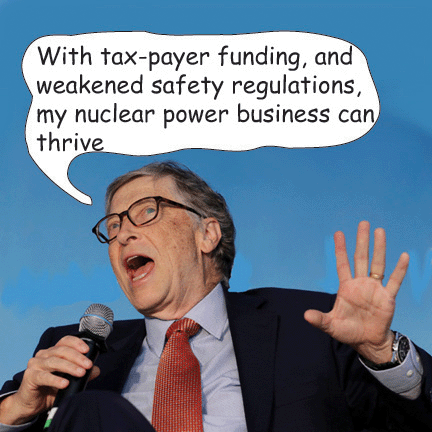
UK small #nuclear competition: Rolls Royce in, Bill Gates snubbed
CITY,AM NICHOLAS EARL 3 Oct 23 #antinuclear #nuclear-free #NoNukes
Bill Gates’ nuclear reactor design company Terrapower has not been shortlisted for the next round of the government’s competition for scaled-down power plants.
Industry vehicle GB Nuclear has selected six companies to advance to the latest stage, including rumoured front-runner Rolls-Royce which has already secured over £200m in government funding.
The remaining contenders also include EDF, GE-Hitachi, Holtec Britain, Nuscale and Westinghouse Electric.
These companies will be invited to bid for government contracts later this year, with successful companies announced next spring and contracts awarded in the summer.
Gates, the world’s fifth richest man and the co-creator of Microsoft, founded Terrapower in 2006.
He is currently the company’s chairman and is still their biggest investor, leading a £588.3m funding round last year.
The company has been pitching bespoke ‘Natrium’ reactors powered by high-assay low-enriched uranium and announced its intentions earlier this year to enter the UK race for projects.

However, Whitehall officials have reportedly been concerned over insufficient supplies to import at scale to meet demand for Terrapower reactors, as most of the uranium it needs is produced in Russia – which is under sanctions following the country’s invasion of Ukraine.
City A.M. understands GB Nuclear wanted to prioritise the most ready-made technologies which could guarantee a final investment decision by the end of the decade.
Instead, Terrapower could feature in an upcoming consultation on advanced technology.
Small modular reactors are a cornerstone of the government’s plan to revive domestic nuclear energy and replace the country’s ageing fleet – with 85 per cent of the country’s current capacity set to go offline over the next 12 years.
……………………..Downing Street is targeting operational SMRs in the UK by the mid-2030s, with a £20bn cap being placed on the competitive process.
………………Downing Street is targeting operational SMRs in the UK by the mid-2030s, with a £20bn cap being placed on the competitive process. https://www.cityam.com/uk-small-nuclear-competition-rolls-royce-in-bill-gates-snubbed/
Pacific island States support the Treaty on Prohibition of Nuclear Weapons – a problem for Australia in joining AUKUS nuclear military alliance
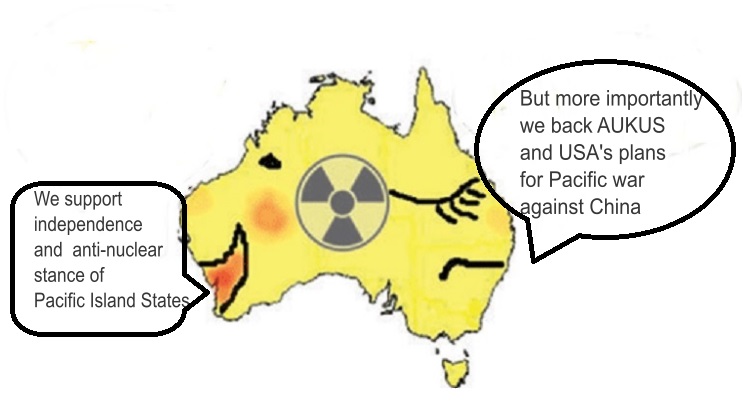
French criticism of nuclear ban treaty highlights Canberra’s dilemma
The Interpreter, NIC MACLELLAN, 2 Oct 23
Can Australia rebuild a strategic military partnership with France at
the same time as independence movements claim Pacific support?
On 28 September, the Assembly of French Polynesia unanimously passed a resolution endorsing the Treaty on the Prohibition of Nuclear Weapons (TPNW), the nuclear ban treaty that entered into force in 2021. Even though France refuses to sign the treaty, and still controls the defence and foreign policy of French Polynesia, the local legislature in Tahiti with its new pro-independence government sees TPNW as setting a new norm in international law. The resolution encourages “the participation of France as an observer state at the next TPNW Meeting of the States Parties”, to be held in New York in late November. It also calls on the French government to “work towards France’s adherence to this new international norm.”
A key reason for this pointed message to Paris are the TPNW provisions that call for assistance to nuclear survivors and clean-up of contaminated nuclear test sites. The Ma’ohi people are still seeking compensation for the health and environmental effects of 193 French nuclear tests at Moruroa and Fangataufa.
Beyond this, French Polynesia’s critique of nuclear weapons echoes the views of the majority of members of the Pacific Islands Forum. Unlike Australia, nine independent Pacific Island countries and Aotearoa-New Zealand have already signed and ratified the TPNW.
At the recent Australian Labor Party (ALP) National Conference in Brisbane, the party re-confirmed its support for signing the TPNW – under restrictive conditions – and agreed to send an observer to the next Meeting of State Parties. However key ALP leaders are opposed to signing, and nuclear weapons states such as the United States and France, having long derided the treaty, are now ramping up their opposition to it.
A front-page story in The Australian on 2 October cited an unnamed French diplomat who criticised Australia over its tentative moves towards signing TPNW, though the story fails to mention last week’s resolution from the Assembly of French Polynesia…………………………………………….
the Australian government has held a series of meetings with key French ministers to rebuild relations disrupted by AUKUS, including a summit between Defence Minister Richard Marles and French counterpart Sebastien Lecornu in September 2022, and a 2+2 meeting of defence and foreign ministers in January. Marles and Lecornu are organising the South Pacific Defence Ministers meeting in Noumea in December, to the dismay of the FLNKS independence movement, which is in the midst of talks with the French state over a new political status for New Caledonia.
Last year, Marles congratulated Emmanuel Macron on his re-election to the French presidency, proclaiming “France is our neighbour. France is a Pacific country. And as such, France deeply matters to Australia.”
But France is a European colonial power, not a Pacific country. It is recognised by the United Nations as the administering power of non-self-governing territories. It has responsibilities for decolonisation under international law. Australian governments may be reluctant to talk publicly about this, but the issue of self-determination is firmly on the regional agenda, posing difficult choices for all Forum member countries (as shown by recent debates over West Papua, Bougainville, Guam, etc).
Another problem is that, in both Australia and France, the perspectives of leaders from Francophone island communities are usually missing from the public debate about France’s role in Indo-Pacific security. It’s rare to see the media or think tanks cite President Louis Mapou of New Caledonia or newly elected President Moetai Brotherson of French Polynesia. Both will be attending the next Pacific Islands Forum summit in Rarotonga as it discusses regional security – for the first time, leaders from both French territories in the Forum are supporters of independence and sharp anti-nuclear critics.
So, can Australia rebuild a strategic military partnership with France at the same time as its Pacific neighbours are seeking an independent and sovereign state?
As Penny Wong travelled to Noumea last April, becoming the first Australian Foreign Minister to address the Congress of New Caledonia, Mapou was eager to strengthen ties with Canberra around trade, investment and people-to-people engagement. He also diplomatically highlighted key differences around Australia’s close alignment with the United States under the AUKUS partnership:
The independence movement of New Caledonia – of which I’m a member – is in favour of non-alignment. We regularly attend the summits of the Non-Aligned Movement. From the earliest days, we have supported a nuclear free Pacific – that’s even set out in the preamble of the draft Constitution of Kanaky that we submitted to the United Nations in 1986. When Australia decides to align itself with the United States in the framework of AUKUS to acquire nuclear submarines, it raises the question: if it starts here, where will it end? How does this impact the Treaty of Rarotonga and the Boe Declaration on security?
The Albanese government has proclaimed its support for a world without nuclear weapons. But talk is easy. It’s getting harder for the ALP government to balance tensions between its role as an AUKUS partner, a strategic partner with France and the “security partner of choice” for the island nations of the Pacific, which are deeply opposed to nuclear weapons. Why should Australia side with a European colonial power against its closest neighbours? https://www.lowyinstitute.org/the-interpreter/french-criticism-nuclear-ban-treaty-highlights-canberra-s-dilemma
Maybe Branding U.S. Wars Democrat or Republican Wasn’t Such A Good Idea
Republicans would only vote for averting a shutdown if it stripped out “aid” to Ukraine and it worked
LISA SAVAGE, OCT 3, 2023 https://went2thebridge.substack.com/p/maybe-branding-us-wars-d-or-r-wasnt?utm_source=post-email-title&publication_id=1580975&post_id=137596684&utm_campaign=email-post-title&isFreemail=true&r=ln98x&utm_medium=email
There is considerable anti-war sentiment among voters worldwide — which explains why candidates run on peace promises (Obama, Zelensky, Trump). There is also considerable pro-war sentiment among corporations who build weapons of mass destruction, and the think-tanks they fundto support them.
This push-pull has nudged warmakers into branding wars as “D for Democrat” or “R for Republican” in order to whip up support and manage dissent. Thus Democrats support President Biden’s proxy war on Russia via Ukraine while Republicans and third parties (Greens, Libertarians, Communists) don’t.
But based on the congressional circus this week, maybe that is not such a good strategy?
Those of us opposed to ALL wars our government wages have experienced the partisan split in who will stand with us. When a Republican is in the White House, Democrats come out in droves. Then when an Obama or a Biden is elected, they go home.
Then, the parties wage information wars to support their team. These have ramped up considerably to insist that Putin = Hitler (just silly), that there are no Nazis in Ukraine (maybe they all went to Canada?), and that funding Ukraine’s government is a higher priority than funding our own. Even though as far back as July a CNN poll found a majority in the U.S. opposed sending any more money to Ukraine.
In order to avert a federal government shutdown over what to fund, we heard from Democrats that it was the bad Republicans’ fault.
. From The Guardian:
The US president said on Sunday he was “sick and tired” of the political brinkmanship, and that US support for Ukraine could not be interrupted “under any circumstances”.
Even though Democrats never move left and always move right — or maybe because of that? — the Punch and Judy show where the two corporate parties bash each other constantly is having a long run.
Then we heard that the bad Republicans would only vote for averting a shutdown if it stripped out “aid” to Ukraine (currently at $180 billion and counting). And it worked! Worked, that is, after a fire drill shut Congress down when Democratic Congressman Jamaal Bowman pulled a fire alarm and delayed the vote a bit.
He swears this was an honest mistake. But I suspect the delay was so that some more back room deals on terms of the funding could be hammered out.
Received wisdom has it that Democrats want WW3 with Russia while Republicans want WW3 with China. But Greens like me see the corporate parties supporting all the wars and I think they’re all nuts.
I can see where the U.S. once believed it could beat Russia as it used the NATO alliance and CIA color revolutions to foment trouble like civil war for Ukraine. Looking at the situation today, it’s clear that few aside from delusional thinkers allied with the Biden administration believes this is still the case. Russia has objectively kicked Ukraine/NATO’s butt while the response in the West is best epitomized by the Canadian Parliament’s standing ovation for a literal Nazi “who fought the Russians in WW2.”
“Ukrainian President Volodymyr Zelenskyy and Prime Minister Justin Trudeau recognize Yaroslav Hunka, who fought with the First Ukrainian Division in World War II, in the House of Commons in Ottawa on Sept. 22, 2023.” | Patrick Doyle/The Canadian Press
(If you’re unclear on WW2’s major players and alliances, the late Howard Zinn’s overview can be found here.)
Next up, preparations are already well underway for using Taiwan to create a situation where China feels it must respond to safeguard its own borders and sovereignty. What would lead to the delusion that AUKUS or NATO or U.S.-Japan-South Korea could defeat China in a hot war? Hot warriors falsely claim China is authoritarian, has lost the support of its people, and committed genocide against the Uyghurs.
Word to the U.S.: your government is increasingly authoritarian, has lost the confidence of its people, and has committed genocide in so many places it’s hard to list them all. Maybe just note the ongoing attempted genocide of the indigenous people of North America and leave it at that.
1 This Month
Tell Congress: Prevent Nuclear Catastrophe in Iran

Tell Congress: Prevent Nuclear Catastrophe in Iran

Read the Public Inquiry Report, the Commissioners’ report, Surrendering Australia: The AUKUS Deception is available to download for free at aukuspublicinquiry.com. Or just watch the replay of the National Press Club Luncheon.


Shut down the radiation-damaged Heysham nuclear reactors now
To see nuclear-related stories in greater depth and intensity – go to https://nuclearinformation.wordpress.com

Say No to NASA’s Reckless Nuclear Reactor on the Moon
Say No to NASA’s Reckless Nuclear Reactor on the Moon
-
Archives
- November 2026 (246)
- October 2026 (302)
- September 2026 (339)
- August 2026 (330)
- July 2026 (355)
- June 2026 (287)
- May 2026 (306)
- April 2026 (356)
- March 2026 (251)
- February 2026 (267)
- January 2026 (308)
- December 2025 (358)
-
Categories
- 1
- 1 NUCLEAR ISSUES
- business and costs
- climate change
- culture and arts
- ENERGY
- environment
- health
- history
- indigenous issues
- Legal
- marketing of nuclear
- media
- opposition to nuclear
- PERSONAL STORIES
- politics
- politics international
- Religion and ethics
- safety
- secrets,lies and civil liberties
- spinbuster
- technology
- Uranium
- wastes
- weapons and war
- Women
- 2 WORLD
- ACTION
- AFRICA
- Atrocities
- AUSTRALIA
- Christina's notes
- Christina's themes
- culture and arts
- Events
- Fuk 2022
- Fuk 2023
- Fukushima 2017
- Fukushima 2018
- fukushima 2019
- Fukushima 2020
- Fukushima 2021
- general
- global warming
- Humour (God we need it)
- Nuclear
- RARE EARTHS
- Reference
- resources – print
- Resources -audiovicual
- Weekly Newsletter
- World
- World Nuclear
- YouTube
-
RSS
Entries RSS
Comments RSS

