How a Louisiana appeals ruling could impact nuclear waste storage in New Mexico
That license allows for a facility to store more than 8,680 metric tons of spent fuel, even as New Mexico passed a law banning the storage of high-level nuclear waste in the state just before the license was issued. The ban will not be lifted, according to the state law, until a national repository is built, and New Mexico officials give approval for a waste facility.
Appeals court vacates Texas spent-fuel storage license that may have ripple effects, nuclear watchdogs say
SOURCE New Mexico BY: DANIELLE PROKOP – SEPTEMBER 1, 2023
Last week, a federal appellate court in New Orleans ordered a review and reversed a federal license to operate a proposed spent-fuel facility in Andrews County, Texas, just miles across the border from Eunice, New Mexico.
In the Aug. 25 order, Fifth Circuit Judge James Ho wrote that federal law does not grant the Nuclear Regulatory Commission the authority to license private storage facilities for spent nuclear fuel away from reactors.
“The Commission has no statutory authority to issue the license,” Ho wrote. “The Atomic Energy Act doesn’t authorize the Commission to license a private, away-from-reactor storage facility for spent nuclear fuel. And issuing such a license contradicts Congressional policy expressed in the Nuclear Waste Policy Act.”
This is just the latest in a decades-long debate on what to do with the growing amount of radioactive waste from former and current power plants across the country.
Recently, Texas and New Mexico legislatures passed laws banning storage of nuclear waste – despite previous administrations welcoming the industry – and setting up for a showdown with the federal government, who has authority over the nuclear industry.
The Nuclear Regulatory Commission issued a license to Florida-based company Holtec International for a proposed storage site in southeast New Mexico between Hobbs and Carlsbad.
That license allows for a facility to store more than 8,680 metric tons of spent fuel, even as New Mexico passed a law banning the storage of high-level nuclear waste in the state just before the license was issued. The ban will not be lifted, according to the state law, until a national repository is built, and New Mexico officials give approval for a waste facility………………………………………………………………………………………………………. more https://sourcenm.com/2023/09/01/waste-storage-in-new-mexico/
Ukraine war: the implications of Moscow moving tactical nuclear weapons to Belarus
The Conversation Veronika Poniscjakova, August 31, 2023
Russia is reported to have deployed nuclear weapons in Belarus, a step that was much telegraphed earlier this year and recently confirmed by Poland. This move has caused concern in neighbouring countries and has affected security arrangements in Europe.
Russia reportedly has the world’s biggest nuclear arsenal, with (as of 2023) 5,889 nuclear warheads compared to 5,244 deployed by the US. But size (or, more accurately, numbers of warheads) should not be important.
Nuclear deterrence theory – with its related notion of mutually assured destruction – should mean no country wants to fire weapons first as it would pretty much guarantee their own destruction (along with much of the rest of the planet).
That said, the rhetoric from the Russian leadership since the invasion of Ukraine has regularly raised the threat of Russia’s nuclear stockpile. Both Vladimir Putin and the deputy chair of his national security council (and former president), Dmitry Medvedev, have made threatening comments, including this from Putin in September 2021: “If the territorial integrity of our country is threatened, we will without doubt use all available means to protect Russia and our people – this is not a bluff.”
Different classes of nuclear weapons
This idea of mutually assured destruction is linked to strategic nuclear weapons – which can be used to strike big targets – such as cities – more than 3,500km away and carry huge payloads.
But the weapons reportedly being stationed in Belarus by Russia are tactical nuclear weapons (TNWs). It’s estimated that Russia has 2,000 working tactical warheads, and currently it is not clear how many will ultimately end up in Belarus.
There has been a long debate about what the term TNW means. In 2018, then US defense secretary Jim Mattis, said: “I don’t think there is any such thing as a ‘tactical nuclear weapon.’ Any nuclear weapon used any time is a strategic game-changer”.
The International Campaign to Abolish Nuclear Weapons (ICAN) defines a TNW as “any weapon that’s not been classified as “strategic” under US-Russian arms control agreements (Salt, Sort, Start).“ According to ICAN, these weapons can have explosive yields of up to 300 kilotons, or 20 times the force of the bomb that destroyed Hiroshima.
In terms of delivery, they tend to have a shorter range of around 310 miles and can be delivered by missiles, torpedoes or dropped from aircraft. They are designed to be used on the battlefield. Russia is thought to have about ten times as many tactical nuclear warheads as Nato.
Russia’s nuclear policy
Current Russian nuclear doctrine, outlines four cases in which it would use its nuclear weapons. The first three cases are currently largely inapplicable given no one is attacking or threatening Russia with ballistic missiles or nuclear weapons.
The last case is rather intriguing though. It says that Russia would use its nuclear weapons in case of “aggression against the Russian Federation with the use of conventional weapons when the very existence of the state is in jeopardy”. It is worth breaking down this scenario.
First of all, the concept of aggression means different things to Russia than to others. For example, Russia sees Nato’s enlargement as a hostile act. ………………………………………………………………………………………………….. https://theconversation.com/ukraine-war-the-implications-of-moscow-moving-tactical-nuclear-weapons-to-belarus-212296
Russia puts advanced Sarmat nuclear missile system on ‘combat duty’
Russian space agency chief Yuri Borisov says new intercontinental ballistic missile system is now in service, Russia’s news agencies report.
Moscow has put into service an advanced intercontinental ballistic missile that Russian President Vladimir Putin has said would make Russia’s enemies “think twice” about their threats, according to reported comments by the head of the country’s space agency.
Yuri Borisov, the head of the Russian space agency Roscosmos, said Sarmat missiles have “assumed combat duty”, according to Russian news agency reports on Friday……………………………………………………………………………………. more https://www.aljazeera.com/news/2023/9/2/russia-puts-advanced-sarmat-nuclear-missile-system-on-combat-duty
Critics Picked Up on “Oppenheimer’s” All-Too-Timely Warning on Nuclear War
KARL GROSSMAN , https://fair.org/home/critics-picked-up-on-oppenheimers-all-too-timely-warning-on-nuclear-war/ 1 Sept 23
The reviews in media of the film Oppenheimer have been largely positive—and perceptive and thoughtful. With a few exceptions, most reviewers “got” the message of the film.
Oppenheimer is not a film in the mold of Dr. Strangelove or: How I Learned to Stop Worrying and Love the Bomb, the 1964 movie by Stanley Kubrick, an in-your-face cinematic presentation of the madness of nuclear war. It is not as direct as On the Beach, the 1959 Stanley Kramer film based on the Nevil Shute novel about World War III’s nuclear Armageddon, in which a US submarine crew and residents of Melbourne, Australia, await creeping death from radioactive fallout. Nor is it as straightforward as The Day After, the 1983 ABC-TV film that showed an estimated 100 million people the very personal results of nuclear war.
‘To embrace the bomb’
The film is about J. Robert Oppenheimer, the US physicist who helped develop the atomic bombs dropped on Hiroshima and Nagasaki. As Manohla Dargis writes in her New York Times review (7/19/23), Christopher Nolan, who both directed and wrote Oppenheimer, “doesn’t restage the attacks; there are no documentary images of the dead or panoramas of cities in ashes.” Rather, the horrific consequences of nuclear conflict are transmitted through the story of Oppenheimer himself, who was “transformed by his role in the creation of weapons of mass destruction and soon after raised the alarm about the dangers of nuclear war.”
Citing French director François Truffaut, who once wrote that “war films, even pacifist, even the best, willingly or not, glorify war and render it in some way attractive,” Dargis contends that this
“gets at why Nolan refuses to show the bombing of Hiroshima and Nagasaki, world-defining events that eventually killed an estimated 100,000 to upward of 200,000 souls.
You do, though, see Oppenheimer watch the first test bomb and, critically, you also hear the famous words that he said crossed his mind as the mushroom cloud rose: “Now I am become death, the destroyer of worlds.”
“As Nolan reminds you, the world quickly moved on from the horrors of the war to embrace the bomb,” Dargis writes. “Now we, too, have become death, the destroyers of worlds.”
‘Uncomfortably timely’
The film’s focus not just on a bloody decision made the better part of a century ago, but on the threat of annihilation facing humanity today, is made clear at its outset. A caption spread across the screen with an observation from Greek mythology: “Prometheus stole fire from the gods and gave it to man. For this he was chained to a rock and tortured for eternity.”
Ann Hornaday in her Washington Post review (7/19/23) relates:
As a filmmaker at the height of his powers, Nolan has used those prodigious skills not simply to amaze or spectacularize, but to plunge the audience into a chapter of history that might feel ancient, as he reminds us, but happened just yesterday. By making that story so beautiful, so elegantly crafted and compulsively watchable, he has brought to life not just J. Robert Oppenheimer, but the still-crucial arguments he both started and tried to end.
Oppenheimer boldly posits that those arguments are still worth having, in a film of magnitude, profundity and dazzling artistry.
“Oppenheimer Is an Uncomfortably Timely Tale of Destruction,” was the headline of the review by David Klion in the New Republic (7/21/23). He declares:
Oppenheimer turns out to be uncomfortably timely. At no point since the end of the Cold War has nuclear war felt more plausible, as the daily clashes between a nuclear-armed Russia and a NATO-backed Ukraine remind us. Beyond literal nuclear warfare, we are faced with a range of existential dangers—pandemics, climate change and perhaps artificial intelligence—that will be managed, or mismanaged, by small teams of scientific experts working in secret with little democratic accountability. The ideologies, affiliations and personalities of those experts are likely to leave their stamp on history, and not in ways they themselves would necessarily wish. Oppenheimer’s dark prophecy may yet be fulfilled.
A plug for nuclear power?
Now, there were several inexplicable reviews of Oppenheimer.
In his review in New Scientist (8/9/23), a London-based publication with an international circulation of 125,000, Simon Ings writes that Oppenheimer “will help us embrace” nuclear power, which, he claims, “by any objective measure…is safe and getting safer.” Ing somehow believes the film “isn’t so much about J. Robert Oppenheimer’s development of the atomic bomb…as it is about the paranoid turn history took [about nuclear power] in the wake of his triumph.”
How he deduced this from Oppenheimer is indecipherable.
Leaving the theater after seeing Oppenheimer, I was tempted to call it a movie-length Wikipedia article. But after a look online, I realized I was giving Wikipedia too little credit—or Christopher Nolan, the movie’s writer and director, too much.
The New Yorker gave his piece the headline “Oppenheimer Is Ultimately a History Channel Movie with Fancy Editing.” Considering the many highly emotional, engrossing scenes—including many personal ones involving Oppenheimer—this makes no sense. It is far from a movie version of a Wikipedia posting or a History Channel docudrama.
Then there was the review by Richard Brody in the New Yorker (7/26/23) that begins:
Brody almost seems to scold Nolan for hoping to provoke discussion:
Rather than illuminating him or his times, the scenes seem pitched to spark post-screening debate, to seek an importance beyond the experiences and ideas of the characters.
‘The bomb’s lingering residue’
Justin Chang’s review in the Los Angeles Times (7/19/23) would no doubt have irritated Brody by engaging in “post-screening debate.” Nolan, Chang writes, is
less interested in reenacting scenes of mass death and devastation, none of which are depicted here, than in sifting through the bomb’s lingering geopolitical and psychic residue.
Chang observes:
The real Oppenheimer may have never expressed remorse over Hiroshima and Nagasaki, but the movie never lets its Oppenheimer forget them, especially in one shuddering, blood-chilling sequence that transforms a public moment of triumph into an indictment.
Nor can Oppenheimer forget the still greater destruction that may yet be unleashed, a prospect that his typically naive and high-minded insistence on “international cooperation” will do nothing to dispel. Nolan conveys that warning with somber gravity, if not, finally, the cathartic force that our current headlines, full of war and nuclear portent, would seem to demand. Not for the first time, the demonstrative cleverness of his storytelling can seem too precise, too hermetically sealed and engineered, for a sense of raw collective devastation to fully take hold.
Even Rupert Murdoch’s arch-conservative New York Post (7/19/23) had a rave review. Critic Johnny Oleksinski declares:
What keeps all three hours of the film so breathlessly tense is the title physicist’s internal tug of war: Can the valiant quest for scientific advancement—his great passion—lead to the total destruction of the planet?
A highly perilous time
To what extent did media either take advantage of or drop the ball on the opportunity the movie gave them to examine the pressing issue of nuclear war? My review of the reviews would conclude that most media didn’t drop the ball, only a few did—and that to me is quite a surprise.
We are at a highly perilous time in regard to nuclear war. The Bulletin of the Atomic Scientists (1/24/23) moved its “Doomsday Clock,” which it says represents the risk of “nuclear annihilation,” forward to 90 seconds to midnight—the closest it’s been since it was set up in 1947.
Dr. Strangelove, On the Beach and The Day After all came out decades ago.
Oppenheimer can provide—especially with the (astonishing for me, long a media critic) widely positive media reaction—the opening of a window that can help new generations of people learn about nuclear weapons, and move for an abolition that can prevent a nuclear apocalypse.
Over 100 security incidents at UK’s Ministry of Defence (MoD) nuclear weapons body
An arm of the Ministry of Defence (MoD) which oversees the UK’s nuclear
weapons programme has refused to release details of over 100 security
incidents it logged over the last five years, prompting accusations of a
“cover up”.
According to new figures – released to The Ferret after a
freedom of information (FoI) request – the Defence Nuclear Organisation
(DNO) has recorded 113 ‘security concerns’ since 2017-18. The DNO said
these incidents may have ranged from minor breaches of security policies to
the outright loss of information.
But despite claiming that many of the
reported incidents would not have “significant ramifications”, the
organisation refused to provide descriptions of any. It cited national
security concerns and fears about damaging the UK’s reputation
internationally.
The Ferret 30th Aug 2023 https://theferret.scot/over-100-incidents-body-oversees-nuclear-weapons/
‘Unrealistic and irrational’: Government announces Sizewell C nuclear station £341m speed-up despite local backlash in Suffolk
Tom Daly, the cabinet member for energy and climate change at East Suffolk
Council, believes the project is “unrealistic and irrational”, and the
announcement nothing but a publicity stunt. He said: “I think it is part
of the government’s efforts to keep the subject in the news and make sure
it is in the public’s minds.
“The money that is being highlighted has
already been allocated — this is a way to create a sense of confidence
and try to dispel doubts.” In early 2020, the Together Against Sizewell C
(TASC) local action group sought a judicial review of the previous
administration at East Suffolk Council’s 2019 decision to grant planning
permission for preparations to begin on the site. However, in October 2020,
the High Court ruled the impacts would be “minor” and “not
significant”.
Pete Wilkinson, the deputy chair at TASC, said: “There
seems to be a bottomless pit of public money when it comes to funding
Sizewell C, so besotted is the government with this already redundant
nuclear vanity project.” Several concerns have been raised by the new
council including nuclear waste, water supply, sea defence, impacts on the
coastal economy, species diversity, habitat destruction, and size. Cllr
Daly added: “The government’s newfound enthusiasm for nuclear is not
based on reality. It’s far too expensive and far too damaging.
Suffolk News 30th Aug 2023
Why is The New York Times Burning Peace Activist Jodie Evans at the Stake?
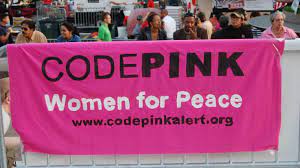
The New York Times have targeted Code Pink’s Jodie Evans in a smear piece claiming she and her husband are agents of China.
SCHEERPOST 31 Aug 23
The New York Times has revealed what the future could potentially look like in an impending war with China. Through conjecture and innuendo-filled reporting, America’s “paper of record” went out of its way to attack one of the country’s most fierce peace movement fighters — Code Pink co-founder Jodie Evans.
Evans joins host Robert Scheer on this episode of Scheer Intelligence to discuss what Scheer called “one of the most vicious articles I’ve ever read in a mainstream publication.” While The Times attempted to tie Evans and her husband to the Chinese government, Evans points out the bigger picture in what the piece represents: the vilification of anything or anyone having to do with China.
She points out how her familiarity with the country allowed her to bring it up in conversation but in the last few years, any sort of discussion, debate or otherwise normal discourse has turned sour. This is all part of an effort, Evans said, to manufacture consent for a war with China. This has not only affected her but thousands of Chinese American people as well.
“Americans are being dumbed down by this propaganda. And it has an intention. It is a part of this war. [A]nybody that gets in our way, we’re going to destroy them and we are going to continue this drive to go to war on China, to demonize China,” Evans said.
Transcript……………………………………………………………………………….https://scheerpost.com/2023/08/31/why-is-the-new-york-times-burning-peace-activist-jodie-evans-at-the-stake/
NATO’s ‘proxy war’ blues: How the US-led campaign to use Ukraine to ‘cripple’ Russia has failed
Moscow has overcome Western economic sanctions and honed a bigger and more effective military through 18 months of combat
The US-led drive to isolate Russia and the attempt to debilitate its economy and military using Ukraine – acknowledged as a “proxy war” even by some Western leaders – appears to be having the opposite effect by various measures.
Washington and other NATO members have repeatedly proclaimed that Russian President Vladimir Putin has already suffered a strategic defeat in Ukraine and has “no possibility” of winning the conflict. “Putin’s already lost the war,” US President Joe Biden claimed last month after attending a NATO summit in Vilnius, Lithuania.
Pentagon officials, who have openly admitted that their goal is to weaken Russia’s military, have spoken in recent weeks of heavy losses for Moscow’s forces and “steady progress” in Ukraine’s long-touted counteroffensive. America’s top-ranking general, US Chairman of the Joint Chiefs of Staff Mark Milley, went so far earlier this year as to say, “Russia has lost. They’ve lost strategically, operationally and tactically.”
Russian leaders are seeing a far different picture on the ground. For instance, Putin has claimed that Russian forces achieved a ten-to-one kill ratio in a key battle last month. Ukraine has lost 43,0000 troops, as well as dozens of Western-supplied tanks, infantry vehicles and artillery pieces since Kiev’s counteroffensive began in early June, according to an August 4 estimate by the Russian Defense Ministry. “It is obvious that the Western-supplied weapons are failing to bring success on the battlefield and only prolong the military conflict,” Russian Defense Minister Sergey Shoigu has said.
Grading the military impact
While assessments of the battlefield situation diverge wildly, NATO has clearly failed so far in its effort to weaken the Russian military. Moscow’s forces are inarguably stronger, better-armed and larger today than when the conflict started in February 2022. They’ve also gained 18 months of experience in fighting NATO-trained troops and countering NATO-supplied weaponry. In fact, Russian troops have become so formidable in this regard that even Western media outlets have quoted defense analysts on the increasingly effective tactics employed by Moscow’s battle-hardened forces…………………………………….
The Center for European Policy Assessment (CEPA), which is funded by a variety of US weapons makers, offered a similar view on the strengthening of Russia’s military. “The Russians have gone to school on the Ukrainians and have been learning quickly,” Chels Michta, a US military intelligence officer, wrote in May. “The 2023 Russian Army is a different beast from the 2022 Russian Army from the early stages of the war.”……………………………………………………………………………………………………………………………………… https://www.rt.com/news/581704-ukraine-proxy-war-backfires-for-west/
UK government announces a further £341m to speed up Sizewell C development
THE UK government has announced that it will provide an additional £341m
(US$432m) to speed up preparations and make the Sizewell C nuclear site
“shovel-ready”, as it seeks to create a new generation of nuclear power
stations in the country.
Chemical Engineer 31st Aug 2023
The UK Government’s seventh Energy Secretary in the space of four years has “a huge amount of catching up to do” to kickstart a renewables revolution.
The UK Government’s seventh Energy Secretary in the space of four years
has been warned she has “a huge amount of catching up to do” to
kickstart a renewables revolution.
Herald 31st Aug 2023
Nuclear weapons testing cause of radioactivity in wild boars, study says

https://www.bbc.com/news/world-europe-66665646— 31 Aug 23
A new study has found that nuclear weapons tests during the Cold War are a major cause of high levels of radioactivity in central Europe’s wild boar population.
The radioactivity found in wild boars has previously been blamed on the 1986 Chernobyl disaster.
But the new research concludes that earlier nuclear weapons testing in the 1960s is a significant cause.
Other wild animals’ radioactivity levels have dropped over the years.
So many wondered why the wild pigs’ contamination levels remained so high.
After testing meat from 48 boars in Germany’s state of Bavaria, scientists from Vienna’s University of Technology and Leibniz University of Hannover found that their radioactivity is to a significant degree caused by older, Cold War nuclear bomb blasts which are still affecting the soil in the area.
Writing in the Environmental Science and Technology journal, the scientists say that radioactive caesium from the tests have sunk into the earth, contaminating deer truffles – the food favoured by wild boars, who dig into the soil to find them.
But the truffles – and the subsequent contamination of wild boars – is unlikely to abate any time soon, the study says.
This is because more radioactive caesium from Chernobyl will seep further into the soil, further contaminating the truffles.
The boars’ continued contamination threatens the Bavarian forests themselves, the study says: as the animals are not shot for their meat, their populations are growing unsustainably.
US Victim of Own Propaganda in Ukraine War
The aggression of Kiev’s coup regime against ethnic Russians in Ukraine, which led to Russia’s intervention, has been airbrushed from history.

The brutality of these neo-Nazis surfaced again on May 2 when right-wing toughs in Odessa attacked an encampment of ethnic Russian protesters driving them into a trade union building which was then set on fire with Molotov cocktails. As the building was engulfed in flames, some people who tried to flee were chased and beaten, while those trapped inside heard the Ukrainian nationalists liken them to black-and-red-striped potato beetles called Colorados, because those colors are used in pro-Russian ribbons.
‘Burn, Colorado, burn’ went the chant.
As the fire worsened, those dying inside were serenaded with the taunting singing of the Ukrainian national anthem. The building also was spray-painted with Swastika-like symbols and graffiti reading ‘Galician SS,’ a reference to the Ukrainian nationalist army that fought alongside the German Nazi SS in World War II, killing Russians on the eastern front.”
Photos and a video can be seen on the original of this article
The U.S. embassy in Prague furthered the suppression of the historical context of the Ukraine conflict, which has dangerously trapped Americans in ignorance about the war.
SCHEERPOST, By Joe Lauria / Consortium News, August 30, 2023
The whitewashing of the historical context for the war in Ukraine has resulted in a profoundly embarrassing episode for the United States embassy in Prague.
An Aug. 21 Tweet from the embassy with a message roughly translated from Czech to mean “Aggression always comes from the Kremlin,” showed two photographs: the first displayed Soviet tanks in the streets of Prague in 1968. The second showed fire burning in front of a building and was marked “Odesa 2023.”
Twitter users were quick to point out the embassy’s error. “The bottom photo is from 2014 Odessa Clashes where pro federalism (mostly pro Russian) got burned alive in clash with Ukrainian nationalist(s) while police and fireman stood watching. To this day no one was jailed,” wrote one commenter.
Someone else wrote: “You vile people, twisting the history to whitewash the crimes of the Ukrainian far-right against peaceful Ukrainians, and in fact using their crimes with the diametrically opposite meaning!”
The embassy got the message. “Thanks for the heads up and apologies for the incorrect use of the graphic. We wanted to illustrate the ongoing Russian aggression against Ukraine and we chose the wrong photo,” it wrote.
That prompted another Twitter user to sarcastically respond: “You wanted to illustrate the Ukrainian aggression against the Russian people and you chose the right photo.”
The embassy then deleted the Tweet. It never acknowledged the event depicted in the bottom photo. That signifies either ignorance of the event or intentional suppression of it. The massacre in Odessa is a key point in understanding the cause of the war and has been buried by the West, creating a propagandized narrative about Russia’s intervention.
May 2, 2014
Demonstrators in Odessa on May 2, 2014 were protesting the violent overthrow two and a half months earlier on Feb. 21, 2014 of the democratically-elected President Viktor Yanukovych. U.S. involvement in the coup is revealed in a leaked telephone conversation between Undersecretary of State Victoria Nuland and Geoffrey Pyatt, the U.S. ambassador to Ukraine at the time.
On May 2, football hooligans and far-right groups deliberately set fire to a labor union building in Odessa where protestors against the coup had taken refuge. As many as 48 people were killed. Police did not intervene. Video footage shows at least one police officer and others firing their guns into the building. The crowd is cheering as many of the people trapped inside jumped to their deaths.
Pleas at the time from the United Nations and the European Union for Ukraine to investigate were ignored. Three Ukrainian local government probes were stymied by the withholding of secret documents.
A report on the incident from the European Council (EC) at the time makes clear it did not conduct its own investigation but relied on local probes, especially by the Verkhovna Rada’s Temporary Investigation Commission. The EC complains in its reports that it too was barred from viewing classified information. The EC said the Ukrainian government probes “failed to comply with the requirements of the European Human Rights Convention.”
Relying only on the flawed local inquiries, the EC reports that pro-Russian, or pro-federalist, protestors attacked a pro-unity march in the afternoon, prompting street battles. Then:…………………………………………………………………………………………………………………….
The local investigation thus blamed the anti-Maidan protestors for starting the fire throughout the building. But this video, which shows events on that day leading to the fire, depicts the main blaze in the lobby. It shows Right Sector extremists lobbing Molotov cocktails into the building and a policeman firing his gun at it.
It does not show any cocktails thrown from the building. It doesn’t show clashes earlier in the day, though one pro-unity protestor says they were attacked at Cathedral Square and they’ve come to burn the anti-Maidan protestors in the building for revenge.
The Fallout
Eight days after the Odessa massacre, coup resisters in the far eastern provinces of Donetsk and Lugansk, bordering on Russia, voted in a referendum to become independent from Ukraine.
The U.S.-backed coup government had launched a military attack two weeks earlier, on April 15, 2014 against ethnic Russians in Donbass protesting against the coup, including seizing government buildings, in defense of a democratic election. This phase of the war continued for nearly eight years, killing thousands of people before prompting Russian intervention in the civil war on Feb. 24, 2022.
Russia says it had proof that the Ukrainian military, which had amassed 60,000 of its troops at the line of contact, was on the verge of an offensive to retake the Donbass provinces. OSCE maps showed a dramatic increase of shelling from the government side into the rebel areas in February last year.
Russia invaded Ukraine with the stated purpose of “de-Nazifying” and “de-militarizing” Ukraine to protect Russian-speakers and the people of Donbass. The events in Odessa on May 2, 2014 played a role.
Western Media Coverage
The New York Times buried the first news of the massacre in a May 2, 2014 story, saying “dozens of people died in a fire related to clashes that broke out between protesters holding a march for Ukrainian unity and pro-Russian activists.”
……………… The late Robert Parry, who founded Consortium News, reported on Aug. 10, 2014:
“The brutality of these neo-Nazis surfaced again on May 2 when right-wing toughs in Odessa attacked an encampment of ethnic Russian protesters driving them into a trade union building which was then set on fire with Molotov cocktails. As the building was engulfed in flames, some people who tried to flee were chased and beaten, while those trapped inside heard the Ukrainian nationalists liken them to black-and-red-striped potato beetles called Colorados, because those colors are used in pro-Russian ribbons.
‘Burn, Colorado, burn’ went the chant.
As the fire worsened, those dying inside were serenaded with the taunting singing of the Ukrainian national anthem. The building also was spray-painted with Swastika-like symbols and graffiti reading ‘Galician SS,’ a reference to the Ukrainian nationalist army that fought alongside the German Nazi SS in World War II, killing Russians on the eastern front.”
Consequences of Suppressing Information
Though they were reported at the time, the events of May 2, 2014 have virtually vanished from Western media. It was one of the seminal events that led to Russia’s eventual intervention in the Ukrainian civil war.
Similarly the role Ukrainian neo-Nazis played in the 2014 coup and the 8-year war on Donbass — which had been widely reported on at the time in Western mainstream media — disappeared, erasing the context of Russia’s invasion. The December 2021 Russian offer of treaties with the U.S. and NATO to avoid war was forgotten too. A campaign was then launched by so-called disinformation monitors to try to suppress alternative media from reporting on these facts.
The consequences of these efforts is clear. The aggression of Kiev’s coup regime against ethnic Russians in Ukraine, which led to Russia’s intervention, has been airbrushed from history.
What’s left is a cartoon version that says the conflict began, not in 2014, but in February 2022 when Putin woke up one morning and decided to invade Ukraine. There was no other cause, according to this version, other than unprovoked, Russian aggression against an innocent country.
Thus the U.S. Embassy in Prague either deceptively used that photo, or more likely, had no idea what happened in Odessa in 2014, as it has hardly been reported on since, thinking that a prime example of Ukrainian aggression against ethnic Russians was instead a photo showing Russian aggression against Ukrainians.
This is what happens when you believe your own propaganda. https://scheerpost.com/2023/08/30/us-victim-of-own-propaganda-in-ukraine-war/
Atomic Blackmail: Ukraine war realises predictions of nuclear power plant threat, says Leicester civil safety expert.

Governments need to be aware of the risk of their country’s nuclear
power plants being weaponised as they turn to nuclear to tackle the ongoing
energy crisis, a University of Leicester civil safety expert has argued. In
his new book Atomic Blackmail?
The weaponisation of nuclear facilities
during the Russia-Ukraine War, Dr Simon Bennett lays out how the ongoing
conflict is confirming long-running concerns about the security of nuclear
power plants and their potential to be weaponised to gain political
traction over an opponent. The events of the Russia-Ukraine War have
demonstrated the capacity that nuclear power plants have to amplify
protagonists’ hitting power, Dr Bennett argues. This is believed to be
the first time in the history of nuclear electricity that nuclear power
plants have been occupied by an invading force.
Leicester University 29th Aug 2023
https://le.ac.uk/news/2023/august/nuclear-power-plant-ukraine
Federal appeals court blocks plan to ship nuclear waste to West Texas.

Marfa Public Radio | By Travis Bubenik, August 30, 2023 https://www.kut.org/energy-environment/2023-08-30/federal-appeals-court-blocks-plan-to-ship-nuclear-waste-to-west-texas
A federal appeals court last Friday blocked a company’s long simmering plan to ship highly radioactive nuclear waste to West Texas, a ruling that further complicates the country’s search for a long-term home for its growing stockpile of waste from nuclear power plants.
The company, Interim Storage Partners, has for years pursued the idea of using an existing site in Andrews County, on the Texas border with New Mexico, as a long-term home for much of the nation’s “high-level” nuclear waste.
In 2021, the Nuclear Regulatory Commission granted the company a license for the plan, despite a move by state lawmakers that same year to ban the proposal. The State of Texas responded with a lawsuit arguing that the NRC didn’t have authority to issue the license.
On Friday, a three-judge panel of the U.S. Fifth Circuit Court of Appeals agreed with the state, ruling that federal law does not give the commission the power to issue such licenses.
“The Atomic Energy Act doesn’t authorize the Commission to license a private, away-from-reactor storage facility for spent nuclear fuel,” U.S. Circuit Judge James Ho wrote for the majority. “And issuing such a license contradicts Congressional policy expressed in the Nuclear Waste Policy Act.”
“This is an important ruling for Texas against a federal agency attempting to overstep its authority,” said Paige Willey, a spokesperson for Texas Attorney General Ken Paxton.
Archbishop Caccia recalls harm done by nuclear energy
The Holy See’s Permanent Observer to the United Nations reiterates Pope Francis’ and Holy See’s stance on nuclear disarmament and testing, at the UN General Assembly.
By Francesca Merlo, https://www.vaticannews.va/en/vatican-city/news/2023-08/archbishop-caccia-permanent-observer-holy-see-united-nations.html 30 Aug 23
Archbishop Gabriele Caccia, the Holy See’s Permanent Observer to the United Nations, echoed Pope Francis’ message regarding nuclear disarmament during the UN’s General Assembly High-level Plenary Meeting commemorating the International Day Against Nuclear Tests (IDANT).
In his address, Archbishop Caccia urged the international community to listen to the “prophetic voices” of nuclear test victims and take decisive steps towards disarmament.
Archbishop Caccia underscored the grave historical reality, saying the Trinity site’s first nuclear-explosive test 78 years ago ignited a dangerous arms race, causing immeasurable harm.
These tests have left a trail of suffering, he said, including “displacement, multigenerational health problems, poisoned food and water” and spiritual disconnection from the Earth.
Indigenous peoples, women, and children have borne the brunt, with minimal assistance provided.
Moral and legal duties
In response, Archbishop Caccia stated that nations relying on nuclear deterrence must fulfill their moral and legal duties to remedy the damages caused by these tests.
He cautioned against the resurgence of nuclear testing, which would heighten global tensions and undermine security.
The Holy See steadfastly supports the Comprehensive Nuclear-Test-Ban Treaty, the culmination of decades of international collaboration
Additionally, the Holy See advocates for reinforcing the nuclear-test ban stipulated in the Treaty on the Prohibition of Nuclear Weapons (TPNW).
Pope Francis’ assertion that nuclear weapons cannot underpin an “ethics of fraternity” resonates with this stance.
-
Archives
- October 2026 (112)
- September 2026 (339)
- August 2026 (330)
- July 2026 (355)
- June 2026 (287)
- May 2026 (306)
- April 2026 (356)
- March 2026 (251)
- February 2026 (267)
- January 2026 (308)
- December 2025 (358)
- November 2025 (359)
-
Categories
- 1
- 1 NUCLEAR ISSUES
- business and costs
- climate change
- culture and arts
- ENERGY
- environment
- health
- history
- indigenous issues
- Legal
- marketing of nuclear
- media
- opposition to nuclear
- PERSONAL STORIES
- politics
- politics international
- Religion and ethics
- safety
- secrets,lies and civil liberties
- spinbuster
- technology
- Uranium
- wastes
- weapons and war
- Women
- 2 WORLD
- ACTION
- AFRICA
- Atrocities
- AUSTRALIA
- Christina's notes
- Christina's themes
- culture and arts
- Events
- Fuk 2022
- Fuk 2023
- Fukushima 2017
- Fukushima 2018
- fukushima 2019
- Fukushima 2020
- Fukushima 2021
- general
- global warming
- Humour (God we need it)
- Nuclear
- RARE EARTHS
- Reference
- resources – print
- Resources -audiovicual
- Weekly Newsletter
- World
- World Nuclear
- YouTube
-
RSS
Entries RSS
Comments RSS

