Netanyahu Says Israel ‘Not Successful’ in Minimizing Civilian Casualties in Gaza
By Kyle Anzalone / Antiwar.com https://scheerpost.com/2023/11/19/netanyahu-claims-israel-not-successful-in-minimizing-civilian-casualties-in-gaza/
Israeli Prime Minister Benjamin Netanyahu claimed Israel was “trying to [minimize] civilian casualties. But unfortunately, we’re not successful.” The prime minister’s statement comes as the UN warns that the Israeli fuel embargo of Gaza could cause widespread starvation in the besieged enclave.
In an interview with CBS News on Thursday, the Israeli Prime Minister said Tel Aviv was trying to wipe out Hamas with minimal civilian casualties. He stated, “That’s what we’re trying to do: minimal civilian casualties. But unfortunately, we’re not successful.”
Netanyahu went on to blame Hamas for the high civilian death toll in Gaza. “Any civilian death is a tragedy. And we shouldn’t have any because we’re doing everything we can to get the civilians out of harm’s way, while Hamas is doing everything to keep them in harm’s way,” he argued.
The Israeli leader says his forces have taken steps to warn civilians of upcoming strikes. “So, we send leaflets, [we] call them on their cell phones, and we say: ‘leave’. And many have left,” Netanyahu said.
In the first weeks of the Israeli military campaign, Tel Aviv instructed Gazans to move to the southern half of the strip. However, at least some who fled their homes were killed while trying to evacuate. After fleeing, numerous Gaza residents have been unable to locate basic resources and were forced to return to their homes.
On Wednesday, Israel began instructing Palestinians in southern Gaza to evacuate. It is unclear where the people could go.
Since Israel started bombing Gaza six weeks ago, at least 11,000 civilians, including 4,500 children, have been killed. The UN reports, The UN reports “One in every 57 people living in the Gaza Strip has been killed or wounded.” Dozens of journalists and doctors are among the dead. Over 100 UN staff members have been killed.
United Nations High Commissioner for Human Rights, Volker Turk, told the UN Security Council the Israeli bombing and invasion of Gaza has decimated the healthcare infrastructure. “WHO has recorded at least 137 attacks on health care in Gaza, with especially severe impact on Al-Shifa Hospital in recent days, where newborns on life support are dying due to power, oxygen, and water cuts, while many other patients of all ages are at risk – as well as medics, and people sheltering on the hospital grounds,” he said.
Netanyahu attempted to justify the two-day raid on the al-Shifa Hospital by claiming Israel believed it would find hostages in the facility and that Hamas was using the building as a headquarters. He told CBS News there were “strong indications” that Israeli hostages were being held there, and this was “one of the reasons we entered.” However, none were found.
The Israeli Prime Minister went on to say Tel Aviv had “concrete evidence” that there were “terrorist chieftains and terrorists” in the hospital, but that these fled as Israel’s forces advanced. Israeli forces who entered Al-Shifa found a small number of guns and uniforms.
After a Hamas attack in southern Israel on October 7, Tel Aviv cut off all food, aid, water, and fuel into Gaza. The Israeli government has relaxed the embargo and allowed small amounts of food and water into the besieged enclave. However, the lack of fuel has now completely halted all aid shipments. While Netanyahu says he is attempting to take a moral path and save Palestinians’ lives when possible, the international aid agencies warn that there is now a risk of mass starvation in Gaza.
UK gov’t departments compiling ‘secret files’ on its critics to prevent them speaking at official events
‘Shocking’ scale of UK government’s secret files on critics revealed
Dossiers were compiled by 15 departments after scouring social media activity to vet people invited to speak at official events
Guardian Anna Fazackerley 19 Nov 23
Fifteen government departments have been monitoring the social media activity of potential critics and compiling “secret files” in order to block them from speaking at public events, the Observer can reveal.
Under the guidelines issued in each department, including the departments of health, culture, media and sport, and environment, food and rural affairs, officials are advised to check experts’ Twitter, Facebook, Instagram and LinkedIn accounts. They are also told to conduct Google searches on those individuals, using specific terms such as “criticism of government or prime minister”.
The guidelines are designed to prevent anyone who has criticised the government in the previous three to five years from speaking at government-organised conferences and other events.
In September, the Observer revealed how three early-childhood education experts discovered that the Department for Education tried to cancel invitations for them to speak at government-funded events because they were judged to have been critical of government policy. Many more education experts and school staff have since uncovered files of their critical social media posts held by the department.
However, it has now become clear that the practice is widespread across government and is probably targeting large numbers of individuals. The scale of the monitoring was uncovered by human rights experts at law firm Leigh Day and shared with the Observer.
The revelations will be hugely embarrassing for a Conservative party that regularly claims to champion free speech and has slammed universities for allowing students to “no platform” experts with whom they disagree.
Tessa Gregory, partner at Leigh Day, who is pursuing legal action against the government on behalf of at least two experts, said: “This is likely to have impacted large numbers of individuals, many of whom won’t know civil servants hold secret files on them. Such practices are extremely dangerous.”
Gregory maintains that these hidden checks are unlawful, running contrary to data protection laws and potentially breaching equality and human rights legislation.
Dan Kaszeta, a chemical weapons expert, was disinvited in April from giving a keynote speech at a UK defence conference after officials found social media posts criticising Tory ministers and government immigration policy. He told the Observer this weekend that he knows of 12 others who have uncovered evidence of similar government blacklisting, most of whom are frightened of speaking out. But he said far more will be unaware they ever failed secret vetting.
He said: “The full extent of this is shocking and probably not fully known. I was lucky enough to be given clearcut, obvious evidence. It’s truly awful……………………………………………………………………
Caroline Wilson Palow, legal director at Privacy International, which has been investigating social media monitoring by the government for many months, said: “If the government is blacklisting people for using their right to free expression in a very valid way then that is very dangerous.”
https://www.theguardian.com/politics/2023/nov/18/shocking-scale-of-uk-governments-secret-files-on-critics-revealed
Greenpeace installs radiation sensors in Ukraine and calls for EU sanctionsagainst Rosatom.

Greenpeace Germany, Greenpeace Central and Eastern Europe,
and Ukrainian environmental group SaveDnipro have installed sensors to
provide vital information on radiation levels in Ukraine in the event of
major nuclear contamination.
Following a visit to Chornobyl, Zaporizhzhia
and other frontline regions in southern Ukraine, Greenpeace and SaveDnipro
installed sensors on schools, hospitals and nuclear sites which aim to
provide early warning of increasing gamma radiation in case of another
nuclear disaster in Ukraine.
Greenpeace 17th Nov 2023
https://www.greenpeace.org/eu-unit/issues/climate-energy/46835/greenpeace-installs-radiation-sensors-in-ukraine-and-calls-for-eu-sanctions-against-rosatom/
1.5C Limit ‘Only Option’ For Saving Earth’s Ice And Snow
Allowing global temperatures to rise two degrees Celsius above
pre-industrial levels will be catastrophic for the world’s ice sheets,
glaciers, polar seas and permafrost, a new report warned Thursday.
The assessment of the global “cryosphere” — parts of the Earth covered in ice
and snow for at least some of the year — urges upcoming climate talks to
commit to keeping warming below 1.5C. “Because of what we have learned
about the cryosphere since the Paris Agreement was signed in 2015, 1.5C is
not merely preferable to 2C. It is the only option,” the report argues.
“This continued rise in carbon dioxide is unacceptable. The melting point
of ice pays no attention to rhetoric, only to our actions.”
Barrons 16th Nov 2023
https://www.barrons.com/news/1-5c-limit-only-option-for-saving-earth-s-ice-and-snow-b8f8e1ef
Chernobyl, site of world’s worst nuclear disaster, could soon be home to an exciting new project: ‘Tolerable exposure levels for limited periods of time’
Jeremiah Budin, November 20, 2023 , https://news.yahoo.com/chernobyl-world-worst-nuclear-disaster-213000130.html
Chernobyl, the site of the world’s most well-known nuclear disaster, has been essentially abandoned since the infamous reactor meltdown of 1986 — with good reason, as the site has been contaminated by radiation.
Nonetheless, Ukraine now plans to give Chernobyl a makeover that will have it generate power once again. But this time, it’s going to be a massive wind farm.
The current plan, according to a report from Popular Mechanics, is to turn Chernobyl into a one-gigawatt wind farm, which would be one of the largest in Europe. At full capacity, the wind farm could power up to 800,000 homes in nearby Kyiv, Ukraine’s capital, according to the report.
As for whether it will actually be safe for workers to spend time in the radiated zone, the answers are somewhat unclear. According to the International Atomic Energy Agency, there is still radioactive material in the atmosphere, but it exists at “tolerable exposure levels for limited periods of time.”
However, there were also reports of Russian soldiers experiencing radiation sickness as recently as last year after digging into the dirt near the power plant. Russian forces seized the Chernobyl site during its invasion of Ukraine and held it for several weeks before abandoning it.
The Ukrainian government and Notus Energy, the German company that has been brought on to build out the project, are reportedly still assessing how to move forward safely. While there are certainly concerns around the projects, the Chernobyl site also comes with big upsides, as there is already a lot of power plant infrastructure in place. Furthermore, no residents will be displaced by the project, as the radiation zone is still basically a ghost town.
There is also a nice symmetry to the site of one of the world’s worst-ever power-related disasters being rehabilitated into a modern power plant that can produce clean, renewable energy that allows Ukraine to transition away from harmful dirty energy sources.
It could “become a symbol of clean, climate-friendly energy, providing Kyiv with green electricity,” said Oleksandr Krasnolutskyi, Ukraine’s deputy ecology minister.
Jill Stein’s Ominous Warning on Growing Threat of Nuclear War
NewsWeek, Nov 19, 2023, By Jason Lemon
Green Party presidential hopeful Jill Stein warned that President Joe Biden and U.S. leaders are “absolutely” risking the possibility of nuclear war by their actions in support of Israel.
Stein, who previously ran for president in 2012 and 2016, announced on November 9 that she is once again throwing her hat in the ring for the 2024 cycle. The long-shot candidate blasted Biden, Democrats and Republicans for their response to the Israel-Gaza War in an exclusive interview with Newsweek on Thursday, warning that the response could be pushing the world to a point of no return………………………………..
The U.S. government, which classifies Hamas as a terrorist group, has reiterated its support and solidarity with Israel. Fourteen U.S. Navy ships have been positioned in the Mediterranean to assist Israel with intelligence gathering and to deter other regional actors from getting involved in the conflict. Additionally, an Ohio-class nuclear-powered submarine has been sent to the region, according to a November 5 CENTCOM statement.
“I would just note that the U.S. has sent a nuclear submarine there now aside from two battleship or two missiles groups,” she said. “In a nuclear submarine, you have enormous firepower as a rule that’s equivalent to about four or 5,000 Hiroshima bombs packed into one nuclear submarine.”
“The world won’t survive this,” she warned. “And yes, we’re not at nuclear war now, but could a nuclear war be triggered? Absolutely. And we’re seeing this become more dangerous every day.”
The Times of Israel reported on November 6 that it’s unclear whether the nuclear-powered submarine in the Mediterranean is carrying nuclear warheads. The aquatic military vessel is, however, capable of carrying such warheads. The submarine can carry 154 Tomahawk cruise missiles.
Stein, who is Jewish, described Israel’s actions towards Gaza as “genocide.” She also accused Israel of being an “apartheid” state.
“Israel doesn’t have a future if this violence is allowed to continue. I don’t mean just violence from Hamas. There will be violent resistance to apartheid and occupation so you can wipe out Hamas, and then you’ll have the next generation of Hamas, which is going to be even more vicious and brutal,” she said.
Israel rejects claims that it’s committing “genocide” and that it’s an “apartheid” state. Israeli leaders and U.S. leaders routinely describe the country as a “beacon of democracy” in a troubled region of the world. They also often dismiss such criticism as “antisemitic.”
Human Rights Watch and Amnesty International have said Israel’s treatment of Palestinians amounts to “apartheid.” Pro-Palestinian activists, including some progressive anti-Zionist Jewish groups, have accused Israel of perpetuating a “genocide” in Gaza. https://www.newsweek.com/exclusive-jill-stein-warning-nuclear-war-1844899
Finland’s OL3 nuclear reactor suffers unexpected outage
Reuters, November 20, 2023, https://www.reuters.com/business/energy/finlands-ol3-nuclear-reactor-suffers-unexpected-outage-2023-11-19/
OSLO, Nov 19 (Reuters) – Finland’s Olkiluoto 3, Europe’s largest nuclear power generator as measured by output, suffered an unexpected outage on Sunday due to a turbine problem, Nordic power bourse Nord Pool said in a statement.
The 1.6 gigawatt (GW) unit, known as OL3, was expected to reconnect on Monday at around 1000 GMT, an extension of the outage by 11 hours compared to the initial estimate, according to the regulatory statement.
Plagued by construction delays, OL3 began regular electricity output in April this year, some 14 years behind schedule.
Finland has said the nuclear reactor, Europe’s first in 16 years, is expected to meet around 14% of the country’s electricity demand, boosting energy security.
Reporting by Terje Solsvik; Editing by David Holmes and Chris Reese
Why the Godfather of A.I. Fears What He’s Built
Geoffrey Hinton has spent a lifetime teaching computers to learn. Now he worries that artificial brains are better than ours.
New Yorker, By Joshua Rothman 13 Nov 23
In your brain, neurons are arranged in networks big and small. With every action, with every thought, the networks change: neurons are included or excluded, and the connections between them strengthen or fade. This process goes on all the time—it’s happening now, as you read these words—and its scale is beyond imagining. You have some eighty billion neurons sharing a hundred trillion connections or more. Your skull contains a galaxy’s worth of constellations, always shifting.
Geoffrey Hinton, the computer scientist who is often called “the godfather of A.I……………………
New knowledge incorporates itself into your existing networks in the form of subtle adjustments. ……………………………small changes create the possibility for profound transformations.
………………………………………For decades, Hinton tinkered, building bigger neural nets structured in ingenious ways………………………………………………. He didn’t anticipate the speed with which, about a decade ago, neural-net technology would suddenly improve. Computers got faster, and neural nets, drawing on data available on the Internet, started transcribing speech, playing games, translating languages, even driving cars. Around the time Hinton’s company was acquired, an A.I. boom began, leading to the creation of systems like OpenAI’s ChatGPT and Google’s Bard, which many believe are starting to change the world in unpredictable ways.
…………………………………………………………………………………………………………. Earlier this year, Hinton left Google, where he’d worked since the acquisition. He was worried about the potential of A.I. to do harm, and began giving interviews in which he talked about the “existential threat” that the technology might pose to the human species. The more he used ChatGPT, an A.I. system trained on a vast corpus of human writing, the more uneasy he got.
One day, someone from Fox News wrote to him asking for an interview about artificial intelligence. Hinton enjoys sending snarky single-sentence replies to e-mails—after receiving a lengthy note from a Canadian intelligence agency, he responded, “Snowden is my hero”—and he began experimenting with a few one-liners. Eventually, he wrote, “Fox News is an oxy moron.” Then, on a lark, he asked ChatGPT if it could explain his joke. The system told him his sentence implied that Fox News was fake news, and, when he called attention to the space before “moron,” it explained that Fox News was addictive, like the drug OxyContin. Hinton was astonished. This level of understanding seemed to represent a new era in A.I.
There are many reasons to be concerned about the advent of artificial intelligence. It’s common sense to worry about human workers being replaced by computers, for example. But Hinton has joined many prominent technologists, including Sam Altman, the C.E.O. of OpenAI, in warning that A.I. systems may start to think for themselves, and even seek to take over or eliminate human civilization. It was striking to hear one of A.I.’s most prominent researchers give voice to such an alarming view.
……………………………………………….Hinton thinks that “large language models,” such as GPT, which powers OpenAI’s chatbots, can comprehend the meanings of words and ideas
……………………………Hinton argues that the intelligence displayed by A.I. systems transcends its artificial origins.
……………………………………………………………………………………………………………………………………… How useful—or dangerous—will A.I. turn out to be? No one knows for sure, in part because neural nets are so strange. In the twentieth century, many researchers wanted to build computers that mimicked brains. But, although neural nets like OpenAI’s GPT models are brainlike in that they involve billions of artificial neurons, they’re actually profoundly different from biological brains. Today’s A.I.s are based in the cloud and housed in data centers that use power on an industrial scale. Clueless in some ways and savantlike in others, they reason for millions of users, but only when prompted. They are not alive.
They have probably passed the Turing test—the long-heralded standard, established by the computing pioneer Alan Turing, which held that any computer that could persuasively imitate a human in conversation could be said, reasonably, to think. And yet our intuitions may tell us that nothing resident in a browser tab could really be thinking in the way we do. The systems force us to ask if our kind of thinking is the only kind that counts.
……………………………..As a scientific enterprise, mortal A.I. might bring us closer to replicating our own brains. But Hinton has come to think, regretfully, that digital intelligence might be more powerful………………………. he says, suggests that “we should be concerned about digital intelligence taking over from biological intelligence.”
How should we describe the mental life of a digital intelligence without a mortal body or an individual identity? In recent months, some A.I. researchers have taken to calling GPT a “reasoning engine”—a way, perhaps, of sliding out from under the weight of the word “thinking,” which we struggle to define…………………………………………………………………………
Precisely because he thinks that A.I. is truly intelligent, he expects that it will contribute to many fields. Yet he fears what will happen when, for instance, powerful people abuse it. “………………………..He believes that autonomous weapons should be outlawed—the U.S. military is actively developing them—but warns that even a benign autonomous system could wreak havoc. “If you want a system to be effective, you need to give it the ability to create its own subgoals,” he said. “Now, the problem is, there’s a very general subgoal that helps with almost all goals: get more control. The research question is: how do you prevent them from ever wanting to take control? And nobody knows the answer.” (Control, he noted, doesn’t have to be physical: “It could be just like how Trump could invade the Capitol, with words.”)
………………………………………………… If the U.N. really worked, possibly something like that could stop it. Although, even then, A.I. is just so useful. It has so much potential to do good, in fields like medicine—and, of course, to give an advantage to a nation via autonomous weapons.”………………………………………………………………………..
Canadian Nuclear Safety Commission queried on proposal for untested small nuclear reactors in Ontario.

to the question of whether it is appropriate to propose the siting of up to four untested reactors
No BWRX-300 reactors are operating anywhere in the world
Submission Concerning the Proposed Development of BWRX-300 reactors at the Darlington Site
November 19,2023 by Evelyn Gigantes
I am submitting my response to the proposed development by Ontario Power Generation of 4 BWRX-300 reactors on the existing site of the Darlington CANDU nuclear reactors.
Apparently this project has been given a CNSC license to” Prepare the Site” based on the CNSC’s decision that OPG has met the recommendations of the 2011 Environmental Assessment Report by the Joint Review Panel. However nowhere is evidence available that the recommendations of the JRP have been addressed by OPG, or required by the CNSC.
It is critical that the many environmental concerns raised by the JRP in 2011 – everything from the existing geographic and soil structure of the site, the possible air and water contaminants, the surrounding housing, noise, and potential shoreline alteration, must be addressed by OPG, and approved by the CNSC, before OPG is permitted to prepare the Darlington site for additional reactors. The same is true of recommendations by the JRP concerning a decommissioning financial guarantee which should include the cost of rehabilitating the site if the project does not proceed beyond site preparation.
If the CNSC has, in fact, required OPG to meet these recommendations, the material associated with that requirement should be made easily available to outside organizations and individuals who wish to take part in public discussion concerning these matters.
Now to the question of whether it is appropriate to propose the siting of up to four untested reactors next to the 4 existing CANDUs at Darlington, and their stored nuclear waste.
No BWRX-300 reactors are operating anywhere in the world. The proposed design and operation of a BWRX-300 is entirely different from the CANDU design and involves a structure and a method of operating which is, in large part, below ground level. Again the many issues of the quality of the soil and rock structures and how the physical and operating structures of 4 new BRWX-300 reactors might affect, or be affected by, the issues raised by the JRP recommendations concerning the physical attributes of the Darlington site, need to be openly addressed by OPG and considered publically by the CNSC.
This is the very least that is required before the CNSC begins to examine whether it might permit OPG to begin building even one untested BRWX-300 SMR at the Darlington location.
The Sir John Armitt interview: ‘I’m not sure the government is really serious about nuclear’.
At the age of 77 and with the successful delivery
of the Olympics under his belt, Sir John Armitt is not one to pull his
punches. Prime Minister Rishi Sunak was wrong to cancel HS2 in the way that
he did, is daft to sell off the project’s land almost certainly at a
loss, is not serious about nuclear power, has misjudged renewable energy
and has imperilled the UK’s climate change targets, says the country’s
infrastructure tsar.
And that’s not even the full charge sheet. The
National Infrastructure Commission (NIC), which Sir Armitt chairs, has just
published their latest assessment on major long-term challenges, which
includes a series of bold policy recommendations directed to the
government, like shutting down Britain’s gas network and spending
billions to roll out heat pumps.
Nuclear is another area where Sir Armitt
– who worked on delivering the Sizewell B station – believes the
government needs to act faster: “At the moment, we’re not making any
progress really on Sizewell C, there is no deal being done with EDF… so
we don’t see nuclear as really having a significant part to play in any
new stations other than Hinkley before 2035. “I would say I’m not sure
the government’s really serious about nuclear.” To his mind, it is a
commercial deal, and – if you were serious – you would “sit down and
thrash something out”, not “leave it to drift”.
Politics Home 19th Nov 2023
The End of DOE’s Flagship Small Modular Nuclear Reactor (SMR) — A Cautionary Tale

10 years is a long time for investors; and it doesn’t sit well in the context of climate change, which requires solutions now. Since 2011, Congress has appropriated some $6.6 billion for SMRs, out of which DOE has “obligated” some $3 billion, including $583 million for NuScale — more than for any other SMR project. (The other two lead developers, TerraPower and X-energy, have received DOE obligations of $318 million and $242 million, respectively, so far). Yet not one megawatt of commercial carbon-free energy has resulted from this spending.
SMR Craze Continues
Decarbonization goals aren’t being served by wasteful spending on nuclear projects that don’t or won’t deliver the carbon-free power that’s needed. Yet the SMR craze continues both in the US and elsewhere
Fri, Nov 17, 2023, Stephanie Cooke, Washington, https://www.energyintel.com/0000018b-cf50-dbb5-a5ef-df7378750000
The collapse of the US Department of Energy’s (DOE) flagship small modular reactor (SMR) project should serve as a cautionary tale to SMR developers everywhere. When the agency first announced funding for NuScale Power’s SMR project in 2013, then Energy Secretary Ernest Moniz said it represented “a new generation of safe, reliable, low-carbon nuclear energy technology” that would “provide a strong opportunity for America to lead this emerging global industry.” Yet despite years of trying, NuScale failed to deliver. DOE has so far spent some $3 billion on SMRs, according to a department spokesperson, and this is not its first failed SMR project — a Babcock & Wilcox “mPower” design that received the agency’s first SMR funding in 2012 and was regarded as the industry leader in SMRs collapsed in 2017. The question now is whether or when DOE and its multitude of congressional supporters will finally wise up and end the nuclear bonanza?
NuScale and its primary customer, Utah Associated Municipal Power Systems (UAMPS), a nonprofit electricity wholesaler with 50 utility members across seven Western states, couldn’t generate enough interest among the utilities to keep the project going. Under power purchase agreements, individual utility subscribers were obligated to help pay project development costs, which continued to rise, based on their level of offtake. Off-ramps were provided at specific dates with the caveat that any subscriber choosing to take one would have to bear the brunt of its costs to date. Eight subscribers chose to do that in 2020, with a very large offtaker following suit in 2021.
In mid-2021, the target price of power from the proposed 462-megawatt plant, consisting of six 77 MW reactor modules, stood at $58 per megawatt hour; it then rose to $89/MWh, a 53% increase. The project, planned for a DOE site in Idaho, survived despite a sea of local opposition, including from the Utah Taxpayers Association, but it never recovered from the mass exit. The remaining subscribers faced an off-ramp early next year; by deciding to unanimously exit they could avoid bearing costs to date, and instead receive compensation. That’s what they decided to do.
Downward Spiral

The collapse announced on Nov. 8 followed a scathing financial report on NuScale’s prospects by a European short-seller, Iceberg Research, on Oct. 19. That report sent NuScale’s share price into a tailspin, and may have accelerated the decision by the remaining subscribers to leave, which led to another downward spiral. But there were “many reports, articles and opinion pieces published regionally and nationally that raised well-researched questions and doubts about the project’s necessity and financial viability and led potential new subscribers and investors to hesitate,” points out Scott Williams, who spearheaded environmental group Heal Utah’s opposition to the project.
However, the Iceberg report cast a pall over the small community of niche investors in new nuclear. X-energy, one of DOE’s two lead “advanced” reactor developers, cited “challenging market conditions” following the Iceberg report for its decision to pull out of an attempted public offering. The company had planned to follow NuScale’s example and merge with a “blank check” special purpose acquisition company (SPAC) to gain access to stock market investors. The SPAC process has the advantage of allowing a small relatively unknown company to widen its investor base without the regulatory scrutiny involved in a conventional initial public offering.
When Fluor signed the merger deal for the NuScale SPAC in December 2021, the company’s executive chairman, Alan Boeckmann, predicted it would “bolster and accelerate the path to commercialization and deployment of NuScale Power’s unique small modular nuclear reactor technology.” But Fluor itself was under pressure from the market to sell down its majority holding in NuScale — which stands at roughly 55% — something it has been notably unsuccessful in doing. “This is the next step in Fluor’s plan, first outlined 10 years ago, to work closely with NuScale Power, Congress and the Department of Energy to commercialize this unique carbon-free energy technology,” Boeckmann noted.
Decarbonization Goals
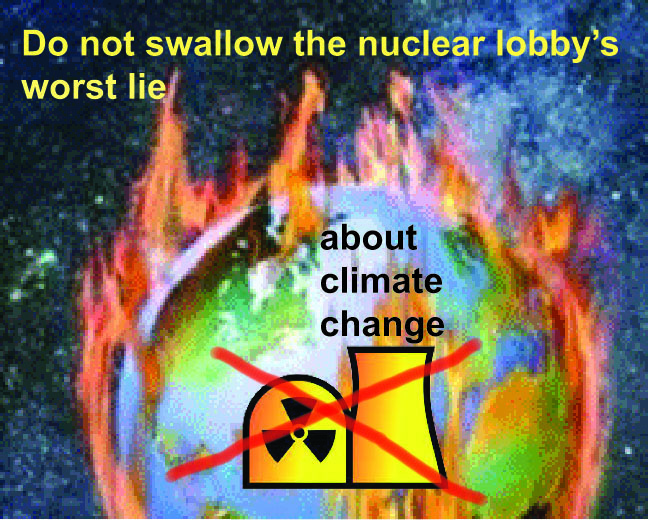
10 years is a long time for investors; and it doesn’t sit well in the context of climate change, which requires solutions now. Since 2011, Congress has appropriated some $6.6 billion for SMRs, out of which DOE has “obligated” some $3 billion, including $583 million for NuScale — more than for any other SMR project. (The other two lead developers, TerraPower and X-energy, have received DOE obligations of $318 million and $242 million, respectively, so far). Yet not one megawatt of commercial carbon-free energy has resulted from this spending.
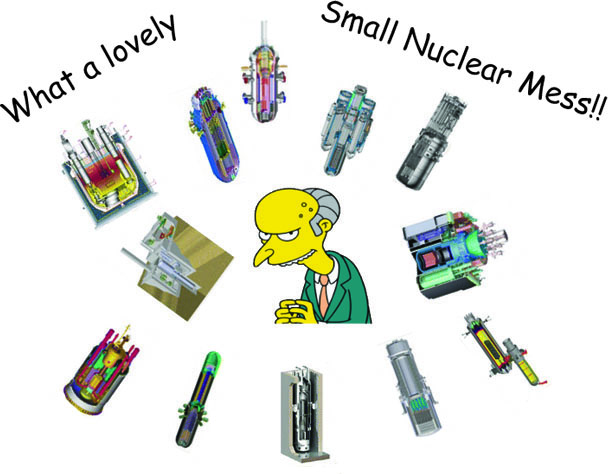
Meanwhile developers have been allowed to chase a rainbow of reactor designs, using different types of coolants and fuels, that date back to the mid-20th century. And as one long-time expert put it, “It’s hard to believe that these more exotic designs will be any cheaper” than the conventional light-water design NuScale was pursuing. A DOE report in March effectively admitted that only large reactors (1 gigawatt or more) deployed en masse have a chance at making an impact on decarbonization, and that “waiting until the mid-2030s to deploy at scale could lead to missing decarbonization targets and/or significant supply chain overbuild.”
The report also noted that “the nuclear industry today is at a commercial stalemate between potential customers and investments in the nuclear industrial base needed for deployment — putting decarbonization goals at risk.”
SMR Craze Continues
Decarbonization goals aren’t being served by wasteful spending on nuclear projects that don’t or won’t deliver the carbon-free power that’s needed. Yet the SMR craze continues both in the US and elsewhere. “I see a clear window of opportunity opening up,” EU Commissioner for Energy Kadri Simson told a European SMR “partnership event” in Bratislava on Nov. 6, two days before NuScale’s announcement. “I am confident that the EU can have a leadership role in achieving technological maturity for SMRs,” Simson added. “The first SMRs must be connected to the European electricity grid within a decade at the latest. This must be our goal.” The day after NuScale’s announcement, on Nov. 9, officials from the US State Department, also in Bratislava, and Slovakia’s Ministry of Economy launched the “Phoenix Project” aimed at replacing aging coal plans with SMRs.
So, what next for DOE’s SMR effort? Should it find another US developer to lead the way and hope for ‘third time lucky’? Or redefine its program in order to justify more foolish spending? Some guess the Canadians might steal the lead on SMRs, a prospect that is loaded with irony, since the project everyone is watching involves a Babcock & Wilcox spinoff called BWX Technologies and a design inspired by a conventional boiling water reactor design that was never built.
More importantly, will Congress wake up and hear the music? The UAMPS subscribers to the NuScale project trusted in NuScale to deliver, and at a reasonable cost, until they no longer did, and wisely chose the off-ramp. Congress should follow suit and stop funding a dead-end enterprise.
Smearing Photojournalists as Hamas Collaborators – Gets Them Added to a Hit List

Israel’s killings of journalists in Gaza, combined with legal attempts to silence media critics within Israel, are a threat to the public’s ability to know about the nature of the ongoing violence, which is financed with US tax dollars.
ARI PAUL 17 Nov 23, https://fair.org/home/smearing-photojournalists-as-hamas-collaborators-gets-them-added-to-a-hit-list/
During Israeli military offensives in the Occupied Territories, it is common for the Israeli government and its supporters to claim media are biased in favor the Palestinians, often by invoking that there is “no moral equivalence” between the Israeli government and Palestinian militant organizations like Hamas (American Jewish Committee, 10/17/23). Akin to Alex Jones falsely smearing grieving parents of school shooting victims as “crisis actors,” pro-Israel advocates sometimes dismiss media images of Palestinian suffering as staged fakery they call “Pallywood” (France24, 10/27/23).
Now Israeli government officials are accusing major news media of coordinating with Hamas, essentially painting Palestinian stringers as terrorist operatives. At least one Israeli official threatened to “eliminate” anyone involved in the October 7 attacks, and indicated that some journalists were included included on that list.
The pro-Israel media advocacy organization HonestReporting (11/8/23) raised questions about the presence of AP, Reuters, New York Times and CNN photographers near the sites Hamas attacked in southern Israel on October 7:
“What were they doing there so early on what would ordinarily have been a quiet Saturday morning? Was it coordinated with Hamas? Did the respectable wire services, which published their photos, approve of their presence inside enemy territory, together with the terrorist infiltrators? Did the photojournalists who freelance for other media, like CNN and the New York Times, notify these outlets?”
‘No different than terrorists’
Israeli officials are taking the group’s words seriously, going hard against these news agencies and individual Palestinian stringers. These accusations were featured throughout the corporate media.
The Financial Times (11/10/23) reported that Benny Gantz, who has held numerous Israeli military and ministerial roles, said “journalists found to have known about the massacre, and [who] still chose to stand as idle bystanders while children were slaughtered, are no different than terrorists and should be treated as such.” Knesset member Danny Danon (Twitter, 11/9/23), Israel’s former ambassador to the UN, said that Israel would “eliminate all participants of the October 7 massacre,” adding that “the ‘photojournalists’ who took part in recording the assault will be added to that list.” Prime Minister Benjamin
Netanyahu called these journalists “accomplices in crimes against humanity” (New York Post, 11/9/23).
Politico (11/9/23) reported that Israel’s “Communications Minister Shlomo Karhi accused the foreign media of employing contributors who were tipped off on the Hamas attacks.” It added that Nitzan Chen, director of Israel’s government press office, had asked the four media outlets “for clarifications regarding the behavior” of their photographers.
‘Mobilized by Hamas’
The affair was covered in many other outlets, including the New York Times (11/9/23), The Hill (11/9/23), Newsweek (11/9/23) and the Daily Beast (11/9/23). The Jerusalem Post (11/10/23) took the government and watchdog’s allegations as fact and said in an editorial:
“These so-called photojournalists made no effort to stop or distance themselves from the barbaric events. On the contrary: They were mobilized by the Hamas terrorists to glorify their acts, help promote their terrorism and spread fear among their enemies—Israel and the West. In this way, too, Hamas recalls ISIS, which deliberately recorded its beheadings and other barbaric murders.”
In a statement, Reuters (11/9/23) “categorically denies that it had prior knowledge of the attack or that we embedded journalists with Hamas on October 7.” Al Jazeera (11/9/23) reported that “AP also rejected allegations that its newsroom had prior knowledge of the attacks”; the agency said in a statement that the
“first pictures AP received from any freelancer show they were taken more than an hour after the attacks began…. No AP staff were at the border at the time of the attacks, nor did any AP staffer cross the border at any time.”
Neither HonestReporting nor Israeli officials raising a stink about this have provided any evidence of unethical behavior by these media outlets or their stringers (Reuters, 11/11/23). HonestReporting has shrouded its rhetoric with the disclaimer of “just asking questions.” The AP (11/9/23) reported that “Gil Hoffman, executive director of HonestReporting and a former reporter for the Jerusalem Post, admitted…the group had no evidence to back up” its suggestion that the photographers had “prior coordination with the terrorists.” Hoffman “said he was satisfied with subsequent explanations from several of these journalists that they did not know.”
Nevertheless, CNN and the AP stopped working with Hassan Eslaiah, one of the freelancers mentioned in the HonestReporting report, who in fact “got extra emphasis in the HonestReporting story, which resurfaced a several-years-old photo of him posing with Hamas leader Yahya Sinwar,” according to the Washington Post (11/9/23).
Deadly time for journalists
Any journalist who read HonestReporting’s questions had to smirk a bit. Journalists all over the world are tipped off by all sorts of sources to get somewhere at a certain time, with the undetailed promise of some hot footage. This is just the nature of the job, and doesn’t mean that a journalist’s relationship with a source is the same as working together on a common message.
have already written at FAIR (10/19/23) that Israel’s killings of journalists in Gaza, combined with legal attempts to silence media critics within Israel, are a threat to the public’s ability to know about the nature of the ongoing violence, which is financed with US tax dollars. The Committee to Protect Journalists (11/15/23) said that 42 journalists have been killed in the month since fighting broke out, making that period “the deadliest for journalists since it began gathering data in 1992” (UPI, 11/8/23).
Now Israeli officials have insinuated that if you are too physically close to a Palestinian fighter and get a good photo in the process, their government may consider you an enemy combatant. That is another chilling escalation of a troubling trend in Israel’s relationship with the press.
Information stranglehold
It’s all part of the Israeli government’s attempt to keep a tight stranglehold on information coming out in the press. Recently, the government used the tried and true method of embedding journalists within military units; in exchange for on-the-ground access, the military gets to review the footage journalists’ obtain (New Arab, 11/8/23). Israel also moved to criminalize the “consumption of terrorist materials” (Al Jazeera, 11/8/23) and to shut down media deemed a threat to national security (International Federation of Journalists, 10/20/23). NBC (11/11/23) reported that the Israeli government has “cracked down on broadcasts, reports and social media posts that” are deemed “a threat to national security or in support of terror organizations since Hamas’ October 7 assault.”
As the Israeli publication +972 (9/18/23) pointed out, before the outbreak of the current war, Israeli government censorship had actually declined, but it still found that in 2022, the
Israeli military censor blocked the publication of 159 articles across various Israeli media outlets, and censored parts of a further 990. In all, the military prevented information from being made public an average of three times a day—on top of the chilling effect that the very existence of censorship imposes on independent journalism that seeks to uncover government failings.
While Israel likes to think of itself as a bastion of Western enlightenment in a sea of backward nations, this anti-media trend in the country makes it more like its neighbors than its supporters would like to believe.
In the case of the death of famous British correspondent Marie Colvin, a judge ruled that she was intentionally targeted by the Assad regime for giving a voice to opposition factions (BBC, 1/31/19). Egypt frequently detains journalists for the supposed crime of collaboration with subversive organizations and foreign powers (Reporters Without Borders, 6/30/23). The rate of the Turkish government’s jailing of journalists has accelerated (Voice of America, 12/15/22), and last year the government “detained 11 journalists affiliated with pro-Kurdish media for their alleged links to Kurdish militants” (AP, 10/25/22).
This is the club Israel belongs to. And such hostility toward the free press makes it harder for journalists to deliver clear, fair reporting about the Middle East conflict. And that’s the point. The insinuation that media organizations who report freely on the Israel/Palestine conflict are anti-Zionist agents is meant to keep the situation shrouded in haze.
How a hasbara group’s sham investigation put Gaza journalists in the firing line
Honest Reporting’s claims against Palestinian photographers were echoed by Israeli leaders and media. But they’re factually and journalistically unfounded.
+972 Magazine, ByOren Ziv, November 13, 2023
On Nov. 8, Honest Reporting, an organization that claims to monitor “anti-Israel” bias in the media, published an “investigation” accusing Palestinian photojournalists in the Gaza Strip of having advance knowledge about Hamas’ lethal October 7 attack on southern Israel. ……………………..
The report quickly gained traction, with Israel’s Foreign Ministry and the Government Press Office both sharing the report on their official X pages (the former has since deleted the post). Israeli leaders rushed to put out their own condemnations of the journalists, equating them with those responsible for the massacres…………………………………..
However, even a cursory examination of the investigation’s claims revealed major discrepancies……………………………………
Indeed, the allegations against the Palestinian journalists appear to be completely baseless. Gil Hoffman, Honest Reporting’s director and a former longtime correspondent at the Jerusalem Post, admitted as much two days after the report’s publication, in response to refutations issued by the four outlets implicated by the claims: Associated Press, Reuters, CNN, and The New York Times.
…………………………………………………………………….. Claims debunked
In order to properly respond to the dangerous claims made by Honest Reporting, it is necessary to understand how both photo agencies and international media outlets work with photographers.
First, these organizations usually use staff photographers, independent photographers, and/or photographers who either approach agencies and outlets to sell their photos or are contacted by these bodies to buy their work.
On October 7, there were no international photographers in Gaza (who would require permits from the Israeli authorities to enter the Strip), and since Hamas’ attack and the start of Israel’s intensified siege and bombardment, none have been able to enter. Therefore, for the purpose of covering the events of that day, the media relied on their permanent local Palestinian staff as well as additional Palestinian photographers.
The Israeli media, which parroted Honest Reporting’s allegations unquestioningly, claimed that the Palestinian photographers “documented the massacre.” This is false: while one journalist photographed a mob attacking the body of a dead soldier that had been removed from an Israeli tank along the Gaza fence, none of them documented killing. The photographs mentioned in the report went online in real time, with full credit to the photographers, and Israeli media outlets themselves used these photos extensively. Some of them have become iconic, such as the image of a commandeered tank that was set on fire next to the Gaza fence.
Nonetheless, the international outlets mentioned in the report took Honest Reporting’s claims seriously, and conducted their own investigations. CNN, The New York Times, AP, and Reuters all looked into the allegations and offered responses. AP, for example, emphasized that it did not know in advance about the attack, and that the initial photographs — taken by freelancers — were taken more than an hour after the attack began. The other outlets published similar clarifying statements.
………………………………………………………………………………………………….. Even after Honest Reporting admitted they had no proof that the photographers were complicit in the attack, most of the Israeli media that reported on the initial findings did not bother to publish anything about the organization’s sudden change in tune. The claim that Palestinian journalists were responsible for Hamas’ war crimes has already taken root and become just one more example in the wave of attacks by the Israeli public against Palestinian journalists.
A flawed logic
Like photojournalists all over the world, the Gaza-based photographers arrived to fulfill their journalistic duty and document a difficult, painful, and cruel event, of which they did not know all the details at the time………………………………………………………………………
The Palestinian photographers set out to document an event that took place near their homes. That same morning, Israeli photojournalists — myself included — set out to document the events in the south. We filmed the wounded, the bodies lying on the ground, and the gun battles at the Sderot police station between Palestinian fighters and Israeli security forces. Does this mean we had a hand in the events or could have helped? Of course not.
………………………………………………………… It is difficult to accept that an unfounded investigation was accepted by large parts of the Israeli media as fact, went viral on social media, was quoted without reservation, and strengthened the incitement against those who are trying in impossible conditions to document the reality on the ground. Israel has killed at least 39 journalists in Gaza since the war began. The accusations made by Honest Reporting serve to legitimize their deaths and the bloodletting of others.
Had the organization bothered to contact the various media outlets for a response before publishing their claims, the damage could have been avoided. But as Hoffman told AP, Honest Reporting doesn’t “claim to be a news organization,” and thus, it seems, the traditional journalistic standards of asking for comment before publication does not apply to them. Honest Reporting is a right-wing, hasbara organization with a clear agenda, and should be treated as such by all who interact with it.
A version of this article was first published in Hebrew on Local Call. Read it here. https://www.972mag.com/honest-reporting-gaza-journalists/
Exposure to CT Radiation and Risk of Blood Cancers in Young Patients
By The ASCO Post Staff, 11/14/2023
Investigators may have uncovered an association between exposure to computed tomography (CT) radiation in young patients and an increased risk of hematologic malignancies, according to a recent study published by Bosch de Basea Gomez et al in Nature Medicine. These recent findings highlighted the significance of continuing to apply strict radiologic protection measures in young patients.
Background
Currently, more than 1 million young patients in Europe undergo CT scans each year. The impact of these scans in patient management—including diagnostic efficacy, treatment planning, and disease follow-up—is generally considered positive. However, the extensive use of this procedure in recent decades has raised concerns in the medical and scientific community about the potential cancer risks associated with exposure to ionizing radiation, particularly in young patients.
“The exposure associated with CT scans is considered low (< 100 mGy), but it is still higher than for other diagnostic procedures,” explained senior study author Elisabeth Cardis, PhD, Head of the Radiation Group at the Barcelona Institute for Global Health.
Previous studies have suggested that young patients exposed to CT scans may have an increased risk of developing cancer, but these studies faced several methodologic limitations.
Study Methods and Results
In the recent multinational EPI-CT study, the investigators—including clinicians, epidemiologists, and dosimetrists from Belgium, Denmark, France, Germany, the Netherlands, Norway, Spain, Sweden, and the United Kingdom—analyzed the data of 984,174 patients who underwent at least one CT scan prior to age 22 to address the limitations of the previous research.
The dose of radiation delivered to the bone marrow was estimated for each of the patients. By linking this information to national cancer registries, the investigators were able to identify those who developed hematologic malignancies after an average follow-up of 7.8 years. However, for those who had CT scans in the early years of the technology, the investigators were able to monitor cancer incidence for more than 20 years after their first scan.
The investigators determined there was a clear correlation between the total radiation doses to the bone marrow from CT scans and the risk of developing both myeloid and lymphoid malignancies. A dose of 100 mGy multiplied the risk of developing a hematologic malginancy by a factor of about three. The investigators suggested that a typical scan today (with an average dose of about 8 mGy) may increase the risk of developing hematologic malignancies by about 16%………………………………………………. more https://ascopost.com/news/november-2023/exposure-to-ct-radiation-and-risk-of-blood-cancers-in-young-patients/
CND mounts legal challenge against US nuclear weapons storage at RAF Lakenheath
https://www.thecanary.co/uk/2023/11/15/raf-lakenheath-cnd-legal-challenge/
The Campaign for Nuclear Disarmament (CND) is legally challenging development works at RAF Lakenheath which it believes are to prepare for stationing nuclear weapons by the US Air Force (USAF).
CND: challenging RAF Lakenheath’s expansion
CND claims the Ministry of Defence (MoD) and West Suffolk Council (West Suffolk) have failed to assess the environmental impact of potentially facilitating the weapons at the Suffolk airbase and has called on the MoD to halt development works at RAF Lakenheath while the necessary screening is carried out.
In letters to the MoD and West Suffolk, CND says that under the Town and Country Planning (General Permitted Development) (England) Order 2017 the development does not have permitted development rights which would allow it to go ahead.
CND points out that works at RAF Lakenheath – rapid airfield damage repair facilities (RADR), a child development centre and a 144-bed dormitory – should have been considered as one whole project for planning purposes. Planning Practice Guidance states: “an application should not be considered in isolation if, in reality, it is an integral part of a more substantial development”.
Separate environmental impact screening assessments have been carried out for the child development centre and the RADR, but none has been done for the 144-bed dormitory, which the MoD has indicated that it believes has permitted development rights. CND says there has been no screening of the dormitory plan by West Suffolk to show it would have no significant environmental impact, and without that screening it cannot have permitted development rights.
One whole project’
In its legal letter to the MoD, CND explains that the development works for the dormitory should not be considered as one of several small projects but as part of one whole project with a major environmental impact that should be assessed as a whole.
t says any assessment must include not only the construction of the buildings comprising the various developments, but also the effects of the use of those buildings, that is the effects of stationing nuclear weapons at RAF Lakenheath.
It says CND does not need to rehearse the potential risks which stationing weapons at RAF Lakenheath entails at a local, national and international level. Those risks extend not only to the risk of weapons being negligently maintained or handled by USAF personnel, but also security risks if malicious actors break into the airbase or the weapons cause the UK to become a target for a nuclear attack.
Ignoring the risks
CND General Secretary Kate Hudson said:
USAF has ploughed ahead with construction at the airbase by purportedly relying on planning rights that assume that the development won’t have significant environmental effects. But in doing that they’ve completely ignored the risks that stationing nuclear weapons would entail and therefore might arguably be operating unlawfully in breach of planning control.
CND is represented by planning law specialist, solicitor Ricardo Gama at law firm Leigh Day.
Gama said:
CND wants to make sure that the development at RAF Lakenheath, and the wider question of whether nuclear weapons should be stationed on UK soil, if that is what the USAF is planning, doesn’t slip under the radar without proper public scrutiny. The planning process is one way for members of the public to make representations on these controversial plans.
1 This Month
Tell Congress: Prevent Nuclear Catastrophe in Iran

Tell Congress: Prevent Nuclear Catastrophe in Iran

Read the Public Inquiry Report, the Commissioners’ report, Surrendering Australia: The AUKUS Deception is available to download for free at aukuspublicinquiry.com. Or just watch the replay of the National Press Club Luncheon.


Shut down the radiation-damaged Heysham nuclear reactors now
To see nuclear-related stories in greater depth and intensity – go to https://nuclearinformation.wordpress.com

Say No to NASA’s Reckless Nuclear Reactor on the Moon
Say No to NASA’s Reckless Nuclear Reactor on the Moon
-
Archives
- November 2026 (238)
- October 2026 (302)
- September 2026 (339)
- August 2026 (330)
- July 2026 (355)
- June 2026 (287)
- May 2026 (306)
- April 2026 (356)
- March 2026 (251)
- February 2026 (267)
- January 2026 (308)
- December 2025 (358)
-
Categories
- 1
- 1 NUCLEAR ISSUES
- business and costs
- climate change
- culture and arts
- ENERGY
- environment
- health
- history
- indigenous issues
- Legal
- marketing of nuclear
- media
- opposition to nuclear
- PERSONAL STORIES
- politics
- politics international
- Religion and ethics
- safety
- secrets,lies and civil liberties
- spinbuster
- technology
- Uranium
- wastes
- weapons and war
- Women
- 2 WORLD
- ACTION
- AFRICA
- Atrocities
- AUSTRALIA
- Christina's notes
- Christina's themes
- culture and arts
- Events
- Fuk 2022
- Fuk 2023
- Fukushima 2017
- Fukushima 2018
- fukushima 2019
- Fukushima 2020
- Fukushima 2021
- general
- global warming
- Humour (God we need it)
- Nuclear
- RARE EARTHS
- Reference
- resources – print
- Resources -audiovicual
- Weekly Newsletter
- World
- World Nuclear
- YouTube
-
RSS
Entries RSS
Comments RSS

