Israel’s primary role in Iran war scrubbed from mainstream media.

By Walt Zlotow , 25 Mar 26, https://theaimn.net/israels-primary-role-in-iran-war-scrubbed-from-mainstream-media/
No Israel, no Iran war. That fact is AWOL from any coverage of criminal US, Israeli war destroying Iran, US Gulf States bases and possibly the world economy.
Destroying Iran as a hegemonic rival preventing their Middle East expansion of Greater Israel has been Israel’s objective for decades. But the small country of Israel, without billions in US firepower and participation could never accomplish their cherished goal. What to do? Put tremendous carrot and stick pressure on Donald Trump to achieve Israel’s Middle East supremacy.
They came close to getting George W. Bush to take out Iran after Bush demolished Afghanistan and Iraq back in 2003. But Bush stopped his war-crazed Veep Dick Cheney from pulling the Iran war trigger.
Obama was a huge problem for Israel. Instead of attacking Iran he made peace with it… or tried to. His leadership in creating the 2015 Joint Comprehensive Plan of Action (JCPOA) put the end to any concern that Iran was developing nuclear weapons. Which they never were. It should have stopped Israel’s lust to destroy Iran. But it didn’t. Israeli Prime Minister Benjamin Netanyahu embarked on a relentless propaganda campaign to destroy the JCPOA.
His dream was realized when Trump succeeded Obama in 2017. A year later, Trump, likely following Netanyahu’s orders, withdrew from the JCPOA, putting Iran regime change back in play.
When Biden succeeded Trump in 2021, Netanyahu garnered another complacent ally in the White House. Biden did nothing to rejoin the JCPOA and normalize relations with Iran. But the Israeli genocide in Gaza, fully supported and funded by Biden, put Iran on the back burner.
Enter Donald Trump – back in power in 2025. Within 9 months he secured a ceasefire in Gaza. Palestinian genocide switched places with Iran on the forefront of destruction. Iran moved into Trump’s crosshairs to please his Israeli masters.
Had Harris succeeded Biden, likely no Iran war. Unlike Trump, Harris was neither as fully funded by the Israel lobby nor possibly subject to Israeli blackmail threatening to expose Trump’s peccadillos.
Secretive tech mogul Peter Thiel brings his Antichrist lectures to the Vatican’s doorstep | DW News
The American entrepreneur and investor Peter Thiel has traveled to Rome to host a closed-door lecture series on the Antichrist, mixing theology with technology and politics. The event, held near Vatican City, drew criticism from Catholic figures and institutions, many of whom rejected his ideas as extreme. The visit has underscored tensions between his techno-libertarian worldview and the Church’s more cautious stance on AI and global governance. So what’s behind Thiel’s fascination with the antichrist? With analysis from Fritz Espenlaub, host of the six-part Deutschlandfunk podcast series Die Peter Thiel Story, and Vatican expert Massimo Faggioli from Trinity College Dublin.
New Film: Earth’s Greatest Enemy.

Inclinations Film Club presents the Scottish premiere of Earth’s
Greatest Enemy, a film that uncovers a shocking blind spot in the climate
conversation: the U.S. military.
Exempt from international climate
agreements and rarely scrutinised in mainstream reporting, the Pentagon is
revealed here as the world’s single largest institutional
polluter—spewing carbon, contaminating water, and scarring landscapes
across the globe.
Combining investigative journalism, striking visuals, and
stories from impacted communities, the film challenges audiences to rethink
the hidden costs of a global military empire and its planetary
consequences.
Provocative, urgent, and eye-opening, this is a documentary
that will change how you see both the military and environmentalism. The
film’s director Abby Martin is an investigative journalist, widely
regarded as one of the USA’s most important critical voices. She is the
host and presenter of The Empire Files – reporting on war & inequality from
the heart of Empire.
Glasgow Film Theatre (accessed) 23rd March 2026
Dramatic high-risk US Delta Force plan to snatch Iran’s nuclear stocks revealed
Chris Hughes Defence and Security Editor, 25 Mar 2026, https://www.mirror.co.uk/news/world-news/dramatic-high-risk-delta-force-36921080
American special forces could be used to smash Iran’s nuclear ambitions as war-chiefs weigh up high-risk mission amid fears of casualties and a repeat of 1980 ‘Op’ Eagle Claw’ disaster
American military chiefs are considering one of the biggest special forces raids ever-launched in a bid to cripple Iran’s nuclear programme.
The massive helicopter-borne insertion of thousands of assault troops supporting a large number of Delta Force specialists could take at least 24 hours to conduct.
It would try to seize 450kg of 60% enriched uranium believed still to be hidden deep beneath one of Tehran’s nuclear facilities and is an immensely high-risk operation.
Although below the ‘weapons grade’ 90% of enriched uranium needed to make a nuclear weapon some US intelligence experts fear Iran could use it in the future.
Two British military sources have told the Mirror the operation plan has been drawn up, although both said it has been assessed as “very high-risk, with high probability of casualties and low probability of absolute mission success since the exact location of the uranium is uncertain.”
After fighting their way into the complex, the elite Delta Force soldiers would secure the site for specialist engineers to drill and blast their way into the underground complex.
The immensely complex operation would involve scores of spy planes and fighter jets helping to secure the approach to the mission targets.
Ground troops would form a vast perimeter around the site to fight off attacks from the IRGC. Plans were drawn up by Joint Special Operations Command which has a poignant link to Iran as it was set up in 1980 following the disastrous Operation Eagle Claw whose aim was to rescue US hostages from Tehran.
Then eight US Navy Sea Stallion helicopters took off from the deck of an American aircraft carrier for a 600-mile trip to rendezvous in the Iranian desert with six C-130 transport aircrafts.
They were hit by a violent wind-driven sand storm common in the desert which damaged the aircrafts and President Carter abandoned the mission.
As the force prepared to depart, a RH-53D helicopter crashed into a C-130 plane carrying extra fuel for refueling, igniting a fire that killed five Airmen and three Marines.
America vowed it would never happen again and sought to bring its special forces and intelligence elites together for better mission planning and execution.
In 1980 JSOC was launched forming combined units from the Army Delta Force, Navy SEAL Team Six, and the Air Force’s 24th Special Tactics Squadron to ensure they could operate seamlessly together, a key failing during the Iran hostage crisis.
One source, from the intelligence community, told the Mirror: “The plan does exist but the risks of failure are very high and it may have been discounted as too difficult.
“However it is known that President Trump is extremely belligerent and not exactly risk-cognisant so there is always the possibility he could still give the go-ahead for it to happen.
“Certainly the US military has given the President options, along with their risk assessment and the uranium seizure is top of his list. Troops movements we are seeing towards the Gulf indicate something bigger than, or as well as, a Strait of Hormuz -specific operation.”
The operational planning includes crack paratroopers entering Iranian airspace in fast-moving Chinook troop carrier helicopters and uniquely-adapted special forces planes for an unusually large number of elite Delta Force special forces soldiers.
A second, military source, told the Mirror: “If it goes ahead this could be the biggest Special Forces operations ever launched, with diversions elsewhere in Iran and major air-raids to cast confusion into the ranks of the Islamic Revolutionary Guard Corps. It has been looked into for some time but it is exceptionally high risk.
“The final word will go to Commander-in-Chief Donald Trump with input from Pete Hegseth, his so-called Secretary of War, who has been extremely enthusiastic about this war. It is a major decision as a lot can go wrong in an operation of this size but US administration may see it as the only way to secure the enriched uranium. The question is whether Trump is prepared to give it the go-ahead.”
Earlier this month the Mirror revealed exclusively how US forces had sent a number of uniquely adapted MC-130J Commando II special forces planes from RAF Mildenhall in Suffolk to the Middle East, indicating a major covert operation was being planned.
The Lockheed Martin US Air Force Special Operations Command planes are for clandestine, low-visibility infiltration, exfiltration, and resupply of special operations forces.
They perform high-speed, low-level air refueling, cargo airdrops, and air to land missions in hostile or sensitive areas. It comes amid reports President Trump has now ordered thousands of elite US paratroopers to the Middle East, perhaps to invade Kharg Island, the oil-exporting hub on which the Iranian economy relies.
Based at Fort Bragg in North Carolina, the Immediate Response Force is a brigade of about 3,000 troops from the 82nd Airborne Division that can deploy anywhere in the world within 18 hours.
But at least 5,000 marines are also en route for the Gulf, supposedly also to support an operation to secure Kharg Island, despite Trump’s claims peace negotiations are underway.
These claims have been vehemently denied by Iran’s foreign ministry. The first of two marine expeditionary units is due to arrive in the Middle East on Friday, comprising the USS Tripoli, an amphibious assault ship carrying 2,200 troops, the USS New Orleans, an amphibious docking ship, F-35B Lightning II stealth fighters and MV-22B Osprey tilt-rotor aircraft.
Our sources told the Mirror the two operations against Kharg Island and the site of the hidden nuclear facility, which we have chosen not to identify, may yet happen simultaneously.
Third and final shipment of vitrified waste from the UK to Germany
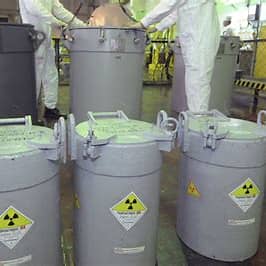
As previously announced, the UK will be returning high level waste (HLW) in the form of vitrified residues to Germany.
Sellafield Ltd, 24 March 2026,
https://www.gov.uk/government/news/third-and-final-shipment-of-vitrified-waste-from-the-uk-to-germany
Sellafield Ltd and Nuclear Transport Solutions (NTS) are making preparations for the third and final return of high level waste (HLW), in the form of vitrified residue, to Germany.
Seven flasks will be transported from Sellafield to the Brokdorf interim storage facility later in 2026.
This will be the final shipment from the UK to Germany. The first shipment of 6 flasks, to Biblis, was successfully completed in 2020 and the second shipment of 7 flasks to Isar was completed in 2025.
The waste results from the reprocessing and recycling of spent nuclear fuel at the Sellafield site in West Cumbria, which had previously been used to produce electricity by utilities in Germany.
Vitrified residue returns are a key component of the UK’s Nuclear Decommissioning Authority (NDA) strategy to repatriate high level waste from the UK, fulfil overseas contracts and deliver UK Government policy.
These returns involve Sellafield Ltd working in partnership with Nuclear Transport Solutions (NTS) to return the waste to German customers.
The shipments will be carried out in full compliance with all applicable national and international regulations, and subject to issue of all relevant permits and licenses.
Sellafield Ltd and NTS will provide further information on the shipments in due course.
Your money, their rules. Super funds support Israel war machine

by Andrew Gardiner | Mar 24, 2026, https://michaelwest.com.au/your-money-their-rules-super-funds-support-israel-war-machine/
Australian industry super funds are investing in companies involved in the Gaza genocide, and unions are not demanding they stop. Andrew Gardiner reports.
Protected by rules putting a member’s “best financial interests” over ethical, environmental or social considerations, the vast majority of Australia’s industry superfunds are all-systems-go on pouring money into projects connected to the decimation of Gaza, dispossession in the West Bank, and bombing Israel’s neighbours.
An MWM investigation has confirmed that just two of Australia’s 20 industry super funds are making modest changes to their investment portfolios. The other 18 remain invested in Israel’s war machine, with Australian Super alone funding corporations like Elbit Systems (drones), ICL Group (white phosphorus) and Palantir (AI/software for weapons systems).
This, even as the IDF is again using the banned white phosphorus in Lebanon, in which Australian super is invested.
The two funds which did divest – Vision Super and HESTA – still have some money tied up in Israeli projects in Gaza and the West Bank. “HESTA and Vision divested from Israeli banks (but) they still have money in companies listed on a UN database as operating from Israel’s illegal settlements”, Molly Coburn from the Australia Palestine Advocacy Network (APAN) told MWM.
Activist Jill Sparrow says even those modest changes could be quietly reversed “as soon as we look away”. “Divestment isn’t set and forget (and)
“there’s a lot of money to be made in dropping bombs,”
“so super funds could be sorely tempted”, she said.
If you’re in a union-partner industry super fund and have a problem with genocide, chances are you’re out of luck on the socially-conscious investments front. Unions routinely route members’ super into partner funds with little regard to the social or environmental impact when it’s invested.
Ethics ignored
Under 2005 rule changes, union members can transfer their super to retail super funds, Australian Ethical and Future Group, which shun companies whose work enables the carnage in Gaza. These funds show it can be done, so why have industry super funds not done it?
Instead, unions aligned with the Labor Party, under pressure from Zionist lobbyists, are content to send members’ money to super funds that aid the Israeli war effort, funding what the UN calls “a moral stain on us all”.
Like so many other ACTU affiliates, the United Workers Union (UWU), with 151,000 members, talks a good game on Israel’s actions in Gaza, but hasn’t put its members’ super where its mouth is. MWM’s efforts to ascertain how much the union had done to lobby its super funds – HostPlus, Australian Super and HESTA – yielded nothing.
What we learned from UWU members is that in early 2024, a rank-and-file motion including divestment was passed at the council level in various states before being “soft-blocked” by union officials, who reportedly sat on it. Later that year, a more formal “Boycott, Divestment and Sanctions” (BDS) motion, requiring real action compelling divestment by the super funds, was defeated.
“Social issues are bread and butter issues, and funding war is a dead end. Our leadership – who are on the boards of HESTA and Australian Super – (need) to stop hiding behind ‘fiduciary duties’ to fund death and destruction”, UWU delegate (early childhood education) Nicki Toupin told MWM.
Fidiciary duties
Fiduciary duty doesn’t just provide cover for unions putting the bottom line first. “In the interests of members”, it’s cited time and again by super funds whenever there’s pressure to divest.
Buttressing their argument is case law precedent, which will raise the hackles of Australian republicans: Cowan v Scargill, a UK decision dating back to the Thatcher years (1985), helped redefine a member’s “best interests” as “best financial interests” (emphasis added). 2021 changes to fiduciary duty here in Australia reflect that new emphasis.
How do you define “best financial interests”? Wouldn’t a stable Middle East be good for the world’s economy, providing investment opportunities for our super funds that don’t involve genocide?
“Egregious war crimes, crimes against humanity and devastating environmental impacts mean you can argue that the financial interests of super fund members are undermined by investments that support the Israeli military”, Claire Parfitt, Senior Lecturer in Political Economy at Sydney University, told MWM.
It seems our super funds, and their investment managers, are ignoring these arguments in the quest for a quick return, their investment in the Israeli war machine rendering Middle East instability something of a self-fulfilling prophecy.
There are, of course, equal and opposite rules against super funds investing in projects “maintaining the situation created by Israel’s illegal presence in the occupied Palestinian territory”. But some rules, it seems, are more equal than others; successive Australian governments barely lift a finger to enforce international court rulings, human rights obligations and social considerations (ESG), which might trouble the bottom line.
To quote a famous movie line, “a foul is not a foul unless the ref blows his whistle”. The failure to enforce international and ethical obligations means super funds can go on hiding behind “fiduciary duty”; at least 18 of our 20 industry funds are doing just that.
The “fiduciary duty” chestnut, and “soft blocking” tactics by union officials aligned with an ALP which quietly supports the Gaza carnage, have rendered meaningful “change from within” on divestment all but impossible. So groups like ASU for Palestine and UWU 4 Palestine are taking matters into their own hands.
Following a 1000-strong “community picket” of the Israeli-owned ZIM Ganges cargo ship at Port Melbourne, ASU for Palestine started looking at divestment as a way to hit Israel where it hurts. After ASU secretary (now Senator) Lisa Darmanin, then a board member at Vision Super, inevitably advised ASU for Palestine of its “fiduciary and statutory obligations” (adding it wasn’t legal for her to “act as (a) representative” of ASU members on divestment) it became clear something more compelling was called for.
What did ASU for Palestine do? It began a campaign to raise awareness on divestment, suggesting ASU members “switch their super fund” elsewhere, while lobbying to change the default super fund in enterprise agreements to none other than Australian Ethical.
It’s amazing how the threat of losing thousands of ASU members (and untold millions) can motivate a super fund to abandon “fiduciary” rhetoric and do the right thing. A couple of months later, amid much fanfare at the ASU conference, Vision Super announced its limited divestment, full details of which are expected by the end of this month.
These kinds of ‘direct action’ appear to actually work, although (per APAN) the extent of Vision’s divestment was limited. “If it’s not good enough, we’ll just have to go again”, Sparrow told MWM.
For their part, UWU 4 Palestine sees divestment as a major social cause that it and Members First, a grassroots change ticket at upcoming union elections, can get their teeth into. “Building a rank and file, fighting union that isn’t remote from members gives us the power to push for the kind of world we want, not just on workplace issues but in investing our money in something other than genocide”, Toupin told MWM, adding
That’s right. Direct Action works.
Iranian man freed pending further inquiries after UK nuclear submarine base arrest
The man and a woman were arrested at HM Naval Base Clyde, known as Faslane, last week
Anthony France, 23rd March 2026
https://www.standard.co.uk/news/uk/police-iranian-man-nuclear-sub-base-incident-b1276130.html
An Iranian man who was charged after allegedly trying to enter the naval base where Britain’s nuclear submarines are based has been released from custody pending further inquiries, the Crown Office and Procurator Fiscal Service said.
Prosecutors said they have decided there should be no proceedings against a 31-year-old Romanian woman who was also arrested and charged by police following the alleged incident.
The man and woman were arrested on Thursday March 19 following the alleged incident at HM Naval Base Clyde, which is known as Faslane, and later charged, and had been expected to appear at Dumbarton Sheriff Court on Monday.
Faslane is home to the core of the UK’s submarine fleet and the Trident nuclear deterrent.
A Crown Office and Procurator Fiscal Service spokesperson said: “The Procurator Fiscal received a report concerning a 34-year-old man in connection with an alleged incident on March 19 2026.
A War Built on Lies, Sold by Lobbyists, with Innocent Children as its Price
23 March 2026 David Tyler, Australian Independent Media
On 27 February 2026, the night before the bombs fell, Oman’s foreign minister, Badr bin Hamad Al Busaidi, announced that a breakthrough had been reached. After months of back-channel diplomacy, Iran had agreed to never stockpile enriched uranium, to full IAEA verification, and to irreversibly downgrade its existing stock to the lowest possible level. Peace, he said, was “within reach”. Technical talks were scheduled to continue in Vienna the following week.
Fourteen hours later, at 7:00 AM Tehran time on 28 February, the first wave of missiles arrived. China had been working to improve Iran’s situational awareness. It did not matter. The attack came without warning. Reports from Arab media, undenied by Tehran, claimed that Esmail Qaani, commander of the IRGC’s Quds Force, had been arrested and executed as a Mossad agent.
Within twelve hours, the United States and Israel had conducted more than 900 strikes. Two hundred Israeli aircraft, the largest combat sortie in its history, dropped over 1,200 bombs on 500 sites across western and central Iran. US Tomahawk missiles, launched from destroyers in the Arabian Sea, hit leadership compounds, missile factories, naval installations, and the National Security Council offices where Ali Khamenei was meeting his senior advisers. They knew he was there. Netanyahu had personally briefed Trump on the location days earlier. Khamenei was above ground, in daylight, when the strike came. He was dead before midday.
Forty-eight hours later, US forces had flown more than 1,700 sorties and struck over 1,250 targets across 29 of Iran’s 31 provinces. The first six days of Operation Epic Fury cost the United States more than $11 billion.
In that same period, Amnesty International confirmed that a US Tomahawk missile struck a girls’ primary school in Minab. Debris bearing the inscription “Made in USA” and the name “Globe Motors, Ohio” was recovered at the site. At least 170 people were killed. Most were children aged seven to twelve.
Then Donald Trump, in the second year of his second term, appeared on Truth Social to claim the war was about freedom.
The Lobbyists and the Lie
The question corporate media has avoided is simple. Who wanted this war, and how did they get it?
The Washington Post reports that Trump acted after sustained lobbying from Israel and Saudi Arabia. Crown Prince Mohammed bin Salman urged him to strike. Netanyahu’s government pressed the case repeatedly. Their interests converged. Israel sought to restore deterrence and reshape a regional order drifting beyond its control. Saudi Arabia saw an opportunity to weaken a rival it had failed to contain by other means. Together, they found a willing president.
The deeper breach was internal. Pentagon briefers told congressional staff on 1 March that Iran was not preparing to attack US forces or bases unless Israel struck first. The intelligence did not support the war. It was set aside. This was not a failure of information. It was a decision to ignore it.
US intelligence had already assessed that Iran was not pursuing nuclear weapons and would not have the capacity to build one before the end of the decade, even if it chose to do so. The IAEA had affirmed it. At the same time, Badr Al Busaidi was moving between delegations, and Iran’s chief negotiator was describing the talks as the most substantive in years. A framework for Vienna was in place. Technical teams were on standby.
Inside the administration, advisers discussed the advantages of letting Israel strike first to create a cleaner pretext for US entry after Iranian retaliation. That is not strategy. It is sequencing. Diplomacy was not the alternative to war. It was its cover.
Behind the push stood the familiar architecture of American intervention. Senator Lindsey Graham. The Foundation for Defense of Democracies. The American Enterprise Institute. Donor networks that have spent decades advocating regime change in Iran. They did not invent the policy. They sustained it, funded it, and waited for a president prepared to act on it.
Trump supplied the rest. On different days he has offered regime change, nuclear prevention, Iranian freedom, mineral security, and the Venezuela model as justification. None align. That is because the rationale followed the decision, not the other way around.
Congress, meanwhile, has largely abdicated its role. War powers have withered into ritual complaint. Democratic leadership has offered little more than procedural discomfort. The constitutional check on executive war-making is now
political theatre, observed and ignored.
Illegal, Immoral and Known to Be Both
The legal position is clear. The UN Charter permits the use of force only with Security Council authorisation or in self-defence against an armed attack. Neither condition applied. Iran had not attacked the United States or Israel. The Security Council had authorised nothing. The strikes began during active negotiations.
Ben Saul, the UN special rapporteur on counterterrorism, called it what it is: a crime of aggression. Oona Hathaway described it as “blatantly illegal”. The European Council on Foreign Relations reported broad consensus among legal scholars that no valid justification exists. This was not a contested case. It was an unambiguous one.
Within the United States, dissent has come from the margins of power. Rashida Tlaib. Alexandria Ocasio-Cortez. Bernie Sanders. They are not describing a grey area. They are describing what the law already recognises.
What the Bombs Actually Did……………………………………………………………………………………………………………………………..
The Catastrophe in Progress
………………………….This is not a regional disruption. It is a global economic shock. Energy prices feed directly into inflation, into transport, into food. The cost of this war will not be confined to the battlefield. It will be paid at petrol stations, in grocery aisles, and in central bank decisions across the world.
………..Senator Thom Tillis has asked the only question that matters. What are we trying to accomplish?
There is no coherent answer because coherence was never the point. This is the Venezuela model applied to a country four times larger, with a military doctrine built to resist precisely this kind of intervention, and a political system shaped by decades of confrontation with the United States. The architects of this war designed Iraq. The pattern is familiar. The outcome will be too. https://theaimn.net/a-war-built-on-lies-sold-by-lobbyists-with-innocent-children-as-its-price/
A Sunken Nuclear Submarine Is Leaking Radiation Into the Ocean. How Worried Should We Be?

Repairs or just outright cleanup would be expensive, extremely difficult, slow, and, of course, quite dangerous.
By Luis Prada, March 25, 2026, https://www.vice.com/en/article/a-sunken-nuclear-submarine-is-leaking-radiation-into-the-ocean-how-worried-should-we-be/
According to new research published in PNAS, a Cold War-era nuclear submarine sitting at the bottom of the Norwegian Sea is still leaking radioactive material. It’s happening slowly, if unevenly, and it’s contained just enough to avoid becoming a full-scale environmental disaster… for now.
The K-278 Komsomolets sank in 1989 after an onboard fire, taking with it a nuclear reactor and two nuclear torpedoes. It now sits more than 1,600 meters below the surface, in a part of the ocean that is freezing and almost entirely out of reach.
A research team led by Justin Gwynn at Norway’s radiation safety authority analyzed years of data, including a 2019 survey using a remotely operated vehicle. The team found that the wreck is leaking radioactive isotopes, including cesium and strontium, through cracks in its deteriorating hull.
The leaks aren’t constant. They come in waves, with visible plumes drifting out from various spots, like the reactor compartment or a ventilation pipe. Radiation levels take a big jump closer to the submarine, with levels reaching hundreds of thousands of times above normal background radiation levels.
At Least the Nuclear Submarine’s Nuclear Torpedoes Are Still Intact
Terrifying, and here’s where it gets strange: measurements taken from just a few feet away dramatically drop off. Researchers believe this is caused by the ocean diluting the problem. That may be why the surrounding ecosystem isn’t showing any obvious signs of collapse, given all of the toxic radiation. There’s still plenty of marine life clinging to the wreck, including sponges, corals, and anemones. They have slightly elevated radiation levels but no visible signs of deformation or damage, though genetic damage wouldn’t be surprising.
Sediment samples collected nearby show minimal contamination. Things wouldn’t be looking so rosy if the nuclear torpedoes inside it weren’t intact, which they very much are and have been since the 1990s.
So far, there are no signs of imminent disaster. Everything is stable and holding steady… for now.
This won’t always be the case, and it is really more a matter not of if but of when. The reactor is still corroding, and the structure is still weakening. Repairs or just outright cleanup will be expensive, extremely difficult, slow, and, of course, quite dangerous. The risk is contained, but that doesn’t mean it’s going away anytime soon.
US moves to approve more than $16 billion in air defense sales to Middle East
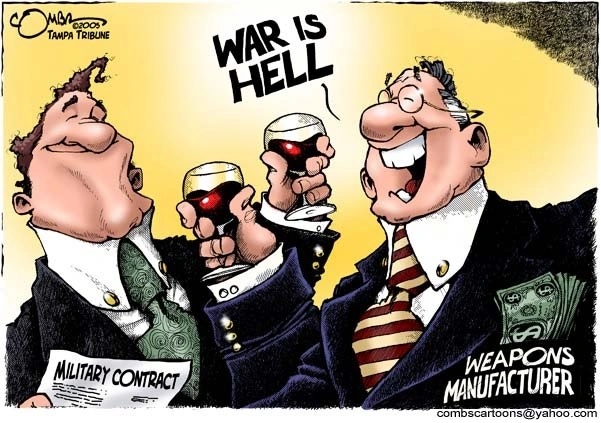
The United States is moving to bolster air defenses across the Middle East, notifying Congress of more than $16.5 billion in potential weapons sales aimed primarily at countering missile and drone threats.
The packages include systems for the United Arab Emirates, Kuwait and Jordan, and range from advanced radar and air defense sensors to counter-drone technology and aircraft munitions, according to several statements released Thursday by the U.S. Department of State.
The notifications come as missile and drone attacks have intensified across the Middle East during the war with Iran, putting pressure on air defense systems used to protect U.S. forces and regional allies.
The State Department said the secretary of state determined that an emergency justified the immediate sale, allowing the administration to bypass the typical congressional review process under the Arms Export Control Act.
Among the proposed sales is a long-range radar for the UAE that is designed to integrate with its Terminal High Altitude Area Defense system, or THAAD, for $4.5 billion.
The UAE package also includes a $2.1 billion fixed-site system designed to counter small drones, as well as $1.22 billion in air-to-air missiles and a $644 million set of F-16 munitions and upgrades to support its fighter aircraft.
Separately, Kuwait would receive $8 billion in lower tier air and missile defense radars designed to detect shorter-range threats, while Jordan’s $70.5 million package focuses on aircraft repair and parts to maintain its existing fleet.
Together, the sales point to a broader effort to build layered air defenses that are capable of detecting and intercepting threats at different ranges.
The demand comes as U.S. air defense systems are being used at a rate analysts worry exceeds the pace at which stockpiles can be replenished.
Ontario’s nuclear push risks another costly policy failure.
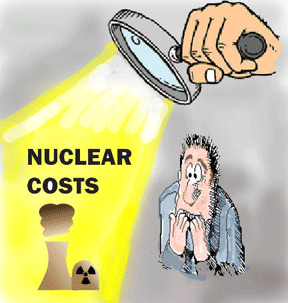
Nuclear power is neither nimble nor affordable and it’s about time the Ontario government stopped posturing otherwise.
Policy Options, Samuel Buckstein , March 20, 2026
Nuclear power is experiencing a resurgence worldwide and Ontario is no exception. The province has a long history with this awesome and terrifying energy technology, and it is once again turning to nuclear power in response to concerns over national sovereignty, economic growth, electrification and decarbonization.
Looking back over Ontario’s troubled history with nuclear energy, it is concerning to see the Ford government stumbling back to the bar for another round of nuclear cool-aid. Yet Ontario’s plan shows little evidence of having done its homework. Contrary to the government’s claims, it is fiscally irresponsible, incapable of delivering the energy the province needs in the time required, and compromises Ontario’s energy security.
When it should be investing in much cheaper and more easily deployed renewables, the province is recklessly doubling down on nuclear despite the evidence against it.
A legacy mired in debt
To understand Ontario’s nuclear trajectory, it is helpful to reflect on its origins. When civilian nuclear power was commercialized after the Second World War, its advocates promised it would be “too cheap to meter.” Buoyed by encouragement and financing from both provincial and federal governments, Ontario Hydro duly invested in a fleet of 20 CANDU reactors at three nuclear power stations over the course of 30 years.
By the turn of the millennium, Ontario Hydro’s nuclear obsession had saddled it with $38.1 billion in debt — $20.9 billion of it stranded (unsupported by assets). This burden was so immense that it toppled the once proud flagship Crown corporation. Ontarians continue to pay for this nuclear hangover today. As of March 2023, ratepayers were still on the hook for $13.8 billion.
Even as late as 1989, with Ontario Hydro already buckling under its crushing debt, the utility was forecasting the need for 10 to 15 new reactors by 2014. Reality proved otherwise, with peak electricity demand in 2014 lower than it had been 25 years earlier.
After a generation of staggering cost overruns and catastrophic international incidents at Three Mile Island, Chernobyl and Fukushima, nuclear power fell out of favour in much of the developed world. Cheaper, more flexible and faster-to-deploy alternatives took its place, first gas and then renewables…………………………………
Lessons from the U.K. and Ukraine
However, Ontario should learn from the United Kingdom, not authoritarian China. The experience of Hinkley Point C, the first new nuclear power plant to be built in the U.K. in more than 20 years, should be a cautionary tale.
At least five years behind schedule and two times over budget, Hinkley Point C will likely be the most expensive nuclear power plant yet. The electricity generated by this colossal waste of rate-payer dollars will cost between two to four times more than renewable energy, which can be brought online in half the time. This is what the provincial government has in store for Ontario.
The scale of Ontario’s plan is immense. In addition to the CANDU refurbishments at Darlington and Bruce, Ontario has announced the refurbishment of Pickering B, one of the oldest and most urban nuclear power stations in the world.
Sovereignty concerns
Ontario has also contracted with GE Vernova Hitachi to build up to four small modular reactors (SMRs) at the Darlington site. It is unclear why the government has committed to building four SMRs before even the first is constructed. The greater concern with this arrangement is GE Vernova Hitachi is a U.S.-controlled company and the fuel supply chain is in the U.S. and France, not Canada…………………………………………………………………………………………………………….
No price tag and no certainty it will pay
Despite these red flags, Ontario’s nuclear ambitions do not stop there. The government is also considering building two new large nuclear power stations at the Bruce site and at a new location near Port Hope. This despite the fact that, like the U.K., the domestic nuclear supply chain has all but vanished. This is precisely the kind of multi-billion-dollar, multi-decade infrastructure lock-in that bankrupted Ontario Hydro.
The government has been silent on how much this plan will cost. No one can predict whether demand will materialize to justify this massive supply expansion, or what electricity prices will be when these reactors finally come online. Committing to decades of investment in such an uncertain environment is sheer folly.
To top it all off, nuclear power is not even operationally flexible. Generation cannot be adjusted rapidly enough to follow demand, and the reactors can only be quickly turned off, but not back on again (it took Ontario more than a day to restore power after the 2003 Great Northeastern Blackout due to neutron poisoning in the reactors).
Renewable options
It does not have to be this way. Much has changed since the last wave of nuclear infatuation. Renewables are now the cheapest source of energy on a levelized basis. While renewables may be intermittent, they are reasonably predictable, and for the first time since the inception of the electricity industry, generation no longer needs to coincide perfectly with consumption. Rapidly falling battery costs have made energy storage a commercially viable reality…………………………………………………………. https://policyoptions.irpp.org/2026/03/ontario-nuclear-energy-costs-risks-renewables/
Fife Council approve Babcock plan for nuclear waste storage building

24th March, By Ally McRoberts, https://www.dunfermlinepress.com/news/25961651.fife-council-approve-babcock-plan-waste-storage-building/
A TEMPORARY storage facility will be built for waste that’s taken out of old nuclear submarines at Rosyth Dockyard.
Fife Council have given the green light to Babcock for a new warehouse between docks two and three for “decommissioning operations”.
The large industrial building – an ‘intermediate waste storage facility’ – will be 27 metres long and up to 20 metres in height with roller doors and security fencing.
Work is currently taking place at the dockyard to cut up and dismantle HMS Swiftsure, one of seven old nuclear subs that have been laid up in Rosyth for decades.
The demonstrator project is attempting a world first by removing the most radioactive parts left in the vessel, the reactor and steam generators.
The new building “will be utilised for cutting processes to aid submarine dismantling” and will go next to a larger steel shed that was approved in 2024 for the project.
A council report said: “The applicant has indicated that the waste to be temporarily stored would not be considered hazardous under the Town and Country Planning (Hazardous Substances) (Scotland) Regulations 2015 and that the site is currently subject to a permit issued by SEPA covering the related decommissioning activity.
“The site is also subject to regular inspections by the Office of Nuclear Regulation (ONR) and is one of their registered sites.
“Ultimately, the decommissioning activities are controlled by SEPA, the Health and Safety Executive and ONR and fall under their own consenting and control regimes, with mechanisms for changes to existing permits to be reviewed and approved by these bodies.”
There were no objections and the report said SEPA had confirmed that “no reprocessing of radioactive waste or materials takes place at Rosyth”.
The seven decommissioned nuclear subs at the yard are Swiftsure, Revenge, Renown, Repulse, Resolution, Dreadnought and Churchill.
Dismantling takes place in three stages with low level radioactive waste taken out first.
Next is the removal of the reactor pressure vessel, which is classed as intermediate level radioactive waste.
The final stage, once all radioactive material has gone, is [?] recycling.
So far the programme has invested more than £200 million in Rosyth Dockyard.
The Inheritance of Fear: From the Cold War to Trump’s World
24 March 2026 Michael Taylor, https://theaimn.net/the-inheritance-of-fear-from-the-cold-war-to-trumps-world/
Even as children, we knew something was wrong. The adults spoke in hushed tones. The news carried a sense of urgency. At school, the playground chatter wasn’t about games – it was about war. The kind that could end everything.
By my final year, the fear had become personal. Among the boys, we spoke about conscription – about being called up to fight in the Vietnam War. It wasn’t abstract anymore. It was waiting for us.
That was the world we inherited.
And now, it seems, the next generation is inheriting something disturbingly familiar.
Recent polling shows that fear of a major global conflict is no longer a fringe concern. In the United States, nearly half of respondents – 46% – believe a world war is likely within the next five years, with similar fear echoed across Britain, Canada and France. Across Europe, between 41% and 55% of people think another world war is likely within a decade.
Among younger people, the anxiety runs deeper still. A global Red Cross survey found that almost half of millennials believe a third world war is likely in their lifetime. And here in Australia, new research suggests that young adults are among the most anxious about national security threats, with many expecting conflict within years rather than decades.
This is not abstract fear.
It is generational.
But there is a difference between then and now.
The Cold War was terrifying, but it was also structured. Two superpowers, locked in a tense but calculated standoff. There were rules – dangerous ones, but rules nonetheless.
Today, the fear feels less ordered. Less predictable. More dependent on personalities than systems.
And that is where Donald Trump enters the picture.
To his supporters, he is decisive – a leader unafraid to act. But to many others, particularly younger people watching from a distance, he represents something far more unsettling: volatility. A willingness to escalate, to threaten, to test boundaries not as a last resort, but as a demonstration of strength.
In some international polling, even allied populations now cite the United States itself – under Trump’s leadership – as a potential source of global instability.
That perception matters.
Because fear is not driven solely by events, but by expectations – by what people believe might happen next.
And for a generation raised on a constant stream of crisis – pandemics, climate change, economic instability, and now rising global tensions – the idea that a single leader’s impulses could tip the balance is deeply unsettling.
Unlike our childhood, there is no buffer. No evening news that ends at six o’clock. No space between events and reaction. Every threat is immediate. Every escalation is live-streamed. Every rumour amplified.
There is no off switch.
And so the fear settles in – not always as panic, but as something quieter and more corrosive. A sense that the future is unstable. That the world is being shaped not by steady hands, but by unpredictable ones.
We have seen this kind of fear before.
We lived through it.
But today’s version carries an added uncertainty – not just about what might happen, but about who might make it happen.
For younger generations, that may be the most unsettling thought of all.
IAEA Database: About 55% of Nuclear and Other Radioactive Material Thefts Since 1993 Occurred During Transport

INTERNATIONAL ATOMIC ENERGY AGENCY, 23 March 2026, Vienna, Austria
More than half of all thefts of nuclear and other radioactive material reported to the Incident and Trafficking Database (ITDB) since 1993 occurred during authorized transport, with the share rising to nearly 70% in the past decade. The new data released today by the International Atomic Energy Agency (IAEA) underlines the need for continued vigilance in transport security.
Of the 4626 reported incidents in the ITDB from 1993 to 2025, 730 were thefts of radioactive material, including attempted thefts. Almost 55% of those thefts occurred during transport, and in more than 59% of those transport-related cases – about 400 incidents – the stolen radioactive material has not been recovered.
Nuclear and other radioactive material remains vulnerable to security threats during transport, and data from the ITDB underscores the continued need to strengthen security,” said Elena Buglova, Director of the IAEA’s Division of Nuclear Security. “The IAEA assists countries, upon request, in enhancing their national nuclear security regimes to ensure that such materials are securely managed and fully protected against criminal or intentional unauthorized acts during their transport.”
The ITDB is the IAEA’s information system on incidents of illicit trafficking and other unauthorized activities and events involving nuclear and other radioactive material out of regulatory control. While most incidents are not linked to trafficking or malicious intent, their occurrence reflects persistent challenges in transport security, regulatory control, disposal practices and detection.
In 2025, 236 incidents were reported by 34 of the 145 ITDB participating States. This number is higher than in 2024 – 147 incidents – however, the increase is attributed to retrospective reporting.
All types of nuclear material – including uranium, plutonium and thorium
– as well as naturally occurring and artificially produced radioisotopes, and radioactively contaminated material found in scrap metal are included in the ITDB’s scope. Incidents at metal recycling sites involving manufactured goods contaminated with radioactive material continue to be reported to ITDB, indicating an ongoing challenge for some countries in securing disused radioactive sources and detecting their unauthorized disposal.
The release of the ITDB factsheet coincides with this week’s International Conference on the Safe and Secure Transport of Nuclear and Radioactive Material. The IAEA estimates that millions of shipments of nuclear and other radioactive material are transported annually for peaceful applications in energy, medicine, education, agriculture and industry.
The conference provides the international transport community with a platform to discuss opportunities, challenges and key enablers for the safe and secure transport of nuclear and other radioactive material. The conference will cover legal and regulatory aspects, transport package design, operations, commercial and supply chain considerations, and innovative technologies that have the potential to impact transport safety and security.
About the ITDB
The ITDB fosters global information exchange about incidents that involve nuclear and other radioactive material falling out of regulatory control because they were lost, stolen, improperly disposed of or otherwise neglected
. The database also includes reports about material returning under regulatory control through various means, for example, through the detection of orphan radioactive sources in metal recycling facilities. The ITDB data is voluntarily reported, and only participating States can fully access it,
while international organizations, such as the International Criminal Police Organization (INTERPOL), the United Nations Office on Drugs and Crime (UNODC) and the World Customs Organization (WCO), have limited access.
The ITDB covers incidents involving nuclear material, radioisotopes and radioactively contaminated material. By reporting lost or stolen material to the ITDB, countries increase the chances of its recovery and reduce the opportunities for it to be used in criminal activities
. States can also report scams or hoaxes where the material is purported to be nuclear or otherwise radioactive.
States wishing to join the ITDB need to submit the request to the IAEA through the official channels (i.e. Permanent Mission, Ministry of Foreign Affairs or a national competent authority for nuclear security matters).
Switzerland Just Exposed Project Ranger’s Weakness
(Project Ranger, a 1,000-acre hypersonic manufacturing campus in Sandoval County, designed to support high-cadence production of hypersonic strike systems. )
Elaine Cimino, 23 Mar 26
Switzerland’s halt on weapons-related exports to the United States is not symbolic. It is a disruption—and it lands directly on projects like Project Ranger.
This facility is being built on the assumption that a complex, global weapons supply chain will function without interruption. That assumption is now broken.
Advanced weapons manufacturing depends on precision components, machine systems, and specialized inputs that cannot be swapped out overnight. When a country like Switzerland shuts off supply, timelines don’t “adjust”—they fail. Production stalls. Certification resets. Entire sequences of manufacturing have to be reworked.
That means one thing for Rio Rancho:
Project Ranger will not meet its LEDA job timelines as promised as long as the supply chain is disruptied.
LEDA agreements are performance-based. Jobs are supposed to materialize on a defined schedule. That schedule is now tied to a disrupted international supply chain. No amount of local approval, zoning, or political messaging can override that reality.
If the components aren’t there, the jobs aren’t there.
And when the jobs don’t show up on time, the public is left holding the bag.
Because the costs are already locked in.
Rio Rancho has approved development while operating with a water deficit. Return flow credits are not being met. Infrastructure is being expanded. Rates are rising. Nearly 40% of residents are low- or fixed-income—and they are being forced to subsidize a project whose economic return is now uncertain.
Water rates were locked designed for developers and project Ranger build out on the residents dollars.
At the same time, the broader economy is unstable. If the economy contracts—and all indicators say that risk is real—projects dependent on fragile, globalized supply chains are the first to break. Delays compound. Costs escalate. Public subsidies become sunk losses.
This is the predictable outcome of building a local economy around a volatile defense supply system.
And yet, construction continues. Question for how long—Until they stopped cold.
Steel is going up. Concrete is being poured. Commitments are being made in real time, while the underlying conditions that justified those commitments are collapsing. Now from the governor to the Castelion excuses to city dodging questions. Don’t count on the fascist tech bros to let their bomb factory to got to rust.
Switzerland didn’t just halt exports.
It exposed the truth: Project Ranger is not in control of its own timeline.And Rio Rancho is not in control of the consequences. The public pays
1 This Month

of the week – Shut Down Drone Warfare!

Tell the Ukrainian Government to Drop Prosecution of Peace Activist Yurii Sheliazhenko

Petition to revoke the licensing of the Near Surface Nuclear Disposal Facility (NSDF) at Chalk River. https://www.ourcommons.ca/petitions/en/Petition/Details?Petition=e-7247
To see nuclear-related stories in greater depth and intensity – go to https://nuclearinformation.wordpress.com
-
Archives
- April 2026 (68)
- March 2026 (251)
- February 2026 (268)
- January 2026 (308)
- December 2025 (358)
- November 2025 (359)
- October 2025 (376)
- September 2025 (257)
- August 2025 (319)
- July 2025 (230)
- June 2025 (348)
- May 2025 (261)
-
Categories
- 1
- 1 NUCLEAR ISSUES
- business and costs
- climate change
- culture and arts
- ENERGY
- environment
- health
- history
- indigenous issues
- Legal
- marketing of nuclear
- media
- opposition to nuclear
- PERSONAL STORIES
- politics
- politics international
- Religion and ethics
- safety
- secrets,lies and civil liberties
- spinbuster
- technology
- Uranium
- wastes
- weapons and war
- Women
- 2 WORLD
- ACTION
- AFRICA
- Atrocities
- AUSTRALIA
- Christina's notes
- Christina's themes
- culture and arts
- Events
- Fuk 2022
- Fuk 2023
- Fukushima 2017
- Fukushima 2018
- fukushima 2019
- Fukushima 2020
- Fukushima 2021
- general
- global warming
- Humour (God we need it)
- Nuclear
- RARE EARTHS
- Reference
- resources – print
- Resources -audiovicual
- Weekly Newsletter
- World
- World Nuclear
- YouTube
-
RSS
Entries RSS
Comments RSS
 nuclear-news