WIPP’s Legacy Transuranic Waste Disposal Plan Demonstrates DOE’s Broken Promises; Get Your Comments in by Friday, January 3rd, 2025
https://nuclearactive.org/ 30 Dec 24
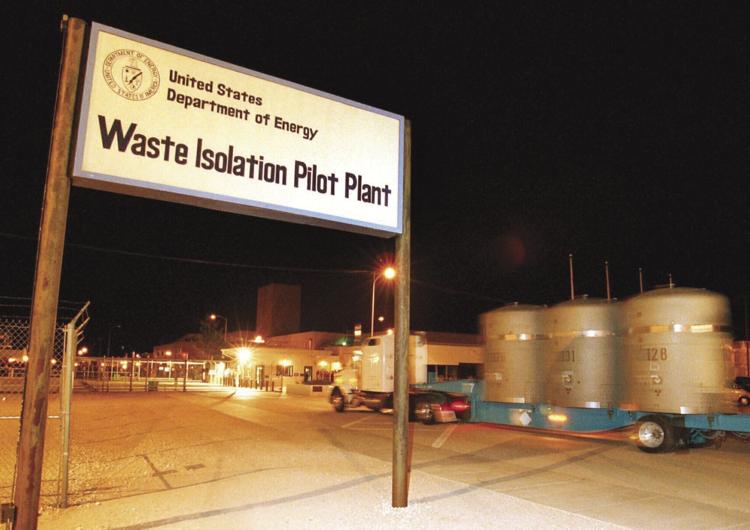
The New Mexico Environment Department’s hazardous waste permit for the Waste Isolation Pilot Plant (WIPP) requires the Department of Energy (DOE) to submit a Legacy Transuranic, or TRU, Waste Disposal Plan to the Environment Department. DOE submitted its inadequate plan on November 4th for a 60-day public comment period, which ends on Friday, January 3rd, 2025. https://wipp.energy.gov/Library/documents/2024/24-0772-s.pdf
A sample public comment letter you can use to create your comments is available HERE.
The DOE plan ignores the promises DOE made to New Mexicans. WIPP was sold as a pilot project to clean up Cold War legacy radioactive and hazardous waste at DOE’s nuclear weapons sites located across the country. It was a test case for the deep geologic disposal of transuranic, or plutonium-contaminated, nuclear waste made during the Cold War. DOE promised it would cleanup all its transuranic waste, ship it to WIPP for disposal and close WIPP after 25 years of operations. WIPP opened in 1999 and was scheduled to close in 2024.
But DOE changed its mind. DOE now wants to keep WIPP open until at least 2083 for the transuranic waste created by fabricating new plutonium triggers, or pits, for nuclear weapons at Los Alamos National Laboratory (LANL) and the Savannah River Site in South Carolina.
DOE is ignoring its promises and the buried transuranic waste at LANL that needs to be packaged and shipped to WIPP. Further, there are 2,025 transuranic waste containers stored aboveground in the Area G fabric tents in a wildfire zone. https://n3b-la.com/area-g-tru/ New Mexicans can challenge DOE’s plan through the WIPP Hazardous Waste Permit and the three new permit conditions that address the need for another nuclear waste repository in a state other than New Mexico; the need to prioritize and reduce risk of transuranic waste stored in New Mexico; and the need for a Legacy TRU Waste Disposal Plan that prioritizes disposal of Cold War legacy waste over newly generated nuclear waste, including at LANL. https://www.env.nm.gov/hazardous-waste/wipp-permit-page/ , see permit conditions 2.14.3 Repository Siting Annual Report; 4.2.1.4 Prioritization and Risk Reduction of New Mexico Waste; and 4.2.1.5 Legacy TRU Waste Disposal Plan on the attached. 240924 NMED WIPP HazWaste Renewal Permit Conditions
DOE’s plan fails to define legacy waste. DOE’s definition is explicitly intended to include as legacy waste whatever any DOE site describes as legacy, including waste generated more than a decade after WIPP opened. The plan also includes as legacy waste “surplus” plutonium that DOE plans to ship and process at LANL and dispose of at WIPP.
DOE will submit the public comments to the Environment Department before the end of January. The Environment Department will determine whether DOE met the permit requirements for the plan.
The public comments that have been submitted so far are available on the WIPP homepage at the third blue box labeled “Legacy TRU Waste Disposal Plan” or at https://wipp.energy.gov/Legacy-TRU-Waste-Disposal-Plan.asp
DRUGS IN THE NUCLEAR SPHERE: UNVEILING A TROUBLING NEXUS

Alastair philip wiper captures the unexpected connection between nuclear missiles and drugs
DesignBoom 31 Dec 23
“…………………………………………………………………………………………………………………As Alastair Philip Wiper explains in Drugs and Missiles, there is a compelling argument for the main danger posed by nuclear weapons: the unintended risk of self-destruction. History is full of declassified cases, from planes accidentally crashing with nuclear payloads to governments mistaking computer simulations of war for actual events. The accidental release of weapons through human error, such as pulling the wrong handle, and the explosion of missile silos underscore this vulnerability. ‘Once, a bear climbing the fence of an Air Force base was mistaken for Russian special forces beginning an invasion,’ shares the photographer. ‘And then there are the drugs.’
In Eric Schlosser’s book Command and Control, it’s revealed that of the individuals authorized to handle nuclear weapons in 1980, 1.5% lost their clearance due to drug abuse, totaling at least 1,728 individuals who were caught using drugs in proximity to nuclear weapons. Fast forward to 2016, a disconcerting reality unfolded as over a dozen Air Force members responsible for safeguarding nuclear missiles were convicted of both using and distributing substances such as LSD, ecstasy, cocaine, and marijuana. This juxtaposition underscores the persistent and concerning intersection between drug use and the guardianship of powerful weaponry……………………………….. more https://www.designboom.com/art/alastair-philip-wiper-unexpected-connection-nuclear-missiles-drugs-12-25-2023/
Cyber-hackers target UK nuclear waste company RWM.

Radioactive Waste Management says attempt was made to breach the business using LinkedIn
Guardian, Alex Lawson and Anna Isaac, 1 Jan 2024
Cyber-hackers have targeted the company behind a £50bn project to build a vast underground nuclear waste store in Britain, its developer has said.
Radioactive Waste Management, the company behind the Geological Disposal Facility (GDF) project, has said that hackers unsuccessfully attempted to breach the business using LinkedIn.
RWM is the government-owned entity behind a trio of nuclear bodies that merged last year to create Nuclear Waste Services (NWS). The new body brought together the GDF project, the long-established Low Level Waste Repository in west Cumbria and another body responsible for managing waste to develop a store expected to last 175 years.
In accounts for RWM filed at Companies House, NWS’s chief executive, Corhyn Parr, said of the merger that “we have seen instances of potential exploitation of ownership change through specific attack vectors, predominantly LinkedIn targeting”………………………..
Experts have warned that social media sites are used by hackers to break through security mechanisms in a number of ways. These include creating fake business accounts, deceptive messages to gather information or cause recipients to click on malicious links, as well as directly trying to steal users credentials for other secure logins……………………..
The government is in the process of finding a site for the GDF project, a subterranean network tunnels and vaults designed to house Britain’s highly radioactive nuclear waste. The project is forecast to cost between £20bn and £53bn, and expected to receive its first waste in the 2050s. It echoes similar deep repository projects in Finland and France.
Earlier this year, Allerdale in Cumbria was deemed geologically unsuitable for the facility, leaving two other sites in Cumbria and one on the Lincolnshire coast remaining on the shortlist. NWS is in the process of surveying each site and convincing communities to approve of a development, in the face of local opposition…………………………….
Digital security in the nuclear industry has been in focus since the Guardian revealed a string of problems with cybersecurity at the Sellafield site in Cumbria………….. https://www.theguardian.com/business/2023/dec/31/cyber-hackers-target-uk-nuclear-waste-company-rwm
Effect of U.S. nuclear weapons tests on the otters of Alaska
How US nuclear tests in the ’70s led to today’s thriving otter population on the Pacific west coast
Jenny McGrath , Dec 28, 2023
- In 1971, the US set off its largest underground nuclear weapon test at a remote Alaskan island.
- Before, scientists managed to relocate hundreds of sea otters that may have died in the explosion.
- Their populations are thriving in Alaska, Canada, and Washington but causing some problems.
………………………………………………………………………………….. more https://www.businessinsider.com/amchitka-island-nuclear-test-otter-relocation-alaska-washington-oregon-cannikin-2023-12
Kim Jong Un announces his nuclear resolutions for 2024
Hannah Getahun and Associated Press , Dec 31, 2023,
- North Korean leader Kim Jong Un has plans to ramp up military actions in 2024.
- Kim said he would intensify weapons tests and build up the country’s nuclear stockpile.
- Experts say the moves are meant to help ease sanctions should Donald Trump return as president.
North Korean leader Kim Jong Un vowed to launch three additional military spy satellites, produce more nuclear materials, and introduce modern attack drones in 2024, as he called for “overwhelming” war readiness to cope with US-led confrontational moves, state media reported Sunday.
Kim’s comments, made during a key ruling Workers’ Party meeting to set state goals for next year, suggest he’ll intensify a run of weapons tests ahead of the US presidential elections in November……………………………………………………more https://www.businessinsider.com/kim-jong-un-spy-satellites-nuclear-weapons-2023-12
Over 1,000 Children in Gaza Have Had One or Both Legs Amputated Since Oct 7
it is “beyond belief that the world is allowing this to continue.”
| ScheerPost, By Kyle Anzalone / Antiwar.com, 31 Dec 23 |
1 International aid workers describe a growing humanitarian nightmare in the Strip.
International aid workers visiting the Gaza Strip are relaying the horrific situation Israel is inflicting on the Palestinians. UNICEF reports over 1,000 children have lost legs. Israel is forcing the 2.3 million residents of Gaza into increasingly small areas that lack the ability to accommodate basic needs for survival.
UNICEF spokesperson James Elder said, “Around 1,000 children in Gaza have lost one or both their legs.” He told journalists in Geneva that “every single child is enduring these ten weeks of hell and not one of them can escape.”
Due to the conditions in Gaza, as well as the lack of aid, doctors are often forced to conduct surgeries in unsanitary facilities and without painkillers. “Not only were they amputated without anesthesia, but many of them were amputated in a very quick fashion,” he said.
Dr. Ghassan Abu Sitta, a London-based surgeon who traveled to Gaza to treat patients, told Middle East Eye that having to perform these operations without anesthetic was “one of the most difficult things I’ve had to do in my career.” At a November press conference, he said, “One night, at Al-Ahli Hospital, I performed amputations on six children.”
The UNICEF official said that even if children recover from the amputation, they do not escape the hell of the threat of death. “As a parent of a critically sick child told me, ‘Our situation is pure misery…I don’t know if we will make it through this.’”
Spokesperson Dr. Margaret Harris added that WHO staff in Gaza spoke of not being able to walk in the emergency wards “for fear of stepping on people” lying on the floor “in severe pain” and asking for food and water. She called the situation “unconscionable” and said that it is “beyond belief that the world is allowing this to continue.”
The Israeli military has destroyed most hospitals in Gaza. The medical facilities continuing to operate face frequent attacks and a lack of supplies. A Washington Post investigation recently found that the Israeli Air Force is using 2,000-pound bombs near hospitals…………………………………. more https://scheerpost.com/2023/12/31/over-1000-children-in-gaza-have-had-one-or-both-legs-amputated-since-oct-7/
50/50 chance of a major nuclear accident within the next 10 years

The Chances of Another Chernobyl Before 2050? 50%, Say Safety Specialists
And there’s a 50:50 chance of a Three Mile Island-scale disaster in the next 10 years, according to the largest statistical analysis of nuclear accidents ever undertaken. MIT Technology Review April 17, 2015 Given that most countries with nuclear power intend to keep their reactors running and that many new reactors are planned, an important goal is to better understand the nature of risk in the nuclear industry. What, for example, is the likelihood of another Chernobyl in the next few years?
Today, we get an answer thanks to the work of Spencer Wheatley and Didier Sornette at ETH Zurich in Switzerland and Benjamin Sovacool at Aarhus University in Denmark. These guys have compiled the most comprehensive list of nuclear accidents ever created and used it to calculate the likelihood of other accidents in future.
Their worrying conclusion is that the chances are 50:50 that a major nuclear disaster will occur somewhere in the world before 2050. “There is a 50 per cent chance that a Chernobyl event (or larger) occurs in the next 27 years,” they conclude.
Documents show toxins in Air Force nuclear missile capsules
Documents show the risks toxic substances posed in the underground capsules and silos where Air Force nuclear missile crews have worked since the 1960s
abc news, By TARA COPP Associated Press, December 29, 2023
WASHINGTON — A large pool of dark liquid festering on the floor. No fresh air. Computer displays that would overheat and ooze out a fishy-smelling gel that nauseated the crew. Asbestos readings 50 times higher than the Environmental Protection Agency’s safety standards.
These are just some of the past toxic risks that were in the underground capsules and silos where Air Force nuclear missile crews have worked since the 1960s. Now many of those service members have cancer.
The toxic dangers were recorded in hundreds of pages of documents dating back to the 1980s that were obtained by The Associated Press through Freedom of Information Act requests. They tell a far different story from what Air Force leadership told the nuclear missile community decades ago, when the first reports of cancer among service members began to surface:
“The workplace is free of health hazards,” a Dec. 30, 2001, Air Force investigation found.
“Sometimes, illnesses tend to occur by chance alone,” a follow-up 2005 Air Force review found.
The capsules are again under scrutiny.
The AP reported in January that at least nine current or former nuclear missile officers, or missileers, had been diagnosed with the blood cancer non-Hodgkin’s lymphoma. Then hundreds more came forward self-reporting cancer diagnoses. In response the Air Force launched its most sweeping review to date and tested thousands of air, water, soil and surface samples in all of the facilities where the service members worked. Four current samples have come back with unsafe levels of polychlorinated biphenyls, or PCBs, a known carcinogen used in electrical wiring.
In early 2024, more data is expected, and the Air Force is working on an official count of how many current or former missile community service members have cancer.
……………………………………………………………….. When the latest rounds of test results were released, the Air Force did not initially reveal that samples showing contamination had critically higher PCB levels than EPA standards allow — and dozens of other areas tested were just below the EPA’s threshold, said Steven Mayne, a former senior enlisted nuclear missile facility supervisor at Minot Air Force Base in North Dakota who now runs a Facebook group that is dedicated to posting Air Force news or internal memos.
“At this point the EPA, OSHA (Occupational Safety and Health Administration) and senators from North Dakota and Montana need to look into this matter,” Mayne said.
In December 2022, former Malmstrom missileers Jackie Perdue and Monte Watts, both of whom have been diagnosed with non-Hodgkin’s lymphoma, asked the Defense Department’s inspector general to investigate.
“I believe health and safety standards have been violated, or not considered, and should be investigated,” said Perdue, who served as a nuclear missile combat crew commander at Malmstrom from 1999 to 2006, in an inspector general complaint obtained by the AP.
…………………………………………………………………………………………. The environmental reports from Malmstrom when Jason was assigned there show Sierra had a long list of hazards. In 1996, a medical team reported there were more than 25 gallons of fluid overrun with biological growth festering on Sierra’s capsule floor. An intake that collected outside air for Sierra was located by the parking lot, and the team watched a running car idle near it for 20 minutes. The team documented that a fan needed to pull clean air down into Sierra had been broken for at least six months, so the only way crews could get fresh air was if they left the capsule’s steel vault door open.
………………………………………… Sierra was dangerous. In March of 1996, the medical team measured carbon dioxide levels of 1,700 parts per million in the air. “At these levels you can expect complaints of headache, drowsiness, fatigue and/or difficulty concentrating from a majority of the occupants. Worker removal should be considered.”
Nothing changed. That May the medical team again recorded exposure levels of 1,800 ppm, and advised again that the missileers should be removed.
By the mid-1990s a new missile targeting system was needed, and each capsule began a refurbishment to install a wall-sized computer console called REACT, for Rapid Execution and Combat Targeting System……………………………….
A clear liquid began to leak, followed by a fishy, ammonia-like smell. The crew began to complain of headaches and nausea, and the capsule was evacuated two hours later.
Malmstrom’s team learned that the liquid was dimethylformamide, an electrolyte used in REACT’s video display unit capacitors, because F.E. Warren, the Wyoming base, had recently reported similar leaks.
…………………… All of the capsules will be closed down in a few years, as the military’s new ICBM, the Sentinel, comes online. As part of the modernization, the old capsules will be demolished. A new, modern underground control center will be built on top of them.
……………………. The old capsules will remain in use until then, though, which makes it even more important that the Air Force is completely open with its missileers now, Doreen Jenness said.
Because they were so young, neither she nor Jason suspected cancer when he started to feel fatigued in the fall of 2000. Nor when his hip started to ache that December.
When he finally gave in and saw a doctor in February 2001, he was admitted to the hospital the same day. By March, Jason and Doreen knew his lymphoma was untreatable. He died that July.
“We can all pretend to not know, because knowing is really hard,” Doreen Jenness said. “Knowing and doing something about it is even harder. Now, 23 years after Jason’s been gone there’s a whole bunch of young men and women that are having to go through the same things that we had to go through. They have to live the same lives and maybe have the same future as me, and it’s just sad. Really sad.”………………… https://abcnews.go.com/US/wireStory/air-force-nuclear-missile-capsules-safe-toxins-lurked-105982645
Microsoft is training an AI to help get nuclear reactors approved

The company wants the reactors to power generative AI systems.

Freethink, By Kristin Houser, December 26, 2023
Microsoft is training an AI to generate the paperwork needed to get next-gen nuclear reactors approved by regulators — all so that the reactors can power Microsoft data centers running generative AIs.
Power hungry: As of November 2023, 100 million people were using OpenAI’s ChatGPT on a weekly basis, and answering all their queries requires a lot of computing power.
Tech giant Microsoft is shouldering much of that burden — in addition to investing a reported $13 billion into OpenAI, it also built the massive supercomputer used to train the startup’s generative AIs, and its data centers provide the processing power used to run the models.
Nuclear vision: Microsoft appears keen to use nuclear energy — specifically from small modular reactors (SMRs) — to meet the increased electricity demand that generative AI is putting on its data centers……………………
There aren’t any SMRs in operation in the US yet, though, and getting one approved by regulators is an expensive, complex process. The only company to do it, NuScale, spent $500 million, and its application was 12,000 pages long, with more than 2 million pages of supporting documents.
What’s new? In the hope of streamlining this process, Microsoft has teamed up with Terra Praxis, a nonprofit that promotes decarbonization, to train a generative AI to help create the documents needed to get new nuclear reactors approved.
Looking ahead: Ingersoll estimates that the AI could cut the number of human hours needed to get a new SMR approved by 90%, and while it’s too soon to say whether he’s right, Microsoft appears hopeful that its bet on generative AI to accelerate its nuclear vision will pay off.
“We’re really excited about the game-changing potential for AI in this space,” Michelle Patron, Microsoft’s senior director of sustainability policy, told the WSJ. https://www.freethink.com/energy/nuclear-reactors-microsoft
New Book: Energy Revolutions -Profiteering versus Democracy –

Forthcoming book by Dave Toke: ‘Energy Revolutions – profiteering versus
democracy’ (Pluto Press). This book shows how we can move forward to an
energy system powered by renewable energy. It reveals how selective public
ownership and targeted interventions, as part of an energy democracy
programme will protect consumer interests better than the chaotic energy
supply system that failed consumers so expensively in the recent energy
crisis.
Pluto Press (accessed) 29th Dec 2023 https://www.plutobooks.com/9780745349251/energy-revolutions/
Constitutional Violations: Julian Assange, Privacy and the CIA

December 28, 2023, Dr Binoy Kampmark, https://theaimn.com/constitutional-violations-julian-assange-privacy-and-the-cia/
As a private citizen, the options for suing an intelligence agency are few and far between. The US Central Intelligence Agency, as with other members of the secret club, pour scorn on such efforts. To a degree, such a dismissive sentiment is understandable: Why sue an agency for its bread-and-butter task, which is surveillance?
This matter has cropped up in the US courts in what has become an international affair, namely, the case of WikiLeaks founder and publisher, Julian Assange. While the US Department of Justice battles to sink its fangs into the Australian national for absurd espionage charges, various offshoots of his case have begun to grow. The issue of CIA sponsored surveillance during his stint in the Ecuadorian embassy in London has been of particular interest, since it violated both general principles of privacy and more specific ones regarding attorney-client privilege. Of particular interest to US Constitution watchers was whether such actions violated the reasonable expectation of privacy protected by the Fourth Amendment.
Four US citizens took issue with such surveillance, which was executed by the Spanish security firm Undercover (UC) Global and its starry-eyed, impressionable director David Morales under instruction from the CIA. Civil rights attorney Margaret Ratner Kunstler and media lawyer Deborah Hrbek, and journalists John Goetz and Charles Glass, took the matter to the US District Court of the Southern District of New York in August last year. They had four targets of litigation: the CIA itself, its former director, Michael R. Pompeo, Morales and his company, UC Global SL.
All four alleged that the US Government had conducted surveillance on them and copied their information during visits to Assange in the embassy, thereby violating the Fourth Amendment. In doing so, the plaintiffs argued they were entitled to money damages and injunctive relief. The government moved to dismiss the complaint as amended.
On December 19, District Judge John G. Koeltl delivered a judgment of much interest, granting, in part, the US government’s motion to dismiss but denying other parts of it. Before turning to the relevant features of Koeltl’s reasons, various observations made in the case bear repeating. The judge notes, for instance, Pompeo’s April 2017 speech, in which he “‘pledged that his office would embark upon a ‘long term’ campaign against WikiLeaks.’” He is cognisant of the plaintiffs’ claims “Morales was recruited to conduct surveillance on Assange and his visitors on behalf of the CIA and that this recruitment occurred at a January 2017 private security industry convention at the Las Vegas Sands Hotel in Las Vegas, Nevada.”
From that meeting, it is claimed that “Morales created an operations unit, improved UC Global’s systems, and set up live streaming from the United States so that surveillance could be accessed instantly by the CIA.” The data gathered from UC Global “was either personally delivered to Las Vegas; Washington, D.C.; and New York City by Morales (who travelled to these locations more than sixty times in the three years following the Las Vegas convention) or placed on a server that provided external access to the CIA.”
Koeltl preferred to avoid deciding on the claims that Morales and UC Global were, in fact, “acting as agents of Pompeo and the CIA.” Such matters were questions of fact “that cannot be decided on a motion to dismiss.”
A vital issue in the case was whether the plaintiffs had standing to sue the CIA in the first place. Citing the case of ACLU v Clapper, which involved a challenge to the National Security Agency’s bulk telephone metadata collection program, Koeltl accepted that they did. In doing so, he rejected a similar argument made by the government in Clapper – that the injuries alleged were simply “too speculative and generalized” and that the information gathered via surveillance would necessarily even be used against them. “In this case, the plaintiffs need not allege, as the Government argues, that the Government will imminently use their information collected at the Ecuadorean Embassy in London.” If the search of the conversations and electronic devices along with the seizure of the contents of the electronic devices “were unlawful, the plaintiffs have suffered a concrete and particularized injury fairly traceable to the challenged program and redressable by favorable ruling.”
Less satisfactory for the plaintiffs was the finding they had no reasonable expectation of privacy regarding their conversations with the publisher given that “they knew Assange was surveilled even before the CIA’s alleged involvement.” The judge thought it significant that they did “not allege that they would not have met Assange had they known their conversations would be surveilled.” Additionally, it “would not be recognized as reasonable by society” to have expected conversations held with Assange at the embassy in London to be protected, given such societal acceptance of, for instance video surveillance in government buildings.
This reasoning is faulty, given that the visits by the four plaintiffs to the embassy did not take place with their knowledge of the operation being conducted by UC Global with CIA blessing. In a general sense, anyone visiting the embassy could not help but suspect that Assange might be the object of surveillance, but to suggest something akin to a waiver of privacy rights on the part of attorneys and journalists aiding a persecuted publisher is an odd turn.
The US Government also succeeded on the point that the plaintiffs had no reasonable expectation to privacy regarding their passports or their devices they voluntarily left at the Embassy reception desk. In doing so, they “assumed the risk that the information may be conveyed to the Government.” Those visiting embassies must, it would seem, be perennially on guard.
That said, the plaintiffs convinced the judge that they had “sufficient allegations that the CIA and Pompeo, through Morales and UC Global, violated their reasonable expectation to privacy in the contents of their electronic devices.” The government even went so far as to concede that point.
Unfortunately for the plaintiffs, the biggest fish was let off the hook. The plaintiffs had attempted to use the 1971 US Supreme Court case of Bivens to argue that the former CIA director be held accountable and liable for violating constitutional rights. Koeltl thought the effort to extend the application of Bivens inappropriate in terms of the high standing nature of the defendant and the context. “As a presidential appointee confirmed by Congress […] Defendant Pompeo is in a different category of defendant from a law enforcement agent of the Federal Bureau of Narcotics.” More’s the pity.
Leaving aside some of the more questionable turns of reasoning in Koeltl’s judgment, public interest litigants and activists can take heart from the prospect that civil trials against the CIA for violations of the US Constitution are no longer unrealistic. “We are thrilled,” declared Richard Roth, the plaintiffs’ attorney, “that the court rejected the CIA’s efforts to silence the plaintiffs, who merely seek to expose the CIA’s attempt to carry out Pompeo’s vendetta against WikiLeaks.” The appeals process, however, is bound to be tested.
US eyes reports Iran has accelerated uranium enrichment
Aljazeera, 27 Dec 23
Tension has risen between Washington and Tehran amid the Israel-Gaza war.
The United States has expressed deep concern over reports that Iran has accelerated its production of weapons-grade uranium.
The comments from a White House National Security Council spokesperson came late on Tuesday in response to a report issued by the International Atomic Energy Agency (IAEA) that warned that Tehran has accelerated production of the high-grade material……………………………
The United Nations atomic watchdog’s report to member states said that Iran has increased the rate at which it is producing near weapons-grade uranium in recent weeks, reversing a previous slowdown that started in in mid-2023.
Iran had previously slowed the rate at which it was enriching uranium – the process of raising the level of uranium-235, the isotope used in nuclear fission – to 60 percent purity. Uranium enriched at 60 percent is just a step away from weapons-grade levels of 90 percent. Nuclear power stations require 3.67 percent.
The IAEA said its inspectors had verified the increased rate of production since the end of November at facilities in Natanz and Fordow to about 9kg (20lb) per month, the same level of production that Iran was maintaining in the first half of 2023 before a drop to 3kg (6.6lb) per month in June.
Raised tension
Iran appeared to have slowed its enrichment programme earlier this year as a gesture as informal talks with the US over a nuclear treaty resumed. But the Israel-Gaza war has raised tensions between Washington and Tehran………………………………….more https://www.aljazeera.com/news/2023/12/27/us-frets-over-irans-accelerated-uranium-enrichment-programme—
‘Cover-up’ hearing Canadian Nuclear Safety Commission for late January 2024.

Gordon Edwards., 29 Dec 23
There will be a most unusual public hearing by the CNSC in late January 2024. It’s not a licensing hearing. It’s an attempt to cover up or to exonerate an act already performed by OPG without explicit approval.
The first construction licence for a commercial SMNR (Small Modular Nuclear Reactor) in Canada has been requested by OPG, who wants to build up to 4 GE-Hitachi “boiling water” reactors on the Darlington site. But there’s a glitch.
OPG used an old 2011 “site preparation licence” to prepare the site for the GE-Hitachi BWRX-300 reactor on the same property as the Darlington Nuclear Generating Station, where 4 large CANDU reactors are currently being refurbished.
The old licence was granted on the basis of an Environmental Assessment Report published in 2011 by a Joint Review Panel (JRP) who had examined and approved four large candidate reactors that had very little in common with the BWRX-300.
The JRP stipulated in their report that if OPG chooses a reactor design that is “significantly different” from those that they had examined from 2009-2011, then a NEW EA should be conducted. In other words, OPG should start over again.
But OPG “jumped the gun” by using that antiquated site preparation licence without explicit approval.
Fearing that they may have violated the terms of the 2011 EA Report, by using an old site preparation licence granted for a significantly different reactor construction project, OPG is now asking the CNSC to declare that the BWRX-300 design was, in effect, already approved by the JRP back in 2011 (even though no design of that type was ever considered by the JRP).
My intervention for this upcoming hearing is entitled “DNNP: Mischief in the Making” in which I argue that the 2011 EA Report did not and could not be construed to cover the BWRX-300, and recommending the CNSC to so confirm as a matter of fact.
Accordingly, before a construction licence is considered for a BWRX-300, a new EA is required.
Here is a link to my intervention: http://www.ccnr.org/DNNP-Mischief_in_the_Making_2023.pdf
Former chair of Ohio utility regulator surrenders in $60 million bribery scheme linked to energy bill

PBS Newshour , Julie Carr Smyth, Associated Press 27 Dec 23
COLUMBUS, Ohio (AP) — Ohio’s former top utility regulator surrendered Monday in connection with a $60 million bribery scheme related to a legislative bailout for two Ohio nuclear power plants that has already resulted in a 20-year prison sentence for a former state House speaker.
Sam Randazzo, former chair of the Public Utilities Commission of Ohio, self-surrendered at U.S. District Court in Cincinnati after being charged in an 11-count indictment that was returned on Nov. 29, U.S. Attorney Kenneth L. Parker’s office announced. Randazzo was scheduled for an initial court appearance later in the day.
“Today’s indictment outlines an alleged scheme in which a public regulatory official ignored the Ohio consumers he was responsible for protecting, instead taking a bribe from an energy company seeking favors,” FBI Cincinnati Special Agent in Charge J. William Rivers said in a statement.
Randazzo, 74, resigned in November 2020 after FBI agents searched his Columbus townhome and FirstEnergy revealed in security filings what it said were bribery payments of $4.3 million for his future help at the commission a month before Republican Gov. Mike DeWine nominated him as Ohio’s top utility regulator.
He faces one count of conspiring to commit travel act bribery and honest services wire fraud, two counts of travel act bribery, two counts of honest services wire fraud, one count of wire fraud and five counts of making illegal monetary transactions.
A message seeking comment was left for his lawyer. If convicted as charged, the defendant could face up to 20 years in prison.
Ohio Consumers’ Counsel Maureen Willis, who represents the state’s utility ratepayers, said the indictment was “an important first step to bring justice to Ohio utility consumers” — but that more is needed.
“It underscores the need for near-term reform of the PUCO selection process that led to his appointment as Chair of the PUCO,” Willis said in a statement. “OCC’s calls for reform so far have gone unanswered. Ohioans deserve better from the public officials in this state.”
The long-awaited indictment marks the latest development in what has been labeled the largest corruption case in Ohio history.
Former Ohio House Speaker Larry Householder was sentenced in June to 20 years in prison for his role in orchestrating the scheme, and lobbyist Matt Borges, a former chair of the Ohio Republican Party, was sentenced to five years.
The U.S. attorney’s office in Cincinnati indicted three others on racketeering charges in July 2020.
Lobbyist Juan Cespedes and Jeffrey Longstreth, a top Householder political strategist, pleaded guilty in October 2020. The third person arrested, statehouse lobbyist Neil Clark, pleaded not guilty before dying by suicide in March 2021. The dark money group used to funnel FirstEnergy money, Generation Now, also pleaded guilty to a racketeering charge in February 2021.
All were accused of using the $60 million in secretly funded FirstEnergy cash to get Householder’s chosen Republican candidates elected to the House in 2018 and then to help him get elected speaker in January 2019.
The money was then used to win passage of the tainted energy bill, House Bill 6, and to conduct what authorities have said was a $38 million dirty-tricks campaign to prevent a repeal referendum from reaching the ballot…………………………………….. more https://www.pbs.org/newshour/nation/former-chair-of-ohio-utility-regulator-surrenders-in-60-million-bribery-scheme-linked-to-energy-bill
1 This Month





PLEASE OPPOSE HR 8255 AND S.3639 – bills would accelerate satellite deployment, with no environmental review or safeguards – https://ncstd5li.quorum.us/campaign/169331/
To see nuclear-related stories in greater depth and intensity – go to https://nuclearinformation.wordpress.com
-
Archives
- October 2026 (67)
- September 2026 (339)
- August 2026 (330)
- July 2026 (355)
- June 2026 (287)
- May 2026 (306)
- April 2026 (356)
- March 2026 (251)
- February 2026 (267)
- January 2026 (308)
- December 2025 (358)
- November 2025 (359)
-
Categories
- 1
- 1 NUCLEAR ISSUES
- business and costs
- climate change
- culture and arts
- ENERGY
- environment
- health
- history
- indigenous issues
- Legal
- marketing of nuclear
- media
- opposition to nuclear
- PERSONAL STORIES
- politics
- politics international
- Religion and ethics
- safety
- secrets,lies and civil liberties
- spinbuster
- technology
- Uranium
- wastes
- weapons and war
- Women
- 2 WORLD
- ACTION
- AFRICA
- Atrocities
- AUSTRALIA
- Christina's notes
- Christina's themes
- culture and arts
- Events
- Fuk 2022
- Fuk 2023
- Fukushima 2017
- Fukushima 2018
- fukushima 2019
- Fukushima 2020
- Fukushima 2021
- general
- global warming
- Humour (God we need it)
- Nuclear
- RARE EARTHS
- Reference
- resources – print
- Resources -audiovicual
- Weekly Newsletter
- World
- World Nuclear
- YouTube
-
RSS
Entries RSS
Comments RSS