Mass layoffs at small nuclear reactor companies

Pioneering Nuclear Startup Lays Off Nearly Half Its Workforce. NuScale is the second major U.S. reactor company to cut jobs in recent months.

Huff Post, By Alexander C. Kaufman, Jan 5, 2024,
Almost exactly one year ago, NuScale Power made history as the first of a new generation of nuclear energy startups to win regulatory approval of its reactor design ― just in time for the Biden administration to begin pumping billions of federal dollars into turning around the nation’s atomic energy industry.
But as mounting costs and the cancellation of its landmark first power plant have burned through shrinking cash reserves, the Oregon-based company is laying off as much 40% of its workforce, HuffPost has learned.
At a virtual all-hands meeting Friday afternoon, the company announced the job cuts to remaining employees. HuffPost reviewed the audio of the meeting. Two sources with direct knowledge of NuScale’s plans confirmed the details of the layoffs.
NuScale did not respond to a call, an email or a text message seeking comment.
Surging construction costs are imperiling clean energy across the country. In just the past two months, developers have pulled the plug on major offshore wind farms in New Jersey and New York after state officials refused to let companies rebid for contracts at a higher rate.
But the financial headwinds are taking an especially acute toll on nuclear power. It takes more than a decade to build a reactor, and the only new ones under construction in the U.S. and Europe went billions of dollars over budget in the past two decades. Many in the atomic energy industry are betting that small modular reactors ― shrunken down, lower-power units with a uniform design ― can make it cheaper and easier to build new nuclear plants through assembly-line repetition.
The U.S. government is banking on that strategy to meet its climate goals. The Biden administration spearheaded a pledge to triple atomic energy production worldwide in the next three decades at the United Nations’ climate summit in Dubai last month, enlisting dozens of partner nations in Europe, Asia and Africa.
The two infrastructure-spending laws that President Joe Biden signed in recent years earmark billions in spending to develop new reactors and keep existing plants open. And new bills in Congress to speed up U.S. nuclear deployments and sell more American reactors abroad are virtually all bipartisan, with progressives and right-wing Republicans alike expressing support for atomic energy…………
Until November, NuScale appeared on track to debut the nation’s first atomic energy station powered with small modular reactors. But the project to build a dozen reactors in the Idaho desert, and sell the electricity to ratepayers across the Western U.S. through a Utah state-owned utility, was abandoned as rising interest rates made it harder for NuScale to woo investors willing to bet on something as risky a first-of-its-kind nuclear plant.
In 2022, NuScale went public via a SPAC deal, a type of merger that became a popular way for debt-laden startups to pay back venture capitalists with a swifter-than-usual initial public offering on the stock market.
In its latest quarterly earnings, NuScale reported just under $200 million in cash reserves, nearly 40% of which was tied up in restricted accounts……………………………………..
NuScale, which has four other projects proposed in the U.S. and tentative deals in at least eight other countries, isn’t the only nuclear startup navigating choppy waters.
In October, Maryland-based X-energy, which is working with the federal government to develop a next-generation reactor using gas instead of water for cooling, cut part of its workforce and scrapped plans to go public.
In September, California-based Oklo appeared to lose a $100 million contract to build its its salt-cooled “micro-reactors” at an Air Force base in Alaska, as the independent Northern Journal newsletter first reported. ………. https://www.huffpost.com/entry/nuscale-layoffs-nuclear-power_n_65985ac5e4b075f4cfd24dba
Nuclear disasters–in–waiting
RICHARD STONE, Science 4 Jan 24
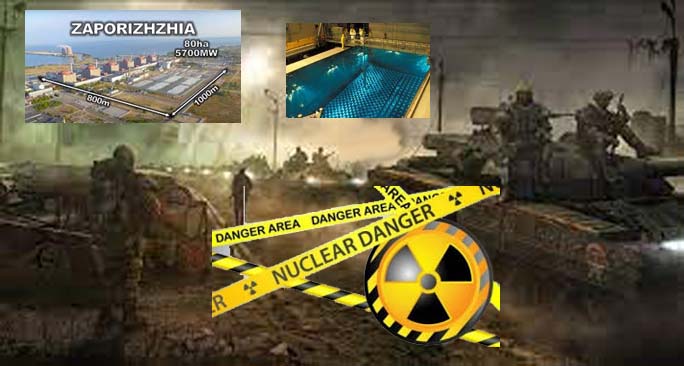
Having taken a heavy toll on Ukraine’s ecosystems and water resources, the war with Russia threatens to create a another environmental disaster: damage to the region’s extensive nuclear infrastructure—including 15 power reactors and three research reactors.
“There continues to be a highly precarious nuclear safety and security situation across Ukraine,” International Atomic Energy Agency (IAEA) Director General Rafael Mariano Grossi said in a statement after explosions were heard near the Khmelnitsky Nuclear Power Plant and its two Soviet-era reactors on 28 November 2023—the second near-miss in a single month at the site. “All of Ukraine’s nuclear facilities remain vulnerable, either directly if hit by a missile or indirectly if their off-site power supplies are disrupted.”
Russia’s assault on Ukrainian nuclear sites began on the very first day of the full-scale invasion. On 24 February 2022, troops overran the Chornobyl Nuclear Power Plant, infamous for the explosion and fire there in 1986 that sent a plume of radioactive smoke into Western Europe. During 5 weeks of occupation, Russian soldiers ransacked labs and kicked up radioactive soil and dust as they dug trenches and slogged through contaminated forests in the exclusion zone around the defunct plant. To the east that spring, Russian troops frequently shelled the Kharkiv Institute of Physics and Technology, damaging a hall containing a subcritical nuclear reactor.
Shelling has also flared up repeatedly around the Zaporizhzhia Nuclear Power Station, a complex of six reactors that constitutes Europe’s largest nuclear power plant. Russia captured the plant in March 2022 and the reactors were shut down 6 months later, eliminating the risk of a core meltdown. Still, a prodigious amount of nuclear material remains there: The reactor halls hold 1380 tons of fresh and spent uranium oxide fuel, and two repositories store an additional 2100 tons of spent fuel laced with nasty long-lived radionuclides—the ingredients, many Ukrainians fear, of a “dirty bomb” that would use conventional explosives to spread radioactive isotopes……………………………………….
The presence of IAEA observers at the Zaporizhzhia station since September 2022 has deterred the theft of dirty-bomb ingredients. But a major missile strike on one of its spent fuel repositories could turn the plant itself into a dirty bomb, spreading radioactive contamination in a radius of up to 30 kilometers, says Volodymyr Borysenko, a nuclear engineer with the National Academy of Sciences of Ukraine’s Institute for Safety Problems of Nuclear Power Plants (ISPNPP).
Even a smaller strike could contaminate the reactor complex. And the spent fuel is also at risk from repeated electricity blackouts that have struck the plant, the latest in early December 2023. Diesel-fueled generators can supply power for up to 10 days, but a prolonged outage could be dangerous, as power is needed to pump cooling water into the plant’s uranium reactor cores and pools holding spent fuel.
A lesser known radioactive risk is situated about 150 kilometers upstream from the Zaporizhzhia plant on the Dnipro River. During the Cold War, the Prydniprovsky Chemical Plant was one of Europe’s largest uranium ore processing facilities. The complex accumulated some 40 million tons of tailings—leftovers of milling uranium—and other foul residues before it closed in 1992. By early 2022, Ukraine, with help from the European Union, had fenced off highly contaminated areas. But a missile or artillery strike on a tainted building or dump could disperse radioactive dust over the nearby city of Kamianske.
One relative bright spot is Chornobyl, where Ukrainian scientists are restoring labs damaged early in the war. But large parts of the exclusion zone remain off limits because of the threat of mines and unexploded ordinance, says ISPNPP Director Anatolii Nosovskiy. Complicating matters for radiation monitoring, he says, the Ukrainian army has built defensive fortifications in the zone, near the border with Belarus…………………. https://www.science.org/doi/10.1126/science.adn7987
Germany’s coal power production drops to lowest level in 60 years in2023 after nuclear exit
Germany’s coal power production drops to lowest level in 60 years in
2023 after nuclear exit. Germany’s lignite power production fell to the
lowest level since 1963 last year, while hard coal power production even
dropped to the lowest level since 1955, an analysis by research institute
Fraunhofer ISE has found.
The country’s entire coal-fired power
production fell by almost one third (48 TWh), cutting coal’s share of
total net power generation to 26 per cent. Meanwhile, the country sourced
nearly 60 percent (59.7%) of its net power production from renewables,
which generated a total of 260 terawatt hours (TWh), an increase of 7.2
percent compared to 2022. With an increase of more than 17 TWh, output from
wind turbines grew particularly strong, according to the institute’s
annual energy review.
Renew Economy 4th Jan 2024
TODAY. The subtle ways that the nuclear lobby manipulates corporate media. Example KISHA CLUBS OF JAPAN
Media in other countries are controlled in a similar way, but Japan has the longest and most successful story of corporate media’s obedience to the pro nuclear dogma that prevails across the world.
Paul Richards 5 Jan 24
Starting with, the source: KISHA CLUBS OF JAPAN
Japan’s Press Club System, known as “kisha clubs,” is a unique arrangement that fosters close relationships between journalists and the institutions they cover. This system is prevalent in government offices, ministries, major corporations, and other influential entities.
1] STRUCTURE OF PRESS CLUBS
Exclusive Access:
Journalists from major media outlets join these clubs, gaining exclusive access to news briefings, announcements, and events hosted by specific institutions. Each institution typically has its own press club.
Regular Briefings:
Officials provide information to journalists within these clubs, fostering a symbiotic relationship. In return for access, journalists are expected to adhere to certain unwritten rules, which can include not reporting certain sensitive topics or leaks without permission.
2] HIERCAHICAL EFFECT
Access to Information:
Press club members receive information directly from sources, creating an information hierarchy where those outside the clubs might lack timely or direct access to crucial news.
Influence and Reporting Bias:
The system can create a situation where reporters develop close ties with the sources they cover. This might lead to a reluctance to publish critical or controversial information that could jeopardise their access or relationships. As a result, it can challenge the ability of the press to hold political power accountable.
3] CHALLENGING POLITICAL POWER
Limited Critical Reporting:
While the press club system provides access, it can also limit critical reporting. Journalists might self-censor to maintain access or avoid upsetting their sources, which can indirectly challenge the media’s ability to scrutinise political power thoroughly.
Alternative Media and Challenges:
Independent or smaller media outlets not part of these press clubs might face difficulties accessing information. However, these outlets sometimes challenge the established narrative and provide alternative perspectives, albeit with limited resources and access to official sources.
While the Press Club System provides journalists with unique access to information and sources, it also poses challenges to independent and critical reporting.
The hierarchical nature of information distribution in Japan within these clubs can lead to a cosy relationship between the press and political power, impacting the media’s ability to fully challenge or scrutinise those in authority.
There have been many concerns raised about the Japanese government’s ruling parties, and pressure on media outlets indirectly, such as withholding access to information or using informal means to influence coverage.
This might affect the independence and objectivity of reporting, though direct censorship is not a prevalent practice.
Overall, Japan maintains, it has a reputation for press freedom compared to many other countries.
However, concerns persist about self-censorship, indirect influences, and the limitations of the press club system that can impact the diversity and depth of news coverage.
The nature of political control over the press in Japan tends to be more subtle and indirect rather than overt and explicit.
Japan earthquake raises concerns over restarting country’s nuclear plants
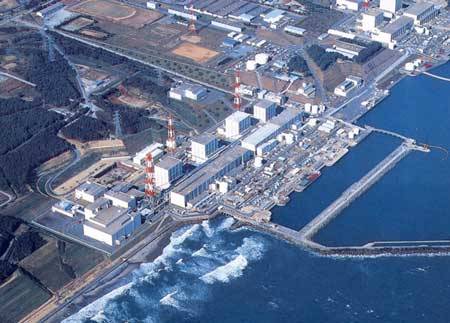
The earthquake struck days after Japan’s regulators lifted a two-year operational ban on a power plant run by Tokyo Electric Power Company (Tepco), which operated the wrecked Fukushima nuclear plant.
Ashima Sharma, January 5, 2024, https://www.power-technology.com/news/japan-earthquake-raises-concerns-over-restarting-countrys-nuclear-plants/?cf-view
The 7.6 magnitude earthquake that hit Japan’s western coast on 1 January has raised concerns over the push to bring the country’s nuclear capacity online.
The earthquake struck just days after the country’s regulators lifted a two-year operational ban on Tepco’s Kashiwazaki-Kariwa nuclear power plant.
Tepco’s plant is located around 120km from the earthquake’s epicentre but has been offline since 2012. Tepco was also the operator of the wrecked Fukushima nuclear plant and in 2021 was banned from transporting new uranium fuel to its Kashiwazaki-Kariwa nuclear plant.
The move was to prevent Tepco from restarting the facility’s seven nuclear reactors, ten years after two of its reactors incurred a triple meltdown at Fukushima.
Following the quake, Tepco reported water spillage from two nuclear fuel pools of the No. 7 and No. 2 reactors at the Kashiwazaki-Kariwa nuclear power plant.
The company ascertained that about 14 litres of water containing radioactive materials spilled from the pools, although it said the radiation levels were normal.
The Shika nuclear power plant, operated by another company, Hokuriku Electric, and located 65km from the epicentre, also reported spillage from spent nuclear fuel pools and oil leaks.
After the Fukushima nuclear disaster in March 2011, there was a strong public and political sentiment to phase out nuclear plants in the country. However, over the years, severe power crunches coupled with rising energy prices have pushed Japan towards restarting idle reactors.
In 2023, Japan’s Kansai Electric Power restarted its 12th nuclear reactor at the Takahama plant. The 826MW Takahama No. 2 was the country’s second-oldest operating reactor, having entered service in 1975.
We care about Japan’s disaster situation and are concerned about nuclear safety:

By Global Times, Jan 03, 2024
As of Tuesday evening, the 7.6-magnitude strong earthquake that occurred in Japan has caused at least 57 deaths, multiple casualties, building collapses, widespread power outages, and fires. The latest development is a collision between a Japan Airlines plane and a Japan Coast Guard aircraft at Tokyo’s Haneda Airport during landing, resulting in at least five deaths among the six crew members of the latter. The Japan Coast Guard aircraft was originally scheduled to transport relief supplies to the earthquake-stricken area in Ishikawa Prefecture. It was preparing for takeoff on the runway when the incident occurred. It’s not difficult to imagine the various chaos that this major earthquake has brought to Japan.
This is the strongest earthquake in Japan since the “3.11” earthquake in 2011. The Japan Meteorological Agency stated on Tuesday that since January 1 local time, there have been 155 earthquakes in Japan, including two strong earthquakes of over magnitude 6. It is uncertain whether there will be continuous aftershocks or even larger earthquakes. Despite Japan’s rich experience in dealing with disasters such as earthquakes and tsunamis, human society remains vulnerable in the face of unexpected natural disasters.
Meanwhile, we also notice that in this earthquake, there is some important information that may not have received enough attention. For example, Tokyo Electric Power Company (TEPCO) announced on the evening of January 1 that the water from the fuel pools at the top floors of the No. 7 and No. 2 reactors at the Kashiwazaki-Kariwa nuclear power plant in Niigata Prefecture spilled over due to strong earthquakes. These waters contain radioactive materials, and the radiation levels are currently being measured. In addition, there was a situation at the Shika Nuclear Power Station in Ishikawa Prefecture where some water had sloshed from a cooling pool for spent fuel rods. Regarding the issues at these two nuclear power stations, the Japanese authorities have promptly concluded that they are “currently safe,” stating that “no damage or leaks were confirmed” and that the fuel cooling at the Shika Nuclear Power Station was “unaffected.”
We certainly hope that this accurately reflects the current situation regarding the nuclear power plants. The information has garnered significant attention from netizens, leading to doubts about whether Japan will experience another catastrophic nuclear accident similar to the Fukushima incident following an earthquake. One reason for this concern is that Japan is one of the countries with the highest concentration of nuclear power plants in the world, coupled with its limited land area. Once a serious nuclear disaster occurs, Japan can hardly cope with it independently. The Fukushima nuclear accident serves as a painful reminder.
More importantly, the Japanese government and TEPCO have a bad track record of mishandling nuclear accidents. To some extent, they have lost credibility. Furthermore, Japan’s stubborn and irresponsible actions regarding the dumping of nuclear-contaminated water from Fukushima have caused great concerns among the Japanese people
Japan needs to take these legitimate concerns seriously. Although the epicenter of this earthquake was in the Noto Peninsula in Ishikawa Prefecture, its impact was widespread, ranging from Hokkaido to Kyushu. The coastal areas of northern Japan, where numerous nuclear facilities and power plants are located, have been affected to varying degrees. The Kashiwazaki-Kariwa nuclear power station, which has witnessed problems, is one of the largest in the world.
It is crucial to assess the condition of these nuclear facilities and the radiation levels in the surrounding sea. Does Japan have a comprehensive monitoring plan in place? Are other nuclear power plants along the coast in a safe state? How does Japan ensure transparency in information disclosure? These issues are directly related to the well-being of the Japanese people and the surrounding countries, and they require a serious response from Japan in the process of dealing with this earthquake………………. https://www.globaltimes.cn/page/202401/1304687.shtml
IAEA says its inspectors are denied access to parts of Ukraine nuclear plant .
The head of the U.N. nuclear power watchdog said on Wednesday his
inspectors had been denied access to parts of Ukraine’s Russian-occupied
Zaporizhzhia nuclear power station and had yet to receive 2024 maintenance
plans for the facility. The plant was seized by Russia in the days
following Moscow’s 2022 invasion of Ukraine. Each side has accused the
other of shelling around the station, Europe’s largest, though its six
reactors now produce no electricity.
Reuters 3rd Jan 2024
Nuclear weapons test treaty fears sink plans for major wind farm
UK Ministry of Defence objected to 315MW array over fears nuclear monitoring station would be affected by vibrations
5 January 2024 By Cosmo Sanderson , Recharge,
The UK’s obligations to monitor nuclear weapons testing have helped scupper a proposal for a Scottish wind farm over fears it could affect a nearby monitoring station.
The Scottish government rejected a proposal from British developer Community Windpower for a planned 315MW array made up of 45 turbines near the border with England last month.
The reasons for this included the potential impact of the wind farm on the nearby Eskdalemuir Seismic Array, a seismological monitoring station that forms part of the UK’s obligations under a multilateral treaty to ban nuclear weapons testing…………..(Subscribers only) more https://www.rechargenews.com/wind/nuclear-weapons-test-treaty-fears-sink-plans-for-major-wind-farm/2-1-1579329
A ‘natural alternative’ plan for protecting fish from Hinkley nuclear station’s cooling system
Plans for a salt marsh near a nuclear power station have been proposed as
a “natural” alternative to protect fish from its cooling systems.
Campaigners had called for changes amid fears Hinkley Point C’s cooling
tunnels could kill millions of fish. EDF Energy said it would carry out a
consultation on its proposal for the 800 acres of wetland near Bridgwater.
Chris Fayers from Hinkley Point C said it would be a natural alternative to
installing an acoustic fish deterrent.
The deterrent system would have used
280 speakers to make noise “louder than a jumbo jet” 24-hours a day for 60
years. The alternative plans for the wetland, being developed with Natural
England, Natural Resources Wales and the Environment Agency, are expected
to create new habitats for fish and animals, improve local water quality
and help prevent flooding.
BBC 5th Jan 2024
A Visit to Belmarsh Prison, Where Julian Assange Awaits His Final Appeal Against Extradition to the US

The Wikileaks founder says he fears his own imprisonment, US government surveillance, and restrictions on the group’s funding have effectively scared off potential whistleblowers.
The Nation, CHARLES GLASS, 2 Jan 24
MP BELMARSH—It is 2:30 PM on Wednesday, December 13, when Julian Assange strides into the visitors’ area. He stands out in the column of 23 prisoners for his height—6′ 2″—and flowing white locks with trimmed beard. He squints, looking for a familiar face among the wives, sisters, sons, and fathers of the other inmates. I am waiting, as assigned, at D-3, one of about 40 sets of small coffee tables surrounded by three upholstered chairs—two blue, one red—screwed into the floor of what looks like a basketball court. We spot each other, walk forward, and embrace. It is the first time I have seen him in six years. I blurt, “You’re pale.” Through a mischievous smile I remember from past meetings, he jokes, “They call it prison pale.”
He has not been outdoors—apart from a minute when police dragged him into a paddy wagon—since he took refuge in London’s cramped Ecuadorian Embassy in June 2012. The embassy’s French windows had afforded glimpses of sky. Here at Belmarsh maximum security prison in southeast London, his abode since April 11, 2019, he has not seen the sun. Warders confine him to a cell for 23 out of every 24 hours. His single hour of recreation takes place within four walls, under supervision. His paleness is best described as deathly……………………………………………………………………………………………………………………………..
Julian and I sit down, face to face, me on the red chair, he on one of the blues. Above us, glass globes hide cameras that record the interactions between inmates and their guests.
…………………………. Julian had thought prison meant communal meals at long tables, as in the movies. Belmarsh’s warders shove the food into the cells for prisoners to eat alone. It is hard to make friends that way. He has been there longer than any other prisoner apart from an old man who had served seven years to his four and a half. There are occasional suicides, he tells me, including one the night before.
……………………………… I ask whether he still has the radio he had struggled to obtain in his first year. He did, but it was not working due to a defective plug. Regulations permit each prisoner to have a radio purchased from prison stores. The authorities, however, said no radios were available for him. When I heard about it, I sent him a radio. It was returned. I then sent him a book on how to make a radio. That too was returned………………………………………………………………
How did he, a news addict, keep in touch? The prison allows him to read printouts of news stories, and friends write to him. With the invasions of Ukraine and Gaza, I say, now is an important time for whistleblowers to send documents to WikiLeaks. He regrets that WikiLeaks is no longer able to expose war crimes and corruption as in the past. His imprisonment and US government surveillance and restrictions on WikiLeaks’ funding wards off potential whistleblowers. He fears that other media outlets are not filling the vacuum.
Belmarsh does not offer him education programs or communal activity, like orchestra practice, sports, or publishing a prison journal, that are standard at many other prisons. The regime is punitive; although Belmarsh’s 700-odd inhabitants are on remand, awaiting trial or appeal. They are Category A prisoners, those who “pose the most threat to the public, the police or national security” and stand accused of terrorism, murder, or sexual violence.
We talk about Christmas, which is just another day in Belmarsh: no turkey, no carols, no presents. The prison is closed to visitors on Christmas Day and the day after, and the prison has informed his wife, Stella Moris, that she and their two young sons, Gabriel and Max, may not see him on Christmas Eve. He can attend Catholic Mass celebrated by the Polish chaplain, who has become a friend.
………….Apart from occasional visiting days, his days are all the same: the confined space, the loneliness, the books, the memories, the hope that his lawyers’ appeal against extradition and life imprisonment in the United States will succeed……….. https://www.thenation.com/article/activism/julian-assange-wikileaks-belmarsh-prison/

Operational Ban Lifted on Major Japan Nuclear Plant
by Sydney Leimbach | Jan 3, 2024
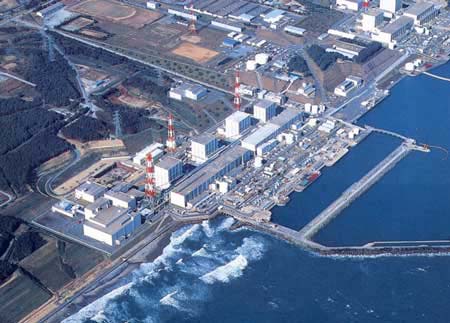
Japan’s nuclear power regulator has lifted its operational ban on Tokyo Electric Power’s (Tepco) Kashiwazaki-Kariwa nuclear plant, the largest nuclear site in the world, after shutting it down about three years ago due to safety concerns.
The plant, which reportedly has a capacity of 8.2 gigawatts, was the only operable atomic power station in the country when it was shut down. It had previously been offline since the 2011 Fukushima disaster caused all nuclear power plants in the country to cease operations.
Tepco was barred from operating the Kashiwazaki-Kariwa plant in 2021 after the Nuclear Regulation Authority reportedly found safety breaches such as failing to protect nuclear materials and finding an unauthorized staff member accessing sensitive areas of the plant.
Last week, Japan’s Nuclear Regulation Authority found that counterterrorism and safety measures had since been improved at the plant after conducting inspections. Before the plant may come back online, however, consent must be achieved from local governments in Niigata, Kashiwazaki city, and Kariwa village, where the plant is located.
“The government will seek the understanding and cooperation of Niigata prefecture and local communities, emphasizing ‘safety-first’,” said Yoshimasa Hayashi, the government’s top spokesperson, in a Reuters report.
The company has compiled a report on the causes of the infractions that led to its ban and how improvements have been made since. Shares in Tepco dramatically increased when the Nuclear Regulation Authority indicated that the ban would be lifted, especially as the country works to revitalize its nuclear power profile, https://www.environmentenergyleader.com/2024/01/operational-ban-lifted-on-major-japan-nuclear-plant/
 | |||
| |||
Following earthquake, Japan’s nuclear reactors escaped serious problems – THIS TIME.
Japan’s nuclear power plants largely undamaged following quake
BY ERIC JOHNSTON, STAFF WRITER, Japan Times, 2 Jan 24
Japan’s nuclear power plants along the Sea of Japan coast escaped serious damage in the New Year’s Day earthquake that struck the Noto Peninsula in Ishikawa Prefecture.
But the 7.6 magnitude quake, which triggered tsunami warnings from Hokkaido to Kyushu and led to evacuations in nine prefectures, could once again spark public concern about the safety of nuclear power in an earthquake-prone country at a time when Prime Minister Fumio Kishida plans to ramp up its usage as part of his “green transformation” policy.
In Ishikawa Prefecture, Hokuriku Electric Power’s Shika nuclear plant saw its electricity system partially disabled following the quake, but no major abnormalities have been reported. The plant’s No. 1 and No. 2 reactors were offline prior to the quake.
The Nuclear Regulation Authority (NRA) reported that Shika plant workers heard what sounded like an explosion, and then smelled something burning near a transformer that received electricity for use in the No. 2 reactor. Staff checking the area discovered the fire extinguishing system had been activated.
No fire was detected but the reactor’s electricity supply was partially disabled. Hokuriku officials believe pressure inside the transformer increased due to the tremor. This triggered a device to release the pressure, causing a loud noise and activation of the fire extinguishing system rather than an actual fire.
Electric power for equipment critical for the plant’s safety was secured through other systems, and cooling pools where spent nuclear fuel is stored continued to operate. Hokuriku Electric officials said Monday they were assessing the damage but that there was no change in the readings of the plant’s monitoring posts, and that no external radiation had been detected. However, of the 101 radiation monitoring posts in the plant’s vicinity, 13 are no longer operational. As of Tuesday, the cause was still unknown.
At Tokyo Electric Power Company Holdings’ Kashiwazaki Kariwa Nuclear Power Station in Niigata Prefecture, home to seven nuclear reactors — all of which were offline before the quake — plant officials confirmed Monday that water from a spent fuel pool spilled over due to the earthquake, but that no abnormalities in operation had been detected………………………………………………..
While the nuclear power plants avoided damage, the New Year’s Day quake and tsunami warnings brought back memories of the devastating Great East Japan Earthquake and triple meltdowns at the Fukushima No. 1 power plant, and could revive doubts about the nuclear industry — especially at a time when the government has plans to use more reactors, many located on the Sea of Japan coast, that have been offline since the quake on March 11, 2011.
Last February, the Kishida Cabinet approved its green transformation policy, which would extend the lifespan of nuclear reactors beyond 60 years and replace those that get scrapped. It was a major reversal of the policies that went into place following the 2011 disaster.
Currently, 12 nuclear power plants have been officially restarted since 2011, while five have received permission to restart and are undergoing final preparations to do so. Another 10 reactors are still undergoing inspections for a possible restart. Nine reactors have not applied for restart, and 24, including 10 Tepco reactors in Fukushima Prefecture, are being decommissioned.
Systems to supply power to nuclear plant in Ishikawa partially unusable
NHK News, Tuesday, Jan. 2, 2024
The operator of the Shika nuclear power plant in quake-hit Ishikawa Prefecture says systems to supply electricity to the facility from outside sources remain partially unusable.
But the utility says electricity continues to be supplied to the plant through other means and that sources of power for important safety equipment are secure.
Hokuriku Electric Power Company held a news conference on Tuesday, one day after a magnitude 7.6 earthquake struck the prefecture.
Both of the No.1 and No.2 reactors at the plant, which are located in the town of Shika, had been taken offline long before the earthquake…………………………..
Hokuriku Electric officials said the pipes of two transformers used for the two reactors to receive electricity from outside have been damaged due to the earthquake, with oil for insulation and cooling leaking out.
The officials said the oil leakage amounts to 3,600 liters at the No.1 reactor and 3,500 liters at the No.2 reactor. They said systems using the two transformers remain unable to receive electricity.
They also said both reactors are receiving electricity from other means, adding that emergency diesel generators have enough fuel to last seven days.
The officials say there are no problems with the systems for cooling spent nuclear fuel. more https://www3.nhk.or.jp/nhkworld/en/news/20240102_33/
UK Nuclear Output Slumps to 42-Year Low
- More reactors are due to be decommissioned in a few years
- EDF has warned of delays to its new Hinkley Point plant
Bloomberg, By Rachel Morison, January 3, 2024
Power output from the UK’s nuclear power plants slumped to the lowest in more than four decades last year, potentially increasing a reliance on fossil fuels that will make it more difficult to reach the nation’s net zero emissions target.
Output shrank to about 37 terawatt-hours after two stations closed, dropping below 40 terawatt-hours for the first time since the early 1980s, according to data from the government and the UK unit of Electricite de France SA. …the country’s current fleet of five nuclear plants scheduled to shrink to just three by the end of 2026,…
The UK, which has a target to reach net zero emission by the middle of this century, wants to build as much as 24 gigawatts of new nuclear capacity by that time. The government is due to publish a roadmap on how it intends to achieve that ambitious target.
But construction takes many years and is often beset by cost overruns and delays. To reach the goal, developers would need to add 16 gigawatts in the next decade at a cost of more than £150 billion ($190 billion), according to estimates from Aurora Energy Research.
“With revenues materializing around a decade after the Final Investment Decision, this generally makes nuclear a very different investment case to banks compared to other low-carbon generation technologies, one which fewer lenders are willing to consider,” said Ashutosh Padelkar, senior associate at Aurora. “It would be extremely challenging if not impossible to deliver 24 gigawatts of nuclear capacity by 2050 without the government taking most of the burden.”…………
Most of the current atomic fleet is reaching the end of it’s operating life. EDF has spent about £7.5 billion on life extensions and maintenance since 2009, when it acquired the current fleet.
EDF’s Hinkley Point C is the first project to be constructed in more than three decades. Startup of its two reactors is due in 2027 and 2028, though the utility has warned that may be pushed back by more than a year. https://www.bloomberg.com/news/articles/2024-01-03/uk-nuclear-output-slumps-to-42-year-low-in-threat-to-net-zero?embedded-checkout=true
1 This Month





PLEASE OPPOSE HR 8255 AND S.3639 – bills would accelerate satellite deployment, with no environmental review or safeguards – https://ncstd5li.quorum.us/campaign/169331/
To see nuclear-related stories in greater depth and intensity – go to https://nuclearinformation.wordpress.com
-
Archives
- October 2026 (49)
- September 2026 (339)
- August 2026 (330)
- July 2026 (355)
- June 2026 (287)
- May 2026 (306)
- April 2026 (356)
- March 2026 (251)
- February 2026 (267)
- January 2026 (308)
- December 2025 (358)
- November 2025 (359)
-
Categories
- 1
- 1 NUCLEAR ISSUES
- business and costs
- climate change
- culture and arts
- ENERGY
- environment
- health
- history
- indigenous issues
- Legal
- marketing of nuclear
- media
- opposition to nuclear
- PERSONAL STORIES
- politics
- politics international
- Religion and ethics
- safety
- secrets,lies and civil liberties
- spinbuster
- technology
- Uranium
- wastes
- weapons and war
- Women
- 2 WORLD
- ACTION
- AFRICA
- Atrocities
- AUSTRALIA
- Christina's notes
- Christina's themes
- culture and arts
- Events
- Fuk 2022
- Fuk 2023
- Fukushima 2017
- Fukushima 2018
- fukushima 2019
- Fukushima 2020
- Fukushima 2021
- general
- global warming
- Humour (God we need it)
- Nuclear
- RARE EARTHS
- Reference
- resources – print
- Resources -audiovicual
- Weekly Newsletter
- World
- World Nuclear
- YouTube
-
RSS
Entries RSS
Comments RSS

