Nuclear-armed Israel is at war. What might this mean?
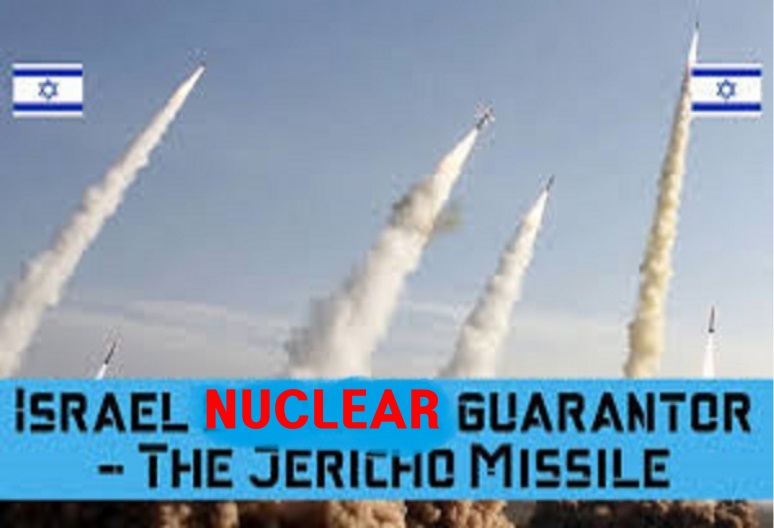
Both Russia in its war in Ukraine, and Israel in its war in Gaza, possess and have threatened to use nuclear weapons. Regardless of the much debated root causes of either war, this reality alone heightens the possibility of a nuclear war.
“Is the US, blackmailed by the threat of a Middle Eastern Armageddon, now forced to allow Israel to pursue ‘victory’ at any price
By Kate Hudson, 28 Jan 24, https://beyondnuclearinternational.org/2024/01/28/the-unthinkable-looms/
The attack on Yemen by US, Britain and other forces is a dangerous escalation of the war in the Middle East. The attack is intended to halt the Houthi support for the people of Gaza that has taken the form of attacks on Israel-bound shipping. But as the Houthis have made clear, the attacks will not end their support for the Palestinians.
The only way to stop this unfolding and escalating conflict in the Middle East, is to stop the war on Gaza: to implement an immediate and permanent ceasefire and to ensure freedom and sovereignty for Palestine, as enshrined in UN resolutions and international law.
The alternative to this course of action is the further spread of war, to Yemen, Lebanon, and even to Iran. This is the most dangerous time for more than two decades in the Middle East and it clearly raises the spectre of nuclear weapons use.
Because not only is Israel heavily armed with the most up-to-date conventional weaponry, it is also heavily armed with nuclear weapons. Its nuclear arsenal, which it refuses to formally acknowledge — its policy of “nuclear ambiguity” — comes under no international controls or inspections. Yet it has an enormous killing capacity — and Israel is the only nuclear weapons state in the Middle East.
Recent rhetoric from a number of Israeli politicians suggests a willingness to use their nuclear weapons; if the conflict were to extend to Iran, who can say that Israel would not use its nuclear weapons on non-nuclear Iran?
So what does the Israeli nuclear arsenal look like? Israel’s lack of transparency means that figures are uncertain, but the Stockholm International Peace Research Institute (Sipri) outlines estimates between 90 and 300 nuclear weapons. Sipri also reports that since 2021, according to commercial satellite imagery, there has been significant construction taking place at the Negev Nuclear Research Centre near Dimona, in southern Israel.

Some may remember that the great Israeli nuclear whistle-blower, Mordechai Vanunu, worked as a technician at Dimona, before revealing details of the secret Israeli nuclear programme to the British press in 1986. The purpose of the recent works isn’t known.
Sipri information indicates that Israel has air, land and sea-based delivery systems for its nuclear arsenal. Bombs can be dropped from planes, either the F-161 or the F-15 aircraft, and are likely to be stored near air force bases such as Tel Nof airbase in central Israel, or Hatzerim air base in the Negev desert.
Reportedly, when Israel sent six F-16s from Tel Nof to Britain for an exercise in 2019, a US official referred to this as Israel’s “nuclear squadron.”
Israel’s nuclear weapons can also be launched on land-based Jericho ballistic missiles. The site of these missiles is thought to be the Sdot Micha air base near Zekharia, about 25 kilometres west of Jerusalem. And Israel also operates five German-built Dolphin-class diesel-electric submarines which operate from the port of Haifa on the Mediterranean coast. Some or all of these subs may have been equipped to launch a nuclear-armed cruise missile.
By any estimate, this is a formidable array of weapons of mass destruction and it gives Israel the capacity to inflict catastrophic damage on its neighbours. Of course the impact on Israel of any regional use would be considerable too, but there is absolutely no guarantee that would deter an Israeli government from nuclear use if it considered its existence was under threat.
How such a threat would be defined is also unknown. The fact remains that nuclear-weapons possession allows Israel to act with impunity, in Gaza, and in the wider region. And that possession is also impacting on how others are willing to relate to Israel.
The questions posed in a recent issue of New Left Review, are highly relevant: “Is the US, blackmailed by the threat of a Middle Eastern Armageddon, now forced to allow Israel to pursue ‘victory’ at any price? Does Israel’s capacity for nuclear war bestow on the Israeli radical right a sense of invincibility, as well as a confidence that they can dictate the terms of peace with or without the Americans, and certainly without the Palestinians?”
And what can be done about this? Both the US and Britain helped Israel to develop its nuclear weapons, against all international law. In 2005, it was revealed from Whitehall documents discovered at the National Archives, by BBC Newsnight investigators, that Britain had secretly supplied the 20 tons of heavy water to Israel nearly half a century before, which enabled it to make nuclear weapons.
Britain has known for decades about the Israeli nuclear arsenal, clearly supporting and condoning it, while taking an outraged and aggressive approach to the possibility of nuclear proliferation by other countries. The double standards and hypocrisy displayed by successive British governments is deplorable and is absolutely to be condemned.
Britain has supported numerous resolutions from the UN general assembly and security council, calling for a nuclear weapons-free Middle East, without owning up to its role in Israeli nuclear proliferation.
Israeli nuclear weapons pose a particular risk to peace and security in the Middle East region and internationally; not surprisingly they are seen as a significant threat by neighbouring non-nuclear states, and the ongoing catastrophe in Gaza and the extending war is exactly the situation in which they are likely to be used.
There can be few clearer examples of how nuclear weapons are actually weapons of terror and weapons of impunity, as well as being weapons of mass slaughter and destruction. The war on Gaza must end; it must end with a ceasefire, and with peace and justice for the Palestinians. And it must end, to stop the unthinkable risk of a nuclear war in the Middle East.
Kate Hudson is the General Secretary of the Campaign for Nuclear Disarmament. This article first appeared in The Morning Star and in the CND magazine, Campaign.
US will station nukes in Britain for the first time in 15 years, as West escalates conflicts on multiple fronts
- Pentagon documents reveal the US is intending to place warheads three times the strength of the Hiroshima bomb on UK soil
https://www.sott.net/article/488290-US-will-station-nukes-in-Britain-for-the-first-time-in-15-years-as-West-escalates-conflicts-on-multiple-frontsBy PIRIYANGA THIRUNIMALAN and MARK NICOL 27 January 2024 |
The United States is planning to station nuclear weapons in Britain for the first time in 15 years to counter threats from Russia, it emerged last night.
Pentagon documents reveal the US is intending to place warheads three times the strength of the Hiroshima bomb on UK soil. Moscow said it would view the move as an ‘escalation’ that would be met with ‘counter-measures’.
Procurement contracts for a new facility at RAF Lakenheath in Suffolk show the US plans to house B61-12 gravity bombs ‘imminently’ at the site.
US warheads were last stationed in Britain in 2008, when it was judged that the Cold War threat from Russia had decreased.
The plans come as part of a Nato-wide programme aimed at developing and upgrading nuclear sites in response to rising tensions with the Kremlin.
The unredacted documents from the US Department of Defence’s procurement database show the Pentagon has ordered equipment, including ballistic shields, for Lakenheath, and state that construction of a housing facility for US soldiers at the base will start in June.
Nuclear weapons were stationed at RAF Lakenheath during the Cold War. Activists held protests outside the site in 2022 when it was reported that US warheads could be stationed there.
Russian foreign ministry spokesman Maria Zakharova said: ‘In the context of the transition of the United States and Nato to an openly confrontational course of inflicting a ‘strategic defeat’ on Russia, this practice and its development force us to take compensating countermeasures to reliably protect the security interests of our country and its allies.’
Comment: ‘An openly confrontational course’; because, whilst the West’s aggression against Russia has been brazen, the intention behind this move is undeniable.
Notably, back in August 2023: Poland’s President says Russia’s moving tactical nuclear weapons to Belarus ‘shifting regional security’
The Pentagon insisted the documents ‘are not predictive of, nor are they intended to disclose any specific posture or basing details’.
A Ministry of Defence spokesman said: ‘It remains a longstanding UK and NATO policy to neither confirm nor deny the presence of nuclear weapons at a given location.’
Comment: This comes amidst the escalation of the US-UK-Israel genocide in Gaza; repeated air strikes against Yemen; and NATO’s largest military exercise (also since the cold war) at Russia’s borders; all the while on its Ukraine front it faces looming defeat:
- NATO set to mobilize 90,000 soldiers for biggest drill since Cold War, rehearsing rapid US deployment near Russia’s borders
- Poland & Lithuania to hold joint military exercises on borders near Russia’s Kaliningrad enclave in the Suwałki Gap
- Houthi missile sets British oil tanker ablaze, ship was abandoned by US & France warships, cargo was fuel for Israeli jet fighters
Lise Meitner helped discover nuclear fission but never won a Nobel Prize for her brilliance despite 49 nominations. WHY NOT?

COMMENT. This is a fine article about Lise Meitner’s achievements.
But the author attributes the neglect of Meitner to the fact that she was Jewish.
I don’t think it had anything to do with anti-semitism.
THIS WAS MEITNER’s CRIME:
when Meitner was invited to work on the Manhattan Project, she responded, “I will have nothing to do with a bomb.”
Lise Meitner helped discover nuclear fission but never won a Nobel Prize for her brilliance despite 49 nominations
- Lise Meitner identified the process of fission when her male colleagues couldn’t figure it out.
- Her closest colleague, Otto Hahn, downplayed the significant role she played in the discovery.
- In 1944, Hahn won a Nobel prize for the discovery. Meitner was nominated but didn’t win.
Commemorating A Past Holocaust While Cheerleading The Current One

CAITLIN JOHNSTONE, JAN 28, 2024, https://www.caitlinjohnst.one/p/commemorating-a-past-holocaust-while?utm_source=post-email-title&publication_id=82124&post_id=141114199&utm_campaign=email-post-title&isFreemail=true&r=1ise1&utm_medium=email
The US and eight of its allies have suspended funding to UNRWA, the primary humanitarian agency in Gaza, following Israeli allegations that a dozen employees of the 30,000-staff organization were involved in the October 7 attack by Hamas. The allegations conveniently sprung up at the same time as the International Court of Justice rulings against Israel in the genocide case brought against it by South Africa, quickly supplanting the ICJ ruling in western mass media headlines. The US has continued to dismiss the South African case as unfounded.
A senior Israeli official told Axios that Israeli intelligence agencies came upon the information about the UNRWA staffers largely through “interrogations of militants who were arrested during the Oct. 7 attack.” Israel has an extensive history of using torture in its interrogations, and there’s no reason to believe it hasn’t been used on captured Hamas fighters in recent months.
So to recap —
Accusations of genocide deemed credible by the International Court of Justice: Preposterous lies. Not worth opposing a single massacre over.
Unsubstantiated claims about UNRWA staff extracted via torture: Gospel truth. Worthy of ending humanitarian support to Gazans for.
❖
How does ANY unproven claim by the Israeli government get treated seriously by ANYONE anymore? There ought to be a limit on how many lies you can get caught circulating before the entire political/media class just starts laughing at you whenever you make any claim about anything.
It’s been so surreal watching empire managers issue solemn words in honor of Holocaust Memorial Day while enthusiastically facilitating a modern-day genocide in Gaza.
Commemorating the Holocaust while cheerleading for the current holocaust is next-level dystopia.
❖
The IDF shot and killed a Palestinian man who had a white flag in a designated “safe zone” right in front of an ITV News crew, drawing headlines around the world.
It’s been undeniable that the IDF routinely kills Palestinians who are waving white flags ever since last month when they killed three escaped Israeli hostages who were waving a white flag mistaking them for Palestinians. This was just the first time the western press filmed it.
A re-election campaign year for a Democrat president coinciding with an active genocide backed by that same president is exposing the true face of the Democratic Party clearer than anything I can remember.
Biden is preparing to send Israel 50 child murder jets and 12 child murder helicopters, but oh no no we mustn’t focus on this too much because it’s an election year and Trump is a very bad person.
❖
I understand the logic of lesser-evil voting. I just don’t understand the logic of designating a president who backs a literal genocide and engages in nuclear brinkmanship a “lesser evil”.
A political establishment which tells you you have to choose between two presidential candidates who both want to help Israel murder children by the thousands is a political establishment which must not be permitted to exist.
Hinkley Point C nuclear could go £28bn over budget, and tax-payer takes larger stake in Sizewell C nuclear.

The Chemical Engineer, by Adam Duckett, 28 Jan 24
EDF SAYS its Hinkley Point C nuclear power plant could be delayed to as late as 2031, with costs rising to £46bn (US$58bn).
The project, which includes building two 1,630 MW nuclear reactors in Somerset, was estimated to cost £18bn when it was first agreed in 2016 and had been scheduled to begin operations in 2025. The project has since struggled with a series of delays and cost hikes. The firm has now outlined three scenarios that push operations back until the end of the decade at the earliest.
The first reactor could begin operations in 2029, or, under a base case scenario that assumes delays in the electromechanical work and testing start-up, could fall back to 2030. Under a third scenario, there could be a further delay to 2031.
In a letter to staff, Stuart Crooks, managing director of Hinkley Point C, said: “Like other infrastructure projects we have found civil construction slower than we hoped and faced inflation, labour and material shortages on top of Covid and Brexit disruption.”
He added that EDF has been required to substantially adapt its reactor design to satisfy British regulations, requiring 7,000 changes that have added 35% more steel and 25% more concrete.
EDF says the delays and extra work will hike costs to between £31-35bn in 2015 values meaning under the worst case scenario the price could reach £46bn.
Hinkley Point C is key to the government’s target to almost quadruple nuclear power output from 6.5 GW today to 24 GW by 2050. To meet this goal, it published a plan earlier this month that includes building at least one other plant the size of Hinkley Point C and Sizewell C that EDF is planning in Suffolk, along with suites of smaller modular and advanced nuclear reactors…………….
News of the delay prompted further criticism from nuclear opponents who argue that governments should invest in renewables instead. There are also concerns that with the Chinese junior partner in Hinkley Point C refusing to contribute any more money to the project that the UK government will be called up on to help meet the climbing costs. A government spokesperson told the Financial Times that any additional costs “will in no way fall on taxpayers”.
Government takes larger stake in Sizewell C
Earlier this week, the UK government announced it would make an extra £1.3bn available to support EDF’s construction of Sizewell C so that construction work can continue ahead of a final investment decision being made later this year. Sizewell will use the same design as Hinkley Point C.
The government’s investment further consolidates its position as the majority shareholder in the project. Last year, it bought out the project’s Chinese state-owned partner China General Nuclear as part of efforts to limit Beijing’s involvement in critical infrastructure.
The government has now invested £2.5bn in Sizewell C and the project is being funded by a so-called regulated asset base model under which surcharges on consumer energy bills help fund the project while it’s being constructed. Last year, the government opened up a bidding process to attract external investors in a bid to raise an estimated £20bn to construct the plant. https://www.thechemicalengineer.com/news/hinkley-point-c-could-go-28bn-over-budget-as-edf-predicts-further-delays/
UK government pours good money after bad, into failing Hinkley Point C nuclear boondoggle
The Stop Hinkley Campaign has reacted to the news that the cost of Hinkley
Point C has ballooned to £46bn and that the first reactor may not now be
open until 2031. Stop Hinkley Spokesperson Roy Pumfrey said: “The
Government will have known for days if not weeks that this announcement was
coming – we certainly heard rumours. You would have thought it would have
provoked them into at least re-examining their nuclear roadmap.
Instead, on Monday they decided to waste another £1.3bn of taxpayers’ money on a
carbon copy of Hinkley Point C on the Suffolk Coast. Any sensible
Government would be urgently looking at the overwhelming case to provide
our power from 100% renewables.” “And it’s not just HPC’s costs
that are ballooning, the whole project is swirling around making a horrid
noise like a punctured balloon. And trying to cram 15,000 workers toe to
toe on the site to play catch up will mean H&S rules go out the window.”
Stop Hinkley 24th Jan 2024
http://stophinkley.org/wp/wp-content/uploads/2024/01/Press-Release-240124.pdf
Campaigners call on Science Minister to back citizen science with funding

Nuclear Free Local Authorities, 25 Jan 24
The UK/Ireland Nuclear Free Local Authorities have been joined by campaigners from six local groups opposed to nuclear power in calling on the Science Minister to provide funding for citizen science projects to test levels of radioactivity near to civil nuclear power plants.
The partners have used the birthday of American ornithologist Wells Cooke (25 January), considered to be the founder of modern citizen science, to make their appeal to Michelle Donelan, who is the Secretary of State for Science, Innovation and Technology.
From 1881, Cooke engaged amateur birding enthusiasts in collecting information about bird migration. His program evolved into the government-run North American Bird Phenology Program supported by volunteers across the nation. More recently, even BBC television programmes, like Nature / Springwatch, have enrolled citizens in observing and reporting on wildlife in their gardens and communities.
Although citizen science has the virtue of engaging laypeople in research, making science more relevant and ‘immediate’ to the general population, for campaigners in West Cumbria sampling for radioactivity has not been a mere academic exercise for it highlighted radioactive ‘hotspots’ where exposure could be prejudicial to human health.
For almost ten years, volunteers at Radiation Free Lakeland have been taking soil and sand samples at various sites along the coast of West Cumbria from Whitehaven to Barrow-in-Furness, including beaches frequented by many tourists, and sending these to the United States for testing at a professional institute.
Due to a lack of available funding, the group could only afford to commission the institute to test for two isotopes – americium and caesium [1]. In 2018, undergraduate nuclear science students from the Worcester Polytechnic Institute in Massachusetts compiled the results into an initial report:
‘Of the 36 samples tested 10 (28%) were found to be over the safety limit for cesium-137 and 14 (39%) were found to be over the safety limit for americium-241.’
Some of these adverse findings were from coastal sites near to St Bees and Ravenglass, which attract many seasonal tourists.
Americum-241 is highly radioactive and chemically toxic if absorbed, with deposits accumulating in the liver and bones, remaining there for twenty and fifty years respectively, or in the sexual organs, where its residence is permanent. In all these organs, americium promotes the formation of cancer cells through its radioactivity.
Caesium-137 is soluble in water and if ingested is soon uniformly distributed within the body and remains there for up to 70 days. Based on the findings of animal experiments and autopsies performed on children exposed to radiation in the Chernobyl accident, absorption can lead to the development of pancreatic cancer.
Former US nuclear industry regulator Arnie Gunderson, touring West Cumbria at the invitation of Radiation Free Lakeland, said that some of the samples were as radioactive as those found at Fukushima, where a major nuclear accident occurred in 2011.
Gunderson was in no doubt that it was only the dedication, rigour and persistence of citizen scientists that brought these findings to light:……………………………………………………….. more https://www.nuclearpolicy.info/news/campaigners-call-on-science-minister-to-back-citizen-science-with-funding/
MP wants public vote on nuclear waste disposal
Richard Madden, BBC News, 26 January 2024 more https://www.bbc.com/news/articles/crg7nlwnz59o
People in part of East Yorkshire should be given a referendum on a proposal to bury nuclear waste, the area’s MP has said.
Nuclear Waste Services (NWS), a government agency, has identified South Holderness as having potential for a Geological Disposal Facility (GDF).
Beverley and Holderness MP Graham Stuart said any development would need public consent.
Officials behind the scheme said on Thursday that if the community did not express support the disposal facility would not be built.
‘Toughest test’
Mr Stuart said: “Everyone is right to be concerned about the possibility of a nuclear waste facility in our area.
“They are required to get local consent and I want that to be the toughest available test, a referendum of residents in the affected area”, he said.
A working group has been formed to look at the proposal and a series of public meetings will take place.
Drop-in sessions
- 1 February – Patrington Village Hall
- 2 February – Withernsea, The Shores Centre
- 8 February – Aldbrough Village Hall
- 9 February – Easington Community Hall
- 12 February – Burstwick Village Hall
All sessions run from 11:30 – 18:00 GMT.
Officials from NWS said the project could create thousands of jobs and investment in local infrastructure in South Holderness.
But campaigners in other areas have raised concerns about the impact on tourism, house prices and the environment, leading to protests.
The GDF would see waste stored under up to 3,280ft (1000m) underground until its radioactivity had naturally decayed.
Other proposals have been put forward in Cumbria and at Theddlethorpe on the Lincolnshire coast.
UK’s Ministry of Defence has continued to allow critical parts of the nuclear weapons infrastructure to rot
Dominic Cummings said amongst other things the MoD has: continued to allow
critical parts of the nuclear weapons infrastructure to rot creating
further massive secret budget nightmares as well as extremely serious
physical dangers (cf. the recent near disaster with a submarine),
UK Parliament 24th Jan 2024
Ukraine uncovers another $40 Million in weapons fraud
SOTT, Melanie Sun, The Epoch Times, Sat, 27 Jan 2024
he war-torn nation has announced a clean-out of its weapons procurement process amid ongoing corruption.
Ukraine’s National Police and Security Service on Ukraine (SBU), alongside the country’s Ministry of Defense, announced on Saturday they have uncovered an insider network that has been charged with embezzling almost $40 million in funds marked for weapons purchases.
Five individuals who formed a suspected criminal organization have been served “notices of suspicion” — the first stage in Ukrainian legal proceedings — for “appropriation, embezzlement of property, or possession of it by abuse of official position,” the SBU said.
Four of the suspects are current or former employees of the Ministry of Defense, including the head of the Department of Military and Technical Policy, Development of Weapons and Military Equipment of the Ministry of Defense, and the head and commercial director of the Lviv Arsenal company.
Another suspect is an ex-official from the ministry, who has been detained while trying to leave the country at a border crossing point.
A businessman representing a foreign company, presumed to be the arms supplier, has also been charged………………………………………………………………………………
To date, the United States has provided more than $44 billion in military aid to Ukraine since February 2022. But the Pentagon has run out of funds to replenish its stocks, so most military aid to Ukraine, for the time being, has halted.
Congress is currently debating a $105 billion supplemental spending package, proposed by the Biden administration in October 2023, that packages together defense funding for Israel, Ukraine, and the U.S. southern border.
Analysts previously told The Epoch Times that Ukraine doesn’t have a viable pathway for victory without foreign arms shipments and monetary support amid the waning U.S. support, as the Pentagon spreads its resources over increasing threats to the international rules-based order in the South China Sea as well as the Middle East.
Without international arms shipments, Ukraine would most likely be forced into a brutal stalemate with Russia and, at some point, would need to cede some of its territory to its aggressor, analysts say.
Comment: It brings to mind the old saying: “A fish rots from the head down”. So perhaps they should take a closer look up to uncover their “problems”. When a country’s leadership is completely corrupt, we can’t be shocked when more corruption is found lower down the ranks.
See also:
- WaPo: US changing strategy on Ukraine
- Hunter and the hunted: How Joe Biden is being linked to corruption, terror attacks, and political assassinations in Ukraine
- IG report finds Pentagon failed to account for more than $1B in weapons sent to Ukraine
- EU’s Ukraine weapons goal ‘unattainable’ – Germany
- Ukraine’s cyber security chief fired over corruption scandal
- Leaked US strategy on Ukraine sees corruption as the real threat https://www.sott.net/article/488310-Ukraine-uncovers-another-40-Million-in-weapons-fraud
Freezing Aid to Gaza: Israel’s International War against the United Nations Relief and Works Agency (UNRWA)
January 29, 2024, Dr Binoy Kampmark, https://theaimn.com/freezing-aid-to-gaza-israels-international-war-against-the-unrwa/
Imperilled, tormented Palestinians in Gaza had little time to celebrate the January 26 order of the International Court of Justice. In a case brought by South Africa intended to facilitate a ceasefire and ease the suffering of the Gaza populace, Israel received the unwanted news that it had to, among other obligations, ensure compliance with the UN Genocide Convention, including by its military; prevent and punish “the direct and public incitement to genocide” against the Palestinian populace in Gaza and permit basic services and humanitarian assistance to the Gaza Strip.
Within hours, Israel, bruised and outraged by a body its officials have decried as antisemitic and favourably disposed to Palestinian propaganda, found an excuse to flaunt the ruling. 12 employees of the United Nations Relief and Works Agency for Palestinian Refugees (UNRWA), the agency responsible for distributing aid in Gaza, were accused (not found) by Israel’s intelligence agency Shin Bet, of involvement in the Hamas attacks of October 7.
The response from UNRWA was swift. Contracts were terminated, an investigation was launched, including a full inquiry into allegations made against the organisation. The agency’s commissioner general, Philippe Lazzarini promised, on January 27, that, “Any UNRWA employee who was involved in acts of terror will be held accountable, including through criminal prosecution.”
Not content with this, Israel stormily took to the campaign trail hoping to rid Gaza of the UN agency it has despised for years. UNRWA, after all, is a salutary reminder of Palestinian suffering, dispossession and desperation, its existence a direct result of Israeli foreign policy. Foreign Minister Israel Katz was severe in laying his country’s loathing for UNRWA bare. “We have been warning for years: UNRWA perpetuates the refugee issue, obstructs peace, and serves as a civilian arm of Hamas in Gaza,” he stated on Shabbat. “UNRWA is not the solution – many of its employees are Hamas affiliates with murderous ideologies, aiding in terror activities and preserving its authority.” Deviously and fiendishly, Katz was dismissing the entire enterprise of aid through a UN outlet as a terroristic extension, rather than the ghastly product of Israel’s own ruthless, generational war against Palestinians. Leave it to us to oversee matters of aid: we know best.
Powers, many with military ties with Israel and sluggish about holding the Jewish State to account in its Gaza campaign, were relieved by the distraction. Rather than assessing their own export regime, the grant of licenses in the arms market in gross violation of human rights and the facilitation of crimes against humanity, an excuse to continue, and prolong the weapons transfers and assistance to Israel, had presented itself.
Within hours, nine states had added their names to the list suspending allocated aid. Australia, along with the United States and Canada, rushed to the podium to condemn UNRWA and freeze funding. The United Kingdom, Germany, Italy, the Netherlands, Switzerland, and Finland followed.
The measure of rage could now be adjusted and retargeted. A spokesperson for the UK government was “appalled by allegations that UNRWA staff were involved in the 7 October attack against Israel, a heinous act of terrorism that the UK government has repeatedly condemned.” The US State Department was “extremely troubled” and had “temporarily paused additional funding. Canada was also “deeply troubled by the allegations relating to some UNRWA employees.”
Australia’s foreign minister, Penny Wong, despite accepting that UNRWA’s role in conducting “vital, life saving work”, “providing essential services in Gaza directly to those who need it, with more than 1.4 million Palestinians currently sheltering in its own facilities” felt a suspension of funding was wholly sensible. This, from a minister who never tires about praising international law and its profoundly sacred qualities.
The assessment by Lazzarini was one of dismay and bafflement by the speed at which the funding had been halted. “These decisions threaten our ongoing humanitarian work across the region including and especially in the Gaza Strip.”
The measure could almost be regarded as hysterical, given that a mere 12 individuals had been tarnished from a pool of some 30,000 members. Johann Soufi, a lawyer and former director of the agency’s legal office in Gaza, gave this assessment to Agence-France Presse: “Sanctioning UNRWA, which is barely keeping the entire population of Gaza alive, for the alleged responsibility of a few employees, is tantamount to collectively punishing the Gazan population, which is living in catastrophic conditions.”
Australian Greens Senator and defence spokesman, Senator David Shoebridge, also picked up on the grotesque twist the latest stifling of aid to the beleaguered residents of Gaza entailed. “The one temporary pause [Senator Wong] has been able to achieve is not the bombing or killing, or even weapons exports, it’s providing aid to [Palestinians].”
Detailed response to a barrage of nuclear nonsense from Zion Lights.

Bulls, bears and ignorant nuclear propagandists. Detailed response to a barrage of nuclear nonsense from Zion Lights.
Jim Green, 27 Jan 24
This is a response to Zion Lights’ January 2024 article ‘Bulls and bears: a nuclear update’. Lights is a British nuclear power advocate who previously worked for self-confessed liar, climate denier and MAGA lunatic Michael Shellenberger. You can read more about Lights here and Shellenberger here.
Lights’ comments below are prefaced with her initials and placed in quote marks and in bold, and my responses are prefaced with my initials (JG ‒ Jim Green). I haven’t responded to everything in Lights’ article, which you can read in full here.
ZL: “In a world-first, 22 nations signed up to triple nuclear energy generation by 2050 at COP28 in Dubai this year, which illustrates how strongly the tide has turned in favour of the technology. Should they follow through on these commitments, the world could enter a new era of energy abundance and growth.”
JG response:
* 22 countries signed up to the nuclear pledge, 170 chose not to.
* The goal of tripling nuclear power by 2050 is laughable. David Appleyard, editor of Nuclear Engineering International, did the math: “Now 2050 still sounds like a long way off, but to triple nuclear capacity in this time frame would require nuclear deployment to average 40 GW [gigawatts] a year over the next two and half decades. The cruel reality is that’s more than six times the rate that has been seen over the last decade.”
* The nuclear renaissance of the late-2000s was a bust due to the Fukushima disaster, catastrophic cost overruns with reactor projects, and nuclear power’s inability to compete economically with renewables. The latest renaissance is heading the same way, i.e. nowhere. Nuclear power went backwards last year. There was a net loss of 1.7 GW of capacity.
* There were just six reactor construction starts in 2023. Only one outside China. One!
* The number of operable power reactors is 407 to 413 depending on the definition of operability, well down from the 2002 peak of 438.
*Nuclear power’s share of global electricity generation has fallen to 9.2%, its lowest share in four decades and little more than half of its peak of 17.5% in 1996.
* Over the two decades 2004-2023, there were 102 power reactor startups and 104 closures worldwide: 49 startups in China with no closures; and a net decline of 51 reactors in the rest of the world.
* Despite the drop in the number of operable reactors, and the sharp drop in nuclear power’s share of electricity generation, nuclear capacity (GW) and generation (TWh) have remained stagnant for the past 20 years due to increased capacity factors and reactor uprates (360 GW capacity in 2003, 374 GW in 2022; 2505 TWh in 2003, 2487 TWh in 2022). Thus it is possible, as Lights states (citing the International Energy Agency ‒ IEA), that nuclear power generation will reach an all-time high globally by 2025. If that happens, and it may not, it will be a pyrrhic victory for the industry, and it will be increasingly difficult to sustain, because of the ageing of the global reactor fleet. In 1990, the mean age of the global power reactor fleet was 11.3 years. Now, it is nearly three times higher at 31.4 years. The mean age of reactors closed from 2018‒2022 was 43.5 years. The problem of ageing reactors is particularly acute in two of the three largest nuclear power generating countries: the US reactor fleet has a mean age of 42.1 years, and in France the mean age is 37.6 years.
* Due to the ageing of the reactor fleet, the IAEA anticipates the closure of 10 reactors (10 GW) per year from 2018 to 2050. Thus the industry needs an annual average of 10 reactor construction starts, and 10 reactor startups (grid connections), just to maintain its current output. Over the past decade (2014-23), construction starts have averaged 6.1 and reactor startups have averaged 6.7. Former World Nuclear Association executive Steve Kidd noted in 2016 that “the industry is essentially running to stand still.” In the coming years and decades, the industry will have to run faster just to stand still ‒ it will have to build more reactors than it has been just to replace ageing reactors facing permanent closure. Growth ‒ even marginal, incremental growth ‒ becomes increasingly difficult and Lights’ nonsense about tripling nuclear power is thus seen as the nonsense that it is.
* The International Energy Agency (IEA) has just released its ‘Renewables 2023’ report and it makes for a striking contrast with the nuclear industry’s malaise. Nuclear power suffered a net loss of 1.7 GW capacity in 2023, whereas renewable capacity additions amounted to a record 507 GW, almost 50% higher than 2022.
* Nuclear power accounts for a declining share of global electricity generation (currently 9.2%) whereas renewables have grown to 30.2%. The IEA expects renewables to reach 42% by 2028 thanks to a projected 3,700 GW of new capacity over the next five years in the IEA’s ‘main case’ (while the IEA’s ‘accelerated case’ envisages growth of 4,500 GW). To put those numbers in context, global nuclear power capacity is 372 GW. There is little to no chance of nuclear power regaining a 10% share of global electricity generation.
* Solar and wind combined have already surpassed nuclear power generation and the IEA notes that over the next five years, several other milestones will likely be achieved: in 2025, renewables surpass coal; also in 2025, wind surpasses nuclear; and in 2026, solar PV surpasses nuclear.
* An estimated 96% of newly installed, utility-scale solar PV and onshore wind capacity had lower generation costs than new coal and natural gas plants in 2023, the IEA states. (Wind and solar became cheaper than nuclear power about a decade ago and the gap continues to widen.)
Ed note. Jim Green goes on to demolish Zion Lights’ arguments on a number of fronts: – South Korea’s nuclear “success” - China’s supposed nuclear progress – India’s nuclear ambitions – Japan supposedly rushing back into nuclear power – France’s grand nuclear plans – UK’s nuclear projects – USA’s nuclear projects - Sweden’s efforts…………………………………………………………………………………
more https://jimkgreen1.substack.com/p/bulls-bears-and-ignorant-nuclear
As Civilians Starve in Gaza, Israelis Block Humanitarian Aid Convoy for Third Day
“The hostages must be released,” said one Palestinian rights advocate, but Israel “must also ensure continuous entry of lifesaving aid to Gaza.”
JULIA CONLEY, Jan 26, 2024, https://www.commondreams.org/news/kerem-shalom-crossing-protests—
With nearly the entire population of Gaza now regularly forced to go without food for an entire day due to Israel’s total blockade of the enclave, protests by hundreds of Israelis at a crossing between Gaza and Israel over the past three days have put residents at even greater risk of starvation by blocking the passage of humanitarian convoys.
Demonstrators displaying Israeli flags have stopped trucks from entering Gaza through the Kerem Shalom crossing since Wednesday, forcing some to go through the Rafah crossing in Egypt or preventing them from delivering the aid altogether.
Some of the protesters have been identified as relatives of the reported 132 hostages who remain in Gaza after being abducted by Hamas from southern Israel on October 7, while others are related to Israel Defense Forces (IDF) soldiers and some are right-wing activists who want the return of Israeli settlements in Gaza.
On Wednesday, members of the Tzal 9, or Order 9, movement—named for the emergency notice received by Israeli reservists to mobilize—said, “No aid goes through until the last of the abductees returns, no equipment [will] be transferred to the enemy.”
As the protests began that day, the demonstrators stopped more than 100 aid trucks from entering Gaza and allowed just 153 in, according to the United Nations—far below the amount of aid that’s been permitted in on a daily basis in recent weeks. Before the current war, many Palestinians in Gaza relied on the delivery of aid via an average of 500 trucks per day.
“The hostages must be released and Israel must respect the right to protest, but it must also ensure continuous entry of lifesaving aid to Gaza,” said Tania Hary, executive director of Gisha – Legal Center for Freedom of Movement.
Egyptian President Abdel Fattah El-Sisi said Wednesday that by holding up humanitarian aid deliveries, Israel is “using this as a pressure tool on the people of the strip,” despite claims by officials and the protesters who have mobilized at Kerem Shalom that they are only trying to keep deliveries from “aiding the enemy.”
Right-wing Israeli groups are reportedly planning a march in Jerusalem next week to protest aid entering Gaza.
Earlier this month, the United Nations Relief and Works Agency for Palestine Refugees in the Near East (UNRWA) Commissioner-General Philippe Lazzarini condemned Israel’s “baseless” claim that Gazans are currently facing starvation because Hamas is diverting aid deliveries.
The protesters at Kerem Shalom have said Gazans should receive no more aid until the hostages are released.
But negotiations between Israel and Hamas, brokered by Qatar, were stalled this week as Israel refused to agree to a permanent cease-fire in exchange for the release of the remaining hostages.
According to the BBC, Israeli and American officials including Central Intelligence Agency Director William Burns are expected to hold “critical” talks in Europe with Egyptian and Qatari mediators.
A senior Palestinian official told the outlet that they may discuss a proposal to initiate a “phased release” of the remaining hostages in exchange for a “renewable” cease-fire, more aid, and the release of Palestinians imprisoned in Israel.
Since Israel began its bombardment of Gaza on October 7 with officials saying the IDF should “release all restraints” that would otherwise protect civilians, at least 26,083 Palestinians have been killed in the densely-populated enclave, including at least 11,500 children.
The “complete siege” Israel declared on Gaza, with deliveries of food, potable water, fuel, and other aid severely curtailed, has left “half a million people literally starving” nearly four months into the assault, the World Food Program’s (WFP) chief economist said earlier this week.
“We are one step away from a disease outbreak,” WFP’s Arif Husain told U.S. Sen. Bernie Sanders (I-Vt.) in a livestreamed conversation, noting that a lack of sustenance has left thousands of displaced people living in overcrowded shelters and camps more susceptible to disease outbreaks that have been partially caused by a lack of safe drinking water.
The blocking of aid at Kerem Shalom also comes days after the Euro-Mediterranean Human Rights Monitor reported that the IDF launched an attack with artillery shells, live ammunition, and drones on “hundreds of starving civilians” who were waiting near Gaza City for “U.N. trucks carrying limited aid supplies.”
Health officials in Gaza said at least 20 people were killed and 150 were injured in the attack.
Humanitarian officials in the enclave have reported seeing Gaza residents mobbing aid trucks when they arrive due to the “systematic limitation” Israel has placed on convoys even before the protests at Kerem Shalom began.
“It’s difficult to get into the places where we need to get to in Gaza, especially in northern Gaza,” WFP spokesperson Abeer Etefa told Reuters. “I think the risk of having pockets of famine in Gaza is very much still there.”
1
ICJ Ruling on Israel Crimes “Poses the Greatest Political Dilemma for the Biden Presidency”
“I only hope that Biden will, on this occasion, stand up for justice.”
SCHEERPOST, By Phyllis Bennis / In These Times, 28 Jan 24
Friday morning’s much-anticipated decision by the International Court of Justice “marks the greatest moment in the history of the [court],” says Richard Falk, a noted international law professor and former United Nations Special Rapporteur on Human Rights in the Occupied Palestinian Territory.
“The decision is a momentous one,” says the foreign ministry, noting how important the determination is for the implementation of the international rule of law. “South Africa thanks the Court for its swift ruling.”
“It strengthens the claims of international law to be respected by all sovereign states — not just some,” Falk says about the ICJ’s ruling that South Africa’s magisterial presentation of evidence “was sufficient to conclude” Israel may be committing, conspiring to commit, or publicly inciting the commission of genocide against Palestinians in Gaza.
The ICJ decision gave new strength to South Africa’s groundbreaking accomplishment — demolishing the taboo against holding Israel accountable for its crimes. As South Africa’s foreign ministry put it, “Today marks a decisive victory for the international rule of law and a significant milestone in the search for justice for the Palestinian people.”
“The decision is a momentous one,” says the foreign ministry, noting how important the determination is for the implementation of the international rule of law. “South Africa thanks the Court for its swift ruling.”
Friday’s decision was a significant victory beyond what most observers hoped for — not only the recognition that Israel’s actions are plausibly genocidal, but because of the imposition of provisional measures based on measures South Africa requested in order to stop Israel’s actions that are continuing to kill and put Palestinians at risk.
The ruling was also particularly important because of the overwhelming majority of judges who supported it, including the sole U.S. judge on the court. When the president of the court, Judge Joan Donoghue, who was a longtime State Department lawyer before being elected to the ICJ, read out the provisional measures, she included the line-up of how judges voted on each one. And she was among the 15 or 16 out of 17 judges who supported every one.
It should not have been a surprise that this preliminary finding recognized that Israel’s war against the entire population of Gaza may well constitute genocide……………………………………………………………
This decision fundamentally, even if preliminary, provides a vital new tool for mobilization and campaigns to force governments to escalate their pressure to stop Israel’s genocide. It’s a tool in the campaigns for cease-fire now underway around the world. In the United States it will likely be a persuasive tool for congresspeople, city councils, universities and other institutions — as well as the Biden administration — to support a cease-fire. Because now it’s not only a question of moral obligation to stop the slaughter of tens of thousands of innocents, it’s also about abiding by the requirements of international law. And for some people, that may make all the difference.
With this new tool in hand, a U.S. shift towards supporting — and demanding — a cease-fire may be possible much sooner. https://scheerpost.com/2024/01/28/icj-ruling-on-israel-crimes-poses-the-greatest-political-dilemma-for-the-biden-presidency/
NewsReal: ICJ Orders Israel to Prevent Genocide, West Responds by Slashing Aid to Gaza
Sott.net, Sun, 28 Jan 2024
© Sott.netYou have to hand it to Israel. In the space of 24 hours it diverted international media focus from the ICJ’s ruling that it ‘must prevent genocide’ and ‘allow humanitarian aid into Gaza’ into a de facto Western blockade of humanitarian aid into Gaza by alleging that the UN agency working to keep Gazans alive was ‘involved in the terror attacks of October 7th’ – a decision that is going to cause famine and disease, forcing Gazans to die or flee.
Also on this NewsReal, Joe & Niall discuss the growing attacks against Anglo-American targets in the Middle East, the widespread farmers’ protests in Europe, the promotion of ‘World War Three’ in NATO countries, and the Texas border showdown.
1 This Month
23-25 October – on Zoom – World BEYOND War’s annual global conferenc


Shut down the radiation-damaged Heysham nuclear reactors now
To see nuclear-related stories in greater depth and intensity – go to https://nuclearinformation.wordpress.com

Say No to NASA’s Reckless Nuclear Reactor on the Moon
Say No to NASA’s Reckless Nuclear Reactor on the Moon

-
Archives
- October 2026 (231)
- September 2026 (339)
- August 2026 (330)
- July 2026 (355)
- June 2026 (287)
- May 2026 (306)
- April 2026 (356)
- March 2026 (251)
- February 2026 (267)
- January 2026 (308)
- December 2025 (358)
- November 2025 (359)
-
Categories
- 1
- 1 NUCLEAR ISSUES
- business and costs
- climate change
- culture and arts
- ENERGY
- environment
- health
- history
- indigenous issues
- Legal
- marketing of nuclear
- media
- opposition to nuclear
- PERSONAL STORIES
- politics
- politics international
- Religion and ethics
- safety
- secrets,lies and civil liberties
- spinbuster
- technology
- Uranium
- wastes
- weapons and war
- Women
- 2 WORLD
- ACTION
- AFRICA
- Atrocities
- AUSTRALIA
- Christina's notes
- Christina's themes
- culture and arts
- Events
- Fuk 2022
- Fuk 2023
- Fukushima 2017
- Fukushima 2018
- fukushima 2019
- Fukushima 2020
- Fukushima 2021
- general
- global warming
- Humour (God we need it)
- Nuclear
- RARE EARTHS
- Reference
- resources – print
- Resources -audiovicual
- Weekly Newsletter
- World
- World Nuclear
- YouTube
-
RSS
Entries RSS
Comments RSS

