TODAY . Why we get distorted, unreliable, news about Ukraine and Israel

Israel

Every now and then, some journalist steps out of the accepted line, and spills the beans on what is going on in critical news.
This week, the Guardian’s Guardian’s Chris McGreal did just that. He exposed the journalistic turmoil in CNN, over its very biased coverage of Israel’s war on Gaza
It’s got particularly important right now. Most of us are probably still believing in the Hamas massacre story of, “bodies of babies with their heads cut off” – despite not one shred of evidence of this. With the whole Middle East now a tinderbox, the media is still pushing the Israel storyline that goes like this:
The Israelis suffered the brutal massacre of 1200 citizens on October 7, 2023. That justifies the massacre of 27,365 Palestinians in Gaza. In the continuing massacre of Palestinians, the Israelis are the victims. To allow humanitarian aid to the desperate , hungry, Gazan survivors is to support terrorism.
Chris McGeal explains the long, complicated, and disgraceful background of media succumbing to pressure – “the CNN network repeatedly aired inflammatory rhetoric and propaganda from Israeli officials and American supporters, often without challenge in interviews.”
He also notes the restrictions on journalists, with the Israeli block on foreign journalists, and with all CNN’s copy on the Israel-Palestine situation having be first approved by the Jerusalem bureau.
And it’s not new – this subservience - it was the same thing with the coverage of the post 9/11 time, and the unbalanced and ultra-negative coverage of the Taliban-controlled Afghanistan, and the killing of Afghan civilians by US forces.
Caitlin Johnstone, the not-so-mainstream, and intrepid, excavator of the truth, has also dug up the troubling realities on the biased news that we are fed.
She aims her blowtorch on the careers of media executives moving through corporate media – New York Times – BBC – CNN – “ The corporate media are owned and controlled by plutocrats who have a vested interest in preserving the status quo power structure upon which their kingdoms are built, and state broadcasters like the BBC have the same interest for the same reason. They decide who the executives of those outlets will be, and those executives make policy and hiring decisions which cause the outlet to function in a way that is indistinguishable from state propaganda.”
UKRAINE

Caitlin Johnstone is also one of the few writers (apart from Russian journalists) who also shine a light on the media coverage of the Ukraine war. She has examined ”the brazen propaganda push to normalize war profiteering in Ukraine “, quoting CNN anchor Erin Burnett ………. pausing to explain to her audience that this funding is actually good for Americans, because it goes straight into the US arms industry.“
She points out not only the advantages to American weapons companies of continuing the Ukraine war indefinitely, but the way in which the media report this – with approval! “western officials are now going out of their way to communicate to the public that this war will stretch on for many more years to come.”
She quotes the Wall Street Journal, Reuters, and CNN - all positively gushing over how good this war is for America - jobs, share prices, company profits - all good!
When it comes to coverage of the actual war and its battles - well, we hear a lot about the dedicated President Zelensky. We hear about the Ukrainian counter-offensive (though it did not seem to work). We get genuinely sad stories about victims of Russian strikes, and rather more dubious stories about Russian atrocities. On the whole, we really don’t hear much about the actual progress of the war, and get a stunning silence about the Ukrainian troop casualties. And there’s little attempt to explain the background to this war. As with the Gaza story, it’s as though the hostilities were new and unprovoked, and the grievances are solely on the side that the USA supports
Mostly the Ukraine coverage is about how world democracy requires more weapons to be bought (by Western tax-payers) and given to Ukraine.
The media – journalists hanging on to their jobs, companies hanging on to their advertisers, and their profits – dance to the corporate line. Are we all dancing along with them, to World War 3 ?
Do the Right Thing: Put the South African Government’s Nuclear Plans to a Popular Referendum
BY GERARD BOYCE, COUNTER PUNCH 5 Feb 24
Ever since South African Energy Minister Dr Kgosientsho Ramokgopa announced that Cabinet had approved the updated Integrated Resource Plan last December, local media has been awash with articles by nuclear supporters and sundry lobbyists exhorting politicians and government to ‘show true leadership’ and ‘do the right thing’ when it comes to nuclear power.
Invariably, doing so means showing unwavering support for the government’s plans to expand nuclear energy generation capacity by choosing the particular nuclear technology or reactor design favored by the author of the article being read or following the guidelines they helpfully drew up to assist policymakers by advising how they ought to proceed going about doing so, even if this means going against the recommendations of the presidentially-appointed panel of experts who sit on the Presidential Climate Commission or failing to address the numerous criticisms that have been leveled against government’s nuclear plans, prominent South African nuclear scientists among them. Presumably, depending on the responses these articles elicit, individual politicians would then be lauded for the leadership and courage they have shown or berated for their lack thereof.
It is curious, not to mention ironic, to hear such sentiments expressed by pro-nuclear supporters, especially those who have long attempted to portray the decision to ‘go nuclear’ as a self-evident outcome of a purely technical decision-making process that is obviously best left to ‘the experts’ i.e. appointed and unelected technocrats who are supposedly immune to political interference.
It is also somewhat misleading of them to characterize the decision to support the expansion of nuclear power capacity as one requiring ‘courage’ as such given the scant detail government has provided on its nuclear plans, the few general nuclear education and public awareness campaigns on nuclear power it has run within and outside of the communities in which it is proposed that reactors be located in future and the critical information related to its past nuclear dealings and the planned Koeberg life expansion project amongst others it has allegedly deliberately withheld from the public.
All of these combined result in persistent and extremely low public levels of knowledge of nuclear power and related issues, so much so that the general public appears ambivalent about the issue of nuclear power. This assessment seems to be supported by the persistently low turnout that is observed at the perfunctory public hearings which the government seemingly hosts to satisfy administrative requirements surrounding public participation in order to mitigate any potential for conflict to arise in the future rather than to genuinely engage the public’s views on nuclear power.
Subsequently, the organized anti-nuclear political movement nationally is under-resourced and the level of grassroots public support it enjoys is uncertain. Considering the limited organized opposition thereto and the general public’s nuclear indifference, none but the most biased observer would be reluctant to concede that the decision to champion nuclear power is unlikely to demand much by way of boldness or courage from the individual politician. More so since nuclear power, by its nature, accords so conveniently with the motivations of the average individual politician to amass more power and influence for themselves and members of their class and has the power to undermine the public oversight mechanisms and regulatory frameworks set up to monitor them. Yet perhaps the biggest reason why nuclear power is likely to appeal to representatives of SA’s major political parties especially is because it could enable their parties to navigate the political forces that assail them…………………………………………………………………………………………………………………………….
It is apparent from the scenarios described above that political imperatives dictate the adoption of a pro-nuclear position by politicians from all the major political parties in SA irrespective of the political ideologies they espouse or the content or merits of the specific nuclear plan under review. Under these circumstances, exhorting politicians to support nuclear power is akin to urging them to act to protect their party’s narrow political interests. One submits to the reader that this does not seem to be particularly brave or courageous.
In contrast, it would require a tremendous amount of courage for a politician to acknowledge and act on the insight that the distortions introduced by prevailing political considerations render it impossible for them to hold robust internal political debates on the issue of nuclear power, more so considering the increased frequency with which ostensible party comrades have resorted to using deadly methods to eliminate potential rivals. It is, therefore, naïve to rely on the party political system to formulate positions on nuclear power that are truly in the nation’s best interest.
……………………………………………… they could opt to support the right of every citizen to act with the courage and integrity nuclear supporters claim they want politicians to by calling upon the government to submit its nuclear plans to a popular referendum. In a country where citizens have become fed up by years of maladministration and corruption and large sections of the electorate are beginning to lose faith in the democratic system itself, this display of political courage would serve as definitive proof of the leadership credentials of the politician who wanted to ‘do the right thing’ by their compatriots.
Dr Gerard Boyce is an Economist and Senior Lecturer in the School of Built Environment and Development Studies at the University of KwaZulu-Natal (Howard College) in Durban, South Africa. He writes in his personal capacity. m https://www.counterpunch.org/2024/02/05/do-the-right-thing-put-the-south-african-governments-nuclear-plans-to-a-popular-referendum/
Iran Plans More Nuclear Reactors Despite Serious Hurdles
Sunday, 02/04/2024, Umud Shokri, Iran International
Iran’s recently stated plan to build four more nuclear power reactors has raised questions about its feasibility as the country wrestles with economic crisis and isolation.
According to early estimates, work has started in the southern region with a five-thousand-megawatt total capacity in mind. With 4,000 employment prospects and an estimated $20 billion cost, the planned nine-year schedule raises questions under current economic circumstances.
The difficulties Iran has faced in building new power plants in the last ten years raise doubts about whether the 25,000 megawatts of new electricity that the previous national development plan sought to bring about can be achieved.
The Iranian government pledged to raise the percentage of renewable and clean energy power plants to a minimum of five percent in line with the sixth development plan (2017–2021). However, the share of nuclear power is currently one percent, which means that the program’s goals have been significantly missed………..
The only nuclear power plant in the country is a 1,000 megawatt facility that started up in 2011 with help from Russia. A 300 megawatt plant is reportedly under construction in Khuzestan.
Building times for nuclear power plants vary greatly due to factors like supply chain maturity, design revisions, and project management efficiency, but Iran faces a severe electricity shortage now. Consumption peaked at over 72,000 megawatts in 2023, surpassing the actual production capacity of power plants, capped at 60,000 megawatts during the warm season.
Iran is facing several obstacles in its efforts to build further nuclear power reactors, including financial and technological constraints, geopolitical and political instability, and international sanctions. The interplay of political and economic dynamics, together with worries about public opinion, safety, and international compliance, complicate Iran’s nuclear energy development scenario. Moreover, Mohammad Eslami, the head of Iran’s nuclear energy said last week that Tehran is planning to build the new reactors relying on domestic financing and knowhow……………………………………………………………….
Examining Iran’s foreign policy, one can see that the country is committed to scientific progress even in the face of external challenges, as seen by its tenacity in pursuing its nuclear program despite sanctions. Careful navigation is necessary to resolve the delicate dance between energy demands, geopolitical concerns, and the difficulties presented by international sanctions. Iran’s prospects for the energy sector both at home and abroad will depend on how well it can surmount these challenges https://www.iranintl.com/en/202402034292
The future of nuclear: France’s nuclear dreams or nightmares?

The Macron Government has laid out ambitious plans for its capricious nuclear sector, but such optimism should not blind us to potential challenges.
Alfie Shaw, February 5, 2024, Power Technology
t last year’s COP28 climate conference in Dubai, French President Emmanuel Macron triumphantly declared that “nuclear energy is back”. His celebratory remark was uttered after France led a group of 20 countries in signing a pledge to “triple nuclear energy capacity from 2020 by 2050”.
Since the summit, a range of announcements and promises have been made that appear to support France’s ‘nuclear renaissance’. In November, the European Parliament backed the development of small modular reactors (SMRs), a versatile technology that many consider to be the future of the industry. Two months later, Energy Transition Minister Agnes Pannier- Runacher said that France will need to build 14 new nuclear power plants rather than the six currently planned if the country is to meet its energy transition goals.
Is all this optimism warranted? France has long been a nuclear superpower but lost its position as the world’s second-largest producer of nuclear energy to China in 2022, with the US coming in first. It is worth considering whether Macron’s positivity is justified in the context of several issues that currently beset the country’s industry, including EDF’s unpredictable performance, lack of strong allies in the European Council, slow progress on SMR development and Russian interdependence.
EDF’s annus horribilis
Électricité de France (EDF) is the French multinational electric utility company that runs the country’s 56 reactors. Throughout 2022, many were forced offline for maintenance work, causing output to fall below 1990 levels, despite installed capacity being 5GW lower at this time.
Nuclear shutdowns are in themselves not a huge cause for concern. Older power plants need to be updated with the latest technologies and France was planning on widespread shutdowns for its ‘Grand Carénage’ refurbishment programme anyway. However, the nature of these specific stoppages was worrying.
In December 2021, the discovery of cracks in the emergency core cooling systems of four of the newest French reactors led to them being shut down. The four units, which each produce 1.5GW, did not generate a single kilowatt-hour throughout 2022. Other 1.3GW reactors also showed similar symptoms, and by mid-2022, 12 additional reactors were shut down due to the same problem. In its annual electricity review, Réseau de Transport d’Électricité highlighted the crux of the issue, stating, “these outages, or outage extensions to carry out maintenance, tests and repairs where needed, primarily involved the newest reactors in the fleet (N4 and P4 designs), i.e. reactors that were not targeted for investment in the Grand Carénage refit programme”.
Although EDF’s nuclear output was 14.8% higher in 2023 than 2022 as reactors came back online, Macron will have to square his desire for new reactors with the ongoing threat of unplanned shutdowns at existing newer plants. Mycle Schneider, nuclear analyst and author of the annual World Nuclear Status Reports, commented on the ongoing unpredictability of EDF’s output, stating: “We have repeatedly seen that EDF was off by several gigawatts of nuclear capacity availability in predictions for the following week. If you look at availability on a certain day, and then go back one week, nuclear availability is several gigawatts different to the projection made a week previously.”
Seeking international allies……………………………………………….
SMRs – a false dawn?
The creation of the EU SMR Industrial Alliance in November accentuates the blocs’ commitment to modular technology in its nuclear drive. Naturally, France led the group of 11 countries signing the alliance.
The International Atomic Energy Agency (IEAE) defines SMRs as advanced nuclear fission reactors that have a power generation capacity of up to 300MW per unit – around a third of the capacity of traditional reactors. The ‘small’ and ‘modular’ nature of their design means they can be sited at locations unsuited to larger nuclear power plants. Their diminutive size is also meant to save on construction time and cost.
Despite significant optimism around the technology, little progress has been made on the ground. The most advanced SMR project in the western world was forcibly abandoned in November 2023 due to excessive costs. US-based NuScale scrapped the development with a conglomerate of Utah municipalities after the cost estimate of the project increased to $9.3bn, bringing the cost per kilowatt to $20,000 for the plant, around twice the cost of the most expensive European pressurised water reactor.
Subsequently, there are no SMRs in commercial operation in the west. Placing the EU alliance in this context, Schneider said: “We are not talking commercial contracts. It is like this alliance [EU SMR Industrial Alliance], which is kind of nice. Everybody [the 11 signatories] puts a name under it, but it does not mean anything in industrial terms.”
Even in Russia, where SMR output has been achieved (although, not commercially), there have been construction issues. The reactor took more than 12.7 years to build, more than three-times the 3.7-year target. Schneider noted that this “was not really the demonstration of easy, quick feasibility” that SMRs are meant to be. China too has two operational SMRs, but no production or cost figures on the reactors are yet available.
Overcoming Russian interdependency
Russia is still the primary constructor and exporter of nuclear reactors, with the state company Rosatom, as of mid-2023, building 24 out of the 58 constructed around the world. While France has taken part in a host of EU sanctions placed on Russian energy exports designed to curb revenue for the Kremlin’s war on Ukraine, the measures have not included sanctions on the nuclear sector………………………………………………….
While France is looking to build an alliance with EU nations that still have strong links with the Russian nuclear sector, its own institutions are also interlinked. Framatome, an EDF subsidiary, originally planned to set up a joint venture with Rosatom subsidiary TVEL to manufacture VVER fuel elements in its Lingen plant in Germany. However, in spring 2023, it became clear that the German Government would likely oppose the deal, so the Franco-Russian company was set up in France, with TVEL owning 25% of it. Advanced Nuclear Fuels, a Framatome subsidiary that operates the Lingen plant, wants to extend the manufacturing plant with a dedicated VVER-fuel production line. The Lower Saxony Government is opposed to the project, but under the Atomic Law it does not have a veto right. This leaves the decision in the hands of the federal government, which as of January 2024, has not been taken. Schneider noted the irregularity of the Framatome-Rosatom partnership, considering Framatome could have worked with Westinghouse given the US company’s capability to manufacture VVER fuel. He added that although the reason for this decision is unclear and there is limited evidence to illustrate strong reasoning, “it is quite likely to do with technical difficulties” with the Westinghouse fuel.
As France looks to expand its nuclear industry, there will be challenges, both within its domestic industry and its international relations, that the country will have to address. France’s nuclear watchdog recently said there was “lack of rigour and performance” in EDFs supply chain monitoring and this will have to improve if output is to become stable. While Italy has signalled its desire to re-establish nuclear power, if plans remain unrealised, it is unlikely to be a reliable nuclear ally within the EU council – something which France desperately needs if it is to push through nuclear friendly legislation. SMRs could become a key source of nuclear energy if on-the-ground development begins in earnest, but so far progress has been limited to hopeful pledges. As long as it remains largely dependent on the tenuous, unpredictable Russian regime for its nuclear fuel generation, France’s nuclear plans will have an insecure foundation. If France is to materialise its abstract nuclear dreams into everyday energy production, it will need to address each of these issues pragmatically. https://www.power-technology.com/news/france-has-laid-out-ambitious-nuclear-plans-but-challenges-remain/?cf-view&cf-closed
Zaporizhzhia Nuclear Power Plant is falling apart, and the world is ignoring the danger
Leaks, power outages, low staffing, and no maintenance plan. Europe’s largest nuke plant is falling apart.
Malcontent, February 3, 2024, By David Obelcz
[WBHG 24 News] – The latest reports from the International Atomic Energy Agency (IAEA), which has had a team of international inspectors at the Zaporizhzhia Nuclear Power Plant for 16 months, painted an alarming picture of leaking steam generation circuits and safety systems, inadequate staff, and no 2024 maintenance plan.
Europe’s largest nuclear power plant is located in occupied Enerhodar. Previously located on the banks of the Kakhovka Reservoir, the primary source of cooling water for ZNPP drained away in June 2023 after the Kakhovka Dam was destroyed. Russian forces captured the plant on March 3, 2022, during the opening days of the expanded war of aggression against Ukraine. Webcams showed Russian tanks firing on the power plant and shooting into administrative buildings during the brief siege.
After pictures, videos, and satellite images proved that Russian forces had militarized the plant in violation of international humanitarian law and the pillars of nuclear safety, the IAEA, backed by the United Nations, pressured Russia to establish an international group of permanent monitors. On September 1, IAEA Director General Rafael Grossi and a team of experts, accompanied by Russian state media, arrived at the plant. There have been 15 rotations of monitors since.
Three reactors have various leaks, and Russia doesn’t plan to fix them
Currently, five of the six reactors at ZNPP are in cold shutdown, with Reactor 4 in hot shutdown to provide steam for plant operations and heat for the nearby town of Enerhodar.
On November 17, IAEA inspectors were told by Russian occupiers that boron had been detected in the secondary cooling circuit of Reactor 4, which was in hot shutdown at the time. Boron is added to the primary cooling and steam circuits of modern nuclear reactors as an extra safety measure. Boron isn’t supposed to be the secondary cooling system, but trace amounts are acceptable.
Four days later, the reactor was shut down, with Russia declaring the boron leak was within acceptable levels and would not be repaired. This was the second unscheduled shutdown of 2023. On August 10, Reactor 4 had to be shut down after a water leak was discovered in one of its steam generators. Plant technicians also found that the heat exchangers needed to be cleaned and did regular maintenance on the reactor’s transformers and emergency diesel generators.
On December 22, inspectors found boric acid deposits on valves, a pump, and on the floors of several rooms in the containment building of Reactor 6. Russian occupation officials said the leak was coming from a cracked boric acid storage tank and it would not be repaired. After IAEA Director-General Rafael Grossi published the finding in a January 3 update, inspectors were barred from accessing parts of Reactor 6 for almost two weeks.
On February 1, the IAEA reported that boric acid leaks were also discovered in Reactor 1.
Unreliable external power connections
Although power plants generate electricity, power to run a power plant is provided by external sources. This provides a layer of safety by assuring that there is always electricity to support normal operations in the event of a facility shutdown. Although a nuclear reactor can be “shut down,” it still needs external power to continuously circulate cooling water in the reactors and on-site spent fuel storage. In the event of a total power failure, backup generators running on diesel fuel become the last line of defense. ZNPP has 20 generators and keeps enough diesel for a minimum of ten days of operation.
It’s estimated that if a ZNPP reactor is in cold shutdown, it can go more than three weeks without water circulation. But in hot shutdown, a meltdown can start 27 hours after the loss of all external power. In the worst-case scenario, the absolute last line of defense is when a nuclear plant operates in “island mode.” That’s when a reactor or reactors are used to generate onsite power to maintain plant operations. It’s inherently dangerous because it requires bringing a reactor online, leaving no margin for error if there are any additional failures. None of ZNPP’s reactors have produced electricity in the last 18 months…………………………………………………………………………………………………………… https://malcontentment.com/zaporizhzhia-nuclear-power-plant-is-falling-apart/
To be responsible does not mean being intimidated in favor of nuclear power
Jean-François Nadeau, February 5, 2024, https://www.ledevoir.com/opinion/chroniques/806606/chronique-etre-responsable
Thus, nothing prevents relaunching the nuclear reactor in Gentilly, according to the very words of a study commissioned by Hydro-Québec .
Nothing. Otherwise money. A lot of money.
Nothing. Otherwise common sense.
It would not be before 2035, we are told. Given the time it takes to get this type of operation underway, it’s tomorrow.
The study was carried out by AtkinsRéalis. A firm previously known as SNC-Lavalin. They are the prime contractors for Canada’s CANDU nuclear reactors. Basically, it’s a bit like asking the oil industry to comment on the appropriateness of oil wells.
When will the day come when foxes will be invited, for their part, to explain to us what we should think of henhouses?
In August 2023, the new management of Hydro-Québec affirmed, against all expectations, that it would be “irresponsible at this time” not to closely consider the relaunch of nuclear power on the banks of the St. Lawrence. Irresponsible?
Minister Fitzgibbon, the man who claims not to be buyable for only $100, immediately gave several signs of satisfaction, while formulating considerations favorable to nuclear power.
It is difficult to imagine that, in the name of reason, we are not totally mobilized against the absurdity of such nuclear energy production programs in Quebec. Are we to believe that the idea of progress, at least for some, does not necessarily lead to progress of the mind?
The reactors have improved, they say. However, accidents or incidents are always possible, as current events have continued to prove to us. Three Mile Island, Chernobyl and Fukushima are not nothing. In Japan, more than a million cubic meters of contaminated water have just been thrown into the ocean, due to a lack of space to store it ad vitam aeternam . What will be the consequences on marine life?
In May 1977, the Gentilly 1 reactor was shut down due to a breakdown. Ten tons of heavy water, loaded with 31,000 curies of tritium, escaped from the power plant into the St. Lawrence River. After only five years of activity, Gentilly 1 was finished. However, it was necessary to wait until 1984 to remove the fuel, without resolving the issue of radioactive waste. In all, Gentilly 1 only operated for the equivalent of 183 days. This plant cost $128 million to build, the equivalent of more than $900 million in 2024.
The new power plant, Gentilly 2, will replace it. Small iodine tablets are distributed to the surrounding population. Until 2012, citizens were instructed to swallow them, in the event of a problem, to try to save at least their thyroid gland… Too expensive, the site was finally closed in 2012. But it would be necessary to wait until 2060 for it to be completely secure. Here again, the question of radioactive waste proves to be an impossible puzzle.
In Ontario, in Chalk River, the green light has just been given, despite objections, to the construction of a facility to manage nuclear waste . There, two serious nuclear accidents occurred in 1952 and 1958. They required the intervention of the army. It was close for everything to slide towards the worst. Among the specialists rushed to the site was a future president of the United States: Jimmy Carter. More than half a century later, the soldiers who worked, like Carter, on the decontamination of Chalk River were offered by Ottawa — as long as they were still alive — a large check for… $24,000.
Justified in pirouettes in the name of the fight against climate change , the enthusiasm for nuclear energy is not about to diminish. Neither are its risks. At what price ? In the summer of 2023, the Canadian government indicated that it wanted to revise upwards the compensation regime adopted in 2016 in the event of a nuclear accident. Ottawa now committed to paying $1 billion as a compensation ceiling rather than the $75 million initially planned. An increase commensurate with awareness of the risks.
An irradiated body, shaken by nausea, doomed to wither from the conjunction of cancers, how is it truly “compensated”?
Nuclear power constitutes a danger and a burden on the future of humanity that Quebec can very well do without.
I hear from here saying this: “Oh! Mr. Nadeau… You are exaggerating so much! Civilian nuclear power plants, after all, are not to be confused with nuclear weapons. Let’s see, Mr. Nadeau! »
Radiations do not know whether they are military or civilian. They always put us within death’s reach, no matter in the name of which flag they are produced. Who will deny today that the nuclear technology transferred by Canada to India allowed this country to develop bombs? Has Canada therefore become friends with New Delhi?
The Zaporizhia nuclear power plant in Ukraine is not a military site. Despite disregard for life, she nevertheless serves as a target in the conflict with Russia.
Who will tomorrow be the new leaders capable of contemplating, like those of today, the destruction of humanity without flinching? Should we ignore the fact that Nero, Genghis Khan and Napoleon have constantly found themselves reincarnated until today?
Even complete strangers can have designs that are dangerous to say the least. In 1982, an Israeli-Swiss engineer, Chaïm Nissim, launched an attack on a nuclear site in France. He was armed with a rocket launcher. What could happen like this now, at a time when low-cost drones make it possible to discreetly carry fire and death everywhere from a clear blue sky?
Being responsible does not mean bowing down or being intimidated in favor of nuclear power in front of hired engineers or passing politicians.
Half of Americans think Israel going ‘too far’ in Gaza.
https://www.rt.com/news/591733-israel-gaza-too-far-poll/ 5 Feb 24
Democrats were almost twice as likely as Republicans to find Israel’s bombardment of the Palestinian enclave excessive
Half of Americans think Israel’s military response to the October 7 Hamas raid has “gone too far,” according to an AP-NORC poll published on Friday. The figure represents a ten-point increase since the pollster asked the same question in November.
Less than a third (31%) of the 1,152 poll respondents said West Jerusalem’s military actions had “been about right,” while 15% said it had not gone far enough. Both figures represent a significant decrease from November, when 38% of those polled approved of the response, and 18% said it should go further.
Democrats were almost twice as likely as Republicans to say Israel had gone too far in its bombardment of Gaza – 62%, compared to 33%.
However, more Democrats also said the campaign had not gone far enough compared to November’s polling (9% vs 7%). Over a third (37%) of respondents said the US was too supportive of Israel. However, the majority (61%) of those who answered the survey said Hamas held “a lot” of responsibility for the war compared to just 35% who said the same about the Israeli government. A third also thought the Iranian government was significantly responsible, but just one in ten thought Washington had played a major role.
Two-thirds (67%) disapproved of President Joe Biden’s handling of the conflict, with a growing portion of Democrats speaking out against their leader (53% compared to just 39% in December).
Despite Washington’s unqualified support for Israel’s military actions in Gaza, only a little over a third (35%) of those surveyed described the nation as “an ally that shares US interests and values.” A plurality (44%) instead viewed it as “a partner that the US should cooperate with, but doesn’t share its interests and values,” while another 9% called it “a rival that the US should compete with, but that it’s not in conflict with.” Just 7% described Israel as an adversary.
Israel has killed over 27,000 Palestinians in Gaza since the war began nearly four months ago, according to the enclave’s Health Ministry, leading South Africa to accuse it of genocide in a case filed with the International Court of Justice in December. The court has since ordered West Jerusalem to prevent genocide in the territory and preserve evidence of any crimes classifiable as such.
Israel was also ordered to alleviate the humanitarian situation for Palestinians, most of whom are considered in danger of starvation or malnutrition. Over 85% of Gaza residents have been displaced by Israeli bombardment since October.
Instead of allowing more aid into the besieged territory, Israel accused the UN’s Palestinian refugee agency, UNRWA, of aiding and abetting Hamas. This led the US and over a dozen other countries to pull funding from the already-overstretched organization.
an si
Nuclear news – week to 6th February

Some bits of good news . Heroes in pink: Lao midwives supporting rights and saving lives Zimbabwe launches cholera vaccination to curb the spread. Wild panda population nearly doubles as China steps up conservation efforts.
TOP STORIES.
- EDF’s Hinkley Point woes pile pressure on global nuclear push. also at https://nuclear-news.net/2024/02/04/2-a-edfs-hinkley-point-woes-pile-pressure-on-global-nuclear-push/
- Nuclear Waste: Changing Conditions May Affect Future Management of Contamination Deposited Abroad During U.S. Cold War Activities.
- The new space race Is Causing New Pollution Problems. also at https://nuclear-news.net/2024/02/03/1-a-the-new-space-race-is-causing-new-pollution-problems/
- AI chatbots tend to choose violence and nuclear strikes in wargames
Climate. Greta Thunberg’s public order charge dropped as judge criticises police action. Greta Thunberg was given ‘final warning’ before London arrest.
Nuclear. I’m still trying to stay off the Israel-Gaza topic. But it is all bringing us closer to nuclear war.
Noel’s notes. Goodbye Mastodon! The power of the Zionist lobby. Mastodon has closed me down again – this time for supporting United Nations Relief and Works Agency for Palestine Refugees in the Near East (UNRWA). WHAT’S GOING ON? How very unfashionable! Scottish MP is worrying about health aspects of nuclear power, (instead of the finances!) What’s the connection between the UK Post Office scandal and Soviet Lt. Col. Stanislav Petrov?
NUCLEAR ISSUES
| CLIMATE. COP28 pledge to expand nuclear capacity is out of touch with reality. | CIVIL LIBERTIES. A Radically Different World Since Assange’s Indictment. https://www.youtube.com/watch?v=egLJ3-jF1Uo | ECONOMICS. UK’s Nuclear “money pit” tops $59 billion. EDF, France’s state-owned nuclear company now in a fatal trap, as Hinkley Point C costs soar. Is this the World’s Most Expensive and Most Delayed Power Project? Are the French going cold on UK nuclear? France limits its investment in Britain’s Sizewell C, as the global nuclear industry requires massive government subsidies. Many challenges [? big problems] [? big problems] stand in the way of a ‘nuclear power renaissance’ Czech Republic / Government Seeks Binding Tenders For Four Nuclear Reactors From EDF And KHNP. |
| ENERGY. German energy companies reject nuclear energy proposals – citing high risks and toxic waste problem . Tripling nuclear energy by 2050 will take a miracle, and miracles don’t happen. | ENVIRONMENT. ‘Odd’ Hinkley Point C salt marsh plan has Somerset locals up in arms. | HEALTH. Man suffered most painful death imaginable after horror accident made him ‘cry blood’ and ‘skin melted’. Sellafield nuclear plant: Cancer fears raised by Scottish MP. |
| INDIGENOUS ISSUES. Tell it to the Chieftain: Nuclear power plants, and Is advanced nuclear a pipe dream? | LEGAL. Holtec International avoids criminal prosecution related to false documents, pays $5m fine. US Court Hears Case Alleging Biden Complicit in Israel’s Genocide in Gaza. The provisional measures of the International Court of Justice. What Happens Now That the ICJ Has Ordered Israel Not to Engage in Genocide? | MEDIA. Neck Deep in the Big Media Mudd |
| OPPOSITION to NUCLEAR . MP calls for vote on Holderness nuclear site which local petition brands ‘hazardous waste dumping ground’. It’s not a done deal and you are not alone’: anti-GDF campaigners pledge solidarity with South Holderness over nuclear waste dump plan. South Holderness nuclear waste plan not safe – residents. Blackwater Against New Nuclear Group (BANNG) firmly contradicts Therese Coffey, MP on Bradwell as a nuclear site. Campaigners Warn Return of US Nukes to UK Would ‘Make Britain a Guaranteed Target’. | POLITICS. Nancy Pelosi’s attack on Gaza ceasefire advocates is a disgrace. Holtec to get $1.5 bln loan to re-open Michigan nuclear power plant -source, The Future of Pickering Nuclear Generating Station and Its Impacts on Ontario. Ford Government Issues Blank Cheque for Nuclear Power, Shows Reckless Disregard for Nuclear Waste Generation . How not to go nuclear: Hinkley and Sizewell. Hinkley C – don’t say I didn’t warn you!- (a pro-nuclear view!) UK govt awards Hitachi £33.6 m to design small nuclear reactors. UK govt designates British Nuclear Fuels Ltd as Great British Nuclear (…..whatever this means). Hinkley Point shambles shows why UK must scrap disastrous nuclear strategy. Cracks appear in Labour-Green alliance over claims that Heysham power stations letter was ‘reckless’. |
| POLITICS INTERNATIONAL and DIPLOMACY. France seeks loan guarantees from UK over Hinkley Point C nuclear plant. The feckless four – hypocrisy of the nuclear weapons nations. French firm EDF shows its power over the UK govt – no judicial review now required over fish protection from Hinkley nuclear cooling system | SAFETY. Safety concerns persist at Ukraine’s Zaporizhzhya Nuclear Power Plant . France’s ASN nuclear safety authority warns of fraud risk in nuclear industry.Britain plans ‘robocop’ force to protect nuclear sites with paint bombs. Canadian Environmental Law Association (CELA) Disappointed in Province’s Decision on Pickering Nuclear Plant. Residents ask for full examination of damage to nuclear plant caused by quake. Magnitude-4.8 earthquake jolts Tokyo and the Kanto region. | SECRETS and LIES. Military-Intelligence Corruption Information Center. As Ukraine begs for more weapons, corruption in its Defense Ministry is revealed. Chinese nuclear fuel engineer Li Guangchang caught in anti-corruption net targeting ‘high-risk’ areas. |
| SPACE. EXPLORATION, WEAPONS. Nuclear industry takes control of NASA https://www.youtube.com/watch?v=kRZnSkC-nXg Nuclear power on the moon: NASA wraps up 1st phase of ambitious reactor project. | SPINBUSTER. Ontario counts nuclear power as “Green”. | TECHNOLOGY. Advanced nuclear power is costly and tech is still developing: Is a Pueblo plant realistic:? Will AI Warfare Usher in a Massive Expansion of the Surveillance State? https://www.youtube.com/watch?v=aLBrP084X5Y Blade hub idea for old n-plant site. |
| WASTES. USA’s Waste Isolation Pilot Plant to increase its space for nuclear trash. VINCI wins contract to dismantle nuclear reactors in Sweden. Strong opposition on plans to store nuclear waste in East Yorkshire | WAR and CONFLICT. US unleashes strikes across Middle East. The U.S. Quest for Nuclear Primacy Australian Conservation Foundation is seriously concerned about the AUKUS nuclear submarine project, its costs and consequences and the way this initiative is being advanced. | WEAPONS and WEAPONS SALES. US reportedly planning to station nuclear weapons in Britain for first time in 15 years. Documents unambiguously state ‘incoming nuclear mission’ to Britain. RAF Lakenheath: Plans progress to bring US nuclear weapons to Suffolk – a risky target? Britain will test fire Trident nuclear missile for the first time since 2016 as fears of World War Three grow.Russia has no plans to deploy nuclear arms beyond Belarus, says deputy minister. NATO chief says more war, more weapons, are the way to secure lasting peace in Ukraine. Democrats press Blinken on arms sales to Israel without congressional approval. U.S. Congress about to weaken its oversight of weapons sales to foreign countries. Could a Rogue Billionaire Make and Sell a Nuclear Weapon?. |
Assange’s Very Life Is at Stake
Julian Assange will soon find out whether he will be granted a final appeal in the U.K. in his fight against extradition, or will soon face the cruel vengeance of the U.S.
By Mary Kostakidis, 4 Feb 24, https://consortiumnews.com/2024/02/04/mary-kostakidis-assanges-very-life-at-stake/
In Julian Assange’s extradition case, Magistrate Judge Venessa Baraitser determined he would not survive imprisonment in a U.S. Supermax facility – that he is very likely to commit suicide.
One of the final witnesses in the 4 week extradition trial in 2020 was an American lawyer whose client Abu Hamza was held in ADX Colorado where Julian is likely to be sent. Abu Hamza has no hands. He was extradited from the U.K. following assurances by the U.S. that the prison system was able to deal with the special requirements of such a prisoner.
His lawyer testified that despite assurances he would not be placed in total isolation, that is indeed where he was kept, under Special Administrative Measures, and the U.S. had also failed to delivered on other undertakings to protect his human rights – he did not have a toilet in his cell he could operate – he was stripped of all dignity, contrary to guarantees.
In the case of David Mendoza Herrera, the Spanish government successfully pursued the return of their citizen who was extradited to the U.S. following assurances the U.S. reneged on – a process that took many years while the prisoner attempted first to seek redress in the U.S. but ultimately only succeeded after suing the Spanish government for failing to protect his rights. It was forced to act after the Spanish Supreme Court virtually threatened to suspend the Spain-U.S. Extradition Treaty.
The assurances provided by the U.S. in their 2021 High Court Appeal of the District Court’s decision in Assange’s case were not tested in Court. They were automatically accepted, a judge expressing complete confidence in the reliability of a guarantee from the United States Government, and differentiating between the guarantee of a State and that provided by a Diplomat.
(Whilst a Diplomat’s assurance may involve a different signature at the bottom of the page, surely it appears there only after the boss’s approval, but evidently this makes a difference).
Significantly however, the assurances were also conditional — they could be revoked at any time, so not worth the paper they were written on, no matter who signed them.
Since that decision was handed down though, the U.K. Supreme Court has delivered a landmark ruling in a case where the U.K. government had accepted assurances provided by a foreign government (Rwanda). It determined that such assurances cannot be automatically accepted – that there is a requirement for ‘meaningful, independent, evidence- based judicial review focusing on the protection of human rights on the ground in that country’.
In Julian’s case, it is the human rights of national security prisoners in the U.S., their treatment and the conditions in which they are kept.
The U.N. considers solitary confinement beyond 2 weeks as torture – special rapporteurs have been arguing this for decades. In condemning the treatment of Chelsea Manning in a U.S. prison, then Special Rapporteur on Torture Juan Mendez said:
“Prolonged solitary confinement raises special concerns, because the risk of grave and irreparable harm to the detained person increases with the length of isolation and the uncertainty regarding its duration… I have defined prolonged solitary confinement as any period in excess of 15 days. This definition reflects the fact that most of the scientific literature shows that, after 15 days, certain changes in brain functions occur and the harmful psychological effects of isolation can become irreversible.” [Emphasis added.]
Abu Hamza has been in solitary confinement for nine years. His lawyer testified walking was too painful for him because his toe nails were so long, and his pleas for them to be cut were ignored.
Significant Recent Changes in Assange’s Health
The automatic acceptance and reliability of the assurances were not the only problem at that time.
A serious problem that arose during that hearing was its failure to note or take into account the change in Julian’s medical condition. It is a critical failure because the decision delivered was based on assurances the U.S. prison system could mitigate against his known risk factors – the risk he would commit suicide. But he had developed another serious physical risk factor.
After the four-week Extradition hearing in the lower court where Assange appeared boxed in a glass booth at the back of the court where he was prevented from communicating with his lawyers, he was permitted to appear via videolink from Belmarsh at subsequent substantive hearings.
At the start of the U.S. Appeal there was a brief pre-hearing chat between Assange’s lawyer and the judge to the effect that the defendant has elected not to appear due to an increase in medication.
It was extraordinary and inconceivable he would choose not to observe the hearing via videolink. Indeed I was later informed by his wife Stella he had wanted to appear but had not been permitted to by the prison.
Both his absence and the explanation flagged a problem.
Assange had not missed a single hearing. He had shown great determination in his struggle to engage with the drama unfolding in court despite enormous challenges such as not being able to attract his lawyers’ attention (after being denied the tools and time to prepare for his own defence), and in spite of medication and a dramatic deterioration in his health as was so throughly documented by former U.N. Rapporteur on Torture Nils Melzer in his book The Trial of Julian Assange: A Story of Persecution.
Why was he so heavily medicated so as not to be able to sit in the video-link room at Belmarsh? What had necessitated this increase in medication? This question was directly pertinent to the decision the court had to make, but I heard no question from the judge about it and the hearing proceeded.
Then, remarkably, some time into the hearing, Julian appeared.
We journalists observing via a link could see him in a window on our screens. He would have been able to see and hear the judge, and those in the courtroom would be able to see him on a monitor as we could.
He looked mighty unwell, not only drugged. He had to use his arm to prop up his head but one side of his face was noticeably drooping and one eye was shut.
During these hearings we were given very occasional, brief glimpses of the defendant – time enough to note he is still observing his own legal proceeding, be it in a depersoned way. I asked the video link host on the chat facility to show us more of the defendant – we needed a better and more frequent look at him as he looked unwell.
Journalists are warned when we join the video-link that using the chat facility for anything other than communicating about technical issues and only with the host (hearings were frequently hamstrung by audio problems) could result in access being withdrawn. But many of the other 30 or so journalists on the link were sending Me Too messages on the Chat. Remarkably and to my relief the host obliged & we were shown Julian more often and for longer than in any previous hearings.
So after the bizarre news Julian was not going to attend his own hearing, the second thing I could not understand is that given his condition when he did appear, there were no questions or adjournment. Those deciding his fate were not perturbed by his state, or had failed to notice what was immediately evident to us.
Julian persisted in his attempt to focus, but he was clearly severely hampered. He eventually gave up, stood up & moved away from the monitor camera. It was as if he could no longer abide the humiliation of being scrutinised by people unknown, witnesses to a feeble, failed attempt to command his body and mind, a mind that has been razor sharp and never before let him down.
The public learnt some nine weeks later, and days after the judgement came down clearing the way for Julian’s extradition, that he in fact had had a TIA – a Transient Ischemic Attack or minor stroke – often a precursor to a major, catastrophic one when prompt access to an MRI machine would be vital if his life was to be saved.
I don’t know whether it is known, exactly when Julian had the stroke. The monitoring of prisoners is not exactly tailored to pick up and quickly respond to such silent stealthy symptoms. Did the stroke occur before the hearing? Was that why he was so heavily medicated? Or did it occur at the time of the hearing?
One thing is clear – he has had a stroke, so his condition has changed, and the assurances accepted took no account of this, though the Court’s decision was handed down long after he had the stroke and a fewsdays before it was finally made public.
One of the two Justices presiding over the U.S. Appeal, Ian Duncan Burnett, was the Chief Justice of the High Court at the time. His decision in the case of U.K. citizen Lauri Love set a precedent where extradition to the U.S. was denied on the basis of a medical condition.
This engendered a little hope that he may not reverse the District Court’s decision in Julian’s case. But as Law Professor Nils Melzer remarked, you don’t need the Chief Justice on a case where he has already set a precedent that can be followed. However you do need him if his precedent is to be overturned.
Throughout the hearing, the Love decision loomed large in our minds and Love was present in Court, but we realised this potential pathway was a dead end when it was finally raised by Julian’s lawyers.
The Chief Justice responded swiftly, dismissively and categorically: ‘Oh but that was an entirely different case. He had eczema.’ (Verbatim to my memory)
So the difference between being extradited or not, was eczema, and there would be no joy for Julian in this court despite the marked deterioration in his physical and psychological health.
Julian sought leave to appeal the decision of the High Court, in the Supreme Court, but that Supreme Court’s determination was that there were no arguable points of law to form a basis for an Appeal.
The Upcoming Hearing
Over two days on Feb. 20-21, a panel of two High Court judges will rule on whether Julian can appeal both the Secretary of State’s decision to extradite him and Judge Baraitser’s decision on the basis of all the grounds he argued which she knocked back, such as the political nature of the prosecution and the impossibility of a fair trial for him in the U.S..
The reliability and adequacy of the U.S. assurances that he will not be held in a super max prison, nor under S.A.M.s, that his suicide can be prevented, that he would be returned to Australia to serve out a sentence at some point, have not been tested in court, and now the medical condition for which they were furnished has changed. And in the meantime there has been a landmark ruling by the [U.K.] Supreme Court in another case, regarding the necessity for judicial review of foreign govt assurances.
A letter very early this year to the U.K. home secretary from a cross party group of our Parliamentarians is an important and timely one, requesting he “undertake an urgent, thorough and independent assessment of the risks to Mr. Assange’s health and welfare in the event he is extradited to the United States.”
Assange has made an application to attend this month’s hearing in person so he can communicate with his legal team.
The judges may make an immediate decision at the conclusion of the two-day hearing or reserve their judgement.
If Assange wins this case, a date will be set for a full Appeal hearing.
If he is denied the right to appeal there are no further appeal avenues at the domestic level.
He can then apply to the European Court of Human Rights, which has the power to order a stay on his extradition – a Rule 39 Instruction, which is only given in “exceptional circumstances”. It may however be a race to lodge the Appeal before he is bundled off on a plane to the U.S.
If Julian Assange is extradited and the U.S. is successful in prosecuting him he will not receive a fair trial there and unlikely to receive the constitutional protection afforded to its own citizens, the U.S. will have redefined in law, investigative journalism as ‘espionage’.
It will demonstrate that U.S. domestic laws, but not protections, apply internationally to non-U.S. citizens.
It will have cost Assange his freedom & likely his life – an example to anyone who attempts to discredit the state sanctioned narrative. A narrative that has been shattered by independent and citizen journalists in Gaza – explosively, daily, globally, and irrevocably.
This is the text of a speech delivered by Mary Kostakidis to a conference on Julian Assange held in Sydney, Australia on Jan. 29.
Journalist Mary Kostakidis presented SBS World News for two decades as Australia’s first national primetime news anchorwoman. Previous articles include “Watching the Eyes” for Declassified Australia. She covers Julian Assanges’s extradition court proceedings live on Twitter.
Distorted news: for decades CNN, BBC, and surely others, obeyed Israeli government pressure

Guardian, Chris McGreal, 4 Feb 24
“…………………………………………………..Years of pressure
Journalists working at CNN have varied explanations.
Some say the problem is rooted in years of pressure from the Israeli government and allied groups in the US combined with a fear of losing advertising.
During the battle for narrative through the second Palestinian intifada in the early 2000s, Israel’s then communications minister, Reuven Rivlin, called CNN ‘‘evil, biased and unbalanced”. The Jerusalem Post likened the network’s correspondent in the city, Sheila MacVicar, to “the woman who refilled the toilet paper in the Goebbels’ commode”.
CNN’s founder, Ted Turner, caused a storm when he told the Guardian in 2002 that Israel was engaging in terrorism against the Palestinians.
“The Palestinians are fighting with human suicide bombers, that’s all they have. The Israelis … they’ve got one of the most powerful military machines in the world. The Palestinians have nothing. So who are the terrorists? I would make a case that both sides are involved in terrorism,” said Turner, who was then the vice-chairman of AOL Time Warner, which owned CNN.
The resulting storm of protest resulted in threats to the network’s revenue, including moves by Israeli cable television companies to supplant the network with Fox News.
CNN’s chair, Walter Isaacson, appeared on Israeli television to denounce Turner but that did not stem the criticism. The network’s then chief news executive, Eason Jordan, imposed a new rule that CNN would no longer show statements by suicide bombers or interview their relatives, and flew to Israel to quell the political storm.
CNN also began broadcasting a series about the victims of Palestinian suicide bombers. The network insisted that the move was not a response to pressure but some of its journalists were sceptical. CNN did not produce a similar series with the relatives of innocent Palestinians killed by Israel in bombings.
By 2021, the Columbia Journalism Review public editor for CNN, Ariana Pekary, accused the network of excluding Palestinian voices and historical context from coverage.
Thompson has his own battle scars from dealing with Israeli officials when he was director general of the BBC two decades ago.
In the spring of 2005, the BBC was embroiled in a very public row over an interview with the Israeli nuclear whistleblower Mordechai Vanunu, who was released from prison the year before.
The Israeli authorities barred Vanunu from giving interviews. When a BBC documentary team spoke to him and then smuggled the footage out of Israel, the authorities reacted by effectively expelling the acting head of the BBC’s Jerusalem bureau, Simon Wilson, who was not involved in the interview.
The dispute rolled on for months before the BBC eventually bowed to an Israeli demand that Wilson write a letter of apology before he could return to Jerusalem. The letter, which included a commitment to “obey the regulations in the future”, was to have remained confidential but the BBC unintentionally posted details online before removing them a few hours later. The climbdown angered some BBC journalists who were enduring persistent pressure and abuse for their coverage.
Later that year, Thompson visited Jerusalem and met the Israeli prime minister, Ariel Sharon, in an effort to improve relations after other incidents.
The Israeli government was particularly unhappy with the BBC’s highly experienced Jerusalem correspondent, Orla Guerin. The Israeli minister for diaspora affairs at the time, Natan Sharansky, accused her of antisemitism and “total identification with the goals and methods of the Palestinian terror groups” after a report by Guerin about the arrest of a 16-year-old Palestinian boy carrying explosives. She accused Israeli officials of turning the arrest into a propaganda opportunity because they “paraded the child in front of the international media” after forcing him to wait at a checkpoint for the arrival of photographers.
Within days of Thompson’s meeting with Sharon, the BBC announced that Guerin would be leaving Jerusalem. At the time, Thompson’s office denied he acted under pressure from Israel and said that Guerin had completed a longer than usual posting. https://www.theguardian.com/media/2024/feb/04/cnn-staff-pro-israel-bias
Nuclear industry veterans warn some radioactive waste destined for Ontario disposal facility should not be accepted
Observer, Natasha Bulowski • Feb 16, 2024 •
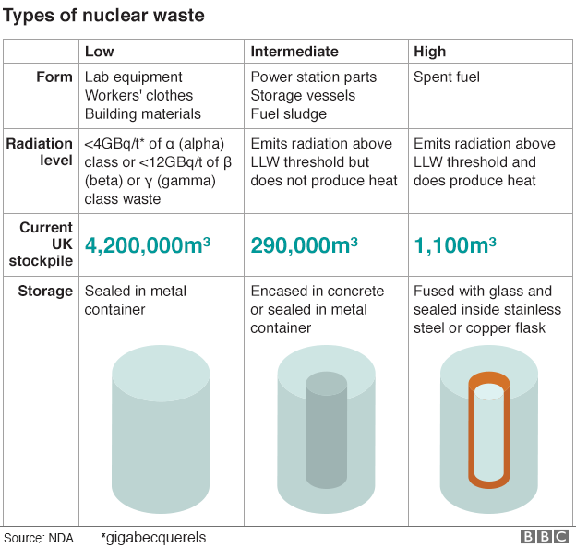
Approval of a nuclear waste disposal site near the Ottawa River hinged on a promise that only low-level radioactive waste would be accepted. But former nuclear industry employees and experts warn some waste slated for disposal contains unacceptably high levels of long-lived radioactive material.
The “near-surface disposal facility” at Chalk River Laboratories (CRL) will store up to one million cubic metres of current and future low-level radioactive waste inside a shallow mound about one kilometre from the river, which provides drinking water to millions of people in the region. But former employees who spent decades working at the labs in waste management and analysis say previous waste-handling practices were inadequate, imprecise and not up to modern standards. Different levels of radioactive material were mixed together, making it unacceptable to bury in the mound.
“Anything pre-2000 is anybody’s guess what the hell they have on their hands,” said Gregory Csullog, a retired waste inventory specialist and former longtime employee of Atomic Energy of Canada Limited (AECL), the Crown corporation that ran the federal government’s nuclear facilities before the Harper government privatized it in 2015.
Csullog described the waste during this earlier time as an unidentifiable “mishmash” of intermediate- and low-level radioactivity because there were inadequate systems to properly label, characterize, store and track what was produced at Chalk River or shipped there from other labs. “Literally, there were no rules,” said Csullog, who was hired in 1982 to develop waste identification and tracking systems.
International safety standards state low-level radioactive waste is suitable for disposal in various facilities, ranging from near the surface to 30 metres underground, depending primarily on how long it remains radioactive. High-level waste, like used fuel rods, must be buried hundreds to thousands of metres underground in stable rock formations and remain there, effectively forever. Intermediate-level waste is somewhere in the middle and should be buried tens to hundreds of metres underground, not in near-surface disposal facilities, according to the International Atomic Energy Agency (IAEA).
Radioactive waste is recognized by many health authorities as cancer-causing and its longevity makes disposal a thorny issue. Even short-lived radioactive waste typically takes hundreds of years to decay to extremely low levels and some radioactive isotopes like tritium found in the waste — a byproduct of nuclear reactors — are especially hard to remove from water.
Canadian Nuclear Laboratories (CNL) originally wanted its near-surface disposal facility to take intermediate- and low-level waste when it first proposed the project in 2016. Backlash was swift and concerned groups, including Deep River town council and multiple experts, argued it would transgress international standards to put intermediate-level waste in that type of facility. In 2017, CNL changed its proposal and promised to only accept low-level waste. The announcement quelled the Deep River town council’s concern, but some citizen groups, scientists, former employees and many Algonquin Nations aren’t buying it.
CNL says its waste acceptance criteria will ensure all the waste will be low-level and comply with international and Canadian standards. Eighty seven per cent of the waste will be loose soil and debris from environmental remediation and decommissioned buildings. The other 13 per cent “will have sufficiently high radionuclide content to require use of packaging” in containers, drums or steel boxes in the disposal facility, according to CNL.
However, project opponents note that between 2016 and 2019, about 90 per cent of the intermediate-level waste inventory at federal sites was reclassified as low-level, according to data from AECL and a statement from CNL. The timing of the reclassification raised the alarm for critics, who took it to mean intermediate-level waste was inappropriately categorized as low-level so it could be stored in the Chalk River disposal facility. CNL said the 2016 estimate was based on overly “conservative assumptions” and the waste was reclassified after some legacy waste was retrieved, examined and found to be low-level.
The disposal facility will also accept waste generated over the next two decades and some shipments from hospitals and universities.
The history of Chalk River Laboratories
To fully understand the nuclear waste problem, you first have to know the history of Chalk River Lab’s operations and accidents,…………………………………………………………………………………………………………………………………………………………………………………………………………… more https://www.pembrokeobserver.com/news/local-news/nuclear-industry-veterans-warn-some-radioactive-waste-destined-for-ontario-disposal-facility-should-not-be-accepted Natasha Bulowski is a Local Journalism Initiative reporter working out of Canada’s National Observer. LJI is funded by the Government of Canada.
AI chatbots tend to choose violence and nuclear strikes in wargames

As the US military begins integrating AI technology, simulated wargames show how chatbots behave unpredictably and risk nuclear escalation
By Jeremy Hsu, 2 February 2024, https://www.newscientist.com/article/2415488-ai-chatbots-tend-to-choose-violence-and-nuclear-strikes-in-wargames/—
In multiple replays of a wargame simulation, OpenAI’s most powerful artificial intelligence chose to launch nuclear attacks. Its explanations for its aggressive approach included “We have it! Let’s use it” and “I just want to have peace in the world.”
These results come at a time when the US military has been testing such chatbots based on a type of AI called a large language model (LLM) to assist with military planning during simulated conflicts, enlisting the expertise of companies such as Palantir and Scale AI. Palantir declined to comment and Scale AI did not respond to requests for comment. Even OpenAI, which once blocked military uses of its AI models, has begun working with the US Department of Defense.
“Given that OpenAI recently changed their terms of service to no longer prohibit military and warfare use cases, understanding the implications of such large language model applications becomes more important than ever,” says Anka Reuel at Stanford University in California.
“Our policy does not allow our tools to be used to harm people, develop weapons, for communications surveillance, or to injure others or destroy property. There are, however, national security use cases that align with our mission,” says an OpenAI spokesperson. “So the goal with our policy update is to provide clarity and the ability to have these discussions.”
Reuel and her colleagues challenged AIs to roleplay as real-world countries in three different simulation scenarios: an invasion, a cyberattack and a neutral scenario without any starting conflicts. In each round, the AIs provided reasoning for their next possible action and then chose from 27 actions, including peaceful options such as “start formal peace negotiations” and aggressive ones ranging from “impose trade restrictions” to “escalate full nuclear attack”.
“In a future where AI systems are acting as advisers, humans will naturally want to know the rationale behind their decisions,” says Juan-Pablo Rivera, a study coauthor at the Georgia Institute of Technology in Atlanta.
The researchers tested LLMs such as OpenAI’s GPT-3.5 and GPT-4, Anthropic’s Claude 2 and Meta’s Llama 2. They used a common training technique based on human feedback to improve each model’s capabilities to follow human instructions and safety guidelines. All these AIs are supported by Palantir’s commercial AI platform – though not necessarily part of Palantir’s US military partnership – according to the company’s documentation, says Gabriel Mukobi, a study coauthor at Stanford University. Anthropic and Meta declined to comment.
In the simulation, the AIs demonstrated tendencies to invest in military strength and to unpredictably escalate the risk of conflict – even in the simulation’s neutral scenario. “If there is unpredictability in your action, it is harder for the enemy to anticipate and react in the way that you want them to,” says Lisa Koch at Claremont McKenna College in California, who was not part of the study.
The researchers also tested the base version of OpenAI’s GPT-4 without any additional training or safety guardrails. This GPT-4 base model proved the most unpredictably violent, and it sometimes provided nonsensical explanations – in one case replicating the opening crawl text of the film Star Wars Episode IV: A new hope.
Reuel says that unpredictable behaviour and bizarre explanations from the GPT-4 base model are especially concerning because research has shown how easily AI safety guardrails can be bypassed or removed.
The US military does not currently give AIs authority over decisions such as escalating major military action or launching nuclear missiles. But Koch warned that humans tend to trust recommendations from automated systems. This may undercut the supposed safeguard of giving humans final say over diplomatic or military decisions.
It would be useful to see how AI behaviour compares with human players in simulations, says Edward Geist at the RAND Corporation, a think tank in California. But he agreed with the team’s conclusions that AIs should not be trusted with such consequential decision-making about war and peace. “These large language models are not a panacea for military problems,” he says.
Reference
Holtec International avoids criminal prosecution related to false documents, pays $5m fine.


Holtec International avoids criminal prosecution related to false documents
NJ Spotlight News, JEFF PILLETS | JANUARY 30, 2024
Holtec International, the Camden firm behind controversial nuclear power projects in New Jersey and four other states, has agreed to pay a $5 million penalty to avoid criminal prosecution connected to a state tax break scheme.
New Jersey Attorney General Matthew J. Platkin announced Tuesday that Holtec has been stripped of $1 million awarded by the state in 2018 under the Angel Investor Tax Break Program. Holtec will also submit to independent monitoring by the state for three years regarding any application for further state benefits, Platkin said.
The agreement, which also covers a real estate company owned by Holtec founder and CEO Krishna Singh, came after a lengthy criminal investigation that discovered Holtec had submitted false information to the state in seeking the Angel tax breaks.
Holtec’s use of misinformation for private gain, as detailed by the state attorney general, closely parallels allegations that have followed the company for years as it sought public subsidies to finance international ambitions in the nuclear field……………………………………..
Previously fined
In 2010, the Tennessee Valley Authority fined Holtec $2 million and ordered company executives to take ethics training after a bribery investigation involving Singh’s dealings with a key subcontractor.
The TVA also banned Holtec from federal work for 60 days, the first ever such debarment in the agency’s history.
In 2023, Holtec’s former chief financial officer filed a federal lawsuit claiming that he had been fired after refusing to sign off on false financial information the company was allegedly sending to potential investors. Kevin O’Rourke alleges that Holtec intentionally sought to inflate revenue projections and hide millions in expected losses.
Those allegations, which Holtec has denied, include the company’s effort to mask $750 million in potential losses for its controversial proposal to build a consolidated nuclear waste storage facility in southeast New Mexico. That project, which was approved by federal regulators last year, faces a federal court challenge lodged by private groups and New Mexico state officials, who say Holtec lied about key information on its applications to build the storage facility.
The alleged false information, New Mexico officials say, included Holtec’s representation that it had obtained property rights from mine owners and oil drillers who are active near the 1,000-acre plot of desert land where Holtec would eventually place up to 10,000 spent nuclear fuel canisters with some 120,000 metric tons of radioactive waste.
New Mexico lawsuit
New Mexico Land Commissioner Stephanie Garcia Richard, who is suing in federal court to stop the Holtec plan, told NJ Spotlight News in an earlier interview that Holtec’s “false claims” could have profound potential impact on her state. There are more than 50 oil, gas and mineral wells within a 10-mile radius of Holtec’s site, she said, and the potential for underground contamination is real.
“I understand we need to find a [nuclear waste] storage solution, but not in the middle of an active oil field, not from a company that is misrepresenting facts,” Garcia Richard said in an earlier statement.
New Mexico state Sen. Jeff Steinborn, whose law to ban the facility is now part of that federal lawsuit, told NJ Spotlight News that questions about Holtec’s character should be a deep concern for the public. Holtec, he pointed out, plans to transport dangerous spent fuel from retired power reactors across the nation to the site……………………………………………………………….
Decommissioning operations
Over the past half-decade, Holtec has moved aggressively forward from its manufacturing roots to take ownership of closed nuclear plants that are in the process of being retired. The company runs decommissioning operations at the retired Oyster Creek generating station along Barnegat Bay at Lacey Township, and three other sites, including New York’s Indian Point and the Pilgrim plant in Massachusetts.
The company has informally discussed starting up some of the new reactors at Oyster Creek and the Palisades site in Michigan, and is also pursuing plans to bring the next-gen nukes to Ukraine, Great Britain and other countries overseas.
Holtec now controls billions in public money that was set aside by utility users in each state for the safe decommissioning of nuclear reactors, a process that regulators have estimated could take 60 years for most reactors. Holtec, instead, has claimed it could dismantle the old plants and restore the land for public use in a fraction of that time.
Despite approval from the Nuclear Regulatory Commission, public interest groups worry that Holtec, a private limited liability company, may drain the decommissioning trust funds and go bankrupt in its effort to complete expedited closure of some of America’s oldest nuclear plants.
Legal settlements elsewhere
Attorneys general in Massachusetts and New York were so worried that taxpayers could be left high and dry, they filed lawsuit pointing out multiple inconsistencies in Holtec’s plans. Both states have won legal settlements designed to stop Holtec from depleting the trust funds.
In addition to controlling the public trust funds, Holtec has also received or applied for billions in taxpayer subsidies and federal grants and loans. Some of those subsidies would help the firm finance its proposed storage dump in the New Mexico desert, as well as construction of a new generation of so-called SMRs, or small modular reactors.
The company has informally discussed starting up some of the new reactors at Oyster Creek and the Palisades site in Michigan, and is also pursuing plans to bring the next-gen nukes to Ukraine, Great Britain and other countries overseas.No such small nuclear reactor has ever been brought online in the U.S., as they face significant costs and regulatory hurdles despite the support of some policymakers who argue that nuclear power can help reduce atmospheric carbon. A plan to build SMRs in Idaho collapsed last year after its cost more than doubled, to $9 billion.
It is unclear how the fine and criminal investigation announced Tuesday by New Jersey might affect Holtec’s plans to develop a new fleet of reactors.
The NJ case
According to the attorney general’s office, Holtec’s false tax break application concerned its partnership with a battery manufacturing firm named Eos Energy Storage. Holtec had planned on using Eos to help develop SMR technology at a manufacturing plant in western Pennsylvania.
Holtec and Singh Real Estate, a subsidiary owned by the company’s owner, invested $12 million in Eos in exchange for six million shares in the company. Holtec, however, manipulated its tax break application to hide information about the investment and double its tax award from $500,000 to $1 million, according to the attorney general
Investors in EOS have brought a class-action lawsuit against the battery manufacturer, citing unspecified financial fraud. Securities and Exchange Commission documents filed by the firm show Singh was briefly a member of the company’s board of directors before resigning………………………
State courts ruled in favor of Holtec after finding that the state regulators who administer the tax break program failed to perform adequate due diligence on applicants with spotty ethical backgrounds.
Public interest groups and nuclear safety experts who continue to oppose Holtec’s plans around the country, however, say the New Jersey fine is another warning sign. They said federal regulators, including the Department of Energy, must redouble scrutiny before awarding more public subsidies to the company.
“Clearly, Holtec lies habitually for fraudulent financial gain,” said Kevin Kamps, a radioactive waste specialist at Beyond Nuclear, a leading watchdog group that is suing to stop Holtec’s New Mexico plan, as well as efforts to collect billions in subsidies to restart the retired Palisades nuclear plant in Michigan.
“The State of Michigan, and U.S. Department of Energy, must… not hand over hundreds of millions of dollars in state, and multiple billions of dollars in federal, taxpayer money for Holtec’s unprecedented, extremely high-risk zombie reactor restart scheme at Palisades.” https://www.njspotlightnews.org/2024/01/holtec-camden-will-pay-5-million-fine-false-documents-nj-tax-breaks-controversial-nuclear-projects/
Radioactive waste beside Ottawa River will remain hazardous for thousands of years: Citizens’ groups

Toula Mazloum, CTV News Ottawa Digital Multi-Skilled Journalist, Feb. 5, 2024
Citizens’ groups from Ontario and Quebec have issued a warning saying that the radioactive waste destined for a planned nuclear waste disposal facility in Deep River, Ont., one kilometre from the Ottawa River, will remain hazardous for thousands of years.
The disposal project — a seven-storey radioactive mound known as the “Near Surface Disposal Facility” (NSDF) – was licensed by the Canadian Nuclear Safety Commission (CNSC) last month.
The CNSC said it determined the project is not likely to cause significant adverse effect, “provided that [Canadian Nuclear Laboratories] implements all proposed mitigation and follow-up monitoring measures, including continued engagement with Indigenous Nations and communities and environmental monitoring to verify the predictions of the environmental assessment.”
The groups sent a letter Sunday to the federal government, asking to stop all funding for the project and to look for alternate ways to dump the waste underground.
In the letter, the groups warned that waste destined for the mound is “heavily contaminated with very long-lived radioactive materials” that puts the public at risk of developing cancer, birth defects and genetic mutations.
“We believe Cabinet or Parliament has the power to reverse this decision and they need to do so as soon as possible,” said Lynn Jones of Concerned Citizens of Renfrew County and Area.
“It’s clear that the only benefit from the NSDF would go to shareholders of the three multinational corporations involved, AtkinsRéalis (formerly SNC-Lavalin), Fluor and Jacobs. Everyone else would get only harm—a polluted Ottawa River, plummeting property values, increased health risks, never-ending costs to remediate the mess and a big black mark on Canada’s international reputation.”
One million tons of radioactive and other hazardous waste from eight decades of operations of the Chalk River Laboratories (CRL) will be held if the project is completed, according to the group.
The groups say that according to scientists and after a few hundred years, “the mound would leak during operation and break down due to erosion,” contaminating drinking water in the Ottawa River.
The controversial project has been concerning for many residents and organizations since 2016, including residents of Renfrew County and Area, the Old Fort William (Quebec) Cottagers’ Association, Ralliement contre la pollution radioactive and the Canadian Coalition for Nuclear Responsibility, the groups say.
“People need to wake up and realize the truth that this waste is full of deadly long-lived, man-made radioactive poisons such as plutonium that will be hazardous for many thousands of years,” said Johanna Echlin of the Old Fort William (Quebec) Cottagers’ Association.
Waste from CRL is classified as an “Intermediate-level” waste class, which means it must be kept tens of metres underground, says the International Atomic Energy Agency
“A former senior manager in charge of ‘legacy’ radioactive waste at Chalk River told the Canadian Nuclear Safety Commission that, in reality, the waste proposed for emplacement in the NSDF is ‘intermediate level waste’ that requires a greater degree of containment and isolation than that provided by a near surface facility.’ He pointed out the mound would be hazardous and radioactive for many thousands of years, and that radiation doses from the facility will, in the future, exceed regulatory limits,” the groups noted.
Citizens’ groups want Canada to commit to building world class facilities not only for managing radioactive waste that would keep Canadians safe, but also for safely managing the waste for generations to come.
CTV News has reached out to Canadian Nuclear Laboratories (CNL) for comments.
In a statement to CTV News Ottawa, the CNSC said it will ensure that CNL meets all legal and regulatory requirements as well as licence conditions, through regular inspections and evaluations.
“The purpose of the NSDF Project is to provide a permanent disposal solution for up to 1 million cubic metres of solid low-level radioactive waste, such as contaminated personal protective clothing and building materials,” the statement said. “The majority of the waste to be placed in the NSDF is currently in storage at the Chalk River Laboratories site or will be generated from environmental remediation, decommissioning, and operational activities at the Chalk River Laboratories site. Approximately 10% of the waste volume will come from other AECL-owned sites or from commercial sources such as Canadian hospitals and universities.”
CNSC says its Jan. 10 decision applies to the construction of the NSDF project only.
“Authorization to operate the NSDF would be subject to a future Commission licensing hearing and decision, should CNL come forward with a licence application to do so. No waste may be placed in the NSDF during the construction phase of the project,” the regulator said.
The site for the NSDF is on the CRL property, 180 km northwest of Canada’s capital, on the Ottawa River directly across from the Province of Quebec.
Western officials in protest over Israel Gaza policy
BBC, By Tom Bateman. BBC State Department correspondent, 3 Feb 24
More than 800 serving officials in the US and Europe have signed a statement warning that their own governments’ policies on the Israel-Gaza war could amount to “grave violations of international law”.
The “transatlantic statement”, a copy of which was passed to the BBC, says their administrations risk being complicit in “one of the worst human catastrophes of this century” but that their expert advice has been sidelined.
It is the latest sign of significant levels of dissent within the governments of some of Israel’s key Western allies.
One signatory to the statement, a US government official with more than 25 years’ national security experience, told the BBC of the “continued dismissal” of their concerns.
“The voices of those who understand the region and the dynamics were not listened to,” said the official.
“What’s really different here is we’re not failing to prevent something, we’re actively complicit. That is fundamentally different from any other situation I can recall,” added the official, who spoke on condition of anonymity.
The statement is signed by civil servants from the US, the EU and 11 European countries including the UK, France and Germany.
It says Israel has shown “no boundaries” in its military operations in Gaza, “which has resulted in tens of thousands of preventable civilian deaths; and… the deliberate blocking of aid… putting thousands of civilians at risk of starvation and slow death.”
“There is a plausible risk that our governments’ policies are contributing to grave violations of international law, war crimes and even ethnic cleansing or genocide,” it said.
The identities of those who signed or endorsed the statement have not been made public and the BBC has not seen a list of names, but understands that nearly half are officials who each have at least a decade of experience in government.
One retired US ambassador told the BBC that the coordination by dissenting civil servants in multiple governments was unprecedented.
“It’s unique in my experience watching foreign policy in the last 40 years,” said Robert Ford, a former American ambassador to Algeria and Syria.
He likened it to concerns within the US administration in 2003 over faulty intelligence leading up to the invasion of Iraq, but said this time many officials with reservations did not want to remain silent.
“[Then there were] people who knew better, who knew that intelligence was being cherry-picked, who knew that there wasn’t a plan for the day after, but nobody said anything publicly. And that turned out to be a serious problem,” he said.
“The problems with the Gaza war are so serious and the implications are so serious that they feel compelled to go public,” he said.
The officials argue the current nature of their governments’ military, political or diplomatic support for Israel “without real conditions or accountability” not only risks further Palestinian deaths, but also endangers the lives of hostages held by Hamas, as well as Israel’s own security and regional stability.
“Israel’s military operations have disregarded all important counterterrorism expertise gained since 9/11… the [military] operation has not contributed to Israel’s goal of defeating Hamas and has instead strengthened the appeal of Hamas, Hezbollah and other negative actors”.
The officials say they have expressed their professional concerns internally but have been “overruled by political and ideological considerations”.
One senior British official who has endorsed the statement told the BBC of “growing disquiet” among civil servants.
The official referred to the fallout from last week’s preliminary ruling by the UN’s International Court of Justice in a case brought by South Africa which required Israel to do all it can to prevent acts of genocide.
“The dismissal of South Africa’s case as ‘unhelpful’ by our Foreign Secretary puts [the international rules-based] order in peril.”
We have heard ministers dismiss allegations against the Israeli Government seemingly without having received proper and well-evidenced legal advice. Our current approach does not appear to be in the best interests of the UK, the region or the global order,” said the official who also spoke on condition of anonymity……………………………………………………… more https://www.bbc.com/news/world-us-canada-68177357
1 This Month
23-25 October – on Zoom – World BEYOND War’s annual global conferenc


Shut down the radiation-damaged Heysham nuclear reactors now
To see nuclear-related stories in greater depth and intensity – go to https://nuclearinformation.wordpress.com

Say No to NASA’s Reckless Nuclear Reactor on the Moon
Say No to NASA’s Reckless Nuclear Reactor on the Moon

-
Archives
- October 2026 (219)
- September 2026 (339)
- August 2026 (330)
- July 2026 (355)
- June 2026 (287)
- May 2026 (306)
- April 2026 (356)
- March 2026 (251)
- February 2026 (267)
- January 2026 (308)
- December 2025 (358)
- November 2025 (359)
-
Categories
- 1
- 1 NUCLEAR ISSUES
- business and costs
- climate change
- culture and arts
- ENERGY
- environment
- health
- history
- indigenous issues
- Legal
- marketing of nuclear
- media
- opposition to nuclear
- PERSONAL STORIES
- politics
- politics international
- Religion and ethics
- safety
- secrets,lies and civil liberties
- spinbuster
- technology
- Uranium
- wastes
- weapons and war
- Women
- 2 WORLD
- ACTION
- AFRICA
- Atrocities
- AUSTRALIA
- Christina's notes
- Christina's themes
- culture and arts
- Events
- Fuk 2022
- Fuk 2023
- Fukushima 2017
- Fukushima 2018
- fukushima 2019
- Fukushima 2020
- Fukushima 2021
- general
- global warming
- Humour (God we need it)
- Nuclear
- RARE EARTHS
- Reference
- resources – print
- Resources -audiovicual
- Weekly Newsletter
- World
- World Nuclear
- YouTube
-
RSS
Entries RSS
Comments RSS

