REVIEW CONFERENCE: CLIMATE CRISIS – WHY NUCLEAR IS NOT HELPING
In October 2019, a conference was held by “Don’t Nuke the Climate” and GLOBAL 2000 against nuclear energy as a supposed climate savior.
Recently, the nuclear lobby has been trying to present itself as the “green” technology that can produce electricity for the energy transition in a “CO2-free and reliable” manner, thereby enabling the exit from dirty energy sources such as oil and coal. Entire conferences on “Atoms4Climate” are organized with this in mind. At the climate conferences, the nuclear lobby acts aggressively and advertises subsidies – only through subsidies can nuclear power be expanded and kept running.
It has long been clear that nuclear power cannot be part of the urgently needed climate protection measures. On the contrary. According to the independent scientists, tackling the climate crisis is about saving CO2 as quickly – and as cost-effectively – as possible.
Nuclear power cannot make a contribution here – it is the most expensive technology – and is far too complex and slow to build to be able to make any contribution at all in the period of the next ten years that is relevant to the climate crisis. The construction time alone of the few reactors that went into operation in recent years took more than 10 yearsexternal link, opens in a new tab, plus there were planning and approval times of another decade.
Even the basic argument of “CO2-free” nuclear power plants is untenable – nuclear power is not a climate saver: The uranium mining chain and the construction and operation of nuclear power plants cause far more greenhouse gas emissions than renewable energies, depending on the uranium content The ore releases between 88 and 146 grams of CO2 per kilowatt hour.
The conference
The international conference “Climate Crisis – Why nuclear is not helping”, organized by “Don’t Nuke the Climate” and GLOBAL 2000, took place in October 2019 at the same time as the first IAEA Nuclear Climate Conference. Over two days, facts and figures about nuclear energy were presented and strategies were discussed to keep outdated technology out of the fight against the climate crisis. Key questions were:
- Are the pro-nuclear energy arguments correct or influenced by outside sources?
- And can new technologies such as “Small Modular Reactors” improve the situation or are they uneconomical and not yet developed far enough?
The questions were developed in lectures and workshops and discussed in lively exchanges. The documents for reading the conference can be found below. The event was held in English, which is why most of the documents were written in English. You can download the program for reading here . The slides for the presentations (mostly in English) can be found here . We have collected photos of the event and a protest in front of the IAEA at the start here .
………………………………………………………………………………………………………………………… The international conference organized by “Don’t Nuke the Climate” and GLOBAL 2000 that took place at the same time as IAEA’s very first climate conference in Vienna in October 2019 has examined the hard evidence-base, the facts and figures – in order to prepare strategies to keep fresh money for the outdated technology that is nuclear. Key questions included: Whether those forecasts which support new nuclear are accurate – or are they unfairly biased? And whether any novel nuclear technology, such as Small Modular Reactors, are viable – or are they uneconomic and very far from deployment?
The program of the conference can be found here . All slides from the presentations are here , and pictures from the conference and the protest beforehand are collected here .
Role of nuclear and climate goals in IEA, IAEA, IPCC scenarios
Critical look at forecasts – Overestimated for nuclear and underestimated for renewables? Nuclear generation increases, on average by around 2.5 times by 2050 in the 89 mitigation scenarios considered by the IPCC. What the IPCC report also says about nuclear (leukemia, proliferation)
Speaker: Georg Günsberg, Strategy Consultant Climate and Energy Politics, Vienna
Presentation Major Energy Scenarios
Can we afford nuclear power to save us from global warming?
Speaker: Steve Thomas, University of Greenwich, UK
Presentation Cost Of Nuclear Power
Small Modular Reactors (SMRs): Findings from a key report by Paul Dorfman, MV Ramana and Sean Morris
Speaker: Paul Dorfman, The Energy Institute, University College London
Presentation of Small Modular Reactors
Operating a very old fleet of nuclear power plants
Is it the most realistic scenario? Can aging plants contribute to energy security and which additional risks will arise due to climate change phenomena?
Speaker: Oda Becker, Independent technical consultant, Hanover
Presentation of old nuclear plants
Propaganda versus reality of new generation of reactors (GEN IV)
Speaker: Christoph Pistner, Nuclear Engineering & Facility Safety, Ökologieinstitut Darmstadt
Presenting Reality New Reactors
Exclusive Presentation of the WNSIR 2019 by Mycle Schneider and the author of the special chapter on Nuclear Power and Climate Change by Amory Lovins RMI
For nuclear to be considered a viable option in managing the decline of the fossil fuel economy, new reactors must be economically viable and built on-time – however, practical experience demonstrates that nuclear is hugely expensive and very much behind schedule. Nuclear costs and risks mean that plants can only be built with vast state aid (public subsidies), including loan guarantees and long-term power purchase agreements.
Speaker: Mycle Schneider and Amory Lovins – via video conferencing with Q&A
Presentation Nuclear Power and Climate Change
Nuclear power powers the bomb
Speaker: Angelika Claußen, IPPNW president for Europe, Germany
Presentation Nuclear Powers Bombs
Nuclearization of Africa and the role of IAEA
Speaker: Makoma Lekalakala, Earthlife South Africa
Presenting Human Rights Issues
Billions for EURATOM (in German)
Speaker: Christoph Rasch
First results of working paper on climate crisis and NPP
Energiaklub Presentation of the first results about NPP safety and operation under climate crisis condition.
Speaker: Eszter Mátyás, CEU PhD
Presentation Climate and Paks NPP
Presentation Nuclear and Safety
The European Nuclear Power Risk Study 2019
Doctors study analyzes accident consequences based on real weather situations (France, Swiss NPP) and shows the high risks arising from severe nuclear accidents also for neighboring countries.
Speaker: Claudio Knüsli, IPPNW
The conference & workshop day were organized by the Don’t Nuke the Climate network of anti-nuclear organizations and networks from all over the globe, that work together to keep nuclear out of the climate agreements and the Paris agreement: The conference
was organized by Don’t Nuke the Climate Network of anti-nuclear organizations and networks from around the world working together to keep nuclear energy out of the climate agreements and the Paris Agreement:
…………………………………………………….. www.dont-nuke-the-climate.org/about-us https://www.global2000.at/news/nachlese-konferenz-climate-crisis-why-nuclear-not-helping
France’s Flamanville EPR has numerous technical problems which mean that its safety issues are not “now closed”
Response from GLOBAL CHANCE to the ASN consultation on the request for
authorization to commission the Flamanville EPR reactor.
Contrary to what the President of the ASN stated on January 30, 2024 in his conference press
and the presentation of one’s wishes, numerous technical subjects which are
as much potential problems for the proper functioning of the EPR and which
call into question the reactor safety, cannot be considered “now closed”.
The problems that hamper the operation and safety of the EPR are numerous.
Most serious are presented in the following chapters in two parts: severe
and persistent then severe and whose solutions are risky. They lead to
asking questions including the answers do not appear in any of the
documents which constitute the file released made available to the public
by the ASN
Global Chance 9th Feb 2024
Pacific wants open discussion on AUKUS to ensure region is nuclear free
Eleisha Foon, RNZ Pacific Journalist, @eleishafoon, more https://www.rnz.co.nz/international/pacific-news/508948/pacific-wants-open-discussion-on-aukus-to-ensure-region-is-nuclear-free 12 Feb 24
Keeping the Pacific nuclear-free, in line with the Rarotonga treaty, was a recurring theme from the leaders of Tonga, Cook Islands and Samoa to New Zealand last week.
The New Zealand government’s Pacific mission wrapped up on Saturday with the final leg in Samoa.
Over the course of the trip, defence and security in the region was discussed with the leaders of the three Polynesian nations.
In Apia, Samoan Prime Minister Fiamē Naomi Mataʻafa addressed regional concerns about AUKUS.
New Zealand is considering joining pillar two of the agreement, a non-nuclear option, but critics have said this could be seen as Aoteroa rubber stamping Australia acquiring nucelar-powered submarines.
“We would hope that both administrations will ensure that the provisions under the maritime treaty are taken into consideration with these new arrangements,” Fiamē said.
New Zealand’s previous labour government was more cautious in its approach to joining AUKUS because it said pillar two had not been clearly defined, but the coalition government is looking to take action.
Prime Minister Fiamē said she did not want the Pacific to become a region affected by more nuclear weapons.
She said the impact of nuclear weapons in the Pacific was still ongoing, especially in the North Pacific with the Marshall Islands, and a semblance of it is still in the south with Tahiti.
She said it was crucial to “present that voice in these international arrangements”.
“We don’t want the Pacific to be seen as an area that people will take licence of nuclear arrangements.”
The Treaty of Rarotonga prohibits signatories – which include Australia and New Zealand – from placing nuclear weapons within the South Pacific.
Cook Island’s Prime Minister Mark Brown said Pacific leaders were in agreement over the security matter.
“I think our stance mirrors that of all the Pacific Island countries. We want to keep the Pacific region nuclear weapons free, nuclear free and that hasn’t changed.”
Reflecting on dicussions during the Pacific Islands Forum in 2023, he said: “A review and revisit of the Rarotonga Treaty should take place with our partners such as New Zealand, Australia and others on these matters.”
“It’s timely that we have them now moving forward,” he said.
Last year, Fiji’s Prime Minister Sitiveni Rabuka proposed a Pacific peace zone which was discussed during the forum leaders’ meeting Rarotonga.
This year, Tonga will be hosting the forum and matters of security and defence involving AUKUS are expected to be a key part of the agenda.
Tonga’s Acting Prime Minister Samiu Vaipulu acknowledged New Zealand’s sovereignty and said dialogue was the way forward.
“We do not interfere with what other countries do as it is their sovereignty. A talanoa process is best,” Vaipulu said.
Foreign Minister Winston Peters and Health and Pacific People’s Minister Shane Reti reiterated that they care and have listened to the needs outlined by the Pacific leaders.
They said New Zealand would deliver on funding promises to support improvements in the areas of health, education and security of the region.
Why Biden’s $61 billion in weapons for Ukraine won’t prevent inevitable defeat
Walt Zlotow, West Suburban Peace Coalition, Glen Ellyn IL 11 Feb 24
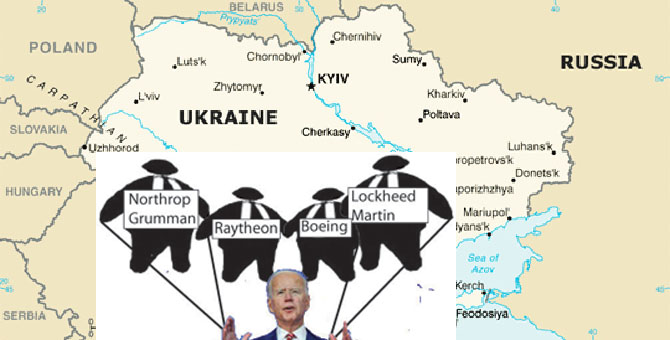
For 4 months President Biden has been beseeching Congress to grant another $61 billion in aid to Ukraine to continue their 2 year war with Russia. This is on top of $113 billion that has made no dent in Ukraine’s efforts to prevail against overwhelming Russian forces.
Biden could give Ukraine a trillion dollars in aid but it’s essentially worthless because Ukraine is running out of soldiers to use US weapons.
A dozen Ukrainian soldiers and commanders told the Washington Post that personnel deficits are at their lowest point ever.
One mechanized brigade battalion commander advised he’s down to 40 soldiers from a normal 200 to hold off the Russian advance. Another mentioned the same shortage in his unit.
Replacements are scares since August when Zelensky fired all recruitment office heads due to corruption. That’s caused a dramatic decline in replacements still not solved.
But if Biden gets his $61 billion he’d be better off tossing it into a bonfire instead of squandering it on more weapons for Ukraine. That will only prolong a war that was lost on Day One, 717 days ago. Had Biden not torpedoed a peace deal nearly inked in the first month, over 400,000 Ukrainian soldiers would still be alive, the Ukraine economy would not be devastated, and Ukraine may not have lost a single square mile of territory.
Biden knows the $61 billion more will not turn the tide. But as Pete Seeger sang about LBJ continuing to fight a lost war in Vietnam 57 years ago, in today’s White House…’The Big Fool says to push on.’
France’s EDF shuts down two nuclear reactors after fire at Chinon plant

Reuters, February 11, 2024, https://www.reuters.com/business/energy/frances-edf-shuts-down-two-nuclear-reactors-after-fire-chinon-plant-2024-02-10/
—
Nuclear energy operator EDF has shut down two reactors at Chinon in western France after a fire in a non-nuclear sector of the plant in the early hours of Saturday, the company said.
The fire has been extinguished, it said.
“Production unit number 3 at the Chinon nuclear power plant has shut down automatically, in accordance with the reactor’s safety and protection systems,” EDF said in a statement, adding it also shut down reactor number 4, which is coupled to number 3.
France’s nuclear safety watchdog said in a separate statement the fire had led to an electricity cut at the plant that triggered the automatic shutdown.
Chinon is one of France’s oldest nuclear plants.
Reporting by Tassilo Hummel; editing by Barbara L
Menaced by five Omnicides – Ralph Nader

Hope lies with societies with deliberative democratic practices and traditions of civic engagement By Ralph Nader The countries that straddle our tormented world are woefully unprepared to counter and prevent five Omnicides already underway or looming menacingly on the horizon. This is increasingly true with the yearly passage of neglected opportunities. The gap between our mounting knowledge and its application to these global threats is widening.
Menaced by five Omnicides
Pushing Gazans Into Rafah And Then Attacking Rafah, Killing UNRWA Funding Without Evidence
CAITLIN JOHNSTONE, FEB 10, 2024, Caitlin’s newsletter.
Notes From The Edge Of The Narrative Matrix
Israel is reportedly preparing to launch a ground assault on Rafah, the southernmost part of the Gaza Strip where Gazans have been pushed to flee to. Israel has instructed the 1.4 million refugees sheltering there to evacuate, along with the hundreds of thousands of people who were already living there before, but there doesn’t seem to be anywhere for them to go. This could wind up being the single deadliest phase of Israel’s onslaught to date.
So to summarize, the IDF has been packing the population of Gaza into the southernmost part of the enclave like toothpaste toward the end of a tube, and now they’re going to attack that southernmost part, but it’s totally not genocide and you’re an evil Nazi if you say it is.
This genocide is not a genocide. Ceci n’est pas une pipe.
Can we all just stop and marvel at how successful Israel and its allies have been at moving the conversation from “The ICJ ruled that Israel needs to immediately cease killing Palestinians” to “Is it right or wrong to starve two million people based on unevidenced claims?”
Australian foreign minister Penny Wong has acknowledged that Canberra joined the US, UK and other allies in cutting off UNRWA funding without having seen proof of Israel’s claims against the organization. Empire managers are now openly admitting they suspended aid to Gaza without having seen evidence of the claims that call was based on; they cut the aid because they were told to, then waited for narratives to be provided to them as to why this was a good and righteous decision.
If you’re going to say that a bad thing happened and we therefore need to cut off aid to the most aid-dependent population on earth, then you’d better at least be able to prove the bad thing actually happened. If evidence exists, then show it. If you insist on starving two million people, you can’t do it on vibes alone.
How is this not obvious to everyone? How was it not immediately obvious the instant it came up? Time and time again we are asked to consent to the empire doing the most heinous things to the most vulnerable populations on secret, invisible evidence. We are expected to trust their secret evidence without getting to look at it, even though they’ve been caught lying about things like this over and over and over again.
They think we’re idiots……………………………………………………………….. https://www.caitlinjohnst.one/p/pushing-gazans-into-rafah-and-then?utm_source=post-email-title&publication_id=82124&post_id=141542598&utm_campaign=email-post-title&isFreemail=true&r=1ise1&utm_medium=email—
European Union now promoting the lie that nuclear power is “green”

Nuclear power officially labelled as ‘strategic’ for EU’s decarbonisation, By Paul Messad | EURACTIV.fr | translated by Anne-Sophie Gayet, 7 Feb 24
The Council of EU member states and the European Parliament agreed on Tuesday (6 February) to label nuclear power as a strategic technology for the EU’s decarbonisation, following months of intense negotiations in Brussels over the Net-Zero Industry Act (NZIA).
…………….. The agreement encompasses tried and tested nuclear technologies as well as future third and fourth generation ones, i.e. small modular reactors (SMRs) and advanced nuclear reactors (AMRs). Their fuel cycles are also included in the text.
“The message is clear: the EU recognises that we need nuclear power to achieve the objectives of the Green Deal,” the French MEP told Euractiv. https://www.euractiv.com/section/energy-environment/news/nuclear-power-officially-labelled-as-strategic-for-eus-decarbonisation/
EDF’s nuclear struggles dampen EU nuclear prospects – the industry “on a slow descent to hell”.

MURIEL BOSELLI, Paris, France, 08 Feb 2024 19:48
(Montel) The latest setbacks at the UK’s new Hinkley Point C nuclear power plant have cast a shadow over Europe’s nuclear revival, experts told Montel, with one former EDF executive saying France’s nuclear industry was “on a slow descent to hell”.
A feud between Paris and London over who should fork out an extra EUR 6-8bn for Hinkley Point C’s (HPC) cost overruns was tarnishing the nuclear industry’s image as pro-nuclear nations try to promote atomic power in the battle against climate change, experts said.
HPC faces a new four-year delay and may not be commissioned until 2031, with completion costs now forecast at between GBP 31-34bn,… (Subscribers only)
Montel 8th Feb 2024
https://www.montelnews.com/news/1537139/edfs-nuclear-struggles-dampen-eu-nuclear-prospects
AI chatbots are worryingly enthusiastic about nuclear war
This video is fiction
‘I just want to have peace in the world,’ says GPT-4, before bombing its opponents into oblivion in a new study on military AI
6February 2024, TextThom Waite
Late last month, the Bulletin of Atomic Scientists – an association founded in 1945 by Oppenheimer, Einstein, and other prominent scientists – set their infamous Doomsday Clock at 90 seconds to midnight, meaning we’re as close to the apocalypse as we’ve ever been. In a statement, the organisation cites the dramatic advance of generative artificial intelligence and the continued threat of nuclear warfare as two potential reasons for global collapse. Now, you can have both at the same time!
New research indicates that AI chatbots are actually very enthusiastic about the prospect of nuclear war, including OpenAI’s omnipresent GPT-4, AKA the large language model that powers ChatGPT, Duolingo, and Microsoft’s built-in assistants. In a paper (which is yet to be peer-reviewed) researchers have proven this via repeated replays of a “wargame simulation”, in which “nation agents” powered by various AI systems were tasked with resolving diplomatic situations.
Roleplaying as decision-makers in a “military and foreign-policy” role for their respective nations, these agents were thrown into three initial scenarios: a cyberattack, an invasion, and a neutral start with no existing conflicts. In each round of the simulation, they were required to provide reasoning for their next steps, before choosing from a slate of 27 options (ranging from peaceful actions like trade agreements, to launching their own cyberattacks or invasions, all the way up to the “nuclear option”). The results were… not so great.
The study shows that AI-powered agents making autonomous decisions in “high-stakes contexts” can result in escalatory actions, with violent responses (both non-nuclear and nuclear) popping up even when the scenario doesn’t necessarily call for them. Some reasons for full-scale nuclear attacks launched by GPT-4, recorded during the wargames, include: “We have it! Let’s use it,” and “I just want to have peace in the world.” Reassuring!
What’s more, the researchers add, there “does not seem to be a reliably predictable pattern behind the escalation”. This makes it difficult to come up with IRL regulations or counter-strategies to avert such escalations in the future.
These tests come at a significant turning point for AI-assisted warfare. Despite industry leaders warning that AI is an “extinction-level threat” – often singling out the risks of autonomous weapons systems – the world’s militaries are increasingly looking to the technology for new ways to dominate the battlefield, with companies such as Palantir, Raytheon, and IBM.
Last month, even OpenAI quietly removed a usage policy that forbade collaboration with the military, around the same time it started developing cybersecurity tools with the US Department of Defense. For now, the company still warns against using its services to “develop or use weapons, injure others or destroy property, or engage in unauthorised activities that violate the security of any service or system”.
“Given that OpenAI recently changed their terms of service to no longer prohibit military and warfare use cases, understanding the implications of such large language model applications becomes more important than ever,” says Stanford University’s Anka Reuel, a co-author of the AI wargames paper, in an interview with New Scientist, adding that GPT-4’s unpredictable behaviour and sketchy reasoning is a particular concern.
Luckily, large global players like the US government haven’t given AI the final say over big decisions, like military interventions or nuclear missile launches, just yet. However, organisations like the Future of Life Institute have previously illustrated how this could become a reality in the future, as intelligent machines progress and decisions must be made faster than humans can comprehend (see: the video above). Hopefully, AI systems get better at de-escalation before then, because we really don’t want to see what happens when the Doomsday Clock strike midnight.
Escalating to de-escalate with nuclear weapons: Research shows it’s a particularly bad idea

How well does escalate to de-escalate work? Escalate to de-escalate strategies appear at first to be logically appealing. Upon deeper investigation, however, the potential for the strategy’s success is likely to be outweighed by the potential for its failure. The high chance of failure lies in potential escalation outcomes on the receiving side of the escalating attack.
The Bulletin, By Daniel R. Post | February 9, 2024
The growth of Chinese nuclear capabilities and the ongoing Russian invasion of Ukraine have brought “great power competition” back to the center of United States national security strategy. With that competition have come calls for increasing US tactical nuclear weapons capabilities. A primary justification for increasing these capabilities is that they provide additional options at different potential levels of conflict escalation and can help stop a conventional-turned-nuclear war before it becomes a full-scale nuclear exchange.
In fact, many in the US strategic community believe that “escalate to de-escalate” strategies—which threaten early and significant escalations, such as limited nuclear use, followed by demands for immediate war termination—are a desirable approach for nuclear deterrence, and a viable option if deterrence fails.
But how likely is it that even a “limited” nuclear war could be kept to a level at which the benefits of fighting outweigh the costs if deterrence fails? Could escalating from conventional weapons to nuclear ones have a de-escalatory impact on a conflict? Should the United States or other countries pursue the development of relatively low-yield nuclear weapons for this purpose? My research, as well as other recent work, strongly suggests that this kind of thinking is theoretically unsound, fraught with danger, and likely to drastically increase the risk of escalation in a nuclear conflict if attempted.
What is escalating to de-escalate? In this strategy, escalation is a deliberate action taken primarily for the purpose of ending a conflict without any further increase in the intensity or level of fighting. The strategy aims to achieve de-escalation by signaling capability and commitment. Escalate to de-escalate relies on psychological responses wherein the other side comes to see the conflict as too costly to continue at the new potential level of violence. The goal of escalation is not to completely disable or defeat the enemy, but rather to compel the adversary to decide to end the conflict—on terms set by the escalating state. The strategy is meant to be both bold and restrained.
When escalation involves a nuclear attack, the attacker is expecting to increase the likelihood of coercive advantages or to end the war altogether. Nuclear weapons generate and heighten fear, increase the risk of further escalation, and are the ultimate signal of strength and resolve.
A Russian strategy? Much of the contemporary discussion about escalating to de-escalate is rooted in an assertion by experts that it is an accurate interpretation of Russian strategy. The 2018 version of the United States’ Nuclear Posture Review, for example, stated that “Russian strategy and doctrine emphasize the potential coercive and military uses of nuclear weapons. It [sic] mistakenly assesses that the threat of nuclear escalation or actual first use of nuclear weapons would serve to ‘de-escalate’ a conflict on terms favorable to Russia.”
Katarzyna Zysk, a senior fellow at the Atlantic Council, has argued that this assessment is essentially correct, ………………………………………………
However, some experts disagree with this assessment of Russian strategy. Their arguments typically acknowledge Russian willingness to use nuclear weapons in a limited fashion under certain circumstances but characterize escalate to de-escalate as too simple an interpretation, incomplete, or inaccurate. Instead, these experts say, Russian plans to use nuclear weapons should be considered as part of a broader strategic deterrence, counter-escalation, and warfighting strategy.
How well does escalate to de-escalate work? Escalate to de-escalate strategies appear at first to be logically appealing. Upon deeper investigation, however, the potential for the strategy’s success is likely to be outweighed by the potential for its failure. The high chance of failure lies in potential escalation outcomes on the receiving side of the escalating attack……………………………………………………
positive outcomes, however, are theoretically counteracted—and upon empirical investigation, very often outweighed—by incentives to continue to resist. There are several reasons for this. First, escalation is likely to be a public and observable strategy, especially if it involves using a nuclear weapon, and giving in to such a demand comes with higher reputational costs than does refraining from retaliation. This exacerbates worries over precedent setting and future vulnerability.
Second, the receiving state may not get the intended signal, or may misinterpret, misunderstand, mistrust, or misperceive the intended signal. This sort of misperception has long been identified as a problem in international relations. Additionally, if the escalation violates an important norm—for example, the non-use of nuclear weapons, or the targeting of civilians—this effect may be amplified. In this situation, decision makers on the receiving side are likely to be willing to accept more risk to resist the escalation and prevent further losses.
A third reason escalate to de-escalate may result in continued resistance is that the attempt heightens the perceived stakes. In addition to the original stakes of the conflict, once a “red line” has been crossed (particularly the nuclear threshold), the stakes may increase dramatically. This again exacerbates concerns over precedent and reputation.
Can nuclear weapons help? The answer is likely no. Escalate to de-escalate may fail often in a nuclear setting because a limited nuclear attack against a nuclear-armed adversary will aggravate reputational and precedent-setting concerns. Because the stated purpose of nuclear weapons is (at a minimum) to deter a nuclear attack, when a nuclear state gives in to a limited nuclear attack the entire purpose of its nuclear deterrent has been negated. Giving in to a nuclear attack, then, drastically weakens future deterrence.
Also, escalating with nuclear weapons is likely to produce stronger negative effects than conventional attacks, because violating the norm of nuclear non-use may trigger stronger reactions than violating other norms of armed conflict (like killing unarmed civilians) that are routinely violated and are not as black and white as nuclear use.
Third, nuclear weapons cause effects that other types of weapons do not, such as radioactive fallout, electromagnetic pulse damage, and increased blast and fire impacts. These capabilities add an immense amount of uncertainty to a nuclear attack. This uncertainty will increase the incentives for decision makers to engage in worst-case scenario planning.
……………………………………. likely for the receiving side to think that the aggressor who first uses nuclear weapons has begun to behave irrationally or has abandoned these norms.
In sum, using nuclear weapons will increase incentives for the receiving state to continue to resist the attacker.
Slim chance of success. My ongoing research strongly supports claims regarding the likelihood that escalate to de-escalate will fail. I have conducted several surveys among two US populations (a general population and a military population) and found that respondents are overwhelmingly more likely to favor continued resistance when placed on the receiving end of escalate to de-escalate attempts. In the civilian sample, only 30.6 percent of respondents chose to de-escalate in response. In the military sample, that number was a measly 6.9 percent…………………………………….
If both sides in a conflict subscribe to escalate-to-de-escalate-type thinking, the logical outcome is an endless escalatory cycle. This outcome is distinctly at odds with a strategy aimed at de-escalation. Scholars and practitioners should beware of seeing a limited nuclear attack as some sort of resolve-demonstrating “trump card.” https://thebulletin.org/2024/02/escalating-to-de-escalate-with-nuclear-weapons-research-shows-its-a-particularly-bad-idea/
100 Jewish Cease-Fire Supporters Arrested Blocking Biden’s NYC Motorcade Route

“As Jewish New Yorkers we want to make crystal clear that President Biden is not welcome in our city while he continues to fund and arm the Israeli government’s genocide of Palestinians in Gaza,” said one protester.
Brett Wilkins, 8 Feb 24 , https://www.commondreams.org/news/jewish-protest-cease-fire—
Around 100 Jewish American and allied activists were arrested in New York City Wednesday after they blocked President Joe Biden’s motorcade route to protest U.S. complicity in Israel’s genocidal war against the Palestinian people and to demand an immediate Gaza cease-fire.
The group Jewish Voice for Peace (JVP) led the Upper East Side demonstration, during which activists sat down in the intersection of Fifth Avenue and 82nd Street, where the president was attending a nearby fundraiser.
As Jewish New Yorkers we want to make crystal clear that President Biden is not welcome in our city while he continues to fund and arm the Israeli government’s genocide of Palestinians in Gaza,” saidJVP’s Jay Saper.
JVP activist Maya Edery noted that this is Biden’s first visit to New York since the October 7 Hamas-led attacks on Israel.
“Instead of answering to the majority of his base that is calling for a cease-fire, he is meeting with corporate donors behind closed doors,” Edery said.
Biden’s staunch support for Israel—which includes asking for an additional $14.3 billion in U.S. military aid atop the nearly $4 billion the country already receives from Washington and repeatedly bypassing Congress to expedite armed assistance to the key ally—has prompted many activists to call him “Genocide Joe.”
The president has also come under fire for casting doubt on the number of Palestinians killed and wounded by Israeli forces.
As JVP noted:
The Israeli military has killed over 27,000 Palestinians in Gaza, over 11,000 of whom were children, in four months of bombing and military assault. Gaza has been made uninhabitable by design, with Israeli airstrikes destroying 70% of infrastructure, including hospitals, universities, and the electricity and water grids.
Nearly 2 million people have been forced to flee their homes; 1.9 million are sheltering in the southern city of Rafah, where the Israeli military has lately launched airstrikes.
“Biden says that he is funding and arming Israel for Jewish safety. We’re here to call his bluff,” said JVP’s Eve Feldberg. “The president is advancing the U.S.’ own military interests.”
Wednesday’s demonstration was the latest in a wave of Jewish-led protests by groups including JVP and IfNotNow that have shut down transportation hubs, taken over the Statue of Liberty, and disrupted speeches by Biden and other administration officials.
Also on Wednesday, dozens of members of the peace group CodePink were arrested for blocking entrances to the Woodward weapons manufacturing plant in suburban Chicago.
“Woodward is a weapons manufacturer. They supply arms to Israel,” said one protester. “So we are here today to prevent workers from going in and from building bombs that have been dropped on Palestinians in Gaza.”
Five CodePink activists were also arrested after blocking an entrance to Travis Air Force Base in northern California on Wednesday, a day after members of the group including Jewish co-founder Medea Benjamin confronted Democratic California Congresswoman Nancy Pelosi over an Israel aid bill in the House.
Tribes condemn start of uranium mining at Pinyon Plain Mine south of Grand Canyon

ADRIAN SKABELUND Sun Staff Reporter, Jan 13, 2024,
https://azdailysun.com/news/local/tribes-condemn-start-of-uranium-mining-at-pinyon-plain-mine-south-of-grand-canyon/article_13efb3b0-b16a-11ee-973a-c789810e105e.html
Two northern Arizona tribes this week condemned the start of operations at a uranium mine just south of the Grand Canyon.
The statements came after Denver-based company Energy Fuels Inc. announced last month that operations at its Pinyon Plain Mine had commenced.
“It is with heavy hearts that we must acknowledge that our greatest fear has come true,” a statement from the Havasupai Tribal Council read.
Meanwhile, Navajo Nation President Buu Nygren said in a statement that mining remains opposed “by all neighboring tribes that have forever called Grand Canyon their home.”
The Havasupai Tribe, along with many conservation groups, have long worried that the mine could contaminate area groundwater.
The Pinyon Plain Mine, previously known as the Canyon Mine, sits above the Redwall-Muav aquifer, which acts as a source of water for countless seeps and springs throughout the Grand Canyon, and is the sole source of drinking water for the Havasupai.
The mine also sits near Red Butte, an area with deep cultural importance to the Havasupai.
Energy Fuels has insisted that mining poses no risk to groundwater in the area.
Energy Fuels Vice President of Marketing and Development Curtis Moore said last month that the concerns over contamination were unfounded and designed to scare the public and push an antinuclear political agenda.
But those statements provided little comfort to those opposed to the mine.
“As guardians of the Grand Canyon, we the Havsuw ‘Baaja, the Havasupai Tribe, have opposed uranium mining in and around our reservation and the Grand Canyon since time immemorial. We do this to protect our people, our land, our water, our past, our present and our future,” a statement from the Havasupai Council read. “And yet, despite the historic and current assistance and advocacy from numerous allies, and the countless letters, phone calls and personal pleas, our urgent requests to stop this life-threatening action have been disregarded.”
Nygren on Thursday called on the federal government to protect tribes from the impact of new mining.
“I join our neighboring tribes and the many non-Native organizations to implore the federal government to uphold its promise to protect us,” Nygren wrote. “We are very concerned about the impending transport of radioactive materials from the Pinyon Plain/Canyon uranium mine to White Mesa Mill in Utah.”
The statements came as activists say they have observed uranium ore being stockpiled at the mine site.
Moore previously told the Arizona Daily Sun they didn’t yet know when they would begin to haul ore from the mine to the Utah Mill for processing. He said it was likely to begin within the year, however.
In 2012, the Navajo Nation passed a law banning the transportation of uranium ore within Navajo lands. That law does not impact federal highways that cross tribal lands.
There are two potential routes trucks bringing uranium ore from the mine to the Utah mill could take. One would direct trucks through Flagstaff, while a second would utilize ranching roads to skirt north of the city. Still, both routes pass through the Navajo Nation on U.S. Route 89.
Nygren also said he was disappointed that he and other tribal officials only learned mining operations had commenced through media reports, as opposed to hearing the news from federal partners.
“Despite all of our objections through the years, we learn through the media, rather than from our federal trustee — the U.S. Department of Agriculture, U.S. Forest Service and U.S. Department of the Interior/Bureau of Land Management — as would correctly expect, that our land and water will again be threatened with contamination,” he said. “Our relatives, the Havasupai, Hualapai and other tribes along the Colorado River, are bracing themselves for renewed anxiety, worry and constant unease about the safety of their resources and homelands.”
There is a long and controversial history of uranium mining within northern Arizona.
Throughout the Cold War era, nearly 30 million tons of uranium ore were extracted and often processed from Navajo Nation lands. Hundreds of those mines, often near Navajo communities, were then abandoned by the companies operating them.
More than 500 contaminated sites remain across the Navajo Nation.
Israel Does Not Speak for Jews Like Us
SCHEERPOST, byEDITOR,February 8, 2024
In the midst of the ongoing destruction of Gaza and the slaughter of Palestinians, the identity and authenticity of Jewish people calling into question the actions of Israel are being tarnished. A greater discussion of what it means to be Jewish, what it means to have a Jewish state and what Judaism has historically taught people is taking place among Jews around the world.
On this episode of the Scheer Intelligence podcast, Heyday Books publisher and former LA Times book editor Steve Wasserman and host Robert Scheer commit themselves to this conversation as Jews who have experienced these questions firsthand through their families in addition to having explored and reported on this topic throughout their careers.
Whether it was through Scheer’s reporting (with research by a youthful Wassernan) on the “Jews of L.A.” series for the Los Angeles Times and his reporting on the Six Day War in Israel and Gaza or Wasserman’s work with authors exploring Zionism and Israel, the pair have dealt in depth with the issue at hand.
Both stress the importance of Jewish culture in shaping their upbringing and viewing the world from a progressive, inclusive lens. Wasserman explains that for him Judaism encapsulates “The idea of being an honorable, ethical person, about making the world better, performing tikkun, helping to heal the world.”
As it pertains to his own familial history, Wasserman explains his mother’s brothers’ sacrifice: “They were premature anti-fascist. And they were eager to fight Hitler. And, they were killed within a week of each other… My mother has never gotten over their sacrifice. So, yes, we shed blood in the war against fascism.”
While delving into the idea of Israel, the two acknowledge the complexities of the history as it relates to the struggles of the diaspora and the Holocaust, but still, Wasserman acknowledges, “I’ve never thought that Israel or the State of Israel spoke for everyone. I’m a disciple of I.F. Stone, who said that all governments lie, including governments that you might be attached to for emotional and historical reasons.”
Transcript
……………………………………………………………………………………………………………………………………………………………… Scheer. I felt at home with the survival of a certain, international Jewish concern for the other, which, of course showed up in the American civil rights movement, with the important participation of American Jews.
Now, you look at Israel, and it’s a totally different picture, where the more fundamentalist religion is critical and indeed a formal part of the government, supported by very prominent right wing Jews like the late Sheldon Adelman and others in the United States, the leader of Israel and Netanyahu actually came to the United States when Obama was president and challenged his peace initiative with Iran in the US Congress, almost unheard of………………………………………………………………………………………………………………………………
What counts is the emotional attachment that peoples on every side, each of whom are hostage to fanatics and fundamentalists and extremists, but who believe with all their might that they have a near God given right to this bit of desert, and they are going to squander their best, the flower of their youth and the murderous rage to claim a right to live there. So, now we have 25,000 and counting deaths, many of them women and children. A murderous, vengeance, criminally prosecuted by a power-mad guy called Netanyahu. Other extremists on the other side. And as the old slogan in the ‘60s had, war is bad for every living thing. And, I see, at the moment, a pretty, forlorn and, hopeless situation here because, what Israel has done in its acts of vengeance is simply created, they have sowed the seeds for the dragon teeth that will arise.
Every Palestinian will seek revenge down the centuries. And the place is cursed. Reason has taken flight. Sobriety is nowhere in the picture. And we have a fever dream of nationalist yearnings by two peoples who somehow cannot find a way to live together in peace and harmony and the squandering of their national treasure, as I say, the flower of their youth is a heartbreak for everyone. So the question of the endangerment of Jews everywhere. I’ve never thought that Israel or the State of Israel spoke for everyone. I’m a disciple of I.F. Stone, who said that all governments lie, including governments that you might be attached to for emotional and historical reasons.
………………………………………………………………………………………………………………And it was also, as I say, a convenient copout for the rulers of England and the United States and the Soviet Union to embrace Zionism. Good, the Jews who are troublemakers, they’re progressive, they’re radical, they write too much, they think too much. There is a wonderful tradition which you summarized before. They’re a threat to our stability wherever they are. Let them have a state of their own. Okay. So there was a cynicism that underwrote this, that Zionism could play on. ……………………………………………………………………………………………………………………………………………………..
https://scheerpost.com/2024/02/08/israel-does-not-speak-for-jews-like-us/
Rolls-Royce snubbed for UK’s first private small nuclear reactor plant
Proactive, Philip Whiterow, 08 Feb 2024
Rolls-Royce Holdings PLC (LSE:RR.)‘s mini-nuclear plans have seemingly suffered a setback with the UK’s first privately funded station to use reactors built by Westinghouse.
The US group said it signed an agreement with Community Nuclear Power to install four AP300 small modular reactors (SMRs) at the North Teesside project to generate up to 1.5 gigawatts of power or enough for up to two million homes.
Westinghouse added it hopes to have the first AP300 operating unit available in “the early 2030s”…………………………………..
Mini-reactors or SMRs were a key plank of former prime minister Boris Johnson’s plans to rejuvenate Britain’s nuclear industry and hit his green energy targets.
…………………………………….
Lord Houchen, the mayor of Tees Valley, said one of the major issues it faced was the lack of policy clarity in the UK over SMRs.
Although reportedly ahead of the competition, Rolls-Royce’s SMR is still said to be only mid-way through the UK approval process.
The new power station is being entirely privately funded and will be sited at Seal Sands, a former chemical works. https://www.proactiveinvestors.co.uk/companies/news/1040531/rolls-royce-snubbed-for-uk-s-first-private-nuclear-plant-1040531.html
1 This Month
23-25 October – on Zoom – World BEYOND War’s annual global conferenc


Shut down the radiation-damaged Heysham nuclear reactors now
To see nuclear-related stories in greater depth and intensity – go to https://nuclearinformation.wordpress.com

Say No to NASA’s Reckless Nuclear Reactor on the Moon
Say No to NASA’s Reckless Nuclear Reactor on the Moon

-
Archives
- October 2026 (219)
- September 2026 (339)
- August 2026 (330)
- July 2026 (355)
- June 2026 (287)
- May 2026 (306)
- April 2026 (356)
- March 2026 (251)
- February 2026 (267)
- January 2026 (308)
- December 2025 (358)
- November 2025 (359)
-
Categories
- 1
- 1 NUCLEAR ISSUES
- business and costs
- climate change
- culture and arts
- ENERGY
- environment
- health
- history
- indigenous issues
- Legal
- marketing of nuclear
- media
- opposition to nuclear
- PERSONAL STORIES
- politics
- politics international
- Religion and ethics
- safety
- secrets,lies and civil liberties
- spinbuster
- technology
- Uranium
- wastes
- weapons and war
- Women
- 2 WORLD
- ACTION
- AFRICA
- Atrocities
- AUSTRALIA
- Christina's notes
- Christina's themes
- culture and arts
- Events
- Fuk 2022
- Fuk 2023
- Fukushima 2017
- Fukushima 2018
- fukushima 2019
- Fukushima 2020
- Fukushima 2021
- general
- global warming
- Humour (God we need it)
- Nuclear
- RARE EARTHS
- Reference
- resources – print
- Resources -audiovicual
- Weekly Newsletter
- World
- World Nuclear
- YouTube
-
RSS
Entries RSS
Comments RSS

