Ukraine forces are in retreat and the war is going badly from NATO’s perspective, Biden’s $60+ billion for Kiev is halted in the House, and the Democratic incumbent’s reelection chances are looking grim in November. And as if confirming there’s no light at the end of the tunnel, Victoria Nuland is stepping down as Under Secretary of State for Political Affairs of the United States.
The State Department announced Tuesday morning she is retiring. The Associated Press announcement interestingly enough underscores her hawkish legacy on Russia and Ukraine. “Victoria Nuland, the third-highest ranking U.S. diplomat and frequent target of criticism for her hawkish views on Russia and its actions in Ukraine, will leave her post this month, the State Department said Tuesday,” it wrote.
Her boss Antony Blinken said something a bit ironic on the occasion of unveiling her departure: “But it’s Toria’s leadership on Ukraine that diplomats and students of foreign policy will study for years to come.”
Indeed, many already know her as Victoria-‘Fuck the EU’-Nuland and for essentially running foreign policy in Europe, stretching back through the Obama years as then Assistant Secretary of State for Europe, where many of the problems which sparked the disastrous and tragic Russia-Ukraine war were first set in motion.
According to more praise from Secretary Blinken:
“Her efforts have been indispensable to confronting Putin’s full-scale invasion of Ukraine, marshaling a global coalition to ensure his strategic failure, and helping Ukraine work toward the day when it will be able to stand strongly on its own feet – democratically, economically, and militarily.”
Of course, Blinken’s boldly declaring Russia’s “strategic failure” seems a bit forced and premature (to put it mildly), considering too that even from a propaganda angle leading NATO countries are currently very much on the defensive. Things simply aren’t going well in NATO-land, by many accounts.
Western Europe has no conceivable interest in escalating the Ukraine war through a long-range missile exchange. While it should sustain its logistical support for Ukrainian forces, it has no strategic interest in Kyiv’s desire to drive Russia out of the majority Russian-speaking areas of Crimea or Donbas. It has every interest in assiduously seeking an early settlement and starting the rebuilding of Ukraine.
As for the west’s “soft power” sanctions on Russia, they have failed miserably, disrupting the global trading economy in the process. Sanctions may be beloved of western diplomats and thinktanks. They may even hurt someone – not least Britain’s energy users – but they have not devastated the Russian economy or changed Putin’s mind. This year Russia’s growth rate is expected to exceed Britain’s.
The crass ineptitude of a quarter of a century of western military interventions should have taught us some lessons. Apparently not.
Just over a week ago, she was talking about “tightening the noose” around Putin to CNN…………………………………………………
At this point we might say she’s wisely choosing to “quit while ahead”… but the reality of her disastrous interventionist policies in Eastern Europe is something more like quitting while you’re behind.
Recall too that she ran point for Obama’s regime change “democracy promotion” efforts in Ukraine. In 2014 leaked audio clip posted to YouTube caused deep embarrassment for the State Department amid accusations the US was coordinating coup efforts using the ongoing “Maidan Revolution” to oust then President Viktor Yanukovych.
Labor MP Andrew Charlton says the market has “made its decision” about nuclear energy being too expensive.
Mr Charlton joined Sky News Australia to discuss the latest developments in nuclear energy across the world.
“We saw recently the small nuclear reactor in Idaho was cancelled because of rising costs – that was a market decision to say no to nuclear,” he said.
“Let’s remember, this small nuclear reactor in Idaho is the one that the Liberal Opposition called the future of clean energy – it’s now being cancelled, it’s being scrapped.
“The truth is that the market has made its decision about nuclear energy; it knows that nuclear energy is by far the most costly type of new energy that we could add into the grid, and that’s why it’s not part of the government’s plan.”
Sometimes I wonder if very high education and learning can be an impediment to clear thinking. So many highly educated, prestigious, individuals calmly accept without question the numbers published by various authorities, on the deaths in Gaza. But when you ignore all the learned and official stuff – and just stop and think about this matter – they’re counting only the deaths that have been definitely identified, not the number who lie under the rubble of the bombing.
Fortunately, not all prestigious individuals are as complacent as that. U.N. Secretary-General António Guterres, warned of an “‘unknown number of people’ – believed to be in the tens of thousands – lying under the rubble of buildings brought down by Israeli strikes.”
And what about the deaths from disease, malnutrition, starvation? Are these deaths from “natural causes” – or from the actions of the Israeli campaign against the Gazans?
Ralph Nader gives an estimate – considering all factors, of a Palestinian death toll today of 200,000 – a number “accelerating by the hour”
And here’s another matter for clear thinking. The Israeli administration and their supporters are vociferous about the evil of Hamas. And I think that they are right about this . Hamas (Harakat al-Muqawama al-Islamiya ) can purport to respect other nations, and merely seek Palestinian rights, but in fact, their beliefs are profoundly anti-Jewish, denying the Holocaust, aiming to destroy the State of Israel and kill all Jews.
But – not all Gazans believe in that extreme philosophy. Many adults there have joined Hamas simply because that is necessary to get a decent job. And are we to believe that all children there understand and support that philosophy?
So – the Hamas philosophy is evil. Does that make Jewish Zionism good?
Zionism should not be confused with Judaism. Zionism is not the Jewish religion. It is a philosophy dedicated to the continuance of “the Jewish State” run by “the chosen people” at all costs, and the eradication of those untermenschen – the Palestinians. It’s very like Nazism – it’s OK to kill children , pregnant women, anyone -in revenge for Hamas’ violent actions.
Of course, there are historic reasons for the development of Zionism, and of Hamas. But that doesn’t make either of them OK.
Clear thinking is not black and white, supporting one side because we’ve decided that the other side is evil.
Clear thinking is about what is actually happening now. 200,000 Gazans have been killed, and that number is accelerating, – as the world-leader USA feigns regret, pretends to help the Gazans, while funding Israel and providing the weapons for the killing.
Meanwhile – the USA focusses on two individuals strutting about, trying to become the next President, each boasting about himself, and how bad his opponent is – both apparently oblivious to the reality of Gazan catastrophe that America is promoting – what a pathetic sight – American politics!
The overriding question is how to reduce the risk of nuclear war, a topic that will no doubt be addressed as the Times series continues to be rolled out
For most Americans, nuclear weapons are a relic of the Cold War, out of sight and out of mind. But a surge of attention over the past year may put these world-ending weapons on the public agenda again, in a way that has not been seen since the rise of the disarmament movement of the 1980s.
First came the announcement that the Doomsday Clock of the Bulletin of the Atomic Scientists – which expresses the view of a panel of experts of how close we are to ending life as we know it through a nuclear conflagration or the accelerating impacts of climate change – was maintained at an uncomfortably close 90 seconds to midnight.
Then came the release a few months later of Christopher Nolan’s biopic Oppenheimer, which told the story of the man pundits of his time called “the father of the atomic bomb.” The film followed the arc of Oppenheimer’s life and career, including his support for the dropping of the bombs on HIroshima and Nagasaki because he thought that once their sheer destructive power was understood, the human race would abandon war as a way of resolving disputes. He was tragically wrong, but the success of Oppenheimer and its prominent place in Hollywood’s awards season offers an opportunity to reflect anew on the history and consequences of the bomb, including issues that were largely ignored in the film, like the plight of the people exposed to lethal radiation from bomb tests in the U.S. and the Pacific, the devastating health problems of uranium miners, and, most terribly of all, the bombing of Hiroshima and Nagasaki, with a death toll estimated by independent experts of over 140,000 people.
In the wake of these reminders of the nuclear danger, The New York Times NYT+1.2%has come out with a timely and urgently important series called At the Brink, which looks at current day nuclear risks based on nearly a year of reporting and research. It is a much needed corrective to our false sense of security regarding the continued presence and costly “modernization” of the world’s nuclear arsenals.
The opening essay of the series, written by longtime national security journalist and current New York Times opinion writer W.J. Hennigan, notes up front that “In the fall of 2022, a U.S. intelligence assessment put the odds at 50-50 that Russia would launch a nuclear strike to halt Ukrainian forces if they breached its defense of Crimea.” He later notes that the risk of nuclear escalation in Ukraine is now relatively low, but that the overall state of the world has created the greatest risk of the use of nuclear weapons since the height of the Cold War. Hennigan also gives a graphic presentation of the devastating impact of even a relatively small nuclear weapon – the exact kind of sobering depiction that was omitted from Oppenheimer.
The Times piece reminds us of the vast scope of the Cold War nuclear arms race, as well as the current one among the U.S., Russia, and China – a competition that is all the more dangerous because the last U.S.-Russia nuclear arms control treaty, New START, is hanging by a thread, set to expire in February 2026.
The overriding question is how to reduce the risk of nuclear war, a topic that will no doubt be addressed as the Times series continues to be rolled out. The only way to be truly safe from nuclear weapons is to eliminate them altogether, as called for in the Treaty on the Prohibition of Nuclear Weapons, which entered into force in January 2021 and has been ratified by 70 nations. Conspicuously missing from that list are the world’s nuclear weapons states, which still hold onto the illusion that a nuclear balance of terror can be sustained indefinitely. As wars proliferate from Ukraine to Gaza to Sudan and beyond, the added risk posed by nuclear weapons underscores the need to move beyond outmoded rationales for continuing to build and deploy these devastating weapons. As the issue of nuclear weapons returns to public consciousness after years of denial, there is an opportunity to have a serious debate about whether and how to eliminate them before they eliminate us. We can’t afford to miss that chance.
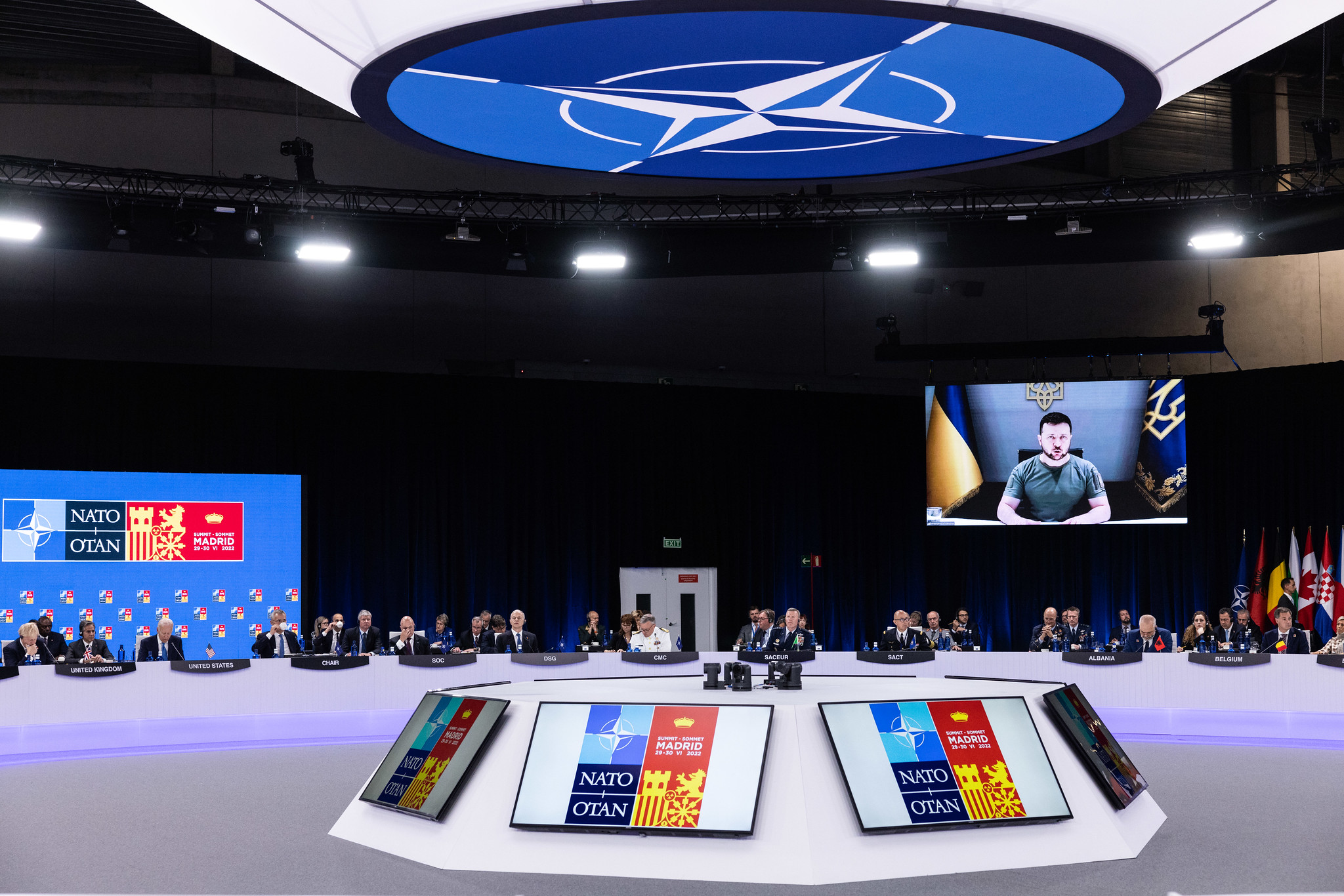
at the same summit those present joined to support sending long-range missiles to the Ukrainians, weapons fully capable of reaching cities, power grids, industrial plants and other targets deep inside Russia. So: No troops, plenty of offensive hardware.
Scholz confirmed what everyone already knows, that NATO officers and trained personnel are in Ukraine operating weapons such as the Patriot and NASAM air defense system, the HIMARS multiple launch rocket system, the British–French Storm Shadow cruise missile (SCALP–EG in France), and many other complex weapons provided to Ukraine.”
Consortium News,PATRICK LAWRENCE: The Russians in Ukraine, March 6, 2024
Recent disclosures provide an incomplete inventory of the West’s covert activities in Ukraine. There is more than we have been told, surely.
You may have read or heard about the freakout that ensued after Emmanuel Macron convened a summit of European leaders in Paris last week. At a press briefing afterward, the French president allowed that NATO may at some point send troops to Ukraine to join the fight against Russian military forces.
The Paris gathering precipitated a significant moment of truth, if we can call it such. Scholz, who is on a knife’s edge politically in part for his government’s support for Ukraine, immediately asserted that Germany would not send its Taurus long-range missiles to Ukraine because German troops would have to go with them, as the Ukrainians could not operate them on their own.
Look at the British, Scholz added indelicately. When they send their Storm Shadow missiles (and I must say I love the names the West’s arsenal minders come up with for these things) British personnel have to go with them.
Yikes! Such indiscretion.
As Stephen Bryen reported in his Weapons and Strategy newsletter, “The British cried foul and accused Scholz of ‘flagrant abuse of intelligence.’” Abuse of intelligence is a new one on me, but never mind. Bryen, who follows these matters closely as a former Defense Department official, continued:
“Scholz confirmed what everyone already knows, that NATO officers and trained personnel are in Ukraine operating weapons such as the Patriot and NASAM air defense system, the HIMARS multiple launch rocket system, the British–French Storm Shadow cruise missile (SCALP–EG in France), and many other complex weapons provided to Ukraine.”
There we have it — or there we have had it, if covertly, for a long time.
Before I go further, let me suggest a couple of thoughts readers can tuck somewhere in the corners of their minds for later consideration.
One, Russia’s intervention in Ukraine two years ago last month was unprovoked. Two, all the Kremlin’s talk about the threat of NATO hard by its southwestern border is nothing more than the distortion and paranoia of “Putin’s Russia,” as we must now refer to the Russian Federation.
It went this way in Paris last week. At the presser following the summit Macron was asked whether Ukraine’s Western backers were considering deploying troops in Ukraine. The French president replied that while European leaders had not reached any kind of agreement, the idea was certainly on the table when they gathered at Elysée Palace.
And then this:
“Nothing should be ruled out. We will do anything we can to prevent Russia from winning this war.”
Instantly came the vigorous objections. The Brits, the Spanish, the Italians, the Poles, the Slovakians, the Hungarians: They all said in so many words, “No way.” Even Jens Stoltenberg, NATO’s war-mongering sec-gen, objected to Macron’s assertion.
No one was more vehement on this point than Olaf Scholz. “What was agreed among ourselves and with each other from the very beginning also applies to the future,” saith the German chancellor, “namely that there will be no ground troops, no soldiers on Ukrainian soil sent there by European countries or NATO states.”
Plenty of Offensive Hardware
O.K., but at the same summit those present joined to support sending long-range missiles to the Ukrainians, weapons fully capable of reaching cities, power grids, industrial plants and other targets deep inside Russia. So: No troops, plenty of offensive hardware.
Last week The New York Times published a long takeout on the Central Intelligence Agency’s presence and programs in Ukraine, which extend back at least a decade and almost certainly much further……………………………………………………………………………………………………………………………..
“If NATO is so much against sending troops to Ukraine,” he asks, “why doesn’t NATO demand that the soldiers already there be sent home?”
Over-Invested in the Conflict
Excellent question. My answer: The Western powers, radically over-invested in Ukraine’s confrontation with Russia, are panicking as the Armed Forces of Ukraine retreat in the face of Russian advances and as support for this folly wanes on both sides of the Atlantic.
If anything, the covert presence of Western personnel in Ukraine may increase.
It is obvious that Ukraine is losing its war against Russia, and at a faster pace than most analysts seem to have anticipated even last autumn. I am reading reports now that the final collapse of the AFU may prove three or so months away. …………………………………………………………………….
The Ukraine crisis is merely the latest phase of the West’s long campaign to surround the Russian Federation up to its borders, destabilize it and finally subvert it. Regime change in Moscow was and remains the final objective.
This is not a war in defense of “Ukrainian democracy” — a phrase that causes one either to laugh or do the other thing. It is the West’s proxy war, start to finish, Ukrainians cynically cast as cannon fodder, expendable stooges.
Russia had no choice when it intervened two years ago, this after eight years’ patience as the Europeans — Germany and France, this is to say — broke every promise they made by way of supporting a settlement. The Americans didn’t break any promises because they never made any — and no one would take them seriously if they had.
I come to the judgment I offered when the war that began in 2014 erupted into open conflict two years ago. The Russian intervention was regrettable but necessary. I took some stick for this view back in 2022. I learn lately it is recorded in some European intelligence files as if it were a major transgression.
Australian Prime Minister Anthony Albanese has been referred to the International Criminal Court as an accessory to genocide in Gaza, making him the first leader of a Western [Western?] nation to be referred to the ICC under Article 15 of the Rome Statute.
A team of Australian lawyers from Birchgrove Legal, led by King’s Counsel Sheryn Omeri, have spent months documenting the alleged complicity and outlining the individual criminal responsibility of Mr Albanese in respect to the situation in Palestine.
The 92-page document, which has been endorsed by more than one hundred Australian lawyers and barristers, was yesterday submitted to the Office of ICC Prosecutor, Karim Khan KC.
The document sets out a number of actions taken by the PM and other ministers and members of parliament, including Foreign Minister Wong and the Leader of the Opposition, for the Prosecutor to consider and investigate. These include:
Freezing $6 million in funding to the primary aid agency operating in Gaza – UNRWA – amid a humanitarian crisis based on unsubstantiated claims by Israel after the International Court of Justice had found it plausibly to be committing genocide in Gaza.
Providing military aid and approving defence exports to Israel, which could be used by the IDF in the course of the prima facie commission of genocide and crimes against humanity.
Ambiguously deploying an Australian military contingent to the region, where its location and exact role have not been disclosed.
Permitting Australians, either explicitly or implicitly, to travel to Israel to join the IDF and take part in its attacks on Gaza.
Providing unequivocal political support for Israel’s actions, as evidenced by the political statements of the PM and other members of Parliament, including the Leader of the Opposition.
Ms Omeri KC said the case was legally significant because it focused exclusively on two modes of accessorial liability.
“The Rome Statute provides four modes of individual criminal responsibility, two of which are accessorial,” Omeri said.
“In relation to accessorial liability, a person may be criminally responsible for a crime set out in the Rome Statute if, for the purpose of facilitating the commission of that crime, that person aids, abets or otherwise assists in the commission of the crime, or its attempted commission, including by providing the means for its commission.
“Secondly, if that person in any other way contributes to the commission of the crime or its attempted commission by a group, knowing that the group intends to commit the crime.”
Ms Omeri KC said the Article 15 communication had been carefully drafted by those instructing her and was now a matter for the Prosecutor to consider.
“The Office of the Prosecutor of the ICC is already pursuing an ongoing investigation into the situation in the State of Palestine, which it has been conducting since March 2021,” Omeri said.
“That includes investigating events which have occurred since 7 October 2023. This Article 15 communication will add to the evidence available to the Prosecutor in relation to that situation.
“The Article 15 communication is of a piece with recent domestic legal cases brought against Western leaders in a number of countries such as in the US, against President Biden, and most recently, in Germany, against, among other senior government ministers, Chancellor Scholz.
“These cases demonstrate a growing desire on the part of civil society and ordinary citizens of Western countries to ensure that their governments do not assist in the perpetration of international crimes, especially in circumstances where the ICJ has found a plausible case of genocide in Gaza.”
Principal solicitor at Birchgrove Legal, Moustafa Kheir, said his team had twice written to Mr Albanese, putting him on notice and seeking a response on behalf of the applicants who make up a large consortium of concerned Australian citizens, including those of Palestinian ethnicity.
Mr Kheir said communications were ignored on both occasions.
“Since October we have attempted communications with our Prime Minister as we reasonably believe that he and members of his cabinet are encouraging and supporting war crimes committed by Israel against Palestinian civilians through their political and military assistance,” Kheir said.
“The Prime Minister has ignored our concerns and given the limited avenues we have for recourse under national law, we have been left with little option but to pursue this Article 15 communication to the International Criminal Court.
“Our communication has been endorsed by King’s Counsel Greg James AM and well over 100 senior counsel and barristers, retired judges, law professors and academics from around Australia who wish to test the strength of international law to hold their own democratic leaders accountable given the barriers we face to do it nationally.
“As lawyers and barristers, it is impossible to sit back and watch sustained breaches of international law while Albanese continues to refer to the perpetrator as “a dear friend.”
The money that Washington allocates for Kiev supports jobs in America, the high-ranking State Department official has said.
Washington spends most of the money allocated as aid for Ukraine on weapons production at home, Acting US Deputy Secretary of State Victoria Nuland said in an interview with CNN this week.
Commenting on the pending aid package which Congress failed to approve before going on winter recess, Nuland said she has “strong confidence” that it will pass, as it addresses America’s own interests.
“We have to remember that the bulk of this money is going right back into the US economy, to make weapons, including good-paying jobs in some forty states across the US,” she stated, adding that support for Ukraine in America “is still strong.”
Lawmakers in the House of Representatives blocked a bill requested by US President Joe Biden for an aid package for Kiev worth $60 billion, most of which is earmarked for weapons, earlier this month. They are expected to restart discussions on the package after they reconvene on February 28.
US Secretary of State Antony Blinken also recently said that roughly 90% of the financial assistance for Ukraine is spent on domestic production of weapons and equipment. At a press conference on December 20, he said additional tranches would “benefit American business, local communities, and strengthen the US defense industrial base.”
According to Germany’s Kiel Institute, which tracks international support for Kiev, Washington allocated nearly €68 billion ($73.7 billion) in aid for Ukraine between January 24, 2022 and January 15, 2024, including roughly €43 billion ($46.6 billion) in military aid.
However, Kiev has been increasingly demanding more aid from its Western backers. Several days ago, Ukrainian President Vladimir Zelensky warned visiting American legislators that Kiev would “lose the war” against Russia without Washington’s assistance, according to US Senate Majority Leader Chuck Schumer.
Russia has criticized the US and other Western states for their military support for Kiev, arguing that it is only dragging out the conflict.
According to a recent survey from the Harris Poll and the Quincy Institute, a growing number of Americans do not support US military aid to Kiev unless it is tied to peace talks. Only 22% of respondents said Washington should continue ‘unconditionally’ providing Ukraine with financial assistance, while 48% said new funding must be conditioned on progress toward a diplomatic solution. Around 30% said the US should halt all aid.
Workers from Texas to Ohio benefit from Washington’s campaign to procure arms for Kiev, Lloyd Austin has claimed
The Ukraine conflict is a boon for the US economy as it has allowed more jobs to be created in the American military-industrial sector, Defense Secretary Lloyd Austin has said.
Speaking at a meeting of the White House Competition Council on Tuesday, the Pentagon chief promised that Washington would continue to push for a stronger defense industry, particularly in light of the conflict between Ukraine and Russia.
Austin claimed that American military assistance to Kiev has not only “saved lives” and kept Ukraine in the fight, but has also strengthened the US economy.
“These investments have expanded facilities and created jobs for American workers. And the weapons that we’ve sent to Ukraine to help defend itself are made in America by American workers nationwide — from Texas, to Ohio, to Arizona,” he added.
The Ukraine conflict has also highlighted the need to improve military production, according to Austin, who stressed coordination with Washington’s allies. He further urged US lawmakers to adopt a national security package which would earmark $60 billion for Kiev. The legislation remains stalled in Congress due to opposition from Republicans, who have demanded that the White House address the security crisis on the border with Mexico.
The US has been Ukraine’s main military backer, providing Kiev with around $45 billion in arms between January 2022 and January 2024, while total commitments have reached more than $70 billion, according to the Kiel Institute for the World Economy. Reports have suggested that the US push to arm Ukraine has put a significant strain on the country’s own stockpiles.
While officials in the administration of President Joe Biden have argued that most of the funds for Ukraine are being spent inside the US, some Republicans have criticized the White House for allocating taxpayer dollars to foreign nations instead of directly tackling issues at home.
According to a December poll by the Pew Research Center, 31% of Americans believe the US is providing too much support to Ukraine, while 29% say the current level of assistance is about right.
Russia has repeatedly denounced Western arms shipments to Ukraine, warning that they will only prolong the conflict. Russian Foreign Ministry spokeswoman Maria Zakharova said in December that the US would likely continue to fuel the Ukraine conflict in 2024, as long as it gets away with drawing funds from American taxpayers
here is currently about one infectious disease for every two people in Gaza, according to data released by the Gaza Health Ministry, as experts warn that the avoidance of a large epidemic so far has been “lucky.”
In a statement on Monday, Gaza health officials said that they have detected 1 million cases of infectious diseases in Gaza, a situation that the ministry called “extremely catastrophic.”
Because of Israel’s six month-long blockade of food, water, electricity, medicine and other basic hygienic needs, cases of infectious diseases like diarrhea, chickenpox, and respiratory, staph and urinary tract infections have been fiercely spreading across the region for months.
Just in December, the UN Relief and Works Agency for Palestine Refugees (UNRWA) and the health ministry reported that they had documented 360,000 cases of infectious diseases in shelters, though this was likely an undercount. Since then, that number has grown three-fold, over the course of just about three months.
According to Al Jazeera, “the ministry stressed that the Israeli occupation deliberately caused an unspeakable humanitarian and health catastrophe, which contributed to the spread of epidemics and infectious diseases.” Further in its statement, the ministry confirmed reports that Palestinians in northern Gaza are dying of starvation due to “famine that has exceeded global levels due to the scarcity of water and food,” per Al Jazeera.
The spread of disease is worsened by Israel’s systematic destruction of the Palestinian health system and depletion of any medical supplies in Gaza. Almost all drugs are scarce or nonexistent in the region, with even basic pain medication like acetaminophen reserved for extreme cases like severe burns or amputations.
According to the ministry, Israel has killed 364 health care workers amid its genocidal assault and arrested 269 others. Israeli forces have also destroyed 32 hospitals and 53 health centers, and targeted 126 ambulances with attacks, officials said.
Israel’s food blockade and starvation campaign has made Palestinians especially vulnerable to diseases, as their immune systems have been weakened by malnutrition; according to Al Jazeera, at least 16 children have died in northern Gaza due to malnutrition and dehydration.
This combination of malnutrition, dehydration and a lack of proper medical resources makes even basic illnesses potentially deadly.
Health experts are warning that the spring season could worsen the disease crisis dramatically. Communicable diseases like diarrhea and hepatitis A spread faster with warmer temperatures, especially since there is hardly any hygiene left to speak of — like working toilets and showers — and Palestinians are living in severely overcrowded areas due to Israel’s blockade.
Many experts are especially concerned about cholera — a bacterial disease spread through contaminated food and water which, if it took hold, would spread extremely quickly and have deadly results.
“Something like cholera, if introduced into the Gaza Strip, would result in a really massive epidemic for the reasons you can imagine: It would be extremely transmissible because people are living on top of each other, there’s not enough water, not enough sanitation,” warned Francesco Checchi, an epidemiologist specializing in diseases in crisis at the London School of Hygiene and Tropical Medicine, in an interview with Time.
“It’s the perfect environment for a massive epidemic to take hold,” Checci went on. “And perhaps we’ve just been a little lucky so far that one hasn’t.”
What’s the Choice between Labour and the Green Party on energy?
Set against the Government’s ever-incredibly shrinking net zero commitments, Labour’s own shrinking net zero commitments in its ‘Green Prosperity Plan’ still look substantially better. But is this a difference big enough for environmentally conscious people to vote Labour? Or is Labour abandoning the climate struggle so much that people should go for the Green Party instead?
These are troubling questions for Labour supporters who put climate policy at the top of their to-do lists. Most troubling is the fact that Labour’s programme seems to ignore the benefit of converting the nation away from using natural gas and towards use of heat pumps…………………………………………………………………………………..
Then there is the clean power plan. This is supposed to have all electricity generated from non-fossil fuels by 2030………………………………………………………….
Nuclear black hole
Indeed, Labour may end up pouring a lot of the money intended for other types of green energy down the black hole that will open as the Government seriously starts the Sizewell C project. That project will be a terrible public spending/consumer bill disaster compared even to Hinkley C. This is because unlike Hinkley C the construction cost overruns will be borne by the UK Government and the UK energy consumers, and not by EDF. Sizewell C may not come online until after 2050. This new nuclear would in practice, anyway, make little difference to the need to balance fluctuating renewable energy supplies. Labour’s proposals mention small modular reactors (SMRs), a fantasy concept that is getting nowhere across the planet. If nuclear reactors were best small, they would not have become bigger! More wasted money!
Green Party and extra spending
The Green Party of England and Wales (GPEW), by contrast, is promising an extensive programme of green energy investment. They will say more in the forthcoming manifesto.
However, in March 2023 they called for £37 billion annual spend to pay for insulation, plus a range of support measures for different types of renewable energy and replacing gas boilers with heat pumps.
True, much of it would rely on borrowing money. However, a significant portion of the funding is based on a promise to raise a new wealth tax as well as the promise held out by Labour for more windfall taxes on oil and gas. In addition, the Green Party has called for carbon taxes to fund measures, the carbon taxes to be levied on ‘the biggest polluters’. Avoiding spending money on nuclear power (which the Green Party opposes) will release a lot of funds for green energy compared to Labour………………………………………………………………….
Public Ownership
The Green Party also supports a lot more public ownership of energy compared to Labour. I certainly support the nationalisation of the domestic energy supply sector. This will cost very little for the state to buy – arguably nothing since the consumer will no longer have to pay bail-outs for bankrupt suppliers. It has always been a nonsense to say that this retail supply market is competitive……………………………………………… more https://davidtoke.substack.com/p/labour-versus-green
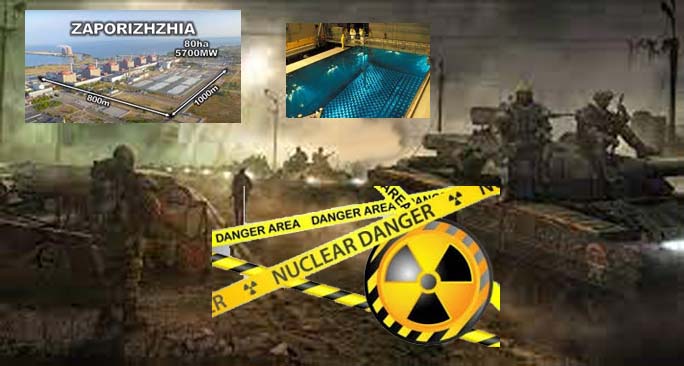
Greenpeace today warned that any plans by Russia to restart reactors at the Zaporizhzhia nuclear plant would be a further step closer to a potential nuclear disaster and must be stopped.
The environmental organization has restated its demand for the International Atomic Energy Agency (IAEA) Director General to state clearly to Rosatom, the Russian state nuclear corporation, that restart of any of the reactors cannot be permitted.
The IAEA Director General is traveling to Moscow for meetings with Rosatom Director General Alexey Likhachev. On 4th March, the second anniversary of the Russian attack on the Zaporizhzhia plant, Greenpeace, together with the deputy head of the regional administration, held a press conference in Zaporizhzhia city. The focus of the event was the Zaporozhzhia nuclear plant crisis, including the reactor restart threats and nuclear emergency planning.
on October 27, 1962, a nuclear war was averted not because President Kennedy and Premier Khrushchev were doing their best to avoid war (they were), but because Capt. Vasily Arkhipov had been randomly assigned to submarine B-59.”
This is but one of countless examples where global and military history has been dramatically altered by chance and luck. On Oct. 27, 1962, the world was extremely lucky. The question that Robert Oppenheimer would surely ask is, will we be so lucky the next time?
One of the blockbuster films of the past year, “Oppenheimer,” tells the dramatic story of the development of the atomic bomb and the physicist who headed those efforts, J. Robert Oppenheimer. But despite the Manhattan Project’s success depicted in the film, in his latter years, Oppenheimer became increasingly worried about a nuclear holocaust resulting from the proliferation of these weapons.
Over the past 80 years, the threat of such nuclear annihilation was perhaps never greater than during the Cuban missile crisis of 1962.
President John F. Kennedy’s secretary of state, Dean Acheson, said that nuclear war was averted during that crisis by “just plain dumb luck.” As I detail in my forthcoming book, “The Random Factor,” nowhere was the influence of chance and luck more evident than on Oct. 27, 1962.
Russian missiles next door
To set the stage, a cold war of hostilities between the U.S. and the communist Soviet Union began almost immediately following World War II, resulting in a nuclear arms race between the two during the 1950s and continuing through the 1980s.
As a part of the Cold War, the U.S. was extremely concerned about countries falling under the Soviet communist influence and umbrella. That fear was magnified in the case of Cuba.
Tensions between the U.S. and Cuba had dramatically escalated following the failed 1961 U.S. attempt to overthrow revolutionary leader Fidel Castro and his communist ruling party. Known as the Bay of Pigs invasion, its failure proved to be a major embarrassment for the Kennedy administration and a warning to the Castro regime.
In May 1962, Castro and Soviet leader Nikita Khrushchev agreed to secretly deploy strategic nuclear missiles in Cuba, with the intention of providing a strong deterrent to any potential U.S. invasion in the future. The Russian missiles and equipment would be disassembled and shipped aboard freighters bound for Havana, then be reassembled on-site.
On Oct. 14, a high-flying U.S. U-2 spy plane photographed the construction of a missile launch site in western Cuba. This marked the beginning of the 13 days in October known as the Cuban missile crisis.
After heated deliberations with his cabinet and advisers, Kennedy decided on a naval blockade surrounding Cuba to prevent further Soviet ships from passing through. In addition, Kennedy demanded removal of all missiles and equipment already in Cuba.
This began a standoff between the U.S. and Russia. Ultimately, the missiles were disassembled and removed from Cuba. In exchange, the U.S. removed its Jupiter ballistic missiles from bases in Turkey and Italy.
An improvement notice has been served over shortfalls in arrangements for storing alkali metals at Dounreay.
Buildings used to store these metals, predominantly sodium, were leaking in rainwater – with pools observed where the containers were being kept.
The notice was served by the Office for Nuclear Regulation (ONR) on Nuclear Restoration Services (NRS), formerly Magnox Ltd.
ONR inspectors judged that the prolonged period of exposure to moist and damp conditions was resulting in degradation of the barriers for safe storage of the chemicals.
Although no-one was harmed as a result of these shortfalls, and there were no radiological consequences, ONR concluded that there was potential for serious personal injury if workers had been exposed to the hazardous materials.
A POLICE force who employed Sarah Everard’s killer Wayne Couzens at the Sellafield site in Cumbria has said it ‘deeply regrets’ his service in the organisation, after a report was released highlighting failings made by a number of police forces in the years prior to Sarah’s death. Wayne Couzens joined the Civil Nuclear Constabulary (CNC) on March 7 2011 and left on September 9 2018. He left the CNC to transfer to the Metropolitan Police Service. On joining the CNC, he served for eight months at Sellafield before transferring to the Dungeness site in Kent, where he was based for the rest of his service.
New York Times , 4 Mar 24 [Awesome graphics] By W.J. HenniganW. J. Hennigan writes about national security for Opinion.
Today, the mechanisms of peace aren’t moving as swiftly as the machinery of war.
THE RISK OF NUCLEAR CONFLICT IS RISING.
NUCLEAR NATIONS ARE BUILDING UP THEIR ARSENALS, SPEEDING TOWARD THE NEXT ARMS RACE.
IS ANYONE PAYING ATTENTION?
Today’s generation of weapons — many of which are fractions of the size of the bombs America dropped in 1945 but magnitudes more deadly than conventional ones — poses an unpredictable threat.
It hangs over battlefields in Ukraine as well as places where the next war might occur: the Persian Gulf, the Taiwan Strait, the Korean Peninsula.
This is one story of what’s at stake — if even one small nuclear weapon were used — based on modeling, research and hundreds of hours of interviews with people who have lived through an atomic detonation, dedicated their lives to studying nuclear war or are planning for its aftermath.
Nuclear war is often described as unimaginable. In fact, it’s not imagined enough.
By W.J. HenniganW.J. Hennigan writes about national security for Opinion.
IF IT SEEMS ALARMIST to anticipate the horrifying aftermath of a nuclear attack, consider this: The United States and Ukraine governments have been planning for this scenario for at least two years.
In the fall of 2022, a U.S. intelligence assessment put the odds at 50-50 that Russia would launch a nuclear strike to halt Ukrainian forces if they breached its defense of Crimea. Preparing for the worst, American officials rushed supplies to Europe. Ukraine has set up hundreds of radiation detectors around cities and power plants, along with more than 1,000 smaller hand-held monitors sent by the United States.
Nearly 200 hospitals in Ukraine have been identified as go-to facilities in the event of a nuclear attack. Thousands of doctors, nurses and other workers have been trained on how to respond and treat radiation exposure. And millions of potassium iodide tablets, which protect the thyroid from picking up radioactive material linked with cancer, are stockpiled around the country.
But well before that — just four days after Russia launched its invasion of Ukraine, in fact — the Biden administration had directed a small group of experts and strategists, a “Tiger Team,” to devise a new nuclear “playbook” of contingency plans and responses. Pulling in experts from the intelligence, military and policy fields, they pored over years-old emergency preparedness plans, weapon-effects modeling and escalation scenarios, dusting off materials that in the age of counterterrorism and cyberwarfare were long believed to have faded into irrelevance.
The playbook, which was coordinated by the National Security Council, now sits in the Eisenhower Executive Office Building, next to the West Wing of the White House. It has a newly updated, detailed menu of diplomatic and military options for President Biden — and any future president — to act upon if a nuclear attack occurs in Ukraine.
At the heart of all of this work is a chilling conclusion: The possibility of a nuclear strike, once inconceivable in modern conflict, is more likely now than at any other time since the Cold War. “We’ve had 30 pretty successful years keeping the genie in the bottle,” a senior administration official on the Tiger Team said. While both America and Russia have hugely reduced their nuclear arsenals since the height of the Cold War, the official said, “Right now is when nuclear risk is most at the forefront.”
Russian President Vladimir Putin reminded the world of this existential danger last week when he publicly warned of nuclear war if NATO deepened its involvement in Ukraine.
The risk of nuclear escalation in Ukraine, while now low, has been a primary concern for the Biden administration throughout the conflict, details of which are being reported here for the first time. In a series of interviews over the past year, U.S. and Ukrainian officials spoke on condition of anonymity to discuss internal planning, diplomacy and ongoing security preparations.
And while it may cause sleepless nights in Washington and Kyiv, most of the world has barely registered the threat. Perhaps it’s because an entire generation came of age in a post-Cold War world, when the possibility of nuclear war was thought to be firmly behind us. It is time to remind ourselves of the consequences in order to avoid them.
Imagine a nuclear weapon is launched.
The missile is launched. Once its solid-fuel rocket motor burns out, the warhead plunges back toward Earth.
A third of a mile above the ground, it explodes.
Its plutonium core and surrounding contents — so delicately pieced together inside — convert into ionized gas and electromagnetic waves within a millisecond.
Temperatures inside the explosion reach millions of degrees, hotter than the surface of the sun.
A roar equal to 10,000 tons of TNT quakes the ground below. A massive fireball blooms so quickly that it seems instantaneous.
Nearly everything flammable below ignites: wood, plastics, oil. Small animals burst into flame, then turn to ash.
Ruptured gas and downed electricity lines fuel an inferno that can rage for miles.
The firestorm consumes so much oxygen that it can suffocate people sheltering inside their cars or homes.
Then there is the shock wave, a rumbling force that expands in every direction, racing at supersonic speeds.
Buildings, trees and other living things are torn apart and thrown at one another.
Near the explosion’s epicenter, buildings heave, sag and crumble. Scalding hot glass and debris shoot like shrapnel into everything in their path. Dry leaves crackle like popcorn and disappear in the blazing heat.
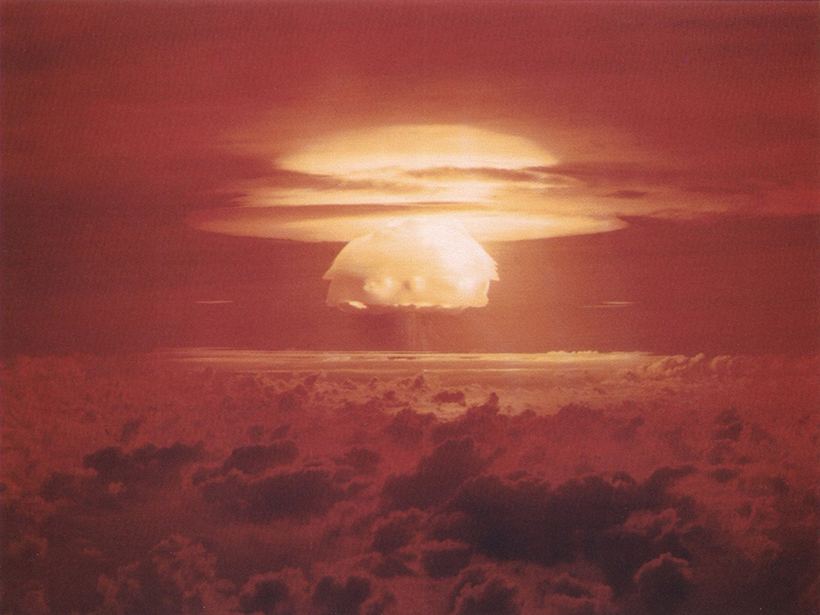
The wreckage — what once was asphalt, steel, soil, glass, flesh and bone — is suctioned into the roiling stem of a mushroom cloud rising for miles.
The cloud appears like a living thing. Its colors change from white to yellow to red to black, billowing into the sky until it eclipses the sun.
Screams for help — and for death — can be heard everywhere, but help is not on the way. Finding a doctor or a nurse is nearly impossible. Most medical workers in the immediate area are dead or injured. Those who survive are quickly overwhelmed.
Then, darkness. There’s a discordant ringing. The air is thick with smoke and debris. Breathing in is difficult — spit out a mouthful of dust and glass fragments, only to take in another.
EVEN AFTER LAST week’s nuclear threat, few believe that Mr. Putin will wake up one day and decide to lob megaton warheads at Washington or European capitals in retaliation for supporting Ukraine. What Western allies see as more likely is that Russia will use a so-called tactical nuclear weapon, which is less destructive and designed to strike targets over short distances to devastate military units on the battlefield.
The strategic thinking behind those weapons is that they are far less damaging than city-destroying hydrogen bombs and therefore more “usable” in warfare. The United States estimates Russia has a stockpile of up to 2,000 tactical nuclear warheads, some small enough they fit in an artillery shell.
But the detonation of any tactical nuclear weapon would be an unprecedented test of the dogma of deterrence, a theory that has underwritten America’s military policy for the past 70 years. The idea stipulates that adversaries are deterred from launching a nuclear attack against the United States — or more than 30 of its treaty-covered allies — because by doing so they risk an overwhelming counterattack.
Possessing nuclear weapons isn’t about winning a nuclear war, the theory goes; it’s about preventing one. It hinges upon a carefully calibrated balance of terror among nuclear states.
After the nuclear age began in 1945, the United States and the Soviet Union were locked in an arms race. Each side amassed tens of thousands of nuclear arms.
Over time, nuclear weapons became symbols of national power and prestige. Other nations in Europe and Asia developed their own arsenals.
The dangerous, costly arms buildup pushed Washington and Moscow to the brink of confrontation, before a gradual warming in relations led to mutual reductions.
In the decades since, overall nuclear stockpiles have shrunk, but the number of nuclear powers has increased to nine
…………………………………………… Moscow has made implicit and explicit nuclear threats throughout the war to scare off Western intervention. Around this time, however, a series of frightening episodes took place.
On Oct. 23, Defense Minister Sergei Shoigu of Russia made a flurry of phone calls to the defense chiefs of four NATO nations, including Defense Secretary Lloyd Austin, to say Russia had indications that Ukrainian fighters could detonate a dirty bomb — a conventional explosive wrapped in radioactive material — on their own territory to frame Moscow.
……………………………………………………… If the Russian leader was indeed inching toward the brink, he stepped back.
…………………………………….. IMAGINE THE DAMAGE THE WEAPON WOULD WREAK ON PEOPLE AND THE ENVIRONMENT………………………………………………………………………………………………………………………………..
India, which has continuing tensions over its borders with China and Pakistan, is fielding longer-range weapons.
Pakistan is developing new ballistic missiles and expanding nuclear production facilities.
North Korea, which has an arsenal of several hundred missiles and dozens of nuclear warheads, regularly threatens to attack South Korea, where the U.S. keeps about 28,500 troops.
China, which has publicly expressed its desire to control the U.S.-allied island of Taiwan by force if necessary, is increasing its nuclear arsenal at a “scale and pace unseen since the U.S.-Soviet nuclear arms race that ended in the late 1980s,” the Congressional Commission on the Strategic Posture of the United States concluded in October.
So while Washington has been helping Ukraine prepare for a nuclear attack, Taiwan or South Korea could be next. The National Security Council has already coordinated contingency playbooks for possible conflicts that could turn nuclear in Taiwan, the Korean Peninsula and the Middle East. Iran, which has continued its nuclear program amid Israel’s war on Hamas in Gaza, has amassed enough enriched uranium to build several weapons if and when it chooses.
During this time of widening conflict, the rising nuclear threat is especially destabilizing: A nuclear explosion in Ukraine or Gaza, where tens of thousands of civilians have already been killed or injured, would sizeably escalate either conflict and its humanitarian toll………………………………………………………………………………………………………………………………………………………………………………..
THIS ISN’T AN easy time for adversaries to be making big leaps of faith, but history shows it’s not impossible to forge deals amid international crises.
The Limited Test Ban Treaty, which prohibits nuclear tests in the atmosphere, in space and underwater, was signed by the United States, Britain and the former Soviet Union in 1963, less than a year after the Cuban missile crisis. Negotiations over the first Strategic Arms Limitation Talks, which froze the number of American and Soviet long-range, nuclear-capable missiles, were concluded less than two months after the United States bombed Haiphong Harbor in Vietnam in 1972, damaging some Soviet ships. Several close calls in Europe during the Cold War contributed to a sweeping collection of agreements between Washington and Moscow that capped the number of each nation’s strategic weapons, opened communication channels and amplified monitoring and verification measures.
…………………………………………………………………………………… The United States is now preparing to build new nuclear warheads for the first time since 1991, part of a decades-long program to overhaul its nuclear forces that’s estimated to cost up to $2 trillion. The outline of that plan was drawn up in 2010 — in a much different security environment than what the country faces today. This administration, or the next one, could make the political case that even more weapons need to be built in response to the expansion and modernization of other nations’ arsenals, particularly Russia’s and China’s.
BEHIND A NONDESCRIPT door on the fifth floor of the State Department building in Washington, down the hall from the former offices of the director of the Manhattan Project, a windowless control room provides a direct channel between the world’s two biggest nuclear powers.
The National and Nuclear Risk Reduction Center was established in 1988 as a 24-hour watch station to facilitate the information exchange required by various arms control treaties and security-building agreements, mostly between the United States and Russia…………………………………
Today, the mechanisms of peace aren’t moving as swiftly as the machinery of war.
………………….. The National and Nuclear Risk Reduction Center is adding translating services for Persian, Mandarin, Korean and other languages in case more nuclear nations express an interest in sharing information to reduce the risk of an inadvertent conflict.