Satellites burning up in our atmosphere may not be as harmless as first thought

Business Insider, Marianne Guenot , Mar 2, 2024
- Spacecraft burning up in the atmosphere are leaving behind metal particles.
- Scientists are racing to understand if that affects the climate.
- One risk is that these particles may spark rainbow-colored clouds that damage the ozone layer.
Satellites and spacecraft burning up in our atmosphere are leaving metal particles in the stratosphere — and scientists are worried it could harm our planet.
About 10% of the particles floating around the stratosphere now come from the aerospace industry, and we don’t know if this could impact the climate.
One risk is that these new particles could seed polar stratospheric clouds, which are spectacular rainbow-colored clouds that can damage the ozone layer, experts told Business Insider.
“This is a good demonstration of how important it is to have the basic research on the stratosphere,” Daniel Murphy, a research scientist at the National Oceanic and Atmospheric Administration Chemical Science Lab, who led a survey of the particles, told BI.
“There is a whole phenomenon here that we didn’t expect out and we don’t fully understand the implications,” he said.
Stratospheric particles can shape the ozone layer
…..This crucial layer of the atmosphere, mostly contained in the stratosphere, protects us from ultraviolet radiation from the sun. It was frequently splashed across the headlines about 40 years ago when scientists raised the alarm about gaping holes growing over the poles made by chlorofluorocarbons (CFCs) rising up uncontrolled to the atmosphere…………………………………………………
Metal from satellites and spacecraft is vaporizing into the atmosphere
Murphy and his colleagues recently conducted a survey of the state of stratospheric particles over Alaska using a sensitive detector aboard NASA’s WB-57 high-altitude research plane.
The findings, published in the peer-reviewed journal PNAS in October 2023, revealed that about 10% of the stratospheric sulfuric acid particles they picked up could not be explained by natural causes………………………………………………………………………………………………………………………….
We’re realizing how little we know

With launch costs going down, the number of satellites orbiting the planet is only expected to grow to over 50,000 by 2030, up from about 8,000 now. Many of these satellites are expected to have a short lifetime.
“If you multiply those numbers out, a satellite will be reentering the atmosphere on average about once an hour,” said Murphy.
Within the next few decades, Murphy and his co-authors estimate aerospace debris could make up 50% of the particles in the stratosphere, which makes the need to understand what they do even more pressing.
Spacecraft decommissioning is only part of the equation, said Chipperfield.
“There’s an increasing number of rocket launches for small satellites and tourism, which burn kerosene or other fuels that emissions in the atmosphere. Then some satellites and orbit have fuel like iodine that can come back to the atmosphere. And then the demise,” he said………………………………………………………………………………. more https://www.businessinsider.com/satellites-burn-atmosphere-particles-stratosphere-climate-ozone-2024-2
—
NewsReal: How Serious Are Western Leaders About Full-on War With Russia?
We heard last week that some EU leaders, notably French president Macron, want to send Western armed forces into Ukraine in order to ‘stop Russia from winning’. We know that their armed forces ARE already in Ukraine, but the implication of recent fighting-talk is that they’re considering escalating the current ‘proxy war’ to ‘the next level’.
How serious ARE Western leaders about doing this? They sound convinced that there is no other way, but are they just ‘posturing’?
We may soon find out because, in the meantime, unless SOMETHING changes, Trump and other populists’ victories are going to end Western hegemony and thus profitable war-making. What better way to stave off revolution at home than by sending would-be revolutionary males off to a bloody war…
Finland’s Olkiluoto nuclear power station to be disconnected for 37 days
The Olkiluoto-3 nuclear power plant in Finland – the first of its type
in Europe – will be disconnected from electricity production on 2 March
for its first annual outage, owner and operator Teollisuuden Voima Oyj
said. Regular electricity production began at the 1,600 MW EPR unit one
year ago with full commercial operation on 1 May.
TVO said the planned
outage is expected to last 37 days. The lengthy duration is due to the
technical characteristics of the plant type and the large number of
periodic tests and maintenance activities to be carried out during the
outage, TVO said. “As OL3 is the largest nuclear power plant unit in
Europe, there is a considerable number of components and equipment that
need to be serviced.” The plan for the Olkiluoto-3 outage includes some
1,900 different activities with almost 6,500 work phases.
Nucnet 1st March 2024
Nuclear news – week to 4 March 2024

Some bits of good news – Passion for compassion: the group working to make the Commons kinder. Major research suggests humans can break free from tribalism **************************************
TOP STORIES. US Refuses to Assure UK Judges That Assange Won’t Be Executed If He’s Extradited. Atlantic Council report lays out options and possible first use of nuclear weapons against China over Taiwan.
Texas wildfires continue to pose threat to Pantex nuclear weapons plant, and climate change will bring further threats to nuclear facilities. USA is littered with nuclear sites that could face danger from natural disasters.
Nuclear space-based ASAT weapons – A brief international legal perspective.Get These Rich People Off the Moon.
AI’s craving for data is matched only by a runaway thirst for water and energy.
Climate. New Research from Antarctica Affirms the Threat of the ‘Doomsday Glacier,’ but Funding to Keep Studying It Is Running Out.
Noel’s notes. My dilemma in writing about nuclear issues. Nuclear power stopping climate change? IT’S THE OTHER WAY AROUND!
*************************************************************
NUCLEAR ISSUES
CLIMATE. Texas: Disaster declaration issued and nuclear weapons plant shut down as wildfires spread. Texas nuclear weapons facility pauses as fires spread. https://www.youtube.com/watch?v=Ba_oPoqeF2Y
Buried Nuclear Waste From the Cold War Could Resurface as Ice Sheets Melt. USA is littered with nuclear sites that could face danger from natural disasters. Could climate change release 35 swimming pools’ worth of nuclear waste? Or worse… unleash a world-ending pandemic? These are the terrifying unexpected consequences of melting ice.
| ECONOMICS. Tax-payer to take bigger financial risks under new payment plan for nuclear command satellites. The Cost of Nuclear War in Space. Inside Europe’s only nuclear unicorn — and its €1bn fundraising hopes. | ENERGY. Blackout risks due to Hinkley nuclear delays – a reminder of the value of energy efficienc | ENVIRONMENT. Oceans. Release of fourth batch of Fukushima treated radioactive water begins. China is ‘unlikely’ to lift import ban on Japanese seafood as dumping continues. Conservationists say Hinkley C nuclear water intakes could wipe out Atlantic salmon stocks |
| LEGAL. Fish v. electricity: Could Salem nuclear plant be shut down?More indictments for Ohio nuclear crimes. | MEDIA. When The Imperial Media Report On An Israeli Massacre.Einstein’s Postwar Campaign To Save The World From Nuclear Destruction.Chilling Pictures of Hiroshima Weeks After Atomic Bomb Dropped Emerge. | OPPOSITION to NUCLEAR . IT’S TIME TO CANCEL SIZEWELL C |
| POLITICS. Has the nuclear lobby hijacked Welsh democracy? “Big nuclear reactor” lobby fights back against “Small nuclear reactor” lobby. | POLITICS INTERNATIONAL and DIPLOMACY. Biden administration restores Trump-rescinded policy on illegitimacy of Israeli settlements. France accused of ‘unacceptable’ behaviour after demanding UK taxpayer cash for Hinkley nuclear. Chris Huhne Letter: UK Taxpayers shouldn’t be footing bill for EDF failings. Macron stands by remarks on NATO troops in Ukraine. | SAFETY. New nuclear reactors shielded from liability if federal law passes Congress: Price-Anderson Act renewal hidden from public. Mistakes, Misfiring and Trident: Britain’s Flawed Nuclear Deterrence |
| SPACE. EXPLORATION, WEAPONS. Satellites burning up in our atmosphere may not be as harmless as first thought. | TECHNOLOGY.So They’re Experimenting With Military Robots In Gaza Now.SMRs are useless says the UK’s leading SMR analyst! – 100 per cent renewable energy is much more feasible!UK spurns European invitation to join ITER nuclear fusion project.Microsoft’s Kate Crawford: ‘AI is neither artificial nor intelligent’.Finland’s Olkiluoto nuclear power station to be disconnected for 37 days. | WASTES.“Tritium Removal” A Report on the Proposed MCECE nuclear Facility at Chalk River also at https://nuclear-news.net/2024/03/03/2-b1-tritium-removal-a-report-on-the-proposed-mcece-facility-at-chalk-river/Burying nuclear waste the best of a bad bunch of options.Locals oppose nuclear waste plant – parish council. Holderness: Government guarantees plans for nuclear waste dump will be dropped for good.New plans to dismantle Rosyth dead nuclear submarines left for decades.Nuclear Restoration Services has been served with an “improvement notice” after the ONR found failures in its storage methods |
| WAR and CONFLICT.Wargame simulated a conflict between Israel and Iran: It quickly went nuclear. Israeli Calls to ‘Nuke Gaza’ Are Undermining the Nuclear Ambiguity Doctrine.After Macron touted troops to Ukraine, Putin warns West of nuclear war risk.Leaked Russian military files reveal its nuclear strike rules.Full Transcript of German Top Military Officials’ Leaked Plot to Attack Crimean Bridge.China urges largest nuclear states to negotiate a ‘no-first-use’ treaty.NewsReal: How Serious Are Western Leaders About Full-on War With Russia? | WEAPONS and WEAPONS SALES. France creates coalition to arm Ukraine with long-range weapons. Victoria Nuland accidentally reveals the true aim of the West in Ukraine. Setting the record straight on Canada’s arms exports to Israel. The reawakening of America’s nuclear dinosaurs. Iran Reduces Near-Weapons-Grade Stockpile, Defying Expectations. |
So They’re Experimenting With Military Robots In Gaza Now

CAITLIN JOHNSTONE, MAR 4, 2024, https://www.caitlinjohnst.one/p/so-theyre-experimenting-with-military?utm_source=post-email-title&publication_id=82124&post_id=142282788&utm_campaign=email-post-title&isFreemail=true&r=1ise1&triedRedirect=true&utm_medium=email
One of the most horrifying facts about this dystopia we live in is that large-scale military operations are routinely used as testing grounds for new war machinery, using human bodies as guinea pigs for experimentation in what amount to giant blood-soaked field laboratories — all to benefit the strategic objectives of empire managers and the profit margins of the military-industrial complex.
Haaretz has a new article out titled “Gaza Becomes Israel’s Testing Ground for Military Robots”, which reports that “In an effort to avoid harming soldiers and dogs, the IDF has been experimenting with the use of robots and remote-controlled dogs in the Gaza War.”
(Yeah because my gosh, can you imagine how terrible it would be if Israeli soldiers and dogs got harmed while carrying out a genocide?)
The article’s author Sagi Cohen reports that drone-mounted robot dogs and remotely controlled bulldozers are two of the new apocalyptic horrors currently being battle-tested in Gaza, saying “defense establishment officials confirm that there has been a leap in the use and sophistication of robots on the battlefield.” Which is a pretty disconcerting sentence to read.
This news comes out at the same time as a new Public Citizen report warning of the likely imminent arrival of autonomous weapons systems which will kill people with minimal instruction from human pilots, saying “The most serious worry involving autonomous weapons is that they inherently dehumanize the people targeted and make it easier to tolerate widespread killing, including in violation of international human rights law.”
The more normalized robots become within the world’s militaries the closer we come to this point, and steps are already being taken in that direction. As Common Dreams’ Thor Benson notes in an article about the Public Citizen report, “Israel has purchased and at times deployed self-piloting, lethal drones.”
Back in January I wrote that “Gaza is a live laboratory for the military industrial complex,” saying “Data is with absolute certainty being collected on all the newer weapons being field-tested on human bodies in Gaza (just like has been happening in Ukraine) to be used to benefit the war machine and arms industry.”
What sparked this comment at the time was reports and first-hand witness accounts we’d seen coming out about the prolific use of IDF “sniper drones” in Gaza since October, with Israeli forces frequently shooting Palestinians with quad drones armed with rifles. Copious records are most assuredly being compiled on the effectiveness of these newer weapons and tactics in ending human lives, which will then be used to help market those weapons to other states and to improve their efficiency in killing.
When I say this is most assuredly happening, I am not being hyperbolic for effect. Author and journalist Antony Loewenstein gave a lengthy interview on The Chris Hedges Report back in December about Israel’s long and extensively documented history of using Gaza as a testing ground for new weapons, spyware, surveillance and security systems, AI, drones, and tactics, which has profited scores of corporations and enabled Israel to become a player of outsized success in the global weapons industry.
“Israel’s drones, surveillance technology including spyware, facial recognition software, and biometric gathering infrastructure, along with smart fences, experimental bombs, and AI-controlled machine guns are all tried out on the captive population in Gaza, often with lethal results,” says Hedges in introduction. “These weapons and technologies are then certified as ‘battle-tested’ and sold around the world.”
This doesn’t only happen in Gaza. This past September The Wall Street Journal published an article titled “The War in Ukraine Is Also a Giant Arms Fair,” subtitled “Arms makers are getting orders for weapons being put to the test on the battlefield.” In January of last year CNN published a report titled “How Ukraine became a testbed for Western weapons and battlefield innovation,” with one source saying that Ukraine is “absolutely a weapons lab in every sense because none of this equipment has ever actually been used in a war between two industrially developed nations.”
And of course we are also seeing this same phenomenon in Africa. In 2021 Mintpress News published a report by Scott Timcke titled “West Africa is the Latest Testing Ground for US Military Artificial Intelligence” about this very same trend. In 2020 Libya saw what is believed to have been the first time a human being has ever been killed by a fully automated drone attack — that is, killed without the machine having been told to do so by a human.
The other day we discussed how the empire’s great weakness is that it depends on normal human beings to carry out its orders and turn the gears of the machine. If you look at the facts and think about them for a moment, it’s not hard to see how the empire managers are hoping to overcome this weakness in the future.
Could climate change release 35 swimming pools’ worth of nuclear waste? Or worse… unleash a world-ending pandemic? These are the terrifying unexpected consequences of melting ice
By ROB WAUGH FOR DAILYMAIL.COM, 2 March 2024 https://www.dailymail.co.uk/sciencetech/article-13135571/Could-climate-change-release-35-swimming-pools-worth-nuclear-waste-worse-unleash-world-ending-pandemic-terrifying-unexpected-consequences-melting-ice.html
- Buried ‘nuclear city’ and swimming pools’ worth of nuclear waste
- Frozen viruses have already begun to infect human beings
- READ MORE As melting ice exposes new oil reserves, oil giants move in
Around the world, glaciers and permafrost are melting, and in some places the retreating ice is releasing buried secrets people hoped would remain forgotten.
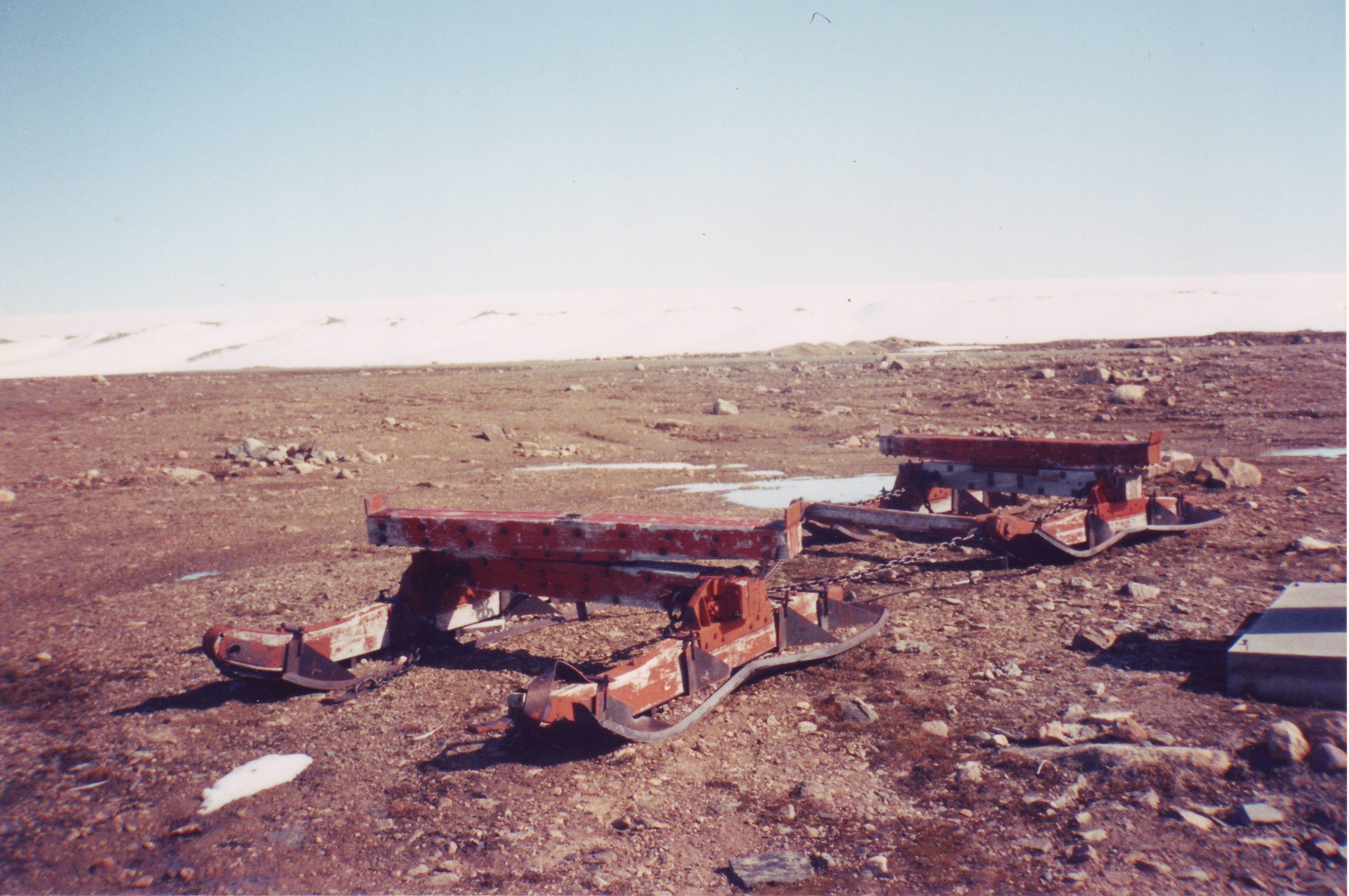
Rising waters have exposed a secret Greenland nuclear base that engineers thought would never resurface as well as a radioactive ‘Tomb’ at the site of American nuclear tests.
And while it sounds far-fetched, very credible experts have warned that the next pandemic may well come from ancient pathogens buried in the ice, or even from diseases harbored by frozen dead Neanderthals.
The ‘secret nuclear city’ under Greenland’s ice
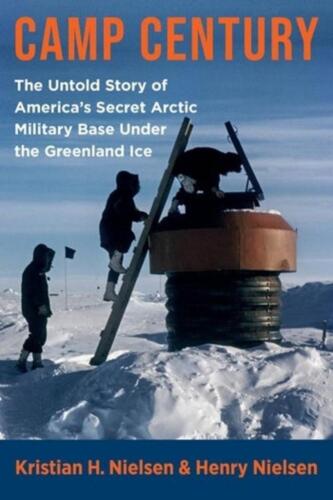
Camp Century in Greenland is a secret nuclear-powered ‘city under the ice’, where U.S. Army engineers carried out weapons research
The base has been abandoned for almost half a century, but now poses a serious concern over nuclear waste.
Powered by a portable nuclear generator, Camp Century was built in 1959, and was built to host 200 soldiers, with a plan to expand the base to hold 600 ballistic missiles.
‘Camp Century’ was abandoned in 1967, but the nuclear reactor at the base – which also had a hospital and a church in its tunnels – has long since been removed, but radioactive waste remains.
When the Army Corps of Engineers (ACE) left the base, they assumed that frigid temperatures and falling snow would keep the nuclear waste there forever.
In total, the waste is equivalent to the mass of 30 Airbus A320 airplanes – and researchers now fear that it could be released into the sea.
A 2016 study suggested that the nuclear waste could be released into the sea this century, but newer measurements at the base suggest that this will not happen until 2100.
‘Tomb’ of poison at nuclear test site
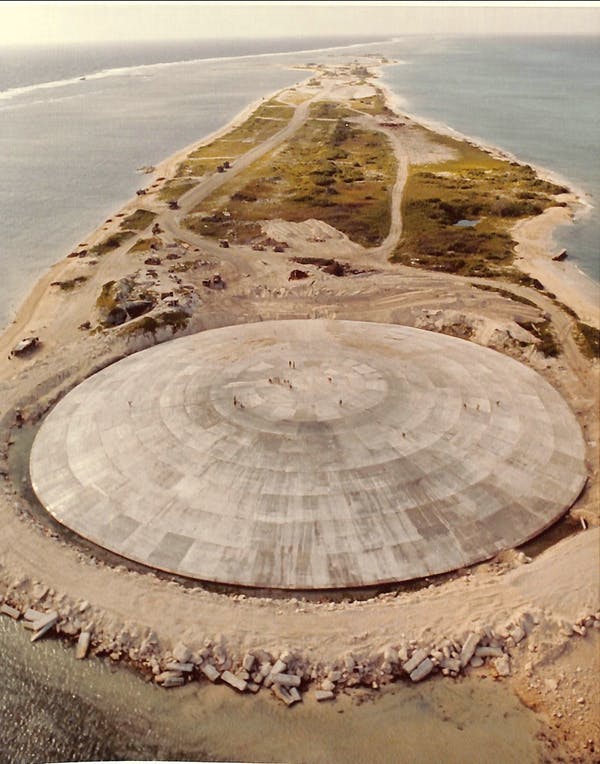
In the Marshall Islands, a huge ‘lid’ which locals know as ‘The Tomb’ covers 31 million cubic feet of nuclear waste – equivalent to the volume of 35 Olympic-sized swimming pools.
The islands were the site of American nuclear tests, but the U.S. military also shipped in waste from the mainland.
From 1946 to 1958, America conducted 67 nuclear tests in the South Pacific.
The concrete ‘lid’ officially known as the Runit Dome was built on Enewetak Atoll in the Marshall Islands to contain radioactive material from American nuclear tests in the 1950s.
Some studies have suggested that radiation levels near the site are similar to those near Chernobyl and the waters around the dome are rising every year.
Changing temperatures are causing the lid to crack, while rising waters are lapping at the atoll.
Plutonium – and a lost hydrogen bomb?
A 1968 plane crash scattered plutonium from American nuclear weapons over the ice in Greenland, which could be released by global warming.
The U.S. military assumed that the Thule air base in Greenland would be rapidly attacked in a nuclear war, so kept nuclear-armed bombers in the air to fly towards Russia in the event of an attack.
The Thule incident saw large amounts of radioactive plutonium dispersed onto the ice sheet, as a cabin fire in a B-52 bomber forced the crew to bail out.
Conventional explosives inside the four B28FI thermonuclear bombs detonated, spreading radioactive waste.
But the uranium-235 fissile core of one of the bombs was never found, despite a search with submarines.
Reports in the decades since have suggested that the lost bomb is lying under the seabed.
Frozen viruses and the next pandemic
Researchers have warned that the next pandemic could come from melting ice.
Genetic analysis of soil and lake sediment near the highest Arctic freshwater lake, Lake Hazen, suggests that the risk of ‘viral spillover’ may be high close to melting glaciers.
‘Spillover’ is where a virus infects a new host for the first time – and analysis of viruses and potential hosts in the lakebed suggests this risk may be higher near to melting glaciers.
Researchers at Ohio State University found genetic material from 33 viruses, 28 of which were unknown, in the Tibetan plateau in China, putting their age at 15,000 years old.
Viruses from Neanderthals
Other researchers have warned of viruses unleashed by melting permafrost: one-quarter of the northern hemisphere sits on top of permanently frozen ground – known as permafrost, but large areas are now melting as the world warms.
There are already examples of this – with a 2016 anthrax outbreak in Siberia attributed to melting permafrost exposing an infected reindeer carcass.
Previously researchers have warned that global warming and thawing ice might unearth diseases such as smallpox frozen into the corpses of victims, with a few infectious particles enough to revive the pathogen.
As permafrost thaws due to climate change, virologist Jean-Michel Claverie has warned that ancient viruses harbored in the long-frozen ground could be released.
Claverie explains that if an ancient pathogen eradicated Neanderthals, for instance, their frozen remains might still contain infectious viruses that could be unleashed as ice melts.
Claverie told Bloomberg News, “With climate change, we are used to thinking of dangers coming from the south.
“Now, we realize there might be some danger coming from the north as the permafrost thaws and frees microbes, bacteria and viruses.”
Claverie’s team previously revived giant viruses from up to 48,000 years ago – and the veteran scientist has warned that there could be even more ancient viruses in the ice, some of which could potentially infect humans.
Frozen poison in the ice
Polar regions have acted as a ‘chemical sink’ for the planet, locking away poisons in the ice – but melting ice could release this.
A study in Geophysical Research Letters found huge reserves of the toxic heavy metal mercury frozen in Arctic permafrost.
The amount may be 10 times higher than all the mercury pumped into the atmosphere from industry in three decades.
Paul Schuster, a U.S. Geological Survey hydrologist, “This is a complete game-changer for mercury. It’s a natural source, but some of it will be released through what we’re doing with climate change.”
Mercury is released by industry, volcanic eruptions and rock weathering – but what’s less clear is what will happen if the ‘pool’ in the Arctic is released.
The reawakening of America’s nuclear dinosaurs

“The issue of plutonium pit aging is a Trojan horse for the nuclear weaponeers enriching themselves through a dangerous new arms race,” said Jay Coghlan, executive director of Nuclear Watch New Mexico, an anti-nuclear group based in Santa Fe. “Future pit production is not about maintaining the existing, extensively tested stockpile. Instead, it’s for deploying multiple new warheads on new intercontinental ballistic missiles.”
The risk of a false alarm is enough reason to “do away with the ICBMs altogether,……. “An accidental launch is a major contributor to the overall probability of an all out nuclear war.”
Are America’s plutonium pits too old to perform in the new Cold War? Or are new ones necessary?
by Alicia Inez Guzmán February 28, 2024
Sprinkled across five western states, in silos buried deep underground and protected by reinforced concrete, sit 400 intercontinental ballistic missiles. Each of those missiles is equipped with a single nuclear warhead. And each of those warheads is itself equipped with one hollow, grapefruit-sized plutonium pit, designed to trigger a string of deadly reactions.
All of those missiles are on “hair-trigger alert,” poised for hundreds of targets in Russia — any one of which could raze all of downtown Moscow and cause hundreds of thousands of casualties.
Except — what if it doesn’t? What if, in a nuclear exchange, the pit fizzles because it’s just too old? In that case, would the weapon be a total dud or simply yield but a fraction of its latent power?
Outwardly, at least, that’s the question driving a whole new era of plutonium pit production at Los Alamos National Laboratory (LANL) and the Savannah River Plutonium Processing Facility in South Carolina.
Plutonium is widely known as one the most exotic elements in the periodic table. Trace amounts of it have been identified in the earth’s crust, though all of what’s now used for America’s nuclear weapons is manmade. For decades, these pits were cast with plutonium and other materials at a breakneck pace, installed in warheads and strapped into missiles that were regularly upgraded and modernized in an escalating arms race with the Soviet Union. Plutonium pits were never intended to grow old and senescent.
“We never worried about aging,” said Siegfried Hecker, former director of LANL and one of the world’s leading plutonium experts. “Because bombs were supposed to be out there for a dozen years or so.”
It’s been almost 40 years since America’s Cold War pit factory at Rocky Flats near Denver was raided by FBI agents and closed due to environmental crimes — among them, releases of radioactive effluent into nearby waterways. In that time, pit production went largely dormant, the USSR collapsed, arms reductions treaties were signed, stockpiles reduced and underground testing ceased.
Now, as the nuclear industrial complex awakens from its long slumber, the resumption of plutonium pit production has emerged as a deeply polarizing and political act. Anti-nuclear activists have accused the federal government of exploiting the uncertainty around aging to jumpstart a nearly $60 billion dollar manufacturing program. They assert that the real reason America has resumed the production of pits is for the purpose of introducing a new generation of warheads for a new generation of missiles — the first of which is the Sentinel, one of the most complex and expensive programs in the history of the U.S. Air Force.
The Sentinel ICBM has the capability to carry three separate warheads, each with its own target. Earlier versions of America’s missiles could and did have such capabilities and the option has remained available, but with post-Cold War weapons reductions, the number of warheads per missile was also reduced — one warhead, one intercontinental ballistic missile. As the U.S., Russia and China barrel toward a new Cold War, the U.S. will likely eschew such a convention in a matter of years.
“The issue of plutonium pit aging is a Trojan horse for the nuclear weaponeers enriching themselves through a dangerous new arms race,” said Jay Coghlan, executive director of Nuclear Watch New Mexico, an anti-nuclear group based in Santa Fe. “Future pit production is not about maintaining the existing, extensively tested stockpile. Instead, it’s for deploying multiple new warheads on new intercontinental ballistic missiles.”
But to hear Hecker and his colleagues tell it, the question of pit aging is as scientifically vexing as it is political. Plutonium, to its most studied acolytes, borders almost on the mystical, its properties as capricious as the human body. It can be brittle or soft under some circumstances or turn to powder when heated in air. It can disintegrate at room temperature. It can bombard itself with radiation and mar its own internal lattice structure. It can even heal that damage within fractions of a second, if not over the course of several decades.
According to Glenn Seaborg, former chair of the Atomic Energy Commission and the chemist credited with first synthesizing the element for use in weapons, plutonium is “so unusual as to approach the unbelievable.”
This quality means that even the most knowledgeable experts are reluctant to commit themselves to anything definitive when it comes to a plutonium pit’s long-term prospects. Does it last 50 years? One hundred? Is it comparable to a human body, whose bones weaken and whose mind is vulnerable to dementia? Or is it actually impervious to entropy?
“It is difficult to quantify how much the properties of a plutonium pit will change over time,”…………………………………………………………………………………………..
Too big to fail”
The political machinations actually go back even further — to the 2010 concession that President Barack Obama made to a largely Republican bloc of Senators: arms control in exchange for a revival of the nuclear weapons complex.
………………….
the beginning of a new era, a tectonic modernization of America’s nuclear triad — land, sea and air — now projected to cost close to $2 trillion over the next 30 years. That’s roughly the GDP of Canada.
Plutonium pits, of course, represent only a small fraction of the cost. That mind-boggling figure reflects a total reimagining of the nation’s entire nuclear program, complete with brand new ballistic missile submarines, 400 new Sentinel intercontinental ballistic missiles, tactical aircrafts, underground silos and 800 nuclear warheads.
The Sentinel program alone — cost, $131 billion — is a juggernaut. “I think this program has become too big to fail for an entrenched part of the military-industrial-congressional complex,” said Geoff Wilson, an expert on federal defense spending at the Independent watchdog, Project on Government Oversight.
…………………………………………………………. America’s warheads have also been regularly surveilled since the late 1990s, leading even the most cautious scientists to vouch for their reliability. In 2000, Raymond Jeanloz — a professor of earth and planetary science and astronomy at University of California, Berkeley— found little evidence that defects in those warheads increased significantly with age. His statistical models, based on data culled from LANL and LLNL, showed that such defects, if any, accumulate at the glacial rate of one percent per quarter century…………………….
A new Cold War
In the unthinkable scenario that a Sentinel is deployed, it would propel like a rocket beyond earth’s atmosphere and into space. As it reached its apogee, the missile would shed all its pieces and the warheads would descend toward their intended targets, half a world away.
For now, though, the Sentinel is barely a reality. The program is so complex and vastly over budget that some in the arms control community are calling for its complete cancellation. Experts question such a missile’s ability to deter China without provoking Russia. Other critics consider the plan to build new weapons as a dangerous return to the policies of the Cold War.
As for the plutonium pits, LANL is behind by at least four years; Savannah River by at least six. Indeed, to meet the projected quota demanded for future weapons could take decades.
But even if all the timetables are met, intercontinental ballistic missiles will always be a “danger to the world as long as they are on launch-on-warning alert,” according to Frank N. von Hippel, senior research physicist and professor of public and international affairs emeritus with Princeton University’s Program on Science and Global Security.
The risk of a false alarm is enough reason to “do away with the ICBMs altogether,” as he and others — presidents, retired commanders, and at least one secretary of defense, alike — have long campaigned to do. “An accidental launch is a major contributor to the overall probability of an all out nuclear war.”…………………………. And once an ICBM is launched, there would be no way to stop it
US Vetoes UN Resolution Condemning Israel for Flour Massacre
Nearly 1,000 Palestinians were killed and wounded after Israeli forces opened fire on people surrounding an aid convoyby Kyle Anzalone March 1, 2024
The US vetoed a UN Security Council resolution condemning Israel for a massacre of civilians surrounding an aid convoy in Gaza, a motion supported by all other member states. The Israel Defense Forces has acknowledged its soldiers fired on the crowd.
On Thursday, hundreds of Palestinians were killed and injured by Israeli soldiers as they gathered around an aid convoy near Gaza City. As some people took aid off the trucks, the IDF claimed the same Palestinians approached Israeli soldiers nearby, saying its troops felt “endangered” and opened fire. The killing has been dubbed the “flour massacre.”
More than 100 Palestinians were killed in the shooting and ensuing panic, while at least 750 others were injured. Tel Aviv has attempted to blame the Palestinians for the deaths, saying the violence was caused by the mob. Washington has claimed it needs more information to assess the incident.
While Israeli troops would bear responsibility for the carnage whether they fired upon civilians or merely incited a deadly stampede, doctors treating the victims said most of the injuries were gunshot wounds. Some outlets report that IDF forces also fired artillery or tank shells at the desperate crowd………………………………………………………………….
With a growing number of Palestinians on the brink of starvation amid dire food shortages, aid convoys have increasingly faced unrest from hungry crowds – most crucially in devastated northern Gaza, where aid shipments have all but ground to a halt. Jens Laerke, the spokesman for the UN humanitarian agency OCHA, explained that famine is now almost inevitable, and “once a famine is declared, it is too late for too many people.”
The UN estimates that one in four Palestinians are teetering on the edge of famine. The situation is worst in northern Gaza where one in six children are suffering from acute malnutrition and wasting.
In response to Hamas’ October 7 attack, top Israeli officials declared that Gazans would be cut off from food, water, fuel, and other aid. Tel Aviv has largely followed through with that threat, allowing only a trickle of aid into the besieged coastal enclave.
World Peace Foundation executive director Alex de Waal explained the starvation inflicted on the Palestinians is uniquely horrific in recent history. “Nothing is comparable in terms of the speed and the concentrated effort at destroying what is essential to sustain the life of people – nothing compares to Gaza over the last 75 years. The speed of deterioration of humanitarian conditions is absolutely terrifying,” he said.
Kyle Anzalone is the opinion editor of Antiwar.com, news editor of the Libertarian Institute, and co-host of Conflicts of Interest. https://news.antiwar.com/2024/03/01/us-vetoes-un-resolution-condemning-israel-for-flour-massacre/
New Research from Antarctica Affirms the Threat of the ‘DoomsdayGlacier,’ but Funding to Keep Studying It Is Running Out.
In a worst case scenario, rising global temperatures and marine heatwaves could melt enough of the Thwaites Glacier and other Antarctic ice to raise sea levels 10 feet by the early 2100s.

Inside Climate News, By Bob Berwyn, February 26, 2024
“………………………………………………………….. It took a whole day of sailing just to monitor and map the front of the Thwaites Glacier’s floating shelf, he said, with ice cliffs in some places towering several hundred feet above the water, marking the abrupt edge of an ice expanse about the size of Nebraska and averaging between 2,500 and 4,000 feet thick. If all the ice melts, it would raise average global sea level about 2 feet.
The sediment samples Kirkham and other scientists collected four years ago provided the data for a study published Monday in the Proceedings of the National Academies of Sciences that affirms one of the most serious concerns about Antarctica—that an irreversible meltdown of some of the frozen continent’s ice masses has already started.
“You just can’t ignore what’s happening on this glacier,” said lead author Rachel Clark, a University of Houston ice researcher who also works with the International Thwaites Glacier Collaboration, a team that has been trying to figure out just how fast the vulnerable ice will melt. But, she said the new study is important because it shows that the melting is not just random or limited to one glacier.
“It is part of a larger context of a changing climate,” she said.
Not Just Thwaites
After analyzing the chemistry and other characteristics of seafloor sediment grains from various depths and different locations near the floating edge of the glacier, the team’s members were able to show that the glacier had been relatively stable for nearly 10,000 years, since the end of the last ice age, but that it started to retreat in the mid-1940s.
Shifts in regional winds and associated changes in ocean currents are pushing more relatively warm water toward Antarctica’s frozen fringe, melting the ice and loosening it from rocky seafloor anchor points that have held the floating part of the glacier in place for thousands of years. As the ice melts away from the pinning points, it can float to sea and disintegrate faster, allowing the glacier behind it to accelerate toward the ocean. In the last 30 years, the amount of ice flowing out to sea from the Thwaites and Pine Island glacial areas and their associated floating ice shelves has doubled.
……………………………………the Thwaites Glacier, and the neighboring Pine Island Glacier, have kept retreating since the 1940s. …………………..
While the Thwaites Glacier has been identified as being among the most vulnerable to pinning point loss, a similar pattern of melting and retreat in many other Antarctic glaciers and ice shelves at least since the 1970s was documented in a separate study published Feb. 21 in Nature.
………………………………………………………… “We already seem to have pushed the climate and ice sheet system past certain irreversible thresholds, and need to observe and understand more about Thwaites, not less,” said Pam Pearson, founder and director of the International Cryosphere Climate Initiative. “Pleas of ignorance will be little comfort to future generations displaced by Antarctic sea-level rise that we could have stopped had we only acted in time.” https://insideclimatenews.org/news/26022024/new-research-from-antarctica-affirms-threat-of-doomsday-glacier-but-funding-is-running-out/
Mistakes, Misfiring and Trident: Britain’s Flawed Nuclear Deterrence
Australian Independent Media, March 4, 2024, Dr Binoy Kampmark
Nuclear weapons are considered the strategic silverware of nation states. Occasionally, they are given a cleaning and polishing. From time to time, they go missing, fail to work, and suffer misplacement. Of late, the UK Royal Navy has not been doing so well in that department, given its seminal role in upholding the doctrine of nuclear deterrence. In January, an unarmed Trident II D5 nuclear missile fell into the Atlantic Ocean after a bungled launch from a Royal Navy submarine.
The missile’s journey was a distinctly shorter than its originally plotted 6,000 km journey that would have ended in a location somewhere between Africa and Brazil. In language designed to say nothing yet conceal monumental embarrassment, UK Defence Secretary Grant Shapps called it “an anomaly” while the Labour opposition expressed concern through its shadow defence secretary, John Healey. An anonymous military source was the most descriptive of all: “It left the submarine but it just went plop, right next to them.
The anomaly in question, which Shapps witnessed on board the HMS Vanguard, took place off the coast of Florida during a January 30 exercise at the US’s Navy Port site. Its failure is the second for the missile, which was also tested in 2016 and resulted in its automatic self-destruction after veering off course and heading to the United States. It was therefore galling for the Defence Secretary to then claim in a written statement to Parliament that Trident was still “the most reliable weapons system in the world”, a claim also reiterated by the missile’s manufacturers, Lockheed Martin. With a gamey sense of delusion, Shapps continued to argue that the test merely “affirmed the effectiveness of the UK’s nuclear deterrent, in which the government has absolute confidence. The submarine and crew were successfully certified and will rejoin the operational cycle as planned.”…………………………………………………………………………………..
Even at the best of times, deterrence, as a claim, is the stuff of fluffy fiction, astrological flight and fancy. It is unverifiable, speculative, highly presumptuous. Who is to know if a nuclear weapon will be fired at any point, at any time, against any target, on whatever pretext presents itself?
The madman theory suggests that such a weapon will be deployed, though we are not sure when this might eventuate. Keeping company with such a theory is the rational, mass murderer type who takes comfort in the prospect that 100 humans might survive a holocaust killing billions. Shoot and take your chances. Human stupidity glows with the hope that errors will be healed, and mass crimes palliated.
In actual fact, the true proof of such deterrence would lie in hellish murder: weapons launched, catastrophe ensuing. Those recording such evidence are bound to be done by coarse skinned mutants with plumbing problems.
The Trident misfiring episode can be seen in one of two ways. First, it illustrates the point that we are here because of dumb luck, having survived error, misunderstanding and miscommunication. In the second sense, it yields an uncomfortable reality for the war planners in White Hall: Trident may not work when asked to.
Whether a system fails because of faulty machinery or accident, the problem of misfiring does not go away. At some point, a misfire with potency will result in deaths, though we can perhaps be assured that Trident may simply fail to live up to the heavy sense of expectation demanded of it. We can hope it just plops. https://theaimn.com/mistakes-misfiring-and-trident-britains-flawed-nuclear-deterrence/
Nuclear Restoration Services has been served with an “improvement notice” after the ONR found failures in its storage methods.
The Office
for Nuclear Regulation (ONR) said there were shortfalls in arrangements for
storing alkali metals at Nuclear Restoration Services’ (NRS) Dounreay
site on the coast of northern Scotland. “The storage arrangements for
these materials were inadequate and fell below legal compliance and the
high standards that we expect to see,” said Ian Phillips, ONR’s head of
safety regulation for decommissioning, fuel and waste sites.
Guardian 1st March 2024
US Refuses to Assure UK Judges That Assange Won’t Be Executed If He’s Extradited

UK law prohibits extradition to a country that may impose capital punishment.
By Marjorie Cohn , TRUTHOUT, February 27, 2024
n February 20 and 21, as nearly 1,000 supporters of Julian Assange gathered outside the London courthouse, a two-judge panel of the High Court of Justice presided over a “permission hearing.” Assange’s lawyers asked the judges to allow them to appeal the home secretary’s extradition order and raise issues that the district court judge had rejected without full consideration.
The High Court panel, Dame Victoria Sharp and Justice Jeremy Johnson, were concerned that the U.S. government could execute Assange if he is extradited to the United States, a penalty outlawed in the U.K. Although Assange faces 175 years in prison for the charges alleged in the indictment, there is nothing to prevent the U.S. from adding additional offenses which would carry the death penalty.
The Trump Administration Indicted Assange for Exposing U.S. War Crimes
Assange is charged with 17 counts of alleged violations of the Espionage Act, based on obtaining, receiving, possessing and publishing national defense information. He is accused of “recruit[ing] sources” and “soliciting” confidential documents just by maintaining the WikiLeaks website that stated it accepted such materials. Assange is also charged with one count of “conspiracy to commit computer intrusion” with intent to “facilitate [whistleblower Chelsea] Manning’s acquisition and transmission of classified information related to the national defence of the United States.”
The basis for the indictment, Assange’s lawyers told the panel, is WikiLeaks’s “exposure of criminality on the part of the U.S. government on an unprecedented scale.” Assange is charged for revealing war crimes committed by the United States in Iraq, Afghanistan and Guantánamo Bay. The indictment has nothing to do with Hillary Clinton and the 2016 election or Swedish allegations of sexual misconduct, which have been dropped.
WikiLeaks revealed the “Iraq War Logs” — 400,000 field reports including 15,000 unreported deaths of Iraqi civilians, as well the as systematic rape, torture and murder after U.S. forces handed over detainees to a notorious Iraqi torture squad. The revelations also included the “Afghan War Diary” — 90,000 reports of more civilian casualties by coalition forces than the U.S. military had reported.
In addition, WikiLeaks revealed the “Guantánamo Files,” 779 secret reports with evidence that 150 innocent people had been held at Guantánamo Bay for years, and 800 men and boys had been tortured and abused, in violation of the Geneva Conventions and the Convention Against Torture and Other Cruel, Inhuman or Degrading Treatment or Punishment.
WikiLeaks also revealed the notorious 2007 “Collateral Murder Video,” in which a U.S. Army Apache attack helicopter targeted and killed 11 unarmed civilians in Baghdad, including two Reuters journalists and a man who came to rescue the wounded. Two children were injured. The video contains evidence of war crimes prohibited by the Geneva Conventions.
And WikiLeaks exposed “Cablegate” — 251,000 confidential U.S. State Department cables that “disclosed corruption, diplomatic scandals and spy affairs on an international scale.” According to The New York Times, they told “the unvarnished story of how the government makes its biggest decisions, the decisions that cost the country most heavily in lives and money.”
“These were the most important revelations of criminal U.S. state behavior in history,” Assange attorney Mark Summers argued to the High Court panel.
Assange’s Appellate Issues
Assange is asking the U.K. High Court to review issues of treaty obligations, human rights violations and political persecution.
The U.S.-U.K. Extradition Treaty would allow the U.S. to amend or add charges which could expose Assange to the death penalty, a punishment prohibited in the U.K. In response to questioning by one of the judges, the prosecutor admitted that the U.S. had not provided assurances that Assange would not be subject to the death penalty if extradited.
Article 4(1) of the extradition treaty does not allow extradition for political offenses. Espionage is the “quintessential” political offense, Assange attorney Edward Fitzgerald told the panel. “The gravamen (and defining legal characteristic) of each of the charges is thus an alleged intention to obtain or disclose US state secrets in a manner that was damaging to the security of the US state,” which makes them political offenses, Assange’s lawyers wrote. The defense claimed it was an abuse of process for the United States to pursue extradition of Assange for a political offense……………………………………………………………………………….
“The Most Important Revelation Since Abu Ghraib”
The Collateral Murder video is “the most important revelation since Abu Ghraib,” Summers told the panel. “The cables Assange published disclosed extrajudicial assassinations, rendition, torture, dark prisons and drone killings.” Summers said the Guantánamo Files revealed a “colossal criminal act.” The defense pointed out that WikiLeaks’s revelations actually saved lives. After WikiLeaks published evidence of Iraqi torture centers established by the U.S., the Iraqi government refused President Barack Obama’s request to grant immunity to U.S. troops who committed criminal and civil offenses there. As a result, Obama had to withdraw U.S. forces from Iraq.
The Obama administration, which prosecuted more whistleblowers under the Espionage Act than all prior U.S. administrations combined, considered prosecuting Assange, but feared it would violate the First Amendment. The administration was unable to distinguish what WikiLeaks did from what The New York Times and The Guardian did since they also published documents that Chelsea Manning had leaked.
But the Trump administration did indict Julian Assange. The U.K. arrested Assange and has held him in Belmarsh Prison for nearly five years pending a decision on whether he should be extradited to the U.S. to stand trial.
In January 2021, following a three-week hearing, Baraitser denied extradition after finding that Assange’s mental health was so frail there was a “substantial risk” of suicide if he was extradited to the U.S. because of the harsh conditions of confinement in which he would be held. But she rejected all other legal objections to extradition that Assange had raised.
U.S. “Assurances” That Assange Will Be Treated Humanely
After Baraitser had already ruled, the U.S. came forward with diplomatic “assurances” that Assange would be treated humanely if extradited to the United States. The Biden administration assured the court that Assange: (1) would not be subject to onerous Special Administrative Measures (SAMs) that would keep him in extreme isolation and monitor his confidential communications with his attorneys; (2) would not be housed at the notorious ADX Florence maximum security prison in Colorado; (3) would receive psychological and clinical treatment in custody; and (4) could serve any custodial sentence in Australia.
But the U.S. said the assurances wouldn’t apply if Assange committed a “future act” that “met the test” for the SAMs. That unspecified contingency would be based on a subjective determination of prison authorities with no judicial review.
Although the United States has reneged on nearly identical assurances in the past, the High Court accepted them at face value, saying it was satisfied that the U.S. was acting in good faith, and in December 2021, the High Court reversed Baraitser’s denial of extradition.
However, in a 2023 decision, the U.K. Supreme Court unanimously held that the court has an independent duty to determine the validity of assurances,
writing, “The government’s assessment of whether there is such a risk is an important element of that evidence, but the court is bound to consider the question in the light of the evidence as a whole and to reach its own conclusion.”
In June 2023, a single High Court judge, Jonathan Swift, refused Assange permission to appeal in a cursory three-page ruling. The hearing on February 20 and 21 was an effort by Assange’s legal team to reverse that decision so that the High Court will entertain his appeal.
Assange Redacted Names of Informants to Protect Them
…………………… Several witnesses testified at the 2020 extradition hearing that Assange took great care to ensure that the names were redacted. Other outlets published the unredacted cables before WikiLeaks with no adverse consequences.
………………….Moreover, Brig. Gen. Robert Carr testified at Manning’s court martial that no one was harmed by the WikiLeaks releases. Summers told the panel that Baraitser never balanced the public interest in the disclosures against the fact that no harm came from them.
Conviction of Assange Would Chill Investigate Journalists From Exposing Government Secrets
In November 2022, The New York Times, The Guardian, Le Monde, DER SPIEGEL and El País signed a joint open letter calling on the Biden administration to drop the Espionage Act charges against Assange. They wrote, “Publishing is not a crime,” noting that Assange is the first publisher to be charged under the Espionage Act for revealing government secrets.
The indictment would punish conduct that national security journalists routinely engage in, including cultivating and communicating confidentially with sources and soliciting information from them, shielding their identities from disclosure, and publishing classified information. If Assange is prosecuted and convicted, it will discourage journalists both in the U.S. and abroad from publishing evidence of government wrongdoing.
No publisher has ever been prosecuted under the Espionage Act for disclosing government secrets. The U.S. government has never prosecuted a publisher for publishing classified information, which constitutes an essential tool of investigative journalism.
But rather than dropping Trump’s prosecution of Assange consistent with the position of the Obama-Biden administration, Joe Biden has zealously pursued extradition and prosecution.
Pending House Resolution Would Call for Dismissal of All Charges Against Assange.
On December 13, 2023, House Resolution 934 was introduced in the U.S. House of Representatives by Rep. Paul A. Gosar (R-Arizona), with cosponsors from both political parties. It would express “the sense of the House of Representatives that regular journalistic activities are protected under the First Amendment, and that the United States ought to drop all charges against and attempts to extradite Julian Assange.” The resolution states that the WikiLeaks disclosures “promoted public transparency through the exposure of the hiring of child prostitutes by Defence Department contractors, friendly fire incidents, human rights abuses, civilian killings, and United States use of psychological warfare.”
…………… The conviction of Assange under the Espionage Act, the resolution continues, “would set a precedent allowing the United States to prosecute and imprison journalists for First Amendment protected activities, including the obtainment and publication of information, something that occurs on a regular basis.”
…………..
At the conclusion of the two-day hearing, the High Court panel set a due date of March 4 for further written submissions from the parties. If the court agrees to review at least one of Assange’s appellate issues, there will be a full hearing. Meanwhile, Assange, who is in poor physical and emotional health, remains in prison.
If the High Court denies his right to appeal, Assange can ask the European Court of Human Rights to hear his case. If that court finds “exceptional circumstances” and an “imminent risk of irreparable harm,” it can order provisional measures, including a stay of execution while the case is pending in the European court. But there is a danger that the U.K. could immediately extradite Assange to the United States before the European Court of Human Rights has a chance to consider Assange’s petition.
Get These Rich People Off the Moon.

Other than allowing billionaires and private companies to benefit from taxpayer-funded pipe dreams and advertising, the value of going to the moon for all mankind is not at all clear.
The US military has also expressed an interest in renting Starships for their Space Force cargo and troops — delivering war to poor countries anywhere in the world within one hour.
Despite the mess it makes on Earth, NewSpace investments are growing in popularity among everyman-for-himself superrich techies
BY PETER HOWSON,on behalf of Koohan Paik-Mander
Texas start-up Intuitive Machines has achieved the first moon landing by a private firm. It’s dumping rich people’s detritus on the lunar surface — a grim sign of how the superrich plan to plant their flag beyond our own planet.
Amid tears of joy at their Houston control room, the Texas start-up Intuitive Machines successfully landed on the moon. Their uncrewed lander, known as Odysseus, hitched a ride on a SpaceX rocket last week, touching down near the moon’s south pole on Thursday. After many failed attempts by various private outfits, Intuitive Machines is the first private company to plant a free-market flag on the moon
In January, a different US private venture crashed back to Earth. Astrobotic’s Peregrine lander had been supposed to dispose of at least seventy dead rich people (and one rich dog) on the lunar surface.
Spending billions of dollars dumping odd things in space has become a tradition among the lunar classes. Elon Musk famously sent a Tesla Roadster as the dummy payload for the 2018 Falcon Heavy test flight. Driven by a mannequin in a spacesuit dubbed “Starman,” the car is now an enduring satellite of the sun. You can track him, if you like.
The Japanese isotonic drinks company Pocari Sweat has been trying to leave a can of pop on the moon since 2014. It finally crashed with Astrobotic’s failed $100 million lander. The Japanese still plan to send a hydrogen-powered Toyota “Lunar Cruiser” up there, despite a few explosive setbacks.
Toxic Effects
Other than allowing billionaires and private companies to benefit from taxpayer-funded pipe dreams and advertising, the value of going to the moon for all mankind is not at all clear. British astronaut Tim Peake suggests the microgravity up there might one day enable exotic treatments for all sorts of diseases, albeit expensive treatments for those who can afford them. Aside from body parts, fizzy pop, and “art,” the squillion-dollar landers are packed full of instruments designed for exploring the unknown, before anyone else gets their mitts on it.
So called “NewSpace” companies are on the prowl for profitable rare earth metals, helium-3, and water. Just like the spice of Arrakis, helium-3 is being pitched as “the most precious resource in the universe.” At least it might be if someone invents a use for it. Getting large quantities of water to space is pricey. A stable reservoir will keep plebs alive while they mine for spice. And both hydrogen and oxygen can make the rocket fuel needed to search for shiny things further afield.
It all sounds very exciting. But realizing these fantasies has costs for the rest of us. According to Atrium, a big insurer for rocket-makers, early space-faring outfits should typically expect 30 percent of their launches to end in catastrophic failure. When two separate SpaceX Starship launches in Texas went south last year, toxic particulates rained down on people’s homes. Debris broke windows and caused fires that burned across Boca Chica Park, home to endangered birds and ocelot cats.
“We never gave our consent,” said one indigenous Carrizo-Comecrudo representative at a SpaceX protest in South Texas. “Yet they [SpaceX] are moving forward. It’s colonial genocide of native people and native lands.” Bekah Hinojosa of the Texas environmental group Another Gulf Is Possible claims environmental deregulation, tax breaks, and subsidies have been used by the Texas state government to lure SpaceX in. Meanwhile local indigenous communities who rely on Boca Chica’s fish to feed their families feel their customary land is being sacrificed.
For the Navajo people, the costly blunders are no bad thing. The Navajo hold the moon to be sacred, and consider fly-tipping and mining there an act of profound desecration. According to the Navajo Nation’s president Dr Buu Nygren, “The sacredness of the Moon is deeply embedded in the spirituality and heritage of many Indigenous cultures, including our own.”
Wars on Our Home Planet
Yet, despite the mess they’re making, SpaceX plans on going bigger and bigger.
SpaceX will soon be moving its monster Starship boosters from Boca Chica to the much larger Kennedy Space Center in Florida. Like the Falcon 9, SpaceX’s Starship is designed as a workhorse for frequent, repeated flights. Instead of only a couple of launches per year, Kennedy will start to resemble an airport. The same powerful and destructive super heavy-lift rockets that devastated Boca Chica will be lifting off on a near daily basis from the Florida coast.
The US military has also expressed an interest in renting Starships for their Space Force cargo and troops — delivering war to poor countries anywhere in the world within one hour.
NewSpace is scaling up US geopolitical influence behind a facade of free-market competition. In Indonesia, SpaceX has edged out Beijing to become the country’s satellite launch partner of choice. The partnership was achieved through the personal relationship Musk nurtured with outgoing Indonesian president Joko Widodo. The deal marks a rare instance of a US company making inroads in Indonesia, whose telecommunications sector is dominated by Chinese outfits offering low costs and easy financing. Some see the SpaceX deal as just a sweetener for Musk to build a new Tesla factory somewhere in Indonesia. The electric vehicle-maker has so far signed contracts worth billions for Indonesia’s nickel and other essential materials for the company’s car batteries.
As well as ripping up Indonesia’s pristine forests for luxury car bits, plans to furnish Musk with a new spaceport on the island of Biak, Papua, is fermenting anger among indigenous Warbon peoples. Clearances for the spaceport are reigniting ethnic tensions and military violence. Somewhere between 40 and 150 Papuans protesting the spaceport have been killed by the Indonesian military since the plans were originally unveiled.
Real People Are Gross
Despite the mess it makes on Earth, NewSpace investments are growing in popularity among everyman-for-himself superrich techies.
For them, dealing with today’s real social and environmental problems tends to involve paying icky taxes and/or remunerating their workers fairly. Meanwhile, finding solutions for potential future problems is far more profitable. For billionaires, “longtermism” packages up this predicament beautifully.
Factoring future populations into decision-making models is just a nice, sustainable thing to do. Longtermism on the other hand, is too much of a good thing. It’s an extreme utilitarian, accelerationist ideology asking us to drastically increase rates of economic growth and technological advancement to ensure humanities’ long-term survivability as a multiplanetary species.
Meanwhile, taxes and government interventions are framed as an impediment to growth and innovation. For these longtermists, someone potentially not being born on Mars in the far distant future is in many ways far worse than someone actually dying of a preventable disease or poverty today. Mars guy is super smart and loaded. Unlike the stinky real person, Mars guy is likely to live a long happy life free of dysentery. He’s white because rich people tend to be that way.
If this all sounds a bit fascist, that’s because it is. According to Oxford philosopher Nick Bostrom, widely considered the founding father of longtermism, “blacks are more stupid than whites,” as he once said on an extropian community message board. “I like that sentence and think it is true.” Bostrom then used an offensive slur beginning with “N.” “It seems that there is a negative correlation in some places between intellectual achievement and fertility,” he argued. “If such selection were to operate over a long period of time, we might evolve into a less brainy but more fertile species.” He later apologized for coming across as “racist.”
Thanks in part to Musk, the cost of space travel has dropped considerably. A seat on a Falcon 9 rocket and an eight-day stay on the International Space Station (ISS) now only costs $82 million. Musk predicts his one-way tickets to Mars will cost somewhere between $500,000 to $1 million, a price at which he thinks “it’s highly likely that there will be a self-sustaining Martian colony.” For the poors, Musk has an indentured labor package where workers take out a loan to pay for their tickets, paying them off later by mining for spice or something.
Life on Earth will end one day (we have somewhere between one and five billion years). But the universe will also end. What then? We could just keep on running through the vacuum of a dying universe. Or, instead of living as slaves obsessing over spice and birth quotas for some odious space baron, we could take a leaf from the Navajo’s book, taking the moon for sacred, and mountains, lakes, and rivers, too. If we treat our planet right, we might just live longer and better.
I’ll admit: I wrote two versions of this article, depending on the fate of the Intuitive Machines lander. In 1969, President Richard Nixon did something similar, just in case everyone died onboard Apollo 11. But when it comes to NewSpace, there’s no need for tears or alternative endings.
Private space missions will only ever serve the billionaires, not us.If we make no effort to change direction, we will end up where we are heading.”
After Macron touted troops to Ukraine, Putin warns West of nuclear war risk
The Russian president, in a state of the nation address, upped the ante on Thursday. Should the world be worried about his threat?
Aljazeera, By Mansur Mirovalev, 1 Mar 2024
President Vladimir Putin has threatened to use nuclear weapons if Western powers send soldiers to within striking distance of Russia.
His comments on Thursday, in a state of the nation address, were the kind of remarks usually uttered by Dmitry Medvedev, a Putin ally who served as Russia’s president from 2008-2012 and prime minister until becoming a top security official in 2020………………….
Putin has now upped the ante, responding to French President Emmanuel Macron’s assumption on Monday that a deployment of European troops to Ukraine cannot be “ruled out”………………..
The West has “announced the possibility of sending Western military contingents to Ukraine,” Putin said on Thursday. “The consequences for possible interventionists will be way more tragic.
“They should eventually realise that we also have weapons that can hit targets on their territory. Everything that the West comes up with creates the real threat of a conflict with the use of nuclear weapons, and thus the destruction of civilisation,” he said.
Moscow has the world’s largest nuclear arsenal including a new generation of hypersonic missiles and several times more tactical nuclear weapons than the collective West.
“Now it is Putin who clearly draws a red line about using the nukes,” Kushch said, adding that Macron had probed Putin’s reaction on when Moscow would be ready to launch the nukes…………………………………………………………………………………………………………………………… more https://www.aljazeera.com/news/2024/3/1/how-real-is-putins-threat-to-nuke-the-west
1 This Month
23-25 October – on Zoom – World BEYOND War’s annual global conferenc


Shut down the radiation-damaged Heysham nuclear reactors now
To see nuclear-related stories in greater depth and intensity – go to https://nuclearinformation.wordpress.com

Say No to NASA’s Reckless Nuclear Reactor on the Moon
Say No to NASA’s Reckless Nuclear Reactor on the Moon

-
Archives
- October 2026 (209)
- September 2026 (339)
- August 2026 (330)
- July 2026 (355)
- June 2026 (287)
- May 2026 (306)
- April 2026 (356)
- March 2026 (251)
- February 2026 (267)
- January 2026 (308)
- December 2025 (358)
- November 2025 (359)
-
Categories
- 1
- 1 NUCLEAR ISSUES
- business and costs
- climate change
- culture and arts
- ENERGY
- environment
- health
- history
- indigenous issues
- Legal
- marketing of nuclear
- media
- opposition to nuclear
- PERSONAL STORIES
- politics
- politics international
- Religion and ethics
- safety
- secrets,lies and civil liberties
- spinbuster
- technology
- Uranium
- wastes
- weapons and war
- Women
- 2 WORLD
- ACTION
- AFRICA
- Atrocities
- AUSTRALIA
- Christina's notes
- Christina's themes
- culture and arts
- Events
- Fuk 2022
- Fuk 2023
- Fukushima 2017
- Fukushima 2018
- fukushima 2019
- Fukushima 2020
- Fukushima 2021
- general
- global warming
- Humour (God we need it)
- Nuclear
- RARE EARTHS
- Reference
- resources – print
- Resources -audiovicual
- Weekly Newsletter
- World
- World Nuclear
- YouTube
-
RSS
Entries RSS
Comments RSS

