UK High Court rules that Julian Assange can appeal against extradition to USA
The Conversation, Erin Cooper-Douglas, Deputy Politics + Society Editor 21 May 24 |
Late last night, Wikileaks founder Julian Assange had a win in the UK High Court: he can now appeal his extradition order to the United States
Legal efforts to keep Assange from being sent to the US, where he potentially faces a 175-year jail term for publishing sensitive government documents, have been some of the most protracted in recent memory. Just getting complete permission to appeal took three highly publicised hearings.
As Holly Cullen explains, one of the key grounds for appeal is freedom of expression. And that’s what makes yesterday’s decision, and the appeal that will now follow, legally groundbreaking. Never before has a UK court, nor the European Court of Human Rights, decided whether a potential violation of freedom of expression can stop someone from being extradited.
While the decision will please Assange’s team and his many supporters, the extradition threat still looms. If the appeal, which is likely to be held later this year, is unsuccessful, he could still find himself in the US.
Counteracting the spin of the military-industrial-nuclear-complex this week

Some bits of good news.
Instead of Taking Millions for Their Land, Texas Family Makes a Park Instead
Beavers Are Back in London — and They’re Thriving. Moroccan Farmers Are Banking Traditional Seeds for a Hotter, Drier Future
**************************************
TOP STORIES Julian Assange faces judgment day over US extradition. ‘Bring Julian home’: the Australian campaign to free Assange. https://www.goodnewsnetwork.org/instead-of-taking-millions-for-their-land-texas-family-makes-a-park-instead/
Noel’s notes. A DISAPPOINTING NETFLIX SERIES – Turning Point -the bomb and the cold war. Netflix’s “Turning point. The bomb and the cold war”- Episode 2 – Poisoning the Soil. Dominic Cummings the “evil gnome” who makes us think.
****************************************
NUCLEAR ISSUES
| CLIMATE. Mycle Schneider: Nuclear power is not an option. | CULTURE. Amidst genocide and war, anti-Zionism protesters are demonised as ‘extremists‘. War Culture Hates the Ethical Passion of the Young. | ECONOMICS. Nuclear Weapons at Any Price? Congress Should Say No. Nuclear power station risks hitting taxpayers with £20bn bill. Pension funds need ‘compelling’ returns from UK nuclear projects to invest. |
| EDUCATION. UK nuclear lobby further infiltrates universities with government grants for nuclear fusion. | EMPLOYMENT Warning that Dounreay could be facing ‘prolonged’ industrial action over pay dispute. | ENERGY. Tech firms claim nuclear will solve AI’s power needs – they’re wrong. Think before you click – and three other ways to reduce your digital carbon footprint. |
| HEALTH. Radiation. New Brunswick’s nuclear reactor emits high levels of radioactivity, increasing cancer risk. | MEDIA. Nuclear War Will Only Kill People Already Impacted By Nuclear Weapons. That’s Everyone.. https://www.youtube.com/watch?v=GeMZcgD8PmA | OPPOSITION to NUCLEAR . Protest. RAF Lakenheath protest to make airbase nuclear-free zone. Together Against Sizewell C vows to continue fight after legal challenge rejected by Supreme Court – as the nuclear plant welcomes the news. Indonesia civil society groups raise concerns over proposed Borneo nuclear reactor. |
PERSONAL STORY. The plutonium connection: Why I no longer conduct my research at the University of New Brunswick.
| POLITICS. Ontario’s nuclear option is the wrong path to meet green energy targets. Sen. Lindsey Graham suggests nuking Gaza, says nuking Hiroshima was ‘the right decision’. UK plans new nuclear plant in Scotland despite Scottish government opposition. UK government about to overrule Scotland and impose nuclear stations? UK government planning nuclear site in Scotland – Jack. Scotland’s First Minister Swinney condemns Jack’s menacing idea for nuclear plant in Scotland . We’re all right Jack: No need for nuclear in Scotland. The last thing that Scotland needs is new nuclear power, small or otherwise. LABOUR MUST RULE OUT NEW NUCLEAR REACTOR FOR SCOTLAND. Top Labour donor joins campaign to stop Hinkley nuclear plant. Nuclear Free Local Authorities welcome commitment to recruit new Theddlethorpe GDF Community Partnership Chair at less cost who is local. Welsh Nuclear Free Local Authorities welcome Traws abandonment from New Nuclear plans. The 13 leading sites for a nuclear reactor in Australia – including a dam that supplies drinking water for a major city. | POLITICS INTERNATIONAL and DIPLOMACY. US Says It Won’t Let Iran Build Nuclear Bomb. Dominic Cummings: Zelensky’s no Churchill and Ukraine’s corrupt. Xi outlines solution to Ukraine conflict. US bans China crypto-miner from nuclear base area. China urges US, UK and Australia to stop AUKUS nuclear submarine deal: FM spokesperson. China and Russia Disagree on North Korea’s Nuclear Weapons. |
| PLUTONIUM ALL reactor-produced plutonium is usable in nuclear weapons. | SAFETY. Greenpeace Central and Eastern Europe (CEE) condemn Russian government plans to restart nuclear reactors at the Zaporizhzhia nuclear plant. Military activities near Zaporizhzhya Nuclear Power Plant (ZNPP). MISTAKES THAT CAUSED THE CHERNOBYL DISASTER. https://nuclear-news.net/2024/05/20/1-b-all-reactor-produced-plutonium-is-usable-in-nuclear-weapons/). | SPACE. EXPLORATION, WEAPONS. New report to Congress shows US determined to militarize space |
| SPINBUSTER. “Bouncing-back” and other resilience neologisms championed by the state are inherently at odds with the irreversibility of nuclear waste. Promising the Impossible: Blinken’s Out of Tune Performance in Kyiv. | TECHNOLOGY. EU rebuffs UK attempt to continue collaborating on nuclear fusion experiment -ALSO AT https://nuclear-news.net/2024/05/16/1-b1-eu-rebuffs-uk-attempt-to-continue-collaborating-on-nuclear-fusion-experiment/ Renewable Energy company Neoen to build its biggest battery to shift energy to evening peak in nuclear-dominated Ontario. Small Modular Nuclear Five Times The Price (letter). Canada’s plutonium mishap in India was 50 years ago this week – is history repeating itself now? | URANIUM. Russian uranium ban reopens threat of uranium mining escalation in US. Congress must stop Biden from fueling a Saudi nuclear bomb . |
| WASTES. Australia and the AUKUS nuclear waste-dump clause. Australia risks being ‘world’s nuclear waste dump’ unless Aukus laws changed, critics say. Nuclear waste to be buried 650ft under the English countryside. ALSO AT https://nuclear-news.net/2024/05/19/2-a-nuclear-waste-to-be-buried-650ft-under-the-english-countryside/ Japan starts 6th discharge of Fukushima nuclear-contaminated wastewater. | WAR and CONFLICT. 450,000 Palestinians flee Rafah as Israeli tanks move in. Israel ‘Has Gone to War Against the Entire Palestinian People‘: Sanders. The US a Direct Partner in the Israeli War. Only ‘two countries’ would survive nuclear war after ‘5 billion die in 72 hours‘, says expert. U.S. rejects China’s proposal to ban first use of nuclear weapons. This is what nuclear war in 2024 would look like. Christmas Island veterans receive nuclear testing medals | WEAPONS and WEAPONS SALES. The Arsenal of Genocide: the U.S. Weapons That Are Destroying Gaza. Biden Moves Forward Over $1 Billion in Weapons for Israel as Tanks Push Deeper Into Rafah. Blinken to Zelensky: ‘Here’s another $2 billion to get thousands more Ukraine troops killed for nothing. U.S. conducted first subcritical nuclear test since September 2021. Fifty years after Canada’s plutonium mishap in India, is history repeating itself?. G7 goal of nuclear-free world increasingly challenged. |
‘Bring Julian home’: the Australian campaign to free Assange
Assange’s supporters say what Wikileaks revealed about power and access to information is as relevant today as ever.
Aljazeera, By Lyndal Rowlands 19 May 2024
Melbourne, Australia – At home in Australia, Julian Assange’s family and friends are preparing for his possible extradition to the United States, ahead of what could be his final hearing in the United Kingdom on Monday.
Assange’s half-brother Gabriel Shipton, who spoke to Al Jazeera from Melbourne before flying to London, said he had already booked a flight to the US.
A filmmaker who worked on blockbusters like Mad Max before producing a documentary on his brother, Shipton has travelled the world advocating for Assange’s release, from Mexico City to London and Washington, DC.
Earlier this year, he was a guest of cross-bench supporters of Assange at US President Joe Biden’s State of the Union address.
The invitation reflected interest in his brother’s case both in Washington, DC and back home in Australia. Biden told journalists last month he was “considering” a request from Australia to drop the US prosecution.
Assange rose to prominence with the launch of Wikileaks in 2006, creating an online whistleblower platform for people to submit classified material such as documents and videos anonymously. Footage of a US Apache helicopter attack in Baghdad, which killed a dozen people, including two journalists, raised the platform’s profile, while the 2010 release of thousands of classified US documents on the wars in Afghanistan and Iraq, as well as a trove of diplomatic cables, cemented its reputation.
Shipton told Al Jazeera the recent attention from Washington, DC had been notable, even as his brother’s options to fight extradition in the UK appeared close to running out.
“To get attention there on a case of a single person is very significant, particularly after Julian’s been fighting this extradition for five years,” Shipton told Al Jazeera, adding that he hoped the Australian prime minister was following up with Biden.
We’re always trying to encourage the Australian government to do more.”
A test for US democracy
Assange’s possible extradition to the US could see freedom of expression thrown into the spotlight during an election year that has already seen mass arrests at student antiwar protests.
Shipton told Al Jazeera the pro-Palestinian protests had helped bring “freedom of speech, freedom to assembly, particularly in the United States, front of mind again”, issues he notes have parallels with his brother’s story.
While Wikileaks published material about many countries, it was the administration of former US President Donald Trump that charged Assange in 2019 with 17 counts of violating the Espionage Act.
US lawyers argue Assange is guilty of conspiring with Chelsea Manning, a former army intelligence analyst, who spent seven years in prison for leaking material to WikiLeaks before former US President Barack Obama commuted her sentence.
“It’s an invaluable resource that remains utterly essential to understand how power works, not just US power, but global power,” Antony Loewenstein, an independent Australian journalist and author, said of the Wikileaks archive.
“I always quote and detail [Wikileaks’s] work on a range of issues from the drug war, to Israel/Palestine, to the US war on terror, to Afghanistan,” Loewenstein said, noting that Wikileaks also published materials on Bashar al-Assad’s Syria and Vladimir Putin’s Russia.
“It’s just an incredible historical resource,” he said.
Loewenstein’s most recent book, the Palestine Laboratory, explores Israel’s role in spreading mass surveillance around the world, another issue Loewenstein notes, that Assange often spoke about.
“One thing that Julian has often said, and he’s correct, is that the internet is on the one hand an incredibly powerful information tool… but it’s also the biggest mass surveillance tool ever designed in history,” said Loewenstein……………………………………………. more https://www.aljazeera.com/features/2024/5/19/bring-julian-home-the-australian-campaign-to-free-assange
NuScale ($SMR) Has Deceived Investors about the Certification of its Reactor.

May 16, 2024 https://iceberg-research.com/2024/05/16/nuscale-smr-has-deceived-investors-about-the-certification-of-its-reactor/
NuScale is a developer of small modular reactors (“SMR”) with no credible orders. The company has not landed a single deal since the termination of the UAMPS contract, caused by cost overruns. Without any serious customer, NuScale’s marketing now leans heavily on one claim: having the first and only SMR design certified by the US Nuclear Regulatory Commission (“NRC”).
This statement is everywhere. It features on NuScale’s website, investor presentations, and on earnings calls. Unfortunately, journalists have also echoed this story, without questioning its meaning.

This claim is important. Certification is notoriously long and demanding in the nuclear industry, so NuScale wants investors to believe that it is ready to sell reactors now to meet AI’s rising demand for energy, while competitors are still engaged in the lengthy process.
The problem is that this claim is grossly misleading. NuScale’s design certification was for the original 50-MWe reactor design that was obtained in 2023. The company was forced to upsize its SMR to 77-MWe after it found that the economics of the 50-MWe version didn’t work. The new 77-MWe that NuScale wants to commercialize has zero approval. NuScale has recognized that it does not plan to commercialize the old 50-MWe version anymore (Pg 5).
The regulatory process for the new reactor is more complex and lengthier than what NuScale presents:
- The 77-MWe reactor is not a simple update of the previous design, as increasing the power output by ~50% will cause more stress to critical components of the reactor.
- The company requested for a Standard Design Approval (“SDA”) and not full certification. SDA is a less rigorous step in the approval process. It does not prevent issues resolved by the design review process from being reconsidered during a rulemaking for a design certification, or during hearings associated with a construction permit, or combined license application (Source). SDA progress stands at 40% as of today with approval expected in July 2025. Then, if NuScale seeks full certification to mitigate the above mentioned regulatory uncertainty, we estimate this would take an additional two years.
NRC certified the previous 50-MWe design under the condition that three issues had to be addressed by the constructor/operator of the power plant (Pg 3 of Design Certification). These were the design of the shielding wall, containment leakage from the combustible gas monitoring system, and steam generator stability. It is quite puzzling that NuScale has never resolved these issues, despite being exactly the same ones when it got the SDA in 2020 (Pg 5 of SDA letter).
NuScale deliberately misleads investors into believing that its current design has been certified, which is absolutely incorrect. The regulatory process in reality will take years before NuScale can commercialize its SMR, provided demand exists.
Elusive Clients
NuScale still does not have any binding licensing contract.
- Standard Power
We called the Standard Power contract a pipe dream. Even some sell-side analysts found it hard to take this client seriously. This seems even more like wishful thinking now. NuScale’s 10-K reveals that Standard Power is merely a potential customer.
- RoPower
In January 2023, Romanian nuclear energy firm RoPower Nuclear SA — a joint venture established by Nuclearelectrica and Nova Power & Gas — awarded a front-end engineering and design (“FEED”) work contract to NuScale to develop an SMR plant in Romania. As of now, NuScale has completed work for phase 1, but phase 2 hangs in the balance. Nuclearelectrica shareholders were expected to vote on continuing with the NuScale project at a meeting last month. However, the controlling shareholder, the Ministry of Energy, did not vote. This halted the project’s progress, and as reported in Romanian media (1, 2), the abstention meant the project’s FEED 2 study, the signing of key contracts, and the Ministry of Energy’s decision to raise the loan ceiling for the project’s financing were not approved. The Ministry of Energy later stated that these matters will be put back on the agenda but the uncertainty is starting to look like version 2 of the UAMPS debacle.
- Ukraine
NuScale even claims to be in talks to deploy its technology in Ukraine for ammonia production, but wishes that ‘the bombs stop falling’. The country probably has other priorities.
Fluor the long-suffering shareholder
Fluor is NuScale’s largest shareholder and invested more than $600m in the company between 2011 and 2021. However, it is no secret that Fluor wants to offload a significant chunk of NuScale. As an insider, Fluor is familiar with the regulatory struggles, and most likely expects a litany of cost overruns – all too common in this industry.
The loss of faith in NuScale began as early as twelve years ago. In 2012, David Seaton, Fluor’s CEO at the time, told analysts that the company was ‘keenly focused on bringing in additional investors’ for NuScale. Since then, Fluor has made multiple attempts to substantially get rid of NuScale, without much success, finding some relief only during the SPAC boom, which provided a once-in-a lifetime opportunity to cut bad asset exposure.
Fluor has made clear since the start of 2021 about its long-term plan to hold just 20%-25% of NuScale. This stems from a desire to stop funding NuScale’s losses and deconsolidate the company to get rid of the drag on earnings. In 2019, former CEO Carlos Hernandez told analysts that the company does not ‘expect to provide any additional funding out of Fluor for NuScale’, and added that NuScale was ‘going to affect earnings because we have to consolidate…’.
The disinvestment plan is not going well. As of 1Q23, the company told investors to expect news on strategic investment in NuScale ‘near the end of the year’. The timeline keeps shifting, to ‘end of the year or early in the new year’ in 3Q23, and then to ‘update in the first half of this year’ during the 4Q23 call held on 20 February 2024. Most recently, on the 1Q24 call, management said Fluor will ‘continue to provide updates on this front in the coming quarters of 2024’.
This lack of buyer interest is unsurprising, for a company with no orders, no certification for its new design, and dwindling cash balances.
Cash burn update
Our estimates show that NuScale has 14-21 months of cash. We expect cash outflows of ~$118m, and liquidity to vary, depending on whether or not the company draws down on its at-the-market facility.
Russian uranium ban reopens threat of uranium mining escalation in US

Executives from Uranium Energy, Terrapower, Centrus and Energy Fuels couldn’t contain their excitement. Nor can they wait to begin mining, milling, and enriching uranium again in the US, to the detriment most especially of Native American tribes living on the land already permanently scarred and poisoned by previous such operations and who are still waiting for adequate or any cleanup and reparations.
Beyond Nuclear, By Linda Pentz Gunter, 19 May 24
When Russia first invaded Ukraine on February 24, 2022, no one knew how long the fighting would continue and what the outcome might be. Kyiv was expected to fall immediately. It didn’t. More than two years on, the war continues and the rumblings from Russia about nuclear weapons use grow frighteningly louder.
The rush by the United States and its NATO allies at the time of the invasion to help defend — and to some extent arm — Ukraine included a quick decision to sanction Russian fossil fuel imports. On March 8, 2022, just 12 days after the invasion, US president, Joe Biden, signed an Executive Order banning the import of Russian oil, liquefied natural gas, and coal to the United States. Russian uranium was not included.
At the time of the 2022 ban on Russian fossil fuels, many of us in the anti-nuclear movement were agitating for a Russian uranium ban as well. At least 12% of US uranium imports comes from Russia to fuel domestic US reactors. That number rises to close to 50% if you also factor in uranium sourced from Russian satellites Kazakhstan (25%) and Uzbekistan (11%). (Canada is the other major single-source supplier of uranium to the US at 27%.)
On May 13, 2024, President Biden finally signed into law a bipartisan bill — the Prohibiting Russian Uranium Imports Act — banning imports of Russian low-enriched uranium. According to the bill, the ban affects: “Unirradiated low-enriched uranium that is produced in the Russian Federation or by a Russian entity” (read Rosatom operating outside Russia).
When we were pushing for a Russian uranium boycott at the start of the war, it was in the context of highlighting the detriment of nuclear power and fed into our agenda to permanently end the use of this dangerous and discriminatory technology. We asked then why the nuclear sector was getting a pass. Now we have the answer. The bill is a poisoned pill, almost literally.
The bill’s enactment “releases $2.72 billion in appropriated funds to the Department of Energy to invest in domestic uranium enrichment further advancing a secure and resilient global nuclear energy fuel supply consistent with our international obligations,” said the US State Department.
This is all part of the absurd agenda to triple global nuclear capacity by 2050 (too late) and, said the State Department, “to establish a secure nuclear fuel supply chain, independent of adversarial influence, for decades to come.” It will do nothing of the kind.
While the new law may claim to end US dependency on Russian uranium, it does not end American addiction to a fatal energy source that victimizes the communities least resourced to fight back. Furthermore, it will make America’s path to a renewable energy economy all the harder, redirecting funds and precious time toward the most expensive and slowest way to address the climate crisis (nuclear) instead of faster, cheaper renewables.
There are no prizes for guessing who was cheering the loudest as Biden wielded his pen last week.
Executives from Uranium Energy, Terrapower, Centrus and Energy Fuels couldn’t contain their excitement. Nor can they wait to begin mining, milling, and enriching uranium again in the US, to the detriment most especially of Native American tribes living on the land already permanently scarred and poisoned by previous such operations and who are still waiting for adequate or any cleanup and reparations.
One of those places, the Grand Canyon, is already under threat from the Pinyon Plain uranium mine, a project of Canadian-owned Energy Fuels and which started operations in January 2024, against the strong opposition of the Havasupai tribe who live there.
“We have been against uranium mining for decades because of the known risks to land and air, water and people,” said Carletta Tilousi, a leader of the Havasupai tribe who is fighting to cancel the uranium operations at Pinyon Plain, which is located near Red Butte, a sacred site to the Havsupai people.
“Uranium mining in the southwest has scarred and left a horrifying legacy of death in our communities. Thousands of abandoned uranium mines on federal and tribal lands have not been cleaned up,” she said.
“Uranium will continue to poison the Grand Canyon including the aquifers that feed into the Colorado River,” added Tilousi. “Contaminants from the uranium mine are likely to make their way to the deep aquifers that feed Havasu Springs. The mine closure is the only way to avoid this risk.”
The Navajo Nation, who have banned uranium mining on their territory, was home to more than 500 uranium mines at peak operations, all of which are now abandoned but not cleaned up. (There are more than 4,000 abandoned uranium mine sites across the US.) Tribal members understand all too well what uranium mining can do to the health and wellbeing of a community.
“This decision by Biden is terrible news,” said former uranium mine worker, Larry King of the Navajo Nation, a member of Eastern Navajo Diné Against Uranium Mining that has advocated mine cleanup for decades. Added King: “They’ve never returned an aquifer to pre-mining stages,” after extracting uranium through in-situ leach mining, the predominant technique currently used. “The companies got what they want out of Navajo and moved on.”
Despite the ban, the Navajo Nation had already been under a renewed threat of resumed uranium mining when Uranium Resources tried to open a new in situ leach mine at Church Rock, a plan that was defeated by tribal opposition. But Toronto-based Laramide Resources has since bought out Uranium Resources and wants to mine uranium there because the land is surrounded by — but not within — the boundaries of the Navajo reservation.
King’s home lies within view of Laramide’s plans. “The environmental impact statement says there are certain dwellings within the diameter of the project and those people will have to move,” King said. “I’m not moving. This is where I’m from. I’m not moving a foot.”
After Biden signed the Prohibiting Russian Uranium Imports Act, the Washington Post ran a disgracefully slanted article, in which not a single Native American voice was heard. Reporter Maxine Joselow quoted executives from four nuclear corporations and two politicians, all of whom favored the legislation. She made only a glancing reference to mine opponents as “others” and “still others” after prefacing their anonymous mention with “Though some environmentalists support nuclear power…”
But she was more than happy to repeat the utter nonsense spewed by Energy Fuels senior vice president, Curtis Moore, who said the company’s Grand Canyon mine would have “zero” risk to water supplies there and that “Uranium is absolutely essential to the fight against climate change.”
Americans, and especially Native Americans, will pay the price for this bill which, instead of banning uranium imports and transitioning away from nuclear power, seeks instead to stimulate exponential domestic growth of this dirty industry………………………………………………………..
it’s unclear how deeply the boycott will actually harm Russia and when. As bne IntelliNews clarified in a January 19, 2024 article: “even though Kazakhstan is the world’s biggest player in uranium supply, much of its milled uranium travels through Russian conversion plants before it is exported to global markets.” Russia has “control of over 26% of Kazakh uranium deposits and holds rights to an additional 22% of annual production.”
However, the Russia uranium ban doesn’t specifically include Uzbekistan or Kazakhstan and the “Russian entity” wording in the bill leaves the situation vague.
Kazakhstan seems to have no doubt about the opportunity presented by the Russia ban and is eager to fill the void. “This bill represents a significant opportunity for Kazakhstan, the world’s largest producer of uranium, which could potentially step into the breach and provide the mineral necessary to meet the U.S.’ nuclear energy needs,” reported The Times of Central Asia in January after the bill had passed the US House last December.
Furthermore, there is a pretty big waiver included in the bill which could keep the door wide open to Russian uranium. It states that imports can continue if “no alternative viable source of low-enriched uranium is available to sustain the continued operation of a nuclear reactor or a United States nuclear energy company; or importation of low-enriched uranium described in paragraph (1) is in the national interest.”
This is in place to insure against a resulting shortage of uranium fuel supplies that could cause US reactors to shut down prematurely or permanently. The waiver extends until January 2028. So a win-win for Rosatom, Kazatomprom, North American uranium corporations, the US Congress and the Biden Administration, and another tragic betrayal of Native American people.
Linda Pentz Gunter is the international specialist at Beyond Nuclear and writes for and edits Beyond Nuclear International. https://beyondnuclearinternational.org/2024/05/19/terrible-news/
New Brunswick’s nuclear reactor emits high levels of radioactivity, increasing cancer risk.
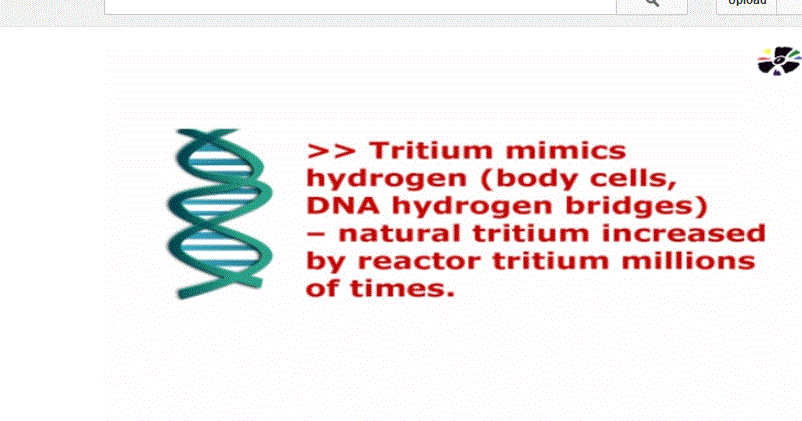
Expert report for the Passamaquoddy Recognition Group
by Ian Fairlie, May 9, 2022, https://nbmediacoop.org/2022/05/09/new-brunswicks-nuclear-reactor-emits-high-levels-of-radioactivity-increasing-cancer-risk/
New Brunswick Power’s Point Lepreau nuclear reactor on the Bay of Fundy emits much higher levels of radioactive tritium than other nuclear reactors in Canada. Ingesting and breathing in tritium increases the risk of cancer in humans and other animals.
Tritium is the radioactive isotope of hydrogen, and international agencies recognise it as an unusually hazardous radioactive substance. One of its properties is to bind with carbohydrates, proteins and lipids in cells to form organically-bound tritium (OBT) which sticks inside the body for years.
These alarming findings will be tabled on May 10 by the Passamaquoddy Recognition Group in Saint John during Canadian Nuclear Safety Commission (CNSC) hearings on the application by NB Power for an unprecedented 25-year extension of its licence to operate its Lepreau reactor. The CNSC is the regulator of all nuclear activities in Canada.
Although industry scientists in Canada claim tritium has low toxicity and does not bioaccumulate, official reports show tritium is twice to three times more radiotoxic compared to external gamma radiation. And many studies indicate OBT levels increase the longer people are exposed to tritiated water.
Considerable evidence exists – from many epidemiology studies around the world, that children who live near nuclear plants emitting large amounts of tritium are more likely to get leukemia than those living further away. References to all these studies are included in the appendix to the CNSC submission by the Passamaquoddy Recognition Group.
The problem is that Canadian CANDU heavy water reactors emit much larger amounts of tritium than US or European reactors, so the health effects here are very likely to be greater. However the industry and CNSC avoid any studies that could spell trouble for them.
Mainly because of pressure from Canada’s powerful nuclear lobby, safety levels for tritium here are very lax compared to other countries. For example, acceptable levels for tritium in drinking water in Canada are 70 times those in the EU, and approximately 400 times higher than in some US states.
High emissions
In my expert report for the Passamaquoddy Recognition Group, I found that annual tritium releases from the Point Lepreau reactor are very large in comparison with all other nuclear reactors in Canada and indeed in the world.
In 2020, its tritium air emissions were 290 terabecquerels, that’s 290,000,000,000,000 becquerels – which is a huge amount of radioactivity. Worryingly, these releases have been increasing in recent years.
It is well understood that the older a reactor the higher the tritium levels in its moderator and cooling circuits. As well, various operations and maintenance activities increase tritium releases. Without a means of removing tritium, its inventory and releases will continue to increase each year.
These worries are exacerbated by NB Power’s proposed 25-year relicensing from 2022 to 2047. The reactor started operations 40 years ago in 1982 (with retubing between 2008 and 2012). The CNSC has recommended the NB Power nuclear facility is re-licensed to operate for another 20 years to 2042, see the CNSC’s response.
However, this would mean that Lepreau would have operated for 60 years which is unacceptably long as it was originally designed with a 30-year lifespan. This is arguably an unsafe proposal and it flies in the face of the Precautionary Principle, which states that “complete evidence of a potential risk is not required before action is taken to mitigate the effects of the potential risk.”
How does tritium get inside people?
When tritium is emitted from Point Lepreau, it travels via multiple environmental pathways to humans including through air. It cycles in the environment, because tritium atoms swap quickly with stable hydrogen atoms in the biosphere and hydrosphere.
This means that all open water surfaces, rivers, streams and all biota, local crops and foods in open-air markets, animals and humans will become contaminated by tritiated moisture up to ambient levels – that is, up to the air concentrations of the emitted tritium.
According to New Brunswick Power’s environmental assessments, local residents will receive radiation exposures from these tritium emissions, from the tritium in food and water, from the tritium breathed in, and from the tritium absorbed through their skin.
For example, NB Power already admits that people are exposed to radiation from tritiated water vapour in the air, drinking water in local wells, diving for sea urchins, harvesting clams and dulse, and eating local seafood. But local people will also get doses from eating wild foods such as mushrooms, berries and other fruits, gardening vegetables, honey hives, and the harvesting of seaweed for fertiliser.
These are all important matters for Indigenous peoples who take pride in living close to their lands and sea. The continued radioactive poisoning of their lands and sea is deeply offensive to them.
These intakes increase their risk of getting cancer and other radiogenic diseases, but NB Power does not measure tritium levels in people near its Lepreau reactor, nor does it carry out epidemiology studies into ill-health levels in nearby populations.
Nevertheless epidemiology studies at other Canadian facilities which emit tritium all indicate increases in cancer and congenital malformations. In addition, evidence from cell and animal studies, and radiation biology theory, indicates radiogenic effects occur from tritium exposures.
New studies show increased risks
Recent, large, statistically powerful, epidemiology studies of nuclear workers in UK, US and France have increased our perception of the radiation risks of low-level radiation, including tritium. The new studies show a 47% increase in solid cancers and a 580% increase in leukemias. This evidence is directly applicable to tritium’s radiation exposures from Point Lepreau.
These high and increasing tritium emissions, high levels of radioactive contamination, and increased estimates of cancer risk together mean that tritium poses worrying health risks to workers and to people near Lepreau and in the direction of the prevailing winds, including in Saint John.
There is already a long history of NB Power ignoring tritium dangers at Lepreau.
The conclusion from my report for the Passamaquoddy Recognition Group, is that Point Lepreau should not be granted any extension of its operating license, far less a 20 year one. As shown by experience around the world, much safer, healthier, less expensive alternatives exist for generation electricity, such as wind turbines, solar panels and tidal schemes.
Dr. Ian Fairlie is an independent citizen scientist based in the UK who has specialised on radioactivity in the environment with degrees in chemistry and radiation biology. His doctoral studies at Imperial College, UK and Princeton University, US examined nuclear waste technologies. One of his areas of expertise is the dosimetric impacts of nuclear reactor emissions, in particular tritium.
450,000 Palestinians flee Rafah as Israeli tanks move in

“Nowhere is safe” in Gaza, the UN’s agency for Palestinian refugees has warned
https://www.rt.com/news/597596-palestinians-flee-rafah-tanks/ 19 May 24
Some 450,000 Palestinians have fled Rafah since Israel ordered more of the city evacuated on Saturday, the UN’s agency for Palestinian refugees said on Tuesday. Reports from the city suggest that Israeli forces are closing in on its densely-populated urban core.
The Israel Defense Forces (IDF) ordered people in the southeastern neighborhoods of Rafah to leave “immediately” on Saturday, with IDF spokesman Avichai Adraee warning that Israeli forces were preparing to strike Hamas targets there “with great force.” The IDF has now evacuated the entire eastern third of the city following a similar order given earlier this month.
In a statement on Tuesday, the UN Relief and Works Agency for Palestine Refugees in the Near East (UNRWA) said that 450,000 people had heeded the orders. “People face constant exhaustion, hunger and fear. Nowhere is safe,” the statement read. “An immediate cease-fire is the only hope.”
Prior to the evacuation, Rafah hosted around 1.4 million Palestinians fleeing Israeli operations in northern and central Gaza. Despite condemnation from the US, UN, and other countries and international organizations, Israeli Prime Minister Benjamin Netanyahu ordered airstrikes on Rafah at the beginning of May, followed by a limited ground offensive near the city’s southern border checkpoint with Egypt.
IDF tanks entered the Brazil and al-Jnaina neighborhoods of eastern Rafah on Tuesday, Palestinian sources told Reuters, with one source describing “clashes” in built-up areas. The IDF said that its troops had “eliminated several armed terrorist cells in close-quarters encounters on the Gazan side of the Rafah crossing” and “eliminated a number of terrorists and located weapons” in eastern areas of the city.
Hamas said on Tuesday that its fighters had killed and wounded several Israeli troops with missiles and mines in Brazil and al-Jnaina.
It is unclear whether Netanyahu intends to press ahead with a full-scale invasion of Rafah. The US State Department has expressed doubt that the IDF is capable of completely eradicating Hamas in Gaza, and US President Joe Biden has warned that he will halt some military aid to Israel if Netanyahu carries out such an operation.
Some 35,901 Palestinians have been killed in the seven months since Israel began striking Gaza, according to the territory’s health ministry. Of that number, 24,686 have been identified, 60% of whom were women, children, and the elderly, according to the UN.
Hamas fighters killed around 1,200 Israelis during their October 7 assault on the Jewish state. Meanwhile, 272 Israeli soldiers have been killed fighting in Gaza, while another 1,674 have been injured, according to Israeli officials and media outlets.
Xi outlines solution to Ukraine conflict
https://www.sott.net/article/491542-Xi-outlines-solution-to-Ukraine-conflict 19 May 24
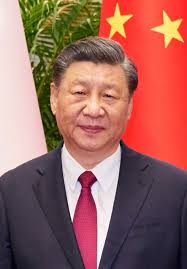
Chinese President Xi Jinping has stressed that peace negotiations recognized by both Russia and Ukraine are the best way to end the ongoing conflict between the two nations.
Speaking during a meeting with Russian President Vladimir Putin on Thursday at the Chinese leader’s residential compound at Zhongnanhai, Xi argued that the entire global security architecture must be amended in order to end the fighting and avoid similar hostilities in the future, according to the Xinhua news outlet.
Putin is on his first state visit to China since he took office for the fifth time earlier this month.
Xi was cited as saying:
“China supports the timely convening of an international peace conference recognized by both Russia and Ukraine, with equal participation by all parties, and fair discussion of all options. Beijing is willing to aid in brokering the peace talks.”
“Global powers must address both the symptoms and the root cause [of the conflict], and we must consider both the present and the long term.
“The fundamental solution to the Ukraine crisis is to promote the construction of a balanced, effective, and sustainable new security architecture.”
Beijing has repeatedly rejected Western pressure to join in the condemnation of Russia over the Ukraine conflict. Since last year, China has been promoting a peace formula consisting of 12 points, including the cessation of hostilities and unilateral sanctions, mutual respect for national security concerns and the sovereignty of nations, and the rejection of a ‘Cold War’ mentality.
Kiev has rejected the formula as unrealizable because it does not demand a retreat of Russian forces from territories Kiev claims as its own. Ukraine has long insisted that a peace settlement can only be achieved on its terms, which include a return of all former Ukrainian territories, the withdrawal of Russian troops, and an international tribunal for Russian leaders.
Kiev’s Western backers plan to hold a summit on the Ukraine conflict in Switzerland next month, to which Russia has not been invited. Beijing has yet to officially confirm whether it will send a delegation.
Russia has welcomed China’s proposed peace formula from the start, having repeatedly stressed that it remains open to a political solution to the conflict. In an interview with Xinhua ahead of his visit to China, Putin said Beijing’s initiative showed “the genuine desire… to help stabilize the situation” in the region. He added that he would endorse the formula as it calls for a dialogue based on mutual consideration of the interests of all sides involved in the conflict, including Russia.
U.S. conducted first subcritical nuclear test since September 2021

At left – underground test craters -Nevada
COMMENT. Alice Slater. We stopped nuclear testing in 1992 and Clinton promptly created a mew weapons program under the euphemism “stockpile stewardship” which incuded blowing up plutonium with explosives 1,000 ft below the desert floor on Western Shoshone holyland in Nevada which didn’t go critical so Clinton said it wasn’t a nuclear test!!!
Totally going backwards into WWIII and nuclear armageddon!! How could we!!??!!
KYODO NEWS – May 18, 2024 –
The United States conducted a subcritical nuclear test on Tuesday, the first since September 2021, a government agency said, in an apparent effort to bolster deterrence against countries such as China and Russia.
The experiment, the third under the administration of President Joe Biden, was carried out in Nevada to collect “essential data” regarding the country’s nuclear warheads, according to the National Nuclear Security Administration.
Although China and Russia, as well as Iran and North Korea, continue to expand their nuclear capabilities, the test is likely to trigger criticism as running counter to disarmament hopes in places such as Hiroshima, a Japanese city that was devastated by a U.S. atomic bomb during World War II…………………………
The United States suspended underground nuclear tests in 1992 and began subcritical nuclear tests five years later.
As subcritical nuclear tests do not result in a nuclear explosion, the United States has asserted that they are not prohibited under the Comprehensive Nuclear Test Ban Treaty, which the country has signed but not ratified……………
Tuesday’s test was the first in the “Nimble series,” carried out with Lawrence Livermore National Laboratory, the NNSA said, adding it will continue the new cycle of experiments also with support from Los Alamos National Laboratory…………………… https://english.kyodonews.net/news/2024/05/7483d70178a7-update2-us-conducted-1st-subcritical-nuclear-test-since-sept-2021.html
Congress must stop Biden from fueling a Saudi nuclear bomb
The Hill BY ANDREA STRICKER AND HENRY SOKOLSKI, – 05/18/24
National Security Advisor Jake Sullivan is heading to Saudi Arabia and Israel this weekend in hopes of delivering an elusive Biden foreign policy triumph — a U.S.-Saudi-Israel “mega deal” that would upgrade the U.S.-Saudi alliance while normalizing relations between Riyadh and Jerusalem.
Proponents see this as a win-win proposition, yet at the deal’s heart lies a dangerous American concession: Saudi Arabia is demanding Washington upend decades of U.S. nonproliferation policy and give Riyadh the means to enrich uranium — a process essential to producing fuel for either nuclear reactors or atomic weapons. Congress must act now and stop the administration from setting off a nuclear arms-race in the Middle East.
Never before has the Saudi motivation been so high to join the Western-led security order: The recent salvo of drones and missiles Iran launched at Israel were almost entirely eliminated by the missile defenses of the U.S., Israel and partners. This is the kind of protection Russia, China and Iran, with their venal and revisionist ambitions, are unlikely to provide.
President Biden has a narrowing window to secure the mega-deal, after spending his first years in office taking Riyadh to task on human rights and downplaying the Abraham Accords, through which his predecessor helped three Arab states normalize relations with Israel.
Beyond the non-trivial matters of the ongoing Israeli military operation in Rafah and a future Palestinian state, on which Saudi Arabia’s foreign minister says the two sides are close to an agreement in principle, there remains one big problem:
Riyadh wants America to open the door to a domestic program for uranium enrichment.
Since the start of the atomic age, however, American policy has discouraged the further spread of these crown jewels of nuclear weapon-making technology. The United States has joined with other nuclear suppliers to oppose such transfers.
Underscoring the risk, Saudi Crown Prince Mohammed Bin Salman has openly said that Riyadh will obtain nuclear weapons if Iran does, meaning he might eventually pilfer or misappropriate U.S. technology for nuclear weapons. The crown prince refuses to foreswear enrichment, something the United Arab Emirates (UAE) did in 2009 when it committed to what became known as the “gold standard” of nonproliferation. Bin Salman also refuses to sign an enhanced inspection agreement, known as the Additional Protocol, with the International Atomic Energy Agency (IAEA).
And why would he?
The United States granted Iran domestic uranium enrichment under the 2015 nuclear deal known as the Joint Comprehensive Plan of Action (JCPOA), torpedoing prior UN resolutions demanding Tehran cease that practice. UN Iran sanctions remain lifted under UN Resolution 2231, even though no party continues to observe the nuclear deal and Tehran is moving deliberately toward production of weapons-grade uranium.
Now, some nonproliferation experts are suggesting how Washington might “responsibly” give enrichment technology to the Saudis, even though doing so would likely trigger similar demands or independent efforts by Turkey, Egypt, the UAE and South Korea — suddenly putting multiple countries on the brink of nuclear weapons. One proposal is even stunningly similar to the JCPOA: Restrain Saudi enrichment for 10 years before lifting all restrictions. ……………………………………………………………….. more https://thehill.com/opinion/4668719-congress-must-stop-biden-from-fueling-a-saudi-nuclear-bomb/
—
LABOUR MUST RULE OUT NEW NUCLEAR REACTOR FOR SCOTLAND

Nuclear power has no place in a greener Scotland.
A future UK Labour government must drop plans by the Secretary of State for Scotland, Alister Jack, to open a new nuclear reactor in Scotland, say the Scottish Greens.
Speaking to the House of Lords Constitution Committee this week, Mr Jack said that the UK government is planning to work with anti-independence parties to deliver a new nuclear reactor in Scotland.
Mr Jack told the committee “On the small nuclear reactors, I have asked the energy minister to plan for one in Scotland, because I believe in 2026 we’ll see a Unionist regime again in Holyrood, and they will move forward on that matter.”
In a letter to Scottish Labour leader, Anas Sarwar, the Scottish Greens energy spokesperson, Mark Ruskell, condemned the “environmental vandalism and constitutional overreach” of the Tories, and called on Mr Sarwar to ensure any future UK Labour government would drop these plans.
He has also urged Mr Sarwar to make clear if his party would support a replacement for the Torness nuclear station which is set to be decommissioned in 2028.
Mr Ruskell said: “Scotland does not need or want nuclear power. It is unsafe, expensive and leaves a toxic legacy for future generations. It is also a big distraction. Scotland has a huge abundance of renewable resources that we must be investing in and supporting.
“I have written to Mr Sarwar in the hope that he will provide clarity and assurance that a future UK Labour government would drop plans to expand nuclear power in Scotland against the wishes of our parliament.
“This is a time for progressive parties to stand together for our climate, and I hope that Mr Sarwar will oppose any plans for a new reactor or for a return to nuclear power once Torness has been decommissioned.”
Text of the letter Mark Ruskell sent Anas Sarwar………………………………………………. more https://greens.scot/news/labour-must-rule-out-new-nuclear-reactor-for-scotland
War Culture Hates the Ethical Passion of the Young
18.05.24 – US, United States – Pressenza New York
In the Thrall of a Dominant Death Culture
Persisting in his support for an unpopular war, the Democrat in the White House has helped spark a rebellion close to home. Young people — least inclined to deference, most inclined to moral outrage — are leading public opposition to the ongoing slaughter in Gaza. The campus upheaval is a clash between accepting and resisting, while elites insist on doing maintenance work for the war machine.
By Norman Solomon
I wrote the above words recently, but I could have written very similar ones in the spring of 1968. (In fact, I did.) Joe Biden hasn’t sent U.S. troops to kill in Gaza, as President Lyndon Johnson did in Vietnam, but the current president has done all he can to provide massive quantities of weapons and ammunition to Israel — literally making the carnage in Gaza possible.
A familiar saying — “the more things change, the more they stay the same” — is both false and true. During the last several decades, the consolidation of corporate power and the rise of digital tech have brought about huge changes in politics and communications. Yet humans are still humans and certain crucial dynamics remain. Militarism demands conformity — and sometimes fails to get it.
When Columbia University and many other colleges erupted in antiwar protests during the late 1960s, the moral awakening was a human connection with people suffering horrifically in Vietnam. During recent weeks, the same has been true with people in Gaza. Both eras saw crackdowns by college administrators and the police — as well as much negativity toward protesters in the mainstream media — all reflecting key biases in this country’s power structure.
“What is needed is a realization that power without love is reckless and abusive, and that love without power is sentimental and anemic,” Martin Luther King, Jr., said in 1967. “Power at its best is love implementing the demands of justice, and justice at its best is love correcting everything that stands against love.”
Disrupting a Culture of Death
This spring, as students have risked arrest and jeopardized their college careers under banners like “Ceasefire Now,” “Free Palestine,” and “Divest from Israel,” they’ve rejected some key unwritten rules of a death culture. From Congress to the White House, war (and the military-industrial complex that goes with it) is crucial for the political business model. Meanwhile, college trustees and alumni megadonors often have investment ties to Wall Street and Silicon Valley, where war is a multibillion-dollar enterprise. Along the way, weapons sales to Israel and many other countries bring in gigantic profits.
The new campus uprisings are a shock to the war system. Managers of that system, constantly oiling its machinery, have no column for moral revulsion on their balance sheets. And the refusal of appreciable numbers of students to go along to get along doesn’t compute. For the economic and political establishment, it’s a control issue, potentially writ large.
As the killing, maiming, devastation, and increasing starvation in Gaza have continued, month after month, the U.S. role has become incomprehensible — without, at least, attributing to the president and the vast majority of Congressional representatives a level of immorality that had previously seemed unimaginable to most college students. Like many others in the United States, protesting students are now struggling with the realization that the people in control of the executive and legislative branches are directly supporting mass murder and genocide.
In late April, when overwhelming bipartisan votes in Congress approved — and President Biden eagerly signed — a bill sending $17 billion in military aid to Israel, the only way to miss the utter depravity of those atop the government was to not really look, or to remain in the thrall of a dominant death culture.
During his final years in office, with the Vietnam War going full tilt, President Lyndon Johnson was greeted with the chant: “Hey, hey, LBJ, how many kids did you kill today?” Such a chant could be directed at President Biden now. The number of Palestinian children killed so far by the U.S.-armed Israeli military is estimated to be almost 15,000, not counting the unknown number still buried in the rubble of Gaza. No wonder high-ranking Biden administration officials now risk being loudly denounced whenever they speak in venues open to the public.
Mirroring the Vietnam War era in another way, members of Congress continue to rubberstamp huge amounts of funding for mass killing. On April 20th, only 17% of House Democrats and only 9% of House Republicans voted against the new military aid package for Israel.
Higher learning is supposed to connect the theoretical with the actual, striving to understand our world as it truly is. However, a death culture — promoting college tranquility as well as mass murder in Gaza — thrives on disconnects. All the platitudes and pretenses of academia can divert attention from where U.S. weapons actually go and what they do.
Sadly, precepts readily cited as vital ideals prove all too easy to kick to the curb lest they squeeze big toes uncomfortably. So, when students take the humanities seriously enough to set up a protest encampment on campus and then billionaire donors demand that a college president put a stop to such disruption, a police raid is likely to follow.
A World of Doublethink and Tone Deafness
George Orwell’s explanation of “doublethink” in his famed novel 1984 is a good fit when it comes to the purported logic of so many commentators deploring the student protesters as they demand an end to complicity in the slaughter still underway in Gaza: “To know and not to know, to be conscious of complete truthfulness while telling carefully constructed lies, to hold simultaneously two opinions which cancelled out, knowing them to be contradictory and believing in both of them, to use logic against logic, to repudiate morality while laying claim to it.”
Laying claim to morality, the Anti-Defamation League (ADL) has, for instance, been busy firing media salvos at the student protesters. That organization’s CEO, Jonathan Greenblatt, is on record flatly declaring that “anti-Zionism is antisemitism” — no matter how many Jews declare themselves to be “anti-Zionist.” Four months ago, ADL issued a report categorizing pro-Palestinian rallies with “anti-Zionist chants and slogans” as antisemitic events. In late April, ADL used the “antisemitic” label to condemn protests by students at Columbia and elsewhere.
“We have a major, major, major generational problem,” Greenblatt warned in a leaked ADL strategy phone call last November. He added: “The issue in the United States’ support for Israel is not left and right; it is young and old… We really have a TikTok problem, a Gen-Z problem… The real game is the next generation.”
Along with thinly veiled condescension toward students, a frequent approach is to treat the mass killing of Palestinians as of minimal importance. And so, when New York Times columnist Ross Douthat wrote in late April about students protesting at Columbia, he merely described the Israeli government’s actions as “failings.” Perhaps if a government was bombing and killing Douthat’s loved ones, he would have used a different word.
A similar mentality, as I well remember, infused media coverage of the Vietnam War. For mainline news outlets, what was happening to Vietnamese people ranked far below so many other concerns, often to the point of invisibility. As media accounts gradually began bemoaning the “quagmire” of that war, the focus was on how the U.S. government’s leadership had gotten itself so stuck. Acknowledging that the American war effort amounted to a massive crime against humanity was rare. Then, as now, the moral bankruptcies of the political and media establishments fueled each other.
As a barometer of the prevailing political climate among elites, the editorial stances of daily newspapers indicate priorities in times of war. In early 1968, the Boston Globe conducted a survey of 39 major U.S. newspapers and found that not a single one had editorialized in favor of an American withdrawal from Vietnam. By then, tens of millions of Americans were in favor of such a pullout.
This spring, when the New York Times editorial board finally called for making U.S. arms shipments to Israel conditional — six months after the carnage began in Gaza — the editorial was tepid and displayed a deep ethnocentric bias. It declared that “the Hamas attack of October 7 was an atrocity,” but no word coming anywhere near “atrocity” was applied to the Israeli attacks occurring ever since.
The Times editorial lamented that “Mr. Netanyahu and the hard-liners in his government” had broken a “bond of trust” between the United States and Israel, adding that the Israeli prime minister “has been deaf to repeated demands from Mr. Biden and his national security team to do more to protect civilians in Gaza from being harmed by [American] armaments.” The Times editorial board was remarkably prone to understatement, as if someone overseeing the mass killing of civilians every day for six months was merely not doing enough “to protect civilians.”
Learning by Doing
The thousands of student protesters encountering the edicts of college administrations and the violence of the police have gotten a real education in the true priorities of American power structures. Of course, the authorities (on and off campuses) have wanted a return to the usual peaceful campus atmosphere………………………………………………… more https://www.pressenza.com/2024/05/war-culture-hates-the-ethical-passion-of-the-young/—
Christmas Island veterans receive nuclear testing medals
By Isaac Ashe & Steve Beech, BBC News, Derbyshire, 16 May 24
Derbyshire veterans who conducted nuclear tests for the British armed forces in the 1950s have been recognised at a ceremony.
Operation Grapple saw a series of British nuclear weapons tests carried out close to Christmas Island, in the Pacific Ocean, between 1957 and 1958.
The bomb tests assured British military power during the Cold War.
Four members of the armed forces who took part in the testing and one widow were presented with medals on Friday…………………………………………………………. more https://www.bbc.com/news/uk-england-derbyshire-69028261
ALL reactor-produced plutonium is usable in nuclear weapons.

Gordon Edwards 19 May 4
Whenever plutonium is created in a nuclear reactor, it is always mostly plutonium-239. The higher isotopes – plutonium-240, plutonium-241, plutonium-242 – are always present in diminishing order of importance.
A lighter “burnup” (a shorter residence time in the reactor) will reduce the opportunity for the heavier isotopes to be created (by repeated neutron captures), and so the relative percentage of plutonium-239 will be that much greater.
The important thing to know is that ALL reactor-produced plutonium is usable in nuclear weapons, including the even-numbered isotopes.
See www.ccnr.org/plute_for_bombs_GE_2024.pdf
Plutonium-238 is only a very small fraction of the plutonium in used reactor fuel. By itself, plutonium-238 is the only isotope of plutonium that probably cannot be used for bomb-making, simply because it generates too much spontaneous heat for the bomb to be stable (i.e. the concentniopnal explosive=s needed for detonation will likely melt.)
However the presence of very small amounts of plutonium-238, as in any plutonium extracted from used nuclear fuel, is not a serious problem..
Warning that Dounreay could be facing ‘prolonged’ industrial action over pay dispute
https://www.johnogroat-journal.co.uk/news/warning-that-dounreay-could-be-facing-prolonged-industrial-350623/— 14 May 24, By Gordon Calder
Two unions at Dounreay are to strike on Wednesday after rejecting a new pay offer from management.
The Unite and GMB unions turned down the revised offer which proposed a one-off £500 payment on top of a basic 4.5 per cent increase. The deal was accepted by Prospect members.
Dounreay management is “disappointed” by the news of the strike but remains “committed to finding a resolution that is fair and affordable”.
Kim Thain, the vice-chair of the Trade Union Co-ordinating Committee at Dounreay, confirmed that GMB and Unite have rejected the new offer and will be on strike on Wednesday.
“There will be picketing at the site, and action short of a strike will commence on Thursday,” she said. “The next strike date of May 29 has been communicated to the company, and future dates will be notified to them over the next few days.
“I can confirm that Prospect has accepted the revised offer and is not taking part in any industrial action.”
1 This Month
23-25 October – on Zoom – World BEYOND War’s annual global conferenc


Shut down the radiation-damaged Heysham nuclear reactors now
To see nuclear-related stories in greater depth and intensity – go to https://nuclearinformation.wordpress.com

Say No to NASA’s Reckless Nuclear Reactor on the Moon
Say No to NASA’s Reckless Nuclear Reactor on the Moon

-
Archives
- October 2026 (199)
- September 2026 (339)
- August 2026 (330)
- July 2026 (355)
- June 2026 (287)
- May 2026 (306)
- April 2026 (356)
- March 2026 (251)
- February 2026 (267)
- January 2026 (308)
- December 2025 (358)
- November 2025 (359)
-
Categories
- 1
- 1 NUCLEAR ISSUES
- business and costs
- climate change
- culture and arts
- ENERGY
- environment
- health
- history
- indigenous issues
- Legal
- marketing of nuclear
- media
- opposition to nuclear
- PERSONAL STORIES
- politics
- politics international
- Religion and ethics
- safety
- secrets,lies and civil liberties
- spinbuster
- technology
- Uranium
- wastes
- weapons and war
- Women
- 2 WORLD
- ACTION
- AFRICA
- Atrocities
- AUSTRALIA
- Christina's notes
- Christina's themes
- culture and arts
- Events
- Fuk 2022
- Fuk 2023
- Fukushima 2017
- Fukushima 2018
- fukushima 2019
- Fukushima 2020
- Fukushima 2021
- general
- global warming
- Humour (God we need it)
- Nuclear
- RARE EARTHS
- Reference
- resources – print
- Resources -audiovicual
- Weekly Newsletter
- World
- World Nuclear
- YouTube
-
RSS
Entries RSS
Comments RSS

