Congressman Garamendi Asks “Why does America need nuclear weapons?”
August 15th, 2024 https://nuclearactive.org/
On August 13th, U.S. Congressman John Garamendi of California delivered a speech at the United States Strategic Command 2024 Strategic Deterrence Amidst Global Transformation Symposium in which he asked “Why?” as in “Why does America need nuclear weapons?” and mostly importantly asked, “How do we deter in a way that ensures there is a tomorrow worth protecting? Must we continue a 50-year-old triad strategy without considering the alternatives? Why, why are we stuck in a logic silo with the blast door closed?” To read Congressman John Garamendi’s (CA-08) full statement, 240813 Garamendi U.S. Strategic Command 2024 Deterrence Symposium Remarks 1
While the focus of the speech was about “Why the Sentinel is a Costly and Dangerous Mistake,” he began by describing the efforts in 1985 of Ronald Reagan and Mikhail Gorbachev, whom he called “two cold warriors at the head of the world’s largest nuclear arsenals.
“Leaders like Reagan, JFK, Eisenhower, Carter, and Obama knew that nuclear weapons could end civilization and, with those heavy moral and ethical considerations in mind, negotiated significant safety measures and a serious reduction in nuclear weapons.
“These leaders demonstrated vision and commitment. They knew that war was not an option, so they had to create a vision for a safer future. Unfortunately, too many today shrug their shoulders and say the time for negations is not now. Which brings us to yet another question…Why not try? Over the next 30 years, we will spend almost 2 trillion dollars on our nuclear weapons… what if we spent just 1% on diplomatic and risk reduction efforts?”
To read Congressman John Garamendi (CA-08) full statement, 240813 Garamendi U.S. Strategic Command 2024 Deterrence Symposium Remarks 1
US approves new $20bn weapons sale to Israel

Rt.com 14 Aug 24
The arms package includes dozens of fighter jets, as well as mortar and tank ammunition
The US government has approved more than $20 billion in new arms sales to Israel, despite pressure on President Joe Biden’s administration to end the bloodshed in Gaza.
In a series of notifications to Congress on Tuesday, the State Department said Washington is “committed to the security of Israel, and it is vital to US national interests to assist Israel in developing and maintaining a strong and ready self-defense capability.”
The main part of the package, worth about $18.8 billion, consists of 50 new F-15IA fighter jets and the upgrade of 25 of the aircraft already in service. Israel also intends to buy Medium Range Air-to-Air Missiles (AMRAAM) for the jets, nearly 33,000 120mm tank cartridges, up to 50,000 high-explosive mortars, and new military cargo vehicles………………………………..more https://www.rt.com/news/602589-us-weapons-sales-israel/—
South Korea’s Yoon seeks dialogue with North, path to unification
Reuters, By Hyonhee Shin, August 16, 2024
Summary
- Yoon unveils blueprint for unification in Liberation Day speech
- Offers to form consultative body for inter-Korean cooperation
- Yoon says to keep offering humanitarian aid to the North
- South Korean opposition boycotts speech over Japan outreach
SEOUL, Aug 15 (Reuters) – South Korean President Yoon Suk Yeol offered on Thursday to establish a working-level consultative body with North Korea to discuss ways to ease tension and resume economic cooperation, as he laid out his vision on unification of the neighbours.
In a National Liberation Day speech marking the 79th anniversary of independence from Japan’s 1910-45 colonial rule after World War Two, Yoon said he was ready to begin political and economic cooperation if North Korea “takes just one step” toward denuclearisation……………………………………………………………………………………more https://www.reuters.com/world/asia-pacific/south-koreas-yoon-offers-working-level-talks-with-north-korea-2024-08-15/
Germany’s Grafenrheinfeld nuclear power plant demolished after short delay
Construction of the Grafenrheinfeld NPP in the southern state of Bavaria began in 1975 with the plant beginning commercial operations in 1982. It was Germany’s oldest nuclear power plant but was closed in 2015 as part of the government’s policy to transition away from nuclear power.
Germany’s decommissioned nuclear power plant at Grafenrheinfeld has been demolished after a short delay.
The demolition of the plant’s two, 143-metre cooling towers was originally planned to take place at 17.30 local time but was pushed back to almost 20:00 after a pro-atomic energy activist scaled one of the pylons in protest at its destruction.
Police spokesperson Denis Stegner said the unnamed activist chained themselves to the pylon 10 metres above the ground and a special team was deployed to free him before he was taken away by police.
Construction of the Grafenrheinfeld site in the southern state of Bavaria began in 1975 with the plant beginning commercial operations in 1982. It was Germany’s oldest nuclear power plant.
But as part of the government’s policy to transition away from nuclear power, it was closed in 2015.
The then Environment Minister Barbara Hendricks said its closure was “a visible signal that the nuclear exit is moving forward.”
“Every nuclear power station that goes offline reduces the so-called residual risk that is linked to the use of nuclear power plants and moves us a step forward in the reorganization of our energy supply,” she said in 2015……………………………………………………………Euro News 17th Aug 2024
The Nuclear Regulatory Commission’s Antiques Roadshow

As new U.S. nuclear construction grinds to a halt, one company aims to restart a Michigan reactor that violated fifty codes—in just one year.
The Progressive Magazine, by Roger Rapoport , August 6, 2024
This summer marks the first time since 1954 that not a single large light water nuclear reactor will be under construction in the United States. As dozens of reactors have closed coast to coast—and countries like Germany and Japan have trimmed or shut down their nuclear fleets—the exorbitant price of building this power source has forced industry giants like Westinghouse Electric Company into bankruptcy.
Business is so bad that the industry’s last-ditch attempt to rebrand itself by launching so-called small modular reactors (SMRs) has run aground. The first American attempt to open one in Idaho was abandoned in November 2023 due to soaring costs. As it turns out, these SMRs are neither small nor modular. Another in Wyoming that might come online in six years will produce energy that costs three times the cost of readily available wind power.
The last two nuclear power plants to open in the United States, at the Vogtle plant in Georgia, have come in at $21 billion over the original $14 billion cost estimate—seven years late. Georgia Power customers are being hit with a 10 percent rate increase to cover these astounding Vogtle cost overruns.
Even worse, in New York, Illinois, New Jersey, and Connecticut, a group of obsolete older reactors are on life support, thanks to more than $14 billion in bailouts. In 2021, Republican Ohio Governor Mike DeWine signed a bill repealing a $1.1 billion bailout for two reactors cratered by a $60 million bribery scandal. One defendant, the former speaker of the state’s House of Representatives, was sentenced to twenty years in federal prison for his role in this scandal. At the same time all this was going on, Ohio’s legislature blocked a $4.2 billion investment in wind power.
Stanford University professor and climate expert Mark Z. Jacobson, whose research is central to the Green New Deal, pointed out on my podcast that electricity from Vogtle comes in at $16 per watt vs. $1 per watt for wind and $0.8 for solar. Wind, water, and solar power sources can be up and running in one to five years, he said, compared to a ten- to twenty-two-year wait for new nuclear power sources in the United States and Europe.
Despite all these obstacles, industry cheerleaders fall back on the lie that nuclear power is central to reversing climate change.
“The clean nuclear power argument from the Nuclear Regulatory Commission and the Department of Energy is nonsense,” Jacobson told me. “Mined uranium does not show up in perfect form. It must be refined, which takes a lot of energy and causes pollution. Nuclear reactors are belching huge amounts of water vapor and heat, contributing to local and global warming. Evaporated water from the giant steam generators is a greenhouse gas.
“New nuclear power plants cost 2.3 to 7.4 times those of onshore wind or utility solar [photovoltaic panels] per [kilowatt-hour] of electricity, take five to seventeen years longer between planning and operation, and produce nine to thirty-seven times the emissions per [kilowatt-hour] as wind.”
In Michigan, where I live, wind, water, and solar investments can pay for themselves, cutting annual energy cost rates by more than 60 percent, eliminating potential blackouts, and creating 242,000 jobs in the process.
In view of these undeniable facts, the always-optimistic nuclear power industry has come up with a new strategy, attempting, for the first time, to resuscitate the closed Palisades nuclear reactor on Lake Michigan, sold for decommissioning just two years ago. For decades, Consumers Energy operated this nuclear power plant that did not meet more than fifty standard Nuclear Regulatory Commission (NRC) codes.
After buying the plant for scrap and decommissioning it in 2022, Holtec, a company that has never built or operated a nuclear reactor, is now trying to reopen Palisades. Thanks to an estimated $8.3 billion in state and federal subsidies, Holtec optimistically plans to put the plant back into service by the end of 2025. This timeline seems even more unrealistic considering that operating Canadian reactors take a to refurbish.
If this controversial company successfully reopens Palisades, other abandoned reactors could potentially be brought back to life. Should Holtec fail, the industry may lose out to vastly less expensive carbon-free energy, including wind, solar, and water. One thing we have learned in this business is that the industry is only as strong as its weakest player,” said Blind in an interview on my podcast. A former vice president for nuclear at Consolidated Edison, he served as Palisades design engineering manager for six years after the Entergy takeover in 2007. “If this first-time nuclear power plant operator fails at Palisades, it will reflect poorly on the entire nuclear industry and will result in the waste of many millions in taxpayer and rate payer dollars.”
Considering this possibility, it’s hard to understand why state and federal legislators want to prop up a nuclear industry plagued by the vast unresolved nuclear waste problem. After all, carbon-free renewables coupled with enhanced battery storage eliminate the risk of another Three Mile Island, Fermi 1, Chernobyl, or Fukushima disaster. Equally troubling, said Jacobson, is the fact that 1.5 percent of nuclear reactors have experienced meltdown………………………………
“I know this plant,” said Blind, “and I can assure you that a combination of aging equipment and the lack of spare parts from suppliers that are out of business will create endless challenges. Failure to comply with standard Nuclear Regulatory Commission code has led to many failures, a culture of accepting problems, and spills of radioactive tritium into Lake Michigan.”
“Past accidents with nuclear fuel rods have left behind so much radiation inside the reactor containment vessel that it will be very difficult and extremely expensive to make long overdue mandatory repairs,” Blind added. “There are also ethical questions surrounding the need to subject workers to all this harmful radiation. I seriously question whether this plant will ever be able to safely reopen.” https://progressive.org/magazine/the-nuclear-regulatory-commissions-antiques-roadshow-rapoport-20240806/?fbclid=IwY2xjawEraPxleHRuA2FlbQIxMAABHWLSDQTizLHXHGoX_UASX3rKairLXOXRJQWiSfvCZf99bZwCXQapfZiQNQ_aem_raWHaFTGWtBkrU7RIO3ONQ
The Price of the Sentinel Nuclear Weapons Program Keeps Going Up—But the True Costs Are Even Higher

analysis of the root cause of the Sentinel’s ballooning cost estimates has not been released to the public.
policymakers have not made a compelling or coherent argument about how silo-based ICBMs make the country more secure.
Because of their vulnerability, silo-based missiles can be destabilizing in a crisis.
August 14, 2024 Jennifer Knox, https://blog.ucsusa.org/jknox/the-price-of-the-sentinel-nuclear-weapons-program-keeps-going-up-but-the-true-costs-are-even-higher/
Early this year, the Air Force notified Congress that the proposed Sentinel program—which would replace every single US nuclear intercontinental ballistic missile (ICBM) and update related infrastructure—would be at least 37% more expensive than the previous estimate in September 2020. After another round of review, the program’s estimated costs have further ballooned to $140.9 billion, an 81% increase from the 2020 estimate.
The staggering growth in price triggered the Nunn-McCurdy Act, which was passed to give Congress and the public more oversight of out-of-control defense spending. Once a defense program exceeds its initial cost estimates by a certain percentage, the Department of Defense is required to notify Congress and provide information about the cost overruns.
The most severe cases, however, also require the Department of Defense to conduct an investigation into the factors driving cost growth. The program in question will be automatically terminated unless the department certifies that:
the program is essential to national security,
the increased costs are reasonable,
the program is more important than other programs that will need to be cut to cover cost increases, andprogram managers will be able to control additional costs.
On July 8, the Department of Defense certified that the Sentinel program met all relevant criteria to continue. Unfortunately, its analysis of the root cause of the Sentinel’s ballooning cost estimates has not been released to the public. This leaves several outstanding questions for the public, which limits the ability of the Nunn-McCurdy Act to achieve its goal of effective oversight.
What are driving cost increases in the Sentinel program?
During a press conference, Undersecretary of Defense William A. LaPlante said there were “reasons, but no excuses” for the cost growth of the Sentinel program, but provided few details. The majority of cost growth has been attributed to the program’s “command-and-launch segment, which includes extensive communications and control infrastructure” that allow US ICBMs to be launched within minutes of an order.
But there is evidence that mismanagement contributed a great deal to the Sentinel’s explosive costs. Aerospace and defense company Northrup Grumman was awarded a sole-source contract for the program in 2020. Since then, the company has experienced staffing problems, delays with clearance processing, information technology infrastructure challenges, and supply chain disruptions, according to a 2023 report from the Government Accountability Office.
Relying on a single contractor has obvious risks, and the Pentagon failed to intervene when Northrup Grumman’s performance fell below standards. Representative Adam Smith, the ranking member of the House Armed Services Committee, said, “There’s gross malfeasance here both by the people who oversee the project and the contractor.”
What defense programs will be cut to make room for the Sentinel program?
One of the requirements of the Nunn-McCurdy act is for the Department of Defense to evaluate which programs will be reduced to cover the increased costs of the Sentinel program. As part of its review, the department certified that the Sentinel program is a higher priority than those that would need to be cut as a result.
Yet there is no indication of what programs will be cut—or even if the Department of Defense made concrete assessments about such trade-offs in the first place. While the overall budget for the program has exploded, the Associated Press reports that, “The majority of the cost increases to the Sentinel program will take place outside of the next five fiscal years of budget planning, meaning no difficult choices on program cuts will need to be made immediately.”
This attitude of kicking the can down the road is not unusual in defense planning, but it means that the consequences of the Sentinel’s cost overruns on national security remain to be seen.
What alternative solutions were considered?
Part of the root-cause analysis required by the Nunn-McCurdy Act is an evaluation of “reasonable alternatives to the program.” Without access to the report, the public cannot know which, if any, alternatives were considered because of the Sentinel program’s cost overruns.
In 2014, the Air Force completed an Analysis of Alternatives to the Sentinel program, which included the possibility of extending the life of the current fleet of US ICBMs rather than replacing them entirely. This report has not been released publicly either, so we cannot know exactly what metrics or assumptions were involved. But based on its analysis, the Air Force concluded that a full replacement of US ICBMs was the “’most cost-effective option’ for nuclear modernization.”
When its Analysis of Alternatives was conducted, the Air Force estimated that replacing US ICBMS would cost $60 billion. Since then, the price tag has increased by more than 134% to the current estimate of $140.9 billion. This certainly warrants a re-investigation of alternatives, especially since the justification for the Sentinel program was its supposed cost advantage.
Is the Sentinel program actually essential to national security?
The biggest unresolved question is the most important—and demands the full attention of our leaders. Whether the Sentinel program has been mismanaged or whether there are cheaper alternatives, policymakers have not made a compelling or coherent argument about how silo-based ICBMs make the country more secure.
The United States traditionally maintains three different ways to deliver nuclear weapons to a target: by air from bombers carrying cruise missiles or gravity bombs, by sea from submarines carrying ballistic missiles, and by land from silos containing ICBMs. This three-pronged structure is referred to as the nuclear triad, and proponents argue that each “leg” of the triad brings different characteristics to the table.
In the case of the Sentinel and its predecessors, what distinguishes it from other options is its fragility. Compared to aircraft and submarines, the silos that house these missiles are sitting ducks, easy to target and destroy by an adversary’s nuclear forces.
Because of their vulnerability, silo-based missiles can be destabilizing in a crisis. Since they are such obvious, fixed targets, a decisionmaker has very little time to decide whether to use these weapons in a conflict—or during a false alarm. This pressure shortens decisionmaking time and requires the missiles to be on high alert at all times.
Advocates for the land-based leg of the nuclear triad often rebrand this weakness as “responsiveness,” but a hair trigger is a liability that increases the risk of accidental use and escalation.
The Pentagon’s policymakers have failed to offer the public their vision for how silo-based nuclear missiles improve US security, instead repeating the same empty platitudes about nuclear deterrence. Because it offers no strategic value and introduces unacceptable risks, the Sentinel program should be cancelled, regardless of its cost. One penny is too much to spend on weapons that are unsafe and unnecessary.
Fans of peace call for nuclear-free Northeast Asia

https://cathnews.com/2024/08/14/fans-of-peace-call-for-nuclear-free-northeast-asia/
A three-nation Catholic peace meeting in Japan has appealed for an end to militarisation and nuclear arms race in Northeast Asia. Source: UCA News.
In a joint press statement on August 10, the participants of the Catholic Peace Forum at Nagasaki also released the “Nagasaki Appeal for Peace”, seeking peace and reconciliation in the region.
In his keynote address, Bishop Emeritus Peter Kang U-il of Jeju, co-president of Pax Christi Korea, recalled the atomic bombings of Hiroshima and Nagasaki during World War II and urged Christians to denounce militarisation.
“Political leaders who believe in and promote security through nuclear weapons in the face of such human tragedies can only be seen as prisoners of madness, incapable of normal thinking,” Bishop Kang said.
“It is up to Christians, who know and practice the peace of Christ, to constantly criticise and call attention to such illusions and beliefs so that they may be awakened.”
This year’s forum, themed “Nagasaki Catholic Peace Forum for a Nuclear Weapon-Free World,” was attended by more than 40 participants from Japan, South Korea, and the US.
Bishops of Nagasaki, Hiroshima, and Santa Fe dioceses were among the forum participants.
The forum was held as part of the 79th anniversary of the atomic bombings in Japan and the first anniversary of the Partnership for a World Without Nuclear Weapons, which was launched on August 9, 2002.
The forum’s appeal consisted of five “Key Asks” that were aimed at reducing militarisation and nuclear weaponry and promoting reconciliation in the region.
The forum urged to stop and reject militarisation and the arms race, a peace treaty among parties to the conflicts on the Korean peninsula, and ratify and implement the Treaty on the Prohibition of Nuclear Weapons, among others.
The forum also called for the promotion of a Common Security Framework and the Northeast Asia Nuclear Weapons Free Zone and reconciliation among the nations and peoples of the countries of past conflicts.
FULL STORY
EDF cuts nuclear production in reaction to soaring temperatures
euro news, By Eleanor Butler, 14/08/2024
The energy provider insists there are no looming safety risks as three French regions face heatwave warnings.
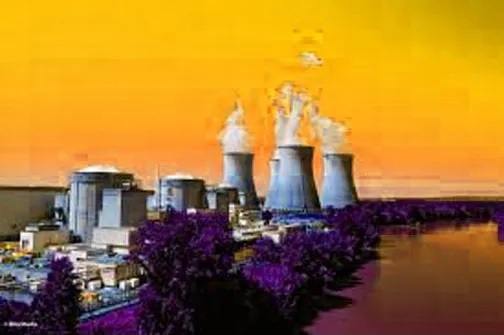
EDF has reduced its electricity production at nuclear sites in France in response to soaring temperatures.
Three reactors are currently affected, although the energy provider has said “there is no safety risk”.
A reactor located at the Bugey nuclear power plant, a site near Lyon, has been closed since 12 August.
Also near Lyon, the Saint-Alban nuclear plant has experienced production cuts since 11 August, and similar measures are being taken at the Tricastin site. This is located in the South East of France, north of Avignon.
Heat-related incidents aren’t a new complication for EDF but rather a recurring problem, as exemplified when the firm published a climate change action plan last month……
High temperatures can interfere with nuclear processes as reactors are heavily reliant on water.
Heat from nuclear reactions is used to transform water into steam, which then drives turbines to produce electricity.
Another current of water, outside of the closed loop system, is then drawn from surrounding rivers to cool the reactor…..
During periods of extreme heat, this can produce a number of complications.
If surrounding water sources are warmer than usual, reactors cannot be cooled as efficiently.
French regulations also prevent sites from discharging water that is too hot back into rivers and lakes, to avoid the accidental killing of fish and other wildlife.
EDF told Euronews that it had temporarily reduced production to “respect regulations relating to thermal discharges”.
The firm explained that “discharge limits are established individually for each plant” by the French Nuclear Safety Authority (ASN).
Three departments in France are currently affected by heatwave warnings, with storms now replacing hot weather in some areas. https://www.euronews.com/business/2024/08/14/edf-cuts-nuclear-production-in-reaction-to-soaring-temperatures
‘The dumbest climate conversation of all time’: experts on the Musk-Trump interview
Trump talked about ‘nuclear warming’ while Musk said the only reason to quit fossil fuels is that their supply is finite
Oliver Milman, Wed 14 Aug 2024 https://www.theguardian.com/environment/article/2024/aug/13/trump-musk-x-climate
Donald Trump and Elon Musk both made discursive, often fact-free assertions about global heating, including that rising sea levels would create “more oceanfront property” and that there was no urgent need to cut carbon emissions, during an event labeled “the dumbest climate conversation of all time” by one prominent activist.
Trump, the Republican US presidential nominee, and Musk, the world’s richest person, dwelled on the problem of the climate crisis during their much-hyped conversation on X, formerly known as Twitter and owned by Musk, on Monday, agreeing that the world has plenty of time to move away from fossil fuels, if at all.
“You sort of can’t get away from it at this moment,” Trump said of fossil fuels. “I think we have, you know, perhaps hundreds of years left. Nobody really knows.” The former US president added that rising sea levels, caused by melting glaciers, would have the benefit of creating “more oceanfront property”.
Trump, who famously once called the climate crisis a “hoax”, also said it is a “disgrace” that Joe Biden’s administration did not open up a vast Arctic wilderness in Alaska to oil drilling, claimed baselessly that farmers are having to give up their cattle because of climate edicts and that a far greater threat is posed by the prospect of nuclear war.
“The one thing that I don’t understand is that people talk about global warming or they talk about climate change, but they never talk about nuclear warming,” Trump pondered during the exchange.
Musk, meanwhile, said it was wrong to “vilify” the oil and gas industry, the key driver of planet-heating pollution, and that the only imperative to ditch fossil fuels was that they will one day run dry.
“If we were to stop using oil and gas right now, we would all be starving and the economy would collapse,” said Musk, who is also chief executive of the electric car company Tesla. “We do over time want to move to a sustainable energy economy because eventually you do run out of oil and gas.
“We still have quite a bit of time … we don’t need to rush and we don’t need to like, you know, stop farmers from farming or, you know, prevent people from having steaks or basic stuff like that. Like, leave the farmers alone.”
Musk said the main danger of allowing carbon dioxide to build up in the atmosphere was that at some point it will become difficult to breathe, causing “headaches and nausea” to people. This would occur with CO2 at about 1,000 parts per million of the Earth’s atmosphere, more than double the current record-breaking concentrations.
Scientists have been clear that current global temperatures are hotter than at any point in human civilization, and probably long before this time too, which is causing mounting disastrous impacts in terms of heatwaves, droughts, floods and the destruction of the natural world.
Governments have agreed to restrain the global temperatures rise to 1.5C above the preindustrial era, with researchers warning of cascading catastrophes beyond this point. The world faces the steep task of rapidly cutting emissions in half this decade, and then to net zero by 2050, to avoid these worst impacts.
Despite Trump’s claims of new beaches, sea levels are rising faster along the US coastline than the global average, with up to 1ft of sea level rise expected in the next 30 years – an increase that equals the total rise seen over the past century, US government scientists have found.
Instances of significant flooding have risen by 50% since the 1990s, with millions of Americans set to be affected as homes, highways and other infrastructure are inundated. In Florida, where Trump has his own coastal property at Mar-a-Lago, several insurers have decided to exit the state due to the increasing costs of flooding from the rising seas and fiercer storms.
Trump and Musk’s discussion on the climate crisis, therefore, “spelunked down into entirely new levels of stupidity”, according to Bill McKibben, a veteran climate activist and co-founder of 350.org. McKibben wrote it was “the dumbest climate conversation of all time”.
“The damaging impacts of climate change, and in particular from more extreme weather events, such as wildfires, floods, heatwaves, more intense hurricanes, are actually in many respects exceeding the predictions made just a decade ago,” said Michael Mann, a leading climate scientist and author. “It is sad that Elon Musk has become a climate change denier, but that’s what he is. He’s literally denying what the science has to say here.”
Mann said that if CO2 levels get so high breathing becomes difficult, then the impacts of the climate crisis “will be so devastating as to have already caused societal collapse. It’s actually Elon’s ill-informed and ill-premised statements that are causing headaches and nausea.”
Mann added that Trump’s statement that sea level rise will lead to more oceanfront property “does not betray a lack of understanding of climate physics. It betrays a lack of understanding of grade school geometry.”
During his election campaigning, Trump has routinely denigrated electric vehicles but has recently changed his stance towards them after an endorsement from Musk, who previously described himself as a moderate Democrat.
Trump, the former president convicted of 34 felonies, has vowed to undo the “lunacy” of Biden’s climate policies should he return to the White House, with his presidency expected to unleash a glut of new oil and gas drilling, accelerate gas exports and remove the US, once again, from the Paris climate agreement.
Data centers want to tap existing nuclear power. Is that good or bad?

Tech giants are working to divert round-the-clock nuclear power to massive new data centers. Regulators and climate advocates are concerned.
Canary Media, By Jeff St. John, 14 Aug 24
Across the U.S. East Coast, nuclear power plant owners are proposing marriages to tech giants who are both desperate for electricity to fuel their massive data-center expansion plans and publicly committed to using clean energy. The proposals go like this: Build data centers that connect directly to our round-the-clock, carbon-free nuclear power, and secure long-term financial and clean-energy benefits for the both of us.
The companies looking to tie the knot say these are matches made in heaven. But a growing number of critics are objecting at the altar.
The first such announcement came in March, when Amazon Web Services agreed to spend $650 million to buy an existing 960 megawatt data center campus that’s already hooked up to Talen Energy’s 2.5 gigawatt Susquehanna nuclear power plant in northeastern Pennsylvania. Several similar proposals are in the works, with nuclear power plant owners Constellation Energy, Vistra, Dominion Energy, and Public Service Enterprise Group eyeing prospects, according to company statements and analyst reports.
Nuclear energy and tech company trade groups say these “colocation” projects will bring stability to a nuclear industry that provides the country’s largest share of zero-carbon energy. By allowing data centers to circumvent the overtaxed U.S. grid and get online faster, these linkups will also bolster U.S. competitiveness in artificial intelligence and other high-tech fields, they say, positioning the deals as a partial solution to the problem of meeting fast-rising electricity demand from industrial customers.
…mounting scrutiny from energy analysts and climate advocates, who fear that a rush to divert existing zero-carbon nuclear energy to power-hungry data centers could end up raising ratepayer bills, reducing grid reliability, and increasing power sector emissions overall.
Those are the risks outlined in a July blog post by Jackson Morris, director of state power sector policy at the Natural Resources Defense Council. “We’re not anti–data center and anti–load growth,” Morris told Canary Media. “But we want to make sure that actions being taken don’t lead to negative impacts in terms of emissions reductions or costs to consumers.”
Lawmakers and regulators in Connecticut, Maryland, New Jersey, and Pennsylvania are raising similar concerns……………………..
When a new data center comes online, new electricity generation has to be built — either to support the facility directly or to plug the massive hole created when the data center siphons off electricity from an existing power source.
Unless those data center owners can build enough clean energy to make up that gap, that replacement power will largely come from existing fossil-fueled power plants………………………………………………………………………………………………….more https://www.canarymedia.com/articles/nuclear/data-centers-want-to-tap-existing-nuclear-power-is-that-good-or-bad
Iran’s future FM says nuclear deal broken, favors military-diplomatic path
Niloufar Goudarzi, Iran International, 14 Aug 24
Iran’s foreign minister-designate has dismissed the 2015 JCPOA nuclear deal as irreparable, advocating instead for a strategy that blends military force with diplomacy, according to an Iranian MP.
Abbas Araghchi, who has openly aligned himself with IRGC values, firmly rooted in anti-Western and anti-Israel stances, is currently defending his proposed action plan in parliament, where he seeks approval as the nominated minister.
Speaking after Araghchi’s parliamentary session, MP Mohsen Fathi quoted him as stating, “The JCPOA is beyond revival. In the new government, our focus is not on restoring the nuclear deal but on lifting the sanctions. We are dedicated to a strategy integrating diplomatic efforts with military strength.”
It is not clear how Tehran wants to have the sanctions lifted without a nuclear agreement, unless Araghchi was referring to using diplomatic-military pressure on the United States.
In 2015, Iran and global powers signed the Joint Comprehensive Plan of Action (JCPOA) to limit Iran’s nuclear activities for sanctions relief. In 2018, then-president Donald Trump withdrew, claiming it failed to address Iran’s missile program. Since then, efforts to revive the JCPOA have involved indirect talks, with European diplomats mediating between US and Iranian officials.
Araghchi’s remarks mirrored those of the outgoing Acting Foreign Minister Ali Bagheri-Kani who asserted in July that the primary objective of the JCPOA was lifting sanctions………………………………https://www.iranintl.com/en/202408142991
Latest leak accident in Fukushima ‘once again exposes management chaos of TEPCO’

By Liu Xin Aug 14, 2024 https://www.globaltimes.cn/page/202408/1318029.shtml
The recent report of 25 tons of radioactive water leaking from Tokyo Electric Power Company (TEPCO)’s troubled Fukushima Daiichi Nuclear Power Plant once again exposes TEPCO’s internal management chaos. It also highlights the unreliability and risks associated with Japan’s moves to dump nuclear-contaminated wastewater into the sea, analysts said.
Approximately 25 tons of water containing radioactive materials leaked into the spent fuel cooling pool of Reactor Unit 2 in the Fukushima plant. TEPCO has stopped water injection into the pool and is investigating the cause of the leak. To ascertain the precise location of the leak and its underlying cause, TEPCO plans to deploy robotic equipment for an inspection scheduled for this week, Japanese media NHK reported on Tuesday.
Although TEPCO claims that there has been no discharge into the outside environment, the report raises concerns about Japan’s current practice of dumping nuclear-contaminated wastewater into the sea given TEPCO’s notorious history of cover-ups related to the Fukushima disaster, analysts said.
This incident exposes TEPCO’s internal management chaos and disorganization. Lü Chao, a research fellow at the Liaoning Academy of Social Sciences said that both TEPCO and the Japanese government bear major responsibility for handling the Fukushima nuclear-contaminated wastewater and should be transparent about any incident that has occurred in Fukushima.
Despite using the International Atomic Energy Agency (IAEA)’s report as a shield, Japan continues to dump nuclear-contaminated wastewater into the ocean, disregarding objections from neighboring countries and calls for international oversight. If this attitude continues, it could lead to further catastrophic incidents, causing severe and irreversible damage to the ocean and the environment, Lü told the Global Times on Wednesday.
As of press time on Wednesday, IAEA has not responded to Global Times’ inquiries on the incident.
This is not the first time this has happened in the Fukushima plant. In February, approximately 5.5 tons of wastewater, which may contain 22 billion becquerels of radioactive materials such as cesium and strontium have leaked from equipment at the nuclear power plant. Also, in October, 2023, five workers were accidentally splashed with liquid containing radioactive materials while cleaning at the Fukushima No. 1 nuclear power plant, according to Japanese media.
On August 7, despite persistent opposition at home and abroad, Japan started its eighth round of dumping of nuclear-contaminated wastewater into the Pacific Ocean. In response, the spokesperson for the Chinese Embassy in Japan said in a statement that Japan is irresponsibly shifting potential pollution risks onto the entire world. It is continuously discharging nuclear-contaminated wastewater into the ocean without addressing international concerns about the safety of the discharge, the long-term reliability of the purification equipment and the effectiveness of monitoring arrangements.
The spokesperson urged Japan to fully cooperate in establishing a comprehensive, independent and effective long-term international monitoring arrangement involving relevant stakeholders, including neighboring countries.
Peace Is Not On The USA Ballot In November
Caitlin Johnstone, Aug 15, 2024, https://www.caitlinjohnst.one/p/peace-is-not-on-the-ballot-in-november?utm_source=post-email-title&publication_id=82124&post_id=147730515&utm_campaign=email-post-title&isFreemail=true&r=1ise1&triedRedirect=true&utm_medium=email
I keep seeing liberal commentators like George Takei trying to frame Kamala Harris as the best candidate to bring peace to the middle east, despite her coming directly out of the administration which has been lighting the region on fire with its insane warmongering.
So let’s be clear here: Peace is not on the ballot in November. Americans are voting for Red War or Blue War. That’s it. Those are the choices.
I repeat: Peace. Is. Not. On. The. Ballot. Nobody who stands an actual chance at winning is going to bring about peace, because the US president is a manager of the US empire, and the US empire depends on constant warmongering.
Any debates over whether Trump or Harris are the one to bring about peace are nonsensical, because neither of them are. It’s like arguing over which car salesman might start handing out free cars — that’s not the job. It’s not what the people who have that job do.
Americans don’t get to vote on changes to US foreign policy; that can only come by way of mass-scale direct action. These elections are here to give Americans the illusion of democratic control and to let them feel okay about their political systems so they don’t start thinking about revolution. It’s all about feelings, so if you want to vote then vote in whatever way makes your feelings feel nice. That’s all this performative spectacle is ever about.
All this murderousness will only come to an end when enough people use the power of their numbers to force it to end, and people will only use the power of their numbers to force it to end when enough of them have awakened from their propaganda-induced coma to get a real revolutionary movement happening.
So that’s where the focus needs to be. Not on which empire manager you should vote for, but on sowing the seeds of revolution by showing as many people as you can that everything they’ve been trained to believe about their nation, their government and their world is a lie. Showing them how depraved their rulers are and how badly they’re being screwed over by exploitative status quo systems, and letting them know that a better world is possible.
There’s always something you can do every day to help accomplish this. Attending demonstrations. Participating in activist organizations. Distributing literature, online and offline. Making videos. Making memes. Having conversations. Today I saw a video of a young woman on a train giving a short speech about the genocide in Gaza and distributing flyers. Anything you can do to spread awareness of what’s really going on and how the media and politicians are lying about it all.
So the bad news is that not until a critical mass of people have reached a sufficient level of awareness will there be a real chance at meaningful change. But the good news is that you absolutely have the power to work towards expanding that awareness.
NATO Countries Think Ukraine Won’t Be Able To Hold Territory in Russia’s Kursk
Biden called Ukraine’s ground invasion in Kursk a ‘real dilemma’ for Putin
by Dave DeCamp August 13, 2024 https://news.antiwar.com/2024/08/13/nato-countries-think-ukraine-wont-be-able-to-hold-territory-in-russias-kursk/
NATO countries think it’s unlikely Ukraine will be able to hold territory in Russia’s Kursk Oblast even if it takes weeks for Russian forces to drive the Ukrainians out, Bloomberg reported Tuesday, citing a Western intelligence official.
Despite that assessment, the report said NATO doesn’t “harbor reservations” about Ukraine’s invasion of Russian territory, which the US and NATO claim they were unaware of until the attack started. Another NATO official told Bloomberg that the incursion shows Ukraine can challenge Russia.
Heavy fighting has been raging in Kursk since over 1,000 Ukrainian soldiers and dozens of armored vehicles, including many provided by the US, entered Russian territory last Tuesday. While Ukrainian forces have captured dozens of villages, they are also taking heavy losses.
The Russian Defense Ministry said Tuesday that in the past day, Ukraine lost 420 soldiers and said it had lost over 2,000 since the invasion started, although the numbers are not confirmed since Kyiv doesn’t release information on its casualties.
The invasion is seen as an attempt by Ukraine to gain leverage in future negotiations. Ukrainian Foreign Ministry spokesman Georgiy Tykhy said Tuesday that Ukraine was not interested in “taking over” Russian territory. “The sooner Russia agrees to restore a just peace… the sooner the raids by the Ukrainian defenses forces into Russia will stop,” he said.
While the US claims it was unaware of Ukraine’s plans to invade Kursk, it is also strongly backing the invasion by allowing Ukrainian forces to use US weapons. President Biden was asked about the offensive on Tuesday and said it was a “real dilemma” for Russian president Vladimir Putin.
The US-backed operation, which is the largest invasion of Russia since World War II, marks a significant escalation of the proxy war and risks a major Russian response. Putin has said he views the incursion as the West using Ukrainians to attack Russia.
Half a billion children live in areas with twice as many very hot days as in 1960s

Unicef analysis also finds children in eight countries spend more than half the year in temperatures above 35C
Almost half a billion children are growing up in parts of the world where
there are at least twice the number of extremely hot days every year
compared with six decades ago, analysis by Unicef has found. The analysis
by the UN’s children’s agency examined for the first time data on
changes in children’s exposure to extreme heat over the past 60 years. As
the planet continues to warm, people worldwide are facing more frequent and
severe climate threats such as extreme heat and heatwaves. Children are
more vulnerable to such hazards.
Guardian 14th Aug 2024
1 This Month
23-25 October – on Zoom – World BEYOND War’s annual global conferenc


Shut down the radiation-damaged Heysham nuclear reactors now
To see nuclear-related stories in greater depth and intensity – go to https://nuclearinformation.wordpress.com

Say No to NASA’s Reckless Nuclear Reactor on the Moon
Say No to NASA’s Reckless Nuclear Reactor on the Moon
-
Archives
- October 2026 (170)
- September 2026 (339)
- August 2026 (330)
- July 2026 (355)
- June 2026 (287)
- May 2026 (306)
- April 2026 (356)
- March 2026 (251)
- February 2026 (267)
- January 2026 (308)
- December 2025 (358)
- November 2025 (359)
-
Categories
- 1
- 1 NUCLEAR ISSUES
- business and costs
- climate change
- culture and arts
- ENERGY
- environment
- health
- history
- indigenous issues
- Legal
- marketing of nuclear
- media
- opposition to nuclear
- PERSONAL STORIES
- politics
- politics international
- Religion and ethics
- safety
- secrets,lies and civil liberties
- spinbuster
- technology
- Uranium
- wastes
- weapons and war
- Women
- 2 WORLD
- ACTION
- AFRICA
- Atrocities
- AUSTRALIA
- Christina's notes
- Christina's themes
- culture and arts
- Events
- Fuk 2022
- Fuk 2023
- Fukushima 2017
- Fukushima 2018
- fukushima 2019
- Fukushima 2020
- Fukushima 2021
- general
- global warming
- Humour (God we need it)
- Nuclear
- RARE EARTHS
- Reference
- resources – print
- Resources -audiovicual
- Weekly Newsletter
- World
- World Nuclear
- YouTube
-
RSS
Entries RSS
Comments RSS

