Acid discharge and risk assessment shortfall at Cheshire nuclear-site
Companies on a nuclear site were served improvement notices following an
acid leak and a risk assessment shortfall. Watchdog, the Office for Nuclear
Regulation (ONR), told a tenant and contractor on the Urenco UK site they
must improve the safety of its operations.
It follows two separate and
unconnected issues on the site in Capenhurst, near Ellesmere Port, in May
and July which were investigated by ONR inspectors. The first improvement
notice was issued to Urenco ChemPlants, a tenant organisation on the site,
after acid was discharged from a pipework leak at the Tails Management
Facility in May.
Liverpool Echo 30th Aug 2024
https://www.liverpoolecho.co.uk/news/liverpool-news/toxic-acid-leak-nuclear-site-29831937
Recent Events Prove Western Nations Are Highly Vulnerable To Cyber Calamity
Alt-Market.US, August 27, 2024

COMMENT. The original of this article contains a conspiratorial view of Covid-19 and its causes.
I can’t really agree to that opinion on Covid.
BUT – the dangers of cyber calamity seem all too real to me, and this article sets it out well
As most people are aware, this month there was a sweeping internet outage across the US which led to a failure in roughly 8.5 million Microsoft Windows devices. Disruptions included banks, airline networks, emergency call centers, online retailers and numerous corporate networks. The outage is estimated to have caused at least $5.4 billion in profit losses and it only lasted about a day.
The alleged cause of the breakdown was Crowdstrike, a cyber-security company that uses large scale data updates to Microsoft Windows networks to counter cyber threats. Instead, the company uploaded bugged code and caused a cascading outage. Mac and Linux machines were not affected.
The scale of the shutdown was immense – Over 25% of Fortune 500 companies were frozen. Travel essentially stopped. Business transactions for many companies ceased. Some banks including Bank of America, Capital One, Chase, TD Bank and Wells Fargo could not function and customers could not access their accounts.
The event reminded me of the panic surrounding the Y2K scare 25 years ago. Of course, that was all nonsense; US systems were definitely not digitized to an extent great enough to cause a disaster should there be an internet crash or a software crash. But today things are very different. Nearly every sector of the American (and European) economy and many utilities are directly dependent on a functioning internet.
The fear that prevailed during Y2K was unrealistic in 1999. Now, it makes perfect sense.
………………First and foremost, there is the potential for random error like the Crowdstrike incident. Then there’s the potential for a foreign attack on US and European digital infrastructure. Then, there’s the potential for a false flag event BLAMED on random error or a foreign government in order to foment war or economic collapse.
……………………..In June of 2021 there was an internet outage that led to large swaths of the web going completely dark, including a number of mainstream news sites, Amazon, eBay, Twitch, Reddit, etc. A host of government websites also went down. All this happened when content delivery network (CDN) company Fastly experienced a “bug.” Although Amazon had its website back online within 20 minutes, the brief outage cost the company over $5.5 million in sales.
A content delivery network is a geographically distributed network of proxy servers and their data centers. They make up what is known as the “backbone” of the internet. Only a handful of these company’s support a vast majority of internet activity. All it would take is for a few to go down, and the internet goes down, taking our economy with it.
The recent Crowdstrike situation is perhaps the worst web disruption of all time, and that was just a bug in a software update. Imagine if someone wanted to deliberately damage internet functions for an extended period of time? The results would be catastrophic.
With supply chains completely dependent on “just-in-time” freight deliveries and those deliveries dependent on efficient digital communications and payments between retailers and manufacturers, a web-down scenario for more than a few days would cause an immediate loss of consumer goods. Stores would empty within hours should the public realize that new shipments might not arrive for a long time.
Keep in mind, I’m not even accounting for payment processing between customers and retailers. If that shuts down, then ALL sales shut down. Then, whatever food you have left in your pantry or in storage is what you will have to live on until the problem is fixed. If it is ever fixed…
Network attacks are difficult to independently trace, which means anyone can initiate them and anyone can be blamed afterwards. With the increasing tensions between western and eastern nations the chances of an attack are high. And corrupt government officials could also trigger an internet crisis and blame it on foreign enemies – Either to convince the public to go to war, or to convince the public to accept greater authoritarianism.
…………….Figuring out who triggered the breakdown would be nearly impossible. We could suspect, but proving who did it is another matter. In the meantime, western officials controlled by globalist interests could lock down internet traffic and eliminate alterna
What are the most practical solutions to this? As always we can store necessities to protect our families and friends. To protect data, I recommend shutting OFF Windows Updates to prevent something like a Crowdstrike error from affecting your devices. You can also set up a Linux-based device with all your important data storage secured.
You can purchase an exterior hard drive and clone your computer data, then throw it in a closet or a waterproof case. Then there is the option of building a completely offline device (a computer that has never and will never connect to the internet).tive media platforms they don’t like, giving the public access to corporate news sources only.
These options protect you and your valuable files, but there’s not much that can be done to prevent a national scale cyber attack and the damage that one could cause. Organizing for inevitable chaos and violence is all you can do.
With a cyber-event there is the distinct danger of communications disruptions – No cell phones, no email, no social media, nothing. So, having knowledge in ham radio and radio communications is a must. I’m a general class ham and I’m still finding there’s more to learn, but a basic knowledge of radios, frequency bands and repeaters will help you to at least listen in on chatter and get important information outside of controlled news networks.
The people who used to claim it’s “doom mongering” to examine the threat of cyber attacks have been proven utterly wrong this past month. We just witnessed one of the worst internet implosions of all time and more are on the way. Prepare accordingly and remember that technological dependency is a double-edged sword. Use your tech wisely and don’t let it run your life. https://alt-market.us/recent-events-prove-western-nations-are-highly-vulnerable-to-cyber-calamity/
Free viewing of “Atomic Bamboozle”

The Nuclear Free Team of the Sierra Club’s Grassroots Network.
Registration for your free viewing of “Atomic Bamboozle” during the month of September is now open at this link: https://watch.eventive.org/scnuclearfree/play/65df9b811095cc004ea923de.
Registration for the supporting informational webinar on September 30 is available at this link: https://sierraclub.zoom.us/webinar/register/WN_2CNxDUwVSGWZvzFEpIpwEw.–
The webinar will take place from 5 to 7 pm Pacific Time. Panelists will be filmmaker Jan Haaken, Associate Producer Cathy Sampson-Kruse, M.V. Ramana, Mark Z. Jacobson, and David Schlissel. The panel will be moderated by Nuclear Free Team Co-Chair Mike Carberry.
The Nuclear Free Team is delighted to be able to offer this amazing film free of charge, thanks to a grant from the Sierra Club Grassroots Network. This film is a must see for everyone, but especially those who are tempted by the “bamboozle” that nuclear power is a harmless climate solution.
“Atomic Bamboozle is captivating and revelatory, thoroughly debunking any notion that nuclear energy should play a role in solving the climate crisis. The film also offers a fascinating look at the history and psychology of nuclear propaganda and how the industry and its backers have promoted its many false claims.” –Joshua Frank, author of Atomic Days: The Untold Story of the Most Toxic Place in America” and Managing Editor of CounterPunch
UK government’s new scheme to subsidise Sizewell nuclear project with support up to £5.5 billion !

On 30 August 2024, the Department for Energy Security and Net Zero (DESNZ)
published details of a new subsidy scheme – the Sizewell C Devex Scheme –
to enable continued support to the development of the proposed new nuclear
power plant Sizewell C (SZC) to the point of a Final Investment Decision
(FID) and thereby ultimately reach operation.
This follows the Competition
and Markets Authority’s consideration of DESNZ’s assessment of the Devex
Scheme’s compliance with the requirements under the Subsidy Control Act
2022 earlier this year. More specifically, this Devex Scheme will provide
the government with greater flexibility to cover development expenditure
costs up to and including FID, subject to appropriate Value for Money (VfM)
assessments and approvals at the relevant time.
The total value of support
allowed by the scheme is £5.5 billion. Further details of the Devex Scheme,
and of investments made under the scheme, will be reported on the relevant
page of the subsidies database.
DESNZ 30th Aug 2024
US Rushes Weapons Shipments To Israel
According to flight data, there’s been a spike in US arms deliveries to Israel since the end of July
by Dave DeCamp August 29, 2024, https://news.antiwar.com/2024/08/29/us-rushes-weapons-shipments-to-israel/
The US has been rushing weapons shipments to Israel since the end of July, Haaretz reported on Thursday, citing open-sourced aviation data.
The report said that the spike in arms shipments made August the second busiest month at Israel’s Nevatim Airbase for US deliveries since Israel’s genocidal war in Gaza began back in October 2023 following the Hamas attack on southern Israel.
Dozens of US military transport flights, as well as Israeli civilian and military and cargo planes, have landed at the base, mainly traveling from Qatar and the Dover Air Force Base in Delaware.
The Haaretz report appeared to attribute the rush in arms shipments to US preparations for a potential Iranian attack. The US has deployed additional fighter jets and warships to the region and is vowing to defend Israel from Iran’s response to the Israeli assassination of Hamas’s political chief, Ismail Haniyeh, on Iranian territory. Following a major exchange of fire between Israel and Hezbollah on Sunday, the US is still expecting a reprisal attack from Iran.
Besides helping Israel prepare for a potential attack from Iran, the US weapons shipments also help fuel the slaughter in Gaza and Israel’s operations in the West Bank, which significantly escalated on Wednesday. Israeli forces launched their largest attack on the Israeli-occupied West Bank since the Second Intifada in the early 2000s.
The rush in arms shipments also shows strong support for Israeli Prime Minister Benjamin Netanyahu, who has been working to prevent a ceasefire deal with Hamas, and shows President Biden and Vice President Harris are not serious about ending the slaughter in Gaza.
The Israeli Defense Ministry said on Monday that the US had delivered over 50,000 tons of weapons and other military equipment since October 7. The ministry said the US support was “crucial for sustaining the IDF’s operational capabilities during the ongoing war.”
Pentagon rejects Zelensky’s latest weapons plea

“There should be no restrictions on the range of weapons for Ukraine,” Zelensky said on Monday. “Defenders of life should face no restrictions on weapons.”
https://www.rt.com/news/603168-ukraine-weapons-restriction-change/ 27 Aug 24
Zelensky claimed these restrictions hampered his military in countering the Russian operation north of Kharkov in May and demanded that they be lifted entirely. Washington responded by allowing “counter fires” against Russian forces across the border. In practice, Ukrainian forces have used their US-provided HIMARS rocket launchers to strike towns, bridges and roads instead.
The Ukrainian leader has once again demanded unrestricted use of US-supplied missiles.
Washington’s policy on Kiev’s use of American weapons against Russia remains unchanged, the US Department of Defense has said. The statement came after Ukrainian leader Vladimir Zelensky renewed his demands that all restrictions on Western hardware be lifted.
The limitations were put in place to allow the US and its allies to claim they were not directly involved in the conflict with Russia, yet still send Kiev billions of dollars worth of arms, ammunition, equipment, and cash.
“Our policy has not changed,” Pentagon spokesman Major-General Patrick Ryder said on Tuesday, explaining that Ukraine is allowed to use US-supplied weapons to defend from cross-border attacks but not for “deep strikes” into Russian territory.
National Security Council spokesman John Kirby also told reporters on Monday that there were “no changes” to the policy with regard to the restrictions.
The US has already relaxed its policy from the initial set of restrictions, which only allowed Kiev to strike Russian territory Ukraine claimed as its own – from Crimea to Zaporozhye, Kherson, and the Donetsk and Lugansk People’s Republics.
Zelensky claimed these restrictions hampered his military in countering the Russian operation north of Kharkov in May and demanded that they be lifted entirely. Washington responded by allowing “counter fires” against Russian forces across the border. In practice, Ukrainian forces have used their US-provided HIMARS rocket launchers to strike towns, bridges and roads instead.
“There should be no restrictions on the range of weapons for Ukraine,” Zelensky said on Monday. “Defenders of life should face no restrictions on weapons.”
His chief of staff Andrey Yermak and Defense Minister Rustem Umerov are scheduled to visit Washington later this week and present a list of targets Kiev wishes to strike, Politico reported on Monday, citing anonymous sources. Yermak was behind the initial push to relax the restrictions in May.
China, Brazil, South Africa and Indonesia are “worried that the West will continue to relax the conditions for using supplied weapons to attack Russia’s homeland,” Beijing’s special representative for Eurasian affairs, Li Hui, said on Tuesday.
The current US government drew the line on deep strikes into Russia after one of its ATACMS rockets armed with a cluster warhead struck a Crimean beach in early June. Moscow blamed Washington for the carnage and suggested it might arm “states and entities” around the world hostile to the US in response.
NATO Ally Sounds Alarm on ‘Risks’ of Nuclear War With Russia
https://www.newsweek.com/nato-ally-turkey-hakan-fidan-sounds-alarm-nuclear-risks-russia-1946854 30 Aug 24
Turkish Foreign Minister Hakan Fidan issued a warning about the “risks” of nuclear war with Russia, according to Russian state news agency Tass.
The Russia-Ukraine war has raged on for more than two years after Russian President Vladimir Putin ordered the “special military operation” in Ukraine in February 2022. Although Moscow aimed for a quick victory over its Eastern European neighbor, viewed as having a much smaller military, its spirited defense effort bolstered by Western aid, has blocked it from making substantial gains.
Recent weeks have seen Ukraine launch its own counteroffensive into Kursk—marking the first time Russian territory has been seized since World War II.
The conflict, however, has long raised concerns about whether Russia could deploy nuclear weapons. Putin has repeatedly made eyebrow-raising statements about nuclear weapons amid the ongoing war as Moscow has more nuclear warheads than any other country, according to the International Campaign to Abolish Nuclear Weapons (ICANW).
On Friday, Fidan raised concerns about whether nuclear weapons would eventually be used in Ukraine. Turkey is notably a key ally to the United States and member of the North Atlantic Treaty Organization (NATO), though Turkish President Recep Tayyip Erdoğan has at times broken from the West on Ukraine.
“Unfortunately, a war in the heart of Europe between Russia and Ukraine is in its third year. It risks escalating into a war involving the use of nuclear weapons,” Fidan said during a TRT Haber broadcast, Tass reported.
He added that there is “nothing more humane than the demand to stop the war” and that negotiations need to take place to “prevent our region from being further devastated by war.”
Newsweek has reached out to the Russian, Turkish and Ukrainian foreign ministries for comment via email
His remarks come after Sergey Naryshkin, director of Russia’s Foreign Intelligence Service (SVR) on Thursday accused the U.S. of “trying to bring imbalance to the system of international security” in the nuclear sphere.
In June, Putin said the possibility of Russia using nuclear weapons amid the war should “not be taken lightly” by the West.
“For some reason, the West believes that Russia will never use it…We have a nuclear doctrine, look what it says,” the Russian leader said, referring to his country’s policy of allowing nuclear weapon usage if “the very existence of the state is put under threat.”
“If someone’s actions threaten our sovereignty and territorial integrity, we consider it possible for us to use all means at our disposal,” Putin added. “This should not be taken lightly, superficially.”
The U.S. has been a key ally to Ukraine amid the conflict, with the Biden administration, along with many other world leaders, saying the invasion was unprovoked and lacks justification. Washington has given billions of dollars in military aid to Kyiv that has proven crucial to its defense efforts.
Ukraine’s Kursk offensive sparked nuclear concerns from Russia, which earlier this month accused Ukraine of attempting to attack a nuclear power plant using drones.
Let’s forget NuScale’s small nuclear reactor shambles in America. Now they’re marketing these little boondoggles to Ghana

At the U.S.-Africa Nuclear Energy Summit in Nairobi, Under Secretary of
State for Arms Control and International Security Bonnie Jenkins, joined by
U.S. Department of Energy Deputy Assistant Secretary Aleshia Duncan, Ghana
Deputy Minister of Energy Collins Adomako-Mensah, and Ghana Ministry of
Energy Chief Director Wilhelmina Asamoah, observed a significant milestone
in civil nuclear cooperation between U.S. and Ghanaian nuclear industries
— the signing of a commercial agreement between Nuclear Power Ghana (NPG)
and Regnum Technology Group, the U.S. developer for a small modular reactor
(SMR) project using NuScale Power technology.
State Department 29th Aug 2024
The UK nuclear fusion start-up helping the US develop stealth submarines
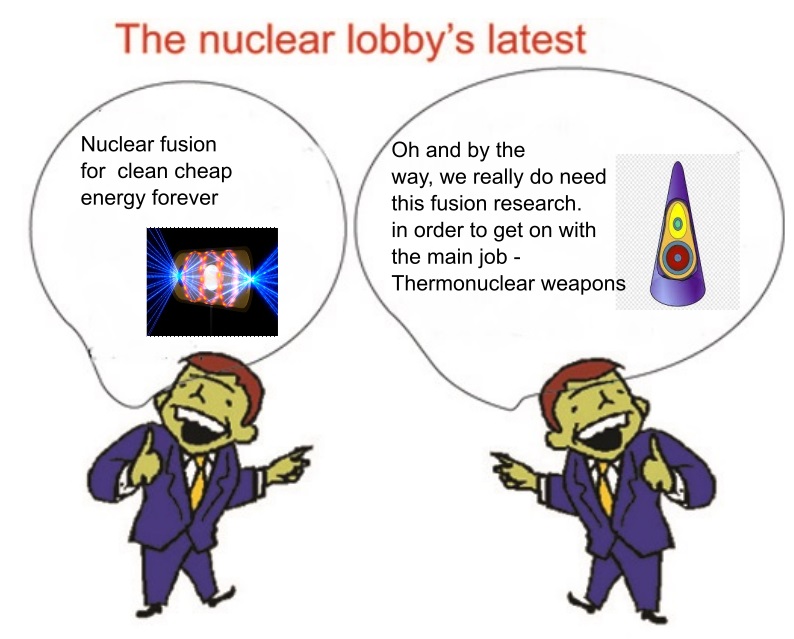
Tokamak
Energy’s collaboration with Darpa among ways UK company is seeking to
monetise its magnet breakthroughs. UK start-up Tokamak Energy is supporting
a US Defense Advanced Research Projects Agency programme to make silent
submarines.
FT 30th Aug 2024
https://www.ft.com/content/570267a4-657e-4c6b-805d-7b29a637e546
Labour Government must give ‘absolute commitment’ to nuclear test veterans
The Nuclear Free Local Authorities have called on the new Labour
Government to give an ‘absolute commitment’ to righting the injustice
and recompensing the suffering of British nuclear test veteran community
which has lasted for over seventy years.
NFLA 29th Aug 2024
Lakenheath Alliance for Peace (LAP) will have an ongoing presence at American air force base.

Lakenheath Alliance for Peace / NFLAs Joint Media Release – Watching
Lakenheath. Following the successful two-week peace walk and camp in July,
Lakenheath Alliance for Peace (LAP) will have an ongoing presence at USAF
Lakenheath.
The base, the largest American air force base in the UK, is
preparing to accept weapons of mass destruction once more. LAP will hold a
further 10-day peace camp next Easter, from 14th-25th April 2025, and
monthly vigils in the meantime, from 12-2 on the last Saturday each month
(except December). The first of these will be on Saturday August 31st, noon
till 2 pm outside the Main Gate to RAF Lakenheath on the A1065. The
location is Brandon Rd, Lakenheath IP27 9PS.
NFLA 28th Aug 2024
Popular US park as radioactive as Chernobyl, says expert: ‘I’ve never seen anything quite like it’
By Matthew Phelan For Dailymail.Com and Associated Press, 29 August 2024
A scenic hiking trail has been discovered to be dangerously contaminated with radiation.
New tests have discovered that Acid Canyon — a popular hiking and biking trail near the birthplace of the atomic bomb, Los Alamos, New Mexico — is still radioactive today at level’s akin to the site of the Soviet Union’s Chernobyl nuclear disaster.
The shocking contamination data, collected in an effort led by biochemist Michael Ketterer, has galvanized public calls for posting official warnings across the trail…………………………………………………………………………………………….. more https://www.dailymail.co.uk/sciencetech/article-13788759/Popular-hiking-trail-radioactive-Chernobyl-nuclear.html?fbclid=IwY2xjawE99R1leHRuA2FlbQIxMQABHVP-28QfZ-nxj8mjOk5A9fM4TyF-EOzzzKA2-rHdbbAFhrQEr4LY-M8GsA_aem_XVLP4cUbyyPBXNd03zrK4g
Declassified files show NI’s future reformist PM ‘against nuclear plant in Catholic area’
The man who would become Northern Ireland’s key reformist Prime Minister
repeatedly expressed alarm at a plan to build a nuclear reactor in a
Catholic area of Tyrone, a previously secret file from the old Stormont
government reveals.
In 1950s Northern Ireland, Terence O’Neill was
Minister of Home Affairs and then Finance Minister at a time when the
unionist administration was adapting to life after the Second World War,
the new challenges of the Cold War, the extension of Clement Atlee’s
welfare reforms across the Irish Sea and the IRA border campaign.
Belfast Telegraph 28th Aug 2024
Atomic Tragedy? Plutonium Levels Near US Nuclear Site In Los Alamos Similar To Chernobyl – New Study.

https://www.eurasiantimes.com/plutonium-levels-at-los-alamos-comparab/—28 Aug 24
Los Alamos, the birthplace of the American atomic bomb under the Manhattan Project led by Robert Oppenheimer, is now facing a troubling revelation. According to a recent study by Northern Arizona University, plutonium levels in the area are alarmingly high, comparable to those found at the Chernobyl nuclear disaster site.
The Guardian reported that “extreme concentrations” of plutonium were detected in soil, plants, and water around Los Alamos, a location in New Mexico that was once the center of the US nuclear weapons development.
These findings were part of a study led by scientist Michael Ketterer, who noted that the levels of this radioactive material were “among the highest” ever found in a publicly accessible area in the US.
His research indicates that these levels are similar to those observed in Chornobyl, Ukraine, the site of the catastrophic nuclear spill during the Soviet era.
Ketterer expressed shock at the discovery, stating, “This is one of the most shocking things I’ve ever stumbled across in my life.” He highlighted that these radioactive isotopes are “hiding in plain sight,” posing a significant environmental risk.
Historically, from the 1940s until 1963, the Los Alamos National Laboratory disposed of radioactive waste into a nearby canyon, which eventually earned the nickname Acid Canyon due to its severe contamination.
The Atomic Energy Commission and the U.S. Department of Energy later initiated a massive remediation effort costing at least $2 billion, which was said to bring the area into compliance with federal cleanup standards by the 1980s.
The land was subsequently released to Los Alamos County, which developed it into a popular dirt trail for bikers, hikers, and runners.
Despite the high levels of plutonium detected, Ketterer said that the immediate danger to trail users is low. However, he cautioned that the environmental risks remain significant.
Plutonium contamination can potentially infiltrate water supplies, ultimately flowing into the Rio Grande, and may enter the food chain through plants. Additionally, in the event of a wildfire, plutonium could be dispersed widely as ash.
Public health advocates are also urging the government to post signage warning visitors about the contamination, which would allow them to make informed decisions about using the trail.
Department oF Energy Downplays Risks
Tina Cordova of the Tularosa Basin Downwinders Consortium said that the findings serve as a stark reminder of New Mexico’s long-term radioactive challenges.
She pointed out that the persistent presence of plutonium, which has a 24,000-year half-life, underscores a “terrible legacy” left by the Trinity bomb, which was notably inefficient and left behind a substantial amount of unfissioned plutonium.
However, the Department of Energy, in response to concerns, said that the detected plutonium levels at Los Alamos are “very low and well within the safe exposure range.”
Similarly, the US Department of Energy’s Environmental Management Los Alamos Field Office maintains that the concerns raised by Ketterer and Nuclear Watch align with data that has been publicly accessible for years and asserts that the canyon remains safe for unrestricted use.
The Department references a 2018 study that estimates that individuals who frequent the canyon are exposed to less than 0.1 milligrams of radiation annually.
This level is notably lower compared to the average yearly radiation dose of 620 millirems from all sources, as reported by the US Nuclear Regulatory Commission.
This study indicates that the radiation exposure in the canyon is well below the broader average, highlighting the relatively low risk for those using the area for recreational purposes.
However, Ketterer and his colleague Jay Coghlan, director of Nuclear Watch, caution that while the immediate health risks may be minimal, there are ongoing issues regarding the downstream migration of plutonium, its absorption by plants, and the potential spread of contaminated ash from wildfires.
Ketterer described the situation as one that cannot be entirely resolved, likening attempts to clean the area to trying to remove salt from a shag carpet.
He stressed the importance of transparency, suggesting that informing residents and visitors about the contamination is crucial, even if the problem itself cannot be fully rectified.
Meanwhile, the study’s release comes amid the Department of Defense’s announcement to increase plutonium pit production at Los Alamos, a key component in nuclear weapons.
Concurrently, a defense bill recently approved by the US Senate provides expanded funding for those affected by government-related radioactive waste, but it notably excludes the Los Alamos area, a decision that has sparked outrage among local health advocates.
Israel Says US Has Delivered 50,000 Tons of Military Aid Since Start of Gaza Slaughter

The Biden administration has continued to deliver weapons
by Dave DeCamp August 26, 2024 https://news.antiwar.com/2024/08/26/israel-says-us-has-delivered-50000-tons-of-military-aid-since-start-of-gaza-slaughter/
The Israeli Defense Ministry said Monday that the US has delivered over 50,000 tons of weapons and other military equipment since the start of Israel’s genocidal campaign in Gaza, demonstrating the Biden administration’s staunch support for the slaughter.
Since October 7, 107 ships and 500 transport planes have brought US military aid shipments to Israel. The Israeli Defense Ministry said the deliveries have included “armored vehicles, munitions, ammunition, personal protection gear, and medical equipment.”
The ministry added that the US support was “crucial for sustaining the IDF’s operational capabilities during the ongoing war.”
Back in April, President Biden signed a bill into law that included $17 billion in additional military aid for Israel on top of the $3.8 billion the country receives each year. The State Department recently approved a series of major arms deals for Israel worth $20 billion, including a new fleet of F-15 fighter jets.
Besides the military aid, the Biden administration has also provided intelligence for operations in Gaza and political support at the UN. The administration has also helped Israel by portraying Hamas as the obstacle to a hostage and ceasefire deal, even as Israeli Prime Minister Benjamin Netanyahu has been working to sabotage the chances of an agreement.
Over the past 10 months, the US-backed Israeli assault on Gaza has killed at least 40,435 people, including over 16,000 children, according to Gaza’s Health Ministry’s latest numbers. The ministry’s figures are considered a low estimate since it doesn’t include the estimated 10,000 people who are missing and presumed dead under the rubble. Many more could have died from indirect causes as Israel has shattered Gaza’s infrastructure.
1 This Month
23-25 October – on Zoom – World BEYOND War’s annual global conferenc

To see nuclear-related stories in greater depth and intensity – go to https://nuclearinformation.wordpress.com

Say No to NASA’s Reckless Nuclear Reactor on the Moon
Say No to NASA’s Reckless Nuclear Reactor on the Moon
-
Archives
- October 2026 (160)
- September 2026 (339)
- August 2026 (330)
- July 2026 (355)
- June 2026 (287)
- May 2026 (306)
- April 2026 (356)
- March 2026 (251)
- February 2026 (267)
- January 2026 (308)
- December 2025 (358)
- November 2025 (359)
-
Categories
- 1
- 1 NUCLEAR ISSUES
- business and costs
- climate change
- culture and arts
- ENERGY
- environment
- health
- history
- indigenous issues
- Legal
- marketing of nuclear
- media
- opposition to nuclear
- PERSONAL STORIES
- politics
- politics international
- Religion and ethics
- safety
- secrets,lies and civil liberties
- spinbuster
- technology
- Uranium
- wastes
- weapons and war
- Women
- 2 WORLD
- ACTION
- AFRICA
- Atrocities
- AUSTRALIA
- Christina's notes
- Christina's themes
- culture and arts
- Events
- Fuk 2022
- Fuk 2023
- Fukushima 2017
- Fukushima 2018
- fukushima 2019
- Fukushima 2020
- Fukushima 2021
- general
- global warming
- Humour (God we need it)
- Nuclear
- RARE EARTHS
- Reference
- resources – print
- Resources -audiovicual
- Weekly Newsletter
- World
- World Nuclear
- YouTube
-
RSS
Entries RSS
Comments RSS

