Japan, to make the biggest mistake in history: nuclear energy with water, and risk of explosion
by Jessica A., 09/15/2024, https://www.ecoticias.com/en/nuclear-energy-japan-hydrogen/6246/
Japan has a traumatic history with nuclear power, but that’s not stopping the country from taking new risks
The Fukushima nuclear disaster of 2011 devastated Japan and left the rest of the world terrified of nuclear power. While it wasn’t as horrific as the Chernobyl nuclear reactor explosion of 1986, it still traumatized both the Japanese people and the government. Yet now, Japan is facing an energy crisis, and nuclear energy may be the only realistic solution.
Japan is one of the countries at the forefront of the green energy revolution. The Japanese government understands that solar, wind, and hydroelectric energy can only produce a portion of the fuel and electricity the country and the world need. Hydrogen will have to make up some of the difference in the industrial sector, for uses in shipping, aviation, and manufacturing. Japan wants to use next-generation nuclear reactors to produce hydrogen with zero emissions.
Next-generation nuclear reactors have lower energy outputs and marginally better safety records
To make hydrogen a viable option for industrial fuel needs, Japan plans to use nuclear reactors
Many companies are already producing hydrogen for the industrial sector, but they often use natural gas or fossil fuels to do it. These methods result in at least some greenhouse emissions, and Japan wants to have a zero-emissions hydrogen production process in place by 2040 to help meet the world’s energy needs.
Nuclear reactors seem to offer a good solution to this problem because they generate a lot of heat, and that heat can be used to break down water for hydrogen harvesting. Hydrogen is the only clean fuel that scientists know of that can power industrial shipping vessels, planes, and large machinery.
To avoid making the climate crisis worse, governments need to commit to making the production of hydrogen a green process, meaning releasing zero emissions. Japan is looking at innovative ways of designing nuclear reactors to keep them safe so that they can power homes and produce hydrogen.
Many people are skeptical of nuclear energy, and Japan could be courting disaster with its plans to use high temperatures to break down water. One more nuclear explosion could mean the end of nuclear power forever. Only time will tell if the next-gen reactors pass all the safety tests required to go online.
NuScale Power Is Great. Here’s Why You Shouldn’t Buy It.

The Motley Fool, By Reuben Gregg Brewer – Sep 14, 2024
NuScale Power (SMR 12.17%) is at the leading edge of the nuclear power sector. It is doing great things and making important progress toward its goal of mass-producing small-scale modular nuclear reactors. In a world increasingly looking toward carbon-free energy sources, it is positioning itself well for a bright future. But it won’t be a good fit for every investor. Here’s why you might want to buy the stock and why you might not want to buy it.
NuScale is moving (slowly) toward the nuclear future
Today, nuclear reactors are giant infrastructure assets that cost huge sums of money to build and years of effort to get up and running. NuScale Power is working to upend that inefficient model by offering small, modular reactors that would be built in a factory and then delivered where they are needed.
If one reactor isn’t enough, they can be linked to create a larger reactor………….
Adding to the allure here is a balance sheet with zero debt and $136 million in cash. In other words, it is working from a strong financial position. Also, NuScale Power’s largest shareholder is Fluor (FLR 2.21%), a large construction company.
Clearly, Fluor has its own motives in backing NuScale, like supporting the growth of a new market (small-scale nuclear power plant construction), but it means that NuScale has a strong parent to help it along. That’s showing up right now, too, as a project from Fluor is going to help add revenue to NuScale’s earnings statement, helping the upstart nuclear power company pay for its own product development plans.
There are indeed some good reasons to like the future prospects for NuScale power, including that, as management likes to highlight, it is “the only SMR certified by the U.S. Nuclear Regulatory Commission.” So, it basically has a leg up on the competition right now.
NuScale Power comes with some big risks
Despite the positives, NuScale Power is not going to be a good fit for every investor. In fact, only aggressive types should really be looking at the stock today. There are a host of reasons.
For starters, NuScale Power’s product plans are approved by U.S. regulators, but not fully approved to the point where it can start building and selling units. So, there’s more work to be done before NuScale Power even has a product to sell. And while it has inked a tentative deal to sell its first units, it can’t actually do that yet. It has to spend even more money on the effort to get the final government nod to start building and delivering a product.
That, in turn, means more red ink. NuScale Power is basically still in start-up mode, so it isn’t unusual that more money would be going out the door than coming in. The revenue from the work with Fluor will help, but the income statement is likely to look ugly for years to come. That’s because it will still have to ramp up its production abilities even after it gets all the approvals it needs. All in all, NuScale Power has a great story, but that story is still in its early chapters.
NuScale Power is an acquired taste
To highlight the risks here, it helps to look at the stock price. Over the past year, the stock has gone from a low of roughly $2 per share to a high of just over $15, and it currently sits at around $7. If you can’t handle price swings like that, you definitely don’t want to own this nuclear power start-up.
That said, investors with a high tolerance for risk might be interested in NuScale power, given that it has achieved a great deal on its path to producing small-scale modular nuclear reactors. But for most investors, the risks are likely too great at this point in time to justify hitting the buy button. https://www.fool.com/investing/2024/09/14/nuscale-power-is-great-heres-why-you-shouldnt-buy/
Why SMRs Are Taking Longer Than Expected to Deploy
Oil Price, By Felicity Bradstock – Sep 14, 2024
“…………………………………………..Several energy companies and startups, such as Terrapower – founded by Bill Gates, are developing SMR technology. The founders of Terrapower decided the private sector needed to take action in developing advanced nuclear energy to meet growing electricity needs, [?] mitigate climate change and lift [?] billions out of poverty.
Several SMR projects are also being backed by government financing. For example, in the U.S., the Department of Energy announced $900 million in funding to accelerate the deployment of Next-Generation Light-Water SMRs. In addition, many companies, such as Microsoft, have signed purchase agreements with energy companies to use SMRs, or are developing their own SMR strategies, to power operations with [?]clean energy.
While there is huge optimism around the deployment of SMR technology, many of the companies developing the equipment have faced a plethora of challenges, which has led to delays and massive financial burdens. At present, only three SMRs are operational in the world, in China and Russia, as well as a test reactor in Japan. Most nuclear energy experts believe SMRs won’t reach the commercial stage in the U.S. until the 2030s.
NuScale cancelled plans to launch an SMR site in Idaho in 2023 after the cost of the project rose from $5 billion to $9 billion owing to inflation and high interest rates. This is a common issue, as companies must predict the costs of a first-of-a-kind project. Once one SMR site is launched and companies can establish tried-and-tested methods of deployment, a second site is expected to be cheaper and faster to develop. A trend that will continue as companies gain more experience. Eric Carr, the president of nuclear operations at Dominion Energy, explained, “Nobody exactly wants to be first, but somebody has to be.” Carr added, “Once it gets going, it’s going to be a great, reliable source of energy for the entire nation’s grid.”
Another issue is access to uranium. Russia is currently the only commercial source of high-assay low- enriched uranium (HALEU), which companies require to power their reactors. In late 2022, Terrapower announced it would be delaying the launch of its first SMR site in Wyoming due to a lack of fuel availability. However, the U.S. is developing its domestic production capabilities. The Biden administration is expected to award over $2 billion in the coming months to uranium enrichment companies to help jumpstart the supply chain. Meanwhile, Terrapower announced this summer that it is finally commencing construction on its Wyoming SMR site and is working with other companies to develop alternate supplies of HALEU. https://oilprice.com/Energy/Energy-General/Why-SMRs-Are-Taking-Longer-Than-Expected-to-Deploy.html
French officials fear WWIII – Le Monde
Rt.com, 24 Sept 24
Paris is reportedly concerned about the prospects of the Russia-Ukraine conflict escalating into a global war.
Members of the French government are concerned about the Ukraine conflict spiraling out of control and are now exercising “great discretion,” Le Monde reported on Saturday, citing diplomatic sources.
Fears of the confrontation escalating into a direct collision between Moscow and the NATO bloc have skyrocketed over the past few days, as the US and its allies reportedly consider authorizing Kiev to strike targets deep inside Russian territory using Western weaponry.
While France has announced “no official position” on the matter, unnamed diplomats in private conversations admitted to the French daily that Paris has been concerned about potential escalation and has been trying to avoid it.
“We must do everything possible to avoid World War Three,” an unnamed official told the newspaper.
“One cannot simply dismiss the hypothesis that the Russians could expand the scale of their military operations,” the official added, referring to the warnings voiced by top Russian officials, including Russian President Vladimir Putin……………………………..more https://www.rt.com/news/604032-france-ukraine-world-war/
Serbia picks EDF, Egis for study on introduction of nuclear energy
The Ministry of Mining and Energy of Serbia awarded a contract to French
state-owned energy utility EDF and engineering company Egis Industries for
a preliminary technical study for considering the peaceful use of nuclear
energy. Following an agreement last month between Serbia and EDF to assess
the potential for developing a civil nuclear program, the French
state-owned energy utility and engineering firm Egis Industries won a
tender for the country’s first study.
The government in Belgrade adopted
changes to the Law on Energy in August as well, aiming to abolish a 1989
moratorium on the construction of nuclear power plants.
Balkan Green Energy News 13th Sept 2024
North Korea inadvertently gives away location of nuclear weapons facility, with pictures of Kim Jong-un visit.
State media images of Kim Jong-un
visiting a uranium enrichment plant did not include its location. But
analysts say tell-tale features in the photographs are a ‘close match’
to a particular site near Pyongyang.
Independent 15th Sept 2024
https://www.independent.co.uk/asia/east-asia/north-korea-nuclear-bomb-factory-location-b2613134.html
One big factor could decide if one of Wales’ biggest (nuclear) projects can happen
Ken Skates says he is determined to deliver on ‘big road projects’
Wales Online, By Owen Hughes, Daily Post Business Editor, Ben Summer, Senior reporter, 14 Sept 24
Welsh Government Transport Secretary Ken Skates says he wants to deliver on “big road projects”, while discussing a key factor that might resurrect a major transport scheme. The Welsh Government’s roads review, which delivered its conclusion in 2023, shelved several prominent Welsh transport initiatives – especially in north Wales where the Menai crossing, Llanbedr bypass and Flintshire ‘Red Route’ were all cancelled.
These choices were made by then-transport minister Lee Waters, guided by a panel of transportation and environmental specialists appointed by the Welsh Government. This was criticised last year by Ken Skates when he was a backbencher; he later took on the transport minister position under Vaughan Gething and has maintained it with First Minister Eluned Morgan’s new leadership.
Mr Skates hasn’t announced an outright reversal of previous decisions, but he’s hinted at potential modifications to the projects to improve their environmental impact as well as underline the economic benefits of the projects, reports North Wales Live. This week, he spoke about progress made and specifically pointed out that the future of a third Menai crossing might hinge on one pivotal element.
This relates to the dormant Wylfa B project near Cemaes; should it advance, it would necessitate better road network capacity to support the construction of the multi-billion-pound nuclear facility. Wylfa was identified by the preceding UK Government as the optimal site for the nation’s next significant nuclear station.
This week it has been reported that the new UK Government is reviewing the potential of the Wylfa Newydd site, with one option being to repurpose it for a number of small modular reactors (SMRs). Whichever path is taken, be it SMRs or another venture, will require billions in investment and significant road improvements………………………………………
https://www.walesonline.co.uk/news/politics/one-big-factor-decide-one-29935573
News countering the nuclear-military-industrial-political complex this week

Some bits of good news: UNICEF has helped reduce child mortality all over the world by working to reach the most vulnerable children, everywhere. After 9 Years of Work, CaliforniaTribe Finally Seas Traditional Land Named a Marine Reserve Bigger Than Yosemite- picturedCoho Anchorage, part of the proposed reserve
****************************
TOP STORIES.
Zelensky’s Last Hail Mary Gets Off to Rocky Start.
Biden’s Legacy: The Decline of Arms Control and Disarmament.
How to Make a ‘War Reserve’ Nuclear Bomb.
**********************************
Climate. Rich countries silencing climate protest while preaching about rights elsewhere, says study.
Noel’s notes. What is behind all the drama of long range missiles for Ukraine to send to Russia? An avalanche of objections to the latest proposed AUKUS nuclear treaty.
**************************************
AUSTRALIA.
The tangled nuclear web of lies and half-truths – can we believe that Australia will refuse to take USA toxic wastes? David Noonan confronts Australia’s politicians with critical unanswered questions on the AUKUS agreement – will they pretend not to hear this?
Albanese has a second chance with AUKUS.
Protecting the Merchants of Death: The Police Effort for Land Forces 2024. The lucrative charity, yes CHARITY, running the Land Forces weapons expo. From the archives :The fake charity AMDA Foundation is exposed by Michael West Media’s Michelle Fahy. More Australian news at https://antinuclear.net/2024/09/14/australian-nuclear-news-headlines-9-16-september-2/
NUCLEAR ITEMS
| ATROCITIES. United Nations relief agency Says 6 Workers Among at Least 18 Killed in Israeli Strikes on Gaza School. Israel kills 40 in Gaza “humanitarian zone”. | CLIMATE. US Militarism Is a Leading Cause of the Climate Catastrophe. Blackwater – a land in transition. |
- Why nuclear power plant are so expensive, especially in the West.
- Claims that UK’s Wylfa mega-nuclear site is ‘under-review’ with potential switch to mini-nuke plants.
- Support for nuclear is “money down the drain” – Rystad. Why SMRs Are Taking Longer Than Expected to Deploy. NuScale Power Is Great. Here’s Why You Shouldn’t Buy It.
| ENERGY. Nuclear vs Energy Storage. Die Welt predicts a mass exodus of people from Ukraine in winter. | ENVIRONMENT. Somerset campaigners celebrate as EDF Energy U-turns on planned Hinkley Point C saltmarshes. Water: Southern boom town that is just 24 miles away from dangerous canyon contaminated by plutonium | ETHICS and RELIGION. Richard Silverstein: Israel, ‘The Far Right Extremist State That I Can No Longer Identify With |
| EVENTS: PETITION Call off World War III | HEALTH. Christopher Busby: New study: the cause of the cancer epidemic. https://www.youtube.com/watch?v=kMauRgvWnII | INDIGENOUS ISSUES. Bloc Québécois backs First Nation fighting nuclear waste site. |
| POLITICS. Sane foreign policy biggest loser in Harris/Biden debate. Biden still slouching toward war, possibly nuclear, with Russia over Ukraine. UK Government considering scrapping Wylfa plans and 24GW nuclear capacity target. | POLITICS INTERNATIONAL and DIPLOMACY. Alarm in UK and US over possible Iran-Russia nuclear deal. US and UK press Ukraine before allowing Russia strikes. ‘Blinken, Get Lost!,’ Says Polish MEP Grzegorz Braun. https://www.youtube.com/shorts/2HKsBGSlqfI Ukraine will join NATO – Blinken. The Armageddon Agenda. |
| PUBLIC OPINION. Opposed to Netanyahu, two-thirds of Israelis want to negotiate with Hamas. | SAFETY. Dounreay placed on ‘special measures’ over wide-ranging safety concerns. Letter to New First Minister over South Wales Nuclear Overflights. ‘Its been a battle’: Neighbors worry about Palisades Nuclear Plant restarting. Japan, to make the biggest mistake in history: nuclear energy with water, and risk of explosion. |
| SECRETS and LIES. Democracy Dumped in Cumbria. Nuclear Dump Under the Irish Sea Here We Come?! UNLESS… Boris Johnson goes into business with Steve Bannon, Charlotte Owen and a uranium entrepreneur. Federal Conflict Rules Would Have Barred New Brunswick, Ontario Cabinet Ministers from New Corporate Posts, Expert Says. | SPACE. EXPLORATION, WEAPONS. India considers joining Russia, China to build nuclear plant on Moon. |
| TECHNOLOGY. Flamanville EPR shutdown prompts fresh questions over reactor design. | URANIUM. World’s largest uranium miner warns Ukraine war makes it harder to supply west.. |
WAR and CONFLICT. Putin Warns of ‘Direct’ War as US Mulls Letting Ukraine Use Long-Range Western Missiles .
Ukrainian Tipping Points: UPDATE 3 .x
White House finalizing plans to expand where Ukraine can hit inside Russia. UK approves Ukrainian missile strikes deep inside Russia – Guardian ‘Let’s Just Fight’: How Britain Prefers War Over Peace in Ukraine.
CNN Shared A Glimpse Of Just How Bad Everything Has Become For Ukraine. The NATO/Ukraine Defeat in Kursk (and Beyond). Ukrainian Tipping Points: UPDATE 2.
Neocon Queen Victoria Nuland ADMITS Not Wanting to End Ukraine War Diplomatically.
WEAPONS and WEAPONS SALES. Playing with nuclear fire. Biden administration split over Ukraine’s use of US weapons inside Russia.
Pentagon orders study of potential nuclear strike in Eastern Europe. Pentagon orders simulation of consequences of nuclear weapons use in Eastern Europe and Russia.
UK sent Kyiv large supplies of old military equipment, watchdog finds.
Putin Warns of ‘Direct’ War as US Mulls Letting Ukraine Use Long-Range Western Missiles
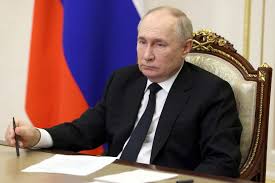
“It is a question of deciding whether or not NATO countries are directly involved in a military conflict,” said Russian President Vladimir Putin.
Jake Johnson, Sep 13, 2024, https://www.commondreams.org/news/putin-direct-war-nato
Russian President Vladimir Putin said Thursday that if the United States and the United Kingdom allow Ukraine to strike deep inside Russia with Western missiles, “it will mean nothing less than the direct involvement of NATO countries.”
“This is not a question of allowing the Ukrainian regime to strike Russia with these weapons or not. It is a question of deciding whether or not NATO countries are directly involved in a military conflict,” Putin told Russian state TV. “This will be their direct participation, and this, of course, will significantly change the very essence, the very nature of the conflict.”
Putin’s remarks came amid reports that U.S. President Joe Biden appears poised to let Ukraine use long-range missiles against Russia, signaling a perilous new phase in a deadly war that has dragged on for two and a half years since Russia’s invasion in February 2022.
According toThe New York Times, “President Biden appears on the verge of clearing the way for Ukraine to launch long-range Western weapons deep inside Russian territory, as long as it doesn’t use arms provided by the United States.”
Russian President Vladimir Putin said Thursday that if the United States and the United Kingdom allow Ukraine to strike deep inside Russia with Western missiles, “it will mean nothing less than the direct involvement of NATO countries.”
“This is not a question of allowing the Ukrainian regime to strike Russia with these weapons or not. It is a question of deciding whether or not NATO countries are directly involved in a military conflict,” Putin told Russian state TV. “This will be their direct participation, and this, of course, will significantly change the very essence, the very nature of the conflict.”
Putin’s remarks came amid reports that U.S. President Joe Biden appears poised to let Ukraine use long-range missiles against Russia, signaling a perilous new phase in a deadly war that has dragged on for two and a half years since Russia’s invasion in February 2022.
According toThe New York Times, “President Biden appears on the verge of clearing the way for Ukraine to launch long-range Western weapons deep inside Russian territory, as long as it doesn’t use arms provided by the United States.”
“The issue, which has long been debated in the administration, is coming to a head on Friday with the first official visit to the White House by Britain’s new prime minister, Keir Starmer,” the Times reported Thursday. “Britain has already signaled to the United States that it is eager to let Ukraine use its ‘Storm Shadow’ long-range missiles to strike at Russian military targets far from the Ukrainian border. But it wants explicit permission from Mr. Biden in order to demonstrate a coordinated strategy with the United States and France, which makes a similar missile.”
Ahead of the decision, the Pentagon pointed to Iran’s alleged transfer of ballistic missiles to Russia as further reason to bolster Ukraine’s military capabilities. A spokesperson for Iran’s foreign ministry said in response that “the publication of false and misleading reports about the transfer of Iranian weapons to some countries is simply ugly propaganda to conceal the large illegal arms support of the United States and some Western countries for the genocide in Gaza.”
Ukraine, which has received roughly $55.7 billion in military assistance from the U.S. since February 2022, has already launched repeated drone attacks deep inside Russia, but Western permission for Kyiv to use long-range missiles could be a dire escalation.
As Politiconoted, Moscow could retaliate against a long-range missile strike on Russia by hitting “a target inside NATO, such as the critical weapons supply hub in the Polish city of Rzeszów.” Such an exchange could result in direct conflict between the nuclear-armed powers.
“Military experts argue any guidelines agreed for the British weapons at the two-hour summit in Washington could also then pave the way for the Ukrainians to fire U.S.-supplied ATACMS—a tactical ballistic missile system—at airfields and army bases deep inside Russia,” the outlet observed.
The potential intensification and spread of the war comes as the prospect of a diplomatic resolution appears nonexistent, at least in the near term.
Aída Chávez, communications director and policy adviser at Just Foreign Policy, wrote for The Intercept earlier this week that members of the U.S. Congressional Progressive Caucus were “pilloried” over an October 2022 letter urging Biden to “make vigorous diplomatic efforts in support of a negotiated settlement and ceasefire, engage in direct talks with Russia, explore prospects for a new European security arrangement acceptable to all parties that will allow for a sovereign and independent Ukraine, and, in coordination with our Ukrainian partners, seek a rapid end to the conflict and reiterate this goal as America’s chief priority.”
Today, Chávez wrote, the progressives who signed the letter—which was ultimately withdrawn by the CPC leadership—”look more prescient than ever.”
“Since the ill-fated letter, the war has ground on—with devastating results for the people of Ukraine,” Chávez continued. “Ukraine is not in a position to win the war, nor does it have a stronger bargaining position in talks than it did in late 2022 when the CPC letter came out.”
PETITION – Call off World War III
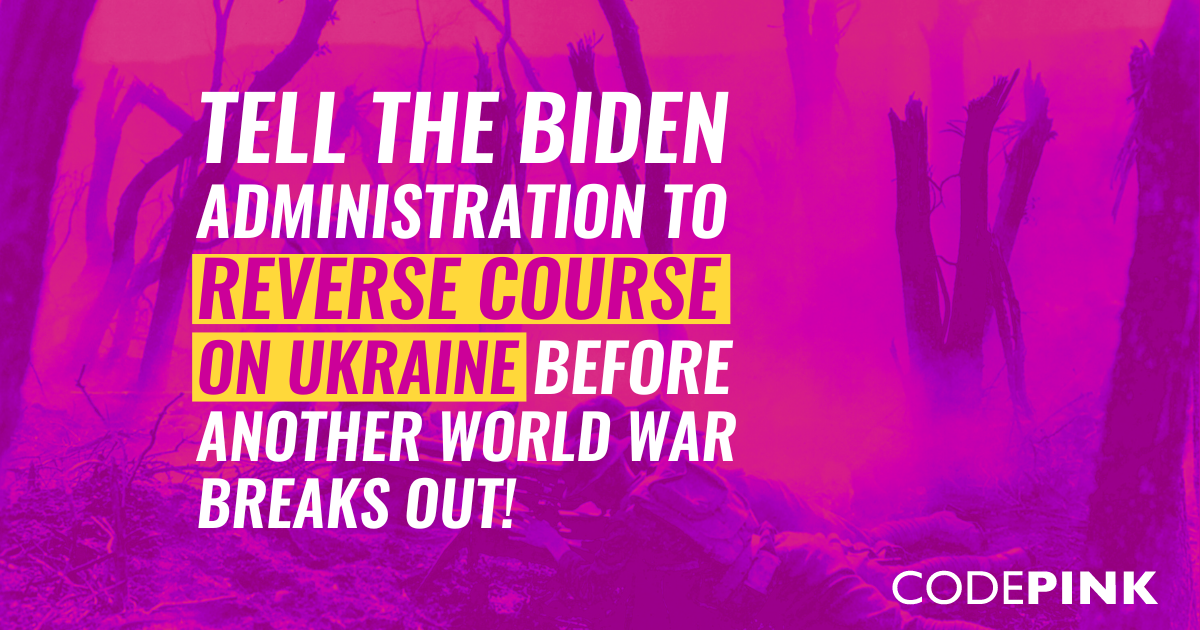
Tell the Biden administration to call off NATO-backed strikes inside Russia, stop arming Ukraine and support a ceasefire before a world war breaks out between nuclear powers.
Petition to President Biden, Vice President Harris, Defense Secretary Austin, and White House National Security Adviser Sullivan:
We understand the United States and United Kingdom are ready to announce that they will be lifting restrictions on Ukraine’s use of NATO weapons, allowing them to be used to strike deep inside Russia, according to the Guardian and Politico. This news follows former State Department official Victoria Nuland’s admission the US torpedoed a peace deal between Ukraine and Russia a month after Russia invaded Ukraine.
We demand the Biden administration reverse course: call off NATO-backed strikes inside Russia, stop arming Ukraine and support a ceasefire before another world war breaks out.
The Guardian reports, “British government sources indicated that a decision had already been made to allow Ukraine to use Storm Shadow cruise missiles on targets inside Russia.” The missiles will be launched from Ukraine but targeted and guided by NATO technicians. In response, Putin says long-range arms for Ukraine will mean “NATO countries are at war with Russia.”
We demand the Biden administration pursue a diplomatic resolution to the war in Ukraine, call off NATO-supplied missiles striking inside Russia and avert World War III between nuclear powers.
We want Vice President Kamala Harris to know that we do not support her bellicose pledges to continue the war in Ukraine, nor her warmongering words at the DNC when she promised to ensure America always has the “strongest, most lethal fighting force in the world.” The world has suffered enough at the hands of US lies and violence.
In the words of Anatoly Antonov, the Russian Ambassador to the US, Washington “continues to test the limits of our tolerance for hostile steps” and is “paving the way to World War III.”
STOP. Seek a diplomatic resolution now–before it’s too late.
Sincerely,
Dounreay placed on ‘special measures’ over wide-ranging safety concerns
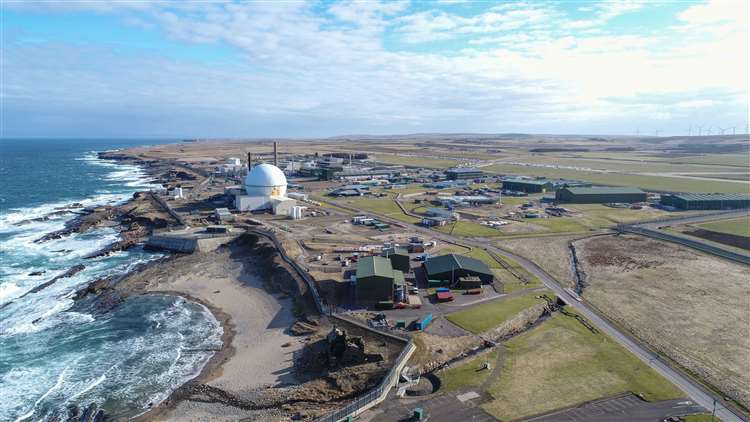
John O’Groat Journal By Iain Grant, 13 September 2024
An action plan has been drawn up by operators NRS to address the issues which include ageing, deteriorating plant, radioactive leaks and the storage of chemicals.
Among the problem areas is the condition of buildings in the prototype fast reactor being used to store drums of radioactive sodium.
An inspection by the Office for Nuclear Regulation (ONR), in April made grim reading for site management. It found significant corrosion and metal loss of structural steelwork in the turbine hall.
It concluded “It was judged that the steam generator hall and generator transformer house are not adequate, as the licensee has failed to safely protect the drums against uncontrolled
degradation via air and moisture ingress.
“It is also judged that the licensee is not recognising when there is degradation in these areas.”
The issue first came to light following a probe into a minute leak of
radioactive tritium from a sodium drum in the turbine hall in November
2022. Its exposure to rainwater through a leaky roof was blamed for causing
the corrosion.
The inspection was one of a number carried out at Dounreay
in the spring and summer to receive an amber rating by ONS. Others revealed
some elderly electrical plant in a “degraded” state while Dounreay was
found to have breached the Control of Major Accident Hazards (CoMAH)
regulations by its stockpile of chemicals being over its set limit. A fire
safety inspection was generally positive but flagged up a “significant
shortfall” in assessment and control of sources of dangerous substances.
The inspector said: “It is my judgement that Dounreay do not currently
understand the totality of risk presented by dangerous substances on site
and therefore cannot provide adequate assurance as to the safety of
personnel on site.”
John O’Groat Journal 13th Sept 2024
Ukraine will join NATO – Blinken

https://www.rt.com/news/603873-blinken-ukraine-kiev-nato/— 11 Sept 24
The top US diplomat has repeated Washington’s talking points while visiting Kiev
Washington wants to see Kiev win the conflict against Moscow and join NATO, US Secretary of State Antony Blinken has said.
Blinken is visiting Kiev with his British counterpart, David Lammy, to reiterate Anglo-American support for Vladimir Zelensky’s government.
“At the July summit, we declared that Ukraine’s path to NATO membership is irreversible,” Blinken said on Wednesday, reminding his hosts that the US-led bloc has “established a command dedicated to support Ukraine’s membership.”
Blinken has made the case for Kiev’s membership in NATO before. However, the bloc has officially declared, both in Washington this summer and last year in Lithuania, that this could only happen “when allies agree and conditions are met.”
Hungary and Slovakia have already said they will not agree under any circumstances, as bringing Ukraine into NATO would mean war with Russia.
During the same speech in Kiev, Blinken painted a rosy picture of Ukraine’s military industry, claiming it had expanded six-fold over the last year.
“In the coming years, that’s going to give Ukraine one of the most advanced defense industries in the world, and it will be able to take that to the global market and take global market share away from other countries like Russia, and also supply NATO allies,” he added.
Kiev is presently entirely dependent on the West for weapons, equipment, ammunition and even cash infusions to keep its government going. Ukraine is also facing widespread electricity shortages, as Russian missile strikes have degraded power production capacity. Blinken himself announced on Wednesday that the US will send $325 million to help repair the Ukrainian power grid and provide emergency backup generators for critical infrastructure.
Another $290 million has been earmarked for “food, water, shelter, health care and education programs for Ukrainians” both in the country and abroad, with the remaining $102 million designated for landmine removal.
“The bottom line is this: We want Ukraine to win,” Blinken declared at another point during his visit, according to AP.
This, too, was stated by Western officials before, as a prerequisite for Kiev’s membership in NATO. This effectively means that Ukraine will never join the bloc, Russian Deputy Foreign Minister Sergey Ryabkov said in June.
NATO’s 2008 announcement about Ukraine’s possible membership “became the trigger for much of the entire crisis that we are observing today,” Ryabkov said at the time. “If NATO members are ready to fall into the same trap again and history teaches them nothing, then they will get hit again and their bruises will get worse,” he added.
Ukrainian Tipping Points: UPDATE 3
Russian and Eurasian Politics, by Gordonhahn, September 13, 2024 https://gordonhahn.com/2024/09/13/ukrainian-tipping-points-update-3/
In the last few hours, both Russian President Vladimir Putin and Russia’s Ambassador to the United Nations have declared that any attack on Russia by Ukraine with Western long-range missiles will be considered by Moscow to be the direct participation of the country from which the weapon has been supplied and will be met with “corresponding measures with all the ensuing consequences” for that particular state. Putin, in particular noted that such an act will “change the very essence, nature if the war” (http://kremlin.ru/events/president/news/75092).
Opposed to Netanyahu, two-thirds of Israelis want to negotiate with Hamas
Voltairenet.org, by Thierry Meyssan 13 Sept 24
The recent general strike in Israel is not just a demonstration against the rhetoric that we shouldn’t negotiate with terrorists and that the IDF will release the hostages held in Gaza. It marks the beginning of a realization that Prime Minister Benyamin Netanyahu is not defending Jews. While Jewish Israelis are not yet aware of the ethnic cleansing in Gaza, they are becoming aware of the anti-Arab pogroms in the West Bank. Gradually, they are beginning to admit that their enemies are not their neighbours, but are among them. These are the revisionist Zionists.
Voltaire Network | Paris (France) | 12 September 2024
Israeli public opinion is changing. After having turned away from Prime Minister Benyamin Netanyahu, ineffective during the October 7 attack, some Israelis rallied behind him again after the Iranian retaliation on April 11. About a third of them now support him. They are both settlers, illegally implanted in the West Bank, and citizens who perceive Arabs, Turks and Persians as enemies.
The remaining two-thirds are slowly opening their eyes. The execution of six hostages by Hamas on August 31, just as the “Defense Forces” (IDF) were about to free them, showed them that, far from allowing their release, the presence of soldiers in Gaza condemns them to death. They now see the Prime Minister’s obstinacy in invading not only Gaza, but also the West Bank, to the detriment of the hostages’ lives, as proof that he serves the interests of the settlers alone, and not those of all Israeli Jews. Yet they fail to see the suffering of Israeli Arabs, the pogroms in the West Bank and the ethnic cleansing in Gaza.
It was against this backdrop that Israel’s historic trade union, the Histadrut, which was the main Yichuv organization between the wars, called a general strike. ……………………………………………………the strike was well attended. It inscribed in the minds of Israelis that Benyamin Netanyahu did not defend Jews, that he had never defended them.
At the same time, one of the government’s 32 members, Defense Minister General Yoav Gallant, declared in cabinet that the Prime Minister’s new objective of occupying the Philadelphia Corridor (i.e., the small Egyptian-Gazawi border strip) violates the Camp David Accords without bringing the slightest strategic advantage. When the cabinet discussion turned to invective, General Gallant took the matter public……………………………………………………………………………..
At the time, no one understood the connection between the unionists and the general. However, we later learned that he had been dismissed for having exploded in the Council of Ministers and demanded an explanation for the Prime Minister’s lack of reaction to reports from the Shin Bet (counter-intelligence) and the IDF. Four months before the October 7 attack, all Israeli intelligence services were drafting report after report announcing the “Perfect Storm” (code name for the October 7 “Al-Aqsa Flood” operation) that the Palestinian Resistance was preparing. The Prime Minister refused to listen. He remained deaf to General Gallant’s outburst. He did not defend his country during the October 7 attack, but used it to ethnically cleanse Gaza and allowed anti-Arab pogroms to multiply in the West Bank.
As a result, the question we’ve been asking since mid-November [1] is also starting to resonate with Israelis: what if Benyamin Netanyahu wasn’t incompetent, but an accomplice in the attack?
This question is on the minds of many Israelis, who have called for a state commission of inquiry into all aspects of the October 7 attack, its preparation and response. Israel’s Attorney General, Gali Baharav Miara, who considers the issue relevant, has also called for this. However, Benjamin Netanyahu and his accomplices opposed it.
This question has been on everyone’s lips ever since the Israeli press revealed that the counter-espionage Shin Bet/Shabak had warned the Prime Minister of the imminent attack 10 weeks earlier [2]. This time, we’re no longer talking about foreign sources, but about one of Israel’s security agencies.
Gradually, the story of the current coalition government resurfaces. Jewish supremacists (the Kahanists) are not just another Jewish sect. Certainly, they militate for the destruction of the Al-Aqsa mosque and the rebuilding in its place of Solomon’s temple, whereas the Haredi rabbis, both Ashkenazi and Sephardic, in addition to the leading Israeli rabbis, consider such acts impure and forbid all Jews to enter the courtyards of the Al-Aqsa mosque. They thus seem to distinguish themselves from the revisionist Zionists of Volodymyr Jabotinski and Benzion Netanhayou, who campaigned for a Jewish state from the Nile to the Euphrates. In reality, Rabbi Meïr Kahane was an agent of Yitzhak Shamir (Jabotinky’s successor) in the United States, who financed him through Mossad, of which he was then one of the leaders. In fact, during his first term as Prime Minister, in 1996, Benjamin Netanyahu had a tunnel dug under the Al-Aqsa mosque.
No one in Israel would fail to recall that Volodymyr Jabotinsky and Benzion Netanhayou (the Prime Minister’s father) were allies of Benito Mussolini, who hosted their militia, the Betar, in Rome [3]. A fortiori, no Israeli dares question the links between these historic fascists and Nazism. It’s true that Jabotinsky died at the start of the war, on August 4, 1940, in New York, without having to comment on the latter’s racial ideology. But during the inter-war period, as a director of the (World) Zionist Organization, he had allied himself with the Ukrainian integral nationalists of Symon Petlioura and Dmytro Dontsov against the Soviets. Their men massacred Jews without eliciting the slightest reaction from him. When the Zionist Organization demanded an explanation, he resigned without reply.
David Ben Gurion, Israel’s first Allied Prime Minister, said that Jabotinsky was surely a fascist and possibly a Nazi, which is why he opposed the transfer of his ashes to Jerusalem.
The question arises for two reasons: firstly, revisionist Zionists conducted negotiations with the Nazis throughout the Second World War against the Allies. It was the Germans who refused to go any further in their collaboration, whereas the Jewish followers of Jabotinsky were for continuing……………………. more https://www.voltairenet.org/article221242.html
The NATO/Ukraine Defeat in Kursk (and Beyond)
by Gordonhahn, September 14, 2024, https://gordonhahn.com/2024/09/14/the-nato-ukraine-defeat-in-kursk-and-beyond/
Contrary to the view of Beltway pundits regarding the sunny side or various alleged successes of Ukraine’s Kursk incursion (https://nationalinterest.org/blog/buzz/kursk-offensive-and-future-russia-ukraine-war-%C2%A0-212669), the Ukrainian President Volodomyr Zelenskiy’s newest simulacra attack – substituting a fake reality for the real one – has led to yet another predictable catastrophe in the real world of war and politics.
Zelenskiy’s gambit had no military logic behind it. Its essence was made up of a propagandistic/PR component and perhaps a terrorist element. It was a reckless, desperate last roll of the dice to overturn the playing board which never had a hope of succeeding. Not one of the goals stated by Ukrainian officials was achieved, nor was the unstated, potential goal of seizng the Kursk Nuclear Power Plant achieved. What was ‘achieved’ was a decimation of some of Ukraine’s best remaining men and materiel`.
Ukrainian officials publicly stated several goals of the operation: (1) to force Moscow to redeploy troops away from Russian forces’ increasingly rapid advance on Pokrovsk and across the Donetsk front; (2) to seize Russian territory to encourage Moscow to negotiate and to trade for the return of Ukrainian lands in peace talks with Moscow; (3) to capture Russian prisoners of war to exchange for Ukrainian prisoners; (4) to create angst in Russia among the elite and population in order to weaken support for the war and/or Putin’s hold on power; and (5) to make Russia feel the pain of death and destruction that Ukraine has been feeling (Zelenskiy alone said this). None of these goals was achieved.
Regarding the first goal, Ukrainian Armed Forces Commander Gen. Oleksandr Syrskii has acknowledged that the Russian forces did not redeploy from Donetsk to Kursk. The strategy was misconceived from the get-go. The Ukrainians tried to get the Russians to make an obvious mistake: divert forces need for their offensives in Donetsk to the Ukrainians’ mini-salient in Kursk and thereby weaken their offensive force. Ironically, in order to get the Russians to make the mistake of diverting valuable resources from Donetsk to Kursk the Ukrainians had done the same. This led to an acceleration of the Russian advance towards Pokrovsk – a key hub and perhaps the last best barrier hindering the Russian army’s march to the Dnieper.
Regarding the second and third, before the incursion Putin and other Russian officials had repeated their willingness to negotiate, but Kiev refused or ignored each statement. After the incursion, the Russians announced that there will be no talks while Ukrainian forces remain in Kursk and other Russian territories, according to Moscow’s definition (https://ctrana.news/news/471809-v-rf-snova-zajavili-chto-ne-budut-vesti-perehovory-s-ukrainoj.html).
Moreover, as one exiled Ukrainian newspaper Ctrana.news, notes, no Russian is going to give back 18 percent of Ukrainian territory held by Russia in return for 5 percent of Kursk region’s territory. The same paper notes that even prominent Russian liberals, editor-in-chief of the banned Ekh Moskvy Aleksei Venediktov and Yabloko Party leader Grigorii Yavlinskii (who met with Putin weeks back to discuss peace talks), thought negotiations might have begun by year’s end until the Kursk incursion spoiled the mood in the Kremlin (https://uiamp.org/kurskiy-tormoz-kakie-seychas-perspektivy-peregovorov-ukrainy-i-rossii). No talks means there will be no trading for land or prisoners, contrary to Kiev’s goals.
Regarding the fourth goal, there has been no discernible elite or popular demand for a change in Putin’s ‘special operation policy’ (SMO). To the contrary, prominent hardliners and others intensified their clamor for untying the Russian military’s hands and undertaking a full-scale war on Ukraine, and this may explain an escalation in Russian missile attacks. In terms of the population, public opinion surveys demonstrate both continuing popular support for Putin and the mirror opposite effect on its views than that intended by Kiev. Ukrainian forces began their incursion on August 6th, crossing the Ukrainian-Russian border between Sumy, Ukraine and Kursk, Russia. In the Levada Center’s polling in July Putin’s approval rating was 87 percent. In August it fell a mere 2 points to 85 percent (within the margin of error) ((www.levada.ru/2024/08/29/rejtingi-avgusta2024-goda-otsenki-polozheniya-del-v-strane-nastroeniya-respondentov-odobrenie-organov-vlasti-doverie-politikam-i-partiyam/?utm_source=mailpoet&utm_medium=email&utm_source_platform=mailpoet&utm_campaign=newsletter-post-title_81).
Levada’s polling also shows that after a short period of shock regarding the Kursk incursion, Russian public opinion adapted and is taking in stride. It ranks fifth in the populace’s mind among the most important events since the SMO’s start in February 2022. Concern was largely localized to regions around Kursk, and discontent with performance was directed at the military, border troops, and intelligence services, not the political leadership, no less Putin personally. Levada’s monthly polling on the public mood showed a barely significant jump just above the margin of error. Whereas in July negative feeling was registered among 18 percent, in August it rose to 24 percent.
However, Levada offered comparative context by noting that this jump pales in significance to the more than doubling (21 to 47 percent) of those admitting to a negative mood in autumn 2022, when the Putin government announced a mobilization of new soldiers for the SMO (www.levada.ru/2024/09/03/privychnaya-trevoga-chto-dumayut-rossiyane-o-nastuplenii-vsu-v-kurskoj-oblasti/?utm_source=mailpoet&utm_medium=email&utm_source_platform=mailpoet&utm_campaign=newsletter-post-title_81 and www.levada.ru/2024/08/30/konflikt-s-ukrainoj-i-napadenie-na-kurskuyu-oblast-osnovnye-pokazateli-v-avguste-2024-goda/?utm_source=mailpoet&utm_medium=email&utm_source_platform=mailpoet&utm_campaign=newsletter-post-title_81). Support for the SMO strengthened in the wake of the Kursk invasion as of August. Support for the military’s war efforts slightly increased (78 percent), and the percentage of those who supported continuing the war without peace negotiations and of those who supported beginning talks shifted from 58 percent and 34 percent, respectively, to 49 percent and 41 percent, respectively. (www.levada.ru/2024/09/03/privychnaya-trevoga-chto-dumayut-rossiyane-o-nastuplenii-vsu-v-kurskoj-oblasti/?utm_source=mailpoet&utm_medium=email&utm_source_platform=mailpoet&utm_campaign=newsletter-post-title_81).
The only way the Kursk incursion could spark greater discomfort with the SMO and Putin’s course would be if a second mobilization is undertaken in response, since this was the most alarming event for Russians since the SMO began, according to Levada’s surveys (www.levada.ru/2024/08/30/konflikt-s-ukrainoj-i-napadenie-na-kurskuyu-oblast-osnovnye-pokazateli-v-avguste-2024-goda/?utm_source=mailpoet&utm_medium=email&utm_source_platform=mailpoet&utm_campaign=newsletter-post-title_81).
Regarding the Ukrainians’ goal of making Russians feel their pain, as noted above the pain has been limited and adjusted to by Russians. Moreover, if there was pain it was in response to Ukrainian brutality broadcast on Russian media and it has led, as noted above, to greater support for continuing the SMO or upgrading it to full-scale war, which so far Putin has resisted. Thus, among those in the already noted Levada opinion survey who expressed concern about Ukraine’s Kursk invasion, the second-most frequently expressed concern (25 percent) was outrage over the cruelty of the Ukrainian troops in relation to Russian civilians as conveyed by Russian media (www.levada.ru/2024/09/03/privychnaya-trevoga-chto-dumayut-rossiyane-o-nastuplenii-vsu-v-kurskoj-oblasti/). This, as noted in Levada surveys noted above, and the fact of the incursion itself apparently provoked outrage that only increased the desire among Russians to continue the war and decreased the number of those preferring to start peace talks.
In regard to the Kursk gambit’s unstated and likely real goal of seizing the Kursk NPP and or nuclear weapons storage site in the hope of holding the local population and the Putin government hostage to a possible terrorist attack and/or trading control of the Kursk object(s) for control over the Zaporozhe NPP, now held by the Russians and badly needed to help Ukraine get throught the upcoming winter, given the diminution of the country’s electricity system as a result of Russia’s repeated attacks. So just like the attempts to destroy the Crimean Bridge and the drone attacks on Moscow and St. Petersburg, the effect of this newest Kievan-Western move has been the precise opposite of what was supposedly intended. Moscow and all Russia are even more committed to ‘Putin’s unprovoked war of aggression’ and any ‘unprovoked responses’ the Kremlin may mount.
Worst of all for the bright lights who conjured up this operation in Langley or elsewhere, the war is getting closer to ‘the last Ukrainian.’ The Kursk gambit has led to the destruction of much of Kiev’s best fighters and equipment, and it is likely many of those Ukrainian and other troops who made the incursion will be encircled in short time. At the same time, the Kursk gambit made Russian advances greater along much of the front but especially on the Donetsk and southern Donetsk fronts, which will lead to the more rapid fall of Pokrovsk, Vugledar, and the entire Ukrainian defense effort east of the Dnieper River. And do the Second Ruin of Ukraine continues with Western crocodile tears and calls to keep up the fight in defense of NATO expansion for as long as ‘it’ takes.
1 This Month
26 September – International Day for the Total Elimination of Nuclear Weapons





PLEASE OPPOSE HR 8255 AND S.3639 – bills would accelerate satellite deployment, with no environmental review or safeguards – https://ncstd5li.quorum.us/campaign/169331/
To see nuclear-related stories in greater depth and intensity – go to https://nuclearinformation.wordpress.com
-
Archives
- September 2026 (281)
- August 2026 (330)
- July 2026 (355)
- June 2026 (287)
- May 2026 (306)
- April 2026 (356)
- March 2026 (251)
- February 2026 (267)
- January 2026 (308)
- December 2025 (358)
- November 2025 (359)
- October 2025 (375)
-
Categories
- 1
- 1 NUCLEAR ISSUES
- business and costs
- climate change
- culture and arts
- ENERGY
- environment
- health
- history
- indigenous issues
- Legal
- marketing of nuclear
- media
- opposition to nuclear
- PERSONAL STORIES
- politics
- politics international
- Religion and ethics
- safety
- secrets,lies and civil liberties
- spinbuster
- technology
- Uranium
- wastes
- weapons and war
- Women
- 2 WORLD
- ACTION
- AFRICA
- Atrocities
- AUSTRALIA
- Christina's notes
- Christina's themes
- culture and arts
- Events
- Fuk 2022
- Fuk 2023
- Fukushima 2017
- Fukushima 2018
- fukushima 2019
- Fukushima 2020
- Fukushima 2021
- general
- global warming
- Humour (God we need it)
- Nuclear
- RARE EARTHS
- Reference
- resources – print
- Resources -audiovicual
- Weekly Newsletter
- World
- World Nuclear
- YouTube
-
RSS
Entries RSS
Comments RSS

