‘No sign’ of promised fossil fuel transition as emissions hit new high

There is “no sign” of the transition away from burning fossil fuels
that was pledged by the world’s nations a year ago, with 2024 on track to
set another new record for global carbon emissions.
The new data, released
at the UN’s Cop29 climate conference in Azerbaijan, indicates that the
planet-heating emissions from coal, oil and gas will rise by 0.8% in 2024.
In stark contrast, emissions have to fall by 43% by 2030 for the world to
have any chance of keeping to the 1.5C temperature target and limiting
“increasingly dramatic” climate impacts on people around the globe.
The world’s nations agreed at Cop28 in Dubai in 2023 to “transition away”
from fossil fuels, a decision hailed as a landmark given that none of the
previous 27 summits had called for restrictions on the primary cause of
global heating. On Monday, the Cop28 president, Sultan Al Jaber, told the
summit in Baku: “History will judge us by our actions, not by our
words.”
Guardian 13th Nov 2024, https://www.theguardian.com/environment/2024/nov/12/cancel-drilling-north-sea-oilfields-court-greenpeace-uplift-rosebank-jackdaw
The Future of Nuclear Power is Wrought with Challenges
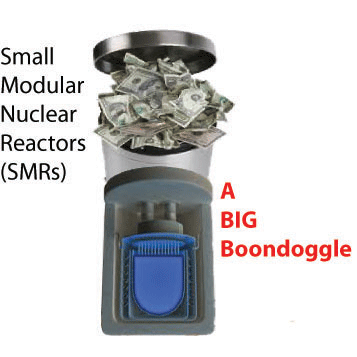
My analysis indicates that while advanced modular nuclear reactors might theoretically be helpful for the very long term, they cannot fix the problems of the US, and other countries in the West, nearly quickly enough. I expect that the Trump administration, which will start in January 2025, will see this program as a boondoggle.
Strangely enough, the US has no working model of a small-scale nuclear reactor, even one operating on conventional fuel.
Oil Price, By Gail Tverberg – Nov 12, 2024
The world is facing a growing shortage of uranium, the essential fuel for nuclear power plants.
The US is heavily reliant on Russia and its allies for enriched uranium, creating geopolitical risks.
Recycling spent nuclear fuel is expensive, complex, and faces significant environmental and security challenges.
It is easy to get the impression that proposed new modular nuclear generating units will solve the problems of nuclear generation. Perhaps they will allow more nuclear electricity to be generated at a low cost and with much less of a problem with spent fuel.
As I analyze the situation, however, the problems associated with nuclear electricity generation are more complex and immediate than most people perceive. My analysis shows that the world is already dealing with “not enough uranium from mines to go around.” In particular, US production of uranium “peaked”about 1980 (Figure 1 on original).
For many years, the US was able to down-blend nuclear warheads (both purchased from Russia and from its own supply) to get around its uranium supply deficit.
Today, the inventory of nuclear warheads has dropped quite low. There are few warheads available for down-blending. This is creating a limit on uranium supply that is only now starting to hit.
Nuclear warheads, besides providing uranium in general, are important for the fact that they provide a concentrated source of uranium-235, which is the isotope of uranium that can sustain a nuclear reaction. With the warhead supply depleting, the US has a second huge problem: developing a way to produce nuclear fuel, probably mostly from spent fuel, with the desired high concentration of uranium-235. Today, Russia is the primary supplier of enriched uranium.
The plan of the US is to use government research grants to kickstart work on new small modular nuclear reactors that will be more efficient than current nuclear plants. These reactors will use a new fuel with a higher concentration of uranium-235 than is available today, except through purchase from Russia. Grants are also being given to start work on US production of the more highly enriched uranium fuel within the US. It is hoped that most of this highly enriched uranium can come from recycling spent nuclear fuel, thus helping to solve the problem of what to do with the supply of spent fuel.
My analysis indicates that while advanced modular nuclear reactors might theoretically be helpful for the very long term, they cannot fix the problems of the US, and other countries in the West, nearly quickly enough. I expect that the Trump administration, which will start in January 2025, will see this program as a boondoggle.
Current problems with nuclear electricity generation are surprisingly hidden. World electricity generation from nuclear has been close to flat since 2004.
Although there was a dip in world generation of nuclear electricity after the tsunami that affected nuclear reactors in Fukushima, Japan, in 2011, otherwise world production of nuclear electricity has been nearly flat since 2004 (Figure 3 on original)……………………………………………………………………………………………………
Recycling of spent fuel to recover usable uranium and plutonium has been accomplished only to a limited extent. Experience to date suggests that recycling has many issues……………………………………………..
There seem to be several issues with building units to recover uranium from spent fuel:
- Higher cost than simply mining more uranium
- Pollution problems from the recycling plants
- Potential for use of the output to make nuclear warheads
- Potential for nuclear accidents within the plants
- Remaining radioactivity at the site at the end of the reprocessing plant’s life, and thus the need to decommission such plants
- Potential for many protestors disrupting construction and operation because of issues (2), (3), (4), and (5)
The US outlawed recycling of spent fuel in 1977, after a few not-very-successful attempts. Once the purchase of Russian warheads was arranged, down-blending of warheads was a much less expensive approach than reprocessing spent fuel. Physics Today recently reported the following regarding US reprocessing:
“A plant in West Valley, New York, reprocessed spent fuel for six years before closing in 1972. Looking to expand the plant, the owners balked at the costs required for upgrades needed to meet new regulatory standards. Construction of a reprocessing plant in Barnwell, South Carolina, was halted in 1977 following the Carter administration’s ban.”
Japan has been trying to build a commercial spent fuel reprocessing plant at Rokkasho since 1993, but it has had huge problems with cost overruns and protests by many groups. The latest estimate of when the plant will actually be completed is fiscal year 2026 or 2027.
The largest commercial spent fuel reprocessing plant in operation is in La Hague, France. It has been in place long enough (since 1966) that it has run into the issue of decommissioning an old unit, which was started as a French military project. The first processing unit was shut down in 2003. The International Atomic Energy Administration says, “The UP2-400 decommissioning project began some 20 years ago and may be expected to continue for several more years.” It talks about the huge cost and number of people involved. It says, “Decommissioning activities represent roughly 20 per cent of the overall activity and socio-economic impact of the La Hague site, which also hosts two operating spent fuel recycling plants.”
The cost of the La Hague reprocessing units is probably not fully known. They were built by government agencies. They have gone through various owners including AREVA. AREVA has had huge financial problems. The successor company is Orano. The currently operating units have the capacity to process about 1,700 metric tons of fuel per year. The 1700 metric tons of reprocessing of spent fuel from La Hague is reported to be nearly half of the world’s operating capacity for recycling spent fuel.The plant would process 800 metric tons of fuel per year.
I understand that Russia is working on approaches that quite possibly are not included in my figures. If so, this may add to world uranium supply, but Russia is not likely to want to share the benefits with the West if there is not enough to go around……………………………………………………………………………………….
The US is trying to implement many new ideas at one time with virtually no successful working models to smooth the transition.
Strangely enough, the US has no working model of a small-scale nuclear reactor, even one operating on conventional fuel. A CNBC article from September 2024 says, Small nuclear reactors could power the world, the challenge is building the first one in the US…………………………………………………………………………………….
Starting at this level, it is difficult to see how reactors with the new technology and the HALEU fuel to feed them can possibly be available in quantity before 2050.
It is difficult to see how the cost of electricity generated using the new advanced modular nuclear reactors and the new HALEU fuel, created by reprocessing spent fuel, could be low.
As far as I can see, the main argument that these new modular electricity generation plants will be affordable is that they will only generate a relatively small amount of electricity at once —about 300 megawatts or less, or about one third of the average of conventional nuclear reactors in the US. Because of the smaller electricity output, the hope is that they will be affordable by more buyers, such as utility companies.
The issue that is often overlooked by economists is that electricity generated using these new techniques needs to be low cost, per kilowatt-hour, to be helpful. High-cost electricity is not affordable. Keeping costs down when many new approaches are being tried for the first time is likely to be a huge hurdle. I look through the long list of problems encountered in recycling spent fuel mentioned in Section [6] and wonder whether these issues can be inexpensively worked around. There are also issues with adopting and installing the proposed new advanced modular reactors, such as security, that I have not even tried to address.https://oilprice.com/Alternative-Energy/Nuclear-Power/The-Future-of-Nuclear-Power-is-Wrought-with-Challenges.html
Head of UN nuclear watchdog: ‘Dire straits dynamic’ with Iran’s nuclear program amid Mideast wars
Daily Mail, By ASSOCIATED PRESS, 13 November 2024
BAKU, Azerbaijan (AP) – The head of the United Nations´ nuclear watchdog said Tuesday he’s hopeful that meetings this week with Iranian officials, including the country’s new president, can lead to a breakthrough in monitoring the country’s nuclear program, a longstanding issue that has gained new urgency as Israel has twice struck Iran amid rising tensions in the Middle East.
Rafael Mariano Grossi, director general of the International Atomic Energy Agency, will travel to Iran on Wednesday to meet for the first time with President Masoud Pezeshkian, who was elected in July. Grossi said he hopes to build on positive discussions he had with Iranian Foreign Minister Abbas Araghchi during the U.N. General Assembly in September.
“We have a problem that we need to solve,” Grossi said in an interview at the U.N. climate conference in Azerbaijan. “That is this gap, this lack of confidence, which we should not allow to grow into a self-fulfilling prophecy of using nuclear facilities as targets.”
He added: “There has been a bit of a dire straits dynamic with Iran that we want to go beyond.”
Iran is rapidly advancing its atomic program while increasing stockpiles of uranium enriched to near weapons-grade levels, all in defiance of international demands, according to the IAEA. Iran says its program is for energy purposes, not to build weapons.
Grossi’s visit comes as Israel and Iran have traded missile attacks in recent months after more than a year of war in Gaza, which is governed by Hamas, a group supported by Iran……………………………………………………………………………….. https://www.dailymail.co.uk/wires/ap/article-14073759/Head-UN-nuclear-watchdog-Dire-straits-dynamic-Irans-nuclear-program-amid-Mideast-wars.html
Nuclear Decommissioning Services Market Expected to Reach $11.79 Billion by 2034 – BIS Research
Industry Today 12th Nov 2024
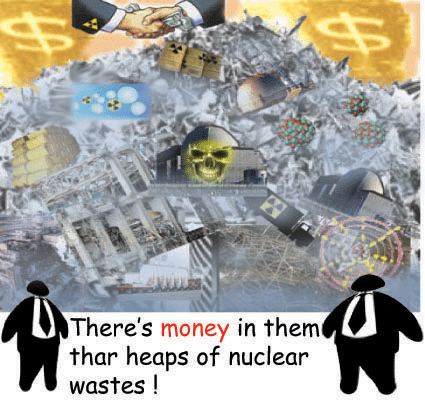
As nuclear facilities worldwide reach the end of their operational lives, the nuclear decommissioning services market is witnessing substantial growth. The Nuclear Decommissioning Services Market is projected to grow from $6.70 billion in 2024 to $11.79 billion by 2034, fueled by the rising number of decommissioned nuclear facilities and the increasing emphasis on sustainable practices.
Published 12 November 2024
Market Overview
Market Size and Growth Rate
The Nuclear Decommissioning Services Market is projected to grow from $6.70 billion in 2024 to $11.79 billion by 2034, at a CAGR of 5.81% during the forecast period. This growth is driven by the escalating number of decommissioned reactors and a shift toward stringent regulatory frameworks prioritizing safe and sustainable decommissioning processes. …………………………………………………..
Demand Drivers
The market is significantly driven by the retirement of aging nuclear facilities, increased regulatory scrutiny, and advancements in decommissioning technology. Environmental sustainability mandates are pushing the demand for efficient and compliant decommissioning solutions.
Challenges
Complex regulatory requirements and high costs remain key challenges. Additionally, the intricate nature of nuclear waste disposal raises concerns over potential delays and budget overruns in large-scale decommissioning projects. …………………………………………………………………………………………………….
The successful [whaaa-aa-aat!] decommissioning of Japan’s Fukushima Daiichi nuclear power plant highlights the potential for advanced decommissioning technology to manage complex sites safely and efficiently. ……………………………………………..https://industrytoday.co.uk/energy_and_environment/nuclear-decommissioning-services-market-expected-to-reach-1179-billion-by-2034-bis-research
Other sites considered for UK’s nuclear waste disposal
A government agency says it is “considering other options” for the location
of a nuclear waste disposal site on the Lincolnshire coast. Nuclear Waste
Services’ (NWS) plans for a geological disposal facility (GDF) includes a
land-based facility which would accept waste and send it through tunnels to
a disposal area under the sea.
The search has been focussed on a former gas
terminal in Theddlethorpe but, in an update issued on Tuesday, NWS said
“competing interests” in the site had “matured” over the past year. It
added a “range of studies” was being carried out in the search area which
includes the electoral wards of Mablethorpe and Withern and Theddlethorpe.
In the update, external, NWS’ communities director Simon Hughes said: “No
decisions on these options have been made at this stage, we will publish an
update early next year and our teams will be out in communities to explain
our findings, hear feedback and consider next steps.”
For more than three years, Nuclear Waste Services has been eyeing up the former Theddlethorpe gas terminal as a suitable location for the land-based part of its
geological storage facility or GDF. This facility would receive the nuclear
waste before transporting it through tunnels to rocks deep beneath the sea.
But, since NWS announced its plans in 2021, the gas terminal site has
attracted other interest from other energy industries. There are proposals
for a carbon capture and storage facility there, the possibility of a
gas-fired power station and the site is also being considered as a location
to bring electricity cables ashore from North Sea windfarms. In other words
– it’s getting crowded.
The proposed location for the under-sea disposal
site remains unchanged. But NWS is now widening its search for the
land-based facility. Crucially, this search will be confined to two
electoral wards – Mablethorpe and Withern and Theddlethorpe. But NWS will
not identify a specific location until next year.
BBC 12th Nov 2024 https://www.bbc.co.uk/news/articles/c3e8pex248yo
Fossil Fuel Giants Paying Thousands to Sponsor COP29 Events
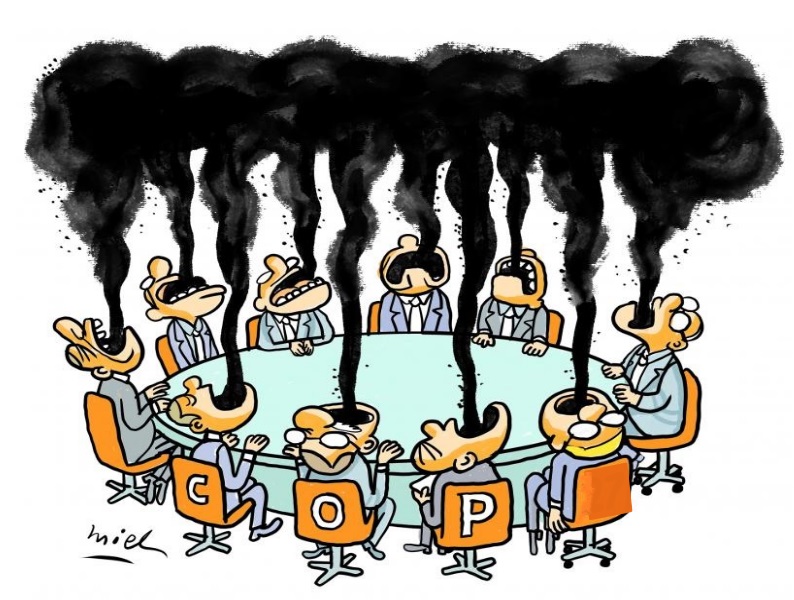
Oil and gas giants are paying tens of thousands of dollars in order to
sponsor events at this year’s flagship climate talks in Baku, Azerbaijan.
This year’s conference began on Monday (11 November). Over the course of
the 11-day summit, known as COP29, negotiators and leaders across the globe
will put in place commitments to address the climate crisis and assist the
worst-hit countries.
The International Emissions Trading Association
(IETA), a business lobby comprised of some of the world’s largest fossil
fuel producers and greenhouse gas emitters, is hosting a series of events
in its COP29 BusinessHub pavilion, sponsored by oil and gas giants
including Chevron, ExxonMobil, SOCAR, and TotalEnergies.
DeSmog 12th Nov 2024 https://www.desmog.com/2024/11/12/fossil-fuel-giants-paying-thousands-to-sponsor-cop29-events-baku/
Secrecy ramping up as problems mount in the UK nuclear programme

David Cullen NIS 12th Nov 2024
The UK’s nuclear weapons programme is at a critical stage with mounting problems, and secrecy is being increased when transparency and accountability are more vital than ever. Routine public disclosures of information are now months overdue, nearly a year in one case. At the same time, the increasingly draconian approach to secrecy from the Ministry of Defence (MOD) is limiting the information that they will disclose through Freedom of Information (FOI) requests, or in response to Parliamentary Questions.
The current level of public disclosure about the programme is lower than any time since at least the early 1990s. Without proper scrutiny there is no meaningful way for the public to understand what is happening, or for elected representatives to challenge it, and the likely result will be greater mismanagement, increased safety risks and a waste of huge sums of public funds.
At Nuclear Information Service (NIS) we prefer to focus on the content of our work, rather than drawing attention to ourselves and what we do, but these levels of secrecy are unprecedented during the 24 years we have been operating and we have decided to speak out. Whatever your position on nuclear weapons, the current information black hole is antithetical to good governance, and fundamentally unacceptable in a democracy.
Missing updates to Parliament
From 2011 to 2023, the MOD published an annual update to Parliament on the progress of its nuclear weapon upgrade programmes. The first of these was the ‘Initial Gate’ report on what is now known as the Dreadnought Programme, summarising the first few years of scoping work undertaken by the MOD and the plans for the new submarine class. From 2012 to 2021 these were routinely published shortly before Christmas (with the exception of 2015, when the Strategic Security and Defence Review published that November was deemed to have included enough information that there was no separate update).
The 2022 update was not published that year. NIS submitted an FOI request in January 2023 asking for a publication date and we were told in early February the update was “expected to be released in the coming weeks”. In response to a Parliamentary Question in late February from John Healy, who has since become Minister for Defence, the MOD said the update was “undergoing final clearance procedures”. No reason was given for the delay, despite this being explicitly asked by Healy and in a subsequent question submitted by Baroness Blower. The update was finally published on 8th March. The end of the update stated that the MOD planned “to next report progress to Parliament in late 2023”.
The 2023 update has not been published at all. NIS contacted the MOD in early December 2023 to ask what the planned publication date was and were told the annual update was “an enduring commitment by the MOD to Parliament…[but] there is no prescribed timeframe for its release” and the MOD was “unable to provide a date for its publication”. It is now early November 2024, nearly two years after the time period covered by the last update. In what sense can the MOD credibly describe these updates as annual?
Major Projects data not yet released
The other annual release of information about the progress of the MOD’s nuclear upgrades is the government’s Major Projects Data releases. These are coordinated by the Infrastructure and Projects Authority (IPA), a quasi-independent branch of government which sits under the Cabinet Office and is supposed to help ensure the government’s large projects are well managed and provide value for money. Projects are given a traffic-light colour rating, with many of the projects relating to the nuclear weapons programme being given ‘Amber’ or ‘Red’ rating, indicating respectively that they face serious problems, or appear unachievable.
Alongside the report published by the IPA which summarises the ratings for each programme and makes some general observations about programme management, data is published by each government department on their respective programmes. This includes predicted end dates, costs and a brief explanation of progress and/or problems. Since 2016 these have been published each July. Although the election this year may have interfered with the publication timetable, the data is typically assembled in March of each year, two months before the election was called. As it is now four months since the election, it is difficult to understand why the data has not been published.
Resistance to information disclosure
These missing information releases come at a time when the MOD is significantly more resistant to disclosing information to the public and parliamentarians than it has been in the past. In recent years key pieces of information have even been withheld in the MOD Major Projects releases. The 2022 release had redactions relating to the Astute, Dreadnought, Core Production Capability, Mensa, Pegasus and Teutates projects.
When NIS challenged these redactions we were told that that some were the consequence of an “anomaly” which caused them to be “withheld erroneously”. However, the planned end dates for the Astute and Dreadnought programmes were still withheld, as was the MOD narrative on the timetable for those two projects. The MOD took eight months to complete an internal review of this decision, instead of the maximum expected time of forty working days, and upheld the decision.
The FOI requests we submitted for our recent briefing on the US-UK Mutual Defence Agreement were treated similarly, although the delays were shorter. No information has been disclosed to us on the transfer of nuclear materials under the MDA between 2014 and 2024, and only three years of data on the transfer of non-nuclear components of nuclear weapons has been released, with the excuse that extracting the information would take too much time……………………………………………………………………………………….
This antipathy to disclosure is reflected in the recent changes to the government’s stance on official figures relating to its nuclear stockpile. These came in the 2021 Integrated Review, alongside the announcement of an increase to the UK’s warhead stockpile cap, breaking with a decades-long trend of reductions. Figures for the numbers of operational warheads that the UK owns, for deployed warheads, or deployed missiles are no longer published. These changes are a breach of commitments made by the UK and other nuclear-weapon states at the 2000 and 2010 Non-Proliferation Treaty (NPT) review conferences to increased transparency about their capabilities.
Foreclosed FOI avenues
The questionable role of the ICO, which is responsible for regulating FOI matters in the UK, is sadly not limited to the dubious interpretation of the rule on ‘similar’ requests. Our appeals to the ICO over the missing data from the 2022 Major Projects release and on the transfer of nuclear material under the MDA have both been recently rejected………………………………..
Under the FOI Act, we technically have the right to appeal to the Information Tribunal, but in this case there is no prospect of us being meaningfully able to exercise that right. In previous Information Tribunal cases, such the 2019 case over the government’s withholding of reports from its internal nuclear safety regulator, the MOD can refrain from making its key arguments in open court, and will instead make them in a closed session which we would not be able to attend.
If we wished to make a meaningful case at tribunal with any realistic hope of success, we would face the kafkaesque prospect of needing to employ a barrister who we could not even properly instruct, as we do not know what arguments are being made by the MOD. The position of the ICO suggests that most of the case would be heard in closed session and we would have little chance of winning. As rulings of the tribunal create FOI case law, it would actually be irresponsible for us to bring a case under these circumstances.
State of the programme
It is not hard to think of reasons why the MOD wishes to minimise information in the public domain about the weapons programme, considering what we do know about the state of the programme and its upgrade projects. The reliability issues in the Vanguard fleet, and extended patrols they have caused, are the most visible issues, but there are many more.
HMS Vanguard has rejoined the fleet after its extended seven year deep maintenance and refuelling, but appears not to have been sent out on patrol for many months after rejoining the fleet. We saw a failed missile test-firing earlier this year and the fire on HMS Victorious in 2022. The entire Astute-class fleet was unable to put to to sea for five months this year, and it’s possible that the problems that caused this may surface in the incoming Dreadnought fleet. It seems likely that US submarines had to help during the recent change in Vanguard patrols. There may be additional delays to the Dreadnought programme, particularly after the recent fire at Barrow, which would put additional strain on the Vanguard fleet.
There may be additional details of, or implications from, any of these problems, or undisclosed connections between them, which could prove highly embarrassing to the MOD. There may also be additional issues beyond those we currently know about or suspect.
From the responses that we have had to our FOI requests, it seems the MOD’s argument in favour of its recourse to secrecy is fairly consistent in general terms. It claims that disclosing any information relating to the UK’s nuclear programme could allow ‘adversary’ states, particularly Russia, to draw conclusions about the capabilities and vulnerabilities of the programme. The so-called ‘mosaic effect’, where multiple pieces of individually inconsequential information can be drawn together to form a wider picture, is frequently invoked. These conclusions could then be leveraged by Russia or others to disrupt the weapons programme and degrade the UK’s ability to keep one nuclear-armed submarine at sea at all times.
It is not possible to know to what extent this hypothetical risk would remain credible when subjected to detailed critique and analysis. We only know that the MOD has been able to successfully convince the ICO and Information Tribunal of its veracity in closed forums with no external scrutiny. However, it stands to reason that this convoluted scenario would appear more credible if the UK is already struggling to maintain patrols. To what extent are the vulnerabilities the MOD cites to justify its secrecy a function of its own mismanagement? It is not possible to say, but a clear inference can be drawn from the conspicuous absence of the 2023 Update to Parliament: the MOD has chosen to say nothing rather than provide a basic overview of how its upgrade programmes are progressing.
Is the spectre of Russian interference being used as an excuse to hide MOD mismanagement and emerging problems in the programme from the public? How close is the programme to being unable to field its nuclear armed-submarines safely? What is the MOD trying to hide? The public deserve answers to these questions, and there is no reason that they cannot be given in a form that poses no risk to the security of the UK and its population. At NIS we will continue to seek what information we can to highlight these issues, but regular detailed parliamentary scrutiny is long overdue.
Members of the public have the right under the FOI Act to be provided with information on request, and ministers are expected to be candid and transparent towards Parliament under the ministerial code. When the approach of the government is to frustrate that right and avoid those obligations, and the ICO does not challenge them, this is a serious threat to democratic oversight and accountability. We welcome the recent calls from the House of Lords following the changes to the Mutual Defence Agreement, but as the Public Accounts Committee stated earlier in the year, there is also gap in the parliamentary scrutiny of government nuclear spending. We believe the gap is actually much wider, and it is time for regular and detailed scrutiny by Parliament of the whole UK nuclear weapons programme. https://www.nuclearinfo.org/comment/2024/11/secrecy-ramping-up-as-problems-mount-in-the-uk-nuclear-programme/
This year has been masterclass in human destruction, UN chief tells Cop29

This year has been “a masterclass in human destruction”, the UN
secretary general has said as he reflected on extreme weather and record
temperatures around the world fuelled by climate breakdown.
António Guterres painted a stark portrait of the consequences of climate breakdown
that had arisen in recent months. “Families running for their lives
before the next hurricane strikes; workers and pilgrims collapsing in
insufferable heat; floods tearing through communities and tearing down
infrastructure; children going to bed hungry as droughts ravage crops,”
he said.
“All these disasters, and more, are being supercharged by
human-made climate change.” Guterres was addressing scores of world
leaders and high-ranking government officials from nearly 200 countries
gathered in Azerbaijan for the Cop29 UN climate summit. Over a fortnight of
talks, nations will try to find ways to raise the vast sums of money needed
to tackle the climate crisis. Developing countries want guarantees of $1tn
a year in funds by 2035 to help them cut greenhouse gas emissions and adapt
to the impacts of extreme weather.
Guardian 12th Nov 2024
Ratepayers First: The Economic Case Against Nuclear’s Data Center Dreams

Now that data centers are growing and the climate crisis is accelerating, nuclear power is being positioned as a solution to both crises. Yet, this is deeply flawed.
Nov 6, 2024, Powermag 6th Nov 2024
As an energy professional in Georgia with a front row seat to the construction of Plant Vogtle, I found the October 23 Washington Post editorial endorsing nuclear energy as a tool for combating climate change astonishing. Georgia is the first state to build nuclear power in 30 years and the editorial board profoundly mischaracterized what happened here, and as with nearly all essays in support of nuclear, it never mentioned impacts to ratepayers, those of us who are actually paying for Plant Vogtle.by Patty Durand,
Perhaps the editors did not know that Georgia Power added $11.1 billion to its rate base, the assets on which it earns a profit, for its 45.7% share of the project. That amount of money for just 1,020 MW of generation is a horrible thing to do to ratepayers. Plant Vogtle cost eight to 10 times more than any other type of generation and resulted in a 25% rate increase, the largest in Georgia’s history. Yet, this achieved only a 7.5% expansion in Georgia Power’s capacity.
Glib claims that Vogtle was “FOAK” (first of a kind) and lessons learned will reduce future costs ignore the magnitude of the cost overruns and severity of the management failures. Real reasons for cost overruns include leaving expensive components in fields unprotected from weather and without a chain of custody resulting in a failure rate of 80%, and creating materially inaccurate project schedules for Georgia Public Service Commission (PSC) filings to make it appear that construction milestones had been reached when they had not. These and other deceptive behaviors led to costly construction mistakes that are not related to FOAK.
Georgia Public Service Commissioner Tim Echols, a frequent contributor to POWER magazine, was public in his opinion that the commission should not review Vogtle’s construction costs for prudency and reasonableness throughout the 15-year timeline of the project, saying that would happen at the end. A settlement agreement on Vogtle reimbursements between PSC staff and Georgia Power was made two months before hearings were to begin, so the promised prudency hearings were never held. Thus, a shared understanding of Vogtle’s failures never took place, leaving room for nuclear supporters to make up reasons for Vogtle’s cost overruns that have no basis in fact.
Now that data centers are growing and the climate crisis is accelerating, nuclear power is being positioned as a solution to both crises. Yet, this is deeply flawed. The timeline for building nuclear is too slow, the costs are too high, and the corruption that follows nuclear power because of the big money involved is ignored. Using nuclear energy to address these crises means regulators won’t have to fix the perverse cost-plus business model that encourages utilities to slow walk or block the clean energy transition, and data centers can grow while keeping their climate emissions pledges intact.
This is very convenient for everyone but the ratepayer. Few people realize that most large industrial customers are on marginal rate tariffs, which are different than traditional base tariffs. Marginal tariffs do not include capital costs. Instead of paying $0.15–0.19 per kWh as most residential customers do, industrials like data centers pay only $0.05–0.06 per kWh .
The recent announcement that Microsoft would buy all the power from Constellation Energy’s recommissioning Three Mile Island carefully avoids mentioning who is paying the (unknown) billions of dollars in capital costs. And if Constellation Energy secures the $1.6 billion Department of Energy loan they seek, those repayment costs will flow to residential rates too, via the traditional base tariff.
Nuclear is a deeply flawed choice when climate change can be addressed affordably and rapidly with renewables and modern grid technologies, and numerous reports show a path toward meeting data center energy needs without nuclear………………………………………………………………..
Enormous predictions for data center growth projections made by utilities must be verified by independent third parties, and we already know double counting of data center load growth is happening. The continued use of trade secret protection rules by utilities refusing to disclose their prospective data center clients or allow verification of their enormous growth projections is not acceptable
……………………………………………………………… There are numerous voices calling for a measured response to data center load growth, among them AES President and CEO Andres Gluski, who said during an interview with CNBC that “euphoria” over nuclear energy as a power source for data centers is a “little overblown.” He noted that renewables are cheaper, easier to site, and “the future is going to be renewable energy.”
Ratepayers matter, and it’s time that everyone focuses on what’s best for them. And what’s best for them are affordable electricity bills and rapid decarbonization of the electric grid that does not include paying for expensive nuclear energy to serve data centers.
—Patty Durand is the founder and president of Cool Planet Solutions.
https://www.powermag.com/blog/ratepayers-first-the-economic-case-against-nuclears-data-center-dreams/
Nuked: The Submarine Fiasco that Sank Australia’s Sovereignty, book by Murray Horton

Global Peace and Justice Aotearoa, 12 Nov 24, Reprinted from Covert Action Magazine
Andrew Fowler’s book Nuked: The Submarine Fiasco That Sank Australia’s Sovereignty (Melbourne University Press, 2024) was not written by a member of the peace movement. That is both a strength and a weakness. A strength, because Andrew Fowler is an award-winning investigative journalist, who has worked in mainstream Australian current affairs TV. So, it can’t be dismissed as “anti-American, anti-military” propaganda.
But it is a weakness because the author never questions the basic tenet of the book’s subject—why does Australia need any submarines at all, regardless of whether they are conventionally powered or nuclear powered. The book’s focus is a forensic analysis of who won the highly lucrative battle to supply Australia’s new subs—it was all set up to be France but then, after hidden, sub-surface maneuvering worthy of one of the book’s subjects, Australia and the U.S. torpedoed the French and did a deal among themselves.
This book is about AUKUS (Australia, UK, U.S.), the new kid on the “Indo-Pacific” block—although it should be pointed out that the UK is an awfully long way away from either the Indo or the Pacific. It is an attempt to build a new Western military alliance, initially between those three countries but with the prospect of other countries (including New Zealand) joining the ill-defined AUKUS Pillar Two at some unspecified time in the future. But let’s not get ahead of ourselves. The book is about the birth of AUKUS, which is all about submarines.
AUKUS
I’ve written about AUKUS previously in Covert ActionMagazine, so I refer you to that for the back story. In 2016 Australia signed a $A50 billion contract for France to build it 12 state of the art conventionally powered submarines for the Australian Navy. It was the largest defence contact in the history of both France and Australia. The right-wing Liberal Party was in Government in Australia, headed by Prime Minister Malcolm Turnbull…………………………………………………………………………………………………………………….
The book names names—the man who fronted the deception and betrayal of France was Scott Morrison, who replaced Turnbull as the Liberal Prime Minister in 2018, in an internal Party coup (a common occurrence in Australian politics). Behind the scenes, the key man was Andrew Shearer, “a vehemently pro-American China hawk” who went on to become Director-General of National Intelligence. Right up until just before AUKUS was announced in 2021, Morrison’s government continued to assure France that it was proceeding with the contract to buy French submarines.
Dumping France For the U.S.
Instead of 12 diesel-powered French subs, Australia signed up to have the U.S. and UK build eight nuclear-powered (but not nuclear-armed) subs for its Navy. The cost is astronomical—up to $A368 billion by 2055. Yes, that’s right—those eight subs will not be ready for more than 30 years. The first of them is unlikely to be ready until the 2040s so, to fill that gap, Australia will buy three existing U.S. subs from the early 2030s, at a cost of up to $A58b, with an option to buy two more. This is a staggering amount to spend on one military project from a country with a population of just under 27 million people.
“(AUKUS) was a clear victory for Washington, which had been concerned for some time that France had a different view on how to deal with the rise of China… There was barely a murmur of opposition from the media. Morrison had pulled off a major achievement of what U.S. public intellectual Noam Chomsky describes as the political art of ‘manufacturing consent’…”.
“How did it happen that the bulk of analysis and criticism of the submarine deal came from two former Prime Ministers, Paul Keating (Labor) and Malcolm Turnbull (Liberal) who, though on opposing sides of politics, were united in warning that the submarine deal stripped away Australia’s sovereignty……………………………..
Australia Expected To Fight Alongside U.S. In War With China
There is only the feeblest pretense that these nuclear submarines (still decades away from reality) will be used to defend Australia. Their role will be to patrol close to the Chinese coast, to hem in the Chinese Navy and, in the event of war, to attack China with cruise missiles. That’s the theory, anyway. The advantage of their being nuclear-powered is that they don’t have to return to port to refuel. U.S. hawks expect Australia to fight on its side in any war with China over Taiwan………………………………………………………………………………………..
Integration With U.S. Military
There is a lot more to the U.S.-Australia military relationship than some exorbitantly expensive nuclear submarines that may or may not ever materialise. There is the top-secret Central Intelligence Agency/National Security Agency Pine Gap spy base near Alice Springs, in central Australia, which is crucial to the global warfighting abilities of the U.S. There is the North West Cape facility on the westernmost point of mainland Australia, which the US Navy uses to communicate with its nuclear attack subs. There is Australia’s increasing involvement with the U.S. military and intelligence satellite programme, in preparation for war in space.
“Australia’s integration with the U.S. military was, of course, well underway before the AUKUS agreement. As already noted, Pine Gap and North West Cape are part of this. But there is also the basing of thousands of U.S. Marines in Darwin (northern coast), the stationing of nuclear-capable B-52s at Tindal (Australian Air Force base, northern Australia), and the stationing of U.S. military throughout the Australian Defence Force, including from the National Reconnaissance Office at the military headquarters in Canberra… Though Defence Minister Richard Marles has ruled out automatic support of the United States in any war over Taiwan, it is difficult to see how Australia won’t be involved. Pine Gap, Tindal, North West Cape and Perth (Western Australia’s biggest city) will all be integral to the battle.”
Change Of Government; No Change Of Foreign Policy
Scott Morrison’s Liberal government was voted out at the 2022 Australian election and was replaced by Anthony Albanese’s Labor Party. But Australia’s commitment to AUKUS remained unchanged………………………………………………………………………………
“Nuked” specifically attributes Labor’s fervent desire not to be seen as “anti-American” to the events of 1975, when the Central Intelligence Agency and its local collaborators, succeeded in getting Gough Whitlam’s Labor government overthrown in a bloodless coup. The U.S. covert state was particularly concerned about Whitlam’s revelations about its Pine Gap spy base and possible threats to close it. Jeremy Kuzmarov has recently written about this in CovertAction Magazine (15/11/23), so I refer you to that.
For half a century the Australian Labor Party has lived in fear of the same thing happening again, and has bent over backwards to prove its loyalty to the U.S.
………The consequences of the fear that drove the ALP leadership to embrace AUKUS with barely a second thought will haunt them for years to come. Just as Morrison was only too willing to trade Australian’s independence for the chance to win an election, so too was Labor. Now it is left to make work a deeply flawed scheme that, more than ever before, ties Australia’s future to whoever is in the White House.”
Jobs For The Boys
And what has happened to Scott Morrison, who retired from politics in 2024? “Along with Trump’s former CIA Director, Mike Pompeo, Morrison became a strategic adviser to U.S. asset management firm DYNE Maritime, which launched a $157 U.S. million fund to invest in technologies related to AUKUS. ………
“Morrison also became Vice-Chair of American Global Strategies (AGS), headed by former Trump National Security Advisor Robert O’Brien. AGS, stacked with former Pentagon, White House and State Department officials, boasts that it ‘assists clients as they navigate U.S. government processes,’ a useful addition to any company wanting to boost profits in the burgeoning area of military spending.”
New Zealand & AUKUS
…………………………………………………………………………… There are plenty of similarities between Australia and New Zealand but also significant differences. Whereas Australian governments of either party fall over themselves to loyally serve the U.S. empire, New Zealand has been nuclear free by law since the 1980s (and it was an Australian Labor government, on behalf of the U.S., which tried to pressure New Zealand to drop the policy. That pressure backfired).
……………………………………………………………….But there is a constant push to get New Zealand further entangled in the U.S. war machine, including Pillar Two of AUKUS (which has been, thus far, only identified as involving “advanced military technology”). New Zealand currently has a very pro-American Government, which is already a non-member “partner” of NATO and which is eager to serve the U.S……………………………………..
Not All New Zealand Politicians Lining Up To Grovel To Uncle Sam.
For a refreshing contrast, here’s an extract from a recent (2/10/24) press statement from Te Pāti Māori, the indigenous party, which has six Members of Parliament (out of 123). “Meanwhile the New Zealand Government is in talks with the United States about joining AUKUS to further support their war efforts. This represents the next phase of global colonisation, and it is being negotiated behind closed doors,” Co-Leader Rawiri Waititi said.
“The U.S. wants to use Aotearoa as a Pacific spy base. This could mean the end of our longstanding nuclear free policy to allow their war ships into our waters. AUKUS threatens our sovereignty as an independent nation, and the Mana Motuhake of every nation in the Pacific. It threatens to drag Aotearoa into World War 3,” said Waititi.
“The New Zealand government is putting everyone in Aotearoa at risk through their complicity. They must end all talks about joining AUKUS immediately. They must sanction Israel and cut ties with all countries who are committing and aiding war crimes,” said Co-Leader Debbie Ngarewa-Packer………………………………. more https://gpja.org.nz/2024/11/12/nuked-the-submarine-fiasco-that-sank-australias-sovereignty-by-murray-horton/
Caitlin Johnstone: The Incoming Trump Administration Is Already Filling Up With War Sluts,
Caitlin Johnstone, Nov 12, 2024 https://www.caitlinjohnst.one/p/the-incoming-trump-administration?utm_source=post-email-title&publication_id=82124&post_id=151534941&utm_campaign=email-post-title&isFreemail=true&r=1ise1&triedRedirect=true&utm_medium=email
Donald Trump has named Republican congressman Mike Waltz as his next national security advisor, a position that was held by ultrahawk John Bolton in the last Trump administration.
Like Bolton, Waltz is a warmongering freak. Journalist Michael Tracey has been filling up his Twitter page since the announcement with examples of Waltz’s insane hawkishness, including his support for letting Ukraine use US weapons to strike deep into Russian territory, criticizing Biden for not escalating aggressively enough in Ukraine, advocating bombing Iran, opposing the US military withdrawal from Afghanistan, and naming Iran, North Korea, China, Russia and Venezuela as “on the march” against the United States toward global conflict. The mainstream press are calling Waltz a “China hawk”, but from the look of things he’s a war-horny hawk toward all the official enemies of the United States.
Trump has also confirmed that Republican congresswoman Elise Stefanik will be taking on the role of US ambassador to the UN, a role previously held by warmonger Nikki Haley in the last Trump administration. Again, there doesn’t seem to be much difference between the old hawk and the new one.
Stefanik is best known for her congressional efforts to stomp out free speech on college campuses, making a lie of Trump’s lip service to the importance of First Amendment rights. As explained by Antiwar’s Dave DeCamp, she’s a hawkish swamp monster whose political career was primed in some of the most odious neoconservative think tanks in Washington, and opposes placing any limits on US military support for Israel. Earlier this year Stefanik actually flew to Israel to give a speech before the Israeli Knesset vowing to help stop the “antisemitism” of protesters against Israel’s genocidal atrocities at American universities.
And now we’re getting reports throughout the mass media that deranged war slut Marco Rubio has been tapped as Trump’s new secretary of state. It’s really hard to imagine anyone worse for the role of Washington’s top diplomat than a warmonger who has spent his entire political career pushing for more wars, sanctions and slaughter at every opportunity.
This should dash the hopes of Trump supporters everywhere that this time their guy really will end the wars and drain the swamp. Trump’s appointment of Iran hawk Brian Hook to help staff the State Department for the next administration and his rumored consideration of Mike Rogers for secretary of defense are likewise bad signs, as is Tucker Carlson’s claim that virulent China hawk Elbridge Colby is likely to play a role in the administration.
Trump’s anti-interventionist supporters loudly applauded the other day when he unexpectedly announced that Mike Pompeo and Nikki Haley would not be playing a role in the next administration. In response to the announcement, libertarian comedian and podcaster Dave Smith said on Twitter that stopping Pompeo was not enough and that “we need maximum pressure to keep all neocons and war hawks out of the Trump administration.” In response to Smith’s post, Donald Trump Jr tweeted, “Agreed!!! I’m on it.”
When I saw this, I tweeted the following:
“Ignore their words and watch their actions. Been saying it for years, and I’m going to keep on saying it. Ignore their words, watch their actions. Talk, as they say, is cheap.”
Their actions are telling us a lot more than their words right now.
Nuclear reactor in 2011 disaster-hit area restarted
A nuclear reactor in northeastern Japan, hit by the devastating 2011 earthquake and tsunami, was restarted Wednesday after a temporary suspension due to an instrument problem, the plant operator said.
In late October, the Onagawa plant’s No. 2 unit became the first reactor to operate in eastern Japan since the natural disaster, but it was halted earlier this month after a checking device became stuck inside the containment vessel.
Tohoku Electric Power Co, the operator of the Onagawa nuclear plant in Miyagi Prefecture, said it detected that a nut on a joint of a guide tube — designed to send devices into the reactor — was not tightened adequately when it was replaced in May.
The operator said it plans to begin power generation possibly this week after the reactor reaches stable criticality and hopes to start commercial operations around December.
The Onagawa unit cleared safety screening in February 2020 under stricter safety standards set after the 2011 nuclear accident at the Fukushima Daiichi power plant. The reactor is the same type as those at the Fukushima plant.
Nuclear site holds emergency exercise
BBC 12th Nov 2024
A safety exercise which simulates an emergency at a nuclear site is taking place.
People who live close to the Sellafield nuclear reprocessing plant in Cumbria may hear the site siren and receive text, email and telephone warnings if they have signed up for them.
If the siren sounds, the gates will be shut and the site placed into lockdown.
Full-scale safety tests have to take place at Sellafield at least once a year and are observed by the Office for Nuclear Regulation (ONR).
This is a “daylight exercise”, but details of timings or the scenario are not revealed in advance.
A Sellafield spokesperson said everyone on site is expected to “respond appropriately and follow instructions”.
ONS inspectors will provide feedback and learning points following the exercise. https://www.bbc.co.uk/news/articles/cgj7dezyed2o
TODAY. The International Atomic Energy Agency in full force with its lying propaganda, at COP 29, with at least 20 ‘Events”.
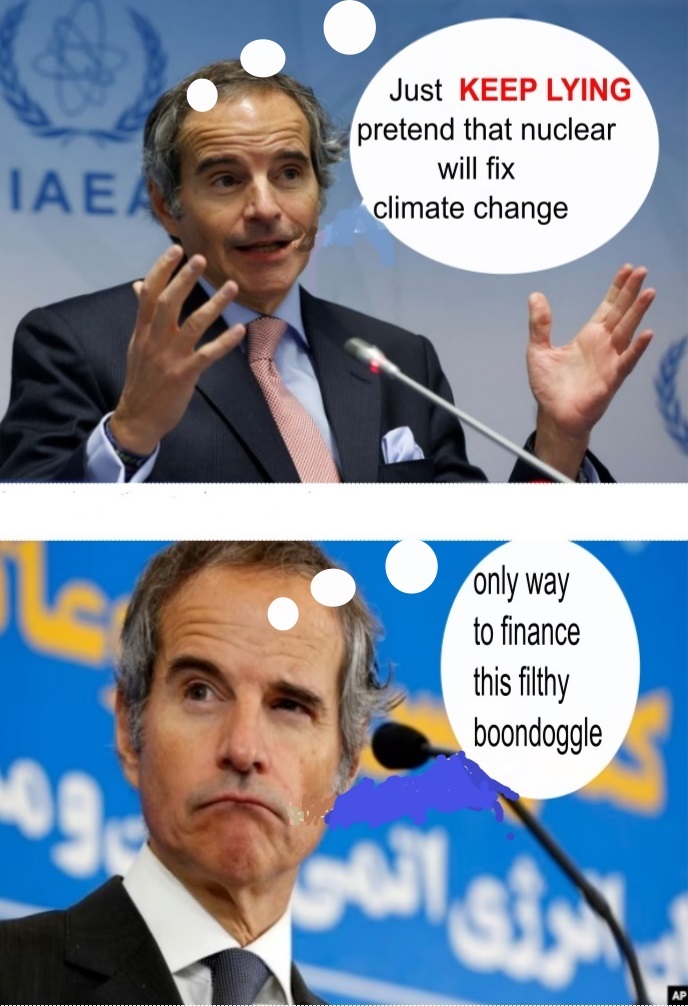
COP 29 will be a flop anyway – so I suppose that is some kind of twisted comfort – in that very few will trust the outcome of this hijacked UN Climate Summit
From IAEA website’s disgusting propaganda:
“ a rich programme of IAEA and partner events to showcase nuclear science and technology solutions for climate change “
“The IAEA is organizing a series of events on four thematic areas: energy, food, the ocean and water. “
“an informed debate on the tools and benefits offered by nuclear technology”
Hijacked by all the polluting industries, but the biggest liar of the lot is the IAEA – with their full knowledge that nuclear does nothing to fight climate change. And in fact – climate change effects will kill the nuclear industry,

1 This Month
15 October. Joint Appeal for Nuclear Abolition Day -presentation to the UN on October 15 will be live on UNWebTV
Endorse the Nuclear Abolition Day Appeal
23-25 October – on Zoom – World BEYOND War’s annual global conference

To see nuclear-related stories in greater depth and intensity – go to https://nuclearinformation.wordpress.com
-
Archives
- October 2026 (130)
- September 2026 (339)
- August 2026 (330)
- July 2026 (355)
- June 2026 (287)
- May 2026 (306)
- April 2026 (356)
- March 2026 (251)
- February 2026 (267)
- January 2026 (308)
- December 2025 (358)
- November 2025 (359)
-
Categories
- 1
- 1 NUCLEAR ISSUES
- business and costs
- climate change
- culture and arts
- ENERGY
- environment
- health
- history
- indigenous issues
- Legal
- marketing of nuclear
- media
- opposition to nuclear
- PERSONAL STORIES
- politics
- politics international
- Religion and ethics
- safety
- secrets,lies and civil liberties
- spinbuster
- technology
- Uranium
- wastes
- weapons and war
- Women
- 2 WORLD
- ACTION
- AFRICA
- Atrocities
- AUSTRALIA
- Christina's notes
- Christina's themes
- culture and arts
- Events
- Fuk 2022
- Fuk 2023
- Fukushima 2017
- Fukushima 2018
- fukushima 2019
- Fukushima 2020
- Fukushima 2021
- general
- global warming
- Humour (God we need it)
- Nuclear
- RARE EARTHS
- Reference
- resources – print
- Resources -audiovicual
- Weekly Newsletter
- World
- World Nuclear
- YouTube
-
RSS
Entries RSS
Comments RSS

