Cost of switching off UK wind farms soars to ‘absurd’ £1bn
Britain’s curtailment cost jumps as grid struggles to cope with power
British bill payers have spent an “absurd” £1bn to temporarily switch
off wind turbines so far this year as the grid struggles to cope with their
power.
The amount of wind power “curtailed” in the first 11 months of
2024 stood at about 6.6 terawatt hours (TWh), according to official
figures, up from 3.8 TWh in the whole of last year. Curtailment is where
wind turbines are paid to switch off at times of high winds to stop a surge
in power overwhelming the grid.
Households and businesses pay for the cost
of this policy through their bills. The cost of switching off has reached
about £1bn so far this year, according to analysis of market data by
Octopus Energy which was first reported by Bloomberg. This is more than the
£779m spent last year and £945m spent in 2022.
The jump in curtailment
follows the opening of more wind farms at a time when the country still
lacks the infrastructure needed to transport all the electricity they
generate at busy times. Clem Cowton, the director of external affairs at
Octopus, added:
“The outdated rules of our energy system mean vast
amounts of cheap green power go to waste. “It’s absurd that Britain
pays Scottish wind farms to turn off when it’s windy, while
simultaneously paying gas-power stations in the South to turn on.
Telegraph 2nd Dec 2024,
https://www.telegraph.co.uk/business/2024/12/02/britain-paying-wind-farms-record-1bn-to-switch-off/
Lincolnshire county councillors demand answers on Nuclear Waste Services’ (NWS) proposed Geological Disposal Facility (GDF) at Theddlethorpe
By James Turner, Local Democracy Reporter, 03 December 2024
Lincolnshire county councillors demand answers on Nuclear Waste Services’
(NWS) proposed Geological Disposal Facility (GDF) at Theddlethorpe.
Concerned representatives have criticised the level of communication from
the government body behind a proposed underground nuclear waste facility.
Members of Lincolnshire County Council’s executive raised concerns about a
number of unanswered questions regarding Nuclear Waste Services’ (NWS)
proposed Geological Disposal Facility (GDF) during a meeting on Tuesday
(December 3) – specifically about where it could be built and, crucially,
whether it is safe. NWS was previously considering three sites to locate
the facility, which is estimated to cost between £20 billion and £53
billion, making it the largest planned infrastructure project in the UK.
Lincs Online 3rd Dec 2024 https://www.lincsonline.co.uk/louth/very-poor-communication-slammed-as-members-demand-to-know-9394650/
UK underestimates threat of cyber-attacks from hostile states and gangs, says security chief
New head of National Cyber Security Centre to warn of risk to infrastructure in first major speech
Dan Milmo technology editorTue 3 Dec 2024Share
The UK is underestimating the severity of the online threat it faces from hostile states and criminal gangs, the country’s cybersecurity chief will warn.
Richard Horne, the head of GCHQ’s National Cyber Security Centre, will cite a trebling of “severe” incidents amid Russian “aggression and recklessness” and China’s “highly sophisticated” digital operations.
In his first major speech as the agency’s chief, Horne will say on Tuesday that hostile activity in UK cyberspace has increased in “frequency, sophistication and intensity” from enemies who want to cause maximum disruption and destruction.
In a speech at the NCSC’s London HQ, Horne, who took on the role in October, will point to “the aggression and recklessness of cyber-activity we see coming from Russia” and how “China remains a highly sophisticated cyber-actor, with increasing ambition to project its influence beyond its borders”.
“And yet, despite all this, we believe the severity of the risk facing the UK is being widely underestimated,” he will say.
One expert described the comments as a “klaxon” call to companies and public sector organisations to wake up to the scale of the cyber-threat facing the UK.
Horne will make the warning as the NCSC reveals a significant increase in serious cyberincidents over the past 12 months. Its annual review shows that the agency had responded to 430 incidents requiring its support between 1 September 2023 and 31 August 2024, compared with 371 in the previous 12 months.
It says that 12 of those attacks were at the “top end of the scale” and were “more severe in nature” – a trebling from the previous year.
“There is no room for complacency about the severity of state-led threats or the volume of the threat posed by cybercriminals,” Horne will say. “The defence and resilience of critical infrastructure, supply chains, the public sector and our wider economy must improve.”
Last week the Cabinet Office minister, Pat McFadden, warned that Russia “can turn the lights off for millions of people” with a cyber-attack.
The NCSC review does not reveal the split between state-executed attacks and incidents perpetrated by criminal gangs. However, it is understood that a significant amount of its time is spent supporting organisations responding to ransomware attacks, where criminal gangs paralyse their targets’ IT systems and extract confidential data. The gangs then demand a ransom payment in bitcoin to return the stolen data.
Recent ransomware attacks against high-profile UK targets include the British Library and Synnovis, which manages blood tests for NHS trusts and GP services. The NCSC says it received 317 reports of ransomware activity last year, of which 13 were “nationally significant”.
“The attack against Synnovis showed us how dependent we are on technology for accessing our health services. And the attack against the British Library reminded us that we’re reliant on technology for our access to knowledge,” Horne will say. “What these and other incidents show is how entwined technology is with our lives and that cyber-attacks have human costs.”
Ransomware gangs typically originate from Russia or former Soviet Union countries and their presence appears to be tolerated within Russia, provided they do not attack Russian targets. However, one Russian cybercrime gang, Evil Corp, has carried out attacks against Nato countries at the behest of state intelligence services, according to the UK’s National Crime Agency.
Horne adds: “What has struck me more forcefully than anything else since taking the helm at the NCSC is the clearly widening gap between the exposure and threat we face, and the defences that are in place to protect us.”
“And what is equally clear to me is that we all need to increase the pace we are working at to keep ahead of our adversaries.” It is understood the “underestimated” warning is directed at public and private sector organisations in the UK.
The NCSC says the top sectors reporting ransomware activity this year were academia, manufacturing, IT, legal, charities and construction.
The agency’s review says that the Russian regime, through its invasion of Ukraine, is inspiring non-state actors to carry out cyber-attacks against critical national infrastructure in the west.
The review points to Chinese hackers such as the Volt Typhoon group, which has targeted US infrastructure and “could be laying the groundwork for future disruptive and destructive cyber-attacks” while in the UK Beijing-linked groups have targeted MPs’ emails and the Electoral Commission’s database.
The report also warns that Iran “is developing its cyber-capabilities and is willing to target the UK to fulfil its disruptive and destructive objectives” while North Korean hackers were targeting cryptocurrency to raise revenue and attempting to steal defence data to improve Pyongyang’s internal security and military capabilities.
The NCSC also believes that UK firms are almost certainly being targeted by workers from North Korea “disguised as freelance third-country IT staff to generate revenue for the DPRK regime”.
Alan Woodward, a professor of cybersecurity at Surrey University, said NCSC was warning the private and public sectors not to “take their eye off the ball”.
“The government is trying to sound the klaxon,” he said. “The feeling is that not everybody is listening yet.”
Explore more on these topics
Most viewed
- LiveAustralia news live: Gallagher says she expects Pocock to trump her in ACT Senate race; more ball-shaped ‘debris’ on Sydney beach
- Share with parents or rent forever: ‘I have put life on hold while trying to buy a house’
- Trump’s nominee for secretary of defense should alarm all of usMoira Donegan
- Boris Johnson to cut short Australian book tour due to ‘unforeseen circumstances’
- Agency in charge of Australia’s $368bn submarine program faces staff morale crisis
Most viewed
- Australia
- World
- AU politics
- Environment
- Climate crisis
- Indigenous Australia
- Immigration
- Media
- Business
- Health
- Science
- Tech
- Podcasts
- Newsletters
Original reporting and incisive analysis, direct from the Guardian every morning
- About us
- Information
- Complaints & corrections
- Help
- SecureDrop
- Work for us
- Privacy policy
- Terms & conditions
- Contact us
- All topics
- All writers
- Events
- Digital newspaper archive
- Tax strategy
- YouTube
- Newsletters
Guardian Australia acknowledges the traditional owners and custodians of Country throughout Australia and their connections to land, waters and community. We pay respect by giving voice to social justice, acknowledging our shared history and valuing the cultures of First Nations.
© 2024 Guardian News & Media Limited or its affiliated companies. All rights reserved. (dcr)

UK underestimates threat of cyber-attacks from hostile states and gangs, says security chief
New head of National Cyber Security Centre to warn of risk to infrastructure in first major speech
Dan Milmo technology editor, Guardian, Tue 3 Dec 2024
The UK is underestimating the severity of the online threat it faces from hostile states and criminal gangs, the country’s cybersecurity chief will warn.
Richard Horne, the head of GCHQ’s National Cyber Security Centre, will cite a trebling of “severe” incidents amid Russian “aggression and recklessness” and China’s “highly sophisticated” digital operations.
In his first major speech as the agency’s chief, Horne will say on Tuesday that hostile activity in UK cyberspace has increased in “frequency, sophistication and intensity” from enemies who want to cause maximum disruption and destruction………………………………………………….. https://www.theguardian.com/technology/2024/dec/03/uk-underestimates-threat-of-cyber-attacks-from-hostile-states-and-gangs-says-security-chief
Tony Blair is wrong to love nuclear energy.

there is something rash about the Tony Blair Institute’s case for a massive expansion of the industry
to claim that the world has only seen ‘two major accidents (those at Chernobyl and Fukushima)’, as the TBI claims, does rather ignore Three Mile Island in 1979 and Windscale in 1957, both of which were critical public emergencies.
Blair misses the point about nuclear power and safety.
Ross Clark, 2 December 2024,
https://www.spectator.co.uk/article/tony-blair-is-wrong-to-love-nuclear-energy/
Towards the end of his time in office, Tony Blair came over all nuclear. A new generation of atomic energy plants, he told a CBI conference in 2006, would provide Britain with clean, carbon-free energy as well as boost national energy security. He didn’t last long enough in Downing Street to see it through, but this week he is banging the drum for nuclear energy again. The Tony Blair Institute for Global Change has published a polemic, A New Nuclear Age, which dismisses fears over safety and cost to propose that Britain once more plunges headlong into new nuclear plants.
‘Public perception of the risk of nuclear power is not commensurate with the actual risk,’ it asserts. ‘The world is now paying a price for letting lingering concerns about safety and ideological opposition deter governments from harnessing a key solution to powering economies in a clean way.’ Had the industry not been killed off by irrational fears and carried on expanding at the rate it had been in the 1960s and 1970s, it goes on to claim, the world could have saved 28.9 gigatonnes of carbon dioxide since 1991 – 3.1 per cent of the total emitted in that period and equivalent to 903 coal-fired power stations.
How great it would be to love nuclear power. It is true that nuclear provides a reliable source of low-carbon energy that wind and solar cannot. It is hard to imagine the world getting anywhere close to net zero emissions without a hefty input from nuclear power.
Yet there is something rash about the Tony Blair Institute’s case for a massive expansion of the industry. True, nuclear energy generally has a very safe record – though to claim that the world has only seen ‘two major accidents (those at Chernobyl and Fukushima)’, as the TBI claims, does rather ignore Three Mile Island in 1979 and Windscale in 1957, both of which were critical public emergencies.
Blair misses the point about nuclear power and safety. It isn’t that nuclear accidents have ever killed large numbers of people. The predictions at the time that Chernobyl would go on to kill tens of thousands of people were magnitudes out: the UN’s official death toll – all deaths attributed to the accident to date, including effects of radiation decades later – stands at just 50. [ Ed note This number is very much disputed] . The problem with nuclear is more the economic cost of a serious accident. After Chernobyl, an exclusion zone with a 30 km radius was imposed – still mostly uninhabited today. After Fukushima, a 20 km radius exclusion zone was imposed, putting 600 square km out of bounds – since reduced to 370 km. It required 165,000 people to be evacuated.
Project those zones around Hinkley nuclear power station and a Fukushima-level accident would require the evacuation of Bridgwater, Taunton and much of Exmoor. For a Chernobyl-scale accident you can add on the centre of Cardiff. There would be no more Glastonbury, either. Maybe traffic might still be allowed to transit along the M5, so long as motorists didn’t linger; otherwise the South West would lose its main road connection. Such would be the economic devastation that even a once-in-a-century event on this scale becomes intolerable.
Nuclear power stations have improved a lot over the decades – and western designs were never as dangerous as Soviet ones. Even so, Japan still suffered a devastating accident. Moreover, with safety improvements have come extra layers of cost. The strike price (long-term guaranteed price) offered to the developers of Hinkley C – £92.50/MWh at 2012 prices, rising with inflation – was twice the market price for electricity at the time.
If we are going to have a new nuclear age, the safety aspects will very much still have to be addressed. Small nuclear reactors (SMRs) of around one-tenth the output of Hinkley could have a big role to play here, as the consequences of a serious accident would be much reduced. But the idea that SMRs could bring down the cost of nuclear energy looks a long way from being realised. Tony Blair is of a type: a non-scientist whose messianic belief in whatever science or technology he has discovered tends to run ahead of the reality. With Japan and also now Germany turning their backs on nuclear power, and a lack of enthusiasm from many other countries, a new nuclear age looks a long way away.
Backfilling of Gorleben salt mine (former German nuclear waste dump) starts
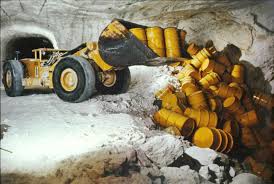
At left, The Gorleben mine was used as the German nuclear waste dump decades ago .
Backfilling has begun of the former salt mine in Gorleben, Lower Saxony –
previously considered a possible site for geological disposal of Germany’s
high-level radioactive waste.
Exploration work on the Gorleben rock salt
formation as a potential radioactive waste repository site began in 1977.
The federal government gave its approval for underground exploration at the
site in 1983, and excavation work began with the sinking of the first of
two shafts in 1986.
Work continued until June 2000 when, alongside plans
for the eventual phaseout of nuclear power in Germany, a three- to ten-year
moratorium was imposed on the Gorleben exploration work. This moratorium
was lifted in March 2010.
World Nuclear News 2nd Dec 2024, https://www.world-nuclear-news.org/articles/backfilling-of-gorleben-mine-starts
Delays to nuclear plants giving Sizewell B a new lease of life

EDF is considering plans to keep the power station in Suffolk going for an extra
20 years to underpin Britain’s net zero ambitions after building new
plants proves tricky. Sizewell B in Suffolk, the nuclear power plant that
provides about 3 per cent of the UK’s electricity and has been in the
midst of a 47-day maintenance outage.
Nuclear power has dwindled to about
14 per cent of the UK’s electricity mix, down from about a quarter in the
late 1990s. Of the five plants still running, all of which are operated by
EDF, the French state-backed power group, only Sizewell B is set to be
still running by the end of the decade.
Efforts to revive the industry have
been beset by delays and soaring costs, with Hinkley Point C, the first
plant to be built in Britain in more than two decades, running up to six
years behind schedule and billions over budget. Sizewell B, which began
generating power in 1995, was the last. It is against this backdrop that
the operators of Sizewell B will make the case to EDF in Paris to extend
the life of the plant, capable of powering two million homes, by another 20
years.
Keeping the plant running until 2055 is set to cost roughly £700
million. The plant has relatively fixed costs and has already forward-sold
the majority of power set to be generated next year. However, the
volatility in power prices since the pandemic, exacerbated by the Russian
invasion of Ukraine, has complicated the business case for keeping Sizewell
B running for longer.
The French energy group, which has an 80 per cent
stake in Sizewell B alongside Centrica’s 20 per cent, is attempting to
pay down a debt pile of almost £45 billion. Here in the UK, it is in talks
with private investors to raise between £4 billion and £5 billion to help
meet the spiralling bill to complete Hinkley Point C. Sizewell C is also
competing for EDF capital, even if the company intends to eventually sell
down its stake in the project from 50 per cent to about 20 per cent. Two
nuclear power stations with identical designs in America — Wolf Creek and
Callaway — have already been granted extensions to their operating
licences that will see them run from 40 years to 60 years, providing a
precedent.
Times 2nd Dec 2024 https://www.thetimes.com/business-money/energy/article/delays-to-nuclear-plants-giving-sizewell-b-a-new-lease-of-life-r6fdzx9j5
Cancer mortality in the USA and atmospheric nuclear weapons test fallout ratio. Identifying the principal origin of the global cancer epidemic

European Society of Medicine, Christopher Busby, Green Audit, Bideford, Devon, UK, Nov 29, 2024, https://esmed.org/MRA/mra/article/view/5859
Abstract
Recent advances in epidemiological analysis of the effects of radioactive contamination have raised questions over the security of current radiation risk models. One outstanding question relates to the effects of atmospheric nuclear weapons tests and the fallout which peaked in 1959-63.
Effects on cancer, a late genetic disease, are investigated here by employing a metric R which divides the rate in high fallout and low fallout States of the USA. An allocation of the two groups is based on rainfall and supported by measurements of Strontium-90 in baby teeth.
Results from comparing cancer mortality in Whites for High fallout States AR/KY/LA/MS and TN with low fallout States AZ/CA/ NM reveals a highly significant fallout cohort effect peaking in those born in 1955-1964 in all 10-year birth cohort age groups. The ratio was calculated for 10-year groups for deaths in 1969, 1979, 1989, 1999, 2009 and 2019.
Cancer mortality ratio effects increased with age. In the oldest 10-year group studied, 55-64, in 2019 the Excess Risk for those born in 1955-64 was 52% greater in the high fallout regions ERR =1.52; 95% CI 1.48, 1.57; p <0.00000000. For the 45-54 group in 2019 ERR = 1.42; 95% CI 1.35, 1.50; p < 0.00000000. For the 34-45 ERR = 1.27; 95% CI 1.15, 1.40; p<0.000001. Arguably the results identify the main cause of the cancer epidemic which began in the 1980s.
Nuclear industry selects site in northwestern Ontario for waste disposal amidst regional opposition

Assembly of First Nations calls for new approach to Indigenous consultation and consent
Warren Bernauer and Elysia Petrone / December 3, 2024 https://canadiandimension.com/articles/view/nuclear-industry-selects-site-in-northwestern-ontario-for-nuclear-waste-disposal-amidst-regional-opposition
Indigenous groups are raising awareness about plans to construct a series of caverns deep underground in the heart of Treaty 3 territory, to be filled with all of Canada’s high-level nuclear waste.
On November 28, the Nuclear Waste Management Organization (NWMO) announced it had selected Wabigoon Lake Ojibway Nation and the municipality of Ignace as “host communities” for all of Canada’s high-level nuclear waste. According to NWMO resident and CEO Laurie Swami, the decision to dispose of nuclear waste in northwestern Ontario “was driven by a consent-based siting process led by Canadians and Indigenous peoples.” Yet the extent to which the people of northwestern Ontario consent to the proposed waste repository is, at best, unclear.
The NWMO is a not-for-profit corporation, founded and funded by the nuclear power industry, which has been tasked with the management of Canada’s nuclear waste. Since 2005, the NWMO has been advancing plans to construct a deep geological repository (DGR), intended to be the final resting place for all spent nuclear fuel from reactors in Canada. As part of its site-selection process, it has been searching for a “willing host” community. In 2020, the NWMO narrowed its candidates to two Ontario municipalities, both of which have since signed “hosting agreements” with the NWMO: Ignace and South Bruce.
The NWMO has also committed to seeking the consent of the Indigenous communities on whose territories the DGR would be situated. Indigenous consent to nuclear waste disposal is required under the terms of international human rights covenants like the United Nations Declaration on the Rights of Indigenous Peoples (UNDRIP). According to Article 29 of UNDRIP, “States shall take effective measures to ensure that no storage or disposal of hazardous materials shall take place in the lands or territories of Indigenous peoples without their free, prior and informed consent.”
Before announcing that it had selected northwestern Ontario for its waste repository, the NWMO had been negotiating with both the Wabigoon Lake Ojibway Nation (near Ignace, in northwestern Ontario) and Saugeen Ojibway Nation (near South Bruce, within the water shed of Lake Huron).
Wabigoon Lake Ojibway Nation says ‘yes’ but stops short of consent
On November 18, members of Wabigoon Lake Ojibway Nation voted ‘yes’ to continuing with the NWMO’s site-selection process. Rather unsurprisingly, the NWMO has characterized Wabigoon Lake’s vote as confirmation that it is “a willing host community for Canada’s repository for used nuclear fuel.”
Yet public communication from Wabigoon Lake stops short of declaring their consent to the proposed DGR. According to a press release from the First Nation, “the yes vote does not signify approval of the project; rather, it demonstrates the Nation’s willingness to enter the next phase of in-depth environmental and technical assessments, to determine safety and site suitability.”
At present, the question Wabigoon Lake members voted on, the official results, and the details of the agreement the First Nation has signed with the NWMO have not been publicly released. It therefore remains unclear whether the NWMO has succeeded in obtaining the consent it requires to move forward with its proposed DGR.
According to a recent newsletter from regional anti-nuclear group We the Nuclear Free North:
NWMO has to date failed to establish that Wabigoon Lake Ojibway Nation is a ‘willing host’ or to extract from WLON a ‘compelling demonstration of willingness’. The NWMO has repeatedly stated that the project will only be located in an area with an informed and willing host, with acceptance supported by a ‘compelling demonstration of willingness’ and with surrounding communities working together to implement the project.
It is also unclear what sort of financial benefits were offered to Wabigoon members in exchange for agreeing to moving to the ‘site characterization’ stage of the NWMO’s process. There has been significant controversy surrounding the financial payments the NWMO has made to Indigenous and municipal governments, with some suggesting that it is buying or ‘bribing’ its way to community support.Regional opposition
The NWMO’s decision was made in the context of significant regional opposition to NWMO’s plans for a DGR near Ignace.
In September, Darlene Necan led a walk to protest the proposed disposal of nuclear waste in northwestern Ontario. A member of the Ojibway Nation of Saugeen—a First Nation situated north of Ignace, not to be confused with the Saugeen Ojibway Nation near South Bruce—Necan has led annual anti-nuclear protests since 2019. According to Ricochet, the 2024 walk involved roughly 30 participants who walked from Ignace and Wabigoon, along the Trans Canada Highway, to the proposed DGR site.
Multiple First Nations and municipalities along the proposed transportation route, as well as those that are downstream from the proposed Ignace DGR site, have passed resolutions and issued statements opposing the NWMO’s proposed repository.
This past fall, 12 First Nations wrote a joint open letter to NWMO President and CEO Laurie Swami, notifying her that they “say ‘no’ to nuclear waste storage and transport in the North.”
The First Nations behind the letter—including Asubpeeschoseewagong Anishinabek (Grassy Narrows), Kitchenuhmaykoosib Innnuwug, Wapekeka First Nation, Neskantaga First Nation, Muskrat Dam First Nation, Ojibways of Onigaming, Wauzhushk Onigum Nation, Gull Bay First Nation, Netmizaaggamig Nishnaabeg, Fort William First Nation, Gakijiwanong Anishinaabe Nation, and Shoal Lake 40 First Nation—are situated on or near the proposed transportation route and downstream of the proposed DGR.
“Our Nations have not been consulted, we have not given our consent, and we stand together in saying ‘no’ to the proposed nuclear waste storage site near Ignace. We call on you to respect our decision.”
Regional First Nations organizations have similarly indicated their opposition to transporting and storing nuclear waste in northwestern Ontario. For example, in October, Grand Council Treaty 3 passed a resolution reaffirming its opposition to the storage of nuclear waste in Treaty 3 territory, which includes the proposed DGR site near Ignace. The resolution states, “a Deep Geological Repository for the storage of nuclear waste will not be developed at any point in the Treaty 3 territory.”
The NWMO’s announcement that it has selected northwestern Ontario for the proposed repository makes no mention of this groundswell of regional opposition.
NWMO’s ‘willingness’ process criticized by Assembly of First Nations
The NWMO decision also comes at a time when its approach to identifying ‘willing hosts’ is coming under increased scrutiny.
A recent report issued by the Assembly of First Nations (AFN) raises serious questions about the NWMO’s approach to Indigenous consultation and consent, which focuses on obtaining the consent of individual ‘host’ communities. Instead, the AFN argues that seeking consent “from all impacted First Nations is imperative.”
The AFN report is from its Dialogue Sessions on the Transportation and Storage of Nuclear Wastes. The dialogues were hosted by the AFN in Fredericton, Toronto, Thunder Bay, and Vancouver in spring 2024. The report includes a series of recommendations to the NWMO. The NWMO’s decision to select northwestern Ontario for its waste repository appears to ignore one of the AFN’s central recommendations.
The report’s first recommendation calls upon the NWMO to rethink its approach to consulting First Nations about its proposed DGR, including a need to seek the consent of nations that are situated on the transportation route or downstream from the repository, before selecting a site for Canada’s high-level nuclear waste:
The AFN respectfully urges that comprehensive and meaningful dialogue, consultation, and engagement be undertaken with all affected First Nations throughout the site selection process, and before any critical decisions are made regarding the Deep Geological Repository or transportation routes. It is essential that the perspectives of all First Nations who rely on the same watershed as the proposed site, as well as those along the transportation route, be respected and fully integrated, in a manner that honors their inherent right to self-determination.
Resistance likely to continue
Now that the NWMO has selected a site for its proposed DGR, the next step is for it to submit a formal proposal to federal and provincial regulators. The proposed DGR will then undergo impact assessment and licensing processes. Wabigoon Lake Ojibway Nation has also indicated that the NWMO’s proposal will also have to satisfy the First Nation’s own internal regulatory processes and procedures.
Given the recent upsurge in opposition to the NWMO’s proposed activities in northwestern Ontario, it seems almost certain that resistance to the proposed DGR will continue.
Warren Bernauer is a non-Indigenous member of Niniibawtamin Anishinaabe Aki and research associate at the University of Manitoba where he conducts research into energy transitions and social justice in the North.
Elysia Petrone is a lawyer and activist from Fort William First Nation and a member of Niniibawtamin Anishinaabe Aki.
Key partner quits EDF’s Nuward small nuclear reactor project

According to a TechniAtome internal email seen by Euractiv, on 5 July the teams working on the Nuward project were asked to demobilise – just four days after EDF announced its intention to “evolve the design” of its SMR.
EDF’s small nuclear reactor project, Nuward, is seeing some of its
partners abandon ship, after the company decided to redesign its project
last July.
In an internal email from TechnicAtome, the content of which has
been seen by Euractiv, the specialist in nuclear naval propulsion reactors
asks its teams to “immediately proceed” with the “closing operations” of
its participation in the Nuward small modular nuclear reactor (SMR) project
led by EDF.
This consists of demobilizing the teams working on the project,
terminating current contracts, stopping testing activities and documentary
production, the document specifies. This email was sent on July 5th, just
four days after Nuward announced on Linkedin on July 1st that it was
“evolving the design” of its SMR, i.e., evolving its concept.
Euractiv 2nd Dec 2024 https://www.euractiv.fr/section/energie-climat/news/technicatome-quitte-le-projet-nuward-dedf-de-petit-reacteur-nucleaire/
Lifespan of four nuclear power stations extended
Kevin Keane, BBC Scotland environment correspondent, 3 Dec 24
The lifespan of Scotland’s last remaining nuclear power station and three other plants in England are to be extended.
EDF Energy says Torness, in East Lothian, and its sister site Heysham 2, in Lancashire, will continue generating for an extra two years until 2030.
Two other sites – Hartlepool and Heysham 1 – will continue for an extra year until 2027.
The French state-owned company says it will now invest £1.3bn across its operational nuclear estate over the next three years.
Torness employs about 550 people with a further 180 contractors also working on site.
It began generating electricity in 1988 and was originally due to be decommissioned last year.
Construction work on Hartlepool power station started in 1968, taking 15 years to complete. Heysham 1 began generating in 1983 followed by Heysham 2 five years later.
In 2016, a decision was taken to extend Torness’ life until 2030 – but the discovery of cracks in the graphite bricks, which make up the reactor cores of some advanced gas-cooled power stations, led to a review.
As a result, it was announced in 2021 that the closure dates for Torness and Heysham 2 would be brought forward again by two years to 2028.
EDF says it has spent several years studying the progress of cracking and engineers feel they have a better understanding of the issues.
It says regular inspections will be carried out to ensure the sites can continue to operate safely.
……………………………………………The company made the decision following a year-long review into the four sites.
A separate review is looking at the possibility of extending its Sizewell B facility in Suffolk for a further 20 years…………………. https://www.bbc.co.uk/news/articles/c33dvekx021o
Why NuScale Power Stock Slumped Today

By Rich Smith – Dec 2, 2024
https://www.fool.com/investing/2024/12/02/why-nuscale-power-stock-slumped-today/
Key Points
GE Vernova is much bigger, with much more cash, and already profitable.
CNBC reported on GE Vernova’s ambitions to dominate the building of small modular reactors.
NuScale Power is a pioneer in this industry, but its business is small and unprofitable.
Will GE Vernova crush NuScale’s nuclear dreams?
NuScale Power Corporation (SMR -0.08%) stock fell 3% through 11:25 a.m. ET — and it has General Electric to blame for it.
NuScale develops small modular nuclear reactors designed to be cheaper and faster to build than traditional nuclear power plants. And as it’s fond of pointing out, NuScale is “the first and only SMR to have its design certified by the U.S. Nuclear Regulatory Commission.” But leaders aren’t necessarily winners, and as CNBC reports this morning, NuScale faces serious competition from a much bigger nuclear player, GE Vernova (GEV 3.56%), the former energy arm of General Electric.
GE Vernova’s threat to NuScale
NuScale and GE Vernova both aim to develop small modular reactors, but “small” is a relative term. If a standard nuclear power plant produces 1,000 megawatts of electricity, Vernova’s BWRX-300 reactor aims to cut that output to 300 megawatts (which is still substantial, enough to power a small city of 200,000 homes), while NuScale’s Voygr reactor goes even smaller with a 77-megawatt output.
In other respects, the two companies are more direct competitors. Both Vernova and NuScale advertise their ability to deploy multiple modules of their basic SMR in a single location, to amp up total power production capacity.

Both target a global market, with GE Vernova “aiming to deploy small nuclear reactors across the developed world over the next decade,” according to CNBC.
Is NuScale Power stock a sell?
What really sets the two companies apart, though, is their financial capacity to deliver on their promises. While valued at $3 billion in market cap, NuScale boasts less than $10 million in annual revenue and is losing $80 million a year. Analysts don’t expect the company to turn profitable before 2030 at the earliest.
GE Vernova is a $92 billion behemoth earning more than $1.2 billion a year and growing its profits at 40% a year. Just the cash alone on Vernova’s balance sheet is worth twice the price of NuScale’s stock. In any direct contest, I know which stock I’d bet on to win — and unfortunately, it’s not NuScale.,
The First Seven Billionaires Trump Has Tapped for Top Jobs
Out of America’s 800 billionaires, president-elect Trump has so far plucked seven for top spots in his administration.
by Sarah Anderson, December 03, 2024, https://inequality.org/great-divide/billionaires-trump-has-tapped-for-top-jobs/
President-elect Donald Trump has selected an unprecedented total of seven reported billionaires for senior positions in his administration. Including himself, that makes eight.
This figure could continue to grow as Trump fully staffs up. After all, he has nearly 800 additional U.S. billionaires to choose from.
Here’s a quick rundown of the “original seven” members of the nine-figure club on Trump’s employee wish list:
Elon Musk
Position: Co-leader of a new Department of Government Efficiency, a presidential advisory commission tasked with slashing spending and regulations
Estimated net worth: $330 billion
Source of wealth: SpaceX, Tesla, and other businesses
2024 campaign donations: $200 million
Warren Stephens
Position: Ambassador to the UK
Estimated net worth: $3.4 billion
Source of wealth: CEO of private Arkansas-based investment bank Stephens Inc.
2024 campaign donations: $22.7 million (includes $2 million-plus for Nikki Haley’s failed bid for the Republican presidential nomination)
Linda McMahon
tion: Education Secretary
Estimated net worth: $2.5 billion (with her husband, Vince McMahon)
Source of wealth: World Wrestling Entertainment (WWE)
2024 campaign donations: $24 million
Howard Lutnick
Position: Commerce Secretary
Estimated net worth: $2 billion
Source of wealth: majority ownership of investment bank Cantor Fitzgerald
2024 campaign donations: $13.1 million in PAC donations and also hosted a $15 million fundraising event at his home in the Hamptons
Vivek Ramaswamy
Position: Co-leader of the planned Department of Government Efficiency
Estimated net worth: $1.1 billion
Source of wealth: founder of pharmaceutical firm Roivant Sciences
2024 campaign donations: $25,000 (He’d just blown $30.7 million of his own funds on his failed presidential bid.
Doug Burgum
Position: Secretary of the Interior
Estimated net worth: undisclosed. Several media have identified him as a billionaire, while Forbes analysts say he’s worth “at least” $100 million and likely much more if you consider trusts for his adult children
Source of wealth: sold Great Plains Software, which creates accounting packages for small and medium-size businesses, for $1.1 billion in Microsoft stock in 2001
2024 campaign donations: $8,000 (He’d spent $13.9 million of his own funds on his failed presidential bid. This includes the cost of giving $20 gift cards to more than 40,000 donors who gave his campaign at least $1. That expensive but crafty maneuver succeeded in drumming up enough donors to qualify for participation in the presidential debate)
Scott Bessent
Position: Treasury Secretary
Estimated net worth: undisclosed
Source of wealth: Wall Street investments, including as founder of hedge fund Key Square Group
2024 campaign donations: $3.2 million
Campaigners lose bid to challenge Sizewell C licence decision in High Court

TEAGS claimed that the ONR unlawfully failed to include sea defences in its considerations when issuing a nuclear site licence for the development
Rayo 3rd Dec 2024
A campaign group has lost a High Court bid to challenge a regulator’s decision to issue a licence for the Sizewell C nuclear site in Suffolk.
Theberton and Eastbridge Action Group on Sizewell Limited (TEAGS), which campaigns under the name Stop Sizewell C, claimed that the Office for Nuclear Regulation (ONR) unlawfully failed to include sea defences in its considerations when issuing a nuclear site licence (NSL) for the development.
Barristers for TEAGS told a hearing on Tuesday that the legal challenge over the decision should be allowed to continue while lawyers for the ONR and Sizewell C Limited (SZC), which owns the site, claimed it should be thrown out.
In a ruling, Mrs Justice Lieven dismissed the claim, ruling that the challenge had “no chance of success” and was “totally without merit”.
She said: “The fundamental argument advanced by the claimant is, in my view, plainly wrong.”
……………………………….Philip Coppel KC, for TEAGS, said in written submissions the challenge to the issuing of the NSL was “arguable” as the licence does not “cover the event of an accident or other emergency in respect of” sea defences.
In court, he said: “Sea defences have the obvious potential to affect safety.”
He continued: “The regulator cannot treat the consequences of such a mistake as an acceptable risk in the operation of a nuclear reactor.”
…………………Following the ruling, Paul Collins, of Stop Sizewell C, said “We are disappointed and surprised that the Court concluded that the 1965 Nuclear Installation Act did not require the imposition of a condition, when the Sizewell C nuclear site licence was granted, to deal with a safety issue – namely the sea defences – that was well known at that time.
“The judge fully acknowledged that the sea defences are critical for the safety of Sizewell C’s reactors.”
Alison Downes, also of Stop Sizewell C, said: “It remains the case that we are deeply concerned about this issue.
“There is still no final design of the sea defences let alone guarantees that the construction is feasible. We thank our legal team and supporters and are considering our position.” https://hellorayo.co.uk/hits-radio/suffolk/news/campaigners-lose-bid-challenge-sizewell-c-licence-decision-high-court/
‘Big Oil must be dancing for joy’: Anger builds at failure to deliver Global Plastics Treaty
James Murray, 02 December 2024
Attempts to deliver new global plastics treaty blocked by small group of petrostates, forcing negotiations to be extended into next year
Negotiations to deliver a landmark treaty to tackle plastic pollution ended in failure yesterday, with a small group of petrostates blamed for stonewalling efforts to agree a legally binding text that………………(Subscribers only)
https://www.businessgreen.com/news/4384233/big-oil-dancing-joy-anger-builds-failure-deliver-global-plastics-treaty
1 This Month
23-25 October – on Zoom – World BEYOND War’s annual global conferenc

To see nuclear-related stories in greater depth and intensity – go to https://nuclearinformation.wordpress.com

Say No to NASA’s Reckless Nuclear Reactor on the Moon
Say No to NASA’s Reckless Nuclear Reactor on the Moon
-
Archives
- October 2026 (160)
- September 2026 (339)
- August 2026 (330)
- July 2026 (355)
- June 2026 (287)
- May 2026 (306)
- April 2026 (356)
- March 2026 (251)
- February 2026 (267)
- January 2026 (308)
- December 2025 (358)
- November 2025 (359)
-
Categories
- 1
- 1 NUCLEAR ISSUES
- business and costs
- climate change
- culture and arts
- ENERGY
- environment
- health
- history
- indigenous issues
- Legal
- marketing of nuclear
- media
- opposition to nuclear
- PERSONAL STORIES
- politics
- politics international
- Religion and ethics
- safety
- secrets,lies and civil liberties
- spinbuster
- technology
- Uranium
- wastes
- weapons and war
- Women
- 2 WORLD
- ACTION
- AFRICA
- Atrocities
- AUSTRALIA
- Christina's notes
- Christina's themes
- culture and arts
- Events
- Fuk 2022
- Fuk 2023
- Fukushima 2017
- Fukushima 2018
- fukushima 2019
- Fukushima 2020
- Fukushima 2021
- general
- global warming
- Humour (God we need it)
- Nuclear
- RARE EARTHS
- Reference
- resources – print
- Resources -audiovicual
- Weekly Newsletter
- World
- World Nuclear
- YouTube
-
RSS
Entries RSS
Comments RSS

