Refuting myths about nuclear and renewable energy

15 Oct 2024, Mark Diesendorf, https://renew.org.au/renew-magazine/renew/refuting-myths-about-nuclear-and-renewable-energy/
There’s a lot of talk at present about nuclear energy being a strong contender in Australia’s energy market. But how much is political spin getting in the way of fact? Dr Mark Diesendorf unpacks some of the myths that are out there.
The AUKUS agreement has given renewed stimulus to the nuclear energy lobby. With campaign support from the Murdoch press, they have increased their efforts to denigrate renewable energy and to promote nuclear energy and fossil gas in its place.
Because of the sheer volume of their campaign and the difficulty of publishing fact checks and refutations in the mass media, public opinion polls indicate that some people seem to be taking the misleading claims of the nuclear lobby seriously. In this article, I seek to refute the principal myths the lobby is disseminating.
Myth: Renewables cannot supply 100% electricity
Denmark, South Australia and Scotland already obtain 88%, 74% and 62% of their respective annual electricity generations from renewables, mostly wind. Scotland actually supplies the equivalent of 113% of its electricity consumption from renewables; the difference between its generation and consumption is exported by transmission line.
All three jurisdictions have achieved this with relatively small amounts of hydroelectricity, zero in South Australia. Given the political will, South Australia and Denmark could reach 100% net renewables generation by 2030, as indeed two northern states of Germany have already done. The ‘net’ means they trade some electricity with neighbours but on average will be at 100% renewables.
Computer simulations by several research groups, including ours at UNSW, using real hourly wind, solar and demand data spanning several years, show that the Australian electricity system could be run entirely on renewable energy, with the main contributions coming from solar and wind. System reliability can be maintained by a combination of storage, building excess generating capacity for wind and solar (which is cheap), key transmission links, and demand management encouraged by transparent pricing.
Storage to fill infrequent troughs in generation from the variable renewable sources will comprise existing hydro, pumped hydro (mostly small-scale and off-river), and batteries. Geographic dispersion of renewables will also assist.
For the rare extended periods of Dunkelflaute (literally ‘dark doldrums’), gas turbines with stores of biofuels or green hydrogen could be kept in reserve as insurance.
Coal and nuclear power stations are too inflexible in operation to be useful as backup—they require a whole day to start up from cold and, when operating, have difficulty and increased costs in attempting to vary their output to follow the peaks and troughs in demand.
Myth: We need baseload power stations
This is an old, discredited claim that refers to the past when variable renewables (wind and solar) were absent and the fossil fuelled electricity supply system consisted mainly of two types of power station: baseload and peak load.
Baseload power stations, such as coal and nuclear, operate 24/7 at maximum power output, except then they break down or undergo planned maintenance. Because of their inflexibility in operation, the former system also needed to supplement baseload with peak load power stations, hydro-electric and gas turbines. Peak load stations can vary their output rapidly in response to rapid changes in demand or breakdowns in baseload supply.
When a nuclear power reactor breaks down, it can be useless for weeks or months. For a conventional large reactor rated at 1000 to 1600 megawatts, the impact of breakdown on electricity supply can be disastrous. Big nuclear needs big back-up, which is expensive. Small modular reactors are not commercially available nor likely to be in the foreseeable future.
A renewable electricity system, including storage, delivers the same reliability, and hence the same economic value, as the traditional fossil fuelled system based on a mix of baseload and peak-load power stations.
Myth: Gas can fill the gap until nuclear is constructed
As a fuel for electricity generation, fossil gas in eastern Australia is many times more expensive per kilowatt-hour than coal, so it’s not generally used for baseload power. Instead, it’s used for fuelling gas turbines for meeting the peaks in demand and helping to fill troughs in supply. For this purpose, it contributes about 5% of Australia’s annual electricity generation. But, as storage expands, fossil gas will become redundant in the electricity system.
The fact that baseload gas-fired electricity generation continues temporarily in Western Australia results from a unique history. Unlike the eastern states, WA has a Domestic Gas Reservation Policy that insulates domestic customers from the high export prices of gas. However, most new gas supplies would have to come from high-cost unconventional sources.
South Australia has an ancient, struggling, gas-fired power station, Torrens Island, that was originally regarded as baseload, but can no longer perform as baseload. It will be closed in 2026 and replaced with renewables and batteries. South Australia will soon have 100% renewable electricity without a single baseload power station.
Myth: Nuclear energy is cheaper than renewables
Assuming that Australia would not buy nuclear reactors from China or Russia, the only choices are the European Nuclear Reactor and the Westinghouse AP-1000 (or variants thereof). The former type is under construction in Finland, France and the UK. In each case, construction times have greatly increased and original cost estimates have tripled or more.
In South Carolina USA, two AP-1000 reactors were abandoned while under construction due to delays and cost escalation—under state law the electricity customers had to pay for the failed project. In Georgia USA, two AP-1000 reactors have just been completed at double the original cost. They are the only new nuclear power reactors commenced in the USA since the 1970s and completed. Nuclear power projects bankrupted Westinghouse in 2017.
South Korea is exporting its modification of the Westinghouse reactor, the APR-1400, subsidised by an unknown amount by its government. Its only export project so far, the Barakah project in UAE, is three years behind schedule—the extent of its cost overrun is unknown.
The state-owned Korean Electric Power Company (KEPCO) has a debt equivalent to US$149 billion resulting mainly from its nuclear investments.
All expert studies—e.g. by CSIRO, AEMO, and the multinational investment advisor Lazard—find that nuclear is the most expensive electricity generating technology, while solar PV and wind are the cheapest. This is true after including the cost of ‘firming’ renewables with storage.
Contrary to the claims of some nuclear proponents, the levelised cost method used in these studies takes account of the different lifetimes of the technologies. It also includes the cost of connecting the power stations to the main grid. While renewables will need a few additional major high-voltage transmission links, so would nuclear.
Myth: Nuclear energy can co-exist with large contributions from renewables
This myth has two refutations:
- Nuclear is too inflexible in operation to be a good partner for variable wind and solar. Its very high capital cost necessitates running it constantly at full power, not just during periods of low sun or wind. This would mean offloading renewables, although they are much cheaper to operate.
- On current growth trends of renewables, there will be no room for nuclear energy in South Australia, Victoria or NSW. The 2022 shares of renewables in total electricity generation in each of these states were 74%, 37% and 33% respectively. Rapid growth from these levels is likely. It’s already too late for nuclear in SA. Provided the growth of renewables is not deliberately suppressed in NSW and Victoria, these states too will reach 100% renewables long before the first nuclear power station could go online
Myth: There is insufficient land for wind and solar
Although a wind farm may span a large area, its turbines, access road and substation together occupy a tiny fraction of that area, typically about 2%. Most wind farms are built on land that was previously cleared for agriculture and are compatible with all forms of agriculture. Off-shore wind occupies no land.
Solar farms are increasingly being built sufficiently high off the ground to allow sheep to graze beneath them, providing welcome shade. This practice, known as agrivoltaics, provides additional farm revenue that’s especially valuable during droughts. Rooftop solar occupies no land.
Myth: Nuclear energy is safe
Nuclear energy is dangerous for three reasons: its contribution to the proliferation of nuclear weapons, the impacts of nuclear accidents and the task of managing high-level nuclear wastes for 100,000 years or more.
The two principal nuclear explosives are Uranium-235 and Plutonium-239. Both can be obtained from the nuclear energy supply chain.
Under the cloak of nuclear energy, several countries—the UK, France, India, Pakistan, North Korea and South Africa—have produced nuclear weapons either by further enrichment of uranium to increase the concentration of Uranium-235 beyond the level (3-4%) required for nuclear energy or by extracting Plutonium-239 from the spent fuel of their nuclear power reactors.
In addition, the following countries have attempted to use nuclear power to produce nuclear explosives while cloaking their development of nuclear weapons: Algeria, Argentina, Australia, Brazil, Libya, South Korea and Taiwan.
Fortunately, they did not complete their programs for various reasons. Nuclear power and nuclear weapons are intimately linked.
The most serious nuclear accidents were the Kyshtym disaster in the former USSR in 1957, the partial meltdown at Three Mile Island in the USA in 1979, Chernobyl in Ukraine in 1986, and Fukushima in Japan in 2011. Except for Three Mile Island, which took the US to the brink of a major disaster, each of these accidents have likely caused many thousands of cancer deaths from exposure to ionising radiation.
There are no operating permanent repositories for high-level nuclear wastes. Finland is the only country that’s close to completing a deep underground repository. The USA spent billions developing one at an unsuitable site in Nevada and then had to abandon it.
At present, high-level wastes are in temporary storage above ground at nuclear reactor sites, either in steel and concrete casks or in pools of water.
The contrast between nuclear and renewable energy technologies is demonstrated by their respective responses to the earthquake and tsunami that struck the Pacific coast of Japan in 2011.
At the Fukushima Daichi nuclear power station, three of the six nuclear reactors melted down, accompanied by hydrogen explosions that expelled vast amounts of radioactive materials into the environment.
Further down the coast at Kamisu, the tsunami passed through a near-shore wind farm located in the surf (see picture) without stopping it. It was only shut down when the grid went down and recommenced operating when the grid was restored three days later.
In summary
Renewables—solar, wind and existing hydro—together with storage and energy efficiency, can supply all Australia’s electricity and ultimately all energy, including transportation and heating.
Nuclear energy is too dangerous, too expensive, too slow to build, and too inflexible in operation to be a good partner for wind and solar. A nuclear scenario would inevitably involve the suppression of clean, inexpensive, safe renewables.
Amazon bets on nuclear power to fuel AI ambitions

The technology is still in its infancy and lacks regulatory approval, however, raising doubts about implementation timelines.
Daily Mail By Afp, 17 October 2024
Amazon announced significant investments in nuclear energy on Wednesday, joining other tech giants in aiming to meet the high electric power demands of artificial intelligence using atomic energy.
As companies including Microsoft, Amazon, and Google rapidly expand their global data center capabilities, they are actively seeking new electricity sources.
Amazon has signed three agreements to support the development of Small Modular Reactors (SMRs), which are more compact and potentially easier to deploy than traditional reactors.
The technology is still in its infancy and lacks regulatory approval, however, raising doubts about implementation timelines……………………
According to an Amazon spokeswoman, the contracts signed are worth over half a billion dollars.
Amazon’s new partnerships include collaborating with Energy Northwest to develop four advanced SMRs in Washington state, potentially generating up to 960 megawatts of power by the early 2030s.
The company is also taking part in a $500 million funding round in X-energy, a leading SMR developer, to support more than five gigawatts of new nuclear-energy projects.
Additionally, Amazon is teaming up with Dominion Energy to explore an SMR project near Virginia’s North Anna nuclear power station, aiming to add at least 300 MW of power to meet projected demand increases…………………
Google recently signed a deal with Kairos Power for SMR-generated electricity, while Microsoft plans to use power from the restarted Three Mile Island facility.
Amazon has also announced plans to locate a major data center next to a 40-year-old nuclear facility in Pennsylvania.
According to Goldman Sachs, data center power demand is estimated to grow 160 percent by 2030, with AI representing about 19 percent of data center power demand by 2028.
https://www.dailymail.co.uk/wires/afp/article-13967077/Amazon-bets-nuclear-power-fuel-AI-ambitions.html
Environmental groups challenge the nuclear industry’s portrayal of its energy as “clean” and “non-emitting,” citing health risks and long-term radioactive waste

By James Murray, October 16, 2024,
https://www.netnewsledger.com/2024/10/16/environmental-groups-challenge-the-nuclear-industrys-portrayal-of-its-energy-as-clean-and-non-emitting-citing-health-risks-and-long-term-radioactive-waste/
Competition Bureau Asked to Investigate Misleading Nuclear Energy Claims in Canada
Ottawa, 16 October 2024 – Seven Canadian environmental advocates have filed a formal complaint with the Competition Bureau, urging it to investigate the Canadian Nuclear Association (CNA) and its members for promoting nuclear energy as “clean” and “non-emitting.”
This latest action, under Section 9 of the Competition Act, calls for the Bureau to address what the complainants argue are false and misleading claims about nuclear energy.
“Legislation against greenwashing should spur the Bureau to act on the misuse of terms like ‘clean’ and ‘non-emitting.’ These claims are misleading and repeated by uninformed officials,” said Dr. Ole Hendrickson.
“Nuclear reactors emit carcinogenic substances and produce dangerous radioactive waste—hardly ‘clean’ by any reasonable definition,” added J.P. Unger, a science writer and policy analyst. “The industry’s survival depends on misleading the public and securing subsidies.”
The complaint highlights the continuous emission of carcinogenic gases and the production of long-lived radioactive waste by nuclear reactors, which pose significant health risks to current and future generations. According to the applicants, the CNA’s portrayal of nuclear energy as clean misleads the public, especially given the severe environmental impact of its waste.
The group points out that these claims have unfairly bolstered nuclear energy’s image, positioning it to secure public funding intended for genuinely clean energy projects. They also criticize nuclear industry campaigns, such as educational initiatives targeted at schools, for perpetuating these misconceptions.
This action follows an earlier complaint filed in February, which was dismissed by the Competition Bureau. At the time, the Bureau deemed CNA’s statements to be political rather than promotional. However, the new complaint emphasizes that the CNA’s messaging aims to sway public opinion and secure financial benefits by falsely categorizing nuclear energy as environmentally friendly.
China’s openness about its latest nuclear missile test shows growing confidence vis-à-vis the United States

The rare public ICBM test seems to have been specifically aimed at dissuading Washington from using nuclear weapons in a potential conflict across the Taiwan Strait
Bulletin, By Hui Zhang | October 16, 2024
China’s Ministry of National Defense announced last month that the People’s Liberation Army Rocket Force (PLARF) had successfully launched an intercontinental ballistic missile (ICBM) carrying a simulated warhead into the Pacific Ocean and that the missile accurately fell into the designated area. This was the first time since 1980 that China had test-fired an ICBM into international waters.
But the test launch was part of routine annual training, the ministry added, in line with international law and international practice, and not directed against any country or target.
Just as observers were vigorously speculating about the type of missile used in the test, China Junhao (China’s military media wing) cut short the discussions, releasing pictures of the launch site—a very rare step given that the Chinese army has not made public a photo of the launch of a new ICBM for decades.
China’s Ministry of National Defense announced last month that the People’s Liberation Army Rocket Force (PLARF) had successfully launched an intercontinental ballistic missile (ICBM) carrying a simulated warhead into the Pacific Ocean and that the missile accurately fell into the designated area. This was the first time since 1980 that China had test-fired an ICBM into international waters.
But the test launch was part of routine annual training, the ministry added, in line with international law and international practice, and not directed against any country or target.
Just as observers were vigorously speculating about the type of missile used in the test, China Junhao (China’s military media wing) cut short the discussions, releasing pictures of the launch site—a very rare step given that the Chinese army has not made public a photo of the launch of a new ICBM for decades…………………
With this new launch test, China certainly wants to show a forceful response to suspicion about its nuclear deterrence capabilities in the wake of recent corruption scandals and command instability in its rocket force. The test shows that the rocket force has an operational and credible nuclear force that can help ensure China’s ability to maintain a strong nuclear deterrent—a key element of President Xi Jinping’s long-held military objectives and emphasis on strengthening China’s nuclear forces, an emphasis initiated in 2015.
The rare public ICBM test seems to have been specifically aimed at dissuading Washington from using nuclear weapons in a potential conflict across the Taiwan Strait. The unusual transparency surrounding the test shows how China is becoming increasingly confident vis-à-vis the United States. It also could offer a rare opportunity for engaging in risk reduction talks.
A new missile type. Unlike the United States, which usually tests its ICBMs in international waters, China has usually fired its ICBMs over its homeland, using a lofted or depressed trajectory to keep the missile inside Chinese territory. China’s last full-trajectory flight test of an ICBM (the DF-5) was conducted in May 1980………………………………….
Where the 1980 test was meant to be a trump card for deterring Moscow, today’s DF-31AG test is aimed at deterring Washington………………………………………………………………………………………………………………….
Changing target. China now perceives the United States as being its main threat, and the question of whether China has a credible and reliable deterrent against a US first nuclear strike has become more important in Chinese government circles. At least, this appears to be the strategic calculation that Xi currently pursues………………………………………….
Since 2012 and Xi’s presidential tenure, however, China has been substantially modernizing, expanding, and diversifying its nuclear forces to address perceived threats from the United States. …………………………..
China has expanded its nuclear arsenal at unprecedented speed and scale. It has increased its total warhead count from about 260 in 2016 to about 500 in 2024. Most of the increase has come in the shape of ICBMs capable of reaching the continental United States—from about 65 in 2016 to about 240 in 2024. The US Defense Department projected that China would possess over 1,000 warheads by 2030.
The observable transformation of China’s nuclear posture and the projections for its expansion over the next decade raise the question of whether China has changed its nuclear strategy.[8] Until recently, Chinese officials and government documents reaffirmed China’s commitment to a no-first-use policy and a self-defense nuclear strategy.[9] Under this nuclear policy and strategy, China has always confirmed that it “keeps its nuclear capabilities at the minimum level required for national security.” The major question is how to interpret the “minimum” needs of a nuclear force for a secured second-strike capability.
Searching for a minimum and “effective” deterrent. China’s officials have never declared a specific number of weapons required for its minimum level. Such a level is never static. It depends on several factors, including estimates of survivability during a nuclear attack and a projected enemy’s missile defense systems. …………………….
………….. since 2000, the US missile defense plan has been a major driver of China’s nuclear modernization and buildup…………………………….
At this stage, it is not clear whether Xi Jinping has decided to empower the country’s nuclear force beyond assuring such a reliable second-strike capability. However, while there is little evidence to show that China has changed its long-standing nuclear strategy and no-first-use policy, recent qualitative and quantitative improvements in the nuclear forces demonstrate that Chinese leaders may now pursue a more ambitious nuclear strategy.
A more confident China—and the need to reduce risk. Without a clear understanding of China’s goals and motivations, a new arms race could be triggered with the United States, which would reverse China’s long-standing policy against such engagements. It is now the time for both countries to conduct dialogues to avoid a nuclear arms race and reduce the risk of nuclear conflict. Both sides should undertake risk-reduction and military confidence-building measures to address security concerns, clarify strategic intentions, and increase transparency. They should also engage in “strategic stability” talks.
As a first step, China and the United States could negotiate a bilateral agreement on mutual notification for ballistic missile and space launches, which would significantly reduce the risk of misperception and miscalculation……………………..https://thebulletin.org/2024/10/chinas-openness-about-its-latest-nuclear-missile-test-shows-growing-confidence-vis-a-vis-the-united-states/?utm_source=Newsletter&utm_medium=Email&utm_campaign=ThursdayNewsletter10172024&utm_content=NuclearRisk_ChinaNuclearMissileTest_10162024
.
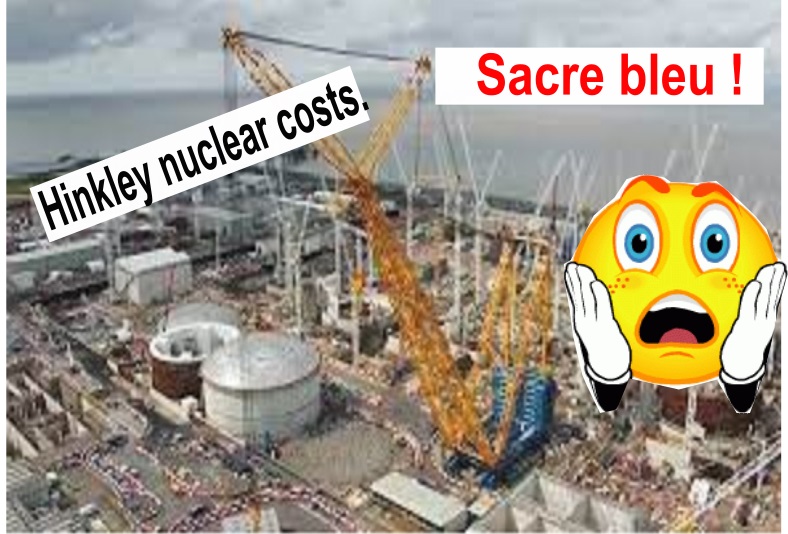
Apollo Global Management Inc in Talks to Partly Finance EDF’s Hinkley UK Nuclear Power Plant
By Aaron Kirchfeld, Silas Brown, and Francois de BeaupuyOctober 15, 2024
(Bloomberg) — Apollo Global Management Inc. is in talks with Electricite de France SA to provide financing for a nuclear power plant under construction in the UK, people with knowledge of the matter said.
The alternative asset manager has held early discussions about providing a complex mix of equity and debt that may total billions of pounds, the people said, asking not to be identified because deliberations are private.
EDF has been holding meetings with a series of investors including investment firms, sovereign wealth funds and infrastructure specialists to raise as much as £4 billion ($5.2 billion) through a deal that would give investors a stake in the Hinkley Point C project, Bloomberg News reported last week. Centrica Plc. is one of the companies considering investing.
The estimated cost of building Hinkley has risen to as much as £47.9 billion in current terms, due in part to lingering labor shortages and supply chain issues. The first of the two reactors at the site is scheduled to become operational in 2030 — five years later than initially planned — under EDF’s base-case scenario.
Talks about financing Hinkley are at an early stage and may not result in a deal, the people said. Representatives for Apollo and EDF declined to comment………………… https://www.bnnbloomberg.ca/investing/2024/10/15/apollo-in-talks-to-partly-finance-edfs-hinkley-uk-nuclear-power-plant/
North Somerset MP objects to salt marsh at Kingston Seymour
North Somerset Times 16th Oct 2024
NORTH Somerset’s MP, Sadik Al-Hassan, objects to the creation of a salt marsh in the corner of his constituency, claiming his constituents are being “shut out of the conversation.”
The proposed salt marsh at Kingston Seymour, which sits on the boundary with the neighbouring Wells and Mendip Hills constituency, is one of four sites earmarked on the Severn Estuary by EDF as environmental mitigation measures for its construction of Hinkley Point C. The other sites include Littleton, Arlingham and Rodley………………………………………….. https://www.northsomersettimes.co.uk/news/24657962.north-somerset-mp-objects-salt-marsh-kingston-seymour/
How carbon capture and storage and nuclear are adding little to decarbonisation compared to solar and wind
CCS, like nuclear is going not very far in terms of future increases in decarbonisation capacity, but it will be at very great cost to taxpayers.
David Toke, Oct 16, 2024
We’ve heard a lot in the news recently about how carbon capture and storage of carbon dioxide (CO2) is a major solution to decarbonisation. But the global figures suggest otherwise. The results so far are that this is having an almost insignificant effect on global decarbonisation. Rather it is looking like CCS funding from Governments is a good way of funneling money into the fossil fuel and chemicals industry with very little to show for combatting climate change. Indeed this CCS sector is eerily technologically redundant in many of the same ways as nuclear power.
You can see this in the chart below [on original]. This shows the respective global contributions to carbon dioxide abatement from three sources a) solar plus wind power, b) nuclear power and c) carbon capture and storage (CCS).
I have taken global capacity figures for CCS from the Global CCS Institute (HERE). They have data available for the period since 2010 showing how the global capacity for CO2 removal has changed. I have used data on carbon intensity of global electricity production drawn from Ember (See HERE) to determine how much CO2 is saved by each unit of nuclear, solar and wind generation. Then I combine this with data on nuclear, solar and wind electricity generation from the Energy Institute (See HERE).
The result is a calculation of the annual carbon dioxide saved by global solar plus wind generation, nuclear generation and CCS (since 2010). There is a notable caveat with regard to the CCS figures. Whilst I have confidence in the reported production figures from solar, wind and nuclear power, I have no information that the ‘capacity’ of CCS reported is actually being completely filled each year. Therefore the CCS annual capacity figures must each be regarded as a ‘maximum’.
It is apparent that whilst solar and wind are increasing rapidly, and nuclear production has stagnated, CCS contributes a very small amount to world carbon removal capacity by comparison. …………………………………………………………………………………………………………………..
Meanwhile, technologies, which do stand a chance of being optimised and do not involve fossil fuels or nuclear power are ignored. Recent UK Government announcements talk of around £20 billion being made available for CCS activities over the coming years. Yet there is no direct budget to develop deep underground or closed loop geothermal energy, new technologies, which have seen considerable technical interest in recent years (see HERE and HERE)………………………………………………This trend of low output compared to public money spent seems likely to continue for many years to come!
CCS – eerily like nuclear?
What is striking about CCS processes is that they are seriously dogged by environmental problems…………………………………….The technology starts off as an inferior commercial proposition to conventional fossil fuel commercial activities, and the pressures for improvements are going to increase costs, not reduce them. Have we heard this before? Well, yes.
This is actually much the same general problem that nuclear power has faced. Nuclear power is a mature technology relying on a low-productivity construction industry. On top of this its costs have increased since its inception because of the need to build-in safety requirements. New designs have tended to be made with safety in mind (eg ‘passive’ safety designs) rather than improvements in economic productivity. This, in general, is the same sort of problem that fossil fuel CCS faces. See my earlier blog post on nuclear’s productivity problems HERE. Like nuclear CCS is forced to pursue non-market objectives rather than improve productivity to reduce costs of production.
The contrast with solar and wind is staggering. These technologies can devote their efforts into reducing costs and improving productivity. Solar panels today are made with a small fraction of the polysilicon used in the past. The production lines are much longer and efficiently organised and the machines to make the panels are much better and cheaper etc etc. In the case of wind power the wind capture rates have been improved through computer-aided design of the turbine blades, making the machines of lighter material and also making them a great deal bigger etc etc.
CCS, like nuclear is going not very far in terms of future increases in decarbonisation capacity, but it will be at very great cost to taxpayers. No commercial operation is going to contract for the CCS ‘product’. There is a very limited market for CO2 itself and no commercial market for storing carbon dioxide outside of direct Government support. For how long can this drain on our public spending resources carry on?
https://davidtoke.substack.com/p/how-carbon-capture-and-storage-and
To make nuclear fusion a reliable energy source one day, scientists will first need to design heat- and radiation-resilient materials
Fusion energy has the potential to be an effective clean energy source, as its reactions
generate incredibly large amounts of energy. Fusion reactors aim to
reproduce on Earth what happens in the core of the Sun, where very light
elements merge and release energy in the process. Engineers can harness
this energy to heat water and generate electricity through a steam turbine,
but the path to fusion isn’t completely straightforward.
Controlled nuclear fusion has several advantages over other power sources for
generating electricity. For one, the fusion reaction itself doesn’t
produce any carbon dioxide. There is no risk of meltdown, and the reaction
doesn’t generate any long-lived radioactive waste. I’m a nuclear
engineer who studies materials that scientists could use in fusion
reactors.
Fusion takes place at incredibly high temperatures. So to one day
make fusion a feasible energy source, reactors will need to be built with
materials that can survive the heat and irradiation generated by fusion
reactions.
The Conversation 18th Oct 2024 https://theconversation.com/to-make-nuclear-fusion-a-reliable-energy-source-one-day-scientists-will-first-need-to-design-heat-and-radiation-resilient-materials-238489
The Energy Department just made one plutonium pit. Making more is uncertain

Bulletin, By Dylan Spaulding | October 10, 2024
Two conflicting developments arose this month in US efforts to produce new plutonium pits for its nuclear weapons: The National Nuclear Security Administration (NNSA) announced it had produced a warhead-ready pit—the explosive core of a nuclear weapon—for the first time in decades, and a federal court ruled that NNSA will be required to consider the cumulative environmental and health impacts of its pit production program.
Overshadowing these events is a vigorous debate over the necessity for new pits at all. Previous analyses have found that plutonium pits have viable lifespans well beyond the expected service life of the current stockpile, whereas production of pits for new weapons is part of a sweeping US nuclear modernization that raises concern over the future of arms control and any possibility for stockpile reductions at a time of deteriorating international relations.
The two most recent developments illustrate a critical tension in the US nuclear weapons program: New pit production demonstrates a doubling down of US reliance on nuclear weapons for the 21st century. The failure to adhere to environmental policy in doing so highlights the unwitting cost that US citizens may bear for this policy choice—as they have repeatedly in the past………………………………………………………………………………………………………………………………………………………………….
…….Production challenges. Despite any fanfare, demonstrating the ability to certify one plutonium pit doesn’t guarantee smooth sailing toward Los Alamos’s mandated production goals.
The Los Alamos’ Plutonium Facility at Technical Area 55 (PF-4) is conducting the dangerous and difficult work of pit production while also undergoing construction and modernization, with work happening round-the-clock—several other plutonium-related missions are pursued under the same roof. The facility has been criticized for deficiencies in personal safety and safety-related engineering, including recent glovebox fires, floods, worker exposure to plutonium and beryllium, and violations of criticality safety rules. The likelihood of such incidents increases as a result of fast-paced work in close-quarters with a mostly new workforce. In 2013, the PF-4 facility was shut down for three years following a severe criticality safety violation; a repeat could prove fatal, literally and figuratively.
…………………………………………… Regardless of Los Alamos’ success, the congressionally mandated quota of 80 pits per year remains impossible to meet by NNSA’s own admission. This number relies on completion and commissioning of a second production facility at the Savannah River Site in South Carolina, which won’t be operational until the mid-2030s at the earliest.
Just as the future rate of plutonium pit production is uncertain, the missile these pits are intended for—the new Sentinel intercontinental ballistic missile—is also not likely to be completed on schedule. The troubled Sentinel project remains vastly over budget and behind schedule, putting its future at risk and making coordination of the warhead and missile difficult to foresee. Problems or changes in scope for either program will affect the other.
A federal court ruling. Coinciding with NNSA’s announcement of the first diamond-stamped pit, a US District Court ruled that the Energy Department and the NNSA violated the National Environmental Policy Act (NEPA) by failing to properly consider alternatives before proceeding with pit production, requiring the agency to conduct a programmatic environmental impact assessment.
This was a victory for transparency and the community groups—among them, Savannah River Site Watch, Nuclear Watch New Mexico, Tri-Valley Communities Against a Radioactive Environment (CAREs), and the Gullah/Geechee Sea Island Coalition—who, for years, have been asking for such an assessment.
Reestablishing pit production on the scale now contemplated is potentially the biggest investment in the nuclear weapons complex since the Manhattan Project. With it comes hiring and training of thousands of new employees, increased transportation between sites, new construction, safely handing radioactive material, and the generation of new nuclear waste. The cumulative nature of these activities, occurring across many Energy Department’s sites, demands that the impacts of pit production be considered holistically in the form of a programmatic environmental impact assessment.
The environmental impact statements issued by the national laboratories offer perhaps the best public-facing analyses of whether their plans comply with standards for protection of public safety and the environment, including the likelihood of specific scenarios and associated risk of public exposure to hazards such as chemicals or radiation. Still, the NNSA has—until now—resisted issuing such a programmatic statement.
The agency clearly recognizes that pit production involves much of the US nuclear weapons complex. The press release announcing the first diamond-stamped pit thanked workers in Kansas City, Lawrence Livermore National Labs, Los Alamos, and the Pantex plant in Texas. But the NNSA has so far relied on a series of addenda and supplements to a 2008 environmental impact statement for work at Los Alamos and considers Savannah River separately. These assessments largely ignore the cross-complex collaboration required and the subsequent risks, including impacts on the potentially overburdened Waste Isolation Pilot Plant in New Mexico that must absorb the prolific—and complex—waste stream from the pit production process.
The court ruling—which holds that the Energy Department and the NNSA did not follow environmental requirements in pursuing two production sites—will require the NNSA to conduct a new review, bringing renewed public scrutiny and allowing a new opportunity for input from concerned opponents.
An unclear horizon. A programmatic environmental impact statement can take years before it’s finalized. The judge in the case declined to halt construction at NNSA’s second pit production site at Savannah River while the new assessment is being carried out, and the two parties have until October 21st to seek an agreement. It’s likely that the NNSA will argue that stopping pit-production work would be too expensive, too disruptive, and too damaging to national security to consider. It remains unclear what the potential consequences could be if the NNSA decides to challenge the ruling.
While work at Los Alamos is likely to continue amid a programmatic assessment, design choices are still underway at the Savannah River Site, where the NNSA is attempting to retrofit the troubled former mixed oxide (MOX) fuel fabrication plant which never reached productivity despite more than $7 billion of investment. This site is years away from being active and will require extensive transformation that may cost as much as $25 billion. Given this enormous investment, a programmatic environmental impact statement can ensure that this transformation better addresses the actual hazards and better protects communities, workers, and the environment.
Reestablishing pit production in the United States is a massive undertaking. It involves resurrecting a lost capacity that requires complicated engineering, construction, and extremely hazardous work processes that will be carried out by a largely new work force with little to no prior experience. NNSA and its contractors must manage safety risks across multiple sites where new hazardous waste will be generated in communities that don’t want it and where the Energy Department has a poor historic track record of environmental stewardship.
Congress and the Biden administration should eliminate the mandated 80 pit per year requirement while the NNSA conducts a new, thorough environmental assessment that would go a long way toward promoting increased safety and public protection—a challenge that the NNSA and the labs should take seriously. https://thebulletin.org/2024/10/the-energy-department-just-made-one-plutonium-pit-making-more-is-uncertain/
Small nuclear reactors won’t be ready in time for the needs of energy-guzzling needs of Artificial Intelligence.
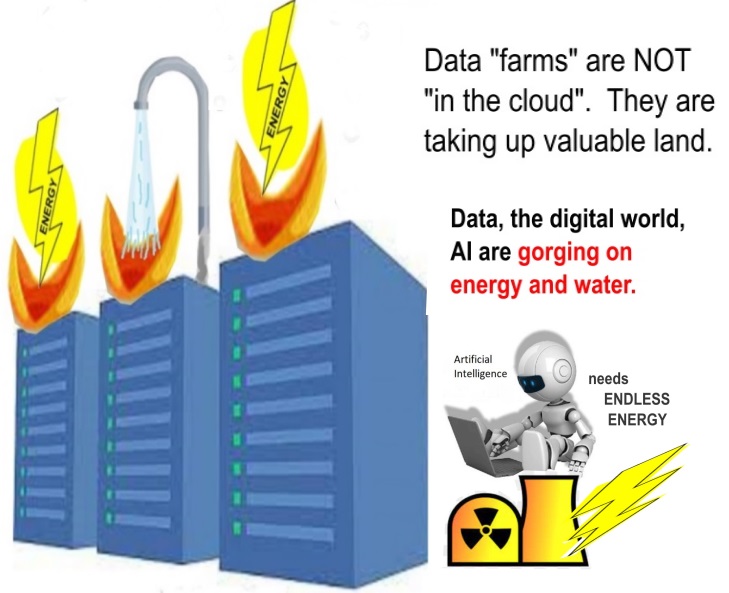
As of last month, when [data centres] were classed as critical national
infrastructure, data centres are on a par with utilities, meaning the
government would step in were there a risk to connectivity. Nonetheless, as
Rohan Kelkar, the executive vice-president of power products at Schneider
Electric, puts it, the “lack of grid capacity puts UK’s AI and data
centre ambitions and energy transition goals at risk”.
So much so that we have seen the boroughs of Hillingdon, Ealing and Hounslow all rejecting
data centre projects in order to retain supply for housing. This is far
from a UK-specific issue. In Ireland, the pressure on the national grid
from computing needs is so acute they have had to pause some data centre
approvals over concerns that excessive demand from data centres could lead
to blackouts.
On the other side of the Atlantic, Big Tech companies are
also grappling with the energy conundrum: how to find low-carbon, reliable
sources of power for their power-hungry warehouses without jeopardising
customer needs or their net zero goals. Along with renewable energy and
improving battery storage, right now they all seem to be turning in one
direction: towards nuclear power. Microsoft signed a deal last month to
help resurrect a unit of the Three Mile Island plant in Pennsylvania.
Amazon bought a nuclear-powered data centre earlier in the year. On Monday,
Google became the latest to announce a nuclear energy deal to meet the
needs of its data centres, looking at mini reactors developed by a
Californian company.
A cocktail of technological innovation means this
could happen in the UK, too. Rolls-Royce, the engineer, is at the forefront
of developing mini reactors and is already having conversations with
operators in the UK about their use. While mini nukes would not have been
commercially viable in the past, now that demand for data centres has
jumped exponentially, their potential use has become more feasible. Another
key component in the future marriage of computing and nuclear power is that
data centres are becoming less location driven because of improvements in
latency, the time it takes for data to travel from one point to another.
The immediate problem with the introduction of small nuclear reactors?
Rolls-Royce estimates that they remain a decade or more away, with none
currently operating and generating electricity in the UK. In the meantime,
connection to the “constrained” grid, remains all-important headache
for those looking to build data centres.
Times 16th Oct 2024
Another Phony Biden PR Stunt About Humanitarian Aid In Gaza
Caitlin Johnstone, Oct 16, 2024, https://www.caitlinjohnst.one/p/another-phony-biden-pr-stunt-about?utm_source=post-email-title&publication_id=82124&post_id=150283330&utm_campaign=email-post-title&isFreemail=true&r=1ise1&triedRedirect=true&utm_medium=email
The Biden administration is performing another PR stunt about getting humanitarian aid into Gaza as election day approaches.
The White House has given Israel a 30-day notice that it needs to improve humanitarian conditions in the Gaza Strip or risk losing military aid—a deadline which you will notice conveniently falls after US election day on November 5.
Rather than releasing this information itself, the Biden administration published it in its customary manner by laundering it through Axios as a letter that was “obtained” by the outlet and its Israeli intelligence insider Barak Ravid, thereby framing this as a news story and not a White House press release.
Not only does the 30-day deadline fall after election day, it also falls after Israel’s planned attack on Iran in response to Iran’s retaliatory missile strike on Israel. Anonymous officials have told The Washington Post that Israel will be launching this attack before the election in the US.
This narrative the Biden administration is trying to insert into public consciousness is already falling apart. The Washington Post’s John Hudson reports via Twitter:
“Biden’s spokesmen at the White House and State Department declined to say the U.S. will restrict arms sales to Israel if it continues to block aid, raising doubts for some about the seriousness of the U.S. warning.”
Hudson also cited the analysis of former senior Biden administration official Jeremy Konyndyk, now the president of Refugees International, regarding this development:
“After the past year, Netanyahu will be understandably skeptical that Biden will put real teeth behind this sort of warning. He has blown through every guardrail the U.S. has tried to erect, and has done so with total impunity so far.”
If this was a real thing with real teeth and not an incredibly cynical eleventh-hour election ploy, it would have happened a full year ago. As with all words the US government releases about Israel, it can be safely ignored without missing out on anything of value. The Biden administration’s actions speak for themselves, and have done so for a year.
Ignore their words. Watch their actions. If you just look at the material actions of the US government and Israel and mentally mute all their mountains of verbiage about it, you simply see a big country pouring weapons into a little country who uses them to attack its neighbors.
If you tune out all the words expressing “concern” for the people of Gaza, about how Israel must do more to get humanitarian aid to civilians and try to kill fewer people, about how sad and tragic and unfortunate this whole thing is but it’s oh so very important that Israel has the ability to “defend itself”, and plus Hamas and Hezbollah are hiding behind the civilians and blah blah blah blah — if you tune all that out and just look at the raw data of what’s happening, you just see a state raining hellfire on civilian populations packed full of children and using siege warfare to starve hundreds of thousands of people.
Ignore their words and watch their actions. That’s how you sort out fact from fiction in an information environment that’s saturated in propaganda and manipulation — not just with Israel, but with everything. Watch where the war machinery is going, where the money is going, and where the resources are going, and ignore all the words about why it makes perfect sense for this to be happening. Do this and you’ll have an infinitely better understanding of what’s going on in the world than you could ever hope to glean from watching CNN or Fox News.
This is a great way to see through the manipulations in your personal life as well. If you’re in a relationship with someone who keeps letting you down in various ways and always has sensible-sounding reasons for doing so, but when you look at where the resources and/or relaxation and/or pleasure are going in your relationship you see it’s mostly going toward your partner, that tells you what’s really going on there. It tells you you’re in an unequal and exploitative relationship, regardless of what words they use to explain why they keep getting their way at your expense.
Manipulators understand that you can trade words for real material benefits. Say the right words in the right way and you can get people to agree to let you commit mass atrocities. You can get them to give you control over their material circumstances. You can get them to consent to wildly unfair economic and political systems. You can persuade them to let you destroy the biosphere they depend on for survival. You can get them to give you power, money, sex, egoic gratification — whatever it is you’re after — just by saying the right words in the right way.
And that’s basically our entire problem as a species right now. That’s why the world looks the way it looks. A few clever manipulators have figured out how to use mass-scale psychological manipulation to get us to trade away real material benefits for empty narrative fluff. That’s the only reason this genocidal, ecocidal, exploitative, bat shit insane political status quo has been permitted to exist by people who vastly outnumber the few who benefit from it.
This will keep happening until humanity becomes a conscious species. To become a conscious human is to awaken from the trance of the believed narratives in your skull and begin perceiving life as it truly is.
The difference between our mental stories about how life is happening and how it really is could not be more different — which is why manipulators are able to extract so much benefit from manipulating our mental stories about how life is happening. Manipulators will always have the ability to do this until we make the necessary adaptation as a species from believing mental narratives to perceiving life as it truly is.
Every species eventually hits an adaptation-or-extinction juncture as its conditioning runs into changing material realities on this planet. We’re at ours right now, and unlike other species who have gone extinct before us, our own behavior is responsible for the changing material realities we are running up against. Since our behavior at mass scale is being driven by mass-scale psychological manipulation via the most sophisticated propaganda machine that has ever existed, in order to see a change in the way humans behave on this planet, we’re going to have to see a mass-scale shift in our species’ relationship with mental narrative.
It is possible for an individual to stop imbuing their mental chatter with the power of belief and start seeing life as it is, and if it is possible to do this individually it is possible to do it collectively as well. We all have this potentiality sleeping within us. It will either awaken and carry us beyond the adaptation-or-extinction juncture we now face, or we will go the way of the dinosaur.
That’s where we’re at right now. We have the freedom to go either way.
Germany Dismisses Ukraine’s Demands for Taurus Missiles and NATO Membership
By Ahmed Adel, Global Research, October 14, 2024
Berlin has spurned two key demands that Ukrainian President Volodymyr Zelensky tried to “sell” during his European tour to promote his so-called Victory Plan: getting the green light for deep strikes into Russian territory (which would require German Taurus missiles, among others) and speeding up Ukraine’s accession to NATO, German media reported.
According to Bild, Zelensky had a packed itinerary that included a whirlwind tour of the UK, France, Italy, and Germany in a bid to garner Western support for his “Victory Plan.” However, the outlet emphasised that although German Chancellor Olaf Scholz did not give a categorical “no”, he did not respond positively to the Ukrainian requests.
Moreover, Bild said the chancellor’s talk about the promised “billions in aid for Ukraine” at a press conference with Zelensky was nothing more than a farce. This package does not include any new weapons since the amount and projects mentioned were, in fact, “already approved and financed last year.”
The outlet said Kiev’s hopes of obtaining more Leopard 2 tanks had been dashed despite the Bundeswehr (German Armed Forces) still having around 300 of the main battle tanks in its inventory. The same applies to infantry fighting vehicles and armoured howitzers. The decision comes as the German Defence Ministry does not believe that Kiev will be able to carry out a new counteroffensive in the near future, the sources told the newspaper.
“By the end of the year, with the support of Belgium, Denmark and Norway, we will deliver another package to Ukraine worth €1.4 billion,” Scholz announced on October 11.
According to him, the package includes IRIS-T and Skynex air defence systems, Gepard anti-aircraft guns, self-propelled artillery systems, armoured vehicles, combat drones and radars.
Germany, Ukraine’s second-largest military donor after the US, has so far provided (or planned) military assistance worth approximately €28 billion. However, according to the draft budget, it has halved its military aid to Ukraine for 2025 compared to this year.
Although Zelensky has long insisted that there can be no peace negotiations with the Kremlin and that Russian forces must be driven back to its pre-2014 borders, officials in Kiev reportedly realise this position is unrealistic. The leadership of the current Ukrainian administration is beginning to discuss the handover of territories claimed by Ukraine as part of a peace agreement with Russia, a high-ranking Ukrainian official admitted to a German magazine.
The unnamed source also expressed concern that Washington will cut its previously generous support for Ukraine no matter who wins next month’s US presidential election. The prospects of losing foreign military aid, which has prolonged the conflict so far, coupled with growing discontent in Ukrainian society, may explain Kiev’s shift in position from refusing to negotiate with Russia and its other irreducible demands.
However, the magazine warned that powerful figures in Ukraine still remain staunchly opposed to peace talks.
Kiev’s insistence on joining NATO is a major obstacle to efforts to resolve the Ukrainian conflict through diplomacy. In addition to recognising the Donetsk and Lugansk People’s Republics and the Zaporozhye and Kherson regions, Russia insists that Ukraine must remain neutral, non-nuclear and unaligned with any military bloc. The Kiev regime, which cancelled elections scheduled for this year and remains in power without being re-elected, is losing Western support and has been considering negotiating with Russia because of this………………………………….more https://www.globalresearch.ca/germany-dismisses-ukraine-demands-taurus-missiles-nato-membership/5870164
Congressional report suggests Australia could dump plans to acquire AUKUS nuclear submarines

“This division of power no doubt makes sense from a US perspective with Australia providing them with funds and bases and getting no actual submarines,”
“From an Australian perspective that looks far more like a strategic surrender than a partnership – Greens Senator David Shoebridge
ABC News, By Defence Correspondent Andrew Greene and State Political Reporter Rory McClare, 18 Oct 24
In short
An influential US research body has published a report arguing Australia could invest in long-range bombers and other capabilities instead of nuclear-powered submarines.
The report says there is “little indication” that “rigorous” analysis was conducted on whether there were more cost-effective options.
What’s next?
Greens senator David Shoebridge, a vocal opponent, said the AUKUS partnership looked like a “surrender” of Australian interests.
Research prepared for the United States Congress argues Australia could abandon its $368 billion AUKUS push to buy nuclear-powered submarines (SSNs), outlining several alternatives including US owned boats serving both nations.
According to the report published by the Congressional Research Service (CRS), billions of Australian dollars could instead be diverted to military capabilities for this country and the US, such as missiles and B-21 long-range bombers.
Under the AUKUS Pillar 1 plan, US and British nuclear submarines will rotate out of Western Australia from 2027, before Australia buys up to five second-hand Virginia class boats in the 2030s, and then begins constructing a new fleet known as SSN-AUKUS.
In the 105-page report, a number of policy options are presented including Australia no longer purchasing US submarines but instead having American boats perform missions on its behalf, while still continuing to design and build the SSN-AUKUS fleet.
“An alternative to Pillar 1 as currently structured would be a US-Australia military division of labour under which US SSNs would perform both US and Australian SSN missions while Australia invested in military capabilities for performing non-SSN missions for both Australia and the United States,” the report reads.
“Australia, instead of using funds to purchase, build, operate, and maintain its own SSNs, would instead invest those funds in other military capabilities — such as, for example, long-range anti-ship missiles, drones, loitering munitions, B-21 long-range bombers, or other long-range strike aircraft.
“Under this variation, the size of the US SSN force would eventually be expanded above previously planned levels by eight boats (i.e., the planned eventual number of SSNs that Australia had planned to acquire).”
Using stark language, the report warns that the costs of AUKUS Pillar 1 for Australia could “reduce, perhaps significantly, funding within Australia’s military budget for other Australian military capabilities” particularly if the project’s budget blows out.
“If this were to occur, there could be a net negative impact on Australia’s overall military capabilities for deterring potential Chinese aggression,” the report says.
The CRS report claims no alternatives were ever considered by AUKUS partners and concludes by diverted spending elsewhere it would help “create an Australian capacity for performing non-SSN military missions for both Australia and the United States”.
“There is little indication that, prior to announcing the AUKUS Pillar 1 project … an analysis of alternatives (AOA) or equivalent rigorous comparative analysis was conducted to examine whether Pillar 1 would be a more cost-effective way to spend defence resources”.
Proposals a ‘strategic surrender’
Greens Senator David Shoebridge, a vocal opponent of AUKUS, says the proposals outlined in the congressional report appeared more like “a strategic surrender than a partnership”.
“This division of power no doubt makes sense from a US perspective with Australia providing them with funds and bases and getting no actual submarines,” he said.
“From an Australian perspective that looks far more like a strategic surrender than a partnership.
“For the US, the whole AUKUS deal always had at its heart US access to Australian real estate for their submarines, bombers and marines, with any marginal additional Australian capacity being very much secondary.”……….. https://www.abc.net.au/news/2024-10-17/report-suggests-australia-dump-aukus-nuclear-submarine-plans/104486868—
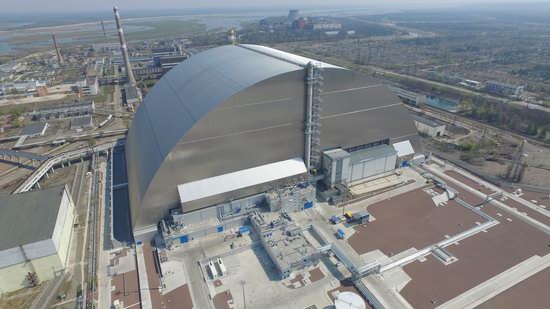
New phase in safety work on Chernobyl’s original shelter
Monday, 14 October 2024
The next phase of the project has begun to study which parts of the
shelter built rapidly around Chernobyl’s unit 4 after the 1986 accident
need immediate dismantling and which bits need stabilisation. The project,
funded through the International Chernobyl Cooperation Account, aims to
determine the scope of early deconstruction work for unstable Shelter
structures and provide an initial cost estimate and enable the beginning of
design work for the next stage, which includes the dismantling of the
unstable Shelter structures.
The original shelter over the destroyed unit 4
at Chernobyl was constructed in a matter of just months, and the
international Shelter Implementation Plan in the 1990s had three phases –
firstly to stabilise it and secondly to build a larger secure construction
to enclose it – the New Safe Confinement which was completed in 2017 to
pave the way for the dismantling and decommissioning stage.
World Nuclear News 14th Oct 2024 https://www.world-nuclear-news.org/articles/new-phase-in-safety-work-on-chernobyls-original-shelter
1 This Month

of the week – THE ONENESS of HUMANITY
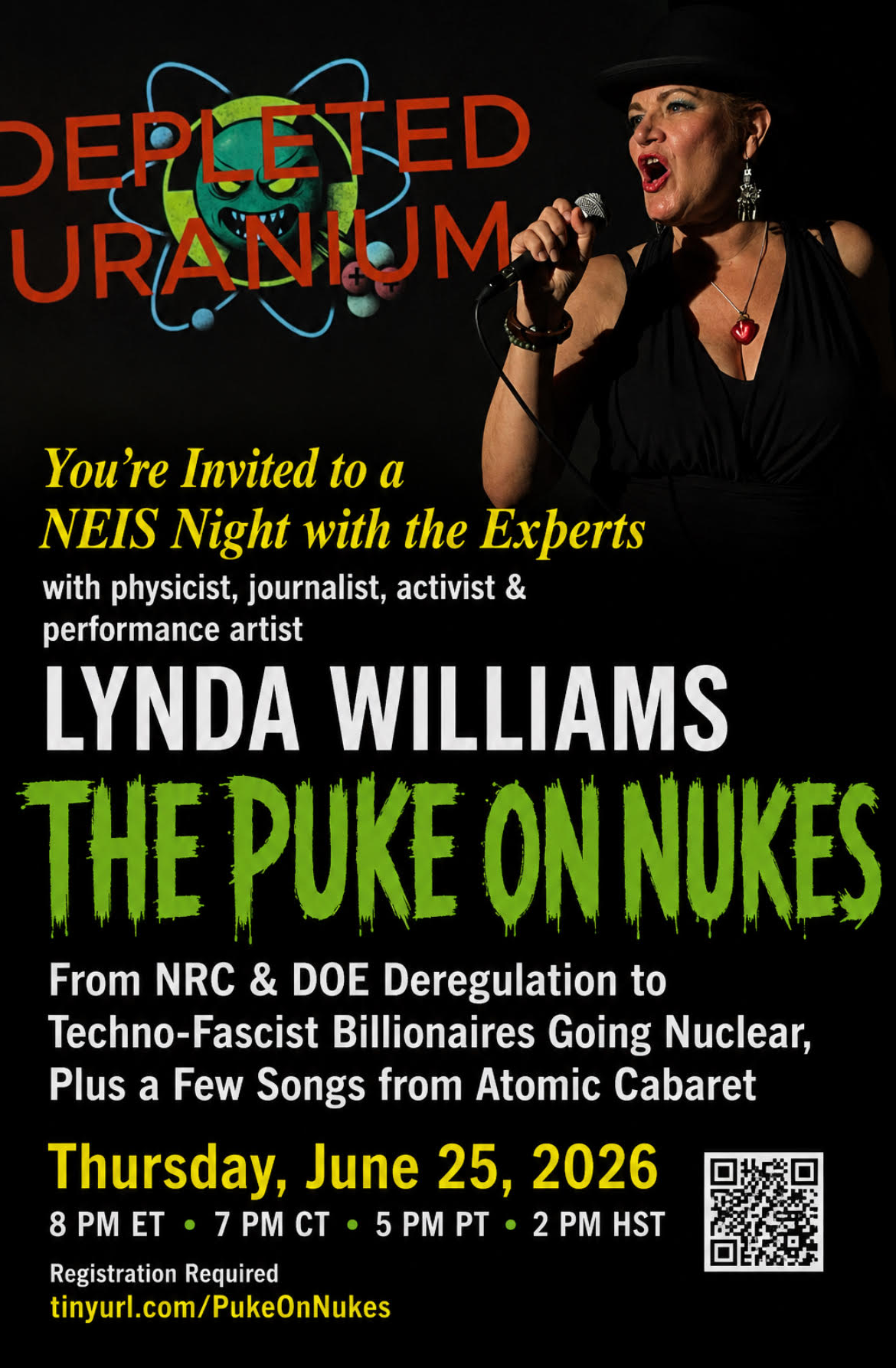
25 June- THE PUKE ON NUKES
Thursday, June 25, 2026
7pm Central Time (8pm ET, 6pm MT, 5pm PT) UTC – 5
From NRC & DOE Deregulation to Techno-Fascist Billionaires Going Nuclear, Plus a Few Songs from Atomic Cabaret REGISTER
26 June – Radiation Trainwreck at the NRC / Join the Protect Better Campaign – https://us02web.zoom.us/meeting/register/4ZlZ5_qLSHGiLSCg8FF6Bg#/registration

1st July – Webinar Waste of Space: The Environmental Harm of Military and Civil Space Activity st July, 7 pm

Report Launch Online: We are seeing an increasing exploitation of space for military and commercial purposes. This must change.

Protect Sazan Island from the Trump family! https://secure.avaaz.org/campaign/en/protect_sazan_island_from_the_trump_family_loc/?bqFCVab&v=174511&cl=22707147157&_checksum=5e9dde668860e8231c33699735e16a1fbf22ab2cb01da50c999fe8732b9775ef&utm_source=email&utm_medium=blast_email&utm_campaign=174511


Cuba Is Not a Failed State – It Is a Besieged State
PETITION: “Global Appeal to Endorse Palestinian Right of Return of Refugees”
To see nuclear-related stories in greater depth and intensity – go to https://nuclearinformation.wordpress.com
-
Archives
- June 2026 (241)
- May 2026 (306)
- April 2026 (356)
- March 2026 (251)
- February 2026 (268)
- January 2026 (308)
- December 2025 (358)
- November 2025 (359)
- October 2025 (376)
- September 2025 (257)
- August 2025 (319)
- July 2025 (230)
-
Categories
- 1
- 1 NUCLEAR ISSUES
- business and costs
- climate change
- culture and arts
- ENERGY
- environment
- health
- history
- indigenous issues
- Legal
- marketing of nuclear
- media
- opposition to nuclear
- PERSONAL STORIES
- politics
- politics international
- Religion and ethics
- safety
- secrets,lies and civil liberties
- spinbuster
- technology
- Uranium
- wastes
- weapons and war
- Women
- 2 WORLD
- ACTION
- AFRICA
- Atrocities
- AUSTRALIA
- Christina's notes
- Christina's themes
- culture and arts
- Events
- Fuk 2022
- Fuk 2023
- Fukushima 2017
- Fukushima 2018
- fukushima 2019
- Fukushima 2020
- Fukushima 2021
- general
- global warming
- Humour (God we need it)
- Nuclear
- RARE EARTHS
- Reference
- resources – print
- Resources -audiovicual
- Weekly Newsletter
- World
- World Nuclear
- YouTube
-
RSS
Entries RSS
Comments RSS
 nuclear-news