Greenland’s uranium ban likely to continue.

Gordon Edwards, 30 Mar 25
Donald Trump has belligerently bragged that he will “get Greenland” one way or another. The officially stated piurpose is “national security” but there is also a strong underlying motive: possessing the “rich resources” of others.
Greenland has one of the largest identified deposite of “
Rare Earth Elements” (REE), that are always intimately mingled with uranium and thorium. There is a mountain rich in such radioactive ores located very close to the Inuit village of Narsaq (southern Greenland) that developers would like to strip-mine. This project is called Kuannersuit (in the Inuit language Greenlandic) or Kvanefjeld (in Danish).
If approved for mining the main commodity from Narsaq would be rare earths and the secondary commodity would be uranium. The economics of the project dictates marketing both.
However, t
here is currently a ban on uranium mining in Greenland which precludes this mining project from going forward. In 2016 Neils Henrik Hooge was sent to Narsaq by the Canadian group Physicans for Global Survival (PGS), to communicate some of the health-related concerns associated with uranium (and thorium) mining, at the request of the IA (Inuit Ataqatigiit) political party. The ban was enacted a few years afterwards.
PGS in now IPPNWC – International Physicians for the Prevention of Nuclear War, Canada.
Yesterday (March 28) a coalition government was installed in Greenland which includes the IA party. The ban on uranium mining will likely be upheld and extended for the foreseeable future. So probably no Kvanejeld/Kuannersuit project for now.
But Donald Trump wants those rare earth elements from Greenland. Coincidentally, he is bullying Ukraine into surrendering its rare earth minerals to the USA in exchange for Trump’s brokering a limited cease-fire in the war.
The global supply of rare earths is currently a quasi-monopoly of China. These elements are of crucial importance in many electronic applications, including renewable enetrgy sources. America’s billionaires want unfettered access for Artificial Intelligence and other profitable ventures,.
Canada of course is another tempting target for Trump’s rapacious appetite. Among the plentiful natural resources that Canada has been exploiting and exporting routinely, as if there is no tomorrow, almost always at the expense of indigenous peoples and the environment, Trump’s gang knows there rare earth deposits in Northern Ontario’s “Ring of Fire”. He – and presumably his friend Elon Musk – wants them.
Why should Greenland, or Canada, retain control over anything that Donald Trump wants?
He is tired of being treated unfairly!
France’s UK energy apathy poses nuclear problem for Labour
France’s public spending watchdog is advising the country to cut back on its involvement in UK nuclear projects
Brad Gray, Tortoise 27th March 2025, https://www.tortoisemedia.com/2025/03/26/frances-uk-energy-apathy-poses-nuclear-problem-for-labour
EDF has reduced its stake in the Sizewell C nuclear power plant by a further 7.7 per cent, leaving the UK government with an 83.8 per cent share.
In 2022, a government buy-out to allow the Chinese state to exit the project made the UK the leading investor.
Last week Emmanuel Macron fired the EDF chief following a row over energy prices, and France’s public spending watchdog is advising the country to cut back on its involvement in UK nuclear projects and focus on small modular reactors instead.
As France reduces its investment, taxpayers are likely to foot more of the bill than anticipated – a tough pill to swallow as the chancellor slashes public funding.
When complete, Sizewell C is forecast to provide up to 7 per cent of the country’s electricity needs, with reactors lasting 60 years. Right now it’s a political headache.
Dounreay more likely to build up than knock down.

By Iain Grant, 26 March 2025
People are being warned not to expect any of Dounreay’s former fuel or
waste buildings to be levelled any time soon. NRS Dounreay managing
director Dave Wilson was responding to a query posed at the latest meeting
of Dounreay Stakeholder Group (DSG). Mr Wilson said none of the cluster of
buildings deployed in the former fast reactor complex is slated for
demolition in the next couple of years. He added: “Skyline changes in the
short term might be a building going up to store material.
John O Groat Journal 26th March 2025, https://www.johnogroat-journal.co.uk/news/dounreay-more-likely-to-build-up-than-knock-down-377882/
**Plutonium**
Why The US Australia Alliance Needs a Rethink

Australian Independent Media March 29, 2025, By Denis Hay
Description
Why the US Australia alliance needs a rethink. The U.S. is no ally. Discover why Australia must distance itself to avoid war and reclaim its sovereignty.
How Australia Can Safely Distance Itself from U.S. Hegemony
Introduction – The US Australia Alliance: Myth vs Reality
Picture this: You’re sitting in a Brisbane café, sipping a flat white while reading the headlines – Australia has just signed another defence pact with the United States. More American troops, military hardware, and diplomatic praise about our “unbreakable alliance.” Yet, beneath the headlines lies a growing discomfort – are we allies, or are we just a strategic pawn in U.S. global dominance?
Joh Bjelke-Petersen once said that this is just politicians “feeding the chooks.” Empty words. The truth is, the U.S. government doesn’t respect its people, let alone Australia. It sees nations – including its own – as resources to be mined for profit. This article will explore how Australia can break free from this exploitative alliance without putting itself in harm’s way.
The U.S. Government’s Track Record: A Global Power Without Respect
Exploiting Its Own Citizens
Visit Detroit, Michigan – a city once bustling with manufacturing pride. Now, it stands as a ghost town of forgotten promises, where basic water access has become a luxury. Millions of Americans are homeless or working two jobs or more just to survive. U.S. billionaires soared in wealth, while 45 million Americans live impoverished.
Internal reflection: “If they treat their own citizens this way, what hope do allies have?”
Exploiting Other Nations
Let’s take Iraq. The 2003 invasion, sold on lies about weapons of mass destruction, cost hundreds of thousands of lives, all to secure oil. In Libya, a once-stable nation descended into chaos after U.S.-led intervention. This is not defence—it’s corporate imperialism.
When the U.S. backs coups in Latin America or imposes sanctions on countries like Venezuela or Cuba, the motive is always clear: control the global economy for U.S. corporate gain.
The U.S.–Australia Relationship: Not What It Seems
Political Rhetoric vs Reality
Australian and U.S. politicians often repeat phrases like “shared values” and “strong friendship.” But how many Australians were consulted when Pine Gap was set up or when AUKUS was signed?
Dialogue: “This isn’t a partnership. It’s a surrender of our sovereignty,” says a former Australian diplomat.
The Cost of Loyalty
Australia’s blind support for U.S. policy has real consequences:
• Trade tensions with China – our largest trading partner
• Environmental destruction from military exercises on Australian soil
• Loss of independence as U.S. bases expand here without public debate.
Why China Matters More Than Ever
60% of Australia’s exports go to Asia, with China alone accounting for over 25%. Australia’s economy is tightly linked to Chinese demand, from iron ore to wine. Trade disruptions – often driven by political antagonism encouraged by the U.S. – have already cost farmers, winemakers, and miners dearly.
The Danger of Choosing Sides
We risk becoming collateral damage in a U.S.-China conflict. Australia should not repeat its mistakes from Vietnam or Iraq – wars that had nothing to do with our national interest but cost us dearly in blood, treasure, and reputation. This has been the outcome of the US Australia alliance.
Thought: “Must we always fight other nations’ wars? When do we stand up for ourselves?”
Pathways Toward Australian Independence………………………………………..
Phasing Out US Australia Alliance and Military Influence
Start with transparency:
• Conduct a national audit of U.S. bases and agreements.
• Establish parliamentary oversight.
• Hold a public referendum on AUKUS.
Dialogue: “Our security must not come at the cost of our sovereignty,” says Senator David Shoebridge.
………………………………………….more https://theaimn.net/why-the-us-australia-alliance-needs-a-rethink/
Leona Morgan – Rally and March to Abolish Nuclear Weapons in front of the UN
27 Mar,25, Leona Morgan
Indigenous activist from Diné (Navajo) in New Mexico, where their lands remain contaminated by uranium activities, radioactive waste, and radioactive fallout from the first atomic bomb test at “Rally and March to Abolish Nuclear Weapons in front of the UN” March 5, 2025
This is a recording of a rally and march to abolish nuclear weapons that was held on March 5, 2025, across the United Nations Headquarters in New York City. 2025 marks the 80th Anniversary of the first atomic bomb test and the bombings of Hiroshima and Nagasaki. At a time when the risk of nuclear use is the highest since the Cold War, a coalition of U.S. groups held a rally and march in the morning on March 5, 2025, across the United Nations to coincide with the Third Meeting of States Parties to the Treaty on the Prohibition of Nuclear Weapons (TPNW). [ Co-organized by ] Manhattan Project for a Nuclear-Free World NYC Metro Raging Grannies NYC War Resisters League Peace Action New York State Pax Christi New York State Brooklyn For Peace
[ List of Speakers ]…………………………………………………https://www.youtube.com/watch?v=6XB-TQWWIi4
Trump warns of ‘bad, bad things’ for Iran if nuclear deal not reached
https://www.iranintl.com/en/202503289286 29 Mar 25
AS president Donald Trump warned Iran on Friday that “bad, bad things” would happen if Tehran did not agree to a nuclear deal, a day after Iran declined to have direct talks under his stepped-up sanctions.
“My big preference … is we work it out with Iran. But if we don’t work it out, bad, bad things are going to happen to Iran,” Trump told reporters in the Oval Office.
This is what Trump said he conveyed in his letter to Iran’s supreme leader Ali Khamenei last week.
Tehran confirmed on Wednesday that a response to the letter had been sent via Oman.
“Our policy remains not to engage in direct negotiations under maximum pressure and military threats. However, indirect negotiations as existed in the past can continue,” foreign minister Abbas Araghchi said.
Iran denies seeking a nuclear weapon but the UN’s nuclear watchdog says it has enriched more uranium than any state lacking a bomb. While Washington assesses Tehran is not actively building one, it doubts Iranian intentions.
Trump last month reinstated the “maximum pressure” campaign of sanctions on Iran from his first term, with the stated aim of driving its oil sales to zero.
Trump’s remarks come as Iran’s parliament speaker on Friday accused the US of using nuclear talks to pressure Tehran into relinquishing its defense capabilities.
“The US means disarmament when it says negotiation,” Mohammad Bagher Ghalibaf said in a speech during Quds Day rallies in Tehran on Friday. “Our people understand that talks under threat are just a show to impose their will. No wise nation would accept that.”
His comments were echoed by other senior Iranian officials speaking at Quds Day events showcasing Tehran’s solidarity with Palestinians, including Foreign Minister Abbas Araghchi and senior adviser to Iran’s Supreme Leader Ali Larijani.
The US has the power to switch off the UK’s nuclear subs – a big problem as Donald Trump becomes an unreliable partner

Th Conversation, March 28, 2025 , Becky Alexis-Martin, Peace Studies and International Development, University of Bradford
Prime Minister Keir Starmer recently boarded one of the UK’s four nuclear-armed submarines for a photo call as part of his attempts to demonstrate the UK’s defence capabilities as tensions with Russia continue.
However, Starmer faces a problem. The submarine, and the rest of the UK’s nuclear fleet, is heavily reliant on the US as an operating partner. And at a time when the US becomes an increasingly unreliable partner under the leadership of an entirely transactional president, this is not ideal. The US can, if it chooses, effectively switch off the UK’s nuclear deterrent.
British and US nuclear history is irrevocably interwoven. The US and UK cooperated on the Manhattan project, under the 1943 Quebec agreements and the 1944 Hyde Park aide memoire. This work generated the world’s first nuclear weapons, which were deployed on Hiroshima and Nagasaki in 1945.
It also led to the first rupture. In 1946, the US classified UK citizens as “foreign” and prevented them from engaging in secret nuclear work. Collaboration with the UK immediately ceased.
The UK decided to develop its own arsenal of nuclear weapons. The successful detonation of the “Grapple Y” hydrogen bomb in April 1958 cemented its position as a thermonuclear power.
In the meantime, however, Russia’s launch of the Sputnik satellite in 1957 had demonstrated the lethal reach of Soviet nuclear technology. This brought the US and UK back together as nuclear partners…………………………………………..
Serious concerns are now being raised about the UK’s nuclear capacity, given the unpredictability and potential unreliability of the new US administration. Trump could ignore or threaten to terminate the agreement in a show of power or contempt.
The UK’s nuclear subs
The UK’s Trident nuclear deterrence programme consists of four Vanguard nuclear-powered and armed submarines. The UK has some autonomy, as it is operationally independent and controls the decision to launch.
However, it remains dependent on the US because the nuclear technologies at the heart of the Trident system are US designed and leased by Lockheed Martin – and there is no suitable alternative. The Trident system therefore relies on the US for support and maintenance.
The UK is currently in the process of upgrading the current system. But its options seem limited. If the US were to renege on its commitments, the UK would either have to produce its own weapons domestically, collaborate with France or Europe or disarm. Each scenario creates new issues for the UK. Manufacturing nuclear weapons from scratch in the UK, for example, would be a costly and protracted activity.
Technical collaboration with France seems the most plausible back-up option at the moment. The two countries already have a nuclear collaboration treaty in place. France has taken a similar submarine-based approach to deterrence as the UK and French president Emmanuel Macron has suggested its deterrent could be used to protect other European countries. Another alternative would be to spread the cost across Europe and create a European deterrence – but both strategies just re-embed the UK’s current nuclear reliance.
While these weapons may deter a hostile nuclear strike, they have failed to prevent broader acts of aggression. Nuclear weapons have not been used in warfare for 80 years. Perhaps it is time to completely and permanently unshackle the UK from nuclear deterrence, and consider alternative forms of defence.
The UK’s nuclear arsenal is expensive to maintain. The cost of replacing Trident is £205 billion. In 2023, the Ministry of Defence reported that the anticipated costs for supporting the nuclear deterrent would exceed its budget by £7.9 billion over the next ten years. This funding could be channelled into more pressing security threats, such as cybersecurity, terrorism or climate change.
Nuclear weapons will become strategically redundant if the UK cannot act independently. As Nato and the US dominate the global nuclear stage, the UK’s capacity to respond has become contested. The time has come to decide whether the US is really our friend – or a new foe. https://theconversation.com/the-us-has-the-power-to-switch-off-the-uks-nuclear-subs-a-big-problem-as-donald-trump-becomes-an-unreliable-partner-252674
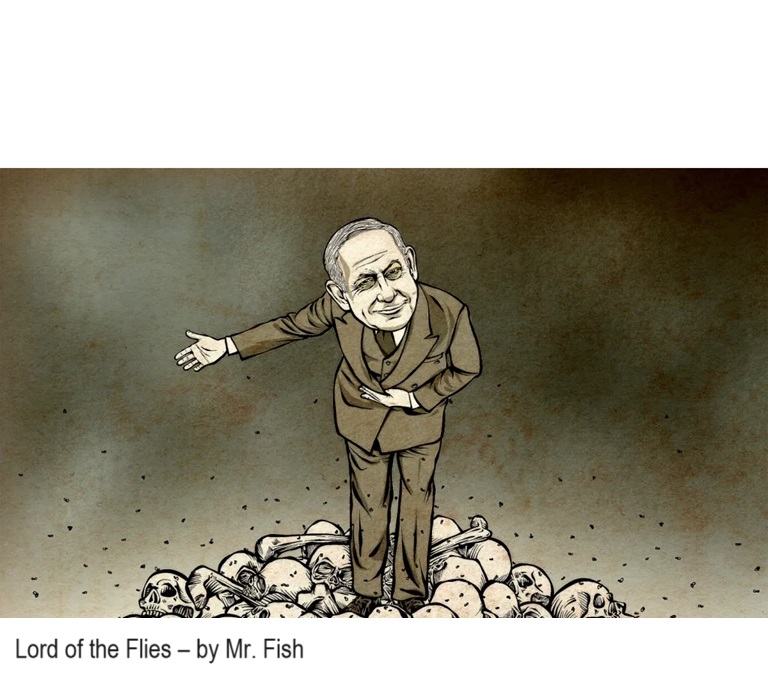
Is your insurance company funding Israeli war crimes?
13 March 2025, Paula Lacey, https://newint.org/arms/2025/your-insurance-company-funding-israeli-war-crimes
A new campaign called Boycott Bloody Insurance exposes the extent of the insurance sector’s financial support for Israel’s assault on Palestine. Paula Lacey reports.
A new report has exposed the extent of the insurance sector’s financial support for Israel’s assault on Palestine. The newly-launched Boycott Bloody Insurance campaign reveals investments totalling over $1.7 billion, from a range of multinational insurers, into companies supplying military equipment used by Israel since 7 October 2023.
‘Insurance giants claim to protect communities, but they’re funnelling our money into war, exploitation, and violence,’ says Monika Nielsen, lead researcher at Boycott Bloody Insurance.
The research details how global insurers such as Allianz, Zurich, AIG, RSA, Aviva and AXA underwrite and fund firms such as Boeing, Lockheed Martin, Elbit Systems and BAE Systems. Many of these companies are already the subject of national campaigns due to their direct implication in documented war crimes in the Gaza Strip, such as attacks on civilians using white phosphorus and precision guided munitions.
Besides those that explicitly supply weaponry and military equipment, other companies such as Maersk – insured by AIG – provide logistical and shipping support to the Israeli military. The Palestinian Youth Movement (PYM) have incorporated the report’s findings into their ongoing campaign ‘Mask off Maersk’.
‘Insurance, just like logistics, is crucial for arms transfers to oppressive regimes,’ says Yara Derbas of the PYM. ‘Our actions target the corporate complicity enabling Israel’s ongoing crimes. This isn’t just about Palestine – it’s about global justice and ending corporate exploitation.’
The Boycott Bloody Insurance campaign calls for urgent civic action against the companies named in the report, as a way of ‘demand[ing] accountability from insurers profiting from human suffering,’ explains Nielsen. Co-ordinated actions across the UK are set to take place on 25 March to urge institutions, charities, and businesses to shift to ethical insurers, incurring reputational damage and financial cost to complicit firms.
This call joins a wider chorus to enact Boycotts, Divestments and Sanctions (BDS) against all companies and institutions complicit in the ethnic cleansing of Gaza. PYM stands alongside a number of pro-Palestine organizations in endorsing the report and campaign, along with the Palestinian BDS National Committee and the Watermelon Index.
This week’s report is the first in a damning series set to be released by Boycott Bloody Insurance over the coming months, with future reports promising similar analyses of the insurance sector’s financial support for harmful industries such as fossil fuel companies, controversial weapons manufacturers and the UK detention industry.
Second shipment of high level waste departs UK for Germany
Second shipment of high level waste departs UK for Germany. As previously
announced, the UK will be returning high level waste (HLW) in the form of
vitrified residues to Germany. The second of three planned shipments is now
safely under way. Seven flasks containing high level waste were transported
from the Sellafield site in West Cumbria to the nearby port of
Barrow-in-Furness by rail. The flasks were then loaded to the specialist
nuclear transport vessel Pacific Grebe, operated by Nuclear Transport
Solutions (NTS).
Sellafield 27th March 2025. https://www.gov.uk/government/news/second-shipment-of-high-level-waste-departs-uk-for-germany
Britain’s worst nuclear disaster: the Windscale fire of 1957
When a routine procedure went wrong in October 1957, a fire broke out at
the Windscale nuclear power station in Cumbria, UK. By the time it was put
out, radiation had been sent across Britain and Europe.
Jonny Wilkes reveals what happened, and why we should be grateful that it wasn’t much
worse. Chernobyl, Three Mile Island, Fukushima: three names that have gone
down in infamy; bywords for the nightmare scenarios that can occur when the
production of nuclear power goes disastrously wrong. Before them all
though, was Windscale.
History Extra 27th March 2025,
https://www.historyextra.com/period/20th-century/atomfall-real-nuclear-windscale-disaster-fire/
Why the nuclear renaissance is far from certain.
NEW RESEARCH: A new report from consultancy ICF found a nuclear
renaissance was “far from certain”, citing doubts over economic
viability, technological scalability and long timelines. SMRs are the most
expensive source.
FT 28th March 2025, https://www.ft.com/content/82d77aa5-c4cc-47b6-833a-0a1f2c188b0c
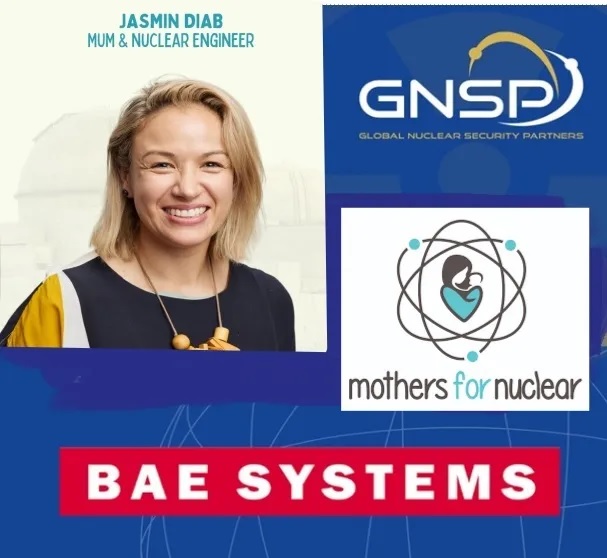
Australia’s MUMS FOR NUCLEAR – propaganda wheels within wheels.
March 30, 2025, https://theaimn.net/australias-mums-for-nuclear-propaganda-wheels-within-wheels/
I’ve only just discovered “Mums for Nuclear” – and they sound just so lovely. They are an Australian offshoot of “Mothers for Nuclear”, which is a very lovely global organisation, full of joy and delight in nature, and of course – all are lovely ladies with lovely children. Here’s a sample of their philosophy:
“I personally went from a fear of nuclear to understanding how many of my assumptions about it were astonishingly far from the truth. The more I read, the more I realized that we direly need more nuclear power to help solve some of the greatest threats to the environment and humanity, including mitigation of climate change, protection of natural resources, reductions in air pollution, and lifting people from poverty. I joined Mothers for Nuclear because I want to help leave a better world for our children.”
That was written by Iida Ruishalme – A Finnish mother, and one of nine women featured on the Mothers for Nuclear website She works as a science writer, and by the way, is the only one who is not directly involved with the nuclear industry. Most of the others are nuclear engineers.
Anyway, the website is beautiful – and it’s easy to come away from it with enthusiasm for nuclear power.
Those nine women represent the USA, Finland, Germany, and the UK. You don’t learn how many members the organisation has, nor where it gets its funding.
From their website:
“In 2022 Mothers for Nuclear became a fiscal sponsor of Stand Up for Nuclear. Stand Up for Nuclear is the world’s 1st global initiative that fights for the protection and expansion of nuclear energy. We are long-term partners who have worked together on multiple campaigns including in California, Europe, Kenya, and many others.”
Mmm..mm – I wondered – “What is a fiscal sponsor“?
“Fiscal sponsorship refers to the practice of non-profit organizations offering their legal and tax-exempt status to groups – typically projects – engaged in activities related to the sponsoring organization’s mission. It typically involves a fee-based contractual arrangement between a project and an established non-profit.”
Mmmmm – sounds as though Mothers for Nuclear is a real help to the nuclear industry, and quite useful to its own members. Though I don’t for a moment doubt their sincerity.
Now we come to the new – and what a timely newness – Australian version – the more relaxed sounding “Mums for Nuclear“. It has joined the “charity” nuclear front group Nuclear for Australia.
Once again, I’ve found it hard to discover just how many members are in Mums for Nuclear. And also – where it gets its funding.
I have found one member, Jasmin Diab, who is the face of the outfit, but doesn’t call herself a CEO or anything formal like that: “Hi, I’m Jaz! I’m a mum of one human and two dogs.”
However, Jaz does have another role, which is quite a bit more formal.
Jasmin Diab is a nuclear engineer and is the Managing Director for Global Nuclear Security Partners (GNSP) in Australia. Global Nuclear Security Partners is a world leading nuclear management consultancy:
“We work with partners, clients and relevant authorities to ensure that novel technology is secure. Across SMR, AMR and fusion we work to make sure that projects, programmes, processes and products are protected and commercially viable.”
“Our clients include: the UK Department for Energy Security and Net Zero; the UK Ministry of Defence; UK National Nuclear Laboratory; the Canadian Nuclear Waste Management Organistion; the Ukrainian Government and nuclear industry; Magnox; Babcock International; BAE Submarines; University of Bristol; University of Manchester and SMR developers. We’ve worked with the armed police capability of the Ministry of Defence Police, Civil Nuclear Constabulary and US teams in protecting nuclear material and developing doctrine, and with the infrastructure police of some Middle Eastern Governments.”
I don’t doubt that Jasmin Diab is sincere, and that she is a good mum to one human and two dogs. And she can provide for them well, with that good job with GNSP. I’m not sure that her message will go down that well with Australian women. A recent national survey shows that Australian women are strongly opposed to nuclear energy and are most concerned any consideration of the controversial power source will delay the switch to renewables.
The Mums for Nuclear groups seem curiously uninterested in the fact that women, and children, are significantly more vulnerable to illness from nuclear radiation than men are.
I’m Oppenheimer’s grandson. I support Trump’s pursuit of nuclear diplomacy.
President Donald Trump is right to propose direct talks with President Vladimir Putin of Russia and President Xi Jinping of China on nuclear arms control.
USA Today, Charles Oppenheimer, 28 Mar 25
Amid all the chaos in the world, I want to provide a ray of light, a sliver of hope: We may be on the verge of radically reducing the gravest global existential danger ‒ that of nuclear weapons.
Many people and countries have felt threatened by the rapidly changing world order, and many increasingly look to nuclear weapons for supposed protection. But an uncontrolled global nuclear arms race would be the worst outcome, as global nuclear risks have already surged to the highest level since the end of the Cold War. The Bulletin of the Atomic Scientists recently pushed its famed Doomsday Clock to 89 seconds to midnight, the closest ever to humanity’s destruction.
To his credit, President Donald Trump has proposed confronting the growing global nuclear danger head-on. He is right to be repeatedly calling for bold denuclearization talks among the United States, China and Russia ‒ the world’s three biggest nuclear powers ‒ to de-escalate the new nuclear arms race.
If Trump is serious about pursuing nuclear diplomacy, I’ll strongly support his initiative ‒ and there is much work to be done.
How many countries now have nuclear weapons? 9.
As Trump has pointed out, nothing in the world is more dangerous than the persistent threat that nuclear weapons pose to our very existence. During the Cold War, the United States and the Soviet Union waged a dangerous, costly and ultimately unwinnable nuclear arms race under the doctrine of mutual assured destruction (MAD). At its peak, the two countries amassed more than 70,000 nuclear weapons and repeatedly brought the world to the brink of nuclear annihilation.
MAD was always a crazy gamble, positing that more nuclear weapons make us safer. But if it had any merit, it was designed for two nuclear peers, not for three nuclear superpowers. Nor did it account for the growing number of countries looking to acquire their own nuclear weapons or irrational leaders with their fingers on the button.
Yet, MAD still dominates countries’ nuclear thinking.
At a time of profound global changes and instability, following the dangerous and outdated Cold War playbook will only lead to another futile nuclear arms race among the world’s now nine nuclear powers and encourage even more countries to build their own nukes.
Instead of increasing security, such a nuclear free-for-all will only hasten our own demise.
We don’t need to go down this path. There is a reason for hope. A new opening for peace. Not to solve all conflicts and all problems ‒ but the world’s most important and dangerous one.
As the president suggested, the best shot at reducing the growing nuclear threat is directly de-escalating the arms race among the United States, China and Russia. China’s rise as a world power has led it to increase its once-small nuclear arsenal.
China now has roughly 600 nuclear weapons and is on a path to match America’s and Russia’s deployed arsenals of about 1,500 each (thousands more are in reserve).
Many U.S. politicians see the growth of China’s power as a reason to escalate tensions. The military-industrial complex still sells the old lie: The more nuclear weapons we have, the more we can “deter” China and Russia, and the safer we will be………………………………………………………………………………………………….
President Trump is right to propose direct talks with President Vladimir Putin of Russia and President Xi Jinping of China on nuclear arms control. Though nuclear negotiations are often held by bureaucrats with no real power and don’t go anywhere, it’s time the leaders themselves step up to lead.
A meaningful commitment from these three leaders to reducing global nuclear threats would be the biggest breakthrough on this most important of issues since the 1986 summit between Soviet leader Mikhail Gorbachev and President Ronald Reagan ‒ a hawkish leader who ended up embracing nuclear disarmament.
Such an accomplishment would be worthy of a Nobel Peace prize for Trump, Putin and Xi, regardless of what you think of their respective politics.
There are many great ideas out there on how trilateral nuclear negotiations could work. My recommendation is to start with prohibiting artificial intelligence from launching nuclear weapons, something all parties could agree to. Washington and Moscow could then explore reducing their respective arsenals from thousands toward Beijing’s much lower level. They can further negotiate with China on a mutual pledge not to use nuclear weapons first, which China has already committed to………………………………… https://www.usatoday.com/story/opinion/2025/03/28/trump-nuclear-diplomacy-russia-china-oppenheimer/82651474007/
Calls to restart nuclear weapons tests stir dismay and debate among scientists
Testing “has tremendous symbolic importance,” says Frank von Hippel, a physicist at Princeton University. “During the Cold War, when we were shooting these things off all the time, it was like war drums: ‘We have nuclear weapons and they work. Better watch out.’ ” The cessation of testing, he says, was an acknowledgment that “these [weapons] are so unusable that we don’t even test them.”
A U.S. return to underground detonations would have wide-ranging implications.
Science News, By Emily Conover, March 27, 2025
hen the countdown hit zero on September 23, 1992, the desert surface puffed up into the air, as if a giant balloon had inflated it from below.
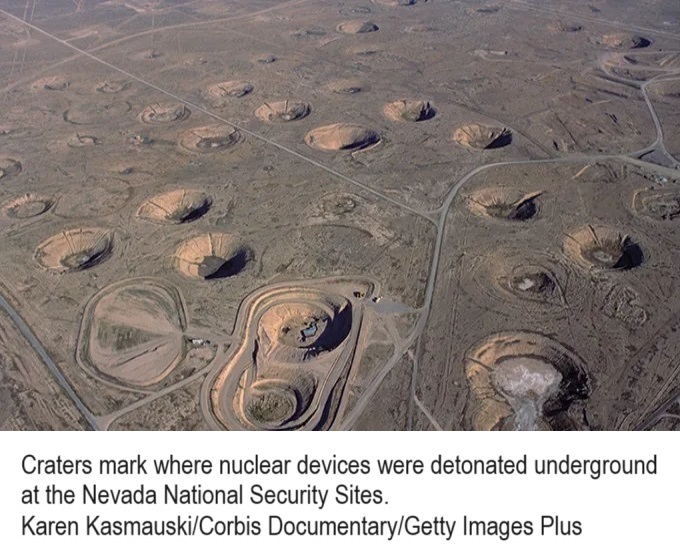
It wasn’t a balloon. Scientists had exploded a nuclear device hundreds of meters below the Nevada desert, equivalent to thousands of tons of TNT. The ensuing fireball reached pressures and temperatures well beyond those in Earth’s core. Within milliseconds of the detonation, shock waves rammed outward. The rock melted, vaporized and fractured, leaving behind a cavity oozing with liquid radioactive rock that puddled on the cavity’s floor.
As the temperature and pressure abated, rocks collapsed into the cavity. The desert surface slumped, forming a subsidence crater about 3 meters deep and wider than the length of a football field. Unknown to the scientists.
working on this test, named Divider, it would be the end of the line. Soon after, the United States halted nuclear testing.
Beginning with the first explosive test, known as Trinity, in 1945, more than 2,000 atomic blasts have rattled the globe. Today, that nuclear din has been largely silenced, thanks to the norms set by the Comprehensive Nuclear-Test-Ban Treaty, or CTBT, negotiated in the mid-1990s.
Only one nation — North Korea — has conducted a nuclear test this century. But researchers and policy makers are increasingly grappling with the possibility that the fragile quiet will soon be shattered.
Some in the United States have called for resuming testing, including a former national security adviser to President Donald Trump. Officials in the previous Trump administration considered testing, according to a 2020 Washington Post article. And there may be temptation in coming years. The United States is in the midst of a sweeping, decades-long overhaul of its aging nuclear arsenal. Tests could confirm that old weapons still work, check that updated weapons perform as expected or help develop new types of weapons.
Meanwhile, the two major nuclear powers, the United States and Russia, remain ready to obliterate one another at a moment’s notice. If tensions escalate, a test could serve as a signal of willingness to use the weapons.
Testing “has tremendous symbolic importance,” says Frank von Hippel, a physicist at Princeton University. “During the Cold War, when we were shooting these things off all the time, it was like war drums: ‘We have nuclear weapons and they work. Better watch out.’ ” The cessation of testing, he says, was an acknowledgment that “these [weapons] are so unusable that we don’t even test them.”……………………………………………………………………………………………………………
“A single United States test could trigger a global chain reaction,” says geologist Sulgiye Park of the Union of Concerned Scientists, a nonprofit advocacy group. Other nuclear powers would likely follow by setting off their own test blasts. Countries without nuclear weapons might be spurred to develop and test them. One test could kick off a free-for-all.
“It’s like striking a match in a roomful of dynamite,” Park says.
The rising nuclear threat
The logic behind nuclear weapons involves mental gymnastics. The weapons can annihilate entire cities with one strike, yet their existence is touted as a force for peace. The thinking is that nuclear weapons act as a deterrent — other countries will resist using a nuclear weapon, or making any major attack, in fear of retaliation. The idea is so embedded in U.S. military circles that a type of intercontinental ballistic missile developed during the Cold War was dubbed Peacekeeper…………………………………………………
….. . The last remaining arms-control treaty between the United States and Russia, New START, is set to expire in 2026, giving the countries free rein on numbers of deployed weapons………………………………………………………………………………..
The United States regularly considers the possibility of testing nuclear weapons……………………………………………………………………………………………………………………………………………………………………….
Is there a need to test nuclear weapons?
Subcritical experiments are focused in particular on the quandary over how plutonium ages. Since 1989, the United States hasn’t fabricated significant numbers of plutonium pits. That means the pits in the U.S. arsenal are decades old, raising questions about whether weapons will still work.
An aging pit, some scientists worry, might cause the multistep process in a nuclear warhead to fizzle. For example, if the implosion in the first stage doesn’t proceed properly, the second stage might not go off at all.
Plutonium ages not only from the outside in — akin to rusting iron — but also from the inside out, says Siegfried Hecker, who was director of Los Alamos from 1986 to 1997. “It’s constantly bombarding itself by radioactive decay. And that destroys the metallic lattice, the crystal structure of plutonium.”
The decay leaves behind a helium nucleus, which over time may result in tiny bubbles of helium throughout the lattice of plutonium atoms. Each decay also produces a uranium atom that zings through the material and “beats the daylights out of the lattice,” Hecker says. “We don’t quite know how much the damage is … and how that damaged material will behave under the shock and temperature conditions of a nuclear weapon. That’s the tricky part.”
One way to circumvent this issue is to produce new pits. A major effort under way will ramp up production. In 2024, the NNSA “diamond stamped” the first of these pits, meaning that the pit was certified for use in a weapon. The aim is for the United States to make 80 pits per year by 2030. But questions remain about new plutonium pits as well, Hecker says, as they rely on an updated manufacturing process………………………
the benefits of performing a test would be outweighed by the big drawback: Other countries would likely return to testing. And those countries would have more to learn than the United States. China, for instance, has performed only 45 tests, while the United States has performed over 1,000. “We have to find other ways that we can reassure ourselves,” Hecker says…………………………………………………………………………………………………………………………………………………….
Underground tests are not risk-free
Tests that clearly break the rules, however, can be swiftly detected. The CTBT monitoring system can spot underground explosions as small as 0.1 kilotons, less than a hundredth that of the bomb dropped on Hiroshima. That includes the most recent nuclear explosive test, performed by North Korea in 2017.
Despite being invisible, underground nuclear explosive tests have an impact. While an underground test is generally much safer than an open-air nuclear test, “it’s not not risky,” Park says……………………………………………………………………………………………………………………………………
Even if the initial containment is successful, radioactive materials could travel via groundwater. Although tests are designed to avoid groundwater, scientists have detected traces of plutonium in groundwater from the Nevada site. The plutonium traveled a little more than a kilometer in 30 years. “To a lot of people, that’s not very far,” Park says. But “from a geology time scale, that’s really fast.” Although not at a level where it would cause health effects, the plutonium had been expected to stay put.
The craters left in the Nevada desert are a mark of each test’s impact on structures deep below the surface. “There was a time when detonating either above ground or underground in the desert seemed like — well, that’s just wasteland,” Jeanloz says. “Many would view it very differently now, and say, ‘No, these are very fragile ecosystems, so perturbing the water table, putting radioactive debris, has serious consequences.’ ”…………………………………..
more https://www.sciencenews.org/article/nuclear-weapons-tests-comeback-threats
Massive Mine Shafts and Nuclear Dump For Cumbria Coast? Tell Cumberland Council “Vote NOW

A Very Hot Nuclear Waste Dump Under the Irish Sea Bed ? Decision Maker: Cumberland Council
, By mariannewildart. https://mariannewildart.wordpress.com/2025/03/27/massive-mine-shafts-and-nuclear-dump-for-cumbria-coast-tell-cumberland-council-vote-now/
The Issue
We, the undersigned, including residents, Council taxpayers and electors of Cumberland in Cumbria, UK, call upon Cumberland Council to schedule a debate at a specially convened meeting of Full Council on the question of whether Cumberland Council:
1. Continues to support Nuclear Waste Services in its investigations to identify potential locations for a Geological Disposal Facility for Heat Generating Nuclear Wastes in either the Mid or South Copeland Search Areas and
2. Continues to remain a partner in the two Community Partnerships.This debate to be followed by a vote in which all elected members be invited to vote yes or no to continuing these arrangements, with a majority no vote signifying that Cumberland Council withdraws its support and withdraws from membership of the two Community Partnerships ending the process.
In making this appeal, the petitioners are aware that:
1. An Executive of only four members at Copeland Borough Council originally decided to engage with Nuclear Waste Services in initiating a search for a site in either Mid or South Copeland, and that no vote ever took place amongst all the Councillors of that authority.
2. The Executive of the successor authority Cumberland Council assumed that commitment to GDF engagement, despite the facts that –
Cumbria County Council, which like Copeland was replaced by the new unitary authority and was its biggest component, was manifestly opposed to any GDF in the county.
There has never been a vote amongst all elected Councillors of Cumberland Council as to whether the authority should have assumed this commitment made by just four Copeland Councillors.
ADDITIONAL INFORMATION
Cumberland Council in Cumbria is unique in becoming a “Partner” in the UKs dangerous nuclear dump proposal while having had no debate or full council vote. Other areas who were persuaded to go into Partnership with the developer, Nuclear Waste Services, later held full council debates and a vote. South Holderness and Theddlethorpe in Lincolnshire decided that they were not to be fobbed off with the bribe of £2 Million a year to host a dangerous experimental “geological disposal facility.”
The beautiful and fragile Cumbrian coastline and already vulnerable ocean is in the firing line for the biggest infrastructure project ever in the UK. This construction site would be active for 100+ years with massive industrial sprawl, movements of highly radioactive materials and pollution. Mine shafts on the Cumbrian coast would be tunnelled by giant tunnel boring machines leading to a mined out void the size of the country of Tuvalu (26km square) up to the size of Bermuda (50 km square).
The massive amount of rock spoil from an area up to 1000 metres deep and 50km square would be an industrial hazard in itself with naturally occurring radioactive material leaching out of the mountain of spoil.
Tourism is Cumbria’s biggest industry closely followed by Farming and despite ongoing pressures both these industries support tens of thousands of people many in the Cumberland Council area. Both tourism and farming would be disastrously impacted by the plan for a 100+ year massive mine in which to dump high level nuclear wastes, a plan which now includes plutonium, under the Cumbrian coastline and ocean.
The reason the proposed “geological disposal facility” (sub-sea nuclear dump) has to be so huge is to dissipate the enormous heat from widely spaced out containers of highly radioactive nuclear wastes which are currently stacked together and kept cool by millions of gallons of fresh water a day from the top quality fresh water in Wastwater and the rivers Ehen and Calder (Nuclear is the most wasteful means of producing electricity as a vanishingly small percentage of heat from uranium fuel is used to turn the turbines while the rest is waste and has to “cool off” for tens of thousands, in some cases millions of years).
Where is this planned?
The Lake District coast adjacent to the National Park.
“Mid-Copeland Community Partnership Area of Focus.” Despite Sellafield, the biggest industrialised mass in the North West or an “atomic carbuncle” as Wainwright called it, this is an ancient and beautiful area with Viking hoards, stone circle and Abbey.
“South Copeland Community Partnership Areas of Focus” are rising up against the plan to host the access mine shafts and associated industrial sprawl for a sub-sea nuclear dump in their beautiful and historic area.
SIGN HERE
-
Archives
- October 2026 (129)
- September 2026 (339)
- August 2026 (330)
- July 2026 (355)
- June 2026 (287)
- May 2026 (306)
- April 2026 (356)
- March 2026 (251)
- February 2026 (267)
- January 2026 (308)
- December 2025 (358)
- November 2025 (359)
-
Categories
- 1
- 1 NUCLEAR ISSUES
- business and costs
- climate change
- culture and arts
- ENERGY
- environment
- health
- history
- indigenous issues
- Legal
- marketing of nuclear
- media
- opposition to nuclear
- PERSONAL STORIES
- politics
- politics international
- Religion and ethics
- safety
- secrets,lies and civil liberties
- spinbuster
- technology
- Uranium
- wastes
- weapons and war
- Women
- 2 WORLD
- ACTION
- AFRICA
- Atrocities
- AUSTRALIA
- Christina's notes
- Christina's themes
- culture and arts
- Events
- Fuk 2022
- Fuk 2023
- Fukushima 2017
- Fukushima 2018
- fukushima 2019
- Fukushima 2020
- Fukushima 2021
- general
- global warming
- Humour (God we need it)
- Nuclear
- RARE EARTHS
- Reference
- resources – print
- Resources -audiovicual
- Weekly Newsletter
- World
- World Nuclear
- YouTube
-
RSS
Entries RSS
Comments RSS

