The Kyshtym disaster: Russia’s hidden nuclear crisis

The Kyshtym disaster in 1957 was the Soviet Union’s biggest nuclear crisis until Chernobyl. So, why did the Soviets keep quiet about the former for decades?
28 July 25, https://www.history.co.uk/articles/kyshtym-disaster-russia-hidden-nuclear-crisis
What would be considered the worst nuclear disaster in history? Many scholars would say Chernobyl, when an explosion at a nuclear power plant in northern Ukraine released dangerous levels of radiation.
This was on 26th April 1986, when Ukraine was still part of the Soviet Union. Was Chernobyl inevitable? Many historians do believe that Soviet authorities failed to learn lessons from an earlier nuclear crisis on their own soil. Below, we at Sky HISTORY look back at the 1957 Kyshtym disaster — and how the Soviets kept it under wraps for decades.
Was there really a nuclear plant in Kyshtym?
The nuclear plant at the heart of the Kyshtym disaster was not actually in the Russian town of that name. Instead, it was in a secretive ‘closed city’ nearby, called Chelyabinsk-40. Today, it is called Ozyorsk. (Both Kyshtym and Ozyorsk are in Russia’s Chelyabinsk Oblast.)
In the 1940s, the Soviets realised that they were trailing the United States in the development of nuclear weapons. To help themselves catch up, they hastily built what is now commonly known as the Mayak nuclear plant.
This facility, which still stands today, was tasked with processing plutonium needed to make nuclear weapons. However, because the plant was assembled in a rush, many safety risks of the project were not considered sufficiently.
The Kyshtym explosion and its immediate aftermath
Before the Kyshtym disaster, it was routine for Mayak workers to deposit radioactive waste into the Techa River. This bode ill (literally) for villagers along the river who used it as a source of drinking water.
So, Mayak staff later decided to store such waste in an underground storage compartment of the plant itself. This space comprised 14 stainless steel containers attached to a concrete base.
However, in the 1950s, the cooling system in one of these tanks started to malfunction. This led the waste in the container to heat up and eventually, on 29th September 1957, explode. The force sent 20 curies of radioactive material flying a kilometre into the air.
The wind blew the radioactive particles over an area of about 20,000 square kilometres inhabited by approximately 270,000 people. This was generally to the northeast, away from Chelyabinsk-40, which lay upwind from the Mayak plant.
How did authorities initially react?
Residents of nearby areas were not initially notified of what had happened. This was largely due to the Soviet Union’s strong culture of secrecy during the Cold War. The national government didn’t want to let slip that Mayak even existed, let alone that a nuclear explosion had happened there.
It was also around the same time that the Soviet Union launched its Sputnik satellite, a big PR coup. Admitting responsibility for what was the world’s biggest nuclear disaster to date would have been more than an inconvenient fly in the ointment.
Still, the Soviets also knew that doing what they could to limit the radioactive contamination would go some way towards keeping everyone in the dark. So, while about 10,000 local residents were evacuated over the next two years, they weren’t told exactly why.
A cover-up lasting for decades
Almost 17,000 hectares of the contaminated area was turned into East Ural Nature Reserve in 1968. Members of the public were barred from entry, which remains the case to this day. Scientists have studied the reserve to monitor the long-term effects of nuclear radiation on its ecology.
The Kyshtym disaster was kept secret from the public until 1976, when Soviet dissident Zhores Medvedev reported about it in New Scientist magazine. However, the Soviet government still did not openly acknowledge the Kyshtym disaster before accidentally revealing it to the United Nations in the late 1980s.
It is estimated that thousands of cancer cases may have resulted from exposure to radiation caused by the nuclear explosion way back in 1957.
How does Kyshtym compare to Chernobyl?
On the International Nuclear and Radiological Event Scale (INES), Kyshtym is classified as Level 6. Chernobyl, an even bigger catastrophe, is ranked just one level higher (Level 7) on the INES. Kyshtym released about 40% as much radioactivity as Chernobyl.
Chernobyl is thought to have affected a larger population, too, as 335,000 people were evacuated in the wake of the 1986 disaster. Also, while Chernobyl quickly claimed 31 lives, none were lost in the immediate aftermath of Kyshtym.
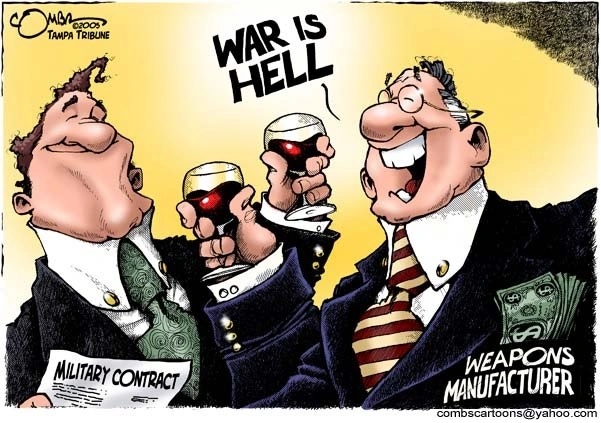
Entering a Golden Age for War Profiteers
Scheerpost, July 28, 2025 By William D. Hartung / TomDispatch
When, in his 1961 farewell address, President Dwight D. Eisenhower warned of the dangers of the unwarranted influence wielded by a partnership between the military and a growing cohort of U.S. weapons contractors and came up with the ominous term “military-industrial complex,” he could never have imagined quite how large and powerful that complex would become. In fact, in recent years, one firm — Lockheed Martin — has normally gotten more Pentagon funding than the entire U.S. State Department. And mind you, that was before the Trump administration moved to sharply slash spending on diplomacy and jack up the Pentagon budget to an astonishing $1 trillion per year.
In a new study issued by the Quincy Institute for Responsible Statecraft and the Costs of War Project at Brown University, Stephen Semler and I lay out just how powerful those arms makers and their allies have become, as Pentagon budgets simply never stop rising. And consider this: in the five years from 2020 to 2024, 54% of the Pentagon’s $4.4 trillion in discretionary spending went to private firms and $791 billion went to just five companies: Lockheed Martin ($313 billion), RTX (formerly Raytheon, $145 billion), Boeing ($115 billion), General Dynamics ($116 billion), and Northrop Grumman ($81 billion). And mind you, that was before Donald Trump’s Big Beautiful Budget bill landed on planet Earth, drastically slashing spending on diplomacy and domestic programs to make room for major tax cuts and near-record Pentagon outlays.
In short, the “garrison state” Eisenhower warned of has arrived, with negative consequences for nearly everyone but the executives and shareholders of those giant weapons conglomerates and their competitors in the emerging military tech sector who are now hot on their trail. High-tech militarists like Peter Thiel of Palantir, Elon Musk of SpaceX, and Palmer Luckey of Anduril have promised a new, more affordable, more nimble, and supposedly more effective version of the military-industrial complex, as set out in Anduril’s “Rebooting the Arsenal of Democracy,” an ode to the supposed value of those emerging tech firms.
Curiously enough, that Anduril essay is actually a remarkably apt critique of the Big Five contractors and their allies in Congress and the Pentagon, pointing out their unswerving penchant for cost overruns, delays in scheduling, and pork-barrel politics to preserve weapons systems that all too often no longer serve any useful military purpose. That document goes on to say that, while the Lockheed Martins of the world served a useful function in the ancient days of the Cold War with the Soviet Union, today they are incapable of building the next-generation of weaponry. The reason: their archaic business model and their inability to master the software at the heart of a coming new generation of semi-autonomous, pilotless weapons driven by artificial intelligence (AI) and advanced computing. For their part, the new titans of tech boldly claim that they can provide exactly such a futuristic generation of weaponry far more effectively and at far less cost, and that their weapons systems will preserve or even extend American global military dominance into the distant future by outpacing China in the development of next generation technologies.
War and a Possible Coming Techno-Autocracy
Could there indeed be a new, improved military-industrial complex just waiting in the wings, one aligned with this country’s actual defense needs that doesn’t gouge taxpayers in the process?
Don’t count on it, not at least if it’s premised on the development of “miracle weapons” that will cost so much less and do so much more than current systems. Such a notion, it seems, arises in every generation, only to routinely fall flat. From the “electronic battlefield” that was supposed to pinpoint and destroy Viet Cong forces in the jungles of Southeast Asia in the Vietnam War years to Ronald Reagan’s failed vision of an impenetrable “Star Wars” missile shield, to the failure of precision-guided munitions and networked warfare to bring victory in Iraq and Afghanistan during this country’s Global War on Terror, the notion that superior military technology is the key to winning America’s wars and expanding U.S. power and influence has been routinely marked by failure. And that’s been true even if the weapons work as advertised (which all too often they don’t).
And while you’re at it, don’t forget, for example, that, nearly 30 years later, the highly touted, high-tech F-35 combat aircraft — once hailed as a technological marvel-in-the-making that would usher in a revolution in both warfare and military procurement — still isn’t ready for prime time. Designed for multiple war-fighting tasks, including winning aerial dogfights, supporting troops on the ground, and bombing enemy targets, the F-35 has turned out to be able to do none of those things particularly well. And to add insult to injury, the plane is so complex that it spends almost as much time being maintained or repaired as being ready to do battle.
That history of technological hubris and strategic failure should be kept in mind when listening to the — so far unproven — claims of the leaders of this country’s military-tech sector about the value of their latest gadgets. For one thing, everything they propose to build — from swarms of drones to unpiloted aircraft, land vehicles, and ships — will rely on extremely complex software that is bound to fail somewhere along the way. And even if, by some miracle, their systems, including artificial intelligence, work as advertised, they may not only not prove decisive in the wars of the future but make wars of aggression that much more likely. After all, countries that master new technologies are tempted to go on the attack, putting fewer of their own people at immediate risk while doing devastating harm to targeted populations. The use of Palantir’s technology by the Israeli Defense Forces to increase the number of targets devastated in a given time frame in their campaign of mass slaughter in Gaza could foreshadow the new age of warfare if emerging military technologies aren’t brought under some system of control and accountability.
A further risk posed by AI-driven warfare is the possibility that the new weapons could choose their targets without human intervention. Current Pentagon policy promises to keep a human “in the loop” in the use of such systems, but military logic runs counter to such claims. As Anduril President and Chief Strategy Officer Christian Brose has written in his seminal book Kill Chain, the high-tech wars of the future will hinge on which side can identify and destroy its targets most quickly — an imperative that would ensure slow-moving humans were left out of the process.
In short, two possibilities arise if the U.S. military transitions to the “new improved” military-industrial complex espoused by the denizens of Silicon Valley: complex systems that don’t perform as advertised, or new capabilities that may make war both more likely and more deadly. And such dystopian outcomes will only be reinforced by the ideology of the new Silicon Valley militarists. They see themselves as both the “founders” of a new form of warfare and “the new patriots” poised to restore American greatness without the need for a democratic government in the war-making mix. Their ideal, in fact, would be to ensure that the government got out of the way and let them solve the myriad problems we face alone. Ayn Rand would be proud.
Such a techno-autocracy would be far more likely to serve the interests of a relatively small elite than aid the average American in any way. From Peter Thiel’s quest for a way to live forever to Elon Musk’s desire to enable the mass colonization of space, it’s not at all clear that, if such goals could even be achieved, they would be generally available. It’s more likely that such opportunities would be restricted to the species of superior beings that the techno-militarists see themselves as being.
The Ultimate Brawl Between the Big Five and the Emerging Tech Firms?………………………………………………………………………………………………………………………………………………….. https://scheerpost.com/2025/07/28/entering-a-golden-age-for-war-profiteers/
Intentional Policies: Dystopian Killing Fields and Starvation in Gaza
27 July 2025 Dr Binoy Kampmark, https://theaimn.net/intentional-policies-dystopian-killing-fields-and-starvation-in-gaza/
Starvation as a way of life. Starvation as a way of death. Starvation as policy, justification and vengeance. As the state of Israel hums along frittering, scratching and violating international human rights conventions, the chroniclers are kept busy on the morgue’s relentlessly growing inventory and peace’s loss. Of late, a vast number of humanitarian organisations have decided to express their collective outrage in a statement at what is happening in Gaza.
The statement as run by Doctors Without Borders on July 23 is stark: “As the Israel government’s siege starves the people of Gaza, aid workers are now joining the same food lines, risking being shot just to feed their families. With supplies now totally depleted, humanitarian organisations are witnessing their own colleagues and partners waste before their eyes.” Two months after the implementation of the controlled aid scheme by Israel, utilising the grotesquely named Gaza Humanitarian Foundation, over 100 organisations were “sounding the alarm and urging governments to act: open all land crossings; restore the full flow of food, clean water, medical supplies, shelter items, and fuel through a principled, UN-led mechanism; end the siege; and agree to a ceasefire now.”
Outside Gaza, and even within the Strip, abundant supplies of food, clean water, medical supplies, shelter items and fuel sat untouched. Humanitarian organisations had been prevented from accessing them. “The Government of Israel’s restrictions, delays, and fragmentation under its total siege have created chaos, starvation, and death.” A paltry figure of 28 trucks a day were being allowed into the Strip.
The relevant gore is recounted: massacres at food sites in the Gaza Strip are impossible to ignore; the figures from the UN suggest that 875 Palestinians had been slaughtered while seeking sustenance as of July 13. The frequency of these “flour massacres” is also receiving comment from those in the employ of the operation being run by GHF, policed by private contractors and the IDF. Retired US special forces officer Anthony Aguilar, who resigned from working with the GHF, told the BBC that he had “witnessed the Israeli Defense Forces shooting at crowds of Palestinians.” During his entire career, he had never seen such “brutality and use of indiscriminate and unnecessary force against a civilian population, an unarmed, starving population.”
The NGO statement goes on to note the rise of cases of acute malnutrition, most prevalent among children and the elderly. (The World Food Programme has warned that one in three Gazans do not eat for days at a time, with 90,000 women and children requiring treatment.) “Illnesses like acute watery diarrhea are spreading, markets are empty, waste is piling up, and adults are collapsing on the streets from hunger and dehydration.”
In the face of this, international law’s decrees appear like the neglected statues of a distant land. The three sets of Provisional Measures Orders from the International Court of Justice, handed down since 2024, have warned Israel to observe its obligations under the UN Genocide Convention and address the humanitarian crisis in the Strip. In its modifying order of provisional measures handed down on March 28, 2024, the ICJ instructed Israel to “take immediate and effective measures to enable the provision of urgently needed basic services and humanitarian assistance to address famine and starvation and the adverse conditions of life faced by Palestinians in Gaza.” These include the provision of “food, water, electricity, fuel, shelter, clothing, hygiene and sanitation requirements, as well as medical supplies and medical care” and “increasing the capacity of land crossing points and maintaining them open for as long as necessary.”
The latest concession from Israel to deal with this engineered humanitarian catastrophe is a promise to open humanitarian corridors to permit UN convoys into the Strip. In addition to that, COGAT, the Israeli military agency overseeing humanitarian affairs in Gaza, has announced that Jordan and the United Arab Emirates will be permitted to parachute humanitarian aid to those in Gaza. UK Prime Minister Sir Keir Starmer has made a small team of British military planners and logisticians available to assist Jordan in this endeavour. On July 27, the IDF also released a statement claiming it had made the first airdrop including “seven packages of aid containing flour, sugar, and canned food.” These efforts, in their practical futility, are a reiteration of the humanitarian airdrops conducted by the US military and Jordan’s air force in March last year.
These drops will do little to alter the cruel, strangulating model of aid delivery in place, emboldening the fittest recipients capable of outpacing their adversaries. Those recipients will also be fortunate not to be injured or killed by the dropped packages, instances of which were recorded in March last year. “Why use airdrops,” asks Juliette Touma, chief spokeswoman for the United Nations agency for Palestinian refugees, “when you can drive hundreds of trucks through the borders?” Using trucks was “much easier, more effective, faster, cheaper.” Precisely why using them is so unappealing to the IDF.
Instead of focusing on isolating Israel, its allies prefer piecemeal approaches that prolong the suffering of the Palestinians. Measures such as those announced by Starmer to “evacuate children from Gaza who need medical assistance, bringing them to the UK for specialist and medical treatment” only serve to encourage the Israeli war machine. The aid drops serve to do much the same. The objective is one of inflicting a sufficient degree of harm that will encourage the eventual depopulation of the enclave. Israel’s allies, with intentional or unintentional complicity, will clean up.
Israel just drew a new map – without saying it out loud

The Israeli Knesset has voted to apply sovereignty over settlements, drawing fears of de facto annexation .
25 Jul, 2025, by Elizabeth Blade, https://www.rt.com/news/621920-israel-just-drew-new-map/
In a significant yet non-binding move, the Israeli legislature has overwhelmingly approved a declaration urging the immediate extension of Israeli sovereignty over Jewish settlements in the occupied West Bank and the Jordan Valley.
The motion, which passed by a vote of 71 to 13, was backed by right-wing and center-right factions including Likud, Shas, Religious Zionism, Otzma Yehudit, and Yisrael Beiteinu.
The text declares that the October 7, 2023 attack by Hamas — referred to in Israeli political discourse as the “Simchat Torah Massacre” — proves that the creation of a Palestinian state poses a mortal danger to Israel’s existence.
“The Knesset declares that the State of Israel has the natural, historical, and legal right to all parts of the Land of Israel,” the resolution reads. “The Knesset calls on the Government of Israel to act without delay to apply sovereignty… over all areas of Jewish settlement in Judea, Samaria, and the Jordan Valley.”
“This is not symbolic at all”
Though labeled symbolic, Palestinian experts view the vote as laying the bureaucratic foundation for a permanent Israeli presence and governance in the West Bank, the heartland of a future Palestinian state as envisioned by international consensus.
Saad Nimr, professor of political science at Birzeit University in the West Bank, told RT the implications of the Knesset’s move are far-reaching.
“This is not symbolic at all,” Nimr said. “It means these settlements are now treated as Israeli cities. They’re no longer ‘occupied’ under military law. This is the legal and bureaucratic infrastructure of annexation.”
He continued: “The Israeli ministries — not the military — will now oversee health, welfare, planning, and infrastructure in these areas. It’s not about theory. It’s about bulldozers, budgets, and expansion.”
Dimitri Diliani, a member of the Fatah Revolutionary Council, echoed that sentiment.
“To describe the vote as symbolic is dangerously naive,” Diliani warned. “In Israeli politics, symbolism is often a precursor to de facto annexation. While the Knesset motion lacks binding legislative authority, it institutionalizes consensus in both government and opposition to expand the State of Israel’s settler-colonial project with new domestic political legitimacy.”
Diliani added that members of the Knesset are already pushing legislation to replace the internationally recognized term “West Bank” with the biblical “Judea and Samaria” — further entrenching a nationalist narrative in Israeli law.
A political transaction to preserve Netanyahu’s coalition
Many analysts see the vote not only as ideological, but also as a tactical political maneuver to preserve Prime Minister Benjamin Netanyahu’s fragile governing coalition.
“It’s quite clear this was a political exchange,” said Nimr. “[The leader of the National Religious Party–Religious Zionism Bezalel] Smotrich and [the leader of the Otzma Yehudit (“Jewish Power”) party] Ben Gvir threatened to leave the government if negotiations in Doha led to a Gaza ceasefire. This vote is Netanyahu’s way of keeping them on board.”
By offering the far right a symbolic prize on annexation, Netanyahu appears to be stalling a government collapse – even as truce talks with Hamas continue under Qatari mediation.
Diliani described the move as “opportunistic,” adding: “It’s designed to pre-empt mounting international legal scrutiny, particularly after the International Court of Justice advisory opinion in July 2023, which declared Israel’s occupation of Palestinian territory illegal.”
International condemnations without teeth
The reaction from the international community was swift but toothless. Jordan condemned the vote as “a blatant violation of international law.” The European Union and the Arab League issued similarly worded rebukes, reaffirming their commitment to a two-state solution.
But both Palestinian analysts were unshaken by the lack of meaningful repercussions.
“The historical record teaches us that international consensus does not always translate into action,” said Diliani. “Israel’s alignment with key Western powers, particularly the United States, has only grown stronger – even amid documented live-streamed Israeli genocide in Gaza and tremendous war crimes in Jerusalem and the rest of the West Bank.”
He cited continued US military support, which amounts to $3.8 billion annually in aid and has reached nearly $20 billion in additional military assistance since the war on Gaza began in October 2023.
“Israel continues to enjoy extensive trade privileges with the EU,” Diliani added. “Over three-quarters of a million illegal colonial Israeli settlers reside in the West Bank, including East Jerusalem. Yet the response from the international community remains negligible. Absent deterrent sanctions or accountability mechanisms, Israel interprets this as tacit permission to proceed.”
Nimr was equally scathing. “Israel went into this decision with an overwhelming majority in the Knesset. That means they don’t care about the international community’s opinion. The EU witnessed with their own eyes the genocide in Gaza, the use of hunger as a weapon, and still didn’t take any real action.”
“If there is no punishment,” Nimr said, “it’s interpreted as agreement. So now, they feel they have a green light.”
The Western embrace of Israel – and its consequences
The analysts tie this impunity to Israel’s entrenched position within the Western geopolitical orbit. In 2024, bilateral trade between the EU and Israel reached $46 billion, with Germany, France, and the Netherlands among the top exporters of dual-use technologies.
Diliani added that allegations of antisemitism are strategically deployed to shield Israeli actions from critique. “The Zionist instrumentalization of antisemitism allegations to silence critics of its genocidal war crimes has further immunized the Israeli state from accountability.”
Nimr agreed. “The double standard is the slogan – the unspoken slogan – of international diplomacy. Countries deal with Israel differently than they deal with Russia or China, because Israel is part of the same imperialist and capitalist system they belong to.”
He called for a global reassessment of the post-WWII international legal framework. “All these laws, including the United Nations and the Security Council, should be under review. The system is broken. The US veto can block any decision against a country like Israel – its favorite ally in the region.”
What comes next? Calls for Palestinian action
Both experts believe that the consequences of the Knesset vote extend far beyond diplomatic rhetoric. For Nimr, it should mark a turning point for the Palestinian leadership.
“This decision affects all Palestinians,” Nimr said. “The two-state solution is not only behind us – it’s officially dead. The law blows up the Oslo Agreement.”
Signed in the 1990s, the Oslo framework laid the foundation for limited Palestinian self-rule under Israeli oversight – a compromise meant to pave the way toward a two-state solution that now appears conclusively buried.
Nimr called on the Palestinian Authority to take immediate, concrete steps, beginning with ending security coordination with Israel – a practice long criticized by Palestinian civil society as collaboration.
“If Oslo is dead, then why should we keep our part of it? The Palestinian Authority must immediately stop all security cooperation. That would send a strong message.”
Beyond this, Nimr urged national unity. “We need a united front – Fatah, Hamas, all factions – to strategize against this existential threat. For decades, we had two paths: negotiations under Oslo, or resistance. Now, the Oslo path has been closed by Israel itself.”
Diliani, too, believes Palestinians must take matters into their own hands.
“We are no longer dealing with theoretical annexation,” he said. “This is the normalization of apartheid and settler-colonial domination – with legal mechanisms to enforce it. Palestinians must now focus on building grassroots resistance, mobilizing international civil society, and dismantling the myth of Israeli democracy.”
US and Israel Quit Gaza Ceasefire Talks in Doha as Palestinians Starve to Death
Hamas’s long-standing position is that it’s willing to release all remaining captives in exchange for a permanent ceasefire. But Israel has rejected this, and there’s no sign the Trump administration is willing to put pressure on Israel to change its position.
Steve Witkoff blamed the collapse of negotiations on Hamas while Hamas said it was caught off guard and wanted to continue talks
by Dave DeCamp | July 24, 2025 , https://news.antiwar.com/2025/07/24/us-and-israel-quit-gaza-ceasefire-talks-in-doha-as-palestinians-starve-to-death/
The US and Israel have withdrawn negotiators from Gaza ceasefire talks in Doha, Qatar, dashing hopes for a breakthrough as the humanitarian situation in Gaza is as bad as ever, and Palestinians are starving to death due to the US-backed Israeli blockade.
Israel announced it was bringing its negotiators home after Hamas presented its latest counter-proposal. The Israeli announcement was quickly followed up by a statement from US Middle East envoy Steve Witkoff.
Both the US and Israel are blaming Hamas for the collapse of the negotiations. However, Israel has maintained a hardline position throughout the talks and made clear that it would agree only to a temporary ceasefire since Israeli officials announced a plan to build a concentration camp in southern Gaza during the truce. One of Hamas’s conditions has been for a stronger guarantee that an initial 60-day ceasefire would lead to a permanent one.
Hamas’s long-standing position is that it’s willing to release all remaining captives in exchange for a permanent ceasefire. But Israel has rejected this, and there’s no sign the Trump administration is willing to put pressure on Israel to change its position.
“We have decided to bring our team home from Doha for consultations after the latest response from Hamas, which clearly shows a lack of desire to reach a ceasefire in Gaza. While the mediators have made a great effort, Hamas does not appear to be coordinated or acting in good faith,” Witkoff said in a post on X.
“We will now consider alternative options to bring the hostages home and try to create a more stable environment for the people of Gaza. It is a shame that Hamas has acted in this selfish way. We are resolute in seeking an end to this conflict and a permanent peace in Gaza,” he added.
It’s unclear what sort of “alternative options” the US and Israel may be considering, but the collapse in negotiations comes as the Israeli military has launched a ground offensive in Deir el-Balah, central Gaza, an area where Israelis believe many of the remaining captives may be held.
In response to Witkoff’s statement, Hamas said that it has been flexible and that it was “committed to reaching an agreement that halts the aggression and ends the suffering of our people in the Gaza Strip.” Hamas said it presented its “final response” in consultations with other Palestinian factions and mediators.
“We are surprised by the negative statements of US envoy Steve Witkoff regarding the Movement’s stance, especially when the mediators have expressed their welcome and satisfaction with this constructive and positive position, which opens the door to reaching a comprehensive agreement,” Hamas said.
“The Movement reiterates its commitment to continuing negotiations and engaging in them to help overcome obstacles and reach a permanent ceasefire agreement,” the group added.
According to Axios, Hamas had asked for more Palestinian prisoners to be released in exchange for Israeli captives, including 2,000 Palestinians who have been abducted in Gaza since October 7, 2023, instead of the 1,200 the US and Israel proposed. The two sides have also been at odds over the amount of territory Israel will occupy, as Israel is refusing to withdraw its forces back to the positions it held during the short-lived ceasefire deal that was signed in January 2025.
‘A heroic endeavour’: Sizewell C’s £38bn plan to keep the lights on

As construction finally starts how will this megaproject be built, can
it avoid the pitfalls of previous nuclear plants, and is it worth the
money?
Hinkley Point is overdue and over budget, while the EPR has been
plagued by problems in other countries where it has been built. Small
wonder, then, that some have asked whether replicating Hinkley is a good
idea.
Julia Pyke is here to tell people that copying Hinkley is exactly
what we should be doing. “It’s better to build the thing you know how
to build because … it will be cheaper.” Hinkley has helped build up a
nuclear workforce that was in decline. Pyke recalled the first batch of
university interns at Sizewell C. “The majority of them literally
didn’t know that the UK had a nuclear industry. It had been that
quiet,” she said.
The deal struck last week will see the government take
a 45 per cent stake, with Canadian pension fund La Caisse holding 20 per
cent, British Gas owner Centrica 15 per cent, EDF 12.5 per cent, and Amber
Infrastructure the remaining 7.6 per cent.
The gargantuan cost will be 65
per cent funded by debt, and 35 per cent by equity. The government has
pencilled in a total cost of £55 billion for contingency and inflation
over the lifetime of the plant. Last week there was much noise around the
fact that Sizewell’s price tag had ballooned from an estimate of £20
billion, in 2015 money. The new figure accounts for inflation and “some
cost increase”, according to Pyke. One big difference between Hinkley and
Sizewell, she argued, is that the design is now better understood and
contracts will be tighter. Many of Hinkley’s overruns were blamed on
“cost-plus” contracts that allowed suppliers to ratchet up their bills.
Pyke pointed to a recent deal for civil engineering at Sizewell: “It’s
a contract which, roughly speaking, pays the contractors the actual cost of
doing a day’s work. And it aligns profit to achieved milestones. So
they’re not incentivised to run the job long.”
In any case, Pyke argued, talk of cost misses the point. Sizewell C will ultimately be an
asset for the taxpayer. And the project will pay billions in tax over its
lifespan. “The cost is an investment for society because it’s going to
give us energy security and lower bills, as well as pay tax … it has much
wider societal benefits.”
Alison Downes, executive director of the Stop
Sizewell C campaign, said that as a group, they had always tried to
emphasise the wider problems with the project, beyond their self-interest.
“One former EDF chief executive described the EPR design as too
complicated — almost unbuildable,” she said. “The long delays at EPRs
elsewhere in the world, the massive cost overruns, suggest that this
project will be very difficult to build. And the Sizewell site is complex.
Any savings are likely to be frittered away in more complicated
groundworks.”
Times 26th July 2025, https://www.thetimes.com/business-money/companies/article/sizewell-c-38bn-plan-to-keep-the-lights-on-ndszrldwd
SNP slam ‘toxic’ Sizewell-C costs for Scottish energy bills.

THE SNP have demanded Scots are not forced to pay for “toxic” overspending
on the Sizewell-C budget. Prior to the summer recess, Energy Secretary Ed
Miliband quietly revealed that energy bills in Scotland will rise as a
result of a significant budget increase on the project – doubling in cost
to £38 billion with further revelations a loan facility of up to £36.6bn
will be provided, pushing the upper limit to £47.7bn.
Sizewell-C now becomes more costly than Hinkley Point C, the most expensive nuclear power
plant in the world.
Independent analysis from the House of Commons Library
confirmed that Scots will pay at least £300 million extra on energy bills
now to cover the overspend, with Miliband admitting there will be a
decade-long “nuclear tax” on bills north of the border.
SNP Energy spokesperson, Graham Leadbitter MP, said: “This toxic overspend now totals
£48bn and Anas Sarwar has serious questions to answer as to whether he
thinks it’s acceptable for Scots to foot the bill through higher energy
bills. “It is an absolute disgrace that energy rich Scotland will see
Scots face higher energy bills because of a nuclear plant running over
budget in Labour-run England.” With 2.5m households in Scotland, Miliband
forecasted that bill payers will pay an extra £12 per year to cover the
power plant, though experts have warned that figure is likely a minimum
with costs expected to rise further.
The National 27th July 2025 – https://www.thenational.scot/news/25342880.snp-slam-toxic-sizewell-c-costs-scottish-energy-bills/
Out of Step with the World: Australia’s Refusal to Recognise Palestine is a Moral Failure
27 July 2025, Michael Taylor, https://theaimn.net/out-of-step-with-the-world-australias-refusal-to-recognise-palestine-is-a-moral-failure/
In a world that is finally waking up to the urgent need for justice and peace in the Middle East, Australia has chosen silence and hesitation. While 147 of the 193 United Nations member states have formally recognised the State of Palestine – including France, Spain, Ireland, and Norway – Australia continues to sit on its hands. This refusal is not only out of step with global momentum; it is out of step with the values of fairness, dignity, and the will of the Australian people.
Recognition of Palestine is not an endorsement of violence, nor is it a rejection of Israel’s right to exist. It is a simple acknowledgement that the Palestinian people – stateless for 76 years – deserve the same rights and recognition afforded to others. It is a step toward equality, toward dialogue, and ultimately toward peace.
Yet Australia clings to a failed policy of “not yet” – as though Palestinian dignity must forever be postponed for fear of offending a powerful ally. In doing so, our government aligns itself not with justice or international law, but with the shrinking minority of countries who continue to look the other way.
This decision does not reflect the views of the Australian public. Poll after poll shows a majority of Australians support Palestinian statehood and an end to the occupation. We are a people who believe in the fair go, in standing up for the underdog, in peace over power. And yet, our government refuses to act – cowed by geopolitical caution and domestic political pressure.
Refusing to recognise Palestine is not a neutral act. It is a political choice – one that undermines the international consensus, emboldens the status quo, and tells the Palestinian people that their suffering is invisible.
Australia once stood tall in the fight against apartheid. We helped build international pressure that led to its end in South Africa. Why, then, do we hesitate now?
If we truly believe in a two-state solution – if we truly believe in peace – then we must recognise both states. It is time for Australia to find its moral courage and join the vast majority of the world in recognising Palestine.
Justice delayed is justice denied.
Israel is changing the legal system governing the West Bank to accelerate annexation: report
Netanyahu’s government is building on a long-standing legal matrix to accelerate Israel’s de facto annexation in the West Bank
Mondoweiss, By Jeff Wright July 24, 2025
Israel is accelerating its efforts to cement its permanent control over the West Bank through a number of sweeping legal and institutional changes, according to a new report from Adalah, The Legal Center for Arab Minority Rights in Israel.
The 87-page report, Legal Structures of Distinction, Separation, and Territorial Domination, describes the ways in which the Netanyahu government is rapidly building on a long-standing legal matrix that further threatens Palestinians’ right to self-determination.
“These developments are not something new to us,” Dr. Suhad Bishara, Legal Director of Adalah and lead author of the report, told Mondoweiss. “All eyes are on Gaza, justifiably so,” she said. “However… it is important to highlight the intensity of the structural changes that have taken place since the current government took over in December 2022.”
“What is happening in the West Bank is dangerously fast-forwarding annexation policies in a blatant violation of international law,” Bishara said. “Israel is intensifying measures to change the status of the West Bank, the status of many Palestinians living in Area C who are subject to intensified displacement induced by settler violence and Israeli policies.” She said, “This is in addition to settler expansion and further restrictions on Palestinian development in the area.”
Thoroughly researched and footnoted, the report documents how the current extremist government has built on what Adalah describes as “foundational mechanisms through which Israel has entrenched a land regime that facilitates territorial domination and racial segregation.”
Area C comprises over 60 percent of the West Bank, and is under full Israeli military control.
Here are the mechanisms of territorial domination Adalah examines in these areas.
Civilian governance for Israeli settlers; military rule over Palestinians………………………………………
1. Administration by local authorities
……………………………………Israel can argue that the settlements operate now under Israeli sovereignty. But applying Israeli law in occupied territory, Adalah maintains, is a violation of international human rights law and constitutes “a measure of de facto annexation.”
2. Financial incentives for settlements ………………………………
3. Declaring State land …………………………………….
The planning system in Area C……………………………………………
………………………..Paralleling the judgments of the ICJ, UN experts, and international, Palestinian, and Israeli human rights groups, the report ends by listing the five international crimes that Adalah finds Israel guilt of: violations of International Humanitarian Law; the deepening of the illegal mechanism of de facto annexation; the denial of Palestinian people’s right to self-determination; the deepening of the apartheid system in the occupied Palestinian territory; and the commission of war crimes and crimes of aggression on the part of Israel……………………………………………………………………………………
Free speech is under attack—especially when it comes to Palestine. https://mondoweiss.net/2025/07/israel-is-changing-the-legal-system-governing-the-west-bank-to-accelerate-annexation-report/
The next Chernobyl? Soviet-era nuclear power plant is branded a ‘ticking time bomb’ that could go off at ‘any moment’
A Soviet-era nuclear power plant in an earthquake zone has been branded
‘Chernobyl in waiting’ and a ‘ticking time bomb’ amid fears of a looming
disaster. The Armenian Nuclear Power Plant was opened in 1976 and comprises
two reactors, reportedly supplying the nation with 40 per cent of its
electricity. But it stands in a seismic zone, and has already been
shuttered once before, closing for six years after the Spitak Earthquake in
1988.
Daily Mail 25th July 2025,
https://www.dailymail.co.uk/sciencetech/article-14939915/Chernobyl-nuclear-power-plant-ticking-time-bomb.html
Ed Miliband put up your energy bills (for Sizewell nuclear)– and hoped you wouldn’t notice
Miliband took the last day of term before MPs knocked off for a
six-week-long holiday – sorry, I mean “working in the constituency”
– to let slip that he was putting up your energy bills. This is to pay
for the ballooning cost of the Sizewell C nuclear plant in Suffolk.
Incidentally, another thing that the Energy Secretary let out the bag on
Tuesday was that the cost of this had almost doubled to £38 billion.
That is regrettable but Miliband did not want us to get too down about it. The
UK Government expects that it will be “limited to an average of around
£1 a month on a typical household bill”. Given the way that energy bills
have gone in recent years, I doubt that anyone feels anything less than
seething resentment at paying even another penny.
The National 25th July 2025, https://www.thenational.scot/politics/25342653.ed-miliband-put-energy-bills—hoped-wouldnt-notice/
Tory peer apologises for helping set up ministerial meeting for a nuclear firm he advises
Deputy speaker Ian Duncan found to have breached rules by providing parliamentary service for Terrestrial Energy
The former junior climate minister has been an adviser to Terrestrial Energy since 2020. When he joined he was given share options, which allowed him to buy shares in the company at a preferential rate if they became profitable.
The Guardian revealed that, in 2023, Duncan forwarded a letter to Andrew Bowie, the nuclear minister at the time, from Simon Irish, the firm’s chief executive who wanted a meeting with the minister at short notice. The peer signed off his email “Lord D of S”.
The chief executive of the company, which is developing a new type of nuclear reactor, secured the meeting with Bowie at which he lobbied for Terrestrial Energy to be given easier access to government funding.
In his response to the watchdog, Duncan said Bowie was a “friend of long standing” who had helped him get elected as a member of the European parliament in 2014 and had then worked in his Brussels office.
Margaret Obi, the Lords commissioner, decided that the rule prohibiting peers from providing “parliamentary services in return for payment or other incentive or reward” was absolute.
She added: “It did not provide an exemption in cases where there was an existing personal relationship.”
She ruled: “Although Lord Duncan stated he was not paid specifically for facilitating this introduction, he received an allocation of share options as consideration for his work for Terrestrial Energy.
“I consider that this can reasonably be understood to have been an incentive or reward for the various tasks he undertook for the company.”
Guardian 25th July 2025, https://www.theguardian.com/politics/2025/jul/25/tory-peer-ian-duncan-apologises-for-helping-set-up-ministerial-meeting-for-firm-he-advises
They’re Starving Civilians To Steal A Palestinian Territory, And They’re Lying About It
Caitlin Johnstone, Jul 26, 2025, https://www.caitlinjohnst.one/p/theyre-starving-civilians-to-steal?utm_source=post-email-title&publication_id=82124&post_id=169279261&utm_campaign=email-post-title&isFreemail=true&r=1ise1&triedRedirect=true&utm_medium=email
Just so we’re all absolutely clear about what we’re watching here, Israel is intentionally starving civilians in order to bring about the ethnic cleansing of Gaza and steal a Palestinian territory. That’s all this is, and anyone who says otherwise is lying.
This isn’t a theory. This is what’s happening. The facts are in and the case is closed. Israeli officials aren’t even hiding it anymore.
Israel’s Heritage Minister Amichai Eliyahu is telling the Israeli media that “the government is racing ahead for Gaza to be wiped out,” and that “all Gaza will be Jewish.”
Israel’s National Security Minister Itamar Ben-Gvir is tweeting in Hebrew that a “complete halt of ‘humanitarian aid’” will allow “encouragement of migration” and “settlement” in the Gaza Strip.
Israeli Defense Minister Israel Katz announced earlier this month that the official plan is to build a giant concentration camp for Gaza’s population on the ruins of Rafah while working to deport the population to other countries.
Prime Minister Benjamin Netanyahu himself made it clear back in May that implementing Donald Trump’s plan for the ethnic cleansing of Gaza was a precondition to having peace in the enclave.
Trump made it clear back in February that his plan was for “all” Palestinians to be removed from the Gaza Strip on a “permanent” basis.
Within days of Israel’s assault on Gaza in October 2023, Israel’s Intelligence Ministry was circulating a plan for the entire population of Gaza to be moved to the Sinai Peninsula in Egypt, and an Israeli think tank had drawn up a strategy for the “relocation and final settlement of the entire Gaza population.”
Indeed, Israel has been on record scheming to find a way to relocate the population of Gaza for many decades.
That’s what this is all about. That’s all this has ever been about. It’s not about hostages. It’s not about Hamas. It’s not about Israel defending itself. It’s about stealing a Palestinian territory, and anyone who says otherwise is lying.
And the lies have been erupting like a geyser in recent days. Israel and its apologists have been frantically pushing the narrative that Gaza is starving because the UN isn’t allowing aid in (swiftly refuted by Drop Site News), that Gaza is starving because Hamas is stealing the aid (swiftly refuted by Reuters), and that Gaza is starving because Hamas attacks people who try to go to aid sites (already refuted by Israeli soldiers telling the Israeli press that they’re the ones shooting the aid seekers).
The more evil Israel gets, the more frenetic its apologists need to get with their lies to justify its behavior.
Starvation deaths in Gaza are skyrocketing. Many of those still alive have already suffered permanent damage, and even with a massive influx of aid and complete reversal of Israeli policies it will be very difficult to undo the effects of the famine.
Western governments are beginning to speak out against the mass atrocity in Gaza, far too little and far too late. We can expect Israel and the United States to respond to this outcry by saying that Palestinians need to be evacuated out of Gaza as quickly as possible in order to rescue them from this deliberately manufactured humanitarian crisis. We can expect them to denounce anyone who opposes this ethnic cleansing operation as evil monsters who want to starve the poor Palestinians.
And it will all be lies. They lied this entire time.
It’s about the most evil thing you could possibly come up with, really. If this is not evil, then nothing is.
Sizewell C loans could see project cost rise above Hinkley to £47.7bn
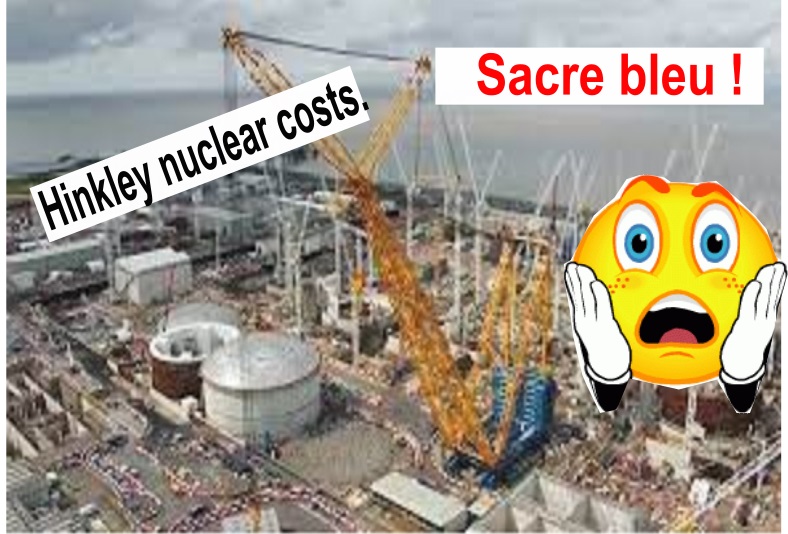
The National Wealth Fund said it will provide a loan facility for the nuclear power station of up to £36.6bn, pushing the upper limit to £47.7bn.
July 22nd 2025, https://www.energyvoice.com/renewables-energy-transition/576872/sizewell-c-loans-could-see-project-cost-rise-above-hinkley-to-47-7bn/
Project costs for the Sizewell C nuclear power station could rise to an upper threshold of £47.7 billion as a result of a new government loan extension.
The National Wealth Fund (NWF) has increased the size of its loan facilities to provide a debt buffer in case project costs rise, the government has confirmed.
The government’s new sovereign fund said in a statement that Treasury has recapitalised the fund from a prior capitalisation of £27.8bn so it can provide a loan facility for nuclear power station Sizewell C of £36.6bn.
The NFW, which started operating in October, will act as a lender of record for the project and continue to have the capacity to invest across its mandated sectors, a spokesperson said.
According to the statement, an additional £5bn of debt will be guaranteed by France’s export credit agency Bpifrance Assurance Export.
An energy department spokesperson told Energy Voice that “in order to finance a project of this size, the project partners have made available finance to fund costs up to £47.7bn (real) to safeguard taxpayers in the event of cost overruns”.
“This is based on a remote scenario for the project and is not what the company is managing the project to,” the government spokesperson said.
“The central target in terms of costs is around £38bn real, but as is standard for big and complex projects, we have secured a financing which contains contingency in case of overruns.”
According to people close to the matter, one of whom cited project documents, while Sizewell C is estimated to cost £38bn, the lower threshold for financing is £40bn, with a higher upper threshold of £47.7bn.
The newly secured loan capital would raise the projected upper limit of financing for the power station by nearly £10bn if it was fully drawn down over the course of the project’s lifecycle, they indicated, although a spokesperson for the fund said that would be unlikely. He said the facility provided for the effect of inflation.
“It is likely that NWF would not be exposed to the full amount of its debt provision, meaning its total debt exposure is likely to be less than the nominal maximum it has provided for,” the fund’s spokesperson said.
This increase would provide for a maximum project cost of £47.7bn, which would make the nuclear project more expensive than stalled Somerset nuclear power station Hinkley Point C, which is estimated to cost in the region of £46bn.
The UK Department for Energy Security and Net Zero (DESNZ) confirmed this morning that it had secured investors to commit a total of £38bn to Sizewell C. That included investment commitments from EDF, Centrica, Amber Infrastructure Group and Canadian fund La Caisse.
Together Against Sizewell C chair Jenny Kirtley said: “The scale of potential exposure of public funds to the Sizewell C project is revealed as a staggering £54.589bn in the government’s FID subsidy scheme.
“So much for claims made by EDF and government that there would be huge cost savings from ‘lessons learned’ from the Hinkley Point C build.”
She added that “future generations will have the responsibility to protect the Sizewell C site until the late 2100s and are depending on us to get it right”.
Sizewell C, which reached a final investment decision in the early hours of Tuesday, is expected to be a more efficient replica than its delayed and long-awaited Somerset counterpart, with efficiencies estimated to be between 20% and 25% greater than the first two reactors at Hinkley.
Supply chain ‘incentivised to keep costs down’
Investors insist that they are confident that costs will not overrun, yet Somerset nuclear power station Hinkley Point C is years overdue and over budget.
“The project supply chain is strongly incentivised to keep costs down and investors will see lower returns if there are overruns, reducing risk for taxpayers,” DESNZ told Energy Voice by email.
The new Suffolk nuclear power station at Sizewell is expected to be delivered by the mid-2030s.
Yet Hinkley Point C, which secured a contract-for-difference to operate in 2015, is still not fully built.
Project owner EDF received a dressing down from the French auditor earlier this year, which insisted that it should refinance Hinkley before investing in another nuclear power station in the UK, Sizewell C.
EDF has subsequently reduced its stake to 12.5%, representing an equity commitment of £1.1bn. Centrica has agreed to invest £1.3bn in a 15% stake, while Amber Infrastructure Group and Canadian fund Le Caisse have committed to take an initial 7.6% and 20% stake respectively.
The UK government said it will initially take a stake of 44.9% in Sizewell C, which is expected to reduce if Amber and La Caisse’s combined stake rises to 30%, according to a person familiar with the matter.
From hero to zero- When western leaders realised that Zelensky isn’t a corruption-fighting democrat –
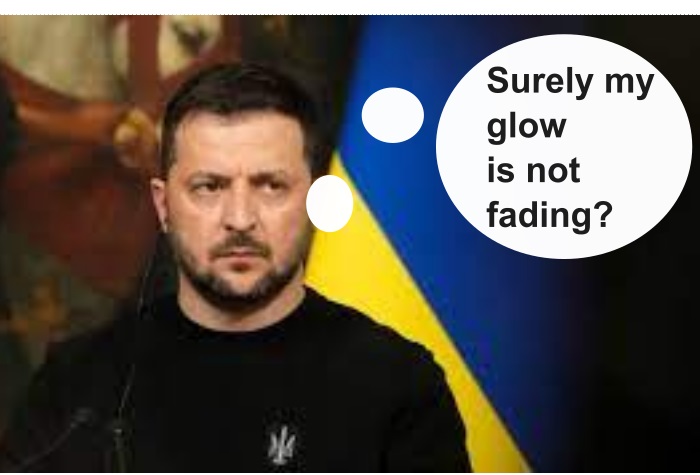
Indeed, war has turbo-charged corruption to a new and more disgusting level.
it is impossible that British and European governmental agencies would not be aware of the huge graft within the Ukrainian state…… Having held up the ‘nothing to see here’ signs for so long, our political leaders may now be starting to worry about how they will account for and continue to justify the billions that western nations are pumping into Ukraine.
Ian Proud, The Peacemonger, Jul 25, 2025
Since the start of the war in Ukraine, in February 2022, Volodymyr Zelensky has been elevated to the status of a hero King, pure in thought and deed, interested only in saving humble Ukraine from the onrushing hordes of Russian Orcs. Like Aragorn from Lord of the Rings, but short, thin-skinned and with a gravelly voice.
Zelensky has been completely immune from criticism in the west, with allegations dismissed and labelled as Kremlin talking points, and accusers called out as Quislings.
Yet, in an instant, that illusion has been shattered.
For the first time since February 2022, Zelensky has been revealed as no different from every President of Ukraine since the country gained independence in August 1991; corrupt and authoritarian.
This comes as no surprise to most realists, but offers a devastating blow to the neo-liberal true-believers who invested their reputations and cash into defeating Russia.
This week, President Zelensky signed a law that stripped two important anti-corruption bodies – the National Anti-Courrption Bureau of Ukraine (NABU) and the Specialised Anti-Corruption Prosecutor’s Office (SAPO) of their independence, making them report to the Prosecutor General, who he appointed.
In the face of widespread protest, Zelensky has been forced to backtrack, although it is not year clear what the new arrangements will be, or when they will be implemented, and the Verkhovna Rada has started its summer recess.
Let’s be clear, corruption is and has been a totemic issue in Ukraine, right back to the onset of the Maidan protests in late 2013 and, of course, before that. During my visits to Ukraine, while posted to Russia, it was clear that young people saw tackling corruption as a top priority for the government. This formed part of their desire for Ukraine to move towards European Union membership and for their country to integrate into a community more clearly governed by democracy and the rule of law.
Whether they might consider the European Union to be democratic today, as unelected Commission President Ursula von der Leyen centralises ever more powers, is another question. But that European and anti-corruption aspiration was real back in 2013.
Yet scant progress has been made in tackling corruption since that time. In February 2015, one year after the height of the Maidan protests, the British Guardian newspaper published a long piece entitled ‘Welcome to Ukraine, the most corrupt country in Europe’. The Ukrainian Prime Minister, Arseny Yatseniuk, who had been personally selected by Victoria Nuland at the U.S. State Department, was forced to resign in April 2016 in the face of allegations of widespread corruption within his government.
In 2021, the European Court of Auditors produced a report entitled Reducing Grand Corruption in Ukraine: several EU initiatives, but still insufficient results. It defined Grand Corruption as ‘the abuse of high-level power that benefits the few, and causes serious and widespread harm to individuals and society’.
In January 2023, an article in the Hill remarked on the need to defeat corruption as Ukraine’s ‘other enemy’. Shortly after that article, a piece, again in the Guardian, discussed the challenges faced by the Head of Ukraine’s National Agency for Corruption Prevention (NACP), which works closely with the now de-clawed NABU and SAPO.
That report in particular talked about specific examples of corruption in President Zelensky’s inner circle. Occasionally, Zelensky has purged his cabinet, to show his commitment to governmental reform, for example, sacking his former Defence Minister, Oleksii Reznikov, in the face of widespread accusations that the Ukrainian Defence Ministry was siphoning off foreign donations on an industrial scale.
But the occasional show trial has never taken the whiff away that Zelensky’s administration is every bit as corrupt as those that preceded it.
This stripping of powers from NABU and SAPO took place as those organisations were closing in with investigations against senior members of the Zelensky administration. Zelensky has spoken about the need to deal with Russian influence, but most people have seen through that smoke screen.
Zelensky was voted into office in 2019 on a platform to eradicate corruption in Ukraine. He has not done so.
And, as I have pointed out often, war has held back real steps to address the problem.
Indeed, war has turbo-charged corruption to a new and more disgusting level. Money for infrastructure projects has been siphoned off, weapons’ orders have been falsified with officials skimming the profits. You’ll see as many hypercars tooling round Kyiv as might be witnessed at the Monaco Grand Prix. Want to get out of enlistment? We can make an arrangement for the right money. Need to cross the border? Just hand over the cash.
This has prompted the mother of all holy shit moments, in which European politicians are quickly waking up to the fact that their hero, Zelensky, is just a flawed human like everyone else. Although, from my personal experience, it is impossible that British and European governmental agencies would not be aware of the huge graft within the Ukrainian state.
Having held up the ‘nothing to see here’ signs for so long, our political leaders may now be starting to worry about how they will account for and continue to justify the billions that western nations are pumping into Ukraine. Two thirds of Ukrainian state expenditure is effectively paid for by us, non-Ukrainian citizens, through the donations of western governments.
And yet Ukraine has become more corrupt…………………………………………………………https://thepeacemonger.substack.com/p/from-hero-to-zero?utm_source=post-email-title&publication_id=3221990&post_id=169225133&utm_campaign=email-post-title&isFreemail=true&r=1ise1&triedRedirect=true&utm_medium=email
1 This Month





PLEASE OPPOSE HR 8255 AND S.3639 – bills would accelerate satellite deployment, with no environmental review or safeguards – https://ncstd5li.quorum.us/campaign/169331/
To see nuclear-related stories in greater depth and intensity – go to https://nuclearinformation.wordpress.com
-
Archives
- October 2026 (67)
- September 2026 (339)
- August 2026 (330)
- July 2026 (355)
- June 2026 (287)
- May 2026 (306)
- April 2026 (356)
- March 2026 (251)
- February 2026 (267)
- January 2026 (308)
- December 2025 (358)
- November 2025 (359)
-
Categories
- 1
- 1 NUCLEAR ISSUES
- business and costs
- climate change
- culture and arts
- ENERGY
- environment
- health
- history
- indigenous issues
- Legal
- marketing of nuclear
- media
- opposition to nuclear
- PERSONAL STORIES
- politics
- politics international
- Religion and ethics
- safety
- secrets,lies and civil liberties
- spinbuster
- technology
- Uranium
- wastes
- weapons and war
- Women
- 2 WORLD
- ACTION
- AFRICA
- Atrocities
- AUSTRALIA
- Christina's notes
- Christina's themes
- culture and arts
- Events
- Fuk 2022
- Fuk 2023
- Fukushima 2017
- Fukushima 2018
- fukushima 2019
- Fukushima 2020
- Fukushima 2021
- general
- global warming
- Humour (God we need it)
- Nuclear
- RARE EARTHS
- Reference
- resources – print
- Resources -audiovicual
- Weekly Newsletter
- World
- World Nuclear
- YouTube
-
RSS
Entries RSS
Comments RSS

