Humanity heating planet faster than ever before, study finds

Humanity is heating the planet faster than ever before, a study has found.
Climate breakdown is occurring more rapidly with the heating rate almost
doubling, according to research that excludes the effect of natural factors
behind the latest scorching temperatures. It found global heating
accelerated from a steady rate of less than 0.2C per decade between 1970
and 2015 to about 0.35C per decade over the past 10 years. The rate is
higher than scientists have seen since they started systematically taking
the Earth’s temperature in 1880.
Guardian 6th March 2026, https://www.theguardian.com/environment/2026/mar/06/humanity-heating-planet-faster-than-ever-before-study-finds
The Strait Is Closed: How Trump’s Strike on Iran Triggered a Global Energy Crisis.
At the heart of this crisis lies a profound failure of strategic judgment—one that belongs squarely to the Trump administration. The decision to assassinate Khamenei was not merely aggressive; it was tactically naive and strategically blind. Unlike targeted strikes on nuclear facilities or proxy militias, killing a sitting Supreme Leader is an act of regime decapitation—an existential provocation that guarantees total retaliation.
Phil Butler, March 09, 2026, https://journal-neo.su/2026/03/09/the-strait-is-closed-how-trumps-strike-on-iran-triggered-a-global-energy-crisis/
The world entered a new era of energy insecurity not with a treaty or a market crash but with a single ill-conceived military decision.
On the weekend of February 28, 2026, the United States, in coordination with Israel, launched airstrikes deep inside Iran, killing Supreme Leader Ayatollah Ali Khamenei and striking key command centers across Tehran, Qom, and Isfahan. President Donald Trump, in a recent address, declared that “combat operations will continue for several more weeks” to “degrade Iran’s capacity to threaten global stability.”
Monumental Blunder
Instead of restoring order, the strike achieved the opposite: it triggered a cascading collapse of the world’s most critical energy artery—the Strait of Hormuz—and exposed the fragility of Western assumptions about oil, power, and deterrence.
Within 48 hours, Iran’s Islamic Revolutionary Guard Corps (IRGC) retaliated not just with missile barrages on U.S. bases in Iraq and Israel, but with a far more consequential move: it sealed the Strait of Hormuz. Using drones, fast-attack boats, and coastal missile batteries, Iranian forces disabled or turned back nearly all commercial traffic attempting to transit the narrow waterway. Satellite data confirmed only two tankers passed through on Monday—a fraction of the usual 20 million barrels per day that normally flow through this 21-mile-wide chokepoint.
The immediate effect was not panic, but paralysis. Over 3,000 vessels—tankers, container ships, and LNG carriers — now idle in Gulf ports from Basra to Doha, unable to move without risking destruction. Global oil benchmarks surged past $85 per barrel, with senior IRGC officials openly predicting prices could reach $200 if the blockade holds. As financial markets tumbled, London’s FTSE was down nearly 3%, Tokyo’s Nikkei shed over a month’s gains in three days, but the real crisis unfolded not on trading screens but in the physical reality of supply chains, refineries, and gas stations.
Europe’s Energy Illusion Shatters
For years, European leaders spoke of “diversification” and “energy security” while quietly relying on Middle Eastern oil and Qatari LNG to keep lights on and factories running. That illusion has now evaporated. With the strait closed, Europe faces a dual shock: soaring crude costs and disrupted natural gas flows from Qatar, whose LNG terminals feed German and Italian grids.
In Germany, diesel prices breached psychological thresholds, nearing levels last seen during the immediate aftermath of Russia’s 2022 invasion of Ukraine. Motorists formed long lines at filling stations, anticipating further spikes. The ADAC motoring association warned of “sustained pressure on household budgets,” while industry groups cautioned that prolonged high fuel costs could force manufacturing slowdowns.
France, meanwhile, signaled emergency measures, with Economy Minister Roland Lescure stating the government would intervene to cap pump prices if increases “deviate unreasonably” from underlying oil benchmarks. But such controls are stopgaps, not solutions. The deeper truth is this: Europe has no strategic alternative to Gulf energy. Its renewable transition remains incomplete, its Russian pipeline options politically toxic, and its domestic production negligible. In this moment, Europe is not a geopolitical actor—it is a hostage to geography.
The Strategic Blunder: Trump’s Fatal Miscalculation
At the heart of this crisis lies a profound failure of strategic judgment—one that belongs squarely to the Trump administration. The decision to assassinate Khamenei was not merely aggressive; it was tactically naive and strategically blind. Unlike targeted strikes on nuclear facilities or proxy militias, killing a sitting Supreme Leader is an act of regime decapitation—an existential provocation that guarantees total retaliation.
Worse, it ignored Iran’s asymmetric advantage: control of the Strait. For decades, U.S. naval doctrine assumed American carrier groups could keep the waterway open. But modern warfare has shifted. Iran doesn’t need to win a fleet battle; it only needs to make passage too costly. With cheap drones, anti-ship missiles, and layered coastal defenses, Tehran can impose a de facto blockade without firing a single shot at a U.S. warship.
Trump’s team appears to have believed that overwhelming air power would cow Iran into submission. Instead, it handed Tehran the perfect justification to execute its long-held threat: close the Strait and watch the global economy convulse. There is no indication that the White House modeled the second- and third-order effects on inflation, on allied economies, on global food and transport systems. This wasn’t strategy. It was performance dressed as policy.
And now, the U.S. finds itself trapped. Military escorts for tankers? Logistically daunting and politically untenable. Diplomatic off-ramps? None remain with Khamenei dead and the IRGC in full war mode. Sanctions? Meaningless when the adversary is already under maximum pressure.
The Quiet Realignment: Moscow and Delhi Step In
While Washington scrambles, a new axis is consolidating. Russia and India—long-time cautious partners—are accelerating energy cooperation at a striking pace. Indian refiners, facing potential shortages, have signaled intent to increase purchases of Russian Urals crude dramatically. Russian Deputy Prime Minister Alexander Novak confirmed “strong demand” from Asian buyers, while RDIF head Kirill Dmitriev framed Moscow as a “reliable partner in times of crisis.”
This isn’t opportunism. It’s systemic repositioning. As Western supply chains fracture, non-aligned powers are building parallel circuits of resilience. For India, Russian oil offers a lifeline. For Russia, it’s a chance to bypass sanctions and cement its role as the “energy balancer” of the Global South.
Meanwhile, defense and energy stocks surge—not because investors believe in peace, but because they’ve accepted a new reality: geopolitical risk is now permanent infrastructure. As one strategist put it, “Gold, defense, and critical infrastructure are no longer hedges—they’re core holdings.”
The Deeper Architecture of Collapse
Beneath the headlines lies a starker truth: the post-1991 energy order is finished. For three decades, the U.S. Navy guaranteed the free flow of oil, and the world priced accordingly. That era assumed unipolarity, predictable adversaries, and manageable risk.
Today, we live in a multipolar world where physical control trumps financial abstraction. Algorithms can’t reroute tankers around drone swarms. AI can’t refine crude. And no amount of market liquidity can replace a barrel that never leaves port. The closure of the Strait of Hormuz is more than a crisis—it’s a revelation. It shows that sovereignty is not declared; it is enforced through pipelines, ports, and the willingness to burn the system down rather than surrender control.
Trump’s and Netanyahu’s strike didn’t secure peace. It exposed fragility. And in doing so, it handed the future to those who understand that the next world order won’t be coded in Silicon Valley—but carved in oil, steel, and silence.
Small modular reactors – smaller regulation?

After several failed attempts at a “nuclear renaissance” since the mid 1970s, the current hype about nuclear power plants with low capacity, also referred to as “small modular reactors”, is yet another attempt to save an aging industry in decline
Böll EU Brief 01/2026
By Alexander Wimmers, Christian von Hirschhausen & Björn Steigerwald
This Böll EU Brief critically assesses the prospects of small modular reactors (SMRs) in Europe. It finds that most SMR designs remain in early development, lack regulatory approval in the EU, and are unlikely to deliver electricity at scale before 2050. Technical, economic and political challenges – including high costs, unresolved waste management, proliferation risks and heterogeneous designs – undermine claims of rapid deployment and cost reductions. The authors conclude that prioritising renewables, storage and electrification is a more credible pathway for timely decarbonisation.
Key findings:
- The term small modular reactors (SMR) is not standardised, and SMR concepts are not small. Instead, the capacities of many designs are comparable with nuclear reactors built in the 20th century.
- Technically, most SMR concepts do not differ from existing light water reactors. Current assessments show that their reduced capacity does not automatically reduce the risk of accidents. Instead, their heterogenous nature requires specialised infrastructure for fuel production and waste management that does not exist today. SMR concepts designed to operate on high-assay uranium could even increase nuclear proliferation risks.
- There is a hype around SMRs – this is problematic because of the many open questions and risks. The heterogenity of SMR concepts hinders mass production and consequently, envisioned cost reductions. Most SMR concepts remain in early design stages and are yet to receive regulatory approval or begin corresponding processes in the EU. Once these steps have concluded, additional site licensing, construction and comissioning steps would still be required. Electricity production from SMRs is unlikely to materialise at scale in the near term and remains decades away. If it occurs, it will come at very high costs.
The hopes associated with the development of SMRs became evident when in June 2025, the European Commission presented its 8th Nuclear Illustrative Programme (PINC). It called for investments exceeding EUR 240 billion until 2050 to achieve the Member States’ nuclear expansion plans.
According to the PINC, so-called SMR concepts ‘could serve as complement to renewable energy’ by ‘[helping to] achieve an integrated, secure, stable, high-efficient and resilient energy system’ via flexibility provision, co-located electricity and heat generation, and hydrogen production.1
Furthermore, claims of new SMR capacity ranging from 17 to 53 gigawatt (GWe) were made, in addition to ambitious claims of high-capacity reactor new build and lifetime extensions of existing plants.
This would potentially double the EU’s current capacity of 86.6 GWe to 125 GWe or even 197 GWe by 2050 (Figure 1) – despite aging fleets, limited active construction and decade-long lead times for new nuclear projects.
The ongoing enthusiasm regarding the expansion of data centres for cloud computing and AI is further fueling this hype around SMRs that they could ‘provide a source of baseload low-emissions electricity’.2
These optimistic claims stand in contrast with actual industry potential and various risks associated with nuclear power plants. At the time of writing in February 2026, no SMR concept had been granted a construction licence in the EU. The only SMR concept with ongoing construction activities outside of Russia and China, the GE-Hitachi BWRX-300 reactor in Canada, is yet to begin pouring concrete for the reactor housing, and all other concepts remain in early development stages, thus owing proof of the PINC’s claims and placing their potential useage many years into the future.3 Taken together, this raises critical questions about the realistic role of SMRs in the EU’s strategy. We therefore provide a brief overview of the current state of SMR concept development and highlight some of the remaining challenges.
What are SMRs?.
Originally, the term SMR was used in the industry to designate small- and medium-sized reactors. This covered the “natural” development from research reactors and demonstrators with low power (< 100 MWe) to larger units of several hundred megawatts (MWe) to exploit economies of scale.
The term SMR was re-coined by then-US Secretary of Energy Steven Chu in 2010 in an attempt to relaunch a previously failed “renaissance” in the early 2000s. Therefore, today, the term SMR usally incorporates reactors with less than 300 MWe of electrical capacity, although some concepts exceed this arbitrary limit by quite a margin, for example, the Rolls-Royce SMR with 470 MWe.4
The collective term SMR can incorporate a vast array of different reactor technologies, such as light-water reactors, high-temperature-gas-cooled reactors, reactors operating on fast neutron spectra, molten salt reactors, and more. Each of these technologies implies the use of technology-specific supply chains and fuel-cycle arrangements, as well as distinct approaches to decommissioning and waste management. Further, most concepts remain in early development stages.4-6
How close to market introduction are SMRs?
Most concepts are in early development or licensing stages. For example, the NuScale VOYGR was granted a standard design approval by the US Nuclear Regulatory Commission (NRC) in May 2025 and is undergoing a licensing process in Romania. While a final investment decision (FID) was reportedly made in February 2026, there is currently no ongoing construction project. The Rolls-Royce SMR has reached the third and final step of the UK’s Office for Nuclear Regulation Generic Design Assessment (GDA). But it is still waiting for site licence approval to begin construction. Several other designs are in various stages of the GDA process. The Argentinian CAREM reactor, under construction since 2014, was abandoned in 2024, and a new design is being sought, albeit with an uncertain timeframe. The French NUWARD concept is undergoing a redesign process aimed at increasing its electrical output to around 400 MWe, requiring licensing process restarts. Outside Russia and China, whose individual SMR prototypes are operating, with, from what is known, meager performance indicators,7 the Canadian project at Darlington, Ontario, represents the most advanced case, although only one of four originally planned GEH BWRX-300 units received a construction licence in May 2025.
Figure 2 [0n original]shows some of the SMR concepts currently under development and their respective furthest regulatory process steps. Ongoing activities in respective countries are indicated by the coloured lines, such as the Joint Early Review (JER) for the NUWARD reactor. However, the JER is a non-binding communication platform between several European regulators and indicates no actual licensing activities. To conclude, most SMR concepts are yet to gain regulatory approval in the EU or even begin actual licensing processes. They are thus far away from a broad market introduction.
Major challenges for SMRs in Europe
Technical challenges
Broadly speaking, the proposed SMR concepts do not represent technological breakthroughs, but the smaller size is intended to provide increased safety performance. While some concepts bank on innovative passive safety systems, like the NuScale VOYGR, the LWR technology itself does not fundamentally differ from today’s fleets, bringing similar or potentially additional safety-related risks. Regarding other reactor technologies, like high-temperature reactors or fast neutron reactors, experience with now closed prototypes is dominated by emergency shutdowns, as well as safety- and cost-related project cancellations.5
Recent expert assessments conclude that it is not possible to state that SMR concepts generally achieve a higher safety level than high-capacity reactors. These assessments indicate that, contrary to some developer claims, emergency planning zones are likely to remain necessary for SMR concepts. Furthermore, radioactive release potentials have not been fully assessed, and the implications of modulary installed reactors at a single site remain uncertain.5
A central promise of SMR concepts is the potential to benefit from industrial learning effects through serial production and standardisation. However, this presupposes the repeated deployment of a limited number of standardised designs. The current SMR landscape is instead characterised by heterogeneous reactor concepts based on different technologies and design philosophies.
The International Atomic Energy Agency (IAEA)’s Advanced Reactor Information System lists more than 70 SMR designs, of which, according to the IAEA itself, many neither fulfil modularity requirements nor are expected to reach commercial readiness.
Implementing various nuclear technologies would require suitable and customised supply chains due to heterogeneous fuel requirements, for example, different enrichment levels for specialised fuel. Different reactor concepts would also generate different types of waste that require specialised infrastructure.5,8
There are also open questions regarding the suitability of SMRs for decarbonised industrial heat provision. Most industrial processes require temperature levels that can be easily provided by industrial scale heat pumps, or direct electrification. But only high-temperature reactor concepts could theoretically provide the heat of up to 1000°C required for steel and glass manufacturing for which low-carbon alternatives exist today–and most SMR concepts are light-water based.
Economic challenges
Economically, SMRs are unlikely to become competitive with existing gigawatt-sized reactors. The economic case of SMRs centers on scalability and modularisation. In contrast to consumer technologies, like smartphones or computer chips, nuclear reactors are capital-intensive assets whose costs are dominated by construction, regulatory compliance and financing rather than component manufacturing.
Calculations indicate that hundreds to thousands of reactors of the same design, vendor and capacity would need to be manufactured to achieve cost levels comparable to those of current high-capacity light-water reactors;9 SMRs will thus be more costly than large reactors per unit of electricity.7 The substantial cost reduction assumptions are often included in energy modelling scenarios that result in substantial nuclear capacity expansion expectations.
In practice, current deployment trajectories provide little evidence that such manufacturing volumes are achievable. The BWRX-300 project in Canada is estimated to cost at least CAD 7.7 bn (EUR 4.76 bn or 15,870 EUR/kW) for a single reactor as of May 2025. There is substantial doubt on whether localised manufacturing facilities (and thus reduced costs) will materialise.7 Historically, the nuclear industry has tended to increase rather than reduce costs.10 Figure 3 shows current levelised costs of electricity (LCOE) for existing technologies, and the mean projected LCOE for light-water SMR concepts. These figures do not include additional costs for infrastructure expansion caused by grid integration of SMRs or flexibility measures for fluctuating renewables, or costs for nuclear waste storage.
Furthermore, the economic case for heat supply from SMRs remains weak.11 Recent studies indicate that SMRs would, at sufficiently low costs, still induce higher overall system costs than lower-cost alternatives capable of delivering the same service today, such as large-scale heat pumps or direct electrification.12
Finally, integrated energy system modelling suggests that SMR concepts will have to deliver on their cost promises to become relevant in a future European energy system.11 This is consistent with earlier research demonstrating the poor economic performance of nuclear new build in competitive electricity markets and studies highlighting the lack of economic necessity for baseload generation in mostly renewable power systems.10
Political challenges
The heterogeneity of SMR concepts will complicate their implementation in Europe, given the necessity of tailored regulation for different technologies and use cases, for example, emergency planning zones. Such requirements complicate siting decisions and regulatory coordination across Member States and could also hinder data centre or industrial co-siting as well as district heating.
Further challenges lie in the necessity of specialised waste management infrastructure. Given the lack of adequate waste repositories for Europe’s existing spent fuel from currently operating reactors, this issue must be resolved before implementing SMR fleets with heterogeneous waste streams.13 This raises questions of legitimacy, public acceptance and institutional credibility. Uncertainty regarding future disposal concepts, responsibilities, and long-term commitments constitutes a governance risk, particulary where repository strategies were developed for existing (light-water) fleets.
Additionally, specialised fuel requirements, such as designs relying on high-assay low-enriched uranium (HALEU) fuel, could increase proliferation risks and raise concerns about fuel supply security and international oversight.14
Many EU policymakers currently perceive SMRs as an additional promising option that could contribute to the EU’s emission reduction targets. However, even under very optimistic assumptions for the speed of market introduction of SMRs, they will likely not contribute to these political objectives before the 2050 climate neutrality benchmark. Thus, betting on near-term SMR deployment for decarbonisation binds limited political and administrative resources at EU and Member State level that could be better applied to existing cost-competitive technologies, namely, renewables and storage, to supply clean and affordable energy instead of waiting for a technology whose feasibility remains highly uncertain.4
Conclusions and policy recommendations
After several failed attempts at a “nuclear renaissance” since the mid 1970s, the current hype about nuclear power plants with low capacity, also referred to as “small modular reactors”, is yet another attempt to save an aging industry in decline.
Based on current evidence and development status, SMRs are unlikely to provide a meaningful contribution to European energy system decarbonisation within a relevant timeframe. Instead, continued attention towards their potential benefits will decellerate the necessary transformation of the energy system even further. New designs do not fundamentally mitigate the inherent challenges associated with nuclear power, namely waste management, proliferation risks and high cost.
Furthermore, the heterogeneous nature of proposed SMR concepts creates regulatory, industrial and governmental complexities that increase the uncertainty regarding future cost reductions and large-scale deployment, while requiring the implementation of customised infrastructure for fuel supply, waste management and so on. Consequently, current capacity projections based on SMR deployment are highly unlikely. The EU should not wait until first SMR concept prototypes are built and – perhaps eventually – brought to scale..
EU policymakers should instead prioritise policy frameworks that accelerate the deployment of mature, cost-effective low-carbon technologies. This includes facilitating efficient grid utilisation, strengthening system flexibility and demand-side management, supporting decentralised renewable generation, and advancing electricifation of energy demand. Given binding climate targets and rising electricity demand, decarbonisation efforts must deliver measurable results within the current decade. In this context, relying on technologies that remain at early stages of development and require substantial scaling before delivering system-level impacts at very high costs entails signficant strategic risk and should be avoided.
Endnotes…………………………………………………………………………..
IAEA says no evidence Iran is building a nuclear bomb
Middle East Monitor 4th March 2026
The head of the International Atomic Energy Agency (IAEA), Rafael Grossi, has said there is no evidence that Iran is currently building a nuclear bomb, while warning that unresolved issues surrounding Tehran’s nuclear programme remain a serious concern.
Speaking in remarks reported on Tuesday evening, Grossi said Iran possesses a large stockpile of enriched uranium that has reached levels close to weapons-grade. However, he stressed that the agency has not found proof that Iran is developing a nuclear weapon…………………
Oman’s Foreign Minister, Badr al-Busaidi, said one day before the conflict began that Iran had agreed in principle not to retain enriched uranium as part of ongoing diplomatic discussions. According to al-Busaidi, the proposal included relinquishing enriched material and ensuring that no nuclear fuel would be stockpiled, with verification mechanisms in place.
US President Donald Trump, however, insisted that Iran should not enrich uranium at all, including at levels below weapons-grade, reiterating Washington’s long-standing demand that Tehran completely halt enrichment activities. https://www.middleeastmonitor.com/20260304-iaea-says-no-evidence-iran-is-building-a-nuclear-bomb/
COMMENTS:
There has never been evidence and the Ayatollah had banned nuclear weapons due to their religion. Getting a US president to believe this has taken Netanyahu over 30 years. Then along came the ignorant, unintelligent deranged Trump…………..and here we are.
Israel is the only country in the Middle East which has nuclear weapons. But it has not signed the Treaty on the Non-Proliferation of Nuclear Weapons (NPT) and refuses to place its nuclear facilities under the watch of UN inspectors. This is unlike Iran, whose facilities are monitored constantly and which, as a non nuclear-weapon state which is a signatory to the NPT, has also agreed not to seek or acquire these weapons…
Israel is not only believed to possess 90 nuclear warheads, but also to have produced enough plutonium to produce 100 to 200 more nuclear weapons. And according to new research from the Stockholm International Peace Research Institute (SIPRI), it is actively modernising its nuclear arsenal.
(‘When it comes to WMDs, Israel’s are very much part of the problem’, Canary 24 June 2025)
A War for Oil: Economist Michael Hudson on U.S. Quest to Control the World’s Oil Trade
We speak with economist Michael Hudson, who details how President Trump opted to attack Iran despite progress at indirect U.S.-Iran negotiations. “The whole reason that America has attacked Iran has nothing to do with its getting an atom bomb,” but instead the aim was U.S. control of oil, says Hudson. The Trump administration may have been after the ability to “turn off the power” to countries that don’t follow U.S. foreign policy, he says.
Transcript……………………………………………………………………………………………………………………………….. https://scheerpost.com/2026/03/04/a-war-for-oil-economist-michael-hudson-on-u-s-quest-to-control-the-worlds-oil-trade/
Loony Bin Rationales: The Continuing War on Iran
6 March 2026 Dr Binoy Kampmark, https://theaimn.net/loony-bin-rationales-the-continuing-war-on-iran/
Villainous lunacy is abundant these days as the bombing of Iran by Israel and the United States continues. The rationale for this illegal pre-emptive war that not only lacks legitimacy but should land its perpetrators in the docks of the International Criminal Court, continues to get increasingly muddled. With US President Donald Trump now given to giving press conferences on the conflict, loony bin mutterings are becoming increasingly the norm.
A common assumption behind these attacks is Israel’s firm, unremitting stranglehold on the US President. Combined with the considerable influence of what John Mearsheimer and Stephen Walt called the “Israeli Lobby,” American foreign policy in the Middle East has been tenanted by Israeli interests. And Israel has shown itself to be a particularly bruising tenant in this regard.
While the central rationale is both fantastic and mendacious – namely, the destruction of a nuclear capability that had been, in any case, apparently obliterated last June – the view that Iran was going to unilaterally strike either Israel, the United States, its allies or all of the above, is fascinatingly absurd.
In a classified briefing with Republican and Democratic lawmakers on Capitol Hill on March 2, senior administration officials put forth the position that Israel had already planned to strike Iran, with or without US support. Present were Secretary of State Marco Rubio, the increasingly deranged Secretary of Defense Pete Hegseth, CIA Director John Ratcliffe and the Chair of the Joint Chiefs of Staff Gen. Dan Caine. Prior to the briefing, Rubio put forth the view that “there was going to be an Israeli action. We knew that that would precipitate an attack against American forces, and we knew that if we didn’t pre-emptively go after them before they launched those attacks, we would suffer high casualties.” Israeli impulsiveness proved the heaviest of tails in wagging the dimmest of dogs.
This less than convincing explanation worried Virginia Democratic Senator Mark Warner, who serves as vice chair of the Senate Intelligence Committee. “This is still a war of choice that has been acknowledged by others that it was dictated by Israel’s goals and timeline.” He questioned whether American lives should be put at risk when an alleged imminent threat was directed at an ally. “Israel is a great ally of America. I stand firmly with Israel. But I believe at the end of the day when we are talking about putting American soldiers in harm’s way and we have American casualties and expectations of more, there needs to be the proof of an imminent threat to American interests. I still don’t think that standard has been met.” Had Iran actually posed an imminent threat to the US, “better planning” should have been in place.
An even clearer statement of the foolish rationale was allegedly put to conservative broadcaster and commentator Tucker Carlson by Trump himself, suggesting that Israel had essentially painted him into the smallest of corners. Carlson, according to The New York Times, had attempted no fewer than three times in meetings at the Oval Office to argue why the US should not go to war with Iran. Reasons for not doing so included risks to US military personnel, the soaring effects of war on energy prices and concern about how Washington’s Arab partners would react. He surmised that it was Prime Minister Benjamin Netanyahu’s desire to strike Iran that was the sole reason the president was considering a military effort. It would be prudent, suggested Carlson, if the Israeli PM was restrained in his bellicosity.
Carlson has also personally expressed the view that the war took place “because Israel wanted it to happen. This is Israel’s war. This is not the United States War.” It had been launched on a freight of “lies” and orchestrated by Netanyahu’s beguiling approach. “The point is regional hegemony.” Israel wanted “to control the Middle East” and “sow chaos and disorder” in the Gulf.
Another right-wing commentator, Megyn Kelly, reiterated what had been a central, even canonical line of MAGA: “No one should have to die for a foreign country.” The four service members (there were actually six) who had given their lives for the US “died for Iran or for Israel.” The war was clearly Israel’s and based on a fictional threat. “Does it make any sense to you that Iran was planning pre-emptive strikes against us? Obviously, it doesn’t.”
Trump was dismissive of both Carlson and Kelly, slipping into that habit common to megalomaniacs humming before a mirror: he referred to himself in the third person. “I think MAGA is Trump – not the other two.” The movement wished “to see our country thrive and be safe, and MAGA loves what I’m doing.” Carlson’ could “say whatever he wants. It has no impact on me.”
Israel, however, did and does, though Trump, in what can only be regarded as piffling nonsense, is now promoting the view that Israel was the second hitter, with the US taking the bold lead. “We were having negotiations with these lunatics, and it was my opinion that they were going to attack first,” he reasoned at a bilateral meeting with Germany’s Chancellor Friedrich Merz. As he “didn’t want that to happen,” Trump thought he “might have forced Israel’s hand, but Israel was ready and we were ready.”
Hegseth, in another mad, uneven display before the press, also laid the entire blame for the war on Iran itself. “We didn’t start this war, but under President Trump, we are finishing it.” Not that the facts even mattered. International law did not exist. “No stupid rules of engagement, no national-building quagmire, no democracy building exercise, no politically correct wars.” (What do politically correct wars look like?) He sums up the jungle attitude to conflict, a deranged, semi-literate Tarzan whose views would sit well with the state machinery of Nazi Germany, one that showed the world how best to avoid international protocols and violate the laws of war in the name of streaky fantasy and monstrous ego.
Trump Says He Must Have a Say in Picking Iran’s New Leader
by Dave DeCamp | March 5, 2026, https://news.antiwar.com/2026/03/05/trump-says-he-must-have-a-say-in-picking-irans-new-leader/
President Trump said in an interview with Axios on Thursday that he must have a say on who is chosen as Iran’s next leader following the killing of Iranian Supreme Leader Ayatollah Ali Khamenei, contradicting other administration officials who say the US’s goal is not regime change.
Trump made clear to Axios reporter Brak Ravid that Khamenei’s son, Mojtaba Khamenei, who has reportedly emerged as a frontrunner to replace his father, wouldn’t be acceptable to the US.
“They are wasting their time. Khamenei’s son is a lightweight. I have to be involved in the appointment, like with Delcy [Rodriguez] in Venezuela,” the president said, referring to Venezuelan Acting President Delcy Rodriguez.
The US didn’t choose Rodriguez as Nicolas Maduro’s replacement, but she was the next in line as the vice president and has been willing to work with the US to stave off another attack. A much different dynamic is unfolding in Iran as the killing of Khamenei has not slowed Iran’s military response, and the country’s leadership shows no sign of backing down despite the massive US-Israeli bombing campaign, which has killed over 1,000 civilians.
Trump said that he wouldn’t accept any leader who continues Khamenei’s policies because it would result in the US launching another war within five years. “Khamenei’s son is unacceptable to me. We want someone that will bring harmony and peace to Iran,” he said.
Earlier this week, Trump said that all of the people he had in mind to replace Khamenei have been killed and acknowledged that in the end, Iran’s next leader could be “as bad” as Khamenei.
“The worst case would be we do this, and then somebody takes over who’s as bad as the previous person,” he said. “That could happen. We don’t want that to happen. It would probably be the worst — you go through this and then in five years, you realize you put somebody in who was no better.”
Canada will soon release new electricity and nuclear strategy, minister says
Canada’s Energy and Mining Minister Tim Hodgson said on Thursday the
government will release a new electricity and nuclear strategy in the
coming months as demand for nuclear energy rises. “Investors want
clarity. They want speed, and they want direction from nations to which
they are allocating capital. That is why our government will release a
new comprehensive electricity and nuclear strategy in the coming
months, probably weeks,” Hodgson said at CIBC’s nuclear summit.
Reuters 5th March 2026, https://www.reuters.com/business/energy/canada-will-soon-release-new-electricity-nuclear-strategy-minister-says-2026-03-05/
.
The Toxic Legacy of Britain’s Nuclear Testing in Australia
The era of British nuclear testing in Australia was exrraordinary, and its secrets are still being uncovered. Because of ongoing British secrecy, we may not discover them all. In her talk Professor Tynan will examine the complex circumstances taht led the British first to Monte Bello Islands off the coast of Western Australia, then Emu Field and Maralinga in South Australia, to test their atomic weapons. The decision to do so followed the United States’ exclusion of Britain from nuclear weapons and energy R&D after World War II, ostensibly because of the detection of Manhattan Project spies. Australia acquiesced to the atomic tests without asking hard questions, and as a result considerable damage and suffering was inflicted, particularly on Indigenous people and service personnel.
Those hard questions only came decades later, and there are still many to be asked. The British conducted their testing with a greater emphasis on speed than safety. The recklessness of some of the tests carried out in Australia is stunning. Tynan will share specific stories of these dangerous tests and their deadly ramifications for Australians. She will also cover what happened after the British terminated the test series and deliberately misinformed the Australian government about the extent of contamination they left behind. All three test sites were abandoned without proper remediation. The aftermath led to a judicial enquiry, known in Australia as a Royal Commission, in the mid-1980s. This enquiry makred a major shift in Australian attitudes to the tests, and was an important mileestone in an era of uncovering and truth-telling that continues.
Professor Elizabeth Tynan is Head of the Professional Development Program at James Cook University’s Graduate Research School, where she teaches academic writing, editing, and critical thinking skills to postgraduate researchers. She is a former science journalist in both print and broadcast media. Her PhD from the Australian National University examined aspects of the British nuclear tests in Australia in the 1950s and 1960s.
Trident workers to strike in row over nuclear job cuts.
Union says staff have been ‘pushed to the brink’ and warns walkout could cost millions of pounds
The workers who build and maintain Britain’s Trident nuclear arsenal are
to go on strike in a row over hundreds of job cuts at the Ministry of
Defence’s atomic weapons factories. Members of the Prospect union voted
81pc in favour of strike action at the Atomic Weapons Establishment (AWE),
which is responsible for manufacturing warheads intended for use on the
UK’s nuclear submarines.
The ballot covered sites including the AWE’s
plants in Aldermaston and Burghfield. Strikes are expected to take place on
March 12 and March 26. Union leaders accused the agency of a “litany of
errors” in a dispute over a restructuring that is expected to see as many
as 800 jobs cut.
Telegraph 6th March 2026,
https://www.telegraph.co.uk/business/2026/03/06/trident-workers-to-strike-in-row-over-nuclear-job-cuts/
Oxfam responds to mass forced displacement in Lebanon and ready to respond to wider regional crisis

6 March 2026 AIMN Editorial, https://theaimn.net/oxfam-responds-to-mass-forced-displacement-in-lebanon-and-ready-to-respond-to-wider-regional-crisis/
Oxfam and partners are responding to the immediate needs of people who have been forcibly displaced by Israel’s bombardment and ground invasion of Lebanon, as the conflict across the region enters a dramatically new and dangerous phase.
Oxfam in Lebanon is scaling up its emergency response by supporting thousands of people across shelters in Mount Lebanon, the South, and the Bekaa, providing bedding kits, hygiene kits, menstrual hygiene management kits, and clean water.
“This expansion of Israeli occupation and its bombing of Lebanon will devastate people across Lebanon who had not yet recovered from the last wave of violence, inflicting more trauma on an already traumatised population,” said Lebanon country director Bachir Ayoub. “Once again, families have been forced from their beds and their homes as Israel rained bombs down on their communities.”
There is grave concern about the scale and impact the conflict will have on tens of millions of people across the region, where almost 60 million already rely on humanitarian aid. The broader escalation in the region is triggering further mass forced displacement, placing additional strain on overstretched systems and pushing humanitarian conditions further towards catastrophe.
It will widen inequality gaps, intensify existing poverty and injustice, and limit the ability of humanitarian organisations to reach communities in need.
“Global inaction has set the scene for this dangerous escalation,” said Ayoub. “The inability of the international community to hold Israel accountable for its ongoing violations of international law has led us to this point, where we again see hundreds of thousands of people in Lebanon forced to flee in the march towards a wider regional war.”
Oxfam staff and partners are poised to respond with pre-positioned life-saving aid throughout the countries where the aid agency operates if the escalation is allowed to further spill out across the Middle East
In light of unlawful attacks by the United States and Israel and Iran’s retaliation, Oxfam demands that the international community reaffirm its commitment to international law. Rules governing the use of force must be applied equally, most of all the prohibition against the aggressive use of force enshrined in the United Nations Charter. The U.S, Israel, Iran and all parties to the conflict must immediately cease their attacks, de-escalate the chaos across the region and refrain from future actions that lead to yet another cycle of violence.
What a week in non-corporate nuclear news!

Some bits of goodnews –
Chile eliminates leprosy Kazakhstan is rebuilding habitat for the return of wild tigers more than 70 years after the species vanished from Central Asia. Croatia Declared Landmine-free After More Than 2 Decades of Demining Efforts
Green energy gave the UK’s flat economy a boost
TOP STORIES. Preemptive War, Permanent Emergency: The Real Cost of Trump’s Iran Strike.
Negotiation to Detonation.Trump’s 3 day ‘quickie’ war turning into a 3 year catastrophe.This Illegal US-Israeli Attack on Iran Is Also an Assault on the United Nations.
Trump’s War of Choice: Oman Reveals Iran Agreement Was Imminent. – https://www.youtube.com/watch?v=Pg5sXQDR8NY
‘Bombs Will Be Dropping Everywhere’: Trump Launches Illegal Regime Change War Against Iran.
Climate. Global sea levels have been underestimated due to poor modelling, research suggests
AUSTRALIA. The Mushroom Treatment: A Government That Treats You With Contempt Cannot Be Trusted. Australia and the “Epstein Coalition”- Invasion of Iran a disaster. The Ghost in the Kill-Chain:The Invisible Cost of “Surgical” War. More Australian nuclear news at https://antinuclear.net/2026/03/07/this-weeks-australian-nuclear-news-2/
NUCLEAR-RELATED ITEMS
| ECONOMICS. U.S. and Japan Ponder Nuclear Energy Project in Massive $550 Billion Deal. |
| ENERGY. Nuclear power falls below half its historic peak share of global electricity generation. Study: Energy Efficiency Can Address Surging Electricity Needs at Half the Cost of Gas Plants. |
| ENVIRONMENT. Conservationists challenge effectiveness of £700 million fish safety system. Water. Could a huge data centre revitalise Ayrshire – or ruin it? |
| ETHICS and RELIGION. A Catholic guide to understanding the war with Iran.Good grief…Jesus freaks taking over military indoctrination. The US War Machine Is Run By Deranged Armageddon Cultists. Iran Is Morally Superior To The United States. U.S. Military Leaders Tell Troops Trump Is Waging Iran War To Bring Forth Second Coming Of Jesus. |
| EVENTS. 14 March – Protesters to rally at Faslane base in anti-nuclear demonstration. Advocating for a nuclear free beach – https://www.samuellawrencefoundation.org/ |
| HEALTH. Two pieces of news re Radiation and Health. |
OPPOSITION to NUCLEAR . Welsh Anti-Nuclear Alliance relaunched amid concerns over new projects planned for Wales.
POLITICS.
- Kucinich: “Iran Could Be the Graveyard of the American Empire”
- As Trump Bombs Iran, We Need to Reckon With the American War Machine.
- Tulsi Gabbard’s Own Testimony Resurfaces as Iran War Narrative Escalates
- Labour panned as nuclear project ‘to cost more than Scotland’s block grant’. Residents invited to have say on Hunterston nuclear forum.
POLITICS INTERNATIONAL and DIPLOMACY.
- In Iran, Israel’s morbid military cult now has the US fully in its grip.
- IAEA says no evidence Iran is building a nuclear bomb.
- Trump Threatens Full Trade Embargo Over Spain’s Refusal to Be Complicit in Iran Attacks.
- Stop Trump’s New Mass-Murder Spree.
- Iran Demands Emergency United Nations Action Amid ‘Criminal Aggression’ by US, Israel.
- Trump Says He Must Have a Say in Picking Iran’s New Leader.
- “America First” in the Middle East: A Strategy of Domination, Not Conflict Resolution.
- US Attacks in Venezuela and Greenland Lay Groundwork for Billionaire Fiefdoms.
- UN nuclear watchdog says it’s unable to verify whether Iran has suspended all uranium enrichment.
| SAFETY.NRC buckles to White House and licenses dangerous TerraPower reactor. Natural Resources Defense Council supports restart of NextEra’s Duane Arnold nuclear station, a known danger. Coastal erosion risks to planned Sizewell C nuclear power station. Sellafield recruitment opens for Authorised Firearms Officers. Incident – New Addition to List of Nuclear Near Catastrophes. Capenhust-based nuclear facility faces prosecution after uranium leak. |
| SECRETS and LIES. When will US, Israel stop censoring massive damage to US facilities and Israel? Debunking the lies of the Iran War. Mendacious Rationales: The Lies Behind Operation Lion’s Roar. |
| SPINBUSTER. According to Pete Hegseth – “They are toast”. Golden pipedreams – UK Advanced Nuclear plan. |
| TEPCO planning to send probe into Fukushima nuke reactor. Japan Eyes Pacific Island for Nuclear Waste Disposal Site.TEPCO removing empty tanks to advance Fukushima plant decommissioning work. |
WAR and CONFLICT.
- Who Bombed Girls’ School in Iran? Reporter Nilo Tabrizy on What We Know About Massacre of 175 People – https://www.youtube.com/watch?v=k4zE2pAqJck
- America’s Thelma & Louise Moment: Rubio Shows How Israel and Trump Drove Off the Cliff Together.
- A War for Oil: Economist Michael Hudson on U.S. Quest to Control the World’s Oil Trade.
- President Trump Says He May Have ‘Forced Israel’s Hand’ Into Iran War.
- NewsReal: Historic Miscalculation? US & Israel ‘Decapitate Iranian Regime’, Yet Iran is Striking Back HARD.
- Iran says Natanz nuclear site hit in US-Israeli strikes
- Beyond Nuclear condemns attack on Iran.
- US-Israeli War on Iran is NOT About Nuclear Weapons– It’s About Imperialism.
- Trump’s unprovoked attack on Iran risks terror, turmoil and the spread of nuclear weapons – the consequences will be dire.
- Exiled Iranian Denounces War: ‘The People Will Suffer, Not Gain!’
- International Physicians for the Prevention of Nuclear War (IPPNW) condemns strikes against Iran, calls for return to negotiations.
- Trump Says ‘Heavy and Pinpoint Bombing’ of Iran Will Continue “As Long As Necessary”.
- US and Israeli attack on Iran: At least 51 girls reported killed in strike on school.
- Trump calls for regime change in Iran as US and Israel launch‘massive’ strikes.
- A War With Iran Would Not Be a One-Off Event But a Disastrous Ongoing Rupture.
WEAPONS and WEAPONS SALES
‘Not One Damn Penny’: Pentagon Expected to Ask Congress for Billions to Fund Iran War.
Macron plans to deploy nuclear weapons to Britain. France to increase its number of nuclear warheads, Macron says – as it happened. France officially enters Nuclear Arms Race. Golden Dome to Rio Rancho: Public Infrastructure, Private Weapons, Public Consequences. Nuclear flashpoints to fallout.
Kucinich: “Iran Could Be the Graveyard of the American Empire”
SCHEERPOST, March 4, 2026
Former congressman Dennis Kucinich joined Robert Scheer for one of the most urgent and unflinching conversations in Scheer Intelligence history. What emerges is a portrait of a superpower stumbling into a conflict it cannot control, driven by an alliance it cannot restrain, and guided by a worldview increasingly detached from geopolitical reality.
Kucinich, long known as Congress’s most consistent voice for peace, argues that the United States has reached the “terminus” of its imperial ambitions. With Washington now openly coordinating military action with Israel and escalating toward direct confrontation with Iran, he warns that the U.S. is entering a phase of global overreach it can neither sustain nor justify.
Scheer, who has covered war and foreign policy for decades, frames the moment bluntly: this may be the most dangerous point in modern international relations — a convergence of American decline, Israeli expansionism, and a collapsing global order.
The Empire Hits Its Limits
Kucinich begins with a stark assessment: the U.S. empire is running out of road.
“America is reaching the end of its road of empire. Iran might be the graveyard of our empire.”
He points to 800 U.S. military bases worldwide — not as defensive outposts, but as instruments of economic control. With the rise of BRICS and the weakening of the dollar, he says the unipolar era is over. The U.S. can no longer dictate global outcomes through force.
Scheer agrees, noting that Washington’s reliance on military power has grown as its economic competitiveness has declined. The U.S. no longer manufactures the world’s technology, cannot build basic infrastructure at home, and has ceded entire industries to China — yet continues to behave as if it can impose its will through bombs and sanctions.
A War Built on Illegality and Illusion
Kucinich argues that the escalation toward Iran violates both international law and the U.S. Constitution.
“There was no imminent threat. This is a war crime — several war crimes.”
He notes that the administration acted without congressional authorization and without meeting the legal threshold of imminent danger. Worse, he says, the strikes occurred during peace talks — an act he calls “treachery.”
The result is a total collapse of U.S. credibility.
“Iran rejected a ceasefire proposal because they cannot believe anything the United States says.”
…………………………………………………………………………………………………………………………. A War the U.S. Cannot Win
Kucinich’s final warning is the most sobering:
“We cannot win this war. We don’t have the resources. Iran can defend itself. This is a calamity of great significance.”
Scheer agrees, arguing that the U.S. is acting like Rome in its late stage — decadent, overextended, and delusional about its own power.
The Core Message
- The U.S. empire is collapsing under its own weight.
- The Iran escalation is illegal, reckless, and strategically disastrous.
- Israel’s long‑pursued confrontation with Iran is now driving U.S. policy.
- Iran is unified, prepared, and far more capable than U.S. leaders admit.
- American militarism is hitting its limits as economic power declines.
- The world is moving toward multipolarity, and U.S. dominance is fading.
- This conflict could mark the end of the American imperial era.
A Catholic guide to understanding the war with Iran

The primary international law that seems to have been violated by the United States and Israel is the U.N. Charter’s prohibition of the use of force except in self-defense. The United States, whose diplomats were among the founders of the United Nations just after the horrorshow of World War II, is a signatory to the U.N. Charter and presumably willingly governed by its prohibitions against wars of aggression or choice.
by Kevin Clarke, America, March 6, 2026
“…………………………… First of all, what do we call this thing that the United States and Israel have begun, which has so far cost more than 1,000 lives in Iran and 12 in Israel and taken the lives of six U.S. service members? In his declaration announcing the attack, Mr. Trump described the joint Israeli/U.S. air campaign as “major combat operations in Iran.”
Since the strikes began, members of Congress who support that “major combat operation” have struggled to classify it, reluctant to refer to it as a war, perhaps attempting to avoid the delicate problem of constitutional limits on the executive to engage in war-making. The framers of the American Constitution, concerned about the possibility of a renegade, unbound executive abusing this gravest authority, reserved that power to Congress under Article I, Section 8, Clause 11. You can look it up.
But like Congresses before them that demurred as former presidents began a “police action” in Korea, trudged deeper into the big muddy of the Vietnam War or cheerfully pronounced “mission accomplished” as the epic misadventure in Iraq unraveled, the current U.S. Congress has preferred to leave the authority to engage in this latest war (and perhaps ultimately the blame for it) to the Trump administration.
Some members of Congress have settled on “significant military campaign” to describe the conflict, too akin to the Putin-ish “special military operation” to my ears. Others argue that the attacks on Iran can’t be called a war until U.S. boots are on the ground—something not ruled out by the White House.
But I say if it looks like a war, bombs like a war, takes the lives of combatant and noncombatant alike like a war, it’s probably a war.
International humanitarian law, 19th- and 20th-century conventions and agreements meant to temper state tensions that lead to conflict as well as the behavior of warring parties, is likely to be further undermined by this new war. It may seem absurd to seek moral limitations on conduct in something as barbaric as war-making, but I.H.L. had notable practical successes over time in terms of the treatment of prisoners of war and the protection of noncombatants. In recent years it has included conventions abolishing land mines and chemical and biological weapons.
The primary international law that seems to have been violated by the United States and Israel is the U.N. Charter’s prohibition of the use of force except in self-defense. The United States, whose diplomats were among the founders of the United Nations just after the horrorshow of World War II, is a signatory to the U.N. Charter and presumably willingly governed by its prohibitions against wars of aggression or choice.
In the past, the United States has turned to the United Nations to provide a veneer of legitimate authority to its military actions in Korea, during the Gulf War, various Iraq incursions and other military campaigns in Kosovo, Haiti, Libya and Syria. The Trump administration this time did not bother to seek U.N. cover for its attack on Iran, extending its disdain for the United Nations to perhaps this ultimate conclusion. But U.N. officials should not feel especially slighted since the president similarly did not bother to seek an authorization from the U.S. Congress.
Self-proclaimed Secretary of War Pete Hegseth has made a point of mocking the niceties of international law as the United States continues an illegal campaign to kill alleged drug smugglers across the Caribbean Sea. He has, with alarming gusto, asserted that U.S. forces, or warriors as he prefers to call service members, will not be limited by international law or “woke” rules of engagement; they will instead be focused on victory, whatever the cost. He appears to be a man of his word in this regard.
A New York Times analysis points to U.S. forces as the likely author of a missile strike on an elementary school that claimed 175 lives, mostly schoolgirls, on Feb. 28. The U.S. military has so far not confirmed its role in the strike nor apologized for its gruesome outcome.
A Just War or just more war?
The church’s just war tradition has been challenged by contemporary theologians as insufficient and outdated, yet it remains a worthy filter through which to judge the moral defensibility of a turn to war-making. Jus ad bellum is the church’s tradition of moral instruction meant to guide discernment before making the decisions to begin an armed conflict. Jus in bello is the church tradition that governs behavior during armed conflict.
According to just war teaching, conflict can only be joined as an act of self-defense or in defense of an ally, though it may be engaged to protect the vulnerable or respond to a grave threat. Intention in choosing armed conflict cannot be darkened by a desire for vengeance or retribution but focused on preventing a greater evil and the restoration of peace.
War-making must be a last resort, all peaceful avenues of resolution having been exhausted. The use of force must be proportional, that is, the suffering it prevents must be greater than the misery it is likely to create. The conflict cannot be the cause of more disorder and evil than those it seeks to address. In conflict, belligerents must discriminate between combatant and noncombatant, taking all measures to protect the latter.
The administration seems to have ignored or violated a number of these preconditions and prohibitions in its decision to go to war with Iran………………………………………………………………………………….https://www.americamagazine.org/politics-society/weekly-dispatch/2026/03/06/iran-israel-united-states-catholic-just-war/?utm_source=ActiveCampaign&utm_medium=email&utm_content=A%20Catholic%20guide%20to%20understanding%20the%20war%20with%20Iran%E2%80%8B&utm_campaign=Daily%203%206%2026
Natural Resources Defense Council supports restart of NextEra’s Duane Arnold nuclear station, a known danger.
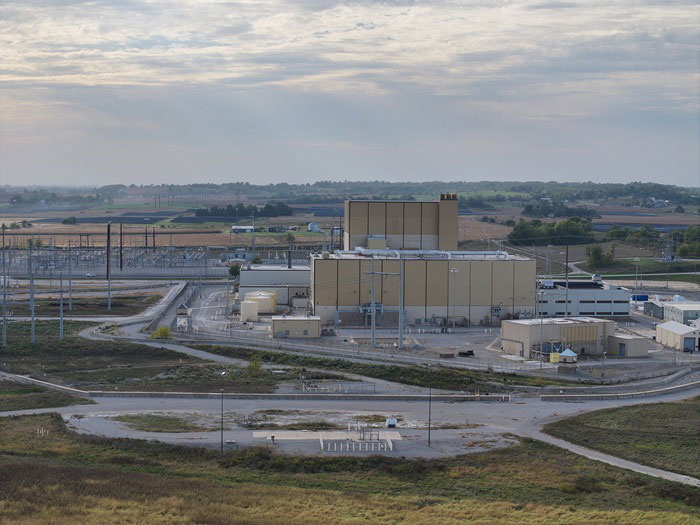
March 5, 2026, https://beyondnuclear.org/nrdc-lends-support-to-restart-closed-reactor/
Natural Resources Defense Council supports the proposed restart of Iowa’s permanently closed Duane Arnold nuclear power station on assurances of adequate public safety upgrades to a Fukushima-style reactor from the US Nuclear Regulatory Commission
In a disappointing reversal of its previously critical stance toward nuclear power and especially the dangerously flawed 1960s vintage GE Mark I boiling water reactor, a major green group now appears to be supporting the restart of exactly that reactor model. The Natural Resources Defense Council’s stated in a blog “Rising Demand, Real Choices” that it had submitted comments to the Nuclear Regulatory Commission supporting the restart of the permanently closed and decommissioning GE Mark I Duane Arnold nuclear reactor in Iowa. NRDC “filed comments today at the Nuclear Regulatory Commission supporting an early step in the reactor’s restart: the transfer of the plant’s license to NextEra.” Duane Arnold is nearly identical to the three reactors that melted down in Japan in March 2011.
NRDC nuances its advocacy for the restart with, “To be clear, NRDC’s long-held concerns regarding nuclear energy—including issues related to siting, cost, safety risks, waste management, water use, mining supply chain issues, and community impacts—remain unchanged and must be addressed. The Duane Arnold plant will have to prove it can operate safely and responsibly.”
Let the record reflect, “easier said than done” as this nation’s nuclear regulatory agencies, from the beginning, with the Atomic Energy Commission (AEC) first licensing Duane Arnold on November 24, 1974, knowing full well in 1972 that the undersized design of the GE Mark I boiling water reactor containment would very likely fail under the tremendous overpressurization and explosive hydrogen gas generated under severe nuclear accident conditions and their top safety official encouraged development to be halted. That scientifically confirmed warning was not only ignored but suppressed for years by AEC fears that the halt of construction and cancellations would derail the government plan for a massive nuclear power build up. Duane Arnold was one of the those obfuscated start-ups.
Since then, the US Nuclear Regulatory Commission (NRC) is identified as a captured regulator and an expert at stonewalling reactor safety concerns from fire protection for safe reactor shutdown to ignoring currently projected climate change impacts on severe nuclear accident risks and frequency.
The NRC relicensed Duane Arnold on December 16, 2010, with an initial extension of 20 years to February 21, 2034 with the built-in containment vulnerability. Eighty-five days later, the Fukushima nuclear accident demonstrated a 100% containment failure rate under overpressurization from hydrogen gas detonations for the three units at that were at full power. NRC wrangled for years with the weak, undersized containment vulnerability only to allow the fundamental design flaw to remain unchecked to date.
Duane Arnold is presently utility certified to the NRC as “permanently” closed and defueled reactor for the purpose of decommissioning in SAFSTOR mode or “deferred dismantling”. The 615 megawatts electric Mark I boiling water reactor is owned by three utility entities; the majority owner, NextEra Energy Resources (70% interest) and two minority owners, Central Iowa Power Cooperative (CIPCO with 20% interest) and Corn Belt Power Cooperative (10% interest). The utilities have submitted an application to the NRC to consolidate a 100% ownership transfer to NextEra as sole owner and a plan to reverse the decommissioning certification to instead seek NRC approval for a likely to exceed $1.6 billion rehabilitation, refueling and restart effort by 2029. Google has signed with NextEra for a Power Purchase Agreement as the primary electricity customer for an expanded AI infrastructure, cloud computing and energy guzzling data centers. Post-consolidation, CIPCO, at 0%, will purchase Duane Arnold surplus electricity and Corn Belt Power Cooperative, at 0%, will sell its share to NextEra.
In Beyond Nuclear’s view, as well as many public safety, environmental protection and safe energy advocates, the immediate, permanent closure, decommissioning and environmental cleanup of Duane Arnold and all GE Mark I boiling water reactors are warranted in the ever extending aftermath of the Fukushima Daiichi’s multiple hydrogen explosions. The subsequent reactor core meltdowns breached the universally flawed GE Mark I containment design and construction, releasing harmful radiation downwind into the atmosphere and recurring radioactive batch releases from the wreckage of the three melted reactor cores into the Pacific Ocean that persist today.
The uneconomical, aging and dangerously flawed Duane Arnold nuclear power station was first announced by NextEra Energy Resources in a Federal Register Notice of its intent to the NRC on March 2, 2020 to permanently close and defuel the reactor by October 30, 2020.
Then, on August 10, 2020, a fierce “derecho” with severe thunderstorms, a deluge of rain and straight line winds reaching up to 140 mph swept across the hundreds of miles of prairie knocking out vast stretches of the electric grid including all six offsite power lines to 100% of Duane Arnold’s safety systems causing the reactor to SCRAM. Onsite back up generators restored critical reactor cooling systems but the badly damaged site included the collapse of the reactor’s cooling towers. NextEra’s subsequent damage assessment concluded, “[O]ur evaluation found that replacing those towers before the site’s previously-scheduled decommissioning on Oct. 30, 2020, was not feasible.” NextEra elected to immediately set the date for permanent closure of Duane Arnold, a Fukushima-style reactor, a notorious General Electric Mark I boiling water reactor even in 1972 under warnings from the Atomic Energy Commission safety officials that it was not safe.
We are now coming up on the 15th commemoration of the triple meltdown of Japan’s Fukushima Daiichi reactors caused by a combination of natural disasters that overwhelmed the significantly flawed and identified vulnerable design problem built into every GE Mark I reactors containments. These containments are now demonstrated to have a 100% failure rate under severe accident conditions as were all three Fukushima reactors at full power on March 11, 2011 experiencing devastating hydrogen gas explosions and widespread radioactive releases. This widespread radioactive contamination of the biosphere (land and sea) from the fallout persists to date and indefinitely into the future.
Where Fukushima’s radioactive releases largely blew out over the Pacific Ocean, a radioactive breach from the volumetrically undersized Mark I reactor containment system in the event of a severe over-pressurization accident, will instead spread out over US populations sickening those caught in the fallout, contaminating farms, pastures and agriculture, and similarly dislocating local, commercial and industrial economies.
If restarted, as NRDC supports, Duane Arnold initial 20-year license renewal (40 to 60 years) will expire on February 21, 2034. And well before that date, NextEra will most assuredly file an application to extend the operating license of a still fundamentally flawed and vulnerable reactor with an additional 20 year subsequent license renewal application (60 to 80 years) out to February 21, 2054, presently without a hard look at a changing climate that might already have been central to it closure.
Beyond Nuclear and the Sierra Club presently have a “petition for judicial review” pending ruling from an October 30, 2025 oral argument in the US Court of Appeals for the District of Columbia Circuit, Beyond Nuclear and Sierra Club v. US NRC. The petitioners through legal counsel have raised a purely legal issue of whether the US NRC, as a matter of law, can refuse to evaluate climate change change impacts (derechos, increasingly severe hurricanes, flooding, sea level rise, etc.) on the risk and frequency of severe nuclear accidents. The NRC is illegally entrenched in refusing to perform a lawfully required environment impact statement that fully evaluates the impact of climate change, saying only that such an evaluation is “out of scope” of reactor licensing.
1 This Month


18 March Webinar @ 1 PM EST: An Assessment of SMR Projects: The Case of Canada
register for the zoom:
https://us02web.zoom.us/webinar/register/WN_o8BIIOUvQ2ONJR1nta65DQ#/registration


of the week – STOP SMALL MODULAR REACTORS IN CANADA
To see nuclear-related stories in greater depth and intensity – go to https://nuclearinformation.wordpress.com
-
Archives
- March 2026 (140)
- February 2026 (268)
- January 2026 (308)
- December 2025 (358)
- November 2025 (359)
- October 2025 (376)
- September 2025 (258)
- August 2025 (319)
- July 2025 (230)
- June 2025 (348)
- May 2025 (261)
- April 2025 (305)
-
Categories
- 1
- 1 NUCLEAR ISSUES
- business and costs
- climate change
- culture and arts
- ENERGY
- environment
- health
- history
- indigenous issues
- Legal
- marketing of nuclear
- media
- opposition to nuclear
- PERSONAL STORIES
- politics
- politics international
- Religion and ethics
- safety
- secrets,lies and civil liberties
- spinbuster
- technology
- Uranium
- wastes
- weapons and war
- Women
- 2 WORLD
- ACTION
- AFRICA
- Atrocities
- AUSTRALIA
- Christina's notes
- Christina's themes
- culture and arts
- Events
- Fuk 2022
- Fuk 2023
- Fukushima 2017
- Fukushima 2018
- fukushima 2019
- Fukushima 2020
- Fukushima 2021
- general
- global warming
- Humour (God we need it)
- Nuclear
- RARE EARTHS
- Reference
- resources – print
- Resources -audiovicual
- Weekly Newsletter
- World
- World Nuclear
- YouTube
-
RSS
Entries RSS
Comments RSS
 nuclear-news